

Drug Therapy in Obesity: A Review of Current and Emerging Treatments
Open accessThe DOI matches its Crossref record; 96 of the 96 references it cites were found in a registry or an index.
Abstract
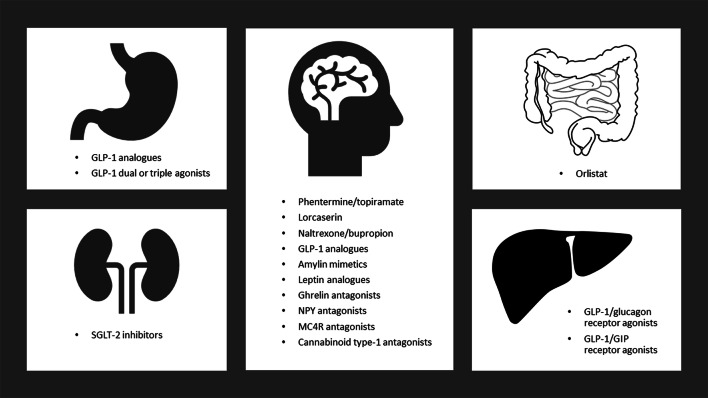
Whilst the prevalence of obesity continues to increase at an alarming rate worldwide, the personal and economic burden of obesity-related complications becomes ever more important. Whilst dietary and lifestyle measures remain the fundamental focus of the patient to counter obesity, more frequently pharmacological and/or surgical interventions are required. Nevertheless, these therapies are often limited by weight loss efficacy, side effects, surgical risks and frequently obesity relapse. Currently, only five drug therapies are approved for the specific treatment of obesity. However, our understanding of the pathophysiology of obesity and of gut hormones has developed precipitously over the last 20-30 years. As a result, there has been a recent movement to create and use analogues that manipulate these gut hormones to support weight loss. In this article we review the efficacy of the currently approved drug therapies and discuss future potential drug mechanisms and early clinical trial results exploring these budding avenues. We discuss the use of glucagon-like peptide-1 (GLP-1) analogues as monotherapy and unimolecular dual or triple agonists that exploit the GLP-1 receptor and/or the gastric inhibitory peptide (GIP) receptor and/or the glucagon receptor. We also explore the use of sodium-glucose co-transporter-2 (SGLT-2) inhibitors, amylin mimetics, leptin analogues, ghrelin antagonists and centrally acting agents to suppress appetite [neuropeptide Y (NPY) antagonists, melanocortin-4 receptor (MC4R) agonists and cannabinoid-1 receptor antagonists]. Whilst further evidence is required to support their clinical use, preclinical and early clinical trial results are encouraging.
Overview
The claims and statistics of this paper haven’t been checked yet.
Free: it reads the open-access text and checks the first 5 claims that cite a source we can check. Create a free account to check every claim.
Integrity signals
Registry
Cites
Statistics
Figures
Verification
Claims the paper makes
The claims and statistics of this paper haven’t been checked yet.
Free: it reads the open-access text and checks the first 5 claims that cite a source we can check. Create a free account to check every claim.
Self-check
Percentages, sums and reported differences re-computed from the paper’s own numbers.
The self-check needs the paper’s full text.
Citations
Cites
Health effects of overweight and obesity in 195 countries over 25 years
Collaborators, T. G. 2. O. (2017) · New England Journal of Medicine · doi:10.1056/nejmoa1614362 · Cited by 7,918
Biology of Incretins: GLP-1 and GIP
Baggio, L. L., & Drucker, D. J. (2007) · Gastroenterology · doi:10.1053/j.gastro.2007.03.054 · Cited by 3,639
European Guidelines for Obesity Management in Adults
Yumuk, V., Tsigos, C., Fried, M., Schindler, K., Busetto, L., Micic, D., & Toplak, H. (2015) · Obesity Facts · doi:10.1159/000442721 · Cited by 3,432
Effects of Recombinant Leptin Therapy in a Child with Congenital Leptin Deficiency
Farooqi, I. S., Jebb, S. A., Langmack, G., Lawrence, E., Cheetham, C. H., Prentice, A. M., Hughes, I. A., McCamish, M. A., & O'Rahilly, S. (1999) · New England Journal of Medicine · doi:10.1056/nejm199909163411204 · Cited by 1,998
Heymsfield, S. B., Greenberg, A. S., Fujioka, K., Dixon, R. M., Kushner, R., Hunt, T., Lubina, J. A., Patane, J., Self, B., Hunt, P., et al. (1999) · JAMA · doi:10.1001/jama.282.16.1568 · Cited by 1,422
Effects of rimonabant on metabolic risk factors in overweight patients with dyslipidemia
Després, J.-P., Golay, A., & Sjöström, L. (2005) · New England Journal of Medicine · doi:10.1056/nejmoa044537 · Cited by 1,392
The medical care costs of obesity: An instrumental variables approach
Cawley, J., & Meyerhoefer, C. (2012) · Journal of Health Economics · doi:10.1016/j.jhealeco.2011.10.003 · Cited by 1,356
Gloy, V. L., Briel, M., Bhatt, D. L., Kashyap, S. R., Schauer, P. R., Mingrone, G., Bucher, H. C., & Nordmann, A. J. (2013) · BMJ · doi:10.1136/bmj.f5934 · Cited by 1,351
Pharmacological Management of Obesity: An Endocrine Society Clinical Practice Guideline
Apovian, C. M., Aronne, L. J., Bessesen, D. H., McDonnell, M. E., Murad, M. H., Pagotto, U., Ryan, D. H., & Still, C. D. (2015) · The Journal of Clinical Endocrinology & Metabolism · doi:10.1210/jc.2014-3415 · Cited by 1,347
(2010) · Archives of Internal Medicine · doi:10.1001/archinternmed.2010.334 · Cited by 1,162 · cited 1×
“The Look AHEAD trial observed a 5% reduction in body weight was associated with sustained improvements in key cardiovascular risk factors such as blood pressure and lipid profile [7].”
Research works printed but not linked: 1
- Purnell JQ. Definitions, classification, and epidemiology of obesity. 2018. In: Feingold KR, Anawalt B, Boyce A, et al., editors. Endotext [Internet]. South Dartmouth (MA): MDText.com, Inc.; 2000. https://www.ncbi.nlm.nih.gov/books/NBK279167/. Accessed 31 Mar 2020
Cited by
G protein-coupled receptors: structure- and function-based drug discovery
Yang, D., Zhou, Q., Labroska, V., Qin, S., Darbalaei, S., Wu, Y., Yuliantie, E., Xie, L., Tao, H., Cheng, J., et al. (2021) · Signal Transduction and Targeted Therapy · doi:10.1038/s41392-020-00435-w · Cited by 632
G protein-coupled receptors (GPCRs): advances in structures, mechanisms and drug discovery
Zhang, M., Chen, T., Lu, X., Lan, X., Chen, Z., & Lu, S. (2024) · Signal Transduction and Targeted Therapy · doi:10.1038/s41392-024-01803-6 · Cited by 491
“73 While glucagon-like peptide-1 receptor (GLP-1R) and glucagon receptor (GCGR) are emerging as the famous B1 GPCR targets in regulating blood glucose homeostasis and lipid metabolism; 74,75 the B2 subfamily is critical in modulating sensory, endocrine, and gastrointestinal systems.”
BackgroundDahlén, A. D., Dashi, G., Maslov, I., Attwood, M. M., Jonsson, J., Trukhan, V., & Schiöth, H. B. (2022) · Frontiers in Pharmacology · doi:10.3389/fphar.2021.807548 · Cited by 275
“This has become even more pressing during the COVID-19 pandemic, where infection with the SARS-CoV-2 virus has been described to both trigger the onset of diabetes and contribute to pre-existing diabetic complications (Hollstein et al., 2020; Marchand et al., 2020; Wu et al., 2021).”
BackgroundNext generation GLP-1/GIP/glucagon triple agonists normalize body weight in obese mice
Knerr, P. J., Mowery, S. A., Douros, J. D., Premdjee, B., Hjøllund, K. R., He, Y., Kruse Hansen, A. M., Olsen, A. K., Perez-Tilve, D., DiMarchi, R. D., et al. (2022) · Molecular Metabolism · doi:10.1016/j.molmet.2022.101533 · Cited by 152
Innate Immune Cells in the Adipose Tissue in Health and Metabolic Disease
Michailidou, Z., Gomez-Salazar, M. A., & Alexaki, V. I. (2021) · Journal of Innate Immunity · doi:10.1159/000515117 · Cited by 159
Novel Noninvasive Approaches to the Treatment of Obesity: From Pharmacotherapy to Gene Therapy
Angelidi, A. M., Belanger, M. J., Kokkinos, A., Koliaki, C. C., & Mantzoros, C. S. (2022) · Endocrine Reviews · doi:10.1210/endrev/bnab034 · Cited by 128
Obesity–An Update on the Basic Pathophysiology and Review of Recent Therapeutic Advances
Gjermeni, E., Kirstein, A., Kolbig, F., Kirchhof, M., Bundalian, L., Katzmann, J. L., Laufs, U., Blüher, M., Garten, A., & Duc, D. L. (2021) · Biomolecules · doi:10.3390/biom11101426 · Cited by 157
“However, results with different analogues appeared to be quite variable, which lead to discontinuation of most mono- and combination therapies [38].”
BackgroundInfluentialA gut-derived hormone suppresses sugar appetite and regulates food choice in Drosophila
Malita, A., Kubrak, O. I., Koyama, T., Ahrentløv, N., Texada, M. J., Nagy, S., Halberg, K. A., & Rewitz, K. (2022) · Nature Metabolism · doi:10.1038/s42255-022-00672-z · Cited by 127
“…and thus link it to the mechanism by which NPF-mediated gut signalling Article https://doi.org/10.1038/s42255-022-00672-z intestinal glucose-sensing mechanisms therefore has become a focus of weight-management therapies because of its potential in regulating appetite and incretin effects 46 .”
BackgroundInfluentialPersonalized type 2 diabetes management: an update on recent advances and recommendations
Williams, D. M., Jones, H., & Stephens, J. W. (2022) · Diabetes, Metabolic Syndrome and Obesity: Targets and Therapy · doi:10.2147/dmso.s331654 · Cited by 121
“The pharmacological options for the treatment of obesity are growing, and GLP-1RAs are one of the modern main players.(76) These support weight loss by inducing satiety via hypothalamic stimulation and delayed gastric emptying.”
BackgroundResultInfluentialSelf-citationGLP‐1 agonists for obesity and type 2 diabetes in children: Systematic review and meta‐analysis
Chadda, K. R., Cheng, T. S., & Ong, K. K. (2021) · Obesity Reviews · doi:10.1111/obr.13177 · Cited by 103
“Currently, GLP-1 agonists are licensed for use in T2DM in adults and children >10 years old by the US FDA(8) and for weight management in adults by the FDA and European Medicines Agency (EMA).(35) The findings of this meta-analysis support the use of GLP-1 agonists in the management of children with T2DM, with effects…”
BackgroundThe importance of estradiol for body weight regulation in women
Vigil, P., Meléndez, J., Petkovic, G., & Río, J. P. D. (2022) · Frontiers in Endocrinology · doi:10.3389/fendo.2022.951186 · Cited by 100
Li, Z., Zhang, B., Wang, N., Zuo, Z., Hong Kui, W. E. I., & Zhao, F. (2022) · Gut · doi:10.1136/gutjnl-2022-328035 · Cited by 87
The incretin/glucagon system as a target for pharmacotherapy of obesity
Del Prato, S., Gallwitz, B., Holst, J. J., & Meier, J. J. (2022) · Obesity Reviews · doi:10.1111/obr.13372 · Cited by 77
“derivatives, cannabinoid receptor blockers, and serotonin reuptake inhibitors, have been withdrawn due to their unfavorable adverse event (AE) profiles (Table 1).(22,28)”
BackgroundInfluentialGIPR Agonism Inhibits PYY-Induced Nausea-Like Behavior
Samms, R. J., Cosgrove, R., Snider, B. M., Furber, E. C., Droz, B. A., Briere, D. A., Dunbar, J., Dogra, M., Alsina-Fernandez, J., Borner, T., et al. (2022) · Diabetes · doi:10.2337/db21-0848 · Cited by 69
“Thus, since a major challenge to the therapeutic utility of weight loss medications is dose-limiting nausea/ vomiting (2,3), our findings have therapeutic relevance in indicating that GIPR agonism could be leveraged to offset tolerability issues that occur with many diabetes medications.”
BackgroundRizvi, A. A., & Rizzo, M. (2022) · Diabetes, Metabolic Syndrome and Obesity: Targets and Therapy · doi:10.2147/dmso.s351982 · Cited by 65
“As a synergistic action, body weight reduction by GIPR/GLP-1R dual agonists is greater than GLP-1R single agonists alone in overweight and obese persons.(6) It appears that simultaneous activation of GLP-1R and GIPR might well have greater, multiplicative effect on glucose-lowering abilities than either agent alone.”
BackgroundA Comprehensive Review on Weight Loss Associated with Anti-Diabetic Medications
Haddad, F., Dokmak, G., Bader, M., & Karaman, R. (2023) · Life · doi:10.3390/life13041012 · Cited by 79
“Obesity is a multifactorial metabolic syndrome that raises the risk of several illnesses, including T2DM, cardiometabolic disorders, dementia, depression, and malignancies, which can lower quality of life and result in death [8,9].”
BackgroundKořínková, L., Pražienková, V., Černá, L., Karnošová, A., Železná, B., Kuneš, J., & Maletínská, L. (2020) · Frontiers in Endocrinology · doi:10.3389/fendo.2020.597583 · Cited by 81
Ahmad, N. N., Robinson, S., Kennedy‐Martin, T., Poon, J. L., & Kan, H. (2021) · Obesity Reviews · doi:10.1111/obr.13326 · Cited by 69
“4 mg, orlistat, naltrexone/bupropion [NTX/BPN], and phentermine/topiramate [PHEN/TPM]) are approved for long-term use by the US Food and Drug Administration (FDA) for the treatment of adults with a BMI ≥ 30 or ≥ 27 kg/m(2) with at least one weightrelated comorbidity, and several other medications are in clinical devel…”
BackgroundFletcher, M. M., Keov, P., Truong, T. T., Mennen, G., Hick, C. A., Zhao, P., Furness, S. G. B., Kruse, T., Clausen, T. R., Wootten, D., et al. (2021) · The Journal of Pharmacology and Experimental Therapeutics · doi:10.1124/jpet.121.000567 · Cited by 68
“However, few drugs have been approved for the treatment of obesity and most have limited efficacy, promoting only around 3-7% weight loss, although higher efficacy is reported for high-dose formulation of the glucagon-like peptide-1 receptor (GLP-1R) agonist, semaglutide (Srivastava and Apovian, 2018; Williams et al.,…”
BackgroundThe Role of GIP in the Regulation of GLP-1 Satiety and Nausea
Hayes, M. R., Borner, T., & De Jonghe, B. C. (2021) · Diabetes · doi:10.2337/dbi21-0004 · Cited by 64
“Not surprisingly, the glycemic and energy balance beneficial effects of Ex4 and liraglutide inspired the creation of second-generation GLP-1 receptor agonists for treating T2D, which include but are not limited to dulaglutide and semaglutide (33).”
BackgroundWestgate, C. S. J., Israelsen, I. M. E., Jensen, R., & Eftekhari, S. (2021) · The Journal of Headache and Pain · doi:10.1186/s10194-021-01337-0 · Cited by 64
Gut microbiota and therapy for obesity and type 2 diabetes
Zhang, L., Wang, P., Huang, J., Xing, Y., Wong, F. S., Suo, J., & Li, W. (2024) · Frontiers in Endocrinology · doi:10.3389/fendo.2024.1333778 · Cited by 75
“Although there has been signi fi cant progress in pharmacotherapy, in recent years (22, 23), with agents that effectively reduce weight and improve metabolism, bariatric surgery is still considered to be the most effective means of sustainable weight loss (24).”
BackgroundGenetics: A Starting Point for the Prevention and the Treatment of Obesity
Novelli, G., Cassadonte, C., Sbraccia, P., & Biancolella, M. (2023) · Nutrients · doi:10.3390/nu15122782 · Cited by 60
“Neuropeptide Y neurons inhibit POMC neurons that decrease appetite, and they activate orexin- and melanin-concentrating hormones, which are appetite-inducing peptides [44].”
BackgroundThe Gut Microbiome in Human Obesity: A Comprehensive Review
Borrego-Ruiz, A., & Borrego, J. J. (2025) · Biomedicines · doi:10.3390/biomedicines13092173 · Cited by 66
“Although significant progress has been made in pharmacological treatments in recent years [15,16], most anti-obesity drugs remain contraindicated for use during adolescence and pregnancy [17].”
Anti-Obesity Effects of Chitosan and Its Derivatives
Shagdarova, B. T., Konovalova, M. V., Варламов, В. П., & Svirshchevskaya, E. V. (2023) · Polymers · doi:10.3390/polym15193967 · Cited by 57
“In addition, devices such as an intragastric balloon or endoscopic sleeve gastroplasty can be used during surgical intervention [18].”
BackgroundDeng, Y., Park, A., Zhu, L., Xie, W., & Pan, C. Q. (2022) · Therapeutic Advances in Chronic Disease · doi:10.1177/20406223221108064 · Cited by 51
Burstein, D., Griffen, T. C., Therrien, K., Bendl, J. M., Venkatesh, S., Dong, P., Modabbernia, A., Zeng, B., Mathur, D. D., Hoffman, G. E., et al. (2023) · Nature Genetics · doi:10.1038/s41588-023-01464-1 · Cited by 51
Mohaghegh, N., Ahari, A. F., Buttles, C., Davani, S., Hoang, H., Huang, Q., Huang, Y., Hosseinpour, B., Abbasgholizadeh, R., Cottingham, A. L., et al. (2024) · ACS Nano · doi:10.1021/acsnano.4c10742 · Cited by 51
Alnuaimi, A., Ajayi, F. F., Hamdi, M., Mudgil, P., Kamal, H., Gan, C. Y., & Maqsood, S. (2022) · Food Chemistry · doi:10.1016/j.foodchem.2022.134192 · Cited by 50
Borner, T., Tinsley, I. C., Doyle, R. P., Hayes, M. R., & De Jonghe, B. C. (2022) · British Journal of Pharmacology · doi:10.1111/bph.15647 · Cited by 49
A 2021 Update on the Use of Liraglutide in the Modern Treatment of ‘Diabesity’: A Narrative Review
Tilinca, M. C., Tiuca, R. A., Burlacu, A., & Varga, A. (2021) · Medicina · doi:10.3390/medicina57070669 · Cited by 43
“Pharmacological treatment is generally recommended in patients who did not present significant improvement after lifestyle modifications and BMI ≥ 30 kg/m2 or ≥27 kg/m2, with excess weight-associated comorbidities such as diabesity [1,13,14].”
BackgroundObesity and Weight Loss Strategies for Patients With Heart Failure
Vest, A. R., Schauer, P. R., Rodgers, J. E., Sanderson, E., LaChute, C., Seltz, J., Lavie, C. J., Mandras, S. A., Tang, W. H. W., & daSilva‐deAbreu, A. (2024) · JACC Heart Failure · doi:10.1016/j.jchf.2024.06.006 · Cited by 47
Nicotine’ actions on energy balance: Friend or foe?
Seoane‐Collazo, P., Diéguez, C., Nogueiras, R., Rahmouni, K., Fernández‐Real, J. M., & López, M. (2020) · Pharmacology & Therapeutics · doi:10.1016/j.pharmthera.2020.107693 · Cited by 46
“…al., 2019; Christensen, Kristensen, Bartels, Bliddal, & Astrup, 2007; Dragano et al., 2020; Krentz, Fujioka, & Hompesch, 2016; Muller et al., 2018; Nathan, O'Neill, Napolitano, & Bullmore, 2011; Srivastava & Apovian, 2018; Williams et al., 2020), resulting in drugs being withdrawn from the market.”
PEREZ-MONTES DE OCA, A., PELLITERO, S., & PUIG-DOMINGO, M. (2021) · Minerva Endocrinology · doi:10.23736/s2724-6507.20.03369-6 · Cited by 36
Suárez, N. G., Torres, S. R., Ouanouki, A., Cheikh-Hussein, L. E., & Annabi, B. (2021) · Molecules · doi:10.3390/molecules26061506 · Cited by 46
“While efficacy of currently approved drug therapies and understanding of drug mechanisms against obesity remain open for debate [12], diet-derived phytochemicals have emerged as potential candidates to combat obesity via adipose non-shivering thermogenesis [13], or targeting of the adipose tissue inflammation [14,15].”
BackgroundLiudvytska, O., & Kołodziejczyk-Czepas, J. (2022) · Nutrients · doi:10.3390/nu14102053 · Cited by 45
Sutherland, J. J., Yonchev, D., Fekete, A., & Urbán, L. (2023) · Nature Communications · doi:10.1038/s41467-023-40064-9 · Cited by 45
“Unpublished activities that were noteworthy included CNR1 inhibition of losartan (AC 50 =1.2nM) and glipizide (AC 50 =19 nM), which may contribute to their therapeutic effect in treating hypertension and metabolic syndrome (the CNR1 antagonist rimonabant is used in the management of obesity 18 ).”
Amylin: emergent therapeutic opportunities in overweight, obesity and diabetes mellitus
Walker, C. S., Aitken, J. F., Amarsingh, G. V., Zhang, S., & Cooper, G. J. S. (2025) · Nature Reviews Endocrinology · doi:10.1038/s41574-025-01125-9 · Cited by 40
“Given the high global burden of obesity and T2DM, it is unsurprising that several medications have been developed to treat these diseases 101,102 .”
Larsen, A. T., Mohamed, K. E., Sonne, N., BREDTOFT, E.-M., Andersen, F., Karsdal, M. A., & Henriksen, K. (2022) · Biomedicine & Pharmacotherapy · doi:10.1016/j.biopha.2022.113842 · Cited by 43
GLP‐1 analogs and regional adiposity: A systematic review and meta‐analysis
Akoumianakis, I., Zagaliotis, A., Konstantaraki, M., & Filippatos, T. D. (2023) · Obesity Reviews · doi:10.1111/obr.13574 · Cited by 37
Amin, A., Akhtar, M. F., Saleem, A., Sharif, A., Shah, S., Khan, M. I., Anwar, F., Abbas, G., Zubair, H. M., & Sohail, M. F. (2022) · Inflammopharmacology · doi:10.1007/s10787-022-01069-w · Cited by 36
Hill, M. A., Sowers, J. R., & Mantzoros, C. S. (2020) · Metabolism · doi:10.1016/j.metabol.2020.154408 · Cited by 38
“Consistentwith this approach glucose lowering agents, incretins and SGLT2 inhibitors represent potential therapeutic classes meeting this aim [64,65].”
BackgroundEvaluation of biased agonism mediated by dual agonists of the GLP-1 and glucagon receptors
Darbalaei, S., Yuliantie, E., Dai, A., Chang, R., Zhao, P., Yang, D., Wang, M.-W., Sexton, P. M., & Wootten, D. (2020) · Biochemical Pharmacology · doi:10.1016/j.bcp.2020.114150 · Cited by 33
Zhou, Y., Mukherjee, S. K., Huang, D., Chakraborty, M., Gu, C., Zong, G., Stashko, M. A., Pearce, K. H., Shears, S. B., Chakraborty, A., et al. (2022) · Journal of Medicinal Chemistry · doi:10.1021/acs.jmedchem.2c00220 · Cited by 36
Structural Complexity and Plasticity of Signaling Regulation at the Melanocortin-4 Receptor
Kleinau, G., Heyder, N., Tao, Y., & Scheerer, P. (2020) · International Journal of Molecular Sciences · doi:10.3390/ijms21165728 · Cited by 34
“While a huge amount of specific synthetic or peptidic ligands, including setmelanotide [53–56], bivalent ligands [57–60], and many others [61–63], have been designed, there is a tremendous medical as well as socioeconomic interest in the development of functionally optimized (tailor-made for specific signaling pathway…”
BackgroundSodium-glucose co-transporter 2 inhibitors in nonalcoholic fatty liver disease
Makri, E. S., Goulas, A., & Pοlyzos, S. A. (2021) · European Journal of Pharmacology · doi:10.1016/j.ejphar.2021.174272 · Cited by 32
Jayashankar, V., Selwan, E. M., Hancock, S. E., Verlande, A., Goodson, M. O., Eckenstein, K. H., Milinkeviciute, G., Hoover, B., Chen, B., Fleischman, A. G., et al. (2021) · EMBO Molecular Medicine · doi:10.15252/emmm.202013086 · Cited by 33
“Our growing understanding of the signals that control satiety and metabolism, especially the hormonal crosstalk between peripheral tissues and complex neural circuitry, has identified several new targets that may be more amenable to pharmacological intervention (Williams et al, 2020).”
BackgroundRole of bile acids in overweight and obese children and adolescents
Giannini, C., Mastromauro, C., Scapaticci, S., Gentile, C., & Chiarelli, F. (2022) · Frontiers in Endocrinology · doi:10.3389/fendo.2022.1011994 · Cited by 32
Zeng, H., Zhong, Z., Xu, Z., Teng, J., Chen, W., Chen, Z., Zhang, W., Ding, X., Li, J., & Zhang, Z. (2022) · BMC Genomics · doi:10.1186/s12864-022-09036-z · Cited by 31
Critical Review on Anti-Obesity Effects of Anthocyanins Through PI3K/Akt Signaling Pathways
Randeni, N., Luo, J., & Xu, B. (2025) · Nutrients · doi:10.3390/nu17071126 · Cited by 30
“The majority of anti-obesity drugs have been associated with side effects that vary from gastrointestinal (e.g., nausea and diarrhea), cardiovascular (e.g., increased heart rate and hypertension), and neurological (e.g., mood alterations and insomnia) [6,7].”
Mukherjee, S., & Yun, J. W. (2021) · Phytomedicine · doi:10.1016/j.phymed.2021.153857 · Cited by 29
Once-weekly 2.4 mg Semaglutide for Weight Management in Obesity: A Game Changer?
Colin, I. M., & Gérard, A.-C. (2022) · touchREVIEWS in Endocrinology · doi:10.17925/ee.2022.18.1.35 · Cited by 30
Effects of glucagon‐like peptide‐1 analogue treatment in genetic obesity: A case series
Welling, M. S., de Groot, C. J., Kleinendorst, L., van der Voorn, B., Burgerhart, J. S., van der Valk, E. S., van Haelst, M. M., van den Akker, E. L. T., & van Rossum, E. F. C. (2021) · Clinical Obesity · doi:10.1111/cob.12481 · Cited by 29
“liraglutide or semaglutide), naltrexonebupropion, phentermine-topiramate, setmelanotide or other drugs currently under development.(36) This could result in possible synergistic effects mediated through different pathways, e.”
BackgroundSu, Y., Wang, W., Xiao, Q., Tang, L., Wang, T., Xie, M., & Su, Y. (2022) · Acta Biomaterialia · doi:10.1016/j.actbio.2022.08.055 · Cited by 27
Casado‐Díaz, A., Rodríguez‐Ramos, Á., Torrecillas-Baena, B., Dorado, G., Quesada‐Gómez, J. M., & Gálvez-Moreno, M. Á. (2021) · Nutrients · doi:10.3390/nu13114185 · Cited by 28
“Currently, existing pharmaceutical drugs to combat obesity are based on products that act at the neuronal level on appetite, or on hormones such as incretins [28].”
BackgroundMudgil, P., Redha, A. A., Nirmal, N. P., & Maqsood, S. (2023) · Journal of Dairy Science · doi:10.3168/jds.2022-22701 · Cited by 26
Ahmed, O. M., Saleh, A. S., Ahmed, E. A., Ghoneim, M. M., Ebrahim, H. A., Abdelgawad, M. A., & Abdel‐Gabbar, M. (2023) · Pharmaceuticals · doi:10.3390/ph16060859 · Cited by 26
“Damage of β-cells in the pancreas could result in a blood insulin regulation defect with elevated blood glucose levels, causing a deleterious carbohydrate, protein, and lipid metabolic disturbances, which could lead to the development of various complications in various organs, such as neuropathy, nephropathy, and ret…”
BackgroundSun, B., Hayashi, M., Kudo, M., Wu, L. J., Qin, L., Gao, M., & Liu, T. (2021) · Frontiers in Endocrinology · doi:10.3389/fendo.2021.627950 · Cited by 28
Ruan, T., Fu, C.-Y., Lin, C., Chou, K.-C., & Lin, Y. (2023) · Biomaterials · doi:10.1016/j.biomaterials.2023.122120 · Cited by 24
Semaglutide for adults living with obesity
Bracchiglione, J., Meza, N., Franco, J. V. A., Liquitay, C. M. E., Victoria Novik, A., Vargas, M. O., Lazcano, G., Poloni, D., Langlotz, F. R., Figuls, M. R. I., et al. (2025) · Cochrane Database of Systematic Reviews · doi:10.1002/14651858.cd015092.pub2 · Cited by 37
Towards better models for studying human adipocytesin vitro
Baganha, F., Schipper, R., & Hagberg, C. E. (2022) · Adipocyte · doi:10.1080/21623945.2022.2104514 · Cited by 22
“Although recent years have seen the development of several new therapies to potentially help tackle this crisis, including semaglutides which reduce appetite and SLGT2 inhibitors which are both antidiabetic and cardioprotective, we still lack treatments that help overweight patients maintain metabolic health by direct…”
BackgroundLai, K.-M., Chen, S.-Y., Wang, G., Shahidi, F., & Yen, G. (2022) · Food Research International · doi:10.1016/j.foodres.2022.112344 · Cited by 22
Vincent, R. K., Williams, D. M., & Evans, M. (2020) · Diabetes Obesity and Metabolism · doi:10.1111/dom.14196 · Cited by 22
“41 This may have significant clinical impact, as almost 40% of people who attain a weight loss ≥ 1% total body weight per year achieve NAFLD remission.”
BackgroundInfluentialSelf-citationPark, S., Lee, J., Shin, H., Jung, S., & Ha, J. (2021) · International Journal of Environmental Research and Public Health · doi:10.3390/ijerph18116032 · Cited by 20
Kurek, J. M., Mikołajczyk-Stecyna, J., & Krejpcio, Z. (2023) · Biomedicine & Pharmacotherapy · doi:10.1016/j.biopha.2023.115424 · Cited by 22
Ashraf, Z. U., Shah, A. S., Gani, A., & Gani, A. (2024) · LWT · doi:10.1016/j.lwt.2024.116502 · Cited by 20
The Bidirectional Relationship of NPY and Mitochondria in Energy Balance Regulation
Sousa, D., Lopes, E., Silva, D., & Matafome, P. N. (2023) · Biomedicines · doi:10.3390/biomedicines11020446 · Cited by 21
“These studies suggest that the modulation of NPY5R alone may be not enough [132].”
BackgroundImplantation of CPT1AM-expressing adipocytes reduces obesity and glucose intolerance in mice
Soler‐Vázquez, M. C., Romero, M. D. M., Todorčević, M., Delgado, K., Calatayud, C., Amaro, A. B., Lhoëst, M. T. L. C., Mera, P., Zagmutt, S., Bastías-Pérez, M., et al. (2023) · Metabolic Engineering · doi:10.1016/j.ymben.2023.04.010 · Cited by 19
Luca, T., Pezzino, S., Puleo, S., & Castorina, S. (2024) · Journal of Translational Medicine · doi:10.1186/s12967-024-05547-3 · Cited by 20
“The use of in vitro models could also allow the development of new treatments that could interfere with the progression of obesity and obesity-induced metabolic disorders [91].”
BackgroundEl‐Sawah, S. G., Rashwan, H. M., Althobaiti, F., Aldhahrani, A., Fayad, E., Shabana, E.-S., El‐Hallous, E. I., & Amen, R. M. (2021) · Saudi Journal of Biological Sciences · doi:10.1016/j.sjbs.2021.09.067 · Cited by 19
In search of an ideal drug for safer treatment of obesity: The false promise of pseudoephedrine
Munafò, A., Frara, S., Perico, N., Mauro, R. D., Cortinovis, M., Burgaletto, C., Cantarella, G., Remuzzi, G., Giustina, A., & Bernardini, R. (2021) · Reviews in Endocrine and Metabolic Disorders · doi:10.1007/s11154-021-09658-w · Cited by 20
Zhang, T., An, W., You, S., Chen, S., & Zhang, S. (2024) · Chinese Medicine · doi:10.1186/s13020-024-00964-4 · Cited by 18
Heffernan, S., Nunn, L., Harnedy‐Rothwell, P. A., Gite, S., Whooley, J., Giblin, L., Fitzgerald, R. J., & O’Brien, N. M. (2022) · Marine Drugs · doi:10.3390/md20020112 · Cited by 19
“Numerous weight loss drug-therapies, including satiety hormone analogues, are available commercially [5], however, the identification of non-pharmacological satiating components from food sources may present cost-effective, safe alternatives to synthetic drugs for weight management.”
BackgroundJuhng, S., Song, J., You, J., Park, J., Yang, H., Jang, M., Kang, G., Shin, J., Ko, H. W., & Jung, H. (2023) · Lab on a Chip · doi:10.1039/d2lc01084d · Cited by 20
An updated patent review of GLP-1 receptor agonists (2020-present)
Lu, W., Zhou, Z., Jiang, N., & Han, J. (2023) · Expert Opinion on Therapeutic Patents · doi:10.1080/13543776.2023.2274905 · Cited by 17
GIPR Agonism Enhances TZD-Induced Insulin Sensitivity in Obese IR Mice
Furber, E. C., Hyatt, K., Collins, K. A. L., Yu, X., Droz, B. A., Holland, A. K., Friedrich, J. L., Wojnicki, S., Konkol, D. L., O’Farrell, L. S., et al. (2023) · Diabetes · doi:10.2337/db23-0172 · Cited by 17
Yadav, R., Nigam, A., Mishra, R., Gupta, S. K., Chaudhary, A. A., Khan, S.-U.-D., Almuqri, E. A., Ahmed, Z. H., Rustagi, S., Singh, D. P., et al. (2024) · Medical Sciences · doi:10.3390/medsci12040055 · Cited by 17
“MC4R agonist It works on the lateral hypothalamic area to suppress the appetite [95].”
BackgroundFerrulli, A., Terruzzi, I., Senesi, P., Succi, M., Cannavaro, D., & Luzi, L. (2022) · Nutrition Metabolism and Cardiovascular Diseases · doi:10.1016/j.numecd.2022.02.016 · Cited by 17
Poly-Agonist Pharmacotherapies for Metabolic Diseases: Hopes and New Challenges
Allard, C., Cota, D., & Quarta, C. (2023) · Drugs · doi:10.1007/s40265-023-01982-6 · Cited by 17
“Among these, dulaglutide, lixisenatide and liraglutide were all reported to cause absolute weight loss of between 2 and 6 kg at one year [32].”
Spezani, R., Marinho, T. D. S., Santos-Reis, T., Águila, M. B., & Mandarim‐de‐Lacerda, C. A. (2023) · Peptides · doi:10.1016/j.peptides.2023.171138 · Cited by 17
Anti-obesity weight loss medications: Short-term and long-term use
Jeong, D., & Priefer, R. (2022) · Life Sciences · doi:10.1016/j.lfs.2022.120825 · Cited by 21
Williams, D. M., Atkinson, M., & Evans, M. (2023) · Stroke · doi:10.1161/strokeaha.122.042109 · Cited by 18
Self-citationFrans, P., Mkabayi, L., Pletschke, B. I., & Frost, C. L. (2024) · Biomedicine & Pharmacotherapy · doi:10.1016/j.biopha.2024.117357 · Cited by 15
Tirzepatide for adults living with obesity
Franco, J. V. A., Guo, Y., Varela, L. B., Aqra, Z., Alhalahla, M., Rodriguez, M. M., Salvador-Oscco, E., Araujo, B. P., Banda, S., Liquitay, C. M. E., et al. (2025) · Cochrane Database of Systematic Reviews · doi:10.1002/14651858.cd016018 · Cited by 24
Obesity wars: may the smell be with you
López, M., Fernández‐Real, J. M., & Tomarev, S. I. (2023) · American Journal of Physiology-Endocrinology and Metabolism · doi:10.1152/ajpendo.00040.2023 · Cited by 15
Effects of Capsaicin on Glucose Uptake and Consumption in Hepatocytes
Zeng, H., Shi, N., Peng, W., Yang, Q., Ren, J., Hong, Y., Chen, L., Chen, Y., & Guo, J. (2023) · Molecules · doi:10.3390/molecules28135258 · Cited by 14
“At present, medications are widely used to combat obesity but with limited effect, with even undesirable side effects [3].”
BackgroundJo, Y. M., Son, Y. J., Kim, S.-A., Lee, G. M., Ahn, C. W., Park, H.-O., & Yun, J. (2024) · The Journal of Microbiology · doi:10.1007/s12275-024-00173-6 · Cited by 15
“Various approaches, including surgical intervention, drug therapeutics, and dietary control, have been developed to support obesity management; however, these approaches are often associated with safety concerns (Williams et al., 2020).”
Amiri, P., Hosseini, S. A., Saghafi‐Asl, M., Roshanravan, N., & Tootoonchian, M. (2024) · European Journal of Clinical Nutrition · doi:10.1038/s41430-024-01512-x · Cited by 16
“Many pharmaceutical medicines were approved to treat obesity, but side effects, weight-loss ef fi cacy, surgical risks, and obesity relapse limit long-term weight management programs [4].”
Advances and complications of regenerative medicine in diabetes therapy
Brovkina, O., & Dashinimaev, E. B. (2020) · PeerJ · doi:10.7717/peerj.9746 · Cited by 15
Beyond targeted protein degradation: LD·ATTECs clear cellular lipid droplets
Vita, E. D., Lucy, D., & Tate, E. W. (2021) · Cell Research · doi:10.1038/s41422-021-00546-1 · Cited by 14
Mráziková, L., Neprašová, B., Mengr, A., Popelová, A., Strnadová, V., Holá, L., Železná, B., Kuneš, J., & Maletínská, L. (2021) · Frontiers in Pharmacology · doi:10.3389/fphar.2021.779962 · Cited by 16
Utility of ‘substance use disorder’ as a heuristic for understanding overeating and obesity
O’Connor, R. M., & Kenny, P. J. (2022) · Progress in Neuro-Psychopharmacology and Biological Psychiatry · doi:10.1016/j.pnpbp.2022.110580 · Cited by 16
Stein, L. M., McGrath, L. E., Lhamo, R., Koch‐Laskowski, K., Fortin, S. M., Skarbaliene, J., Baader-Pagler, T., Just, R., Hayes, M. R., & Mietlicki‐Baase, E. G. (2021) · American Journal of Physiology-Regulatory, Integrative and Comparative Physiology · doi:10.1152/ajpregu.00337.2020 · Cited by 13
Islam, T., Huda, M. N., Ahsan, M. A., Afrin, H., Salazar, C. J. J., & Nurunnabi, M. (2021) · The Journal of Physical Chemistry B · doi:10.1021/acs.jpcb.1c08065 · Cited by 13
Diabetes and Novel Coronavirus Infection: Implications for Treatment
Williams, D. M., Nawaz, A., & Evans, M. (2020) · Diabetes Therapy · doi:10.1007/s13300-020-00858-2 · Cited by 12
“GLP-1 analogues act directly to stimulate pancreatic insulin secretion and are associated with improved glycaemic control, body weight and reduced progression of renal disease [49, 50].”
BackgroundSelf-citationAdipocytolytic Polymer Nanoparticles for Localized Fat Reduction
Han, Y. K., Jeong, E. J., Seo, Y., Lee, I. Y., Choi, S., Lee, H., Kim, C., Rhim, T., & Lee, K. Y. (2022) · ACS Nano · doi:10.1021/acsnano.2c04108 · Cited by 12
Anti-obesity effect and mechanism of mesenchymal stem cells influence on obese mice
Xie, Z., Cheng, Y., Zhang, Q., Hao, H., Yin, Y., Zang, L., Wang, X., & Mu, Y. (2021) · Open Life Sciences · doi:10.1515/biol-2021-0061 · Cited by 12
“However, lifestyle modification has limited effects, most medications are withdrawn because of adverse effects, and surgery is invasive and remains contentious to long-term efficacy and safety [8].”
BackgroundAlshehri, A., AlFaris, N., Al Qahtani, A. M., Shams, M., & Yahia, M. (2023) · Clinical Obesity · doi:10.1111/cob.12594 · Cited by 11
“0 mg daily dose has been shown to improve weight loss by enhancing satiety via hypothalamic stimulation and delaying gastric emptying, thereby reducing food intake.(27) Several RCTs reported that Liraglutide 3.”
BackgroundMendoza, S. (2025) · AIMS neuroscience · doi:10.3934/neuroscience.2025003 · Cited by 11
“Existing therapies for obesity and diabetes, including lifestyle interventions, pharmacological treatments, and bariatric surgery, offer varying levels of success [3–5].”
Sarkar, S., Ghosh, S., & Biswas, M. (2025) · Toxicology Reports · doi:10.1016/j.toxrep.2025.102062 · Cited by 12
“…and obesity-linked disorders like hyperlipidemia through managing different mechanisms and pathways like promoting lipolysis, facilitating weight loss through gut hormone regulation, managing lipid digestion and absorption, controlling appetite, and implementing behavioural modifications [53,54].”
Metadata
- Authors
- Williams, D. M., Nawaz, A., & Evans, M.
- Affiliations
- University Hospital Llandough (GB)
- Corresponding author
- Williams, David M.
- Venue
- Diabetes Therapy
- Published
- 2020-04-15
- Volume
- 11
- Issue
- 6
- Pages
- 1199-1216
- ISSN
- 1869-6953 (ISSN-L)
- 1869-6961
- PMC
- PMC7261312
- OpenAlex
- W3016841284
- Cited by
- 195
- References
- 96
- Citations by year
- 2026: 12 · 2025: 22 · 2024: 27 · 2023: 41 · 2022: 37 · 2021: 42 · 2020: 14
- FWCI
- 4.43
- Type
- journal article
- Language
- en
- Open access
- gold
- doi.org
- Licence
- cc-by-nc
- creativecommons.org/licenses/by-nc/4.0 (tdm)
- creativecommons.org/licenses/by-nc/4.0 (vor)
- Locations
- Diabetes Therapy (publishedVersion, cc-by-nc)
- PubMed Central (publishedVersion, cc-by-nc)
- PubMed (publishedVersion)
- Topics
- Health Sciences › Medicine › Pharmacology (medical) › Pharmacology and Obesity Treatment
- Life Sciences › Neuroscience › Endocrine and Autonomic Systems › Regulation of Appetite and Obesity
- Health Sciences › Medicine › Endocrinology, Diabetes and Metabolism › Diabetes Treatment and Management
- Keywords
- anti-obesity drugs, GLP-1 receptor agonists, glucagon receptor, SGLT2 inhibitors, amylin analogues, ghrelin antagonist, melanocortin-4 receptor agonist, cannabinoid-1 receptor antagonist, gastrointestinal hormones, weight loss efficacy
About these checks
Registry, retraction, Cites and statistics results are computed, not judged, with one exception: a printed reference that no index lists is read once by a model before it counts as a citation error. Claims are extracted by a model and kept only when their quote appears verbatim in the text; each cited source is then checked, with a model’s help, for whether it says what the claim relies on. Those verdicts can be wrong — read the claim’s quote and the cited source before relying on one.
Statistics and arithmetic are recomputed, not judged.
Confidence bands are shown only for fields calibrated on our annotated test set. None is calibrated yet, so no band is shown.
What counts as a claim ›How we measure confidence ›How we check this ›
Are you an author, or do you see a problem with this page? Request a review
Data sources
Bibliographic data: Semantic Scholar, OpenAlex, Crossref.
Contains information from the Semantic Scholar Academic Graph Datasets, made available under the ODC Attribution License (ODC-BY 1.0).
Semantic Scholar’s data is described in: Kinney, R., et al. (2023). The Semantic Scholar Open Data Platform. arXiv:2301.10140.
