

Drug Therapy in Obesity: A Review of Current and Emerging Treatments
Open accessThe DOI matches its Crossref record; 96 of the 96 references it cites were found in a registry or an index.
Abstract
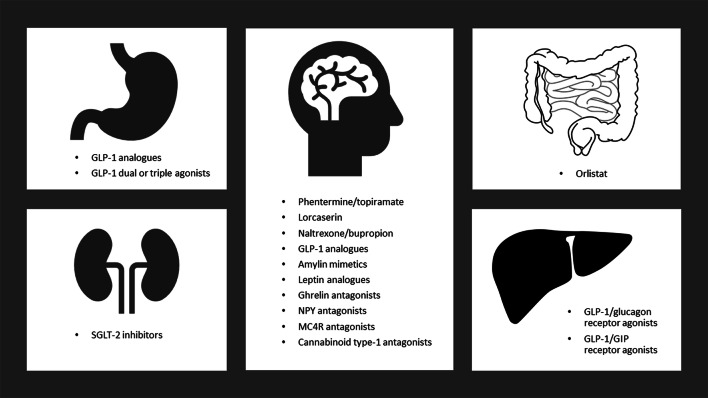
Whilst the prevalence of obesity continues to increase at an alarming rate worldwide, the personal and economic burden of obesity-related complications becomes ever more important. Whilst dietary and lifestyle measures remain the fundamental focus of the patient to counter obesity, more frequently pharmacological and/or surgical interventions are required. Nevertheless, these therapies are often limited by weight loss efficacy, side effects, surgical risks and frequently obesity relapse. Currently, only five drug therapies are approved for the specific treatment of obesity. However, our understanding of the pathophysiology of obesity and of gut hormones has developed precipitously over the last 20-30 years. As a result, there has been a recent movement to create and use analogues that manipulate these gut hormones to support weight loss. In this article we review the efficacy of the currently approved drug therapies and discuss future potential drug mechanisms and early clinical trial results exploring these budding avenues. We discuss the use of glucagon-like peptide-1 (GLP-1) analogues as monotherapy and unimolecular dual or triple agonists that exploit the GLP-1 receptor and/or the gastric inhibitory peptide (GIP) receptor and/or the glucagon receptor. We also explore the use of sodium-glucose co-transporter-2 (SGLT-2) inhibitors, amylin mimetics, leptin analogues, ghrelin antagonists and centrally acting agents to suppress appetite [neuropeptide Y (NPY) antagonists, melanocortin-4 receptor (MC4R) agonists and cannabinoid-1 receptor antagonists]. Whilst further evidence is required to support their clinical use, preclinical and early clinical trial results are encouraging.
Overview
The claims and statistics of this paper haven’t been checked yet.
Free: it reads the open-access text and checks the first 5 claims that cite a source we can check. Create a free account to check every claim.
Integrity signals
Registry
Cites
Statistics
Figures
Verification
Claims the paper makes
The claims and statistics of this paper haven’t been checked yet.
Free: it reads the open-access text and checks the first 5 claims that cite a source we can check. Create a free account to check every claim.
Self-check
Percentages, sums and reported differences re-computed from the paper’s own numbers.
The self-check needs the paper’s full text.
Citations
Cites
Health effects of overweight and obesity in 195 countries over 25 years
Collaborators, T. G. 2. O. (2017) · New England Journal of Medicine · doi:10.1056/nejmoa1614362 · Cited by 7,918
Biology of Incretins: GLP-1 and GIP
Baggio, L. L., & Drucker, D. J. (2007) · Gastroenterology · doi:10.1053/j.gastro.2007.03.054 · Cited by 3,639
European Guidelines for Obesity Management in Adults
Yumuk, V., Tsigos, C., Fried, M., Schindler, K., Busetto, L., Micic, D., & Toplak, H. (2015) · Obesity Facts · doi:10.1159/000442721 · Cited by 3,432
Effects of Recombinant Leptin Therapy in a Child with Congenital Leptin Deficiency
Farooqi, I. S., Jebb, S. A., Langmack, G., Lawrence, E., Cheetham, C. H., Prentice, A. M., Hughes, I. A., McCamish, M. A., & O'Rahilly, S. (1999) · New England Journal of Medicine · doi:10.1056/nejm199909163411204 · Cited by 1,998
Heymsfield, S. B., Greenberg, A. S., Fujioka, K., Dixon, R. M., Kushner, R., Hunt, T., Lubina, J. A., Patane, J., Self, B., Hunt, P., et al. (1999) · JAMA · doi:10.1001/jama.282.16.1568 · Cited by 1,422
Effects of rimonabant on metabolic risk factors in overweight patients with dyslipidemia
Després, J.-P., Golay, A., & Sjöström, L. (2005) · New England Journal of Medicine · doi:10.1056/nejmoa044537 · Cited by 1,392
The medical care costs of obesity: An instrumental variables approach
Cawley, J., & Meyerhoefer, C. (2012) · Journal of Health Economics · doi:10.1016/j.jhealeco.2011.10.003 · Cited by 1,356
Gloy, V. L., Briel, M., Bhatt, D. L., Kashyap, S. R., Schauer, P. R., Mingrone, G., Bucher, H. C., & Nordmann, A. J. (2013) · BMJ · doi:10.1136/bmj.f5934 · Cited by 1,351
Pharmacological Management of Obesity: An Endocrine Society Clinical Practice Guideline
Apovian, C. M., Aronne, L. J., Bessesen, D. H., McDonnell, M. E., Murad, M. H., Pagotto, U., Ryan, D. H., & Still, C. D. (2015) · The Journal of Clinical Endocrinology & Metabolism · doi:10.1210/jc.2014-3415 · Cited by 1,347
(2010) · Archives of Internal Medicine · doi:10.1001/archinternmed.2010.334 · Cited by 1,162 · cited 1×
“The Look AHEAD trial observed a 5% reduction in body weight was associated with sustained improvements in key cardiovascular risk factors such as blood pressure and lipid profile [7].”
Research works printed but not linked: 1
- Purnell JQ. Definitions, classification, and epidemiology of obesity. 2018. In: Feingold KR, Anawalt B, Boyce A, et al., editors. Endotext [Internet]. South Dartmouth (MA): MDText.com, Inc.; 2000. https://www.ncbi.nlm.nih.gov/books/NBK279167/. Accessed 31 Mar 2020
Cited by
Items 101–200 of 215
Metabolic Consequences Of Weight Reduction
Farhana, A., & Rehman, A. U. (2021) · Cited by 20
Bakhtiari, M., & Asadipooya, K. (2022) · Endocrine Metabolic & Immune Disorders - Drug Targets · doi:10.2174/1871530322666220104103325 · Cited by 11
Thermogenesis in Adipose Tissue: Adrenergic and Non-Adrenergic Pathways
Hossain, M. A., Poojari, A., & Rabiee, A. (2026) · Cells · doi:10.3390/cells15020131 · Cited by 10
“…strategies under investigation include amylin analogs, leptin analogs, GLP-1 analogs, melanocortin-4 receptor (MC4R) agonists, oxyntomodulin, neuropeptide Y antagonists, cannabinoid CB1 receptor blockers, MetAP2 inhibitors (e.g., beloranib), lipase inhibitors, and anti-obesity vaccines [44].”
Kamandloo, F., Miran, M., & Salami, M. (2023) · Food and Functional Food Science in Obesity · doi:10.31989/fffso.v1i6.1107 · Cited by 10
“, which have increased the demand for herbal and natural compounds [13].”
BackgroundDelayed body development with reduced triglycerides levels in leptin transgenic pigs
Qing, Y., Jamal, M. A., Shi, D., Zhao, S., Xu, K., Jiao, D., Zhao, H., Li, H., Jia, B., Wang, H., et al. (2021) · Transgenic Research · doi:10.1007/s11248-021-00288-1 · Cited by 10
“number of studies revealed that serum leptin concentrations are elevated in proportion to the degree of adiposity (Williams et al. 2020).”
BackgroundPandey, R. K., Jan, M., Mohammad, A., Jawaid, K. A., Naveed, M., Abid, M. A., Amir, A. B., Ahmed, S., Safiullah, M., Bhatti, M. I., et al. (2025) · Endocrinology, Diabetes & Metabolism · doi:10.1002/edm2.70134 · Cited by 9
Main causes of premature mortality due to obesity
Молчанова, О. В., Бочкарева, Е. В., Кронидовна, Б. Е., & Ким, И. В. (2023) · Russian Journal of Preventive Medicine · doi:10.17116/profmed20232612152 · Cited by 9
Metabolic Dysfunction in Idiopathic Intracranial Hypertension: Current Theories and Updates
Li, H., Liu, L., Zhou, Y., Jiang, H., Zhang, W., Zhou, C., Wu, C., Zhou, C. Y., & Ji, X. (2024) · Aging and Disease · doi:10.14336/ad.2024.1147 · Cited by 10
“Amylin is a hormone conducive to satiety, and its analogs have been developed for the treatment of obesity [143, 151].”
Efficacy of Oral Medication in Weight Loss Management: A Systematic Review and Network Meta-Analysis
Benedictus, B., Pratama, V. K. P., Purnomo, C. W., Tan, K., & Febrinasari, R. P. (2025) · Clinical Therapeutics · doi:10.1016/j.clinthera.2024.12.013 · Cited by 9
Choi, J., Le, D. D., Roh, N., Lee, J., Shrestha, D., Dinh, T., Truong, V., Bazarragchaa, B., Kim, S.-Y., Suh, S., et al. (2025) · Pharmaceuticals · doi:10.3390/ph18020150 · Cited by 10
Methods to Evaluate the Antiobesity Effects of Medicinal Plants Using Enzyme Assays
Bandara, S., Devereaux, S., & Weerasooriya, A. D. (2023) · Obesities · doi:10.3390/obesities3010003 · Cited by 8
“The modes of action of the other approved drugs mentioned above are discussed in detail elsewhere [7].”
BackgroundPost-oral sensing of fat increases food intake and attenuates body weight defense
Gallop, M. R., Wilson, V. C., & Ferrante, A. W. (2021) · Cell Reports · doi:10.1016/j.celrep.2021.109845 · Cited by 10
“Chronic activation of GLP-1 receptors through pharmacologic agonists can counter the weight stability mechanisms and has proven to be a potent weight-loss strategy, leading to the approval of several agonists as weight-loss medications (Grill, 2020; Williams et al., 2020).”
BackgroundA Novel Leptin Receptor LEPR Variant in a Toddler With Early-Onset Fatal Obesity
Perge, K., Pons, L., Protsenko, N., Collin‐Chavagnac, D., & Nicolino, M. P. (2023) · PEDIATRICS · doi:10.1542/peds.2022-059569 · Cited by 9
El‐Sawah, S. G., Althobaiti, F., Rashwan, H. M., Aldhahrani, A., Abdel-Dayem, M. A., Fayad, E., Amen, R. M., SHABANA, E. S., & El‐Hallous, E. I. (2021) · Biocell · doi:10.32604/biocell.2022.017853 · Cited by 8
Ghoreishy, S. M., Noormohammadi, M., Zeraattalab-Motlagh, S., Shoaibinobarian, N., Rashedi, M. H., Movahed, S., Hemmati, A., Nazarian, A., Fernandez, M. L., & Shidfar, F. (2024) · Nutrition Reviews · doi:10.1093/nutrit/nuae128 · Cited by 7
Chagarlamudi, K., Maddala, V. K. S., & Gandla, K. (2025) · Journal of Pharmaceutical and Biomedical Analysis Open · doi:10.1016/j.jpbao.2025.100078 · Cited by 7
Glucagon-like peptide-1 analogues for overweight or obese adults
Madrid, E., Vargas, M. O., Contreras, C., Saldías, C., Liquitay, C. M. E., Victoria Novik, A., Muñoz, S., & Bracchiglione, J. (2022) · Cochrane Database of Systematic Reviews · doi:10.1002/14651858.cd015092 · Cited by 7
Obesity and diabetes in people of African ancestry with HIV
Cechin, L., Norcross, C., Oliveira, A., Hopkins, D., McGowan, B. M., & Post, F. A. (2022) · HIV Medicine · doi:10.1111/hiv.13413 · Cited by 7
“4 kg, and side effects including headache, nausea and dizziness are common [60, 61]; this combination is FDA approved but not recommended by the UK National Institute for Health and Care Excellence (NICE).”
BackgroundZheng, S., Polidori, D., Wang, Y., Geist, B. J., Lin‐Schmidt, X., Furman, J. L., Nelson, S., Nawrocki, A. R., & Hinke, S. A. (2023) · Clinical and Translational Science · doi:10.1111/cts.13543 · Cited by 8
“Inclusion criteria were (1) male cynomolgus between 7 and 14 kg, (2) biologics naïve, (3) weight stable for 2 weeks prior to dosing, (4) healthy (medical history, physical examination, and stable FI); exclusion criteria were (1) history of illness or safety risk, (2) prior treatment with biologic agents, (3) fasting h…”
BackgroundMondal, I., Halder, A. K., Pattanayak, N., Mandal, S. K., & Cordeiro, M. N. D. S. (2024) · Pharmaceuticals · doi:10.3390/ph17020263 · Cited by 6
“Conversely, the least active compound, 10 , completely avoids these contours, with its dimethylamine moiety in the side chain closely aligning with the steric unfavorable contour.”
BackgroundMethodDoes liraglutide alleviate inflammation in brain-dead donors? A randomized clinical trial
Custódio, G., Massutti, A. M., da Igreja, M. R., Lemos, N. E., Crispim, D., Visioli, F., Palma, V. D. M., Leitão, C. B., & Rech, T. H. (2023) · Liver Transplantation · doi:10.1097/lvt.0000000000000298 · Cited by 6
Martínez, C. P., García, E. M., Pérez‐Sánchez, H., Milagro, F. I., Riezu‐Boj, J. I., Ramos‐Molina, B., Gallego, M. G., Zamora, S., Cutillas, R. C., & Morante, J. J. H. (2024) · International Journal of Molecular Sciences · doi:10.3390/ijms252312853 · Cited by 7
Overweight and obesity in metabolic syndrome
Nedogoda, S. V., & Васильевна, Ц. О. (2025) · Russian Journal of Cardiology · doi:10.15829/1560-4071-2025-6535 · Cited by 5
Zhang, M., Rehman, M. U., & Long, S. (2025) · Biochemical Pharmacology · doi:10.1016/j.bcp.2025.117380 · Cited by 5
Maio, G. D., Alessio, N., Ambrosino, A., Sammarraie, S. H. A. A., Monda, M., & Bernardo, G. D. (2024) · Journal of Cellular Biochemistry · doi:10.1002/jcb.30565 · Cited by 6
Snitker, S., Andersen, A., Berg, B., van Marle, S., & Sparre, T. (2021) · Diabetes Obesity and Metabolism · doi:10.1111/dom.14349 · Cited by 5
“Glucagon-like peptide-1 receptor agonists (GLP-1 RAs) are used to treat type 2 diabetes (T2D); one member of the class (liraglutide) is also indicated for weight management.(1,2) The latest generation of subcutaneously administered GLP-1 RAs are indicated for once-weekly use, offering the convenience of less frequent…”
BackgroundSchneider, E. M., Dourish, C. T., & Higgs, S. (2022) · Appetite · doi:10.1016/j.appet.2022.106087 · Cited by 5
Xu, J., Wang, M., Fu, Y., Zhang, C., Kuang, Z., Bian, S., Wan, R., Qu, S., & Zhang, C. (2022) · Biology · doi:10.3390/biology11060874 · Cited by 5
Short-Term Effects of PJE Administration on Metabolic Parameters in Diet-Induced Obesity Mice
Choi, J., Kim, K., Park, S., Kim, M.-K., & Kim, S. (2023) · Foods · doi:10.3390/foods12081675 · Cited by 5
“However, the efficacy of pharmacotherapy is limited by various factors, such as adverse effects and poor patient adherence [40].”
BackgroundPatel, C. A., Shahgond, L., Ahir, P., & Acharya, S. R. (2020) · Obesity Medicine · doi:10.1016/j.obmed.2020.100299 · Cited by 7
“The first category includes, reduce or limit energy absorption, such as to suppress appetite, pancreatic lipase and alpha-amylase (Williams et al., 2020).”
BackgroundPonce Martínez, C., Murcia García, E., Pérez Sánchez, H., Milagro, F. I., Riezu-Boj, J. I., Ramos Molina, B., Gómez Gallego, M., Zamora, S., Cañavate Cutillas, R., & Hernández Morante, J. J. (2024) · doi:10.20944/preprints202410.1784.v1 · Cited by 5
Ishibashi, T., Tanioka, H., Ikehara, T., Kezbor, S., & Sonoyama, T. (2025) · Clinical Drug Investigation · doi:10.1007/s40261-024-01418-3 · Cited by 4
“Currently, the US Food and Drug Administration has approved several AOMs for short-term and long-term use, but these are limited by inadequate weight loss, side effects, and obesity relapse [13–15].”
Nicholls, H., Vargas, J. D., Sanghvi, M. M., Ahn, H., Chahal, C. A. A., Khanji, M. Y., Petersen, S. E., Munroe, P. B., & Aung, N. (2026) · Nature Communications · doi:10.1038/s41467-026-69982-0 · Cited by 5
“Notably, GIP (gastric inhibitory polypeptide — known to stimulate insulin and glucagon secretion) hasshown promise as a drug target for obesity 48 , diabetes 51 and HF with preserved ejection fraction 52 .”
Zhou, S., Zhang, Y., Chen, X., Zhong, Q., Sun, F., Xu, R. J., Sun, Z., Sun, J., Yang, L., Xie, Z., et al. (2026) · Frontiers in Public Health · doi:10.3389/fpubh.2026.1749849 · Cited by 5
Genetic deletion of ITIH5 leads to increased development of adipose tissue in mice
Sessler, T. M., Beier, J. P., Villwock, S., Jonigk, D. D., Dahl, E., & Ruhl, T. (2024) · Biological Research · doi:10.1186/s40659-024-00530-0 · Cited by 4
“In recent years, several peptides and other bioengineered products have emerged as promising candidates for treating obesity [51].”
BackgroundPromising areas of pharmacotherapy for obesity
Druzhilov, М. A., Kuznetsova, Т. Y., & Chumakova, G. A. (2021) · Russian Journal of Cardiology · doi:10.15829/1560-4071-2021-4279 · Cited by 4
Pharmacological Approaches in Obesity Treatment
Erden, E. E., YAZICI, Z. G., KILIÇ, C., Aydın, S., & Kılıç, F. S. (2022) · OSMANGAZİ JOURNAL OF MEDICINE · doi:10.20515/otd.1093390 · Cited by 4
Pu, M., Wang, Q., Hui, Y., Zhao, A., Wei, L., Chen, L., & Wang, B. (2024) · Journal of the Science of Food and Agriculture · doi:10.1002/jsfa.13353 · Cited by 4
Varra, F., Varras, M. N., Varra, V., & Theodosis‐Nobelos, P. (2025) · Current Clinical Pharmacology · doi:10.2174/0127724328392698250818071803 · Cited by 3
Li, X., Fang, P., Li, M., & Xu, P. (2023) · In Vitro Cellular & Developmental Biology - Plant · doi:10.1007/s11627-023-10339-3 · Cited by 4
“The theory of structural analogy is commonly used in pharmacy to optimize drug molecules and develop new molecules based on known drug structures (Tibaldi 2014; Williams et al. 2020).”
BackgroundPhysical Health Impacts of Obesity: Comprehensive Review
Leow, C. Y., Adrian, C. W., Khamki, K. A., Ying, K. Y., Shahfri, M. F. M., Hee, N. B., Nelly, N. M. N., Santhirasaygaran, P., Han, S. Y., Yi, T. C., et al. (2023) · Progress in Drug Discovery & Biomedical Science · doi:10.36877/pddbs.a0000354 · Cited by 3
“It acts by selectively inhibiting pancreatic lipase which converts dietary fat (lipid) into freely circulating fatty acid, thereby reducing lipid availability in the gastrointestinal system that will be excreted via defecation([50]).”
BackgroundPharmacological treatment of obesity
Anglart, G., Dominiak, K., & Dettlaff, K. (2023) · Farmacja Polska · doi:10.32383/farmpol/161473 · Cited by 5
Surgical Management of Obesity: A Broad Overview of Bariatric and Metabolic Surgery
Rastogi, A., Kulkarni, A. A., Thakur, U. A., Kumar, N., Bhargav, V., Kumar, P., Kumar, P. M., & Gupta, R. (2021) · Journal of Postgraduate Medicine Education and Research · doi:10.5005/jp-journals-10028-1435 · Cited by 3
Anti-Adipogenic Effects of Eryngium billardieri Extract during 3T3-L1 Adipocyte Differentiation
Heidari, A., Meftahi, G. H., Bahrami, F., Bahari, Z., Mahmoudabadi, A. Z., Huseini, H. F., & Jangravi, Z. (2023) · Journal of Advances in Medical and Biomedical Research · doi:10.30699/jambs.31.147.391 · Cited by 3
Bredum, S. K., Strathe, A. V., Jacobsen, J., Christoffersen, B. Ø., Gehre, M., Kümmel, S., Junghans, P., & Marcussen, C. (2023) · Clinical Nutrition ESPEN · doi:10.1016/j.clnesp.2023.10.041 · Cited by 3
Médicaments anti-obésité : leçons des échecs pour l’avenir
Scheen, A. J. (2021) · Médecine des Maladies Métaboliques · doi:10.1016/j.mmm.2021.10.012 · Cited by 4
How do you treat obesity in the elderly pharmacologically?
González, C. D., & Girolamo, G. D. (2021) · Expert Opinion on Pharmacotherapy · doi:10.1080/14656566.2021.1921150 · Cited by 3
“Amylin analogs combined with GLP1 RA seem to induce meaningful weight losses with relevant additional metabolic benefits in some studies [22].”
BackgroundPanchal, N., & Vaghela, V. M. (2025) · Biosciences Biotechnology Research Asia · doi:10.13005/bbra/3339 · Cited by 2
Filha, A. M. S. G., Leite, J. M., Lagares, L. S., de Jesus, D. S., Bomfim, E. S., de Almeida, L. A. B., Pinto, L. L. T., de Souza, L. A. J., & dos Santos, C. P. C. (2025) · Brazilian Journal of Kinanthropometry and Human Performance · doi:10.1590/1980-0037.2025v27e103939 · Cited by 5
Choo, Y. N., Narayanan, R., & Subramaniyan, V. (2025) · Vascular Pharmacology · doi:10.1016/j.vph.2025.107553 · Cited by 2
GIPR signaling modulates PYY-induced hypophagia and malaise in rodents
Borner, T., Pataro, A. M., Curtis, G. R., Alonso, B., Hu, J., Fortin, S. M., Koul‐Tiwari, R., Hughes, E. A. G., Kong, J., Jordan, E., et al. (2026) · Molecular Metabolism · doi:10.1016/j.molmet.2026.102334 · Cited by 2
“These limitations have stimulated interest in pharmacotherapies that target gut-derived peptide hormones involved in the regulation of energy homeostasis, such as PYY, GIP, CCK, and GLP-1 [3].”
Gunasekaran, P., Inban, P., Agrawal, A., Thai, A., Aravazhi, P. S., Tariq, H., Prajjwal, P., & John, J. (2026) · Disease-a-Month · doi:10.1016/j.disamonth.2026.102113 · Cited by 4
Metabolic Profiling of Mice with Deletion of the Orphan G Protein-Coupled Receptor, GPR37L1
Mouat, M. A., Wilkins, B. P., Ding, E., Govindaraju, H., Coleman, J. L. J., Graham, R. M., Turner, N. A., & Smith, N. J. (2022) · Cells · doi:10.3390/cells11111814 · Cited by 2
“Current preclinical and clinical studies appear to show promising results for centrally acting agents [4,5], among which are ligands for G protein-coupled receptors (GPCRs) such as the melanocortin 4 receptor and cannabinoid receptors.”
BackgroundAdipocyte G Protein–Coupled Receptors as Potential Targets for Novel Antidiabetic Drugs
Liu, L., & Wess, J. (2023) · Diabetes · doi:10.2337/db23-0095 · Cited by 3
Patient-Driven Solutions: Integrating Vildagliptin and Dapagliflozin in Diabetes Management
Maladkar, M. N., Yadav, A., & Anchan, N. (2024) · International Journal of Diabetes and Endocrinology · doi:10.11648/j.ijde.20240902.12 · Cited by 2
Ghosh, S., Mukhopadhyay, M., Agrawal, M. B., Shahid, M., Lamba, M., Jain, S., Prasad, A., Gupta, A., Kesarkar, R. N., Warrier, S. B., et al. (2024) · International Journal of Diabetes and Technology · doi:10.4103/ijdt.ijdt_24_24 · Cited by 2
Vijay., J., Natarajan., P., Gokul., V., Janani., A. M., & Mumthaj., P. (2021) · International Journal of Pharmaceutical Sciences Review and Research · doi:10.47583/ijpsrr.2021.v68i01.011 · Cited by 3
Adipose in Candyland: Diet and exercise in a pill
Greener, M. (2022) · Independent Nurse · doi:10.12968/indn.2022.9.24 · Cited by 2
Anti-Obesity Activity of Ethanol Extract of Veronica peregrina L.
Kim, S. M., Park, C., Choi, Y. H., & Hwang, H. J. (2023) · Journal of the Korean Society of Food Science and Nutrition · doi:10.3746/jkfn.2023.52.4.350 · Cited by 2
Exploring the Potential of Carotenoids in Obesity Management: A Comprehensive Overview
Rastogi, V., & Soni, S. (2024) · Recent Advances in Food Nutrition & Agriculture · doi:10.2174/012772574x310316240610111659 · Cited by 1
Faridah, F., Kumala, S., Nugroho, G. A., & Simanjuntak, P. (2024) · Journal of Natural Product For Degenerative Diseases. · doi:10.58511/jnpdd.v1i2.6070 · Cited by 1
“Therefore, it is not surprising that anti-obesity drug discovery programs are filled with false starts, failures in clinical development, and drug discontinuation due to side effects that were not fully known at the time of launch [7].”
BackgroundHidayat, D. R., Laudira, F. R., Pitaloka, A. D., Saputro, F. F. R., & Arifah, I. W. (2024) · International Journal Of Scientific Advances · doi:10.51542/ijscia.v5i5.11 · Cited by 1
“Neuropeptide Y neurons inhibit POMC neurons that decrease appetite, and they activate orexin-and melanin-concentrating hormones, which are appetite-inducing peptides [16].”
BackgroundGlucagon-Like Peptide-1-Receptor Agonist Treatment of Obesity: Is It Cost-Effective and Equitable?
Hertzer, L., & Siegel, R. (2025) · The Journal of Pediatrics · doi:10.1016/j.jpeds.2025.114779 · Cited by 1
Baihu Jia Renshen Decoction Improves Type 1 Diabetic Rats by Modulating Metabolic Profile
Chu, S., Liu, D., Zhao, H., Liu, L., Li, J., Wang, G., Liu, X., & Li, H.-L. (2025) · International Journal of Endocrinology · doi:10.1155/ije/2139427 · Cited by 1
Keogh, N., Horsom, D., Lee, G., & Saab, M. M. (2025) · PLoS ONE · doi:10.1371/journal.pone.0334837 · Cited by 1
“Medical management with GLP-1 receptor agonists such as Ozempic or Saxenda that are used in the management of type 2 diabetes, are clinically proven to reduce obesity via appetite suppression [14].”
O’Donnell, K., Murphy, R., & Nolan, B. (2023) · Pharmaceutical Sciences and Drug Design · doi:10.51847/xyqac4o5up · Cited by 1
Childhood Obesity, Medications, and Surgeries
Raghav, S., & Frishman, W. H. (2026) · Cardiology in Review · doi:10.1097/crd.0000000000001230 · Cited by 1
Bulut, S., Usta, S., Kahraman, A., Yılmaz, M. A., Çakır, O., & Muhammed, M. T. (2026) · Food Science & Nutrition · doi:10.1002/fsn3.72149 · Cited by 1
“Obesity and obesity-related complications are rapidly increasing in prevalence worldwide (Williams et al. 2020).”
Methods of treatment of obesity in patients with type 2 diabetes
Pasek, I., Wiska, L., Kopytko, P., & Banach, B. (2021) · Farmacja Polska · doi:10.32383/farmpol/142112 · Cited by 1
Gang, Y., Shen, G.-M., Tingting, D. A. I., & Li, J. (2021) · Food Science and Technology · doi:10.1590/fst.77621 · Cited by 1
Adjunctive Therapy, Including Pharmacotherapy
Al-Bazz, D. Y., & Wilding, J. P. H. (2022) · Wiley eBooks · doi:10.1002/9781119695257.ch21 · Cited by 1
Antibiotic Therapy as a Risk Factor of Obesity Development in Children
Абатуров, А. Е., & Никулина, А. А. (2020) · Педиатрия Восточная Европа · doi:10.34883/pi.2020.8.2.013 · Cited by 1
Effects of Vinegar/Acetic Acid Intake on Appetite Measures and Energy Consumption: Systematic Review
Hasan, F. O., Hamilton, K. P., Angadi, S. S., & Kranz, S. (2022) · Translational Journal of the American College of Sports Medicine · doi:10.1249/tjx.0000000000000205 · Cited by 1
“However, some pharmacological treatments are associated with side effects such as headache and dizziness (1,3).”
BackgroundSong, D., Heo, J.-W., Kim, J., Jung, J., Jang, H., Hwang, I. G., Shim, C.-K., Ham, J.-S., Park, S., & Lee, S. H. (2024) · Biomedicine & Pharmacotherapy · doi:10.1016/j.biopha.2024.117393 · Cited by 1
SILVA, A. V. L. D., de Lima, R. P., de Oliveira, F. T. B., Quinderé, A. L. G., Benevídes, N. M. B., & Santos, F. A. (2025) · Brazilian Journal of Biology · doi:10.1590/1519-6984.289036 · Cited by 1
Chaladavada, A., Koo, Y. K., Kim, S.-J., Veeramachaneni, S., Ramanathan, G., & Yalamanchi, A. (2025) · Food & Nutrition Research · doi:10.29219/fnr.v69.12159 · Cited by 2
“In particular, the pharmacological interventions lead to side effects such as ste-atorrhea, fecal urgency, insomnia, paresthesia, headache, nausea, dizziness, pancreatitis, dyspepsia, dry mouth, increased blood pressure, and heart rate (5, 6).”
Chen, X., Zhou, S., Zhang, Y., Zhong, Q., Sun, F., Xu, R. J., Sun, Z., Sun, J., Yang, L., Yan, S., et al. (2025) · medRxiv · doi:10.1101/2025.05.15.25327656 · Cited by 1
Biotechnological Application of Animal Toxins as Potential Treatments for Diabetes and Obesity
Martínez, C. R., Estrada, J. E. C., & Ruiz, C. J. (2021) · Current Tropical Medicine Reports · doi:10.1007/s40475-021-00244-3
Obesity Levels of Individuals With Intellectual Disabilities: Prediction for Intervention
EFEOĞLU, E., & Tuna, A. (2021) · Advances in human and social aspects of technology book series · doi:10.4018/978-1-7998-8318-0.ch007
Obesity – Can Allium fistulosum L. be a remedy?
Rahmatullah, M., & Jahan, R. (2021) · Endocrinology and Disorders · doi:10.31579/2640-1045/078
Lac-Phe: Ansatz für die nächste Klasse von Adipositasmedikamenten?
Zimmermann, P., & Schlögl, H. (2022) · Die Diabetologie · doi:10.1007/s11428-022-00958-6
Jung, G. B., Kim, D., Shin, E., & Ha, J. (2023) · Journal of Medicinal Food · doi:10.1089/jmf.2023.k.0006
OVERVIEW OF GLP-1 AND ITS PHYSIOLOGY
(2023) · International Journal of Biology Pharmacy and Allied Sciences · doi:10.31032/ijbpas/2023/12.6.1057
Anti-adipogenic activity of Smilax sieboldii extracts in 3T3-L1 adipocytes
Park, S., Lee, J. A., Hong, S. S., & Ahn, E. (2023) · Journal of Applied Biological Chemistry · doi:10.3839/jabc.2023.050
Optimization of Recombinant Glucagon-like Peptide-1 Production Using Recombinant E. coli
Jeon, Y.-C., Kwon, D.-H., Lee, Y., Lee, S., Kwon, S.-H., Jung, H.-M., & Ha, S. (2023) · KSBB Journal · doi:10.7841/ksbbj.2023.38.3.188
Pujol, A., Bonet, A., Gil, A., & Nicolau, J. (2024) · Revista de la Sociedad Española de Cirugía de Obesidad y Metabólica y de la Sociedad Española para el Estudio de la Obesidad · doi:10.53435/funj.00962
Anti-Obesity Effect of Aster yomena Extracts through Regulation of AMPK/SIRT1 Signaling
Hwang, H.-J., Hwang, Y. J., Go, H., & Hwang, K. (2024) · Journal of the Korean Society of Food Science and Nutrition · doi:10.3746/jkfn.2024.53.3.223
Updates in pharmacotherapy of obesity
Ogunsakin, A. A., Olakunde, T. I., Fehintola, M. D., Malmberg, I. R., Olakunde, A., & Dokun, A. O. (2024) · Journal of the National Medical Association · doi:10.1016/j.jnma.2024.09.004 · Cited by 1
Raičević, B., Stević, I., Lakić, D., Männik, A., Gjorgjievska, K., Labachevski, B., Pavlovska, K., Žunić, M., Milushewa, P., Petrova, G. I., et al. (2024) · Biotechnology & Biotechnological Equipment · doi:10.1080/13102818.2024.2422546 · Cited by 1
“…treatment costs are due to serious side effects of antiobesity drugs, nor what factors significantly increase the likelihood of such side effects [10]; both missing information could be used to prevent adverse effects of antiobesity drugs and reduce the overall cost of obesity treatment [11].”
Chen, X., Zhou, S., Zhang, Y., Zhong, Q., Sun, F., Xu, R. J., Sun, Z., Sun, J., Yang, L., Yan, S., et al. (2024) · doi:10.2196/preprints.69769
Sessler, T. M., Beier, J. P., Villwock, S., Jonigk, D., Dahl, E., & Ruhl, T. (2024) · Figshare · doi:10.6084/m9.figshare.26943930
Pinheiro, A. A. B. (2021) · Portuguese National Funding Agency for Science, Research and Technology (RCAAP Project by FCT)
Matienzo, M. E., Lee, B.-W., Ha, J.-H., Yi, D.-H., Lee, I., Kwon, H.-J., Lee, C.-M., Kim, K., Park, M.-J., & Kim, D.-I. (2025) · Journal of Biomedical Translational Research · doi:10.12729/jbtr.2025.26.4.145
“Although these approaches have considerably advanced, existing therapies may cause adverse side effects or pose the risk of weight regain [2].”
Messias, B. M. M., Gontijo, C. A., Boaventura, C. D. M., de Sousa, L. C., da SILVA, P. D. R., & Delfino, H. B. P. (2024) · LA Referencia (Red Federada de Repositorios Institucionales de Publicaciones Científicas)
Gender Differences in the Outcomes of Laparoscopic Sleeve Gastrectomy (LSG)
Pinto, H., Netz, U., Atias, S., Avital, I., Zeid, E. E. D. A., & Perry, Z. H. (2026) · Obesities · doi:10.3390/obesities6010006
OBE ‐ DB : A Computational Tool and Web Server for the Prediction of Obesity Drugs
García, E. M., Martínez-Cortés, C., Banegas‐Luna, A. J., Morante, J. J. H., & Pérez-Sánchez, H. (2026) · Obesity · doi:10.1002/oby.70117
“Some of these drugs include orlistat, which inhibits dietary fat absorption; phentermine-topiramate, an appetite suppressor and satiety enhancer; and bupropion-naltrexone, a drug that acts on the brain's reward system and decreases appetite [4].”
Chen, Z., Wang, R., Wang, Y., Zhang, Y., & Song, A. (2026) · Frontiers in Psychiatry · doi:10.3389/fpsyt.2026.1715475
Metadata
- Authors
- Williams, D. M., Nawaz, A., & Evans, M.
- Affiliations
- University Hospital Llandough (GB)
- Corresponding author
- Williams, David M.
- Venue
- Diabetes Therapy
- Published
- 2020-04-15
- Volume
- 11
- Issue
- 6
- Pages
- 1199-1216
- ISSN
- 1869-6953 (ISSN-L)
- 1869-6961
- PMC
- PMC7261312
- OpenAlex
- W3016841284
- Semantic Scholar
- 41f330c1e88016ceeb424574fa9f82af90d672c9
- Cited by
- 195
- References
- 96
- Citations by year
- 2026: 12 · 2025: 22 · 2024: 27 · 2023: 41 · 2022: 37 · 2021: 42 · 2020: 14
- FWCI
- 4.43
- Type
- journal article
- Language
- en
- Open access
- gold
- doi.org
- Licence
- cc-by-nc
- creativecommons.org/licenses/by-nc/4.0 (tdm)
- creativecommons.org/licenses/by-nc/4.0 (vor)
- Locations
- Diabetes Therapy (publishedVersion, cc-by-nc)
- PubMed Central (publishedVersion, cc-by-nc)
- PubMed (publishedVersion)
- Topics
- Health Sciences › Medicine › Pharmacology (medical) › Pharmacology and Obesity Treatment
- Life Sciences › Neuroscience › Endocrine and Autonomic Systems › Regulation of Appetite and Obesity
- Health Sciences › Medicine › Endocrinology, Diabetes and Metabolism › Diabetes Treatment and Management
- Keywords
- anti-obesity drugs, GLP-1 receptor agonists, glucagon receptor, SGLT2 inhibitors, amylin analogues, ghrelin antagonist, melanocortin-4 receptor agonist, cannabinoid-1 receptor antagonist, gastrointestinal hormones, weight loss efficacy
About these checks
Registry, retraction, Cites and statistics results are computed, not judged, with one exception: a printed reference that no index lists is read once by a model before it counts as a citation error. Claims are extracted by a model and kept only when their quote appears verbatim in the text; each cited source is then checked, with a model’s help, for whether it says what the claim relies on. Those verdicts can be wrong — read the claim’s quote and the cited source before relying on one.
Statistics and arithmetic are recomputed, not judged.
Confidence bands are shown only for fields calibrated on our annotated test set. None is calibrated yet, so no band is shown.
What counts as a claim ›How we measure confidence ›How we check this ›
Are you an author, or do you see a problem with this page? Request a review
Data sources
Bibliographic data: Semantic Scholar, OpenAlex, Crossref.
Contains information from the Semantic Scholar Academic Graph Datasets, made available under the ODC Attribution License (ODC-BY 1.0).
Semantic Scholar’s data is described in: Kinney, R., et al. (2023). The Semantic Scholar Open Data Platform. arXiv:2301.10140.
