

Improvement in Glucose Regulation Using a Digital Tracker and Continuous Glucose Monitoring in Healthy Adults and Those with Type 2 Diabetes
Open accessThe DOI matches its Crossref record; 32 of the 32 references it cites were found in a registry or an index.
Abstract
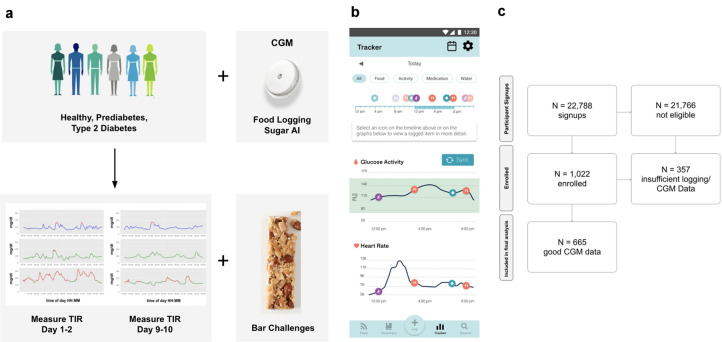
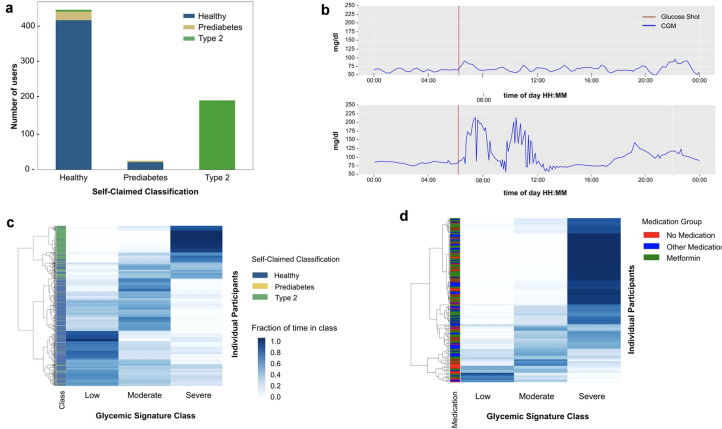
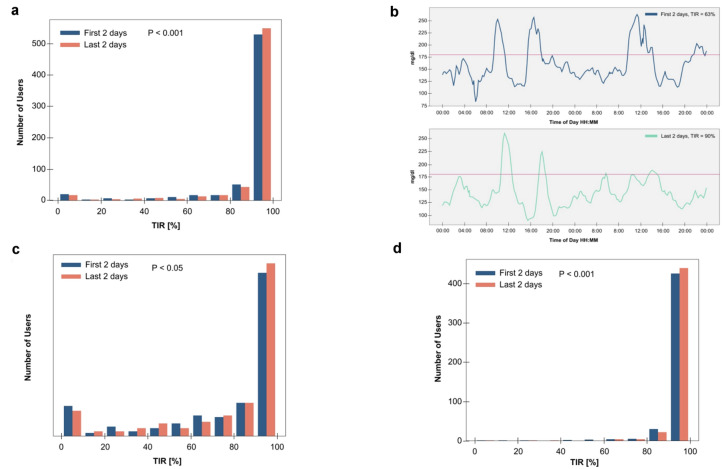
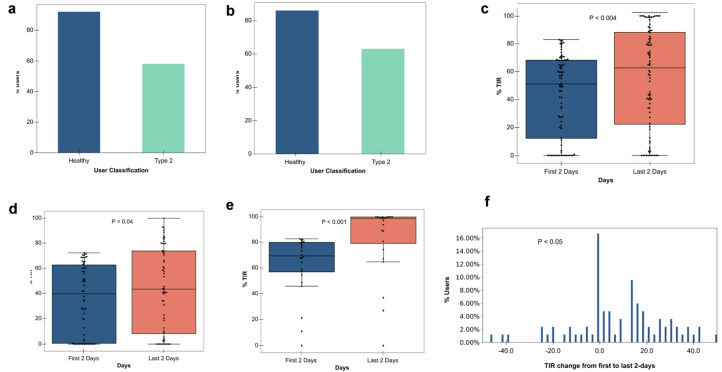
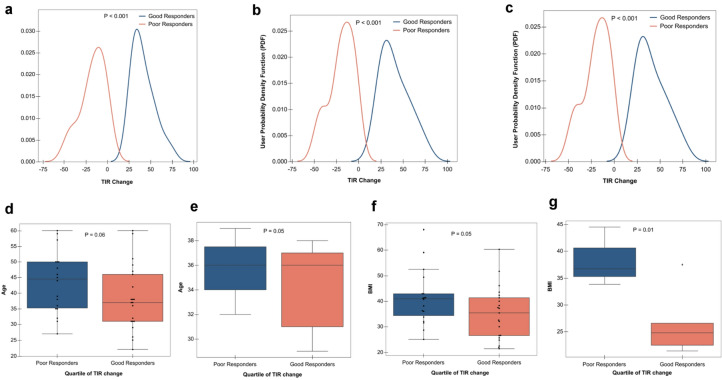
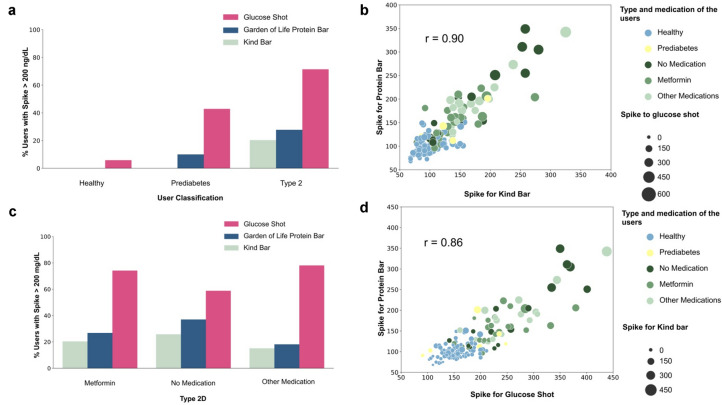
INTRODUCTION: While continuous glucose monitoring (CGM) has been shown to decrease both hyper- and hypoglycemia in insulin-treated diabetes, its value in non-insulin-treated type 2 diabetes (T2D) and prediabetes is unclear. Studies examining the reduction in hyperglycemia with the use of CGM in non-insulin-treated T2D are limited. METHODS: We investigated the potential benefit of CGM combined with a mobile app that links each individual's glucose tracing to meal composition, heart rate, and physical activity in a cohort of 1022 individuals, ranging from nondiabetic to non-insulin-treated T2D, spanning a wide range of demographic, geographic, and socioeconomic characteristics. The primary endpoint was the change in time in range (TIR), defined as 54-140 mg/dL for healthy and prediabetes, and 54-180 mg/dL for T2D, from the beginning to end of a 10-day period of use of the Freestyle Libre CGM. Logged food intake, physical activity, continuous glucose, and heart rate data were captured by a smartphone-based app that continuously provided feedback to participants, overlaying daily glucose patterns with activity and food intake, including macronutrient breakdown, glycemic load (GL), and glycemic index (GI). RESULTS: A total of 665 participants meeting eligibility and data requirements were included in the final analysis. Among self-reported nondiabetic participants, CGM identified glucose excursions in the diabetic range among 15% of healthy and 36% of those with prediabetes. In the group as a whole, TIR improved significantly (p < 0.001). Among the 51.4% of participants who improved, TIR increased by an average of 6.4% (p < 0.001). Of those with poor baseline TIR, defined as TIR below comparable A1c thresholds for T2D and prediabetes, 58.3% of T2D and 91.7% of healthy/prediabetes participants improved their TIR by an average of 22.7% and 23.2%, respectively. Predictors of improved response included no prior diagnosis of T2D and lower BMI. CONCLUSIONS: These results indicate that 10-day use of CGM as a part of multimodal data collection, with synthesis and feedback to participants provided by a mobile health app, can significantly reduce hyperglycemia in non-insulin-treated individuals, including those with early stages of glucose dysregulation.
Overview
The claims and statistics of this paper haven’t been checked yet.
Free: it reads the open-access text and checks the first 5 claims that cite a source we can check. Create a free account to check every claim.
Integrity signals
Registry
Cites
Statistics
Figures
Verification
Claims the paper makes
The claims and statistics of this paper haven’t been checked yet.
Free: it reads the open-access text and checks the first 5 claims that cite a source we can check. Create a free account to check every claim.
Claims other papers make about this one
Each is checked against this paper’s own text: does it say what the citing paper says it does?
The cited source says what the claim attributes to it.
In the citing paper
“In another study of isCGM combined with a mobile app that links an individual's glucose tracing to meal composition, heart rate and physical activity, Dehghani Zahedani et al. found that 10 days of isCGM use was associated with improvements in TIR, even among those living with prediabetes.”
Self-check
Percentages, sums and reported differences re-computed from the paper’s own numbers.
The self-check needs the paper’s full text.
Citations
Cites
Reduction in the incidence of type 2 diabetes with lifestyle intervention or metformin
(2002) · New England Journal of Medicine · doi:10.1056/nejmoa012512 · Cited by 19,011 · cited 1×
“exercise per week, are highly effective in preventing transition to T2D in high-risk individuals [3] and lower hemoglobin A1c in”
BackgroundContinuous glucose monitoring and intensive treatment of type 1 diabetes
(2008) · New England Journal of Medicine · doi:10.1056/nejmoa0805017 · Cited by 1,559
Impaired Fasting Glucose and Impaired Glucose Tolerance
Nathan, D. M., Davidson, M. B., DeFronzo, R. A., Heine, R. J., Henry, R. R., Pratley, R., & Zinman, B. (2007) · Diabetes Care · doi:10.2337/dc07-9920 · Cited by 1,396 · cited 1×
“Of those with prediabetes, 70% will convert to T2D during their lifetime [2].”
Background6. Glycemic Targets: Standards of Medical Care in Diabetes—2021
American Diabetes Association (2021) · Diabetes Care · doi:10.2337/dc21-s006 · Cited by 847
Validation of Time in Range as an Outcome Measure for Diabetes Clinical Trials
Beck, R. W., Bergenstal, R. M., Riddlesworth, T. D., Kollman, C., Li, Z., Brown, A. S., & Close, K. L. (2019) · Diabetes Care · doi:10.2337/dc18-1444 · Cited by 793 · cited 1×
“hyperglycemia [14, 23], was used to quantify short-term benefits in daylong glycemia, and clinical factors that predicted improvement in TIR were identified.”
MethodHow does multiple testing correction work?
Noble, W. S. (2009) · Nature Biotechnology · doi:10.1038/nbt1209-1135 · Cited by 772 · cited 2×
“To account for the statistical analyses of multiple independent variables in this study, the Benjamini–Hochberg procedure (BH) was employed to control the false discovery rate (FDR) [30, 31] at the level of 0.”
MethodInfluentialBeck, R. W., Riddlesworth, T. D., Ruedy, K., Ahmann, A., Haller, S., Kruger, D., McGill, J. B., Polonsky, W., Price, D., Aronoff, S., et al. (2017) · Annals of Internal Medicine · doi:10.7326/m16-2855 · Cited by 635
Haak, T., Hanaire, H., Ajjan, R., Hermanns, N., Riveline, J.-P., & Rayman, G. (2017) · Diabetes Therapy · doi:10.1007/s13300-016-0223-6 · Cited by 623
Ali, M. K., Echouffo-Tcheugui, J. B., & Williamson, D. F. (2012) · Health Affairs · doi:10.1377/hlthaff.2011.1009 · Cited by 594 · cited 1×
“weight loss of only 4% with attrition rates as high as 50% [6].”
BackgroundGreenwood, D. A., Gee, P. M., Fatkin, K. J., & Peeples, M. (2017) · Journal of Diabetes Science and Technology · doi:10.1177/1932296817713506 · Cited by 526 · cited 5×
“Continuing glucose monitoring (CGM) has demonstrated efficacy in improving HbA1c and reducing hypoglycemia in patients with type 1 diabetes and insulin-treated T2D [10–17].”
Influential
Cited by
Holzer, R., Bloch, W., & Brinkmann, C. K. (2022) · Sensors · doi:10.3390/s22052030 · Cited by 130
“This is in line with the findings of a large-scale study from the United States, which investigated the glucose profile of healthy adults and those with prediabetes and noninsulin-treated type 2 diabetes mellitus (n = 665), who all used CGM in combination with a smartphone-based app [43].”
ResultPrecision nutrition: Maintaining scientific integrity while realizing market potential
Berciano, S., Figueiredo, J., Brisbois, T. D., Alford, S., Koecher, K., Eckhouse, S., Ciati, R., Kussmann, M., Ordovas, J. M., Stebbins, K., et al. (2022) · Frontiers in Nutrition · doi:10.3389/fnut.2022.979665 · Cited by 91
“Aided by a wealth of data now gathered viawearable devices, smartphones, and diagnostic tests, PN holds the promise of a more cost-effective approach to health promotion (16, 17).”
BackgroundUse of Continuous Glucose Monitors by People Without Diabetes: An Idea Whose Time Has Come?
Klonoff, D. C., Nguyen, K. T., Xu, N. Y., Gutierrez, A., Espinoza, J. C., & Vidmar, A. P. (2023) · Journal of Diabetes Science and Technology · doi:10.1177/19322968221110830 · Cited by 93
Jarvis, P. R. E., Cardin, J. L., Nisevich-Bede, P. M., & McCarter, J. P. (2023) · Metabolism · doi:10.1016/j.metabol.2023.155640 · Cited by 86
Kitazawa, M., Takeda, Y., Hatta, M., Horikawa, C., Sato, T., OSAWA, T., Ishizawa, M., Suzuki, H., Matsubayashi, Y., Fujihara, K., et al. (2023) · The Journal of Clinical Endocrinology & Metabolism · doi:10.1210/clinem/dgad639 · Cited by 47
Spartano, N. L., Sultana, N., Lin, H., Cheng, H., Lu, S., Fei, D., Murabito, J. M., Walker, M. E., Wolpert, H. A., & Steenkamp, D. (2024) · The Journal of Clinical Endocrinology & Metabolism · doi:10.1210/clinem/dgae626 · Cited by 57
Low carbohydrate high fat ketogenic diets on the exercise crossover point and glucose homeostasis
Noakes, T. D., Prins, P. J., Volek, J. S., D’Agostino, D. P., & Koutnik, A. P. (2023) · Frontiers in Physiology · doi:10.3389/fphys.2023.1150265 · Cited by 33
Pai, A., Santiago, R., GLANTZ, N. M., Bevier, W. C., Barua, S., Sabharwal, A., & Kerr, D. E. (2024) · npj Digital Medicine · doi:10.1038/s41746-023-00985-7 · Cited by 37
Ossenbrink, L., Haase, T., Timpel, P., Schoffer, O., Scheibe, M., Schmitt, J., Deckert, S., & Harst, L. (2023) · JMIR Serious Games · doi:10.2196/44132 · Cited by 27
Aronson, R., Abitbol, A., Bajaj, H. S., Cheng, A. Y. Y., Christopoulos, S., Harris, S. B., Jain, A. B., & Goldenberg, R. M. (2025) · Diabetes, Obesity and Metabolism · doi:10.1111/dom.70008 · Cited by 33
POC Sensor Systems and Artificial Intelligence—Where We Are Now and Where We Are Going?
Prashanthi, K., Kovur, K. M., Rayat, D. Y., & Wishart, D. S. (2025) · Biosensors · doi:10.3390/bios15090589 · Cited by 25
“The landscape of pN has been rapidly transformed by the convergence of POC systems, wearable devices, and AI [105,157–160].”
Optimizing metabolic health with digital twins
Su, C., Wang, P., Foo, N., & Ho, D. (2025) · npj Aging · doi:10.1038/s41514-025-00211-6 · Cited by 23
Oganesova, Z., Pembérton, J. H., & Brown, A. C. (2024) · Diabetic Medicine · doi:10.1111/dme.15369 · Cited by 31
Kashiwagi, K., Inaishi, J., Kinoshita, S., Wada, Y., Hanashiro, S., Shiga, K., Kitazawa, M., Tsutsumi, S., Yamakawa, H., Irie, J., et al. (2023) · PLoS ONE · doi:10.1371/journal.pone.0291923 · Cited by 19
“Many self-reported nondiabetic participants have frequent glycemic excursions into the diabetic range: Fifteen % of healthy and 36% of prediabetic individuals had glucose levels above 200 mg/dl on CGM [10].”
BackgroundDiez Alvarez, S., Fellas, A., Wynne, K., Santos, D., Sculley, D., Acharya, S., Navathe, P., Gironès, X., & Coda, A. (2024) · JMIR mhealth and uhealth · doi:10.2196/54826 · Cited by 15
Research progress in the application of time in range: more than a percentage
Wan, J., Lu, J., Li, C., Ma, X., & Zhou, J. (2023) · Chinese Medical Journal · doi:10.1097/cm9.0000000000002582 · Cited by 12
AI-Driven Management of Type 2 Diabetes in China: Opportunities and Challenges
He, Z., & Li, W. (2025) · Diabetes Metabolic Syndrome and Obesity · doi:10.2147/dmso.s495364 · Cited by 13
“22 CGM systems integrated with AI technology improve detection results’ accuracy and facilitate more convenient glycemic control.”
Lim, M. H., Chae, H., Yoon, J., & Shin, I. (2025) · Scientific Reports · doi:10.1038/s41598-025-01367-7 · Cited by 21
Alvarez, S. D., Fellas, A., Santos, D., Sculley, D., Wynne, K., Acharya, S., Navathe, P. D., Gironès, X., & Coda, A. (2023) · JMIR Diabetes · doi:10.2196/42389 · Cited by 11
Postprandial Glucose: A Variable in Continuum
Joshi, S., Kesavadev, J., M., P. K. K., Saboo, B., Mehta, A., Bhattacharyya, A., Sosale, A., Jabbar, P. K., Santosh, R., Deshmukh, V. C., et al. (2025) · Clinical Medicine Insights Endocrinology and Diabetes · doi:10.1177/11795514251370507 · Cited by 12
“88 TIR is a CGM parameter that is often used to analyze patient’s glycemic condition; however, it may not provide adequate information about hypoglycemia.”
Using Digital Health Technology to Prevent and Treat Diabetes
Clements, M. A., Kaufman, N., & Mel, E. (2023) · Diabetes Technology & Therapeutics · doi:10.1089/dia.2023.2506 · Cited by 13
Spartano, N. L., Prescott, B. R., Walker, M. E., Shi, E., Venkatesan, G., Fei, D., Lin, H., Murabito, J. M., Ahn, D. T., Battelino, T., et al. (2025) · Journal of Diabetes Science and Technology · doi:10.1177/19322968251315171 · Cited by 10
Chaudhry, M., Kumar, M., Singhal, V., & Srinivasan, B. (2024) · Scientific Reports · doi:10.1038/s41598-024-56933-2 · Cited by 13
“Internationally, large cohort studies have been undertaken like the Dehghani Zahedani et al. 35 (Sugar.AI initiative), that show that a 10-day CGM app-based tracking regime paired with controlled food choices can significantly promote healthier metabolic-oriented choices in healthy and at-risk individuals 35 .”
BackgroundMethodInfluentialKo, J., Moon, S., Ajjan, R. A., Lee, M. Y., Lee, H., Choi, B., Park, J., Lee, S., Kang, J., & Park, C. (2025) · Diabetes, Obesity and Metabolism · doi:10.1111/dom.16304 · Cited by 7
Brinkmann, C. K., Bloch, W., & Mutinati, G. C. (2023) · Frontiers in Bioengineering and Biotechnology · doi:10.3389/fbioe.2023.1166857 · Cited by 7
Bober, T., Garvin, S., Krall, J. S., Zupa, M. F., Low, C. A., & Rosland, A.-M. M. (2025) · JMIR Diabetes · doi:10.2196/64505 · Cited by 11
Black, D. S., Vidmar, A. P., & Barnett, B. (2025) · The Lancet Digital Health · doi:10.1016/j.landig.2025.100904 · Cited by 6
Torres, L. C., & Romero, C. (2022) · Journal of Clinical Nursing · doi:10.1111/jocn.16523 · Cited by 8
Continuous and Flash Glucose Monitoring in Adults at Risk of Type 2 Diabetes: A Scoping Review
Amoh, P., Broom, D. R., Kyrou, I., Nartey, S., Paul, A., Esliger, D., & Whelan, M. (2025) · Journal of Diabetes Science and Technology · doi:10.1177/19322968251315497 · Cited by 5
“The majority were funded by academic and institutional sources, while two studies received corporate sponsorship 19,25 from companies that provided CGMs and/other logistics for the interventions.”
InfluentialBarua, S., Upadhyay, D., Berube, L. T., Popp, C. J., Curran, M., Pompeii, M. L., Hu, L., Alemán, J. O., Bergman, M., & Sevick, M. A. (2025) · Diabetic Medicine · doi:10.1111/dme.70052 · Cited by 5
Continuous Glucose Measurements for Diet Monitoring in Healthy Adults
Ong, L., Lamoth, C. J. C., van Beek, A. P., Cao, M., Verkerke, G. J., & Wilhelm, E. (2025) · Journal of Diabetes Science and Technology · doi:10.1177/19322968251361555 · Cited by 3
Ehlert, B., Aron, D., Perelman, D., Wu, Y., & Snyder, M. P. (2025) · Diabetes Technology & Therapeutics · doi:10.1177/15209156251374711 · Cited by 4
Self-citationKinny, F., Läer, S., & Obarčanin, E. (2025) · PLOS Digital Health · doi:10.1371/journal.pdig.0001087 · Cited by 7
Bruttomesso, D., Petrie, J. R., Evans, M. L., Fleming, G. A., Hanaire, H. P., Holl, R. W., Sherr, J. L., Bergenstal, R. M., Heinemann, L., & Peters, A. L. (2026) · Diabetologia · doi:10.1007/s00125-025-06651-9 · Cited by 3
Ito, M., Yoshimoto, J., Ishii, S., Maeda, T., Wada, Y., Yonei, Y., Kishi, M., & Ono, T. (2024) · Scientific Reports · doi:10.1038/s41598-024-72290-6 · Cited by 2
Workshop on Noninvasive Glucose Monitoring 2024
Kang, J. W., Arnold, M. A., Steenkamp, D., Tapsak, M. A., Mäntele, W., Khang, Y., Jue, M., & So, P. T. C. (2025) · Journal of Diabetes Science and Technology · doi:10.1177/19322968251329371 · Cited by 5
Показники контролю рівня глікемії: сучасний стан питання
Kondratyshyn, A. R., Fik, M. S., Наумова, У. О., & Naumova, L. V. (2022) · Endokrynologia · doi:10.31793/1680-1466.2022.27-2.147 · Cited by 2
Alvarez, S. D., Fellas, A., Wynne, K., Santos, D., Sculley, D., Acharya, S., Navathe, P. D., Gironès, X., & Coda, A. (2023) · doi:10.2196/preprints.54826 · Cited by 2
Workshop on Noninvasive Glucose Monitoring 2025
Kang, J. W., Causey, J., Steenkamp, D., Park, S., Heise, H. M., Weber, A., Ntziachristos, V., Coutard, J.-G., Kamath, A., Barman, I., et al. (2026) · Journal of Diabetes Science and Technology · doi:10.1177/19322968261447289 · Cited by 1
Trends in Time in Range–Related Publications and Clinical Trials: A Bibliometric Review
Patel, P. M., Abaniel, R. M., Dogra, N., Lo, C. B., Frazzitta, M. A., & Virdi, N. S. (2023) · doi:10.2337/figshare.22714573.v1
Trends in Time in Range–Related Publications and Clinical Trials: A Bibliometric Review
Patel, P. M., Abaniel, R. M., Dogra, N., Lo, C. B., Frazzitta, M. A., & Virdi, N. S. (2023) · doi:10.2337/figshare.22714573
Röhl, K. N., & Wirsam, J. (2023) · Springer eBooks · doi:10.1007/978-3-658-41618-8_16
A Case Report of Elderly Brittle Type 2 Diabetes Complicated with Ketosis
陈, 小. (2023) · Medical Diagnosis · doi:10.12677/md.2023.133053
Continuous Glucose Monitoring in Prediabetic and Type II Diabetic Mellitus Patients: A Rapid Review
Lindquist, R., Juarez, C., & Mitchell, A. (2023) · Nursing & Primary Care · doi:10.33425/2639-9474.1232 · Cited by 1
Brinkmann, C. K., Denzin, J., & Behrens, M. (2024) · B&G Bewegungstherapie und Gesundheitssport · doi:10.1055/a-2337-8791
“Erste Studien lassen positive Effekte (in Kombination mit Pati-entInnenschulungen oder einer App) auf den Langzeitblutzucker-wert erkennen [21, 22].”
Patientenperspektive auf moderne Diabetestechnologien
Roos, T., Diem, P., Trümpy, C., Brandt, D., & Heinemann, L. (2024) · Die Diabetologie · doi:10.1007/s11428-024-01243-4 · Cited by 1
Solanki, S. B., Pradhan, M., Singh, N., & Verma, K. (2024) · Ginecologia ro · doi:10.26416/gine.46.4.2024.10361
HbA1c reduction strategies: An overview of pharmacological interventions
Upadhye, K. S., Patidar, H., Bamnia, N., & Yadav, N. K. (2025) · National Journal of Pharmacology and Therapeutics · doi:10.4103/njpt.njpt_72_24 · Cited by 2
Fukunaga, K., Kobayashi, T., Imachi, H., Horikawa, S., Iwata, Y., Saheki, T., Yoshimura, T., Sato, S., Ly, R., & Murao, K. (2025) · Cureus · doi:10.7759/cureus.83297
Patkar, N. V., & Panikar, V. (2025) · International Journal of Research in Medical Sciences · doi:10.18203/2320-6012.ijrms20253147
IoT, Medications and Patient Portals, and Personal Health Records
Bhardwaj, A., Dhamija, K., Sharma, S., Sharma, R., & Kumar, S. (2025) · BENTHAM SCIENCE PUBLISHERS eBooks · doi:10.2174/9798898810696125010008
Brinkmann, C. K., Denzin, J., & Behrens, M. (2025) · Diabetes aktuell · doi:10.1055/a-2714-1486
“Automated-Insulin-Delivery (AID) Systeme wer - den perspektivisch, unterstützt durch künstliche Intelli - genz (KI), Daten von Multisensorsystemen berücksichti”
UNDERWOOD, P. C., Babicheva, V., Keels, J. N., Flewelling, C., Petreca, V. G., Magny‐Normilus, C., & Upadhay, J. (2026) · The Science of Diabetes Self-Management and Care · doi:10.1177/26350106251405751
Continuous Blood Glucose Monitoring: Potential Applications from Diabetes Management
Manaf, F. A., Amin, M. Q. A. M., Ahmad, A., Farizan, N. H., Sukri, N. M., & Maliki, A. B. H. M. (2025) · Malaysian Journal of Medicine and Health Sciences · doi:10.47836/mjmhs.21.4.41
Ćwirko-Godycka, A., Murawska, N., Chodór, M., Tomaszewska, A., Karczewska, K., Mojzyk, S., Kokoszka, M., Mierniczek, A., Dymel, N., & Feret, R. (2026) · International Journal of Innovative Technologies in Social Science · doi:10.31435/ijitss.1(49).2026.4658
Lee, M. H., Jin, S., Febriana, E., Lim, M., Baig, S., Ali, S. H., Ang, I. Y. H., Loh, T. P., Nastar, F. A., Chia, K. S., et al. (2026) · JMIR Diabetes · doi:10.2196/81520 · Cited by 1
Lalama, E., Csanalosi, M., Kabisch, S., Wilson-Barnes, S., Gymnopoulos, L. P., Dimitropoulos, K., Rouskas, K., Anagnostis, A., Oikonomidis, I., Hadjileontiadis, L. J., et al. (2026) · JMIR Human Factors · doi:10.2196/87692
THE ROLE AND CLINICAL SIGNIFICANCE OF CONTINUOUS GLUCOSE MONITORING METRICS İN PREDIABETES
GÜNEYSU, B. Y., & Çotuk, H. B. (2026) · AURUM Journal of Engineering Systems and Architecture · doi:10.53600/ajesa.1861999
Yang, L., & Wang, X. (2026) · Frontiers in Public Health · doi:10.3389/fpubh.2026.1888001
“Studies integrating digital trackers with CGM further suggest that combining exercise, diet, and glucose data supports more refined self-management (32).”
Sun, G., Jia, X., Zhang, H., Yu, R., Rong, S., Liu, Y., Qi, Y., & Chen, S. (2026) · Nutrients · doi:10.3390/nu18152546
“Within the rhythm coherence framework, CGM provides a metabolic readout of meal–activity coupling because postprandial glucose trajectories reflect both meal timing and subsequent activity responses [25,57].”
Pollé, O. G., Battelino, T., Martens, P.-J., Overbergh, L., Mathieu, C., Marcovecchio, M. L., Mathieu, C., Gillard, P., Casteels, K., Overbergh, L., et al. (2026) · Diabetes Technology & Therapeutics · doi:10.1177/15209156261492040
Metadata
- Authors
- Dehghani Zahedani, A., Shariat Torbaghan, S., Rahili, S., Karlin, K., Scilley, D., Thakkar, R., Saberi, M., Hashemi, N., Perelman, D., Aghaeepour, N., McLaughlin, T., & Snyder, M. P.
- Corresponding author
- Snyder, Michael P.
- Venue
- Diabetes Therapy
- Published
- 2021-05-28
- Volume
- 12
- Issue
- 7
- Pages
- 1871-1886
- ISSN
- 1869-6953 (ISSN-L)
- 1869-6961
- PMC
- PMC8266934
- OpenAlex
- W3164167890
- Cited by
- 62
- References
- 32
- Citations by year
- 2026: 11 · 2025: 22 · 2024: 9 · 2023: 15 · 2022: 5
- FWCI
- 5.41
- Type
- journal article
- Language
- en
- Open access
- gold
- doi.org
- Licence
- cc-by-nc
- creativecommons.org/licenses/by-nc/4.0 (tdm)
- creativecommons.org/licenses/by-nc/4.0 (vor)
- Locations
- Diabetes Therapy (publishedVersion, cc-by-nc)
- PubMed Central (publishedVersion, cc-by-nc)
- PubMed (publishedVersion)
- Funders
- January, Inc.
- Topics
- Health Sciences › Medicine › Endocrinology, Diabetes and Metabolism › Diabetes Management and Research
- Health Sciences › Medicine › Endocrinology, Diabetes and Metabolism › Diabetes Treatment and Management
- Health Sciences › Medicine › Endocrinology, Diabetes and Metabolism › Diabetes Management and Education
- Keywords
- continuous glucose monitoring, type 2 diabetes, prediabetes, glucose regulation, hyperglycemia, time in range, mobile health apps, digital health, glycemic load, glycemic index, macronutrient intake, physical activity, heart rate, FreeStyle Libre, non-insulin-treated diabetes, glycemic excursions, body mass index, predictors of treatment response, healthy adults
About these checks
Registry, retraction, Cites and statistics results are computed, not judged, with one exception: a printed reference that no index lists is read once by a model before it counts as a citation error. Claims are extracted by a model and kept only when their quote appears verbatim in the text; each cited source is then checked, with a model’s help, for whether it says what the claim relies on. Those verdicts can be wrong — read the claim’s quote and the cited source before relying on one.
Statistics and arithmetic are recomputed, not judged.
Confidence bands are shown only for fields calibrated on our annotated test set. None is calibrated yet, so no band is shown.
What counts as a claim ›How we measure confidence ›How we check this ›
Are you an author, or do you see a problem with this page? Request a review
Data sources
Bibliographic data: Semantic Scholar, OpenAlex, Crossref.
Contains information from the Semantic Scholar Academic Graph Datasets, made available under the ODC Attribution License (ODC-BY 1.0).
Semantic Scholar’s data is described in: Kinney, R., et al. (2023). The Semantic Scholar Open Data Platform. arXiv:2301.10140.
