

Evaluating the Clinical Effectiveness and Safety of Semaglutide in Individuals with Uncontrolled Type 2 Diabetes. Real-World Evidence from Saudi Arabia: The Observational, Multicenter, 15-Month EVOLUTION Study
Open accessThe DOI matches its Crossref record; 33 of the 33 references it cites were found in a registry or an index.
Abstract
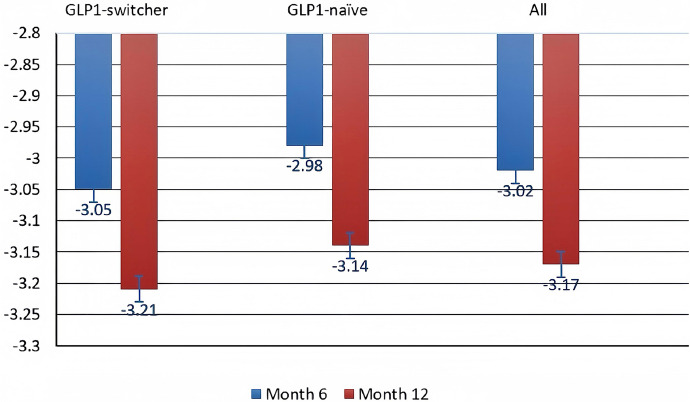
INTRODUCTION: This study aimed to assess the safety and effectiveness of semaglutide, administered either by weekly subcutaneous (SC) injection or orally, in real-life practice in Saudi Arabia in individuals with type 2 diabetes mellitus (T2DM). METHODS: A retrospective chart review study was conducted at 18 Saudi Arabia centers. An accredited centralized institutional review board approved the study. Medical records were included for individuals of any age ≥ 18 years with uncontrolled T2DM. The primary outcome measure was the laboratory glycated hemoglobin (HbA1c) level. Secondary measures included fasting blood glucose (FBG), weight, and hypoglycemia. All variables were checked after 6 and 12 months of semaglutide initiation. RESULTS: The analysis of this study included 1223 patients with uncontrolled T2DM (HbA1c > 7%). The mean (SD) baseline HbA1c was 10.02% (1.17). HbA1c was reduced by an average of 3.02% (0.84) and 3.17% (0.84) at 6 and 12 months, respectively. Results of a repeated measure analysis of variance (ANOVA) indicated significant differences in HbA1c (p value < 0.001). HbA1c levels at 6 and 12 months were significantly lower, 7.00% (0.70) and 6.85% (0.69), than at baseline, 10.02% (1.17). About 193 patients (56.4%) of the 295 patients having HbA1c < 9% achieved HbA1c of 5.7% or less. The frequency of hypoglycemia events was 4.60 (1.10) in the 3 months before semaglutide was initiated. The frequency of hypoglycemia events in the last 3 months was 2.30 (0.80) events and 0.80 (0.50) events at 6-month and 12-month follow-up visits, respectively. The percent reduction in body mass index (BMI) was an average of 13.07% (1.53) and 19.89% (4.07) at 6 and 12 months, respectively. Lipid profile and blood pressure were improved at 6 and 12 months. CONCLUSION: Semaglutide, administered either by SC injection or orally, provided substantial glycemic and weight-loss benefits in adults with T2DM.
Overview
The claims and statistics of this paper haven’t been checked yet.
Free: it reads the open-access text and checks the first 5 claims that cite a source we can check. Create a free account to check every claim.
Integrity signals
Registry
Cites
Statistics
Figures
Verification
Claims the paper makes
The claims and statistics of this paper haven’t been checked yet.
Free: it reads the open-access text and checks the first 5 claims that cite a source we can check. Create a free account to check every claim.
Claims other papers make about this one
Each is checked against this paper’s own text: does it say what the citing paper says it does?
The source backs part of the claim, not all of it — or backs it for a different population, condition or comparison.
In the citing paper
“The observed weight reduction in clinical practice overall tends to be lower than in randomized controlled trials; however, outcomes approach those seen in trials when focusing on highly adherent patients.”
From Real‐world evidence on the utilization, clinical and comparative effectiveness, and adverse effects of newer GLP ‐ 1RA ‐based weight‐loss therapies (2025) · cites this paper as [61]
Experimental — accuracy not yet measuredThe source backs part of the claim, not all of it — or backs it for a different population, condition or comparison.
In the citing paper
“Importantly, the weight‐loss effectiveness of GLP‐1RA was similar to what has been observed in trials when focusing on the subgroup of adherent patients who consistently took their prescribed GLP‐1RA, for example, at 12 months follow‐up, 50 , 53 , 55 , 56 , 57 , 58 , 61 whereas studies reporting results in an ‘as‐started’ approach found considerably lower effectiveness. 52 , 59 , 63 , 66”
From Real‐world evidence on the utilization, clinical and comparative effectiveness, and adverse effects of newer GLP ‐ 1RA ‐based weight‐loss therapies (2025) · cites this paper as [61]
Experimental — accuracy not yet measuredThe cited source says what the claim attributes to it.
In the citing paper
“The percentage weight reduction over typically 6–12 months of follow‐up thus ranged from 2.2% to 18.5% for liraglutide, 52 , 55 4.4% to 19.5% for semaglutide 61 , 65 and 4.8% to 21.2% for tirzepatide. 50 , 59”
From Real‐world evidence on the utilization, clinical and comparative effectiveness, and adverse effects of newer GLP ‐ 1RA ‐based weight‐loss therapies (2025) · cites this paper as [61]
The cited source says what the claim attributes to it.
In the citing paper
“Areas of particular focus are how to avoid selection bias, which is a frequent concern in studies that only include ‘drug survivors’, 53 , 55 , 58 , 60 , 61 , 62 , 65 , 67 , 70 , 71 that is, those retaining treatment over a prolonged period, or those restricting their analyses to high‐dose users. 57”
From Real‐world evidence on the utilization, clinical and comparative effectiveness, and adverse effects of newer GLP ‐ 1RA ‐based weight‐loss therapies (2025) · cites this paper as [61]
Self-check
Percentages, sums and reported differences re-computed from the paper’s own numbers.
The self-check needs the paper’s full text.
Citations
Cites
Saeedi, P., Petersohn, I., Salpea, P., Malanda, B., Karuranga, S., Unwin, N., Colagiuri, S., Guariguata, L., Motala, A. A., Ogurtsova, K., et al. (2019) · Diabetes Research and Clinical Practice · doi:10.1016/j.diabres.2019.107843 · Cited by 10,792
Semaglutide and Cardiovascular Outcomes in Patients with Type 2 Diabetes
Marso, S. P., Bain, S. C., Consoli, A., Eliaschewitz, F. G., Jódar, E., Leiter, L. A., Lingvay, I., Rosenstock, J., Seufert, J., Warren, M. L., et al. (2016) · New England Journal of Medicine · doi:10.1056/nejmoa1607141 · Cited by 6,900 · cited 2×
“Semaglutide’s good CV effects in lowering the risk of major adverse cardiovascular event (MACE) have recently been shown to have noticeable effects on HbA1c and body weight, which is exceptionally encouraging for the clinical use of the medication [18].”
Discovery of the once-weekly glucagon-like peptide-1 (GLP-1) analogue semaglutide
Lau, J., Bloch, P., Schäffer, L., Pettersson, I., Spetzler, J., Kofoed, J., Madsen, K., Knudsen, L. B., McGuire, J., Steensgaard, D. B., et al. (2015) · Journal of Medicinal Chemistry · doi:10.1021/acs.jmedchem.5b00726 · Cited by 1,105 · cited 1×
“Semaglutide, a human glucagon-like peptide 1 (GLP-1) analogue and GLP-1 receptor agonist (GLP-1RA) with a lengthy half-life, can be administered once weekly (OW) [8].”
The arcuate nucleus mediates GLP-1 receptor agonist liraglutide-dependent weight loss
Secher, A., Jelsing, J., Baquero, A. F., Hecksher-Sørensen, J., Cowley, M. A., Dalbøge, L. S., Hansen, G., Grove, K. L., Pyke, C., Raun, K., et al. (2014) · Journal of Clinical Investigation · doi:10.1172/jci75276 · Cited by 961 · cited 1×
“Because of the chemical structure of semaglutide, it is believed that receptors in the CNS provide the weight impact by allowing access to more parts of the nervous system [25].”
Pratley, R. E., Aroda, V. R., Lingvay, I., Lüdemann, J., Andreassen, C., Navarria, A., & Viljoen, A. (2018) · The Lancet Diabetes & Endocrinology · doi:10.1016/s2213-8587(18)30024-x · Cited by 790
Sorli, C., Harashima, S.-I., Tsoukas, G. M., Unger, J., Karsbøl, J. D., Hansen, T., & Bain, S. C. (2017) · The Lancet Diabetes & Endocrinology · doi:10.1016/s2213-8587(17)30013-x · Cited by 745
Ahmann, A. J., Capehorn, M., Charpentier, G., Dotta, F., Henkel, E., Lingvay, I., Holst, A. G., Annett, M. P., & Aroda, V. R. (2018) · Diabetes Care · doi:10.2337/dc17-0417 · Cited by 596
Ahrén, B., Masmiquel, L., Kumar, H., Sargin, M., Karsbøl, J. D., Jacobsen, S. H., & Chow, F. (2017) · The Lancet Diabetes & Endocrinology · doi:10.1016/s2213-8587(17)30092-x · Cited by 495
Aroda, V. R., Bain, S. C., Cariou, B., Piletič, M., Rose, L., Axelsen, M., Rowe, E., & DeVries, J. H. (2017) · The Lancet Diabetes & Endocrinology · doi:10.1016/s2213-8587(17)30085-2 · Cited by 464
Berger, M. L., Sox, H., Willke, R. J., Brixner, D. L., Eichler, H., Goettsch, W., Madigan, D., Makady, A., Schneeweiss, S., Tarricone, R., et al. (2017) · Value in Health · doi:10.1016/j.jval.2017.08.3019 · Cited by 456
Semaglutide added to basal insulin in type 2 diabetes (SUSTAIN 5): a randomized, controlled trial.
Rodbard, H. W., Lingvay, I., Reed, J., de la Rosa, R., Rose, L., Sugimoto, D., Araki, E., Chu, P.-L., Wijayasinghe, N., & Norwood, P. (2018) · The Journal of Clinical Endocrinology & Metabolism · doi:10.1210/jc.2018-00070 · Cited by 412
Capehorn, M. S., Catarig, A.-M., Furberg, J. K., Janez, A., Price, H. C., Tadayon, S., Vergès, B., & Marre, M. (2020) · Diabetes & Metabolism · doi:10.1016/j.diabet.2019.101117 · Cited by 412
Zinman, B., Bhosekar, V., Busch, R., Holst, I., Ludvik, B., Thielke, D., Thrasher, J., Woo, V., & Philis-Tsimikas, A. (2019) · The Lancet Diabetes & Endocrinology · doi:10.1016/s2213-8587(19)30066-x · Cited by 376
Berger, M. L., Sox, H., Willke, R. J., Brixner, D. L., Eichler, H., Goettsch, W., Madigan, D., Makady, A., Schneeweiss, S., Tarricone, R., et al. (2017) · Pharmacoepidemiology and Drug Safety · doi:10.1002/pds.4297 · Cited by 344
Diabetes mellitus in Saudi Arabia
Al-Nozha, M. M., Al-Maatouq, M. A., Al-Mazrou, Y. Y., Alharthi, S., Arafah, M., Khalil, M. Z., Khan, N. B., Al-Khadra, A. H., Al-Marzouki, K., Nouh, M. S., et al. (2004) · Saudi Medical Journal · doi:10.15537/1658-3175.2649 · Cited by 322
Lingvay, I., Catarig, A.-M., Frias, J. P., Kumar, H., Lausvig, N. L., le Roux, C. W., Thielke, D., Viljoen, A., & McCrimmon, R. J. (2019) · The Lancet Diabetes & Endocrinology · doi:10.1016/s2213-8587(19)30311-0 · Cited by 298
Thethi, T. K., Pratley, R., & Meier, J. J. (2020) · Diabetes, Obesity and Metabolism · doi:10.1111/dom.14054 · Cited by 134 · cited 1×
“Additionally, orally administered semaglutide was licensed as the first oral GLP-1RA for the treatment of T2DM following the recent results of the PIONEER program [36, 37], expanding the potential of using the medication in patients who are unable to self-administer an injectable agent.”
Metabolic and cardiovascular benefits of GLP‑1 agonists, besides the hypoglycemic effect (Review)
Iorga, R., Bacalbasa, N., Carsote, M., Bratu, O., Stanescu, A. M., Bungau, S., Pantis, C., & Diaconu, C. (2020) · Experimental and Therapeutic Medicine · doi:10.3892/etm.2020.8714 · Cited by 76
Rajamand Ekberg, N., Bodholdt, U., Catarig, A.-M., Catrina, S.-B., Grau, K., Holmberg, C. N., Klanger, B., & Knudsen, S. T. (2021) · Primary Care Diabetes · doi:10.1016/j.pcd.2021.06.008 · Cited by 63 · cited 1×
“After the study, 67.5% of patients had HbA1c below 7%, while 49.4% had lost at least 5% of their body weight [32].”
InfluentialUzoigwe, C., Liang, Y., Whitmire, S., & Paprocki, Y. (2021) · Diabetes Therapy · doi:10.1007/s13300-021-01053-7 · Cited by 62
Jain, A. B., Kanters, S., Khurana, R., Kissock, J., Severin, N., & Stafford, S. G. (2021) · Diabetes Therapy · doi:10.1007/s13300-020-00984-x · Cited by 47
Rudofsky, G., Catarig, A.-M., Favre, L., Grau, K., Häfliger, S., Thomann, R., & Schultes, B. (2021) · Diabetes Research and Clinical Practice · doi:10.1016/j.diabres.2021.108931 · Cited by 46
Semaglutide seems to be more effective the other GLP-1Ras
Holst, J. J., & Madsbad, S. (2017) · Annals of Translational Medicine · doi:10.21037/atm.2017.11.10 · Cited by 45
(2020) · The American Journal of Managed Care · doi:10.37765/ajmc.2020.88554 · Cited by 43
Brown, R. E., Bech, P. G., & Aronson, R. (2020) · Diabetes, Obesity and Metabolism · doi:10.1111/dom.14117 · Cited by 42
Williams, D. M., Ruslan, A. M., Khan, R., Vijayasingam, D., Iqbal, F., Shaikh, A., Lim, J., Chudleigh, R., Peter, R., Udiawar, M., et al. (2021) · Diabetes Therapy · doi:10.1007/s13300-021-01015-z · Cited by 31
Hansen, K. B., Svendstrup, M., Lund, A., Knop, F. K., Vilsbøll, T., & Vestergaard, H. (2021) · Diabetic Medicine · doi:10.1111/dme.14655 · Cited by 23 · cited 1×
“However, fewer people were receiving the maximum dose of semaglutide, according to real-world data from a diabetes outpatient clinic in Denmark ( N = 119) [34].”
Diabetes: A tale of two cultures
Alzaid, A. (2012) · The British Journal of Diabetes · doi:10.1177/1474651412444143 · Cited by 21
Di Loreto, C., Minarelli, V., Nasini, G., Norgiolini, R., & Del Sindaco, P. (2022) · Diabetes Therapy · doi:10.1007/s13300-022-01218-y · Cited by 21
Seeger, J. D., Nunes, A., & Loughlin, A. M. (2020) · Diabetes, Obesity and Metabolism · doi:10.1111/dom.14021 · Cited by 20
Visaria, J., Uzoigwe, C., Swift, C., Dang-Tan, T., Paprocki, Y., & Willey, V. J. (2021) · Clinical Therapeutics · doi:10.1016/j.clinthera.2021.03.003 · Cited by 20
Alsifri, S. N., Almalki, A., Alsifri, S., Alsifri, N., Moatism, M., Alsifri, S., & Issak, E. R. (2022) · International Journal of Clinical Medicine · doi:10.4236/ijcm.2022.138027 · Cited by 4
Self-citation
Research works printed but not linked: 4
- 1. International Diabetes Federation, IDF Diabetes Atlas, International Diabetes Federation, Brussels, Belgium, 8th edition, 2017, http://www.diabetesatlas.org.
- 6. IDF Diabetes Atlas 2021-10th edition. Saudi Arabia: Diabetes report 2010–2045. https://www.diabetesatlas.org/data/en/country/174/sa.html. Accessed 8 Mar 2023.
- 7. IDF Diabetes Atlas 2021–10th edition. Middle East and North Africa fact sheet 2019. https://diabetesatlas.org/upload/resources/material/20191218_144557_mena_factsheet_en.pdf. Accessed 8 Mar 2023.
- 27. Napoli R, Avogaro A, Formoso G, et al. Beneficial effects of glucagon-like peptide 1 receptor agonists on glucose control, cardiovascular risk profile, and non-alcoholic fatty liver disease. An expert opinion of the Italian Diabetes Society. Nutr Metab Cardiovasc Dis. 2021;21:S0939–4753(21)00410–5.
Cited by
Thomsen, R. W., Mailhac, A., Løhde, J. B., & Pottegård, A. (2025) · Diabetes Obesity and Metabolism · doi:10.1111/dom.16364 · Cited by 207
Hamed, K. M., Alosaimi, M. N., Ali, B. A., Alghamdi, A. M., Alkhashi, T., Alkhaldi, S. S., Altowarqi, N. A., Alzahrani, H., Alshehri, A., Alkhaldi, R. K., et al. (2024) · Cureus · doi:10.7759/cureus.68390 · Cited by 96
Self-citationEfficacy and safety of semaglutide: real-world tertiary care experience from Saudi Arabia
Butt, M. I., Alkhalifah, K., Riazuddin, M., Almuammar, S. M., Almuammar, S. M., Alhifthi, G. A., Ahmed, F. W., Hashim, S. M. A., & Waheed, N. (2024) · Annals of Saudi Medicine · doi:10.5144/0256-4947.2024.361 · Cited by 11
Alenzi, S., Alzahrani, A., Aljaloud, A., Alanazi, K., & Alarfaj, S. J. (2024) · Frontiers in Endocrinology · doi:10.3389/fendo.2024.1395651 · Cited by 11
Subhi, A. F., Alshamsi, S. O., Vitus, A., & Harazeen, A. (2024) · Cureus · doi:10.7759/cureus.69988 · Cited by 9
Metadata
- Authors
- Alsheikh, A., Alshehri, A., Alzahrani, S., Jammah, A. A., Alqahtani, F., Alotaibi, M., Aldahash, R., Alhozali, A. M., Alsabaan, F., Almehthel, M., Aljuhani, N., Aldabeis, A., Alamri, M., Maghawry, W., Alzaman, N., Alshaikh, A., M. Alnozha, O., Issak, E. R., & Alsifri, S.
- Affiliations
- King Abdul Aziz University Hospital (SA)
- King Fahd Medical City (SA)
- King Saud Medical City (SA)
- National Guard Health Affairs (SA)
- Security Forces Hospital (SA)
- East Jeddah Hospital (SA)
- Armed Forces Hospital Southern Region (SA)
- Taibah University (SA)
- Ain Shams University (EG)
- Armed Forces Hospital (SA)
- Corresponding author
- Issak, Emad R.
- ORCID
- Venue
- Diabetes Therapy
- Published
- 2023-12-19
- Volume
- 15
- Issue
- 2
- Pages
- 473-485
- ISSN
- 1869-6953 (ISSN-L)
- 1869-6961
- PMC
- PMC10838866
- OpenAlex
- W4389916331
- Cited by
- 16
- References
- 33
- Citations by year
- 2026: 4 · 2025: 8 · 2024: 4
- FWCI
- 3.26
- Type
- journal article
- Language
- en
- Open access
- gold
- doi.org
- Licence
- cc-by-nc
- creativecommons.org/licenses/by-nc/4.0 (tdm)
- creativecommons.org/licenses/by-nc/4.0 (vor)
- Locations
- Diabetes Therapy (publishedVersion, cc-by-nc)
- PubMed Central (publishedVersion, cc-by-nc)
- PubMed (publishedVersion)
- Topics
- Health Sciences › Medicine › Endocrinology, Diabetes and Metabolism › Diabetes Treatment and Management
- Health Sciences › Medicine › Endocrinology, Diabetes and Metabolism › Diabetes Management and Research
- Health Sciences › Medicine › Pharmacology (medical) › Pharmacology and Obesity Treatment
- Keywords
- semaglutide, type 2 diabetes, HbA1c, HbA1c reduction, hypoglycemia, weight loss, body mass index, oral semaglutide, real-world effectiveness, drug safety, Saudi Arabia, uncontrolled diabetes, fasting blood glucose, GLP-1 receptor agonists
About these checks
Registry, retraction, Cites and statistics results are computed, not judged, with one exception: a printed reference that no index lists is read once by a model before it counts as a citation error. Claims are extracted by a model and kept only when their quote appears verbatim in the text; each cited source is then checked, with a model’s help, for whether it says what the claim relies on. Those verdicts can be wrong — read the claim’s quote and the cited source before relying on one.
Statistics and arithmetic are recomputed, not judged.
Confidence bands are shown only for fields calibrated on our annotated test set. None is calibrated yet, so no band is shown.
What counts as a claim ›How we measure confidence ›How we check this ›
Are you an author, or do you see a problem with this page? Request a review
Data sources
Bibliographic data: Semantic Scholar, OpenAlex, Crossref.
Contains information from the Semantic Scholar Academic Graph Datasets, made available under the ODC Attribution License (ODC-BY 1.0).
Semantic Scholar’s data is described in: Kinney, R., et al. (2023). The Semantic Scholar Open Data Platform. arXiv:2301.10140.
