

The DOI matches its Crossref record.
Green synthesized ZnO nanoparticles by Saccharomyces cerevisiae and their antibacterial activity and photocatalytic degradation
Abstract
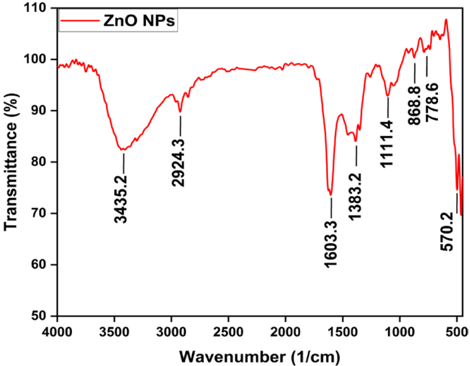
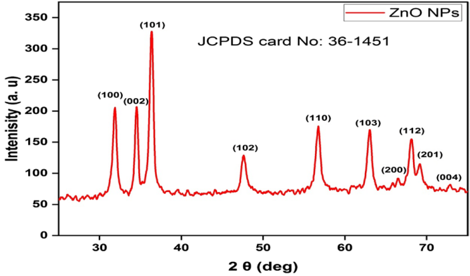
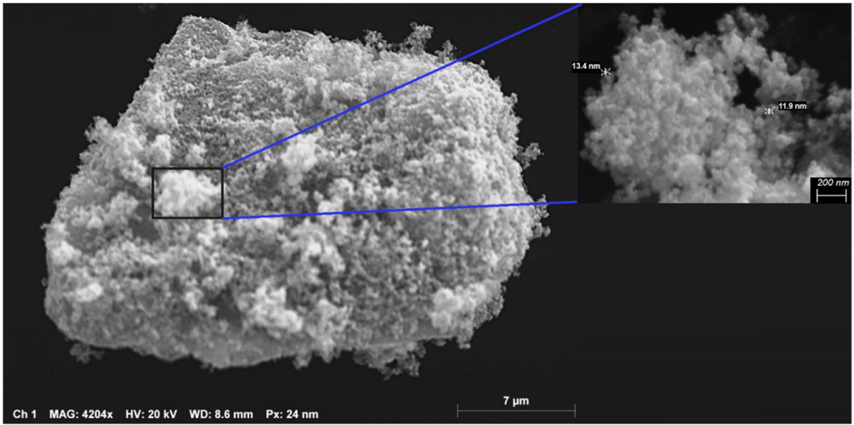
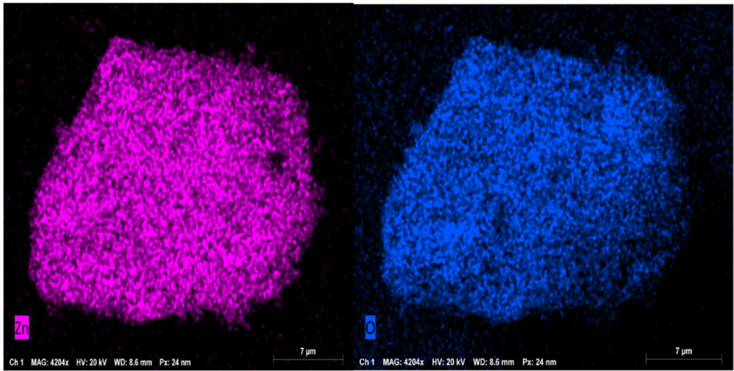
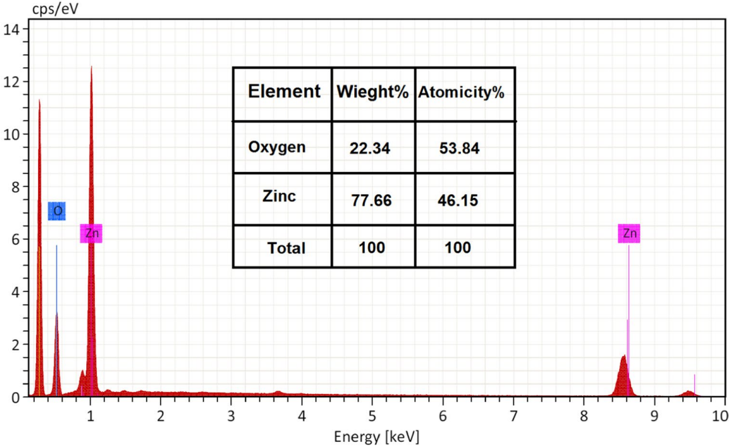
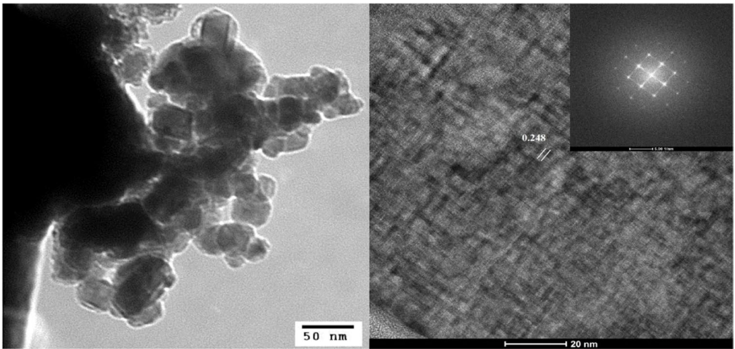
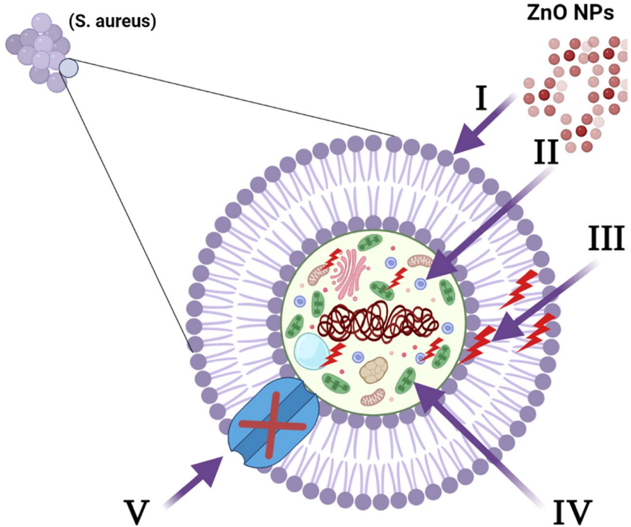
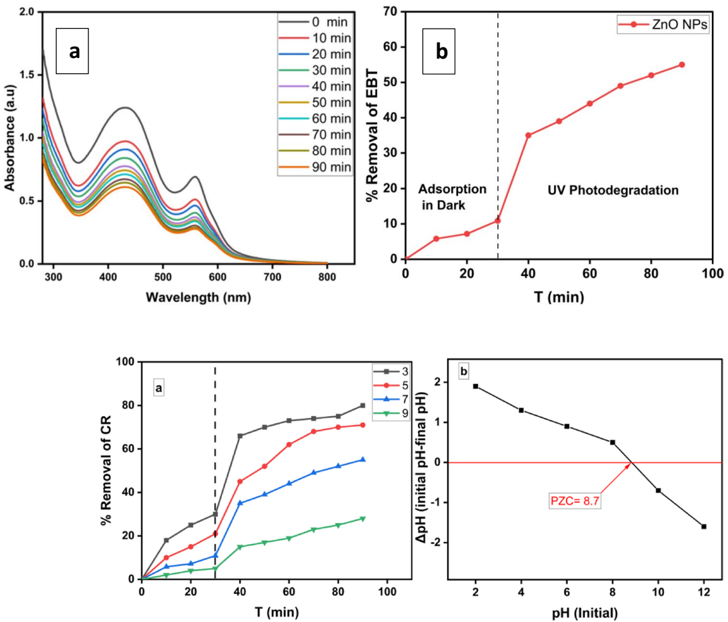
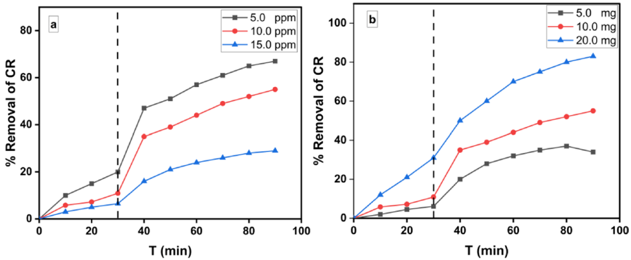
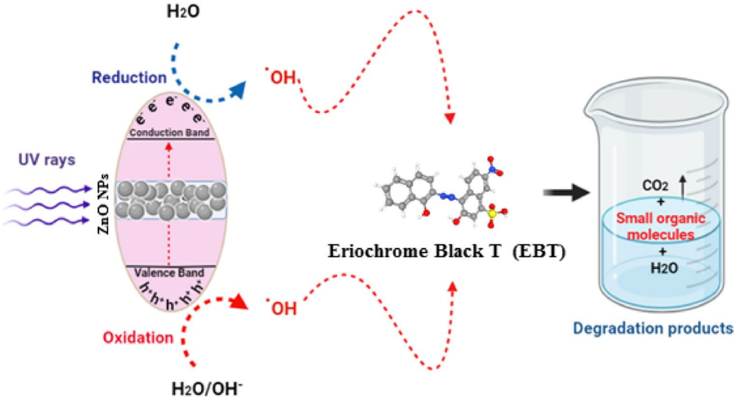
Many research papers are currently being written about various methodologies for the green synthesis of ZnO nanoparticles. In this study, ZnO nanoparticles were prepared by green synthesis method using baker’s yeast ( Saccharomyces cerevisiae). The characterization of the produced ZnO nanoparticles involved the utilization of XRD, FTIR, SEM, and TEM. The investigation involved the assessment of the antimicrobial potential and photocatalytic degradation efficacy of the synthesized materials through the utilization of Eriochrome Black T (EBT). The results indicate that the ZnO nanoparticles exhibit a spherical morphology, exhibiting diameters ranging from 13.0 to 20.0nm, with an average particle size of 15.0nm. The antimicrobial efficacy against (S. aureus) gram-positive and (E. coli) gram-negative bacteria was tested through the conduction of zone of inhibition (ZOI) and minimum inhibitory concentration (MIC) tests. This research focused on the study of the photocatalytic-degradation of EBT in the presence of ultraviolet light. The experiments focused on the impact of various factors, such as pH levels, initial EBT concentration, and nanocatalyst dosage, on the observed photocatalytic efficiency. In the in vitro ZOI and MIC results assay, it was observed that ZnO nanoparticles (NPs) exhibited greater efficacy against gram-positive S. aureus, with a ZOI measuring 23.1 mm and a MIC of 0.625 μg/ml. In contrast, the effectiveness of ZnO-NPs against gram-negative E. coli was comparatively lower, as indicated by a ZOI of 17.0 mm and a MIC of 1.250μg/ml. The greatest EBT elimination, which achieved 83.0% in equilibrium, was found employing 20.0mg of ZnO NPs at pH 3.0, according to the photocatalytic activity results. The synthetic ZnO NPs are powerful antibacterial agents that are effective against tested bacteria and may be used in the treatment of wastewater.
Overview
The claims and statistics of this paper haven’t been checked yet.
Run the check — free, no account needed. It reads the open-access text and checks the sources it cites.
Integrity signals
Registry
Cites
Statistics
Figures

Verification
Claims the paper makes
The claims and statistics of this paper haven’t been checked yet.
Run the check — free, no account needed. It reads the open-access text and checks the sources it cites.
Claims other papers make about this one
Each is checked against this paper’s own text: does it say what the citing paper says it does?
In the citing paper
“Contrary to this, green tanks appoint synthesis extracts, bacteria, fungi, and other biological systems to facilitate the formation of NPs under mild conditions [43].”
From Advances in green-synthesized magnetic nanoparticles for targeted cancer therapy: mechanisms, applications, and future perspectives (2026) · cites this paper as [43]
Self-check
Percentages, sums and reported differences re-computed from the paper’s own numbers.
The self-check needs the paper’s full text.
Citations
Cites
No references could be resolved yet.
Research works printed but not linked: 60
- Zhu S, Meng H, Gu Z, Zhao Y (2021) Research trend of nanoscience and nanotechnology – a bibliometric analysis of Nano Today. Nano Today 39:101233. https://doi.org/10.1016/j.nantod.2021.101233 · DOI
- Haleem A, Javaid M, Singh RP, Rab S, Suman R (2023) Applications of nanotechnology in medical field: a brief review. Global Health J 7(2):70–77. https://doi.org/10.1016/j.glohj.2023.02.008 · DOI
- El-Khawaga AM, Zidan A, El-Mageed AIAA (2023) Preparation methods of different nanomaterials for various potential applications: a Review. J Mol Struct 135148. https://doi.org/10.1016/j.molstruc.2023.135148 · DOI · Paper page
- Kumar R, Kumar M, Luthra G (2023) Fundamental approaches and applications of nanotechnology: a mini review. Mater Today: Proc. https://doi.org/10.1016/j.matpr.2022.12.172 · DOI
- Salem SS, Hammad EN, Mohamed AA, El-Dougdoug W (2023) A comprehensive review of nanomaterials: types, synthesis, characterization, and applications. Biointerface Res Appl Chem 13(1). https://doi.org/10.33263/BRIAC131.041 · DOI
- Alrushaid N, Khan FA, Al-Suhaimi EA, Elaissari A (2023) Nanotechnology in cancer diagnosis and treatment. Pharmaceutics 15(3):1025 · DOI
- Elfadel RG, Refat HM, Abd El-Wahab H, Salem S, Salem ME, Owda MAM, Reheim A (2023) Preparation of new surface coating based on modified oil-based polymers blended with ZnO and CuZnO NPs for steel protection. Sci Rep 13(1). https://doi.org/10.1038/s41598-023-34085-z · DOI
- Ahmed M, Hesham E-K, Tantawy Mohamed A, Elsayed Ahmed IA, El-Mageed A (2022) Synthesis and applicability of reduced graphene oxide/porphyrin nanocomposite as photocatalyst for waste water treatment and medical applications. Sci Rep 12(1). https://doi.org/10.1038/s41598-022-21360-8 · DOI
- Chaudhary V, Rustagi S, Kaushik A (2023) Bio-derived smart nanostructures for efficient biosensors. Curr Opin Green Sustain Chem 42:100817. https://doi.org/10.1016/j.cogsc.2023.100817 · DOI
- Sedefoglu N, Zalaoglu Y, Bozok F (2022) Green synthesized ZnO nanoparticles using Ganoderma lucidum: characterization and in vitro nanofertilizer effects. J Alloys Compd 918:165695. https://doi.org/10.1016/j.jallcom.2022.165695 · DOI
- Sedefoglu N (2023) Characterization and photocatalytic activity of ZnO nanoparticles by green synthesis method. Optik 288:171217. https://doi.org/10.1016/j.ijleo.2023.171217 · DOI
- Doan Thi TU, Nguyen TT, Thi YD, Ta Thi KH, Phan BT, Pham KN (2020) Green synthesis of ZnO nanoparticles using orange fruit peel extract for antibacterial activities. RSC Adv 10(40):23899–23907. https://doi.org/10.1039/D0RA04926C · DOI
- Bahrulolum H, Nooraei S, Javanshir N, Tarrahimofrad H, Mirbagheri VS, Easton AJ, Ahmadian G (2021) Green synthesis of metal nanoparticles using microorganisms and their application in the agrifood sector. J Nanobiotechnology 19(1):1–26 · DOI
- Soliman MKY, Abu-Elghait M, Salem SS, Azab MS (2022) Multifunctional properties of silver and gold nanoparticles synthesis by Fusarium pseudonygamai. Biomass Convers Biorefin. https://doi.org/10.1007/s13399-022-03507-9 · DOI
- Theodore L, Kunz RG (2005) Nanotechnology: environmental implications and solutions. John Wiley & Sons · DOI
- Fakhari S, Jamzad M, Kabiri Fard H (2019) Green synthesis of zinc oxide nanoparticles: a comparison. Green Chem Lett Rev 12(1):19–24. https://doi.org/10.1080/17518253.2018.1547925 · DOI
- Salem SS (2023) A mini review on green nanotechnology and its development in biological effects. Arch Microbiol 205(4). https://doi.org/10.1007/s00203-023-03467-2 · DOI
- Chavali MS, Nikolova MP (2019) Metal oxide nanoparticles and their applications in nanotechnology. SN Appl Sci 1(6):607 · DOI
- Gour A, Jain NK (2019) Advances in green synthesis of nanoparticles. Artif Cells, Nanomed Biotechnol 47(1):844–851. https://doi.org/10.1080/21691401.2019.1577878 · DOI · Paper page
- Malik AQ, Mir TG, Kumar D, Mir IA, Rashid A, Ayoub M, Shukla S (2023) A review on the green synthesis of nanoparticles, their biological applications, and photocatalytic efficiency against environmental toxins. Environ Sci Pollut Res 30(27):69796–69823. https://doi.org/10.1007/s11356-023-27437-9 · DOI
- Aboyewa JA, Sibuyi NRS, Meyer M, Oguntibeju OO (2021, 1929) Green synthesis of metallic nanoparticles using some selected medicinal plants from Southern Africa and their biological applications. Plants 10(9) · DOI
- Abdelaziz AM, Salem SS, Khalil AMA, El-Wakil DA, Fouda HM, Hashem AH (2022) Potential of biosynthesized zinc oxide nanoparticles to control Fusarium wilt disease in eggplant (Solanum melongena) and promote plant growth. BioMetals 35(3):601–616. https://doi.org/10.1007/s10534-022-00391-8 · DOI
- Said A, Abu-Elghait M, Atta HM, Salem SS (eds) Antibacterial activity of green synthesized silver nanoparticles using lawsonia inermis against common pathogens from urinary tract infection. Appl Biochem Biotechnol. https://doi.org/10.1007/s12010-023-04482-1 · DOI
- Shehabeldine AM, Amin BH, Hagras FA, Ramadan AA, Kamel MR, Ahmed MA, Atia KH, Salem SS (2023) Potential antimicrobial and antibiofilm properties of copper oxide nanoparticles: time-kill kinetic essay and ultrastructure of pathogenic bacterial cells. Appl Biochem Biotechnol 195(1):467–485. https://doi.org/10.1007/s12010-022-04120-2 · DOI
- Al-Zahrani FAM, AL-Zahrani NA, Al-Ghamdi SN, Lin L, Salem SS, Reda M, El-Shishtawy RM (2022) Synthesis of Ag/Fe2O3 nanocomposite from essential oil of ginger via green method and its bactericidal activity. Biomass Convers Biorefin. https://doi.org/10.1007/s13399-022-03248-9 · DOI
- Soliman MKY, Salem SS, Abu-Elghait M, Salah Azab M (2023) Biosynthesis of Silver and gold nanoparticles and their efficacy towards antibacterial antibiofilm cytotoxicity and antioxidant activities. Appl Biochem Biotechnol 195(2):1158–1183. https://doi.org/10.1007/s12010-022-04199-7 · DOI
- Theerthagiri J, Salla S, Senthil RA, Nithyadharseni P, Madankumar A, Arunachalam P, Maiyalagan T, Kim H-S (2019) A review on ZnO nanostructured materials: energy, environmental and biological applications. Nanotechnology 30(39):392001 · DOI · Paper page
- Raha S, Ahmaruzzaman M (2022) ZnO nanostructured materials and their potential applications: progress, challenges and perspectives. Nanoscale Adv 4(8):1868–1925 · DOI
- Anjum S, Hashim M, Malik SA, Khan M, Lorenzo JM, Abbasi BH, Hano C (2021) Recent advances in zinc oxide nanoparticles (ZnO NPs) for cancer diagnosis, target drug delivery, and treatment. Cancers 13(18):4570 · DOI
- Faisal S, Jan H, Shah SA, Shah S, Khan A, Akbar MT, Rizwan M, Jan F, Wajidullah AN (2021) Green synthesis of zinc oxide (ZnO) nanoparticles using aqueous fruit extracts of Myristica fragrans: their characterizations and biological and environmental applications. ACS Omega 6(14):9709–9722 · DOI
- Singh K, Kaur H, Sharma PK, Singh G, Singh J (2023) ZnO and cobalt decorated ZnO NPs: synthesis, photocatalysis and antimicrobial applications. Chemosphere 313:137322 · DOI
- Sedefoglu N, Erdogan NH, Kutlu T, Kavak H (2023) Tailoring Sb doping concentration to achieve p-type nanostructured ZnO thin film grown by sol–gel method. J Mater Sci: Mater Electron 34(3):232. https://doi.org/10.1007/s10854-022-09718-0 · DOI
- SedefoĞLu N, Kavak H (2021) Electrochemical and structural behavior of bi doped ZnO materials obtained with solvothermal synthesis method. Süleyman Demirel Univ Fac Arts Sci J Sci 16(1):147–156
- Jiang J, Pi J, Cai J (2018, 2018) The advancing of zinc oxide nanoparticles for biomedical applications. Bioinorg Chem Appl · DOI
- Hamrayev H, Shameli K, Korpayev S (2021) Green synthesis of zinc oxide nanoparticles and its biomedical applications: a review. J Res Nanosci Nanotechnol 1(1):62–74 · DOI
- Verma R, Pathak S, Srivastava AK, Prawer S, Tomljenovic-Hanic S (2021) ZnO nanomaterials: green synthesis, toxicity evaluation and new insights in biomedical applications. J Alloys Compd 876:160175 · DOI
- Kumar A, Rustagi S, Malik S, Choudhary P, Khan ZS, Allam AY, Naik B, Kumar V, Chaudhary V (2023) Highly potent antioxidant/antibacterial biogenic zno nanoparticles-enabled nano-scavenger reinforced by Aegle Marmelos (Linn) Rind’s extract. ECS J Solid State Sci Technol 12(7):077003. https://doi.org/10.1149/2162-8777/ace2e9 · DOI
- Batra V, Kaur I, Pathania D, Sonu CV (2022) Efficient dye degradation strategies using green synthesized ZnO-based nanoplatforms: a review. Appl Surf Sci Adv 11:100314. https://doi.org/10.1016/j.apsadv.2022.100314 · DOI
- Waghchaure RH, Adole VA, Jagdale BS (2022) Photocatalytic degradation of methylene blue, rhodamine B, methyl orange and Eriochrome Black T dyes by modified ZnO nanocatalysts: a concise review. Inorg Chem Commun 109764 · DOI
- Lam S-M, Sin J-C, Abdullah AZ, Mohamed AR (2012) Degradation of wastewaters containing organic dyes photocatalysed by zinc oxide: a review. Desalin Water Treat 41(1-3):131–169 · DOI
- Asem A, Mohammed M, Abu-Elghait NE, Ahmed SS, Salem (2021) Correction to: eco-friendly mycogenic synthesis of ZnO and cuo nanoparticles for in vitro antibacterial antibiofilm and antifungal applications. Biol Trace Elem Res 199(7):2800–2801. https://doi.org/10.1007/s12011-020-02391-6 · DOI
- Salem S, Amr S, Fouda (2021) Green synthesis of metallic nanoparticles and their prospective biotechnological applications: an overview. Biol Trace Elem Res 199(1):344–370. https://doi.org/10.1007/s12011-020-02138-3 · DOI
- Wegerhoff S (2016) Engell S Control of the production of Saccharomyces cerevisiae on the basis of a reduced metabolic model. IFAC-PapersOnLine, pp 201–206. https://doi.org/10.1016/j.ifacol.2016.12.126 · DOI
- Salem SS (2022) Bio-fabrication of selenium nanoparticles using baker’s yeast extract and its antimicrobial efficacy on food borne pathogens. Appl Biochem Biotechnol 194(5):1898–1910. https://doi.org/10.1007/s12010-022-03809-8 · DOI
- Salem SS (2022) Baker’s yeast-mediated silver nanoparticles: characterisation and antimicrobial biogenic tool for suppressing pathogenic microbes. BioNanoScience 12(4):1220–1229. https://doi.org/10.1007/s12668-022-01026-5 · DOI
- Abdelfattah NAH, Yousef MA, Badawy AA, Salem SS (2023) Influence of biosynthesized magnesium oxide nanoparticles on growth and physiological aspects of cowpea (Vigna unguiculata L.) plant cowpea beetle and cytotoxicity. Biotechnol J. https://doi.org/10.1002/biot.202300301 · DOI
- Acutis M, Scaglia B, RJEjoa C (2012) Perfunctory analysis of variance in agronomy, and its consequences in experimental results interpretation. Eur J Agron 43:129–135 · DOI
- Maksoud MA, El-Sayyad GS, Ashour A, El-Batal AI, Elsayed MA, Gobara M, El-Khawaga AM, Abdel-Khalek E, MJMp E-O (2019) Antibacterial, antibiofilm, and photocatalytic activities of metals-substituted spinel cobalt ferrite nanoparticles. Microb Pathog 127:144–158 · DOI
- Abdelghany TM, Al-Rajhi AMH, Yahya R, Bakri MM, Al Abboud MA, Yahya R, Qanash H, Bazaid AS, Salem SS (2023) Phytofabrication of zinc oxide nanoparticles with advanced characterization and its antioxidant, anticancer, and antimicrobial activity against pathogenic microorganisms. Biomass Convers Biorefin 13(1):417–430. https://doi.org/10.1007/s13399-022-03412-1 · DOI
- Kundu D, Hazra C, Chatterjee A, Chaudhari A, Mishra S (2014) Extracellular biosynthesis of zinc oxide nanoparticles using Rhodococcus pyridinivorans NT2: multifunctional textile finishing, biosafety evaluation and in vitro drug delivery in colon carcinoma. J Photochem Photobiol B: Biol 140:194–204 · DOI
- Adeela N, Maaz K, Khan U, Karim S, Nisar A, Ahmad M, Ali G, Han X, Duan J, JJJoA L (2015) Influence of manganese substitution on structural and magnetic properties of CoFe2O4 nanoparticles. J Alloys Compd 639:533–540 · DOI
- Banerjee S, Vishakha K, Das S, Dutta M, Mukherjee D, Mondal J, Mondal S, Ganguli A (2020) Antibacterial, anti-biofilm activity and mechanism of action of pancreatin doped zinc oxide nanoparticles against methicillin resistant Staphylococcus aureus. Colloids Surf B: Biointerfaces 190:110921. https://doi.org/10.1016/j.colsurfb.2020.110921 · DOI
- Esparza-González SC, Sánchez-Valdés S, Ramírez-Barrón SN, Loera-Arias MJ, Bernal J, Meléndez-Ortiz HI, Betancourt-Galindo R (2016) Effects of different surface modifying agents on the cytotoxic and antimicrobial properties of ZnO nanoparticles. Toxicol Vitro 37:134–141. https://doi.org/10.1016/j.tiv.2016.09.020 · DOI
- Pathania D, Sharma M, Thakur P, Chaudhary V, Kaushik A, Furukawa H, Khosla A (2022) Exploring phytochemical composition, photocatalytic, antibacterial, and antifungal efficacies of Au NPs supported by Cymbopogon flexuosus essential oil. Sci Rep 12(1):14249. https://doi.org/10.1038/s41598-022-15899-9 · DOI
- Chaudhary V, Mostafavi E, Kaushik A (2022) De-coding Ag as an efficient antimicrobial nano-system for controlling cellular/biological functions. Matter 5(7):1995–1998. https://doi.org/10.1016/j.matt.2022.06.024 · DOI
- Ning J, Wang M, Luo X, Hu Q, Hou R, Chen W, Chen D, Wang J, Liu J (2018) SiO2 stabilized magnetic nanoparticles as a highly effective catalyst for the degradation of basic fuchsin in industrial dye wastewaters. Molecules 23(10):2573 · DOI
- Pozzo RL, Giombi JL, Baltanás MA, Cassano AE (2002) Radiation extinction of slurried TiO2 as a function of mechanical action and ionic composition of the suspending media: a key factor in the photocatalytic efficiency. Appl Catal B: Environ 38(1):61–69 · DOI
- Mahmoodi NMJD (2011) Photocatalytic ozonation of dyes using copper ferrite nanoparticle prepared by co-precipitation method. Desalination 279(1–3):332–337 · DOI
- Wang D, Zhao P, Yang J, Xu G, Yang H, Shi Z, Hu Q, Dong B, Guo ZJC, Physicochemical SA, Aspects E (2020) Photocatalytic degradation of organic dye and phytohormone by a Cu (II) complex powder catalyst with added H2O2. Colloids Surf A: Physicochem Eng 603:125147 · DOI
- Harikishore M, Sandhyarani M, Venkateswarlu K, Nellaippan T, NJPms R (2014) Effect of Ag doping on antibacterial and photocatalytic activity of nanocrystalline TiO2. Proc Mater Sci 6:557–566 · DOI
Cited by
Sorted by citations
El-khawaga, A. M., Youssef, O. I., El-dydamoni, O. A., Ragab, W. M., & Mohammed, R. A. E. (2026) · European Journal of Medical Research · doi:10.1186/s40001-025-03804-9 · Cited by 14
Self-citation
Metadata
- Authors
- El-Khawaga, A. M., Elsayed, M. A., Gobara, M., Suliman, A. A., Hashem, A. H., Zaher, A. A., Mohsen, M., & Salem, S. S.
- Venue
- Biomass Conversion and Biorefinery
- Published
- 2023-09-15
- Volume
- 15
- Issue
- 2
- Pages
- 2673-2684
- ISSN
- 2190-6815
- 2190-6823
- Cited by
- 148
- References
- 0
- Language
- en
- Update notices
- correction (2023-11-29)
- Funders
- Al-Azhar University
About these checks
Registry, retraction, Cites and statistics results are computed, not judged, with one exception: a printed reference that no index lists is read once by a model before it counts as a citation error. Claims are extracted by a model and kept only when their quote appears verbatim in the text; each cited source is then checked, with a model’s help, for whether it says what the claim relies on. Those verdicts can be wrong — read the claim’s quote and the cited source before relying on one.
Statistics and arithmetic are recomputed, not judged.
Confidence bands are shown only for fields calibrated on our annotated test set. None is calibrated yet, so no band is shown.
What counts as a claim ›How we measure confidence ›How we check this ›
Are you an author, or do you see a problem with this page? Request a review
How to cite
Cite CoChat for the checks on this page, and the paper for its own findings.
- This page
- CoChat. (2026). Citation check: Green synthesized ZnO nanoparticles by Saccharomyces cerevisiae and their antibacterial activity and photocatalytic degradation. https://app.cochat.ai/papers/10.1007/s13399-023-04827-0
- The paper
- El-Khawaga, A. M., Elsayed, M. A., Gobara, M., Suliman, A. A., Hashem, A. H., Zaher, A. A., Mohsen, M., & Salem, S. S. (2025). Green synthesized ZnO nanoparticles by Saccharomyces cerevisiae and their antibacterial activity and photocatalytic degradation. Biomass Conversion and Biorefinery. https://doi.org/10.1007/s13399-023-04827-0
