

The Burden of Air Pollution on Skin Health: a Brief Report and Call to Action
Open accessThe DOI matches its Crossref record; 35 of the 36 references it cites were found in a registry or an index; 22 of the 53 sources its claims cite were checked for support.
Abstract
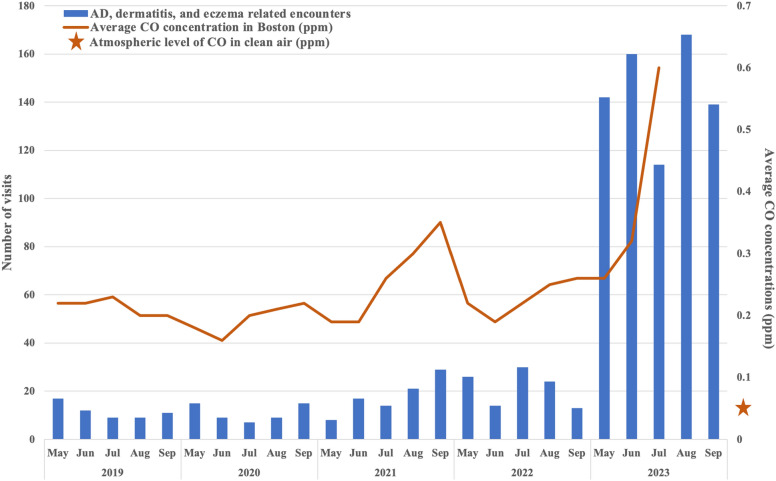
Introduction Air pollution in North America has intensified due to wildfires in recent years. In 2023, the wildfires in the Canadian province of Quebec caused a southward spread of pollutants, negatively affecting air quality and thereby aggravating certain health conditions in northeastern USA. This study examines the impact of air pollution on atopic dermatitis (AD) and skin health and how wildfires can exacerbate the burden of disease. Methods Carbon monoxide levels measured by the U.S. Environmental Protection Agency (EPA) in the Boston region during the months following the Canadian wildfires of 2023 were collected from the U.S. EPA Outdoor Air Quality webpage. Patient records on dermatology clinic visits for dermatitis and eczema at the Mass General Brigham (MGB) hospital system, 300 miles from the wildfires, were examined, and the data compared with data from the corresponding months in 2019–2022 for historical control. No individual patient data were collected. Results A notable rise and atypical summer peak in carbon monoxide (CO) levels in the Boston region during 2023 correlated with a spike in AD, dermatitis, and eczema-related dermatology clinic visits within the MGB hospital system, as compared with the prior 4 years. Conclusion The synchronized atypical peaks of CO levels and AD-related visits during the summer of 2023 highlight the potential impact of acute air pollution events such as wildfires on air quality and the consequences for skin health. Air pollutio…
Overview
CoChat Summary
TL;DR
This brief report links the 2023 Quebec wildfire smoke episode to a summer spike in Boston-area carbon monoxide and a corresponding rise in dermatology visits for atopic dermatitis, dermatitis, and eczema at Mass General Brigham. The authors argue that wildfire-driven air pollution can worsen skin disease and call for policy and clinical responses to protect vulnerable populations.
Key findings
- In Boston, average carbon monoxide concentrations increased from 0.22 ppm during May–September 2019–2022 to 0.6 ppm in July 2023.
- The rise in carbon monoxide was accompanied by a spike in AD and eczema-related dermatology clinic visits within the Mass General Brigham system.
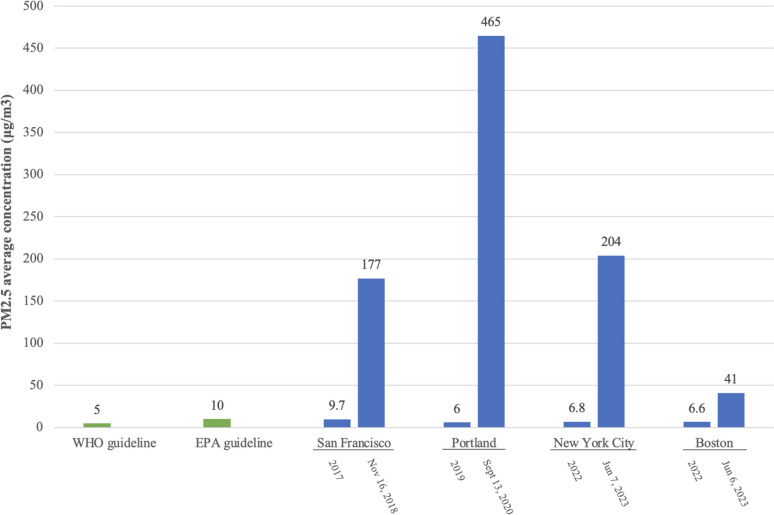
- The paper also notes that PM2.5 was 41 ug/m3 in July 2023 vs. 6.6 ug/m3 during the year prior during the same visit spike.
- The authors state that wildfire-related pollution can affect skin health through skin barrier impairment, oxidative stress, inflammatory signaling, and changes in skin flora.
Methods
- Brief observational comparison of air quality and dermatology clinic encounter data during the 2023 Quebec wildfire period versus a historical control period.
- Air pollution data: U.S. EPA carbon monoxide measurements for the Boston region from May through July 2023.
- Clinical data: A system-wide query of Mass General Brigham dermatology clinic encounters with ICD-10 codes for atopic dermatitis, dermatitis, and eczema for May through September 2023, compared with the same months in 2019–2022; no individual patient data were collected.
Limitations
- The authors state that EPA air pollution data are restricted to certain neighborhoods with sensors, are not available in real time, and CO data for Boston were reported only through July 2023.
- The EPA does not report other potentially relevant pollutants such as aromatic hydrocarbons and lead, so the role of those exposures in the visit increase remains unknown.
- The paper notes diagnostic overlap between atopic dermatitis and irritant/allergic contact dermatitis, which may have led to use of general dermatitis codes; this could make the observed association less specific.
Model-written summary. Check it against the paper before relying on it.
Integrity signals
Registry
Cites
Statistics
Figures
Verification
Claims the paper makes
19 Valid · 2 Not valid · 15 Not checked · 8 Own results and interpretations
The sources with a verdict support this claim; the rest weren’t checked yet, have no full text we could read, or their verdicts aren’t rated yet.
In the paper
“exposure to PM2.5 and CO is associated with premature aging of the skin”
§ The Burden of Air Pollution on Skin Health: a Brief Report and Call to Action > Discussion
What the sources say
- Not checked — no full text of the sourcecites [31] Krutmann J Schikowski T Morita A Berneburg M Environmentally-induced (extrinsic) skin aging: exposomal factors and underlying mechanisms J Invest Dermatol 2021 141 4S 1096 1103 10.1016/j.jid.2020.12.011 33541724 source
- Not checked — no full text of the sourcecites [32] Huls A Vierkotter A Gao W Traffic-related air pollution contributes to development of facial lentigines: further epidemiological evidence from caucasians and Asians J Invest Dermatol 2016 136 5 1053 1056 10.1016/j.jid.2015.12.045 26868871 source
- Supportedcites [33] Huang CH Chen SC Wang YC Wang CF Hung CH Lee SS Detrimental correlation between air pollution with skin aging in Taiwan population Medicine (Baltimore) 2022 101 31 e29380 10.1097/MD.0000000000029380 35945750 PMC9351911 source
The Introduction identifies air-pollutant exposure, particularly PM2.5, as a cause of skin aging. The Discussion reports associations between PM2.5 and brown spots and between CO and UV spots in patients aged 45 or older; the paper also describes both pollutants as correlated with poorer skin quality. The claim is a broad paraphrase of those associations, not a claim that the study measured the timing of aging. (LLM, conf=0.88)
plainstates an association- Asserted: passes — The authors put it forward as true.
- Checkable: passes — It can be checked against evidence.
- Load-bearing: passes — The paper’s conclusions depend on it.
- Based: passes — The paper gives a reason why it holds.
The cited sources support only part of this claim — read each source’s verdict below.
In the paper
“Studies from various countries have linked elevated levels of air pollutants, including PM2.5, nitrogen dioxide (NO2), sulfur dioxide (SO2), ozone (O3), and carbon monoxide (CO), with increased prevalence and severity of AD [14, 15].”
§ The Burden of Air Pollution on Skin Health: a Brief Report and Call to Action > Introduction
What the sources say
- Partly supportedcites [14] Schachtel A Dyer JA Boos MD Climate change and pediatric skin health Int J Womens Dermatol 2021 7 1 85 90 10.1016/j.ijwd.2020.07.006 33537397 PMC7838241 sourceExperimental — accuracy not yet measured
The Atopic dermatitis section reports studies from several countries linking NO2, SO2, PM2.5, and CO with AD prevalence, incidence, severity, or related clinical visits. It says ozone may be relevant to AD development, but does not report a study linking elevated ozone levels to increased AD prevalence or severity. Page numbers are unavailable in our copy. (LLM, conf=0.87)
- Not checked — no full text of the sourcecites [15] Arnedo-Pena A Garcia-Marcos L Carvajal Uruena I Air pollution and recent symptoms of asthma, allergic rhinitis, and atopic eczema in schoolchildren aged between 6 and 7 years Arch Bronconeumol 2009 45 5 224 229 10.1016/j.arbres.2008.10.004 19371994 source
plainstates an association- Asserted: passes — The authors put it forward as true.
- Checkable: passes — It can be checked against evidence.
- Load-bearing: passes — The paper’s conclusions depend on it.
- Based: passes — The paper gives a reason why it holds.
- Partly supported
Every source the paper cites for this claim was checked and supports it.
In the paper
“The impacts of air pollution on human health extend beyond immediate vicinities, affecting communities both near and downwind of wildfires [16]”
§ The Burden of Air Pollution on Skin Health: a Brief Report and Call to Action > Introduction
What the sources say
- Supportedcites [16] Buchholz RR Park M Worden HM New seasonal pattern of pollution emerges from changing North American wildfires Nat Commun 2022 13 1 2043 10.1038/s41467-022-29623-8 35440561 PMC9018720 source
The Introduction states that wildfire smoke exposure is detrimental to human health both close to wildfires and in downwind communities exposed to transported pollution. The Discussion likewise says wildfire pollution can affect surface air quality locally and downwind, with potential harm to human health. (LLM, conf=0.94)
plainstates a cause- Asserted: passes — The authors put it forward as true.
- Checkable: passes — It can be checked against evidence.
- Load-bearing: passes — The paper’s conclusions depend on it.
- Based: passes — The paper gives a reason why it holds.
- Supported
Every source the paper cites for this claim was checked and supports it.
In the paper
“Notably, adults aged ≥ 65 years were disproportionately affected, indicating a potential for increased vulnerability of the aging skin barrier to acute pollutant exposure [27].”
§ The Burden of Air Pollution on Skin Health: a Brief Report and Call to Action > Introduction
What the sources say
- Supportedcites [27] Fadadu RP Green M Jewell NP Grimes B Vargo J Wei ML Association of exposure to wildfire air pollution with exacerbations of atopic dermatitis and itch among older adults JAMA Netw Open 2022 5 10 e2238594 10.1001/jamanetworkopen.2022.38594 36287569 PMC9606843 source
The Results report larger increases in clinic visits for both atopic dermatitis and itch among adults aged 65 or older during the wildfire than among adults aged 18–64. The Discussion explicitly describes significantly increased visit rates in the older group and suggests greater vulnerability of older skin to air pollution. (LLM, conf=0.94)
hedgedstates an association- Asserted: passes — The authors put it forward as true.
- Checkable: passes — It can be checked against evidence.
- Load-bearing: unclear — It is unclear whether the paper’s conclusions depend on it.
- Based: passes — The paper gives a reason why it holds.
- Supported
The cited sources support only part of this claim — read each source’s verdict below.
In the paper
“The pathophysiology of AD flares secondary to air pollution is multifaceted, involving skin barrier impairment, oxidative stress, activation of inflammatory pathways, and changes in skin flora [19].”
§ The Burden of Air Pollution on Skin Health: a Brief Report and Call to Action > Introduction
What the sources say
- Partly supportedcites [19] Kim BE Leung DYM Significance of skin barrier dysfunction in atopic dermatitis Allergy Asthma Immunol Res 2018 10 3 207 215 10.4168/aair.2018.10.3.207 29676067 PMC5911439 sourceExperimental — accuracy not yet measured
The Introduction and Microbiome sections describe skin barrier defects, immune dysregulation, inflammation, and altered skin flora in AD, including during flares (page numbers unavailable). They do not establish that air pollution causes flares through these mechanisms or identify oxidative stress as one of them; a search for air pollutants found only a reference-list entry. (LLM, conf=0.88)
plainstates a cause- Asserted: passes — The authors put it forward as true.
- Checkable: passes — It can be checked against evidence.
- Load-bearing: unclear — It is unclear whether the paper’s conclusions depend on it.
- Based: passes — The paper gives a reason why it holds.
- Partly supported
15 more claims · 6 with their cited sources checked
Create a free account to see all 44 claims and to verify the 9 references still open.
- Probably not a substantial claim. 12
- It may state two separate claims as one. 17
Citations
Cites
UNITED STATES ENVIRONMENTAL PROTECTION AGENCY
(2005) · Proceedings of the Water Environment Federation · doi:10.2175/193864705783867675 · Cited by 6,678
United Nations Environment Programme
(1987) · International Organizations and the Law of the Sea 1985 · doi:10.1163/9789004634169_010 · Cited by 3,715
Socioeconomic Disparities and Air Pollution Exposure: a Global Review
Hajat, A., Hsia, C., & O’Neill, M. S. (2015) · Current Environmental Health Reports · doi:10.1007/s40572-015-0069-5 · Cited by 1,097 · cited 2×
“Existing variations in regional pollution levels can result in unequal distributions of AD exacerbations linked to air pollution from wildfires [39].”
BackgroundBell, M. L., & Davis, D. L. (2001) · Environmental Health Perspectives · doi:10.1289/ehp.01109s3389 · Cited by 469 · cited 1×
“These recent events bring to mind the infamous London Fog in 1952 in which over 10,000 citizens lost their lives due to an acute smog event [3, 4].”
BackgroundSignificance of Skin Barrier Dysfunction in Atopic Dermatitis
Kim, B. E., & Leung, D. Y. M. (2018) · Allergy, Asthma & Immunology Research · doi:10.4168/aair.2018.10.3.207 · Cited by 393 · cited 1×
“The pathophysiology of AD flares secondary to air pollution is multifaceted, involving skin barrier impairment, oxidative stress, activation of inflammatory pathways, and changes in skin flora [19].”
BackgroundPollution and skin: from epidemiological and mechanistic studies to clinical implications.
Krutmann, J., Liu, W., Li, L., Pan, X., Crawford, M., Sore, G., & Seite, S. (2014) · Journal of Dermatological Science · doi:10.1016/j.jdermsci.2014.08.008 · Cited by 290 · cited 1×
“Particulate matter coated with lipo-philic polycyclic aromatic hydrocarbons (PAHs) can penetrate the skin to induce oxidative stress and activate inflammatory signaling receptors, including the pregnane X receptor (PXR) and the aryl hydrocarbon receptor (AhR) [20–22].”
BackgroundHidaka, T., Ogawa, E., Kobayashi, E. H., Suzuki, T., Funayama, R., Nagashima, T., Fujimura, T., Aiba, S., Nakayama, K., Okuyama, R., et al. (2017) · Nature Immunology · doi:10.1038/ni.3614 · Cited by 274 · cited 1×
“Additionally, the EPA does not report data on other pollutants, such as aromatic hydrocarbons and lead, which may be relevant to wildfires and AD [14, 21, 46].”
BackgroundEnvironmentally-Induced (Extrinsic) Skin Aging: Exposomal Factors and Underlying Mechanisms
Krutmann, J., Schikowski, T., Morita, A., & Berneburg, M. (2021) · Journal of Investigative Dermatology · doi:10.1016/j.jid.2020.12.011 · Cited by 253 · cited 1×
“5 and CO is associated with premature aging of the skin, all of which reflect a weakening of the skin barrier due to pollution over time and vulnerability to further inflammation and damage [31–33].”
BackgroundThe impact of airborne pollution on skin
Araviiskaia, E., Berardesca, E., Bieber, T., Gontijo, G., Sanchez Viera, M., Marrot, L., Chuberre, B., & Dreno, B. (2019) · Journal of the European Academy of Dermatology and Venereology · doi:10.1111/jdv.15583 · Cited by 214 · cited 1×
“Particulate matter coated with lipo-philic polycyclic aromatic hydrocarbons (PAHs) can penetrate the skin to induce oxidative stress and activate inflammatory signaling receptors, including the pregnane X receptor (PXR) and the aryl hydrocarbon receptor (AhR) [20–22].”
BackgroundPolitics is nothing but medicine at a larger scale: reflections on public health’s biggest idea
Mackenbach, J. P. (2009) · Journal of Epidemiology and Community Health · doi:10.1136/jech.2008.077032 · Cited by 213 · cited 1×
“…physician and public health advocate Rudolf Virchow taught that ‘‘physicians are the natural attorneys of the poor,’’ stressing the role of social institutions in influencing public health and the ethical duty of government officials and physicians in the healing and improvement of society [47].”
BackgroundThe Role of Th17-Related Cytokines in Atopic Dermatitis
Sugaya, M. (2020) · International Journal of Molecular Sciences · doi:10.3390/ijms21041314 · Cited by 204 · cited 1×
“Upregulation of these receptors by PAHs can lead to disruption of the skin barrier and skewing of the immune response towards a Th2 phenotype, which is central to the development and progression of AD [23–25].”
BackgroundZhang, B., Weuve, J., Langa, K. M., D’Souza, J., Szpiro, A., Faul, J., Mendes de Leon, C., Gao, J., Kaufman, J. D., Sheppard, L., et al. (2023) · JAMA Internal Medicine · doi:10.1001/jamainternmed.2023.3300 · Cited by 164 · cited 1×
“5) stems from a multitude of sources, including natural sources, such as wildfires, and anthropogenic ones, such as agriculture, vehicular traffic, power plants, and certain ingredients in fire extinguishing methods used to contain wildfires [11–13].”
BackgroundAir Pollution and the London Fog of December, 1952
Wilkins, E. (1954) · Journal of the Royal Sanitary Institute · doi:10.1177/146642405407400101 · Cited by 160 · cited 1×
“These recent events bring to mind the infamous London Fog in 1952 in which over 10,000 citizens lost their lives due to an acute smog event [3, 4].”
Impact of Outdoor Air Pollution on Indoor Air Quality in Low-Income Homes during Wildfire Seasons
Shrestha, P. M., Humphrey, J. L., Carlton, E. J., Adgate, J. L., Barton, K. E., Root, E. D., & Miller, S. L. (2019) · International Journal of Environmental Research and Public Health · doi:10.3390/ijerph16193535 · Cited by 155 · cited 1×
“Recent research has shown that households near roadways and with frequently open windows, both more common in low-income households lacking air conditioning units, are exposed to significantly higher levels of indoor air pollution [37].”
BackgroundTraffic-Related Air Pollution, Climate, and Prevalence of Eczema in Taiwanese School Children
Lee, Y.-L., Su, H.-J., Sheu, H.-M., Yu, H.-S., & Guo, Y. L. (2008) · Journal of Investigative Dermatology · doi:10.1038/jid.2008.110 · Cited by 128 · cited 1×
“More recently, wildfires in North America have resulted in downwind air pollution, causing rises in CO concentrations [16] to levels that have been associated with a higher prevalence of AD [17].”
BackgroundHüls, A., Vierkötter, A., Gao, W., Krämer, U., Yang, Y., Ding, A., Stolz, S., Matsui, M., Kan, H., Wang, S., et al. (2016) · Journal of Investigative Dermatology · doi:10.1016/j.jid.2015.12.045 · Cited by 122
Association of Wildfire Air Pollution and Health Care Use for Atopic Dermatitis and Itch
Fadadu, R. P., Grimes, B., Jewell, N. P., Vargo, J., Young, A. T., Abuabara, K., Balmes, J. R., & Wei, M. L. (2021) · JAMA Dermatology · doi:10.1001/jamadermatol.2021.0179 · Cited by 120 · cited 2×
“5, which triggered a heightened demand for healthcare services for AD and pruritus [26].”
BackgroundTackling Air Pollution in China—What do We Learn from the Great Smog of 1950s in LONDON
Zhang, D., Liu, J., & Li, B. (2014) · Sustainability · doi:10.3390/su6085322 · Cited by 84 · cited 1×
“China has been grappling with smog problems for decades, and the country’s air pollution is estimated to cause over 1 million deaths annually [5, 6].”
BackgroundThe Effects of Wildfire Smoke on Asthma and Allergy
Noah, T. L., Worden, C. P., Rebuli, M. E., & Jaspers, I. (2023) · Current Allergy and Asthma Reports · doi:10.1007/s11882-023-01090-1 · Cited by 80
New seasonal pattern of pollution emerges from changing North American wildfires
Buchholz, R. R., Park, M., Worden, H. M., Tang, W., Edwards, D. P., Gaubert, B., Deeter, M. N., Sullivan, T., Ru, M., Chin, M., et al. (2022) · Nature Communications · doi:10.1038/s41467-022-29623-8 · Cited by 65 · cited 5×
“More recently, wildfires in North America have resulted in downwind air pollution, causing rises in CO concentrations [16] to levels that have been associated with a higher prevalence of AD [17].”
BackgroundInfluentialThe impact of temperature on the skin barrier and atopic dermatitis
Hui-Beckman, J. W., Goleva, E., Leung, D. Y. M., & Kim, B. E. (2023) · Annals of Allergy, Asthma & Immunology · doi:10.1016/j.anai.2023.08.007 · Cited by 58 · cited 1×
“…typically peak in the winter and are at the lowest levels in the summer [16], the unusual peak in the summer serves to illustrate how large-scale wildfire events can affect air quality and contribute to unseason-able exacerbations of a skin disease that also tends to flare in the winter months [29].”
BackgroundClimate change and pediatric skin health
Schachtel, A., Dyer, J. A., & Boos, M. D. (2021) · International Journal of Women's Dermatology · doi:10.1016/j.ijwd.2020.07.006 · Cited by 31 · cited 2×
“Additionally, the EPA does not report data on other pollutants, such as aromatic hydrocarbons and lead, which may be relevant to wildfires and AD [14, 21, 46].”
BackgroundArnedo-Pena, A., García-Marcos, L., Carvajal Urueña, I., Busquets Monge, R., Morales Suárez-Varela, M., Miner Canflanca, I., Batlles Garrido, J., Blanco Quirós, A., López-Silvarrey Varela, Á., García Hernández, G., et al. (2009) · Archivos de Bronconeumología · doi:10.1016/j.arbres.2008.10.004 · Cited by 27
Elentner, A., Schmuth, M., Yannoutsos, N., Eichmann, T. O., Gruber, R., Radner, F. P. W., Hermann, M., Del Frari, B., & Dubrac, S. (2018) · Journal of Investigative Dermatology · doi:10.1016/j.jid.2017.07.846 · Cited by 27 · cited 1×
“Upregulation of these receptors by PAHs can lead to disruption of the skin barrier and skewing of the immune response towards a Th2 phenotype, which is central to the development and progression of AD [23–25].”
BackgroundArnedo-Pena, A., García‐Marcos, L., Carvajal‐Urueña, I., Monge, R. B., Morales‐Suárez‐Varela, M., Canflanca, I. M., Garrido, J. B., Quirós, A. B., Varela, Á. L.-S., Hernández, G. G., et al. (2009) · Archivos de Bronconeumología · doi:10.1016/s1579-2129(09)72152-4 · Cited by 25 · cited 2×
“5, nitrogen dioxide (NO 2 ), sulfur dioxide (SO 2 ), ozone (O 3 ), and carbon monoxide (CO), with increased prevalence and severity of AD [14, 15].”
BackgroundDetrimental correlation between air pollution with skin aging in Taiwan population
Huang, C.-H., Chen, S.-C., Wang, Y.-C., Wang, C.-F., Hung, C.-H., & Lee, S.-S. (2022) · Medicine · doi:10.1097/md.0000000000029380 · Cited by 23 · cited 1×
“5 and CO is associated with premature aging of the skin, all of which reflect a weakening of the skin barrier due to pollution over time and vulnerability to further inflammation and damage [31–33].”
BackgroundFadadu, R. P., Green, M., Jewell, N. P., Grimes, B., Vargo, J., & Wei, M. L. (2022) · JAMA Network Open · doi:10.1001/jamanetworkopen.2022.38594 · Cited by 22
The Clean Air Act: Substantial Success and the Challenges Ahead
Greenbaum, D. S. (2018) · Annals of the American Thoracic Society · doi:10.1513/annalsats.201710-763ps · Cited by 16 · cited 1×
“In the USA, the Clean Air Act of 1990 marked a significant achievement in reducing concentrations of harmful air pollutants [42].”
BackgroundJelousi, S., Sharma, D., Alexis, A., & Murase, J. E. (2022) · Dermatology and Therapy · doi:10.1007/s13555-022-00823-w · Cited by 13 · cited 1×
“…made those groups in the eighteenth century more prone to cholera make some in the twenty-first century more vulnerable to the effects of air pollution, including poor living conditions, greater exposure to natural disaster events, psychological stress, and a lack of access to medical care [36].”
BackgroundSelf-citationThe innovations cleaning our air
Burki, T. K. (2019) · The Lancet Respiratory Medicine · doi:10.1016/s2213-2600(19)30002-5 · Cited by 10 · cited 1×
“In Xi’an, China, the world’s largest air purifier tower was trialed, with the results showing improved air quality in the surrounding community [41].”
BackgroundEffect of air purifier on indoor air quality and atopic dermatitis
Park, H. C., Kim, Y. H., Kim, J. E., Ko, J. Y., Nam Goung, S. J., Lee, C. M., Kim, Y. S., & Ro, Y. S. (2013) · Allergy Asthma & Respiratory Disease · doi:10.4168/aard.2013.1.3.248 · Cited by 9
PXR: A New Player in Atopic Dermatitis
Oetjen, L. K., Trier, A. M., & Kim, B. S. (2018) · Journal of Investigative Dermatology · doi:10.1016/j.jid.2017.08.002 · Cited by 6
246 Environmental injustice and risk for wildfire-associated skin flares
Seth, D., Fadadu, R. P., Jewell, N., & Wei, M. (2022) · Journal of Investigative Dermatology · doi:10.1016/j.jid.2022.05.253 · Cited by 3
Combatting Climate Change: 10 Interventions for Dermatologists to Consider for Sustainability
Sharma (2022) · Cutis · doi:10.12788/cutis.0577 · Cited by 3 · cited 1×
“Der-matologists can play an active role in educating patients and trainees about the dermatologic effects of air pollution and can actively participate in local and national organizations to advocate for policies aimed at combating air pollution [48].”
BackgroundLorion, R. P. (2017) · Elsevier eBooks · doi:10.1016/b978-0-12-809324-5.05102-6 · Cited by 1 · cited 1×
“Additionally, miasmas were particularly associated with the spread of disease among the poor [35], and the socioeconomic factors and environmental inequities that made those groups in the eighteenth century more prone to cholera make some in the twenty-first century more vulnerable to the effects of…”
Background
Cited by
Wildfire Smoke: Health Effects, Mechanisms, and Mitigation
Lei, Y., Lei, T., Lu, C., Zhang, X., & Wang, F. (2024) · Environmental Science & Technology · doi:10.1021/acs.est.4c06653 · Cited by 101
Climate Change and Aging: Implications for Psychiatric Care
Mehta, M. M., Johnson, A. E., Ratnakaran, B., Seritan, I., & Seritan, A. L. (2024) · Current Psychiatry Reports · doi:10.1007/s11920-024-01525-0 · Cited by 25
The Role of Air Pollution in the Pathogenesis of Atopic Dermatitis, With a Focus on Oxidative Stress
Liu, C., Li, L., & Zeng, Y. (2025) · Clinical and Translational Allergy · doi:10.1002/clt2.70104 · Cited by 16
Guo, J., Lei, L., Yang, H., Zhou, B., Fan, D., Wu, B., Wang, G., Lu, Y., Zhang, C., Zhang, W., et al. (2024) · Environment International · doi:10.1016/j.envint.2024.108890 · Cited by 11
Dermatologic Manifestations of Extreme Heat, Wildfires, and Flooding
Fadadu, R. P., Williams, M. L. K., & Bandino, J. P. (2025) · Dermatologic Clinics · doi:10.1016/j.det.2025.08.009 · Cited by 4
Metadata
- Authors
- Santiago Mangual, K. P., Ferree, S., Murase, J. E., & Kourosh, A. S.
- Affiliations
- Washington University in St. Louis (US)
- Palo Alto Medical Foundation (US)
- Harvard University (US)
- Venue
- Dermatology and Therapy
- Published
- 2023-12-16
- Volume
- 14
- Issue
- 1
- Pages
- 251-259
- ISSN
- 2190-9172 (ISSN-L)
- 2193-8210
- PMC
- PMC10828340
- OpenAlex
- W4389832881
- Cited by
- 11
- References
- 36
- Citations by year
- 2026: 3 · 2025: 5 · 2024: 3
- FWCI
- 1.26
- Type
- journal article
- Language
- en
- Open access
- gold
- doi.org
- Licence
- cc-by-nc
- creativecommons.org/licenses/by-nc/4.0 (tdm)
- creativecommons.org/licenses/by-nc/4.0 (vor)
- Locations
- Dermatology and Therapy (publishedVersion, cc-by-nc)
- PubMed Central (publishedVersion, cc-by-nc)
- PubMed (publishedVersion)
- DOAJ (DOAJ: Directory of Open Access Journals) (submittedVersion, cc-by-sa)
- Topics
- Physical Sciences › Environmental Science › Health, Toxicology and Mutagenesis › Air Quality and Health Impacts
- Health Sciences › Medicine › Dermatology › Dermatology and Skin Diseases
- Health Sciences › Medicine › Pulmonary and Respiratory Medicine › Asthma and respiratory diseases
- Keywords
- air pollution, forest fires, atopic dermatitis, carbon monoxide, skin health, particulate matter, ammonium phosphate, fire smoke, vulnerable populations, air quality policy, Boston
About these checks
Registry, retraction, Cites and statistics results are computed, not judged, with one exception: a printed reference that no index lists is read once by a model before it counts as a citation error. Claims are extracted by a model and kept only when their quote appears verbatim in the text; each cited source is then checked, with a model’s help, for whether it says what the claim relies on. Those verdicts can be wrong — read the claim’s quote and the cited source before relying on one.
The claim verdicts this report counts are experimental: their accuracy is not yet measured.
A language model drew the claims from the paper on 2026-10-10, under version 3 of the claim definition (model deepseek-v4.1-flash, prompt extract-v3).
A second model labelled each claim on 2026-10-10 (model jev-1.13-20260917, definition revision gold-guideline-v0.2).
Cited sources are checked with a language model’s help (gpt-6-sol).
Statistics and arithmetic are recomputed, not judged.
Confidence bands are shown only for fields calibrated on our annotated test set. None is calibrated yet, so no band is shown.
What counts as a claim ›How we measure confidence ›How we check this ›
Are you an author, or do you see a problem with this page? Request a review
Data sources
Bibliographic data: Semantic Scholar, OpenAlex, Crossref.
Contains information from the Semantic Scholar Academic Graph Datasets, made available under the ODC Attribution License (ODC-BY 1.0).
Semantic Scholar’s data is described in: Kinney, R., et al. (2023). The Semantic Scholar Open Data Platform. arXiv:2301.10140.
