

Textile dye wastewater characteristics and constituents of synthetic effluents: a critical review
Open accessThe DOI matches its Crossref record; 97 of the 97 references it cites were found in a registry or an index.
Abstract
Textile industries are responsible for one of the major environmental pollution problems in the world, because they release undesirable dye effluents. Textile wastewater contains dyes mixed with various contaminants at a variety of ranges. Therefore, environmental legislation commonly obligates textile factories to treat these effluents before discharge into the receiving watercourses. The treatment efficiency of any pilot-scale study can be examined by feeding the system either with real textile effluents or with artificial wastewater having characteristics, which match typical textile factory discharges. This paper presents a critical review of the currently available literature regarding typical and real characteristics of the textile effluents, and also constituents including chemicals used for preparing simulated textile wastewater containing dye, as well as the treatments applied for treating the prepared effluents. This review collects the scattered information relating to artificial textile wastewater constituents and organises it to help researchers who are required to prepare synthetic wastewater. These ingredients are also evaluated based on the typical characteristics of textile wastewater, and special constituents to simulate these characteristics are recommended. The processes carried out during textile manufacturing and the chemicals corresponding to each process are also discussed.
Overview
The claims and statistics of this paper haven’t been checked yet.
Free: it reads the open-access text and checks the first 5 claims that cite a source we can check. Create a free account to check every claim.
Integrity signals
Registry
Cites
Statistics
Figures
Verification
Claims the paper makes
The claims and statistics of this paper haven’t been checked yet.
Free: it reads the open-access text and checks the first 5 claims that cite a source we can check. Create a free account to check every claim.
Claims other papers make about this one
Each is checked against this paper’s own text: does it say what the citing paper says it does?
In the citing paper
“According to Gong et al., these hybrids are more efficient for the adsorption of organic contaminants compared to even activated carbon.70”
From Recent advances on the removal of dyes from wastewater using various adsorbents: a critical review (2021) · cites this paper as [70]
Self-check
Percentages, sums and reported differences re-computed from the paper’s own numbers.
The self-check needs the paper’s full text.
Citations
Cites
A Critical Review on Textile Wastewater Treatments: Possible Approaches
Holkar, C. R., Jadhav, A. J., Pinjari, D. V., Mahamuni, N. M., & Pandit, A. B. (2016) · Journal of Environmental Management · doi:10.1016/j.jenvman.2016.07.090 · Cited by 1,927 · cited 1×
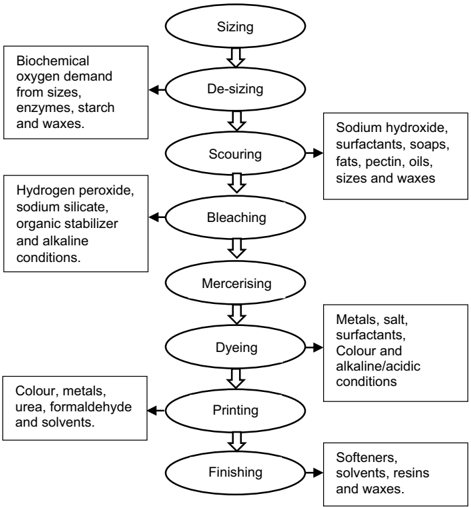
“1 The main pollutants discharged from each step of textile wet processing (after Holkar et al. (2016))”
dos Santos, A. B., Cervantes, F. J., & van Lier, J. B. (2007) · Bioresource Technology · doi:10.1016/j.biortech.2006.11.013 · Cited by 1,155
Vandevivere, P. C., Bianchi, R., & Verstraete, W. (1998) · Journal of Chemical Technology & Biotechnology · doi:10.1002/(sici)1097-4660(199808)72:4<289::aid-jctb905>3.0.co;2-# · Cited by 1,050
Colour in textile effluents - sources, measurement, discharge consents and simulation: a review
O’Neill, C., Hawkes, F. R., Hawkes, D. L., Lourenço, N. D., Pinheiro, H. M., & Delée, W. (1999) · Journal of Chemical Technology & Biotechnology · doi:10.1002/(sici)1097-4660(199911)74:11<1009::aid-jctb153>3.0.co;2-n · Cited by 905
Production, Characterization and Treatment of Textile Effluents: A Critical Review
R Ananthashankar, A. G. (2013) · Journal of Chemical Engineering & Process Technology · doi:10.4172/2157-7048.1000182 · Cited by 754 · cited 4×
“This amount of water is required when chemicals are applied on the fabrics and during the rinsing process of the final products (Ghaly et al. 2014).”
Influential(2012) · doi:10.5772/32373 · Cited by 640
Use of Chlorella vulgaris for bioremediation of textile wastewater
Lim, S.-L., Chu, W.-L., & Phang, S.-M. (2010) · Bioresource Technology · doi:10.1016/j.biortech.2010.04.092 · Cited by 541
Alaton, I. A., Balcioglu, I. A., & Bahnemann, D. W. (2002) · Water Research · doi:10.1016/s0043-1354(01)00335-9 · Cited by 518
Cotton Textile Processing: Waste Generation and Effluent Treatment
Babu, B. R., Parande, A. K., Raghu, S., & Kumar, T. P. (2007) · The journal of cotton science/Journal of cotton science · Cited by 433
Garrote, G., Domínguez, H., & Parajó, J. C. (1999) · Journal of Chemical Technology & Biotechnology · doi:10.1002/(sici)1097-4660(199911)74:11<1101::aid-jctb146>3.0.co;2-m · Cited by 400
Treatment of textile wastewater by advance oxidation processes
Al-Kdasi, A., Idris, A., Saed, K., & Guan, C. T. (2013) · Global NEST Journal · doi:10.30955/gnj.000288 · Cited by 400
Abid, M. F., Zablouk, M. A., & Abid-Alameer, A. M. (2012) · Iranian Journal of Environmental Health Science & Engineering · doi:10.1186/1735-2746-9-17 · Cited by 343
Adsorption mechanism of synthetic reactive dye wastewater by chitosan
Sakkayawong, N., Thiravetyan, P., & Nakbanpote, W. (2005) · Journal of Colloid and Interface Science · doi:10.1016/j.jcis.2005.01.020 · Cited by 332
Destruction of azo dyes by anaerobic–aerobic sequential biological treatment: a review
Popli, S., & Patel, U. D. (2015) · International Journal of Environmental Science and Technology · doi:10.1007/s13762-014-0499-x · Cited by 326
Degradation of azo-reactive dyes by ultraviolet radiation in the presence of hydrogen peroxide
Georgiou, D., Melidis, P., Aivasidis, A., & Gimouhopoulos, K. (2002) · Dyes and Pigments · doi:10.1016/s0143-7208(01)00078-x · Cited by 326
TREATMENT OF TEXTILE WASTEWATER BY ADVANCED OXIDATION PROCESSES - A REVIEW
Al-Kdasi, A., Idris, A., Saed, K., et al. (2004) · Cited by 313
Treatment of textile waste effluents by ozonation and chemical coagulation
Lin, S. H., & Lin, C. M. (1993) · Water Research · doi:10.1016/0043-1354(93)90112-u · Cited by 287 · cited 1×
“Lin and Lin (1993) treated real textile wastewater using ozonation, coagulation and the activated sludge process in multiple reactors for effluents received from different dyeing and finishing plants in northern Taiwan.”
BackgroundPre-oxidation and coagulation of textile wastewater by the Fenton process
Kang, S.-F., Liao, C.-H., & Chen, M.-C. (2002) · Chemosphere · doi:10.1016/s0045-6535(01)00159-x · Cited by 280
Treatment of simulated Reactive Yellow 22 (Azo) dye effluents using Spirogyra species
Venkata Mohan, S., Chandrasekhar Rao, N., Krishna Prasad, K., & Karthikeyan, J. (2002) · Waste Management · doi:10.1016/s0956-053x(02)00030-2 · Cited by 268
Biodegradation of azo dye C.I. Acid Red 88 by an anoxic–aerobic sequential bioreactor
Khehra, M. S., Saini, H. S., Sharma, D. K., Chadha, B. S., & Chimni, S. S. (2006) · Dyes and Pigments · doi:10.1016/j.dyepig.2004.12.021 · Cited by 262
Electrochemical treatment of textile dyes and dyehouse effluents
Chatzisymeon, E., Xekoukoulotakis, N. P., Coz, A., Kalogerakis, N., & Mantzavinos, D. (2006) · Journal of Hazardous Materials · doi:10.1016/j.jhazmat.2006.03.032 · Cited by 246
OZONATION – AN IMPORTANT TECHNIQUE TO COMPLY WITH NEW GERMAN LAWS FOR TEXTILE WASTEWATER TREATMENT
Gähr, F., Hermanutz, F., & Oppermann, W. (1994) · Water Science and Technology · doi:10.2166/wst.1994.0115 · Cited by 242
Punzi, M., Nilsson, F., Anbalagan, A., Svensson, B.-M., Jönsson, K., Mattiasson, B., & Jonstrup, M. (2015) · Journal of Hazardous Materials · doi:10.1016/j.jhazmat.2015.03.018 · Cited by 227
Sharma, K. P., Sharma, S., Sharma, S., Singh, P. K., Kumar, S., Grover, R., & Sharma, P. K. (2007) · Chemosphere · doi:10.1016/j.chemosphere.2007.04.086 · Cited by 218
Decolorization of mixture of dyes: A critical review
Gupta, V. K., Khamparia, S., Tyagi, I., Jaspal, D. K., & Malviya, A. (2015) · DOAJ (DOAJ: Directory of Open Access Journals) · Cited by 217
Panswad, T., & Luangdilok, W. (2000) · Water Research · doi:10.1016/s0043-1354(00)00200-1 · Cited by 212
Aouni, A., Fersi, C., Cuartas-Uribe, B., Bes-Pía, A., Alcaina-Miranda, M. I., & Dhahbi, M. (2012) · Desalination · doi:10.1016/j.desal.2012.04.022 · Cited by 204
Advanced treatment of textile wastewater towards reuse using a membrane bioreactor
Brik, M., Schoeberl, P., Chamam, B., Braun, R., & Fuchs, W. (2006) · Process Biochemistry · doi:10.1016/j.procbio.2006.03.019 · Cited by 195
Simulated cotton dye effluents treatment and reuse by nanofiltration
Avlonitis, S. A., Poulios, I., Sotiriou, D., Pappas, M., & Moutesidis, K. (2008) · Desalination · doi:10.1016/j.desal.2007.01.082 · Cited by 185
Heavy metal removal in duckweed and algae ponds as a polishing step for textile wastewater treatment
Sekomo, C. B., Rousseau, D. P. L., Saleh, S. A., & Lens, P. N. L. (2012) · Ecological Engineering · doi:10.1016/j.ecoleng.2012.03.003 · Cited by 176
Ong, S.-A., Uchiyama, K., Inadama, D., Ishida, Y., & Yamagiwa, K. (2010) · Bioresource Technology · doi:10.1016/j.biortech.2010.07.034 · Cited by 170
CHARACTERIZATION OF TEXTILE WASTEWATER
Hussain, J., Hussain, I., & Arif, M. (2004) · I Control Pollution · Cited by 170
WASTEWATER CHARACTERISTICS IN TEXTILE FINISHING MILLS
Savin, I.-I., & Butnaru, R. (2008) · Environmental Engineering and Management Journal · doi:10.30638/eemj.2008.113 · Cited by 167
Davies, L. C., Carias, C. C., Novais, J. M., & Martins-Dias, S. (2005) · Ecological Engineering · doi:10.1016/j.ecoleng.2005.07.003 · Cited by 164
Development of granular sludge for textile wastewater treatment
Muda, K., Aris, A., Salim, M. R., Ibrahim, Z., Yahya, A., van Loosdrecht, M. C. M., Ahmad, A., & Nawahwi, M. Z. (2010) · Water Research · doi:10.1016/j.watres.2010.05.023 · Cited by 162
The use of constructed wetland for dye-rich textile wastewater treatment
Bulc, T. G., & Ojstršek, A. (2008) · Journal of Hazardous Materials · doi:10.1016/j.jhazmat.2007.11.068 · Cited by 159
Removal of acid blue 113 and reactive black 5 dye from aqueous solutions by activated red mud
Shirzad‐Siboni, M., Jafari, S. J., Giahi, O., Kim, I., Lee, S., & Yang, J. (2013) · Journal of Industrial and Engineering Chemistry · doi:10.1016/j.jiec.2013.07.028 · Cited by 156
Studies on Characterization of Textile Industrial Waste Water in Solapur City
Paul, S., Chavan, S., & Khambe, S. D. (2012) · International Journal of Chemical Sciences · Cited by 145
Treatment of synthetic textile wastewater containing dye mixtures with microcosms
Yaseen, D. A., & Scholz, M. (2018) · Environmental Science and Pollution Research · doi:10.1007/s11356-017-0633-7 · Cited by 144
Self-citationMbuligwe, S. E. (2004) · Water Research · doi:10.1016/j.watres.2004.09.022 · Cited by 136 · cited 5×
“(2006) Mbuligwe (2005) Mbuligwe (2005) Country India Tanzania Method Sequential anoxic/aerobic bioreactor Engineering wetland with emergent plants Advanced oxidation Manganese(II) chloride tetrahydratec 3 mg/l Procion Yellow HE4R 15 mg/l Cobalt(II) chloride hexahydratec 1 mg/l Procion navy HEXL…”
BackgroundMethodInfluentialOng, S., Uchiyama, K., Inadama, D., & Yamagiwa, K. (2008) · Journal of Hazardous Materials · doi:10.1016/j.jhazmat.2008.10.071 · Cited by 131
Zhang, W., Liu, W., Zhang, J., Zhao, H., Zhang, Y., Quan, X., & Jin, Y. (2012) · Journal of Environmental Sciences · doi:10.1016/s1001-0742(11)61030-9 · Cited by 129
Turhan, K. B. Y., & Turgut, Z. (2009) · Desalination · doi:10.1016/j.desal.2008.05.005 · Cited by 122
Biosorption of Crystal Violet from Water on Leaf Biomass of Calotropis procera
Ali, H., & Muhammad, S. K. (2008) · Journal of Environmental Science and Technology · doi:10.3923/jest.2008.143.150 · Cited by 121
Pollutants of Wastewater Characteristics in Textile Industries
Imtiazuddin, S. M., Mumtaz, M., & Mallick, K. A. (2012) · Journal of Basic & Applied Sciences · doi:10.6000/1927-5129.2012.08.02.47 · Cited by 112
Ün, Ü. T., & Aytaç, E. (2013) · Journal of Environmental Management · doi:10.1016/j.jenvman.2013.03.016 · Cited by 109 · cited 1×
“Un and Aytac (2013) examined the performance of an electrochemical reactor for treatment of real textile effluents supplied by a local factory in Eskisehir (Turkey).”
Smolders, G. J. F., Klop, J. M., van Loosdrecht, M. C. M., & Heijnen, J. J. (1995) · Biotechnology and Bioengineering · doi:10.1002/bit.260480309 · Cited by 106
Chemical Properties of Treated Textile Dyeing Wastewater
Hussein, F. H. (2013) · Asian Journal of Chemistry · doi:10.14233/ajchem.2013.15909a · Cited by 106 · cited 2×
“Hussein (2013) treated real textile effluents in Iraq using a photocatalytic technique with titanium dioxide and zinc oxide.”
BackgroundMethodAdsorptive removal of textile reactive dye using Posidonia oceanica (L.) fibrous biomass
Ncibi, M. C., Mahjoub, B., & Seffen, M. (2007) · International Journal of Environmental Science and Technology · doi:10.1007/bf03325978 · Cited by 95
Tomei, M. C., Pascual, J. S., & Angelucci, D. M. (2016) · Journal of Cleaner Production · doi:10.1016/j.jclepro.2016.04.028 · Cited by 95
The impact of effluent regulations on the dyeing industry
Laing, I. G. (1991) · Review of Progress in Coloration and Related Topics · doi:10.1111/j.1478-4408.1991.tb00081.x · Cited by 91 · cited 1×
“Laing (1991) indicated that the dye level in the textile effluent is 10–50 mg/l.”
Aerobic degradation of acid orange 7 in a vertical-flow constructed wetland
Davies, L. C., Pedro, I. S., Novais, J. M., & Martins-Dias, S. (2006) · Water Research · doi:10.1016/j.watres.2006.03.010 · Cited by 89
Treatment of Dye Wastewater Using Granular Activated Carbon and Zeolite Filter
Syafalni, S., Ismail Abustan, A., Dahlan, I., Dahlan, I., Wah, C. K., & Umar, G. (2012) · Modern Applied Science · doi:10.5539/mas.v6n2p37 · Cited by 89
Dye wastewater treatment by vertical-flow constructed wetlands
Hussein, A., & Scholz, M. (2017) · Ecological Engineering · doi:10.1016/j.ecoleng.2017.01.016 · Cited by 88
Self-citationShallow pond systems planted with Lemna minor treating azo dyes
Yaseen, D. A., & Scholz, M. (2016) · Ecological Engineering · doi:10.1016/j.ecoleng.2016.05.081 · Cited by 87
Self-citationSynergistic degradation of diazo dye Direct Red 5B by Portulaca grandiflora and Pseudomonas putida
Khandare, R. V., Kabra, A. N., Awate, A. V., & Govindwar, S. P. (2013) · International Journal of Environmental Science and Technology · doi:10.1007/s13762-013-0244-x · Cited by 83
Nanofiltration process on dye removal from simulated textile wastewater
Hassani, A. H., Mirzayee, R., Nasseri, S., Borghei, M., Gholami, M., & Torabifar, B. (2008) · International Journal of Environmental Science and Technology · doi:10.1007/bf03326035 · Cited by 82
Aysu, T., & Küçük, M. M. (2014) · International Journal of Environmental Science and Technology · doi:10.1007/s13762-014-0623-y · Cited by 78
Buscio, V., Marín, M. J., Crespi, M., & Gutiérrez-Bouzán, C. (2015) · Chemical Engineering Journal · doi:10.1016/j.cej.2014.12.057 · Cited by 77
Al-Amrani, W. A., Lim, P., Seng, C., & Ngah, W. S. W. (2013) · Journal of the Taiwan Institute of Chemical Engineers · doi:10.1016/j.jtice.2013.06.032 · Cited by 76
Accumulation of Methylene Blue Dye by GrowingLemna minor
Reema, R. M., Saravanan, P., Kumar, M. D., & Renganathan, S. (2011) · Separation Science and Technology · doi:10.1080/01496395.2010.528503 · Cited by 70
Alasl, M. K., Marandi, R., Khosravi, M., & Seyyedi, K. (2006) · TSpace (University of Toronto) · Cited by 69
Davies, L. C., Cabrita, G. J. M., Ferreira, R., Carias, C. C., Novais, J. M., & Martins-Dias, S. (2009) · Ecological Engineering · doi:10.1016/j.ecoleng.2008.08.001 · Cited by 67
Bali, U., & Karagözoğlu, B. (2006) · Dyes and Pigments · doi:10.1016/j.dyepig.2006.01.013 · Cited by 67
Qian, F., Sun, X., & Liu, Y. (2012) · Chemical Engineering Journal · doi:10.1016/j.cej.2012.09.130 · Cited by 64
Hybrid anaerobic baffled reactor for treatment of desizing wastewater
Liu, R. R., Tian, Q., Yang, B., & Chen, J.-N. (2009) · International Journal of Environmental Science and Technology · doi:10.1007/bf03326122 · Cited by 63
Textile Waste Water and the advanced Oxidative Treatment Process, an Overview
Fagbenro, O. K., & Aziz, H. B. A. (2014) · International Journal of Innovative Research in Science Engineering and Technology · doi:10.15680/ijirset.2014.0308034 · Cited by 63
ADVANCED OXIDATION PROCESSES FOR TREATMENT OF TEXTILE AND DYE WASTEWATER: A REVIEW
Kalra, S., Mohan, S., & Sinha, A. A. (2011) · Cited by 62
Dhaouefi, Z., Cervantes, A. L. T., García, D., Bedoui, A., Ghédira, K., Ghédira, L. C., & Muñoz, R. (2017) · Algal Research · doi:10.1016/j.algal.2017.11.032 · Cited by 60
Panswad, T., Iamsamer, K., & Anotai, J. (2001) · Bioresource Technology · doi:10.1016/s0960-8524(00)00073-0 · Cited by 57
Bes-Piá, A., Cuartas-Uribe, B., Mendoza‐Roca, J. A., & Alcaina–Miranda, M. I. (2010) · Journal of Hazardous Materials · doi:10.1016/j.jhazmat.2010.01.085 · Cited by 56
Treatment of wastewaters from dye industry
Koprivanac, N., Bosanac, G., Grabaric, Z., & Papic, S. (1993) · Environmental Technology · doi:10.1080/09593339309385304 · Cited by 50
Optimization of Environmental Parameters on Microbial Degradation of Reactive Black Dye
P Shah, M., & A Pate, K. (2013) · Journal of Bioremediation & Biodegradation · doi:10.4172/2155-6199.1000183 · Cited by 48
Role Of Lemna Minor Lin. In Treating The Textile Industry Wastewater
Sivakumar, D. (2013) · Zenodo (CERN European Organization for Nuclear Research) · doi:10.5281/zenodo.1091669 · Cited by 44
Noonpui, S., & Thiravetyan, P. (2011) · Journal of Environmental Science and Health Part A · doi:10.1080/10934529.2011.571577 · Cited by 43
Constructed wetland treatment of textile industry wastewater using aquatic macrophytes
Sivakumar, D., Shankar, B. M., Prathima, A., & Valarmathi, M. (2013) · International Journal on Environmental Sciences · Cited by 41
Biomass concentration in PACT process
Márquez, M. C., & Costa, C. (1996) · Water Research · doi:10.1016/0043-1354(96)00007-3 · Cited by 38
Detoxifying of high strength textile effluent through chemical and bio-oxidation processes
Manekar, P., Patkar, G., Aswale, P., Mahure, M., & Nandy, T. (2014) · Bioresource Technology · doi:10.1016/j.biortech.2014.01.046 · Cited by 37
Kinetic mechanism of competitive adsorption of disperse dye and anionic dye on fly ash
Sun, D., Zhang, X., Wu, Y., & taishan, L. I. U. (2012) · International Journal of Environmental Science and Technology · doi:10.1007/s13762-012-0130-y · Cited by 37
Almazán-Sánchez, P. T., Linares‐Hernández, I., Solache‐Ríos, M., & Martínez-Miranda, V. (2016) · Water Air & Soil Pollution · doi:10.1007/s11270-016-2801-7 · Cited by 37
Keskinkan, O., & Göksu, M. Z. L. (2007) · Brazilian Journal of Chemical Engineering · doi:10.1590/s0104-66322007000200004 · Cited by 35
Yaseen, D. A., & Scholz, M. (2017) · Environmental Science and Pollution Research · doi:10.1007/s11356-017-9245-5 · Cited by 35
Self-citationMovafeghi, A., Khataee, A., Torbati, S., Zarei, M., & Salehi-Lisar, S. Y. (2012) · Environmental Progress & Sustainable Energy · doi:10.1002/ep.11712 · Cited by 31
Effect of different catalysts on urea–formaldehyde resin synthesis
Sun, Q., Hse, C., & Shupe, T. F. (2014) · Journal of Applied Polymer Science · doi:10.1002/app.40644 · Cited by 31
Sun, Y., Zheng, H., Tan, M., Wang, Y., Tang, X., Feng, L., & Xiang, X. (2013) · Journal of Applied Polymer Science · doi:10.1002/app.40062 · Cited by 28
Verma, A. K., Bhunia, P., & Dash, R. R. (2014) · Desalination and Water Treatment · doi:10.1080/19443994.2014.888687 · Cited by 26
Verma, A. K., Bhunia, P., & Dash, R. R. (2014) · Zenodo (CERN European Organization for Nuclear Research) · doi:10.5281/zenodo.1335985 · Cited by 25
Residual dyebath purification using a system of constructed wetland
Ojstršek, A., Fakin, D., & Vrhovšek, D. (2006) · Dyes and Pigments · doi:10.1016/j.dyepig.2006.10.007 · Cited by 23
Mountassir, Y., Benyaich, A., Berçot, P., & Rezrazi, M. (2015) · Journal of environmental chemical engineering · doi:10.1016/j.jece.2015.10.004 · Cited by 22
Study of textile effluent in and around Ludhiana district in Punjab, India
Singh, D., Singh, V., & Agnihotri, A. (2013) · International Journal on Environmental Sciences · Cited by 22
An examination of the treatability of a simulated textile wastewater containing Maxilon Red BL-N
Basibuyuk, M., & Forster, C. F. (1997) · Process Biochemistry · doi:10.1016/s0032-9592(97)00007-1 · Cited by 19
Color Removal from Industrial Textile Wastewater Using Chemical Adsorption
Al-Shuwaiki, N. M., Abid, B. A., & Brbooti, M. M. (2013) · Engineering and Technology Journal · doi:10.30684/etj.31.4b.7 · Cited by 15
Antezana, W., Ferrer, P., Cambra‐López, M., Estellés, F., & Calvet, S. (2016) · Water Air & Soil Pollution · doi:10.1007/s11270-016-2962-4 · Cited by 11
Yaseen, D. A., & SCHOLZ, M. (2017) · Environment Protection Engineering · doi:10.37190/epe170303 · Cited by 11
Self-citationBhuvaneswari, A., Asha, B., & Saranya, T. (2015) · SSRN Electronic Journal · Cited by 9
Yaseen, D. A., & Scholz, M. (2017) · Lund University Publications (Lund University) · doi:10.5277/epe170303 · Cited by 6
Self-citationSalman, J. M., Amrin, A. R., Ali, A., Jouda, S. A., & Hassan, F. (2015) · Journal of Advanced Chemical Sciences · Cited by 5
Research works printed but not linked: 10
- Adinew B (2012) Textile effluent treatment and decolorization tech- niques-a review. Chem Bulg J Sci Educ 21:434-456
- Bradbury MJ, Collishaw PS, Moorhouse S (2000) Controlled rinsing: a stepchange in reactive dye application technology. Colour J India Ann 5:73-80
- Cumnan S, Yimrattanabovorn J (2012) The use of constructed wet- land for azo dye textile wastewater. Int J Civil Eng Build Mater 2:150-158
- Hussain J, Hussain I, Arif M (2004) Characterization of textile waste- water. J Ind Pollut Control 20:137-144
- Joshi VJ, Santani DD (2012) Physicochemical characterization and heavy metal concentration in effluent of textile industry. Univ J Environ Res Technol 2:93-96
- Kaur H, Sharma G (2015) Removal of dyes from textile industry efflu- ent: a review. Int J Humanit Soc Sci 2(4):59-63
- Nopkhuntod S, Dararat S, Yimrattanabovorn J (2012) Removal of reactive dyes from wastewater by shale. Songklanakarin J Sci Technol 34:117-123
- Shelley TR (1994) Dye pollution clean-up by synthetic mineral. Int Dyer 79:26-31
- Upadhye VB, Joshi SS (2012) Advances in wastewater treatment-a review. Int J Chem Sci Appl 3:264-268
- Uysal Y, Aktas D, Caglar Y (2014) Determination of colour removal effciency of Lemna minor L. from industrial effluents. J Environ Prot Ecol 15:1718-1726
Cited by
Giannakis, S., Lin, K.-Y. A., & Ghanbari, F. (2021) · Chemical Engineering Journal · doi:10.1016/j.cej.2020.127083 · Cited by 1,340
Recent advances on the removal of dyes from wastewater using various adsorbents: a critical review
Dutta, S., Gupta, B., Srivastava, S. K., & Gupta, A. K. (2021) · Materials Advances · doi:10.1039/d1ma00354b · Cited by 1,296
Samsami, S., Mohamadizaniani, M., Sarrafzadeh, M.-H., Rene, E. R., & Firoozbahr, M. (2020) · Process Safety and Environmental Protection · doi:10.1016/j.psep.2020.05.034 · Cited by 1,006
Critical review of advanced oxidation processes in organic wastewater treatment
Ma, D., Yi, H., Lai, C., Liu, X., Huo, X., An, Z., Li, L., Fu, Y., Li, B., Zhang, M., et al. (2021) · Chemosphere · doi:10.1016/j.chemosphere.2021.130104 · Cited by 943
Recent Developments of Carboxymethyl Cellulose
Rahman, M. S., Hasan, M. S., Nitai, A. S., Nam, S., Karmakar, A. K., Ahsan, M. S., Shiddiky, M. J. A., & Ahmed, M. B. (2021) · Polymers · doi:10.3390/polym13081345 · Cited by 882
Metadata
- Authors
- Yaseen, D. A., & Scholz, M.
- Affiliations
- University of Salford (GB)
- Lund University (SE)
- Corresponding author
- Scholz, M.
- Venue
- International Journal of Environmental Science and Technology
- Published
- 2018-11-27
- Volume
- 16
- Issue
- 2
- Pages
- 1193-1226
- ISSN
- 1735-1472 (ISSN-L)
- 1735-2630
- OpenAlex
- W2901997077
- Cited by
- 2,052
- References
- 96
- Citations by year
- 2026: 255 · 2025: 292 · 2024: 320 · 2023: 343 · 2022: 341 · 2021: 300 · 2020: 167 · 2019: 31
- FWCI
- 54.46
- Type
- journal article
- Language
- en
- Open access
- hybrid
- doi.org
- Licence
- cc-by
- creativecommons.org/licenses/by/4.0 (tdm)
- Locations
- International Journal of Environmental Science and Technology (publishedVersion, cc-by)
- University of Salford Institutional Repository (University of Salford) (submittedVersion, cc-by)
- Lund University Publications (Lund University) (submittedVersion)
- Funders
- Government of Iraq
- Topics
- Physical Sciences › Environmental Science › Water Science and Technology › Coagulation and Flocculation Studies
- Physical Sciences › Materials Science › Polymers and Plastics › Dyeing and Modifying Textile Fibers
- Physical Sciences › Environmental Science › Water Science and Technology › Adsorption and biosorption for pollutant removal
- Keywords
- dyeing wastewater, synthetic wastewater, dye effluents, wastewater treatment, textile industry pollution
About these checks
Registry, retraction, Cites and statistics results are computed, not judged, with one exception: a printed reference that no index lists is read once by a model before it counts as a citation error. Claims are extracted by a model and kept only when their quote appears verbatim in the text; each cited source is then checked, with a model’s help, for whether it says what the claim relies on. Those verdicts can be wrong — read the claim’s quote and the cited source before relying on one.
Statistics and arithmetic are recomputed, not judged.
Confidence bands are shown only for fields calibrated on our annotated test set. None is calibrated yet, so no band is shown.
What counts as a claim ›How we measure confidence ›How we check this ›
Are you an author, or do you see a problem with this page? Request a review
Data sources
Bibliographic data: Semantic Scholar, OpenAlex, Crossref.
Contains information from the Semantic Scholar Academic Graph Datasets, made available under the ODC Attribution License (ODC-BY 1.0).
Semantic Scholar’s data is described in: Kinney, R., et al. (2023). The Semantic Scholar Open Data Platform. arXiv:2301.10140.
