

Biochar efficiency in copper removal from Haplic soils
Open accessThe DOI matches its Crossref record; 82 of the 82 references it cites were found in a registry or an index.
Abstract
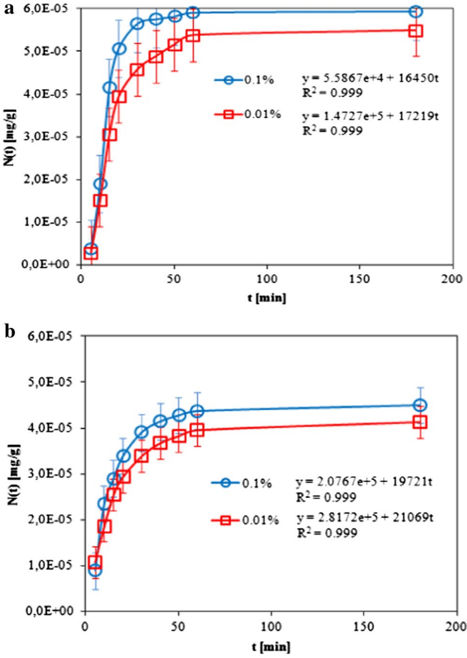
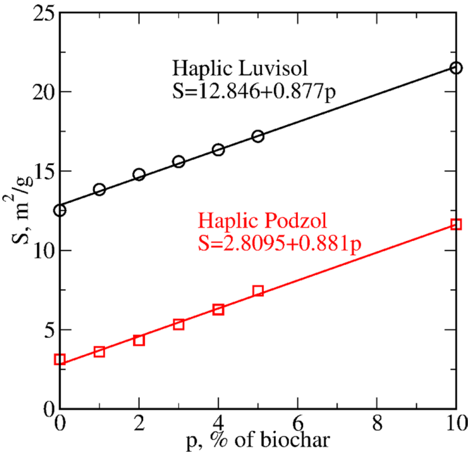
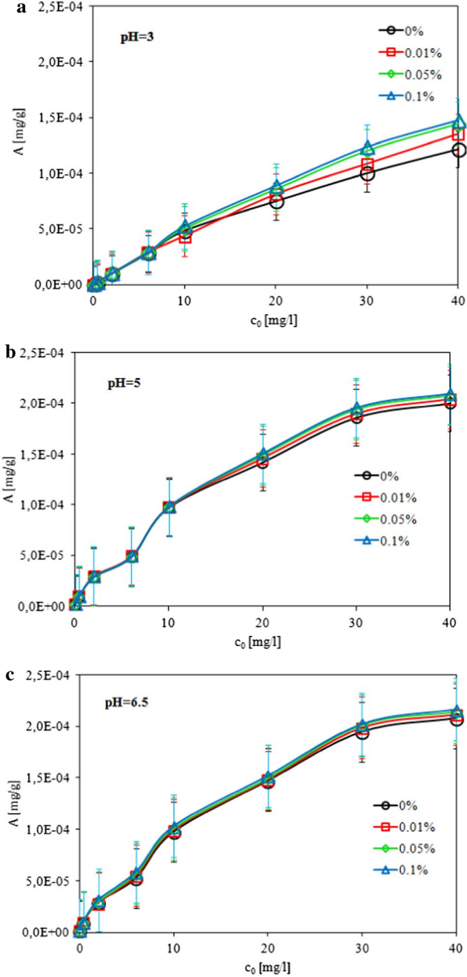
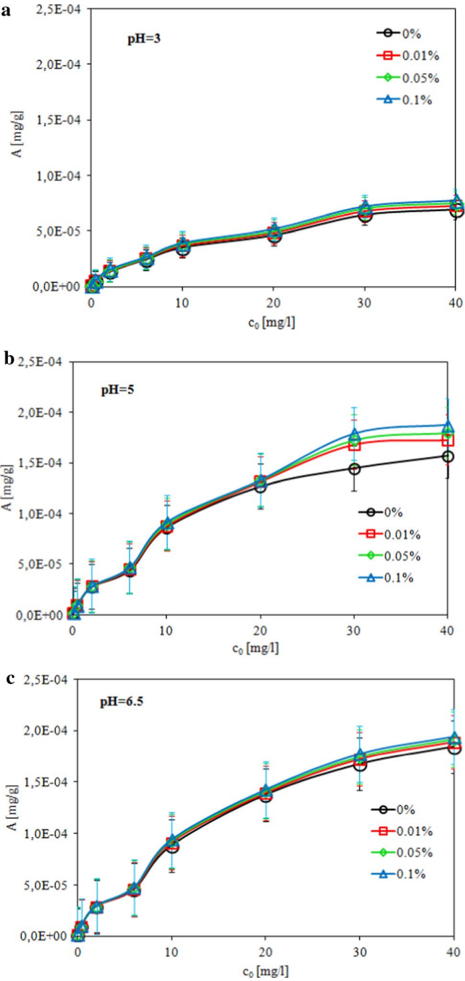
The main aim of the study was to examine the biochar efficiency in copper (Cu) ion removal from Haplic (Luvisol, Podzol) soils. In other words, the most effective biochar dose and the most favorable environment pH value were proposed. The copper removal was carried out based on the adsorption process. The results of kinetics measurements were modeled using Richie equation, whereas the adsorption isotherms using Langmuir–Freundlich and Dubinin–Radushkevich equations. The copper removal is a strongly pH-dependent process which is associated with variability of chemical Cu forms and various reactivities of organic molecules. The Cu adsorption amount was higher on silty Haplic Luvisol than on sandy Haplic Podzol mainly due to higher content of organic carbon, functional groups, clay and silt fractions as well as larger surface area. Moreover, the biochar addition increased linearly the soil surface charge and contributed to higher copper adsorption in the whole range of investigated ion concentrations. The higher the biochar dose added, the more Cu ions were adsorbed.
Overview
The claims and statistics of this paper haven’t been checked yet.
Free: it reads the open-access text and checks the first 5 claims that cite a source we can check. Create a free account to check every claim.
Integrity signals
Registry
Cites
Statistics
Figures
Verification
Claims the paper makes
The claims and statistics of this paper haven’t been checked yet.
Free: it reads the open-access text and checks the first 5 claims that cite a source we can check. Create a free account to check every claim.
Claims other papers make about this one
Each is checked against this paper’s own text: does it say what the citing paper says it does?
The source backs part of the claim, not all of it — or backs it for a different population, condition or comparison.
In the citing paper
“Numerous studies have proven that biochar increases the ability of soil to adsorb heavy metals and other contaminants, which is important for environmental protection and management”
From Biochar physicochemical properties: pyrolysis temperature and feedstock kind effects (2020) · cites this paper as Tomczyk et al. 2019
Experimental — accuracy not yet measured
Self-check
Percentages, sums and reported differences re-computed from the paper’s own numbers.
The self-check needs the paper’s full text.
Citations
Cites
Biochar as a sorbent for contaminant management in soil and water: A review
Ahmad, M., Rajapaksha, A. U., Lim, J. E., Zhang, M., Bolan, N., Mohan, D., Vithanage, M., Lee, S. S., & Ok, Y. S. (2014) · Chemosphere · doi:10.1016/j.chemosphere.2013.10.071 · Cited by 4,662
Review of second-order models for adsorption systems
HO, Y. (2006) · Journal of Hazardous Materials · doi:10.1016/j.jhazmat.2005.12.043 · Cited by 4,120
Alloway, B. J. (1990) · Cited by 4,022
The forms of alkalis in the biochar produced from crop residues at different temperatures
Yuan, J.-H., Xu, R.-K., & Zhang, H. (2011) · Bioresource Technology · doi:10.1016/j.biortech.2010.11.018 · Cited by 2,029
Surface oxides on carbon and their analysis: a critical assessment
Boehm, H. P. (2002) · Carbon · doi:10.1016/s0008-6223(01)00165-8 · Cited by 1,928 · cited 1×
“The total variable surface charge was established by potentiometric titration with Titrino 702 SM (Metrohm) (Jozefaciuk 2002), and the amount of lactonic, basic, carboxylic, phenolic groups was calculated by Boehm method (Boehm 2002).”
MethodActivated carbons and low cost adsorbents for remediation of tri- and hexavalent chromium from water
Mohan, D., & Pittman Jr., C. U. (2006) · Journal of Hazardous Materials · doi:10.1016/j.jhazmat.2006.06.060 · Cited by 1,855
Mechanisms of metal sorption by biochars: Biochar characteristics and modifications
Li, H., Dong, X., da Silva, E. B., de Oliveira, L. M., Chen, Y., & Ma, L. Q. (2017) · Chemosphere · doi:10.1016/j.chemosphere.2017.03.072 · Cited by 1,822
(1995) · Springer eBooks · doi:10.1007/978-94-011-1344-1 · Cited by 1,346
Ho, Y.-S. (2006) · Water Research · doi:10.1016/j.watres.2005.10.040 · Cited by 1,325
Impact of Biochar Amendment on Fertility of a Southeastern Coastal Plain Soil
Novak, J. M., Busscher, W. J., Laird, D. L., Ahmedna, M., Watts, D. W., & Niandou, M. A. S. (2009) · Soil Science · doi:10.1097/ss.0b013e3181981d9a · Cited by 1,291
Research works printed but not linked: 4
- 33. Jaroniec M, Piotrowska J (1986) The isotherm equations derived for adsorption on heterogeneous surfaces by assuming Jovanovič local behavior. Chem Pap 40:339-347
- 51. Malińska K (2012) Biowęgiel odpowiedzią na aktualne problem ochrony środowiska. Inżynieria i ochrona środowiska 15:387-403 (in Polish)
- 60. Peereboom L (2007) Adsorption of bio-renewable substrates on sup- ported metal catalyst in water. PhD Thesis, Department of Chemi- cal Engineering, Michigan State University, Lansing, Michigan
- 62. Pendias H, Kabata-Pendias A (1999) Biogeochemia pierwiastków śladowych. PWN, Warszawa (in Polish)
Cited by
Biochar physicochemical properties: pyrolysis temperature and feedstock kind effects
Tomczyk, A., Sokołowska, Z., & Boguta, P. (2020) · Reviews in Environmental Science and Bio/Technology · doi:10.1007/s11157-020-09523-3 · Cited by 2,948
Self-citationMurtaza, G., Ahmed, Z., Dai, D.-Q., Iqbal, R., Bawazeer, S., Usman, M., Rizwan, M., Iqbal, J., Akram, M. I., Althubiani, A. S., et al. (2022) · Frontiers in Environmental Science · doi:10.3389/fenvs.2022.1035865 · Cited by 176
“Carbon contents (27%–35%) of BC derived from poultry litter are reduced with increasing manufactured temperatures (Tomczyk et al., 2019).”
Dhar, S. A., Sakib, T. U., & Hilary, L. N. (2020) · Biomass Conversion and Biorefinery · doi:10.1007/s13399-020-01116-y · Cited by 153
“The application of high-temperature biochars with a higher specific surface area led to an enhancement of the surface area of hapic luvic soil [87].”
BackgroundStress resistance enhancing with biochar application and promotion on crop growth
Chi, W., Nan, Q., Liu, Y., Dong, D., Qin, Y., Li, S., & Wu, W. (2024) · Biochar · doi:10.1007/s42773-024-00336-z · Cited by 141
“The formation of oxygen-containing functional groups resulting from biomass pyrolysis, namely carboxyl and hydroxyl groups, is considered the principal factor behind the CEC of biochar (Tomczyk et al. 2019).”
Tomczyk, A., SOKOŁOWSKA, Z., & Boguta, P. (2020) · Fuel · doi:10.1016/j.fuel.2020.118168 · Cited by 123
Self-citationAntibiotic bioremediation by new generation biochar: Recent updates
Patel, A. K., Katiyar, R., Chen, C.-W., Singhania, R. R., Awasthi, M. K., Bhatia, S., Bhaskar, T., & Dong, C.-D. (2022) · Bioresource Technology · doi:10.1016/j.biortech.2022.127384 · Cited by 99
Gonzaga, M. I. S., Matias, M. I. D. A. S., Andrade, K. R., Jesus, A. N. D., Cunha, G. D. C., Andrade, R. S. D., & Santos, J. C. D. J. (2020) · Chemosphere · doi:10.1016/j.chemosphere.2019.124828 · Cited by 90
Murtaza, G., Ahmed, Z., & Usman, M. (2022) · Arabian Journal of Geosciences · doi:10.1007/s12517-022-09539-9 · Cited by 84
Tomczyk, A., Kondracki, B., & Szewczuk‐Karpisz, K. (2022) · Chemosphere · doi:10.1016/j.chemosphere.2022.137238 · Cited by 79
Self-citationKumar, A., Bhattacharya, T., Shaikh, W. A., Roy, A., Mukherjee, S., & Kumar, M. (2021) · Environmental Research · doi:10.1016/j.envres.2021.111758 · Cited by 66
Valorization of fruit waste-based biochar for arsenic removal in soils
Kumar, A., Bhattacharya, T., Shaikh, W. A., Chakraborty, S., Owens, G., & Naushad, M. (2022) · Environmental Research · doi:10.1016/j.envres.2022.113710 · Cited by 69
How does biochar amendment affect soil methane oxidation? A review
Zhao, Q., Wang, Y., Xu, Z. H., & Yu, Z. (2021) · Journal of Soils and Sediments · doi:10.1007/s11368-021-02889-z · Cited by 52
“Moreover, the metal ion capture capacity increased with the biochar dose because of the linearly increasing soil surface charge with the biochar addition (Tomczyk et al. 2019; Hailegnaw et al. 2020).”
BackgroundRafique, M. I., Usman, A. R. A., Ahmad, M., Sallam, A. S., & Al-Wabel, M. I. (2019) · Journal of Soils and Sediments · doi:10.1007/s11368-019-02399-z · Cited by 47
Hashem, I. A., Abbas, A. Y., El-Hamed, A. E.-N. H. A., Salem, H. M. S., El-Hosseiny, O. E. M., Abdelsalam, M., Saleem, M. H., Zhou, W., & Hu, R. (2020) · PeerJ · doi:10.7717/peerj.9267 · Cited by 50
Szewczuk‐Karpisz, K., Nowicki, P., SOKOŁOWSKA, Z., & Pietrzak, R. (2020) · Chemosphere · doi:10.1016/j.chemosphere.2020.126312 · Cited by 40
Self-citationNadarajah, K., Asharp, T., & Jeganathan, Y. (2024) · Water Science & Technology · doi:10.2166/wst.2024.051 · Cited by 50
Thermochemical processing of digestate from biogas plant for recycling dairy manure and biomass
Karaeva, J. V., Timofeeva, S. S., Башкиров, В. Н., & Bulygina, K. S. (2021) · Biomass Conversion and Biorefinery · doi:10.1007/s13399-020-01138-6 · Cited by 33
Maharlouei, Z. D., Fekri, M., Saljooqi, A., Mahmoodabadi, M., & Hejazi-Mehrizi, M. (2021) · Environmental Earth Sciences · doi:10.1007/s12665-021-09418-8 · Cited by 32
“Biochars with a high surface area and plenty of surface functional groups, inexpensive, and readily available have presented an excellent efficiency in various fields such as soil modification (Wang et al. 2019a, b, c; Pipíška et al. 2016; Yang et al. 2019; Wu et al. 2018; Fang et al. 2016; Tomczyk et al. 2019).”
BackgroundBiochar and Zeolite Uses in Improving Immobilization of Nutrients and Pollutants in Soils
Kukowska, S., & Szewczuk‐Karpisz, K. (2024) · Separation and Purification Reviews · doi:10.1080/15422119.2024.2426157 · Cited by 31
Fijałkowska, G., Szewczuk‐Karpisz, K., & Wisniewska, M. A. (2019) · International Journal of Environmental Science and Technology · doi:10.1007/s13762-019-02546-6 · Cited by 24
Cadmium and lead adsorption and desorption by coffee waste-derived biochars
Carnier, R., Coscione, A. R., de Abreu, C. A., Melo, L. C. A., & da Silva, A. F. (2022) · Bragantia · doi:10.1590/1678-4499.20210142 · Cited by 32
Sorption of imazapic and imazapyr herbicides on chitosan-modified biochars
Yavari, S., Abualqumboz, M. S., Sapari, N., Hata-Suhaimi, H.-A., Nik-Fuaad, N.-Z., & Yavari, S. (2020) · International Journal of Environmental Science and Technology · doi:10.1007/s13762-020-02629-9 · Cited by 23
Siryk, O., Tomczyk, A., Nosalewicz, A., & Szewczuk‐Karpisz, K. (2024) · Journal of Environmental Management · doi:10.1016/j.jenvman.2024.123345 · Cited by 25
Self-citationValorization of waste biomass for biochar production and arsenic removal: A comparative assessment
Kumar, A., Bhattacharya, T., & Vithanage, M. S. (2023) · Groundwater for Sustainable Development · doi:10.1016/j.gsd.2023.100972 · Cited by 22
Geleto, M. A., Forján, R., Arco-Lázaro, E., Covelo, E. F., Marcet, P., & Cerqueira, B. (2022) · International Journal of Environmental Science and Technology · doi:10.1007/s13762-022-03989-0 · Cited by 22
“The high pH of biochar prompts the CEC and in turn increase electrostatic interaction which reduce bioavailability of metals (Forján et al. 2018; Tomczyk et al. 2019).”
BackgroundKumar, A., Bhattacharya, T., Shaikh, W. A., & Biswas, J. K. (2023) · Groundwater for Sustainable Development · doi:10.1016/j.gsd.2023.101066 · Cited by 22
Purification of Aqueous Media by Biochars: Feedstock Type Effect on Silver Nanoparticles Removal
Tomczyk, A., Szewczuk‐Karpisz, K., SOKOŁOWSKA, Z., Kercheva, M., & Dimitrov, E. V. (2020) · Molecules · doi:10.3390/molecules25122930 · Cited by 19
Self-citationSzewczuk‐Karpisz, K., Bogatyrov, V. M., Galaburda, M. V., & SOKOŁOWSKA, Z. (2020) · Polymers · doi:10.3390/polym12040961 · Cited by 17
“used biochar for copper(II) immobilization [15].”
Self-citationTomczyk, A., SOKOŁOWSKA, Z., Boguta, P., & Szewczuk‐Karpisz, K. (2020) · International Journal of Molecular Sciences · doi:10.3390/ijms21165851 · Cited by 16
Self-citationModification of Natural Peat for Removal of Copper Ions from Aqueous Solutions
Shvartseva, O., Skripkina, T. S., Gaskova, O. L., & Подгорбунских, Е. М. (2022) · Water · doi:10.3390/w14132114 · Cited by 14
Hegedus, C. I., Pașcalău, S.-N., Andronie, L., Rotaru, A.-S., Cucu, A.-A., & Dezmirean, D. S. (2023) · Agriculture · doi:10.3390/agriculture13030735 · Cited by 14
Reclamation of degraded soils: Analysis of selected parameters after organic/inorganic modifications
Szewczuk‐Karpisz, K., Tomczyk, A., Kercheva, M., Paparkova, T., Grygorczuk-Płaneta, K., Siryk, O., Kukowska, S., & Panek, R. (2024) · Journal of Soils and Sediments · doi:10.1007/s11368-024-03760-7 · Cited by 11
“In most cases, the zeolite and biochar presence enhanced cation exchange capacity of soils (Tomczyk et al. 2019).”
Self-citationDose-dependent Effect of Biochar as Soil Amendment on Reducing Copper Phytotoxicity and Mobility
Simms, T., Chen, H., & Mahato, G. (2020) · International Journal of Environmental Research · doi:10.1007/s41742-020-00293-y · Cited by 15
Chelate coupling with pineapple leaves as a modified bio-sorbent for lead ions (II) removal
Heba, O. H., Ali, S., & Abdullah, N. (2019) · International Journal of Environmental Science and Technology · doi:10.1007/s13762-019-02420-5 · Cited by 9
Li, H., Ai, C., Zhao, X., Pang, B., Xu, X., Wu, W., Liu, G., Jiang, C., Pan, Z., & Shi, J. (2021) · Journal of Applied Microbiology · doi:10.1111/jam.15343 · Cited by 9
“…0+ C6 20 0 20 0+ C625 80 60 40 20 0 50(c) (d) 40 30 20 20 15 10 5 0 10 0 C u2 + (m g/ g) C u2 + (m g/ g) C u2 + (m g/ g) d which is much shorter than that of soil (60 min) (Tomczyk et al., 2019) and similar to that of a porous nanofibrous membrane made of poly l- lactic acid (Zia et al., 2020).”
Zouari, M., Marrot, L., & DeVallance, D. B. (2023) · International Journal of Environmental Science and Technology · doi:10.1007/s13762-023-04968-9 · Cited by 14
“For this reason, BC has been successfully applied in soil (Tomczyk et al. 2019), wastewater (Dwivedi and Dey 2022), and air remediation (Xiang et al. 2022).”
Biochar improves growth and physiology of Swietenia macrophylla king in contaminated soil by copper
Ferreira, R. L. D. C., Braga, D. G., do Nascimento, V. R., da Silva, C. B., Alves, A. C. B., Cabral, J. A. D. C., Cruz, F. J. R., Brito, A. E. D. A., Nogueira, G. A. D. S., de Souza, L. C., et al. (2024) · Scientific Reports · doi:10.1038/s41598-024-74356-x · Cited by 8
“…tool in the remediation of contaminated soils due to its stability and ability to improve the physical, chemical and biological properties of the soil, in addition to reducing the availability of HM due to the presence of adsorption sites on its surface and its alkalizing nature 2,8,12,59,61,65 .”
BackgroundPerspectives of Using Sewage Sludge Char in CO2 Sequestration on Degraded and Brownfield Sites
Sajdak, M., Zajemska, M., Ouadi, M., Mucha, W., Misztal, E., Pieszko, C., & Gałko, G. (2023) · Energies · doi:10.3390/en16093945 · Cited by 8
Impact of soil incorporation of biochar on environmental radioactivity
Szewczak, K., Jednoróg, S., Wołoszczuk, K., Szlązak, R., Podgórska, Z., Rafalska‐Przysucha, A., Gluba, Ł., & Łukowski, M. (2020) · Journal of Environmental Quality · doi:10.1002/jeq2.20014 · Cited by 8
Oputu, O. U., Ntshoko, Z., & Fester, V. (2022) · Journal of Water Process Engineering · doi:10.1016/j.jwpe.2022.103206 · Cited by 6
Henaut, H., Chafik, Y., Sena-Vélez, M., Cagnon, B., Bourgerie, S., & Morabito, D. (2026) · Environmental Science and Pollution Research · doi:10.1007/s11356-026-37550-0 · Cited by 5
“Regarding copper remediation, biochar has shown efficacy when used in aqueous solutions (Lee et al. 2017; Katiyar et al. 2021; Zhang et al. 2021) as well as in contaminated soils (Meier et al. 2017; Cao et al. 2019; Tomczyk et al. 2019).”
Application of viticultural by-product biochar to alleviate soil copper toxicity in vineyard
Henaut, H., Chafik, Y., Sena-Vélez, M., Bourgerie, S., & Morabito, D. (2026) · Euro-Mediterranean Journal for Environmental Integration · doi:10.1007/s41207-026-01098-9 · Cited by 3
Gope, M., Paramanik, P., Som, I., Mondal, S., Ghosh, A. R., & Saha, R. (2022) · Arabian Journal of Geosciences · doi:10.1007/s12517-022-10909-6 · Cited by 3
Regulation of mineral nutrition in plants by biochar under abiotic stress
Suleman, F., Arshad, A., Fatima, M., Batool, R., Hafeez, A., Ali, S., Khan, M. N., Singh, N. K., Fahad, S., & Ali, B. (2024) · Elsevier eBooks · doi:10.1016/b978-0-443-24137-6.00008-2 · Cited by 5
Prediction of Cu(II) retention, sorption mechanism and biochar effect in tropical soil
Musungu, P. C., Kengara, F. O., & Ongeri, D. M. K. (2023) · Sustainable Chemistry for the Environment · doi:10.1016/j.scenv.2023.100025 · Cited by 3
Kumar, A., Bhattacharya, T., Shaikh, W. A., Roy, A., Naushad, M., & Biswas, J. K. (2025) · Biomass Conversion and Biorefinery · doi:10.1007/s13399-025-06701-7 · Cited by 2
“For adsorption of As removal varying parameters were optimized [40], including IC ranging from 0.5 to 14 mg/L As solution, biochar doses of 1–15% (w/w), contact times of 15–180 min, solution temperatures of 5–45 °C, and solution pH levels of 3–12.”
InfluentialInnovative Biochar Applications for Heavy Metal Sorption and Environmental Remediation
Batool, M., Riaz, U., Tahir, A., Hayyat, M. U., Deng, G., Zaman, Q. U., Hussain, A., & Haq, T. U. (2025) · Sustainable landscape planning and natural resources management · doi:10.1007/978-3-031-73154-9_8 · Cited by 1
Mawalla, D. E., & Gülser, C. (2025) · Discover Soil. · doi:10.1007/s44378-025-00108-6 · Cited by 2
Kohlhaas, R., Schroeder, S. E., & Richardson, J. B. (2026) · Environmental Science and Pollution Research · doi:10.1007/s11356-025-37328-w · Cited by 1
“Additional reclamation is needed with the potential use of liming and biochar as passive treatments to improve pH and adsorb metals (Niazi et al. 2018; Tomczyk et al. 2019; Acharya and Kharel 2020; Sharma et al. 2022; Sun et al. 2022).”
Biochar for Soil Acidity Mitigation and Agricultural Sustainability: A Review
Khan, Z., Hassan, J., Jaafar, A. A. K., Ali, A., Farid, L., Faheem, J., Tabassum, A., & Rahimi, M. (2026) · Eurasian Soil Science · doi:10.1134/s1064229325603099 · Cited by 1
Atiah, K., Yeboah, E., Nartey, E., Lawson, D. Y. I., Häring, V., Buerkert, A., & Marschner, B. (2020) · West African Journal of Applied Ecology · Cited by 1
Chalwe, H., Muwowo, M., & Chabala, L. M. (2021) · Journal of Agricultural Science · doi:10.5539/jas.v13n6p48
“Similar results have been reported in related studies (Xincai et al., 2011; Tomczyk et al., 2019; Ramalingham et al., 2020; Burk et al., 2020; Luka et al., 2014). jas.ccsenet.”
ResultOputu, O. U., Ntshoko, Z., & Fester, V. (2021) · SSRN Electronic Journal · doi:10.2139/ssrn.3959566
Application of Biochar from Waste for Carbon Dioxide Sequestration and Sustainable Agriculture
Shalini, S. S., Palanivelu, K., & Ramachandran, A. (2022) · Springer eBooks · doi:10.1007/978-3-030-98241-6_6 · Cited by 1
Biowaste biochar as a green technology for adsorption of heavy metals in wastewater
Duwiejuah, A. B., Imoro, Z. A., & Alhassan, E. H. (2024) · Elsevier eBooks · doi:10.1016/b978-0-443-21610-7.00021-5 · Cited by 3
Converting vineyard by-products into modified biochars for copper remediation in viticultural soils
Henaut, H., Chafik, Y., Sena-Vélez, M., Cagnon, B., Morabito, D., & Bourgerie, S. (2026) · Italian Journal of Agronomy · doi:10.1016/j.ijagro.2026.100111
Biochar From Viticultural Residues: A Review of Physicochemical Properties and Applications
Henaut, H., Chafik, Y., Sena-Vélez, M., Morabito, D., & Bourgerie, S. (2026) · Australian Journal of Grape and Wine Research · doi:10.1155/ajgw/4625040
Metadata
- Authors
- Tomczyk, A., Boguta, P., & Sokołowska, Z.
- Affiliations
- Institute of Agrophysics, Polish Academy of Sciences (PL)
- Corresponding author
- Tomczyk, A.
- Venue
- International Journal of Environmental Science and Technology
- Published
- 2019-01-28
- Volume
- 16
- Issue
- 8
- Pages
- 4899-4912
- ISSN
- 1735-1472 (ISSN-L)
- 1735-2630
- OpenAlex
- W2913929277
- Cited by
- 57
- References
- 81
- Citations by year
- 2026: 6 · 2025: 3 · 2024: 8 · 2023: 6 · 2022: 11 · 2021: 7 · 2020: 12 · 2019: 4
- FWCI
- 3.07
- Type
- journal article
- Language
- en
- Update notices
- correction (2019-06-13)
- Open access
- hybrid
- doi.org
- Licence
- cc-by
- creativecommons.org/licenses/by/4.0 (tdm)
- Locations
- International Journal of Environmental Science and Technology (publishedVersion, cc-by)
- Funders
- Narodowe Centrum Badań i Rozwoju (BIOSTRATEG3/345940/7/NCBR/2017)
- Topics
- Physical Sciences › Environmental Science › Water Science and Technology › Adsorption and biosorption for pollutant removal
- Physical Sciences › Environmental Science › Pollution › Heavy metals in environment
- Physical Sciences › Environmental Science › Water Science and Technology › Environmental and Analytical Chemistry Studies
- Keywords
- biochar, copper removal, heavy metal adsorption, Luvisols, podzol soil, soil pH, adsorption kinetics, adsorption isotherms, soil surface charge, organic carbon, biochar dosage, soil remediation
About these checks
Registry, retraction, Cites and statistics results are computed, not judged, with one exception: a printed reference that no index lists is read once by a model before it counts as a citation error. Claims are extracted by a model and kept only when their quote appears verbatim in the text; each cited source is then checked, with a model’s help, for whether it says what the claim relies on. Those verdicts can be wrong — read the claim’s quote and the cited source before relying on one.
Statistics and arithmetic are recomputed, not judged.
Confidence bands are shown only for fields calibrated on our annotated test set. None is calibrated yet, so no band is shown.
What counts as a claim ›How we measure confidence ›How we check this ›
Are you an author, or do you see a problem with this page? Request a review
Data sources
Bibliographic data: Semantic Scholar, OpenAlex, Crossref.
Contains information from the Semantic Scholar Academic Graph Datasets, made available under the ODC Attribution License (ODC-BY 1.0).
Semantic Scholar’s data is described in: Kinney, R., et al. (2023). The Semantic Scholar Open Data Platform. arXiv:2301.10140.
