

The DOI matches its Crossref record; 39 of the 39 references it cites were found in a registry or an index.
Reporting Quality in Health Economic Evaluation Studies of Immune Checkpoint Inhibitors: A Systematic Review
Open accessPublished version of a preprint
Abstract
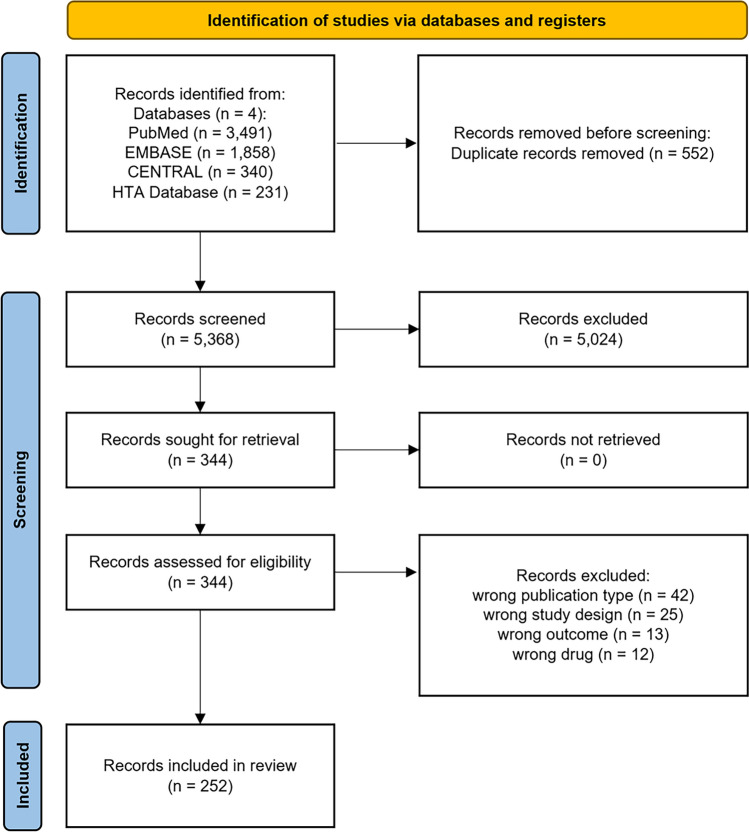
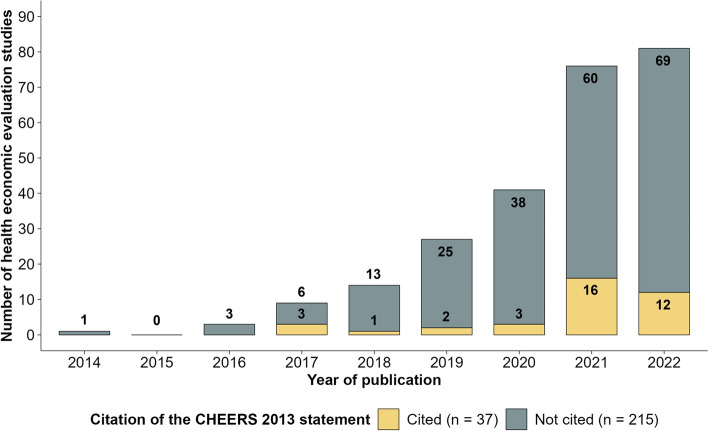
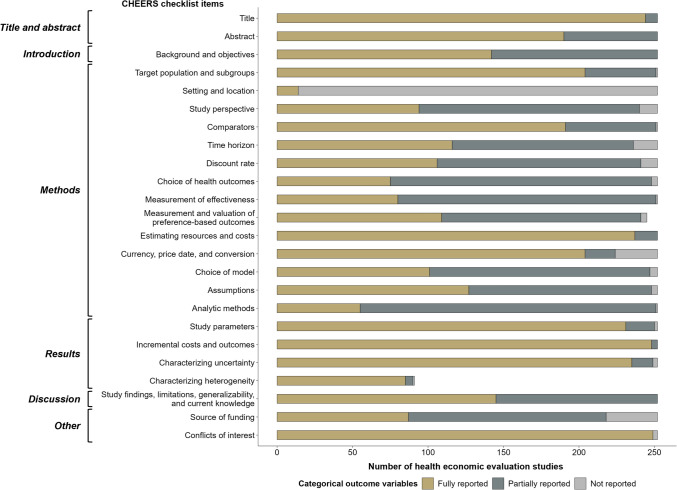
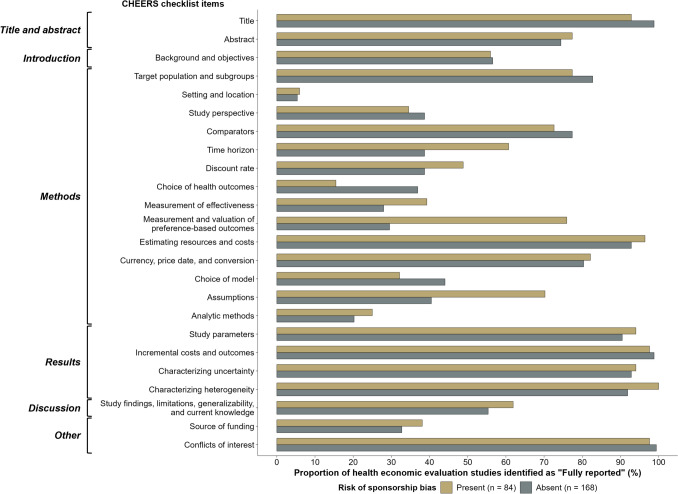
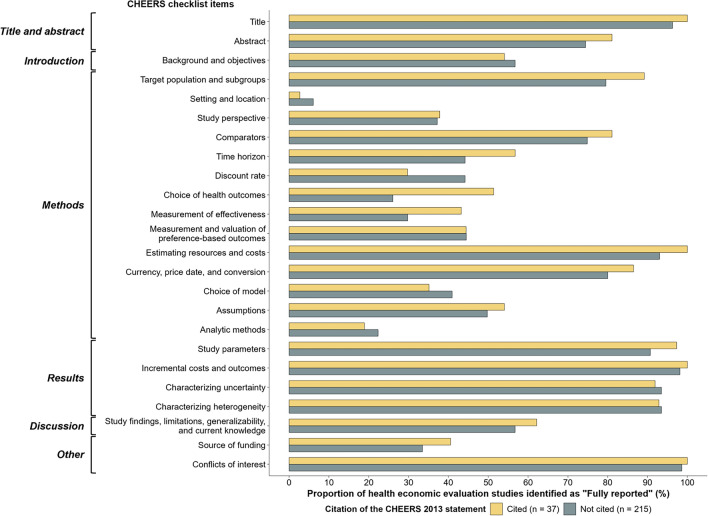
Abstract Objectives This study assessed the reporting quality of health economic evaluation (HEE) studies of immune checkpoint inhibitors (ICIs). Methods We conducted a systematic literature search of four databases (PubMed, EMBASE, Cochrane CENTRAL, and the International HTA Database) for studies published between January 1, 2014 and December 31, 2022. Three pairs of reviewers independently screened and reviewed the full text and extracted the data. We included all ICIs approved up to December 31, 2022, in the United States (US), European Union, China, and Japan. Reporting quality was assessed using the Consolidated Health Economic Evaluation Reporting Standards published in 2013 (CHEERS 2013). Subgroup analyses were also performed based on the risk of sponsorship bias or citation of CHEERS 2013. Results A total of 5,368 records were identified, 252 of which were included after full-text review. The study design, setting, and ICIs most frequently observed were cost-effectiveness and cost-utility analyses (63.5%), the US (46.0%), and pembrolizumab (38.1%), respectively. Of the 24 items of CHEERS 2013, fully reported items were limited, particularly in the Methods section. Setting and location were not reported in 94.4% of the records. Similar trends were observed in subgroup analysis. Conclusion HEE studies on ICIs between 2014 and 2022 had limited reporting across the 24 items of CHEERS 2013, regardless of sponsorship bias risk or citations. The items on setting and location in the Methods section were particularly underreported, emphasizing the need for transparent reporting in HEE studies of ICIs. Highlights The reporting quality of health economic evaluation (HEE) studies was evaluated using the Consolidated Health Economic Evaluation Reporting Standards published in 2013 (CHEERS 2013). However, the reporting quality of HEEs of immune checkpoint inhibitors (ICIs), which is an emerging health policy issue for the economic burden of cancer, remains unknown. Despite the passage of a decade since the publication of CHEERS 2013, HEE studies on ICIs have generally not fully adhered to the CHEERS 2013 guidelines in the Methods section. This is particularly evident in the setting and location items, even after stratification by the presence or absence of risk of sponsorship bias or whether CHEERS 2013 statement was cited. This study highlights the insufficient reporting of CHEERS items among current HEE studies of ICIs, especially in the Methods section, to researchers who conduct HEE studies of ICIs, and informs policymakers and stakeholders who refer to HEE studies of ICIs about underreporting.
Overview
The claims and statistics of this paper haven’t been checked yet.
Run the check — free, no account needed. It reads the open-access text and checks the sources it cites.
Integrity signals
Registry
Cites
Statistics
Figures
Verification
Claims the paper makes
The claims and statistics of this paper haven’t been checked yet.
Run the check — free, no account needed. It reads the open-access text and checks the sources it cites.
Self-check
Percentages, sums and reported differences re-computed from the paper’s own numbers.
The self-check needs the paper’s full text.
Citations
Cites
The PRISMA 2020 statement: An updated guideline for reporting systematic reviews
Page, M. J., McKenzie, J. E., Bossuyt, P. M., Boutron, I., Hoffmann, T. C., Mulrow, C. D., Shamseer, L., Tetzlaff, J. M., Akl, E. A., Brennan, S. E., et al. (2021) · BMJ · doi:10.1136/bmj.n71 · Cited by 108,283
von Elm, E., Altman, D. G., Egger, M., Pocock, S. J., Gøtzsche, P. C., & Vandenbroucke, J. P. (2008) · Journal of Clinical Epidemiology · doi:10.1016/j.jclinepi.2007.11.008 · Cited by 17,893
Cumpston, M., Li, T., Page, M. J., Chandler, J., Welch, V. A., Higgins, J. P., & Thomas, J. (2019) · Cochrane Database of Systematic Reviews · doi:10.1002/14651858.ed000142 · Cited by 7,218
Global Burden of Disease 2019 Cancer Collaboration, Kocarnik, J. M., Compton, K., Dean, F. E., Fu, W., Gaw, B. L., Harvey, J. D., Henrikson, H. J., Lu, D., Pennini, A., et al. (2022) · JAMA Oncology · doi:10.1001/jamaoncol.2021.6987 · Cited by 2,026
CONSORT 2010 Statement: updated guidelines for reporting parallel group randomised trials
the CONSORT Group, Schulz, K. F., Altman, D. G., & Moher, D. (2010) · Trials · doi:10.1186/1745-6215-11-32 · Cited by 1,871
Consolidated Health Economic Evaluation Reporting Standards (CHEERS) statement
Husereau, D., Drummond, M., Petrou, S., Carswell, C., Moher, D., Greenberg, D., Augustovski, F., Briggs, A. H., Mauskopf, J., Loder, E., et al. (2013) · BMJ · doi:10.1136/bmj.f1049 · Cited by 1,776
Husereau, D., Drummond, M., Augustovski, F., de Bekker-Grob, E. W., Briggs, A. H., Carswell, C., Caulley, L., Chaiyakunapruk, N., Greenberg, D., Loder, E., et al. (2022) · Value in Health · doi:10.1016/j.jval.2021.11.1351 · Cited by 1,243
Chen, S., Cao, Z., Prettner, K., Kuhn, M., Yang, J., Jiao, L., Wang, Z., Li, W., Geldsetzer, P., Bärnighausen, T., et al. (2023) · JAMA Oncology · doi:10.1001/jamaoncol.2022.7826 · Cited by 890
Consolidated health economic evaluation reporting standards (CHEERS) statement
Husereau, D., Drummond, M., Petrou, S., Carswell, C., Moher, D., Greenberg, D., Augustovski, F., Briggs, A. H., Mauskopf, J., & Loder, E. (2013) · Value in Health · doi:10.1016/j.jval.2013.02.010 · Cited by 657
Nussbaumer-Streit, B., Klerings, I., Dobrescu, A. I., Persad, E., Stevens, A., Garritty, C., Kamel, C., Affengruber, L., King, V. J., & Gartlehner, G. (2020) · Journal of Clinical Epidemiology · doi:10.1016/j.jclinepi.2019.10.011 · Cited by 440
Hussaini, S. M. Q., Chehade, R., Boldt, G., Raphael, J., Blanchette, P., Vareki, S. M., & Fernandes, R. (2020) · Cancer Treatment Reviews · doi:10.1016/j.ctrv.2020.102134 · Cited by 425
Wilkinson, T., Sculpher, M. J., Claxton, K., Revill, P., Briggs, A., Cairns, J. A., Teerawattananon, Y., Asfaw, E., Lopert, R., Culyer, A. J., et al. (2016) · Value in Health · doi:10.1016/j.jval.2016.04.015 · Cited by 327
A systematic review of the cost and cost-effectiveness studies of immune checkpoint inhibitors
Verma, V., Sprave, T., Haque, W., Simone, C. B., Chang, J. Y., Welsh, J. W., & Thomas, C. R. (2018) · Journal for ImmunoTherapy of Cancer · doi:10.1186/s40425-018-0442-7 · Cited by 319
The Evolving Role of Immune Checkpoint Inhibitors in Cancer Treatment
Pennock, G. K., & Chow, L. Q. M. (2015) · The Oncologist · doi:10.1634/theoncologist.2014-0422 · Cited by 241
Consolidated Health Economic Evaluation Reporting Standards (CHEERS) Statement
Husereau, D., Drummond, M., Petrou, S., Carswell, C., Moher, D., Greenberg, D., Augustovski, F., Briggs, A. H., Mauskopf, J., & Loder, E. (2013) · PharmacoEconomics · doi:10.1007/s40273-013-0032-y · Cited by 213
An Arm and a Leg: The Rising Cost of Cancer Drugs and Impact on Access
Leighl, N. B., Nirmalakumar, S., Ezeife, D. A., & Gyawali, B. (2021) · American Society of Clinical Oncology Educational Book · doi:10.1200/edbk_100028 · Cited by 177
Voets, M. M., Veltman, J., Slump, C. H., Siesling, S., & Koffijberg, H. (2022) · Value in Health · doi:10.1016/j.jval.2021.11.1362 · Cited by 105
Husereau, D., Drummond, M., Augustovski, F., de Bekker-Grob, E. W., Briggs, A. H., Carswell, C., Caulley, L., Chaiyakunapruk, N., Greenberg, D., Loder, E., et al. (2022) · PharmacoEconomics · doi:10.1007/s40273-021-01112-8 · Cited by 99
A Systematic Review of Health Economic Evaluation Studies Using the Patient’s Perspective
Tai, B.-W. B., Bae, Y. H., & Le, Q. A. (2016) · Value in Health · doi:10.1016/j.jval.2016.05.010 · Cited by 83
Charlton, V. (2019) · Health Care Analysis · doi:10.1007/s10728-019-00381-x · Cited by 80
Developing Criteria for Health Economic Quality Evaluation Tool
Kim, D. D., Do, L. A., Synnott, P. G., Lavelle, T. A., Prosser, L. A., Wong, J. B., & Neumann, P. J. (2023) · Value in Health · doi:10.1016/j.jval.2023.04.004 · Cited by 74
The economics of cancer care in the UK
Bosanquet, N., & Sikora, K. (2004) · The Lancet Oncology · doi:10.1016/s1470-2045(04)01569-4 · Cited by 66
Industry sponsorship bias in cost effectiveness analysis: registry based analysis
Xie, F., & Zhou, T. (2022) · BMJ · doi:10.1136/bmj-2021-069573 · Cited by 58
Shin, Y. E., Kumar, A., & Guo, J. J. (2023) · Clinical Drug Investigation · doi:10.1007/s40261-023-01254-x · Cited by 43
Learning from the “tsunami” of immune checkpoint inhibitors in 2015
Kourie, H. R., Awada, G., & Awada, A. H. (2016) · Critical Reviews in Oncology/Hematology · doi:10.1016/j.critrevonc.2016.03.017 · Cited by 42
Economic Evaluation of Systemic Treatments for Advanced Melanoma: A Systematic Review
Gorry, C., McCullagh, L., & Barry, M. G. (2019) · Value in Health · doi:10.1016/j.jval.2019.07.003 · Cited by 39
Haslam, A., Lythgoe, M. P., Akman, E. G., & Prasad, V. K. (2021) · JAMA Network Open · doi:10.1001/jamanetworkopen.2021.35123 · Cited by 34
Aguiar, P. M., Lima, T. D. M., & Storpirtis, S. (2016) · Journal of Clinical Pharmacy and Therapeutics · doi:10.1111/jcpt.12384 · Cited by 30
Cong, Z., Tran, O., Nelson, J., Silver, M., & Chung, K. (2022) · Applied Health Economics and Health Policy · doi:10.1007/s40258-022-00753-w · Cited by 28
Udeh, B. L. (2020) · CHEST Journal · doi:10.1016/j.chest.2020.03.008 · Cited by 25
On behalf of the EQUIPT Study Group, Vokó, Z., Cheung, K. L., Józwiak‐Hagymásy, J., Wolfenstetter, S. B., Jones, T. H., Muñoz, C., Evers, S., Hiligsmann, M., de Vries, H., et al. (2016) · Health Research Policy and Systems · doi:10.1186/s12961-016-0110-7 · Cited by 19
Recommendations in health technology assessments worldwide
Draborg, E., & Kronborg, C. (2006) · International Journal of Technology Assessment in Health Care · doi:10.1017/s0266462306050963 · Cited by 14
Yu, P. P., Eton, O. E., & Garrison, L. P. (2019) · Journal for ImmunoTherapy of Cancer · doi:10.1186/s40425-019-0707-9 · Cited by 13
Miroshnychenko, A., Uhlman, K., Malone, J. L., Waltho, D., & Thoma, A. (2021) · Journal of Plastic Reconstructive & Aesthetic Surgery · doi:10.1016/j.bjps.2021.05.017 · Cited by 13
Sharma, S., Carey, N., McConnell, D. J., Lowery, M. A., O'Sullivan, J. N., & McCullagh, L. (2024) · PharmacoEconomics · doi:10.1007/s40273-024-01413-8 · Cited by 10
Improving the Quality of Papers Published in Pharmacoeconomics and Outcomes Research
Drummond, M., & Mullins, C. D. (2013) · Value in Health · doi:10.1016/j.jval.2013.02.001 · Cited by 6
Quality of economic evaluations of ventricular assist devices: A systematic review
Fontenay, S., Catarino, L., Snoussi, S., van den Brink, H., Pineau, J., Prognon, P., & Martelli, N. (2020) · International Journal of Technology Assessment in Health Care · doi:10.1017/s0266462320000409 · Cited by 6
Riva, J. J., Bhatt, M., Martins, C. C., Brunarski, D. J., Busse, J. W., Xie, F., Schünemann, H. J., & Brożek, J. (2022) · Journal of Clinical Epidemiology · doi:10.1016/j.jclinepi.2022.04.011 · Cited by 6
Maurya, M. R., & Munshi, R. (2023) · Perspectives in Clinical Research · doi:10.4103/picr.picr_7_23 · Cited by 1
Metadata
- Authors
- Yoshioka, T., Azuma, S., Funada, S., Itaya, T., & Goto, R.
- Affiliations
- SHOWA Medical University (JP)
- Keio University (JP)
- Corresponding author
- Yoshioka, Takashi
- Venue
- Clinical Drug Investigation
- Published
- 2025-03-27
- Volume
- 45
- Issue
- 5
- Pages
- 223-234
- ISSN
- 0114-2402 (ISSN-L)
- 1173-2563
- 1179-1918
- PMC
- PMC12058961
- OpenAlex
- W4408922241
- Cited by
- 2
- References
- 39
- Citations by year
- 2026: 1 · 2025: 1
- FWCI
- 0.55
- Type
- journal article
- Language
- en
- Open access
- hybrid
- doi.org
- Licence
- cc-by-nc
- creativecommons.org/licenses/by-nc/4.0 (tdm)
- creativecommons.org/licenses/by-nc/4.0 (vor)
- Locations
- Clinical Drug Investigation (publishedVersion, cc-by-nc)
- medRxiv (acceptedVersion, cc-by-nc-nd)
- PubMed Central (publishedVersion, cc-by-nc)
- PubMed (publishedVersion)
- Funders
- National Cancer Center (2022-A-25)
- National Institute of Public Health
- Topics
- Social Sciences › Economics, Econometrics and Finance › Economics and Econometrics › Health Systems, Economic Evaluations, Quality of Life
- Social Sciences › Decision Sciences › Statistics, Probability and Uncertainty › Meta-analysis and systematic reviews
- Social Sciences › Economics, Econometrics and Finance › Economics and Econometrics › Economic and Financial Impacts of Cancer
- Keywords
- immune checkpoint inhibitors, health economic evaluation, reporting quality, cost-effectiveness analysis, cost-utility analysis, pembrolizumab, sponsorship bias, oncology drug pricing
- MeSH terms
- Immune Checkpoint Inhibitors, Cost-Benefit Analysis, Humans, Neoplasms, Research Design
About these checks
Registry, retraction, Cites and statistics results are computed, not judged, with one exception: a printed reference that no index lists is read once by a model before it counts as a citation error. Claims are extracted by a model and kept only when their quote appears verbatim in the text; each cited source is then checked, with a model’s help, for whether it says what the claim relies on. Those verdicts can be wrong — read the claim’s quote and the cited source before relying on one.
Statistics and arithmetic are recomputed, not judged.
Confidence bands are shown only for fields calibrated on our annotated test set. None is calibrated yet, so no band is shown.
What counts as a claim ›How we measure confidence ›How we check this ›
Are you an author, or do you see a problem with this page? Request a review
Data sources
Bibliographic data: Semantic Scholar, OpenAlex, Crossref.
Contains information from the Semantic Scholar Academic Graph Datasets, made available under the ODC Attribution License (ODC-BY 1.0).
Semantic Scholar’s data is described in: Kinney, R., et al. (2023). The Semantic Scholar Open Data Platform. arXiv:2301.10140.
