

A Review of the Pharmacological Properties of Insulin Degludec and Their Clinical Relevance
Open accessThe DOI matches its Crossref record; 57 of the 57 references it cites were found in a registry or an index; 66 of the 168 sources its claims cite were checked for support.
Abstract
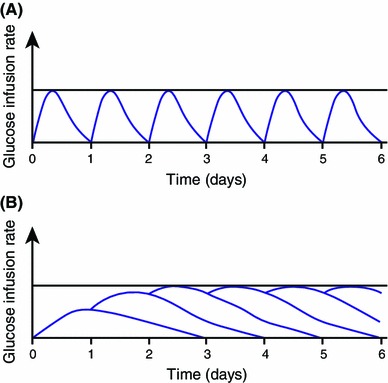
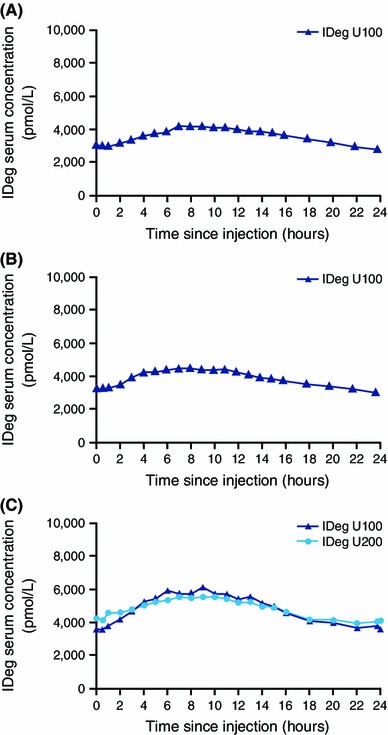
Data show that insulin degludec has a half-life of >25 h and reaches steady state within 3 days of administration. The pharmacokinetic profile demonstrates an even distribution of exposure across one dosing interval.
Overview
CoChat Summary
## TL;DR
This review summarizes pharmacological studies of insulin degludec (IDeg) and argues that its ultra-long, flat profile and lower day-to-day variability may translate into more flexible dosing and less hypoglycaemia. The paper reports a half-life of >25 h, steady state within 3 days, duration of action beyond 42 h, and four-times lower within-subject variability than insulin glargine.
## Key findings
- IDeg forms multi-hexamers after subcutaneous injection, creating a soluble depot from which insulin is slowly and continuously absorbed; in contrast, insulin glargine forms microprecipitates that must re-dissolve before absorption.
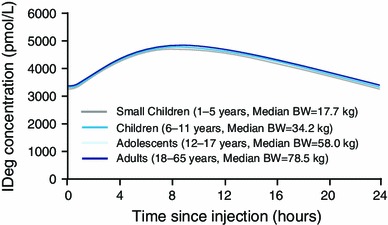
- In pharmacokinetic studies, IDeg reached clinical steady state within 3 days, had a half-life of >25 h, and showed evenly distributed exposure across a 24 h dosing interval.
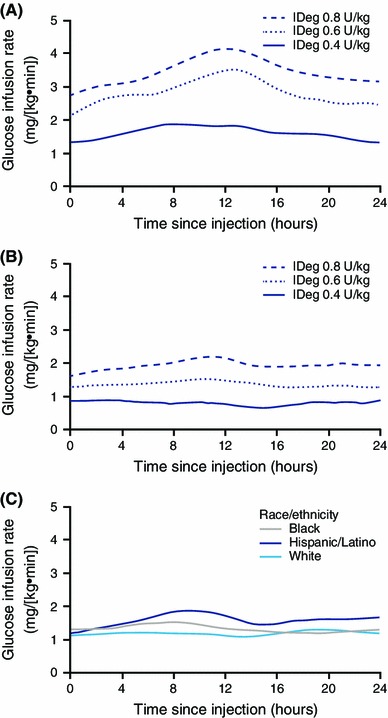
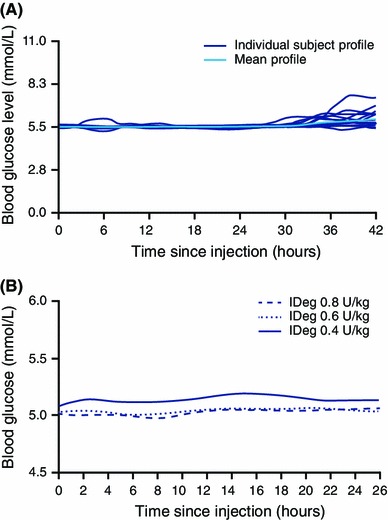
- In pharmacodynamic studies, IDeg had a flat, stable glucose-lowering effect across 24 h and an ultra-long duration of action exceeding 42 h in subjects with type 1 diabetes; in type 2 diabetes, duration of action was beyond 26 h.
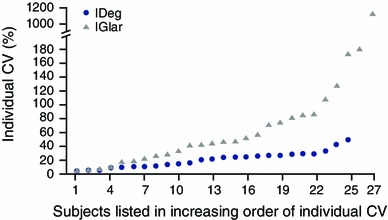
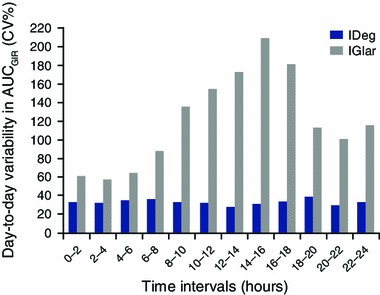
- In a randomized double-blind crossover trial in type 1 diabetes, within-subject variability in glucose-lowering effect was four-times lower with IDeg than with insulin glargine (CV 20% vs 82%; p < 0.0001), and the projected risk of more than double the usual maximum effect was <0.1% for IDeg vs 11% for glargine.
## Methods
- Narrative review of pharmacokinetic and pharmacodynamic studies of IDeg, drawing on multiple clinical trials and phase III data; the paper states the BEGIN clinical trial programme included over 11,000 patients in more than 40 countries.
- Across studies, data collection was standardized: blood sampling for pharmacokinetic endpoints and euglycaemic clamp procedures for pharmacodynamic endpoints, with mostly steady-state designs and limited study centers to reduce variability.
- Main analyses included concentration–time profiles, glucose infusion rate outcomes from clamp studies, linear mixed models on log-transformed pharmacodynamic endpoints, and comparisons/meta-analysis versus insulin glargine.
## Limitations
- The paper states that most studies used steady-state conditions, but some special-population studies used single-dose designs and simulated steady-state profiles instead, which may limit direct comparability across all settings.
- The review notes that IDeg had not yet been approved in the USA at the time, and that cardiovascular safety concerns from FDA review were still being addressed in an ongoing outcomes trial (DEVOTE); this indicates the clinical safety picture was still incomplete.
- Evident from the text: this is a review article summarizing published studies rather than a new primary study, so its conclusions depend on the design and populations of the underlying trials.
Model-written summary. Check it against the paper before relying on it.
Integrity signals
Registry
Cites
Statistics
Figures
![Fig. 2 Mechanism of protraction of insulin degludec (IDeg) and visualisation of IDeg using electron microscopy. a Schematic representation of the formation of IDeg multi-hexamers in the subcutaneous depot from di-hexamers in the pharmaceutical formulation [adapted from Jonassen et al. [16] (Fig. 5, p. 2,112), with kind permission from Springer Science + Business Media). b A transmission electron microscope image showing the effect of phenol on IDeg multi-hexamer linkage—the figure depicts elongated IDeg structures in the absence of phenol; the scale bar represents 200 nm (adapted and reprinted with permission from Steensgaard et al. [18]; Copyright 2014 American Chemical Society)](https://figures.cochat.ai/paper-figures/b25b4ee8a5934bb3bbbc5177ca1e7c78/a-review-of-the-pharmacological-properties-of-insulin-degludec-and-their-figure-2.jpg)
Verification
Claims the paper makes
47 Valid · 2 Not valid · 58 Not checked · 26 Own results and interpretations
The cited sources support only part of this claim — read each source’s verdict below.
In the paper
“Upon diffusion of phenol following injection, the IDeg di-hexamers open at both ends and lead to the formation of multi-hexamers [16].”
§ A Review of the Pharmacological Properties of Insulin Degludec and Their Clinical Relevance > Mechanism of Protraction of Insulin Degludec (IDeg)
What the sources say
- Partly supportedcites [16] Jonassen I Havelund S Hoeg-Jensen T Design of the novel protraction mechanism of insulin degludec, an ultra-long-acting basal insulin Pharm Res. 2012 29 2104 2114 10.1007/s11095-012-0739-z 22485010 PMC3399081 sourceExperimental — accuracy not yet measured
The Discussion says that, after injection, phenol diffuses away and insulin degludec dihexamers reorganise into multihexamer chains. It also proposes that the T6 hexamer opens at both poles, allowing chains to form, but explicitly calls this detailed mechanism a plausible hypothesis rather than an established fact. (LLM, conf=0.86)
plainstates a cause- Asserted: passes — The authors put it forward as true.
- Checkable: passes — It can be checked against evidence.
- Load-bearing: passes — The paper’s conclusions depend on it.
- Based: passes — The paper gives a reason why it holds.
- Partly supported
Every source the paper cites for this claim was checked and supports it.
In the paper
“The protein sequence of IDeg was based on human insulin, modified by acylating DesB30 at the ε-amino group of LysB29 with hexadecandioic acid via a γ-l-glutamic acid linker [16].”
§ A Review of the Pharmacological Properties of Insulin Degludec and Their Clinical Relevance > Mechanism of Protraction of Insulin Degludec (IDeg)
What the sources say
- Supportedcites [16] Jonassen I Havelund S Hoeg-Jensen T Design of the novel protraction mechanism of insulin degludec, an ultra-long-acting basal insulin Pharm Res. 2012 29 2104 2114 10.1007/s11095-012-0739-z 22485010 PMC3399081 source
The Introduction (Fig. 1 caption) states that insulin degludec is desB30 human insulin acylated at the ε-amino group of LysB29 with hexadecandioic acid via a γ-L-glutamic acid linker. This matches the attributed structural description. (LLM, conf=0.95)
plain- Asserted: passes — The authors put it forward as true.
- Checkable: passes — It can be checked against evidence.
- Load-bearing: passes — The paper’s conclusions depend on it.
- Based: passes — The paper gives a reason why it holds.
- Supported
The cited sources support only part of this claim — read each source’s verdict below.
In the paper
“In the pharmaceutical formulation, i.e. in the presence of phenol and zinc, the IDeg hexamers adopt a conformation where only one of the ends is available to interact with the side chain of another IDeg hexamer and thus forms stable di-hexamers.”
§ A Review of the Pharmacological Properties of Insulin Degludec and Their Clinical Relevance > Mechanism of Protraction of Insulin Degludec (IDeg)
What the sources say
- Partly supportedcites [16] Jonassen I Havelund S Hoeg-Jensen T Design of the novel protraction mechanism of insulin degludec, an ultra-long-acting basal insulin Pharm Res. 2012 29 2104 2114 10.1007/s11095-012-0739-z 22485010 PMC3399081 sourceExperimental — accuracy not yet measured
The Discussion says insulin degludec forms stable T3R3 dihexamers in pharmaceutical formulation and that a T3R3 hexamer is open at only one pole. It presents the proposed side-chain interaction between hexamers as a plausible, speculative mechanism, whereas the citing sentence states that interaction as fact. (LLM, conf=0.85)
plainstates a cause- Asserted: passes — The authors put it forward as true.
- Checkable: passes — It can be checked against evidence.
- Load-bearing: passes — The paper’s conclusions depend on it.
- Based: passes — The paper gives a reason why it holds.
- Partly supported
The cited sources support only part of this claim — read each source’s verdict below.
In the paper
“With the gradual diffusion of zinc from the ends of the multi-hexamers, terminal IDeg monomers slowly and steadily dissociate, resulting in a slow and gradual delivery of IDeg from the SC injection site into the circulation [16].”
§ A Review of the Pharmacological Properties of Insulin Degludec and Their Clinical Relevance > Mechanism of Protraction of Insulin Degludec (IDeg)
What the sources say
- Partly supportedcites [16] Jonassen I Havelund S Hoeg-Jensen T Design of the novel protraction mechanism of insulin degludec, an ultra-long-acting basal insulin Pharm Res. 2012 29 2104 2114 10.1007/s11095-012-0739-z 22485010 PMC3399081 sourceExperimental — accuracy not yet measured
The Discussion and Fig. 5 describe zinc diffusion leading to breakdown of multihexamer chains and release of absorbable monomers from their terminal ends. But the paper calls this a proposed mechanism and says further studies are needed to establish its kinetics in vivo; the citing sentence presents it as established. (LLM, conf=0.88)
plainstates a cause- Asserted: passes — The authors put it forward as true.
- Checkable: passes — It can be checked against evidence.
- Load-bearing: passes — The paper’s conclusions depend on it.
- Based: passes — The paper gives a reason why it holds.
- Partly supported
Every source the paper cites for this claim was checked and supports it.
In the paper
“The pharmacodynamic properties of IDeg are preserved in subjects with T2DM with different race/ethnic backgrounds, as shown in Fig. 4c [25].”
§ A Review of the Pharmacological Properties of Insulin Degludec and Their Clinical Relevance > Pharmacodynamic Characteristics of IDeg > Pharmacodynamic Profiles
What the sources say
- Supportedcites [25] Hompesch M Morrow L Watkins E Pharmacokinetic and pharmacodynamic responses of insulin degludec in African American, White, and Hispanic/Latino patients with type 2 diabetes mellitus Clin Ther. 2014 36 507 515 10.1016/j.clinthera.2013.12.014 24508419 source
The Discussion states that IDeg’s glucose-lowering effect was flat and stable across the 24-hour dosing interval irrespective of race/ethnicity, and that its pharmacodynamic properties were preserved across the groups studied. The Conclusion likewise reports similar responses in African American, Hispanic/Latino, and white patients with T2DM. (LLM, conf=0.94)
plain- Asserted: passes — The authors put it forward as true.
- Checkable: passes — It can be checked against evidence.
- Load-bearing: unclear — It is unclear whether the paper’s conclusions depend on it.
- Based: passes — The paper gives a reason why it holds.
- Supported
76 more claims · 26 with their cited sources checked
Create a free account to see all 133 claims and to verify the 21 references still open.
- It may state two separate claims as one. 38
- Probably not a substantial claim. 17
Citations
Cites
Summary of product characteristics
(2013) · Pharmaceutical Medicine · doi:10.1093/med/9780199609147.003.0027 · Cited by 1,905
Lepore, M., Pampanelli, S., Fanelli, C., Porcellati, F., Bartocci, L., Di Vincenzo, A., Cordoni, C., Costa, E., Brunetti, P., & Bolli, G. B. (2000) · Diabetes · doi:10.2337/diabetes.49.12.2142 · Cited by 818
Peyrot, M., Barnett, A. H., Meneghini, L. F., & Schumm‐Draeger, P. ‐. (2012) · Diabetic Medicine · doi:10.1111/j.1464-5491.2012.03605.x · Cited by 655 · cited 2×
“Similar to all insulin analogues, the risk of hypoglycaemia is a major safety concern, and is considered a key obstacle in regulating blood glucose levels by both patients and physicians [10, 57].”
BackgroundHeise, T., Nosek, L., Rønn, B. B., Endahl, L., Heinemann, L., Kapitza, C., & Draeger, E. (2004) · Diabetes · doi:10.2337/diabetes.53.6.1614 · Cited by 614 · cited 1×
“of hypoglycaemia [11, 12].”
Self-citationPsychological Insulin Resistance in Patients With Type 2 Diabetes
Polonsky, W. H., Fisher, L., Guzman, S., Villa-Caballero, L., & Edelman, S. V. (2005) · Diabetes Care · doi:10.2337/diacare.28.10.2543 · Cited by 551 · cited 1×
“However, this can be perceived as restrictive to patient lifestyle and can create a barrier towards the use of basal insulin therapy [9, 10].”
BackgroundDesign of the Novel Protraction Mechanism of Insulin Degludec, an Ultra-long-Acting Basal Insulin
Jonassen, I., Havelund, S., Hoeg-Jensen, T., Steensgaard, D. B., Wahlund, P.-O., & Ribel, U. (2012) · Pharmaceutical Research · doi:10.1007/s11095-012-0739-z · Cited by 448 · cited 6×
“Insulin degludec (IDeg) is a new-generation basal insulin with an ultra-long duration of action developed for once-daily administration [15, 16], which has been designed to address the unmet needs in terms of basal insulin therapy outlined above.”
BackgroundMethodResultInfluentialHeller, S., Buse, J., Fisher, M., Garg, S., Marre, M., Merker, L., Renard, E., Russell-Jones, D., Philotheou, A., Francisco, A. M. O., et al. (2012) · The Lancet · doi:10.1016/s0140-6736(12)60204-9 · Cited by 402
Heise, T., Hermanski, L., Nosek, L., Feldman, A., Rasmussen, S., & Haahr, H. (2012) · Diabetes, Obesity and Metabolism · doi:10.1111/j.1463-1326.2012.01627.x · Cited by 397 · cited 9×
“formed by means of a Biostator (MTB Medizintechnik, Amstetten, Germany) [21, 22] or using a manual clamp, as described previously [20].”
BackgroundMethodInfluentialSelf-citationClinical pharmacokinetics and phamacodynamics: concepts and applications
Rowland, M., & Tozer, T. N. (2011) · Cited by 367
Ratner, R. E., Gough, S. C. L., Mathieu, C., Del Prato, S., Bode, B., Mersebach, H., Endahl, L., & Zinman, B. (2013) · Diabetes, Obesity and Metabolism · doi:10.1111/dom.12032 · Cited by 346 · cited 3×
“This rationale is furthered supported by the reduction in rates of hypoglycaemia, in particular nocturnal hypoglycaemia episodes, being more prominent with IDeg than with IGlar during the maintenance phase—described as the period (from 16 weeks to end of treatment) when stable glycaemic control and insulin dose have b…”
BackgroundInfluential
Research works printed but not linked: 5
- Dhatariya K Yeong J Improved glycaemic controls for patients on twice daily dosing regime of insulin glargine compared to those on a once daily dosing regime Diabetologia. 2010 53 suppl 1 S390
- Kurtzhals P Heise T Strauss HM Multi-hexamer formation is the underlying basis for the ultra-long glucose-lowering effect of insulin degludec Diabetologia. 2011 54 suppl 1 S426
- Haahr H Ikushima I Hirao K Similar pharmacokinetic and pharmacodynamic properties of insulin degludec in Japanese and Caucasian subjects with T1DM [abstract no. PCS-16-6] J Diabetes Investig 2012 3 suppl s1 197 PMC4773674 27042281
- Leiter L Yale JF Chaisson JL Assessment of the impact of fear of hypoglycemic episodes on hypoglycemia management and glucose control management Can J Diabetes. 2005 29 186 192
- Oyer DS Heller S Gough SCL Exercise-related hypoglycaemia occurs at similar frequency with insulin degludec and insulin glargine [abstract] Diabetologia. 2013 56 suppl 1 S84
Cited by
Items 101–200 of 223
Synthetic long-acting insulin analogs for the management of type 1 diabetes: an update
Pedersen‐Bjergaard, U., Fabricius, T. W., & Thorsteinsson, B. (2021) · Expert Opinion on Pharmacotherapy · doi:10.1080/14656566.2021.1970136 · Cited by 8
Thalange, N., Gundgaard, J., Parekh, W., & Tutkunkardas, D. (2019) · BMJ Open Diabetes Research & Care · doi:10.1136/bmjdrc-2019-000664 · Cited by 7
Liu, H., Li, T., Yu, H., Chen, X., Li, J., Tan, H., Jia, D., & Yu, Y. (2023) · Expert Opinion on Investigational Drugs · doi:10.1080/13543784.2023.2254690 · Cited by 9
“IDeg demonstrated a - low day-to-day variability in pharmacodynamic profiles and fourfold lower within-patient variability than IGlar to be recommended in clinical use [11,12].”
Pharmacological variability of insulins degludec and glargine 300 U/mL: Equivalent or not?
Monnier, L., & Colette, C. (2017) · Diabetes & Metabolism · doi:10.1016/j.diabet.2017.11.001 · Cited by 7
Preumont, V., & Buysschaert, M. (2019) · Diabetes & Metabolism · doi:10.1016/j.diabet.2019.04.007 · Cited by 8
Pieber, T. R., BAJAJ, H. S., Heller, S. R., Jia, T., Khunti, K., Klonoff, D. C., Ladelund, S., Leiter, L. A., Wagner, L., & Philis‐Tsimikas, A. (2021) · Diabetes Obesity and Metabolism · doi:10.1111/dom.14564 · Cited by 7
“variability and allowing for more flexible dosing and reduced risk of hypoglycaemia.(8,9)”
BackgroundMolecular Engineering of Efficacious Mono-Valent Ultra-Long Acting Two-Chain Insulin-Fc Conjugates
Tagmose, T. M., Pedersen, K., Pridal, L., Stidsen, C. E., Pedersen, M. Ø., Lin, Z., Zhang, Y., Wan, Z., Ferreras, M., Naver, H., et al. (2022) · Journal of Medicinal Chemistry · doi:10.1021/acs.jmedchem.1c02039 · Cited by 8
Alhmoud, E., Saad, M. O., & Omar, N. E. (2024) · Frontiers in Endocrinology · doi:10.3389/fendo.2023.1285147 · Cited by 9
“IDeg is available in two bioequivalent strengths: 100 units/mL and 200 U/mL. Switching from one to another does not require adjustment in the dose (13).”
BackgroundUchida, J., Oikawa, Y., Katsuki, T., Takeda, H., Shimada, A., & Kawai, T. (2017) · Diabetic Medicine · doi:10.1111/dme.13557 · Cited by 9
Type 1 Diabetes in Children and Adolescents
Sikes, K. A., Name, M. A. V., & Tamborlane, W. V. (2018) · Springer eBooks · doi:10.1007/978-3-319-73782-9_31 · Cited by 6
Premix insulins in type 1 diabetes: the coming of degludec/aspart
Rendell, M. (2019) · Expert Opinion on Drug Metabolism & Toxicology · doi:10.1080/17425255.2019.1585427 · Cited by 7
“After a single injection of insulin Degludec, insulin levels rise with very slight upslope reaching a maximal level after 10–12 h, from which there is a very slow decline with a t of 10–12 h and a t of 17–21hours [45].”
BackgroundFuture directions in insulin therapy
Home, P. (2021) · Metabolism · doi:10.1016/j.metabol.2021.154889 · Cited by 8
Haak, T., Gölz, S., Fritsche, A., Füchtenbusch, M., Siegmund, T., Schnellbächer, E., Klein, H. H., Uebel, T., & Droßel, D. (2020) · Diabetologie und Stoffwechsel · doi:10.1055/a-1193-3724 · Cited by 10
Biotechnology Revolution Shaping the Future of Diabetes Management
Kundnani, N. R., Lolescu, B. M., Dinu, A. R., Berceanu-Vaduva, D. M., Dumitrescu, P., Tamaș, T.-P., Sharma, A., & Popa, M.-D. (2024) · Biomolecules · doi:10.3390/biom14121563 · Cited by 7
Reverter‐Branchat, G., Groessl, M., Nakas, C. T., Prost, J., Antwi, K., Niederkofler, E. E., & Bally, L. (2020) · Analytical and Bioanalytical Chemistry · doi:10.1007/s00216-020-02971-4 · Cited by 8
Brøsen, J. M. B., Agesen, R. M., Kristensen, P. L., Alibegovic, A. C., Andersen, H. U., Beck‐Nielsen, H., Gustenhoff, P., Hansen, T. K., Hedetoft, C., Jensen, T. J., et al. (2023) · Diabetes Obesity and Metabolism · doi:10.1111/dom.15003 · Cited by 6
“Median (range) 1 (1-15) 1 (1-12) 1 (1-15)”
Combination therapies in the management of type 2 diabetes: the use of insulin degludec/liraglutide
Minze, M. G., & Chastain, L. M. (2016) · Therapeutics and Clinical Risk Management · doi:10.2147/tcrm.s73579 · Cited by 6
“Zinc gradually diffuses from the multihexamers allowing a slow and steady delivery into circulation.(13) Insulin degludec is also highly protein bound (.”
BackgroundPørksen, N. K., Linnebjerg, H., Lam, E. C. Q., Garhyan, P., Pachori, A. S., Pratley, R. E., & Smith, S. R. (2018) · Diabetes Obesity and Metabolism · doi:10.1111/dom.13215 · Cited by 7
Préparations insuliniques au cours de la dernière décennie.
Monnier, L., & Colette, C. (2018) · Médecine des Maladies Métaboliques · doi:10.1016/s1957-2557(18)30034-8 · Cited by 5
Shah, V. N., Aktürk, H. K., Joseph, H., Schneider, N., & Snell‐Bergeon, J. K. (2021) · Diabetes Obesity and Metabolism · doi:10.1111/dom.14423 · Cited by 5
Probing the Binding Mechanism of Acylated Peptides to Human Serum Albumin
Hu, H., Ransdell, A. S., Qu, H., Durbin, J. D., Valenzuela, F. A., Hernandez-Buquer, S., & Gonciarz, M. D. (2023) · ACS Chemical Biology · doi:10.1021/acschembio.3c00018 · Cited by 5
Haak, T., Gölz, S., Fritsche, A., Füchtenbusch, M., Siegmund, T., Schnellbächer, E., Klein, H. H., Uebel, T., & Droßel, D. (2023) · Diabetologie und Stoffwechsel · doi:10.1055/a-2075-9984 · Cited by 7
Iwasaki, S., Kozawa, J., Kimura, T., Fukui, K., Iwahashi, H., Imagawa, A., & Shimomura, I. (2017) · Diabetology International · doi:10.1007/s13340-017-0303-5 · Cited by 6
“4 h, twice that of insulin glargine (IGlar), and a duration of action of more than 42 h [17].”
BackgroundRagonese, M., Larosa, M., Angotti, S., Annese, S., Cruciani, L., Dainelli, M., Lucisano, G., Prosperini, G., Sacco, M., Salomone, E., et al. (2020) · Diabetes Therapy · doi:10.1007/s13300-020-00902-1 · Cited by 5
Why Do Some Concentrated Insulins Maintain Their Pharmacokinetics/Pharmacodynamics Profile?
Hood, R. C. (2017) · Diabetes Technology & Therapeutics · doi:10.1089/dia.2017.0094 · Cited by 5
“IDeg has a very long duration of action with a t1/2 of 25 h, a daily dosing interval that is 1/3 the time taken to reach 98% of steady state and a narrow peak-to-trough ratio with a timeaction curve that is independent of dose.(23) Adjustments were made to the IDeg U-200 excipients to meet bioequivalence standards.”
Molecular engineering of designer diabetes therapeutics
DeWolf, E. L., Webber, B., & Webber, M. J. (2026) · Journal of Controlled Release · doi:10.1016/j.jconrel.2026.114705 · Cited by 5
Wang, R., Luo, S., Xiao, Z., & Zhou, Z. (2023) · Diabetes/Metabolism Research and Reviews · doi:10.1002/dmrr.3752 · Cited by 5
Albumin-binding as a universal strategy for half-life extension
Tan, H., Sattler, M., & Zou, P. (2022) · Japan Journal of Research · doi:10.33425/2690-8077.1043 · Cited by 5
Uzoigwe, C., Radin, M. S., Hamersky, C. M., DeKoven, M., Holt, C., Karkare, S. U., & Polonsky, W. H. (2021) · Quality of Life Research · doi:10.1007/s11136-020-02753-6 · Cited by 5
The Value of Insulin Degludec in Frail Older Adults with Type 2 Diabetes
Strain, W. D., Morgan, A. R., & Evans, M. (2021) · Diabetes Therapy · doi:10.1007/s13300-021-01162-3 · Cited by 4
Herzig, D., Groessl, M., Álvarez‐Martínez, M., Reverter‐Branchat, G., Nakas, C. T., Kosinski, C., Stettler, C., & Bally, L. (2021) · Journal of Diabetes Science and Technology · doi:10.1177/19322968211043915 · Cited by 5
Kesavadev, J., Murthy, L. S., Chaudhury, T., Yalamanchi, S. R., Giri, J., Gupta, S., Phatak, S., Modi, K. D., Chatterjee, S., Manjunath, A., et al. (2022) · Metabolism Open · doi:10.1016/j.metop.2022.100184 · Cited by 4
“Insulin degludec forms soluble depots of multi-hexamers upon subcutaneous administration, which release monomers at a consistent rate that are then gradually absorbed into the circulation [6,7].”
BackgroundThalange, N. K. S., Biester, T., & Danne, T. (2019) · Diabetes Therapy · doi:10.1007/s13300-019-0641-3 · Cited by 4
Sakurai, T., Harada, M., & Takahashi, T. (2020) · Acute Medicine & Surgery · doi:10.1002/ams2.518 · Cited by 4
Lane, W. S., Weinrib, S. L., Lawrence, M. J., Lane, B. C., & Jarrett, R. T. (2021) · Endocrine Practice · doi:10.1016/j.eprac.2021.11.001 · Cited by 8
Inpatient hyperglycemia management: the opportunities of a new basal insulin
Simioni, N. (2016) · Italian Journal of Medicine · doi:10.4081/itjm.2016.681 · Cited by 4
Management of Diabetes Mellitus
Jenkins, A. J., SCOTT, E. S., Fulcher, J., Kilov, G., & Januszewski, A. S. (2018) · Contemporary cardiology · doi:10.1007/978-3-319-97622-8_7 · Cited by 6
Duggan, E. W., & Umpierrez, G. E. (2024) · Current Opinion in Anaesthesiology · doi:10.1097/aco.0000000000001438 · Cited by 3
Haak, T., Gölz, S., Fritsche, A., Füchtenbusch, M., Siegmund, T., Schnellbächer, E., Klein, H. H., Uebel, T., & Droßel, D. (2022) · Diabetologie und Stoffwechsel · doi:10.1055/a-1916-2101 · Cited by 3
Fricke, U., & Schwabe, U. (2015) · Springer eBooks · doi:10.1007/978-3-662-47186-9_2 · Cited by 2
Efficacy and safety of insulin degludec in renal transplant recipients with pre-existing diabetes
Sanyal, D., Chaudhuri, S. R., & Majumder, A. (2020) · Endocrine and Metabolic Science · doi:10.1016/j.endmts.2020.100071 · Cited by 5
Therapie des Typ-1-Diabetes: Kurzfassung der S3-Leitlinie. Version 5.0, AWMF-Registernummer: 057-013
Haak, T., Fritsche, A., Füchtenbusch, M., Gehr, B., Gölz, S., Kröger, J., Siegmund, T., Ziegler, R., Droßel, D., Fuchs, S., et al. (2024) · Diabetologie und Stoffwechsel · doi:10.1055/a-2312-0276 · Cited by 6
Baker, D. E. (2017) · Hospital Pharmacy · doi:10.1177/0018578717715383 · Cited by 3
Structure and properties of insulin
Gupta, A. (2021) · Elsevier eBooks · doi:10.1016/b978-0-12-820234-0.00004-4 · Cited by 5
Type 1 Diabetes in Children and Adolescents
Hu, P., Name, M. A. V., Stephenson, K., Sikes, K. A., & Tamborlane, W. V. (2024) · Springer eBooks · doi:10.1007/978-3-031-66296-6_30 · Cited by 3
Drummond, R. F., Seif, K. E., Higgs, A. J., & Reece, E. A. (2025) · American Journal of Obstetrics and Gynecology · doi:10.1016/j.ajog.2025.08.088 · Cited by 3
Use of Second-Generation Basal Insulin Gla-300 in Special Populations: A Narrative Mini-Review
Ghosh, S. K., Kalra, S., Bantwal, G., & Sahay, R. K. (2023) · Current Diabetes Reviews · doi:10.2174/1573399819666230109113205 · Cited by 2
Li, T., Liu, H., Li, S., Yu, H., Li, J., Tan, H., & Yu, Y. (2023) · Clinical Pharmacokinetics · doi:10.1007/s40262-022-01207-1 · Cited by 3
“This is despite some studies showing that insulin degludec had a half-life of > 25 h (compared with 12 h for insulin glargine) and an ultra-long duration of action exceeding 42 h [20].”
BackgroundHaak, T., Gölz, S., Fritsche, A., Füchtenbusch, M., Siegmund, T., Schnellbächer, E., Klein, H. H., Uebel, T., & Droßel, D. (2023) · Diabetes aktuell · doi:10.1055/a-2012-3827 · Cited by 4
Insulin’s Legacy: A Century of Breakthroughs and Innovation
Hadid, S. A., Zhang, E., Frishman, W. H., & Brutsaert, E. F. (2024) · Cardiology in Review · doi:10.1097/crd.0000000000000680 · Cited by 4
Haak, T., Gölz, S., Fritsche, A., Füchtenbusch, M., Siegmund, T., Schnellbächer, E., Klein, H. H., Uebel, T., & Droßel, D. (2024) · Experimental and Clinical Endocrinology & Diabetes · doi:10.1055/a-2166-6695 · Cited by 3
Kühne, T., Wallace, E., Herzig, D., Helleputte, S., Scott, S. N., Pickles, J., Melmer, A., & Stettler, C. (2024) · Diabetes Obesity and Metabolism · doi:10.1111/dom.15580 · Cited by 2
United States experience of insulin Degludec alone or in combination for type 1 and type 2 diabetes
Rendell, M. (2017) · Drug Design Development and Therapy · doi:10.2147/dddt.s132581 · Cited by 3
“24,25 This is roughly twice the duration of action of glargine, until now the longest acting insulin.”
Колбин, А. С., Shestakova, M. V., Galstyan, G. R., Zhao, W., Mosikian, A. A., Kurylev, A. A., Balykina, Y. Е., Proskurin, M. A., Alekseeva, Y. G., & Startseva, E. (2017) · Problems of Endocrinology · doi:10.14341/probl2017635307-319 · Cited by 3
“После подкожного введения деглудек образует депо растворимых мультигексамеров, которые постепенно всасываются в кровоток, обеспечивая ровный, стабильный сахароснижающий эффект длительностью более 42 ч и демонстрирует самую низкую интраиндивидуальную вариабельность действия в отличие от привычно используемых базальных…”
McCarthy, O. M., Bain, S. C., & Deere, R. (2018) · Annals of Translational Medicine · doi:10.21037/atm.2018.11.63 · Cited by 2
“Pharmacological profile The impressive pharmacological profile of IDeg derives from its specifically engineered molecular structure which encourages multi-hexamer formation via a prolonged depot release (17).”
BackgroundInfluentialAn UPLC-MS/MS Method for Routine Quantification of Insulin Degludec in Plasma
Zhang, Y., Jiang, Y., Wang, Y., et al. (2019) · Current Pharmaceutical Analysis · doi:10.2174/1573412915666190304145149 · Cited by 2
Transitioning from Preclinical to Clinical Drug Development
Walford, G. A., & Stoch, S. A. (2019) · Springer eBooks · doi:10.1007/978-3-030-11748-1_18 · Cited by 2
The effect of Insulin Degludec on glycemic control in diabetic cats over a 12-month period
Oda, H., Mori, A., & Sako, T. (2020) · Journal of Veterinary Medical Science · doi:10.1292/jvms.19-0309 · Cited by 4
Haak, T., Gölz, S., Fritsche, A., Füchtenbusch, M., Siegmund, T., Schnellbächer, E., Klein, H. H., Uebel, T., & Droßel, D. (2022) · Experimental and Clinical Endocrinology & Diabetes · doi:10.1055/a-1624-3340 · Cited by 3
Insulin Glargine 300 U/mL Therapy in Children and Adolescents with Type 1 Diabetes
Maffeis, C., & Rabbone, I. (2022) · Pediatric Drugs · doi:10.1007/s40272-022-00520-3 · Cited by 2
“As far as the other second-generation basal insulin is concerned, Deg-100, compared with Gla-100, is active for up to 42 h and presents a 4-fold lower day-to-day within-patient variability in glucose reduction [32].”
BackgroundTarride, J., Husain, M., Andersen, A., Gundgaard, J., Luckevich, M., Mark, T., Wagner, L., & Pieber, T. R. (2021) · Journal of Medical Economics · doi:10.1080/13696998.2021.2003804 · Cited by 1
Haak, T., Gölz, S., Fritsche, A., Füchtenbusch, M., Siegmund, T., Schnellbächer, E., Klein, H. H., Uebel, T., & Droßel, D. (2021) · Der Diabetologe · doi:10.1007/s11428-021-00764-6 · Cited by 1
Choosing an insulin regimen: a patient-centered approach
Pashkova, E. Y., Antsiferova, D. M., & Mitchenko, Y. I. (2023) · Endocrinology News Opinions Training · doi:10.33029/2304-9529-2023-12-4-78-86 · Cited by 1
Duhailib, Z. A., Hakeam, H. A., Almossalem, A., Alrashidi, A., Zhrani, A. A. A., Salman, H. A., Alenizy, K., Alqafashat, S., Alshalawi, M., Mohamed, G., et al. (2024) · Endocrine Practice · doi:10.1016/j.eprac.2024.12.014 · Cited by 1
Therapie des Typ-1-Diabetes: Kurzfassung der S3-Leitlinie. Version 5.0, AWMF-Registernummer: 057-013
Haak, T., Fritsche, A., Füchtenbusch, M., Gehr, B., Gölz, S., Kröger, J., Siegmund, T., Ziegler, R., Droßel, D., Fuchs, S., et al. (2025) · Diabetologie und Stoffwechsel · doi:10.1055/a-2592-7826 · Cited by 2
Modern basal insulins: an ongoing story or the start of a new era?
Dedov, I. I. (2015) · Diabetes Mellitus · doi:10.14341/dm7693 · Cited by 2
Heise, T., Hövelmann, U., Nosek, L., Sassenfeld, B., Thomsen, K. M. D., & Haahr, H. L. (2017) · Clinical Drug Investigation · doi:10.1007/s40261-017-0539-7 · Cited by 1
“, there will be ongoing activity from previous injections with once-daily injections of insulin degludec [15].”
BackgroundSelf-citationPractical use of insulin in diabetes mellitus
Shetty, S., Daniel, R., & Thomas, N. (2017) · Current Medical Issues · doi:10.4103/cmi.cmi_47_17 · Cited by 1
Evolución histórica de las moléculas de insulina empleadas en el tratamiento de la diabetes
Gomez-Perez, F. J., Cárdenas-Fragoso, J. L., Ríos-Torres, J. M., & Tovar-Méndez, V. H. (2021) · Revista Mexicana de Endocrinología Metabolismo y Nutrición · doi:10.24875/rme.m21000017 · Cited by 1
Pharmacodynamic Evaluation: Diabetic Methodologies
SANDOW, J. (2020) · Springer eBooks · doi:10.1007/978-3-319-68864-0_33 · Cited by 1
Freichel, M., & Mengel, K. (2015) · Springer eBooks · doi:10.1007/978-3-662-47186-9_10 · Cited by 1
Insulintherapie bei Diabetes mellitus
Lechleitner, M., Roden, M., Weitgasser, R., Ludvik, B. H., Fasching, P., Hoppichler, F., Kautzky‐Willer, A., Schernthaner, G., Prager, R., & Wascher, T. C. (2016) · Wiener klinische Wochenschrift · doi:10.1007/s00508-015-0925-1 · Cited by 4
Haak, T., Gölz, S., Fritsche, A., Füchtenbusch, M., Siegmund, T., Schnellbächer, E., Klein, H. H., Uebel, T., & Droßel, D. (2021) · Diabetologie und Stoffwechsel · doi:10.1055/a-1515-8682 · Cited by 3
A glorious past, dynamic present and a promising future: Insulin at 100
Sharma, J. K., Sharma, D., & Gupta, A. S. (2022) · The Journal of the Royal College of Physicians of Edinburgh · doi:10.1177/14782715221088981 · Cited by 1
Haak, T., Gölz, S., Fritsche, A., Füchtenbusch, M., Siegmund, T., Schnellbächer, E., Klein, H. H., Uebel, T., & Droßel, D. (2023) · Die Diabetologie · doi:10.1007/s11428-023-01046-z · Cited by 1
Insulin degludec in pregestational diabetes: evidence and perspectives
Papaetis, G. S., & Mikellidis, K. C. (2024) · Archives of Medical Science - Atherosclerotic Diseases · doi:10.5114/amsad/188092 · Cited by 1
“These properties establish a low mitogenic/metabolic potency ratio for this insulin, which has a special interest in case of possible gestation [22–24].”
BackgroundInfluentialJi, L., Gao, L., Cheng, Z., Ma, G., Li, S., Wang, H., Liu, J., Lu, Y., Liu, M., Geng, J., et al. (2024) · Current Medical Research and Opinion · doi:10.1080/03007995.2024.2401096 · Cited by 1
Gölz, S., Mader, J. K., Bilz, S., Kenzler, J., & Danne, T. (2024) · Diabetes Therapy · doi:10.1007/s13300-024-01670-y · Cited by 1
“Associated with their more stable pharmacokinetic and pharmacodynamic profiles [10, 11], these second-generation basal insulins demonstrate low within-day variability and higher reproducibility (low between-day variability) in insulin exposure, resulting in predictable and stable glycemic control…”
Efficacy, safety and clinical use of newer basal insulins analogs
Neto, A. M., & Ferrari, M. T. M. (2018) · Endocrinology&Metabolism International Journal · doi:10.15406/emij.2018.06.00178 · Cited by 2
Haak, T., Gölz, S., Fritsche, A., Füchtenbusch, M., Siegmund, T., Schnellbächer, E., Klein, H. H., Uebel, T., & Droßel, D. (2020) · Der Diabetologe · doi:10.1007/s11428-020-00607-w · Cited by 1
Hajika, Y., Kawaguchi, Y., Tanaka, T. I., Hamazaki, K., & Kumeda, Y. (2022) · Nippon Ronen Igakkai Zasshi Japanese Journal of Geriatrics · doi:10.3143/geriatrics.59.237 · Cited by 2
Trends in Peptide Therapeutics
Brunel, F. M., Liu, F., & Mayer, J. P. (2019) · Wiley eBooks · doi:10.1002/9783527814695.ch1 · Cited by 2
Injectable Systems for Long-Lasting Insulin Therapy
Niloy, K. K. (2019) · doi:10.21007/etd.cghs.2019.0479 · Cited by 2
“Addition of phenolic compounds is especially important for degludec and detemir formulations because high concentration of phenolic compounds directs insulin-zinc hexamer to adopt a specific conformation that only allows di-hexamer formation of these analogs in the vial [75, 76].”
BackgroundChapitre 11 – Diabète de type 2 : échec des antidiabétiques oraux
Monnier, L., & Colette, C. (2017) · doi:10.1016/b978-2-294-74646-8.00011-0
Medications for the Treatment of Type II Diabetes
Name, M. A. V. (2018) · Elsevier eBooks · doi:10.1016/b978-0-323-55138-0.00012-7 · Cited by 2
Peptide Drug Design for Diabetes and Related Metabolic Diseases
Kaarsholm, N. C. (2019) · Springer eBooks · doi:10.1007/978-3-030-11748-1_13
Pharmacodynamic Evaluation: Diabetic Methodologies
SANDOW, J. (2019) · Springer eBooks · doi:10.1007/978-3-319-56637-5_33-1
Perioperative Management of Systemic Diabetes Mellitus
Leung, J. H., & Leung, E. H. (2020) · International Ophthalmology Clinics · doi:10.1097/iio.0000000000000313
McCarthy, O. M., Deere, R., Eckstein, M. L., Pitt, J. P., Wellman, B., Bain, S. C., Moser, O., & Bracken, R. M. (2021) · Frontiers in Public Health · doi:10.3389/fpubh.2020.568832
When and how to Use Prandial Insulin with Ultralong-Acting Basal Insulin in T2Dm
Umpierrez, G. E. (2016) · Endocrine Practice · doi:10.1016/s1530-891x(20)42964-7
When and how to Use Ultralong-Acting Basal Insulin in T2Dm
Garber, A. J. (2016) · Endocrine Practice · doi:10.1016/s1530-891x(20)42963-5
When and how to Use A Glp-1 ra With Long- or Ultralong-Acting Basal Insulin in T2Dm
Bode, B. W. (2016) · Endocrine Practice · doi:10.1016/s1530-891x(20)42965-9
Drug Delivery Systems for Treatment of Diabetes Mellitus
Sharma, D. (2019) · NDSU Repository (North Dakota State University)
Garber, A. J. (2016) · Endocrine Practice · doi:10.4158/1934-2403-22.s5.1
Si l'ère des insulines semi-synthétiques et biosynthétiques nous était contée
Monnier, L., Colette, C., & Owens, D. R. (2021) · Médecine des Maladies Métaboliques · doi:10.1016/s1957-2557(21)00178-4 · Cited by 5
Mlotshwa, C. R. N., Burger, J. R., Vorster, M., Rakumakoe, D. M., & Cockeran, M. (2021) · Current Drug Safety · doi:10.2174/1574886316666211108103301
Thérapeutique des désordres glycémiques
(2019) · Elsevier eBooks · doi:10.1016/b978-2-294-75889-8.00007-5
Freichel, M., & Mengel, K. (2016) · Springer eBooks · doi:10.1007/978-3-662-50351-5_14
Treatment with GLP-1 Receptor Agonists
Madsbad, S., & Holst, J. J. (2018) · Endocrinology · doi:10.1007/978-3-319-45015-5_20 · Cited by 1
Zabeen, B., Ahmed, B., Islam, N., Tayyeb, S., Nahar, J., & Azad, K. (2022) · Journal of Diabetology · doi:10.4103/jod.jod_83_21
Metadata
- Authors
- Haahr, H., & Heise, T.
- Affiliations
- Novo Nordisk (Denmark) (DK)
- Profil Institute for Metabolic Research (DE)
- Corresponding author
- Haahr, Hanne
- Venue
- Clinical Pharmacokinetics
- Published
- 2014-09
- Volume
- 53
- Issue
- 9
- Pages
- 787-800
- ISSN
- 0312-5963 (ISSN-L)
- 1179-1926
- PMC
- PMC4156782
- OpenAlex
- W2034327086
- Cited by
- 226
- References
- 57
- Citations by year
- 2026: 8 · 2025: 10 · 2024: 15 · 2023: 14 · 2022: 20 · 2021: 21 · 2020: 23 · 2019: 27 · 2018: 24 · 2017: 26 · 2016: 20 · 2015: 17 · 2014: 1
- FWCI
- 3.39
- Type
- journal article
- Language
- en
- Open access
- hybrid
- doi.org
- Licence
- Locations
- Clinical Pharmacokinetics (publishedVersion, cc-by-nc)
- Europe PMC (PubMed Central) (publishedVersion, cc-by-nc)
- PubMed Central (publishedVersion, cc-by-nc)
- PubMed (publishedVersion)
- Funders
- Novo Nordisk
- Topics
- Health Sciences › Medicine › Endocrinology, Diabetes and Metabolism › Diabetes Management and Research
- Health Sciences › Medicine › Endocrinology, Diabetes and Metabolism › Diabetes Treatment and Management
- Health Sciences › Medicine › Endocrinology, Diabetes and Metabolism › Pancreatic function and diabetes
- Keywords
- insulin degludec, basal insulin, pharmacokinetics, pharmacodynamics, insulin glargine, glucose-lowering effect, euglycaemic clamp, type 1 diabetes, type 2 diabetes, liver dysfunction, renal dysfunction, elderly patients, ethnic differences
- MeSH terms
- Chemistry, Pharmaceutical, Diabetes Mellitus, Type 1, Diabetes Mellitus, Type 2, Humans, Hypoglycemic Agents, Insulin, Long-Acting
About these checks
Registry, retraction, Cites and statistics results are computed, not judged, with one exception: a printed reference that no index lists is read once by a model before it counts as a citation error. Claims are extracted by a model and kept only when their quote appears verbatim in the text; each cited source is then checked, with a model’s help, for whether it says what the claim relies on. Those verdicts can be wrong — read the claim’s quote and the cited source before relying on one.
The claim verdicts this report counts are experimental: their accuracy is not yet measured.
A language model drew the claims from the paper on 2026-10-10, under version 3 of the claim definition (model deepseek-v4.1-flash, prompt extract-v3).
A second model labelled each claim on 2026-10-10 (model jev-1.13-20260917, definition revision gold-guideline-v0.2).
Cited sources are checked with a language model’s help (gpt-6-sol).
Statistics and arithmetic are recomputed, not judged.
Confidence bands are shown only for fields calibrated on our annotated test set. None is calibrated yet, so no band is shown.
What counts as a claim ›How we measure confidence ›How we check this ›
Are you an author, or do you see a problem with this page? Request a review
Data sources
Bibliographic data: Semantic Scholar, OpenAlex, Crossref.
Contains information from the Semantic Scholar Academic Graph Datasets, made available under the ODC Attribution License (ODC-BY 1.0).
Semantic Scholar’s data is described in: Kinney, R., et al. (2023). The Semantic Scholar Open Data Platform. arXiv:2301.10140.
