

Viloxazine: Pediatric First Approval
Open accessThe DOI matches its Crossref record; 11 of the 12 references it cites were found in a registry or an index.
Abstract
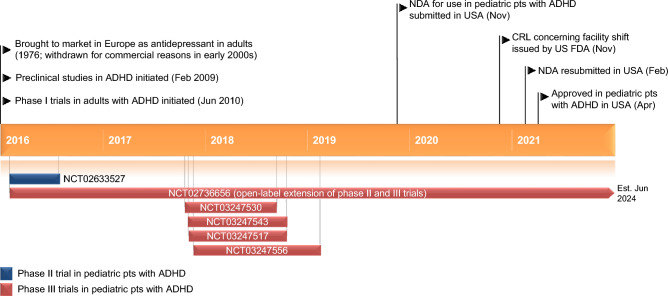
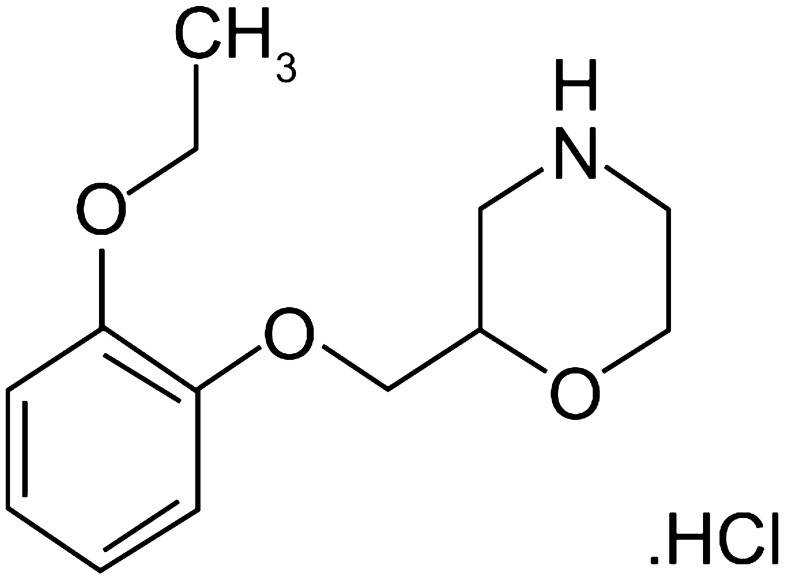
), a selective norepinephrine reuptake inhibitor, is being developed by Supernus Pharmaceuticals as a non-stimulant for the treatment of attention-deficit/hyperactivity disorder (ADHD) in pediatric and adult patients. This is a novel formulation of a pharmacological agent formerly marketed in Europe for the treatment of depression in adults. Viloxazine received its first pediatric approval in April 2021 in the USA for the treatment of ADHD in pediatric patients aged 6-17 years. Approval was based on positive results from a series of short-term phase III clinical trials in which viloxazine improved the severity of ADHD symptoms in children and adolescents with diagnosed ADHD. Viloxazine is available as extended-release capsules for once-daily oral administration. This article summarizes the milestones in the development of viloxazine leading to this first pediatric approval for ADHD.
Overview
The claims and statistics of this paper haven’t been checked yet.
Free: it reads the open-access text and checks the first 5 claims that cite a source we can check. Create a free account to check every claim.
Integrity signals
Registry
Cites
Statistics
Figures
Verification
Claims the paper makes
The claims and statistics of this paper haven’t been checked yet.
Free: it reads the open-access text and checks the first 5 claims that cite a source we can check. Create a free account to check every claim.
Claims other papers make about this one
Each is checked against this paper’s own text: does it say what the citing paper says it does?
The cited source says what the claim attributes to it.
In the citing paper
“Recently, viloxazine was approved by the Food and Drug Administration for the treatment of ADHD in children and adolescents [75]”
The cited source says what the claim attributes to it.
In the citing paper
“Viloxazine received FDA approval for ADHD in children and adolescents in the general population in 2021 [91].”
From Pharmacological treatment in autism: a proposal for guidelines on common co-occurring psychiatric symptoms (2025) · cites this paper as [91]
Self-check
Percentages, sums and reported differences re-computed from the paper’s own numbers.
The self-check needs the paper’s full text.
Citations
Cites
Yu, C., Garcia-Olivares, J., Candler, S., Schwabe, S., & Maletic, V. (2020) · Journal of Experimental Pharmacology · doi:10.2147/jep.s256586 · Cited by 96
Nasser, A., Liranso, T., Adewole, T., Fry, N., Hull, J. T., Chowdhry, F., Busse, G. D., Cutler, A. J., Jones, N. J., Findling, R. L., et al. (2020) · Clinical Therapeutics · doi:10.1016/j.clinthera.2020.05.021 · Cited by 85
Johnson, J. K., Liranso, T., Saylor, K., Tulloch, G., Adewole, T., Schwabe, S., Nasser, A., Findling, R. L., & Newcorn, J. H. (2020) · Journal of Attention Disorders · doi:10.1177/1087054719836159 · Cited by 62
Emerging drugs for the treatment of attention-deficit hyperactivity disorder (ADHD)
Pozzi, M., Bertella, S., Gatti, E., Peeters, G. G. A. M., Carnovale, C., Zambrano, S., & Nobile, M. (2020) · Expert Opinion on Emerging Drugs · doi:10.1080/14728214.2020.1820481 · Cited by 55
Nasser, A., Liranso, T., Adewole, T., Fry, N., Hull, J. T., Chowdhry, F., Busse, G. D., Melyan, Z., Cutler, A. J., Findling, R. L., et al. (2021) · Clinical Therapeutics · doi:10.1016/j.clinthera.2021.01.027 · Cited by 55
Nasser, A. F., Liranso, T., Adewole, T., Fry, N., Hull, J. T., Chowdhry, F. A., Busse, G. D., Melyan, Z., Cutler, A. J., Findling, R. L., et al. (2021) · PubMed · Cited by 44
Faison, S. L., Fry, N., Adewole, T., Odebo, O., Wang, Z., Maletic, V., & Nasser, A. (2021) · Journal of Clinical Psychopharmacology · doi:10.1097/jcp.0000000000001361 · Cited by 28
Metabolism and in vitro drug–drug interaction assessment of viloxazine
Yu, C. (2020) · Xenobiotica · doi:10.1080/00498254.2020.1767319 · Cited by 26
Cutler, A. J., Mattingly, G. W., Jain, R., & O’Neal, W. (2020) · CNS Spectrums · doi:10.1017/s1092852920001984 · Cited by 26
Nasser, A. F., Hull, J. T., Chowdhry, F. A., Adewole, T., Liranso, T., & Schwabe, S. (2020) · CNS Spectrums · doi:10.1017/s1092852920000309 · Cited by 9
Research works printed but not linked: 1
- Nasser A Hull JT Chowdhry FA Extended-release viloxazine (SPN-812) for the treatment of attention-deficit/hyperactivity disorder (ADHD) in adolescents: topline results of a phase 3, randomized, double-blind, placebo-controlled study (P302) [abstract and poster] Neurotherapeutics 2019 16 3 914 915
Cited by
Marshall, C. M., Federice, J. G., Bell, C. N., Cox, P. B., & Njardarson, J. T. (2024) · Journal of Medicinal Chemistry · doi:10.1021/acs.jmedchem.4c01122 · Cited by 1,064
Becker, S. P., Willcutt, E. G., Leopold, D. R., Fredrick, J. W., Smith, Z. R., Jacobson, L. A., Burns, G. L., Mayes, S. D., Waschbusch, D. A., Froehlich, T. E., et al. (2023) · Journal of the American Academy of Child & Adolescent Psychiatry · doi:10.1016/j.jaac.2022.07.821 · Cited by 175
New drug approvals for 2021: Synthesis and clinical applications
Yuan, S., Wang, D.-S., Liu, H., Zhang, S., Yang, W., Lv, M., Zhou, Y., Zhang, S., Song, J. H., & Liu, H. (2022) · European Journal of Medicinal Chemistry · doi:10.1016/j.ejmech.2022.114898 · Cited by 55
Manter, M. A., Birtwell, K. B., Bath, J., Friedman, N. D. B., Keary, C. J., Neumeyer, A. M., Palumbo, M. L., Thom, R. P., Stonestreet, E., Brooks, H., et al. (2025) · BMC Medicine · doi:10.1186/s12916-024-03814-0 · Cited by 51
“Viloxazine received FDA approval for ADHD in children and adolescents in the general population in 2021 [91].”
Epilepsy and Attention Deficit Hyperactivity Disorder: Connection, Chance, and Challenges
Fan, H., Chiang, K.-L., Chang, K., Chen, C., & Tsai, J. (2023) · International Journal of Molecular Sciences · doi:10.3390/ijms24065270 · Cited by 46
Synthetic Approaches to the New Drugs Approved During 2021
McInturff, E. L., France, S. P., Leverett, C. A., Flick, A. C., Lindsey, E. A., Berritt, S., Carney, D. W., DeForest, J. C., Ding, H. X., Fink, S. J., et al. (2023) · Journal of Medicinal Chemistry · doi:10.1021/acs.jmedchem.3c00501 · Cited by 31
Attention-Deficit/Hyperactivity Disorder Across the Spectrum
Majarwitz, D., & Perumareddi, P. (2023) · Primary Care Clinics in Office Practice · doi:10.1016/j.pop.2022.10.004 · Cited by 20
Pujalte, G. G. A., Narducci, D. M., Smith, M. S., King, R. L., Logan, K., Callender, S. S., Liebman, C., Kane, S. F., Israel, M., Wolf, S. F., et al. (2023) · Clinical Journal of Sport Medicine · doi:10.1097/jsm.0000000000001152 · Cited by 20
Vachhani, D., Parekh, J. H., Patra, S., Varu, H. L., Soni, M., & Jebaliya, H. J. (2024) · Journal of Applied Spectroscopy · doi:10.1007/s10812-024-01830-9 · Cited by 19
Singh, A. D., Balasundaram, M. K., & Singh, A. (2022) · Journal of Central Nervous System Disease · doi:10.1177/11795735221092522 · Cited by 18
“The United States Food and Drug Administration (USFDA) has approved viloxazine extended-release (ER) capsules (SPN812) to treat ADHD in pediatric patients between 6 and 17 years of age in 2021.(12) The precise mechanism of action of viloxazine is not known and is claimed to act by inhibiting norepinephrine reuptake.”
Photocatalytic Synthesis of Substituted 2-Aryl Morpholines via Diastereoselective Annulation
Brisco, T. A., Kreijger, S. D., Nair, V. N., Troian‐Gautier, L., & Tambar, U. K. (2025) · Journal of the American Chemical Society · doi:10.1021/jacs.5c01832 · Cited by 17
Wiggs, K. K., Froehlich, T. E., & Becker, S. P. (2023) · CNS Drugs · doi:10.1007/s40263-023-00999-5 · Cited by 16
“Recently, viloxazine was approved by the Food and Drug Administration for the treatment of ADHD in children and adolescents [75].”
BackgroundViloxazine for the Treatment of Attention Deficit Hyperactivity Disorder
Robinson, C. L., Parker, K., Kataria, S., Downs, E., Supra, R., Kaye, A. D., Viswanath, O., & Urits, I. (2022) · Health Psychology Research · doi:10.52965/001c.38360 · Cited by 16
Jiang, A., Wei, C., Zhu, W., Wu, F., & Wu, B. (2024) · Therapeutic Advances in Drug Safety · doi:10.1177/20420986241244585 · Cited by 15
N-Heterocycles as Privileged Scaffolds in FDA Approved Different NMEs of 2021: A Review
Chaudhry, F., Munir, R., & Malik, N. (2022) · Letters in Organic Chemistry · doi:10.2174/1570178620666221026095145 · Cited by 11
Haddad, H. W., Hankey, P. B., Ko, J., Eswani, Z., Bhatti, P., Edinoff, A. N., Kaye, A. M., & Kaye, A. D. (2022) · Health Psychology Research · doi:10.52965/001c.37018 · Cited by 8
Childress, A. C., Cutler, A. J., Adler, L. A., Fry, N., Asubonteng, K. O., Maldonado-Cruz, Z., Formella, A. E., & Rubin, J. S. (2024) · CNS Drugs · doi:10.1007/s40263-024-01120-0 · Cited by 8
Trends in FDA drug approvals: 2021–2024 insights & innovations
Raut, G., & Sharma, S. (2025) · Annales Pharmaceutiques Françaises · doi:10.1016/j.pharma.2025.06.004 · Cited by 6
Attention Deficit Hyperactivity Disorder
Marco, P., Maddalena, M., Bertella, S., Gatti, E., & Nobile, M. (2021) · Elsevier eBooks · doi:10.1016/b978-0-12-820472-6.00164-x · Cited by 5
A review on ADHD disorder, diagnosis and therapeutic approach in children and adolescents
Kumar, G., Sharma, B., Tiwari, R. K., Kumar, R., & Singh, M. K. (2024) · Brain-Apparatus Communication A Journal of Bacomics · doi:10.1080/27706710.2024.2400070 · Cited by 4
Viloxazine for attention-deficit hyperactivity disorder: a new formulation for a new indication
Balasundaram, M. K., & Singh, A. D. (2022) · Drugs & Therapy Perspectives · doi:10.1007/s40267-022-00892-z · Cited by 4
“The US FDA approved viloxazine, a non-stimulant drug, for the treatment of ADHD in pediatric patients aged 6–17 years [11], at dose ranges of 100–400 mg/day depending on the efficacy and tolerability [11].”
Xu, X.-P., Wang, W., Wan, S., & Xiao, C. (2022) · World Journal of Clinical Cases · doi:10.12998/wjcc.v10.i26.9219 · Cited by 3
Viloxazine: A New Non-Stimulant Treatment for Attention-Deficit/Hyperactivity Disorder (ADHD)
Wilanowska, W., Gregułą, A., Stachyrak, K., Mika, D., Kłos, A., Turek, K., Lambach, M., Pawlicki, M., Mazurek, A., & Mazur, B. (2024) · Journal of Education Health and Sport · doi:10.12775/jehs.2024.58.006 · Cited by 2
Bortoletto, R., Puttini, E., Zoccante, L., & Colizzi, M. (2021) · Reports — Medical Cases Images and Videos · doi:10.3390/reports4040030 · Cited by 2
PHARMACOLOGICAL TREATMENT STRATEGIES FOR ADHD: A SYSTEMATIC REVIEW
Grzesikowski, P., Klich, P., Bekier, K., Kubiak, J., Górski, J., Nowicka, H., Liszka, D., Joks, M. M., Ordon, E., & Ostromecka, K. (2025) · International Journal of Innovative Technologies in Social Science · doi:10.31435/ijitss.3(47).2025.3814 · Cited by 1
Dhungel, O., Karki, U., & Sharma, B. (2023) · Journal of Psychiatrists Association of Nepal · doi:10.3126/jpan.v12i1.59428 · Cited by 1
López-Cruz, M. J., & Arronte-Rosales, A. (2023) · Casos y Revisiones de Salud · doi:10.22201/fesz.26831422e.2023.5.2.5 · Cited by 1
Kameg, B. (2022) · Journal of Psychosocial Nursing and Mental Health Services · doi:10.3928/02793695-20220610-04
EXPLORATION OF NOVEL C-H FUNCTIONALIZATION METHODOLOGIES VIA ORGANIC PHOTOREDOX CATALYSIS
Boley, A. J. (2025) · Carolina Digital Repository (University of North Carolina at Chapel Hill) · doi:10.17615/4vgb-x105
Ilyas, A., Kumar, G., & Addison, M. (2026) · Journal of Child and Adolescent Psychopharmacology · doi:10.1177/10445463261470300
“There were no studies on the use of viloxazine in this context, which may be explained by the fact that it is relatively new medication (only licensed by the U.S. Food and Drug Administration in 2021) and remains discontinued in several other countries (Fin-dling et al., 2021; Lamb, 2021).”
Young, J. L., Powell, R., Powell, A., Welling, L. L. M., Granata, L. E., Lingle, J. S., Li, J., & Rubin, J. S. (2026) · Psychiatry Research · doi:10.1016/j.psychres.2026.117569
Metadata
- Authors
- Lamb, Y. N.
- Affiliations
- Springer Nature (New Zealand) (NZ)
- Corresponding author
- Lamb, Yvette N.
- Venue
- Pediatric Drugs
- Published
- 2021-05-26
- Volume
- 23
- Issue
- 4
- Pages
- 403-409
- ISSN
- 1174-5878 (ISSN-L)
- 1179-2019
- PMC
- PMC10575801
- OpenAlex
- W3165290393
- Cited by
- 29
- References
- 12
- Citations by year
- 2026: 1 · 2025: 4 · 2024: 6 · 2023: 7 · 2022: 9 · 2021: 2
- FWCI
- 4.30
- Type
- journal article
- Language
- en
- Update notices
- correction (2023-10-20)
- Open access
- hybrid
- doi.org
- Licence
- cc-by-nc
- creativecommons.org/licenses/by-nc/4.0 (tdm)
- creativecommons.org/licenses/by-nc/4.0 (vor)
- Locations
- Pediatric Drugs (publishedVersion, cc-by-nc)
- PubMed Central (publishedVersion, cc-by-nc)
- PubMed (publishedVersion)
- Topics
- Health Sciences › Medicine › Psychiatry and Mental health › Attention Deficit Hyperactivity Disorder
- Health Sciences › Medicine › Pediatrics, Perinatology and Child Health › Pharmaceutical studies and practices
- Health Sciences › Medicine › Pharmacology (medical) › Pharmacology and Obesity Treatment
- Keywords
- viloxazine, attention deficit hyperactivity disorder, pediatric drug approval, norepinephrine reuptake inhibitors, sustained-release formulation, drug development milestones
- MeSH terms
- Administration, Oral, Adolescent, Central Nervous System Stimulants, Attention Deficit Disorder with Hyperactivity, Child, Humans, United States, Viloxazine, Drug Approval, Clinical Trials, Phase III as Topic, Adrenergic Uptake Inhibitors
About these checks
Registry, retraction, Cites and statistics results are computed, not judged, with one exception: a printed reference that no index lists is read once by a model before it counts as a citation error. Claims are extracted by a model and kept only when their quote appears verbatim in the text; each cited source is then checked, with a model’s help, for whether it says what the claim relies on. Those verdicts can be wrong — read the claim’s quote and the cited source before relying on one.
Statistics and arithmetic are recomputed, not judged.
Confidence bands are shown only for fields calibrated on our annotated test set. None is calibrated yet, so no band is shown.
What counts as a claim ›How we measure confidence ›How we check this ›
Are you an author, or do you see a problem with this page? Request a review
Data sources
Bibliographic data: Semantic Scholar, OpenAlex, Crossref.
Contains information from the Semantic Scholar Academic Graph Datasets, made available under the ODC Attribution License (ODC-BY 1.0).
Semantic Scholar’s data is described in: Kinney, R., et al. (2023). The Semantic Scholar Open Data Platform. arXiv:2301.10140.
