

The DOI matches its Crossref record; 62 of the 62 references it cites were found in a registry or an index.
The ‘Critical Power’ Concept: Applications to Sports Performance with a Focus on Intermittent High-Intensity Exercise
Open accessAbstract
The curvilinear relationship between power output and the time for which it can be sustained is a fundamental and well-known feature of high-intensity exercise performance. This relationship 'levels off' at a 'critical power' (CP) that separates power outputs that can be sustained with stable values of, for example, muscle phosphocreatine, blood lactate, and pulmonary oxygen uptake ([Formula: see text]), from power outputs where these variables change continuously with time until their respective minimum and maximum values are reached and exercise intolerance occurs. The amount of work that can be done during exercise above CP (the so-called W') is constant but may be utilized at different rates depending on the proximity of the exercise power output to CP. Traditionally, this two-parameter CP model has been employed to provide insights into physiological responses, fatigue mechanisms, and performance capacity during continuous constant power output exercise in discrete exercise intensity domains. However, many team sports (e.g., basketball, football, hockey, rugby) involve frequent changes in exercise intensity and, even in endurance sports (e.g., cycling, running), intensity may vary considerably with environmental/course conditions and pacing strategy. In recent years, the appeal of the CP concept has been broadened through its application to intermittent high-intensity exercise. With the assumptions that W' is utilized during work intervals above CP and reconstituted during recovery intervals below CP, it can be shown that performance during intermittent exercise is related to four factors: the intensity and duration of the work intervals and the intensity and duration of the recovery intervals. However, while the utilization of W' may be assumed to be linear, studies indicate that the reconstitution of W' may be curvilinear with kinetics that are highly variable between individuals. This has led to the development of a new CP model for intermittent exercise in which the balance of W' remaining ([Formula: see text]) may be calculated with greater accuracy. Field trials of athletes performing stochastic exercise indicate that this [Formula: see text] model can accurately predict the time at which W' tends to zero and exhaustion is imminent. The [Formula: see text] model potentially has important applications in the real-time monitoring of athlete fatigue progression in endurance and team sports, which may inform tactics and influence pacing strategy.
Overview
The claims and statistics of this paper haven’t been checked yet.
Run the check — free, no account needed. It reads the open-access text and checks the sources it cites.
Integrity signals
Registry
Cites
Statistics
Figures
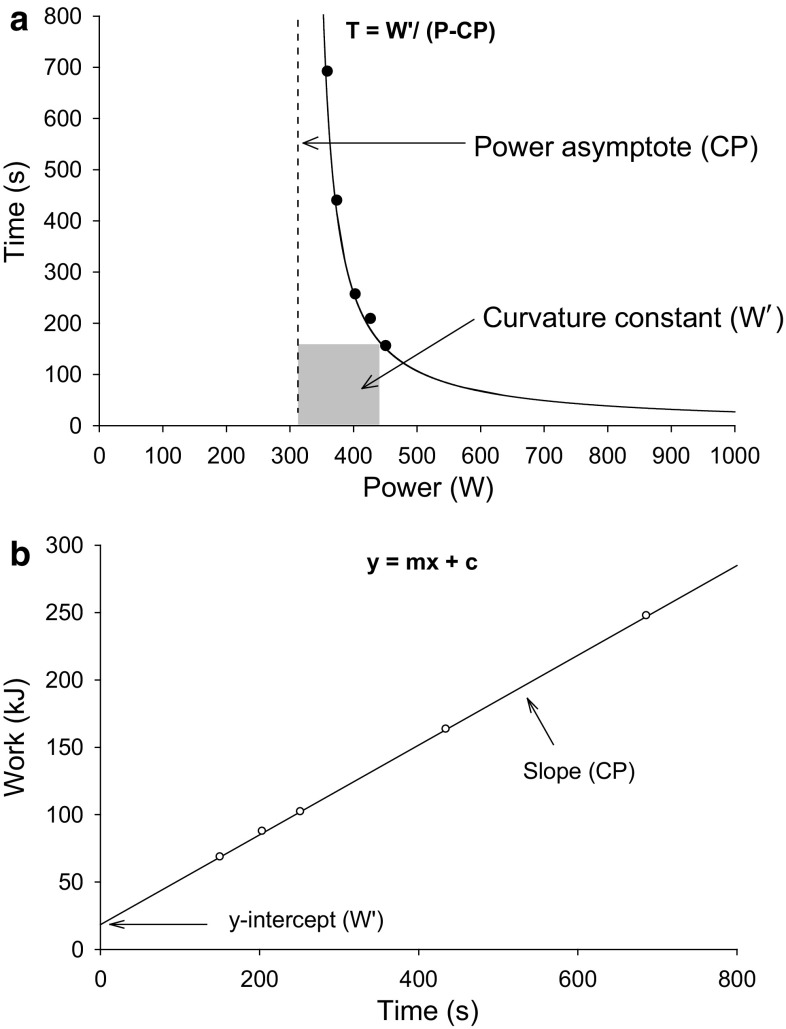
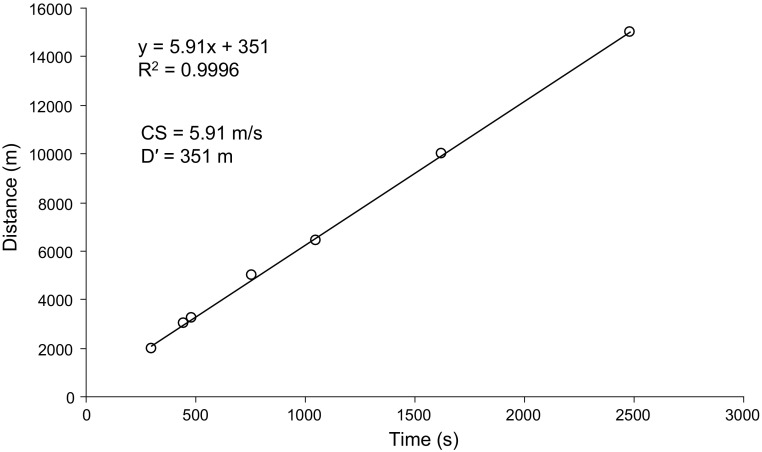
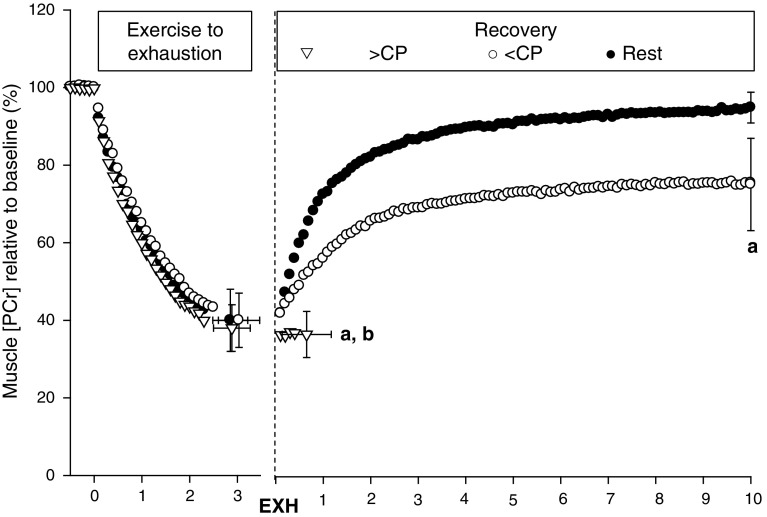
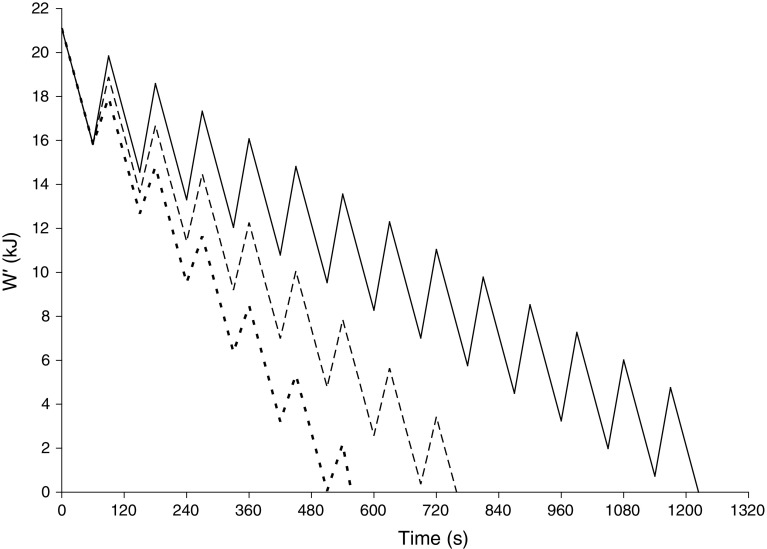
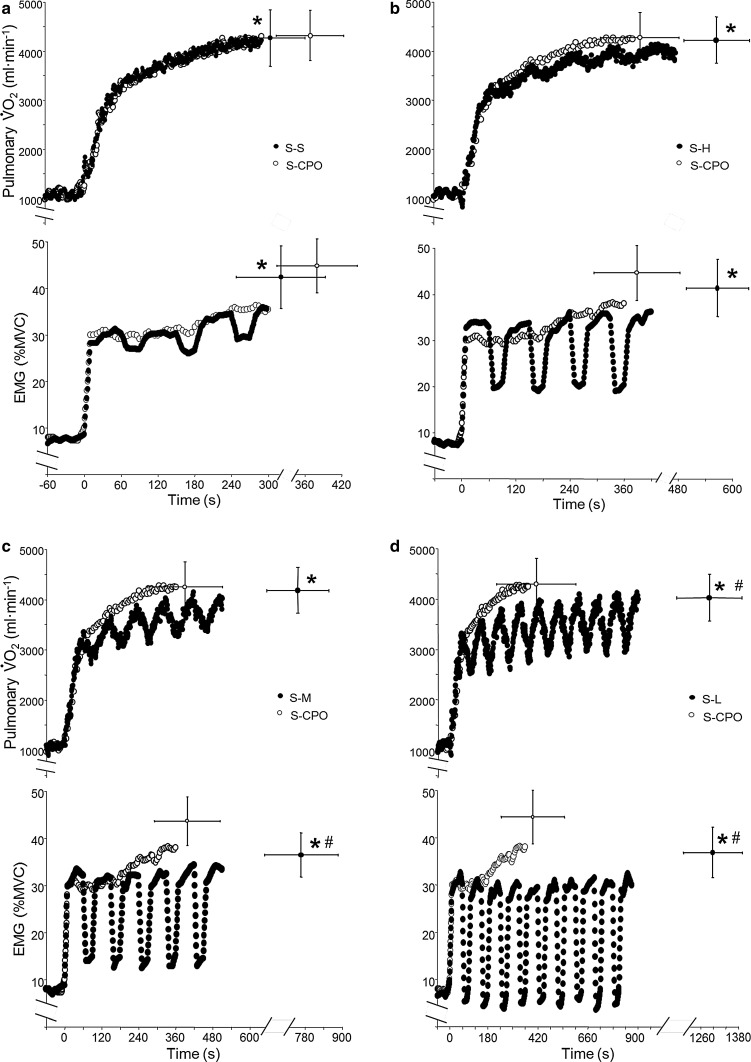
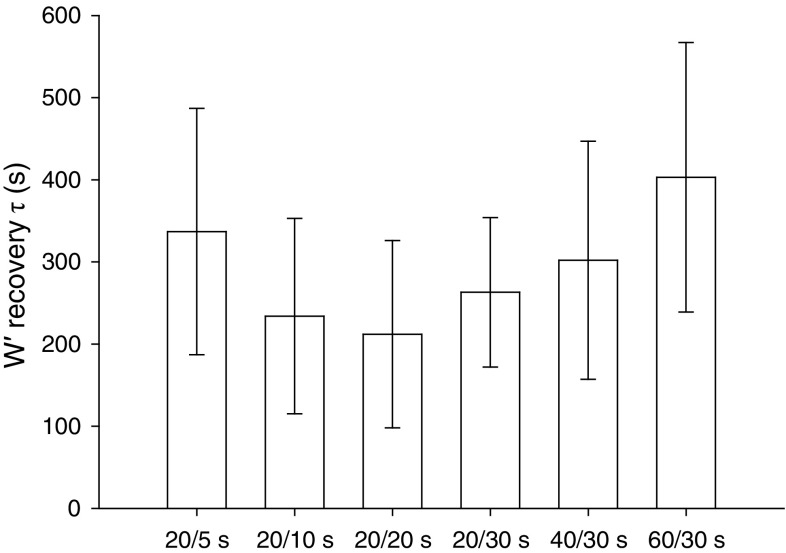
Verification
Claims the paper makes
The claims and statistics of this paper haven’t been checked yet.
Run the check — free, no account needed. It reads the open-access text and checks the sources it cites.
Claims other papers make about this one
Each is checked against this paper’s own text: does it say what the citing paper says it does?
In the citing paper
“Elite athletes sustain ∼96% of CS during the marathon (Jones & Vanhatalo, 2017)”
From Contemporary Nutrition Strategies to Optimize Performance in Distance Runners and Race Walkers (2019) · cites this paper as Jones & Vanhatalo, 2017
Self-check
Percentages, sums and reported differences re-computed from the paper’s own numbers.
The self-check needs the paper’s full text.
Citations
Cites
THE WORK CAPACITY OF A SYNERGIC MUSCULAR GROUP
MONOD, H., & Scherrer, J. (1965) · Ergonomics · doi:10.1080/00140136508930810 · Cited by 903
Metabolic and respiratory profile of the upper limit for prolonged exercise in man
Poole, D. C., Ward, S. A., Gardner, G. W., & Whipp, B. J. (1988) · Ergonomics · doi:10.1080/00140138808966766 · Cited by 780
Critical power as a measure of physical work capacity and anaerobic threshold
MORITANI, T., Nagata, A., DEVRIES, H. A., & Muro, M. (1981) · Ergonomics · doi:10.1080/00140138108924856 · Cited by 578
Critical Power: Implications for Determination of V˙O2max and Exercise Tolerance
JONES, A. M., Vanhatalo, A., Burnley, M., Morton, R. H., & Poole, D. C. (2010) · Medicine & Science in Sports & Exercise · doi:10.1249/mss.0b013e3181d9cf7f · Cited by 551
Self-citationMuscle metabolic responses to exercise above and below the “critical power” assessed using 31 P-MRS
JONES, A. M., Wilkerson, D. P., DiMenna, F. J., Fulford, J., & Poole, D. C. (2007) · American Journal of Physiology-Regulatory, Integrative and Comparative Physiology · doi:10.1152/ajpregu.00731.2007 · Cited by 479
Self-citationOxygen uptake kinetics as a determinant of sports performance
Burnley, M., & JONES, A. M. (2007) · European Journal of Sport Science · doi:10.1080/17461390701456148 · Cited by 468
Self-citationDetermination of Critical Power Using a 3-min All-out Cycling Test
Vanhatalo, A., Doust, J. H., & Burnley, M. (2007) · Medicine & Science in Sports & Exercise · doi:10.1249/mss.0b013e31802dd3e6 · Cited by 357
Slow Component of V˙O2 Kinetics: Mechanistic Bases and Practical Applications
JONES, A. M., GRASSI, B., CHRISTENSEN, P. M., KRUSTRUP, P., BANGSBO, J., & POOLE, D. C. (2011) · Medicine & Science in Sports & Exercise · doi:10.1249/mss.0b013e31821fcfc1 · Cited by 353
Self-citationBlack, M. I., JONES, A. M., Blackwell, J. R., Bailey, S. J., Wylie, L. J., McDonagh, S. T. J., Thompson, C., KELLY, J. A., Sumners, P., Mileva, K. N., et al. (2016) · Journal of Applied Physiology · doi:10.1152/japplphysiol.00942.2016 · Cited by 301
Self-citationA 3-min All-Out Test to Determine Peak Oxygen Uptake and the Maximal Steady State
Burnley, M., Doust, J. H., & Vanhatalo, A. (2006) · Medicine & Science in Sports & Exercise · doi:10.1249/01.mss.0000232024.06114.a6 · Cited by 258
Cited by
Sorted by citations
An Examination and Critique of Current Methods to Determine Exercise Intensity
Jamnick, N. A., Pettitt, R. W., Granata, C., Pyne, D. B., & Bishop, D. J. (2020) · Sports Medicine · doi:10.1007/s40279-020-01322-8 · Cited by 424
The maximal metabolic steady state: redefining the ‘gold standard’
JONES, A. M., Burnley, M., Black, M. I., Poole, D. C., & Vanhatalo, A. (2019) · Physiological Reports · doi:10.14814/phy2.14098 · Cited by 349
Self-citationThe anaerobic threshold: 50+ years of controversy
Poole, D. C., Rossiter, H. B., Brooks, G. A., & Gladden, L. B. (2021) · The Journal of Physiology · doi:10.1113/jp279963 · Cited by 312
Physiological demands of running at 2-hour marathon race pace
JONES, A. M., Kirby, B. S., Clark, I. E., Rice, H. M., Fulkerson, E., Wylie, L. J., Wilkerson, D. P., Vanhatalo, A., & Wilkins, B. W. (2020) · Journal of Applied Physiology · doi:10.1152/japplphysiol.00647.2020 · Cited by 223
Self-citationContemporary Nutrition Strategies to Optimize Performance in Distance Runners and Race Walkers
Burke, L. M., Jeukendrup, A. E., Jones, A. M., & Mooses, M. (2019) · International Journal of Sport Nutrition and Exercise Metabolism · doi:10.1123/ijsnem.2019-0004 · Cited by 170
Self-citation
Metadata
- Authors
- Jones, A. M., & Vanhatalo, A.
- Affiliations
- University of Exeter (GB)
- Corresponding author
- Jones, Andrew M.
- Venue
- Sports Medicine
- Published
- 2017-03
- Volume
- 47
- Issue
- S1
- Pages
- 65-78
- ISSN
- 0112-1642 (ISSN-L)
- 1179-2035
- PMC
- PMC5371646
- OpenAlex
- W2598090454
- Cited by
- 259
- References
- 62
- Citations by year
- 2026: 24 · 2025: 36 · 2024: 32 · 2023: 26 · 2022: 36 · 2021: 37 · 2020: 36 · 2019: 15 · 2018: 15 · 2017: 2
- FWCI
- 3.35
- Type
- journal article
- Language
- en
- Open access
- hybrid
- doi.org
- Locations
- Sports Medicine (publishedVersion, cc-by)
- PubMed Central (publishedVersion, cc-by)
- PubMed (publishedVersion)
- Funders
- PepsiCo
- Gran Sasso Science Institute
- Topics
- Health Sciences › Medicine › Orthopedics and Sports Medicine › Sports Performance and Training
- Health Sciences › Medicine › Physiology (medical) › Cardiovascular and exercise physiology
- Social Sciences › Psychology › Developmental and Educational Psychology › Sport Psychology and Performance
- Keywords
- critical power, high-intensity intermittent exercise, work capacity, team sports, endurance sports, pacing strategy, fatigue monitoring, exercise intolerance, phosphocreatine, blood lactate, pulmonary oxygen uptake
- MeSH terms
- Exercise Test, Humans, Oxygen Consumption, Physical Endurance, Exercise, Athletic Performance
About these checks
Registry, retraction, Cites and statistics results are computed, not judged, with one exception: a printed reference that no index lists is read once by a model before it counts as a citation error. Claims are extracted by a model and kept only when their quote appears verbatim in the text; each cited source is then checked, with a model’s help, for whether it says what the claim relies on. Those verdicts can be wrong — read the claim’s quote and the cited source before relying on one.
Statistics and arithmetic are recomputed, not judged.
Confidence bands are shown only for fields calibrated on our annotated test set. None is calibrated yet, so no band is shown.
What counts as a claim ›How we measure confidence ›How we check this ›
Are you an author, or do you see a problem with this page? Request a review
