

The DOI matches its Crossref record; 60 of the 60 references it cites were found in a registry or an index.
Drinking Strategies: Planned Drinking Versus Drinking to Thirst
Open accessAbstract
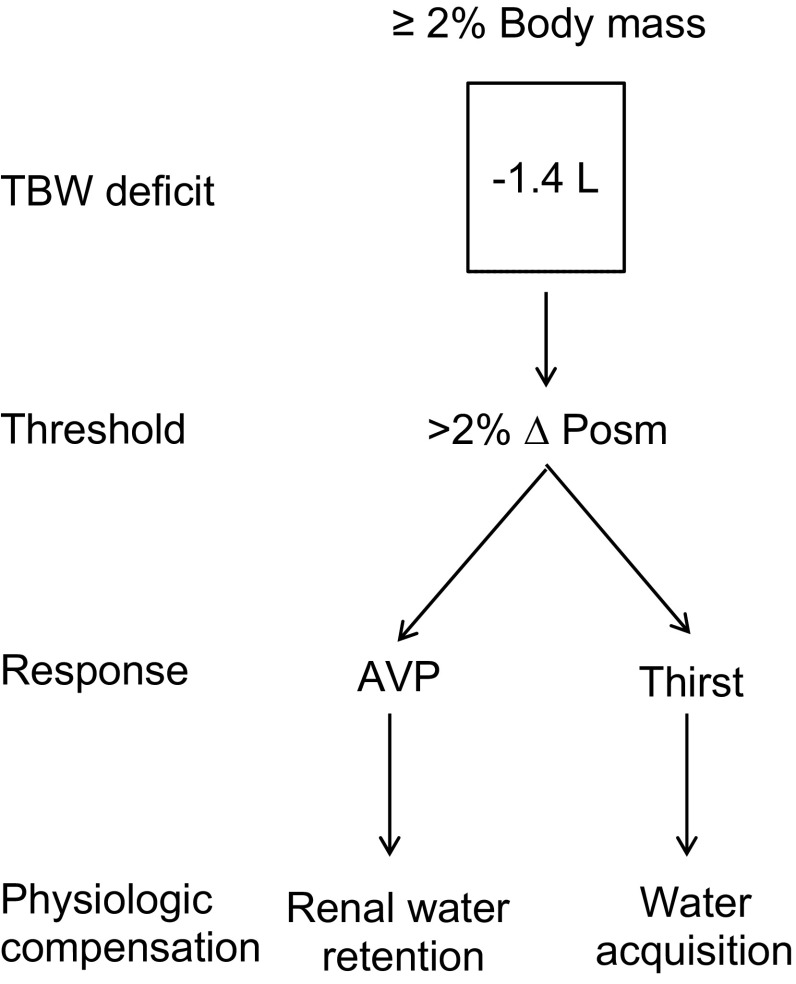
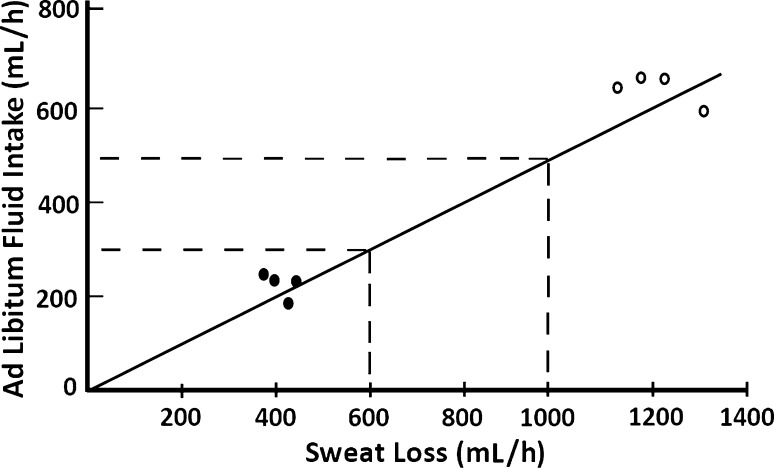
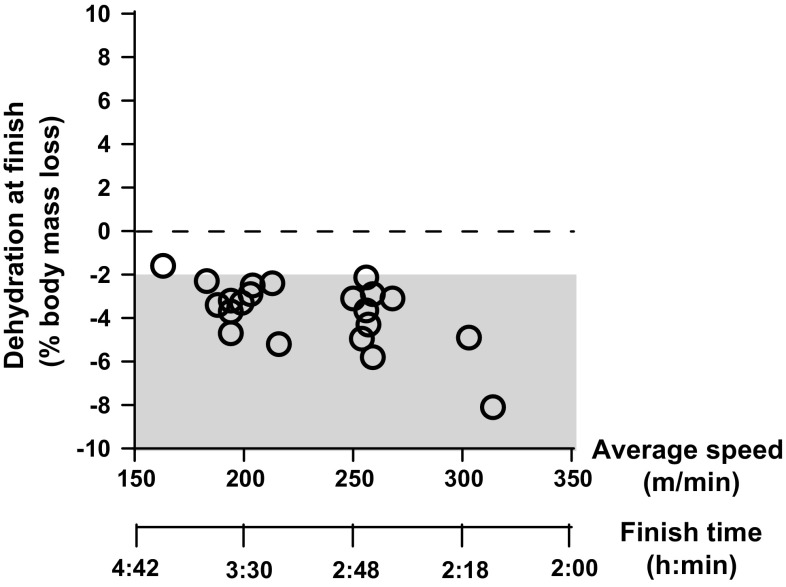
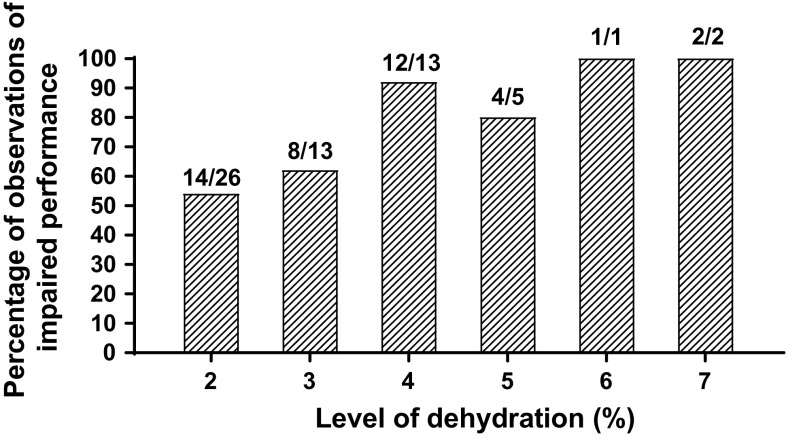
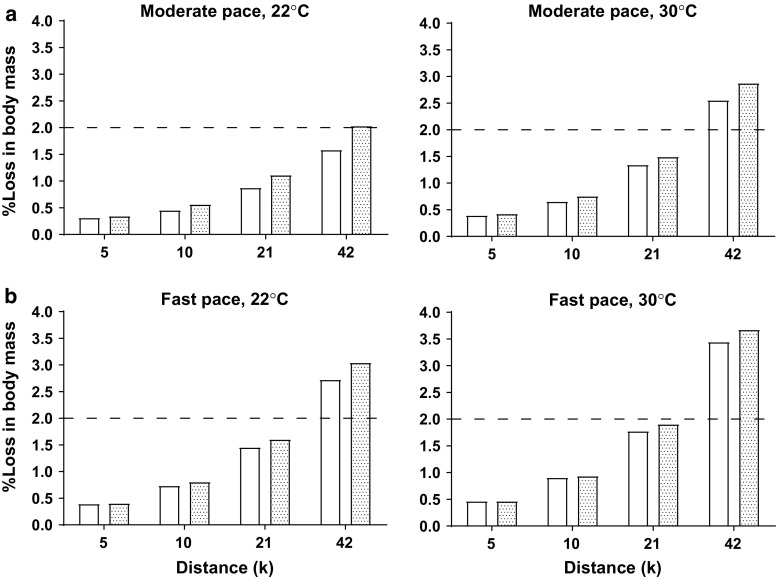
In humans, thirst tends to be alleviated before complete rehydration is achieved. When sweating rates are high and ad libitum fluid consumption is not sufficient to replace sweat losses, a cumulative loss in body water results. Body mass losses of 2% or greater take time to accumulate. Dehydration of ≥ 2% body mass is associated with impaired thermoregulatory function, elevated cardiovascular strain and, in many conditions (e.g., warmer, longer, more intense), impaired aerobic exercise performance. Circumstances where planned drinking is optimal include longer duration activities of > 90 min, particularly in the heat; higher-intensity exercise with high sweat rates; exercise where performance is a concern; and when carbohydrate intake of 1 g/min is desired. Individuals with high sweat rates and/or those concerned with exercise performance should determine sweat rates under conditions (exercise intensity, pace) and environments similar to that anticipated when competing and tailor drinking to prevent body mass losses > 2%. Circumstances where drinking to thirst may be sufficient include short duration exercise of < 1 h to 90 min; exercise in cooler conditions; and lower-intensity exercise. It is recommended to never drink so much that weight is gained.
Overview
The claims and statistics of this paper haven’t been checked yet.
Run the check — free, no account needed. It reads the open-access text and checks the sources it cites.
Integrity signals
Registry
Cites
Statistics
Figures
Verification
Claims the paper makes
The claims and statistics of this paper haven’t been checked yet.
Run the check — free, no account needed. It reads the open-access text and checks the sources it cites.
Claims other papers make about this one
Each is checked against this paper’s own text: does it say what the citing paper says it does?
In the citing paper
“Drinking-to-thirst is an acknowledged means of maintaining hydration during short-duration exercise (<90 min), when environmental conditions are cool, and/or when exercise intensity is low (e.g., < 60% V̇O2max) [121].”
From International Society of Sports Nutrition Position Stand: nutritional considerations for single-stage ultra-marathon training and racing (2019) · cites this paper as [121]
Self-check
Percentages, sums and reported differences re-computed from the paper’s own numbers.
The self-check needs the paper’s full text.
Citations
Cites
ACSM Position Stand: Exercise and Fluid Replacement
Convertino, V. A., Armstrong, L. E., Coyle, E. F., Mack, G. W., Sawka, M. N., Senay, L. C., & Sherman, W. M. (1996) · Medicine & Science in Sports & Exercise · doi:10.1097/00005768-199610000-00045 · Cited by 1,977
Williams Textbook of Endocrinology
Stoffer, S. S. (1999) · JAMA · doi:10.1001/jama.281.9.851 · Cited by 1,245
Dietary Reference Intakes for Water, Potassium, Sodium, Chloride, and Sulfate
Institute of Medicine (2005) · National Academies Press eBooks · doi:10.17226/10925 · Cited by 1,054
Influence of graded dehydration on hyperthermia and cardiovascular drift during exercise
Montain, S. J., & Coyle, E. F. (1992) · Journal of Applied Physiology · doi:10.1152/jappl.1992.73.4.1340 · Cited by 769
Central mechanisms of osmosensation and systemic osmoregulation
Bourque, C. W. (2008) · Nature reviews. Neuroscience · doi:10.1038/nrn2400 · Cited by 703
Human Circulation: Regulation During Physical Stress
Rowell, L. B. (1986) · Medical Entomology and Zoology · Cited by 672
Human Circulation: Regulation During Physical Stress
Iatridis, P. G. (1987) · JAMA · doi:10.1001/jama.1987.03400220116052 · Cited by 533
Mechanisms of aerobic performance impairment with heat stress and dehydration
Cheuvront, S. N., Kenefick, R. W., Montain, S. J., & Sawka, M. N. (2010) · Journal of Applied Physiology · doi:10.1152/japplphysiol.00367.2010 · Cited by 477
Self-citationDehydration: Physiology, Assessment, and Performance Effects
Cheuvront, S. N., & Kenefick, R. W. (2014) · Comprehensive Physiology · doi:10.1002/cphy.c130017 · Cited by 461
Self-citationThermoregulatory and blood responses during exercise at graded hypohydration levels
Sawka, M. N., Young, A. J., Francesconi, R. P., Muza, S. R., & PANDOLF, K. B. (1985) · Journal of Applied Physiology · doi:10.1152/jappl.1985.59.5.1394 · Cited by 402
Research works printed but not linked: 1
- Nadel ER, Fortney SM, Wenger CB. Circulatory adjustments during heat stress. In: Paoletti R, editor. Exercise bioenergetics and gas exchange. North-Holland Biomedical Press, Amsterdam; 1980.
Cited by
Sorted by citations
Items 101–142 of 142
24-Hour Ultra-Marathon Running: A Narrative Review of Performance Factors and Physiological Impacts
Knechtle, B., Braschler, L., Weiss, K., Scheer, V., Đurić, S., Leite, L. B., Forte, P. M., Nikolaidis, P. Τ., Chlíbková, D., & Rosemann, T. J. (2026) · Sports Medicine - Open · doi:10.1186/s40798-026-00997-z · Cited by 2
Trease, L., Singleman, G., Windsor, J. S., Allan, S., & Albert, E. (2021) · Clinical Journal of Sport Medicine · doi:10.1097/jsm.0000000000000919 · Cited by 2
Characterizing Variability in Non-Invasive Hydration Monitoring Using Raman Spectroscopy
Rourke-Funderburg, A. S., Elstub, L. J., Voss, T., Liao, R.-Y., Masson, L. E., & Mahadevan-Jansen, A. M. (2024) · Applied Spectroscopy · doi:10.1177/00037028241307043 · Cited by 2
Evaluation and Treatment of Exertional Heat Illness, Rhabdomyolysis, and Hyponatremia
Romick, J., Balogun, R., & Nye, N. S. (2023) · Springer eBooks · doi:10.1007/978-3-031-26600-3_5 · Cited by 2
New Perspectives on Risk Factors for Exertional Heat Stroke
Morrissey, M. C., Szymanski, M. R., Grundstein, A., & Casa, D. J. (2020) · Kinesiology Review · doi:10.1123/kr.2019-0064 · Cited by 2
Taggart, S. M., Girard, O., Landers, G. J., Ecker, U. K. H., & Wallman, K. E. (2024) · Applied Ergonomics · doi:10.1016/j.apergo.2024.104241 · Cited by 1
Białek-Dratwa, A., Krzywak, Z., Staśkiewicz‐Bartecka, W., Velecký, J., Cirocki, A., Grajek, M. K., & Kowalski, O. (2024) · Nutrients · doi:10.3390/nu16040544 · Cited by 1
Wardenaar, F. C., Navarro, S., Caballero, R., Vento, K. A., Kavouras, S. A., & Vanos, J. (2024) · Journal of Athletic Training · doi:10.4085/1062-6050-0448.24 · Cited by 1
Bouscaren, N., Berly, L., Descombes, G., Tounkara, B. S., Lacroix, E., Lemarchand, B., Racinais, S., & Millet, G. Y. (2025) · Sports Medicine · doi:10.1007/s40279-025-02356-6 · Cited by 1
Cooke, B., Chang, M., Marino, A., & Marino, F. E. (2025) · European Journal of Applied Physiology · doi:10.1007/s00421-025-06076-7 · Cited by 1
Yıldırım, Y., Arabacı, R., Rodoplu, C., GÜNGÖR, A. K., Yáñez-Sepúlveda, R., Cortés-Roco, G., López‐Gil, J. F., & Martínez-Rodríguez, A. (2026) · Scientific Reports · doi:10.1038/s41598-026-38394-x · Cited by 1
Yamashita, N., Masashi, K. U. M. E., Fujita, Y., & Yoshida, T. (2026) · Physiology & Behavior · doi:10.1016/j.physbeh.2026.115292 · Cited by 1
Just the facts: exercise-associated hyponatremia
Jerome, D., & Divito, B. (2025) · Canadian Journal of Emergency Medicine · doi:10.1007/s43678-024-00765-6 · Cited by 1
JEAN-PAUL, K., Kouame, N., Tonon, B. A., Gouthon, P., Nouatin, B. K., & Tako, A. N. (2020) · International Journal of Biological and Chemical Sciences · doi:10.4314/ijbcs.v13i7.12 · Cited by 1
Cheuvront, S. N., Kenefick, R. W., Montain, S. J., & Sawka, M. N. (2020) · Elsevier eBooks · doi:10.1016/b978-0-323-66162-1.00030-5 · Cited by 1
Self-citationIs thirst sufficient as a mechanism for achieving euhydration? A narrative review
Capitán-Jiménez, C., & Vargas, A. (2023) · Pensar en Movimiento Revista de Ciencias del Ejercicio y la Salud · doi:10.15517/pensarmov.v21i1.47939 · Cited by 1
Goulet, E. D. B., Claveau, P., Simoneau, I. L., Deshayes, T. A., Desroches, A. J., Aloui, F., & Hoffman, M. D. (2023) · Nutrients · doi:10.3390/nu15214500 · Cited by 1
Comment on “Drinking Strategies: Planned Drinking Versus Drinking to Thirst”
Hoffman, M. D. (2018) · Sports Medicine · doi:10.1007/s40279-018-1026-x · Cited by 1
Kenefick, R. W. (2018) · Sports Medicine · doi:10.1007/s40279-018-0902-8
Self-citationRosa, G. C., da Silveira, V., Salum, A., & Faustino, G. K. (2019) · Revista Brasileira de Nutrição Funcional · doi:10.32809/2176-4522.42.77.01
Příjem tekutin během vytrvalostního zatížení – pít podle pocitu žízně, ano nebo ne?
Kumstát, M. (2019) · Studia sportiva · doi:10.5817/sts2018-2-7
Comparison of Drinking Patterns Types against Hydration Status in Young Men and Women
Febiyanti, G., & Ashadi, K. (2019) · JUARA Jurnal Olahraga · doi:10.33222/juara.v4i2.562
Wang, H. (2020) · Louisiana State University · doi:10.31390/gradschool_dissertations.5263
The effects of hypohydration and thirst on cognitive performance and mental fatigue
Goodman, S. P. J. (2020) · Charles Sturt University Research Output (CRO)
Júnior, J. F. C. R., do Prado, D. M. L., Sena, A. F. D. C., Veneroso, C. E., Cabido, C. E. T., & Sevílio, M. (2021) · The Journal of Sports Medicine and Physical Fitness · doi:10.23736/s0022-4707.21.11426-4
Flüssigkeitsmanagement bei Belastung unter Hitzebedingungen
Osterkamp-Baerens, C. (2021) · Sportphysio · doi:10.1055/a-1463-7574
Effect of a communication programme on dietary behaviour of Beninese female handball players
Kiki, S. M., Bio-Nigan, I., Tonon, B. A., Fabrice, G. G., Gouthon, P., & Coffi, Q. (2021) · Agro-Science · doi:10.4314/as.v20i3.12
Exploration of fluid intake practices in endurance running
Sims, J. N. L. (2021) · Queensland University of Technology · doi:10.5204/thesis.eprints.226656
Hurdling the Challenges of the 2019 IAAF World Championships
(409080), O. G., Racinais, S., Édouard, P., (8540739), A. R., Navarro, L., Grémeaux, V., (8540754), P. B., (17471385), A. J., (7512125), F. J. H., (9728127), A. M. E., et al. (2020) · Frontiers research topics · doi:10.3389/978-2-88963-499-6
The Effect of Fluid Availability on Consumption and Perceptual Measures during Aerobic Exercise
Benjamin, C. L., Dobbins, L. W., Sullivan, S. G., Rogers, R. R., Williams, T. D., Marshall, M. R., & Ballmann, C. G. (2023) · International Journal of Environmental Research and Public Health · doi:10.3390/ijerph20021310
Kubo, M., Horie, I., Tokumitsu, J., Tsuchiyama, H., Nakaji, E., Naganobu, K., Arimori, H., Haraguchi, A., Ikeoka, T., & Kawakami, A. (2024) · Internal Medicine · doi:10.2169/internalmedicine.4112-24
The Impact of Buoy on Hydration Status of Active Men and WomenPreprint
Boyd‐Shiwarski, C. R., Ray, E. C., Subramanian, H., Zharichenko, N., Monroe, A., & Mahajan, A. (2024) · medRxiv · doi:10.1101/2024.09.28.24314547
Lopes, A. J., Campos, M. J., Rosado, F., Rama, L. M. P. L., Ribeiro, A. S., Martinho, D. V., Teixeira, A. M., & Massart, A. G. M. (2024) · Nutrients · doi:10.3390/nu16203513
Spécificités nutritionnelles du cycliste
Maillot, J., & Bigard, X. A. (2022) · Elsevier eBooks · doi:10.1016/b978-2-294-77582-6.00005-7
Yang, M., Cheng, J., Zhou, W., & Cai, J. (2025) · IEEE Sensors Journal · doi:10.1109/jsen.2025.3636170
Nagashima, Y., Hisaoka, T., Sato, T., Ehara, Y., Horikawa, A., Shiohara, A., Mitsume, A., Mineo, S., & Yoshida, H. (2026) · International Journal of Biometeorology · doi:10.1007/s00484-026-03253-x
Ferreira, C. A. M. D. M., de Borba, E. F., Kiihn, A. L., Michalichen, K. C., Peyré‐Tartaruga, L. A., & Tartaruga, M. P. (2026) · Revista Brasileira de Ciências do Esporte · doi:10.1590/rbce.48.e20250072
Ky, A. T., Lee, E. C., Rolloque, J.-J. S., Luk, H., Blinch, J., & Sekiguchi, Y. (2026) · Nutrition and Health · doi:10.1177/02601060261486093
Heat-Related Illnesses in India: Focus on Fluid-Electrolyte Management
Kalra, S., Murthy, L. S., Shankar, J., Patil, A., Malve, H., Chamle, V., & Bangale, N. (2026) · Cureus · doi:10.7759/cureus.117265
Yoshimura, S., Masashi, K. U. M. E., & Yamashita, N. (2026) · Temperature · doi:10.1080/23328940.2026.2749163
Zhang, X., Ling, W., & Liu, Z. (2026) · Frontiers in Nutrition · doi:10.3389/fnut.2026.1968824
Metadata
- Authors
- Kenefick, R. W.
- Affiliations
- United States Army (US)
- Corresponding author
- Kenefick, Robert W.
- Venue
- Sports Medicine
- Published
- 2018-01-24
- Volume
- 48
- Issue
- S1
- Pages
- 31-37
- ISSN
- 0112-1642 (ISSN-L)
- 1179-2035
- PMC
- PMC5790864
- OpenAlex
- W2785137812
- Cited by
- 142
- References
- 60
- Citations by year
- 2026: 9 · 2025: 10 · 2024: 19 · 2023: 11 · 2022: 14 · 2021: 28 · 2020: 19 · 2019: 20 · 2018: 12
- FWCI
- 2.59
- Type
- journal article
- Language
- en
- Open access
- hybrid
- doi.org
- Licence
- Locations
- Sports Medicine (publishedVersion, cc-by)
- PubMed Central (publishedVersion, cc-by)
- PubMed (publishedVersion)
- Funders
- U.S. Department of Defense
- Gran Sasso Science Institute
- Topics
- Health Sciences › Medicine › Physiology (medical) › Thermoregulation and physiological responses
- Health Sciences › Medicine › Orthopedics and Sports Medicine › Sports Performance and Training
- Health Sciences › Medicine › Physiology (medical) › Cardiovascular and exercise physiology
- Keywords
- dehydration, sweat rate, weight loss, exercise thermoregulation, exercise performance, carbohydrate intake, heat exposure
- MeSH terms
- Dehydration, Drinking, Humans, Sweating, Thirst, Water, Water-Electrolyte Balance, Exercise, Athletes
About these checks
Registry, retraction, Cites and statistics results are computed, not judged, with one exception: a printed reference that no index lists is read once by a model before it counts as a citation error. Claims are extracted by a model and kept only when their quote appears verbatim in the text; each cited source is then checked, with a model’s help, for whether it says what the claim relies on. Those verdicts can be wrong — read the claim’s quote and the cited source before relying on one.
Statistics and arithmetic are recomputed, not judged.
Confidence bands are shown only for fields calibrated on our annotated test set. None is calibrated yet, so no band is shown.
What counts as a claim ›How we measure confidence ›How we check this ›
Are you an author, or do you see a problem with this page? Request a review
