

The Effects of Continuous Compared to Accumulated Exercise on Health: A Meta-Analytic Review
Open accessThe DOI matches its Crossref record; 53 of the 53 references it cites were found in a registry or an index; none of the 199 sources its claims cite is checked for support yet.
Abstract
Public health guidelines suggest that physical activity can be accumulated in multiple short bouts dispersed through the day. A synthesis of the evidence for this approach is lacking. Our objective was to undertake a systematic review and meta-analysis to examine if exercise interventions consisting of a single bout of exercise compared with interventions comprising the same total duration, mode, and intensity of exercise accumulated over the course of the day have different effects on health outcomes in adults. Six electronic databases were searched (Jan 1970–29 August 2018). Two authors identified studies that evaluated the effects of a single bout of exercise compared with the same intensity, total duration, and mode of exercise accumulated in multiple bouts over the course of a day, in community-dwelling adults. Risk of bias was assessed using the Cochrane Collaboration tool. Pooled effects were reported as standardised mean differences (MDs) and 95% confidence intervals (CIs) using a random effects model. A total of 19 studies involving 1080 participants met the inclusion criteria. There were no differences between accumulated and continuous groups for any cardiorespiratory fitness or blood pressure outcomes. A difference was found in body mass changes from baseline to post-intervention in favour of accumulated exercise compared with continuous (MD − 0.92 kg, 95% CI − 1.59 to − 0.25, I 2 = 0%; five studies, 211 participants). In subgroup analyses, accumulating > 150 min of weekly exercise in multiple bouts per day resulted in small effects on body fat percentage (combined post-intervention and change from baseline values: MD − 0.87%, 95% CI − 1.71 to − 0.04, I 2 = 0%; three studies, 166 participants) compared with 150 min of exercise amassed via single continuous bouts per day. There was a decrease in low-density lipoprotein (LDL) cholesterol with accumulated versus continuous exercise (MD − 0.39 mmol/l, 95% CI − 0.73 to − 0.06, I 2 = 23%; two studies, 41 participants). No differences were observed for any other blood biomarker (total cholesterol, high-density lipoprotein cholesterol, triglycerides, fasting blood glucose, and fasting insulin). There is no difference between continuous and accumulated patterns of exercise in terms of effects on fitness, blood pressure, lipids, insulin and glucose. There is some evidence from a small number of studies that changes in body mass and LDL cholesterol are more favourable following the accumulated condition. Collectively our findings suggest that adults are likely to accrue similar health benefits from exercising in a single bout or accumulating activity from shorter bouts throughout the day. This review will inform public health guidelines for physical activity at the global and national levels (PROSPERO 2016 CRD42016044122).
Overview
CoChat Summary
TL;DR
This systematic review and meta-analysis found that accumulated exercise (multiple shorter bouts over the day) and continuous exercise (one bout) generally produce similar health effects in adults. Small evidence favoured accumulated exercise for body mass and LDL cholesterol, but all included trials were at high risk of bias.
Key findings
- No differences were found between accumulated and continuous exercise for any cardiorespiratory fitness or blood pressure outcomes.
- Body mass change from baseline to post-intervention favoured accumulated exercise compared with continuous exercise (MD −0.92 kg, 95% CI −1.59 to −0.25, I² = 0%; five studies, 211 participants).
- In subgroup analyses, accumulating >150 min of weekly exercise in multiple bouts per day produced small effects on body fat percentage compared with 150 min via single continuous bouts (MD −0.87%, 95% CI −1.71 to −0.04, I² = 0%; three studies, 166 participants).
- LDL cholesterol decreased with accumulated versus continuous exercise (MD −0.39 mmol/l, 95% CI −0.73 to −0.06, I² = 23%; two studies, 41 participants); no differences were observed for total cholesterol, HDL cholesterol, triglycerides, fasting blood glucose, or fasting insulin.
Methods
- Systematic review and meta-analysis of trials comparing a single daily bout of exercise with the same total duration, mode, and intensity accumulated in multiple bouts over the day in community-dwelling adults.
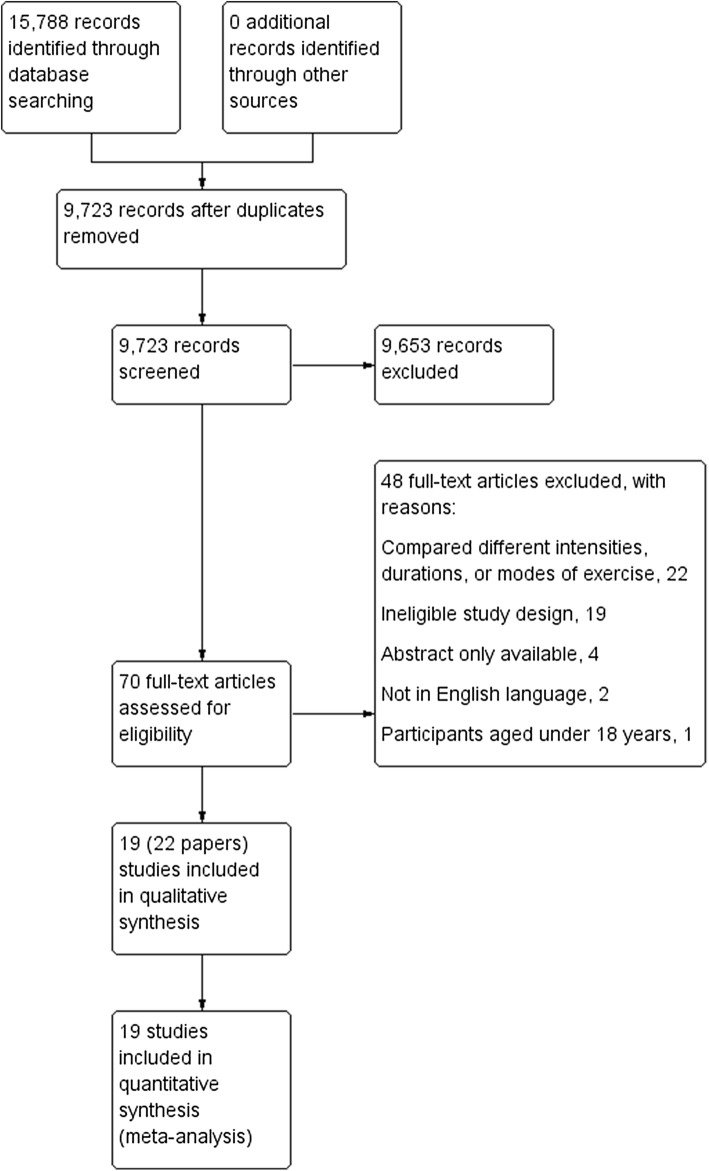
- Six databases were searched (January 1970–29 August 2018); 19 studies involving 1080 participants met inclusion criteria.
- Random-effects inverse-variance meta-analyses were conducted using Review Manager 5.3, with mean differences or standardised mean differences and 95% CIs; risk of bias was assessed with the Cochrane Collaboration tool.
Limitations
- The authors state that pooled interventions split continuous exercise into two, three, or four bouts per day separated by typically 2–5 h, so conclusions cannot extend to the optimum way to split and disperse exercise; only one study included bouts of less than 10 min, so efficacy below that duration cannot be commented on.
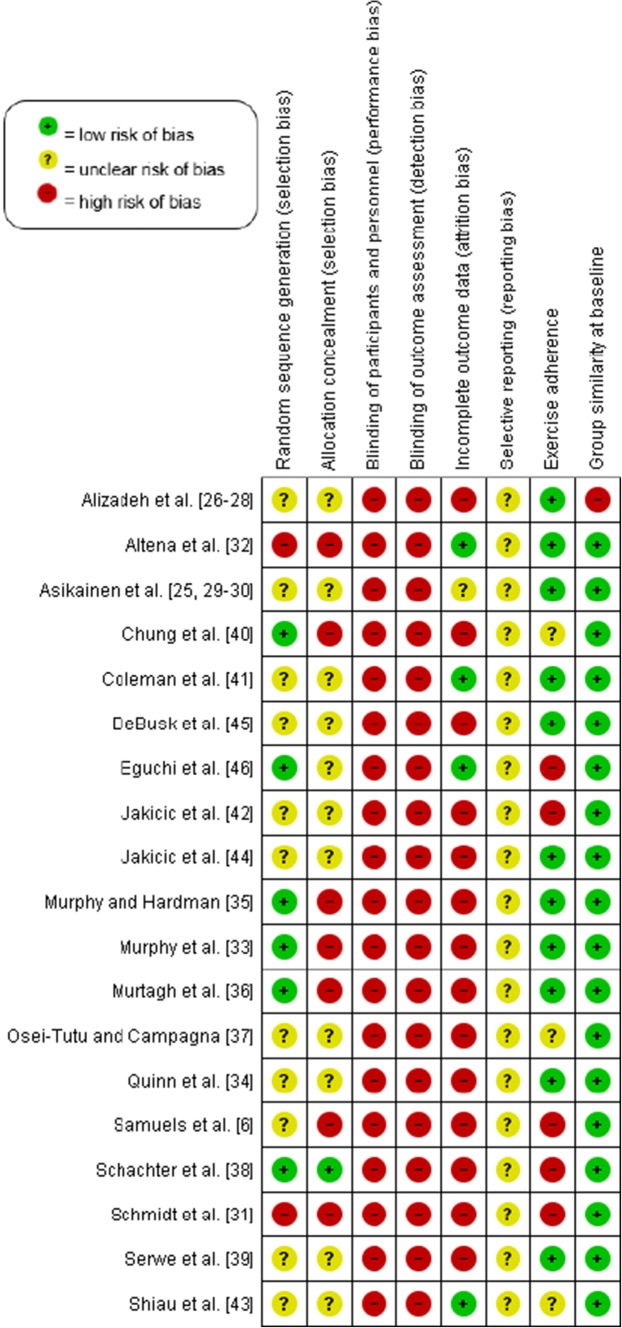
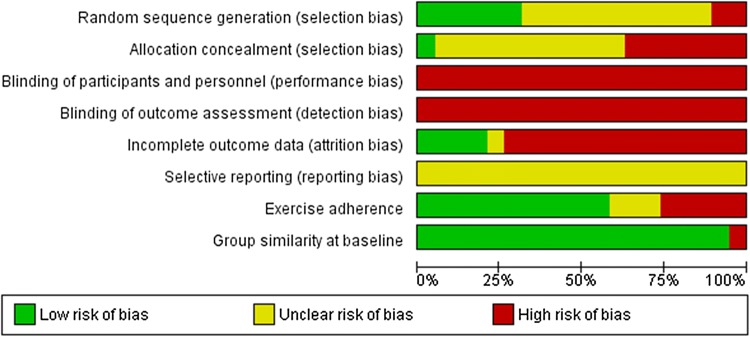
- The authors state that all included studies were at high risk of bias, the low number of studies and small sample sizes mean estimates cannot be considered precise by GRADE criteria, many trials were poorly reported, and the search was restricted to English-language publications.
- Evident from the text: 16 of 19 studies were small (<30 participants); dropout was higher in accumulated exercise conditions (20%) than continuous exercise (16%) or control (14%), and mean adherence was lower in accumulated versus continuous exercise (78 ± 17% vs. 83 ± 15%).
Model-written summary. Check it against the paper before relying on it.
Integrity signals
Registry
Cites
Statistics
Figures
Verification
Claims the paper makes
0 Valid · 0 Not valid · 58 Not checked · 101 Own results and interpretations
A result the paper reports from its own data — it cites no other source for it, so there is none to check. The quote shows it is in the paper.
In the paper
“A difference was found in body mass changes from baseline to post-intervention in favour of accumulated exercise compared with continuous (MD − 0.92 kg, 95% CI − 1.59 to − 0.25, I2 = 0%; five studies, 211 participants).”
§ The Effects of Continuous Compared to Accumulated Exercise on Health: A Meta-Analytic Review > Abstract > Results
plainstates a causen = 211 ·- Asserted: passes — The authors put it forward as true.
- Checkable: passes — It can be checked against evidence.
- Load-bearing: passes — The paper’s conclusions depend on it.
- Based: passes — The paper gives a reason why it holds.
A result the paper reports from its own data — it cites no other source for it, so there is none to check. The quote shows it is in the paper.
In the paper
“There were no differences between accumulated and continuous groups for any cardiorespiratory fitness or blood pressure outcomes.”
§ The Effects of Continuous Compared to Accumulated Exercise on Health: A Meta-Analytic Review > Abstract > Results
plainn = 1,080- Asserted: passes — The authors put it forward as true.
- Checkable: passes — It can be checked against evidence.
- Load-bearing: passes — The paper’s conclusions depend on it.
- Based: passes — The paper gives a reason why it holds.
A result the paper reports from its own data — it cites no other source for it, so there is none to check. The quote shows it is in the paper.
In the paper
“In subgroup analyses, accumulating > 150 min of weekly exercise in multiple bouts per day resulted in small effects on body fat percentage (combined post-intervention and change from baseline values: MD − 0.87%, 95% CI − 1.71 to − 0.04, I2 = 0%; three studies, 166 participants) compared with 150 min of exercise amassed via single continuous bouts per day.”
§ The Effects of Continuous Compared to Accumulated Exercise on Health: A Meta-Analytic Review > Abstract > Results
plainstates a causen = 166 ·- Asserted: passes — The authors put it forward as true.
- Checkable: passes — It can be checked against evidence.
- Load-bearing: passes — The paper’s conclusions depend on it.
- Based: passes — The paper gives a reason why it holds.
A result the paper reports from its own data — it cites no other source for it, so there is none to check. The quote shows it is in the paper.
In the paper
“There was a decrease in low-density lipoprotein (LDL) cholesterol with accumulated versus continuous exercise (MD − 0.39 mmol/l, 95% CI − 0.73 to − 0.06, I2 = 23%; two studies, 41 participants).”
§ The Effects of Continuous Compared to Accumulated Exercise on Health: A Meta-Analytic Review > Abstract > Results
plainstates a causen = 41 ·- Asserted: passes — The authors put it forward as true.
- Checkable: passes — It can be checked against evidence.
- Load-bearing: passes — The paper’s conclusions depend on it.
- Based: passes — The paper gives a reason why it holds.
A result the paper reports from its own data — it cites no other source for it, so there is none to check. The quote shows it is in the paper.
In the paper
“No differences were observed for any other blood biomarker (total cholesterol, high-density lipoprotein cholesterol, triglycerides, fasting blood glucose, and fasting insulin).”
- Also stated in: § Effects of Interventions: Accumulated Versus Continuous Exercise and Accumulated Exercise Versus Control · plain
“No differences were observed for any other blood biomarker (total cholesterol, HDL cholesterol, triglycerides, fasting blood glucose, and fasting insulin).”
§ The Effects of Continuous Compared to Accumulated Exercise on Health: A Meta-Analytic Review > Abstract > Results
plain- Asserted: passes — The authors put it forward as true.
- Checkable: passes — It can be checked against evidence.
- Load-bearing: passes — The paper’s conclusions depend on it.
- Based: passes — The paper gives a reason why it holds.
- Also stated in: § Effects of Interventions: Accumulated Versus Continuous Exercise and Accumulated Exercise Versus Control · plain
69 more claims
Create a free account to see all 159 claims and to verify the 195 references still open.
- Probably not a substantial claim. 69
- It may state two separate claims as one. 25
- The quote only partly states this claim. 1
Self-check
Percentages, sums and reported differences re-computed from the paper’s own numbers.
Each contradiction between two passages listed here was confirmed by an independent check.
Rated minor: it would not touch a result — a value no result rests on, a p-value that stays on the same side of the significance level, or a conflict that is clerical, resolved elsewhere in the paper, or outside its own findings.
In the paper
§ The Effects of Continuous Compared to Accumulated Exercise on Health: A Meta-Analytic Review > Results > Effects of Interventions: Accumulated Versus Continuous Exercise and Accumulated Exercise Versus Control
“and greater improvements in self-efficacy among accumulated bout exercisers compared with control (p = 0.001) at the end of the 12-week intervention.”
§ The Effects of Continuous Compared to Accumulated Exercise on Health: A Meta-Analytic Review > Results
“Intervention duration: 16 weeksMode: low-impact aerobics to music”
Rated minor: it would not touch a result — a value no result rests on, a p-value that stays on the same side of the significance level, or a conflict that is clerical, resolved elsewhere in the paper, or outside its own findings.
In the paper
§ The Effects of Continuous Compared to Accumulated Exercise on Health: A Meta-Analytic Review > Results > Risk of Bias
“for three trials this was because they retained all participants to the end of the intervention period [32, 40, 46]”
§ The Effects of Continuous Compared to Accumulated Exercise on Health: A Meta-Analytic Review > Results > Risk of Bias
“All other trials were considered at a high risk of attrition bias due to either high attrition (≥ 20% [6, 26, 33–38, 40, 42, 47])”
Rated minor: it would not touch a result — a value no result rests on, a p-value that stays on the same side of the significance level, or a conflict that is clerical, resolved elsewhere in the paper, or outside its own findings.
In the paper
§ The Effects of Continuous Compared to Accumulated Exercise on Health: A Meta-Analytic Review > Results > Intervention and Control Group Characteristics
“All interventions were delivered in an individual format, except for two trials that involved a group exercise intervention [31, 43].”
§ The Effects of Continuous Compared to Accumulated Exercise on Health: A Meta-Analytic Review > Results
“Setting: research facilityFormat: individual, unsupervisedProgressive: yes”
Rated minor: it would not touch a result — a value no result rests on, a p-value that stays on the same side of the significance level, or a conflict that is clerical, resolved elsewhere in the paper, or outside its own findings.
In the paper
§ The Effects of Continuous Compared to Accumulated Exercise on Health: A Meta-Analytic Review > Results > Intervention and Control Group Characteristics
“Only four trials used intensity to apply progression to their intervention [34, 38, 43, 46]”
§ The Effects of Continuous Compared to Accumulated Exercise on Health: A Meta-Analytic Review > Results
“Intervention duration: 20 weeksMode: cyclingIntensity: 50% VO2maxSetting: near workplaceFormat: individual, unsupervisedProgressive: no”
Rated minor: it would not touch a result — a value no result rests on, a p-value that stays on the same side of the significance level, or a conflict that is clerical, resolved elsewhere in the paper, or outside its own findings.
In the paper
§ The Effects of Continuous Compared to Accumulated Exercise on Health: A Meta-Analytic Review > Results > Intervention and Control Group Characteristics
“Only three trials consisted of completely supervised exercise sessions [31, 32, 40]”
§ The Effects of Continuous Compared to Accumulated Exercise on Health: A Meta-Analytic Review > Results
“Setting: research facilityFormat: individual, unsupervisedProgressive: yes”
6 more findings
Create a free account to see every finding of this check.
Citations
Cites
Meta-analysis in clinical trials
DerSimonian, R., & Laird, N. (1986) · Controlled Clinical Trials · doi:10.1016/0197-2456(86)90046-2 · Cited by 39,552
Dermyshi, E., Wang, Y., Yan, C., Hong, W., Qiu, G., Gong, X., & Zhang, T. (2017) · Neonatology · doi:10.1159/000454668 · Cited by 24,451
GRADE guidelines: 1. Introduction—GRADE evidence profiles and summary of findings tables
Guyatt, G., Oxman, A. D., Akl, E. A., Kunz, R., Vist, G., Brozek, J., Norris, S., Falck-Ytter, Y., Glasziou, P., & deBeer, H. (2011) · Journal of Clinical Epidemiology · doi:10.1016/j.jclinepi.2010.04.026 · Cited by 10,681
Health benefits of physical activity: the evidence
Warburton, D. E. R. (2006) · Canadian Medical Association Journal · doi:10.1503/cmaj.051351 · Cited by 8,007
Cochrane Handbook for Systematic Reviews of Interventions
Higgins, J. P. T., Green, S., & Ben Van Den, A. (2020) · International Coaching Psychology Review · doi:10.53841/bpsicpr.2020.15.2.123 · Cited by 5,670
HASKELL, W. L., LEE, I.-M., PATE, R. R., POWELL, K. E., BLAIR, S. N., FRANKLIN, B. A., MACERA, C. A., HEATH, G. W., THOMPSON, P. D., & BAUMAN, A. (2007) · Medicine & Science in Sports & Exercise · doi:10.1249/mss.0b013e3180616b27 · Cited by 4,616
Norderyd, O. M., Koch, G., Papias, A., Köhler, A. A., Helkimo, A. N., Brahm, C., Lindmark, U., Lindfors, N., Mattsson, A., Rolander, B., et al. (2015) · PubMed · Cited by 3,584
Assessing Risk of Bias in Included Studies
Higgins, J. P., & Altman, D. G. (2008) · Cochrane Handbook for Systematic Reviews of Interventions · doi:10.1002/9780470712184.ch8 · Cited by 3,396 · cited 1×
“5 Risk of Bias Assessment The assessment of risk of bias in trials was assessed using the Cochrane Collaboration assessment tool [20].”
MethodCooney, G. M., Dwan, K., Greig, C. A., Lawlor, D. A., Rimer, J., Waugh, F. R., McMurdo, M., & Mead, G. E. (2013) · Cochrane Database of Systematic Reviews · doi:10.1002/14651858.cd004366.pub6 · Cited by 1,834
Research works printed but not linked: 4
- Physical Activity Guidelines Advisory Committee 2018 physical activity guidelines advisory committee scientific report 2018 Washington, DC U.S. Department of Health and Human Services
- Review Manager (RevMan) [Computer program]. Version 5.3. Copenhagen: The Nordic Cochrane Centre, The Cochrane Collaboration; 2014.
- Schmidt WD Biwer CJ Kalscheuer LK Effects of long versus short bout exercise on fitness and weight loss in overweight females Am Coll Nutr 2001 20 494 501 10.1080/07315724.2001.10719058 11601564 · DOI · Paper page
- European Commission Special Eurobarometer 412. Sport and physical activity 2015 Brussels DG COMM “Strategy, corporate communication actions and Eurobarometer” Unit
Cited by
Quentin, C., Bagheri, R., Ugbolue, U. C., Coudeyre, E., Pélissier, C., Descatha, A., Ménini, T., Bouillon‐Minois, J., & Dutheil, F. (2021) · International Journal of Environmental Research and Public Health · doi:10.3390/ijerph18168430 · Cited by 180
Fyfe, J. J., Hamilton, D. L., & Daly, R. M. (2022) · Sports Medicine · doi:10.1007/s40279-021-01605-8 · Cited by 172
Ahmadi, M. N., Hamer, M., Gill, J. M. R., Murphy, M., Sanders, J. P., Doherty, A., & Stamatakis, E. (2023) · The Lancet Public Health · doi:10.1016/s2468-2667(23)00183-4 · Cited by 172
Self-citationExercise Snacks: A Novel Strategy to Improve Cardiometabolic Health
Islam, H., Gibala, M. J., & Little, J. P. (2022) · Exercise and Sport Sciences Reviews · doi:10.1249/jes.0000000000000275 · Cited by 170
Improving prevention strategies for cardiometabolic disease
Sattar, N., Gill, J. M. R., & Alazawi, W. (2020) · Nature Medicine · doi:10.1038/s41591-020-0786-7 · Cited by 159
Ghram, A., Briki, W., Mansoor, H., Al-Mohannadi, A. S., Lavie, C. J., & Chamari, K. (2020) · Postgraduate Medicine · doi:10.1080/00325481.2020.1860394 · Cited by 139
Jones, M. D., Clifford, B. K., Stamatakis, E., & Gibbs, M. T. (2024) · Sports Medicine · doi:10.1007/s40279-023-01983-1 · Cited by 116
Stamatakis, E., Huang, B.-H., Maher, C., Thøgersen-Ntoumani, C., Stathi, A., Dempsey, P. C., Johnson, N., Holtermann, A., Chau, J. Y., Sherrington, C., et al. (2021) · Sports Medicine · doi:10.1007/s40279-020-01368-8 · Cited by 113
“A recent systematic review [31] concluded that splitting a continuous exercise bout into shorter bouts of equivalent total volume interspersed across a day does not diminish the potential to provide cardiometabolic health benefits.”
BackgroundSelf-citationThe Challenge of Maintaining Metabolic Health During a Global Pandemic
King, A. J., Burke, L. M., Halson, S. L., & Hawley, J. A. (2020) · Sports Medicine · doi:10.1007/s40279-020-01295-8 · Cited by 98
Calcaterra, V., Verduci, E., Vandoni, M., Rossi, V., Profio, E. D., Pellino, V. C., Tranfaglia, V., Pascuzzi, M. C., Borsani, B., Bosetti, A., et al. (2021) · Nutrients · doi:10.3390/nu13113689 · Cited by 92
Vandoni, M., Codella, R., Pippi, R., Pellino, V. C., Lovecchio, N., Marin, L., Silvestri, D., Gatti, A., Magenes, V. C., Regalbuto, C., et al. (2021) · Nutrients · doi:10.3390/nu13124459 · Cited by 90
Healthy lifestyles and noncommunicable diseases: Nutrition, the life‐course, and health promotion
Cerf, M. E. (2021) · Lifestyle Medicine · doi:10.1002/lim2.31 · Cited by 80
Exercise snacks and physical fitness in sedentary populations
Wang, T., Laher, I., & Li, S. (2025) · Sports Medicine and Health Science · doi:10.1016/j.smhs.2024.02.006 · Cited by 51
Application of Exercise Snacks across Youth, Adult and Clinical Populations: A Scoping Review
Weston, K. L., Little, J. P., Weston, M., McCreary, S., Kitchin, V., Gill, A. J., Niven, A. G., McNarry, M. A., & Mackintosh, K. A. (2025) · Sports Medicine - Open · doi:10.1186/s40798-025-00829-6 · Cited by 61
Yin, M., Deng, S., Chen, Z., Zhang, B., Zheng, H., Bai, M., Li, H., Zhang, X., Deng, J., Liu, Q., et al. (2024) · Applied Physiology, Nutrition, and Metabolism · doi:10.1139/apnm-2023-0593 · Cited by 47
‘SnacktivityTM’ to increase physical activity: Time to try something different?
Sanders, J. P., Biddle, S. J. H., Gokal, K., Sherar, L. B., Skrybant, M., Parretti, H. M., Ives, N., Yates, T., Mutrie, N., & Daley, A. J. (2021) · Preventive Medicine · doi:10.1016/j.ypmed.2021.106851 · Cited by 52
Monnier, L., Schlienger, J.-L., Colette, C., & Bonnet, F. (2021) · Diabetes & Metabolism · doi:10.1016/j.diabet.2020.09.002 · Cited by 47
Rodríguez, M. Á., Quintana-Cepedal, M., Cheval, B., Thøgersen-Ntoumani, C., Crespo, I., & Olmedillas, H. (2026) · British Journal of Sports Medicine · doi:10.1136/bjsports-2025-110027 · Cited by 39
Characteristic of Clinical Studies on Baduanjin during 2000–2019: A Comprehensive Review
Zhou, J. W., Yu, Y., Cao, B., Li, X., Wu, M., Wen, T., Xiong, Y., Jia, J., & Zhao, Y. (2020) · Evidence-based Complementary and Alternative Medicine · doi:10.1155/2020/4783915 · Cited by 47
Mansoor, M. A., Ibrahim, A., Hamide, A., Tran, T., Candreva, E., & Baltaji, J. (2025) · Physiologia · doi:10.3390/physiologia5020013 · Cited by 44
Fanning, J. T., Rejeski, W. J., Leng, I., Barnett, C., Lovato, J. F., Lyles, M. F., & Nicklas, B. J. (2021) · Obesity · doi:10.1002/oby.23318 · Cited by 42
Wan, K., Dai, Z., Wong, P., Huang, Y., Lei, E. F., Little, J. P., Lin, F., & Tam, B. T. (2025) · Scandinavian Journal of Medicine and Science in Sports · doi:10.1111/sms.70114 · Cited by 42
Zhang, X., Zheng, C., Ho, R. S. T., Miyashita, M., & Wong, S. H. (2022) · Sports Medicine - Open · doi:10.1186/s40798-021-00401-y · Cited by 36
von Zimmermann, C., Winkelmann, M., Richter‐Schmidinger, T., Mühle, C., Kornhuber, J., & Lenz, B. (2020) · Frontiers in Psychiatry · doi:10.3389/fpsyt.2020.00494 · Cited by 36
Song, B. X., Azhar, L., Koo, G. K., Marzolini, S., Gallagher, D., Swardfager, W., Chen, C. C., Ba, J., Herrmann, N., & Lanctôt, K. L. (2023) · Neurobiology of Aging · doi:10.1016/j.neurobiolaging.2023.12.004 · Cited by 36
Millard, L. A. C., Tilling, K., Gaunt, T. R., Carslake, D., & Lawlor, D. A. (2021) · PLOS Medicine · doi:10.1371/journal.pmed.1003757 · Cited by 31
Krkoška, P., Vlažná, D., Sládečková, M., Mináriková, J., Barusová, T., Baťalík, L., Dosbaba, F., Voháňka, S., & Adamová, B. (2023) · International Journal of Environmental Research and Public Health · doi:10.3390/ijerph20021504 · Cited by 30
Intervening on physical activity and sedentary behavior in older adults
Fanning, J. T., Nicklas, B. J., & Rejeski, W. J. (2021) · Experimental Gerontology · doi:10.1016/j.exger.2021.111634 · Cited by 29
Shannon, S., Shevlin, M. E., Brick, N., & Breslin, G. (2022) · Journal of Affective Disorders · doi:10.1016/j.jad.2022.12.063 · Cited by 29
Promoting participation in physical activity through Snacktivity: A qualitative mixed methods study
Krouwel, M., Greenfield, S., Chalkley, A. E., Sanders, J. P., Parretti, H. M., Gokal, K., Jolly, K. B., Skrybant, M., Biddle, S., Greaves, C. J., et al. (2023) · PLoS ONE · doi:10.1371/journal.pone.0291040 · Cited by 28
Vaara, J. P., Vasankari, T. J., Wyss, T., Pihlainen, K., Ojanen, T., Raitanen, J. A., Vähä‐Ypyä, H., & Kyröläinen, H. (2020) · Frontiers in Sports and Active Living · doi:10.3389/fspor.2020.587789 · Cited by 28
Alsulaimani, B., Perraton, L. G., Vallance, P., Powers, T., & Malliaras, P. (2024) · Clinical Rehabilitation · doi:10.1177/02692155241295683 · Cited by 22
Daley, A., Griffin, R. A., Sanders, J. P., Gokal, K., Ives, N. J., Skrybant, M., Parretti, H. M., Edwardson, C. L., Biddle, S., Jolly, K. B., et al. (2025) · International Journal of Behavioral Medicine · doi:10.1007/s12529-025-10352-3 · Cited by 23
Zmerly, H., Milanese, C., Ghoch, M. E., Itani, L., Tannir, H., Kreidieh, D., Yumuk, V., & Pellegrini, M. (2023) · Diseases · doi:10.3390/diseases11040182 · Cited by 20
Ortolá, R., García‐Esquinas, E., Soto, A. B., Cabanas‐Sánchez, V., Martínez‐Gómez, D., Sotos‐Prieto, M., Struijk, E. A., Caballero, F. F., López‐García, E., Banegas, J. R., et al. (2022) · Journal of Cachexia Sarcopenia and Muscle · doi:10.1002/jcsm.12924 · Cited by 18
Daley, A., Griffin, R. A., Moakes, C. A., Sanders, J. P., Skrybant, M., Ives, N. J., Maylor, B. D., Greenfield, S., Gokal, K., Parretti, H. M., et al. (2023) · Pilot and Feasibility Studies · doi:10.1186/s40814-023-01272-8 · Cited by 17
Wells, A. J., & Stephensen, D. (2020) · British Journal of Hospital Medicine · doi:10.12968/hmed.2020.0016 · Cited by 17
Zhang, X., Tian, X. Y., Miyashita, M., Sun, F., Huang, Y., Zheng, C., Sum, M. K., & Wong, S. H. (2023) · European Journal of Sport Science · doi:10.1080/17461391.2023.2177199 · Cited by 16
Zhou, Z., Hou, L., Cui, M., Mourot, L., & Zhu, W. (2022) · Scientific Reports · doi:10.1038/s41598-022-05800-z · Cited by 15
Can Daily Walking Alone Reduce Pneumonia-Related Mortality among Older People?
Ikeda, T., Inoue, S., Konta, T., Murakami, M., Fujimoto, S., Iseki, K., Moriyama, T., Yamagata, K., Tsuruya, K., Narita, I., et al. (2020) · Scientific Reports · doi:10.1038/s41598-020-65440-z · Cited by 16
Dose‒Response Association between Physical Activity and Blood Pressure
Guan, T., Cao, M., Zheng, C., Zhou, H., Wang, X., Chen, Z., Zhang, L., Cao, X., Tian, Y., Guo, J., et al. (2022) · Journal of Hypertension · doi:10.1097/hjh.0000000000003587 · Cited by 14
Reyes‐Molina, D., Zapata‐Lamana, R., Nazar, G., Cigarroa, I., Ruiz, J. R., Parrado, E., Losilla, J.-M., & Celis-Morales, C. A. (2025) · Scandinavian Journal of Medicine and Science in Sports · doi:10.1111/sms.70015 · Cited by 14
THE EFFECT OF PHYSICAL EXERCISE ON BLOOD SUGAR CONTROL IN DIABETIC PATIENTS
Wang, W., Huang, M.-C., & Wang, J. (2021) · Revista Brasileira de Medicina do Esporte · doi:10.1590/1517-8692202127032021_0103 · Cited by 14
Miatke, A., Maher, C. A., Fraysse, F., Dumuid, D., & Olds, T. (2021) · BMC Public Health · doi:10.1186/s12889-021-11420-5 · Cited by 13
Yin, M., Li, H., Zhang, B., & Li, Y. (2024) · Sports Medicine · doi:10.1007/s40279-024-02080-7 · Cited by 13
Mansour, K. A., Greenwood, C. J., Francis, L. M., Smith, I., Olsson, C. A., & Macdonald, J. A. (2023) · Applied Psychology Health and Well-Being · doi:10.1111/aphw.12475 · Cited by 12
Ha, L., Wakefield, C. E., Díaz, C., Mizrahi, D., Signorelli, C., Yacef, K., & Simar, D. (2023) · Health Informatics Journal · doi:10.1177/14604582231212525 · Cited by 13
Qiu, F., Li, J., Gan, L., & Legerlotz, K. (2024) · BMC Geriatrics · doi:10.1186/s12877-024-04859-9 · Cited by 12
Chang, Y., Wang, H., Zhang, X., & Liu, H. (2025) · Frontiers in Nutrition · doi:10.3389/fnut.2025.1708301 · Cited by 10
Du, Y., Peng, R., Wan, X., Zhang, C., Guo, Y., Chang, J., Feng, H., & Cao, Z. (2024) · Public Health Nursing · doi:10.1111/phn.13495 · Cited by 9
Luzum, G., Gunnes, M., Lydersen, S., Saltvedt, I. T., Tan, X., Thingstad, P., Thrane, G., & Askim, T. (2023) · Physical Therapy · doi:10.1093/ptj/pzad092 · Cited by 9
Quadriceps muscle oxygenation during a maximum stress test in middle-aged athletes
University of Murcia, U. I. F. R. I. A., Paredes-Ruiz, M.-J., Jodar-Reverte, M., University of Murcia, U. I. F. R. I. A., Ferrer-Lopez, V., University of Murcia, U. I. F. R. I. A., Martínez- González-Moro, I., & University of Murcia, U. I. F. R. I. A. (2020) · Montenegrin Journal of Sports Science and Medicine · doi:10.26773/mjssm.200908 · Cited by 8
Wallmann-Sperlich, B., Düking, P., Müller, M., Froböse, I., & Sperlich, B. (2022) · BMC Public Health · doi:10.1186/s12889-022-12999-z · Cited by 8
Chow, G. C.-C., & Ha, S. C. W. (2024) · PLoS ONE · doi:10.1371/journal.pone.0298142 · Cited by 8
UK Chief Medical Officers' Physical Activity Guidelines
(2019) · Digital Education Resource Archive (University College London) · Cited by 8
Li, Y., Yang, Y., Guo, C., & Cai, H. (2025) · Bone · doi:10.1016/j.bone.2025.117461 · Cited by 7
Ren, J., Xiao, H., & Wang, P. (2022) · International Journal of Environmental Research and Public Health · doi:10.3390/ijerph192416847 · Cited by 7
Sousa, R. A. L. D., Mendes, B. F., Costa-Pereira, L. V., Pereira, R. R. D. S., de Andrade, J. A., Magalhães, C. O. D. E., Gripp, F., Magalhães, F. D. C., Andrade, E. F., Cassilhas, R. C., et al. (2022) · Journal of Visualized Experiments · doi:10.3791/63328 · Cited by 7
Christie, H. E., Winter, M., Meyer, B. J., & François, M. E. (2024) · Medicine & Science in Sports & Exercise · doi:10.1249/mss.0000000000003382 · Cited by 6
de Jesus Gomes, G., Diniz Magalhães, C. O., Queiroz, I. P., Alves de Andrade, J., Chaves Garcia, B. C., Ramalho de Souza Pereira, R., Moreira Costa, J. M., Cassilhas, R. C., Villela, D. C., Castro de Magalhães, F., et al. (2025) · European Journal of Sport Science · doi:10.1002/ejsc.12302 · Cited by 5
“Murphy (Murphy et al. 2019) speculated that small increases in metabolism occurring following two or more daily sessions of exercise may lead to a higher EPOC magnitude compared to a single daily exercise session.”
Lapuente‐Hernández, D., Gil-Calvo, M., Cuenca‐Zaldívar, J. N., Carcasona-Otal, A., Herrero, P., & Matute-Llorente, Á. (2025) · Healthcare · doi:10.3390/healthcare13172094 · Cited by 5
Magutah, K., Mbuthia, G. W., Akiruga, J. A., Haile, D. W., & Thairu, K. (2022) · PLOS Global Public Health · doi:10.1371/journal.pgph.0000806 · Cited by 5
Umarov, A. A.-K., Оздербиевич, А. А., Dzhulagov, S.-M. M., & Yakubova, M. M. (2023) · Perspectives of science and education · doi:10.32744/pse.2023.1.8 · Cited by 4
Zhao, K., Chen, Z. H., Huang, Q., Li, S., Tan, G., Guo, K., & Jiang, L. (2026) · Frontiers in Psychology · doi:10.3389/fpsyg.2025.1701201 · Cited by 4
Park, S., Park, S.-Y., Oh, G., & Oh, I. (2019) · International Journal of Environmental Research and Public Health · doi:10.3390/ijerph16204034 · Cited by 4
Guirado, T., Metz, L., Pereira, B., Bergouignan, A., Thivel, D., & Duclos, M. (2021) · Trials · doi:10.1186/s13063-021-05317-2 · Cited by 4
Physiological response of exercise as modulation of lipid profile in young adults
Sugiharto, S., Merawati, D., Susanto, H., Taufiq, A., Pranoto, A., & Angga, P. D. (2023) · Comparative Exercise Physiology · doi:10.3920/cep220056 · Cited by 4
Costa-Pereira, L. V., Mendes, B. F., Magalhães, C. O. D. E., Rodrigues, C. M., de Andrade, J. A., Pereira, R. R. D. S., Esteves, E. A., Cassilhas, R. C., Andrade, E. F., Gripp, F., et al. (2024) · Metabolites · doi:10.3390/metabo14080447 · Cited by 3
Moseley, G. A., Collins, K. A., Kraus, W. E., & Ross, L. M. (2025) · Sports Medicine and Health Science · doi:10.1016/j.smhs.2025.03.006 · Cited by 3
Daily Variability in Sedentary Behaviour and Physical Activity Responsiveness in Older Women
Grant, D. M., Tomlinson, D. J., Tsintzas, K., & Onambélé-Pearson, G. L. (2025) · Sensors · doi:10.3390/s25072194 · Cited by 3
Moseley, G. A., Ross, L. M., Collins, K. A., North, R., Johnson, J. L., & Kraus, W. E. (2025) · Journal of Applied Physiology · doi:10.1152/japplphysiol.00743.2024 · Cited by 3
Lee, Y. H., Park, Y.-H., & Kim, H. (2024) · International Journal of Mental Health Promotion · doi:10.32604/ijmhp.2024.051773 · Cited by 3
Wade, M., Brown, N., Steele, J., Mann, S., Dancy, B., Winter, S., & Majumdar, A. (2021) · Journal of Public Health · doi:10.1093/pubmed/fdab198 · Cited by 3
Rossi, P. A. Q., Gomes, R., Salazar, T. C. D. N., Barros, E. M. L., Vasconcelos, S. A., da Silva, A. S., Pereira, E. M., Melo, V. B., Fonseca, M. H. G., Teixeira, C., et al. (2024) · Journal of Physical Activity and Health · doi:10.1123/jpah.2023-0370 · Cited by 2
Molina, M., Durand, F., & Méric, H. (2025) · Frontiers in Rehabilitation Sciences · doi:10.3389/fresc.2025.1659925 · Cited by 2
Alsulaimani, B., Perraton, L. G., Bourke, J., Powers, T., & Malliaras, P. (2025) · Clinical Rehabilitation · doi:10.1177/02692155251394951 · Cited by 2
Zhang, Y., Zha, Z., Tian, C., Huang, D., Shen, T., Liu, J., & Wang, S. (2026) · Preventive Medicine · doi:10.1016/j.ypmed.2026.108517 · Cited by 2
BENEFÍCIO DO EXERCÍCIO FÍSICO EM INDIVÍDUOS PORTADORES DE DIABETES MELLITUS
Castro, P. J. C., Bernardino, J. P., Costa, L. M. D., Vieira, D., Rodrigues, I. G., & Ribeiro, T. P. (2023) · Revista Contemporânea · doi:10.56083/rcv3n9-152 · Cited by 2
Der Einsatz von Short Bouts als Paradigmenwechsel bei der Ausgestaltung von Bewegungsinterventionen
Köppel, M., & Peters, S. (2023) · B&G Bewegungstherapie und Gesundheitssport · doi:10.1055/a-2152-4192 · Cited by 2
Monteiro, A., Moore, J. B., Aikens, R. C., Duckworth, A. L., Gross, J. J., Schwartz, D., Baiocchi, M., Prochaska, J. J., & Oppezzo, M. (2025) · JMIR Research Protocols · doi:10.2196/64455 · Cited by 2
Li, Y., Li, J., Cidan, W., Li, Y., Nima, Q., & Li, X. (2025) · Ecotoxicology and Environmental Safety · doi:10.1016/j.ecoenv.2025.119170 · Cited by 2
Mullen, S. P., Luo, Y., Adamek, J. F., Phansikar, M., MacKenzie, M. J., Roberts, B. W., & Larrison, C. R. (2023) · Journal of Evidence-Based Social Work · doi:10.1080/26408066.2023.2265922 · Cited by 3
Bewegung beim Menschen über 60 Jahre: aktuelle Studie auf der Basis einer Forsa-Befragung
Albrecht, F., & Dresel, U. (2023) · B&G Bewegungstherapie und Gesundheitssport · doi:10.1055/a-2151-8061 · Cited by 1
Sun, Y., Park, H., Jung, W., Kim, S.-W., Seo, J.-S., Choi, J., Kim, J., & Lim, K. (2024) · BMC Women s Health · doi:10.1186/s12905-024-03299-2 · Cited by 1
Zamora, A. N., Zeitlin, A. B., Moore, J. B., & Oppezzo, M. (2025) · American Journal of Health Promotion · doi:10.1177/08901171251338217 · Cited by 1
Song, D., Zhang, J., Zhao, Z., Feng, X., Zhao, L., Yang, J., & Jing, X. (2026) · Frontiers in Sports and Active Living · doi:10.3389/fspor.2025.1738390 · Cited by 1
Liu, X., Xia, Y., Gao, X., & Wang, R. L. (2026) · Frontiers in Public Health · doi:10.3389/fpubh.2026.1850516 · Cited by 1
Hoffmann, S. M., Domenico, I. D., & Collins, P. K. (2022) · BMC Sports Science Medicine and Rehabilitation · doi:10.1186/s13102-022-00455-9 · Cited by 1
Robinson-Dooley, V., Sterling, E. W., Collard, C. S., Williams, J. W., & Collette, T. (2024) · Social Work in Public Health · doi:10.1080/19371918.2024.2387021 · Cited by 1
Фітнес-силова спрямованість занять з жінками першого періоду зрілого віку
Звягін, О. М. (2023) · Electronic Sumy State University Institutional Repository (Sumy State University) · Cited by 1
dos Santos, M., & Chacon‐Mikahil, M. P. T. (2019) · Resumos do... · doi:10.20396/revpibic2720191975
Burgin, A. (2019) · Worcester Research and Publications (University of Worcester)
Bullard, T. (2019) · Illinois Digital Environment for Access to Learning and Scholarship (University of Illinois at Urbana-Champaign)
Mücke, M. (2020) · edoc (University of Basel) · doi:10.5451/unibas-ep79860
Sousa, R. A. L. D., Mendes, B. F., Costa-Pereira, L. V., Pereira, R. R. D. S., de Andrade, J. A., Magalhães, C. O. D. E., Gripp, F., Magalhães, F. D. C., Andrade, E. F., Cassilhas, R. C., et al. (2022) · doi:10.3791/63328-v
Non-diabetic hyperglycaemia: helping to prevent progression to type 2 diabetes
Stewart, M. (2022) · Practice Nursing · doi:10.12968/pnur.2022.33.sup3.s4
Jaganathan, K. S. (2022) · Queensland University of Technology · doi:10.5204/thesis.eprints.236257
Kim, S.-H., Cho, H., & Lee, M.-G. (2023) · Korean Journal of Sport Science · doi:10.24985/kjss.2023.34.3.392
FİZİKSEL AKTİVİTE DANIŞMANLIĞINDA YENİ BİR BAKIŞ AÇISI: “SNACKTIVITY”
Çelik, Z., & Güzel, N. A. (2024) · Sağlık Bilimleri Dergisi · doi:10.34108/eujhs.1354057
Lifestyle Therapy: Diet and Exercise in the Management of Obesity
Lofton, H. F., Lavenburg, L.-M. U., & Kolli, S. (2024) · Springer eBooks · doi:10.1007/978-3-031-70004-0_4
Metadata
- Authors
- Murphy, M. H., Lahart, I., Carlin, A., & Murtagh, E.
- Affiliations
- University of Ulster (GB)
- University of Wolverhampton (GB)
- University of Limerick (IE)
- Corresponding author
- Murphy, Marie H.
- Venue
- Sports Medicine
- Published
- 2019-07-02
- Volume
- 49
- Issue
- 10
- Pages
- 1585-1607
- ISSN
- 0112-1642 (ISSN-L)
- 1179-2035
- PMC
- PMC6745307
- OpenAlex
- W2953581640
- Cited by
- 129
- References
- 53
- Citations by year
- 2026: 18 · 2025: 24 · 2024: 18 · 2023: 20 · 2022: 16 · 2021: 16 · 2020: 12 · 2019: 5
- FWCI
- 1.53
- Type
- journal article
- Language
- en
- Open access
- hybrid
- doi.org
- Licence
- cc-by
- creativecommons.org/licenses/by/4.0 (tdm)
- creativecommons.org/licenses/by/4.0 (vor)
- Locations
- Sports Medicine (publishedVersion, cc-by)
- Europe PMC (PubMed Central) (publishedVersion, cc-by)
- PubMed (publishedVersion)
- PubMed Central (publishedVersion, cc-by)
- Ulster University Research Portal (Ulster University) (publishedVersion, other-oa)
- Figshare (submittedVersion, cc-by-nc-sa)
- University of Limerick Institutional Repository (University of Limerick) (submittedVersion, cc-by-nc-sa)
- Wolverhampton Intellectual Repository and E-Theses (University of Wolverhampton) (submittedVersion)
- University of Limerick Institutional Repository (University of Limerick) (cc-by-nc-sa)
- Topics
- Health Sciences › Medicine › Public Health, Environmental and Occupational Health › Physical Activity and Health
- Health Sciences › Medicine › Physiology (medical) › Cardiovascular and exercise physiology
- Health Sciences › Medicine › Public Health, Environmental and Occupational Health › Obesity, Physical Activity, Diet
- Keywords
- single bout exercise, exercise frequency, physical activity guidelines, cardiorespiratory fitness, blood pressure, body mass, body fat percentage, LDL cholesterol, serum lipids, insulin, fasting blood glucose, community-dwelling adults, exercise intervention, health outcomes, sedentary behavior, health disparities
- MeSH terms
- Cardiorespiratory Fitness, Blood Pressure, Body Composition, Health Status, Humans, Lipids, Oxygen Consumption, Time Factors, Exercise, Randomized Controlled Trials as Topic
About these checks
Registry, retraction, Cites and statistics results are computed, not judged, with one exception: a printed reference that no index lists is read once by a model before it counts as a citation error. Claims are extracted by a model and kept only when their quote appears verbatim in the text; each cited source is then checked, with a model’s help, for whether it says what the claim relies on. Those verdicts can be wrong — read the claim’s quote and the cited source before relying on one.
A language model drew the claims from the paper on 2026-11-19, under version 3 of the claim definition (model deepseek-v4.1-flash, prompt extract-v3).
A second model labelled each claim on 2026-11-19 (model jev-1.13-20260917, definition revision gold-guideline-v0.2).
Statistics and arithmetic are recomputed, not judged.
Confidence bands are shown only for fields calibrated on our annotated test set. None is calibrated yet, so no band is shown.
What counts as a claim ›How we measure confidence ›How we check this ›
Are you an author, or do you see a problem with this page? Request a review
Data sources
Bibliographic data: Semantic Scholar, OpenAlex, Crossref.
Contains information from the Semantic Scholar Academic Graph Datasets, made available under the ODC Attribution License (ODC-BY 1.0).
Semantic Scholar’s data is described in: Kinney, R., et al. (2023). The Semantic Scholar Open Data Platform. arXiv:2301.10140.
