

Development of Maximal Dynamic Strength During Concurrent Resistance and Endurance Training in Untrained, Moderately Trained, and Trained Individuals: A Systematic Review and Meta-analysis
Open accessThe DOI matches its Crossref record; 72 of the 72 references it cites were found in a registry or an index.
Abstract
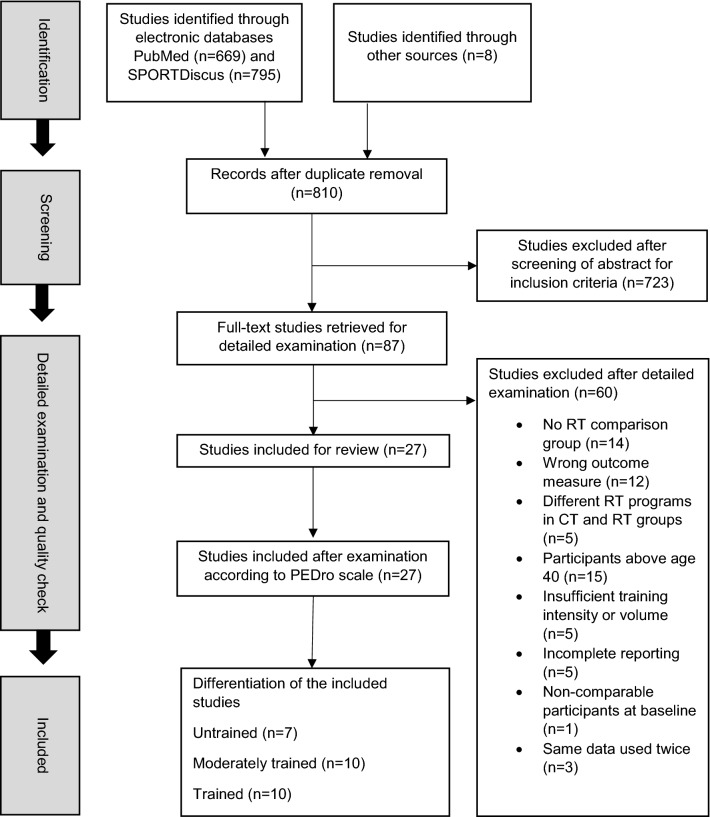
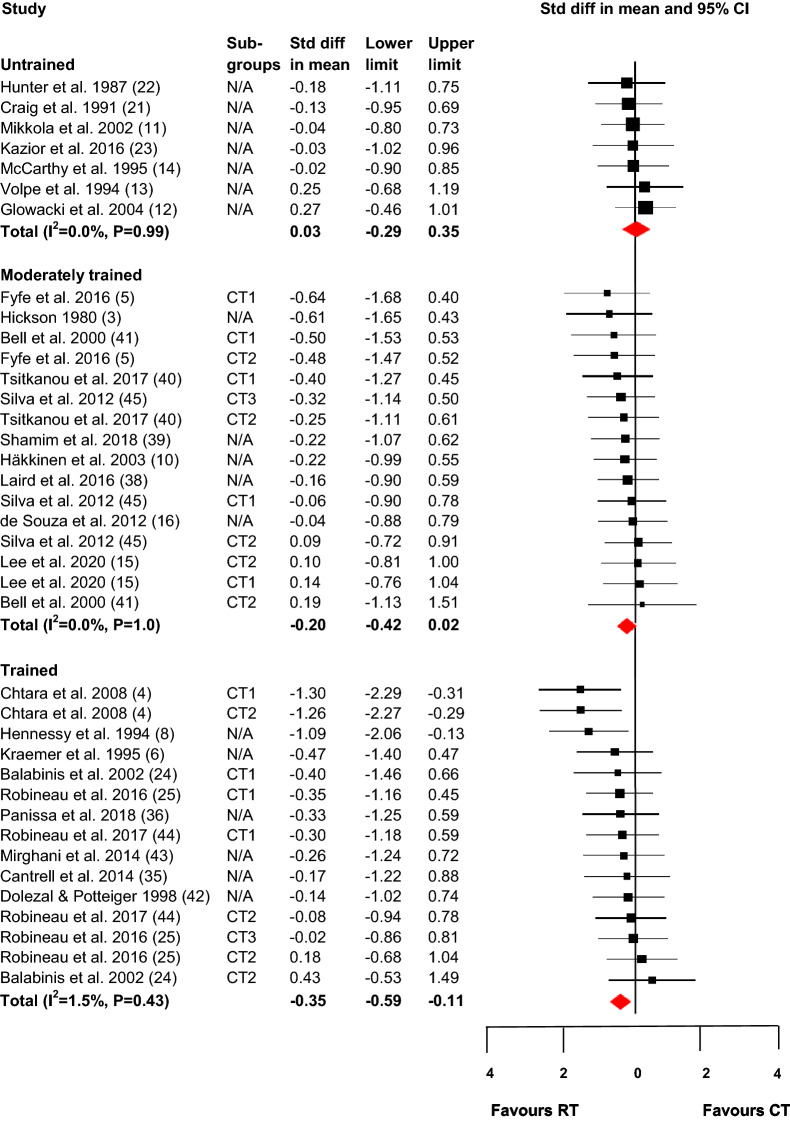
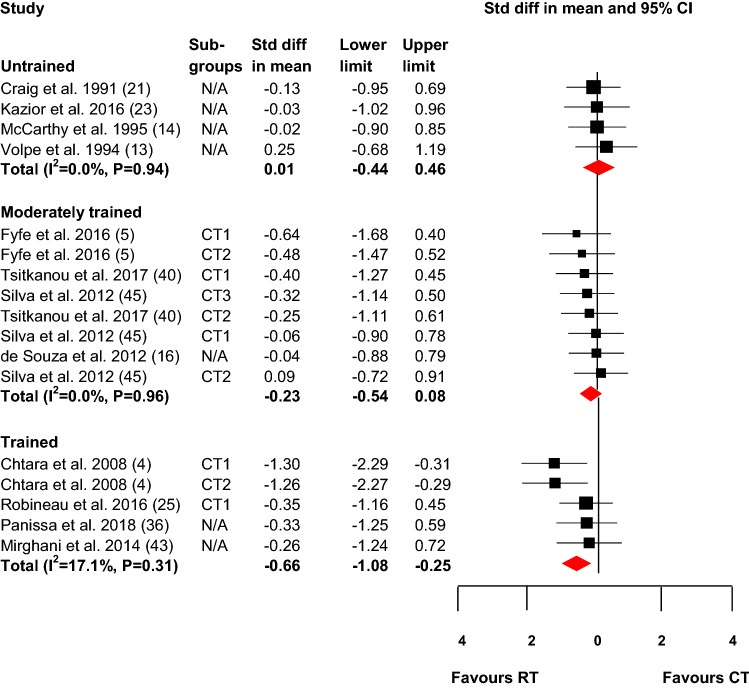
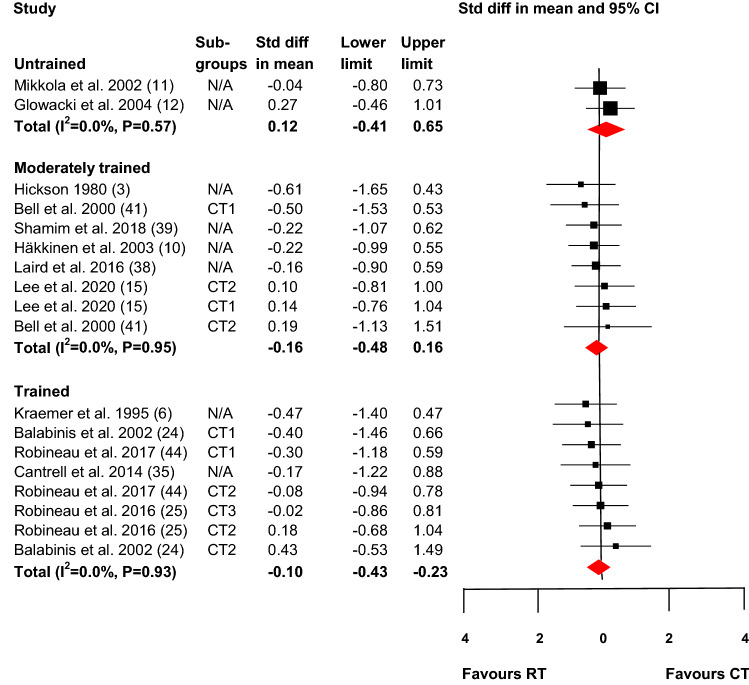
Background: The effect of concurrent training on the development of maximal strength is unclear, especially in individuals with different training statuses. Objective: The aim of this systematic review and meta-analysis study was to compare the effect of concurrent resistance and endurance training with that of resistance training only on the development of maximal dynamic strength in untrained, moderately trained, and trained individuals. Methods: On the basis of the predetermined criteria, 27 studies that compared effects between concurrent and resistance training only on lower-body 1-repetition maximum (1RM) strength were included. The effect size (ES), calculated as the standardised difference in mean, was extracted from each study, pooled, and analysed with a random-effects model. Results: The 1RM for leg press and squat exercises was negatively affected by concurrent training in trained individuals (ES = – 0.35, p < 0.01), but not in moderately trained ( – 0.20, p = 0.08) or untrained individuals (ES = 0.03, p = 0.87) as compared to resistance training only. A subgroup analysis revealed that the negative effect observed in trained individuals occurred only when resistance and endurance training were conducted within the same training session (ES same session = – 0.66, p < 0.01 vs. ES different sessions = – 0.10, p = 0.55). Conclusion: This study demonstrated the novel and quantifiable effects of training status on lower-body strength development and shows that the addition of endurance training to a resistance training programme may have a negative impact on lower-body strength development in trained, but not in moderately trained or untrained individuals. This impairment seems to be more pronounced when training is performed within the same session than in different sessions. Trained individuals should therefore consider separating endurance from resistance training during periods where the development of dynamic maximal strength is prioritised.
Overview
The claims and statistics of this paper haven’t been checked yet.
Free: it reads the open-access text and checks the first 5 claims that cite a source we can check. Create a free account to check every claim.
Integrity signals
Registry
Cites
Statistics
Figures
Verification
Claims the paper makes
The claims and statistics of this paper haven’t been checked yet.
Free: it reads the open-access text and checks the first 5 claims that cite a source we can check. Create a free account to check every claim.
Claims other papers make about this one
Each is checked against this paper’s own text: does it say what the citing paper says it does?
The source backs part of the claim, not all of it — or backs it for a different population, condition or comparison.
In the citing paper
“Although, none of these systematic reviews included body fat changes as an outcome variable.”
From Comparison of concurrent, resistance, or aerobic training on body fat loss: a systematic review and meta-analysis. (2025) · cites this paper as [5]
Experimental — accuracy not yet measuredThe source backs part of the claim, not all of it — or backs it for a different population, condition or comparison.
In the citing paper
“To our knowledge, there have been three systematic reviews published that directly compared training adaptations between AT, RT, and CT [3,5,6].”
From Comparison of concurrent, resistance, or aerobic training on body fat loss: a systematic review and meta-analysis. (2025) · cites this paper as [5]
Experimental — accuracy not yet measuredIn the citing paper
“More recent studies showed that concurrent training (AE and PRT in the same session), performed twice weekly, resulted in similar adaptations in lower-upper body strength, power, and V̇O2 peak compared to PRT alone and comparable aerobic fitness to aerobic training alone [[218], [219], [220]] in moderately trained or untrained healthy.”
From Global consensus on optimal exercise recommendations for enhancing healthy longevity in older adults (ICFSR) (2025) · cites this paper as [219]
Self-check
Percentages, sums and reported differences re-computed from the paper’s own numbers.
The self-check needs the paper’s full text.
Citations
Cites
Measuring inconsistency in meta-analyses
Higgins, J. P. T., Thompson, S. G., Deeks, J. J., & Altman, D. G. (2003) · BMJ · doi:10.1136/bmj.327.7414.557 · Cited by 63,139
Liberati, A., Altman, D. G., Tetzlaff, J., Mulrow, C., Gøtzsche, P. C., Ioannidis, J. P. A., Clarke, M., Devereaux, P. J., Kleijnen, J., & Moher, D. (2009) · PLoS Medicine · doi:10.1371/journal.pmed.1000100 · Cited by 28,164 · cited 1×
“A systematic review and meta-analysis was conducted in accordance with the Preferred Reporting Items for Systematic Reviews and Meta-analyses statement guidelines [27].”
MethodLiberati, A., Altman, D. G., Tetzlaff, J., Mulrow, C., Gotzsche, P. C., Ioannidis, J. P. A., Clarke, M., Devereaux, P. J., Kleijnen, J., & Moher, D. (2009) · BMJ · doi:10.1136/bmj.b2700 · Cited by 17,648
Cochrane Handbook for Systematic Reviews of Interventions
(2019) · doi:10.1002/9781119536604 · Cited by 14,828
Progression Models in Resistance Training for Healthy Adults
(2009) · Medicine & Science in Sports & Exercise · doi:10.1249/mss.0b013e3181915670 · Cited by 4,332
Progression Models in Resistance Training for Healthy Adults
(2002) · Medicine and Science in Sports and Exercise · doi:10.1097/00005768-200202000-00027 · Cited by 2,979
de Morton, N. A. (2009) · Australian Journal of Physiotherapy · doi:10.1016/s0004-9514(09)70043-1 · Cited by 2,201
Fundamentals of Resistance Training: Progression and Exercise Prescription
KRAEMER, W. J., & RATAMESS, N. A. (2004) · Medicine & Science in Sports & Exercise · doi:10.1249/01.mss.0000121945.36635.61 · Cited by 1,992
Kraemer, W. J., Patton, J. F., Gordon, S. E., Harman, E. A., Deschenes, M. R., Reynolds, K., Newton, R. U., Triplett, N. T., & Dziados, J. E. (1995) · Journal of Applied Physiology · doi:10.1152/jappl.1995.78.3.976 · Cited by 782
Interference of strength development by simultaneously training for strength and endurance.
Hickson, R. C. (1980) · European Journal of Applied Physiology and Occupational Physiology · doi:10.1007/bf00421333 · Cited by 753
Research works printed but not linked: 2
- WHO. Global recommendations on physical activity for health. 2011. 26180873
- Sporer BC Wenger HA Effects of aerobic exercise on strength performance following various periods of recovery J Strength Cond Res 2003 17 4 638 644 10.1519/1533-4287(2003)017<0638:eoaeos>2.0.co;2 14636098 · doi:10.1519/1533-4287(2003)017<0638:eoaeos>2.0.co;2
Cited by
Izquierdo, M., de Souto Barreto, P., Arai, H., Bischoff-Ferrari, H. A., Cadore, E. L., Cesari, M., Chen, L.-K., Coen, P. M., Courneya, K. S., Duque, G., et al. (2025) · The Journal of nutrition, health and aging · doi:10.1016/j.jnha.2024.100401 · Cited by 273
Schumann, M., Feuerbacher, J. F., Sünkeler, M., Freitag, N., Rønnestad, B. R., Doma, K., & Lundberg, T. R. (2022) · Sports Medicine · doi:10.1007/s40279-021-01587-7 · Cited by 156
“Our results differ from the recently published meta-analysis that focused exclusively on the effect of training status on maximal strength during concurrent training [15].”
BackgroundResultInfluentialKonrad, A., Alizadeh, S., Daneshjoo, A., Anvar, S. H., Graham, A. P., Zahiri, A., Goudini, R., Edwards, C., Scharf, C., & Behm, D. G. (2023) · Journal of sport and health science/Journal of Sport and Health Science · doi:10.1016/j.jshs.2023.06.002 · Cited by 144
“Since it was shown that trained and untrained individuals might respond differently to a training stimulus (i.e., concurrent resistance and endurance training), 46 we would not have expected similar adaptations.”
BackgroundCURRIER, B. S., D’SOUZA, A. C., SINGH, M. A. F., LOWISZ, C. V., RAWSON, E. S., SCHOENFELD, B. J., SMITH-RYAN, A. E., STEEN, J. P., THOMAS, G. A., TRIPLETT, N. T., et al. (2026) · Medicine & Science in Sports & Exercise · doi:10.1249/mss.0000000000003897 · Cited by 105
Naimo, M. A., Varanoske, A. N., Hughes, J. M., & Pasiakos, S. M. (2021) · Frontiers in Physiology · doi:10.3389/fphys.2021.706699 · Cited by 109
Vieira, J. G., Sardeli, A. V., Dias, M. R., Filho, J. E., Campos, Y., Sant’Ana, L. D. O., Leitão, L., Reis, V. M., Wilk, M., Novaes, J. D. S., et al. (2021) · Sports Medicine · doi:10.1007/s40279-021-01602-x · Cited by 85
“The age range as an inclusion criterion was determined in accordance with previous studies [40, 41].”
ResultHuiberts, R. O., Wüst, R. C. I., & van der Zwaard, S. (2024) · Sports Medicine · doi:10.1007/s40279-023-01943-9 · Cited by 75
“However, they included 27 studies in the meta-analysis (vs 59 studies in our study) and applied a different classification for training status (i.e., several participant groups that were considered moderately trained in [10] were classified as untrained in the our study).”
InfluentialLundberg, T. R., Feuerbacher, J. F., Sünkeler, M., & Schumann, M. (2022) · Sports Medicine · doi:10.1007/s40279-022-01688-x · Cited by 62
“reported that concurrent aerobic and strength exercise attenuated the satellite cell response compared with strength exercise alone [12], subsequent studies failed to demonstrate that the anabolic effect induced by aerobic-type exercise was antagonistic to the molecular response induced by strength exercise [13, 14].”
Hartono, F. A., Martin-Arrowsmith, P. W., Peeters, W., & Churchward‐Venne, T. A. (2022) · Sports Medicine · doi:10.1007/s40279-021-01620-9 · Cited by 53
“Furthermore, the interference effect was greater when resistance and endurance exercise were performed within the same training session, that is, when there was a short interval of < 20 min between the two exercise modalities [154].”
BackgroundResultKhalafi, M., Sakhaei, M. H., Rosenkranz, S. K., & Symonds, M. E. (2022) · Physiology & Behavior · doi:10.1016/j.physbeh.2022.113888 · Cited by 55
Helén, J., Kyröläinen, H., Ojanen, T., Pihlainen, K., Santtila, M., Heikkinen, R., & Vaara, J. P. (2023) · The Journal of Strength and Conditioning Research · doi:10.1519/jsc.0000000000004559 · Cited by 47
“This interference effect during concurrent strength and endurance training was first described by Hickson (13), but controversial findings have been reported in more recent studies (28,34).”
ResultKhalafi, M., Kheradmand, S., Maleki, A. H., Symonds, M. E., Rosenkranz, S. K., & Batrakoulis, A. (2025) · Healthcare · doi:10.3390/healthcare13070776 · Cited by 43
Bagheri, R., Kargarfard, M., Sadeghi, R., Scott, D. S., & CAMERA, D. M. (2023) · Journal of the International Society of Sports Nutrition · doi:10.1080/15502783.2023.2236053 · Cited by 39
“A systematic review and meta-analysis of 27 studies in 2021 found that CT exclusively impairs lower-body maximal strength development in trained, but not moderately trained or untrained, individuals [52].”
BackgroundVogel, K., Larsen, B., McLellan, C., & Bird, S. P. (2023) · Sports · doi:10.3390/sports12010004 · Cited by 29
“This may be important, as trained athletes may respond differently to training protocols when compared to untrained people [64–67].”
BackgroundConcurrent training in team sports: A systematic review
Seipp, D., Quittmann, O. J., Fasold, F., & Klatt, S. (2022) · International Journal of Sports Science & Coaching · doi:10.1177/17479541221099846 · Cited by 28
“Compared to adults, children demonstrate smaller improvements in strength, anaerobic and aerobic power,46 a faster recovery from short and repetitive high-intensity exercises and higher maintenance of performance over time.47–50 A reason for these differences could be the lack of hormonal control51 and their limited r…”
BackgroundInfluentialRoth, C., Schoenfeld, B. J., & Behringer, M. (2022) · European Journal of Applied Physiology · doi:10.1007/s00421-022-04896-5 · Cited by 19
Mikkonen, R. S., Ihalainen, J. K., Hackney, A. C., & Häkkinen, K. (2023) · Sports Medicine · doi:10.1007/s40279-023-01955-5 · Cited by 23
“…systematic reviews that examine the influence of the sequence of concurrent strength and endurance training [14, 15], describe and analyze the “interference effect” [10, 16, 17], and assess the influence of training status on strength gains during concurrent strength and endurance training [18].”
InfluentialKang, J., Ye, Z., Yin, X., Zhou, C., & Gong, B. (2022) · International Journal of Environmental Research and Public Health · doi:10.3390/ijerph192214800 · Cited by 21
“A recent study [61] that focused on the training status of subjects demonstrated that the addition of ET to an ST protocol may have a negative effect on lower-body strength development in trained, but not in moderately trained or untrained individuals.”
BackgroundPacholek, M., Zemková, E., Arnolds, K., & Šagát, P. (2021) · Applied Sciences · doi:10.3390/app11188397 · Cited by 19
“Moreover, studies found that combination training positively affects the maximal strength of lower limbs in untrained and moderately trained individuals [9,10].”
BackgroundMathieu, B., Robineau, J., Piscione, J., & Babault, N. (2022) · Sports · doi:10.3390/sports10050075 · Cited by 18
“This conclusion is in contradiction with our a priori hypothesis but in accordance with recent published papers [36,37].”
ResultChen, Y., Feng, X., Huang, L., Wang, K., & Mi, J. (2023) · Journal of Exercise Science & Fitness · doi:10.1016/j.jesf.2023.12.005 · Cited by 13
Li, Z., Qi, Y., Chen, X., Li, J., Zhang, J., Li, P., & Zhou, Z. (2024) · Scandinavian Journal of Medicine and Science in Sports · doi:10.1111/sms.14764 · Cited by 14
“To categorize training status, this study adhered to contemporary guidelines, positing that training status derives from an individual's training history and frequency of engagement rather than objective metrics like 1RM or VO 2max [27].”
InfluentialHuebner, M., Faber, F., Currie, K. D., & Rieger, T. (2022) · International Journal of Environmental Research and Public Health · doi:10.3390/ijerph19052708 · Cited by 13
“Trained individuals may also experience more negative effects on strength gains with concurrent training compared to untrained individuals [34].”
BackgroundLafontant, K., Rukstela, A., Hanson, A., Chan, J., Alsayed, Y., Ayers-Creech, W. A., Bale, C., Ohigashi, Y., Solis, J., Shelton, G., et al. (2025) · Journal of the International Society of Sports Nutrition · doi:10.1080/15502783.2025.2507949 · Cited by 11
“To our knowledge, there have been three systematic reviews published that directly compared training adaptations between AT, RT, and CT [3,5,6].”
Optimizing concurrent training programs: A review on factors that enhance muscle strength
Wang, T., & Bo, S. (2024) · Medicine · doi:10.1097/md.0000000000041055 · Cited by 11
“[10,11] This distinction suggests that regular trainers have a more limited potential for adaptive mechanisms during similar workouts, requiring a more specific training regimen to achieve further performance improvements.”
GENG, Y., ZHANG, L., & WU, X. (2021) · Medicine & Science in Sports & Exercise · doi:10.1249/mss.0000000000002805 · Cited by 12
“It is believed that when resistance and endurance training are performed separately (>2 h) (42) and endurance training”
BackgroundMonserdà-Vilaró, A., Balsalobre‐Fernández, C., Hoffman, J. R., Alix‐Fages, C., & Sáiz, S. L. J. (2022) · The Journal of Strength and Conditioning Research · doi:10.1519/jsc.0000000000004304 · Cited by 11
“In this sense, it has been demonstrated that the development of the maximal dynamic strength during concurrent training is only impaired in resistance-trained individuals (60).”
BackgroundLi, Z., Ding, T., Gao, Y., Han, X., Liu, Y., & Zhou, Z. (2024) · PeerJ · doi:10.7717/peerj.17294 · Cited by 12
“A meta-analysis showed that CT produces different adaptations in athletes and non-athletes ( Petre et al., 2021 ).”
BackgroundMoreno-Villanueva, A., Pino‐Ortega, J., & Rico-González, M. (2021) · Strength and conditioning journal · doi:10.1519/ssc.0000000000000695 · Cited by 10
“The condition of “untrained” subject referred to those participants who were not involved in a regular RT program for at least 3 months before the intervention or were classified by the authors as untrained, following previous recommendations (1,49).”
BackgroundMethodPetré, H., Ovendal, A., Westblad, N., ten Siethoff, L., Rosdahl, H. G., & Psilander, N. (2023) · The Journal of Strength and Conditioning Research · doi:10.1519/jsc.0000000000004556 · Cited by 10
Self-citationFATIGUE INJURY IN VOLLEYBALL PLAYERS UNDER JUMP RESISTANCE TRAINING
Yang, L. (2022) · Revista Brasileira de Medicina do Esporte · doi:10.1590/1517-8692202228062022_0071 · Cited by 8
Gomes, M., Fitas, A., Santos, P., Pezarat‐Correia, P., & Mendonça, G. V. (2025) · Journal of Sports Sciences · doi:10.1080/02640414.2025.2518827 · Cited by 8
“For instance, some evidence suggests that untrained and moderately trained individuals achieve similar improvements in lower-body maximal and explosive strength following CT and resistance training alone, whereas trained individuals may experience impaired adaptations (Petre et al., 2021).”
InfluentialSelective Effect of Different High-Intensity Running Protocols on Resistance Training Performance
Pérez‐Castilla, A., García‐Pinillos, F., Miras‐Moreno, S., Ramírez‐Campillo, R., García‐Ramos, A., & Ruiz‐Alias, S. A. (2022) · The Journal of Strength and Conditioning Research · doi:10.1519/jsc.0000000000004392 · Cited by 8
“For example, a recent meta-analysis has shown that CT configurations that combine endurance and RT in the same session may have a negative impact on lower-body strength development in trained individuals but not in moderately trained or untrained individuals (28).”
BackgroundLatella, C., Owen, P. J., Davies, T. B., Spathis, J. G., Mallard, A. R., & van den Hoek, D. (2022) · PubMed · doi:10.1249/mss.0000000000002858 · Cited by 7
“(33), it seems that interference effects are a possibility given the ongoing and longitudinal nature of training and participation for many PL athletes in the current analysis.”
BackgroundPower and Endurance: Polar Opposites or Willing Partners?
Ferguson, C., Furrer, R., Murach, K. A., Hepple, R. T., & Rossiter, H. B. (2025) · Medicine & Science in Sports & Exercise · doi:10.1249/mss.0000000000003793 · Cited by 8
“It appears that concurrent training does not impair strength development in untrained and moderately trained individuals (27,55).”
The Effect of Time-Equated Concurrent Training Programs in Resistance-Trained Men
Dolan, C., Quiles, J. M., Goldsmith, J. A., Mendez, K. M., Klemp, A., Robinson, Z. P., Pelland, J. C., Coccia, C. C., & Zourdos, M. C. (2024) · Journal of Human Kinetics · doi:10.5114/jhk/185637 · Cited by 7
“…lower body hypertrophy does not suffer from the interference effect (Chen et al., 2024; Sabag et al., 2018; Schumann et al., 2022), or if it does, it is diminished if AT is performed in a separate session (Petré et al., 2021) and when the duration and frequency are lower (Wilson et al., 2012b).”
BackgroundInfluentialHistological characteristics of exercise‐induced skeletal muscle remodelling
Su, Q., Li, J., Huang, J., Cai, Q., Xue, C. H., Huang, C., Chen, L., Li, J., Li, D., Ge, H., et al. (2023) · Journal of Cellular and Molecular Medicine · doi:10.1111/jcmm.17879 · Cited by 6
“21,22 There is a tremendous significance and clinical value in exploring the characteristics of temporal changes in skeletal muscle physi-opathology in response to various levels of exercise.”
BackgroundGomes, M., Gonçalves, A. D., Pezarat‐Correia, P., & Mendonça, G. V. (2025) · European Journal of Applied Physiology · doi:10.1007/s00421-025-05775-5 · Cited by 5
“…data indicate that the magnitude of interference is influenced by several factors, including training frequency and intensity (Wilson et al. 2012b), the modality of endurance exercise (Lundberg et al. 2022), exercise sequence (Gao and Yu 2023) and the individual training status (Petre et al. 2021).”
InfluentialKrupp, S., Wentzel, R., Nachtsheim, M., Höhne, B., & Kasper, J. (2021) · B&G Bewegungstherapie und Gesundheitssport · doi:10.1055/a-1490-7131 · Cited by 5
“Eine Vorauswahl potenzieller TN ist sinnvoll wegen des in Pflegeheimen hohen Anteils von Personen mit nur sehr kurzer Lebenserwartung, keinerlei erkennbar willensgesteuerter Aktivität oder anderen Gründen, aus denen eine Studienteilnahme nicht sinnvoll wäre.”
BackgroundInfluentialAcute effects of prolonged durations of static stretching on athletic performance and flexibility
Ji, S., Lu, H., Sun, Z., Chen, T., & Li, Z. (2025) · Research in Sports Medicine · doi:10.1080/15438627.2025.2547203 · Cited by 4
“…athletic performance is affected is known to vary with an athlete’s training level (Ayarra et al., 2018; D. G. Behm et al., 2021; Huang et al., 2023; Petré et al., 2021), these results cannot be directly generalized to higher-level athletes, which highlights a critical knowledge gap in our…”
Velocity Loss During Resistance Training: Implications for Concurrent Training Adaptations
Tundidor-Duque, R. M., Loturco, I., Páez-Maldonado, J. A., Asín‐Izquierdo, I., Lovillo‐Fuentes, F., Sánchez‐Valdepeñas, J., Cornejo‐Daza, P. J., Pereira, L. A., de Villarreal, E. S., & Pareja‐Blanco, F. (2026) · Scandinavian Journal of Medicine and Science in Sports · doi:10.1111/sms.70265 · Cited by 5
“More than three decades later, this topic remains a subject of debate, and even the most recent reviews do not reach consensus on the optimal combination of RT and ET [1, 6].”
Huang, W., Ruan, W., Huo, C., Lin, Y., Wang, T., Dai, X., Zhai, H., Ma, J., Zhang, J., Jin, L., et al. (2023) · Frontiers in Nutrition · doi:10.3389/fnut.2022.1065188 · Cited by 4
Chen, Y., Feng, X., Huang, L., & Mi, J. (2023) · Isokinetics and Exercise Science · doi:10.3233/ies-230082 · Cited by 4
“It is worth noting that although previous studies have divided the training status into three levels (untrained, moderately trained, and trained) [36], it may be due to the high intensity of endurance training, which poses certain risks for untrained individuals to participate.”
de Oliveira, S. N., Zapello, G. M. B., Knihs, D. A., Fischer, G., & Moro, A. R. P. (2023) · International journal of exercise science · doi:10.70252/qkeb4935 · Cited by 4
“The interference effect is understood as a phenomenon that occurs by the combination of aerobic and strength exercises in the same training session or close sessions and is related to the attenuation of gains in strength, power, and muscular hypertrophy of the lower limbs when compared to the isolated practice of Stre…”
BackgroundA Discussion of Exercise Programs Performed During Firefighter Training Academies
Mang, Z. A., Beam, J. R., & Martinez, A. H. (2023) · Strength and conditioning journal · doi:10.1519/ssc.0000000000000826 · Cited by 4
“…including AT and RT within the same training day, week, month, or block, has been thoroughly studied in the exercise science literature (4,11,22,33,55,64,76) hypertrophy, strength, and power (76) However, a more recent meta-analysis meta-analysis concluded that AT does not blunt hypertrophy or…”
Gómez-Álvarez, N., Federico-Tuccelli, L., SanMartín-Godoy, P., Vieyra-Fuenzalida, M., Hermosilla-Palma, F. A., Reyes-Amigo, T., de Oliveira, J. J. F., & Fonseca, H. (2025) · Sports Health A Multidisciplinary Approach · doi:10.1177/19417381251385590 · Cited by 4
Maximizing Adaptations in Concurrent Training: An Umbrella Review of Meta-analyses
Held, S., Wolf, L., Rappelt, L., Bloch, W., Donath, L., Micke, F., Geisler, S., & Isenmann, E. (2026) · Sports Medicine · doi:10.1007/s40279-026-02401-y · Cited by 3
“Several meta-analyses have shown that hypertrophy and strength gains in CT programs are comparable to those in RT-only protocols, provided that training variables such as intensity, volume, and recovery are properly managed [6, 38, 40, 202].”
Zhang, M., Zhang, X., Fang, W., Wu, K., & Bian, J. (2026) · Journal of Sports Sciences · doi:10.1080/02640414.2026.2637247 · Cited by 3
“Research indicates that personalised training designs can substantially improve athletes’ adaptability and performance (Petré et al., 2021; Rumpf et al., 2016; Zhang et al., 2025).”
Stronger hearts, weaker leaps? The cardiac power paradox in elite soccer
Papadakis, Z., Κουτλιάνος, Ν., Panoutsakopoulos, V., & Kouidi, E. J. (2025) · European Journal of Applied Physiology · doi:10.1007/s00421-025-06026-3 · Cited by 3
“This finding indicates a significant interference effect, whereby endurance exercise compromises maximal strength adaptations in this specific population (Petre et al. 2021).”
A Genotype-Phenotype Model for Predicting Resistance Training Effects on Leg Press Performance
Mei, T., Li, Y., Li, X., Yang, X., Li, L., Yan, X., & He, Z. (2023) · International Journal of Sports Medicine · doi:10.1055/a-2234-0159 · Cited by 3
“These findings suggest that the training effect of different proto - cols is also related to the initial value [76].”
BackgroundPetré, H., Tinmark, F., Rosdahl, H. G., & Psilander, N. (2024) · The Journal of Strength and Conditioning Research · doi:10.1519/jsc.0000000000004782 · Cited by 3
“However, concurrent training has been associated with attenuated maximal and explosive strength development (12,29,40), especially if the duration of the recovery period between aerobic and resistance training is short (24,28) and the training status of the subjects is high (24,29).”
BackgroundSelf-citationComparison of training methods for improving reaction time and punch frequency at elite boxers
Bendo, A., Bushati, S., & Bushati, M. (2025) · journal of physical education · doi:10.4025/jphyseduc.v36i1.3602 · Cited by 2
“Most concurrent training studies have been performed on moderately trained and trained individuals, and there are still extremely few studies on highly trained athletes 26 .”
Does Sprint Interval Training Cause Interference in Concurrent Training? A Meta-Analysis Study
Ferraro-Farro, D., Bandeira‐Guimarães, M., Blanco‐Rambo, E., Vieira, A., Cadore, E. L., & Benítez‐Flores, S. (2026) · International Journal of Sports Medicine · doi:10.1055/a-2820-4527 · Cited by 2
Cui, F., Sun, Z., Ma, M., Dong, A., Xu, C., Zhu, J., & Ma, G. (2026) · Frontiers in Pediatrics · doi:10.3389/fped.2026.1800025 · Cited by 2
Network Meta-analysis of Combined Strength and Power Training for Countermovement Jump Height
Brandt, M., Beinert, S., & Alfuth, M. (2023) · International Journal of Sports Medicine · doi:10.1055/a-2105-0540 · Cited by 2
“According to recommendations from previous literature [36, 56, 57], participants were defined strength and/or power trained if they have been classified as individuals with strength and/or plyometric training experience by the respective study authors or if they participated in regular structured training programs for…”
BackgroundMethodResultJanicijevic, D. N., Quidel‐Catrilelbún, M. E. L., Baena‐Raya, A., & García‐Ramos, A. (2023) · International Journal of Sports Physiology and Performance · doi:10.1123/ijspp.2023-0210 · Cited by 1
Hou, W., & Wang, P. (2025) · Molecular & cellular biomechanics · doi:10.62617/mcb608 · Cited by 1
The Impact of Concurrent Training on Young, Recreationally Active Men
Puda, D., Struhár, I., & Barusová, T. (2025) · Studia sportiva · doi:10.5817/sts2025-2-15 · Cited by 1
Effect of fatigue on neuromuscular adaptations in endurance-trained and recreationally active males
Hao, H., Wu, R., Liegey, J., Luo, W., Jiang, J., Chen, X., Shao, C., & Liu, S. (2026) · PeerJ · doi:10.7717/peerj.20979 · Cited by 1
“Indeed, prolonged endurance training may even interfere with the development of maximal muscle strength ( Schumann et al., 2022 ; Petré et al., 2021 ).”
Oba, K., Matsuo, S., Nakamura, M., Nakao, G., Fukaya, T., Mizuno, T., & Takeuchi, K. (2026) · Sports Medicine - Open · doi:10.1186/s40798-026-01066-1 · Cited by 1
“Konrad et al. [6] suggested that trained and untrained individuals may respond differently to training stimuli, such as concurrent resistance and endurance training [100], and hypothesized that training status could influence flexibility improvements.”
Malik, M. T., Riaz, M. U., Ejaz, J., Riaz, S. A., Hassan, S. H., Babar, H. M. J., & Adil, R. (2026) · The Healer Journal of Physiotherapy and Rehabilitation Sciences · doi:10.55735/v8m3xy67 · Cited by 1
Nevita Astuti, D. (2024) · Institutional Repository (Institut Seni Indonesia Yogyakarta) · Cited by 1
de Oliveira, S. N., Zapello, G. M. B., Knihs, D. A., Fischer, G., & Moro, A. R. P. (2023) · Sport Sciences for Health · doi:10.1007/s11332-023-01108-1
Effect of training sequences on the maximum strength and explosive power of the lower limbsPreprint
Wang, S., Qing, Y. I., Yiran, G. U. O., & Zitong, C. H. E. N. (2024) · Research Square · doi:10.21203/rs.3.rs-4389728/v1
Schweitzer, A. M., Fuller, D., Fliss, M. D., & Mitchell, C. J. (2025) · Frontiers in Physiology · doi:10.3389/fphys.2024.1517355
Markov, A. (2023) · publish.UP (University of Potsdam) · doi:10.25932/publishup-61851
Concurrent training for elite team sport athletes
Petré, H. (2024) · DiVA (Digitala Vetenskapliga Arkivet)
Self-citationOttosson Käll, A. (2025) · Uppsala University Publications (Uppsala University)
Fyysisen harjoittelun opas Suomen Liitokiekkoliiton maajoukkueprojekteille
Hokkanen, J. (2025) · Theseus (Ammattikorkeakoulujen)
de Oliveira, S. N. (2023) · LA Referencia (Red Federada de Repositorios Institucionales de Publicaciones Científicas)
Factors Influencing the Efficacy of Concurrent Training in Team Sports: A Narrative Review
Tundidor-Duque, R. M., Pareja‐Blanco, F., Drozd, M., Pereira, L. A., & Loturco, I. (2026) · Journal of Human Kinetics · doi:10.5114/jhk/216685
“…inconsistencies of CT—namely, whether the combination of both modalities yields superior outcomes compared to unimodal training (i.e., isolated ST or ET) (Loturco et al., 2023), and under what conditions negative interactions between modalities may occur (Petre et al., 2021; Schumann et al., 2022).”
InfluentialPapadakis, Z., Κουτλιάνος, Ν., Panoutsakopoulos, V., & Kouidi, E. J. (2026) · Frontiers in Network Physiology · doi:10.3389/fnetp.2026.1741770
Lin, X., Li, G., Xie, J., & Wang, S. (2026) · BMC Public Health · doi:10.1186/s12889-026-26869-5
“Some research suggests that well-trained athletes may experience an “interference effect” during CT [68, 69].”
Murphy, A. J., Poulos, N., Arguedas-Soley, A., Lumley, N., & Swinton, P. A. (2026) · Journal of Sports Sciences · doi:10.1080/02640414.2026.2652730
“Furthermore, elite team sport athletes are regularly exposed to diverse physiological stimuli, including endurance training which has been demonstrated to mediate strength-related improvements in highly trained individuals (Petré et al., 2021).”
Arti, W., Sari, G. M., Qorib, M. F., Putra, H. L., -, S., Nugroho, P. S., & Abdillah, O. Z. (2026) · Sport Sciences for Health · doi:10.1007/s11332-026-01743-4
The Role of Physical Activity and Exercise in Sleep-Disordered Breathing
Friðgeirsdóttir, K. Ý. (2025) · Opin vísindi (Opin vísindi)
Saleh, M. M. (2025) · Universiti Putra Malaysia Institutional Repository (Universiti Putra Malaysia)
Singh, A. D., & Mahor, M. (2026) · International Journal of Physiology Health and Physical Education · doi:10.33545/26647265.2026.v8.i1a.194
Wang, Y., Cai, J., & Huang, X. (2026) · Frontiers in Physiology · doi:10.3389/fphys.2026.1953076
Kikuchi, S., Zempo, H., Kamiya-Saito, M., Inoguchi, T., Oyabe, S., Homma, H., Shinchi, K., Mochizuki, Y., & Kikuchi, N. (2026) · International Journal of Sports Medicine · doi:10.1055/a-2943-8779
Dredge, K., Ingram, L. A., Gleadhill, S., Stanley, J., & Bennett, H. (2026) · International Journal of Sports Science & Coaching · doi:10.1177/17479541261488006
Breathing Retraining Adjuncts - A Systematic Review
Devmurari, P. R. P. (2023) · Journal for ReAttach Therapy and Developmental Diversities
EFFECT OF FIT LIGHT TRAINING AT ALBANIAN ELITE BOXERS IN IMPROVING REACTION TIME AND PUNCH FREQUENCY
Sead Bushati, A. B., Bendo, A., & Bushati, M. (2023) · Journal of Research Administration
Resistance Training for Cyclists: Scientific Evidence and Practical Recommendations
de Pablos, R., Sánchez-Redondo, I. R., Alejo, L. B., Pallarés, J. G., Barranco‐Gil, D., & Valenzuela, P. L. (2026) · Scandinavian Journal of Medicine and Science in Sports · doi:10.1111/sms.70377
Doing a short cardio session after weight training probably won’t boost your gains – here’s why
Pearson-Noseworthy, L. (2026) · The Conversation · doi:10.64628/ab.v4ydf9xxm
dos Santos, R. P., PAULA, M. D. S., de Freitas, F. H., dos Santos, L. L., das Neves, C. E., Meira, R. L., Ramos, N. S., Corrêa, A. F., Nilo, M. C. D. S. S., Bezerra, J. C. P., et al. (2026) · Aposta · doi:10.23900/ra.v24i123.032 · Cited by 1
The Box Framework: Coordinating Multiple Training Progressions in Competitive Functional FitnessPreprint
Salmesvirta, K. (2026) · doi:10.51224/sportrxiv.1134
Gomes, M., Costa, M., Pezarat‐Correia, P., & Mendonça, G. V. (2026) · The Journal of Strength and Conditioning Research · doi:10.1519/jsc.0000000000005698
Naddafha, S., Schoenfeld, B. J., António, J., & Stout, J. R. (2026) · Journal of the International Society of Sports Nutrition · doi:10.1080/15502783.2026.2743880
Huang, W., Ruan, W., Huo, C., Lin, Y., Wang, T., Dai, X., Zhai, H., Ma, J., Zhang, J., Lu, J., et al. (2023) · doi:10.3389/fnut.2022.1065188.s001
Metadata
- Authors
- Petré, H., Hemmingsson, E., Rosdahl, H., & Psilander, N.
- Affiliations
- Swedish School of Sport and Health Sciences (SE)
- Corresponding author
- Petré, Henrik
- Venue
- Sports Medicine
- Published
- 2021-03-22
- Volume
- 51
- Issue
- 5
- Pages
- 991-1010
- ISSN
- 0112-1642 (ISSN-L)
- 1179-2035
- PMC
- PMC8053170
- OpenAlex
- W3137227793
- Cited by
- 71
- References
- 71
- Citations by year
- 2026: 18 · 2025: 10 · 2024: 7 · 2023: 17 · 2022: 12 · 2021: 7
- FWCI
- 2.29
- Type
- journal article
- Language
- en
- Open access
- hybrid
- doi.org
- Licence
- cc-by
- creativecommons.org/licenses/by/4.0 (tdm)
- creativecommons.org/licenses/by/4.0 (vor)
- Locations
- Sports Medicine (publishedVersion, cc-by)
- PubMed Central (publishedVersion, cc-by)
- PubMed (publishedVersion)
- KTH Publication Database DiVA (KTH Royal Institute of Technology) (submittedVersion, other-oa)
- Funders
- The Swedish School of Sport and Health Sciences
- Swedish School of Sport and Health Sciences
- Topics
- Health Sciences › Medicine › Orthopedics and Sports Medicine › Sports Performance and Training
- Health Sciences › Medicine › Physiology (medical) › Cardiovascular and exercise physiology
- Health Sciences › Nursing › Nutrition and Dietetics › Muscle metabolism and nutrition
- Keywords
- concurrent training, resistance training, endurance training, one-repetition maximum, training status, trained individuals, untrained individuals, leg press, squatting, lower limb strength
- MeSH terms
- Endurance Training, Humans, Physical Endurance, Weight Lifting, Muscle, Skeletal, Muscle Strength, Resistance Training
About these checks
Registry, retraction, Cites and statistics results are computed, not judged, with one exception: a printed reference that no index lists is read once by a model before it counts as a citation error. Claims are extracted by a model and kept only when their quote appears verbatim in the text; each cited source is then checked, with a model’s help, for whether it says what the claim relies on. Those verdicts can be wrong — read the claim’s quote and the cited source before relying on one.
Statistics and arithmetic are recomputed, not judged.
Confidence bands are shown only for fields calibrated on our annotated test set. None is calibrated yet, so no band is shown.
What counts as a claim ›How we measure confidence ›How we check this ›
Are you an author, or do you see a problem with this page? Request a review
Data sources
Bibliographic data: Semantic Scholar, OpenAlex, Crossref.
Contains information from the Semantic Scholar Academic Graph Datasets, made available under the ODC Attribution License (ODC-BY 1.0).
Semantic Scholar’s data is described in: Kinney, R., et al. (2023). The Semantic Scholar Open Data Platform. arXiv:2301.10140.
