

2025 Update to the Female Athlete Triad Coalition Consensus Statement Part 2: Clinical Guidelines for Screening, Diagnosis, Treatment, and Return to Play for Adolescents and Adults
Open accessThe DOI matches its Crossref record; 297 of the 297 references it cites were found in a registry or an index; none of the 443 sources its claims cite is checked for support yet.
Abstract
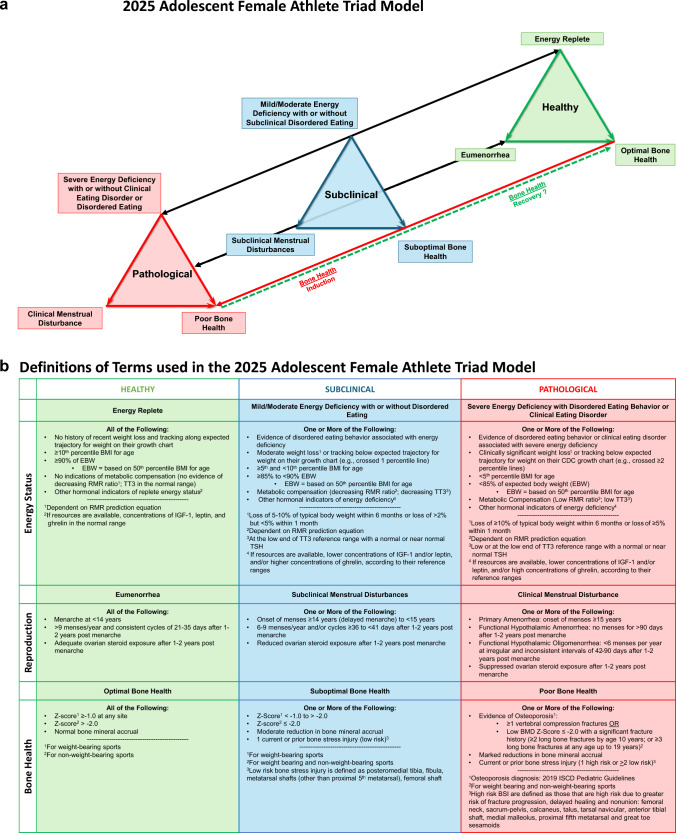
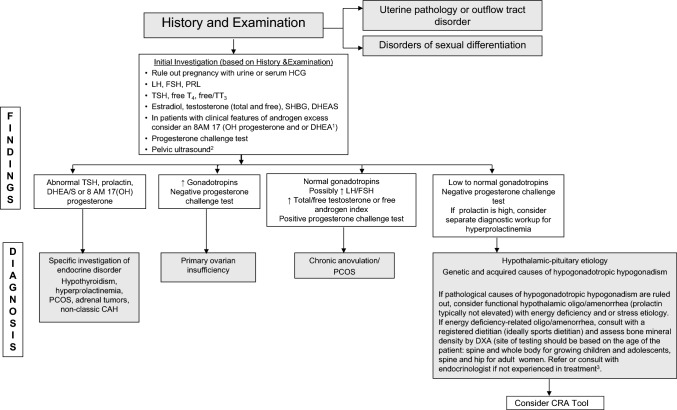
This is the second of two publications comprising the 2025 update to the 2014 Consensus Statement on treatment and return to play guidelines on the Female Athlete Triad (Triad). This paper pairs with the 2025 Update to the Female Athlete Triad Coalition Consensus Statement Part 1: State of the Science and Introduction of a New Adolescent Model (Sports Medicine, 2025), to focus on evidence-based revisions for screening, diagnosis, treatment, and clearance and return to play. Revised recommendations for managing eating disorders (ED)/disordered eating (DE) and non-pharmacological and pharmacological treatment of bone loss and abnormal menstrual cycles are included, as are the most recent clearance and return to play recommendations, inclusive of adolescent athletes. Recent research supports the adoption of revised criteria for defining and treating energy deficiency, moving away from the concept of an energy-availability threshold. Energy deficiency-induced menstrual disturbances can be reversed with a moderate increase in food intake and modest weight gain, but restoration of menses alone is not associated with high rates of ovulation or increased ovarian steroid levels until multiple consecutive normal length menstrual cycles are achieved. Revised guidelines for the diagnosis and treatment of functional hypothalamic oligo/amenorrhea are included with guidance on the confounding effects of hyperandrogenemia. Gynecological age and psychological stress are factors impacting the individual susceptibility to the Triad. The bone health spectrum of the Triad now includes bone stress injuries. Routes of administration via epidermal patch versus oral for pharmacological treatment of low bone density are discussed. The diagnosis, treatment, and return to play approaches for adolescents with the Triad are unique compared with those employed for adults and require age-appropriate clinical guidelines. The strength of the evidence-based statements is graded using an accepted taxonomy in which randomized controlled trials and observational data are considered the highest level of evidence.
Overview
CoChat Summary
TL;DR
This Part 2 consensus update revises Female Athlete Triad clinical guidelines for screening, diagnosis, treatment, and return to play in adolescent and adult female athletes. It introduces revised energy-deficiency terminology, adds bone stress injuries to the bone health spectrum, updates reproductive and bone treatment recommendations, and provides revised cumulative risk assessment tools including a new adolescent tool.
Key findings
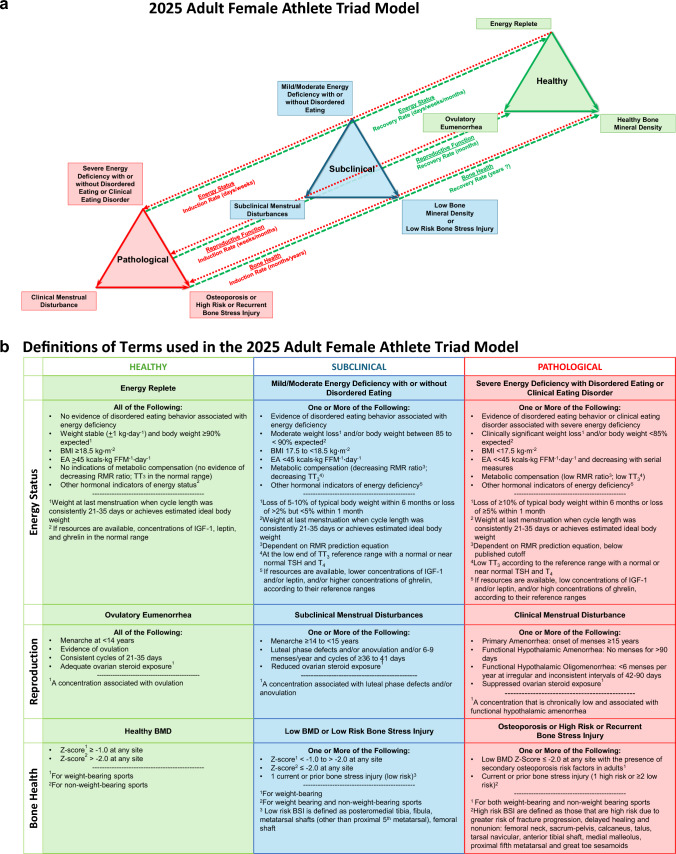
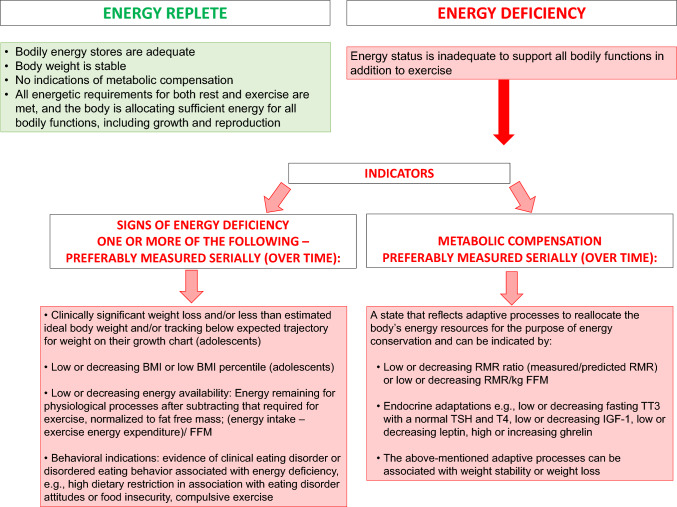
- Energy status terminology is revised: “energy deficiency” replaces “low energy availability,” and an EA threshold is not recommended; metabolic compensation indicators include low RMR ratio, low TT3/IGF-1/leptin, and increased ghrelin. Bone stress injuries are now included in the Triad bone health spectrum.
- In the REFUEL RCT, a 12-month increase in energy intake of 330 ± 65 kcal/day (+18 ± 4%) improved menstrual regularity and increased body weight by 4.9%, fat mass by 18%, and TT3 by 16%; however, BMD did not improve after 12 months, and resumption of menses alone did not indicate full ovarian steroid recovery.
- Transdermal 17β-estradiol with cyclic progestin improved BMD at the spine (2.75%), femoral neck (5.25%), and total hip (1.85%) compared with combined oral contraceptive pill or no treatment; combined oral contraceptives are not recommended to improve bone outcomes.
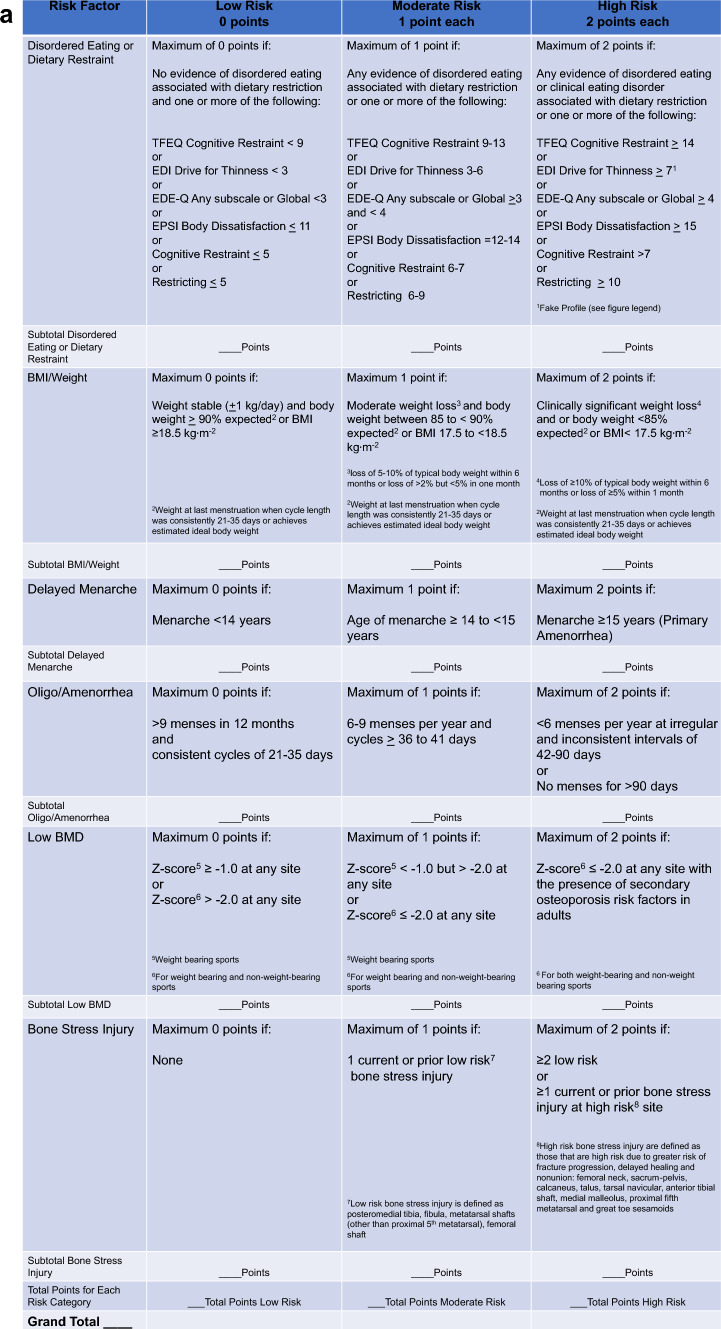
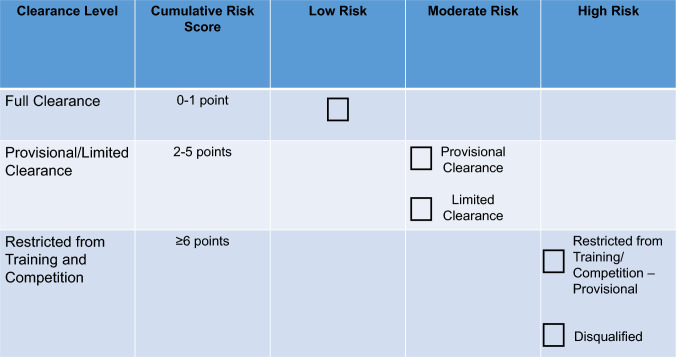
- The Triad Cumulative Risk Assessment is predictive of bone stress injury: among 239 collegiate athletes, 29% were moderate/high risk and had 2.6- and 3.8-fold greater likelihood of BSI, respectively; each 1-point CRA increase was associated with a 13% increased BSI risk (95% CI 1–26% increase).
Methods
- A 16-member expert panel used a consensus process with one in-person meeting, virtual meetings, and email; section leaders drafted evidence-based statements, and consensus required >85% agreement with no “disagree” votes.
- Evidence statements were graded Level A–D using a taxonomy in which RCTs and observational data are considered the highest level of evidence; no funding was involved and no conflicts of interest were declared.
- The paper is a narrative consensus synthesis of existing literature, RCTs, and observational studies, paired with Part 1, covering clinical guidelines for screening, diagnosis, treatment, and clearance/return to play for adolescent and adult female athletes.
Limitations
- Stated: there is no validated or universally accepted approach to quantify overall energy status; no perfect indicator of energy deficiency exists; EA is difficult to reliably estimate and fluctuates; the LEAF-Q should not be used alone to identify Triad risk; DXA access, cost, and expertise limit BMD assessment; and proposed CRA updates require further validation.
- Stated: evidence is insufficient to support definitive recommendations for osteoanabolic or anti-resorptive therapies in Triad-related bone loss; prospective studies on resistance training/high-impact loading in energy-deficient exercising women are lacking; and long-term BMD recovery remains uncertain, marked with a “?” in the model.
- Evident from the text: as a consensus statement, it synthesizes existing evidence rather than presenting new primary data, and several cited treatment studies are small or conducted in anorexia nervosa populations rather than athletes, limiting direct generalizability.
Model-written summary. Check it against the paper before relying on it.
Integrity signals
Registry
Cites
Statistics
Figures
Verification
Claims the paper makes
0 Valid · 6 Not valid · 255 Not checked · 108 Own results and interpretations
A check of a cited source is scheduled, or we don’t hold its full text yet; the claim is checked once it runs.
In the paper
“Indications of metabolic compensation are observed in response to the loss of body weight that may or may not represent a new chronically low body weight set-point [21, 22] or low BMI [23, 24].”
§ 2025 Update to the Female Athlete Triad Coalition Consensus Statement Part 2: Clinical Guidelines for Screening, Diagnosis, Treatment, and Return to Play for Adolescents and Adults > Introduction > Presentation of the 2025 Update of the Adult Female Athlete Triad Model
What the sources say
- Not checked yetcites [21] Leibel RL, Hirsch J. Diminished energy requirements in reduced-obese patients. Metabolism. 1984;33(2):164–70. 10.1016/0026-0495(84)90130-6. 6694559 source
A check is scheduled.
- Not checked yetcites [22] Leibel RL, Rosenbaum M, Hirsch J. Changes in energy expenditure resulting from altered body weight. N Engl J Med. 1995;332(10):621–8. 10.1056/NEJM199503093321001. 7632212 source
A check is scheduled.
- Not checked yetcites [23] Kandemir N, Becker K, Slattery M, Tulsiani S, Singhal V, Thomas JJ, et al. Impact of low-weight severity and menstrual status on bone in adolescent girls with anorexia nervosa. Int J Eat Disord. 2017;50(4):359–69. 10.1002/eat.22681. 28152193 PMC5386816 source
A check is scheduled.
- Not checked yetcites [24] Singhal V, de Lourdes Eguiguren M, Eisenbach L, Clarke H, Slattery M, Eddy K, et al. Body composition, hemodynamic, and biochemical parameters of young female normal-weight oligo-amenorrheic and eumenorrheic athletes and nonathletes. Ann Nutr Metab. 2014;65(4):264–71. 10.1159/000366024. 25376841 PMC4268142 source
A check is scheduled.
hedgedstates a possible cause- Asserted: passes — The authors put it forward as true.
- Checkable: passes — It can be checked against evidence.
- Load-bearing: passes — The paper’s conclusions depend on it.
- Based: passes — The paper gives a reason why it holds.
- Not checked yet
In the paper
“Additionally, a recent study found that athletes, when compared to the general population, are less likely to seek treatment for EDs due to stigma, accessibility, and sport-specific barriers [10].”
§ 2025 Update to the Female Athlete Triad Coalition Consensus Statement Part 2: Clinical Guidelines for Screening, Diagnosis, Treatment, and Return to Play for Adolescents and Adults > Introduction > What is the Value of a Consensus Statement Focused Specifically on the Female Athlete Triad?
What the sources say
- Not checked yetcites [10] Flatt RE, Thornton LM, Fitzsimmons-Craft EE, Balantekin KN, Smolar L, Mysko C, et al. Comparing eating disorder characteristics and treatment in self-identified competitive athletes and non-athletes from the National Eating Disorders Association online screening tool. Int J Eat Disord. 2021;54(3):365–75. 10.1002/eat.23415. 33252150 PMC8006447 source
plainstates a cause- Asserted: passes — The authors put it forward as true.
- Checkable: passes — It can be checked against evidence.
- Load-bearing: passes — The paper’s conclusions depend on it.
- Based: passes — The paper gives a reason why it holds.
In the paper
“Thus, even in the face of increased menstrual frequency following amenorrhea, full recovery of ovarian steroids is not always observed [38].”
§ 2025 Update to the Female Athlete Triad Coalition Consensus Statement Part 2: Clinical Guidelines for Screening, Diagnosis, Treatment, and Return to Play for Adolescents and Adults > Introduction > Presentation of the 2025 Update of the Adult Female Athlete Triad Model
What the sources say
- Not checked yetcites [38] Mallinson RJ, Williams NI, Ricker EA, Allaway HCM, De Souza MJ. Multiple eumenorrheic cycles are necessary to observe a significant increase in estrogen exposure and ovulation in exercising women with functional hypothalamic oligo/amenorrhea: insights from the REFUEL study. PM&R. 2025;1–13. 10.1002/pmrj.70024. PMC13193428 41099383 source
plain- Asserted: passes — The authors put it forward as true.
- Checkable: passes — It can be checked against evidence.
- Load-bearing: passes — The paper’s conclusions depend on it.
- Based: passes — The paper gives a reason why it holds.
A result the paper states — it cites no source for it, so there is none to check. The quote shows it is in the paper.
In the paper
“Energy deficiency-induced menstrual disturbances can be reversed with a moderate increase in food intake and modest weight gain, but restoration of menses alone is not associated with high rates of ovulation or increased ovarian steroid levels until multiple consecutive normal length menstrual cycles are achieved.”
§ 2025 Update to the Female Athlete Triad Coalition Consensus Statement Part 2: Clinical Guidelines for Screening, Diagnosis, Treatment, and Return to Play for Adolescents and Adults > Abstract
plainstates an association- Asserted: passes — The authors put it forward as true.
- Checkable: passes — It can be checked against evidence.
- Load-bearing: passes — The paper’s conclusions depend on it.
- Based: passes — The paper gives a reason why it holds.
A result the paper states — it cites no source for it, so there is none to check. The quote shows it is in the paper.
In the paper
“Energy deficiency-induced menstrual disturbances can be reversed with a moderate increase in food intake and modest weight gain, but restoration of menses alone is not associated with high rates of ovulation or increased ovarian steroid levels until multiple consecutive normal length menstrual cycles are achieved.”
§ 2025 Update to the Female Athlete Triad Coalition Consensus Statement Part 2: Clinical Guidelines for Screening, Diagnosis, Treatment, and Return to Play for Adolescents and Adults > Abstract
plainstates a cause- Asserted: passes — The authors put it forward as true.
- Checkable: passes — It can be checked against evidence.
- Load-bearing: passes — The paper’s conclusions depend on it.
- Based: passes — The paper gives a reason why it holds.
203 more claims
Create a free account to see all 369 claims and to verify the 442 references still open.
- It may state two separate claims as one. 117
- Probably not a substantial claim. 69
Self-check
Percentages, sums and reported differences re-computed from the paper’s own numbers.
Each contradiction between two passages listed here was confirmed by an independent check.
Rated minor: it would not touch a result — a value no result rests on, a p-value that stays on the same side of the significance level, or a conflict that is clerical, resolved elsewhere in the paper, or outside its own findings.
In the paper
§ 2025 Update to the Female Athlete Triad Coalition Consensus Statement Part 2: Clinical Guidelines for Screening, Diagnosis, Treatment, and Return to Play for Adolescents and Adults > Diagnostic and Treatment Updates to Bone Health > Diagnostic Assessment of Bone Health
“Evidence-Based Statement: We recommend assessing BMD with a DXA scan based on details in Table 7. Grade: Level B.”
§ 2025 Update to the Female Athlete Triad Coalition Consensus Statement Part 2: Clinical Guidelines for Screening, Diagnosis, Treatment, and Return to Play for Adolescents and Adults > Summary and Clinical Recommendations of the 2025 Update on the Female Athlete Triad
“| Evidence-Based Statement: We recommend assessing BMD with a DXA scan based on details in Table 7 | | Evidence Grade: Level A”
Rated minor: it would not touch a result — a value no result rests on, a p-value that stays on the same side of the significance level, or a conflict that is clerical, resolved elsewhere in the paper, or outside its own findings.
In the paper
§ 2025 Update to the Female Athlete Triad Coalition Consensus Statement Part 2: Clinical Guidelines for Screening, Diagnosis, Treatment, and Return to Play for Adolescents and Adults > Cumulative Risk Assessment for Clearance and Return to Play: Assessment Tool and Guidelines > Updates to the Triad Cumulative Risk Assessment (CRA) Tool
“Body dissatisfaction12–14Cognitive restraint6–7Restricting6–9”
§ 2025 Update to the Female Athlete Triad Coalition Consensus Statement Part 2: Clinical Guidelines for Screening, Diagnosis, Treatment, and Return to Play for Adolescents and Adults > Cumulative Risk Assessment for Clearance and Return to Play: Assessment Tool and Guidelines > Updates to the Triad Cumulative Risk Assessment (CRA) Tool
“Body dissatisfaction ≥ 15Cognitive restraint ≥ 7Restricting > 10”
Citations
Cites
Items 201–297 of 297
Flatt, R. E., Thornton, L. M., Fitzsimmons‐Craft, E. E., Balantekin, K. N., Smolar, L., Mysko, C., Wilfley, D. E., Taylor, C. B., DeFreese, J. D., Bardone‐Cone, A. M., et al. (2021) · International Journal of Eating Disorders · doi:10.1002/eat.23415 · Cited by 43
Not all bone overuse injuries are stress fractures: it is time for updated terminology
Warden, S. J., Hoenig, T., Sventeckis, A. M., Ackerman, K. E., & Tenforde, A. S. (2022) · British Journal of Sports Medicine · doi:10.1136/bjsports-2022-106112 · Cited by 43
Perelman, H., Schwartz, N., Yeoward‐Dodson, J., Quiñones, I. C., Murray, M. F., Dougherty, E. N., Townsel, R., Arthur‐Cameselle, J., & Haedt‐Matt, A. A. (2022) · International Journal of Eating Disorders · doi:10.1002/eat.23665 · Cited by 42
Regulation of the gonadotropin‐releasing hormone neuron during stress
McCosh, R. B., O’Byrne, K. T., Karsch, F. J., & Breen, K. M. (2022) · Journal of Neuroendocrinology · doi:10.1111/jne.13098 · Cited by 42
Rodan, S.-C., Bryant, E., Le, A., Maloney, D., Touyz, S., McGregor, I. S., Maguire, S., National Eating Disorder Research Consortium, Aouad, P., Barakat, S., et al. (2023) · Journal of Eating Disorders · doi:10.1186/s40337-023-00833-9 · Cited by 41
Bahamondes, L., Espejo-Arce, X., Hidalgo, M. M., Hidalgo-Regina, C., Teatin-Juliato, C., & Petta, C. A. (2006) · Human Reproduction · doi:10.1093/humrep/dei457 · Cited by 41
Athlete mental health: future directions
Currie, A., Blauwet, C., Bindra, A., Budgett, R., Campriani, N., Hainline, B., McDuff, D., Mountjoy, M., Purcell, R., Putukian, M., et al. (2021) · British Journal of Sports Medicine · doi:10.1136/bjsports-2021-104443 · Cited by 40
Summer training factors and risk of musculoskeletal injury among high school cross-country runners
Rauh, M. J. (2014) · Journal of Orthopaedic & Sports Physical Therapy · doi:10.2519/jospt.2014.5378 · Cited by 40
Barney, J. L., Murray, H. B., Manasse, S. M., Dochat, C., & Juarascio, A. S. (2019) · European Eating Disorders Review · doi:10.1002/erv.2673 · Cited by 39
De Souza, M. J., Strock, N. C. A., Ricker, E. A., Koltun, K. J., Barrack, M., Joy, E., Nattiv, A., Hutchinson, M., Misra, M., & Williams, N. I. (2022) · Sports Medicine · doi:10.1007/s40279-021-01568-w · Cited by 39
Self-citationFemale athlete experiences of seeking and receiving treatment for an eating disorder
Plateau, C. R., Arcelus, J., Leung, N., & Meyer, C. (2017) · Eating Disorders · doi:10.1080/10640266.2016.1269551 · Cited by 38
Altered trabecular bone morphology in adolescent and young adult athletes with menstrual dysfunction
Mitchell, D. M., Tuck, P., Ackerman, K. E., Cano Sokoloff, N., Woolley, R., Slattery, M., Lee, H., Bouxsein, M. L., & Misra, M. (2015) · Bone · doi:10.1016/j.bone.2015.06.021 · Cited by 38
Self-citationSouza, M. J. D., Williams, N. I., Misra, M. D. D. S. K., Nattiv, A., Joy, E. A., Barrack, M. T., Ricker, E. A., Gorrell, S., Koltun, K. J., O’Donnell, E., et al. (2025) · Sports Medicine · doi:10.1007/s40279-025-02333-z · Cited by 37
Self-citationHazzard, V. M., Schaefer, L. M., Mankowski, A., Carson, T. L., Lipson, S. M., Fendrick, C., Crosby, R. D., & Sonneville, K. R. (2020) · Psychology of Sport and Exercise · doi:10.1016/j.psychsport.2020.101745 · Cited by 36
A Displaced Femoral Neck Stress Fracture in an Amenorrheic Adolescent Female Runner
Goolsby, M. A., Barrack, M. T., & Nattiv, A. (2012) · Sports Health: A Multidisciplinary Approach · doi:10.1177/1941738111429929 · Cited by 35
Self-citationAdvances in the detection of designer steroids in anti-doping
Abushareeda, W., Fragkaki, A., Vonaparti, A., Angelis, Y., Tsivou, M., Saad, K., Kraiem, S., Lyris, E., Alsayrafi, M., & Georgakopoulos, C. (2014) · Bioanalysis · doi:10.4155/bio.14.9 · Cited by 35
Rosa‐Caldwell, M. E., Eddy, K. T., Rutkove, S. B., & Breithaupt, L. (2023) · International Journal of Eating Disorders · doi:10.1002/eat.23878 · Cited by 34
Initial validation of a screening tool for disordered eating in adolescent athletes
Kennedy, S. F., Kovan, J., Werner, E., Mancine, R., Gusfa, D., & Kleiman, H. (2021) · Journal of Eating Disorders · doi:10.1186/s40337-020-00364-7 · Cited by 34
Taylor, H. L., Garabello, G., Pugh, J., Morton, J., Langan-Evans, C., Louis, J., Borgersen, R., & Areta, J. L. (2022) · Journal of Sports Sciences · doi:10.1080/02640414.2022.2115676 · Cited by 33
Bone accrual in oligo-amenorrheic athletes, eumenorrheic athletes and non-athletes
Singhal, V., Reyes, K. C., Pfister, B., Ackerman, K., Slattery, M., Cooper, K., Toth, A., Gupta, N., Goldstein, M., Eddy, K., et al. (2019) · Bone · doi:10.1016/j.bone.2018.05.010 · Cited by 33
Self-citationThe Age of Onset of Eating Disorders
Favaro, A., Busetto, P., Collantoni, E., & Santonastaso, P. (2019) · Age of Onset of Mental Disorders · doi:10.1007/978-3-319-72619-9_11 · Cited by 31
Kolar, D. R., & Gorrell, S. (2021) · International Journal of Eating Disorders · doi:10.1002/eat.23427 · Cited by 31
Self-citationWarden, S. J., Edwards, W. B., & Willy, R. W. (2021) · Journal of Orthopaedic & Sports Physical Therapy · doi:10.2519/jospt.2021.9982 · Cited by 31
Formulation in eating disorder focused family therapy: why, when and how?
Baudinet, J., Simic, M., & Eisler, I. (2021) · Journal of Eating Disorders · doi:10.1186/s40337-021-00451-3 · Cited by 31
Singhal, V., Ackerman, K. E., Bose, A., Flores, L. P. T., Lee, H., & Misra, M. (2019) · The Journal of Clinical Endocrinology & Metabolism · doi:10.1210/jc.2018-02143 · Cited by 30
Self-citationGorrell, S., Byrne, C. E., Trojanowski, P. J., Fischer, S., & Le Grange, D. (2022) · Eating and Weight Disorders - Studies on Anorexia, Bulimia and Obesity · doi:10.1007/s40519-022-01367-w · Cited by 30
Self-citationRecovery of menses after functional hypothalamic amenorrhoea: if, when and why
Pape, J., Herbison, A. E., & Leeners, B. (2021) · Human Reproduction Update · doi:10.1093/humupd/dmaa032 · Cited by 29
Intermittent fasting: does it affect sports performance? A systematic review
Conde-Pipó, J., Mora-Fernandez, A., Martinez-Bebia, M., Gimenez-Blasi, N., Lopez-Moro, A., Latorre, J. A., Almendros-Ruiz, A., Requena, B., & Mariscal-Arcas, M. (2024) · Nutrients · doi:10.3390/nu16010168 · Cited by 29
Female athlete body project intervention with professional dancers: a pilot trial
Gorrell, S., Schaumberg, K., Boswell, J. F., Hormes, J. M., & Anderson, D. A. (2021) · Eating Disorders · doi:10.1080/10640266.2019.1632592 · Cited by 29
Self-citationKandemir, N., Slattery, M., Ackerman, K. E., Tulsiani, S., Bose, A., Singhal, V., Baskaran, C., Ebrahimi, S., Goldstein, M., Eddy, K., et al. (2018) · The Journal of Clinical Endocrinology & Metabolism · doi:10.1210/jc.2018-00338 · Cited by 28
Self-citationSinghal, V., Bose, A., Slattery, M., Haines, M. S., Goldstein, M. A., Gupta, N., Brigham, K. S., Ebrahimi, S., Javaras, K. N., Bouxsein, M. L., et al. (2021) · The Journal of Clinical Endocrinology & Metabolism · doi:10.1210/clinem/dgab145 · Cited by 27
Self-citationStrock, N. C. A., De Souza, M. J., & Williams, N. I. (2020) · Journal of Sports Sciences · doi:10.1080/02640414.2020.1786297 · Cited by 27
Self-citationEssentials for Best Practice: Treatment Approaches for Athletes With Eating Disorders
Conviser, J. H., Schlitzer Tierney, A., & Nickols, R. (2018) · Journal of Clinical Sport Psychology · doi:10.1123/jcsp.2018-0013 · Cited by 24
Predictors of treatment outcome in eating disorders: a roadmap to inform future research efforts
Gorrell, S., Hail, L., & Reilly, E. E. (2023) · Current Psychiatry Reports · doi:10.1007/s11920-023-01416-w · Cited by 23
Self-citationSandgren, S. S., Haycraft, E., & Plateau, C. R. (2020) · European Eating Disorders Review · doi:10.1002/erv.2704 · Cited by 23
RUDOLPH, S. E., CAKSA, S., GEHMAN, S., GARRAHAN, M., HUGHES, J. M., TENFORDE, A. S., ACKERMAN, K. E., BOUXSEIN, M. L., & POPP, K. L. (2021) · Medicine & Science in Sports & Exercise · doi:10.1249/mss.0000000000002676 · Cited by 23
Comparison of Female Athlete Triad Coalition and RED-S risk assessment tools
Koltun, K. J., Strock, N. C. A., Southmayd, E. A., Oneglia, A. P., Williams, N. I., & De Souza, M. J. (2019) · Journal of Sports Sciences · doi:10.1080/02640414.2019.1640551 · Cited by 23
Self-citationForbush, K. T., Richson, B. N., Swanson, T. J., Thomeczek, M. L., Negi, S., Johnson, S. N., Chapa, D. A. N., Morgan, R. W., O'Brien, C. J., Gould, S. R., et al. (2022) · International Journal of Eating Disorders · doi:10.1002/eat.23815 · Cited by 23
Arthur-Cameselle, J. N., & Baltzell, A. (2012) · Journal of Applied Sport Psychology · doi:10.1080/10413200.2011.572949 · Cited by 22
Reale, R. J., Roberts, T. J., Lee, K. A., Bonsignore, J. L., & Anderson, M. L. (2020) · International Journal of Sport Nutrition and Exercise Metabolism · doi:10.1123/ijsnem.2019-0323 · Cited by 22
Cook, B., & Leininger, L. (2017) · Journal of Sport and Health Science · doi:10.1016/j.jshs.2017.03.004 · Cited by 22
Energy Deficiency Suppresses Bone Turnover in Exercising Women With Menstrual Disturbances
Southmayd, E. A., Williams, N. I., Mallinson, R. J., & De Souza, M. J. (2019) · The Journal of Clinical Endocrinology & Metabolism · doi:10.1210/jc.2019-00089 · Cited by 22
Self-citationTenforde, A. S., Carlson, J. L., Sainani, K. L., Chang, A. O., Kim, J. H., Diaz, R., Golden, N. H., & Fredericson, M. (2021) · PM&R · doi:10.1002/pmrj.12510 · Cited by 22
Self-citationKoltun, K. J., Williams, N. I., Scheid, J. L., & De Souza, M. J. (2020) · Applied Physiology, Nutrition, and Metabolism · doi:10.1139/apnm-2019-0640 · Cited by 22
Self-citationImpact of adrenal hormone supplementation on bone geometry in growing teens with anorexia nervosa
DiVasta, A. D., Feldman, H. A., O'Donnell, J. M., Long, J., Leonard, M. B., & Gordon, C. M. (2019) · Journal of Adolescent Health · doi:10.1016/j.jadohealth.2019.04.003 · Cited by 22
Areta, J. L. (2020) · International Journal of Sport Nutrition and Exercise Metabolism · doi:10.1123/ijsnem.2019-0284 · Cited by 21
Reduced bone strength and muscle force in women 27 years after anorexia nervosa
Mueller, S. M., Immoos, M., Anliker, E., Drobnjak, S., Boutellier, U., & Toigo, M. (2015) · The Journal of Clinical Endocrinology & Metabolism · doi:10.1210/jc.2015-1011 · Cited by 21
Preparticipation Physical Evaluation
MacDonald, J., Schaefer, M., & Stumph, J. (2013) · Pediatric Care Online · doi:10.1542/aap.ppcqr.396018 · Cited by 20
Education, Nutrition, and Psychology Effects on Preventing the Female Athlete Triad
Patel, B., Schneider, N., Vanguri, P. R., & Issac, L. (2024) · Cureus · doi:10.7759/cureus.55380 · Cited by 19
Singhal, V., de Lourdes Eguiguren, M., Eisenbach, L., Clarke, H., Slattery, M., Eddy, K., Ackerman, K. E., & Misra, M. (2014) · Annals of Nutrition and Metabolism · doi:10.1159/000366024 · Cited by 19
Self-citationJia, H. B., Ma, J. X., Ma, X. L., Yu, J. T., Feng, R., Xu, L. Y., Wang, J., Xing, D., Zhu, S. W., & Wang, Y. (2014) · Osteoporosis International · doi:10.1007/s00198-014-2818-y · Cited by 19
Stress-related disturbances of the menstrual cycle
Xiao, E., & Ferin, M. (1997) · Annals of Medicine · doi:10.3109/07853899708999339 · Cited by 19
Leg-length inequality and running-related injury among high school runners
Rauh, M. J. (2018) · International Journal of Sports Physical Therapy · doi:10.26603/ijspt20180643 · Cited by 19
Gehman, S., Ackerman, K. E., Caksa, S., Rudolph, S. E., Hughes, J. M., Garrahan, M., Tenforde, A. S., Bouxsein, M. L., & Popp, K. L. (2022) · International Journal of Sport Nutrition and Exercise Metabolism · doi:10.1123/ijsnem.2021-0323 · Cited by 18
Sexual violence in sport: expanding awareness and knowledge for sports medicine providers
Joy, E. A., Herring, S. A., Nelson, C., Cohen, J., Dugan, S. A., Flatt, R., Goldfarb, L., Greinig, S., Koontz, J. S., Schmitz, K. H., et al. (2021) · Current Sports Medicine Reports · doi:10.1249/jsr.0000000000000891 · Cited by 18
Self-citationTenforde, A. S., Katz, N. B., Sainani, K. L., Carlson, J. L., Golden, N. H., & Fredericson, M. (2022) · Orthopaedic Journal of Sports Medicine · doi:10.1177/23259671221123588 · Cited by 18
Self-citationFredericson, M., Roche, M., Barrack, M. T., Tenforde, A., Sainani, K., Kraus, E., Kussman, A., Miller Olson, E., Kim, B. Y., Fahy, K., et al. (2023) · BMJ Open Sport & Exercise Medicine · doi:10.1136/bmjsem-2023-001545 · Cited by 18
Self-citationEffect of transdermal estradiol therapy on bone mineral density of amenorrheic female athletes
Nose‐Ogura, S., Yoshino, O., Kanatani, M., Dohi, M., Tabei, K., Harada, M., Hiraike, O., Kawahara, T., Osuga, Y., & Fujii, T. (2020) · Scandinavian Journal of Medicine & Science in Sports · doi:10.1111/sms.13679 · Cited by 17
Haines, M. S., Kimball, A., Meenaghan, E., Bachmann, K. N., Santoso, K., Eddy, K. T., Singhal, V., Ebrahimi, S., Dechant, E., Weigel, T., et al. (2021) · Journal of Bone and Mineral Research · doi:10.1002/jbmr.4420 · Cited by 17
Self-citationBarrack, M. T., Van Loan, M. D., Rauh, M., & Nichols, J. F. (2021) · International Journal of Sport Nutrition and Exercise Metabolism · doi:10.1123/ijsnem.2021-0011 · Cited by 17
Self-citationAthlete-specific treatment for eating disorders: initial findings from the Walden GOALS program
Stranberg, M., Slager, E., Spital, D., Coia, C., & Quatromoni, P. A. (2020) · Journal of the Academy of Nutrition and Dietetics · doi:10.1016/j.jand.2019.07.019 · Cited by 16
Wood, K. L., Barrack, M. T., Gray, V. B., Cotter, J. A., Van Loan, M. D., Rauh, M. J., McGowan, R., & Nichols, J. F. (2021) · Eating Behaviors · doi:10.1016/j.eatbeh.2020.101460 · Cited by 16
Self-citationFewell, L. K., Nickols, R., Schlitzer Tierney, A., & Levinson, C. A. (2018) · Journal of Clinical Sport Psychology · doi:10.1123/jcsp.2018-0046 · Cited by 16
Characterizing the resting metabolic rate ratio in ovulatory exercising women over 12 months
Strock, N. C. A., Koltun, K. J., Mallinson, R. J., Williams, N. I., & De Souza, M. J. (2020) · Scandinavian Journal of Medicine & Science in Sports · doi:10.1111/sms.13688 · Cited by 15
Self-citationBarrack, M. T., Domino, S., Gray, V. B., Cotter, J. A., Rauh, M. J., & Nichols, J. F. (2023) · Journal of Science and Medicine in Sport · doi:10.1016/j.jsams.2023.04.003 · Cited by 15
Self-citationLundstrom, E. A., De Souza, M. J., Canil, H. N., & Williams, N. I. (2023) · Applied Physiology, Nutrition, and Metabolism · doi:10.1139/apnm-2022-0161 · Cited by 15
Self-citationOligomenorrhoea in exercising women: a polycystic ovarian syndrome phenotype or distinct entity?
Awdishu, S., Williams, N. I., Laredo, S. E., & De Souza, M. J. (2009) · Sports Medicine · doi:10.2165/11317910-000000000-00000 · Cited by 14
Self-citationHiggins, J., Hagman, J., Pan, Z., & MacLean, P. (2013) · PLoS ONE · doi:10.1371/journal.pone.0061559 · Cited by 14
Sandgren, S. S., Haycraft, E., Pearce, R., & Plateau, C. R. (2023) · Journal of Applied Sport Psychology · doi:10.1080/10413200.2022.2032476 · Cited by 13
Strock, N. C. A., De Souza, M. J., Mallinson, R. J., Olmsted, M., Allaway, H. C. M., O’Donnell, E., Plessow, F., & Williams, N. I. (2023) · Psychoneuroendocrinology · doi:10.1016/j.psyneuen.2023.106079 · Cited by 13
Self-citationRuffing, K. M., Koltun, K. J., De Souza, M. J., & Williams, N. I. (2022) · Physiology & Behavior · doi:10.1016/j.physbeh.2022.113885 · Cited by 12
Self-citationKoltun, K. J., Williams, N. I., & De Souza, M. J. (2020) · Applied Physiology, Nutrition, and Metabolism · doi:10.1139/apnm-2020-0131 · Cited by 12
Self-citationSalamunes, A. C. C., Williams, N. I., & De Souza, M. J. (2024) · Applied Physiology, Nutrition, and Metabolism · doi:10.1139/apnm-2023-0418 · Cited by 12
Self-citationRoche, M., Nattiv, A., Sainani, K., Barrack, M., Kraus, E., Tenforde, A., Kussman, A., Olson, E. M., Kim, B., Fahy, K., et al. (2023) · Clinical Journal of Sport Medicine · doi:10.1097/jsm.0000000000001180 · Cited by 12
Self-citationSinghal, V., Nimmala, S., Slattery, M., Eddy, K. T., Miller, K. K., Klibanski, A., & Misra, M. (2022) · Nutrients · doi:10.3390/nu14132557 · Cited by 12
Self-citationStickler, L., Hoogenboom, B. J., & Brown, J. (2019) · SN Comprehensive Clinical Medicine · doi:10.1007/s42399-019-00107-z · Cited by 11
Denosumab increases spine bone density in women with anorexia nervosa: a randomized clinical trial
Haines, M. S., Kimball, A., Meenaghan, E., Santoso, K., Colling, C., Singhal, V., Ebrahimi, S., Gleysteen, S., Schneider, M., Ciotti, L., et al. (2022) · European Journal of Endocrinology · doi:10.1530/eje-22-0248 · Cited by 11
Self-citationLundstrom, E. A., Souza, M. J. D., Don, P. K., & Williams, N. I. (2024) · Applied Physiology, Nutrition, and Metabolism · doi:10.1139/apnm-2023-0619 · Cited by 11
Self-citationEgbert, A. H., Gorrell, S., Smith, K. E., Goldschmidt, A. B., Hughes, E. K., Sawyer, S. M., Yeo, M., Lock, J., & Le Grange, D. (2023) · European Eating Disorders Review · doi:10.1002/erv.2968 · Cited by 9
Self-citationSinghal, V., Karzar, N. H., Bose, A., Buckless, C., Ackerman, K. E., Bredella, M. A., Klibanski, A., & Misra, M. (2021) · Bone · doi:10.1016/j.bone.2021.115841 · Cited by 9
Self-citationFewell, L. K., Nickols, R., Schlitzer Tierney, A., & Levinson, C. A. (2018) · Journal of Clinical Sport Psychology · doi:10.1123/jcsp.2018-0014 · Cited by 8
Mallinson, R. J., Williams, N. I., Ricker, E. A., Allaway, H. C. M., & De Souza, M. J. (2026) · PM&R · doi:10.1002/pmrj.70024 · Cited by 8
Self-citationGarber, A. K., Cheng, J., Accurso, E. C., Buckelew, S. M., Downey, A. E., Le Grange, D., Gorrell, S., Kapphahn, C. J., Kreiter, A., Moscicki, A., et al. (2024) · International Journal of Eating Disorders · doi:10.1002/eat.24115 · Cited by 8
Self-citationHalsey, L. G., Areta, J. L., & Koehler, K. (2023) · Philosophical Transactions of the Royal Society B · doi:10.1098/rstb.2022.0217 · Cited by 7
Effect of romosozumab in premenopausal women with severe osteoporosis and anorexia nervosa
Fujimoto, K., Maki, N., Hashiba, D., Maeyama, T., Nakagawa, R., Arai, H., & Ohtori, S. (2023) · Osteoporosis and Sarcopenia · doi:10.1016/j.afos.2023.10.001 · Cited by 7
Koltun, K. J., Bird, M. B., Lovalekar, M., Martin, B. J., Mi, Q., & Nindl, B. C. (2023) · Eating Behaviors · doi:10.1016/j.eatbeh.2022.101687 · Cited by 7
Self-citationAmenorrhea Associated With the Female Athlete Triad: Etiology, Diagnosis, and Treatment
De Souza, M. J., & Toombs, R. J. (2010) · Amenorrhea · doi:10.1007/978-1-60327-864-5_7 · Cited by 6
Using a culturally humble approach to examine and address disordered eating in sport
Perelman, H., & Reel, J. J. (2022) · Journal of Applied Sport Psychology · doi:10.1080/10413200.2022.2078904 · Cited by 6
Amenorrhea, anovulation, and dysfunctional uterine bleeding
Illingworth, P. (2010) · Endocrinology · doi:10.1016/b978-1-4160-5583-9.00129-5 · Cited by 5
Eating Disorder Examination-Questionnaire: norms for adults in higher levels of care
Rienecke, R. D., Mehler, P. S., Duffy, A., Le Grange, D., Peterson, C. B., & Blalock, D. V. (2024) · Assessment · doi:10.1177/10731911231208386 · Cited by 5
HS, A.-S., Shah, S. A., & Safian, N. (2025) · Journal for the Study of Sports and Athletes in Education · doi:10.1080/19357397.2022.2095179 · Cited by 5
SALAMUNES, A. C. C., MALLINSON, R. J., DE SOUZA, M. J., RICKER, E. A., ALLAWAY, H. C. M., & WILLIAMS, N. I. (2026) · Medicine & Science in Sports & Exercise · doi:10.1249/mss.0000000000003877 · Cited by 3
Self-citationSALAMUNES, A. C. C., WILLIAMS, N. I., OLMSTED, M., KOLTUN, K. J., KURUPPUMULLAGE DON, P., & DE SOUZA, M. J. (2025) · Medicine & Science in Sports & Exercise · doi:10.1249/mss.0000000000003742 · Cited by 2
Self-citationKraus, E. A., Kim, B., Nattiv, A., Tenforde, A., Barrack, M., Deakins‐Roche, M., Kussman, A., Singh, S., Morkos, J., & Fredericson, M. (2016) · PM&R · doi:10.1016/j.pmrj.2016.07.196 · Cited by 2
Self-citation(2002) · PubMed Central
(2014) · Europe PMC (PubMed Central)
Self-citationGaudiani, J. L. (2018) · Routledge eBooks · doi:10.4324/9781351184731
Research works printed but not linked: 11
- Legro RS, Arslanian SA, Ehrmann DA, Hoeger KM, Murad MH, Pasquali R, et al. Diagnosis and treatment of polycystic ovary syndrome: an Endocrine Society clinical practice guideline. J Clin Endocrinol Metab. 2013;98(12):4565–92. 10.1210/jc.2013-2350. 24151290 PMC5399492 · DOI · Paper page
- De Souza MJ, West SL, Jamal SA, Hawker GA, Gundberg CM, Williams NI. The presence of both an energy deficiency and estrogen deficiency exacerbate alterations of bone metabolism in exercising women. Bone. 2008;43(1):140–8. 10.1016/j.bone.2008.03.013. 18486582 · DOI · Paper page
- Misra M. Vitamin D insufficiency and deficiency in children and adolescents: Wolters Kluwer. https://www.uptodate.com/contents/vitamin-d-insufficiency-and-deficiency-in-children-and-adolescents.
- Garner D, Olmsted MP, Polivy J. The eating disorder inventory: a measure of cognitive-behavioral dimensions of anorexia nervosa and bulimia. Anorexia nervosa: recent developments in research. New York: Alan R. Linse, Inc.; 1983. p. 173–84.
- Roche M, Nattiv A, Sainani K, Barrack M, Kraus E, Tenforde A, et al. Higher triad risk scores are associated with increased risk for trabecular-rich bone stress injuries in female runners. Clin J Sport Med. 2023;33(6):631–7. 10.1097/JSM.0000000000001180. 37655940 · DOI · Paper page
- Dittmer N, Jacobi C, Voderholzer U. Compulsive exercise in eating disorders: proposal for a definition and a clinical assessment. J Eat Disord. 2018;6(1):42. 10.1186/s40337-018-0219-x. 30505444 PMC6260729 · DOI · Paper page
- Arthur-Cameselle JN, Baltzell A. Learning from collegiate athletes who have recovered from eating disorders: advice to coaches, parents, and other athletes with eating disorders. J Appl Sport Psychol. 2012;24(1):1–9. 10.1080/10413200.2011.572949. · DOI · Paper page
- Castaldelli-Maia JM, Gallinaro JGDME, Falcão RS, Gouttebarge V, Hitchcock ME, Hainline B, et al. Mental health symptoms and disorders in elite athletes: a systematic review on cultural influencers and barriers to athletes seeking treatment. Br J Sports Med. 2019;53(11):707–21. 10.1136/bjsports-2019-100710. 31092400 · DOI · Paper page
- Gaudiani JL. Sick enough: a guide to the medical complications of eating disorders. 1st ed. New York: Routledge; 2019.
- Plateau CR, Arcelus J, Leung N, Meyer C. Female athlete experiences of seeking and receiving treatment for an eating disorder. Eat Disord. 2017;25(3):273–7. 10.1080/10640266.2016.1269551. 28051927 · DOI · Paper page
- Fewell LK, Nickols R, Schlitzer Tierney A, Levinson CA. Strength and power improvements in athlete and non-athletes during intensive eating disorder treatment. J Clin Sport Psychol. 2018;12(4):562–77. 10.1123/jcsp.2018-0014. · DOI · Paper page
Cited by
Impact of relative energy deficiency in sport on adolescent athletes
Catalan, M., & Wiener, S. (2026) · Current Opinion in Pediatrics · doi:10.1097/mop.0000000000001578 · Cited by 2
Fraile‐Μartinez, O., Boaru, D. L., Castro-Martinez, P. D., Ortega, M. A., & García-Montero, C. (2026) · Nutrients · doi:10.3390/nu18101502 · Cited by 2
Sozaeva, Z. Y., Атаева, М. В., Rozhkova, Y. V., Khubezhov, I. Y., Bagaeva, K. R., Bdaitsieva, E. S., Khozieva, A. I., Dzigoeva, A. O., Yashurkaeva, R. M., & Umarova, E. R. (2026) · Journal Of Biochemical Technology · doi:10.51847/in6tocscuc · Cited by 1
CRITICAL IMPLICATIONS OF FEMALE BONE METABOLISM IN ORTHOPEDICS: STATE OF THE ART
Hecht, S. S., Wittstein, J. R., Kimura, Y., & Arias, C. (2026) · Journal of ISAKOS Joint Disorders & Orthopaedic Sports Medicine · doi:10.1016/j.jisako.2026.101133 · Cited by 1
O’Donnell, E., Williams, N. I., Misra, M., Nattiv, A., Joy, E. A., & Souza, M. J. D. (2026) · Sports Medicine · doi:10.1007/s40279-026-02525-1 · Cited by 1
Self-citation
Metadata
- Authors
- Williams, N. I., De Souza, M. J., Misra, M., Nattiv, A., Joy, E., Barrack, M., Ricker, E. A., Gorrell, S., Koltun, K. J., O’Donnell, E., Mallinson, R. J., Salamunes, A. C. C., Woodruff, K., Fredericson, M., & Plessow, F.
- Affiliations
- Pennsylvania State University (US)
- University of Virginia (US)
- University of California, Los Angeles (US)
- California State University, Long Beach (US)
- Henry M. Jackson Foundation (US)
- University of California, San Francisco (US)
- University of Pittsburgh (US)
- Loughborough University (GB)
- University of Utah (US)
- Stanford Medicine (US)
- Corresponding author
- Williams, Nancy I.
- ORCID
- Venue
- Sports Medicine
- Published
- 2025-12-31
- Volume
- 56
- Issue
- 2
- Pages
- 375-427
- ISSN
- 0112-1642 (ISSN-L)
- 1179-2035
- PMC
- PMC12982345
- OpenAlex
- W7117748156
- Cited by
- 43
- References
- 297
- Citations by year
- 2026: 43
- FWCI
- 26.19
- Type
- journal article
- Language
- en
- Open access
- hybrid
- doi.org
- Licence
- cc-by
- creativecommons.org/licenses/by/4.0 (tdm)
- creativecommons.org/licenses/by/4.0 (vor)
- Locations
- Sports Medicine (publishedVersion, cc-by)
- PubMed Central (publishedVersion, cc-by)
- PubMed (publishedVersion)
- Loughborough University Research Repository (Loughborough University) (submittedVersion, cc-by)
- Topics
- Social Sciences › Psychology › Clinical Psychology › Eating Disorders and Behaviors
- Health Sciences › Medicine › Reproductive Medicine › Hypothalamic control of reproductive hormones
- Health Sciences › Medicine › Orthopedics and Sports Medicine › Bone health and osteoporosis research
- Keywords
- female athlete triad, eating disorders, disordered eating, energy deficiency, bone loss, osteopenia, amenorrhea, hypothalamic amenorrhea, hyperandrogenemia, menstrual cycle, bone stress injuries, return to sport, clearance, screening, adolescents, pharmacotherapy, psychological stress
- MeSH terms
- Return to Sport, Adolescent, Adult, Feeding and Eating Disorders, Female, Humans, Consensus, Female Athlete Triad Syndrome
About these checks
Registry, retraction, Cites and statistics results are computed, not judged, with one exception: a printed reference that no index lists is read once by a model before it counts as a citation error. Claims are extracted by a model and kept only when their quote appears verbatim in the text; each cited source is then checked, with a model’s help, for whether it says what the claim relies on. Those verdicts can be wrong — read the claim’s quote and the cited source before relying on one.
A language model drew the claims from the paper on 2026-11-27, under version 3 of the claim definition (model deepseek-v4.1-flash, prompt extract-v3).
A second model labelled each claim on 2026-11-27 (model jev-1.13-20260917, definition revision gold-guideline-v0.2).
Statistics and arithmetic are recomputed, not judged.
Confidence bands are shown only for fields calibrated on our annotated test set. None is calibrated yet, so no band is shown.
What counts as a claim ›How we measure confidence ›How we check this ›
Are you an author, or do you see a problem with this page? Request a review
Data sources
Bibliographic data: Semantic Scholar, OpenAlex, Crossref.
Contains information from the Semantic Scholar Academic Graph Datasets, made available under the ODC Attribution License (ODC-BY 1.0).
Semantic Scholar’s data is described in: Kinney, R., et al. (2023). The Semantic Scholar Open Data Platform. arXiv:2301.10140.
