

2025 Update to the Female Athlete Triad Coalition Consensus Statement Part 2: Clinical Guidelines for Screening, Diagnosis, Treatment, and Return to Play for Adolescents and Adults
Open accessThe DOI matches its Crossref record; 297 of the 297 references it cites were found in a registry or an index; none of the 443 sources its claims cite is checked for support yet.
Abstract
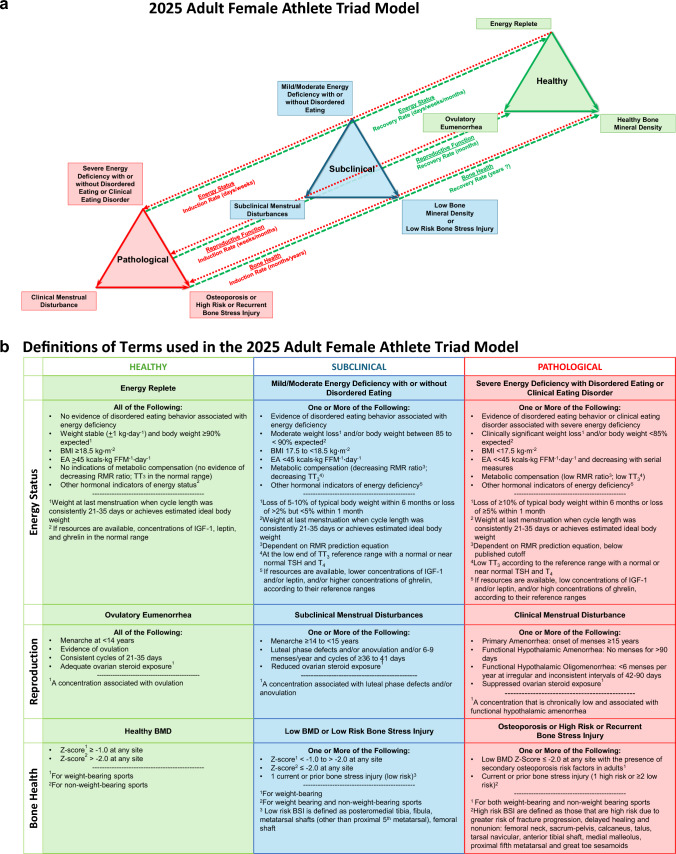
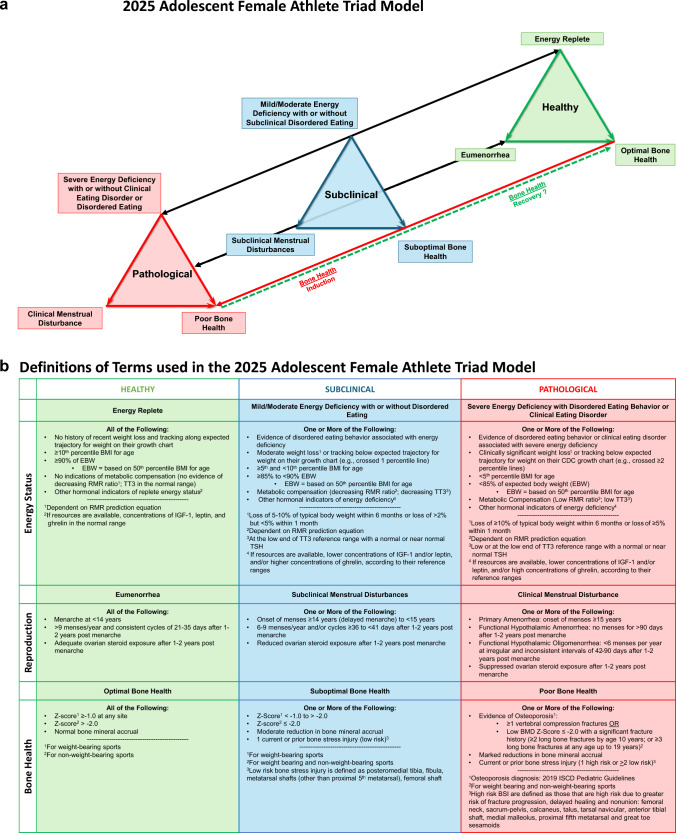
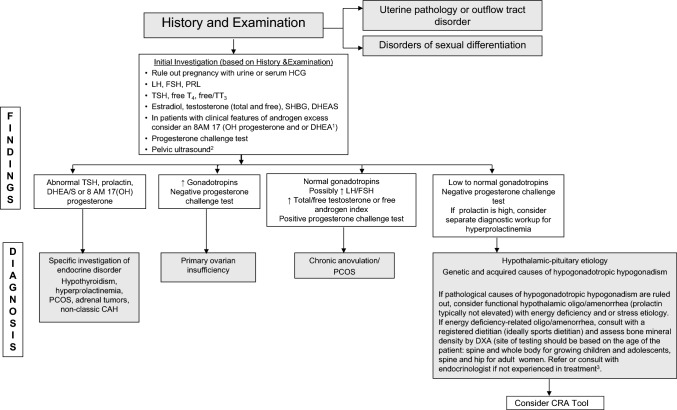
This is the second of two publications comprising the 2025 update to the 2014 Consensus Statement on treatment and return to play guidelines on the Female Athlete Triad (Triad). This paper pairs with the 2025 Update to the Female Athlete Triad Coalition Consensus Statement Part 1: State of the Science and Introduction of a New Adolescent Model (Sports Medicine, 2025), to focus on evidence-based revisions for screening, diagnosis, treatment, and clearance and return to play. Revised recommendations for managing eating disorders (ED)/disordered eating (DE) and non-pharmacological and pharmacological treatment of bone loss and abnormal menstrual cycles are included, as are the most recent clearance and return to play recommendations, inclusive of adolescent athletes. Recent research supports the adoption of revised criteria for defining and treating energy deficiency, moving away from the concept of an energy-availability threshold. Energy deficiency-induced menstrual disturbances can be reversed with a moderate increase in food intake and modest weight gain, but restoration of menses alone is not associated with high rates of ovulation or increased ovarian steroid levels until multiple consecutive normal length menstrual cycles are achieved. Revised guidelines for the diagnosis and treatment of functional hypothalamic oligo/amenorrhea are included with guidance on the confounding effects of hyperandrogenemia. Gynecological age and psychological stress are factors impacting the individual susceptibility to the Triad. The bone health spectrum of the Triad now includes bone stress injuries. Routes of administration via epidermal patch versus oral for pharmacological treatment of low bone density are discussed. The diagnosis, treatment, and return to play approaches for adolescents with the Triad are unique compared with those employed for adults and require age-appropriate clinical guidelines. The strength of the evidence-based statements is graded using an accepted taxonomy in which randomized controlled trials and observational data are considered the highest level of evidence.
Overview
CoChat Summary
TL;DR
This Part 2 consensus update revises Female Athlete Triad clinical guidelines for screening, diagnosis, treatment, and return to play in adolescent and adult female athletes. It introduces revised energy-deficiency terminology, adds bone stress injuries to the bone health spectrum, updates reproductive and bone treatment recommendations, and provides revised cumulative risk assessment tools including a new adolescent tool.
Key findings
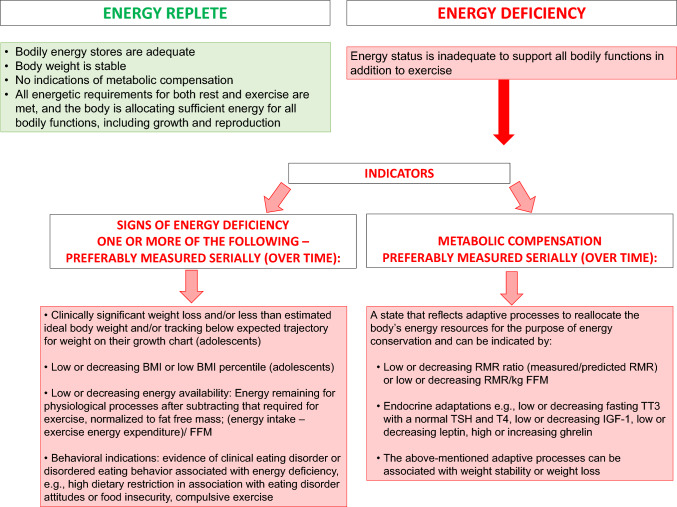
- Energy status terminology is revised: “energy deficiency” replaces “low energy availability,” and an EA threshold is not recommended; metabolic compensation indicators include low RMR ratio, low TT3/IGF-1/leptin, and increased ghrelin. Bone stress injuries are now included in the Triad bone health spectrum.
- In the REFUEL RCT, a 12-month increase in energy intake of 330 ± 65 kcal/day (+18 ± 4%) improved menstrual regularity and increased body weight by 4.9%, fat mass by 18%, and TT3 by 16%; however, BMD did not improve after 12 months, and resumption of menses alone did not indicate full ovarian steroid recovery.
- Transdermal 17β-estradiol with cyclic progestin improved BMD at the spine (2.75%), femoral neck (5.25%), and total hip (1.85%) compared with combined oral contraceptive pill or no treatment; combined oral contraceptives are not recommended to improve bone outcomes.
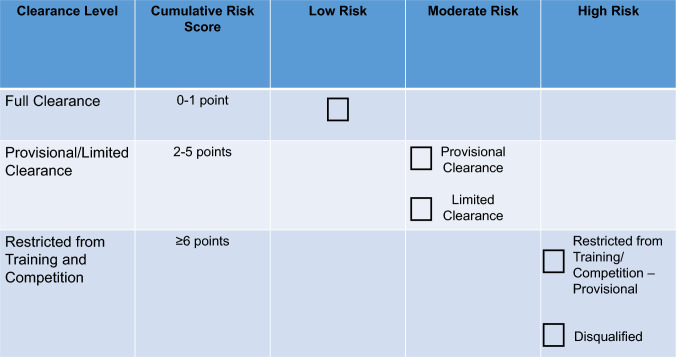
- The Triad Cumulative Risk Assessment is predictive of bone stress injury: among 239 collegiate athletes, 29% were moderate/high risk and had 2.6- and 3.8-fold greater likelihood of BSI, respectively; each 1-point CRA increase was associated with a 13% increased BSI risk (95% CI 1–26% increase).
Methods
- A 16-member expert panel used a consensus process with one in-person meeting, virtual meetings, and email; section leaders drafted evidence-based statements, and consensus required >85% agreement with no “disagree” votes.
- Evidence statements were graded Level A–D using a taxonomy in which RCTs and observational data are considered the highest level of evidence; no funding was involved and no conflicts of interest were declared.
- The paper is a narrative consensus synthesis of existing literature, RCTs, and observational studies, paired with Part 1, covering clinical guidelines for screening, diagnosis, treatment, and clearance/return to play for adolescent and adult female athletes.
Limitations
- Stated: there is no validated or universally accepted approach to quantify overall energy status; no perfect indicator of energy deficiency exists; EA is difficult to reliably estimate and fluctuates; the LEAF-Q should not be used alone to identify Triad risk; DXA access, cost, and expertise limit BMD assessment; and proposed CRA updates require further validation.
- Stated: evidence is insufficient to support definitive recommendations for osteoanabolic or anti-resorptive therapies in Triad-related bone loss; prospective studies on resistance training/high-impact loading in energy-deficient exercising women are lacking; and long-term BMD recovery remains uncertain, marked with a “?” in the model.
- Evident from the text: as a consensus statement, it synthesizes existing evidence rather than presenting new primary data, and several cited treatment studies are small or conducted in anorexia nervosa populations rather than athletes, limiting direct generalizability.
Model-written summary. Check it against the paper before relying on it.
Integrity signals
Registry
Cites
Statistics
Figures
Verification
Claims the paper makes
0 Valid · 6 Not valid · 255 Not checked · 108 Own results and interpretations
A check of a cited source is scheduled, or we don’t hold its full text yet; the claim is checked once it runs.
In the paper
“Indications of metabolic compensation are observed in response to the loss of body weight that may or may not represent a new chronically low body weight set-point [21, 22] or low BMI [23, 24].”
§ 2025 Update to the Female Athlete Triad Coalition Consensus Statement Part 2: Clinical Guidelines for Screening, Diagnosis, Treatment, and Return to Play for Adolescents and Adults > Introduction > Presentation of the 2025 Update of the Adult Female Athlete Triad Model
What the sources say
- Not checked yetcites [21] Leibel RL, Hirsch J. Diminished energy requirements in reduced-obese patients. Metabolism. 1984;33(2):164–70. 10.1016/0026-0495(84)90130-6. 6694559 source
A check is scheduled.
- Not checked yetcites [22] Leibel RL, Rosenbaum M, Hirsch J. Changes in energy expenditure resulting from altered body weight. N Engl J Med. 1995;332(10):621–8. 10.1056/NEJM199503093321001. 7632212 source
A check is scheduled.
- Not checked yetcites [23] Kandemir N, Becker K, Slattery M, Tulsiani S, Singhal V, Thomas JJ, et al. Impact of low-weight severity and menstrual status on bone in adolescent girls with anorexia nervosa. Int J Eat Disord. 2017;50(4):359–69. 10.1002/eat.22681. 28152193 PMC5386816 source
A check is scheduled.
- Not checked yetcites [24] Singhal V, de Lourdes Eguiguren M, Eisenbach L, Clarke H, Slattery M, Eddy K, et al. Body composition, hemodynamic, and biochemical parameters of young female normal-weight oligo-amenorrheic and eumenorrheic athletes and nonathletes. Ann Nutr Metab. 2014;65(4):264–71. 10.1159/000366024. 25376841 PMC4268142 source
A check is scheduled.
hedgedstates a possible cause- Asserted: passes — The authors put it forward as true.
- Checkable: passes — It can be checked against evidence.
- Load-bearing: passes — The paper’s conclusions depend on it.
- Based: passes — The paper gives a reason why it holds.
- Not checked yet
In the paper
“Additionally, a recent study found that athletes, when compared to the general population, are less likely to seek treatment for EDs due to stigma, accessibility, and sport-specific barriers [10].”
§ 2025 Update to the Female Athlete Triad Coalition Consensus Statement Part 2: Clinical Guidelines for Screening, Diagnosis, Treatment, and Return to Play for Adolescents and Adults > Introduction > What is the Value of a Consensus Statement Focused Specifically on the Female Athlete Triad?
What the sources say
- Not checked yetcites [10] Flatt RE, Thornton LM, Fitzsimmons-Craft EE, Balantekin KN, Smolar L, Mysko C, et al. Comparing eating disorder characteristics and treatment in self-identified competitive athletes and non-athletes from the National Eating Disorders Association online screening tool. Int J Eat Disord. 2021;54(3):365–75. 10.1002/eat.23415. 33252150 PMC8006447 source
plainstates a cause- Asserted: passes — The authors put it forward as true.
- Checkable: passes — It can be checked against evidence.
- Load-bearing: passes — The paper’s conclusions depend on it.
- Based: passes — The paper gives a reason why it holds.
In the paper
“Thus, even in the face of increased menstrual frequency following amenorrhea, full recovery of ovarian steroids is not always observed [38].”
§ 2025 Update to the Female Athlete Triad Coalition Consensus Statement Part 2: Clinical Guidelines for Screening, Diagnosis, Treatment, and Return to Play for Adolescents and Adults > Introduction > Presentation of the 2025 Update of the Adult Female Athlete Triad Model
What the sources say
- Not checked yetcites [38] Mallinson RJ, Williams NI, Ricker EA, Allaway HCM, De Souza MJ. Multiple eumenorrheic cycles are necessary to observe a significant increase in estrogen exposure and ovulation in exercising women with functional hypothalamic oligo/amenorrhea: insights from the REFUEL study. PM&R. 2025;1–13. 10.1002/pmrj.70024. PMC13193428 41099383 source
plain- Asserted: passes — The authors put it forward as true.
- Checkable: passes — It can be checked against evidence.
- Load-bearing: passes — The paper’s conclusions depend on it.
- Based: passes — The paper gives a reason why it holds.
A result the paper states — it cites no source for it, so there is none to check. The quote shows it is in the paper.
In the paper
“Energy deficiency-induced menstrual disturbances can be reversed with a moderate increase in food intake and modest weight gain, but restoration of menses alone is not associated with high rates of ovulation or increased ovarian steroid levels until multiple consecutive normal length menstrual cycles are achieved.”
§ 2025 Update to the Female Athlete Triad Coalition Consensus Statement Part 2: Clinical Guidelines for Screening, Diagnosis, Treatment, and Return to Play for Adolescents and Adults > Abstract
plainstates an association- Asserted: passes — The authors put it forward as true.
- Checkable: passes — It can be checked against evidence.
- Load-bearing: passes — The paper’s conclusions depend on it.
- Based: passes — The paper gives a reason why it holds.
A result the paper states — it cites no source for it, so there is none to check. The quote shows it is in the paper.
In the paper
“Energy deficiency-induced menstrual disturbances can be reversed with a moderate increase in food intake and modest weight gain, but restoration of menses alone is not associated with high rates of ovulation or increased ovarian steroid levels until multiple consecutive normal length menstrual cycles are achieved.”
§ 2025 Update to the Female Athlete Triad Coalition Consensus Statement Part 2: Clinical Guidelines for Screening, Diagnosis, Treatment, and Return to Play for Adolescents and Adults > Abstract
plainstates a cause- Asserted: passes — The authors put it forward as true.
- Checkable: passes — It can be checked against evidence.
- Load-bearing: passes — The paper’s conclusions depend on it.
- Based: passes — The paper gives a reason why it holds.
203 more claims
Create a free account to see all 369 claims and to verify the 442 references still open.
- It may state two separate claims as one. 117
- Probably not a substantial claim. 69
Self-check
Percentages, sums and reported differences re-computed from the paper’s own numbers.
Each contradiction between two passages listed here was confirmed by an independent check.
Rated minor: it would not touch a result — a value no result rests on, a p-value that stays on the same side of the significance level, or a conflict that is clerical, resolved elsewhere in the paper, or outside its own findings.
In the paper
§ 2025 Update to the Female Athlete Triad Coalition Consensus Statement Part 2: Clinical Guidelines for Screening, Diagnosis, Treatment, and Return to Play for Adolescents and Adults > Diagnostic and Treatment Updates to Bone Health > Diagnostic Assessment of Bone Health
“Evidence-Based Statement: We recommend assessing BMD with a DXA scan based on details in Table 7. Grade: Level B.”
§ 2025 Update to the Female Athlete Triad Coalition Consensus Statement Part 2: Clinical Guidelines for Screening, Diagnosis, Treatment, and Return to Play for Adolescents and Adults > Summary and Clinical Recommendations of the 2025 Update on the Female Athlete Triad
“| Evidence-Based Statement: We recommend assessing BMD with a DXA scan based on details in Table 7 | | Evidence Grade: Level A”
Rated minor: it would not touch a result — a value no result rests on, a p-value that stays on the same side of the significance level, or a conflict that is clerical, resolved elsewhere in the paper, or outside its own findings.
In the paper
§ 2025 Update to the Female Athlete Triad Coalition Consensus Statement Part 2: Clinical Guidelines for Screening, Diagnosis, Treatment, and Return to Play for Adolescents and Adults > Cumulative Risk Assessment for Clearance and Return to Play: Assessment Tool and Guidelines > Updates to the Triad Cumulative Risk Assessment (CRA) Tool
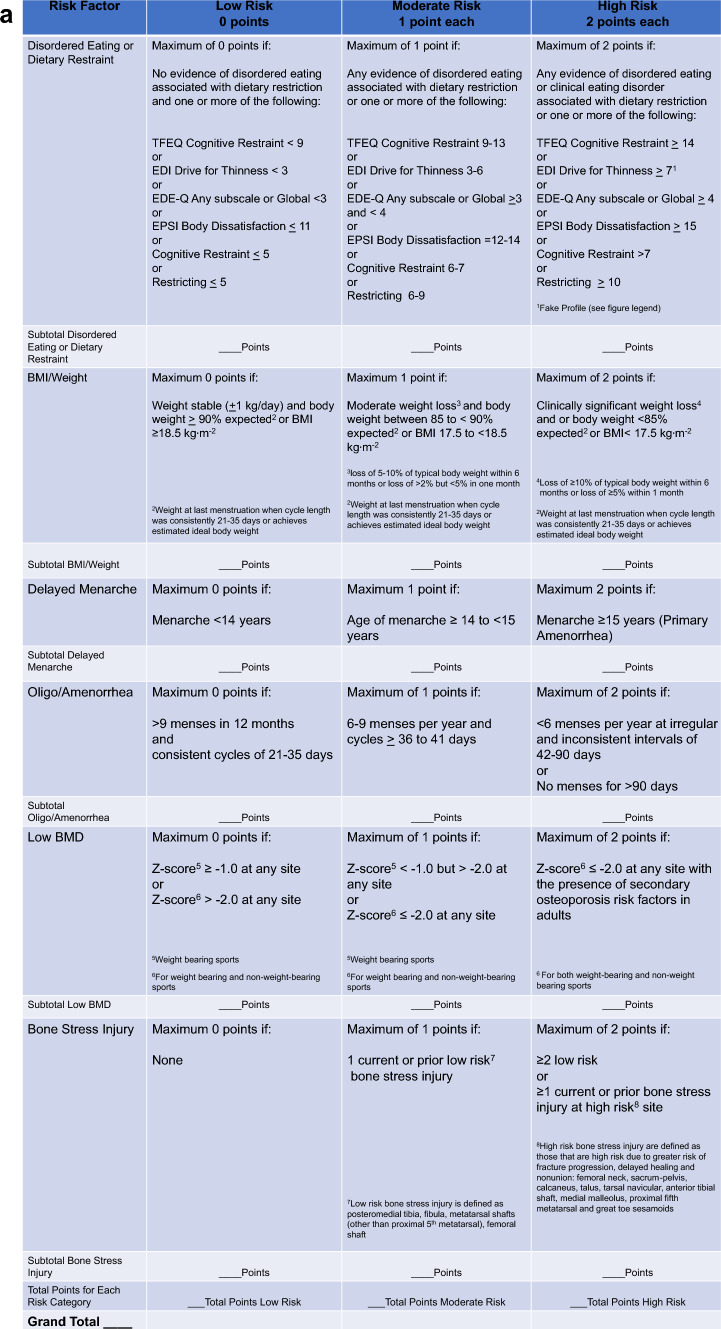
“Body dissatisfaction12–14Cognitive restraint6–7Restricting6–9”
§ 2025 Update to the Female Athlete Triad Coalition Consensus Statement Part 2: Clinical Guidelines for Screening, Diagnosis, Treatment, and Return to Play for Adolescents and Adults > Cumulative Risk Assessment for Clearance and Return to Play: Assessment Tool and Guidelines > Updates to the Triad Cumulative Risk Assessment (CRA) Tool
“Body dissatisfaction ≥ 15Cognitive restraint ≥ 7Restricting > 10”
Citations
Cites
The Transtheoretical Model of Health Behavior Change.
Prochaska, J. O., & Velicer, W. F. (1997) · American Journal of Health Promotion · doi:10.4278/0890-1171-12.1.38 · Cited by 7,782
Exercise and Physical Activity for Older Adults
Chodzko-Zajko, W. J., Proctor, D. N., Fiatarone Singh, M. A., Minson, C. T., Nigg, C. R., Salem, G. J., & Skinner, J. S. (2009) · Medicine & Science in Sports & Exercise · doi:10.1249/mss.0b013e3181a0c95c · Cited by 5,153
The three-factor eating questionnaire to measure dietary restraint, disinhibition and hunger
Stunkard, A. J., & Messick, S. (1985) · Journal of Psychosomatic Research · doi:10.1016/0022-3999(85)90010-8 · Cited by 4,687
Ross, A. C., Manson, J. E., Abrams, S. A., Aloia, J. F., Brannon, P. M., Clinton, S. K., Durazo-Arvizu, R. A., Gallagher, J. C., Gallo, R. L., Jones, G., et al. (2011) · The Journal of Clinical Endocrinology & Metabolism · doi:10.1210/jc.2010-2704 · Cited by 4,026
Arcelus, J., Mitchell, A. J., Wales, J., & Nielsen, S. (2011) · Archives of General Psychiatry · doi:10.1001/archgenpsychiatry.2011.74 · Cited by 2,864
Azziz, R., Carmina, E., Dewailly, D., Diamanti-Kandarakis, E., Escobar-Morreale, H. F., Futterweit, W., Janssen, O. E., Legro, R. S., Norman, R. J., Taylor, A. E., et al. (2009) · Fertility and Sterility · doi:10.1016/j.fertnstert.2008.06.035 · Cited by 2,132
Risks of all-cause and suicide mortality in mental disorders: a meta-review
Chesney, E., Goodwin, G. M., & Fazel, S. (2014) · World Psychiatry · doi:10.1002/wps.20128 · Cited by 2,115
Changes in Energy Expenditure Resulting from Altered Body Weight
Leibel, R. L., Rosenbaum, M., & Hirsch, J. (1995) · New England Journal of Medicine · doi:10.1056/nejm199503093321001 · Cited by 2,012
A biometric study of human basal metabolism
Harris, J. A., & Benedict, F. G. (1918) · Proceedings of the National Academy of Sciences · doi:10.1073/pnas.4.12.370 · Cited by 1,980
Legro, R. S., Arslanian, S. A., Ehrmann, D. A., Hoeger, K. M., Murad, M. H., Pasquali, R., & Welt, C. K. (2013) · The Journal of Clinical Endocrinology & Metabolism · doi:10.1210/jc.2013-2350 · Cited by 1,919
Teede, H. J., Misso, M. L., Costello, M. F., Dokras, A., Laven, J., Moran, L., Piltonen, T., Norman, R. J., International PCOS Network, Andersen, M., et al. (2018) · Human Reproduction · doi:10.1093/humrep/dey256 · Cited by 1,593
(2007) · Medicine & Science in Sports & Exercise · doi:10.1249/mss.0b013e318149f111 · Cited by 1,554
Self-citationPhysical Activity for Cognitive and Mental Health in Youth: A Systematic Review of Mechanisms
Lubans, D., Richards, J., Hillman, C., Faulkner, G., Beauchamp, M., Nilsson, M., Kelly, P., Smith, J., Raine, L., & Biddle, S. (2016) · Pediatrics · doi:10.1542/peds.2016-1642 · Cited by 1,548
Mountjoy, M., Sundgot-Borgen, J., Burke, L., Carter, S., Constantini, N., Lebrun, C., Meyer, N., Sherman, R., Steffen, K., Budgett, R., et al. (2014) · British Journal of Sports Medicine · doi:10.1136/bjsports-2014-093502 · Cited by 1,469
Chekroud, S. R., Gueorguieva, R., Zheutlin, A. B., Paulus, M., Krumholz, H. M., Krystal, J. H., & Chekroud, A. M. (2018) · The Lancet Psychiatry · doi:10.1016/s2215-0366(18)30227-x · Cited by 1,172
Mond, J. M., Hay, P. J., Rodgers, B., Owen, C., & Beumont, P. J. V. (2004) · Behaviour Research and Therapy · doi:10.1016/s0005-7967(03)00161-x · Cited by 1,121
Mountjoy, M., Ackerman, K. E., Bailey, D. M., Burke, L. M., Constantini, N., Hackney, A. C., Heikura, I. A., Melin, A., Pensgaard, A. M., Stellingwerff, T., et al. (2023) · British Journal of Sports Medicine · doi:10.1136/bjsports-2023-106994 · Cited by 974
Bone mineral content of amenorrheic and eumenorrheic athletes
Drinkwater, B. L., Nilson, K., Chesnut, C. H., Bremner, W. J., Shainholtz, S., & Southworth, M. B. (1984) · New England Journal of Medicine · doi:10.1056/nejm198408023110501 · Cited by 956
Recombinant human leptin in women with hypothalamic amenorrhea
Welt, C. K., Chan, J. L., Bullen, J., Murphy, R., Smith, P., DePaoli, A. M., Karalis, A., & Mantzoros, C. S. (2004) · New England Journal of Medicine · doi:10.1056/nejmoa040388 · Cited by 908
Functional Hypothalamic Amenorrhea: An Endocrine Society Clinical Practice Guideline
Gordon, C. M., Ackerman, K. E., Berga, S. L., Kaplan, J. R., Mastorakos, G., Misra, M., Murad, M. H., Santoro, N. F., & Warren, M. P. (2017) · The Journal of Clinical Endocrinology & Metabolism · doi:10.1210/jc.2017-00131 · Cited by 775
Self-citationNeumark-Sztainer, D., Wall, M., Larson, N. I., Eisenberg, M. E., & Loth, K. (2011) · Journal of the American Dietetic Association · doi:10.1016/j.jada.2011.04.012 · Cited by 768
Loucks, A. B., & Thuma, J. R. (2003) · The Journal of Clinical Endocrinology & Metabolism · doi:10.1210/jc.2002-020369 · Cited by 760
van Hoeken, D., & Hoek, H. W. (2020) · Current Opinion in Psychiatry · doi:10.1097/yco.0000000000000641 · Cited by 716
De Souza, M. J., Nattiv, A., Joy, E., Misra, M., Williams, N. I., Mallinson, R. J., Gibbs, J. C., Olmsted, M., Goolsby, M., Matheson, G., et al. (2014) · British Journal of Sports Medicine · doi:10.1136/bjsports-2013-093218 · Cited by 661
Self-citationHay, P., Chinn, D., Forbes, D., Madden, S., Newton, R., Sugenor, L., Touyz, S., & Ward, W. (2014) · Australian & New Zealand Journal of Psychiatry · doi:10.1177/0004867414555814 · Cited by 656
Gulliver, A., Griffiths, K. M., & Christensen, H. (2012) · BMC Psychiatry · doi:10.1186/1471-244x-12-157 · Cited by 611
Cunningham, J. (1991) · The American Journal of Clinical Nutrition · doi:10.1093/ajcn/54.6.963 · Cited by 607
Fredericson, M., Bergman, A. G., Hoffman, K. L., & Dillingham, M. S. (1995) · The American Journal of Sports Medicine · doi:10.1177/036354659502300418 · Cited by 580
Self-citationA reanalysis of the factors influencing basal metabolic rate in normal adults
Cunningham, J. J. (1980) · The American Journal of Clinical Nutrition · doi:10.1093/ajcn/33.11.2372 · Cited by 545
Shuhart, C. R., Yeap, S. S., Anderson, P. A., Jankowski, L. G., Lewiecki, E. M., Morse, L. R., Rosen, H. N., Weber, D. R., Zemel, B. S., & Shepherd, J. A. (2019) · Journal of Clinical Densitometry · doi:10.1016/j.jocd.2019.07.001 · Cited by 533
Dose-Response Relationships Between Energy Availability and Bone Turnover in Young Exercising Women
Ihle, R., & Loucks, A. B. (2004) · Journal of Bone and Mineral Research · doi:10.1359/jbmr.040410 · Cited by 523
The effects of estrogen administration on trabecular bone loss in young women with anorexia nervosa
Klibanski, A. (1995) · Journal of Clinical Endocrinology & Metabolism · doi:10.1210/jc.80.3.898 · Cited by 467
Mountjoy, M., Sundgot-Borgen, J., Burke, L., Ackerman, K. E., Blauwet, C., Constantini, N., Lebrun, C., Lundy, B., Melin, A., Meyer, N., et al. (2018) · International Journal of Sport Nutrition and Exercise Metabolism · doi:10.1123/ijsnem.2018-0136 · Cited by 447
Melin, A., Tornberg, Å. B., Skouby, S., Faber, J., Ritz, C., Sjödin, A., & Sundgot-Borgen, J. (2014) · British Journal of Sports Medicine · doi:10.1136/bjsports-2013-093240 · Cited by 435
Norms and discriminative validity of the eating disorder examination questionnaire (EDE-Q)
Aardoom, J. J., Dingemans, A. E., Slof Op't Landt, M. C. T., & Van Furth, E. F. (2012) · Eating Behaviors · doi:10.1016/j.eatbeh.2012.09.002 · Cited by 427
High-Risk Stress Fractures: Evaluation and Treatment
Boden, B. P., & Osbahr, D. C. (2000) · Journal of the American Academy of Orthopaedic Surgeons · doi:10.5435/00124635-200011000-00002 · Cited by 417
Eating disorder examination questionnaire: norms for young adolescent girls
Carter, J. C., Stewart, D. A., & Fairburn, C. G. (2001) · Behaviour Research and Therapy · doi:10.1016/s0005-7967(00)00033-4 · Cited by 379
Joy, E., Kussman, A., & Nattiv, A. (2016) · British Journal of Sports Medicine · doi:10.1136/bjsports-2015-095735 · Cited by 373
Self-citationPhysiologic estrogen replacement increases bone density in adolescent girls with anorexia nervosa
Misra, M., Katzman, D., Miller, K. K., Mendes, N., Snelgrove, D., Russell, M., Goldstein, M. A., Ebrahimi, S., Clauss, L., Weigel, T., et al. (2011) · Journal of Bone and Mineral Research · doi:10.1002/jbmr.447 · Cited by 351
Self-citationBarrack, M. T., Gibbs, J. C., De Souza, M. J., Williams, N. I., Nichols, J. F., Rauh, M. J., & Nattiv, A. (2014) · The American Journal of Sports Medicine · doi:10.1177/0363546513520295 · Cited by 349
Self-citationHigher Prevalence of Eating Disorders among Adolescent Elite Athletes than Controls
MARTINSEN, M., & SUNDGOT-BORGEN, J. (2013) · Medicine & Science in Sports & Exercise · doi:10.1249/mss.0b013e318281a939 · Cited by 339
Grinspoon, S., Thomas, L., Miller, K., Herzog, D., & Klibanski, A. (2002) · The Journal of Clinical Endocrinology & Metabolism · doi:10.1210/jcem.87.6.8574 · Cited by 334
The case for early intervention in anorexia nervosa: theoretical exploration of maintaining factors
Treasure, J., & Russell, G. (2011) · British Journal of Psychiatry · doi:10.1192/bjp.bp.110.087585 · Cited by 330
Reardon, C. L., & Factor, R. M. (2010) · Sports Medicine · doi:10.2165/11536580-000000000-00000 · Cited by 320
Heikura, I. A., Uusitalo, A. L. T., Stellingwerff, T., Bergland, D., Mero, A. A., & Burke, L. M. (2018) · International Journal of Sport Nutrition and Exercise Metabolism · doi:10.1123/ijsnem.2017-0313 · Cited by 318
Allen, K. L., Byrne, S. M., Oddy, W. H., & Crosby, R. D. (2013) · Journal of Abnormal Psychology · doi:10.1037/a0034004 · Cited by 312
Bonci, C. M., Bonci, L. J., Granger, L. R., Johnson, C. L., Malina, R. M., Milne, L. W., Ryan, R. R., & Vanderbunt, E. M. (2008) · Journal of Athletic Training · doi:10.4085/1062-6050-43.1.80 · Cited by 306
Risk factors across the eating disorders
Hilbert, A., Pike, K. M., Goldschmidt, A. B., Wilfley, D. E., Fairburn, C. G., Dohm, F.-A., Walsh, B. T., & Striegel Weissman, R. (2014) · Psychiatry Research · doi:10.1016/j.psychres.2014.05.054 · Cited by 302
Energy availability and the female athlete triad in elite endurance athletes
Melin, A., Tornberg, Å. B., Skouby, S., Møller, S. S., Sundgot‐Borgen, J., Faber, J., Sidelmann, J. J., Aziz, M., & Sjödin, A. (2015) · Scandinavian Journal of Medicine & Science in Sports · doi:10.1111/sms.12261 · Cited by 296
Long‐term outcome of anorexia nervosa: Results from a large clinical longitudinal study
Fichter, M. M., Quadflieg, N., Crosby, R. D., & Koch, S. (2017) · International Journal of Eating Disorders · doi:10.1002/eat.22736 · Cited by 295
Social and economic cost of eating disorders in the United States: Evidence to inform policy action
Streatfeild, J., Hickson, J., Austin, S. B., Hutcheson, R., Kandel, J. S., Lampert, J. G., Myers, E. M., Richmond, T. K., Samnaliev, M., Velasquez, K., et al. (2021) · International Journal of Eating Disorders · doi:10.1002/eat.23486 · Cited by 288
Nattiv, A., Kennedy, G., Barrack, M. T., Abdelkerim, A., Goolsby, M. A., Arends, J. C., & Seeger, L. L. (2013) · The American Journal of Sports Medicine · doi:10.1177/0363546513490645 · Cited by 284
Self-citationBelcher, B. R., Zink, J., Azad, A., Campbell, C. E., Chakravartti, S. P., & Herting, M. M. (2021) · Biological Psychiatry: Cognitive Neuroscience and Neuroimaging · doi:10.1016/j.bpsc.2020.08.005 · Cited by 281
Resumption of Menses in Anorexia Nervosa
Golden, N. H. (1997) · Archives of Pediatrics & Adolescent Medicine · doi:10.1001/archpedi.1997.02170380020003 · Cited by 279
Williams, N. I., Helmreich, D. L., Parfitt, D. B., Caston-Balderrama, A., & Cameron, J. L. (2001) · The Journal of Clinical Endocrinology & Metabolism · doi:10.1210/jcem.86.11.8024 · Cited by 275
Self-citationPrevalence of the Female Athlete Triad Syndrome Among High School Athletes
Nichols, J. F., Rauh, M. J., Lawson, M. J., Ji, M., & Barkai, H.-S. (2006) · Archives of Pediatrics & Adolescent Medicine · doi:10.1001/archpedi.160.2.137 · Cited by 274
Diminished energy requirements in reduced-obese patients
Leibel, R. L., & Hirsch, J. (1984) · Metabolism · doi:10.1016/0026-0495(84)90130-6 · Cited by 269
Management and Prevention of Bone Stress Injuries in Long-Distance Runners
Warden, S. J., Davis, I. S., & Fredericson, M. (2014) · Journal of Orthopaedic & Sports Physical Therapy · doi:10.2519/jospt.2014.5334 · Cited by 252
Self-citationCastaldelli-Maia, J. M., Gallinaro, J. G. D. M. E., Falcão, R. S., Gouttebarge, V., Hitchcock, M. E., Hainline, B., Reardon, C. L., & Stull, T. (2019) · British Journal of Sports Medicine · doi:10.1136/bjsports-2019-100710 · Cited by 251
Joy, E., De Souza, M. J., Nattiv, A., Misra, M., Williams, N. I., Mallinson, R. J., Gibbs, J. C., Olmsted, M., Goolsby, M., Matheson, G., et al. (2014) · Current Sports Medicine Reports · doi:10.1249/jsr.0000000000000077 · Cited by 251
Self-citationGolden, N. H., Iglesias, E. A., Jacobson, M. S., Carey, D., Meyer, W., Schebendach, J., Hertz, S., & Shenker, I. R. (2005) · The Journal of Clinical Endocrinology & Metabolism · doi:10.1210/jc.2004-1659 · Cited by 245
Pitfalls of conducting and interpreting estimates of energy availability in free-living athletes
Burke, L. M., Lundy, B., Fahrenholtz, I. L., & Melin, A. K. (2018) · International Journal of Sport Nutrition and Exercise Metabolism · doi:10.1123/ijsnem.2018-0142 · Cited by 244
Determinants of Skeletal Loss and Recovery in Anorexia Nervosa
Miller, K. K., Lee, E. E., Lawson, E. A., Misra, M., Minihan, J., Grinspoon, S. K., Gleysteen, S., Mickley, D., Herzog, D., & Klibanski, A. (2006) · The Journal of Clinical Endocrinology & Metabolism · doi:10.1210/jc.2005-2818 · Cited by 243
Self-citationMarker, A. M., Steele, R. G., & Noser, A. E. (2018) · Health Psychology · doi:10.1037/hea0000653 · Cited by 242
De Souza, M. J., West, S. L., Jamal, S. A., Hawker, G. A., Gundberg, C. M., & Williams, N. I. (2008) · Bone · doi:10.1016/j.bone.2008.03.013 · Cited by 236
Self-citationLeidy, H. J., Gardner, J. K., Frye, B. R., Snook, M. L., Schuchert, M. K., Richard, E. L., & Williams, N. I. (2004) · The Journal of Clinical Endocrinology & Metabolism · doi:10.1210/jc.2003-031471 · Cited by 235
Self-citationGordon, C. M., Grace, E., Emans, S. J., Feldman, H. A., Goodman, E., Becker, K. A., Rosen, C. J., Gundberg, C. M., & LeBoff, M. S. (2002) · The Journal of Clinical Endocrinology & Metabolism · doi:10.1210/jc.2002-020545 · Cited by 235
Dalle Grave, R., Calugi, S., Doll, H. A., & Fairburn, C. G. (2013) · Behaviour Research and Therapy · doi:10.1016/j.brat.2012.09.008 · Cited by 234
Tenforde, A. S., Carlson, J. L., Chang, A., Sainani, K. L., Shultz, R., Kim, J. H., Cutti, P., Golden, N. H., & Fredericson, M. (2017) · The American Journal of Sports Medicine · doi:10.1177/0363546516676262 · Cited by 229
Self-citationA systematic review of enhanced cognitive behavioral therapy (CBT‐E) for eating disorders
Atwood, M. E., & Friedman, A. (2020) · International Journal of Eating Disorders · doi:10.1002/eat.23206 · Cited by 217
Canadian practice guidelines for the treatment of children and adolescents with eating disorders
Couturier, J., Isserlin, L., Norris, M., Spettigue, W., Brouwers, M., Kimber, M., McVey, G., Webb, C., Findlay, S., Bhatnagar, N., et al. (2020) · Journal of Eating Disorders · doi:10.1186/s40337-020-0277-8 · Cited by 215
THE CONSEQUENCES AND COSTS OF THE EATING DISORDERS
Agras, W. S. (2001) · Psychiatric Clinics of North America · doi:10.1016/s0193-953x(05)70232-x · Cited by 213
Diagnostic and statistical manual of mental disorders DSM-5
American Psychiatric Association (2013) · Cited by 209
Ackerman, K. E., Nazem, T., Chapko, D., Russell, M., Mendes, N., Taylor, A. P., Bouxsein, M. L., & Misra, M. (2011) · The Journal of Clinical Endocrinology & Metabolism · doi:10.1210/jc.2011-1614 · Cited by 206
Self-citationBerga, S. L., Marcus, M. D., Loucks, T. L., Hlastala, S., Ringham, R., & Krohn, M. A. (2003) · Fertility and Sterility · doi:10.1016/s0015-0282(03)01124-5 · Cited by 205
Beals, K. A., & Hill, A. K. (2006) · International Journal of Sport Nutrition and Exercise Metabolism · doi:10.1123/ijsnem.16.1.1 · Cited by 200
Prevalence of Individual and Combined Components of the Female Athlete Triad
GIBBS, J. C., WILLIAMS, N. I., & DE SOUZA, M. J. (2013) · Medicine & Science in Sports & Exercise · doi:10.1249/mss.0b013e31827e1bdc · Cited by 199
Self-citationLock, J., & Le Grange, D. (2019) · International Journal of Eating Disorders · doi:10.1002/eat.22980 · Cited by 199
Identifying Sex-Specific Risk Factors for Stress Fractures in Adolescent Runners
TENFORDE, A. S., SAYRES, L. C., McCURDY, M. L., SAINANI, K. L., & FREDERICSON, M. (2013) · Medicine & Science in Sports & Exercise · doi:10.1249/mss.0b013e3182963d75 · Cited by 197
Self-citationRauh, M. J., Nichols, J. F., & Barrack, M. T. (2010) · Journal of Athletic Training · doi:10.4085/1062-6050-45.3.243 · Cited by 193
Self-citationFracture risk and areal bone mineral density in adolescent females with anorexia nervosa
Faje, A. T., Fazeli, P. K., Miller, K. K., Katzman, D. K., Ebrahimi, S., Lee, H., Mendes, N., Snelgrove, D., Meenaghan, E., Misra, M., et al. (2014) · International Journal of Eating Disorders · doi:10.1002/eat.22248 · Cited by 188
Self-citationBlood Volume Response to Physical Activity and Inactivity
Convertino, V. A. (2007) · The American Journal of the Medical Sciences · doi:10.1097/maj.0b013e318063c6e4 · Cited by 184
Arendt, E., Agel, J., Heikes, C., & Griffiths, H. (2003) · The American Journal of Sports Medicine · doi:10.1177/03635465030310063601 · Cited by 181
De Souza, M. J., Nattiv, A., Joy, E., Misra, M., Williams, N. I., Mallinson, R. J., Gibbs, J. C., Olmsted, M., Goolsby, M., & Matheson, G. (2014) · Clinical Journal of Sport Medicine · doi:10.1097/jsm.0000000000000085 · Cited by 180
Self-citationMcGuine, T. A., Post, E. G., Hetzel, S. J., Brooks, M. A., Trigsted, S., & Bell, D. R. (2017) · The American Journal of Sports Medicine · doi:10.1177/0363546517710213 · Cited by 180
Fractures in Relation to Menstrual Status and Bone Parameters in Young Athletes
ACKERMAN, K. E., CANO SOKOLOFF, N., DE NARDO MAFFAZIOLI, G., CLARKE, H. M., LEE, H., & MISRA, M. (2015) · Medicine & Science in Sports & Exercise · doi:10.1249/mss.0000000000000574 · Cited by 178
Self-citationMarzola, E., Nasser, J. A., Hashim, S. A., Shih, P.-A. B., & Kaye, W. H. (2013) · BMC Psychiatry · doi:10.1186/1471-244x-13-290 · Cited by 176
Misra, M., Prabhakaran, R., Miller, K. K., Goldstein, M. A., Mickley, D., Clauss, L., Lockhart, P., Cord, J., Herzog, D. B., Katzman, D. K., et al. (2008) · The Journal of Clinical Endocrinology & Metabolism · doi:10.1210/jc.2007-1434 · Cited by 172
Self-citationA systematic review comparing atypical anorexia nervosa and anorexia nervosa
Walsh, B. T., Hagan, K. E., & Lockwood, C. (2023) · International Journal of Eating Disorders · doi:10.1002/eat.23856 · Cited by 170
Williams, N. I., Berga, S. L., & Cameron, J. L. (2007) · American Journal of Physiology-Endocrinology and Metabolism · doi:10.1152/ajpendo.00108.2007 · Cited by 169
Self-citationDo Disordered Eating Behaviours Have Long‐term Health‐related Consequences?
Kärkkäinen, U., Mustelin, L., Raevuori, A., Kaprio, J., & Keski‐Rahkonen, A. (2018) · European Eating Disorders Review · doi:10.1002/erv.2568 · Cited by 169
Soroko, S. B., Barrett-Connor, E., Edelstein, S. L., & Kritz-Silverstein, D. (1994) · Journal of Bone and Mineral Research · doi:10.1002/jbmr.5650090602 · Cited by 168
Sienkiewicz, E., Magkos, F., Aronis, K. N., Brinkoetter, M., Chamberland, J. P., Chou, S., Arampatzi, K. M., Gao, C., Koniaris, A., & Mantzoros, C. S. (2011) · Metabolism · doi:10.1016/j.metabol.2011.05.016 · Cited by 166
Afifi, T. O., Sareen, J., Fortier, J., Taillieu, T., Turner, S., Cheung, K., & Henriksen, C. A. (2017) · International Journal of Eating Disorders · doi:10.1002/eat.22783 · Cited by 164
Hoenig, T., Ackerman, K. E., Beck, B. R., Bouxsein, M. L., Burr, D. B., Hollander, K., Popp, K. L., Rolvien, T., Tenforde, A. S., & Warden, S. J. (2022) · Nature Reviews Disease Primers · doi:10.1038/s41572-022-00352-y · Cited by 163
Strokosch, G. R., Friedman, A. J., Wu, S.-C., & Kamin, M. (2006) · Journal of Adolescent Health · doi:10.1016/j.jadohealth.2006.09.010 · Cited by 161
Weber, D. R., Boyce, A. M., Gordon, C. M., Högler, W., Kecskemethy, H. H., Misra, M., Swolin‐Eide, D., Tebben, P. J., Ward, L. M., Wasserman, H. M., et al. (2019) · Journal of Clinical Densitometry · doi:10.1016/j.jocd.2019.07.002 · Cited by 160
Self-citationMiller, K. K., Meenaghan, E., Lawson, E. A., Misra, M., Gleysteen, S., Schoenfeld, D., Herzog, D., & Klibanski, A. (2011) · The Journal of Clinical Endocrinology & Metabolism · doi:10.1210/jc.2011-0380 · Cited by 156
Self-citationWilliams, N. I., Leidy, H. J., Hill, B. R., Lieberman, J. L., Legro, R. S., & Souza, M. J. D. (2015) · American Journal of Physiology-Endocrinology and Metabolism · doi:10.1152/ajpendo.00386.2013 · Cited by 154
Self-citationEpidemiology of sports-related musculoskeletal injuries in young athletes in United States
Patel, D. R., Yamasaki, A., & Brown, K. (2017) · Translational Pediatrics · doi:10.21037/tp.2017.04.08 · Cited by 154
Kopp-Woodroffe, S. A., Manore, M. M., Dueck, C. A., Skinner, J. S., & Matt, K. S. (1999) · International Journal of Sport Nutrition · doi:10.1123/ijsn.9.1.70 · Cited by 152
Christo, K., Prabhakaran, R., Lamparello, B., Cord, J., Miller, K. K., Goldstein, M. A., Gupta, N., Herzog, D. B., Klibanski, A., & Misra, M. (2008) · Pediatrics · doi:10.1542/peds.2007-2392 · Cited by 150
Self-citationHarrop, E. N., Mensinger, J. L., Moore, M., & Lindhorst, T. (2021) · International Journal of Eating Disorders · doi:10.1002/eat.23519 · Cited by 148
Ackerman, K. E., Putman, M., Guereca, G., Taylor, A. P., Pierce, L., Herzog, D. B., Klibanski, A., Bouxsein, M., & Misra, M. (2012) · Bone · doi:10.1016/j.bone.2012.07.019 · Cited by 140
Self-citationThein-Nissenbaum, J. M., Rauh, M. J., Carr, K. E., Loud, K. J., & McGuine, T. A. (2011) · Journal of Orthopaedic & Sports Physical Therapy · doi:10.2519/jospt.2011.3312 · Cited by 139
Suicide attempts in women with eating disorders.
Pisetsky, E. M., Thornton, L. M., Lichtenstein, P., Pedersen, N. L., & Bulik, C. M. (2013) · Journal of Abnormal Psychology · doi:10.1037/a0034902 · Cited by 139
Ovarian Dysfunction, Stress, and Disease: A Primate Continuum
Kaplan, J. R., & Manuck, S. B. (2004) · ILAR Journal · doi:10.1093/ilar.45.2.89 · Cited by 139
Correlates of Stress Fractures Among Preadolescent and Adolescent Girls
Loud, K. J., Gordon, C. M., Micheli, L. J., & Field, A. E. (2005) · Pediatrics · doi:10.1542/peds.2004-1868 · Cited by 137
Michopoulos, V., Mancini, F., Loucks, T. L., & Berga, S. L. (2013) · Fertility and Sterility · doi:10.1016/j.fertnstert.2013.02.036 · Cited by 129
Moro, T., Tinsley, G., Longo, G., Grigoletto, D., Bianco, A., Ferraris, C., Guglielmetti, M., Veneto, A., Tagliabue, A., Marcolin, G., et al. (2020) · Journal of the International Society of Sports Nutrition · doi:10.1186/s12970-020-00396-z · Cited by 128
Binford, R. B., Le Grange, D., & Jellar, C. C. (2005) · International Journal of Eating Disorders · doi:10.1002/eat.20062 · Cited by 127
Menstrual disruption with exercise is not linked to an energy availability threshold
LIEBERMAN, J. L., DE SOUZA, M. J., WAGSTAFF, D. A., & WILLIAMS, N. I. (2018) · Medicine & Science in Sports & Exercise · doi:10.1249/mss.0000000000001451 · Cited by 127
Self-citationPerceived stress, reproductive hormones, and ovulatory function: a prospective cohort study
Schliep, K. C., Mumford, S. L., Vladutiu, C. J., Ahrens, K. A., Perkins, N. J., Sjaarda, L. A., Kissell, K. A., Prasad, A., Wactawski-Wende, J., & Schisterman, E. F. (2015) · Epidemiology · doi:10.1097/ede.0000000000000238 · Cited by 125
Condo, D., Lohman, R., Kelly, M., & Carr, A. (2019) · Nutrients · doi:10.3390/nu11050971 · Cited by 122
De Souza, M. J., Lee, D. K., VanHeest, J. L., Scheid, J. L., West, S. L., & Williams, N. I. (2007) · Fertility and Sterility · doi:10.1016/j.fertnstert.2006.11.171 · Cited by 120
Self-citationCognitive and psychiatric correlates of functional hypothalamic amenorrhea: a controlled comparison
Giles, D. E., & Berga, S. L. (1993) · Fertility and Sterility · doi:10.1016/s0015-0282(16)56165-2 · Cited by 119
Identifying Sex-Specific Risk Factors for Low Bone Mineral Density in Adolescent Runners
Tenforde, A. S., Fredericson, M., Sayres, L. C., Cutti, P., & Sainani, K. L. (2015) · The American Journal of Sports Medicine · doi:10.1177/0363546515572142 · Cited by 119
Self-citationExercise in Eating Disorders Treatment: Systematic Review and Proposal of Guidelines
COOK, B. J., WONDERLICH, S. A., MITCHELL, J. E., THOMPSON, R., SHERMAN, R., & MCCALLUM, K. (2016) · Medicine & Science in Sports & Exercise · doi:10.1249/mss.0000000000000912 · Cited by 118
Teriparatide Increases Bone Formation and Bone Mineral Density in Adult Women With Anorexia Nervosa
Fazeli, P. K., Wang, I. S., Miller, K. K., Herzog, D. B., Misra, M., Lee, H., Finkelstein, J. S., Bouxsein, M. L., & Klibanski, A. (2014) · The Journal of Clinical Endocrinology & Metabolism · doi:10.1210/jc.2013-4105 · Cited by 116
Self-citationAckerman, K. E., Singhal, V., Baskaran, C., Slattery, M., Campoverde Reyes, K. J., Toth, A., Eddy, K. T., Bouxsein, M. L., Lee, H., Klibanski, A., et al. (2019) · British Journal of Sports Medicine · doi:10.1136/bjsports-2018-099723 · Cited by 113
Self-citationAli, K., Fassnacht, D. B., Farrer, L., Rieger, E., Feldhege, J., Moessner, M., Griffiths, K. M., & Bauer, S. (2020) · International Journal of Eating Disorders · doi:10.1002/eat.23266 · Cited by 112
Stress and Behaviorally Induced Reproductive Dysfunction in Primates
Cameron, J. (1997) · Seminars in Reproductive Medicine · doi:10.1055/s-2008-1067966 · Cited by 107
Eating‐disorder psychopathology in female athletes and non‐athletes: A meta‐analysis
Chapa, D. A. N., Johnson, S. N., Richson, B. N., Bjorlie, K., Won, Y. Q., Nelson, S. V., Ayres, J., Jun, D., Forbush, K. T., Christensen, K. A., et al. (2022) · International Journal of Eating Disorders · doi:10.1002/eat.23748 · Cited by 107
Gibbs, J. C., Williams, N. I., Scheid, J. L., Toombs, R. J., & De Souza, M. J. (2011) · International Journal of Sport Nutrition and Exercise Metabolism · doi:10.1123/ijsnem.21.4.280 · Cited by 106
Self-citationGarcia, S. C., Mikhail, M. E., Keel, P. K., Burt, S. A., Neale, M. C., Boker, S., & Klump, K. L. (2020) · International Journal of Eating Disorders · doi:10.1002/eat.23366 · Cited by 105
Loucks, A. B. (2006) · The Journal of Clinical Endocrinology & Metabolism · doi:10.1210/jc.2006-0570 · Cited by 103
Estrogen receptor β: the antimechanostat?
Saxon, L., & Turner, C. H. (2005) · Bone · doi:10.1016/j.bone.2004.08.003 · Cited by 102
Staal, S., Sjödin, A., Fahrenholtz, I., Bonnesen, K., & Melin, A. K. (2018) · International Journal of Sport Nutrition and Exercise Metabolism · doi:10.1123/ijsnem.2017-0327 · Cited by 101
Does relative energy deficiency in sport (REDs) syndrome exist?
Jeukendrup, A. E., Areta, J. L., Van Genechten, L., Langan-Evans, C., Pedlar, C. R., Rodas, G., Sale, C., & Walsh, N. P. (2024) · Sports Medicine · doi:10.1007/s40279-024-02108-y · Cited by 100
The importance of listening to patient preferences when making mental health care decisions
Swift, J. K., Mullins, R. H., Penix, E. A., Roth, K. L., & Trusty, W. T. (2021) · World Psychiatry · doi:10.1002/wps.20912 · Cited by 98
Reframing anorexia nervosa as a metabo-psychiatric disorder
Bulik, C. M., Carroll, I. M., & Mehler, P. (2021) · Trends in Endocrinology & Metabolism · doi:10.1016/j.tem.2021.07.010 · Cited by 96
De Souza, M. J., Williams, N. I., Nattiv, A., Joy, E., Misra, M., Loucks, A. B., Matheson, G., Olmsted, M. P., Barrack, M., Mallinson, R. J., et al. (2014) · British Journal of Sports Medicine · doi:10.1136/bjsports-2014-093958 · Cited by 95
Self-citationStress Fracture Sites Related to Underlying Bone Health in Athletic Females
Marx, R. G., Saint-Phard, D., Callahan, L. R., Chu, J., & Hannafin, J. A. (2001) · Clinical Journal of Sport Medicine · doi:10.1097/00042752-200104000-00002 · Cited by 95
Fredericson, M., Kussman, A., Misra, M., Barrack, M. T., De Souza, M. J., Kraus, E., Koltun, K. J., Williams, N. I., Joy, E., & Nattiv, A. (2021) · Clinical Journal of Sport Medicine · doi:10.1097/jsm.0000000000000948 · Cited by 93
Self-citationBen-Porath, D., Duthu, F., Luo, T., Gonidakis, F., Compte, E. J., & Wisniewski, L. (2020) · Eating Disorders · doi:10.1080/10640266.2020.1723371 · Cited by 92
Rickenlund, A., Thorén, M., Carlström, K., von Schoultz, B., & Hirschberg, A. L. (2004) · The Journal of Clinical Endocrinology & Metabolism · doi:10.1210/jc.2003-030306 · Cited by 92
Compulsive exercise in eating disorders: proposal for a definition and a clinical assessment
Dittmer, N., Jacobi, C., & Voderholzer, U. (2018) · Journal of Eating Disorders · doi:10.1186/s40337-018-0219-x · Cited by 92
The child and adolescent athlete: a review of three potentially serious injuries
Caine, D., Purcell, L., & Maffulli, N. (2014) · BMC Sports Science, Medicine and Rehabilitation · doi:10.1186/2052-1847-6-22 · Cited by 92
Drive for thinness score is a proxy indicator of energy deficiency in exercising women
De Souza, M. J., Hontscharuk, R., Olmsted, M., Kerr, G., & Williams, N. I. (2007) · Appetite · doi:10.1016/j.appet.2006.10.009 · Cited by 91
Self-citationLow Bone Density Risk Is Higher in Exercising Women with Multiple Triad Risk Factors
Gibbs, J. C., Nattiv, A., Barrack, M. T., Williams, N. I., Rauh, M. J., Nichols, J. F., & De Souza, M. J. (2014) · Medicine & Science in Sports & Exercise · doi:10.1249/mss.0b013e3182a03b8b · Cited by 91
Self-citationRelation between bone turnover, oestradiol, and energy balance in women distance runners.
Zanker, C. L., & Swaine, I. L. (1998) · British Journal of Sports Medicine · doi:10.1136/bjsm.32.2.167 · Cited by 91
Treatment of Patients With Anorexia Nervosa in the US—A Crisis in Care
Kaye, W. H., & Bulik, C. M. (2021) · JAMA Psychiatry · doi:10.1001/jamapsychiatry.2020.4796 · Cited by 91
Arends, J. C., Cheung, M.-Y. C., Barrack, M. T., & Nattiv, A. (2012) · International Journal of Sport Nutrition and Exercise Metabolism · doi:10.1123/ijsnem.22.2.98 · Cited by 89
Self-citationChanges in energy availability across the season in division I female soccer players
Reed, J. L., De Souza, M. J., & Williams, N. I. (2013) · Journal of Sports Sciences · doi:10.1080/02640414.2012.733019 · Cited by 88
Self-citationWithin-Day Energy Deficiency and Metabolic Perturbation in Male Endurance Athletes
Torstveit, M. K., Fahrenholtz, I., Stenqvist, T. B., Sylta, Ø., & Melin, A. (2018) · International Journal of Sport Nutrition and Exercise Metabolism · doi:10.1123/ijsnem.2017-0337 · Cited by 88
Kraus, E., Tenforde, A. S., Nattiv, A., Sainani, K. L., Kussman, A., Deakins-Roche, M., Singh, S., Kim, B. Y., Barrack, M. T., & Fredericson, M. (2019) · British Journal of Sports Medicine · doi:10.1136/bjsports-2018-099861 · Cited by 87
Self-citationCialdella-Kam, L., Guebels, C., Maddalozzo, G., & Manore, M. (2014) · Nutrients · doi:10.3390/nu6083018 · Cited by 85
Scheid, J. L., Williams, N. I., West, S., VanHeest, J. L., & Souza, M. J. D. (2008) · Appetite · doi:10.1016/j.appet.2008.09.016 · Cited by 84
Self-citationDiVasta, A. D., Feldman, H. A., Giancaterino, C., Rosen, C. J., LeBoff, M. S., & Gordon, C. M. (2012) · Metabolism · doi:10.1016/j.metabol.2011.11.016 · Cited by 83
Fujita, K., Roforth, M. M., Demaray, S., McGregor, U., Kirmani, S., McCready, L. K., Peterson, J. M., Drake, M. T., Monroe, D. G., & Khosla, S. (2014) · The Journal of Clinical Endocrinology & Metabolism · doi:10.1210/jc.2013-3249 · Cited by 83
Tenforde, A. S., Parziale, A. L., Popp, K. L., & Ackerman, K. E. (2018) · The American Journal of Sports Medicine · doi:10.1177/0363546517730584 · Cited by 82
Stice, E., Desjardins, C. D., Rohde, P., & Shaw, H. (2021) · Journal of Abnormal Psychology · doi:10.1037/abn0000666 · Cited by 81
DXA: Potential for Creating a Metabolic Map of Organ‐Tissue Resting Energy Expenditure Components
Hayes, M., Chustek, M., Wang, Z., Gallagher, D., Heshka, S., Spungen, A., Bauman, W., & Heymsfield, S. B. (2002) · Obesity Research · doi:10.1038/oby.2002.132 · Cited by 81
Le Grange, D., Eckhardt, S., Dalle Grave, R., Crosby, R. D., Peterson, C. B., Keery, H., Lesser, J., & Martell, C. (2022) · Psychological Medicine · doi:10.1017/s0033291720004407 · Cited by 81
Woods, A. L., Garvican-Lewis, L. A., Lundy, B., Rice, A. J., & Thompson, K. G. (2017) · PLOS ONE · doi:10.1371/journal.pone.0173807 · Cited by 77
Athletic amenorrhea: energy deficit or psychogenic challenge?
Pauli, S. A., & Berga, S. L. (2010) · Annals of the New York Academy of Sciences · doi:10.1111/j.1749-6632.2010.05663.x · Cited by 76
Guebels, C. P., Kam, L. C., Maddalozzo, G. F., & Manore, M. M. (2014) · International Journal of Sport Nutrition and Exercise Metabolism · doi:10.1123/ijsnem.2012-0165 · Cited by 74
Ackerman, K. E., Singhal, V., Slattery, M., Eddy, K. T., Bouxsein, M. L., Lee, H., Klibanski, A., & Misra, M. (2020) · Journal of Bone and Mineral Research · doi:10.1002/jbmr.3887 · Cited by 74
Self-citationMedical complications of eating disorders in youth
Peebles, R., & Sieke, E. H. (2019) · Child and Adolescent Psychiatric Clinics of North America · doi:10.1016/j.chc.2019.05.009 · Cited by 73
Beck, B., & Drysdale, L. (2021) · Sports · doi:10.3390/sports9040052 · Cited by 73
Goel, N. J., Jennings Mathis, K., Egbert, A. H., Petterway, F., Breithaupt, L., Eddy, K. T., Franko, D. L., & Graham, A. K. (2022) · International Journal of Eating Disorders · doi:10.1002/eat.23682 · Cited by 72
Fernández-Elías, V. E., Ortega, J. F., Nelson, R. K., & Mora-Rodriguez, R. (2015) · European Journal of Applied Physiology · doi:10.1007/s00421-015-3175-z · Cited by 70
Ferrell, E. L., Russin, S. E., & Flint, D. D. (2022) · Journal of Aggression, Maltreatment & Trauma · doi:10.1080/10926771.2020.1832168 · Cited by 68
Eating disorder symptoms in female college gymnasts
O??CONNOR, P. J., LEWIS, R. D., & KIRCHNER, E. M. (1995) · Medicine & Science in Sports & Exercise · doi:10.1249/00005768-199504000-00013 · Cited by 67
Update on the female athlete triad
Barrack, M. T., Ackerman, K. E., & Gibbs, J. C. (2013) · Current Reviews in Musculoskeletal Medicine · doi:10.1007/s12178-013-9168-9 · Cited by 67
Self-citationFactorial integrity and validation of the Eating Pathology Symptoms Inventory (EPSI)
Coniglio, K. A., Becker, K. R., Tabri, N., Keshishian, A. C., Miller, J. D., Eddy, K. T., & Thomas, J. J. (2018) · Eating Behaviors · doi:10.1016/j.eatbeh.2018.07.004 · Cited by 67
Bahamondes, L., Monteiro-Dantas, C., Espejo-Arce, X., dos Santos Fernandes, A. M., Lui-Filho, J. F., Perrotti, M., & Petta, C. A. (2006) · Human Reproduction · doi:10.1093/humrep/dei358 · Cited by 66
Drakes, D. H., Fawcett, E. J., Rose, J. P., Carter-Major, J. C., & Fawcett, J. M. (2021) · Journal of Psychiatric Research · doi:10.1016/j.jpsychires.2021.06.035 · Cited by 66
Trends in eating disorder risk among U.S. college students, 2013–2021
Daly, M., & Costigan, E. (2022) · Psychiatry Research · doi:10.1016/j.psychres.2022.114882 · Cited by 66
Dietary restraint and low bone mass in female adolescent endurance runners
Barrack, M. T., Rauh, M. J., Barkai, H.-S., & Nichols, J. F. (2008) · The American Journal of Clinical Nutrition · doi:10.1093/ajcn/87.1.36 · Cited by 65
Self-citationHutson, M. J., O’Donnell, E., Brooke-Wavell, K., Sale, C., & Blagrove, R. C. (2021) · Sports Medicine · doi:10.1007/s40279-020-01396-4 · Cited by 64
Self-citationWilliams, N. I., Statuta, S. M., & Austin, A. (2017) · Clinics in Sports Medicine · doi:10.1016/j.csm.2017.05.003 · Cited by 64
Self-citationFemale Athlete Triad and Relative Energy Deficiency in Sport: A Focus on Scientific Rigor
Williams, N. I., Koltun, K. J., Strock, N. C. A., & De Souza, M. J. (2019) · Exercise and Sport Sciences Reviews · doi:10.1249/jes.0000000000000200 · Cited by 64
Self-citationHoenig, T., Tenforde, A. S., Strahl, A., Rolvien, T., & Hollander, K. (2022) · The American Journal of Sports Medicine · doi:10.1177/0363546521993807 · Cited by 64
Weight-control behaviour and weight-concerns in young elite athletes – a systematic review
Werner, A., Thiel, A., Schneider, S., Mayer, J., Giel, K. E., & Zipfel, S. (2013) · Journal of Eating Disorders · doi:10.1186/2050-2974-1-18 · Cited by 63
Prevalence and correlates of disordered eating in female figure skaters
Voelker, D. K., Gould, D., & Reel, J. J. (2014) · Psychology of Sport and Exercise · doi:10.1016/j.psychsport.2013.12.002 · Cited by 62
Indices of Resting Metabolic Rate Accurately Reflect Energy Deficiency in Exercising Women
Strock, N. C. A., Koltun, K. J., Southmayd, E. A., Williams, N. I., & De Souza, M. J. (2020) · International Journal of Sport Nutrition and Exercise Metabolism · doi:10.1123/ijsnem.2019-0199 · Cited by 62
Self-citationDe Souza, M. J., Mallinson, R. J., Strock, N. C. A., Koltun, K. J., Olmsted, M. P., Ricker, E. A., Scheid, J. L., Allaway, H. C., Mallinson, D. J., Kuruppumullage Don, P., et al. (2021) · Human Reproduction · doi:10.1093/humrep/deab149 · Cited by 61
Self-citationŁagowska, K., Kapczuk, K., & Jeszka, J. (2014) · Journal of the International Society of Sports Nutrition · doi:10.1186/s12970-014-0052-9 · Cited by 60
Hoenig, T., Eissele, J., Strahl, A., Popp, K. L., Stürznickel, J., Ackerman, K. E., Hollander, K., Warden, S. J., Frosch, K.-H., Tenforde, A. S., et al. (2023) · British Journal of Sports Medicine · doi:10.1136/bjsports-2022-106328 · Cited by 59
Southmayd, E. A., Mallinson, R. J., Williams, N. I., Mallinson, D. J., & De Souza, M. J. (2017) · Osteoporosis International · doi:10.1007/s00198-016-3887-x · Cited by 59
Self-citationVelkoff, E. A., Brown, T. A., Kaye, W. H., & Wierenga, C. E. (2023) · Eating Disorders · doi:10.1080/10640266.2023.2191488 · Cited by 57
Fahrenholtz, I. L., Melin, A. K., Wasserfurth, P., Stenling, A., Logue, D., Garthe, I., Koehler, K., Gräfnings, M., Lichtenstein, M. B., Madigan, S., et al. (2022) · Frontiers in Sports and Active Living · doi:10.3389/fspor.2022.869594 · Cited by 55
Stewart, T. M., Pollard, T., Hildebrandt, T., Wesley, N. Y., Kilpela, L. S., & Becker, C. B. (2019) · International Journal of Eating Disorders · doi:10.1002/eat.23145 · Cited by 52
Downs, J., Ayton, A., Collins, L., Baker, S., Missen, H., & Ibrahim, A. (2023) · The Lancet Psychiatry · doi:10.1016/s2215-0366(22)00400-x · Cited by 51
Williams, N. I., Reed, J. L., Leidy, H. J., Legro, R. S., & De Souza, M. J. (2010) · Human Reproduction · doi:10.1093/humrep/deq172 · Cited by 51
Self-citationCognitive dietary restraint: impact on bone, menstrual and metabolic status in young women
Vescovi, J. D., Scheid, J. L., Hontscharuk, R., & De Souza, M. J. (2008) · Physiology & Behavior · doi:10.1016/j.physbeh.2008.04.003 · Cited by 51
Impact of low‐weight severity and menstrual status on bone in adolescent girls with anorexia nervosa
Kandemir, N., Becker, K., Slattery, M., Tulsiani, S., Singhal, V., Thomas, J. J., Coniglio, K., Lee, H., Miller, K. K., Eddy, K. T., et al. (2017) · International Journal of Eating Disorders · doi:10.1002/eat.22681 · Cited by 47
Self-citationGrilo, C. M., & Udo, T. (2021) · International Journal of Eating Disorders · doi:10.1002/eat.23580 · Cited by 47
Ackerman, K. E., Pierce, L., Guereca, G., Slattery, M., Lee, H., Goldstein, M., & Misra, M. (2013) · The Journal of Clinical Endocrinology & Metabolism · doi:10.1210/jc.2013-1006 · Cited by 47
Self-citationDe Souza, M. J., Ricker, E. A., Mallinson, R. J., Allaway, H. C., Koltun, K. J., Strock, N. C., Gibbs, J. C., Kuruppumullage Don, P., & Williams, N. I. (2022) · The American Journal of Clinical Nutrition · doi:10.1093/ajcn/nqac044 · Cited by 46
Self-citationReflections on athletes and eating disorders
Thompson, R. A., & Sherman, R. (2014) · Psychology of Sport and Exercise · doi:10.1016/j.psychsport.2014.06.005 · Cited by 46
Koehler, K., De Souza, M. J., & Williams, N. I. (2017) · European Journal of Clinical Nutrition · doi:10.1038/ejcn.2016.203 · Cited by 45
Self-citationQuesnel, D. A., Libben, M., D. Oelke, N., I. Clark, M., Willis-Stewart, S., & Caperchione, C. M. (2018) · Eating Disorders · doi:10.1080/10640266.2017.1397421 · Cited by 44
Williams, N. I., Mallinson, R. J., & De Souza, M. J. (2019) · Contemporary Clinical Trials Communications · doi:10.1016/j.conctc.2019.100325 · Cited by 44
Self-citationThe female athlete triad: review of current literature
Maya, J., & Misra, M. (2022) · Current Opinion in Endocrinology, Diabetes & Obesity · doi:10.1097/med.0000000000000690 · Cited by 44
Self-citationHypothalamic amenorrhea in young women with underlying polycystic ovary syndrome
Sum, M., & Warren, M. P. (2009) · Fertility and Sterility · doi:10.1016/j.fertnstert.2009.05.063 · Cited by 43
Effect of High Dietary Restraint on Energy Availability and Menstrual Status
GIBBS, J. C., WILLIAMS, N. I., MALLINSON, R. J., REED, J. L., RICKARD, A. D., & DE SOUZA, M. J. (2013) · Medicine & Science in Sports & Exercise · doi:10.1249/mss.0b013e3182910e11 · Cited by 43
Self-citationCurrent evaluation of amenorrhea
The Practice Committee of the American Society for Reproductive Medicine** (2004) · Fertility and Sterility · doi:10.1016/j.fertnstert.2004.07.001 · Cited by 43
Research works printed but not linked: 11
- Legro RS, Arslanian SA, Ehrmann DA, Hoeger KM, Murad MH, Pasquali R, et al. Diagnosis and treatment of polycystic ovary syndrome: an Endocrine Society clinical practice guideline. J Clin Endocrinol Metab. 2013;98(12):4565–92. 10.1210/jc.2013-2350. 24151290 PMC5399492 · DOI · Paper page
- De Souza MJ, West SL, Jamal SA, Hawker GA, Gundberg CM, Williams NI. The presence of both an energy deficiency and estrogen deficiency exacerbate alterations of bone metabolism in exercising women. Bone. 2008;43(1):140–8. 10.1016/j.bone.2008.03.013. 18486582 · DOI · Paper page
- Misra M. Vitamin D insufficiency and deficiency in children and adolescents: Wolters Kluwer. https://www.uptodate.com/contents/vitamin-d-insufficiency-and-deficiency-in-children-and-adolescents.
- Garner D, Olmsted MP, Polivy J. The eating disorder inventory: a measure of cognitive-behavioral dimensions of anorexia nervosa and bulimia. Anorexia nervosa: recent developments in research. New York: Alan R. Linse, Inc.; 1983. p. 173–84.
- Roche M, Nattiv A, Sainani K, Barrack M, Kraus E, Tenforde A, et al. Higher triad risk scores are associated with increased risk for trabecular-rich bone stress injuries in female runners. Clin J Sport Med. 2023;33(6):631–7. 10.1097/JSM.0000000000001180. 37655940 · DOI · Paper page
- Dittmer N, Jacobi C, Voderholzer U. Compulsive exercise in eating disorders: proposal for a definition and a clinical assessment. J Eat Disord. 2018;6(1):42. 10.1186/s40337-018-0219-x. 30505444 PMC6260729 · DOI · Paper page
- Arthur-Cameselle JN, Baltzell A. Learning from collegiate athletes who have recovered from eating disorders: advice to coaches, parents, and other athletes with eating disorders. J Appl Sport Psychol. 2012;24(1):1–9. 10.1080/10413200.2011.572949. · DOI · Paper page
- Castaldelli-Maia JM, Gallinaro JGDME, Falcão RS, Gouttebarge V, Hitchcock ME, Hainline B, et al. Mental health symptoms and disorders in elite athletes: a systematic review on cultural influencers and barriers to athletes seeking treatment. Br J Sports Med. 2019;53(11):707–21. 10.1136/bjsports-2019-100710. 31092400 · DOI · Paper page
- Gaudiani JL. Sick enough: a guide to the medical complications of eating disorders. 1st ed. New York: Routledge; 2019.
- Plateau CR, Arcelus J, Leung N, Meyer C. Female athlete experiences of seeking and receiving treatment for an eating disorder. Eat Disord. 2017;25(3):273–7. 10.1080/10640266.2016.1269551. 28051927 · DOI · Paper page
- Fewell LK, Nickols R, Schlitzer Tierney A, Levinson CA. Strength and power improvements in athlete and non-athletes during intensive eating disorder treatment. J Clin Sport Psychol. 2018;12(4):562–77. 10.1123/jcsp.2018-0014. · DOI · Paper page
Cited by
Impact of relative energy deficiency in sport on adolescent athletes
Catalan, M., & Wiener, S. (2026) · Current Opinion in Pediatrics · doi:10.1097/mop.0000000000001578 · Cited by 2
Fraile‐Μartinez, O., Boaru, D. L., Castro-Martinez, P. D., Ortega, M. A., & García-Montero, C. (2026) · Nutrients · doi:10.3390/nu18101502 · Cited by 2
Sozaeva, Z. Y., Атаева, М. В., Rozhkova, Y. V., Khubezhov, I. Y., Bagaeva, K. R., Bdaitsieva, E. S., Khozieva, A. I., Dzigoeva, A. O., Yashurkaeva, R. M., & Umarova, E. R. (2026) · Journal Of Biochemical Technology · doi:10.51847/in6tocscuc · Cited by 1
CRITICAL IMPLICATIONS OF FEMALE BONE METABOLISM IN ORTHOPEDICS: STATE OF THE ART
Hecht, S. S., Wittstein, J. R., Kimura, Y., & Arias, C. (2026) · Journal of ISAKOS Joint Disorders & Orthopaedic Sports Medicine · doi:10.1016/j.jisako.2026.101133 · Cited by 1
O’Donnell, E., Williams, N. I., Misra, M., Nattiv, A., Joy, E. A., & Souza, M. J. D. (2026) · Sports Medicine · doi:10.1007/s40279-026-02525-1 · Cited by 1
Self-citation
Metadata
- Authors
- Williams, N. I., De Souza, M. J., Misra, M., Nattiv, A., Joy, E., Barrack, M., Ricker, E. A., Gorrell, S., Koltun, K. J., O’Donnell, E., Mallinson, R. J., Salamunes, A. C. C., Woodruff, K., Fredericson, M., & Plessow, F.
- Affiliations
- Pennsylvania State University (US)
- University of Virginia (US)
- University of California, Los Angeles (US)
- California State University, Long Beach (US)
- Henry M. Jackson Foundation (US)
- University of California, San Francisco (US)
- University of Pittsburgh (US)
- Loughborough University (GB)
- University of Utah (US)
- Stanford Medicine (US)
- Corresponding author
- Williams, Nancy I.
- ORCID
- Venue
- Sports Medicine
- Published
- 2025-12-31
- Volume
- 56
- Issue
- 2
- Pages
- 375-427
- ISSN
- 0112-1642 (ISSN-L)
- 1179-2035
- PMC
- PMC12982345
- OpenAlex
- W7117748156
- Cited by
- 43
- References
- 297
- Citations by year
- 2026: 43
- FWCI
- 26.19
- Type
- journal article
- Language
- en
- Open access
- hybrid
- doi.org
- Licence
- cc-by
- creativecommons.org/licenses/by/4.0 (tdm)
- creativecommons.org/licenses/by/4.0 (vor)
- Locations
- Sports Medicine (publishedVersion, cc-by)
- PubMed Central (publishedVersion, cc-by)
- PubMed (publishedVersion)
- Loughborough University Research Repository (Loughborough University) (submittedVersion, cc-by)
- Topics
- Social Sciences › Psychology › Clinical Psychology › Eating Disorders and Behaviors
- Health Sciences › Medicine › Reproductive Medicine › Hypothalamic control of reproductive hormones
- Health Sciences › Medicine › Orthopedics and Sports Medicine › Bone health and osteoporosis research
- Keywords
- female athlete triad, eating disorders, disordered eating, energy deficiency, bone loss, osteopenia, amenorrhea, hypothalamic amenorrhea, hyperandrogenemia, menstrual cycle, bone stress injuries, return to sport, clearance, screening, adolescents, pharmacotherapy, psychological stress
- MeSH terms
- Return to Sport, Adolescent, Adult, Feeding and Eating Disorders, Female, Humans, Consensus, Female Athlete Triad Syndrome
About these checks
Registry, retraction, Cites and statistics results are computed, not judged, with one exception: a printed reference that no index lists is read once by a model before it counts as a citation error. Claims are extracted by a model and kept only when their quote appears verbatim in the text; each cited source is then checked, with a model’s help, for whether it says what the claim relies on. Those verdicts can be wrong — read the claim’s quote and the cited source before relying on one.
A language model drew the claims from the paper on 2026-11-27, under version 3 of the claim definition (model deepseek-v4.1-flash, prompt extract-v3).
A second model labelled each claim on 2026-11-27 (model jev-1.13-20260917, definition revision gold-guideline-v0.2).
Statistics and arithmetic are recomputed, not judged.
Confidence bands are shown only for fields calibrated on our annotated test set. None is calibrated yet, so no band is shown.
What counts as a claim ›How we measure confidence ›How we check this ›
Are you an author, or do you see a problem with this page? Request a review
Data sources
Bibliographic data: Semantic Scholar, OpenAlex, Crossref.
Contains information from the Semantic Scholar Academic Graph Datasets, made available under the ODC Attribution License (ODC-BY 1.0).
Semantic Scholar’s data is described in: Kinney, R., et al. (2023). The Semantic Scholar Open Data Platform. arXiv:2301.10140.
