

The DOI matches its Crossref record; 1 of the 1 references it cites were found in a registry or an index.
Copyright and Artificial Creation: Does EU Copyright Law Protect AI-Assisted Output?
Abstract
This article queries whether and to what extent works produced with the aid of AI systems – AI-assisted output – are protected under EU copyright standards. We carry out a doctrinal legal analysis to scrutinise the concepts of “work”, “originality” and “creative freedom”, as well as the notion of authorship, as set forth in the EU copyright acquis and developed in the case-law of the Court of Justice. On this basis, we develop a four-step test to assess whether AI-assisted output qualifies as an original work of authorship under EU law, and how the existing rules on authorship may apply. Our conclusion is that current EU copyright rules are generally suitable and sufficiently flexible to deal with the challenges posed by AI-assisted output.
Overview
The claims and statistics of this paper haven’t been checked yet.
Run the check — free, no account needed. It reads the open-access text and checks the sources it cites.
Integrity signals
Registry
Cites
Statistics
Figures
Verification
Claims the paper makes
The claims and statistics of this paper haven’t been checked yet.
Run the check — free, no account needed. It reads the open-access text and checks the sources it cites.
Claims other papers make about this one
Each is checked against this paper’s own text: does it say what the citing paper says it does?
In the citing paper
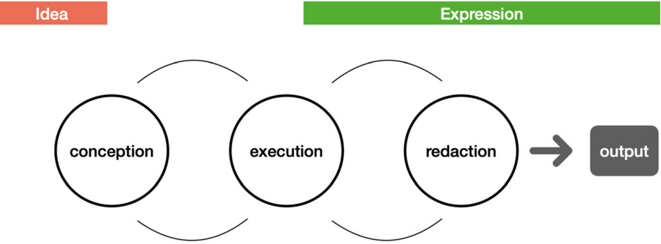
“A predominant human intellectual activity can be recognized, also based on the CJEU case law, when the human creator using an LLM makes free and creative choices in the phases of conception, execution, and/or redaction of the work [62].”
From Generative AI in EU law: Liability, privacy, intellectual property, and cybersecurity (2024) · cites this paper as [62]
Self-check
Percentages, sums and reported differences re-computed from the paper’s own numbers.
The self-check needs the paper’s full text.
Citations
Cites
Language Models are Few-Shot Learners
Brown, T. B., Mann, B., Ryder, N., Subbiah, M., Kaplan, J., Dhariwal, P., Neelakantan, A., Shyam, P., Sastry, G., Askell, A., et al. (2020) · arXiv · doi:10.48550/arxiv.2005.14165 · Cited by 23,372
Research works printed but not linked: 40
- Bently L et al (2018) Intellectual property law, 5th edn. OUP. https://global.oup.com/ukhe/product/intellectual-property-law-9780198769958?cc=nl&lang=en&. Accessed 15 Jul 2020 · DOI
- Bonadio E, McDonagh L (2020) Artificial intelligence as producer and consumer of copyright works: evaluating the consequences of algorithmic creativity. Intellect Prop Q 2:112
- Boyden BE (2016) Emergent works. Columbia J Law Arts 39:377
- Bridy A (2011) Coding creativity: copyright and the artificially intelligent author. Stanf Law Rev 5:1
- Bridy A (2016) The evolution of authorship: work made by code. Columbia J Law Arts 39:395
- Burk DL (2020) Thirty-six views of copyright authorship, by Jackson Pollock. Houst Law Rev 58. https://papers.ssrn.com/abstract=3570225. Accessed 9 Apr 2021
- Butler TL (1982) Can a computer be an author – copyright aspects of artificial intelligence. Hastings Comm Ent L J 4:707
- Craig CJ, Kerr IR (2019) The death of the AI author. In: Osgoode legal studies research paper. https://robots.law.miami.edu/2019/wp-content/uploads/2019/03/Kerr_Death-of-AI-Author.pdf. Accessed 4 May 2020 · DOI
- Deltorn J-M, Macrez F (2018) Authorship in the age of machine learning and artificial intelligence. In: The Oxford handbook of music law and policy. OUP. https://papers.ssrn.com/abstract=3261329. Accessed 29 Apr 2020 · DOI
- Denicola R (2016) Ex machina: copyright protection for computer-generated works. Rutgers Univ Law Rev 69:251
- Dietz A (1993) Le Concept d’auteur Selon Le Droit de La Convention de Berne. RIDA 155(01):2–57
- Dreier T (1992) Creation and investment: artistic and legal implications of computer-generated works. In: Leser HG, Isomura T (eds) Wege zum japanischen Recht. Festschrift für Zentaro Kitagawa. Duncker & Humblot, Berlin, pp 869–888
- Drexl J et al (2019) Technical aspects of artificial intelligence: an understanding from an intellectual property law perspective. Max Planck Inst Innov Compet 11. https://www.ip.mpg.de/en/publications/journals/research-paper-series.html. Accessed 4 May 2020 · DOI
- Gervais D (1991) The protection under international copyright law of works created with or by computers. IIC Int Rev Intellect Prop Compet Law 5:629
- Gervais DJ (2019) The machine as author. Iowa Law Rev 105:19
- Gervais D (2020) Is intellectual property law ready for artificial intelligence? GRUR Int 69:117 · DOI
- Ginsburg J (2003) The concept of authorship in comparative copyright law. DePaul Law Rev 52:1063
- Ginsburg JC (2018) People not machines: authorship and what it means in the Berne Convention. IIC Int Rev Intellect Prop Compet Law 49:131
- Ginsburg JC, Budiardjo LA (2019) Authors and machines. Berkeley Technol Law J 34:343
- Goldstein P, Hugenholtz PB (2019) International copyright: principles, law, and practice, 4th edn. Oxford University Press, Oxford
- Grimmelmann J (2016) Copyright for literate robots. Iowa Law Rev 101:657
- Grimmelmann J (2017) There’s no such thing as a computer-authored work – and it’s a good thing, too. Columbia J Law Arts 39:403
- Guadamuz A (2017) Do androids dream of electric copyright? Comparative analysis of originality in artificial intelligence generated works. Intellect Prop Q 2:169
- Hewitt S (1983) Protection of works created by the use of computers. New LJ 133:235
- Hilty RM, Hoffmann J, Scheuerer S (2020) Intellectual property justification for artificial intelligence, vol 1. Oxford University Press, Oxford
- Hugenholtz PB et al (2006) The recasting of copyright & related rights for the knowledge economy. IViR. Report to the European Commission, DG internal market ID 2018238. https://papers.ssrn.com/abstract=2018238. Accessed 15 Jul 2020 · DOI
- Kaminski ME (2017) Authorship, disrupted: AI authors in copyright and first amendment law. Social Science Research Network. SSRN scholarly paper ID 3086912. https://papers.ssrn.com/abstract=3086912. Accessed 4 May 2020
- Kummer M (1968) Das Urheberrechtlich Schützbare Werk. Stämpfli, Bern
- Milde KF Jr. (1969) Can a computer be and author or an inventor. J Pat Office Soc 51:378
- Quaedvlieg AA (2012) Authorship and ownership. In: Synodinou T (ed) Codification of European copyright law: challenges and perspective. Kluwer Law International, Alphen aan den Rijn
- Ramalho A (2017) Will robots rule the (artistic) world? A proposed model for the legal status of creations by artificial intelligence systems. J Internet Law 21:12
- Ricketson S (1991) The 1992 Horace S. Manges lecture – people or machines: the Bern Convention and the changing concept of authorship. Columbia VLA J Law Arts 16:1
- Sag M (2015) Copyright trolling, an empirical study. Iowa Law Rev 100:1105
- Samuelson P (1986) Allocating ownership rights in computer-generated works. In: Symposium cosponsored by University of Pittsburgh Law Review and the software En on The future of software protection. University of Pittsburgh Press
- Scheuerer S (2021) Artificial intelligence and unfair competition – unveiling an underestimated building block of the AI regulation landscape. GRUR Int. https://doi.org/10.1093/grurint/ikab021 · DOI
- Senftleben M, Buijtelaar L (2020) Robot creativity: an incentive-based neighboring rights approach. Eur Intellect Prop Rev 42:797–806
- Spindler G (2019) Copyright law and artificial intelligence. IIC Int Rev Intellect Prop Compet Law 50:1049
- Spoor JH, Verkade DWF, Visser DJG (2019) Auteursrecht. Wolters Kluwer. http://www.wolterskluwer.nl. Accessed 15 Apr 2021
- van Gompel S (2014) Creativity, autonomy and personal touch. A critical appraisal of the CJEU’s originality test for copyright. In: van Eechoud M (ed) The work of authorship. Amsterdam University Press, pp 95–143 · DOI
- Vousden S (2011) Protecting GUIs in EU law: Bezpečnostní Softwarová Asociace. J Intellect Prop Law Pract 6:728 · DOI
Cited by
Lund, B. D., Wang, T., Mannuru, N. R., Nie, B., Shimray, S., & Wang, Z. (2023) · Journal of the Association for Information Science and Technology · doi:10.1002/asi.24750 · Cited by 919
Generative AI in EU law: Liability, privacy, intellectual property, and cybersecurity
Novelli, C., Casolari, F., Hacker, P., Spedicato, G., & Floridi, L. (2024) · Computer Law & Security Review · doi:10.1016/j.clsr.2024.106066 · Cited by 124
Al-Busaidi, A. S., Raman, R., Hughes, L., Albashrawi, M. A., Malik, T., Dwivedi, Y. K., Al- Alawi, T., AlRizeiqi, M., Davies, G., Fenwick, M., et al. (2024) · Journal of Innovation & Knowledge · doi:10.1016/j.jik.2024.100630 · Cited by 95
Generative Ai in EU Law: Liability, Privacy, Intellectual Property, and Cybersecurity
Novelli, C., Casolari, F., Hacker, P., Spedicato, G., & Floridi, L. (2024) · doi:10.2139/ssrn.4821952 · Cited by 57
Goodyear, M. (2025) · SSRN Electronic Journal · doi:10.2139/ssrn.5184405 · Cited by 2
Metadata
- Authors
- Hugenholtz, P. B., & Quintais, J. P.
- ORCID
- Quintais, João Pedro
- Venue
- IIC - International Review of Intellectual Property and Competition Law
- Published
- 2021-10
- Volume
- 52
- Issue
- 9
- Pages
- 1190-1216
- ISSN
- 0018-9855
- 2195-0237
- Cited by
- 103
- References
- 1
- Language
- en
About these checks
Registry, retraction, Cites and statistics results are computed, not judged, with one exception: a printed reference that no index lists is read once by a model before it counts as a citation error. Claims are extracted by a model and kept only when their quote appears verbatim in the text; each cited source is then checked, with a model’s help, for whether it says what the claim relies on. Those verdicts can be wrong — read the claim’s quote and the cited source before relying on one.
Statistics and arithmetic are recomputed, not judged.
Confidence bands are shown only for fields calibrated on our annotated test set. None is calibrated yet, so no band is shown.
What counts as a claim ›How we measure confidence ›How we check this ›
Are you an author, or do you see a problem with this page? Request a review
