

Efficacy of liraglutide 3.0 mg treatment on weight loss in patients with weight regain after bariatric surgery
Open accessThe DOI matches its Crossref record; 24 of the 24 references it cites were found in a registry or an index.
Abstract
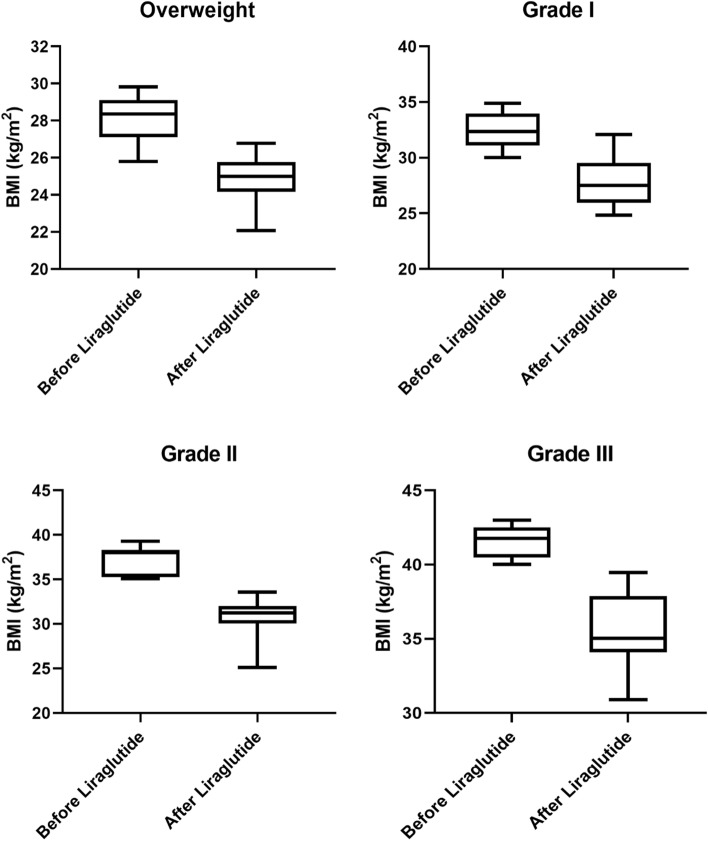
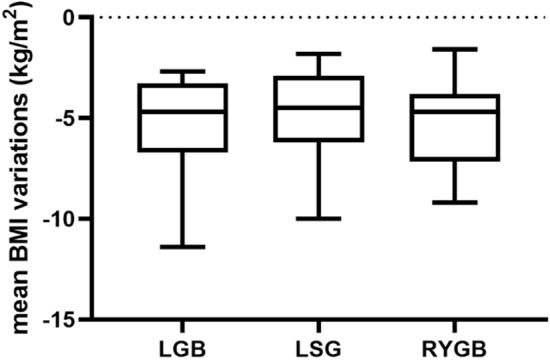
Purpose: Bariatric surgery, as Roux-en-Y gastric bypass (RYGB), laparoscopic gastric banding (LGB), and laparoscopic sleeve gastrectomy (LSG), is considered the gold standard treatment to achieve long-term weight loss in severe obesity. In patients who fail to maintain the achieved weight, pharmacological treatment may be required. Here, we reported our real-life experience on the efficacy of liraglutide therapy in 62 patients who regained weight after bariatric surgery. Methods: We retrospectively evaluated 62 (60 F-2 M; mean age: 43.6 ± 9.9 years) patients received liraglutide for weight loss after bariatric surgery (17 RYGB, 22 LGB, and 23 LSG). Body mass index (BMI) before and after surgery was, respectively, of 45.4 ± 5.5 kg/m 2 and 29.5 ± 4.9 kg/m 2. Patients were followed up from 2016 until 2021. Liraglutide was administered after weight regain once-daily subcutaneously at starting dose of 0.6 mg and with weekly increases up to 3.0 mg. Treatments were administered when a weight regain of 10–15% occurred after reaching a minimum weight loss from bariatric surgery or if weight loss after bariatric surgery was unsatisfactory. Results: After a mean of 70.7 ± 43.7 months from any bariatric surgery, all patients started liraglutide therapy. At this time, mean BMI was 34.2 ± 4.8 kg/m 2 (mean increased BMI: 4.7 ± 2.8 kg/m 2). After a mean of 10.5 ± 4.4 months from the beginning of liraglutide, 9 patients achieved normal weight (BMI 24.1 ± 0.9 kg/m 2), and 28 were overweight (BMI 26.9 ± 1.6 kg/m 2). Twenty patients achieved grade I (BMI 32.1 ± 1.5 kg/m 2), 5 grade II (BMI 37.3 ± 2.0 kg/m 2) obesity, and none had grade III obesity (mean BMI change: − 5.1 ± 2.5 kg/m 2). The treatment was well tolerated, and no serious adverse events were recorded. Conclusion: These data confirm the efficacy and safety of liraglutide in patients who experienced weight regain after bariatric surgery. Considering the long-term follow-up, patients should be followed up regularly and the pharmacological treatment should be adapted to the weight fluctuations observed during the clinical history. Level of evidence: V. Opinions of authorities, based on descriptive studies, narrative reviews, clinical experience, or reports of expert committees.
Overview
The claims and statistics of this paper haven’t been checked yet.
Free: it reads the open-access text and checks the first 5 claims that cite a source we can check. Create a free account to check every claim.
Integrity signals
Registry
Cites
Statistics
Figures
Verification
Claims the paper makes
The claims and statistics of this paper haven’t been checked yet.
Free: it reads the open-access text and checks the first 5 claims that cite a source we can check. Create a free account to check every claim.
Claims other papers make about this one
Each is checked against this paper’s own text: does it say what the citing paper says it does?
The source backs part of the claim, not all of it — or backs it for a different population, condition or comparison.
In the citing paper
“Results from studies enrolling patients with previous bariatric surgery are in line with those including surgically naïve individuals64,69,72”
From Incretin-based therapies for the treatment of obesity-related diseases (2024) · cites this paper as [72]
Experimental — accuracy not yet measuredIn the citing paper
“no difference was detected according to the type of surgery72”
From Incretin-based therapies for the treatment of obesity-related diseases (2024) · cites this paper as [72]
Self-check
Percentages, sums and reported differences re-computed from the paper’s own numbers.
The self-check needs the paper’s full text.
Citations
Cites
Bariatric Surgery: A Systematic Review and Meta-analysis
Buchwald, H., Avidor, Y., Braunwald, E., Jensen, M. D., Pories, W., Fahrbach, K., & Schoelles, K. (2004) · JAMA · doi:10.1001/jama.292.14.1724 · Cited by 6,800 · cited 2×
“Bariatric surgery is considered as the gold standard treatment to achieve significant and durable weight loss in severe obesity, especially in patients with severe complications as diabetes mellitus, sleep apnea syndrome, or patients with long experience of weight cycling [1, 2].”
BackgroundEffects of Bariatric Surgery on Mortality in Swedish Obese Subjects
Sjöström, L., Narbro, K., Sjöström, C. D., Karason, K., Larsson, B., Wedel, H., Lystig, T., Sullivan, M., Bouchard, C., Carlsson, B., et al. (2007) · New England Journal of Medicine · doi:10.1056/nejmoa066254 · Cited by 4,668 · cited 1×
“The Swedish Obese Subjects (SOS) study first showed a permanent weight loss after 15-year follow-up and a reduction in mortality as well as the incidence of type 2 diabetic disease and some kind of cancer in patients undergoing bariatric surgery [3, 4].”
BackgroundLifestyle, diabetes, and cardiovascular risk factors 10 years after bariatric surgery
Sjöström, L., Lindroos, A.-K., Peltonen, M., Torgerson, J., Bouchard, C., Carlsson, B., Dahlgren, S., Larsson, B., Narbro, K., Sjöström, C. D., et al. (2004) · New England Journal of Medicine · doi:10.1056/nejmoa035622 · Cited by 4,457
A Randomized, Controlled Trial of 3.0 mg of Liraglutide in Weight Management
Pi-Sunyer, X., Astrup, A., Fujioka, K., Greenway, F., Halpern, A., Krempf, M., Lau, D. C. W., le Roux, C. W., Violante Ortiz, R., Jensen, C. B., et al. (2015) · New England Journal of Medicine · doi:10.1056/nejmoa1411892 · Cited by 2,724 · cited 1×
“Furthermore, some authors have observed how the dilation of the gastric stoma post-gastric bypass can have an influence on weight regain [15].”
BackgroundSjöström, L. (2013) · Journal of Internal Medicine · doi:10.1111/joim.12012 · Cited by 1,835 · cited 1×
“The Swedish Obese Subjects (SOS) study first showed a permanent weight loss after 15-year follow-up and a reduction in mortality as well as the incidence of type 2 diabetic disease and some kind of cancer in patients undergoing bariatric surgery [3, 4].”
Backgroundle Roux, C. W., Astrup, A., Fujioka, K., Greenway, F., Lau, D. C. W., Van Gaal, L., Ortiz, R. V., Wilding, J. P. H., Skjøth, T. V., Manning, L. S., et al. (2017) · The Lancet · doi:10.1016/s0140-6736(17)30069-7 · Cited by 850
on behalf of the NN8022-1923 Investigators, Wadden, T. A., Hollander, P., Klein, S., Niswender, K., Woo, V, Hale, P. M., & Aronne, L. (2013) · International Journal of Obesity · doi:10.1038/ijo.2013.120 · Cited by 842
Weight Gain After Short- and Long-Limb Gastric Bypass in Patients Followed for Longer Than 10 Years
Christou, N. V., Look, D., & MacLean, L. D. (2006) · Annals of Surgery · doi:10.1097/01.sla.0000217592.04061.d5 · Cited by 728
Long-term Weight Regain after Gastric Bypass: A 5-year Prospective Study
Magro, D. O., Geloneze, B., Delfini, R., Pareja, B. C., Callejas, F., & Pareja, J. C. (2008) · Obesity Surgery · doi:10.1007/s11695-007-9265-1 · Cited by 677
Weight Recidivism Post-Bariatric Surgery: A Systematic Review
Karmali, S., Brar, B., Shi, X., Sharma, A. M., de Gara, C., & Birch, D. W. (2013) · Obesity Surgery · doi:10.1007/s11695-013-1070-4 · Cited by 574 · cited 2×
“Bariatric surgery is considered as the gold standard treatment to achieve significant and durable weight loss in severe obesity, especially in patients with severe complications as diabetes mellitus, sleep apnea syndrome, or patients with long experience of weight cycling [1, 2].”
Background
Research works printed but not linked: 2
- Muratori FV Di Sacco G Efficacy of sibutramine in subjects who regained weight after bariatric surgery Int J Obes Related Metab Disord 2002 26 Supplement 1 S150
- Muratori F Di Sacco G Pellegrino D Vignati F Effectiveness of liraglutide 30 mg treatment of obesity in weight regain after bariatric surgery. Obesity facts Eur J Obes 2018 11 supplement 1 280
Cited by
Xie, Z., Yang, S., Deng, W., Li, J., & Chen, J. (2022) · Clinical Epidemiology · doi:10.2147/clep.s391819 · Cited by 93
Jamal, M. H., Alhashemi, M., Dsouza, C. L., Al-Hassani, S., Qasem, W., Almazeedi, S. M., & Al-Sabah, S. K. (2024) · Obesity Surgery · doi:10.1007/s11695-024-07137-0 · Cited by 74
Pharmacological Support for the Treatment of Obesity—Present and Future
Kosmalski, M., Deska, K., Bąk, B., Różycka-Kosmalska, M., & Pietras, T. (2023) · Healthcare · doi:10.3390/healthcare11030433 · Cited by 68
“0 mg applies to Roux-en-Y gastric bypass, laparoscopic gastric banding, and laparoscopic sleeve gastrectomy procedures [98].”
Dutta, D., Nagendra, L., Joshi, A. S., Krishnasamy, S., Sharma, M., & Parajuli, N. (2024) · Obesity Surgery · doi:10.1007/s11695-024-07175-8 · Cited by 67
Effectiveness and safety of drugs for obesity
Henderson Lewis, K., Sloan, C. E., Bessesen, D. H., & Arterburn, D. (2024) · BMJ · doi:10.1136/bmj-2022-072686 · Cited by 66
COHEN, R. V., Park, J. Y., Prager, G., Bueter, M., le Roux, C. W., Parmar, C. D., Kermansaravi, M., Salminen, P. T. P., & Miras, A. D. (2024) · British journal of surgery · doi:10.1093/bjs/znae284 · Cited by 50
Incretin-based therapies for the treatment of obesity-related diseases
Caruso, I., Cignarelli, A., Sorice, G. P., Perrini, S., & Giorgino, F. (2024) · npj Metabolic Health and Disease · doi:10.1038/s44324-024-00030-5 · Cited by 48
Akpinar, E. O., Liem, R. S. L., Nienhuijs, S. W., Greve, J. W. M., de Mheen, P. J. M., de Brauw, L. M., de Castro, S. M. M., Damen, S. L., Demirkiran, A., Dunkelgrün, M., et al. (2023) · Surgical Endoscopy · doi:10.1007/s00464-022-09785-8 · Cited by 46
“In addition, it suggests that patients may require multiple sequential or parallel treatment strategies such as additional surgery [18] or medical treatment [27] to prevent or treat weight recurrence, as a single bariatric procedure may not always suffice [28–31] .”
BackgroundEsparham, A., Mehri, A., Dalili, A., Richards, J., & Khorgami, Z. (2024) · Obesity Reviews · doi:10.1111/obr.13811 · Cited by 45
“BMI changes after liraglutide was reported in five studies in which four studies used a maximum dose of 3 mg liraglutide 35,36,38,46 and one study used a maximum dose of 1.8 mg liraglutide.”
InfluentialLupianez‐Merly, C., Dilmaghani, S., Vosoughi, K., & Camilleri, M. (2024) · Alimentary Pharmacology & Therapeutics · doi:10.1111/apt.17856 · Cited by 40
Bonnet, J., Tournayre, S., Anitcheou, J., Faivre, M., Boegner, C., Jalek, A., Jullien, D., Attalin, V., Myzia, J., Marty, L., et al. (2023) · Obesity · doi:10.1002/oby.23922 · Cited by 38
Nie, Y., Zhang, Y., Liu, B., & Meng, H. (2025) · Obesity Surgery · doi:10.1007/s11695-025-07733-8 · Cited by 30
Dréant, A., Blanchard, C. L., & Jacobi, D. (2024) · Obesity Surgery · doi:10.1007/s11695-024-07127-2 · Cited by 25
“To mitigate this bias, conducting separate studies for patients with and without diabetes is recommended, as three of the studies included in our review have already done [33, 35, 36].”
Tan, Y. W., Shang, M., Davis, S., & Gananadha, S. (2025) · Langenbeck s Archives of Surgery · doi:10.1007/s00423-025-03831-4 · Cited by 24
Vinciguerra, F., Stefano, C. D., Baratta, R., Pulvirenti, A., Mastrandrea, G., Piazza, L., Guccione, F., Navarra, G., & Frittitta, L. (2024) · Obesity Surgery · doi:10.1007/s11695-023-07053-9 · Cited by 24
“There is no evidence in the literature of a differential response to pharmacotherapy depending on the type of procedure, although most studies evaluate efficacy after at least 24 weeks [22, 23, 27].”
BackgroundMethodPharmacological Treatments and Natural Biocompounds in Weight Management
Gasmi, A., Mujawdiya, P. K., Nehaoua, A., Shanaida, M., Semenova, Y. M., Piscopo, S., Menzel, A., Voloshyn, V., Voloshyn, O., Shanaida, V., et al. (2023) · Pharmaceuticals · doi:10.3390/ph16020212 · Cited by 24
“Modern studies have confirmed the positive effect of Liraglutide in treating patients who have regained weight after bariatric surgery [44].”
BackgroundPratama, K. G., Nugroho, H., Hengky, A., Tandry, M., & Pauliana, P. (2024) · Obesity Medicine · doi:10.1016/j.obmed.2024.100533 · Cited by 22
Pharmacotherapy as an Augmentation to Bariatric Surgery for Obesity
Horváth, L., Mráz, M., Jude, E. B., & Haluzík, M. (2024) · Drugs · doi:10.1007/s40265-024-02029-0 · Cited by 22
“Another retrospective study ( n = 62) has shown a significant weight loss after 10.5 ± 4.4 months of liraglutide 3.0 mg treatment in patients with weight regain after RYGB, LSG, and LAGB, with a mean BMI loss of 5.1 ± 2.5 kg/m 2 [139].”
BackgroundInfluentialJensen, A. B., Machado, U., Renström, F., Aczél, S., Folie, P., Biraima-Steinemann, M., & Bilz, S. (2025) · BMC Endocrine Disorders · doi:10.1186/s12902-025-01913-4 · Cited by 21
de Moraes, F. C. A., Morbach, V., Sano, V. K. T., Fernandes, L. R., Kreuz, M., & Kelly, F. A. (2024) · Obesity Surgery · doi:10.1007/s11695-024-07384-1 · Cited by 21
Bahdi, F., Shah, S. N., Dahoud, F., Farooq, M., Kozan, P. A., Kim, S. H., Sedarat, A., Shen, N., Thaker, A. M., Kolb, J. M., et al. (2025) · Clinical Obesity · doi:10.1111/cob.70001 · Cited by 19
“11 – 13 Importantly, no previous studies compared R-ESG to GLP1/GIP-RA for weight recidivism after SG.”
High-dose liraglutide improves metabolic syndrome in poor responders to bariatric surgery
Vinciguerra, F., Piazza, L., Stefano, C. D., Degano, C., Pulvirenti, A., Baratta, R., & Frittitta, L. (2023) · Frontiers in Nutrition · doi:10.3389/fnut.2023.1183899 · Cited by 19
Vidmar, A. P., Vu, M. H., Martin, M. J., Kim, A. G., Abel, S. A., Weitzner, M., Muñoz, C. E., Kim, A., & Samakar, K. (2025) · Obesity Surgery · doi:10.1007/s11695-024-07658-8 · Cited by 15
Mousavi, A., Shojaei, S., Azarboo, A., Bahri, R. A., Mohammadi, S., Alilou, S., Yousefifar, S., Maleki, S., & Radkhah, H. (2025) · Eating and Weight Disorders - Studies on Anorexia Bulimia and Obesity · doi:10.1007/s40519-025-01770-z · Cited by 14
Berković, M. C., Bilić-Čurčić, I., Mrzljak, A., Canecki-Varžić, S., & Cigrovski, V. (2022) · World Journal of Diabetes · doi:10.4239/wjd.v13.i12.1096 · Cited by 14
Adjuvant and Neo-Adjuvant Anti-Obesity Medications and Bariatric Surgery: A Scoping Review
Sher, T., McGee, M. Y., DuCoin, C. G., Sujka, J. A., & Docimo, S. (2024) · Current Obesity Reports · doi:10.1007/s13679-024-00558-z · Cited by 11
“In a similar study with similar results, Muratori et al. (2022) also evaluated the use of adjuvant liraglutide 3 mg daily in 62 patients (60 females) with weight regain 70.7 ± 43.7 months after bariatric surgery (RYGB, SG, or AGB) [55].”
InfluentialGolzarand, M., Toolabi, K., & Mirmiran, P. (2025) · International Journal of Obesity · doi:10.1038/s41366-025-01807-4 · Cited by 9
Arrowaili, A. (2025) · Obesity Surgery · doi:10.1007/s11695-025-07856-y · Cited by 7
Evaluating the use of adjuvant and neoadjuvant terminology in bariatric surgery: a scoping review
Sher, T., McGee, M. Y., DuCoin, C. G., Sujka, J. A., & Docimo, S. (2024) · Journal of Gastrointestinal Surgery · doi:10.1016/j.gassur.2024.03.009 · Cited by 7
Chen, C. O., Chi, P., Tu, W.-L., Tsai, C., & Chen, J. (2025) · Obesity Surgery · doi:10.1007/s11695-025-08256-y · Cited by 4
Outcomes and Management of Re-Establishing Bariatric Patients
Medhati, P., Saleh, O. S., Nimeri, A. A., Apovian, C. M., Thompson, C. C., Jirapinyo, P., Sheu, E. G., & Tavakkoli, A. (2024) · Journal of the American College of Surgeons · doi:10.1097/xcs.0000000000001062 · Cited by 4
Majid, S. F., Ahmed, S. M., Benson‐Davies, S., Voellinger, D. C., Davis, M., Ajmal, S., Hamilton, F. R., Ali, M. M., & Archer, S. (2025) · Obesity Surgery · doi:10.1007/s11695-025-08359-6 · Cited by 4
Cost-Utility Analysis of Metabolic Bariatric Surgery for Individuals with Obesity in Saudi Arabia
Nagi, M. A., Turongkaravee, S., Almalki, Z. S., Thavorncharoensap, M., Sangroongruangsri, S., Chaikledkaew, U., Alqahtani, A., AlSharif, L. S., Alsubaihi, I. A., Alzarea, A. I., et al. (2025) · ClinicoEconomics and Outcomes Research · doi:10.2147/ceor.s527169 · Cited by 3
“The findings are intended to inform evidence-based policy development and support strategic planning to expand access to MBS.”
InfluentialTreatment of suboptimal initial response or recurrent weight gain after Roux-en-Y gastric bypass
Makaronidis, J., & Gerö, D. (2024) · British journal of surgery · doi:10.1093/bjs/znae081 · Cited by 2
Pharmacological Strategies for Pediatric Obesity
Fox, C. K., Raatz, S. J., & Sweeney, B. R. (2023) · Springer eBooks · doi:10.1007/978-3-031-37380-0_6 · Cited by 2
de Waal, J. R., Nieuwdorp, M., & Gerdes, V. E. A. (2026) · Frontiers in Endocrinology · doi:10.3389/fendo.2026.1680182 · Cited by 1
Sridharan, K., & Sivaramakrishnan, G. (2026) · Obesity Medicine · doi:10.1016/j.obmed.2026.100700 · Cited by 1
Weight Regain following Bariatric Surgery and in vitro Fertilization Outcomes
Zemer-Tov, B., Ziv‐Baran, T., Igawa, M., Lieberman, G., Orvieto, R., & Machtinger, R. (2024) · Obesity Facts · doi:10.1159/000540388 · Cited by 1
Liraglutide: Lack of efficacy: 2 case reports
(2023) · Reactions Weekly · doi:10.1007/s40278-023-37674-z
Traitement pharmacologique du diabète de type 2 après chirurgie bariatrique/métabolique
Scheen, A. J. (2023) · Médecine des Maladies Métaboliques · doi:10.1016/j.mmm.2023.05.006
Akpinar, E. O. (2023) · Research Publications (Maastricht University) · doi:10.26481/dis.20230704ea
Obesità: una malattia recidivante, anche dopo trattamento chirurgico
Vinciguerra, F., Stefano, C. D., Piazza, L., & Frittitta, L. (2024) · il Diabete · doi:10.30682/ildia2401d
Alshammari, A. S. R., Alarfaj, S. S. A., & Kofi, M. A. (2025) · Scientia. Technology, science and society. · doi:10.59324/stss.2025.2(3).01
Frutuoso, J. F. (2023) · Portuguese National Funding Agency for Science, Research and Technology (RCAAP Project by FCT) · doi:10.34626/apd3-wq34
Hung, K., Liao, S.-W., Yu, T., Liu, W., Chang, Y.-J., & Chen, I. (2026) · Obesity Surgery · doi:10.1007/s11695-026-08671-9
“Glucagon-like peptide-1 receptor agonist (GLP-1 RA) have emerged as an effective adjunctive therapy for post-bariatric weight management, with cumulative evidence demonstrating significant benefits in patients with insufficient weight loss or weight regain [ 10– 14].”
Ouyang, Y., Zhong, W., Chen, L., Tang, W., Cao, X., Chu, X., Zhu, D., & Feng, W. (2026) · Obesity Surgery · doi:10.1007/s11695-026-08838-4
“Most prior studies have evaluated pharmacotherapy after 12 months or later, typically in the setting of weight regain [15, 16].”
Miličević, T., Cvitković, I., Volčanšek, Š., Katsiki, N., Mikhailidis, D. P., Patoulias, D., & Muzurović, E. M. (2026) · Expert Review of Clinical Pharmacology · doi:10.1080/17512433.2026.2706660
“Liraglutide has also confirmed its efficacy and safety in patients who experienced weight regain after bariatric surgery [66,67].”
Santos, C. V., Tock, H. D. E., Tang, H., McEwen, L. N., Kraftson, A. T., Herman, W. H., & Rothberg, A. E. (2026) · International Journal of Obesity · doi:10.1038/s41366-026-02159-3
Alotaibi, R. R., Alharbi, L. N., Albash, A., Dumlu, G. Y., Alahmadi, R., Alharbi, A. F., Alhassan, R. A., Alkarri, M. N., Farj, T. E., Haqwi, M. F., et al. (2026) · Journal of Advanced Trends in Medical Research · doi:10.4103/atmr.atmr_146_25
GLP-1 Receptor Agonists in Recurrent Weight Gain after Metabolic Bariatric Surgery
Manyari, Á. A. O., & Manyari, A. L. A. A. A. J. D. O. (2026) · IntechOpen eBooks · doi:10.5772/intechopen.1016875
Monteiro, M. P., Frutuoso, J. F., Pereira, S. S., Guimarães, M., & Monteiro, M. P. (2026) · Frontiers in Endocrinology · doi:10.3389/fendo.2026.1870008
Metadata
- Authors
- Muratori, F., Vignati, F., Di Sacco, G., Gavazzi, L., Pellegrino, D., & Del Prete, M.
- Affiliations
- Azienda Socio Sanitaria Territoriale Lariana (IT)
- Corresponding author
- Muratori, Fabrizio
- ORCID
- Muratori, Fabrizio
- Venue
- Eating and Weight Disorders - Studies on Anorexia, Bulimia and Obesity
- Published
- 2022-06-28
- Volume
- 27
- Issue
- 7
- Pages
- 2775-2781
- ISSN
- 1124-4909 (ISSN-L)
- 1590-1262
- PMC
- PMC9556416
- OpenAlex
- W4283702092
- Cited by
- 49
- References
- 24
- Citations by year
- 2026: 7 · 2025: 12 · 2024: 19 · 2023: 9 · 2022: 2
- FWCI
- 10.03
- Type
- journal article
- Language
- en
- Open access
- hybrid
- doi.org
- Licence
- cc-by
- creativecommons.org/licenses/by/4.0 (tdm)
- creativecommons.org/licenses/by/4.0 (vor)
- Locations
- Eating and Weight Disorders - Studies on Anorexia Bulimia and Obesity (publishedVersion, cc-by)
- Research Square (acceptedVersion, cc-by)
- PubMed Central (publishedVersion, cc-by)
- PubMed (publishedVersion)
- Topics
- Health Sciences › Medicine › Surgery › Bariatric Surgery and Outcomes
- Health Sciences › Medicine › Pharmacology (medical) › Pharmacology and Obesity Treatment
- Health Sciences › Medicine › Surgery › Body Contouring and Surgery
- Keywords
- liraglutide, obesity, Roux-en-Y gastric bypass, laparoscopic sleeve gastrectomy, laparoscopic adjustable gastric banding, weight loss, GLP-1 receptor agonists, pharmacotherapy, treatment efficacy, tolerability, adverse events, body mass index, morbid obesity, weight regain prevention, real-world experience
- MeSH terms
- Liraglutide, Adult, Gastrectomy, Humans, Middle Aged, Obesity, Obesity, Morbid, Laparoscopy, Retrospective Studies, Gastric Bypass, Weight Gain, Weight Loss, Treatment Outcome, Bariatric Surgery
About these checks
Registry, retraction, Cites and statistics results are computed, not judged, with one exception: a printed reference that no index lists is read once by a model before it counts as a citation error. Claims are extracted by a model and kept only when their quote appears verbatim in the text; each cited source is then checked, with a model’s help, for whether it says what the claim relies on. Those verdicts can be wrong — read the claim’s quote and the cited source before relying on one.
Statistics and arithmetic are recomputed, not judged.
Confidence bands are shown only for fields calibrated on our annotated test set. None is calibrated yet, so no band is shown.
What counts as a claim ›How we measure confidence ›How we check this ›
Are you an author, or do you see a problem with this page? Request a review
Data sources
Bibliographic data: Semantic Scholar, OpenAlex, Crossref.
Contains information from the Semantic Scholar Academic Graph Datasets, made available under the ODC Attribution License (ODC-BY 1.0).
Semantic Scholar’s data is described in: Kinney, R., et al. (2023). The Semantic Scholar Open Data Platform. arXiv:2301.10140.
