

Anti-inflammatory effects of diet and caloric restriction in metabolic syndrome
Open accessThe DOI matches its Crossref record; 30 of the 31 references it cites were found in a registry or an index.
Abstract
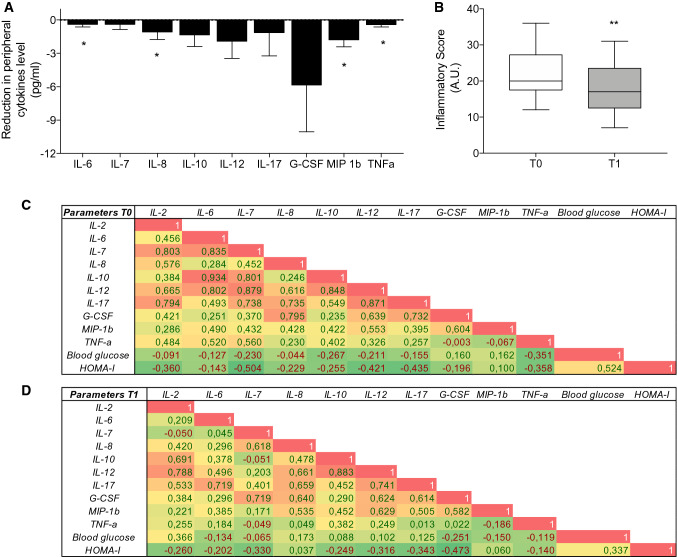
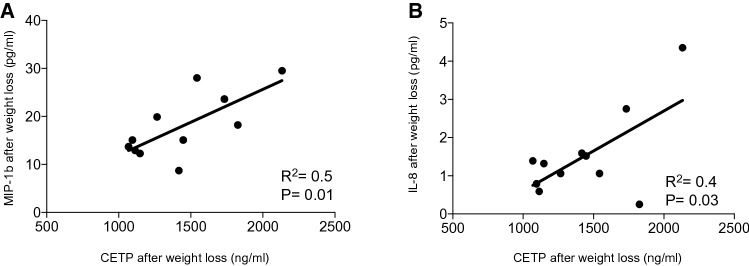
Background: Weight loss in patients with metabolic syndrome has positive effects on cardiovascular and type 2 diabetes risks, but its effects on peripheral cytokines and lipid profiles in patients are still unclear. Aim: To determine the effects of diet-induced weight loss on metabolic parameters, lipids and cytokine profiles. Methods: Eighteen adult males with metabolic syndrome (defined according to IDF 2009) and Body Mass Index (BMI) between 25 and 35 kg/m 2 were subjected to a balanced hypocaloric diet for 6 months to reach at least a 5% body weight loss. Results: After weight loss, a significant improvement in BMI, waist circumference, insulin, fasting blood glucose and HOMA-IR (homeostasis model assessment of insulin resistance) was observed. The analysis of LDL (low-density lipoprotein cholesterol) and HDL (high-density lipoprotein cholesterol) lipoproteins showed a change in their composition with a massive transfer of triacylglycerols from HDL to LDL. This was associated with a significant reduction in peripheral pro-inflammatory cytokines such as IL-6, TNF-α, IL-8 and MIP-1β, leading to an overall decreased inflammatory score. An interesting positive correlation was also observed among peripheral cytokines levels after diet and peripheral levels of CETP (cholesteryl ester transfer protein), an enzyme with a key role in lipid change. Conclusion: Weight loss through caloric restriction is associated with an improvement in peripheral lipid and cytokine profiles that may play a major role in improving cardiovascular risk. Graphic abstract:
Overview
The claims and statistics of this paper haven’t been checked yet.
Free: it reads the open-access text and checks the first 5 claims that cite a source we can check. Create a free account to check every claim.
Integrity signals
Registry
Cites
Statistics
Figures
Verification
Claims the paper makes
The claims and statistics of this paper haven’t been checked yet.
Free: it reads the open-access text and checks the first 5 claims that cite a source we can check. Create a free account to check every claim.
Claims other papers make about this one
Each is checked against this paper’s own text: does it say what the citing paper says it does?
The source backs part of the claim, not all of it — or backs it for a different population, condition or comparison.
In the citing paper
“Reducing body weight from 5 to 10% enhances the regulation of blood glucose levels. It positively impacts risk factors associated blood pressure and lipid profile.”
From Anti-inflammatory role of glucagon-like peptide 1 receptor agonists and its clinical implications (2024) · cites this paper as [56]
Experimental — accuracy not yet measured
Self-check
Percentages, sums and reported differences re-computed from the paper’s own numbers.
The self-check needs the paper’s full text.
Citations
Cites
Alberti, K. G. M. M., Eckel, R. H., Grundy, S. M., Zimmet, P. Z., Cleeman, J. I., Donato, K. A., Fruchart, J.-C., James, W. P. T., Loria, C. M., & Smith, S. C. (2009) · Circulation · doi:10.1161/circulationaha.109.192644 · Cited by 14,860
Obesity is associated with macrophage accumulation in adipose tissue
Weisberg, S. P., McCann, D., Desai, M., Rosenbaum, M., Leibel, R. L., & Ferrante, A. W. (2003) · Journal of Clinical Investigation · doi:10.1172/jci200319246 · Cited by 10,041 · cited 1×
“1 3 tissue and that this independently increases the risk of adverse cardiovascular outcomes [24, 25].”
BackgroundKim, H. J., Park, S. Y., Choi, Y. J., Han, S. J., Lee, K. W., & Kim, D. J. (2013) · Hormone Research in Paediatrics · doi:10.1159/000348848 · Cited by 3,048
de Lorgeril, M., Salen, P., Martin, J.-L., Monjaud, I., Delaye, J., & Mamelle, N. (1999) · Circulation · doi:10.1161/01.cir.99.6.779 · Cited by 2,910
Esposito, K., Nappo, F., Marfella, R., Giugliano, G., Giugliano, F., Ciotola, M., Quagliaro, L., Ceriello, A., & Giugliano, D. (2002) · Circulation · doi:10.1161/01.cir.0000034509.14906.ae · Cited by 1,961
The Effect of Mediterranean Diet on Metabolic Syndrome and its Components
Kastorini, C.-M., Milionis, H. J., Esposito, K., Giugliano, D., Goudevenos, J. A., & Panagiotakos, D. B. (2011) · Journal of the American College of Cardiology · doi:10.1016/j.jacc.2010.09.073 · Cited by 1,087
Inflammatory Markers and Risk of Type 2 Diabetes
Wang, X., Bao, W., Liu, J., OuYang, Y.-Y., Wang, D., Rong, S., Xiao, X., Shan, Z.-L., Zhang, Y., Yao, P., et al. (2013) · Diabetes Care · doi:10.2337/dc12-0702 · Cited by 820
Schwingshackl, L., & Hoffmann, G. (2014) · Nutrition, Metabolism and Cardiovascular Diseases · doi:10.1016/j.numecd.2014.03.003 · Cited by 584
Systemic Inflammation, Adipose Tissue Tumor Necrosis Factor, and Leptin Expression
Bulló, M., García‐Lorda, P., Megias, I., & Salas‐Salvadó, J. (2003) · Obesity Research · doi:10.1038/oby.2003.74 · Cited by 449
[8] Single vertical spin density gradient ultracentrifugation
Chung, B. H., Segrest, J. P., Ray, M. J., Brunzell, J. D., Hokanson, J. E., Krauss, R. M., Beaudrie, K., & Cone, J. T. (1986) · Methods in Enzymology · doi:10.1016/0076-6879(86)28068-4 · Cited by 447
Cited by
The anti-inflammatory and immunological properties of GLP-1 Receptor Agonists
Bendotti, G., Montefusco, L., Lunati, M. E., Usuelli, V., Pastore, I., Lazzaroni, E., Assi, E., Seelam, A. J., El Essawy, B., Jang, J., et al. (2022) · Pharmacological Research · doi:10.1016/j.phrs.2022.106320 · Cited by 406
Self-citationAnti-inflammatory role of glucagon-like peptide 1 receptor agonists and its clinical implications
Alharbi, S. H. (2024) · Therapeutic Advances in Endocrinology and Metabolism · doi:10.1177/20420188231222367 · Cited by 358
“56 Proteins known as Sodium-dependent glucose cotransporter proteins 1 and 2 (SGLT1/2), particularly inhibitors of these proteins, stimulate a rise in the glucagon-to-insulin ratio, increasing lipids’ mobilization.”
BackgroundAnti-diabetic drugs and weight loss in patients with type 2 diabetes
Lazzaroni, E., Ben Nasr, M., Loretelli, C., Pastore, I., Plebani, L., Lunati, M. E., Vallone, L., Bolla, A. M., Rossi, A., Montefusco, L., et al. (2021) · Pharmacological Research · doi:10.1016/j.phrs.2021.105782 · Cited by 182
“Weight-loss of 5-10%, not only improves glycemic control, but also influences cardiovascular risk factors, such as hypertension and dyslipidemia [6, 7].”
BackgroundSelf-citationMechanisms and risk factors of metabolic syndrome in children and adolescents
Codazzi, V., Frontino, G., Galimberti, L., Giustina, A., & Petrelli, A. (2023) · Endocrine · doi:10.1007/s12020-023-03642-x · Cited by 116
“This is supported by the evidence that diet-induced weight loss exerts anti-in fl ammatory effects, resulting in improvements in metabolic parameters, lipid levels, and cytokine pro fi les [114].”
BackgroundMartemucci, G., Fracchiolla, G., Muraglia, M., Tardugno, R., Dibenedetto, R. S., & D‘Alessandro, A. G. (2023) · Antioxidants · doi:10.3390/antiox12122091 · Cited by 99
“It also improves lipid and cytokine profiles, reduces cardiovascular risks [595] and improves blood sugar and insulin sensitivity in obese patients with T2D [596].”
Human age reversal: Fact or fiction?
Johnson, A. A., English, B. W., Shokhirev, M. N., Sinclair, D. A., & Cuellar, T. L. (2022) · Aging Cell · doi:10.1111/acel.13664 · Cited by 90
“…clinical trials in humans have shown that caloric restriction induces weight loss (Ravussin et al., 2015), improves thymopoiesis (Spadaro et al., 2022), elevates sleep quality (Martin et al., 2016), and attenuates the expression of circulating inflammatory factors (Montefusco et al., 2021).”
BackgroundThe Association between the Atherogenic Index of Plasma and Cardiometabolic Risk Factors: A Review
Lioy, B., Webb, R. J., & Amirabdollahian, F. (2023) · Healthcare · doi:10.3390/healthcare11070966 · Cited by 97
“Such advice would also be beneficial to individuals who are already displaying some traits of the MetS, as dietary and lifestyle modifications were shown to facilitate disease regression [86].”
BackgroundGonzález‐Becerra, K., Barrón‐Cabrera, E., Muñóz-Valle, J. F., Torres‐Castillo, N., Rivera-Valdes, J. J., Rodriguez‐Echevarría, R., & Martínez‐López, E. (2023) · Healthcare · doi:10.3390/healthcare11162333 · Cited by 87
“Consequently, these markers can be influenced by any degree of weight loss, as shown in the placebo group by higher adherence to the dietary plan (65% versus 50%, Table 5), which might have played a significant role in this finding [39].”
BackgroundHDL Dysfunctionality: Clinical Relevance of Quality Rather Than Quantity
Bonizzi, A., Piuri, G., Corsi, F., Cazzola, R., & Mazzucchelli, S. (2021) · Biomedicines · doi:10.3390/biomedicines9070729 · Cited by 75
Self-citationMartemucci, G., Khalil, M., Luca, A. D., Abdallah, H., & D‘Alessandro, A. G. (2024) · Metabolites · doi:10.3390/metabo14060327 · Cited by 70
“Calorie restriction in the diet promotes weight loss and is associated with improvements in lipid and cytokine profiles, potentially reducing cardiovascular risks [92].”
BackgroundFan, J., & Xu, Y. (2026) · Frontiers in Genetics · doi:10.3389/fgene.2026.1771707 · Cited by 63
“Concurrently, DR induces mitochondrial remodeling through the coordinated regulation of biogenesis, dynamics, and mitophagy, which enhances metabolic flexibility and reduces oxidative stress (Savencu et al., 2021; Montefusco et al., 2021; Fontana et al., 2021).”
Güney, C., Bal, N. B., & Akar, F. (2023) · Heliyon · doi:10.1016/j.heliyon.2023.e18896 · Cited by 60
Cui, H., Wang, Y., Yang, S., He, G., Jiang, Z., Gang, X., & Wang, G. (2022) · Pharmacological Research · doi:10.1016/j.phrs.2022.106094 · Cited by 51
Quetglas‐Llabrés, M. M., Monserrat-Mesquida, M., Bouzas, C., Gómez, C., Mateos, D., Ripoll‐Vera, T., Tur, J. A., & Sureda, A. (2022) · Antioxidants · doi:10.3390/antiox11050901 · Cited by 48
“In fact, it has been suggested that some cytokines are produced by adipocytes in visceral adipose tissue as their production is reduced when there is a reduction in the waist [60].”
BackgroundStadler, J. T., & Marsche, G. (2021) · Frontiers in Nutrition · doi:10.3389/fnut.2021.761170 · Cited by 39
“They demonstrated a reduction in pro-inflammatory cytokine levels and changes in lipoprotein composition, with an increase in triglycerides and apolipoproteins in HDL (140).”
BackgroundTargeting Cardiovascular Risk Factors Through Dietary Adaptations and Caloric Restriction Mimetics
Voglhuber, J., Ljubojević-Holzer, S., Abdellatif, M., & Sedej, S. (2021) · Frontiers in Nutrition · doi:10.3389/fnut.2021.758058 · Cited by 35
Akter, S., Akhter, H., Chaudhury, H. S., Rahman, M. H., Gorski, A., Hasan, M. N., Shin, Y., Rahman, M. A., Nguyen, M. N., Choi, T. G., et al. (2022) · BioFactors · doi:10.1002/biof.1886 · Cited by 37
Update to the Treatment of Parkinson’s Disease Based on the Gut-Brain Axis Mechanism
Sun, X., Li, X., Wang, Z., & Xie, A. (2022) · Frontiers in Neuroscience · doi:10.3389/fnins.2022.878239 · Cited by 31
“Dietary restriction intervention is considered to ameliorate obesity, hypertension, dyslipidemia, inflammation, and ameliorate mood and cognition (Montefusco et al., 2021).”
BackgroundUrbani, G., Rondini, E., Distrutti, E., Marchianò, S., Biagioli, M., & Fiorucci, S. (2025) · Cells · doi:10.3390/cells14080595 · Cited by 28
Decreased circulating IPA levels identify subjects with metabolic comorbidities: A multi-omics study
Ballanti, M., Antonetti, L., Mavilio, M., Casagrande, V., Moscatelli, A., Pietrucci, D., Teofani, A., Internò, C., Cardellini, M., Paoluzi, O. A., et al. (2024) · Pharmacological Research · doi:10.1016/j.phrs.2024.107207 · Cited by 34
Dupuit, M., Chavanelle, V., Chassaing, B., Pérrière, F., Etienne, M., Plissonneau, C., Boscaro, A., Barnich, N., Pialoux, V., Maugard, T., et al. (2021) · Nutrients · doi:10.3390/nu13051569 · Cited by 26
“Diet intervention and/or physical activity programs are necessary to fight against obesity and (pre)diabetes [34,35].”
BackgroundVelissariou, M., Athanasiadou, C. R., Diamanti, A., Lykeridou, A., & Sarantaki, A. (2025) · Metabolism Open · doi:10.1016/j.metop.2024.100341 · Cited by 23
“Similarly, dietary interventions such as caloric restriction have demonstrated efficacy in improving metabolic parameters [7].”
Caloric restriction, Sirtuins, and cardiovascular diseases
Wei, Z., Yang, B., Wang, H., Lv, S., Chen, H., & Liu, D. (2024) · Chinese Medical Journal · doi:10.1097/cm9.0000000000003056 · Cited by 23
A Potential Interplay between HDLs and Adiponectin in Promoting Endothelial Dysfunction in Obesity
Zocchi, M., Porta, M. G. D., Lombardoni, F., Scrimieri, R., Zuccotti, G., Maier, J. A. M., & Cazzola, R. (2022) · Biomedicines · doi:10.3390/biomedicines10061344 · Cited by 26
Self-citationNamazi, N., Anjom-Shoae, J., Najafi, F., Ayati, M. H., Darbandi, M., & Pasdar, Y. (2023) · BMC Cardiovascular Disorders · doi:10.1186/s12872-022-03023-8 · Cited by 22
“Such healthy dietary patterns contain anti-inflammatory nutrients including vitamin C, beta-carotene, n-3 PUFAs, and dietary fibers, which were shown to induce a balance between anti-inflammatory and pro-inflammatory parameters and lower the risks of various chronic diseases [8].”
BackgroundLundanes, J., Nes, V. F., Aakervik, O., Ryan, L., Hansson, P., Rokstad, A. M., Martins, C., & Nymo, S. (2025) · Current Developments in Nutrition · doi:10.1016/j.cdnut.2025.104571 · Cited by 19
“It is known that TNF-α is elevated in individuals with obesity [24 – 27], and weight loss has been shown to reduce TNF-α concentrations [28].”
Dicaro, M. V., Ogurek, I., Tak, N., Dawn, B., & Tak, T. (2025) · Heart and Mind · doi:10.4103/hm.hm-d-24-00066 · Cited by 17
Senoinflammation as the underlying mechanism of aging and its modulation by calorie restriction
Noh, S. G., Kim, H., Kim, S., Chung, K. W., Jung, Y.-S., Yoon, J.-H., Yu, B. P., Lee, J., & Chung, H. Y. (2024) · Ageing Research Reviews · doi:10.1016/j.arr.2024.102503 · Cited by 16
Effect of Diet on HDL in Obesity
Bacchetti, T., Morresi, C., Simonetti, O., & Ferretti, G. (2024) · Molecules · doi:10.3390/molecules29245955 · Cited by 16
Lin, S., Cienfuegos, S., Ezpeleta, M., Pavlou, V., Corapi, S., Runchey, M.-C., Alexandria, S. J., Tussing-Humphreys, L. M., & Varady, K. A. (2025) · Nutrients · doi:10.3390/nu17071130 · Cited by 12
“Montefusco et al. [21]. reported similar reductions in plasma TNF-alpha in participants who lost >5 Montefusco et al. [21].”
Zalejska–Fiolka, J., Birková, A., Wielkoszyński, T., Hubková, B., Szlachta, B., Fiolka, R., Błaszczyk, U., Kuzan, A., Gamian, A., Mareková, M., et al. (2022) · International Journal of Environmental Research and Public Health · doi:10.3390/ijerph19021001 · Cited by 10
“Such dietary intervention is generally well tolerated by obese individuals when implemented for a short period of time [32,33].”
BackgroundPidd, K., Breeze, P. R., Ahern, A. L., Griffin, S. J., & Brennan, A. (2025) · BMJ Open · doi:10.1136/bmjopen-2024-095046 · Cited by 10
Brook, E., D’Alonzo, Z. J., Lam, V., Chan, D. C., Dhaliwal, S. S., Watts, G. F., Mamo, J. C. L., & Takechi, R. (2023) · Journal of Alzheimer s Disease · doi:10.3233/jad-220529 · Cited by 10
Mansouri, F., de Simone, G., Bordoni, L., & Gabbianelli, R. (2024) · The Journal of Nutritional Biochemistry · doi:10.1016/j.jnutbio.2024.109718 · Cited by 8
Baginski, A., Farmer, N., Baumer, Y., Wallen, G., & Powell-Wiley, T. (2022) · Metabolites · doi:10.3390/metabo12121196 · Cited by 6
“In terms of potential interventions, levels of both TMAO and IL-8 can be reduced through dietary modifications, such as the consumption of a Mediterranean diet [2,28].”
BackgroundCalorie restriction protects against acute systemic LPS-induced inflammation
Silva, V.-F. D., Gayger-Dias, V., da Silva, R. S., Sobottka, T. M., Cigerce, A., Lissner, L. J., Wartchow, K. M., Rodrigues, L., Zanotto, C., Fróes, F. T., et al. (2024) · Nutritional Neuroscience · doi:10.1080/1028415x.2024.2316448 · Cited by 8
“These lipid pro fi le changes have also been described in other CR models [45,46].”
Erdem, N. B., Aksoy, E. K., Dikmen, D., Uçar, K., Ağaçdiken, A., Esgin, M. İ., & Göktaş, Z. (2024) · Medicine · doi:10.1097/md.0000000000037716 · Cited by 8
“[13,31] These results are similar to this study.”
ResultDetermination of the quality of lipoproteins by Raman spectroscopy in obese and healthy subjects
Bonizzi, A., Magri, F., Mazzucchelli, S., Truffi, M., Rizzi, A., Corsi, F., Cazzola, R., & Morasso, C. (2023) · The Analyst · doi:10.1039/d3an00051f · Cited by 7
Self-citationSen, M. K., Liao, E., Ni, D., Ge, A., & Piccio, L. M. (2025) · Pharmacological Reviews · doi:10.1016/j.pharmr.2025.100063 · Cited by 5
Zhang, N., Liu, N., Zhao, G.-X., Yan, J., Zhang, P., Li, X., & Zhou, J. (2025) · Journal of Translational Medicine · doi:10.1186/s12967-025-07251-2 · Cited by 6
“This shift stands in contrast to the findings of Monte-fusco et al., who reported that a carbohydrate-moderate hypocaloric diet reduced total HDL TG content, suggesting a decrease in larger, TG-rich HDL particles [40].”
Low-protein Calorie-restriction Mitigates Diabetic Mice Kidney Injury via the Gut–Kidney Axis
Zhang, R., Wei, X., Xu, Y., Han, C., Cai, X., Wu, Y., Geng, Y., & Liu, C. (2025) · International Journal for Vitamin and Nutrition Research · doi:10.31083/ijvnr37311 · Cited by 6
“…controlled trial demonstrated that CR alone induces significant weight loss and anti-inflammatory effects in individuals with metabolic syndrome [35], our mechanistic data extend these observations and suggest that LPCR-driven TMAO reduction may contribute to NLRP3 inflammasome inhibition.”
Giandalia, A., Nicolucci, A., Modugno, M., Lucisano, G., Rossi, M. C., Manicardi, V., Rocca, A., Cianni, G. D., Bartolo, P. D., Candido, R., et al. (2024) · Journal of Endocrinological Investigation · doi:10.1007/s40618-024-02306-5 · Cited by 5
“Importantly, even modest weight loss can improve glucose control and cardiometabolic profile, and a 5% body weight loss through a balanced hypocaloric diet was associated with an improvement in lipid profile and markers of systemic inflammation in subjects with metabolic syndrome [34].”
BackgroundLiao, F., Lv, Q., Xu, Y., Zan, J., & Xie, Y. (2025) · Frontiers in Allergy · doi:10.3389/falgy.2025.1593351 · Cited by 4
González-Salazar, L. E., Flores‐López, A., Serralde-Zúñiga, A. E., Ávila-Nava, A., Vera, I., Hernández-Gómez, K. G., Guizar-Heredia, R., Pichardo‐Ontiveros, E., Infante-Sierra, H., Palacios‐González, B., et al. (2024) · Nutrition Metabolism and Cardiovascular Diseases · doi:10.1016/j.numecd.2024.10.023 · Cited by 4
Mirr, M., Braszak-Cymerman, A., Ludziejewska, A., Kręgielska-Narożna, M., Bogdański, P., & Owecki, M. (2023) · Annals of Agricultural and Environmental Medicine · doi:10.26444/aaem/172122 · Cited by 3
Młynarska, E., Sinkowska, J., Kurciński, S., Marcinkowska, W., Leszto, K., Jakubowska, P., Rysz, J., & Franczyk, B. (2025) · Nutrients · doi:10.3390/nu17223617 · Cited by 6
“In populations with metabolic syndrome or obesity, improved inflammatory profiles observed with greater MD adherence are partly mediated by reductions in visceral adiposity and weight loss [42–44].”
Relationship Between Dietary Inflammatory Index, Diets, and Cardiovascular Medication
de Coca, T. L., Maya, P., Villagrasa, V., & Moreno, L. (2025) · Nutrients · doi:10.3390/nu17091570 · Cited by 3
“Collectively, these synergistic effects emphasize the critical importance of such dietary patterns in the prevention and management of CV diseases [16,21,22].”
Pan, B., Lv, X., Guo, X., & Liu, J. (2026) · Postgraduate Medicine · doi:10.1080/00325481.2026.2661571 · Cited by 2
“Research indicates that calorie restriction mediates its beneficial effects by improving peripheral blood lipid profiles and cytokine patterns (i.e. the state of immune inflammation), thereby reducing cardiovascular risk [16].”
Laszlo, N. (2023) · Journal of Continuing Education in the Health Professions · doi:10.1097/ceh.0000000000000506 · Cited by 2
Daily Considerations to Reduce the Risk of Cardiovascular Diseases
Gupta, N., Pal, M., Dev, K. G., & Jairajpuri, M. A. (2024) · Advances in medical diagnosis, treatment, and care (AMDTC) book series · doi:10.4018/979-8-3693-2947-4.ch017 · Cited by 1
Turner, L., Zhao, L., Liu, K., Teong, X. T., Wittert, G., Hutchison, A. T., & Heilbronn, L. K. (2025) · Journal of Human Nutrition and Dietetics · doi:10.1111/jhn.70137 · Cited by 2
Effects of short-term very low-calorie diet on metabolic profile in patients with metabolic syndrome
Zhou, Y., Li, S., Hu, T., Hu, S., Li, N.-F., Fan, Y.-J., Yu, J.-W., Yuan, Y., Chen, Y., Sun, M.-X., et al. (2025) · Frontiers in Endocrinology · doi:10.3389/fendo.2025.1671870 · Cited by 1
“Collectively, these fi ndings underscore the multiple metabolic pathways through which a short-term VLCD treatment contributes to the amelioration of MetS (45, 46).”
Lee, H., & Lee, D. (2026) · Journal of Korean Biological Nursing Science · doi:10.7586/jkbns.25.066 · Cited by 1
“…and nutrient intake are closely linked to cardiovascular risk: even modest weight loss of 5.0% through caloric restriction leads to meaningful improvements in BMI, WC, and BP [23], and reduced saturated fat intake significantly lowers total and low-density lipoprotein cholesterol (LDL-C) [24].”
InfluentialDydoń, M., Birková, A., Dolibog, P., Čižmárová, B., Hubková, B., Czuba, Z. P., Zalejska-Fiolka, P., Dydon, A., Kasperczyk, S., Skrzep-Poloczek, B., et al. (2026) · Nutrients · doi:10.3390/nu18121982 · Cited by 1
“Lifestyle-based weight reduction can attenuate obesity-related metabolic and inflammatory disturbances; however, the published evidence remains heterogeneous and depends on intervention type, duration, study population, and the range of inflammatory markers assessed [14–16].”
Bottlenose Dolphin ( Tursiops truncatus ) Metabolic Rate in Relation to Reduced Energy Acquisition
Houser, D. S., Incitti, A., Williams, C. L., Crocker, D. E., & Sacco, R. E. (2026) · Integrative and Comparative Biology · doi:10.1093/icb/icag134 · Cited by 1
“…to determine whether the dietary energy restriction was associated with a change in pro-inflammatory cytokines, possibly related to an increased role in short-term catabolic signaling or metabolic adaptation ( Wu et al. 2004 ; Wueest et al. 2014 ; Montefusco et al. 2021 ; Aamir et al. 2025 ).”
Challenge of New Norms: Obesity amid COVID-19 Pandemic
Zia, U. N. T. N., Lee, I. L., & Mamat, S. S. (2022) · Malaysian Journal of Medicine and Health Sciences · doi:10.47836/mjmhs.18.5.28
Tan, T. L., Lombardo, Z., & Mukerji, I. (2024) · Biophysical Journal · doi:10.1016/j.bpj.2023.11.1449
Pesquisas e Ações em Saúde Pública - Edição XV
Freitas, G. B. L. D., & Prokofiev, S. S. D. L. (2024) · doi:10.59290/978-65-6029-109-6
SÍNDROME METABÓLICA: MEDIDAS COMPLEMENTARES PARA UM TRATAMENTO MAIS EFETIVO
de Araujo, J. P., Belém, F. A. D., SILVA, F. S. L. N., de Souza, F. K. P. L., SOUZA, J. L. G. D., ALMEIDA, N. T. S., Rolim, G. R. L., Feitoza, T. M. V., de Melo, S. S., Viana, M. R. A. L., et al. (2024) · doi:10.59290/978-65-6029-109-6.7
Focused Cardiovascular Risk Assessment and Approaches in Men
Cheung, B., Faruque, S. C., Kim, K., Lam, S., Faaborg-Andersen, C. C., McLaughlin, T. J., Sperling, L. S., & Eapen, D. J. (2024) · Springer eBooks · doi:10.1007/978-3-031-53705-9_19
Rahma, R., Bukhari, A., Aminuddin, A., Taslim, N. A., Rasyid, H., & Syauki, A. Y. (2024) · Nutrición clínica y dietética hospitalaria/Nutrición clínica, dietética hospitalaria · doi:10.12873/443widiana
Miguel-Albarreal, A. D. (2024) · Deposito de Investigacion Universidad de Sevilla (University of Seville)
Brandão, N. A. (2024) · LA Referencia (Red Federada de Repositorios Institucionales de Publicaciones Científicas)
Intermittent fasting reduces glaucomatous damage in an HSP27 autoimmune mouse model
Maler, D. L., Reinehr, S., Deppe, L., Dick, H. B., & Joachim, S. C. (2026) · Frontiers in Cellular Neuroscience · doi:10.3389/fncel.2025.1690991 · Cited by 1
“Also, the serum levels of IL-4, IL-6, MIP-1 α , and M-CSF were decreased in diet mice.”
InfluentialZhang, X., Wang, J., Zhu, R., Xing, X., Shen, Z., & Cai, G. (2026) · Obesity Science & Practice · doi:10.1002/osp4.70134
Li, J., Huang, Q., Pan, K., Sun, S., Zhang, Y., Wang, Y., Fan, S., Zhu, Q., & Li, S. (2026) · Food Science and Human Wellness · doi:10.26599/fshw.2026.9251040
Maroto-Serrat, C., Marin-Blazquez, M., Sanus, F., Caballeria-Casals, A., Liang, S., Gracia‐Sancho, J., Perez, R. Z., Rabadán-Ros, R., & Peralta, C. (2026) · Transplantation · doi:10.1097/tp.0000000000005729
Späth, M. R., Arjune, S., Bohl, K., Rinschen, M. M., Falk, C. S., Antczak, P., Grundmann, F., Kubacki, T., Hoyer-Allo, K. J. R., Ignarski, M., et al. (2026) · npj Aging · doi:10.1038/s41514-026-00401-w
Karmakar, P. C., Al-Arafat, T., Liu, C., Katsube, T., & Wang, B. (2026) · Dose-Response · doi:10.1177/15593258261444920
“83,84 Studies suggest that pre-irradiation CR can prevent genotoxic initiation, while post-irradiation CR mitigates epigenetic and leukemogenic processes, jointly extending tumor-free survival.”
Sohail, Z., Hadi, N. B. A., Rehman, A., Asghar, M., & Zaman, F. (2026) · Frontiers in Endocrinology · doi:10.3389/fendo.2026.1833900
“This distinctive signaling mechanism, termed trans-signaling, possesses attributes that diverge from those of conventional cytokine signaling pathways, such as TNF-a , where the soluble receptor acts as a decoy receptor (40).”
Zhang, J., Li, R., Zhu, L., Alvi, A. D., Fan, L., & Zhao, Y. (2026) · Journal of Endocrinological Investigation · doi:10.1007/s40618-026-02962-9
“Clinical observations show that weight loss effectively improves BMI, waist circumference, insulin levels, fasting blood glucose and HOMA-IR, while optimizing lipoprotein profiles and reducing pro-inflammatory cytokines [44].”
Friend or Foe: Dietary Restriction and Its Protective Effects on Responses to Ionizing Radiation
Shang, Y., Katsube, T., Dechsupa, N., Morioka, T., KAKINUMA, S., Wang, B., & Kantapan, J. (2026) · Dose-Response · doi:10.1177/15593258261469165
“62,63 64-67 These protective adaptations are closely linked to activation of autophagy, a conserved cellular recycling process that removes damaged proteins and organelles while maintaining metabolic homeostasis under stress conditions.”
Espinoza‐Carhuancho, F., Delgado-Cumpa, B., Temoche, A., Alvítez, J., Munive-Degregori, A., Pacheco‐Mendoza, J., & Mayta-Tovalino, F. (2026) · International Journal of Preventive Medicine · doi:10.4103/ijpvm.ijpvm_217_25
Metadata
- Authors
- Montefusco, L., D’Addio, F., Loretelli, C., Ben Nasr, M., Garziano, M., Rossi, A., Pastore, I., Plebani, L., Lunati, M. E., Bolla, A. M., Porta, M. D., Piuri, G., Rocchio, F., Abdelsalam, A., Assi, E., Barichella, M., Maestroni, A., Usuelli, V., Loreggian, L., Muzio, F., Zuccotti, G. V., Cazzola, R., & Fiorina, P.
- Affiliations
- ASST Fatebenefratelli Sacco (IT)
- University of Milan (IT)
- Luigi Sacco Hospital (IT)
- Boston Children's Hospital (US)
- Corresponding author
- Fiorina, P.
- ORCID
- Venue
- Journal of Endocrinological Investigation
- Published
- 2021-03-08
- Volume
- 44
- Issue
- 11
- Pages
- 2407-2415
- ISSN
- 0391-4097 (ISSN-L)
- 1720-8386
- PMC
- PMC8502121
- OpenAlex
- W3134615418
- Cited by
- 65
- References
- 31
- Citations by year
- 2026: 12 · 2025: 14 · 2024: 14 · 2023: 10 · 2022: 10 · 2021: 5
- FWCI
- 7.03
- Type
- journal article
- Language
- en
- Open access
- hybrid
- doi.org
- Licence
- cc-by
- creativecommons.org/licenses/by/4.0 (tdm)
- creativecommons.org/licenses/by/4.0 (vor)
- Locations
- Journal of Endocrinological Investigation (publishedVersion, cc-by)
- PubMed Central (publishedVersion, cc-by)
- PubMed (publishedVersion)
- Archivio Istituzionale della Ricerca (Universita Degli Studi Di Milano) (submittedVersion, other-oa)
- Funders
- Università degli Studi di Milano (Linea2 2019)
- European Foundation for the Study of Diabetes (EFSD/JDRF/Lilly Programme on Type 1 Diabetes Research 2019)
- Ministero della Salute (RF-2016-02362512)
- Topics
- Health Sciences › Medicine › Endocrinology, Diabetes and Metabolism › Adipokines, Inflammation, and Metabolic Diseases
- Health Sciences › Medicine › Endocrinology, Diabetes and Metabolism › Diabetes, Cardiovascular Risks, and Lipoproteins
- Health Sciences › Medicine › Physiology (medical) › Dietary Effects on Health
- Keywords
- metabolic syndrome, caloric restriction, weight loss, diet-induced weight loss, insulin resistance, HOMA-IR, inflammatory cytokines, interleukin-6, TNF-α, MIP-1β, interleukin-8, cholesteryl ester transfer protein, HDL cholesterol, LDL cholesterol, cardiovascular risk, type 2 diabetes risk
- MeSH terms
- Anthropometry, Diet, Reducing, Female, Humans, Cholesterol, HDL, Cholesterol, LDL, Male, Middle Aged, Triglycerides, Weight Loss, Body Mass Index, Cytokines, Treatment Outcome, Metabolic Syndrome, Caloric Restriction, Lipid Metabolism, Cholesterol Ester Transfer Proteins
About these checks
Registry, retraction, Cites and statistics results are computed, not judged, with one exception: a printed reference that no index lists is read once by a model before it counts as a citation error. Claims are extracted by a model and kept only when their quote appears verbatim in the text; each cited source is then checked, with a model’s help, for whether it says what the claim relies on. Those verdicts can be wrong — read the claim’s quote and the cited source before relying on one.
Statistics and arithmetic are recomputed, not judged.
Confidence bands are shown only for fields calibrated on our annotated test set. None is calibrated yet, so no band is shown.
What counts as a claim ›How we measure confidence ›How we check this ›
Are you an author, or do you see a problem with this page? Request a review
Data sources
Bibliographic data: Semantic Scholar, OpenAlex, Crossref.
Contains information from the Semantic Scholar Academic Graph Datasets, made available under the ODC Attribution License (ODC-BY 1.0).
Semantic Scholar’s data is described in: Kinney, R., et al. (2023). The Semantic Scholar Open Data Platform. arXiv:2301.10140.
