

The DOI matches its Crossref record; 105 of the 105 references it cites were found in a registry or an index.
Hybrid artificial neural network and structural equation modelling techniques: a survey
Open accessAbstract
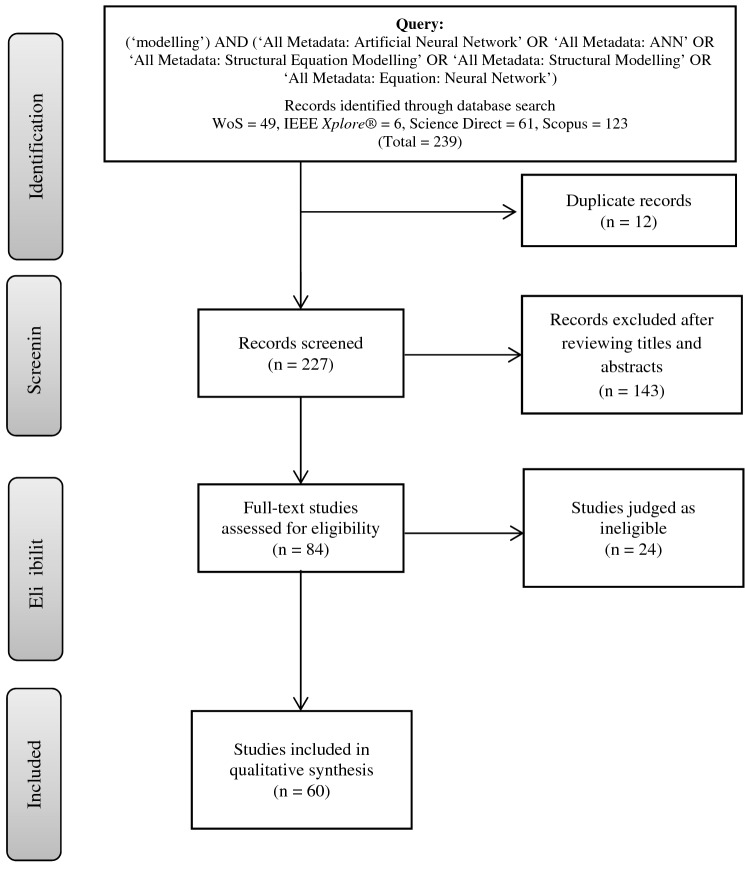
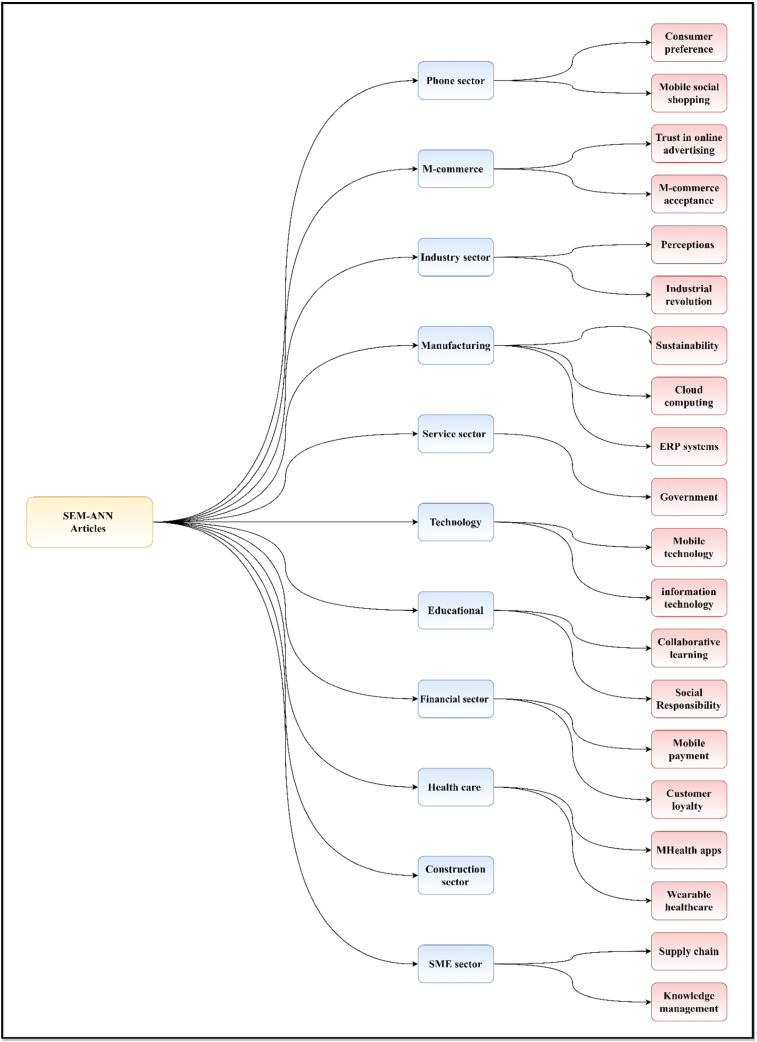
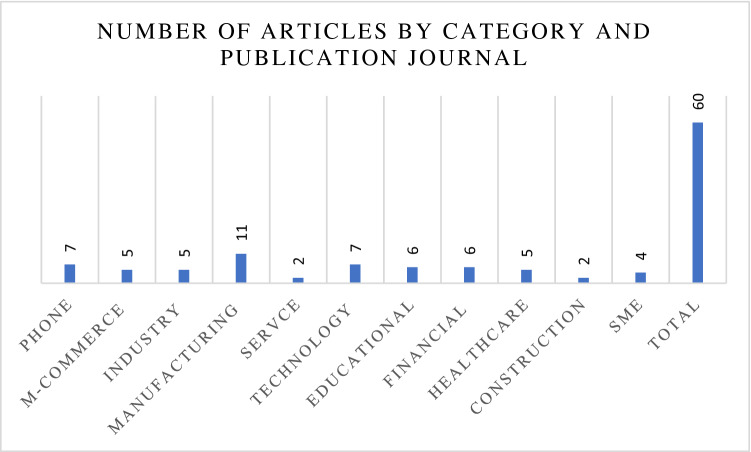
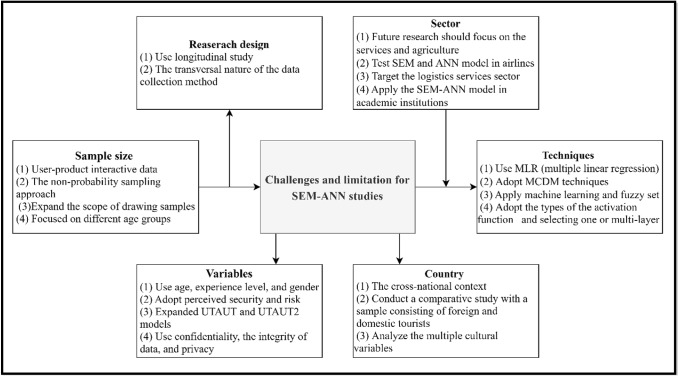
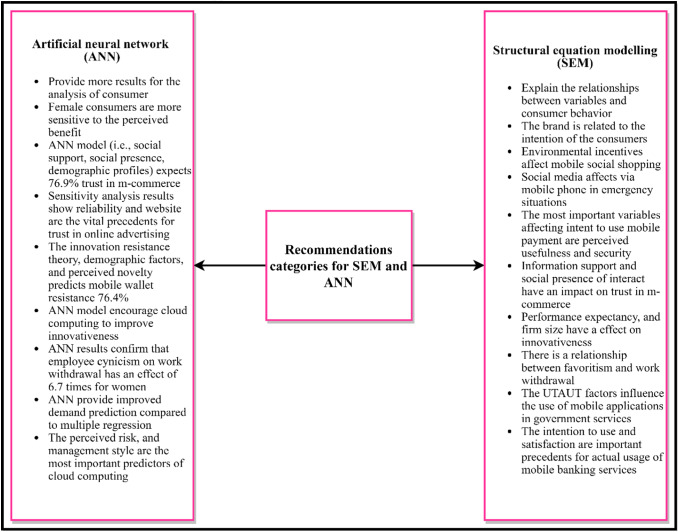
Abstract Topical treatments with structural equation modelling (SEM) and an artificial neural network (ANN), including a wide range of concepts, benefits, challenges and anxieties, have emerged in various fields and are becoming increasingly important. Although SEM can determine relationships amongst unobserved constructs (i.e. independent, mediator, moderator, control and dependent variables), it is insufficient for providing non-compensatory relationships amongst constructs. In contrast with previous studies, a newly proposed methodology that involves a dual-stage analysis of SEM and ANN was performed to provide linear and non-compensatory relationships amongst constructs. Consequently, numerous distinct types of studies in diverse sectors have conducted hybrid SEM–ANN analysis. Accordingly, the current work supplements the academic literature with a systematic review that includes all major SEM–ANN techniques used in 11 industries published in the past 6 years. This study presents a state-of-the-art SEM–ANN classification taxonomy based on industries and compares the effort in various domains to that classification. To achieve this objective, we examined the Web of Science, ScienceDirect, Scopus and IEEE Xplore ® databases to retrieve 239 articles from 2016 to 2021. The obtained articles were filtered on the basis of inclusion criteria, and 60 studies were selected and classified under 11 categories. This multi-field systematic study uncovered new research possibilities, motivations, challenges, limitations and recommendations that must be addressed for the synergistic integration of multidisciplinary studies. It contributed two points of potential future work resulting from the developed taxonomy. First, the importance of the determinants of play, musical and art therapy adoption amongst autistic children within the healthcare sector is the most important consideration for future investigations. In this context, the second potential future work can use SEM–ANN to determine the barriers to adopting sensing-enhanced therapy amongst autistic children to satisfy the recommendations provided by the healthcare sector. The analysis indicates that the manufacturing and technology sectors have conducted the most number of investigations, whereas the construction and small- and medium-sized enterprise sectors have conducted the least. This study will provide a helpful reference to academics and practitioners by providing guidance and insightful knowledge for future studies.
Overview
The claims and statistics of this paper haven’t been checked yet.
Run the check — free, no account needed. It reads the open-access text and checks the sources it cites.
Integrity signals
Registry
Cites
Statistics
Figures
Verification
Claims the paper makes
The claims and statistics of this paper haven’t been checked yet.
Run the check — free, no account needed. It reads the open-access text and checks the sources it cites.
Claims other papers make about this one
Each is checked against this paper’s own text: does it say what the citing paper says it does?
The source backs part of the claim, not all of it — or backs it for a different population, condition or comparison.
In the citing paper
“Using historical data, it approximates the nonlinear function between inputs and outputs with high accuracy [245-247].”
From Effects of Environmental and Operational Conditions on Structural Health Monitoring and Non-Destructive Testing: A Systematic Review (2023) · cites this paper as [246]
Experimental — accuracy not yet measured
Self-check
Percentages, sums and reported differences re-computed from the paper’s own numbers.
The self-check needs the paper’s full text.
Citations
Cites
A primer on partial least squares structural equation modeling (PLS-SEM)
Leguina, A. (2015) · International Journal of Research & Method in Education · doi:10.1080/1743727x.2015.1005806 · Cited by 18,921
(2014) · DigitalCommons - Kennesaw State University (Kennesaw State University) · Cited by 12,785
\nThe use of partial least squares path modeling in international marketing
Henseler, J., Ringle, C. M., & Sinkovics, R. R. (2009) · Radboud Repository (Radboud University) · doi:10.1108/s1474-7979(2009)0000020014 · Cited by 12,535
Assessing measurement model quality in PLS-SEM using confirmatory composite analysis
Hair, J. F., Howard, M. C., & Nitzl, C. (2020) · Journal of Business Research · doi:10.1016/j.jbusres.2019.11.069 · Cited by 5,446
Hair, J. F., Ringle, C. M., & Sarstedt, M. (2013) · Long Range Planning · doi:10.1016/j.lrp.2013.01.001 · Cited by 5,310
Hair, J. F., Hult, G. T. M., Ringle, C. M., Sarstedt, M., & Thiele, K. O. (2017) · Journal of the Academy of Marketing Science · doi:10.1007/s11747-017-0517-x · Cited by 2,712
Ali, F., Rasoolimanesh, S. M., Sarstedt, M., Ringle, C. M., & Ryu, K. (2017) · International Journal of Contemporary Hospitality Management · doi:10.1108/ijchm-10-2016-0568 · Cited by 1,732 · cited 1×
“Several studies have used systematic literature reviews to apply PLS-SEM in the marketing and hospitality sectors [21–23].”
MethodSharma, S. K., & Sharma, M. (2018) · International Journal of Information Management · doi:10.1016/j.ijinfomgt.2018.09.013 · Cited by 791
Tarka, P. (2017) · Quality & Quantity · doi:10.1007/s11135-017-0469-8 · Cited by 720
Wong, L.-W., Leong, L.-Y., Hew, J.-J., Tan, G., & Ooi, K. (2020) · International Journal of Information Management · doi:10.1016/j.ijinfomgt.2019.08.005 · Cited by 697
Research works printed but not linked: 1
- Sharma A (2020) A Structural equation modelling & artificial neural network approach to examine the impact of human resources accounting on firm’s performance. Pac Bus Rev Int 12(9):1–12
Cited by
Sorted by citations
Items 101–173 of 173
Financial Literacy and Risky Credit Behavior: The Moderating Effect of Minimalist Lifestyle
Pardo-Piñashca, E. (2024) · Journal of Financial Counseling and Planning · doi:10.1891/jfcp-2023-0129 · Cited by 2
Hu, X., Goh, Y. M., & Tay, J. (2024) · Engineering Construction & Architectural Management · doi:10.1108/ecam-07-2024-0896 · Cited by 1
Lin, X., Zhen, X., Dai, P., Yang, J., Huang, Y., Che, C., & Lin, J. (2025) · Journal of Analytical Atomic Spectrometry · doi:10.1039/d4ja00278d · Cited by 1
A Graph-Based Framework for Temporal and Causal Analysis of Sentiments
Subha, E., Prakash, J., V, & Vijay, S. A. A. (2025) · ACM Transactions on the Web · doi:10.1145/3759440 · Cited by 1
“Traditional causal inference methods, such as the Granger causality test [32, 51] and Structural Equation Modeling ( SEM ) [2], have been used to analyze time series data and uncover causal relationships.”
Fang, Y., Wang, J., Kong, L., & Shi, X. (2026) · Ecological Indicators · doi:10.1016/j.ecolind.2025.114585 · Cited by 1
Modeling the determinants of bicycle-sharing adoption intention in India: A SEM and ANN synergy
Kathait, N., & Agarwal, A. (2026) · Research in Transportation Business & Management · doi:10.1016/j.rtbm.2026.101609 · Cited by 1
Saleem, I., Hameed, I., Hayat, N., Ashfaq, M. A., Weller, M., & Rauf, A. (2026) · Thunderbird International Business Review · doi:10.1002/tie.70078 · Cited by 1
Strategies for enhancing construction digitalisation: a machine learning-based sensitivity analysis
Aghimien, D. O., Aghimien, E. I., Aigbavboa, C. O., Aliu, J., Oke, A. E., & Chan, D. W. M. (2026) · Engineering Construction & Architectural Management · doi:10.1108/ecam-04-2024-0427 · Cited by 1
Musyaffi, A. M., Johari, R. J., Hendrayati, H., Adha, M. A., Sobirov, B. B., & Afriadi, B. (2026) · Management & Sustainability An Arab Review · doi:10.1108/msar-04-2025-0140 · Cited by 1
Torres-Coronas, T., de Andrés-Sánchez, J., Rua, O. L., & Carrasco-Aguilar, Á. (2026) · Computers · doi:10.3390/computers15040215 · Cited by 1
“…models and structural equation modelling remain predominant in the analysis of emerging technology acceptance [38], recent years have seen a growing use of ANNs in technology adoption studies, typically as a complement to regression-based approaches rather than as the main analytical method [24].”
Chen, Z., LIANG, G., Liu, Y., Meng, X., Wang, B., Chen, Y., & Zhang, Y. (2026) · Transportation Research Part F Traffic Psychology and Behaviour · doi:10.1016/j.trf.2026.103609 · Cited by 1
Digital risk governance and behavioural drivers of robo-advisor adoption in financial services
Ansari, Y., Bansal, R., Mishra, A. K., & Maurya, P. K. (2026) · Risk Governance and Control Financial Markets & Institutions · doi:10.22495/rgcv16i1p18 · Cited by 1
An ANN-SHAP-Based Approach for Public Concerns Area Analysis in Public Service Satisfaction Surveys
Lu, L., Luo, Z., Mei, H., & Jiang, Z. (2026) · International Journal of Information System Modeling and Design · doi:10.4018/ijismd.406686 · Cited by 1
Ma, T., & Zhang, W. (2026) · Frontiers in Education · doi:10.3389/feduc.2026.1755301 · Cited by 3
Mohamud, A., Ali, I. M., & Mohamud, I. H. (2026) · Cogent Business & Management · doi:10.1080/23311975.2026.2664914 · Cited by 1
Faraji, M. R., Bandapadya, K., Rahman, M. M., Yousuf, S. B., Sohel, M., Abedin, M. Z., & Bhuiyan, M. R. I. (2026) · Discover Sustainability · doi:10.1007/s43621-026-04016-9 · Cited by 1
“Notably, the relatively higher HTMT values among TAM-UTAUT expectancy constructs (PU–AI = 0.821, PE–BIIS = 0.832, BIIS–ACS = 0.802) reflect theoretical overlap in cognitive adoption pathways but remain non-problematic as they do not exceed thresholds [62].”
InfluentialMohammadi, M., Mohammadi, N., & Mehdipour‐Ataei, S. (2023) · International Journal of Hydrogen Energy · doi:10.1016/j.ijhydene.2023.04.041 · Cited by 1
Ibrahim, M., Al-Sharafi, M. A., Albashrawi, M. A., & Mahmoud, M. A. (2025) · Research Square · doi:10.21203/rs.3.rs-5798963/v1 · Cited by 2
Kineber, A. F., Ali, A. H., Elshaboury, N., Massoud, M., Rady, M., Al-Mhdawi, M. K. S., & Rahimian, F. P. (2023) · SSRN Electronic Journal · doi:10.2139/ssrn.4645783
Machine Learning-Based Sensitivity Analysis of the Strategies for Construction DigitalisationPreprint
Aigbavboa, C. O., Aghimien, D. O., Aghimien, E. I., Aliu, J., Oke, A. E., & Chan, D. W. M. (2024) · SSRN Electronic Journal · doi:10.2139/ssrn.4685404
A Decision-making Subgraph Mining Algorithm for Structural Equation Modeling
Yang, S., Tao, M., & Li, X. (2023) · IEEE International Conference on Parallel and Distributed Systems (ICPADS) · doi:10.1109/icpads60453.2023.00185
Deep Learning and Machine Learning Algorithms Methods in Cyber Security
Al-Absi, M. A., R’bigui, H., & Al-Absi, A. A. (2024) · Lecture notes in networks and systems · doi:10.1007/978-981-97-0573-3_22
Naidu, C. B. A., Sajja, G. S., Vij, R., Mishra, M. K., & Anand, M. C. J. (2024) · Advances in marketing, customer relationship management, and e-services book series · doi:10.4018/979-8-3693-7773-4.ch011
Investigating the Role of PLS-SEM and ANN in the Adoption of Social Media Marketing by SMEs
Sarala, R., Balamurugan, J., Prabha, M., Mohana, P. C., Reddy, C. A. K., & Selvan, R. S. (2025) · Advances in marketing, customer relationship management, and e-services book series · doi:10.4018/979-8-3693-9954-5.ch012
Impact of Contextual Factors on Adaptive Performance: A Study on Indian PSBs Using ANN Analysis
Shetty, D. S., & Suprabha, K. R. (2025) · Lecture notes in networks and systems · doi:10.1007/978-3-031-78946-5_33
Lai, K., Hsu, Y.-C., & Chang, C.-L. (2025) · International Conference on Scientometrics and Informetrics (ISSI) · doi:10.51408/issi2025_095
Chew, X., Atiyah, A. G., Alnoor, A., Abbas, S., Muhsen, Y. R., & Bayram, G. E. (2025) · Information systems engineering and management · doi:10.1007/978-3-032-01055-1_7
Yeesoonsam, K., Tansuchat, R., & Chimprang, N. (2025) · Journal of risk and financial management · doi:10.3390/jrfm18090492
“Albahri et al. (2022) highlights the increasing importance of hybrid methodologies that integrate Structural Equation Modeling (SEM) and Artificial Neural Networks (ANN) across a range of disciplines, particularly in applications involving topical treatments.”
Trading on Emotion: Behavioral and Predictive Determinants of Algorithmic Trading Adoption
Habibnia, A., & Nasab, P. G. (2025) · Journal of Behavioral Finance · doi:10.1080/15427560.2025.2582676
Automated structural equation modeling through micro-scale searching
Luo, L., Wu, N., Liu, Y., Liu, Y., & Huang, H. (2025) · Expert Systems with Applications · doi:10.1016/j.eswa.2025.130435
Li, J., Hu, Z., Gu, X., Wu, Y., Sun, W. Y., Yang, Y., Hu, Y., Li, Y., Zhang, H., & Zhang, H. (2026) · Frontiers in Medicine · doi:10.3389/fmed.2025.1694846
“Through a feedforward–backpropagation learning mechanism, the ANN iteratively adjusts its internal weights to minimize prediction error, allowing it to capture latent patterns and high-order interactions that SEM—restricted to linear paths—may overlook (34, 35, 85).”
Van, S.-H., Tran, T.-K., Tran, H.-K., & Van, D.-N. (2026) · International Conference on Ubiquitous Information Management and Communication (IMCOM) · doi:10.1109/imcom69009.2026.11360872
Cheng, P., Sun, W., Huang, Q., & Hou, S. (2026) · Journal of Engineering Design · doi:10.1080/09544828.2026.2620969 · Cited by 1
Interpretable Explainable AI: Comparing Bayesian Structural Equation Modelling with Other Algorithms
Ilinca, C. (2026) · Communications in computer and information science · doi:10.1007/978-3-032-15638-9_19
Ahmad, M. O., Wu, Q., Sun, L. C., Abbass, Y., Sun, S. L., & Hattab, I. (2026) · Environment Development and Sustainability · doi:10.1007/s10668-026-07337-x
Setiawan, R. (2026) · SSRN Electronic Journal · doi:10.2139/ssrn.6282654
Liang, X., Chuah, S. H., & Wee, V. E. L. (2026) · Journal of Hospitality and Tourism Technology · doi:10.1108/jhtt-01-2025-0067
Addicted to scrolling: Does short-form video drive your purchases?
Gupta, S., Singh, A. K., & Kapoor, A. P. (2026) · Journal of Global Scholars of Marketing Science · doi:10.1080/21639159.2026.2625157 · Cited by 1
“Significant predictor variables derived from PLS-SEM analysis were used to configure the neurons in the ANN models (Albahri et al., 2022).”
Impact of data breaches on user intentions toward GenAI bots
Rao, A.-N.-C.-V. (2026) · Journal of Computational Information Systems · doi:10.1080/08874417.2026.2638467
Wang, C., Han, C., Sun, J., & Fang, T. (2026) · International Conference on Consumer Electronics · doi:10.1109/icce67443.2026.11449805
“[4] Throughout the deployment, patients in the AbSound group wore the device during each dialysis session (approximately 8 hours per session, three times per week).”
Nguyen, Q. V., & Do, V. T. (2026) · Cogent Business & Management · doi:10.1080/23311975.2026.2646402
Chen, G., & Chen, J. (2026) · Asia Pacific Business Review · doi:10.1080/13602381.2026.2669682
Khan, F. U., Wang, Y., Zhang, L. X., Fayyaz, A., & Ramzan, S. (2026) · Journal of Health Organization and Management · doi:10.1108/jhom-08-2025-0480
Shi, X., Su, M., & Park, K.-S. (2026) · Journal of theoretical and applied electronic commerce research · doi:10.3390/jtaer21060165
“Methodologically, the combination of SEM, ANN, and qualitative analysis provides complementary insights that strengthen explanation, prediction, and managerial relevance for platform design, digital governance, and return-related consumer experience management [27,28,32].”
Wang, Y., & Li, T. (2026) · International Journal of Economics Finance and Management Sciences · doi:10.11648/j.ijefm.20261403.14
Omonijo, O. N., & Zhang, Y. (2026) · Business Ethics the Environment & Responsibility · doi:10.1111/beer.70123
Primadasa, R., Herfizan, A., Asri, V. I., & Masudin, I. (2026) · Process Integration and Optimization for Sustainability · doi:10.1007/s41660-026-00819-5
Arcos, A. A. V., Sáenz, L. A. L., Bustamante, M., & Vega, J. G. (2026) · Frontiers in Education · doi:10.3389/feduc.2026.1874253
Wang, H. (2026) · Journal of Retailing and Consumer Services · doi:10.1016/j.jretconser.2026.104973
Ali, I. M., & Arpacı, İ. (2026) · Education and Information Technologies · doi:10.1007/s10639-026-14087-w
“ANNs can tolerate noisy data, learn from it, and address non-compensatory, non-linear relationships (Albahri et al., 2022).”
Radić, A., Arsić, S., Nikolić, Đ., & Milošević, I. M. (2026) · Future Business Journal · doi:10.1186/s43093-026-00911-9
“According to the available literature, it can be stated that SEM-ANN has been used in various fields of research, including the adoption of m-banking [22, 46, 50] m-learning [3, 55], advertising [60] as well as the acceptance of ERP systems by users [2].”
Zhu, J., Wu, X., Zhang, C., Wang, L., Zhang, H., Li, Z., Zhang, Y., Ying, M., & Bian, X. (2026) · Health Policy and Technology · doi:10.1016/j.hlpt.2026.101286
Sun, Z., & Fan, Y. (2026) · Discover Computing · doi:10.1007/s10791-026-10492-4
“Albahri et al. [23] studied the use of structural equation modeling to investigate the microstructure of psychological resilience in university students in poverty and constructed a prediction model for psychological problems in university students in distress based on backpropagation neural…”
Çilesiz, Y., Yelmen, İ., Karaköy, T., Bakır, H., Karateke, S., & Zontul, M. (2026) · Agronomy · doi:10.3390/agronomy16171653
Sobhani, S. M. J., Malek-Abadi, M. K., & Taki, M. (2026) · Environmental and Sustainability Indicators · doi:10.1016/j.indic.2026.101515
Understanding e-wallet adoption intentions in emerging markets: an SEM-ANN approach
Chanda, R. C., Zadeh, A. V., Hanifah, H. M., & Nikbin, D. (2026) · Journal of Financial Services Marketing · doi:10.1057/s41264-026-00383-6
Mahmoud, M. H., Ali, A. A., Saad, W. A., & Garza‐Reyes, J. A. (2026) · International Journal of Human-Computer Interaction · doi:10.1080/10447318.2026.2730088
Kajal, Z. A., Fan, J., Sikder, M., Hasan, M. K., & Moni, A. (2026) · Journal of Engineering Research · doi:10.1016/j.jer.2026.09.057
Bao, Q., Peng, X., & QIAN, Y. (2026) · Current Psychology · doi:10.1007/s12144-026-10103-x
Responsible and sustainable use of AIGC image tools in art education: an SEM–ANN–fsQCA study
Xia, B., Luo, Y., & Su, Y. (2026) · Education + Training · doi:10.1108/et-05-2026-0609
Xiao, Y., Lyu, C., Zhu, Y.-W., Guo, H.-Z., Zhang, Q.-Y., & Fan, Y.-K. (2026) · Scientific Reports · doi:10.1038/s41598-026-52158-7
“…of the relationships among variables, this study adopts a hybrid analytical strategy combining Partial Least Squares Structural Equation Modeling (PLS-SEM) and Artificial Neural Network (ANN) to capture potential nonlinear relationships and assess the relative importance of predictor variables 11 .”
Shao, C. (2026) · Journal of Internet Commerce · doi:10.1080/15332861.2026.2738586
Becerra, M. A., Grisales, E. A. D., Gonzalez, L. V., Serna-Guarín, L., Ossa, G. A. L., Ramirez-Aristizábal, J., & Parra, M. J. R. (2026) · Sustainability · doi:10.3390/su181910192
Enhancing Online Education Through Hybrid Neural Networks and Deep Ensemble Models
Li, J. (2026) · International Journal of Knowledge Management · doi:10.4018/ijkm.424130
Sun, K.-X., & Yan, C. (2026) · International Conference on Digital Economy and Information Systems · doi:10.1145/3845872.3845943
“HAI, PR, RR, and SCRM were specified as input variables, and SCS as the output variable [ 16 ] .”
Chanda, R. C., Zadeh, A. V., Hanifah, H., Zehi, R. Y., & Nikbin, D. (2026) · Renewable energy focus · doi:10.1016/j.ref.2026.100957
Hameed, I., Khan, K., Zainab, B., Nadeem, M., & Memon, Z. H. (2026) · Journal of Islamic marketing · doi:10.1108/jima-02-2025-0124
How remote workers evaluate workations: the work–family experiences and job–travel motivations
Su, C., Yen, W.-S., 邦彦, 守., Lee, S. K., & Lan, Y.-F. (2026) · Service Business · doi:10.1007/s11628-026-00622-9
Mao, S., & Jung, E. (2026) · Behavioral Sciences · doi:10.3390/bs16101961
Ý định áp dụng trí tuệ nhân tạo tại doanh nghiệp nhỏ và vừa: Tiếp cận hai giai đoạn SEM-ANN
Pham, H. D., & Anh, V. N. H. (2026) · Khoa học Dữ liệu và Trí tuệ Nhân tạo châu Á · doi:10.63065/ajdsai.vn.2026.01.003
Metadata
- Authors
- Albahri, A. S., Alnoor, A., Zaidan, A. A., Albahri, O. S., Hameed, H., Zaidan, B. B., Peh, S. S., Zain, A. B., Siraj, S. B., Masnan, A. H. B., & Yass, A. A.
- Affiliations
- Sultan Idris Education University (MY)
- Southern Technical University (IQ)
- Corresponding author
- Hameed, Hamsa
- ORCID
- Venue
- Complex & Intelligent Systems
- Published
- 2021-08-28
- Volume
- 8
- Issue
- 2
- Pages
- 1781-1801
- ISSN
- 2198-6053 (ISSN-L)
- 2199-4536
- PMC
- PMC8402975
- OpenAlex
- W3197668014
- Cited by
- 173
- References
- 105
- Citations by year
- 2026: 59 · 2025: 38 · 2024: 29 · 2023: 28 · 2022: 19
- FWCI
- 6.69
- Type
- journal article
- Language
- en
- Open access
- gold
- doi.org
- Locations
- Complex & Intelligent Systems (publishedVersion, cc-by)
- PubMed Central (publishedVersion, cc-by)
- PubMed (publishedVersion)
- Greater South Information System
- Funders
- UPSi (2020-0159-106-01.)
- Topics
- Physical Sciences › Computer Science › Artificial Intelligence › Neural Networks and Applications
- Social Sciences › Decision Sciences › Management Science and Operations Research › Psychometric Methodologies and Testing
- Physical Sciences › Mathematics › Statistics and Probability › Statistical Methods and Applications
- Keywords
- classification taxonomy, children with autism, play therapy, music therapy, art therapy, health sector, technology industry, manufacturing industry
About these checks
Registry, retraction, Cites and statistics results are computed, not judged, with one exception: a printed reference that no index lists is read once by a model before it counts as a citation error. Claims are extracted by a model and kept only when their quote appears verbatim in the text; each cited source is then checked, with a model’s help, for whether it says what the claim relies on. Those verdicts can be wrong — read the claim’s quote and the cited source before relying on one.
Statistics and arithmetic are recomputed, not judged.
Confidence bands are shown only for fields calibrated on our annotated test set. None is calibrated yet, so no band is shown.
What counts as a claim ›How we measure confidence ›How we check this ›
Are you an author, or do you see a problem with this page? Request a review
