

The DOI matches its Crossref record; 5 of the 5 references it cites were found in a registry or an index.
The Late and Final Middle Palaeolithic of Central Europe and Its Contributions to the Formation of the Regional Upper Palaeolithic: a Review and a Synthesis
Abstract
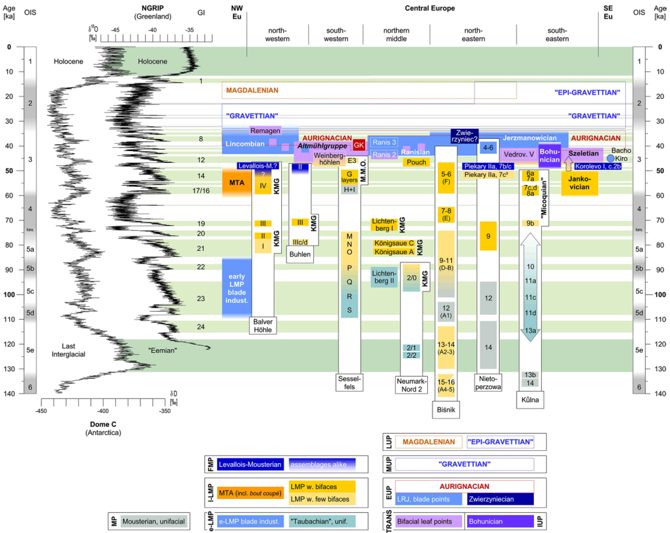
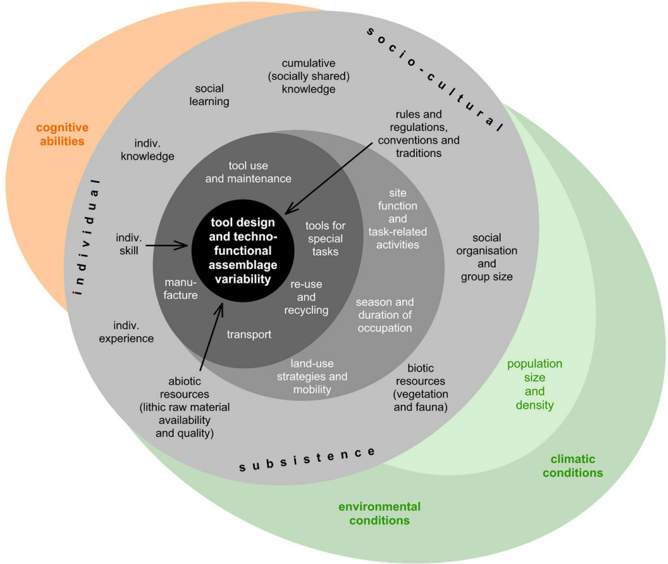
For decades, the relationship of pre-modern hominins to anatomically modern humans (AMH) and the transition from mode 3 to mode 4 industries remain topics of ongoing scientific debate. Over the last 20 years, different disciplines have added new data and much detail to these questions, highlighting the demographic and social and cultural complexity underlaying these major changes or turnovers in human evolution. As with most other regions outside Africa, archaeologists faced long-lasting discussions whether or not the central European archaeological record is to be understood as a regional transition from the Middle Palaeolithic (MP) to the Upper Palaeolithic (UP) or if it is characterised by the replacement of Neanderthal MP techno-complexes by industries of overall UP character imported by modern humans. These debates have been re-fuelled by the discoveries of new sites, of new hominin fossil remains and by aDNA studies pinpointing towards the arrival of AMH in Europe several millennia earlier than previously thought (Slimak et al., Science Advances, 8 , eabj9496, 2022; Hajdinjak et al., Nature, 592, 253-257, 2021; Prüfer et al., Nature Ecology & Evolution, 5 , 820–825, 2021). Together with new radiometric age-estimates and detailed archaeological site studies, these developments call to recapture the present knowledge of the Late (LMP) and Final Middle Palaeolithic (FMP) of central Europe, viewed from the perspective of lithic technology and typology, raw material exploitation and land-use strategies. We will review and characterise this record as it represents the demographic and cultural substrate that AMH had met and will discuss to which degree this substrate contributed to the formation of the central European UP.
Overview
The claims and statistics of this paper haven’t been checked yet.
Run the check — free, no account needed. It reads the open-access text and checks the sources it cites.
Integrity signals
Registry
Cites
Statistics
Figures
Verification
Claims the paper makes
The claims and statistics of this paper haven’t been checked yet.
Run the check — free, no account needed. It reads the open-access text and checks the sources it cites.
Claims other papers make about this one
Each is checked against this paper’s own text: does it say what the citing paper says it does?
The check wasn’t confident either way, so it gives no verdict — never disputed.
In the citing paper
“Despite the progress made in the research of Middle Paleolithic (hereafter, MP) sites in the Carpathians, the level of knowledge of spatial relationships and mobility corridors remains, in many respects, less developed than in Western European [15,16].”
From Tracing neanderthal mobility through the romanian carpathians: a GIS-based least-cost connectivity model (2025) · cites this paper as [16]
Experimental — accuracy not yet measured
Self-check
Percentages, sums and reported differences re-computed from the paper’s own numbers.
The self-check needs the paper’s full text.
Citations
Cites
The IntCal20 Northern Hemisphere Radiocarbon Age Calibration Curve (0–55 cal kBP)
Reimer, P. J., Austin, W. E. N., Bard, E., Bayliss, A., Blackwell, P. G., Bronk Ramsey, C., Butzin, M., Cheng, H., Edwards, R. L., Friedrich, M., et al. (2020) · Radiocarbon · doi:10.1017/rdc.2020.41 · Cited by 7,900 · cited 1×
“The Spy Neanderthals date as young as ca. 36,000 14 C (uncal) BP (Semal et al., 2009), roughly corresponding to 41 ka cal BP (cf. Reimer et al., 2020).”
The genomic landscape of Neanderthal ancestry in present-day humans
Sankararaman, S., Mallick, S., Dannemann, M., Prüfer, K., Kelso, J., Pääbo, S., Patterson, N., & Reich, D. (2014) · Nature · doi:10.1038/nature12961 · Cited by 1,107
Genome sequence of a 45,000-year-old modern human from western Siberia
Fu, Q., Li, H., Moorjani, P., Jay, F., Slepchenko, S. M., Bondarev, A. A., Johnson, P. L. F., Aximu-Petri, A., Prüfer, K., de Filippo, C., et al. (2014) · Nature · doi:10.1038/nature13810 · Cited by 1,023
An early modern human from Romania with a recent Neanderthal ancestor
Fu, Q., Hajdinjak, M., Moldovan, O. T., Constantin, S., Mallick, S., Skoglund, P., Patterson, N., Rohland, N., Lazaridis, I., Nickel, B., et al. (2015) · Nature · doi:10.1038/nature14558 · Cited by 802
Multiple episodes of interbreeding between Neanderthal and modern humans
Villanea, F. A., & Schraiber, J. G. (2018) · Nature Ecology & Evolution · doi:10.1038/s41559-018-0735-8 · Cited by 192
Research works printed but not linked: 302
- Abadi, I., Bar-Yosef, O., & Belfer-Cohen, A. (2020). Kebara V – A contribution for the study of the Middle-Upper Paleolithic transition in the Levant. PaleoAnthropology, 2020, 1–28.
- Adam, K. D. (1951). Der Waldelefant von Lehringen, eine Jagdbeute des diluvialen Menschen. Quartär, 5, 79–92.
- Adams, B. (2007). Gulyás Archaeology: The Szeletian and the Middle to Upper Palaeolithic transition in Hungary and central Europe. In J. Riel-Salvatore & G. Clark (Eds.), New approaches to the study of the Early Upper Paleolithic ‘transitional’ industries of western Eurasia. BAR International Series 160 (pp. 90–110). Hadrian Books.
- Adams, B. (2009). The Bükk Mountain Szeletian: Old and new views on “transitional” material from the eponymous site of the Szeletian. In M. Camps & P. Cauhan (Eds.), Sourcebook of Paleolithic transitions: Methods, theories, and interpretations (pp. 427–440). Springer. · DOI
- Adler, D. S., Wilkinson, K. N., Blockley, S., Mark, D. F., Pinhasi, R., Schmidt-Magee, B. A., Nahapetyan, S., Mallol, C., Berna, F., Glauberman, J. P., Raczynski-Henk, Y., Wales, N., Frahm, E., Jöris, O., MacLeod, A., Smith, V. C., Cullen, V. L., & Gasparian, B. (2014). Early Levallois technology and the Lower to Middle Paleolithic transition in the Southern Caucasus. Science, 345, 1609–1613. · DOI
- Alex, B., Valde-Nowak, P., Regev, L., & Boaretto, E. (2017). Late Middle Paleolithic of Southern Poland: Radiocarbon dates from Ciemna and Obłazowa Caves. Journal of Archaeological Science: Reports, 11, 370–380.
- Allsworth-Jones, P. (1986). The Szeletian and the transition from Middle to Upper Palaeolithic in central Europe. Clarendon Press.
- Allsworth-Jones, P. (1990). The Szeletian and the stratigraphic succession in central Europe and adjacent areas: Main trends, recent results, and problems for resolution. In P. Mellars (Ed.), The emergence of modern humans: An archaeological perspective (pp. 160–242). Cornel University Press.
- Allsworth-Jones, P. (2004). The Szeletian revisited. L’anthropologie, 42, 281–296.
- Andree, J. (1939). Der eiszeitliche Mensch in Deutschland und seine Kulturen. Ferdinand Enke.
- Antoine, P., Rousseau, D. D., Moine, O., Kunesch, S., Hatte, C., Lang, A., Tissoux, H., & Zöller, L. (2009). Rapid and cyclic aeolian deposition during the Last Glacial in European loess: A high-resolution record from Nussloch, Germany. Quaternary Science Reviews, 28, 2955–2973. https://doi.org/10.1016/j.quascirev.2009.08.001 · DOI
- App, V., Auffermann, B., Hahn, J., Pasda, C., & Stephan, E. (1995). Die altsteinzeitliche Fundstelle auf dem Schwalbenberg bei Remagen. Berichte Zur Archäologie an Mittelrhein Und Mosel, 4, 11–136.
- Ashton, N. M. (1983). Spatial patterning in the Middle-Upper Paleolithic transition. World Archaeology, 15, 224–235. · DOI
- Baales, M. (2012). Late Middle Palaeolithic artefacts and archaeostratigraphical dating of the bone gravels (Knochenkiese) in central Westphalia and the Ruhrgebiet (Germany). In M. J. L. T. Niekus, R. N. E. Barton, M. Street, & T. Terberger (Eds.), A mind set on flint. Studies in honour of Dick Stapert (pp. 119–138). Barkhuis.
- Banks, W., d’Errico, F., & Zilhão, J. (2013). Human-climate interaction during the Early Upper Paleolithic: Testing the hypothesis of an adaptive shift between the Proto-Aurignacian and the Early Aurignacian. Journal of Human Evolution, 64, 39–55. · DOI
- Bar-Yosef, O. (2006). Defining the Aurignacian. In: O. Bar-Yosef, J. Zilhão (Eds) Towards a definition of the Aurignacian. Proceedings of the symposium held in Lisbon, Portugal, June 25–30, 2002. American School of Prehistoric Research / Instituto Português de Arqueologia, Lisboa, pp. 11–18.
- Bar-Yosef, O., Meignen, L. (2001). The chronology of the Levantine Middle Palaeolithic Period in retrospect. Analyse rétrospective de la chronologie du Paléolithique Moyen au Levant. Bulletins et mémoires de la Société d’Anthropologie de Paris 13(3–4). · DOI
- Bar-Yosef, O., Zilhão, J. (2006). Towards a definition of the Aurignacian. Proceedings of the symposium held in Lisbon, Portugal, June 25–30, 2002. American School of Prehistoric Research / Instituto Português de Arqueologia, Lisboa.
- Bataille, G., & TafelmaierWeniger, I. G. C. (2018). Living on the edge – A comparative approach for studying the beginning of the Aurignacian. Quaternary International, 474, 3–29. · DOI
- Beck, M., Geyer, L., Höer, M., Hohenester, I., Hornung, S., Sauer, F., & Seufert, K. (2017). Mittelpaläolithische und mesolithische Steinartefakte aus Gremsdorf. Bericht Der Bayerischen Bodendenkmalpflege, 58, 9–42.
- Bobak, D., Płonka, T., Połtowicz-Bobak, M., & Wiśniewski, A. (2013). New chronological data for Weichselian sites from Poland and their implications for Palaeolithic. Quaternary International, 296, 23–36. https://doi.org/10.1016/j.quaint.2012.12.001 · DOI
- Bobak, D., Połtowicz-Bobak, M., Jary, Z., Raczyk, J., & Moska, P. (2016). Chronologia osadnictwa szeleckiego na stanowisku Lubotyń 11, pow. głubczycki, w świetle bayesowskiego modelowania datowań. Materiały i Sprawozdania, Rzeszowskiego Ośrodka Archeologicznego, 37, 11–12. https://doi.org/10.15584/misroa.2016.37.1 · DOI
- Boëda, E. (1995). Caractéristiques techniques des chaînes opératoires lithiques des niveaux micoquiens de Külna (Tchécoslovaquie). Les industries à pointes foliacées d’Europe centrale. Actes du colloque commémoratif international, Miskolc (Hongrie) 10–15 septembre 1991. Paleo (Supplément), 1 (1), 57–72. · DOI
- Böhner, U. (2012). Silex-Rohmaterialien in Bayern. In H. Floss (Ed.), Steinartefakte – vom Altpaläolithikum bis in die Neuzeit (pp. 79–91). Kerns-Verlag.
- Böhner, U. (2016). Jungpaläolithische Blattspitze von der Überkornhalde. Archäologie in Deutschland. Archäologie in Deutschland, 3(2016), 44–45.
- Bolus, M. (2004). Settlement analysis of sites of the Blattspitzen complex in central Europe. In N. J. Conard (Ed.), Settlement dynamics of the Middle Paleolithic and Middle Stone Age II (pp. 201–226). Kerns Verlag.
- Bon, F. (2015). At the Crossroad. In: White, R. Bourrillon, R., Bon, F. (eds.) Aurignacian genius. Art, technology and society of the first modern humans in Europe. Proceedings of the International Symposium, April 08–10 2013, New York University. P@lethnology Review 2015#7, Toulouse, pp. 8–18. https://doi.org/10.4000/palethnologie.683. · DOI
- Bosinski, G. (1967). Die Mittelpaläolithischen Funde im Westlichen Mitteleuropa. Fundamenta A/4. Böhlau-Verlag.
- Bosinski, G. (1968). Zum Verhältnis von Jungacheuleen und Micoquien in Mitteleuropa. In J. Piveteau (Ed.), La Préhistoire: Problèmes et Tendances (pp. 77–86). Éditions du CNRS.
- Bosinski, G. (1969). Eine Variante der Micoque-Technik am Fundplatz Buhlen, Kreis Waldeck. Jahresschrift Mitteldteutscher Vorgeschichte, 53, 59–74.
- Bosinski, G., Brunnacker, K., Schütrumpf, R., & Rottländer, R. (1966). Der paläolithische Fundplatz Rheindahlen, Ziegelei Dreesen-Westwand. Bonner Jahrbücher, 166, 318–360.
- Bourguignon, L. (1992). Analyse du processus opératoire des coups de tranchet latéraux dans l’industrie moustérienne de l’abri du Musée (Les Eyzies-de-Tayac, Dordogne). Paléo, 4(1), 69–89. https://doi.org/10.3406/pal.1992.1195 · DOI
- Burkert, W. (2012). Silex-Rohmaterialien in Baden-Württemberg. In H. Floss. (Ed.), Steinartefakte – vom Altpaläolithikum bis in die Neuzeit (pp. 63–78). Kerns-Verlag.
- Campen, I., & Hahn, J. (1973). Eine Grabung auf dem mittelpaläolithischen Fundplatz Rörshain, Gemeinde Schwalmstadt, Kreis Ziegenhain. Fundberichte Aus Hessen, 13, 75–86.
- Çep, B. (2014). Das mittelpaläolithische Silexinventar des Bocksteins im Lonetal (Schwäbische Alb). Vielfalt der Formen oder Fortbestand einer technologischen Idee? In: H.-J. Beier, R. Einicke, E. Biermann (Eds.), “Material-Werkzeug - Werkzeug-Material” & “Klinge, Messer, Schwert & Co - Neues aus der Schneidenwelt” Aktuelles aus der Neolithforschung - Beiträge der Tagungen der Arbeitsgemeinschaft Werkzeuge und Waffen Pottenstein (Fränkische Schweiz) 2011 & Herxheim bei Landau in der Pfalz 2012 sowie Aktuelles Beiträge zu Ur- und Frühgeschichte Mitteleuropas, Vol. 75). Beier & Beran, Langenweissbach, pp. 79–92.
- Çep, B., & Krönneck, P. (2015). Landscape and cave use in the Middle Paleolithic of Bockstein: New results from the lithic and fauna analysis. Tübingen Publications in PrehistoryIn N. J. Conard & A. Delagnes (Eds.), Settlement dynamics of the Middle Paleolithic and Middle Stone Age (Vol. 4, pp. 227–251). Kerns.
- Çep, B., Schürch, B., Münzel, S. C., & Frick, J. A. (2021). Adaptive capacity and flexibility of the Neanderthals at Heidenschmiede (Swabian Jura) with regard to core reductions strategies. PLoS ONE, 16(9), 1–29. https://doi.org/10.1371/journal.pone.0257041. · DOI
- Chmielewski, W. (1969). Ensembles Micoquo-Prondnikiens en Europe centrale. Geographia Polonica, 17, 371–436.
- Chmielewski, W., Betley-Konecka, K., & Madeyska, T. (1977). Palaeolithic site Kraków-Zwierzyniec I in the light of investigations 1972–1974. Biuletyn Instytutu Geolgeologicznego, 305, 13–30.
- Chu, W. (2018). The Danube Corridor hypothesis and the Carpathian Basin: Geological, environmental and archaeological approaches to characterizing Aurignacian dynamics. Journal of World Prehistory, 31, 117–178. https://doi.org/10.1007/s10963-018-9115-1 · DOI
- Cieśla, M. (2018). How far did they go? Exotic stone raw materials occurrence at the Middle Palaeolithic sites: Case studies of sites from Western Carpathian Mts. Acta Archaeologica Carpathica, 53, 7–28.
- Cieśla, M., & Valde-Nowak, P. (2016). Missing elements in the cultural understanding of the hydrothermal landscape of the Carpathians in the Middle Paleolithic. Quaternary International, 402, 112–116. https://doi.org/10.1016/j.quaint.2015.10.069 · DOI
- Collins, D. M. (1968). Metrischer und typologischer Beweis für die Selbständigkeit der Kulturtradition des Acheuléens und des Clactoniens in England und Deutschland. Jahresschrift Für Mitteldeutsche Vorgeschichte, 52, 27–38.
- Conard, N. (2001). River terraces, volcanic craters and Middle Paleolithic settlement in the Rhineland. In: N. J. Conard (ed.), Settlement dynamics of the Middle Paleolithic and Middle Stone Age. Tübingen Publications in Prehistory 1. Kerns, Tübingen, pp. 221–250.
- Conard, N. J. (2012). Klingentechnik vor dem Jungpaläolithikum. In H. Floss (Ed.), Steinartefakte vom Altpaläolithikum bis in die Neuzeit (pp. 245–266). Kerns-Verlag.
- Conard, N. J., & Bolus, M. (2003). Radiocarbon dating the appearance of modern humans and timing of cultural innovations in Europe: New results and new challenges. Journal Human Evolution, 44, 331–371. · DOI
- Conard, N. J., & Fischer, B. (2000). Are there recognizable cultural entities in the German Middle Palaeolithic? In: A. Ronen, M. Weinstein-Evron (Eds.), Toward modern humans - The Yabrudian and the Micoquian 400–50 k-years ago. Proceedings of a Congress held at the University of Haïfa November 3–9, 1996. British Archaeological Reports International Series, Vol. 850. Archaeopress, Oxford, pp. 7–21.
- Conard, N. J., Adler, D. S., Forrest, D. T., & Kaszas, P. J. (1995). Preliminary archaeological results from the 1991–1993 excavations in Wallertheim. Archäologisches Korrespondenzblatt, 25, 13–27.
- Conard, N. J., Schmid, V. C., Bolus, M., & Will, M. (2019). Lithic assemblages from the Middle Paleolithic of Geißenklösterle Cave provide insights on Neanderthal behavior in the Swabian Jura. Steinartefaktinventare aus dem Mittelpaläolithikum des Geißenklösterle, Deutschland: Neue Erkenntnisse zum Verhalten der Neandertaler auf der Schwäbischen Alb. Quartär, 66, 51–80.
- Cooper, L. P., Thomas, J. S., Beamish, M. G., Gouldwell, A., Collcutt, S. N., Williams, J., Jacobi, R. M., Currant, A., & Higham, T. F. G. (2012). An Early Upper Palaeolithic open-air station and Mid-Devensian Hyaena Den at Grange Farm, Glaston, Rutland, UK. Proceedings of the Prehistoric Society, 78, 73–93. https://doi.org/10.1017/S0079497X00027110 · DOI
- Cyrek, K. (2021). The oldest phases of the Levallois method and the beginnings of the Middle Palaeolithic at the northern foreland of the Carpathians. Quaternary International, 595, 12–29. · DOI
- Cyrek, C., Sudoł, M., Czyżewski, Ł, Osipowicz, G., & Grelowska, M. (2014). Middle Palaeolithic cultural levels from Middle and Late Pleistocene sediments of Biśnik Cave, Poland. Quaternary International, 326–327, 20–63. https://doi.org/10.1016/j.quaint.2013.12.014 · DOI
- Delagnes, A., Jaubert, J., Meignen, L. (2007). Les technocomplexes du Paléolithique moyen en Europe occidentale dans leur cadre diachronique et géographique. In: B. Vandermersch, B. Maureille (Eds.), Les Néandertaliens. Biologie et cultures. Documents préhistoriques 23. Éditions du CTHS, Paris, pp. 213–229.
- Delpiano, D., & Uthmeier, T. (2020). Techno-functional and 3D shape analysis applied for investigating the variability of backed tools in the Late Middle Paleolithic of central Europe. PLoS ONE, 15, e0236548. https://doi.org/10.1371/journal.pone.0236548 · DOI
- Demidenko, Y., Škrdla, P. (2020). News from Southern Moravian Early UP record: A possibility to reconsider LRJ status in Europe? In: H. Obermaier-Gesellschaft (ed.) Back to the Gravettian. 62nd Conference of the Hugo Obermaier-Society, April 14th-18th 2020, Brno. Moravské Zemské Museum, pp. 34–38.
- Demidenko, Y. E., & Usik, V. I. (1993). The problem of changes in Levallois technique during the technological transition from the Middle to Upper Palaeolithic. Paléorient, 19(2), 5–15. · DOI
- d’Errico, F., Zilhão, J., Julien, M., Baffier, D., Pelegrin, J. (1998). Neanderthal acculturation in Western Europe? A critical review of the evidence and its interpretation. Current Anthropology 39 (S1), Special Issue: The Neanderthal Problem and the Evolution of Human Behavior, pp. S1–S44. · DOI
- Dibble, H. L. (1987). The interpretation of Middle Paleolithic scraper morphology. American Antiquity, 52(1), 109–117. https://doi.org/10.2307/281062 · DOI
- Dibble, H. L. (1995). Middle Paleolithic scraper reduction: Background, clarification, and review of the evidence to date. Journal of Archaeological Method and Theory, 2(4), 299–368. https://doi.org/10.1007/BF02229003 · DOI
- Dobosi, V. T. (2011). Obsidian use in the Palaeolithic in Hungary and adjoining areas. Natural Resource Environment and Humans, 1, 83–95.
- Doyon, L. (2020). The cultural trajectories of Aurignacian osseous projectile points in Southern Europe: Insights from geometric morphometrics. Quaternary International, 55, 63–84. · DOI
- Ehlers, J., Grube, A., Stephan, H. J., & Wansa, S. (2011). Pleistocene glaciations of North Germany - New results. Developments in Quaternary Science, 15, 149–162. https://doi.org/10.1016/B978-0-444-53447-7.00013-1 · DOI
- Falcucci, A., Conard, N. J., & Peresani, M. (2017). A critical assessment of the Protoaurignacian lithic technology at Fumane Cave and its implications for the definition of the earliest Aurignacian. PLoS ONE, 12(12), e0189241. https://doi.org/10.1371/journal.pone.0189241 · DOI
- Féblot-Augustins, J. (1993). Mobility strategies in the Late Middle Palaeolithic of central Europe and Western Europe: Elements of stability and variability. Journal of Anthropological Archaeology, 12, 211–265. · DOI · Paper page
- Féblot-Augustins, J. (1999). Raw material transport and settlement systems in the European Lower and Middle Palaeolithic: Continuity, change and variability. In W. Roebroeks & C. Gamble (Eds.), The Middle Palaeolithic Occupation of Europe (pp. 193–214). University of Leiden.
- Feine, S.C. (2006). The sediments containing finds from the caves of Feldhofer Kirche and Kleine Feldhofer Grotte in the Neander Valley. Analysis of secondary stratification using GoCAD. In: R.-W. Schmitz (ed.), Neanderthal 1856–2006. Rheinische Ausgrabungen 58, Philipp von Zabern, Mainz, pp. 61–72.
- Feine, S.C., Hillgruber, K.F. (2006). The raw material of the Middle Palaeolithic and Gravettian stone artefacts from the 1997 and 2000 excavations in the Neander Valley. In: Schmitz, R.-W. (ed.) Neanderthal 1856–2006. Rheinische Ausgrabungen 58, Philipp von Zabern, Mainz, pp. 115–156.
- Fewlass, H., Talamo, S., Wacker, L., Kromer, B., Tuna, T., Fagault, Y., Bard, E., McPherron, S. P., Aldeias, V., Maria, R., Martisius, N. L., Paskulin, L., Rezek, Z., Sinet-Mathiot, V., Sirakova, S., Smith, G. M., Spasov, R., Welker, F., Sirakov, N., … Hublin, J.-J. (2020). A 14C chronology for the Middle to Upper Palaeolithic transition at Bacho Kiro Cave. Bulgaria. Nature Ecology & Evolution, 4(6), 794–801. https://doi.org/10.1038/s41559-020-1136-3 · DOI
- Fischer, P., Jöris, O., Fitzsimmons, K. E., Vinnepand, M., Prud’homme, C., Schulte, P., Hatté, C., Hambach, U., Lindauer, S., Zeeden, C., Peric, Z., Lehmkuhl, F., Wunderlich, T., Wilken, D., Schirmer, W., & Vött, A. (2021). Millennial-scale terrestrial ecosystem responses to Upper Pleistocene climatic changes: 4D-reconstruction of the Schwalbenberg Loess-Palaeosol-Sequence (Middle Rhine Valley, Germany). CATENA, 196, e104913. https://doi.org/10.1016/j.catena.2020.104913 · DOI
- Flas, D. (2008). La transition du Paléolithique moyen au supérieur dans la plaine septentrionale de l’Europe. Société Royale Belge d’Anthropologie et de Préhistoire.
- Flas, D. (2011). The Middle to Upper Paleolithic transition in Northern Europe: The Lincombian-Ranisian-Jerzmanowician and the issue of acculturation of the last Neanderthals. World Archaeology, 43, 605–627. https://doi.org/10.1080/00438243.2011.624725 · DOI
- Flas, D. (2012). Jerzmanowice points from Spy and the issue of the Lincombian-Ranisian-Jerzmanowician. Anthropologica Et Praehistorica, 123(1), 217–230.
- Floss, H. (2012). Lithische Rohmaterialien im Rheinland. In H. Floss (Ed.), Steinartefakte – vom Altpaläolithikum bis in die Neuzeit (pp. 55–62). Kerns-Verlag.
- Floss, H., Rouquerol, N. (2007) (eds.). Les chemins de l’Art aurignacien en Europe / Das Aurignacien und die Anfänge der Kunst in Europa. Colloque international / Internationale Fachtagung Aurignac 2005. Éditions Musée-forum Aurignac Cahier 4, Aurignac.
- Foltyn, M. E., Foltyn, E., Kozłowski, J. K. (2000). Premiére évidence de l’âge pré-éemien des industries à piéces bifaciales asymétriques en Europe centrale. In: A. Ronen, M. Weinstein-Evron (eds.) Toward modern humans, The Yabrudian and Micoquian 400-50 K-years Ago. British Archaeological Reports. International Series. Oxford, pp. 167–172.
- Frick, J. A. (2020a). Reflections on the term Micoquian in Western and central Europe. Change in criteria, changed deductions, change in meaning, and its significance for current research. Archaeological and Anthropological Sciences, 12(2), 1–39. https://doi.org/10.1007/s12520-019-00967-5 · DOI
- Frick, J. A. (2020b). New study and complementary analyses on the Keilmesser with tranchet blow from the site Abri du Musée at les Eyzies (Dordogne, France). Paléo, 30(2), 138–162. https://doi.org/10.4000/paleo.5316 · DOI
- Frick, J. A., & Herkert, K. (2020). Flexibility and conceptual fidelity in the production of Keilmesser with tranchet blow. Journal of Paleolithic Archaeology, 3, 682–718. https://doi.org/10.1007/s41982-019-00036-2 · DOI
- Frick, J. A., Herkert, K., Hoyer, C. T., & Floss, H. (2017). The performance of tranchet blows at the Late Middle Paleolithic site of Grotte de la Verpillière I (Saône-et-Loire, France). PLoS ONE, 12, e0188990. https://doi.org/10.1371/journal.pone.0188990 · DOI
- Freund, G. (1963). Die ältere und mittlere Steinzeit in Bayern. Jahresbericht Der Bayerischen Bodendenkmalpflege, 4, 9–167.
- Fuhlrott, J.-C. (1859). Menschliche Überreste aus einer Felsengrotte des Düsselthals. Verhandlungen Des Naturhistorischen Vereins Der Preußischen Rheinlande Und Westfalens, 16, 131–153.
- Gábori-Csánk, V. (1990). Le Jankovicien en Hongrie de l’Ouest. Mémoires Du Musée De Préhistoire D’ile De France, 3, 97–102.
- Grahmann, R. (1955). The Lower Palaeolithic site of Markkleeberg and other comparable localities near Leipzig. Transactions of the American Philosophical Society, 45, 509–687. · DOI
- Grote, K. (1975). Eine Blattspitze des Mittelpaläolithikums von Sülbeck, Stadt Einbeck, Kr. Northeim (früher Kr. Einbeck). Nachrichten Aus Niederscahsens Urgeschichte, 44, 301–304.
- Haesarts, P., & Teyssandier, N. (2003). The Early Upper Palaeolithic occupations of Willendorf II (Lower Austria): A contribution to the chronostratigraphic and cultural context of the beginning of the Upper Palaeolithic in central Europe. Trabajos De Arquelogia, 33, 135–153.
- Hajdinjak, M., Mafessoni, F., Skov, L., Vernot, B., Hübner, A., Fu, Q., Essel, E., Nagel, S., Nickel, B., Richter, J., Moldovan, O. T., Constantin, S., Endarova, E., Zahariev, N., Spasov, R., Welker, F., Smith, G. M., Sinet-Mathiot, V., Paskulin, L., … Pääbo, S. (2021). Initial Upper Palaeolithic humans in Europe had recent Neanderthal ancestry. Nature, 592, 253–257. https://doi.org/10.1038/s41586-021-03335-3 · DOI
- Harvati, K., Röding, C., Bosman, A. M., Karakostis, F. A., Grün, R., Stringer, C., Karkanas, P., Thompson, N. C., Koutoulidis, V., Moulopoulos, L. A., Gorgoulis, V. G., & Kouloukoussa, M. (2019). Apidima Cave fossils provide earliest evidence of Homo sapiens in Eurasia. Nature, 571(7766), 500–504. · DOI
- Hauck, T. C. (2011). Mousterian technology and settlement dynamics in the site of Hummal (Syria). Journal of Human Evolution, 61, 519–537. · DOI
- Hauck, T., Rethemeyer, J., Rentzel, P., Schulte, P., Heinze, S., Ringer, A., Richter, J., Chu, W., Lehmkuhl, F., & Vogels, O. (2016). Neanderthals or early modern humans? A revised 14C chronology and geoarchaeological study of the Szeletian sequence in Szeleta Cave (Kom. Bordos-Abaúj-Zemplén) in Hungary. Archäologisches Korrespondenzblatt, 46, 271–290.
- Hein, M., Weiss, M., Otcherednoy, A., & Lauer, T. (2020). Luminescence chronology of the key-Middle Paleolithic site Khotylevo I (Western Russia) - Implications for the timing of occupation, site formation and landscape evolution. Quaternary Science Advances, 2, e100008. https://doi.org/10.1016/j.qsa.2020.100008 · DOI
- Hérisson, D., Brenet, M., Cliquet, D., Moncel, M.-H., Richter, J., Scott, B., Van Baelen, A., Di Modica, K., De Loecker, D., Ashton, N., Bourguignon, L., Delagnes, A., Faivre, J., Folgado-Lopez, M., Locht, J.-L., Pope, M., Raynal, J.-P., Roebroeks, W., Santagata, C., … Van Peer, P. (2016). The emergence of the Middle Palaeolithic in north-western Europe and its southern fringes. Quaternary International, 411, 233–283. https://doi.org/10.1016/j.quaint.2016.02.049 · DOI
- Herkert, K., & Frick, J. A. (2020). Technological features in the late Middle Paleolithic of the Côte Chalonnaise (Burgundy, France). Lithikum, 8, 35–54. https://doi.org/10.23898/litikuma0024 · DOI
- Higham, T., Basell, L., Jacobi, R., Wood, R., Bronk Ramsey, C., & Conard, N. J. (2012). Τesting models for the beginnings of the Aurignacian and the advent of figurative art and music: The radiocarbon chronology of Geißenklösterle. Journal of Human Evolution, 62, 664–676. · DOI
- Higham, T. F. G., Douka, K., Wood, R., Bronk Ramsey, C., Brock, F., Basell, L., Camps, M., Arrizabalaga, A., Baena, J., Barroso-Ruíz, C., Bergman, C., Boitard, C., Boscato, P., Caparrós, M., Conard, N. J., Draily, C., Froment, A., Galván, B., Gambassini, P., … Jacobi, R. (2014). The timing and spatio-temporal patterning of Neanderthal disappearance. Nature, 512, 306–309. · DOI
- Hillgruber, K.F. (2006). The Middle Palaeolithic stone artefacts from the site in the Neander Valley. In: Schmitz, R.-W. (ed.) Neanderthal 1856–2006. Rheinische Ausgrabungen, 58. Philipp von Zabern, Mainz, pp. 111–144.
- Hoggard, C. (2017). Assessing the role of artefact design within the Middle Palaeolithic repertoire: Determining the behavioural potential of blade production strategies. University of Southampton, Doctoral Thesis. (http://eprints.soton.ac.uk/id/eprint/411871).
- Holzkämper, J., Fischer, P., Uthmeier, T., Richter, J., & Kels, H. (2022). Le Paléolithique moyen de la Rhénanie (plaines du Rhin inférieur et régions montagneuses du Rhin moyen). In Mémoire 59 de la Société préhistorique française (pp. 281–294).
- Hopkinson, T. (2007). The Middle Palaeolithic leaf points of Europe. Ecology, Knowledge and Scale. BAR International Series 1663. Hadrian Books. · DOI
- Hublin, J.-J. (2015). The modern human colonization of western Eurasia: When and where? Quaternary Science Reviews, 118, 194–210. https://doi.org/10.1016/j.quascirev.2014.08.011 · DOI
- Hublin, J.-J., & Roebroeks, W. (2009). Ebb and flow or regional extinctions? On the character of Neandertal occupation of northern environments. Comptes Rendus Palevol, 8, 503–509. https://doi.org/10.1016/j.crpv.2009.04.001 · DOI
- Hublin, J.-J., Sirakov, N., Aldeias, V., Bailey, S., Bard, E., Delvigne, V., Endarova, E., Fagault, Y., Fewlass, H., Hajdinjak, M., Kromer, B., Krumov, I., Marreiros, J., Martisius, N. L., Paskulin, L., Sinet-Mathiot, V., Meyer, M., Pääbo, S., Popov, V., … Tsanova, T. (2020). Initial Upper Palaeolithic Homo sapiens from Bacho Kiro Cave, Bulgaria. Nature, 581, 299–302. https://doi.org/10.1038/s41586-020-2259-z · DOI · Paper page
- Iovita, R. (2010). Comparing stone tool resharpening trajectories with the aid of elliptical Fourier analysis. In S. J. Lycett & P. R. Chauhan (Eds.), New perspectives on old stones (pp. 235–253). Springer. · DOI
- Iovita, R. (2014). The role of edge angle maintenance in explaining technological variation in the production of Late Middle Paleolithic bifacial and unifacial tools. Quaternary International, 350, 105–115. https://doi.org/10.1016/j.quaint.2014.08.032 · DOI
- Jackowska, K. (2006). Wylotne Rockshelter, layer 5. In S. K. Kozłowski (Ed.), Wylotne and Zwierzyniec Palaeolithic sites in Southern Poland (pp. 161–224). Warsaw University.
- Jacob, K. H. (1911). Paläolitische Funde aus Leipzigs Umgebung. Prähistorische Zeitschrift, 3, 116–122. · DOI
- Jacobi, R. M. (1990). Leaf-points and the British Early Upper Palaeolithic. In: J. K. Kozłowski (ed.), Feuilles de pierre. Les industries à pointes foliacées du paléolithique superiéur européen. Actes du Colloque de Cracovie 1989. E.R.A.U.L. 42, Liége, pp. 271–289.
- Jacobi, R., Debenham, N., & Catt, J. (2007). A collection of Early Upper Palaeolithic artefacts from beedings, near Pulborough, West Sussex, and the context of similar finds from the British Isles. Proceedings of the Prehistoric Society, 73, 229–326. https://doi.org/10.1017/S0079497X00000098 · DOI
- Jöris, O. (1992). Pradniktechnik im Micoquien der Balver Höhle. Archäologisches Korrespondenzblatt, 22, 1–12.
- Jöris, O. (2004). Zur chronostratigraphischen Stellung der spätmittelpaläolithischen Keilmessergruppen: Der Versuch einer kulturgeographischen Abgrenzung einer mittelpaläolithischen Formengruppe in ihrem europäischen Kontext. Berichte Der Römisch-Germanischen Kommission, 84, 49–153.
- Jöris, O. (2006). Bifacially backed knives (Keilmesser) in the central European Middle Palaeolithic. In N. Goren-Inbar & G. Sharon (Eds.), Axe Age: Acheulian tool-making from quarry to discard (pp. 287–310). Equinox Publishing Ltd.
- Jöris, O. (2012). Keilmesser. In H. Floss (Ed.), Steinartefakte – vom Altpaläolithikum bis in die Neuzeit (pp. 297–308). Kerns Verlag.
- Jöris, O. (2014). Early Palaeolithic Europe. In: C. Renfrew, P. Bahn (eds.) The Cambridge world prehistory, Vol. III. University Press Cambridge, Cambridge, pp. 1703–1746. · DOI
- Jöris, O., & Schunk, L. (2022). Händigkeit bei Neandertalern: Buhlen, Bocksteinschmiede, Balver Höhle / Handedness among Neanderthals: Buhlen, Bocksteinschmiede, Balver Höhle. In S. Gaudzinski-Windheuser & O. Jöris (Eds.), Die Archäologie der menschlichen Verhaltensevolution / The Archaeology of Human Behavioural Evolution (pp. 222–231). Verlag des Römisch-Germanischen Zentralmuseum.
- Jöris, O., Street, M. (2008). At the end of the 14C time scale - The Middle to Upper Paleolithic record of Western Eurasia. In: D. S. Adler, O. Jöris (eds.), Setting the record straight: Toward a systematic chronological understanding of the Middle to Upper Paleolithic boundary in Eurasia. Journal of Human Evolution, 55(5), pp. 782–802. · DOI
- Jöris, O., Uomini, N. (2019). Evidence for Neanderthal hand preferences from the Late Middle Palaeolithic Site of Buhlen, Germany: Insights into Neanderthal Learning Behaviour. In: Y. Nishiaki, O. Jöris (eds.) Learning among Neanderthals and Palaeolithic modern humans. Archaeological Evidence. Replacement of Neanderthals by Modern Humans Series. Springer Nature Singapore, pp. 77–93. · DOI
- Jöris, O., Neugebauer-Maresch, C., Weninger, B., Street, M. (2010). The radiocarbon chronology of the Aurignacian to Mid-Upper Palaeolithic transition along the Upper and Middle Danube. In: C. Neugebauer-Maresch, L. R. Owen (eds.) New aspects of the central and Eastern European Upper Palaeolithic - Methods, chronology, technology and subsistence. Symposium by the Prehistoric Commission of the Austrian Academy of Sciences · DOI
- Vienna, November 9-11, 2005. Mitteilungen der Prähistorischen Kommission, 72, Wien, pp. 101-137.
- Jöris, O., Street, M., Terberger, T., Weninger, B. (2011). Radiocarbon dating the Middle to Upper Palaeolithic transition. In: S. Condemi, G.-C. Weniger (Eds.) Continuity and discontinuity in the peopling of Europe. Vertebrate Paleobiology and Paleoanthropology (pp. 239–298) Springer. · DOI
- Johnsen, S. J., Clausen, H. B., Dansgaard, W., Fuhrer, K., Gundestrup, N., Hammer, C. U., Iversen, P., Jouzel, J., Stauffer, B., & Steffensen, J. P. (1992). Irregular glacial interstadials recorded in a new Greenland ice core. Nature, 359, 311–313. · DOI
- Jouzel, J., Masson-Delmotte, V., Cattani, O., Dreyfus, G., Falourd, S., Hoffmann, G., Minster, B., Nouet, J., Barnola, J. M., Chappellaz, J., Fischer, H., Gallet, J. C., Johnsen, S., Leuenberger, M., Loulergue, L., Luethi, D., Oerter, H., Parrenin, F., Raisbeck, G., … Wolff, E. W. (2007). Orbital and millennial Antarctic climate variability over the past 800,000 Years. Science, 317, 793–797. · DOI
- Junkmanns, J. (1995). Les ensembles d’Achenheim d’après la collection de Paul Wernert. Bulletin De La Société Préhistorique Française, 92(1), 26–36. · DOI
- Kaminská, L. (2014) (ed.) Staré Slovensko 2. Paleolit a mezolitArchaeologica Slovaca Monographiae STASLO, Tomus 2, Archeologický ústav Slovenskej akadémie vied Nitra, Nitra.
- Kaminská, L., Kozłowski, J. K., & Škrdla, P. (2011). New approach of the Szeletian - Chronology and cultural variability. Eurasian Prehistory, 8(1–2), 29–49.
- Kasztovszky, Z., Biró, K. T., Marcó, A., & Dobosi, V. (2008). Cold neutron prompt gamma activation analysis – A non-destructive method for characterization of high silica content chipped stone tools and raw materials. Archaeometry, 1, 12–29. https://doi.org/10.1111/j.1475-4754.2007.00348.x · DOI
- Kegler, J. F., & Fries, J. E. (2018). Neandertaler? 15m tiefer bitte! Die neandertalerzeitlichen Steinartefakte der Fundstellen Gildehaus 31 und 33 im Landkreis Grafschaft Bentheim (Niedersachsen). Archäologisches Korrespondenzblatt, 48, 455–471.
- Kindler, L., Smith, G. M., García-Moreno, A., Gaudzinski-Windheuser, S., Pop, E., & Roebroeks, W. (2020). The last interglacial (Eemian) lakeland of Neumark-Nord (Saxony-Anhalt, Germany). Sequencing Neanderthal occupations, assessing subsistence opportunities and prey selection based on estimations of ungulate carrying capacities, biomass production and energy. In A. Garcia-Moreno, J. M. Hutson, G. M. Smith, L. Kindler, E. Turner, A. Villaluenga, & S. Gaudzinski-Windheuser (Eds.), Human behavioural adaptations to interglacial lakeshore environments (pp. 67–104). Mainz und Heidelberg: RGZM.
- Kłapyta, P., & Zasadni, J. (2018). Research history on the Tatra Mountains glaciations. Studia Geomorphologica Carpatho-Balcanica, 51(52), 43–85.
- Kłapyta, P., Zasadni, J., Dubis, L., & Świąder, S. (2021). Glaciation in the highest parts of the Ukrainian Carpathians (Chornohora and Svydovets massifs) during the local last glacial maximum. CATENA, 203, e105346. https://doi.org/10.1016/j.catena.2021.105346 · DOI
- Kolobova, K. A., Roberts, R. G., Chabai, V. P., Jacobs, Z., Krajcarz, M. T., Shalagina, A. V., Krivoshapkin, A. I., Li, B., Uthmeier, T., Markin, S. V., Morley, M. W., O’Gorman, K., Rudaya, N. A., Talamo, S., Viola, B., & Derevianko, A. P. (2020). Archaeological evidence for two separate dispersals of Neanderthals into southern Siberia. Proceedings of the National Academy of Sciences, 117(6), 2879–2885. https://doi.org/10.1073/pnas.1918047117 · DOI
- Kot, M. A. (2014). The earliest Palaeolithic bifacial leafpoints in central and Southern Europe: Techno-functional approach. Quarternary International, 326–327, 381–397. · DOI
- Kot, M. (2016). Technological analysis of bifacial leafpoints from Middle/Upper Palaeolithic transitional industries. Quartär, 63, 61–88.
- Kot, M., & Richter, J. (2012). Leafpoints or rather “leafknives”? A technological analysis of bifacially shaped artefacts from Mauern, Germany. L’anthropologie, 50, 361–375.
- Kot, M., Krajcarz, M. T., Moscal-del Hoyo, M., Wojenka, M., Pyżewicz, K., Sinet-Mathiot, V., Diakowski, M., Fedorowicz, S., Gąsiorowski, M., Marciszak, A., Lipecki, G., & Mackiewicz, P. (2021). Chronostratigraphy of Jerzmanowician. New data from Koziarnia Cave, Poland. Journal of Archaeological Science: Reports, 38, e103014. https://doi.org/10.1016/j.jasrep.2021.103014 · DOI
- Kowalski, S. (1967). Wstępne wyniki badań archeologicznych w Jaskini Mamutowej prowadzonych w latach 1957–1964 (Les premiers résultats des recherches archéologiques dans la Grotte Mamutowa, faites en 1957–1964). Materiały Archeologiczne, 8, 47–54.
- Kozłowski, J. K. (1979). Le Bachokirien – la plus ancienne industrie du Paléolithique supérieur en Europe (quelques remarques à propos de la position stratigraphique et taxonomique des outillages de la couche 11 de la grotte Bacho Kiro). In J. K. Kozłowski (Ed.), Middle and Early Upper Paleolithic in the Balkans (pp. 77–100). Jagellonian University.
- Kozłowski, J. K. (2000). Châtelperronien, Uluzzien et quoi plus à l’Est? L’anthropologie, 38(3), 249–259.
- Kozłowski, J. K. (2004). Early Upper Paleolithic Levallois-derived industries in the Balkans and in the Middle Danube Basin. L’anthropologie, 42(3), 263–280.
- Kozłowski, J. K. (2014). Middle Palaeolithic variability in central Europe: Mousterian vs Micoquian. Quaternary International, 326–327, 344–363. · DOI
- Kozłowski, J. K. (2021). Origine des différentes traditions culturelles au Paléolithique supérieur ancien en Europe centrale. L’anthropologie, 125(4), e102910. · DOI
- Kozłowski, S. K. (2006) (ed.). Wylotne and Zwierzyniec. Paleolithic Sites in Southern Poland. The Polish Academy of Arts and Sciences – Warsaw University, Kraków.
- Kozłowski, S. K., & Sachse-Kozłowska, E. (1975). Nowa kultura górnopaleolityczna w Europie Środkowej. Ze studiów nad materiałami ze stanowiska Zwierzyniec I. Archeologia Polski, 20, 275–313.
- Krajcarz, M. T., Bosák, P., Šlechta, S., Pruner, P., Komar, M., Dresler, J., & Madeyska, T. (2014). Sediments of the Biśnik Cave (Poland): Lithology and stratigraphy of the Middle Palaeolithic site. Quaternary International, 326–327, 6–19. · DOI
- Krajcarz, M. T., Krajcarz, M., Ginter, B., Goslar, T., & Wojtal, P. (2018). Towards a chronology of the Jerzmanovician – a new series of radiocarbon dates from Nietoperzowa Cave (Poland). Archaeometry, 20(2), 83–401. https://doi.org/10.1111/arcm.12311 · DOI
- Krajcarz, M. T., Krajcarz, M., Sudoł, M., & Cyrek, K. (2012). From far or from near? Sources of Kraków-Częstochowa banded and chocolate silicite raw material used during the Stone Age in Biśnik cave (Southern Poland). L’anthropologie, 50(4), 411–425.
- Krajcarz, M., & Madeyska, T. (2010). Application of the weathering parameters of bones to stratigraphical interpretation of the sediments from two caves (Deszczowa Cave and Nietoperzowa Cave, Kraków-Częstochowa Upland, Poland). Studia Quaternaria, 27, 36–43.
- Krukowski, S. (1939–1948). Paleolit. Prehistoria ziem polskich. In: Krukowski, S., Kostrzewski, J., Jakimowicz, R. (eds.) Encyklopedia Polska, t. 4, cz. 1, dział V. PAU, Warszawa-Kraków, pp. 1–117.
- Kuhn, S. L. (1992). On planning and curated technologies in the Middle Paleolithic. Journal of Anthropological Research, 48(3), 185–214. · DOI
- Kuzmin, Y. V. (2021). The chronology of early modern humans in Eastern Europe, Siberia and East Asia: Results and Problems. In: S. Gaudzinski-Windheuser, O. Jöris (Eds.) The beef behind all possible pasts. The Tandem-Festschrift in honour of Elaine Turner and Martin Street. Monographien des Römisch-Germanischen Zentralmuseums 157. Römisch-Germanisches Zentralmuseum, Mainz, pp. 249–265. https://doi.org/10.11588/propylaeum.868. · DOI
- Lauer, T., & Weiss, M. (2018). Timing of the Saalian- and Elsterian glacial cycles and the implications for Middle-Pleistocene hominin presence in central Europe. Scientific Reports, 8, e5111. https://doi.org/10.1038/s41598-018-23541-w · DOI
- Le Brun-Ricalens, F. (2005) (ed.). Productions lamellaires attribuées à l’Aurignacien. Chaînes opératoires et perspectives technoculturelles. Collection ArchéoLogiques 1, Musée national d’histoire et d’art Luxembourg, Luxembourg.
- Le Brun-Ricalens, F. (2006) (ed.). Burins préhostoriques: formes, fonctionnements, fonctions. Collection ArchéoLogiques 2, Musée national d’histoire et d’art Luxembourg, Luxembourg.
- Le Brun-Ricalens, F. (2019). Transculturation versus acculturation: A clarification. In: Nishiaki, Y., Jöris, O. (eds.) Learning among Neanderthals and Palaeolithic modern humans. Archaeological evidence. Replacement of Neanderthals by modern humans series. Springer Nature Singapore, pp. 193–206. · DOI
- Lehmkuhl, F., Nett, J.J., Pötter, S., Schulte, P., Sprafke, T., Jary, Z., Antoine, P., Wacha, L., Wolf, D., Zerboni, A., Hošek, J., Marković, S., Obreht, I., Sümegi, P., Veres, D., Zeeden, C., Boemke, B., Schaubert, V., Viehweger, J., Hambach, U. (2020). Geodata of European loess, sandy loess and aeolian sand. CRC806-Database (2020). https://doi.org/10.5880/SFB806.56 · DOI
- Lehmkuhl, F., Nett, J. J., Pötter, S., Schulte, P., Sprafke, T., Jary, Z., Antoine, P., Wacha, L., Wolf, D., Zerboni, A., Hošek, J., Marković, S., Obreht, I., Sümegi, P., Veres, D., Zeeden, C., Boemke, B., Schaubert, V., Viehweger, J., & Hambach, U. (2021). Loess landscapes of Europe - mapping, geomorphology, and zonal differentiation. Earth-Science Reviews, 2015(2021), e103496. https://doi.org/10.1016/j.earscirev.2020.103496 · DOI
- Lengyel, G., Mester, Z. (2008). A new look at the radiocarbon chronology of the Szeletian in Hungary. In. O. Jöris, D. A. Adler (Eds.), Dating the Middle to Upper Palaeolithic boundary across Eurasia. Eurasian Prehistory, 5(2), 73–83.
- Locht, J.-L. (2002) (ed.). Bettencourt-Saint-Ouen (Somme). Sinq occupations paléolithiques au début de la dernière glaciation. Documents d’archéologie française 90. Éditions de la Maison des sciences de l’Homme, Paris. · DOI
- Luttropp, A., & Bosinski, G. (1967). Rörshain, Kreis Ziegenhain. Fundberichte Aus Hessen, 7, 13–18.
- Madeyska, T. (2002). Evidence of climatic variations in loess and cave Palaeolithic sites of southern Poland and western Ukraine. Quaternary International, 91, 65–73. · DOI
- Madeyska, T. (2006). Stratigraphy of the Zwierzyniec site sediments. In S. K. Kozłowski (Ed.), Wylotne and Zwierzyniec Palaeolithic sites in Southern Poland (pp. 287–298). Warsaw University.
- Mania, D., Thomae, M., Litt, T., & Weber, T. (1990). Neumark - Gröbern. Deutscher Verlag der Wissenschaften.
- Marcó, A. (2008). Raw material use at the Middle Palaeolithic site of Vanyarc (northern Hungary). Praehistoria, 9, 71–82.
- Marcó, A. (2009). Raw material circulation during the Middle Palaeolithic period in northern Hungary. In: M. Pawlikowski (ed.) Surowce naturalne w Karpatach oraz ich wykorzystanie w pradziejach i wczesnym średniowieczu. Krosno, pp. 107–118.
- Marcó, A., Biró, K. T., & Kasztovszky, Z. (2003). Szeletian felsitic porphyry: Non-destructive analysis of a classical palaeolithic raw material. Acta Archaeologica Academiae Scientiarum Hungaricae, 54(3–4), 297–314. https://doi.org/10.1556/aarch.54.2003.3-4.1 · DOI
- Martinez-Lamas, R., Toucanne, S., Debret, M., Riboulot, V., Deloffre, J., Boissier, A., Cheron, S., Pitel, M., Bayon, G., Giosan, L., Soulet, G. (2020). Linking Danube River activity to Alpine Ice-Sheet fluctuations during the last glacial (ca. 33–17 ka BP): Insights into the continental signature of Heinrich Stadials. Quaternary Science Reviews, 229, 2020, e106136. · DOI
- Mester, Z. (2010). Technological analysis of Szeletian bifacial points from Szeleta Cave (Hungary). Human Evolution, 25(1–2), 107–124.
- Mester, Z. (2021). What about the Szeletian leaf point as fossile directeur. Študijné Zvesti Archeologického Ústavu SAV, 68(Supplementum 2), 49–62. https://doi.org/10.31577/szausav.2021.suppl.2.4 · DOI
- Migal, W., Urbanowski, M. (2006). Pradnik knives reuse. Experimental approach. In: A. Wiśniewski, T. Płonka, J. M. Burdukiewicz (Eds.) The stone. Technique and technology. Uniwersytet Wrocławski, Stowarzyszenie Krzemieniarskie SKAM, Wrocław, pp 73–89.
- Moncel, M.-H. (1998). L’industrie lithique des niveaux eemiens de Predmosti II (Brno, République Tchèque). Fouilles de 1989–1992. Préhistoire Européenne, 12, 11–48.
- Moncel, M.-H. (2001). A technological approach of a microlithic assemblage: The site of Tata (middle palaeolithic, Hungary). Archaeologiai Értesítő, 126(1–2), 75–98. https://doi.org/10.1556/archert.126.2001.1-2.3 · DOI
- Moncel, M.-H. (2003). Tata (Hungary): a microlithic assemblage from the beginning of the Upper Pleistocene in central Europe. L’Anthropologie, 107, 117–151. · DOI
- Moncel, M.-H., & Neruda, P. (2000). The Kůlna level 11: Some observations on the debitage rules and aims. The originality of a Middle Palaeolithic microlithic assemblage (Kůlna Cave, Czech Republic). L’anthropologie, 38(3), 219–247.
- Moska, P., Adamiec, G., Jary, Z., Bluszcz, A., Poreba, G., Piotrowska, N., Krawczyk, M., & Skurzýnski, J. (2018). Luminescence chronostratigraphy for the loess deposits on Złota, Poland. Geochronometria, 45, 44–55. https://doi.org/10.1515/geochr-2015-0073 · DOI
- Muller, A., & Clarkson, C. (2022). Filling in the blanks: Standardization of lithic flake production throughout the Stone Age. Lithic Technology, 2022, 1–15. https://doi.org/10.1080/01977261.2022.2103290 · DOI
- Müller-Beck, H. (1974). Die pleistozänen Sedimente und ihre archäologischen Einschlüsse in den Weinberghöhlen bei Mauern. In: Koenigswald, W., Müller-Beck, H., Pressmar, E. (eds.) Die Archäologie und Paläonthologie in den Weinberghöhlen bei Mauern (Bayern), Grabungen 1937-67. Archaeologica Venatoria 3, Tübingen, pp. 1–52
- Nawrocki, J., Łanczont, M., Rosowiecka, O., & Bogucki, A. B. (2016). Magnetostratigraphy of the loess-palaeosol key Palaeolithic section at Korolevo (Transcarpathia, W Ukraine). Quaternary International, 399, 72–85. · DOI
- Nejman, L., Rhodes, E., Škrdla, P., Tostevin, G., Neruda, P., Nerudová, Z., Valoch, K., Oliva, M., Kaminská, L., Svoboda, J. A., & Grün, R. (2011). New chronological evidence for the Middle to Upper Palaeolithic transition in the Czech Republic and Slovakia: New optically stimulated luminiscence dating results. Archaeometry, 53(5), 1044–1066. · DOI
- Neruda, P. (2012). Impact of raw materials on the interpretation of Middle Palaeolithic assemblages. L’anthropologie, 50(3), 345–360.
- Neruda, P. (2021). Deconstructing the Middle/Upper Palaeolithic transition in Moravia (Czech Republic). In: S. Gaudzinski-Windheuser, O. Jöris (Eds.), The beef behind all possible pasts. The Tandem-Festschrift in honour of Elaine Turner and Martin Street. Monographien des Römisch-Germanischen Zentralmuseums 157. Römisch-Germanisches Zentralmuseum, Mainz, pp. 211–228. https://doi.org/10.11588/propylaeum.868. · DOI
- Neruda, P., Kaminská, L. (2013). Neanderthals at Bojnice in the context of central Europe. Anthropos Vol. 36, N.S. 28, Moravské zemské muzeum - Archeologický ústav SAV, Brno - Nitra.
- Neruda, P., & Kaminská, L. (2015). Neanderthals at the open-air site of Bojnice III: The issue of “missing” artifacts. Tübingen Publications in PrehistoryIn N. J. Conard & A. Delagnes (Eds.), Settlement dynamics of the Middle Paleolithic and Middle Stone Age (Vol. IV, pp. 205–226). Kerns.
- Neruda, P., & Nerudová, Z. (2010). Moravský Krumlov IV – A new multilayer Palaeolithic site in Moravia (Czech Republic). Archäologisches Korrespondenzblatt, 40, 155–174.
- Neruda, P., & Nerudová, Z. (2013). The Middle-Upper Palaeolithic transition in Moravia in the context of the Middle Danube region. Quaternary International, 294, 3–19. · DOI
- Neruda, P., & Nerudová, Z. (2019). Technology of Early Szeletian leaf point shaping: A refitting approach. Archaeological and Anthropological Sciences, 11(9), 4515–4538. · DOI
- Neugebauer-Maresch, C. (2008). Krems-Hundsteig. New excavations and their relationship to the old know site. Wissenschaftliche Mitteilungen Des Niederösterreichischen Landesmuseums, 19, 129–140.
- Nielsen, T. K., Benito, B. M., Svenning, J.-C., Sandel, B., McKerracher, L., Riede, F., & Kjærgaard, P. C. (2017). Investigating Neanderthal dispersal above 55°N in Europe during the Last Interglacial Complex. Quaternary International, 431, 88–103. https://doi.org/10.1016/j.quaint.2015.10.039 · DOI
- Nigst, P. R. (2012). The Early Upper Palaeolithic of the Middle Danube Region. Studies in human evolution. Leiden University Press.
- Nigst, P. R., Haesaerts, P., Damblon, F., Frank-Fellner, C., Mallol, C., Viola, B., Götzinger, M., Niven, L., Trnka, G., & Hublin, J.-J. (2014). Early modern human settlement of Europe north of the Alps occurred 43,500 years ago in a cold steppe-type environment. Proceedings of the National Academy of Sciences of the u.s.a., 111(40), 14394–14399. https://doi.org/10.1073/pnas.1412201111 · DOI
- Nishiaki, Y., Kanjo, Y., Muhesen, S., & Akazawa, T. (2012). The temporal variability of Late Levantine Mousterian lithic assemblages from Dederiyeh Cave. Syria. Eurasian Prehistoy, 9(1–2), 3–27.
- Oliva, M. (1991). The Szeletian in Czechoslovakia. Antiquity, 65, 318–325. · DOI
- Oliva, M. (1997). Prehistoric chert extraction and distribution in the Krumlovský les Area (Southern Moravia). In R. Schild, & Z. Sulgostowska (Eds.), Man and Flint (pp. 109–115). Warszawa.
- Oliva, M. (2017). Les pointes foliacées triangulaires et le type Míškovice. In: S. Vasilyev, A. Sinitsyn, M. Otte (Eds.), Le Sungirien. Saint-Pétersbourg 2016. Études et Recherches Archéologiques de l’Université de Liège (E.R.A.U.L.), 147, l’Université de Liège, Liège, pp. 119–126.
- Oliva, M. (2021). Le Paléolithique de la République Tchèque. L’anthropologie, 125(4), e102916. · DOI
- Opara, M. E. (2006). Eemian Levallois-Mousterian assemblages from the Krakow-Zwierzyniec Site I (W. Chmielewski’s excavations). In: S. K. Kozłowski (ed.), Wylotne and Zwierzyniec Palaeolithic sites in Southern Poland. The Polish Academy of Arts and Sciences (pp. 299–314) Warsaw University.
- Pastoors, A., & Tafelmaier, Y. (2010). Bladelet production, core reduction strategies, and efficiency of core configuration at the Middle Palaeolithic site Balver Höhle (North Rhine Westphalia, Germany). Quartär, 57, 25–41.
- Peresani, M. (2012). Fifty thousand years of flint knapping and tool shaping across the Mousterian and Uluzzian sequence of Fumane cave. Quaternary International, 247, 125–250. · DOI
- Pettitt, P., White, M. (2012). The British Palaeolithic: Human societies at the edge of the Pleistocene World. Archaeology of Northern Europe, Routledge, London.
- Picin, A. (2016). Short-term occupations at the lakeshore: A technological reassessment of the open–air site Königsaue (Germany) / Kurze Aufenthalte am Seeufer: Eine technologische Neubetrachtung der Freilandfundstelle Königsaue (Deutschland). Quartär, 63, 7–32.
- Picin, A., Hajdinjak, M., Nowaczewska, W., Benazzi, S., Urbanowski, M., Marciszak, A., Fewlass, H., Bosch, M. D., Socha, P., Stefaniak, K., Żarski, M., Wiśniewski, A., Hublin, J.-J., Nadachowski, A., & Talamo, S. (2020). New perspectives on Neanderthal dispersal and turnover from Stajnia Cave (Poland). Scientifc Reports, 2020(e10), 14778. https://doi.org/10.1038/s41598-020-71504-x · DOI
- Połtowicz-Bobak, M., Bobak, D., Badura, J., Wacnik, A., Cywa, K. (2013). Nouvelles données sur le Szélétien en Pologne. In: P. Bodu, L. Chehmana, L. Klaric, L. Mevel, S. Soriano, N. Teyssandier (Eds.), Le Paléolithique Supérieur Ancien de l’Europe Du Nord-Ouest : Réflexions et Synthèses à Partir d’un Projet Collectif de Recherche Sur Le Centre et Le Sud Du Bassin Parisien – Actes Du Colloque de Sens (15–18 Avril 2009). Mémoires de La Société Préhistorique Française, pp. 485–496.
- Pop, E. (2014). Analysis of the Neumark-Nord 2/2 lithic assemblage: Results and interpretations. In: S. Gaudzinski-Windheuser, W. Roebroeks (Eds.), Multidisciplinary studies of the Middle Palaeolithic record from Neumark-Nord (Germany). Landesamt für Denkmalpflege und Archäologie Sachsen-Anhalt, Landesmuseum für Vorgeschichte, Halle (Saale), pp. 143–195.
200 of 302 shown
Cited by
Sorted by citations
Earliest modern human genomes constrain timing of Neanderthal admixture
Sümer, A. P., Rougier, H., Villalba-Mouco, V., Huang, Y., Iasi, L. N. M., Essel, E., Bossoms Mesa, A., Furtwaengler, A., Peyrégne, S., de Filippo, C., et al. (2025) · Nature · doi:10.1038/s41586-024-08420-x · Cited by 58
Self-citationMurătoreanu, G., & Cosac, M. (2025) · PLOS One · doi:10.1371/journal.pone.0334149 · Cited by 1
Metadata
- Authors
- Jöris, O., Neruda, P., Wiśniewski, A., & Weiss, M.
- Venue
- Journal of Paleolithic Archaeology
- Published
- 2022-11-18
- Volume
- 5
- Issue
- 1
- ISSN
- 2520-8217
- Cited by
- 20
- References
- 5
- Language
- en
- Funders
- Narodowym Centrum Nauki (2017/25/B/HS3/00925)
- Ministerstvo Kultury (Moravian Museum, MK000094862)
- Römisch-Germanisches Zentralmuseum – Leibniz-Forschungsinstitut für Archäologie
About these checks
Registry, retraction, Cites and statistics results are computed, not judged, with one exception: a printed reference that no index lists is read once by a model before it counts as a citation error. Claims are extracted by a model and kept only when their quote appears verbatim in the text; each cited source is then checked, with a model’s help, for whether it says what the claim relies on. Those verdicts can be wrong — read the claim’s quote and the cited source before relying on one.
Statistics and arithmetic are recomputed, not judged.
Confidence bands are shown only for fields calibrated on our annotated test set. None is calibrated yet, so no band is shown.
What counts as a claim ›How we measure confidence ›How we check this ›
Are you an author, or do you see a problem with this page? Request a review
