

Combined application of biochar with fertilizer promotes nitrogen uptake in maize by increasing nitrogen retention in soil
Open accessThe DOI matches its Crossref record; 55 of the 55 references it cites were found in a registry or an index.
Abstract
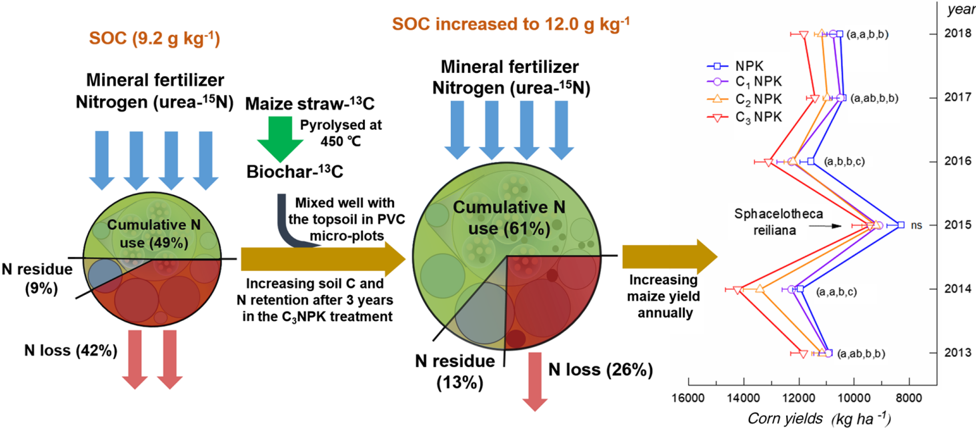
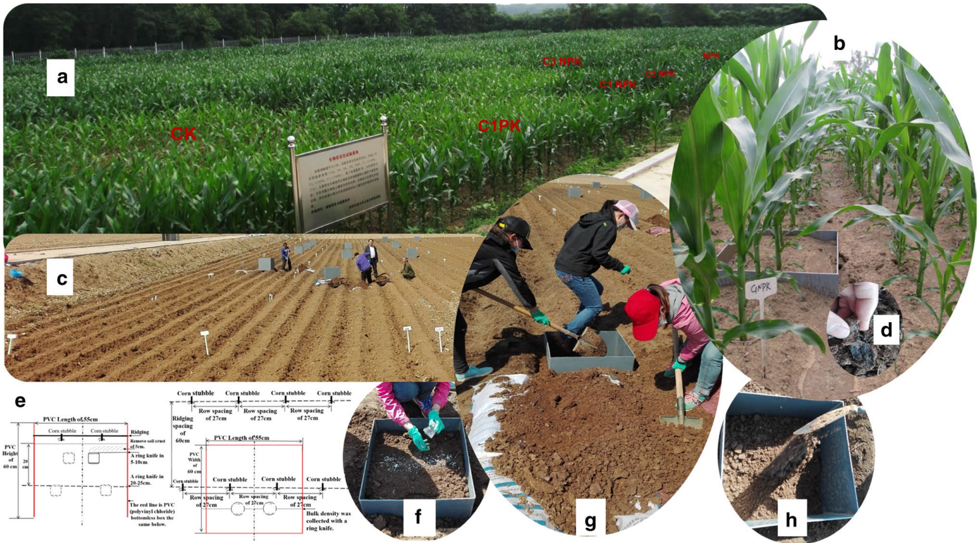
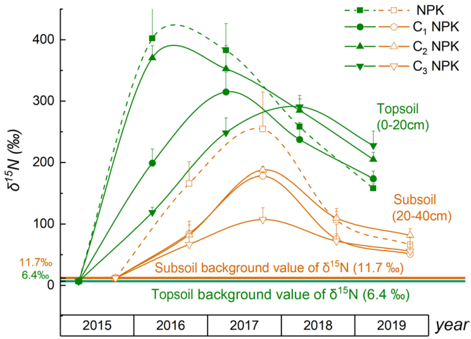
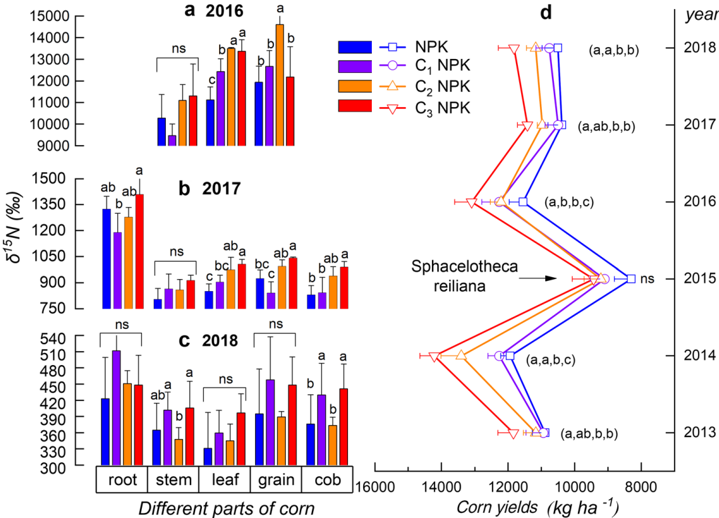
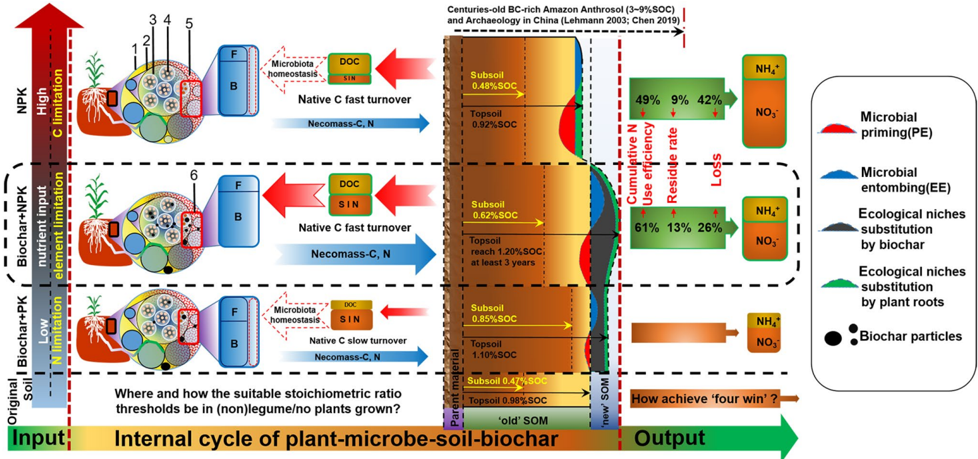
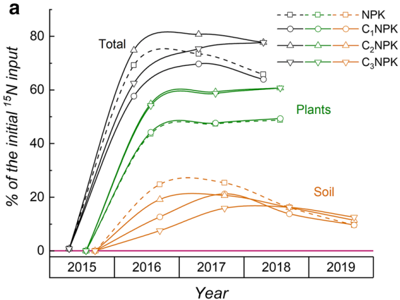
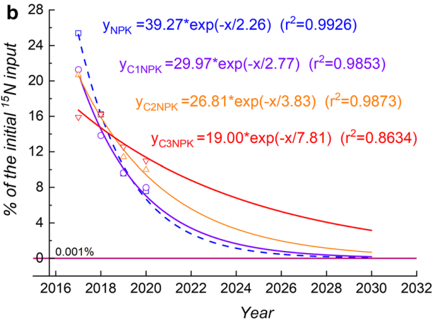
Combined application of biochar with fertilizers has been used to increase soil fertility and crop yield. However, the coupling mechanisms through which biochar improves crop yield at field scale and the time span over which biochar affects carbon and nitrogen transformation and crop yield are still little known. In this study, a long-term field trial (2013–2019) was performed in brown soil planting maize. Six treatments were designed: CK—control; NPK—application of chemical fertilizers; C 1 PK—low biochar without nitrogen fertilizer; C 1 NPK, C 2 NPK and C 3 NPK—biochar at 1.5, 3 and 6 t ha−1, respectively, combined with chemical fertilizers. Results showed that the δ 15 N value in the topsoil of 0–20 cm layer in the C 3 NPK treatment reached a peak of 291 ‰ at the third year (2018), and demonstrated a peak of 402 ‰ in the NPK treatment in the initial isotope trial in 2016. Synchronously, SOC was not affected until the third to fourth year after biochar addition, and resulted in a significant increase in total N of 2.4 kg N ha−1 in 2019 in C 3 NPK treatment. During the entire experiment, the 15 N recovery rates of 74–80% were observed highest in the C 2 NPK and C 3 NPK treatments, resulting in an annual increase in yields significantly. The lowest subsoil δ15 N values ranged from 66‰ to 107‰, and the 15 N residual rate would take 70 years for a complete decay to 0.001% in the C 3 NPK. Our findings suggest that biochar compound fertilizers can increase C stability and N retention in soil and improve N uptake by maize, while the loss of N was minimized. Biochars, therefore, may have an important potential for improving the agroecosystem and ecological balance. Graphic abstract
Overview
The claims and statistics of this paper haven’t been checked yet.
Free: it reads the open-access text and checks the first 5 claims that cite a source we can check. Create a free account to check every claim.
Integrity signals
Registry
Cites
Statistics
Figures
Verification
Claims the paper makes
The claims and statistics of this paper haven’t been checked yet.
Free: it reads the open-access text and checks the first 5 claims that cite a source we can check. Create a free account to check every claim.
Claims other papers make about this one
Each is checked against this paper’s own text: does it say what the citing paper says it does?
The cited source says what the claim attributes to it.
In the citing paper
“Biochar can also boost N uptake by maize, in which N recovery rates of 74 -80% were observed in treatments with 3 and 6 t ha -1 biochars combined with chemical fertilizers, resulting in a significant annual increase of maize yields (Peng et al. 2021).”
From Corn Cob and Corn Husk Biochars Enhance the Growth of Corn (Zea mays L.) in Fertilized Clay Loam Soil (2023) · cites this paper as Peng et al. 2021
Self-check
Percentages, sums and reported differences re-computed from the paper’s own numbers.
The self-check needs the paper’s full text.
Citations
Cites
The importance of anabolism in microbial control over soil carbon storage
Liang, C., Schimel, J. P., & Jastrow, J. D. (2017) · Nature Microbiology · doi:10.1038/nmicrobiol.2017.105 · Cited by 3,320
Lehmann, J., Pereira da Silva, J., Steiner, C., Nehls, T., Zech, W., & Glaser, B. (2003) · Plant and Soil · doi:10.1023/a:1022833116184 · Cited by 1,878
Quantitative assessment of microbial necromass contribution to soil organic matter
Liang, C., Amelung, W., Lehmann, J., & Kästner, M. (2019) · Global Change Biology · doi:10.1111/gcb.14781 · Cited by 1,843
Biochar mediated changes in soil quality and plant growth in a three year field trial
Jones, D. L., Rousk, J., Edwards-Jones, G., DeLuca, T. H., & Murphy, D. V. (2012) · Soil Biology and Biochemistry · doi:10.1016/j.soilbio.2011.10.012 · Cited by 937
Variable effects of nitrogen additions on the stability and turnover of soil carbon
Neff, J. C., Townsend, A. R., Gleixner, G., Lehman, S. J., Turnbull, J., & Bowman, W. D. (2002) · Nature · doi:10.1038/nature01136 · Cited by 804
Fate of soil‐applied black carbon: downward migration, leaching and soil respiration
MAJOR, J., LEHMANN, J., RONDON, M., & GOODALE, C. (2010) · Global Change Biology · doi:10.1111/j.1365-2486.2009.02044.x · Cited by 788
Long-term fate of nitrate fertilizer in agricultural soils
Sebilo, M., Mayer, B., Nicolardot, B., Pinay, G., & Mariotti, A. (2013) · Proceedings of the National Academy of Sciences · doi:10.1073/pnas.1305372110 · Cited by 695
Wang, C., Liu, D., & Bai, E. (2018) · Soil Biology and Biochemistry · doi:10.1016/j.soilbio.2018.02.003 · Cited by 689
Quilliam, R. S., Glanville, H. C., Wade, S. C., & Jones, D. L. (2013) · Soil Biology and Biochemistry · doi:10.1016/j.soilbio.2013.06.004 · Cited by 562
Past, present, and future of biochar
Chen, W., Meng, J., Han, X., Lan, Y., & Zhang, W. (2019) · Biochar · doi:10.1007/s42773-019-00008-3 · Cited by 552
Self-citation
Research works printed but not linked: 2
- He XX, Chi Q, Cai Z, Cheng Y, Zhang J, Müller C (2020) 15N tracing studies including plant N uptake processes provide new insights on gross N transformations in soil-plant systems. Soil Biol Biochem 141:107666. https://doi.org/10.1016/j.soilbio.2019.107666 · DOI
- Pan GX, Ding Y, Chen S, Sun J, Feng X, Zhang C, Marios D, Zheng J, Zhang X, Cheng K (2019) Exploring the nature of soil organic matter from humic substances isolation to SOMics of molecular assemblage. Adv Earth Sci 34(5):451-470. https:// doi. org/ 10. 11867/j. issn. 1001-8166. 2019. 05. 0451. (inChi nesew ithEn glish abstr act) · doi:10.11867/j.issn.1001-8166.2019.05.0451.(inchinesewithenglishabstract
Cited by
Role of biochar toward carbon neutrality
Wang, L., Deng, J., Yang, X., Hou, R., & Hou, D. (2023) · Carbon Research · doi:10.1007/s44246-023-00035-7 · Cited by 195
Biochar-based fertilizer effects on crop productivity: a meta-analysis
Melo, L. C. A., Lehmann, J. C., Carneiro, J. S. D. S., & Arbestain, M. C. (2022) · Plant and Soil · doi:10.1007/s11104-021-05276-2 · Cited by 154
Azeem, M., Sun, T., Jeyasundar, P. G. S. A., Han, R., Li, H., Abdelrahman, H. M., Shaheen, S. M., Zhu, Y., & Li, G. (2023) · Critical Reviews in Environmental Science and Technology · doi:10.1080/10643389.2023.2190333 · Cited by 91
“It also improves soil fertility (Peng et al., 2021) by optimizing soil physicochemical properties (Tomczyk et al., 2020) such as pH, cation exchange capacity (CEC), and water and nutrients retention (Ali et al., 2020; Azeem, Ali, Arockiam Jeyasundar, Li, et al., 2021; Hossain et al., 2020;…”
BackgroundBhattacharyya, P. N., Sandilya, S. P., Sarma, B., Pandey, A. K., Dutta, J., Mahanta, K., Lesueur, D., Nath, B. C., Borah, D., & Borgohain, D. J. (2024) · Journal of soil science and plant nutrition · doi:10.1007/s42729-024-01629-9 · Cited by 106
“It has been observed that biochar generated from pine bark wood is an effective carrier of Bradyrhizobium strains that has a prolonged shelf life of 1 year, and improves the yield to Azospirillum biofertilizer has increased its shelf life to 6 months at room temperature (Peng et al. 2021).”
Yan, B., Zhang, Y., Wang, Y., Rong, X., Peng, J., Fei, J., & Luo, G. (2023) · Chemosphere · doi:10.1016/j.chemosphere.2023.138293 · Cited by 96
Self-citationHu, W., Zhang, Y., Xiangmin, R., Fei, J., Peng, J., & Luo, G. (2023) · Agriculture Ecosystems & Environment · doi:10.1016/j.agee.2023.108582 · Cited by 98
Self-citationFeng, W., Sánchez‐Rodríguez, A. R., Bilyera, N., Wang, J., Wang, X., Han, Y., Ma, B., Zhang, H., Li, F. Y., Zhou, J., et al. (2024) · Environmental Technology & Innovation · doi:10.1016/j.eti.2024.103756 · Cited by 71
Ghorbani, M., Amirahmadi, E., Konvalina, P., Moudrý, J., Bárta, J., Kopecký, M., Teodorescu, R. I., & Bucur, R. D. (2022) · Water · doi:10.3390/w14213506 · Cited by 63
Khan, Z., Zhang, K., Khan, M. N., Zhu, K., & Hu, L. (2024) · European Journal of Agronomy · doi:10.1016/j.eja.2024.127096 · Cited by 56
Ghorbani, M., Konvalina, P., Neugschwandtner, R. W., Kopecký, M., Amirahmadi, E., Bucur, D., & Walkiewicz, A. (2022) · Agronomy · doi:10.3390/agronomy12092106 · Cited by 54
Xia, H., Riaz, M., Babar, S., Yan, L., Li, Y., Wang, X., Wang, J., & Jiang, C. (2023) · Journal of Environmental Management · doi:10.1016/j.jenvman.2023.118796 · Cited by 53
Azeem, M., Jeyasundar, P. G. S. A., Ali, A., Riaz, L., Khan, K. S., Hussain, Q., Kareem, H. A., Abbas, F., Latif, A., Majrashi, A., et al. (2022) · Environmental Research · doi:10.1016/j.envres.2022.114278 · Cited by 47
A bibliometric review of biochar for soil carbon sequestration and mitigation from 2001 to 2020
Zhang, T., Tang, Y., Li, H., Hu, W., Cheng, J., & Lee, X. (2023) · Ecotoxicology and Environmental Safety · doi:10.1016/j.ecoenv.2023.115438 · Cited by 43
Johansson, G., Fedje, K. K., Modin, O., Haeger‐Eugensson, M., Uhl, W., Andersson‐Sköld, Y., & Strömvall, A. (2024) · Journal of Hazardous Materials · doi:10.1016/j.jhazmat.2024.133532 · Cited by 52
Biochar pyrolyzed with concentrated solar radiation for enhanced nitrate adsorption
Li, S., Galoustian, T., & Trejo, H. X. (2023) · Journal of Analytical and Applied Pyrolysis · doi:10.1016/j.jaap.2023.106131 · Cited by 44
Kimani, S. M., Bimantara, P. O., Kautsar, V., Tawaraya, K., & Cheng, W. (2021) · Biochar · doi:10.1007/s42773-021-00116-z · Cited by 39
Matin, N. H., Igaz, D., Aydın, E., & Hořák, J. (2024) · Biochar · doi:10.1007/s42773-024-00307-4 · Cited by 41
“Applying biochar with N-fertilizers has been suggested as an effective method for increasing N availability and SOC in soils (Ullah et al. 2020; Peng et al. 2021).”
Modern perspectives of heavy metals alleviation from oil contaminated soil: A review
Shahzad, A., Zahra, A., Li, H. Y., Qin, M., Wu, H., Wen, M. Q., Ali, M., Iqbal, Y., Xie, S., Sattar, S., et al. (2024) · Ecotoxicology and Environmental Safety · doi:10.1016/j.ecoenv.2024.116698 · Cited by 43
Wang, J., Sun, L., Sun, Y., Yang, S., Qin, Q., & Xue, Y. (2024) · Applied Soil Ecology · doi:10.1016/j.apsoil.2024.105801 · Cited by 37
Yang, X., Xie, Z., Hu, Z., Wen, G., Li, S., Ke, X., Sun, X., Tao, M., & Jiang, X. (2024) · Agriculture Ecosystems & Environment · doi:10.1016/j.agee.2024.108989 · Cited by 34
Omara, P., Singh, H., Singh, K., Sharma, L. K., Otim, F., & Obia, A. (2023) · Technology in Agronomy · doi:10.48130/tia-2023-0016 · Cited by 47
Zhou, X., Feng, Z., Yao, Y., Liu, R., Shao, J., Jia, S., Gao, Y., Xue, K., Chen, H., Fu, Y., et al. (2024) · Soil Biology and Biochemistry · doi:10.1016/j.soilbio.2024.109689 · Cited by 29
Wang, C., Wang, X., Zhang, G., Zhang, F., Li, J., Chen, S., Sauvage, S., Sánchez-Pérez, J. M., Han, Y., & Liu, J. (2023) · The Science of The Total Environment · doi:10.1016/j.scitotenv.2023.164342 · Cited by 28
Aziz, M. A., Khan, K. S., Khalid, R., Shabaan, M., Alghamdi, A. G., Alasmary, Z., & Majrashi, M. A. (2024) · Plant and Soil · doi:10.1007/s11104-024-06556-3 · Cited by 34
“Peng et al. (2021) stated that applying BC in combination with N fertilizer positively affected wheat yield and soil nutrients by restricting soil nitrate leaching.”
Liu, X., Yang, W., Li, W., Ali, A., Chen, J., Sun, M., Gao, Z., & Yang, Z. (2023) · Frontiers in Microbiology · doi:10.3389/fmicb.2023.1190052 · Cited by 24
Xiang, L.-L., Harindintwali, J. D., Wang, F., Bian, Y., Zhao, Z.-L., Wang, Z.-Q., Wang, Y., Mei, Z., Jiang, X., Schäffer, A., et al. (2022) · Chemosphere · doi:10.1016/j.chemosphere.2022.137262 · Cited by 18
Study on influence mechanism of biochar on soil nitrogen conversion
Zhao, P., Wang, S., Liu, D., Li, H., Han, S., & Li, M. (2022) · Environmental Pollutants and Bioavailability · doi:10.1080/26395940.2022.2125445 · Cited by 29
“matter content of the biochar, and the high concentration of organic nitrogen in the biochar resulting in a high total nitrogen content in the leachate [55,56].”
BackgroundYuan, X., Gu, X., Liang, R., Ban, G., Ma, L., He, T., & Wang, Z. (2024) · The Science of The Total Environment · doi:10.1016/j.scitotenv.2024.173160 · Cited by 24
Evaluation on soil fertility quality under biochar combined with nitrogen reduction
Tian, X., Li, Z., Wang, Y., Li, B., & Wang, L. (2021) · Scientific Reports · doi:10.1038/s41598-021-93200-0 · Cited by 21
Li, W., Yao, L., Long, M., Zhang, H., Zhang, Y., Wen, X., Mo, F., Han, J., & Liao, Y. (2022) · Applied Soil Ecology · doi:10.1016/j.apsoil.2022.104591 · Cited by 21
Ibrahim, M. M., Wu, F., Chen, Y., Liu, D., Zhang, W., He, Z., Hou, E., Xing, S., & Mao, Y. (2022) · Geoderma · doi:10.1016/j.geoderma.2022.116236 · Cited by 22
Ecotoxicological Effects of Biochar Obtained from Spent Coffee Grounds
de Souza, L. Z. M., Pinto, B. C., Alves, A. B., Ribeiro, A. V. D. O., Feliciano, D. C. T., da Silva, L. H., Dias, T. T. M., Yılmaz, M., de Oliveira, M. A., Bezerra, A. C. D. S., et al. (2022) · Materials Research · doi:10.1590/1980-5373-mr-2022-0013 · Cited by 22
Zhang, F., Chen, M., Xing, Y., Han, J., & Wang, X. (2025) · Journal of Agriculture and Food Research · doi:10.1016/j.jafr.2025.101634 · Cited by 37
Ma, L., Huo, Q., Tian, Q., Xu, Y., Hao, H., Min, W., & Hou, Z. (2022) · Journal of Soils and Sediments · doi:10.1007/s11368-022-03416-4 · Cited by 17
“Biochar addition can alter the soil environment and regulated the N transformation and N synchronization in the soil (Peng et al. 2021).”
BackgroundPeng, X., Jia, T., Bai, Q., Lang, D., & Zhang, X. (2024) · Industrial Crops and Products · doi:10.1016/j.indcrop.2024.118280 · Cited by 15
Gullì, M., Cangioli, L., Frusciante, S., Graziano, S., Caldara, M., Fiore, A., Klonowski, A. M., Maestri, E., Brunori, A., Mengoni, A., et al. (2025) · The Science of The Total Environment · doi:10.1016/j.scitotenv.2025.178872 · Cited by 16
Next-generation strategies for nitrogen-efficient maize production for a greener tomorrow
Jan, M. F., Liaqat, W., Altaf, M. T., Ahmadzai, M. D., Maqbool, A., Baloch, F. S., & Li, M. (2025) · Field Crops Research · doi:10.1016/j.fcr.2025.110084 · Cited by 16
Biochar revolution: Harnessing pyrolysis for climate resilience and circular environmental solutions
Ouahabi, H. E., Bayessi, O., Mouaky, A., Hirt, A., & Rachidi, S. (2026) · Carbon Trends · doi:10.1016/j.cartre.2026.100628 · Cited by 18
Filho, M. N. D. C., Melo, L. C. A., Filho, J. F. L., Paes, É. D. C., Dias, F. D. O., Gomes, J. L., & Nick, C. (2024) · Journal of Plant Nutrition · doi:10.1080/01904167.2024.2354214 · Cited by 15
“%) corn grain yield with 1.5 t ha − 1 of biochar combined with NPK compared to NPK only (Peng et al. 2021), or a 26% increase in corn yield for biochar-based fertilizer containing urea and additives in granulated form compared with conventional urea under tropical conditions (Puga et al. 2020).”
InfluentialApplication of C and N isotopes to the study of biochar biogeochemical behavior in soil: A review
Feng, Q., Wang, B., Zimmerman, A. R., Wu, P., Lee, X., Chen, M., & Zhang, J. (2024) · Earth-Science Reviews · doi:10.1016/j.earscirev.2024.104860 · Cited by 15
Wang, Y., Zhang, M., Tian, Z., Yang, J., Pang, J., Fang, Y., Liu, E., Cai, T., Ren, X., Jia, Z., et al. (2024) · Land Degradation and Development · doi:10.1002/ldr.5234 · Cited by 12
“N (Taghizadeh-Toosi et al., 2012), and promoting crop N uptake (Peng et al., 2021).”
Self-citationXu, Q., Han, H., Xu, Y., Xia, H., Li, M., Gong, P., Wang, C., Li, Y., Li, P., & Liu, H. (2024) · Environmental Technology & Innovation · doi:10.1016/j.eti.2024.103976 · Cited by 12
Erdal, İ., Alaboz, P., Ekinci, K., Türkan, Ş. A., Yaylacı, C., & Şener, A. (2024) · RENDICONTI LINCEI · doi:10.1007/s12210-023-01221-w · Cited by 9
“As mentioned previously, the uptakes of nutrients responsible for the vegetative growth such as N can be increased due to the retention of fertilizer N in an available form in the soils (Peng et al. 2021).”
Saif, I., Thakur, N., Sharma, M., Alalawy, A. I., Jalalah, M., Hassan, S. H. A., Zidan, N. S., & Salama, E. (2025) · Journal of Water Process Engineering · doi:10.1016/j.jwpe.2025.107278 · Cited by 10
Kilowasid, L. M. H., Manik, D. S., Nevianti, N., Komang, G. A., Mutmainna, P., Afa, L. O., Rakian, T. C., Hisein, W. S. A., Ramadhan, L. O. A. N., & Alam, S. (2023) · Journal of Degraded and Mining Lands Management · doi:10.15243/jdmlm.2023.102.4255 · Cited by 9
Williamson, R., Reay, M. K., & Sgouridis, F. (2024) · Agronomy · doi:10.3390/agronomy14071446 · Cited by 11
Guo, Y., Samson, V. M., Zhi, Y., Chen, Y., Xi, Y., Jia, G., & Mao, Y. (2025) · Geoderma Regional · doi:10.1016/j.geodrs.2025.e00936 · Cited by 10
Cui, X., Wang, J., Zhang, L., Chen, T., Zhuge, Y., & Dong, Y. (2022) · Agronomy · doi:10.3390/agronomy12102445 · Cited by 6
Liu, R., Chang, D., Zhang, J., Li, R., Wu, J., Liang, H., Cheng, Y., & Cao, W. (2025) · Farming System · doi:10.1016/j.farsys.2025.100190 · Cited by 6
Wang, X., Su, X., Wang, L., Li, S., Chang, M., Li, Y., Guan, Y., Wu, Q., & Zhang, W. (2024) · Journal of soil science and plant nutrition · doi:10.1007/s42729-024-01932-5 · Cited by 6
“Over time, a new equilibrium may be established among the soil, biochar, and microorganisms, ultimately stabilizing the total N content in the soil (Peng et al. 2021).”
Sustainable Biochar Production from Date Palms: A Scoping Review of Solutions for Arab Regions
Burezq, H. A. (2025) · International Journal of Agriculture and Natural Resources · doi:10.7764/ijanr.v51i3.2526 · Cited by 6
Hu, H., Chen, Y., Zhang, L., Lai, J., Chen, K., Xie, Y., & Wang, X. (2025) · Agriculture · doi:10.3390/agriculture15080800 · Cited by 6
Self-citationHynšt, J., Tůma, I., Mikajlo, I., & Záhora, J. (2023) · Rhizosphere · doi:10.1016/j.rhisph.2023.100763 · Cited by 5
Xiao, L., Li, Y., Li, W., Yuan, G., Wu, J., Han, F. X., & Chen, M. (2025) · Journal of soil science and plant nutrition · doi:10.1007/s42729-025-02402-2 · Cited by 4
“Its large specific surface area and abundant functional groups also aid in nutrient retention (Hossain et al. 2020; Peng et al. 2021; Sarfaraz et al. 2024), enhancing nutrient supply and increasing crop yield (Gao et al. 2022; Khan et al. 2024; Li et al. 2024; Pradhan et al. 2024).”
Pereira, L. G., Folegatti, M. I. S., Ramos, N. P., de Andrade, C. A., Pighinelli, A. L. M. T., Galindo, R., & Seabra, J. E. A. (2025) · Cleaner Energy Systems · doi:10.1016/j.cles.2025.100208 · Cited by 5
Xie, M., Lu, X., Wang, H., Fu, X., & Wang, L. (2023) · Sustainability · doi:10.3390/su152416709 · Cited by 4
Okebalama, C. B., Asogwa, K. C., Uzoh, I. M., & Marschner, B. (2022) · Agro-Science · doi:10.4314/as.v21i2.6 · Cited by 6
“Integration of biochar and inorganic fertilizer has been reported to be more beneficial than the use of either biochar or inorganic alone (Peng et al., 2021; Zhang et al., 2021).”
BackgroundInfluentialEVALUASI PUPUK NITROGEN LEPAS LAMBAT PADA TANAMAN JAGUNG (Zea mays L.)
Agustina, D., Rahman, F. A., Supriyadi, S., & Wasonowati, C. (2024) · Jurnal Tanah dan Sumberdaya Lahan · doi:10.21776/ub.jtsl.2024.011.1.11 · Cited by 4
Li, Y., Wang, J., Lü, J., Feng, Y., Li, J., Guo, Z., Lin, X., & Han, Y. (2025) · PeerJ · doi:10.7717/peerj.20308 · Cited by 5
Begizew, G., Dechassa, N., Mohammed, W., & Gezahegn, A. M. (2026) · Journal of Agriculture and Food Research · doi:10.1016/j.jafr.2026.102698 · Cited by 3
Fate of Fertilizer Nitrogen in the Field 2 Years After Biochar Application
Zhao, L., Yang, W., Wang, Z., Zhang, J., Zhang, L., Yang, M., Meng, X., & Ma, L. (2025) · Plants · doi:10.3390/plants14050682 · Cited by 3
“The study found that long-term biochar application progressively increased corn yields, with the effect becoming more pronounced over time [11].”
Shyam, A., Sharma, D. P., Sharma, N. C., & Singh, U. (2024) · Communications in Soil Science and Plant Analysis · doi:10.1080/00103624.2024.2378972 · Cited by 3
“The addition of organic amendments promotes the cation and anion exchange capacity of soil, thereby improving nutrient availability and utilization (Joseph et al. 2021; Mia, Dijkstra, and Singh 2017; Peng et al. 2021).”
Graduate School, U. O. T. P. L. B. C., Bulfa, A., Villegas-Pangga, G., Wagan, A., College of Agriculture, S. U. D. C., & Agricultural Systems Institute College of Agriculture and Food Sciences University of the Philippines Los Baños College, L. (2023) · The Philippine Agricultural Scientist · doi:10.62550/dc042022 · Cited by 2
“Thus, biochar may have a significant potential to improve maize yield especially if the associated type of fertilizer is carefully considered (Peng et al. 2021).”
BackgroundKhan, Z. H., Han, R., Ihenetu, S. C., Li, H., Sun, X., Kazmi, S. S. U. H., Azeem, M., & Li, G. (2025) · Environmental Reviews · doi:10.1139/er-2025-0012 · Cited by 5
Mekki, F., Karbout, N., Lamourou, H., Oueriemmi, H., Bennour, A., Moussa, M., & Ouessar, M. (2026) · Soil Systems · doi:10.3390/soilsystems10030038 · Cited by 2
Chang, D., Bai, A., Zhao, X., Yang, C. H., Chen, Q., Sibounnavong, P., Ye, X.-F., Li, Y., Cai, Y., Zhu, J., et al. (2026) · Environmental Research · doi:10.1016/j.envres.2026.124669 · Cited by 3
Santi, N., Dewi, R. K., Watanabe, S., Suganuma, Y., Iikubo, T., & Komatsuzaki, M. (2024) · Sustainability · doi:10.3390/su16062570 · Cited by 2
Li, Z., Hao, Y., Li, H., Fu, T., Li, J., Peng, Y., Chang, J., Chen, L., Xie, D., Chen, X. D., et al. (2024) · Agronomy · doi:10.3390/agronomy14081750 · Cited by 4
Subedi, A., Robert, É., Braghiroli, F. L., & Girona, M. M. (2024) · Sustainability · doi:10.3390/su16177683 · Cited by 1
Application of slow-release NPK fertilizer on the growth of sweet corn plants (Zea Mays L.)
Sartika, D., Firmansyah, A. P., Rahmatullah, M. R., & Junais, I. (2025) · IOP Conference Series Earth and Environmental Science · doi:10.1088/1755-1315/1471/1/012007 · Cited by 1
Chen, X., Wang, Z., Cui, N., Guo, L., Yu, K., Jin, H., & Sun, S. (2025) · Plant and Soil · doi:10.1007/s11104-025-07582-5 · Cited by 2
“For example, it can alter biological N fixation (Liu et al. 2019b), reduce NH 3 volatilization and N 2 O emission (Thangarajan et al. 2018), decrease N leaching (Xu et al. 2016), enhance N retention and promote N uptake by plants (Peng et al. 2021).”
Jia, Y., Zhang, L., Pang, Z., Mo, L., Fu, H., Yuan, Z., & Hu, C. (2025) · Biochar · doi:10.1007/s42773-025-00519-2 · Cited by 2
“Research has also shown that co-application of biochar and nitrogen fertilizer enhances maize’s absorption and utilization of nitrogen (Peng et al. 2021; Ren et al. 2021).”
Wu, H., Zhang, D., Jiang, G., Shen, X., Ma, G., Zhao, H., Jie, X., Liu, S., & Wang, D. (2026) · Environmental Technology & Innovation · doi:10.1016/j.eti.2026.104794 · Cited by 1
Climate risk and maize productivity: structural pathways and gendered adaptation strategies
Yeboah, S., Boa-Amponsem, F., Agyarko, F. F., Amankwaa-Yeboah, P., Dziwornu, M. G., Ghanney, P., & Keteku, A. (2026) · Frontiers in Sustainable Food Systems · doi:10.3389/fsufs.2026.1755044 · Cited by 1
Biyokömür İnkübasyonunun Buğday Verimi ve Bazı Verim Parametrelerine Etkisi
Şener, A., & Erdal, İ. (2022) · European Journal of Science and Technology · doi:10.31590/ejosat.1197040 · Cited by 1
Elebiyo, G. M., & Bachmann, R. T. (2024) · Agricultural Sciences · doi:10.4236/as.2024.156036 · Cited by 5
The Growth, N Uptake, N Use Efficiency by Corn due to Application of SRF-Urea
Supriyadi, S., Rahman, F. A., Sutopo, A., & Erika, S. (2024) · BIO Web of Conferences · doi:10.1051/bioconf/202414601047 · Cited by 2
Nutrient release pattern of organo-mineral fertilizers in Southern laterites of Kerala
Ganesh, S., Nishan, M. A., Shalini Pillai, P., Jayapal, A., & Gowripriya (2024) · International Journal of Research in Agronomy · doi:10.33545/2618060x.2024.v7.i12c.2135 · Cited by 1
“Studies show that biochar applications reduce nitrogen concentrations in leachate, due to its high cation and anion exchange capacities and its ability to immobilize nitrogen through microbial utilization of labile carbon (Peng et al ., 2021) [5] .”
Kedir, M. (2022) · Discoveries in Agriculture and Food Sciences · doi:10.14738/dafs.104.14379 · Cited by 1
Wang, Y., Zhang, M., Tian, Z., Yang, J., Pang, J., Liu, E., Cai, T., Ren, X., Jia, Z., Siddique, K. H. M., et al. (2023) · SSRN Electronic Journal · doi:10.2139/ssrn.4496485
Self-citationWang, Y., Zhang, M., Tian, Z., Yang, J., Pang, J., Cai, T., Cai, T., Ren, X., Jia, Z., Siddique, K. H. M., et al. (2023) · SSRN Electronic Journal · doi:10.2139/ssrn.4654121
Self-citationImpact of biochar on soil, crop, and climate sustainability
Rakesh, S., Jannu, N., Bhanusree, M. R., Divya, B., Jogula, K., Raju, B., Reddy, S. B., Balraju, W., Hosur, S. R., Pandit, V. B., et al. (2024) · Elsevier eBooks · doi:10.1016/b978-0-443-18486-4.00004-x · Cited by 1
Aleiadeh, H. (2024) · International Journal of Horticultural Science · doi:10.31421/ijhs/30/2024/14191 · Cited by 3
Iboko, M. P., Dossou‐Yovo, E. R., Obalum, S. E., Brümmer, C., Ndindeng, S. A., Diedhiou, S., & Témé, N. (2024) · Research Square · doi:10.21203/rs.3.rs-5253318/v1
RetractedQuang, H. N., Việt, D. H., Trung, K. P., Thành, N. P., Khánh, L. N. T., & Bao, N. (2025) · Tạp chí Kinh tế và Phát triển · doi:10.33301/jed.vi.2275
Jalal, F., Amin, A., Rahman, Z. U., Ahmad, A., Ahmad, S., Amin, A., & Javed, S. (2025) · Annual Methodological Archive Research Review · doi:10.63075/9xmwzd46
Ndua, N. D. D., & Bria, D. (2025) · Jurnal Ilmu Pertanian Indonesia · doi:10.18343/jipi.30.3.605
Li, A., Mu, L., Sun, S., Wang, J., Peng, S., Zhang, N., & Li, B. (2025) · SSRN Electronic Journal · doi:10.2139/ssrn.5348231
Isotopic approaches to assess nitrate accumulation in conventional and organically grown vegetables
Liu, X., Fan, K., Yang, H., Zhan, X., Rogers, K. M., & Song, W. (2026) · Agricultural Products Processing and Storage · doi:10.1007/s44462-025-00048-y
“High C/N soil amendments such as straw compost or biochar often promote microbial nitrogen immobilization, delaying nitrogen availability but enhancing long-term soil N retention [31].”
Self-citationVarma, S., & Basavarajappa, P. N. (2026) · Research Square · doi:10.21203/rs.3.rs-8909517/v1
Cheng, Y., Jiang, J., Song, L., Xu, S., Na, M., Cheng, K., Li, D., Zhou, S., & Zhou, J. (2026) · Journal of environmental chemical engineering · doi:10.1016/j.jece.2026.122056 · Cited by 1
Huang, L., Dong, C., Wang, D., Wang, G., Guo, Z., Zhang, F., Ma, W., Xu, Y., Lu, X., & Sun, X. (2026) · SSRN Electronic Journal · doi:10.2139/ssrn.6538285
Zhang, G., Liao, Y., Wu, J., Wang, K., Zhang, Y., Shangguan, Z., Fang, Y., & Deng, L. (2026) · Carbon Research · doi:10.1007/s44246-026-00290-4
“In such areas, biochar should be combined with soil-improvement measures, such as liming to correct acidity and co-application of nitrogen and phosphorus nutrients, to enhance biochar use efficiency (Peng et al. 2021; Zhang et al. 2025).”
Chen, Y., Yu, Z., Peng, S., Pan, T., Deng, L., & Cai, K. (2026) · Journal of Environmental Management · doi:10.1016/j.jenvman.2026.130269
Li, A., Mu, L., Sun, S., Wang, J., Peng, S., Yang, K., Wang, L., Zhang, N., & Bao, L. (2026) · Agronomy · doi:10.3390/agronomy16131217
Cheng, X., Zhang, X., Yan, D., Guo, H., & Yi, Z. (2026) · Agronomy · doi:10.3390/agronomy16151482
Raji, S. G., Kassa, W., Kiflu, A., Mohammed, B., Shikur, E., & Yimer, T. (2026) · Vadose Zone Journal · doi:10.1002/vzj2.70135
“Studies also found an increase in maize grain nitrogen concentration with the application of different biochars (Peng et al., 2021; Sara & Shah, 2018).”
Long-term effects of biochar application on the wheat yield and nutrient uptake on Fluvisol
Benkova, M., Atanassova, I. D., Nenova, L., & Еlenova, Е. (2026) · Bulgarian Journal of Agricultural Science · doi:10.61308/hmzwf679
“Bio-char improves the efficiency of inorganic fertilizers through microbial functions and reduces nutrient loss, thereby making nutrients more accessible to plants (Yeq et al., 2019; Peng et al., 2021).”
Valorizing Olive Pomace into a Biochar-Based Slow-Release NPK Fertilizer
Zyadeh, M., Jaradat, S., Hamadneh, I., Ayad, J. Y., KASRAWI, M. A.-R., Al-Tahaat, E. S. Y., Obeidat, N., ALQtaishat, N., Alatawi, R. O., Benzerzoura, M. A., et al. (2026) · Agrochemicals · doi:10.3390/agrochemicals5030035
Dunda, M. F., Massawe, B. H. J., & Maliondo, S. M. S. (2026) · EURASIAN JOURNAL OF SOIL SCIENCE (EJSS) · doi:10.18393/ejss.1976329
Metadata
- Authors
- Peng, J., Han, X., Li, N., Chen, K., Yang, J., Zhan, X., Luo, P., & Liu, N.
- Affiliations
- Shenyang Agricultural University (CN)
- Corresponding author
- Han, Xiaori
- Venue
- Biochar
- Published
- 2021-03-22
- Volume
- 3
- Issue
- 3
- Pages
- 367-379
- ISSN
- 2524-7867 (ISSN-L)
- 2524-7972
- OpenAlex
- W3137470456
- Cited by
- 100
- References
- 55
- Citations by year
- 2026: 18 · 2025: 19 · 2024: 31 · 2023: 17 · 2022: 13 · 2021: 2
- FWCI
- 9.20
- Type
- journal article
- Language
- en
- Open access
- hybrid
- doi.org
- Licence
- cc-by
- creativecommons.org/licenses/by/4.0 (tdm)
- creativecommons.org/licenses/by/4.0 (vor)
- Locations
- Biochar (publishedVersion, cc-by)
- Funders
- Natural Science Foundation of China (31972511)
- National Key Research and Development Program of China (2018YFD0300308, 2017YFD0300700)
- Topics
- Life Sciences › Agricultural and Biological Sciences › Soil Science › Soil Carbon and Nitrogen Dynamics
- Life Sciences › Agricultural and Biological Sciences › Soil Science › Agricultural Science and Fertilization
- Life Sciences › Agricultural and Biological Sciences › Agronomy and Crop Science › Crop Yield and Soil Fertility
- Keywords
- maize, nitrogen uptake, nitrogen retention, 15N tracer, nitrogen recovery rate, soil organic carbon, brown soil, nitrogen loss, long-term field experiment, carbon stability
About these checks
Registry, retraction, Cites and statistics results are computed, not judged, with one exception: a printed reference that no index lists is read once by a model before it counts as a citation error. Claims are extracted by a model and kept only when their quote appears verbatim in the text; each cited source is then checked, with a model’s help, for whether it says what the claim relies on. Those verdicts can be wrong — read the claim’s quote and the cited source before relying on one.
Statistics and arithmetic are recomputed, not judged.
Confidence bands are shown only for fields calibrated on our annotated test set. None is calibrated yet, so no band is shown.
What counts as a claim ›How we measure confidence ›How we check this ›
Are you an author, or do you see a problem with this page? Request a review
Data sources
Bibliographic data: Semantic Scholar, OpenAlex, Crossref.
Contains information from the Semantic Scholar Academic Graph Datasets, made available under the ODC Attribution License (ODC-BY 1.0).
Semantic Scholar’s data is described in: Kinney, R., et al. (2023). The Semantic Scholar Open Data Platform. arXiv:2301.10140.
