

Efficacy of single and repeated administration of ketamine in unipolar and bipolar depression: a meta-analysis of randomized clinical trials
Open accessThe DOI matches its Crossref record; 73 of the 74 references it cites were found in a registry or an index.
Abstract
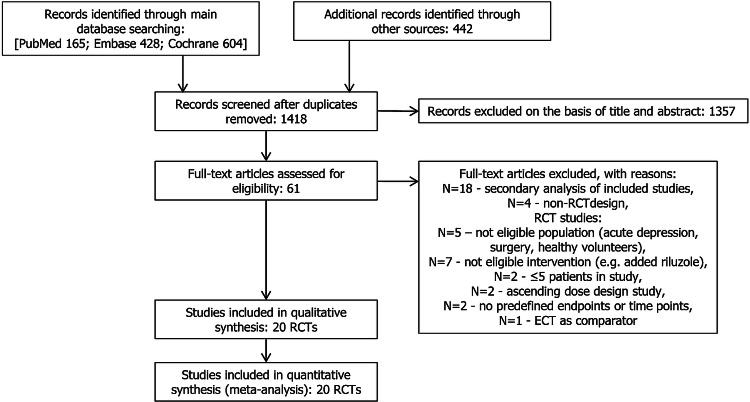
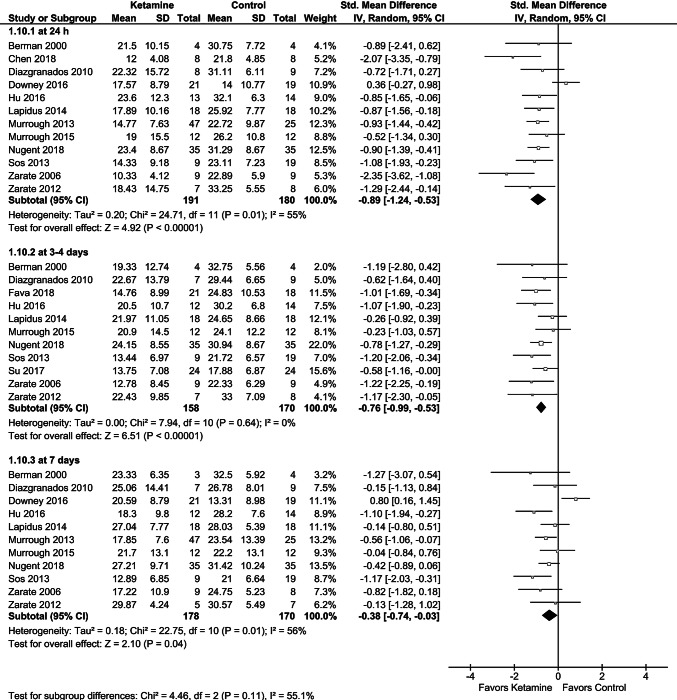
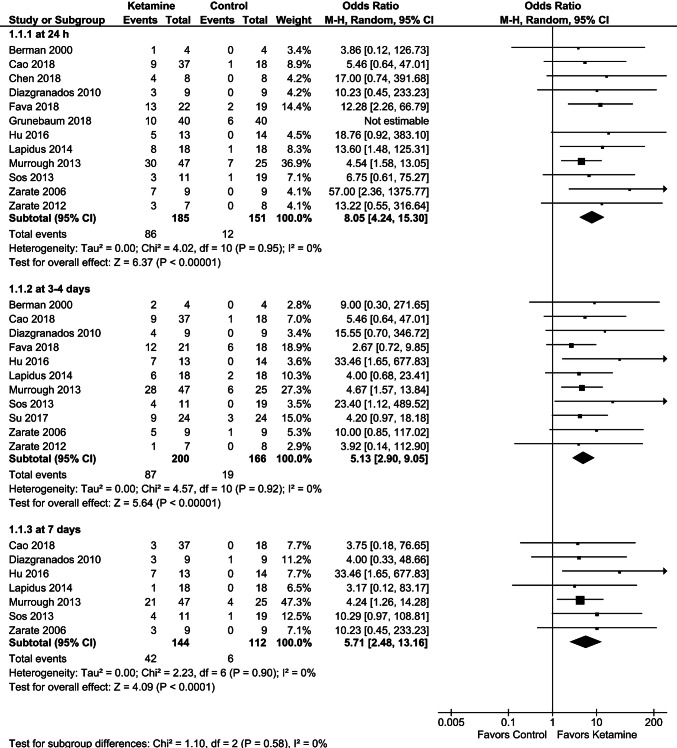
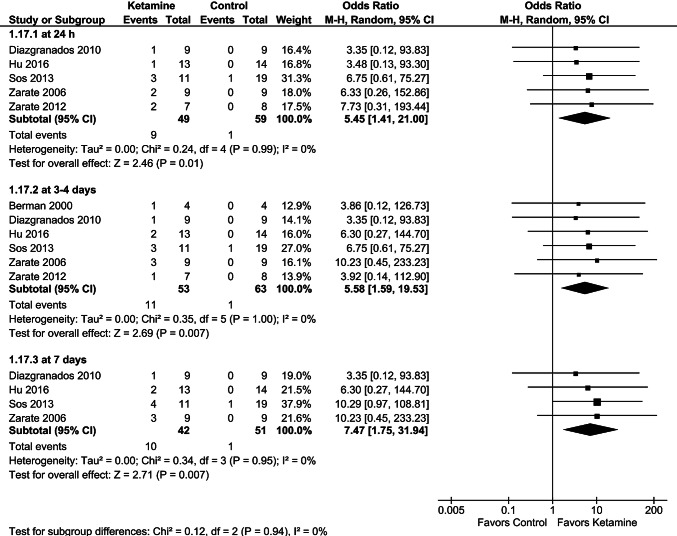
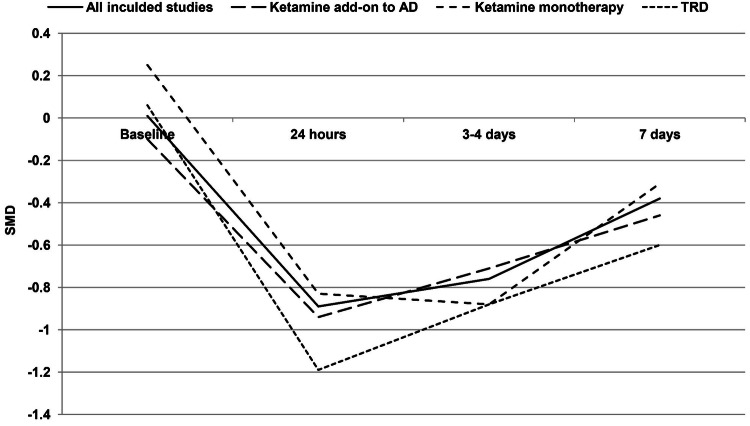
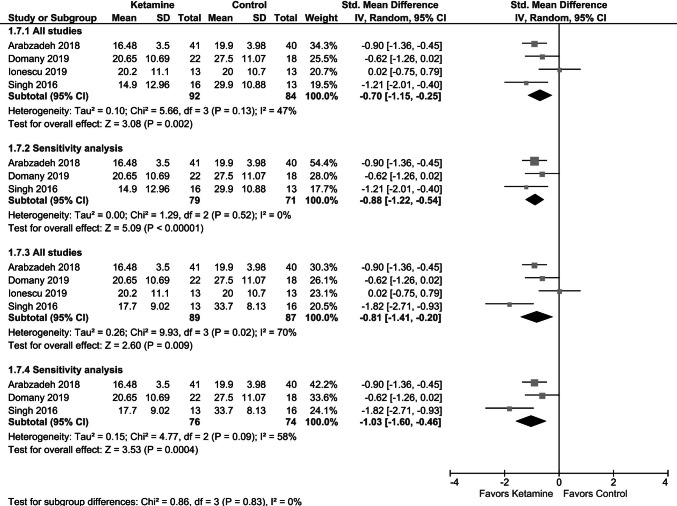
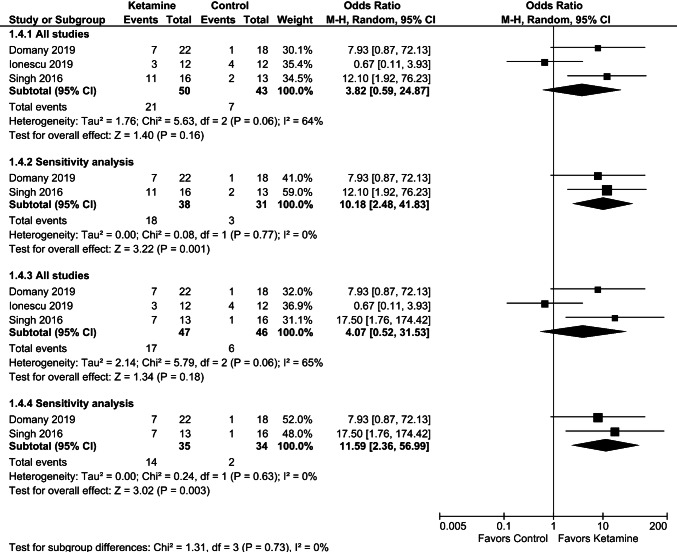
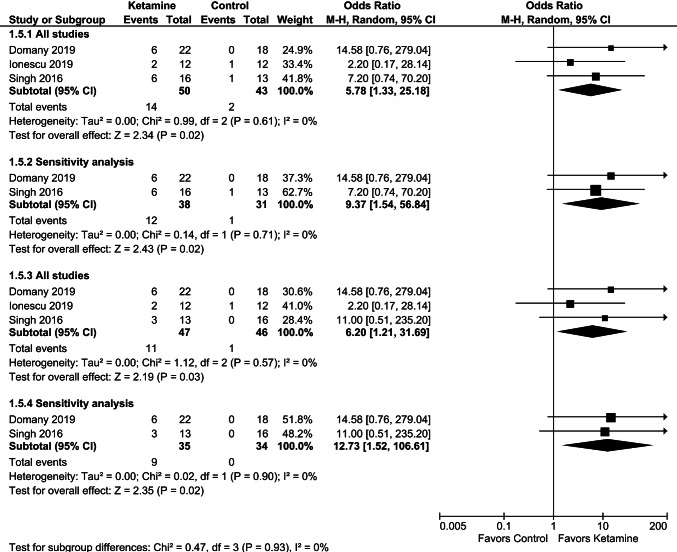
Background: Due to unmet clinical needs for efficient drugs with a rapid onset of antidepressant effects, we aimed to evaluate the efficacy of single-dose ketamine in different subgroups of patients with major depression and establish whether repeated ketamine administration could be a viable strategy to maintain treatment gains. Methods: Electronic databases (Medline via PubMed, Embase, Cochrane Library, Trip Database) were systematically searched until February 22, 2019, for published peer-reviewed randomized controlled trials (RCTs) concerning a single and repeated administration of ketamine in patients with major depression. All relevant RCTs were selected and critically appraised, and a meta-analysis of eligible studies was performed. Results: A total of 20 studies were included in the meta-analysis. The largest effect of ketamine vs. controls in reducing depressive symptoms was observed at 24 h (SMD = − 0.89; 95% CI − 1.24; − 0.53; p < 0.00001); however, a significant difference was shown for up to 7 days after a single dose. Significant differences compared with controls were observed for up to 7 days in treatment-resistant patients and when ketamine was added to ongoing antidepressant treatment, while there were no significant differences at 7 days when ketamine was used as monotherapy. In patients with major depression, initial antidepressant effects of ketamine were maintained during repeated dosing. At 2–3 weeks of repeated ketamine treatment, significant reduction of depression severity scores was observed: SMD = − 0.70; 95% CI − 1.15; − 0.25 or SMD = − 0.81; 95% CI − 1.41; − 0.20 (depending on the dosing regimen used); p ≤ 0.009 vs placebo. Conclusions: Our meta-analysis revealed rapid and robust antidepressant effects of single-dose ketamine in patients with treatment-resistant depression (TRD). By pooling data from RCTs, we showed for the first time that repeated ketamine administration is effective in sustaining initial antidepressant effects observed after single dosing.
Overview
The claims and statistics of this paper haven’t been checked yet.
Free: it reads the open-access text and checks the first 5 claims that cite a source we can check. Create a free account to check every claim.
Integrity signals
Registry
Cites
Statistics
Figures
Verification
Claims the paper makes
The claims and statistics of this paper haven’t been checked yet.
Free: it reads the open-access text and checks the first 5 claims that cite a source we can check. Create a free account to check every claim.
Claims other papers make about this one
Each is checked against this paper’s own text: does it say what the citing paper says it does?
The source backs part of the claim, not all of it — or backs it for a different population, condition or comparison.
In the citing paper
“Across clinical trials, ketamine and esketamine reliably produce rapid symptom relief, yet responses frequently decay within days to weeks, with high relapse rates following discontinuation [81,82,83].”
From Synaptic Plasticity—Intrinsic Excitability and Antidepressant Discovery (2026) · cites this paper as [81]
Experimental — accuracy not yet measuredThe cited source says what the claim attributes to it.
In the citing paper
“Comparable results have been replicated in several similarly designed RDBPCTs examining single administration of sub-anesthetic dose ketamine in patients with MDD and TRD [73,91,92,93].”
From Pharmacotherapies Targeting GABA-Glutamate Neurotransmission for Treatment-Resistant Depression (2023) · cites this paper as [91]
In the citing paper
“Across adjunctive trials in TRD, a single dose of ketamine can alleviate depressive symptoms for up to seven days, with AD effects peaking 24 h after administration [91].”
From Pharmacotherapies Targeting GABA-Glutamate Neurotransmission for Treatment-Resistant Depression (2023) · cites this paper as [91]
In the citing paper
“In MDD, these effects are maintained for two to three weeks with repeated infusions [91].”
From Pharmacotherapies Targeting GABA-Glutamate Neurotransmission for Treatment-Resistant Depression (2023) · cites this paper as [91]
In the citing paper
“Meta-analyses consistently support these findings [91,92,94], establishing ketamine’s AD efficacy in oral and intranasal administration, repeated dosing, an augmenting agent, and patients with treatment-resistant bipolar depression or suicidal ideation [91,94,95,96].”
From Pharmacotherapies Targeting GABA-Glutamate Neurotransmission for Treatment-Resistant Depression (2023) · cites this paper as [91]
Self-check
Percentages, sums and reported differences re-computed from the paper’s own numbers.
The self-check needs the paper’s full text.
Citations
Cites
Preferred Reporting Items for Systematic Reviews and Meta-Analyses: the PRISMA statement
Moher, D., Liberati, A., Tetzlaff, J., Altman, D. G., & for the PRISMA Group (2009) · BMJ · doi:10.1136/bmj.b2535 · Cited by 83,823
Preferred reporting items for systematic reviews and meta-analyses: The PRISMA statement
Moher, D., Liberati, A., Tetzlaff, J., Altman, D. G., & the PRISMA Group* (2009) · Annals of Internal Medicine · doi:10.7326/0003-4819-151-4-200908180-00135 · Cited by 37,554
James, S. L., Abate, D., Abate, K. H., Abay, S. M., Abbafati, C., Abbasi, N., Abbastabar, H., Abd-Allah, F., Abdela, J., Abdelalim, A., et al. (2018) · The Lancet · doi:10.1016/s0140-6736(18)32279-7 · Cited by 13,867
Vos, T., Abajobir, A. A., Abate, K. H., Abbafati, C., Abbas, K. M., Abd-Allah, F., Abdulkader, R. S., Abdulle, A. M., Abebo, T. A., Abera, S. F., et al. (2017) · The Lancet · doi:10.1016/s0140-6736(17)32154-2 · Cited by 13,220
Preferred reporting items for systematic reviews and meta-analyses: The PRISMA statement
Moher, D., Liberati, A., Tetzlaff, J., & Altman, D. G. (2010) · International Journal of Surgery · doi:10.1016/j.ijsu.2010.02.007 · Cited by 12,156
Antidepressant effects of ketamine in depressed patients
Berman, R. M., Cappiello, A., Anand, A., Oren, D. A., Heninger, G. R., Charney, D. S., & Krystal, J. H. (2000) · Biological Psychiatry · doi:10.1016/s0006-3223(99)00230-9 · Cited by 3,856
A randomized trial of an N-methyl-D-aspartate antagonist in treatment-resistant major depression.
Zarate, C. A., Singh, J. B., Carlson, P. J., Brutsche, N. E., Ameli, R., Luckenbaugh, D. A., Charney, D. S., & Manji, H. K. (2006) · Archives of General Psychiatry · doi:10.1001/archpsyc.63.8.856 · Cited by 3,766
Assessing Risk of Bias in Included Studies
Higgins, J. P., & Altman, D. G. (2008) · Cochrane Handbook for Systematic Reviews of Interventions · doi:10.1002/9780470712184.ch8 · Cited by 3,396
Ketamine and Ketamine Metabolite Pharmacology: Insights into Therapeutic Mechanisms
Zanos, P., Moaddel, R., Morris, P. J., Riggs, L. M., Highland, J. N., Georgiou, P., Pereira, E. F. R., Albuquerque, E. X., Thomas, C. J., Zarate, C. A., et al. (2018) · Pharmacological Reviews · doi:10.1124/pr.117.015198 · Cited by 1,260
Murrough, J. W., Iosifescu, D. V., Chang, L. C., Al Jurdi, R. K., Green, C. E., Perez, A. M., Iqbal, S., Pillemer, S., Foulkes, A., Shah, A., et al. (2013) · American Journal of Psychiatry · doi:10.1176/appi.ajp.2013.13030392 · Cited by 1,205
Cited by
McIntyre, R. S., Rosenblat, J. D., Nemeroff, C. B., Sanacora, G., Murrough, J. W., Berk, M., Brietzke, E., Dodd, S., Gorwood, P., Ho, R., et al. (2021) · American Journal of Psychiatry · doi:10.1176/appi.ajp.2020.20081251 · Cited by 731
Leichsenring, F., Steinert, C., Rabung, S., & Ioannidis, J. P. A. (2022) · World Psychiatry · doi:10.1002/wps.20941 · Cited by 485
Microglial ERK-NRBP1-CREB-BDNF Signaling in Sustained Antidepressant Actions of (R)-Ketamine
Yao, W., Cao, Q., Luo, S., He, L., Yang, C., Chen, J., Qi, Q., Hashimoto, K., & Zhang, J.-C. (2022) · Molecular Psychiatry · doi:10.1038/s41380-021-01377-7 · Cited by 216
Ketamine for the treatment of major depression: a systematic review and meta-analysis
Nikolin, S., Rodgers, A., Schwaab, A., Bahji, A., Zarate, C., Vazquez, G., & Loo, C. (2023) · eClinicalMedicine · doi:10.1016/j.eclinm.2023.102127 · Cited by 172
Smith-Apeldoorn, S. Y., Veraart, J. K., Spijker, J., Kamphuis, J., & Schoevers, R. A. (2022) · The Lancet Psychiatry · doi:10.1016/s2215-0366(22)00317-0 · Cited by 169
A non-hallucinogenic LSD analog with therapeutic potential for mood disorders
Lewis, V., Bonniwell, E. M., Lanham, J. K., Ghaffari, A., Sheshbaradaran, H., Cao, A. B., Calkins, M. M., Bautista-Carro, M. A., Arsenault, E., Telfer, A., et al. (2023) · Cell Reports · doi:10.1016/j.celrep.2023.112203 · Cited by 168
History repeating: guidelines to address common problems in psychedelic science
van Elk, M., & Fried, E. I. (2023) · Therapeutic Advances in Psychopharmacology · doi:10.1177/20451253231198466 · Cited by 137
“97,98 It is therefore not surprising that a recent meta-analysis concluded that ‘long-term safety and efficacy [. . . ] are yet to be investigated’.”
BackgroundDepression: Biological markers and treatment
Nedic Erjavec, G., Sagud, M., Nikolac Perkovic, M., Svob Strac, D., Konjevod, M., Tudor, L., Uzun, S., & Pivac, N. (2021) · Progress in Neuro-Psychopharmacology and Biological Psychiatry · doi:10.1016/j.pnpbp.2020.110139 · Cited by 119
The opioid system in depression
Jelen, L. A., Stone, J. M., Young, A. H., & Mehta, M. A. (2022) · Neuroscience & Biobehavioral Reviews · doi:10.1016/j.neubiorev.2022.104800 · Cited by 111
“0 mg/kg)), and of intranasal (S)-ketamine, esketamine (Spravato®), (28 – 84 mg) in adults with TRD (Kryst et al., 2020; McIntyre et al., 2020; Papakostas et al., 2020).”
InfluentialGreenway, K. T., Garel, N., Jerome, L., & Feduccia, A. A. (2020) · Expert Review of Clinical Pharmacology · doi:10.1080/17512433.2020.1772054 · Cited by 94
“Ketamine is thus unique in that it has been – and continues to be – utilized within both psychedelic and more conventional paradigms [174,181].”
BackgroundEsketamine Treatment for Depression in Adults: A PRISMA Systematic Review and Meta-Analysis
Fountoulakis, K. N., Saitis, A., & Schatzberg, A. F. (2025) · American Journal of Psychiatry · doi:10.1176/appi.ajp.20240515 · Cited by 90
Ketamine and the Future of Rapid-Acting Antidepressants
Riggs, L. M., & Gould, T. D. (2021) · Annual Review of Clinical Psychology · doi:10.1146/annurev-clinpsy-072120-014126 · Cited by 87
The abuse liability of ketamine: A scoping review of preclinical and clinical studies
Le, T. T., Cordero, I. P., Jawad, M. Y., Swainson, J., Di Vincenzo, J. D., Jaberi, S., Phan, L., Lui, L. M. W., Ho, R., Rosenblat, J. D., et al. (2022) · Journal of Psychiatric Research · doi:10.1016/j.jpsychires.2022.04.035 · Cited by 82
Medeiros, G. C., Gould, T. D., Prueitt, W. L., Nanavati, J., Grunebaum, M. F., Farber, N. B., Singh, B., Selvaraj, S., Machado-Vieira, R., Achtyes, E. D., et al. (2022) · Molecular Psychiatry · doi:10.1038/s41380-022-01652-1 · Cited by 75
“There is growing evidence that (R,S)-ketamine (ketamine) and its (S)-ketamine enantiomer (esketamine) have rapid and substantial antidepressant effects in major depressive episodes (MDE) in MDD or bipolar disorder (BD) [11, 12], including in subjects previously unresponsive to conventional treatments.”
BackgroundKetamine and psychotherapy for the treatment of psychiatric disorders: Systematic review
Kew, B. M., Porter, R. J., Douglas, K. M., Glue, P., Mentzel, C. L., & Beaglehole, B. (2023) · BJPsych Open · doi:10.1192/bjo.2023.53 · Cited by 69
A retrospective analysis of ketamine intravenous therapy for depression in real-world care settings
McInnes, L. A., Qian, J. J., Gargeya, R. S., DeBattista, C., & Heifets, B. D. (2022) · Journal of Affective Disorders · doi:10.1016/j.jad.2021.12.097 · Cited by 62
“The sustained response to repeated infusions that we observed contrasts with the transient response to single infusions (Kryst et al., 2020; Newport et al., 2015), further supporting the utility of the KIT induction model that has become widely adopted.”
InfluentialHull, T. D., Malgaroli, M., Gazzaley, A., Akiki, T. J., Madan, A., Vando, L., Arden, K., Swain, J., Klotz, M., & Paleos, C. (2022) · Journal of Affective Disorders · doi:10.1016/j.jad.2022.07.004 · Cited by 58
“Ongoing medication sessions seem to enhance therapeutic benefit by preventing the 90 % relapse rate at two weeks observed for single ketamine infusions (Kryst et al., 2020).”
McQuaid, J. R., Buelt, A., Capaldi, V., Fuller, M., Issa, F., Lang, A. E., Hoge, C., Oslin, D. W., Sall, J., Wiechers, I. R., et al. (2022) · Annals of Internal Medicine · doi:10.7326/m22-1603 · Cited by 59
“Ketamine and esketamine are not recommended as initial treatment but are reserved for patients for whom previous therapies have failed or who have not tolerated previous therapies (32).”
BackgroundTargeting metaplasticity mechanisms to promote sustained antidepressant actions
Brown, K. A., & Gould, T. D. (2024) · Molecular Psychiatry · doi:10.1038/s41380-023-02397-1 · Cited by 49
Pharmacotherapies Targeting GABA-Glutamate Neurotransmission for Treatment-Resistant Depression
Vecera, C. M., C. Courtes, A., Jones, G., Soares, J. C., & Machado-Vieira, R. (2023) · Pharmaceuticals · doi:10.3390/ph16111572 · Cited by 48
Reward processing as a common diathesis for chronic pain and depression
Rizvi, S. J., Gandhi, W., & Salomons, T. V. (2021) · Neuroscience & Biobehavioral Reviews · doi:10.1016/j.neubiorev.2021.04.033 · Cited by 55
Van Amsterdam, J., & Van Den Brink, W. (2022) · Expert Opinion on Drug Safety · doi:10.1080/14740338.2021.1949454 · Cited by 44
Ketamine and other glutamate receptor modulators for depression in adults with bipolar disorder
Dean, R. L., Marquardt, T., Hurducas, C., Spyridi, S., Barnes, A., Smith, R. P., Cowen, P. J., McShane, R. H., Hawton, K. E., Malhi, G. S., et al. (2021) · Cochrane Database of Systematic Reviews · doi:10.1002/14651858.cd011611.pub3 · Cited by 48
Pharmacological inhibition of Kir4.1 evokes rapid-onset antidepressant responses
Zhou, X., Zhao, C., Xu, H., Xu, Y., Li, Z., Wang, P., He, J., Lu, T., Gu, Y., Yang, Y., et al. (2024) · Nature Chemical Biology · doi:10.1038/s41589-024-01555-y · Cited by 46
Real‐world effectiveness of repeated ketamine infusions for treatment‐resistant bipolar depression
Fancy, F., Rodrigues, N. B., Di Vincenzo, J. D., Chau, E. H., Sethi, R., Husain, M. I., Gill, H., Tabassum, A., Mckenzie, A., Phan, L., et al. (2023) · Bipolar Disorders · doi:10.1111/bdi.13284 · Cited by 40
“Eligibility criteria to receive IV ketamine and the protocol for the CRTCE have been previously described (19,22,23).”
MethodLi, Q., Wang, S., & Mei, X. (2022) · Psychiatry Research · doi:10.1016/j.psychres.2022.114396 · Cited by 38
Ketamine as a Novel Psychopharmacotherapy for Eating Disorders: Evidence and Future Directions
Ragnhildstveit, A., Slayton, M., Jackson, L. K., Brendle, M., Ahuja, S., Holle, W., Moore, C., Sollars, K., Seli, P., & Robison, R. (2022) · Brain Sciences · doi:10.3390/brainsci12030382 · Cited by 35
Rodolico, A., Cutrufelli, P., Francesco, A. D., Aguglia, A., Catania, G., Concerto, C., Cuomo, A., Fagiolini, A. M., Lanza, G., Mineo, L., et al. (2024) · Frontiers in Psychiatry · doi:10.3389/fpsyt.2024.1325399 · Cited by 45
Ng, J., Lui, L. M. W., Rosenblat, J. D., Teopiz, K. M., Lipsitz, O., Cha, D. S., Xiong, J., Nasri, F., Lee, Y. L., Kratiuk, K., et al. (2021) · Psychopharmacology · doi:10.1007/s00213-021-05767-1 · Cited by 41
Hietamies, T. M., McInnes, L. A., Klise, A., Worley, M. J., Qian, J. J., Williams, L. M., Heifets, B. D., & Levine, S. P. (2023) · Journal of Affective Disorders · doi:10.1016/j.jad.2023.04.141 · Cited by 35
Veraart, J. K. E., van Westenbrugge, M., Palthe, J. E. V. W., van der Meij, A., Schoevers, R. A., & de Jong, J. (2023) · Heliyon · doi:10.1016/j.heliyon.2023.e15883 · Cited by 34
(R)-(-)-Ketamine: The Promise of a Novel Treatment for Psychiatric and Neurological Disorders
Shafique, H. S., Demers, J. C., Biesiada, J., Golani, L. K., Cerne, R., Smith, J. L., Szostak, M., & Witkin, J. M. (2024) · International Journal of Molecular Sciences · doi:10.3390/ijms25126804 · Cited by 34
Smith-Apeldoorn, S. Y., Veraart, J. K. E., Kamphuis, J., Spijker, J., van der Meij, A., van Asselt, A. D. I., Rot, M. A. H., & Schoevers, R. A. (2024) · Molecular Psychiatry · doi:10.1038/s41380-024-02478-9 · Cited by 34
Urothelial toxicity of esketamine in the treatment of depression
Findeis, H., Sauer, C., Cleare, A. J., Bauer, M., & Ritter, P. S. (2020) · Psychopharmacology · doi:10.1007/s00213-020-05611-y · Cited by 29
“…use, there have, to the best of our knowledge, been no published investigations on the urothelial toxicity of ketamine and esketamine when used in antidepressant dose and indication (Hashimoto 2016; Xu et al. 2016; Daly et al. 2017; Gálvez et al. 2018; Citrome et al. 2020; Kryst et al. 2020).”
BackgroundRepurposing Ketamine in Depression and Related Disorders: Can This Enigmatic Drug Achieve Success?
Carboni, E., Carta, A. R., Carboni, E., & Novelli, A. (2021) · Frontiers in Neuroscience · doi:10.3389/fnins.2021.657714 · Cited by 35
History repeating: A roadmap to address common problems in psychedelic science
van Elk, M., & Fried, E. I. (2023) · doi:10.31234/osf.io/ak6gx · Cited by 9
Ketamine for bipolar depression: an updated systematic review
Fancy, F., Haikazian, S., Johnson, D. E., Chen-Li, D. C. J., Levinta, A., Husain, M. I., Mansur, R. B., & Rosenblat, J. D. (2023) · Therapeutic Advances in Psychopharmacology · doi:10.1177/20451253231202723 · Cited by 38
“…recent reviews, RCT findings primarily support the effectiveness of IV ketamine in MDD, but it remains unclear whether the same holds true for BD. 1,23,29 Furthermore, the generalizability of these findings in the real-world setting remains uncertain given the increased complexity and…”
BackgroundInfluentialChrenek, C., Duong, B., Khullar, A., McRee, C., Thomas, R. K., & Swainson, J. (2024) · Frontiers in Psychiatry · doi:10.3389/fpsyt.2023.1283733 · Cited by 29
Mathai, D. S., Hull, T. D., Vando, L., & Malgaroli, M. (2024) · Journal of Affective Disorders · doi:10.1016/j.jad.2024.05.131 · Cited by 28
“Another critical area of study has involved extending the duration of benefit with ketamine, which has led to therapeutic strategies such as repeated medication administration (Kryst et al., 2020; McMullen et al., 2021; Phillips et al., 2019).”
BackgroundInteraction between zinc, the GPR39 zinc receptor and the serotonergic system in depression
Siodłak, D., Nowak, G., & Młyniec, K. (2021) · Brain Research Bulletin · doi:10.1016/j.brainresbull.2021.02.003 · Cited by 25
Bayes, A. J., Short, B., Zarate, C. A., Park, L., Murrough, J. W., McLoughlin, D. M., Riva‐Posse, P., Schoevers, R. A., Veraart, J. K. E., Parikh, S. V., et al. (2022) · Journal of Affective Disorders · doi:10.1016/j.jad.2022.04.020 · Cited by 22
“…in early trials (McGirr et al., 2015), an acute course of up to four weeks of repeated treatments with racemic ketamine (Phillips et al., 2019; Kryst et al., 2020) or intranasal esketamine (Popova et al., 2019; Daly et al., 2019) and also maintenance treatment up to 48 weeks with intranasal…”
The antidepressant effect and safety of non-intranasal esketamine: A systematic review
Smith-Apeldoorn, S. Y., Vischjager, M., Veraart, J. K. E., Kamphuis, J., Rot, M. A. H., & Schoevers, R. A. (2022) · Journal of Psychopharmacology · doi:10.1177/02698811221084055 · Cited by 29
“In the past two decades, a string of clinical trials and case series has produced relatively consistent evidence of ketamine’s rapid and robust antidepressant effect (Kryst et al., 2020; Marcantoni et al., 2020), offering new hope to patients and their treatment providers.”
BackgroundMontano, C. B., Jackson, W., Vanacore, D., & Weisler, R. H. (2023) · Postgraduate Medicine · doi:10.1080/00325481.2023.2189868 · Cited by 31
Ingrosso, G., Cleare, A. J., & Juruena, M. F. (2024) · Journal of Psychopharmacology · doi:10.1177/02698811241303597 · Cited by 28
Pilc, A., Machaczka, A., Kawalec, P., Smith, J. L., & Witkin, J. M. (2022) · Expert Opinion on Drug Discovery · doi:10.1080/17460441.2022.2111415 · Cited by 21
Self-citationKritzer, M. D., Pae, C., & Masand, P. S. (2022) · Expert Opinion on Drug Safety · doi:10.1080/14740338.2022.2069749 · Cited by 23
Lappas, A. S., Glarou, E., Polyzopoulou, Z. A., Goss, G., Huhn, M., Samara, M. T., & Christodoulou, G. N. (2024) · Sleep Medicine · doi:10.1016/j.sleep.2024.05.032 · Cited by 21
Phillips, J. L., Geel, A. V., Burhunduli, P., Vasudev, D., Batten, L. A., Norris, S., Talbot, J. D., Ortiz, A., Owoeye, O., & Blier, P. (2022) · The International Journal of Neuropsychopharmacology · doi:10.1093/ijnp/pyac045 · Cited by 21
“Ketamine elicits more rapid antidepressant effects compared with traditional pharmacological strategies for depression, with higher response and remission rates (Kryst et al., 2020).”
BackgroundAdvances in the pathophysiology of bipolar disorder
Wartchow, K. M., Cordeiro, R. C., & Scaini, G. (2022) · Current Opinion in Psychiatry · doi:10.1097/yco.0000000000000836 · Cited by 22
“[54] showed in a meta-analysis that a single administration of ketamine reduces depressive symptoms and that repeated ketamine administration effectively sustains initial antidepressant effects observed after single dosing.”
BackgroundRiggs, L. M., An, X., Pereira, E. F. R., & Gould, T. D. (2021) · Translational Psychiatry · doi:10.1038/s41398-021-01685-0 · Cited by 18
“Considering that repeated administration is often required to sustain this remission [44], it is important to characterize the potential untoward effects of prolonged ketamine exposure.”
BackgroundGuglielmo, R., & Hasler, G. (2022) · Neuroscience & Biobehavioral Reviews · doi:10.1016/j.neubiorev.2022.104906 · Cited by 18
Danyeli, L. V., Şen, Z. D., Čolić, L., Kurzweil, L., Gensberger‐Reigl, S., Macharadze, T., Götting, F. N., Refisch, A., Liebe, T., Chand, T., et al. (2023) · Translational Psychiatry · doi:10.1038/s41398-023-02346-0 · Cited by 18
Glutamatergic dysregulation in mood disorders: opportunities for the discovery of novel drug targets
Panek, M., Kawalec, P., Malinowska‐Lipień, I., Brzostek, T., & Pilc, A. (2020) · Expert Opinion on Therapeutic Targets · doi:10.1080/14728222.2020.1836160 · Cited by 17
Self-citationParental Attitudes Toward Use of Ketamine in Adolescent Mood Disorders and Suicidality
Mathai, D. S., McCathern, A. G., Guzick, A. G., Schneider, S. C., Weinzimmer, S. A., Cepeda, S. L., Garcia‐Romeu, A., & Storch, E. A. (2021) · Journal of Child and Adolescent Psychopharmacology · doi:10.1089/cap.2021.0078 · Cited by 19
“This approach contrasts markedly with other strategies to sustain the efficacy of ketamine by increasing frequency of dosing (Kryst et al. 2020).”
Repeated, low-dose oral esketamine in patients with treatment-resistant depression: pilot study
Smith-Apeldoorn, S. Y., Veraart, J. K. E., Ruhé, H. G., Rot, M. A. H., Kamphuis, J., de Boer, M. K., & Schoevers, R. A. (2021) · BJPsych Open · doi:10.1192/bjo.2021.1059 · Cited by 18
“6,7 However, this continuation procedure is relatively invasive and costly, and often brings about acute psychiatric (e.g. dissociation, anxiety, agitation) and somatic (e.g. head-ache, dizziness, cardiovascular) side-effects.”
BackgroundZheng, W., Zhou, Y., Wang, C., Lan, X., Zhang, B., Zhou, S., Yan, S., & Ning, Y. (2021) · PeerJ · doi:10.7717/peerj.10989 · Cited by 18
Role of group II metabotropic glutamate receptors in ketamine's antidepressant actions
Onisiforou, A., Georgiou, P., & Zanos, P. (2023) · Pharmacology Biochemistry and Behavior · doi:10.1016/j.pbb.2023.173531 · Cited by 12
Aepfelbacher, J., Panny, B., & Price, R. B. (2024) · Biological Psychiatry Global Open Science · doi:10.1016/j.bpsgos.2024.100316 · Cited by 18
Stress, mental disorder and ketamine as a novel, rapid acting treatment
Dutton, M., Can, A., Lagopoulos, J., & Hermens, D. F. (2022) · European Neuropsychopharmacology · doi:10.1016/j.euroneuro.2022.09.006 · Cited by 18
Erritzøe, D., Barba, T., Benway, T. A., Joel, Z., Good, M., Layzell, M., Baker-Jones, M., Campbell, G., Murphy-Beiner, A., Rands, P., et al. (2026) · Nature Medicine · doi:10.1038/s41591-025-04154-z · Cited by 22
Ketamine for suicidality: An umbrella review
Shamabadi, A., Ahmadzade, A., & Hasanzadeh, A. (2022) · British Journal of Clinical Pharmacology · doi:10.1111/bcp.15360 · Cited by 14
Agnorelli, C., Cinti, A., Barillà, G., Lomi, F., Scoccia, A., Benelli, A., Neri, F., Smeralda, C. L., Cuomo, A., Santarnecchi, E., et al. (2025) · Molecular Psychiatry · doi:10.1038/s41380-025-02889-2 · Cited by 17
Pattanaseri, K., Lortrakul, J., Jaisin, K., Srifuengfung, M., Sanguanpanich, N., Viravan, N., Pariwatcharakul, P., Makarasara, W., & Ratta‐apha, W. (2024) · BMC Psychiatry · doi:10.1186/s12888-024-05951-5 · Cited by 13
“Repetitive administration has shown a promising standardized mean difference of -0.70 (95% CI = -1.15 to -0.25) [7], and in practical settings, it has achieved response and remission rates of 45% and 30%, respectively, for depressive symptoms [8].”
BackgroundInfluentialKetamine treatment for depression: A model of care
Bayes, A. J., Dong, V., Martin, D. M., Alonzo, A., Kabourakis, M., & Loo, C. K. A. (2021) · Australian & New Zealand Journal of Psychiatry · doi:10.1177/00048674211039166 · Cited by 12
Mathai, D. S., Hilbert, S. N., Sepeda, N. D., Strickland, J. C., Griffiths, R. R., & Garcia‐Romeu, A. (2023) · Psychedelic Medicine · doi:10.1089/psymed.2023.0035 · Cited by 15
Psilocybin in pharmacotherapy of obsessive-compulsive disorder
Owe-Larsson, M., Kamińska, K., Buchalska, B., Mirowska-Guzel, D. M., & Cudnoch‐Jędrzejewska, A. (2024) · Pharmacological Reports · doi:10.1007/s43440-024-00633-1 · Cited by 15
“The benefits associated with the use of ketamine and esketamine as rapid-onset antidepressants are well substan - tiated [ 109, 110].”
BackgroundHussain, S., Gale, C. K., Sarma, S., Smith, J. P., Bayes, A. J., & Loo, C. K. A. (2025) · Australian & New Zealand Journal of Psychiatry · doi:10.1177/00048674251333577 · Cited by 11
“Guidelines and meta-analysis outline the effectiveness of longer-term treat-ment (Kryst et al., 2020; Swainson et al., 2021).”
Moldavski, A., Wenz, H., Lange, B., Rohleder, C., & Leweke, F. M. (2021) · Frontiers in Psychiatry · doi:10.3389/fpsyt.2021.679996 · Cited by 10
Aref, S., Habib, M. Z., Eid, D., Eltantawy, E. H. B., Taeimah, M., Hassan, F. E., El‐Gabry, D. A., ElShahawi, H. H., Mohamad, M. I., Abdel-Tawab, A. M., et al. (2025) · Progress in Neuro-Psychopharmacology and Biological Psychiatry · doi:10.1016/j.pnpbp.2025.111503 · Cited by 10
Synaptic priming: A framework for pharmacotherapy in depression
Brown, K. A., Ajibola, M. I., Medeiros, G. C., & Gould, T. D. (2025) · Neuron · doi:10.1016/j.neuron.2025.09.010 · Cited by 13
Zhang, K., Yang, Y., Yuan, X., Zhang, W., Han, X., Lei, C., Tao, Z., Li, Y., & Liu, H. (2021) · Asian Journal of Psychiatry · doi:10.1016/j.ajp.2021.102976 · Cited by 12
Gałuszko‐Węgielnik, M., Jakuszkowiak‐Wojten, K., Wiglusz, M. S., Cubała, W. J., & Pastuszak, M. (2023) · Frontiers in Neuroscience · doi:10.3389/fnins.2023.1214972 · Cited by 10
“Medical evidence strongly supports the use of ketamine as a means of quickly alleviating symptoms in patients with treatmentresistant depression (TRD) who suffer from major depressive disorder (MDD) or bipolar disorder (BD) (Kryst et al., 2020; McIntyre et al., 2020; Wilkowska et al., 2021; Papp et al., 2022).”
BackgroundResultThe metabotropic glutamate receptor 5 as a biomarker for psychiatric disorders
(2023) · International Review of Neurobiology · doi:10.1016/bs.irn.2022.10.007 · Cited by 8
Wang, C., Lan, X., Liu, W., Zhan, Y., Zheng, W., Chen, X., Liu, G., Mai, S., Lu, H., McIntyre, R. S., et al. (2024) · Translational Psychiatry · doi:10.1038/s41398-024-03027-2 · Cited by 10
Chen, M., Lin, W., Li, C., Wu, H.-J., Bai, Y., Tsai, S., Su, T., & Tu, P. (2023) · Journal of Psychiatric Research · doi:10.1016/j.jpsychires.2023.07.022 · Cited by 9
Chen, M., Wu, H.-J., Li, C., Lin, W., Tsai, S., Hong, C., Tu, P., Bai, Y., Mao, W., & Su, T. (2021) · Journal of Psychiatric Research · doi:10.1016/j.jpsychires.2021.11.006 · Cited by 9
Psychothérapie augmentée par la kétamine (KAP) dans les troubles de l’humeur : mode d’emploi
Bottemanne, H., Baldacci, A., Muller, C., Boyreau, A., & Claret, A. (2021) · L Encéphale · doi:10.1016/j.encep.2021.08.011 · Cited by 13
Yamamoto, M., Hirakata, H., & Toda, K. (2026) · Frontiers in Cell and Developmental Biology · doi:10.3389/fcell.2026.1777975 · Cited by 12
“Meta-analyses further support the presence of rapid antidepressant effects within 24 h following ketamine administration, with effects persisting for up to 7 days after a single dose and for several weeks following repeated dosing regimens (Kryst et al., 2020).”
Shim, S. R., Jeong, H. S., Bommersbach, T. J., Nierenberg, A. A., Zarate, C. A., Kaster, T. S., Correll, C. U., McIntyre, R. S., Krystal, J. H., & Rhee, T. G. (2026) · JAMA Psychiatry · doi:10.1001/jamapsychiatry.2026.0612 · Cited by 11
Barbiero, I., Zamberletti, E., Tramarin, M., Gabaglio, M., Peroni, D., Rosa, R. D., Baldin, S., Bianchi, M., Rubino, T., & Kilstrup‐Nielsen, C. (2022) · Human Molecular Genetics · doi:10.1093/hmg/ddac067 · Cited by 8
Veraart, J. K. E., Smith-Apeldoorn, S. Y., Kutscher, M., Vischjager, M., van der Meij, A., Kamphuis, J., & Schoevers, R. A. (2022) · The Journal of Clinical Psychiatry · doi:10.4088/jcp.21m14267 · Cited by 9
Thornton, N. L. R., Wright, D. J., & Glozier, N. (2024) · Australian & New Zealand Journal of Psychiatry · doi:10.1177/00048674241237094 · Cited by 6
“The rapid-acting antidepressant effect of single-dose ketamine often fades within a week and thus, repeat-dosing is deemed necessary to prolong the acute efficacy (Kryst et al., 2020; Xu et al., 2016).”
BackgroundReal-World Effectiveness of Repeated Ketamine Infusions for Treatment-Resistant Bipolar Depression
Fancy, F., Rodrigues, N. B., Vincenzo, J. D. D., Chau, E. H., Sethi, R., Husain, M. I., Gill, H., Tabassum, A., Mckenzie, A., Phan, L., et al. (2023) · FOCUS The Journal of Lifelong Learning in Psychiatry · doi:10.1176/appi.focus.23021022 · Cited by 8
“19,21,22,23,24,25,35 Ketamine primarily targets the glutamate system, rather than the more conventionally targeted monoamine systems.”
BackgroundMethodResultInfluentialPraktische Aspekte der Ketaminbehandlung – Sicherheit, Kombinationstherapien und Komorbiditäten
Findeis, H., Ludwig, V. M., Mikoláš, P., Graff, J., Bauer, M., & Ritter, P. S. (2022) · Der Nervenarzt · doi:10.1007/s00115-021-01260-4 · Cited by 5
Barber, M., Gardner, J., & Carter, A. (2022) · SSM - Qualitative Research in Health · doi:10.1016/j.ssmqr.2022.100202 · Cited by 5
An update on pharmacotherapy for recurrent depression in 2022
Belge, J.-B., Sabbe, A. C. F., & Sabbe, B. (2023) · Expert Opinion on Pharmacotherapy · doi:10.1080/14656566.2023.2223962 · Cited by 7
“As such, considering maintenance strategies is of great importance, and repeated dosing of ketamine has emerged as the most promising [37,38].”
BackgroundMathai, D. S., Cluck, M., Aslam, A. M., Amato, E., Azam, A., Banov, M., Barrett, K. A., Bonnett, C. J., Feifel, D., Grundmann, N., et al. (2026) · Journal of Affective Disorders · doi:10.1016/j.jad.2026.121970 · Cited by 7
Wassenaar, E., Blalock, D. V., Duffy, A., Riddle, M. C., Weeks, H., Mehler, P., & Rienecke, R. D. (2025) · Journal of Psychiatric Research · doi:10.1016/j.jpsychires.2025.05.055 · Cited by 6
Faruqui, Z., & Kim, C. (2022) · Case Reports in Psychiatry · doi:10.1155/2022/8992697 · Cited by 5
Altman, B. R., Earleywine, M., & Leo, J. A. D. (2022) · Journal of Psychoactive Drugs · doi:10.1080/02791072.2021.2020382 · Cited by 4
Depression with comorbid borderline personality disorder - could ketamine be a treatment catalyst?
Więdłocha, M., Marcinowicz, P., Komarnicki, J., Tobiaszewska, M., Dębowska, W., Dębowska, M. D., & Szulc, A. (2024) · Frontiers in Psychiatry · doi:10.3389/fpsyt.2024.1398859 · Cited by 12
Taraku, B., Nomi, J. S., Zavaliangos‐Petropulu, A., Al‐Sharif, N., Pfeiffer, P., Norris, V., Joshi, S. H., Espinoza, R. T., Uddin, L. Q., & Narr, K. L. (2025) · Imaging Neuroscience · doi:10.1162/imag.a.936 · Cited by 3
“Further, though a single administration of ketamine is unlikely to produce therapeutic benefits extending beyond a week, repeated ketamine therapy is shown to induce stronger and more lasting antidepressant effects ( Kryst et al., 2020; Shiroma et al., 2020).”
Park, D., Lee, G., Kim, B. S., Seong, M., & Kim, J. (2025) · Neuropsychopharmacology · doi:10.1038/s41386-025-02288-9 · Cited by 4
Hu, H., Lee, Y., Tillman, A. N., Ballard, E. D., Waldman, L. R., Yuan, P., Johnston, J. N., Peng, S., Kvarta, M. D., Verbalis, J. G., et al. (2026) · Journal of Neuroendocrinology · doi:10.1111/jne.70133 · Cited by 3
“…given that repeated ketamine infusions, compared to a single infusion, have been associated with more sustained clinical improvement in both depression 89 and PTSD. 90 No differences were found in plasma copeptin levels between HVs and the MDE participants, regardless of MDD versus BD etiology.”
Genetics of Response to ECT , TMS , Ketamine and Esketamine
Franklin, C. E., Altinay, M. I., Bailey, K. J., Bhati, M. T., Carr, B. R., Conroy, S. K., Khurshid, K., McDonald, W. M., Mickey, B. J., Murrough, J. W., et al. (2025) · American Journal of Medical Genetics Part B Neuropsychiatric Genetics · doi:10.1002/ajmg.b.33038 · Cited by 4
“Subsequent studies looking specifically at TRD have shown a significant treatment response (Kryst et al. 2020).”
Danyeli, L. V., Şen, Z. D., Čolić, L., Opel, N., Refisch, A., Blekic, N., Macharadze, T., Kretzschmar, M., Munk, M. H. J., Gaser, C., et al. (2024) · Journal of Psychiatric Research · doi:10.1016/j.jpsychires.2024.02.019 · Cited by 3
“While higher doses are used for anesthesia, at sub-anesthetic doses, ketamine demonstrates a rapid antidepressant effect within hours, which peaks 24 h after administration (Berman et al., 2000; Kryst et al., 2020).”
BackgroundKetamine for depressive symptoms: A retrospective chart review of a private ketamine clinic
Juby, V. M., Paruk, S., Tomita, M., & Chiliza, B. (2024) · South African Journal of Psychiatry · doi:10.4102/sajpsychiatry.v30i0.2176 · Cited by 4
Mansoor, S., Khan, K. H., & Faridi, M. A. (2023) · Journal of Pakistan Psychiatric Society · doi:10.63050/jpps.20.01.189 · Cited by 3
Licit use of illicit drugs for treating depression: the pill and the process
Pacheco, A. T., & Moghaddam, B. (2024) · Journal of Clinical Investigation · doi:10.1172/jci180217 · Cited by 3
“A recent study in which individuals with TRD were given ketamine blindly while they were anesthetized reported similar efficacy between ketamine and placebo, suggesting that expectancy or context play a role in the reported therapeutic effects of ketamine, as opposed to drug effect alone (58).”
BackgroundInfluentialMcInnes, L. A., Berman, R., Worley, M. J., & Shih, E. (2025) · Psychiatry Research · doi:10.1016/j.psychres.2025.116689 · Cited by 7
Metadata
- Authors
- Kryst, J., Kawalec, P., Mitoraj, A. M., Pilc, A., Lasoń, W., & Brzostek, T.
- Affiliations
- Maj Institute of Pharmacology (PL)
- Jagiellonian University (PL)
- Corresponding author
- Pilc, Andrzej
- Venue
- Pharmacological Reports
- Published
- 2020-04-16
- Volume
- 72
- Issue
- 3
- Pages
- 543-562
- ISSN
- 1734-1140 (ISSN-L)
- 2299-5684
- PMC
- PMC7329804
- OpenAlex
- W3016734864
- Cited by
- 159
- References
- 74
- Citations by year
- 2026: 24 · 2025: 28 · 2024: 22 · 2023: 23 · 2022: 31 · 2021: 26 · 2020: 5
- FWCI
- 2.78
- Type
- journal article
- Language
- en
- Open access
- hybrid
- doi.org
- Licence
- cc-by
- creativecommons.org/licenses/by/4.0 (tdm)
- creativecommons.org/licenses/by/4.0 (vor)
- Locations
- Pharmacological Reports (publishedVersion, cc-by)
- PubMed Central (publishedVersion, cc-by)
- PubMed (publishedVersion)
- Homo Politicus (Academy of Humanities and Economics in Lodz) (submittedVersion, cc-by-nc-nd)
- Topics
- Health Sciences › Medicine › Pharmacology (medical) › Treatment of Major Depression
- Health Sciences › Medicine › Psychiatry and Mental health › Electroconvulsive Therapy Studies
- Life Sciences › Neuroscience › Biological Psychiatry › Tryptophan and brain disorders
- Keywords
- ketamine, major depressive disorder, treatment-resistant depression, bipolar depression, rapid antidepressant effects, adjunctive antidepressant therapy, monotherapy
- MeSH terms
- Antidepressive Agents, Bipolar Disorder, Major Depressive Disorder, Ketamine, Randomized Controlled Trials as Topic
About these checks
Registry, retraction, Cites and statistics results are computed, not judged, with one exception: a printed reference that no index lists is read once by a model before it counts as a citation error. Claims are extracted by a model and kept only when their quote appears verbatim in the text; each cited source is then checked, with a model’s help, for whether it says what the claim relies on. Those verdicts can be wrong — read the claim’s quote and the cited source before relying on one.
Statistics and arithmetic are recomputed, not judged.
Confidence bands are shown only for fields calibrated on our annotated test set. None is calibrated yet, so no band is shown.
What counts as a claim ›How we measure confidence ›How we check this ›
Are you an author, or do you see a problem with this page? Request a review
Data sources
Bibliographic data: Semantic Scholar, OpenAlex, Crossref.
Contains information from the Semantic Scholar Academic Graph Datasets, made available under the ODC Attribution License (ODC-BY 1.0).
Semantic Scholar’s data is described in: Kinney, R., et al. (2023). The Semantic Scholar Open Data Platform. arXiv:2301.10140.
