

A review of the mechanisms underlying selected comorbidities in Alzheimer’s disease
Open accessThe DOI matches its Crossref record; 175 of the 176 references it cites were found in a registry or an index.
Abstract
Alzheimer's disease (AD) is a progressive neurodegenerative disorder of the central nervous system (CNS) leading to mental deterioration and devastation, and eventually a fatal outcome. AD affects mostly the elderly. AD is frequently accompanied by hypercholesterolemia, hypertension, atherosclerosis, and diabetes mellitus, and these are significant risk factors of AD. Other conditions triggered by the progression of AD include psychosis, sleep disorders, epilepsy, and depression. One important comorbidity is Down’s syndrome, which directly contributes to the severity and rapid progression of AD. The development of new therapeutic strategies for AD includes the repurposing of drugs currently used for the treatment of comorbidities. A better understanding of the influence of comorbidities on the pathogenesis of AD, and the medications used in its treatment, might allow better control of disease progression, and more effective pharmacotherapy. Graphic abstract
Overview
The claims and statistics of this paper haven’t been checked yet.
Free: it reads the open-access text and checks the first 5 claims that cite a source we can check. Create a free account to check every claim.
Integrity signals
Registry
Cites
Statistics
Figures
Verification
Claims the paper makes
The claims and statistics of this paper haven’t been checked yet.
Free: it reads the open-access text and checks the first 5 claims that cite a source we can check. Create a free account to check every claim.
Claims other papers make about this one
Each is checked against this paper’s own text: does it say what the citing paper says it does?
The cited source says what the claim attributes to it.
In the citing paper
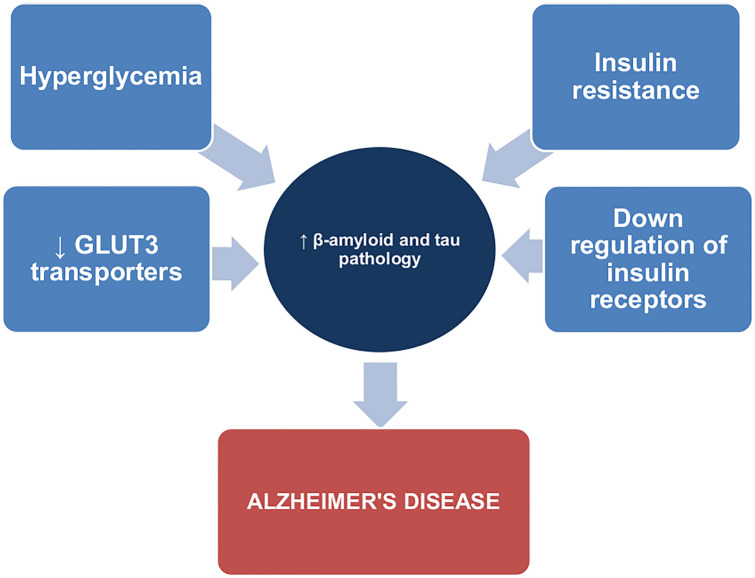
“Insulin resistance can lead to a disruption in glucose transport and then to weakened glucose metabolism; together, they are thought to cause neurodegeneration in AD [85].”
From Primary Cilia and Cardiovascular Risk Factors in Alzheimer's Disease (2025) · cites this paper as [85]
Self-check
Percentages, sums and reported differences re-computed from the paper’s own numbers.
The self-check needs the paper’s full text.
Citations
Cites
NIA‐AA Research Framework: Toward a biological definition of Alzheimer's disease
Jack, C. R., Bennett, D. A., Blennow, K., Carrillo, M. C., Dunn, B., Haeberlein, S. B., Holtzman, D. M., Jagust, W., Jessen, F., Karlawish, J., et al. (2018) · Alzheimer's & Dementia · doi:10.1016/j.jalz.2018.02.018 · Cited by 10,537
Global estimates of diabetes prevalence for 2013 and projections for 2035
Guariguata, L., Whiting, D. R., Hambleton, I., Beagley, J., Linnenkamp, U., & Shaw, J. E. (2014) · Diabetes Research and Clinical Practice · doi:10.1016/j.diabres.2013.11.002 · Cited by 4,642
Danbolt, N. C. (2001) · Progress in Neurobiology · doi:10.1016/s0301-0082(00)00067-8 · Cited by 4,227
Shepherd, J., Blauw, G. J., Murphy, M. B., Bollen, E. L., Buckley, B. M., Cobbe, S. M., Ford, I., Gaw, A., Hyland, M., Jukema, J. W., et al. (2002) · The Lancet · doi:10.1016/s0140-6736(02)11600-x · Cited by 3,378
The antibody aducanumab reduces Aβ plaques in Alzheimer’s disease
Sevigny, J., Chiao, P., Bussière, T., Weinreb, P. H., Williams, L., Maier, M., Dunstan, R., Salloway, S., Chen, T., Ling, Y., et al. (2016) · Nature · doi:10.1038/nature19323 · Cited by 3,059
(2015) · HAL · Cited by 2,238
World Alzheimer Report 2018: The state of the art of dementia research: New frontiers
Patterson, C. (2018) · Cited by 1,461
Role of Glutamate and NMDA Receptors in Alzheimer’s Disease
Wang, R., & Reddy, P. H. (2017) · Journal of Alzheimer’s Disease · doi:10.3233/jad-160763 · Cited by 1,009
Research works printed but not linked: 1
- Lawlor B Segurado R Kennelly S Rikkert M Howard R Pasquier F Nilvadipine in mild to moderate Alzheimer disease: A randomised controlled trial PLoS Med 2018 15 9 20 PMC6152871 30248105 · DOI · Paper page
Cited by
Zhang, J., Zhang, Y., Wang, J., Xia, Y., Zhang, J., & Chen, L. (2024) · Signal Transduction and Targeted Therapy · doi:10.1038/s41392-024-01911-3 · Cited by 1,138
“Currently, antibodies like aducanumab ( 1 ), lecanemab ( 2 ), and donanemab ( 10 ) show their promise in proving A β as a signi fi cant factor in AD development.”
BackgroundStress-Induced Depression and Alzheimer’s Disease: Focus on Astrocytes
Dolotov, O. V., Inozemtseva, L. S., Myasoedov, N. F., & Grivennikov, I. A. (2022) · International Journal of Molecular Sciences · doi:10.3390/ijms23094999 · Cited by 110
“It is assumed that the desensitization of GR is an important cause of both HPAA deregulation and activation of the immune system [37,41], although there is no correlation between inflammation and glucocorticoid resistance in patients [54].”
BackgroundAlzheimer’s Disease: A Brief History of Immunotherapies Targeting Amyloid β
Vogt, A.-C. S., Jennings, G. T., Mohsen, M. O., Vogel, M., & Bachmann, M. F. (2023) · International Journal of Molecular Sciences · doi:10.3390/ijms24043895 · Cited by 84
“The effects of comorbidities are particularly important in AD patients as most of them have at least one comorbid condition [17].”
BackgroundAdewuyi, E. O., O’Brien, E. K., Nyholt, D. R., Porter, T., & Laws, S. M. (2022) · Communications Biology · doi:10.1038/s42003-022-03607-2 · Cited by 83
AbouElhassan, K. M., Sarhan, H. A., Hussein, A. K., Taye, A., Ahmed, Y. M., & Safwat, M. A. (2022) · International Journal of Nanomedicine · doi:10.2147/ijn.s381353 · Cited by 45
“Acetylcholine (ACh) is the primary cholinergic neurotransmitter synthesis in the central neurons responsible for maintaining consciousness, recognition, thinking, and learning, especially in the basal forebrain, frontal lobe, hippocampus, and brainstem.(14,15) Decreased Ach levels in the brain significantly characteri…”
BackgroundCatumbela, C. S. G., Giridharan, V. V., Barichello, T., & Morales, R. (2023) · Translational Neurodegeneration · doi:10.1186/s40035-023-00369-7 · Cited by 37
Puranik, N., & Song, M. (2024) · Molecules · doi:10.3390/molecules29235744 · Cited by 55
Dasriya, V. L., Samtiya, M., Dhewa, T., Puniya, M., Kumar, S., Ranveer, S. A., Chaudhary, V., Vij, S., Behare, P. V., Singh, N., et al. (2021) · Journal of Food Biochemistry · doi:10.1111/jfbc.14043 · Cited by 30
On the relationships between epilepsy, sleep, and Alzheimer’s disease: A narrative review
Hanke, J.-M., Schindler, K. A., & Seiler, A. (2022) · Epilepsy & Behavior · doi:10.1016/j.yebeh.2022.108609 · Cited by 29
“[74], describe melatonin as an important timer for the circadian rhythm.”
BackgroundInfluentialAlzheimer’s Disease Etiology Hypotheses and Therapeutic Strategies: A Perspective
Scarano, N., Musumeci, F., Casini, B., Brullo, C., D’Ursi, P., Fossa, P., Schenone, S., & Cichero, E. (2025) · International Journal of Molecular Sciences · doi:10.3390/ijms26146980 · Cited by 38
“Other AD-derived symptoms or pathologies can include confusion about time and places, problems concerning spatial relationships, changes in personality or mood, urinary incontinence, osteoarthritis, osteoporosis, hearing impairment, epilepsy, and psychosis [12,18,19].”
Epigenetic biomarkers in Alzheimer's disease: Diagnostic and prognostic relevance
Behl, T., Kyada, A., Roopashree, R., Nathiya, D., Arya, R., Kumar, M., Khalid, M., Gulati, M., Sachdeva, M., Fareed, M., et al. (2024) · Ageing Research Reviews · doi:10.1016/j.arr.2024.102556 · Cited by 33
Genetic characterization of the ALFA study: Uncovering genetic profiles in the Alzheimer's continuum
Vilor‐Tejedor, N., Genius, P., Rodríguez‐Fernández, B., Minguillón, C., Sadeghi, I., González‐Escalante, A., Crous‐Bou, M., Suárez‐Calvet, M., Grau‐Rivera, O., Brugulat‐Serrat, A., et al. (2023) · Alzheimer s & Dementia · doi:10.1002/alz.13537 · Cited by 22
“These findings suggest different patterns of genetic predisposition in the Alzheimer’s continuum and/or increased susceptibility to comorbidities (Grande et al., 2021; Maciejewska et al., 2021).”
BackgroundWei, T., Guo, Z., Wang, Z., Li, C., Zhu, W., Zheng, Y., Yin, Y., Mi, Y., Xia, X., Hou, H., et al. (2022) · Journal of Alzheimer s Disease · doi:10.3233/jad-220010 · Cited by 26
“In addition, the occurrence of psychiatric disorders in the development of AD considerably hinders the therapeutic efficacy [60].”
Prevalence of treated patients with Alzheimer’s disease: current trends and COVID-19 impact
Olazarán, J., Pardo, C. C., Fortea, J., Sánchez‐Juan, P., García‐Ribas, G., Viñuela, F., Martínez‐Lage, P., & Boada, M. (2023) · Alzheimer s Research & Therapy · doi:10.1186/s13195-023-01271-0 · Cited by 25
“These results point to the need to investigate the potential medical and psychiatric modifiers of the clinical and biological course of AD, as well as how comorbidities can alter treatment response and quality of life, especially in older patients [26].”
BackgroundImmune Response at the Crossroads of Atherosclerosis and Alzheimer's Disease
Stahr, N. A., & Galkina, E. (2022) · Frontiers in Cardiovascular Medicine · doi:10.3389/fcvm.2022.870144 · Cited by 20
“The underlying mechanisms leading to AD have yet to be fully elucidated, but epidemiological data point to connections between aging, AD and atherosclerosis mediated by hyperlipidemia, hypometabolism, hypertension, obesity, and atherosclerotic plaque burden (37).”
BackgroundFrom Mild Cognitive Impairment to Dementia: The Impact of Comorbid Conditions on Disease Conversion
Menegon, F., Marchi, F. D., Aprile, D., Zanelli, I., Decaroli, G., Comi, C., & Tondo, G. (2024) · Biomedicines · doi:10.3390/biomedicines12081675 · Cited by 23
“Depression is observed in about 50% of people with AD, and it is directly correlated with the accelerated progression of dementia [31].”
Resistance and resilience to Alzheimer's disease in Down syndrome
Boyle, R. T., Koops, E. A., Ances, B. M., Andrews, E. J., Arenaza‐Urquijo, E. M., Bejanin, A., Brickman, A. M., Buckley, R. F., Clas, G. S., Costello, E., et al. (2025) · Alzheimer s & Dementia · doi:10.1002/alz.70151 · Cited by 15
“89 However, research investigating these effects is limited in DS and thus it is not clear if efforts to improve metabolic health, including reducing obesity and type 2 diabetes, build resistance to DSAD.”
Muscarinic Receptors and Alzheimer’s Disease: New Perspectives and Mechanisms
Monaco, M., Trebesova, H., & Grilli, M. (2024) · Current Issues in Molecular Biology · doi:10.3390/cimb46070407 · Cited by 16
“The difficulty in finding an effective therapy for AD led us to evaluate its relationship with other diseases [39,40].”
BackgroundSalerno, P. R. V. D. O., Dong, W., Motairek, I. K., Makhlouf, M. H. E., Saifudeen, M., Moorthy, S., Dalton, J. E., Perzynski, A. T., Rajagopalan, S., & Al-Kindi, S. G. (2023) · Archives of Gerontology and Geriatrics · doi:10.1016/j.archger.2023.105121 · Cited by 12
A FinnGen pilot clinical recall study for Alzheimer’s disease
Julkunen, V., Schwarz, C., Kalapudas, J., Hallikainen, M., Piironen, A., Mannermaa, A., Kujala, H., Laitinen, T., Kosma, V., Paajanen, T. I., et al. (2023) · Scientific Reports · doi:10.1038/s41598-023-39835-7 · Cited by 10
“Observed comorbidities closely resemble the profile of comorbid conditions in AD described in the literature 39 .”
Maciejewska, K., Czarnecka, K., Kręcisz, P., Niedziałek, D., Wieczorek, G., Skibiński, R., & Szymański, P. (2022) · International Journal of Molecular Sciences · doi:10.3390/ijms23115876 · Cited by 12
“However, it is difficult to assess the risk of psychiatric side effects developing because of the influence of the neurodegenerative process on their development [41,42].”
BackgroundSelf-citationHernández, C. F., Villamán, C., Leu, C., Lal, D., Mata, I. F., Klein, A. D., & Pérez‐Palma, E. (2025) · Scientific Reports · doi:10.1038/s41598-025-95755-8 · Cited by 11
Olatunji, T. L., Siebert, F., Adetunji, A. E., Harvey, B. H., Gericke, J., Hamman, J. H., & van der Kooy, F. (2021) · Journal of Ethnopharmacology · doi:10.1016/j.jep.2021.114711 · Cited by 8
Diagnostic groups of hospital stays and outpatient visits during 10 years before Alzheimer’s disease
Mäklin, K., Lampela, P., Lin, J., Sirpa, H., & Tolppanen, A. (2023) · BMC Health Services Research · doi:10.1186/s12913-023-09345-3 · Cited by 9
Kotova, M. M., Stewart, A., Grigoryan, A., Shariff, S., Mirzaei, F., Kantawala, B., Dilbaryan, K., de Abreu, M. S., Galstryan, D. S., Cui, J., et al. (2025) · Journal of Neurochemistry · doi:10.1111/jnc.70090 · Cited by 8
“AD is often comorbid with diabetes, osteoporosis, inflammatory bowel disease, cardiovascular diseases, and depression (Santiago and Potashkin 2021; Rajamaki et al. 2021; Maciejewska et al. 2021).”
Chu, C., Cheng, S.-L., Bai, Y., Su, T., Tsai, S., Chen, T., Yang, F., Chen, M., & Liang, C. (2023) · Psychiatry Investigation · doi:10.30773/pi.2023.0112 · Cited by 8
Abdullah, N., Hussain, F., Ullah, N., Fatima, H., Tahir, M. A., Rashid, U., & Hassan, A. (2025) · ACS Omega · doi:10.1021/acsomega.4c10510 · Cited by 5
Brown, R. E. (2022) · The EuroBiotech Journal · doi:10.2478/ebtj-2022-0008 · Cited by 7
The link between periodontitis and Alzheimer's disease – Brunei context
Fadzli, S. N. M., Dhaliwal, J. S., Alam, F., Kamaluddin, J., & Rahman, H. A. (2024) · Archives of Gerontology and Geriatrics Plus · doi:10.1016/j.aggp.2024.100097 · Cited by 5
Yao, K., Wang, J., Ma, B., He, L., Zhao, T., Zou, X., Weng, Z., & Yao, R. (2023) · Frontiers in Neurology · doi:10.3389/fneur.2023.1093154 · Cited by 6
Yan, J. T., Dillon, A., Meng, T., Ramesh, V., Sabbagh, M. N., Sharma, V., & Roth, S. (2025) · Alzheimer s & Dementia Diagnosis Assessment & Disease Monitoring · doi:10.1002/dad2.70156 · Cited by 8
Improving mouse models for the study of Alzheimer's disease
Reagan, A. M., Onos, K. D., Heuer, S. E., Sasner, M., & Howell, G. R. (2022) · Current topics in developmental biology/Current Topics in Developmental Biology · doi:10.1016/bs.ctdb.2021.12.005 · Cited by 5
The impact of genetic variability on Alzheimer’s therapies: obstacles for pharmacogenetic progress
Cacabelos, R., Martínez-Iglesias, O. A., Cacabelos, N., Carrera, J., Rodríguez, D., & Naidoo, V. (2025) · Expert Opinion on Drug Metabolism & Toxicology · doi:10.1080/17425255.2024.2433626 · Cited by 5
“[19–23].”
Agavriloaei, L. M., Iliescu, B. F., Pintilie, R. M., & Turliuc, M. D. (2025) · Journal of Clinical Medicine · doi:10.3390/jcm14030891 · Cited by 4
“Two of the most studied hypotheses include the β -amyloid aggregation and the hyperphosphorylation of tau protein [42].”
Alves, S. S., Servilha‐Menezes, G., Rossi, L., de Oliveira, J. A. C., Grigório-de-Sant’Ana, M., Sebollela, A. S., da Silva-Júnior, R. M. P., & Garcia‐Cairasco, N. (2025) · Journal of Neural Transmission · doi:10.1007/s00702-025-02896-1 · Cited by 4
“…Norberto Garcia-Cairasco share Senior author responsibilities. factors are increasingly recognized as critical to disease onset, progression, and its frequent comorbidities, including diabetes, cardiovascular disease, depression, and epilepsy (Santiago and Potashkin 2021; Maciejewska et al. 2021).”
Baskar, G., & Kandasamy, M. (2026) · International review of neurobiology · doi:10.1016/bs.irn.2026.05.012 · Cited by 2
Moorthy, S., Dazard, J.-E., Chen, Z., Charak, R., Palanivel, S., Deo, S. V., Al-Kindi, S. G., & Rajagopalan, S. (2025) · The Science of The Total Environment · doi:10.1016/j.scitotenv.2025.179745 · Cited by 2
Primary Cilia and Cardiovascular Risk Factors in Alzheimer's Disease
Sunderman, C. L., Forero, K. V., Alorjani, Q., Buqaileh, R., Gallagher, G. M., Ventresca, S. M., Messer, W. S., & AbouAlaiwi, W. A. (2025) · Brain Sciences · doi:10.3390/brainsci15091004 · Cited by 1
“Insulin resistance and a high level of glucose factor into increased morbidity [85].”
AbouElhassan, K. M., Sarhan, H. A., Hussein, A. K., Taye, A., & Safwat, M. A. (2022) · Journal of advanced Biomedical and Pharmaceutical Sciences · doi:10.21608/jabps.2022.150175.1162 · Cited by 3
Shi, W., Feng, H., Li, J., Liu, T., & Liu, Z. (2023) · Frontiers in Genetics · doi:10.3389/fgene.2023.1222346 · Cited by 1
“By searching the literature (Ottman et al., 2011; Erden and Bicakci, 2012; Al-Goblan et al., 2014; Iglay et al., 2016; Su et al., 2016; Guekht, 2017; Lopez et al., 2017; Chuang et al., 2018; Newcombe et al., 2018; Oganov et al., 2019; Baradaran et al., 2020; Choi, 2020; de Lucena et al., 2020; Benhammou et al., 2021;…”
BackgroundКОГНИТИВНЫЕ РАССТРОЙСТВА И ВОЗРАСТНАЯ ПАТОЛОГИЯ ГЛАЗ
Khalatyan, A. S., Yusef, Y. N., Avetisov, K. S., & Plyukhova, A. A. (2024) · Успехи геронтологии · doi:10.34922/ae.2024.37.5.010 · Cited by 2
Breaking the silence: understanding the unique burden on informal Black male dementia caregivers
Henry, A. P., Williams, L. A., DeLong, A., Ali, A. M. E. A., & Turner, R. (2025) · Alzheimer s & Dementia · doi:10.1002/alz.70264 · Cited by 1
Xu, Y., & He, B. (2025) · Letters in Drug Design & Discovery · doi:10.1016/j.lddd.2025.100170 · Cited by 1
Khan, S., Imam, A., Singh, S., Ahmed, A., Hassan, M. I., Shahid, M., Athar, F., & Islam, A. (2026) · Biochimica et Biophysica Acta (BBA) - Molecular Basis of Disease · doi:10.1016/j.bbadis.2026.168190 · Cited by 2
Progress and challenges in drug delivery for the treatment of Alzheimer’s disease
Haghighi, F. H., Xie, J., Ebert, E., & Siahaan, T. J. (2026) · Expert Opinion on Drug Delivery · doi:10.1080/17425247.2026.2663114 · Cited by 1
“This multisystem decline underscores the need for therapies that effectively cross the blood–brain barrier (BBB) [8,15,19–23].”
Pharmacological Effects and Molecular Mechanisms of Lignans in the Treatment of Alzheimer’s Disease
Sun, L., Zhu, X., Fan, C., Wang, Y., Chen, Q., Zhang, L., Zhang, Y., & Liu, Y. (2026) · Molecules · doi:10.3390/molecules31152594 · Cited by 1
Amiri, P., Samadani, M., Khazaee, P. R., & Bahaadinbeigy, K. (2024) · Journal of Gerontological Nursing · doi:10.3928/00989134-20231212-02
Mechanistic, Neurobehavioral and Toxicological Study of Scopolamine in Mice
Alabdaly, Y. Z., & Abbas, M. (2024) · Egyptian Journal of Veterinary Science · doi:10.21608/ejvs.2024.279491.1964
“Acetylcholine buildup can lead to a variety of symptoms, including hallucinations, confusion, and weakness [10].”
BackgroundCaring for people with learning disabilities and dementia: pharmacotherapeutic considerations
Harper, L., & Mackay, S. (2025) · Learning Disability Practice · doi:10.7748/ldp.2025.e2270
Zheng, C. Y., Zhao, C., Zhang, R., & Xiong, L. (2025) · Research Square · doi:10.21203/rs.3.rs-7079101/v1
Khairunnisa, S., Maruyama, K., Miyazaki, S., Saito, I., Tomooka, K., Tanigawa, T., Eguchi, E., Shiba, T., Kooka, A., Fujimura, K., et al. (2025) · Dietetics · doi:10.3390/dietetics4040043
“Metabolic disorders such as DM and CHD have a close mechanistic link with the development of dementia pathologies, particularly Alzheimer’s Disease (AD) and vascular dementia (VaD) [28–30].”
Zhao, Z., Liu, J., & Liu, R. (2025) · Research Square · doi:10.21203/rs.3.rs-7640588/v1
Olazarán, J., Pardo, C. C., Fortea, J., Sánchez-Juan, P., García-Ribas, G., Viñuela, F., Martínez-Lage, P., & Boada, M. (2024) · Figshare · doi:10.6084/m9.figshare.26608473
Mäklin, K., Lampela, P., Lin, J., Sirpa, H., & Tolppanen, A.-M. (2024) · Figshare · doi:10.6084/m9.figshare.26580368
Brain‐peripheral proteome crosstalk in Alzheimer's disease with and without diabetes mellitus
Meir, A. Y., Wang, X., Tasaki, S., Sarsani, V., Buchman, A. S., Arnold, S. E., Bennett, D. A. A., Petyuk, V., Liang, L., Capuano, A. W., et al. (2026) · Alzheimer s & Dementia · doi:10.1002/alz.70959 · Cited by 1
“31,32 In a targeted analysis of peptides annotated to genes related to insulin signaling pathways, we observed a low p -value enrichment when examining AD differential expression in phosphorylated and unphosphorylated serum peptides, and within DM for unphosphorylated serum peptides.”
Bajaj, S., & Mahesh, R. (2026) · ACS Omega · doi:10.1021/acsomega.5c08276
“19 Moreover, AD with comorbid depression represents a complex condition characterized by overlapping neurobiological abnormalities, including dysregulation of the neurotrophic system (BDNF), HPA axis (CORT), impaired kynurenine metabolism (elevated 3-HK and QUIN), altered inflammatory cytokine…”
Chung, T. D., Liang, L. R., Wang, L., Kim, E. G., Gupta, S., Pandey, I., & Searson, P. C. (2026) · Fluids and Barriers of the CNS · doi:10.1186/s12987-026-00773-x
“Age is the most relevant and significantly correlated comorbidity of AD [73], but remains difficult to study in vivo or in human studies due to the inherent time scales.”
Comorbidities and their Impact on Disease Progression: Focused on Alzheimer's Disease
Sonawane, G., Pansare, K. V., Sonawane, D. D., Patil, C. D., & Mahajan, S. (2026) · BENTHAM SCIENCE PUBLISHERS eBooks · doi:10.2174/9798898814953126010012
Introduction to Alzheimer's Disease: History, Epidemiology, and Global Impact
Ahmad, S., Farooqui, S., & Shafiurrahman (2026) · BENTHAM SCIENCE PUBLISHERS eBooks · doi:10.2174/9798898814953126010004
Gharbi, A., Sghaier, I., Habibi, M. E., Abida, Y., Souissi, A., Atrous, A., Zantour, M., Kacem, I., Gargouri, A., Djebara, M. B., et al. (2026) · Frontiers in Genetics · doi:10.3389/fgene.2026.1831886
“Comorbid conditions in AD may act either risk factors for the disease development or as a consequence of its pathological processes, ultimately contributing disease progression (Maciejewska et al., 2021).”
Chronological age as a major determinant of systemic metabolic remodeling in women
Serafini, S., Palese, M., Sarno, L., Guida, M., Angiolillo, A., Di Costanzo, A., & Matrone, C. (2026) · Experimental Gerontology · doi:10.1016/j.exger.2026.113236
Comorbidity in Alzheimer’s disease
Ajagbe͓, A. O., Mobolaji, A. A., Fakorede, S., Oyeleye, B. S., Ajenikoko, M. K., & Abijo, A. Z. (2026) · International review of neurobiology · doi:10.1016/bs.irn.2026.08.021
Metadata
- Authors
- Maciejewska, K., Czarnecka, K., & Szymański, P.
- Affiliations
- Medical University of Lodz (PL)
- Corresponding author
- Szymański, Paweł
- Venue
- Pharmacological Reports
- Published
- 2021-06-13
- Volume
- 73
- Issue
- 6
- Pages
- 1565-1581
- ISSN
- 1734-1140 (ISSN-L)
- 2299-5684
- PMC
- PMC8599320
- OpenAlex
- W3171782439
- Cited by
- 64
- References
- 176
- Citations by year
- 2026: 12 · 2025: 17 · 2024: 11 · 2023: 10 · 2022: 12 · 2021: 2
- FWCI
- 1.17
- Type
- journal article
- Language
- en
- Open access
- hybrid
- doi.org
- Licence
- cc-by
- creativecommons.org/licenses/by/4.0 (tdm)
- creativecommons.org/licenses/by/4.0 (vor)
- Locations
- Pharmacological Reports (publishedVersion, cc-by)
- PubMed Central (publishedVersion, cc-by)
- PubMed (publishedVersion)
- Funders
- Narodowym Centrum Nauki (2015/19/B/NZ7/02847)
- Topics
- Life Sciences › Neuroscience › Cellular and Molecular Neuroscience › Alzheimer's disease research and treatments
- Health Sciences › Medicine › Psychiatry and Mental health › Dementia and Cognitive Impairment Research
- Health Sciences › Medicine › Pharmacology (medical) › Cholinesterase and Neurodegenerative Diseases
- Keywords
- Alzheimer's disease, comorbidities, hypercholesterolemia, hypertension, atherosclerosis, diabetes mellitus, psychosis, sleep disorders, epilepsy, depression, Down syndrome, drug repurposing, pharmacotherapy, pathogenesis
- MeSH terms
- Drug Development, Aged, Alzheimer Disease, Animals, Humans, Risk Factors, Disease Progression, Drug Repositioning, Patient Acuity
About these checks
Registry, retraction, Cites and statistics results are computed, not judged, with one exception: a printed reference that no index lists is read once by a model before it counts as a citation error. Claims are extracted by a model and kept only when their quote appears verbatim in the text; each cited source is then checked, with a model’s help, for whether it says what the claim relies on. Those verdicts can be wrong — read the claim’s quote and the cited source before relying on one.
Statistics and arithmetic are recomputed, not judged.
Confidence bands are shown only for fields calibrated on our annotated test set. None is calibrated yet, so no band is shown.
What counts as a claim ›How we measure confidence ›How we check this ›
Are you an author, or do you see a problem with this page? Request a review
Data sources
Bibliographic data: Semantic Scholar, OpenAlex, Crossref.
Contains information from the Semantic Scholar Academic Graph Datasets, made available under the ODC Attribution License (ODC-BY 1.0).
Semantic Scholar’s data is described in: Kinney, R., et al. (2023). The Semantic Scholar Open Data Platform. arXiv:2301.10140.
