

Opportunities, challenges, and benefits of AI innovation in government services: a review
Open accessThe DOI matches its Crossref record; 70 of the 72 references it cites were found in a registry or an index; 24 of the 81 sources its claims cite were checked for support.
Abstract
Abstract Artificial intelligence (AI) has emerged as an excellent tool across multiple industries and holds great promise for the government, society, and economy. However, the absence of a distinct consensus regarding the definition and scope of artificial intelligence hinders its practical implementation in government settings. This article examines the various methodologies, emphases, and goals within artificial intelligence, emphasizing its ability to enhance human capabilities in critical situations. Considering the present advantages and enhanced productivity brought about by AI adoption in trailblazing government departments, this study explores the possible benefits and limitations of AI usage in the public sector. By looking at the cross-disciplinary difficulties of public AI applications, such as language hurdles and service delays, this study highlights the necessity for a thorough knowledge of the risks, impediments, and incentives of employing AI for government services. The study hopes to provide insight into AI research's ultimate aims, including object manipulation, natural language processing, and reasoning. This study emphasizes the potential for greater productivity, simplified procedures, and reduced obligations by analyzing the pros and cons of using AI in the public sector. Further, organizational theory is considered a tool for figuring out how to deal with challenges and maximize possibilities associated with AI deployment. The theory is used as the conceptual framework to understand the benefits, opportunities, and challenges involved in using AI when providing government services. The results of this research help us better understand how AI may revolutionize public service delivery by stimulating new ideas and improving efficiency. This study covers critical questions about organizational theory's role in improving government AI adoption, the challenges governments have in adopting AI, and the potential benefits AI might offer public service delivery. The research recommends a strategic approach to AI adoption in the public sector, considering organizational, ethical, and societal implications while recognizing the possibility of AI's transformative impacts on governments' service provision.
Overview
CoChat Summary
TL;DR
This review synthesizes literature and case studies on AI in government services, using organizational theory to frame benefits, obstacles, and strategic adoption. It identifies efficiency and service-delivery gains alongside capacity, data, infrastructure, procurement, privacy, and accountability challenges, concluding that organizational culture and governance adjustments are essential.
Key findings
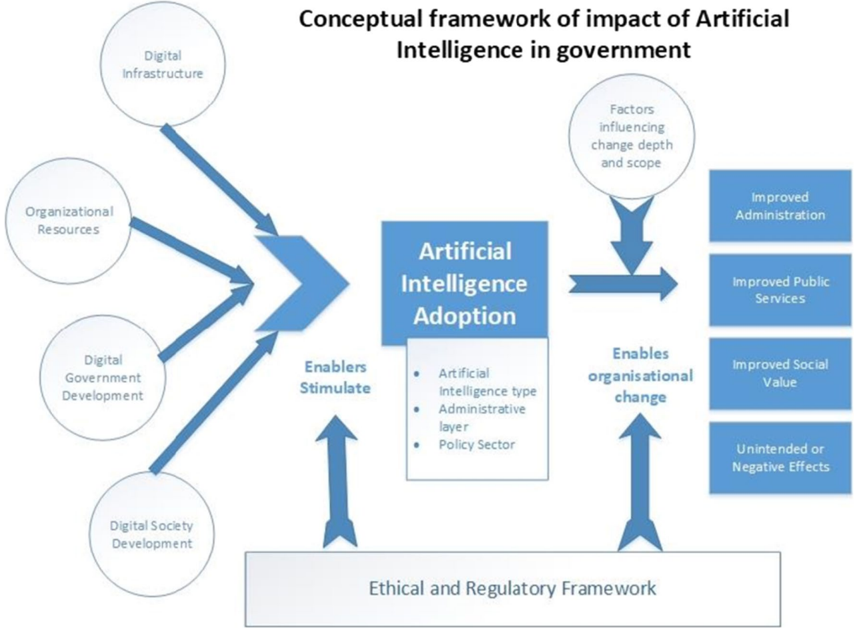
- Obstacles to introducing AI in government include a shortage of field experts, limited recruiting budgets, challenges safeguarding privacy rights, inadequate or missing data, outdated infrastructure, adaptability problems, and unreliability (Table 1).
- AI can improve public service delivery through activating local network trust, lowering financial barriers, riding the technological wave, focusing on tangible benefits, and staying engaged and showing commitment (Table 1).
- Case examples report that Revenue NSW classified 46,000 consumers as “vulnerable” and diverted them from enforcement action; an NHS AI tool diagnoses heart disease in 20 seconds versus at least 13 minutes for a physician; a French government project uncovered 20,000 previously unknown ponds and generated €10 million in additional tax revenue; and Belgium prioritized 15 climate action initiatives using an AI crowdsourcing tool.
- Organizational theory, the resource-based view, and technological innovation systems suggest that successful AI adoption depends on internal capabilities, legitimacy and support, stakeholder collaboration, and adjustments to organizational culture and practice, while procurement and accountability remain barriers.
Methods
- Design: a review article using organizational theory as the conceptual framework, supplemented by the resource-based view and technological innovation systems; the framework is described as intentionally conceptual rather than practical.
- Data: existing literature and illustrative government case studies from Revenue NSW, the UK NHS, the French government, and Belgium; no primary empirical data were collected.
- Analysis: synthesis of prior research and case examples, with Table 1 summarizing findings by the paper’s three research questions.
Limitations
- Stated: the authors advise caution when applying the analyses’ findings in other settings, describe the assessment as comprehensive but incomplete, note that a vast body of literature was barely analyzed, and call for future empirical analysis and polling of government workers.
- Evident from the text: the study relies on literature synthesis and descriptive case examples rather than empirical testing, and the conceptual framework is not operationalized or validated in practice.
Model-written summary. Check it against the paper before relying on it.
Integrity signals
Registry
Cites
Statistics
Figures

Verification
Claims the paper makes
11 Valid · 15 Not valid · 54 Not checked · 53 Own results and interpretations
The cited sources that could be checked couldn’t confirm or dispute this claim.
In the paper
“Quantifying the public impact of AI technology proves challenging as it is more than the complexities acknowledged in earlier publications [16].”
What the sources say
- Could not verifycites [16] 16. Bundy A. Preparing for the future of artificial intelligence. AI Soc. 2017. https:// doi. org/ 10. 1007/ s00146- 016- 0685-0. sourceExperimental — accuracy not yet measured
The Public Debate and Collaboration sections discuss open questions and possible societal effects of AI, but neither addresses the difficulty of quantifying its public impact. Searches for measuring or assessing AI’s public, societal, and economic effects found no passage making that point. (LLM, conf=0.72)
plain- Asserted: passes — The authors put it forward as true.
- Checkable: passes — It can be checked against evidence.
- Load-bearing: unclear — It is unclear whether the paper’s conclusions depend on it.
- Based: passes — The paper gives a reason why it holds.
- Could not verify
The cited sources support only part of this claim — read each source’s verdict below.
In the paper
“Understanding and predicting public reactions to AI pose significant challenges, as acknowledged in prior research by Bundy [16].”
What the sources say
- Partly supportedcites Bundy [16] 16. Bundy A. Preparing for the future of artificial intelligence. AI Soc. 2017. https:// doi. org/ 10. 1007/ s00146- 016- 0685-0. sourceExperimental — accuracy not yet measured
In “Public Debate” (page unavailable), Bundy describes controversy over AI as sometimes over-excited and under-informed, and says informed debate requires public understanding of the difference between narrow and general AI. This supports a challenge concerning public discussion of AI, but the paper does not address the difficulty of predicting public reactions. (LLM, conf=0.74)
plain- Asserted: passes — The authors put it forward as true.
- Checkable: passes — It can be checked against evidence.
- Load-bearing: unclear — It is unclear whether the paper’s conclusions depend on it.
- Based: passes — The paper gives a reason why it holds.
- Partly supported
The cited sources support only part of this claim — read each source’s verdict below.
In the paper
“In the public sector, algorithmic governance is most often considered in the context of mission-critical activities [16].”
What the sources say
- Partly supportedcites [16] 16. Bundy A. Preparing for the future of artificial intelligence. AI Soc. 2017. https:// doi. org/ 10. 1007/ s00146- 016- 0685-0. sourceExperimental — accuracy not yet measured
In the Alan Bundy section (page unavailable), the paper says the report explores AI’s potential in governance and that public institutions should consider using AI. It does not say that public-sector algorithmic governance is most often considered in mission-critical activities; the frequency and context asserted in the claim are unsupported. (LLM, conf=0.78)
plainstates an association- Asserted: passes — The authors put it forward as true.
- Checkable: passes — It can be checked against evidence.
- Load-bearing: unclear — It is unclear whether the paper’s conclusions depend on it.
- Based: passes — The paper gives a reason why it holds.
- Partly supported
The cited sources support only part of this claim — read each source’s verdict below.
In the paper
“Factors such as bias, fairness, privacy, and preserving fundamental democratic values play a pivotal role in shaping regulatory frameworks [27].”
What the sources say
- Partly supportedcites [27] 27. Deng WH, Eslami M, Holstein K. Towards" Anytime, Anywhere" Community Learning and Engagement around the Design of Public Sector AI. arXiv preprint arXiv: 2304. 00167 . 2023. sourceExperimental — accuracy not yet measured
The Abstract (page not provided) raises concern that public-sector AI can foreclose democratic participation, and §2, “Research Vision and Open Questions,” advocates community involvement in impactful policy decisions. These passages support the democratic-participation aspect, but the paper does not say that bias, fairness, privacy, and democratic values shape regulatory frameworks. (LLM, conf=0.77)
plainstates a cause- Asserted: passes — The authors put it forward as true.
- Checkable: passes — It can be checked against evidence.
- Load-bearing: unclear — It is unclear whether the paper’s conclusions depend on it.
- Based: passes — The paper gives a reason why it holds.
- Partly supported
The cited sources that could be checked couldn’t confirm or dispute this claim.
In the paper
“Consequently, Belgium prioritized 15 climate action initiatives based on the insights gained from the AI-driven analysis of public sentiment and concerns.”
What the sources say
- Could not verifycites [29] 29. Fabrègue B, Portal LJ, Cockshaw C. Using smart people to build smarter: How smart cities attract and retain highly skilled workers to drive innovation (Belgium, Denmark, the Netherlands, Poland). Smart Cities Reg Dev (SCRD) J. 2023;7(1):9-30. sourceExperimental — accuracy not yet measured
Section 4.1 Belgium (p. 8) uses 15 as a sample size in an analysis of educational attainment, not as a count of climate initiatives. Searches for climate action initiatives and AI-driven analysis of public sentiment found no passage in our copy addressing the claim. (LLM, conf=0.75)
plainstates a causeSingle case- Asserted: passes — The authors put it forward as true.
- Checkable: passes — It can be checked against evidence.
- Load-bearing: unclear — It is unclear whether the paper’s conclusions depend on it.
- Based: passes — The paper gives a reason why it holds.
- Could not verify
26 more claims · 3 with their cited sources checked
Create a free account to see all 133 claims and to verify the 16 references still open.
- It may state two separate claims as one. 37
- Probably not a substantial claim. 86
Self-check
Percentages, sums and reported differences re-computed from the paper’s own numbers.
Each contradiction between two passages listed here was confirmed by an independent check.
Rated minor: it would not touch a result — a value no result rests on, a p-value that stays on the same side of the significance level, or a conflict that is clerical, resolved elsewhere in the paper, or outside its own findings.
In the paper
§ 2.4 Current applications and case studies · p. 5
“Deloitte's research [25] identifies key areas that demand the government's focus to foster the development of trustworthy AI.”
§ References · p. 18
“25. Cooke AL, Melchior JT, Walker RG, Morris J, Castleberry M, Thompson TB, Davidson WS. A consensus model of human apolipoprotein AI in its monomeric and lipid-free state. Nat Struct Mol Biol. 2017;24(12):1093-9.”
Rated minor: it would not touch a result — a value no result rests on, a p-value that stays on the same side of the significance level, or a conflict that is clerical, resolved elsewhere in the paper, or outside its own findings.
In the paper
§ 3.1 Pressures and expectations influencing AI adoption · p. 11
“Dwivedi et al. [28] propose an 'institutional hybrid' method for characterizing AI's definition, the scope of application, and related academic disciplines.”
§ References · p. 18
“28. Dennehy D, Griva A, Pouloudi N, Dwivedi YK, Mäntymäki M, Pappas IO. Artificial Intelligence (AI) and information systems: perspectives to responsible AI.”
Citations
Cites
Firm Resources and Sustained Competitive Advantage
Barney, J. (1991) · Journal of Management · doi:10.1177/014920639101700108 · Cited by 48,334 · cited 1×
“The resource-based view (RBV), a widely utilized lens in organizational theory due to its insight into organizational performance through the lens of internal resource heterogeneity (Barney, [11]), offers valuable perspectives.”
Human trust in artificial intelligence: Review of empirical research
Glikson, E., & Woolley, A. W. (2020) · Academy of Management Annals · doi:10.5465/annals.2018.0057 · Cited by 2,921 · cited 2×
“In that case, it is in your best interest to work with a service provider with substantial expertise and understanding of artificial intelligence (Glikson and Woolley, [30]).”
Artificial intelligence and statistics
Yu, B., & Kumbier, K. (2018) · Frontiers of Information Technology & Electronic Engineering · doi:10.1631/fitee.1700813 · Cited by 2,329
Analyzing the functional dynamics of technological innovation systems: A scheme of analysis
Bergek, A., Jacobsson, S., Carlsson, B., Lindmark, S., & Rickne, A. (2008) · Research Policy · doi:10.1016/j.respol.2007.12.003 · Cited by 2,269 · cited 2×
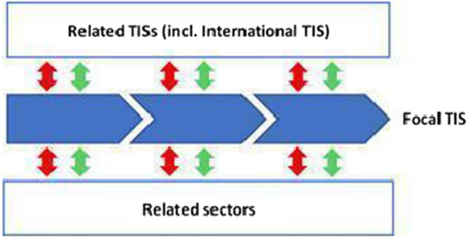
“Within the framework of Organizational Theory, the classification of Technological Innovation Systems (TISs) is often based on the products they encompass and the specialized fields they engage with [14].”
InfluentialThe forthcoming artificial intelligence (AI) revolution: Its impact on society and firms
Makridakis, S. (2017) · Futures · doi:10.1016/j.futures.2017.03.006 · Cited by 1,866
Artificial Intelligence and the Public Sector—Applications and Challenges
Wirtz, B. W., Weyerer, J. C., & Geyer, C. (2019) · International Journal of Public Administration · doi:10.1080/01900692.2018.1498103 · Cited by 1,341 · cited 1×
“Process automation, virtual agents and voice analytics, predictive decision-making analytics, sentiment analysis, and document reviews are some of the best-known uses of AI in this field (Wirtz, Weyerer, and Geyer, [69]).”
Innovation systems: analytical and methodological issues
Carlsson, B., Jacobsson, S., Holmén, M., & Rickne, A. (2002) · Research Policy · doi:10.1016/s0048-7333(01)00138-x · Cited by 1,288 · cited 1×
“This organizational lens transforms client-vendor relationships into dynamic problem-solving networks [18].”
Artificial intelligence and statistics
Wiggins, L. L. (1989) · Computers, Environment and Urban Systems · doi:10.1016/0198-9715(89)90027-6 · Cited by 1,117
The ethics of AI in health care: A mapping review
Morley, J., Machado, C. C. V., Burr, C., Cowls, J., Joshi, I., Taddeo, M., & Floridi, L. (2020) · Social Science & Medicine · doi:10.1016/j.socscimed.2020.113172 · Cited by 1,105 · cited 1×
“According to Morley et al. [55], AI experts face the imperative of translating widely held beliefs about the field into practical applications, underscoring the organizational challenge of aligning AI principles with operational realities.”
The Emergence of Artificial Intelligence: How Automation is Changing Auditing
Kokina, J., & Davenport, T. H. (2017) · Journal of Emerging Technologies in Accounting · doi:10.2308/jeta-51730 · Cited by 790 · cited 1×
“According to the first government departments to adopt AI, the economy benefits from the technology’s increased productivity [40].”
Research works printed but not linked: 5
- 3. Al Sheibani S, Cheung Y, Messom C. Artificial intelligence adoption: AI-readiness at firm-level. PACIS. 2018;4:231-45.
- 15. [Bughin J, Chui M, McCarthey B. (2017). How to make AI work for your business. Harvard Business Review, August . https:// www. mckin sey. com/ ~/ media/ McKin sey/ Busin ess% 20Fun ctions/ McKin sey% 20Ana lytics/ Our% 20Ins ights/ How% 20to% 20make% 20AI% 20work% 20for% 20your% 20bus iness/ How- to- make- AI- work- for- your- busin ess. pdf](https://www.mckinsey.com/~/media/McKinsey/Business%20Functions/McKinsey%20Analytics/Our%20Insights/How%20to%20make%20AI%20work%20for%20your%20business/How-to-make-AI-work-for-your-business.pdf)
- 21. Chui M, Manyika J, Miremadi M, Bughin J, George K, Willmott P, Dewhurst M. A future that works: AI, automation, employment, and productivity. McKinsey Glob Inst Res Tech Rep. 2017;60:1-135.
- 54. Moore MH. Creating public value: Strategic management in government. California, USA: Harvard University Press. 1995.
- 58. Perdereaux-Weekes AW. To investigate the impact of data privacy regulation on disclosure decisions: examining consumers' willingness to share or withhold personal identifiable information in the wake of GDPR, CCPA, and LGDP (Doctoral dissertation, St. Thomas University). 2021.
Cited by
Wong, W. K. O. (2024) · Journal of Open Innovation: Technology, Market, and Complexity · doi:10.1016/j.joitmc.2024.100278 · Cited by 59
Artificial intelligence governance: Understanding how public organizations implement it
de Almeida, P. G. R., & dos Santos, C. D. (2025) · Government Information Quarterly · doi:10.1016/j.giq.2024.102003 · Cited by 118
Závodná, L. S., Überwimmer, M., & Frankus, E. (2024) · Journal of Economics and Management · doi:10.22367/jem.2024.46.13 · Cited by 113
“It should not be seen as introducing new technology (Alhosani Alhashmi, 2024).”
BackgroundHwang, B., Jitanugoon, S., & Puntha, P. (2025) · Journal of Services Marketing · doi:10.1108/jsm-10-2024-0511 · Cited by 33
A Critical Analysis of Generative AI: Challenges, Opportunities, and Future Research Directions
Uddin, M., Laghari, S. U. A., Alanazi, F., Hussain, S., Mazhar, T., & Rahman, M. A. (2025) · Archives of Computational Methods in Engineering · doi:10.1007/s11831-025-10355-z · Cited by 66
Artificial intelligence in action: shaping the future of public sector
Panda, M., Hossain, M. M., Puri, R., & Ahmad, A. (2025) · Digital Policy Regulation and Governance · doi:10.1108/dprg-10-2024-0272 · Cited by 64
David, A., Yigitcanlar, T., Desouza, K., Mossberger, K., Cheong, P. H., Corchado, J., Beeramoole, P., & Paz, A. (2025) · Government Information Quarterly · doi:10.1016/j.giq.2025.102054 · Cited by 20
Artificial intelligence and criminal liability in India: exploring legal implications and challenges
Sayyed, H. (2024) · Cogent Social Sciences · doi:10.1080/23311886.2024.2343195 · Cited by 35
“…education, customer service, and entertainment. it has the potential to revolutionize industries, increase efficiency, and create new opportunities (alhosani & alhashmi, 2024). however, ai also raises ethical concerns and challenges, such as job displacement, data privacy, bias, and the impact on…”
Artificial Intelligence: Solutions in Special Education
Ahmad, W., Shokeen, R., & Raj, R. (2024) · Advances in educational technologies and instructional design book series · doi:10.4018/979-8-3693-5538-1.ch017 · Cited by 28
Alshehhi, K., Cheaitou, A., & Rashid, H. (2024) · Sustainability · doi:10.3390/su16177724 · Cited by 19
Tariq, M. U. (2025) · doi:10.4018/979-8-3693-9251-5.ch004 · Cited by 18
Tong, S., & Li, S. (2024) · International Journal of Advanced Computer Science and Applications · doi:10.14569/ijacsa.2024.0150777 · Cited by 34
“In urban settings, it is important to balance ethical concerns, technical challenges, and the revolutionary potential of AI to harness its advantages while minimizing its drawbacks fully [25].”
BackgroundNasution, M. K. M., Elveny, M., Data Science & Artificial Intelligence, F.-T., Pamucar, D. S., Popović, M. J., & Gušavac, B. A. (2024) · Decision Making Applications in Management and Engineering · doi:10.31181/dmame7220241221 · Cited by 26
Pulkkinen, J., Huttu, K., & Suhonen, M. (2025) · Journal of Health Organization and Management · doi:10.1108/jhom-06-2025-0309 · Cited by 21
“Citizens’ trust in and acceptance of AI-based services are also essential (Alhosani and Alhashmi, 2024; Ryan, 2020).”
The crucial role and challenges of medical journal editors in the modern era
Vaishya, R., Vaish, A., Scarlat, M. M., & Jain, V. K. (2025) · Journal of Clinical Orthopaedics and Trauma · doi:10.1016/j.jcot.2025.102918 · Cited by 13
Socol, A., & Iuga, I. C. (2024) · Kybernetes · doi:10.1108/k-03-2024-0629 · Cited by 26
Azfaralariff, A., Murad, M., Utra, U., Yussof, N. S., Fazial, F. F., Lazim, A. M., Fazry, S., & Law, D. S. N. (2025) · Food Reviews International · doi:10.1080/87559129.2025.2585134 · Cited by 17
The trust trifecta: How transparency, ethics, and benefits shape public confidence in government AI
Bian, X., Bin, W., & Yang, A. (2025) · Government Information Quarterly · doi:10.1016/j.giq.2025.102083 · Cited by 19
Razzouki, M., Hammou, S. B., & Izenzal, M. (2025) · Cogent Education · doi:10.1080/2331186x.2025.2553829 · Cited by 16
“Although AI technologies often promise many merits, the initial success in the development and distribution of AI seems insufficient for performance improvement (Alhosani & Alhashmi, 2024).”
Governing AI Decision‐Making: Balancing Innovation and Accountability
Mark, D., & Morison, J. (2025) · Politics and Governance · doi:10.17645/pag.10245 · Cited by 11
“As scholarly assessments remain divided on ADM impacts (Alhosani & Alhashmi, 2024; Contreras & Gil‐García, 2024; Mergel et al., 2023), there is a growing number of widely cited instances of ADM failure in the public sector: the UK’s A‐level exam algorithm (Kippin & Cairney, 2022) and spousal visa…”
Capolupo, N., Romeo, E., Giampaola, V., & Adinolfi, P. (2025) · Business Process Management Journal · doi:10.1108/bpmj-07-2025-1188 · Cited by 8
Khalil, E., & Al-Ali, F. A. (2025) · Public Relations Inquiry · doi:10.1177/2046147x251383106 · Cited by 14
“Launched in 2017, the UAE ’ s National AI Strategy has accelerated digital transformation through cross-sectoral collaboration, fostering partnerships among government entities, academic institutions, and the private sector (Alhosani and Alhashmi, 2024).”
Muhammad, A. S., Hammed, S., Shishah, W., & Isiaku, L. (2025) · Technological Sustainability · doi:10.1108/techs-06-2025-0130 · Cited by 11
Wang, Y. (2025) · Journal of Asian Public Policy · doi:10.1080/17516234.2025.2544139 · Cited by 7
Gascó‐Hernández, M., & Valle-Cruz, D. (2025) · Government Information Quarterly · doi:10.1016/j.giq.2025.102036 · Cited by 14
Al‐Romeedy, B. S., & Hussein, H. (2024) · Advances in hospitality, tourism and the services industry (AHTSI) book series · doi:10.4018/979-8-3693-7021-6.ch012 · Cited by 6
Can trust in government help to enhance Indonesian citizens' involvement in Al-based public service?
Mulyawan, R. (2024) · Journal of Entrepreneurship and Public Policy · doi:10.1108/jepp-09-2023-0095 · Cited by 11
Banerjee, S., & Lahiri, S. K. (2026) · Systems Microbiology and Biomanufacturing · doi:10.1007/s43393-026-00460-w · Cited by 7
“…and soft sensing AI/ML-driven soft sensors infer difficult-to-measure vari - ables such as biomass, metabolite concentration, viscosity, and product formation from routinely available signals, reducing reliance on offline assays and enabling near real-time supervision (Alhosani and Alhashmi 2024).”
Chatterjee, R. S., Klieštik, T., Singh, D. K., Sivarajah, U., & Chatterjee, S. (2025) · Information Systems Frontiers · doi:10.1007/s10796-025-10663-6 · Cited by 9
Saiyed, S., & Kumar, V. (2025) · Strategic Business Research · doi:10.1016/j.sbr.2025.100018 · Cited by 7
Bhardwaj, A. (2025) · Humanities and Social Sciences Communications · doi:10.1057/s41599-025-05749-0 · Cited by 12
“Here, predictive (Machine Learning) and generative (Large Language Models) Arti fi cial Intelligence have the potential to transform businesses (private sector) as well as policy, and government services (public sector) (Alhosani and Alhashmi, 2024; Jorzik et al. 2024; Raisch and Fomina, 2025).”
Akinloye., A., Anwansedo, S., & Akinwande, O. T. (2024) · International Journal of Latest Technology in Engineering Management & Applied Science · doi:10.51583/ijltemas.2024.130710 · Cited by 7
The Future of AI in the GCC Post‐ NPM Landscape: A Comparative Analysis of Kuwait and the UAE
Albous, M. R., Alboloushi, B., & Lacheret, A. (2025) · Politics & Policy · doi:10.1111/polp.70084 · Cited by 10
Syahidi, A. A., Kiyokawa, K., & Nuchitprasitchai, S. (2025) · IEEE Symposium on Computers & Informatics (ISCI) · doi:10.1109/isci65687.2025.11166787 · Cited by 7
“The complexity of government websites, the need to understand legal and policy jargon, and the fragmented nature of information make it difficult for citizens to interact effectively with government services [5], [6], [7].”
Nasi, F. (2025) · Discover Artificial Intelligence · doi:10.1007/s44163-025-00331-8 · Cited by 6
“Some recent research emphasizes the potential of artificial intelligence for greater productivity, simplified procedures, and reduced obligations in the public administration [1], also showing how generative AI has been rapidly implemented in many sectors 2 [89].”
Morandé, S., Garima, S., & Shashank, S. K. (2024) · ITU Kaleidoscope Academic Conference (ITU K) · doi:10.23919/ituk62727.2024.10772932 · Cited by 6
“As prior research noted, the integration of AI in e-governance systems has the potential to significantly improve service delivery, streamline administrative processes, and foster greater citizen engagement [18].”
Yiğitcanlar, T., David, A. J., Marasinghe, R., Senadheera, S., Hossain, T., Ye, X., & Taeihagh, A. (2026) · Smart Cities · doi:10.3390/smartcities9050081 · Cited by 7
“The technical layer encompasses AI models, secure data storage, scalable cloud solutions, and robust cybersecurity measures that ensure system integrity and resilience [33].”
Echeverria-Caicedo, K., Meza, J. A. V., Llacsa-Puma, L. J., Gutiérrez-Izquierdo, M. A., Rodríguez, L. G. Q., Lozano, R. A. R., Peceros, C. N. C., García, Á. R. S., & Moreira-Chóez, J. S. (2026) · F1000Research · doi:10.12688/f1000research.172751.1 · Cited by 4
A citizen-centric approach for digital government transformation: The case of Azerbaijan
Yusifov, F. (2025) · Information Development · doi:10.1177/02666669251370361 · Cited by 4
Impact of Artificial Intelligence on SEO and Online Visibility
Elkhatibi, Y., & BOUSSEDRA, F. (2025) · IGI Global eBooks · doi:10.4018/979-8-3693-9561-5.ch008 · Cited by 5
Drivers and Barriers to Adoption and Diffusion of AI Applications in Public Administration
Kiriş, S. B., & Gürül, B. (2025) · Advances in public policy and administration (APPA) book series · doi:10.4018/979-8-3373-2272-8.ch001 · Cited by 6
Madwe, M. C., Mmatli, P., & Oluka, A. (2025) · International Journal of Applied Research in Business and Management · doi:10.51137/wrp.ijarbm.2025.mmtt.45693 · Cited by 4
“For example, Alhosani and Alhashmi (2024) stress that many governments rely on payroll-based taxes to fund essential public services.”
Wani, S. A., & Mansoor, S. I. U. (2025) · Advances in computational intelligence and robotics book series · doi:10.4018/979-8-3693-9395-6.ch004 · Cited by 3
AI as an Autonomous Decision-Maker in Governance: A New Era of Policy Formulation
Anand, S., & Mohamed, W. M. W. (2025) · Springer eBooks · doi:10.1007/978-3-031-89424-4_6 · Cited by 6
AI-Driven Drug Discovery: Innovations and Challenges
Mohammed, S. (2024) · IJARCCE · doi:10.17148/ijarcce.2024.13635 · Cited by 11
“Artificial intelligence models have been useful in analyzing the resulting complex data [1].”
Artificial intelligence in policymaking: Mapping integration gaps across the public policy cycle
Lněnička, M., Clarinval, A., Nikiforova, A., Rudmark, D., Luterek, M., Symeonidis, D., & Bolívar, M. P. R. (2026) · Government Information Quarterly · doi:10.1016/j.giq.2026.102138 · Cited by 7
AI innovation and financial system resilience: The role of international IP protection
Meng, Q., Yuan, Z., & Hou, Y. (2025) · Finance research letters · doi:10.1016/j.frl.2025.109245 · Cited by 2
Salha, S. H., Mousa, A., & Khayat, S. (2025) · Leadership and Policy in Schools · doi:10.1080/15700763.2025.2584212 · Cited by 5
Aluko, O. (2025) · doi:10.64553/dnao2503 · Cited by 1
Uma Maheshwari, G., Seerapu, V. N., Reddy, K. M. K., Jadhav, A. B., & Penubaka, K. K. R. (2025) · Journal of Neonatal Surgery · doi:10.52783/jns.v14.2939 · Cited by 3
“Historical inequalities, restricted data, imperfect model structure may contribute to biases that accrue to health dispariities [3].”
Steering the AI Revolution in Local Governments: Merits and Demerits
Lahdili, N., & Nyadera, İ. N. (2025) · Advances in public policy and administration (APPA) book series · doi:10.4018/979-8-3693-8372-8.ch002 · Cited by 4
Rotabi, S., & Abazi‐Alili, H. (2025) · Contributions to management science · doi:10.1007/978-3-032-02526-5_2 · Cited by 2
Application of Cloud Computing Technology for Enhances E-Government Services in Edo State
Idahosa, M., Eireyi-Edewede, S., & Eruanga, C. E. (2024) · Advances in electronic government, digital divide, and regional development book series · doi:10.4018/979-8-3693-7678-2.ch008 · Cited by 11
Artificial Intelligence for Social Good in Service Marketing
Shukla, D., & Tripathi, R. (2024) · Advances in hospitality, tourism and the services industry (AHTSI) book series · doi:10.4018/979-8-3693-9636-0.ch008 · Cited by 4
Emerging models of national competent authorities under the EU AI Act
Parisini, E., & Dervishaj, E. (2025) · Conference on Digital Government Research · doi:10.59490/dgo.2025.1007 · Cited by 6
“This granular approach stems from an understanding that AI systems pose distinct challenges depending on the application context (Alhosani, 2024), demanding tailored oversight mechanisms.”
Dehghan, R., Grashof, N., Schmidt, S., Kopka, A., & Woywode, M. (2026) · Energy Economics · doi:10.1016/j.eneco.2026.109526 · Cited by 2
Study on the impact of digital government development on regional innovation efficiency
Zhan, X., & Sun, K. (2026) · Future Business Journal · doi:10.1186/s43093-026-00837-2 · Cited by 1
Framing AI in public innovation: the engagement-manipulation nexus
Adebajo, A., Okpara, N., & Kolawole, A. (2026) · Public Management Review · doi:10.1080/14719037.2026.2659262 · Cited by 2
Aboelazm, K. S., Dganni, K. M., Jahoori, S. A. H. N. A., & Hussain, Z. (2026) · International Journal of Law and Management · doi:10.1108/ijlma-02-2026-0097 · Cited by 7
Zhong, S., & Xu, X. (2026) · Risk Analysis · doi:10.1111/risa.70249 · Cited by 1
Using Retrieval-Augmented Generation to Improve Access to Legal Documents
Júnior, E. F. P. D. S., Baptista, C. D. S., Alves, A. L. F., & Mendes, F. I. D. L. (2026) · IEEE International Conference on Semantic Computing (ICSC) · doi:10.1109/icsc67292.2026.00054 · Cited by 1
“However, LLMs remain constrained by static training data and may generate inaccurate or outdated content—a critical risk in the legal domain, where factual grounding is essential [1].”
AI-designed drugs: clinical development and future directions
Ahmed, R., Akhtar, S., Das, A., Begum, K., Sarma, A., Chakraborty, A., Neog, T., & Banu, S. (2026) · Elsevier eBooks · doi:10.1016/b978-0-443-34059-8.00010-5 · Cited by 1
Financial literacy and community governance: Bridging the gap in public service provision
Zhou, F., & Cheng, C. (2025) · Finance research letters · doi:10.1016/j.frl.2025.109281 · Cited by 2
Dubey, C., Singh, A. K., & Dwivedi, V. K. (2025) · Computers & Electrical Engineering · doi:10.1016/j.compeleceng.2025.110825 · Cited by 1
Contreras-Yupanqui, B. S. (2025) · LatIA · doi:10.62486/latia2025288 · Cited by 1
AI in Universities: The Good, the Bot, and the Ugly TruthsPreprint
Adewusi, M. A., Ainebyoona, C., Odekeye, O. T., & Ngoma, M. (2025) · Research Square · doi:10.21203/rs.3.rs-6883202/v1 · Cited by 7
Regulating the Future: Policy Frameworks for AI in Environmental Monitoring and Governance
Sahu, S., Mallick, N., & Hossain, I. (2025) · Advances in computational intelligence and robotics book series · doi:10.4018/979-8-3373-1892-9.ch004 · Cited by 4
Pioneering the Future of Work: AI Strategies for HR Transformation
Dey, S. (2025) · Advances in computational intelligence and robotics book series · doi:10.4018/979-8-3693-8669-9.ch006 · Cited by 1
Brezovar, N. (2025) · NISPAcee Journal of Public Administration and Policy · doi:10.2478/nispa-2025-0002 · Cited by 4
Taslim, U., Raza, H., Iftikhar, K., & Aslam, M. F. (2025) · Advance Journal of Econometrics and Finance · doi:10.63075/gkatmh29 · Cited by 1
Platform vs. manufacturer: Innovation leadership in e-commerce supply chains
Feng, L., & Jin, M. (2025) · Elsevier eBooks · doi:10.1016/b978-0-443-28993-4.00182-7 · Cited by 1
Sarkar, A., & Bhattacharjee, V. (2025) · International journal of experimental research and review · doi:10.52756/ijerr.2025.v47.007 · Cited by 1
“The research focuses on overcoming this scarcity and inventing and optimizing identification systems (Tamburri and Smith, 1970; Petridou and Moustak, 2000; Korhonen, 2018; Rashid and Kausik, 2024; Alhosani and Alhashmi, 2024).”
Ndlovu, S. (2025) · Advances in public policy and administration (APPA) book series · doi:10.4018/979-8-3693-8372-8.ch004 · Cited by 1
Integrating Policy, Governance, and Law in Regulating AI for Sustainable Environmental Protection
Sahu, S., Mallick, N., & Patnaik, S. (2025) · Practice, progress, and proficiency in sustainability · doi:10.4018/979-8-3693-8684-2.ch007 · Cited by 1
Exploring the Role of Artificial Intelligence in Promoting Access to Clean Energy in Africa
Nwobi, D. L., & Emmanuel, P. M. (2025) · Springer eBooks · doi:10.1007/978-3-031-25960-9_117-1 · Cited by 4
Башук, А. І., & Chechel, O. (2024) · Eastern-European Journal of Enterprise Technologies · doi:10.15587/1729-4061.2024.318018 · Cited by 6
Positioning AI as a Partner in Work and Action: A Library Research Journal
Mariyono, D., & Hidayatullah, A. N. A. (2024) · doi:10.53555/kuey.v30i4.1454 · Cited by 4
Addai, P., Tabiri, M. O., Okyere, I., Luki, B. N., & Owusu-Kyei, M. (2026) · International Journal of Public Leadership · doi:10.1108/ijpl-09-2025-0151 · Cited by 2
Zeng, L., Hou, J., Huang, J., Zhao, L., & Yin, Q. (2026) · Energies · doi:10.3390/en19184300
“It is also a broader social science question concerning digital transformation, green development, and the governance of systemic interdependence [7,8].”
Pauken, C., Hartmann, M., & Wimmer, M. A. (2026) · Lecture notes in computer science · doi:10.1007/978-3-032-35747-2_26
Plausible nonsense and deliberative reasoning: Benchmarking LLMs against human judgment
Veri, F., & Umbelino, G. K. (2026) · Proceedings of the National Academy of Sciences · doi:10.1073/pnas.2600126123
Kiriş, S. B., & Akıf, B. (2026) · Computers & Industrial Engineering · doi:10.1016/j.cie.2026.112301
The environmental impact of AI: a framework for energy consumption in machine learning services
Möhring, M., Keller, B., & Pietro, L. D. (2026) · International Journal of Quality and Service Sciences · doi:10.1108/ijqss-12-2025-0340 · Cited by 1
The governance of digital convergence: cybersecurity maturity and AI readiness in the European Union
Lněnička, M., & Medková, J. (2026) · Digital Policy Regulation and Governance · doi:10.1108/dprg-04-2026-0254
Ibáñez, D. B., Hess, A., Palomino-Flores, P., & Castaño, L. C. (2026) · Cogent Arts and Humanities · doi:10.1080/23311983.2026.2665856
Bashir, M. S., Ahmed, A., Ebrahim, E. E. M., & Abdelmohsen, M. (2026) · Economies · doi:10.3390/economies14070258
“…and AI Authority (SDAIA) both position technology as a means of enhancing citizen satisfaction with public services, creating a direct institutional link between the AI Readiness Period Indicator and well-being that does not exist in the same form elsewhere (Alhosani & Alhashmi, 2024; Fan, 2025).”
Chatterjee, R. S., Hameed, I., Chaudhuri, S., & Chatterjee, S. (2026) · Strategy and Leadership · doi:10.1108/sl-03-2026-0125 · Cited by 1
Digital Readiness and Growth: How Government AI Preparedness shapes African Economies
Benmimoun, I. (2026) · Finance Accounting and Business Analysis · doi:10.37075/faba.2026.1.05
Shopina, I. M., & Ковалів, М. В. (2026) · Вісник Пенітенціарної асоціації України · doi:10.34015/2523-4552.2026.2.16
The whole-person edge: A scale for holistic entrepreneurial performance
Rosales, O., Silveyra, G., Dimakou, P., et al. (2026) · Journal of Business Venturing Insights · doi:10.1016/j.jbvi.2026.e00626
Reconfiguring Empathy: Affective Outcomes of AI-Mediated Decision-Making
Schmidt, E. (2026) · CHI Conference Extended Abstracts on Human Factors in Computing Systems (CHI EA) · doi:10.1145/3772363.3799185
“These tools promise consistency and reduced human bias [2, 23, 46, 57], yet their deployment also transforms the informational and affective context in which decisions are made.”
Wischnewski, M., Scharmann, A., Ridder, A., & Krämer, N. C. (2026) · CHI Conference on Human Factors in Computing Systems · doi:10.1145/3772318.3790983
“As such, AI systems promise significant benefits like improved efficiency, personalization, predictive accuracy, and operational scalability [2, 40, 72].”
AI-driven E-government: a moderated model for enhancing E-service quality
Al-Haraizah, A. (2026) · Future Business Journal · doi:10.1186/s43093-026-00802-z · Cited by 1
Ibrahim, K., Osuizugbo, I. C., Dandajeh, M. A., Omer, M. M., Oshodi, O. S., & Ezeudu, B. O. (2026) · Journal of structural design and construction practice. · doi:10.1061/jsdccc.sceng-1969 · Cited by 1
Caqui, A. J. R., Prieto, D. H. A. A., Esaine, N. O., & Lucano, J. J. L. (2026) · International Conference on AI Decision-Making and Management · doi:10.1145/3811839.3811863
“On one side, restrictive approaches attempt to prohibit or severely limit AI usage, thereby preserving traditional evaluation models but sacrificing potential efficiency gains [20].”
Baloyi, W. M., Meyer, N., & Rossouw, D. (2026) · Acta Commercii · doi:10.4102/ac.v26i1.1503
Mzileni, L., & Ngwenya, T. (2026) · International Journal of Research in Business and Social Science (2147-4478) · doi:10.20525/ijrbs.v14i9.4439 · Cited by 1
“…enabling environment within the public sector is a fundamental pressure for AI adoption, which is incumbent upon policymakers and authorities to reduce barriers and constraints to execute and implement both innovation and artificial intelligence for public optimization (Alhosani & Alhashmi, 2024).”
Samaddar, P., & Nayak, V. (2026) · Lecture notes in networks and systems · doi:10.1007/978-981-96-8632-2_20
Transforming Government Through AI: Navigating Adoption, Barriers and Solutions
Aikins, S. K., & Dimitrijevska‐Markoski, T. (2026) · Springer eBooks · doi:10.1007/978-3-032-12344-2_2
Transitioning from e-Governance to Smart Governance in the UK: The Role of Artificial IntelligencePreprint
Udoh, H. D. (2026) · SSRN Electronic Journal · doi:10.2139/ssrn.6229124
Metadata
- Authors
- Alhosani, K., & Alhashmi, S. M.
- Affiliations
- University of Sharjah (AE)
- Corresponding author
- Alhashmi, Saadat M.
- ORCID
- Alhashmi, Saadat M.
- Venue
- Discover Artificial Intelligence
- Published
- 2024-03-04
- Volume
- 4
- Issue
- 1
- ISSN
- 2731-0809 (ISSN-L)
- OpenAlex
- W4392378814
- Semantic Scholar
- 7cb06d0ea56572ecb5cb85e642dda98a8ba1954b
- Cited by
- 132
- References
- 60
- Citations by year
- 2026: 47 · 2025: 65 · 2024: 20
- FWCI
- 209.92
- Type
- journal article
- Language
- en
- Open access
- gold
- doi.org
- Licence
- cc-by
- creativecommons.org/licenses/by/4.0 (tdm)
- creativecommons.org/licenses/by/4.0 (vor)
- Locations
- Discover Artificial Intelligence (publishedVersion, cc-by)
- DOAJ (DOAJ: Directory of Open Access Journals) (submittedVersion, cc-by-sa)
- Topics
- Social Sciences › Political Science and International Relations › E-Government and Public Services
- Physical Sciences › Computer Science › Artificial Intelligence › Artificial Intelligence Applications
- Social Sciences › Urban Studies › Smart Cities and Technologies
- Keywords
- artificial intelligence in government, public sector AI adoption, public service delivery, organizational theory, AI implementation challenges, benefits of artificial intelligence, AI ethics, organizational change, natural language processing
About these checks
Registry, retraction, Cites and statistics results are computed, not judged, with one exception: a printed reference that no index lists is read once by a model before it counts as a citation error. Claims are extracted by a model and kept only when their quote appears verbatim in the text; each cited source is then checked, with a model’s help, for whether it says what the claim relies on. Those verdicts can be wrong — read the claim’s quote and the cited source before relying on one.
The claim verdicts this report counts are experimental: their accuracy is not yet measured.
A language model drew the claims from the paper on 2026-10-10, under version 3 of the claim definition (model deepseek-v4.1-flash, prompt extract-v3).
A second model labelled each claim on 2026-10-10 (model jev-1.13-20260917, definition revision gold-guideline-v0.2).
Cited sources are checked with a language model’s help (gpt-6-sol).
Statistics and arithmetic are recomputed, not judged.
Confidence bands are shown only for fields calibrated on our annotated test set. None is calibrated yet, so no band is shown.
What counts as a claim ›How we measure confidence ›How we check this ›
Are you an author, or do you see a problem with this page? Request a review
Data sources
Bibliographic data: Semantic Scholar, OpenAlex, Crossref.
Contains information from the Semantic Scholar Academic Graph Datasets, made available under the ODC Attribution License (ODC-BY 1.0).
Semantic Scholar’s data is described in: Kinney, R., et al. (2023). The Semantic Scholar Open Data Platform. arXiv:2301.10140.
