

Potential of ChatGPT as a digital language learning assistant: EFL teachers' and students' perceptions
Open accessThe DOI matches its Crossref record; 27 of the 27 references it cites were found in a registry or an index.
Abstract
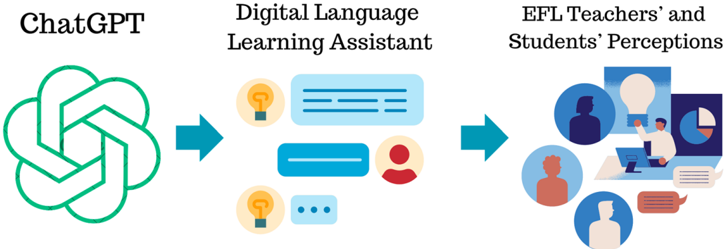
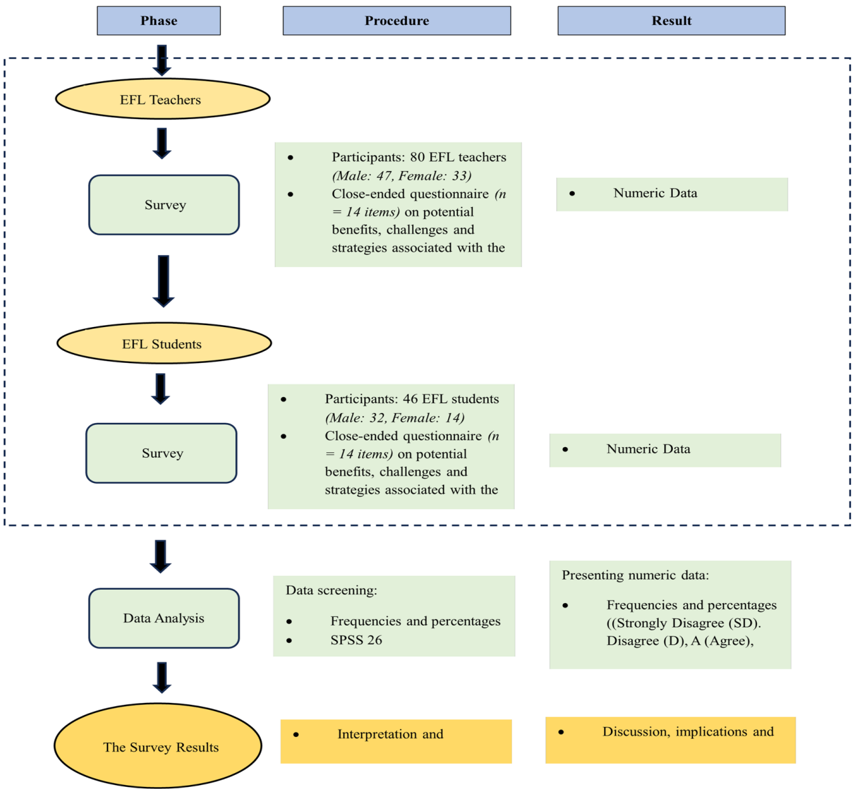
ChatGPT is one example of an artificial intelligence (AI) tool that is gaining attention in the field of language education due to its potential as a digital language learning assistant. ChatGPT allows for customized interactions and real-time feedback to improve language learning. Yet, there is a study void on English as a Foreign Language (EFL) teachers and students’ use of ChatGPT in language learning. To fill this void, this a cross-sectional survey study investigates the perceptions and preferences of the 80 EFL teachers and the 46 EFL students in East Java, Indonesia. The study’s primary objective is to gain insight into how they perceive about using ChatGPT to improve their language learning. The results revealed possible benefits, such as better language competency and individualized learning experiences, as well as problems, such as language accuracy and technological dependence. The study also highlights the importance of pedagogical support, curricular alignment, user-friendly interfaces, and compelling interactive activities for successful integration. In light of these results, this study suggests ways in which teachers might better include ChatGPT as a digital language learning assistant. This study contributes to the body of knowledge of ChatGPT’s function in EFL instruction and will guide the improvement of other digital tools for language learning. Graphical Abstract
Overview
The claims and statistics of this paper haven’t been checked yet.
Free: it reads the open-access text and checks the first 5 claims that cite a source we can check. Create a free account to check every claim.
Integrity signals
Registry
Cites
Statistics
Figures
Verification
Claims the paper makes
The claims and statistics of this paper haven’t been checked yet.
Free: it reads the open-access text and checks the first 5 claims that cite a source we can check. Create a free account to check every claim.
Claims other papers make about this one
Each is checked against this paper’s own text: does it say what the citing paper says it does?
The source backs part of the claim, not all of it — or backs it for a different population, condition or comparison.
In the citing paper
“Similarly, (Slamet 2024) reported that both instructors and students recognized pedagogical benefits but raised concerns about dependence and ethical ambiguity.”
From Perceptions vs. practices: academic integrity and actual ChatGPT use among EFL students (2026) · cites this paper as Slamet 2024
Experimental — accuracy not yet measuredThe check wasn’t confident either way, so it gives no verdict — never disputed.
In the citing paper
“These gaps mirror earlier studies documenting teacher-student mismatches in AI ethics (Slamet, 2024; Bin-Nashwan et al., 2023; Almanea, 2024).”
From Perceptions vs. practices: academic integrity and actual ChatGPT use among EFL students (2026) · cites this paper as Slamet, 2024
Experimental — accuracy not yet measured
Self-check
Percentages, sums and reported differences re-computed from the paper’s own numbers.
The self-check needs the paper’s full text.
Citations
Cites
ChatGPT for Good? On Opportunities and Challenges of Large Language Models for Education
Kasneci, E., Seßler, K., Küchemann, S., Bannert, M., Dementieva, D., Fischer, F., Gasser, U., Groh, G., Günnemann, S., Hüllermeier, E., et al. (2023) · doi:10.35542/osf.io/5er8f · Cited by 7,552
ChatGPT for good? On opportunities and challenges of large language models for education
Kasneci, E., Sessler, K., Küchemann, S., Bannert, M., Dementieva, D., Fischer, F., Gasser, U., Groh, G., Günnemann, S., Hüllermeier, E., et al. (2023) · Learning and Individual Differences · doi:10.1016/j.lindif.2023.102274 · Cited by 7,326 · cited 3×
“These findings are consistent with those found in recent research [12] that demonstrated the beneficial impact that AI technologies have on language learning.”
Students' voices on generative ai: perceptions, benefits, and challenges in higher education
Chan, C. K. Y., & Hu, W. (2023) · arXiv · doi:10.48550/arxiv.2305.00290 · Cited by 2,504
Students’ voices on generative AI: perceptions, benefits, and challenges in higher education
Chan, C. K. Y., & Hu, W. (2023) · International Journal of Educational Technology in Higher Education · doi:10.1186/s41239-023-00411-8 · Cited by 2,301
ChatGPT: Bullshit spewer or the end of traditional assessments in higher education?
(2023) · Journal of Applied Learning & Teaching · doi:10.37074/jalt.2023.6.1.9 · Cited by 1,806 · cited 4×
“ChatGPT’s capacity to give rapid feedback and engage students in engaging dialogues was well received by the students [18].”
InfluentialChatting about ChatGPT: how may AI and GPT impact academia and libraries?
Lund, B. D., & Wang, T. (2023) · Library Hi Tech News · doi:10.1108/lhtn-01-2023-0009 · Cited by 1,355
ChatGPT and other large language models are double-edged swords
Shen, Y., Heacock, L., Elias, J., Hentel, K. D., Reig, B., Shih, G., & Moy, L. (2023) · Radiology · doi:10.1148/radiol.230163 · Cited by 1,008 · cited 3×
“These obstacles may include the requirement for additional help and direction in addition to technical difficulties [1, 21, 25].”
Teacher support and student motivation to learn with Artificial Intelligence (AI) based chatbot
Chiu, T. K. F., Moorhouse, B. L., Chai, C. S., & Ismailov, M. (2024) · Interactive Learning Environments · doi:10.1080/10494820.2023.2172044 · Cited by 707
Role of Chat GPT in public health
Biswas, S. S. (2023) · Annals of Biomedical Engineering · doi:10.1007/s10439-023-03172-7 · Cited by 673 · cited 4×
“By allowing users to tailor their language lessons and receive immediate feedback, ChatGPT improves the quality of EFL teaching and fosters more interesting and productive language learning [3, 14].”
InfluentialUnlocking the Power of ChatGPT: A Framework for Applying Generative AI in Education
Su (苏嘉红), J., & Yang (杨伟鹏), W. (2023) · ECNU Review of Education · doi:10.1177/20965311231168423 · Cited by 625
Research works printed but not linked: 1
- Shaikh S, Yayilgan SY, Klimova B, Pikhart M. Assessing the usability of ChatGPT for formal English language learning. Eur J Investig Health Psychol Educ. 2023;13(9):1937-60.
Cited by
Personalized learning through AI: Pedagogical approaches and critical insights
Vorobyeva, K. I., Belous, S. V., Savchenko, N. V., Smirnova, L. M., Nikitina, S. A., & Zhdanov, S. P. (2025) · Contemporary Educational Technology · doi:10.30935/cedtech/16108 · Cited by 186
Students' Perceptions about the Impact of AI Chatbots on their Vocabulary and Grammar in EFL Writing
Waziana, W., Andewi, W., Hastomo, T., & Hasbi, M. (2024) · Register Journal · doi:10.18326/register.v17i2.352-382 · Cited by 60
Teachers' Perspectives on Integrating ChatGPT into EFL Writing Instruction
(2025) · TESOL Communications · doi:10.58304/tc.20250103 · Cited by 52
Huang, T., Wu, C., & Wu, M. (2025) · Discover Artificial Intelligence · doi:10.1007/s44163-025-00435-1 · Cited by 48
Kashif, M., Ammar, M., Sellami, A., Chiu, T. K. F., Abbasi, S. A., & Ahmad, Z. (2025) · Computers in the Schools · doi:10.1080/07380569.2025.2602507 · Cited by 44
Exploring pre-service English language teachers’ readiness for AI-integrated language instruction
Altınkaya, Z. Ö., & Yetkin, R. (2025) · Pedagogies An International Journal · doi:10.1080/1554480x.2025.2451299 · Cited by 39
AI-powered conversational agents and intercultural learning: Insights from Indonesian EFL students
Hastomo, T., Widiati, U., Ivone, F. M., Zen, E. L., Hasbi, M., & Khulel, B. (2025) · Intercultural Communication Education · doi:10.29140/ice.v8n1.103127 · Cited by 37
Isaee, H., & Barjesteh, H. (2026) · Discover Artificial Intelligence · doi:10.1007/s44163-026-00933-w · Cited by 38
Li, K. C., Chong, G. H. L., Wong, B. T. M., & Wu, M. M.-F. (2025) · Education Sciences · doi:10.3390/educsci15070798 · Cited by 35
Xin, J. J. (2024) · Language Teaching Research · doi:10.1177/13621688241303321 · Cited by 32
Andewi, W., Waziana, W., Wibisono, D., Putra, K. A., Hastomo, T., & Oktarin, I. B. (2025) · Journal of Studies in the English Language · doi:10.64731/jsel.v20i2.282318 · Cited by 32
Mandasari, B., Basthomi, Y., Hastomo, T., Afrianto, A., Hamzah, I. N. S., & Aminatun, D. (2025) · Voices of English Language Education Society · doi:10.29408/veles.v9i1.27965 · Cited by 29
Du, C., Tang, M., Wang, C., Zou, B., Xia, Y., & Du, Y. (2025) · Innovation in Language Learning and Teaching · doi:10.1080/17501229.2025.2555515 · Cited by 30
Dinh, T. C. (2025) · The Electronic Journal of e-Learning · doi:10.34190/ejel.23.2.4006 · Cited by 26
Bahari, A., & Liu, Y. (2025) · Interactive Learning Environments · doi:10.1080/10494820.2025.2591251 · Cited by 26
Applying the AI assessment scale in writing and translation for EFL
Roe, J., Perkins, M., & Furze, L. (2025) · Artificial Intelligence in Education · doi:10.1108/aiie-02-2025-0034 · Cited by 21
Zakarneh, B. M., Aljabr, F. S., Said, N. A., & Jlassi, M. (2025) · World Journal of English Language · doi:10.5430/wjel.v15n3p364 · Cited by 20
Kartika, S. (2024) · LinguaEducare Journal of English and Linguistic Studies · doi:10.63324/h6q1ak58 · Cited by 19
Exploring Learners' Experiences with ChatGPT in Personalized Learning
Monib, W. K., Qazi, A., Silva, L. D., & Mahmud, M. M. (2024) · International Workshop on Artificial Intelligence and Education (WAIE) · doi:10.1109/waie63876.2024.00019 · Cited by 16
Putra, Y. S., Tansilo, H., Hastomo, T., Sari, A. S., & Aguilar, M. G. W. (2025) · Journal of Educational Management and Instruction (JEMIN) · doi:10.22515/jemin.v5i2.12403 · Cited by 16
El uso de Chatbots en el aprendizaje de idiomas: una revisión sistemática
Morales, L. E. G., & Carcausto-Calla, W. H. (2024) · Revista InveCom · doi:10.5281/zenodo.14532856 · Cited by 16
Shang, J., Huang, Y., Xu, M., Huang, Y., Shen, X., Wang, G., Wang, Y., & Zhang, L. (2025) · Computer Assisted Language Learning · doi:10.1080/09588221.2025.2577356 · Cited by 15
Castillo-Cuesta, L., Ochoa-Cueva, C., & Cabrera-Solano, P. (2025) · International Journal of Learning Teaching and Educational Research · doi:10.26803/ijlter.24.10.39 · Cited by 17
Using Artificial Intelligence in Foreign Language Teaching: Teachers’ Perspectives
Sayici, S., & Aydın, S. (2025) · Proceedings of The World Conference on Education and Teaching · doi:10.33422/etconf.v4i1.1016 · Cited by 14
Alqarni, O. M., Curle, S. M., Mahdi, H. S., & Ali, J. K. M. (2024) · Forum for Linguistic Studies · doi:10.30564/fls.v6i5.6975 · Cited by 12
Kılıç, E., & Çelik, H. E. (2025) · Computers and Education Artificial Intelligence · doi:10.1016/j.caeai.2025.100452 · Cited by 13
Slamet, J., & Basthomi, Y. (2025) · Journal of University Teaching and Learning Practice · doi:10.53761/deezkh88 · Cited by 10
Self-citationEntangled cognition in EFL education: The role of generative AI
Hsu, L. (2025) · Contemporary Educational Technology · doi:10.30935/cedtech/17621 · Cited by 9
Designing Future-Ready Education: Criteria for AI Learning Tool Selection and AI Learning Design
Goh, K. M., Mansor, M., Fuad, D. R. S. M., & Juharyanto, J. (2025) · Semarak International Journal of Innovation in Learning and Education · doi:10.37934/sijile.4.1.112a · Cited by 10
Perceptions vs. practices: academic integrity and actual ChatGPT use among EFL students
Alsadoon, R. (2026) · Frontiers in Psychology · doi:10.3389/fpsyg.2026.1796737 · Cited by 8
“Similarly, Slamet (2024) reported that both instructors and students recognized pedagogical benefits but raised concerns about dependence and ethical ambiguity.”
Mekheimer, M. A. A. G. (2025) · Discover Education · doi:10.1007/s44217-025-00992-8 · Cited by 7
Teaching Languages with Machines: A Systematic Review on the Effectiveness of AI in ESL Learning
Abano, R. C., & Estremera, M. (2026) · International Journal of Technology in Education · doi:10.46328/ijte.5196 · Cited by 7
The use of ChatGPT in the Indonesian ELT context: A systematic review
Syairofi, A., Emilia, E., & Purnawarman, P. (2025) · Journal of Research on English and Language Learning (J-REaLL) · doi:10.33474/j-reall.v6i2.23552 · Cited by 8
Abdelshaheed, B. S. M., & Alsalamah, L. A. (2025) · International Journal of Instruction · doi:10.29333/iji.2026.19137a · Cited by 6
Bahari, A. (2026) · Interactive Learning Environments · doi:10.1080/10494820.2026.2614081 · Cited by 6
Albaloul, O., Alajmi, A., Oster, N. J., & Killian, C. M. (2026) · Discover Artificial Intelligence · doi:10.1007/s44163-026-01344-7 · Cited by 6
Nurhayati, S., Lotfi, F. Z., Taufikin, T., & Hidayat, A. W. (2025) · Information systems engineering and management · doi:10.1007/978-3-032-05306-0_1 · Cited by 5
A Systematic Literature Review of Netflix for Language Learning
Topal, İ. H. (2025) · Boğaziçi Üniversitesi Eğitim Dergisi · doi:10.52597/buje.1672336 · Cited by 5
Yetkin, R. (2026) · European Journal of Education · doi:10.1111/ejed.70453 · Cited by 7
Hastomo, T., Hamidah, F. N., Nurchurifiani, E., Kartika, S., Hakim, L. N., Nasution, S. S., & Muliyah, P. (2026) · Language Education & Assessment · doi:10.29140/lea.2026.104539 · Cited by 5
Mansoor, H. S., Sumardjoko, B., & Sutopo, A. (2025) · World Journal of English Language · doi:10.5430/wjel.v15n6p369 · Cited by 5
Asmawi, A., & Alam, M. S. (2025) · Discover Education · doi:10.1007/s44217-025-00585-5 · Cited by 6
De, C. Y., & Yee, C. P. (2025) · International Journal of Academic Research in Business and Social Sciences · doi:10.6007/ijarbss/v15-i8/26115 · Cited by 4
AI Assistant Framework on Competency-Based Learning for Digital Competency Development
Nammanee, M., Jantakoon, T., & Laoha, R. (2025) · Higher Education Studies · doi:10.5539/hes.v15n4p333 · Cited by 4
Pre-Service Language Teachers’ Perceptions and Applications of Generative AI for Future Teaching
Butler, Y. G., & Jiang, S. (2025) · Language Teaching Research Quarterly · doi:10.32038/ltrq.2025.51.07 · Cited by 4
Alghasab, M. B. (2025) · Education Sciences · doi:10.3390/educsci15091138 · Cited by 4
ChatGPT: redefiniendo el aprendizaje autónomo
Reyna, J. T., Duran-Llaro, K. L., & Mucha-Hospinal, L. F. (2025) · Revista InveCom · doi:10.5281/zenodo.15091224 · Cited by 4
Abduljawad (2024) · doi:10.24093/awej/vol15no3.1 · Cited by 3
“…(NMT) and AI-based tools like ChatGPT have been used to aid in language learning (Albadarin et al., 2024; Alm & Watanabe, 2023; Ma, Huang & Weng, 2024; Slamet, 2024, among others), for example, by providing translations, composing summaries, checking grammar or interactive language practice.”
MethodMaharani, R. P., Arianto, F., & Diningrat, S. W. M. (2025) · Jurnal Visi Ilmu Pendidikan · doi:10.26418/jvip.v17i1.85438 · Cited by 3
Cai, X. (2026) · Language Teaching Research · doi:10.1177/13621688251398618 · Cited by 4
AI-Mediated Language Learning: Designing for Agency
MIKAEILI, A. (2026) · doi:10.11575/prism/51146 · Cited by 3
EFL Students’ Self-regulation in the Writing Process using ChatGPT
Diasti, K. S. (2026) · Journal of English Teaching Literature and Applied Linguistics · doi:10.30587/jetlal.v10i1.10837 · Cited by 3
Hitokdana, K. O. (2025) · ELS Journal on Interdisciplinary Studies in Humanities · doi:10.34050/els-jish.v8i4.48815 · Cited by 3
Digital Competence in Initial Teacher Training in the Use of Artificial Intelligence
Molina, O. E., Lacueva, P. R., Zapatero, J. L. R., & Zamora, E. G. (2025) · IGI Global eBooks · doi:10.4018/979-8-3373-3678-7.ch007 · Cited by 3
A flexibility study on the role of ChatGPT in language learning
Leung, C. H. (2025) · Asian Journal of Contemporary Education · doi:10.55493/5052.v9i1.5427 · Cited by 3
Developing Students’ HOTS Digital Literacy Profile by Using IRT
Atymtaevna, B. G., Retnawati, H., Kassymova, G. K., Triyono, M. B., Azman, M. N. A., & Sodikin, R. A. (2025) · Journal of Curriculum Studies Research · doi:10.46303/jcsr.2025.16 · Cited by 3
Kılınç, S. (2025) · Future education and learning spaces · doi:10.1007/978-981-96-9251-4_2 · Cited by 3
Aydın, S. (2025) · Advances in computational intelligence and robotics book series · doi:10.4018/979-8-3373-5681-5.ch006 · Cited by 3
Fostering Metacognitive Skills Through AI-Human Dialogues: A New Paradigm for Language Learning
Baskara, F. R. (2024) · Universitas Sanata Dharma Repository (Universitas Sanata Dharma) · Cited by 3
Rodríguez, A. B. (2025) · The EuroCALL Review · doi:10.4995/eurocall.2025.23827 · Cited by 3
Yauri, R., & Espino, R. (2024) · WSEAS TRANSACTIONS on SYSTEMS archive · doi:10.37394/23202.2024.23.54 · Cited by 2
Generative AI- and ChatGPT for Foreign Language Learning: An Action Research
Dorasamy, M., Jun, L. Y., Kaliannan, M., & Jambulingam, M. (2025) · South Asian Journal of Management · doi:10.62206/sajm.31.6.2024.94-119 · Cited by 2
Yu, B. (2025) · International Conference on Artificial Intelligence and Educational Systems · doi:10.1145/3744367.3744434 · Cited by 2
Can LLMs help students learn accounting? A performance analysis across models and prompts
Llacay, B., & Vilá, M. P. C. (2026) · Journal of Accounting Education · doi:10.1016/j.jaccedu.2026.101037 · Cited by 2
EFL TEACHERS’ PERSPECTIVE ON USING CHATGPT TO TEACH READING: A SYSTEMATIC REVIEW
Ardiyani, R. T. A. (2025) · Teaching English and Language Learning English Journal (TELLE) · doi:10.36085/telle.v5i3.9610 · Cited by 2
Fauzan, U., & Nguyen, H. C. (2025) · International Journal of Multilingualism and Languages for Specific purposes · doi:10.52919/ijmlsp.v7i02.120 · Cited by 3
Syakur, A., Wahyuningsih, S., & Slamet, J. (2026) · Journal of Information Technology Education Research · doi:10.28945/5816 · Cited by 2
Self-citationEljadedi, N. (2026) · Faculty of Languages Journal-Tripoli-Libya · Cited by 2
Alhumsi, M. H., Alharbi, A., Sendi, K., & Alsaedi, N. (2025) · International Journal of Innovative Research and Scientific Studies · doi:10.53894/ijirss.v8i4.8220 · Cited by 1
da Silva, L. O., Oliveira, W., & Laato, S. (2025) · IEEE International Conference on Advanced Learning Technologies (ICALT) · doi:10.1109/icalt64023.2025.00107 · Cited by 1
Kumar, C., & Nivea Thomas, K. (2025) · IGI Global eBooks · doi:10.4018/979-8-3373-0030-6.ch002 · Cited by 1
Exploring English Education Students’ Self-Efficacy in Utilizing AI Tools for Language Learning
Anggrainy, S. (2025) · IJLHE International Journal of Language Humanities and Education · doi:10.52217/d6t5r589 · Cited by 1
Navigating AI in language education: Exploring the role of online language teacher communities
Ito, Y. (2026) · Australian Journal of Applied Linguistics · doi:10.29140/ajal.v8n4.103133 · Cited by 1
Günbatar, M. S., & Gökçearslan, Ş. (2026) · International Journal of Technology in Education · doi:10.46328/ijte.5419 · Cited by 1
AI-Generated Content Role in English Language Reading Skills
Monib, W. K., & Abubakari, M. S. (2026) · Advances in computational intelligence and robotics book series · doi:10.4018/979-8-3373-2721-1.ch003 · Cited by 1
Feng, H., Wang, Y., Wang, Y., & Fu, Z. (2026) · Sustainable Social Development · doi:10.54517/ssd8463 · Cited by 1
Alamoush, S., & Abdelrahman, M. B. (2026) · Technology in Language Teaching & Learning · doi:10.29140/tltl.2026.103893 · Cited by 1
Integrating GPT in undergraduate management education and its impact on performance and perception
Damodaran, A., Aswani, R., & Sajith, S. (2026) · Discover Sustainability · doi:10.1007/s43621-026-03462-9 · Cited by 1
Farhane, H. (2026) · Journal of English Language Teaching and Applied Linguistics · doi:10.32996/jeltal.2026.8.8.2 · Cited by 1
Alimi, A. A. N., Rafisya, J., & Febianti, K. (2026) · Fonologi Jurnal Ilmuan Bahasa dan Sastra Inggris · doi:10.61132/fonologi.v4i2.2752 · Cited by 1
Widyawati, A. (2026) · PROJECT (Professional Journal of English Education) · Cited by 1
Wijaya, B., Kusmartini, S. E., Darmaliana, D., & Yeny, E. (2026) · Journal of English Language and Education · doi:10.31004/jele.v11i4.2749 · Cited by 1
Isaee, H., Barjesteh, H., & Rad, N. F. (2026) · Discover Education · doi:10.1007/s44217-026-02151-z · Cited by 2
Photiyarach, R. (2025) · Ramkhamhaeng International Journal of Science and Technology · Cited by 1
STUDENTS’ PERCEPTIONS TOWARD DEEPSEEK AS A SUPPORTING TOOL IN ENGLISH LANGUAGE LEARNING
Ramadhani, O., Hamid, A. I. R., & Sunarti, S. (2025) · English Community Journal · doi:10.32502/ecj.v9i1.9912 · Cited by 1
Kencana, N. (2025) · Macca: Journal of Linguistic Applied Research · Cited by 1
Shao, Y. (2025) · Advances in Social Behavior Research · doi:10.54254/2753-7102/2025.23333 · Cited by 1
Preciado, F. A. M., & Pinargote, F. M. M. (2025) · Arandu-UTIC. · doi:10.69639/arandu.v12i3.1353 · Cited by 1
Rodríguez, A. B. (2025) · Tavira: Revista de ciencias de la educación · doi:10.25267/tavira.2025.i30.1107 · Cited by 1
The Impact of Chatbot-Driven Artificial Intelligence in Improving Students' Vocabulary
Hutauruk, B. S., Ambarita, P. D. E., & Dhillon, B. P. S. (2025) · Akademika · doi:10.34005/ak.v14i01.4305 · Cited by 1
Indonesian EFL Teachers' Perspectives on the Use of ChatGPT in English Language TeachingPreprint
Suhardi, A., & Masduqi, H. (2025) · SSRN Electronic Journal · doi:10.2139/ssrn.5383148 · Cited by 1
Journal, A. W. E., Ivenz, P., & Poláková, P. (2024) · SocArXiv (OSF Preprints) · doi:10.31235/osf.io/hs2dm
Shi, D. (2025) · Applied Mathematics and Nonlinear Sciences · doi:10.2478/amns-2025-0393
Exploring the Impact of Curriculum Frameworks on Language Acquisition in Early Childhood Education
Asrifan, A., & Cardoso, L. (2025) · IJECA (International Journal of Education and Curriculum Application) · doi:10.31764/ijeca.v8i1.28541
Kholid, M. F. N., Adillia, A., & Suryawati, S. S. (2025) · LinguaEducare Journal of English and Linguistic Studies · doi:10.63324/lec.2v.1i.64
Analyzing Student Needs for Developing Effective Instructional Media in Correspondence Practice
Sutirman, S., & Yuliansyah, Y. (2025) · AL-ISHLAH Jurnal Pendidikan · doi:10.35445/alishlah.v17i2.6697
Hazırlık Öğrencilerinin ChatGPT ye Yönelik Metaforik Algılarının İncelenmesi
Selvi, B., ÇOBAN, Z., & Orak, S. D. (2025) · Necmettin Erbakan Universitesi Eregli Egitim Fakultesi Necmettin Erbakan University · doi:10.51119/ereegf.2025.124
ChatGPT's Role in English Language Assessment: A Systematic Literature ReviewPreprint
Marquez, J. (2025) · SSRN Electronic Journal · doi:10.2139/ssrn.5332436
Kyungu, S. M., Lubua, F. G., & Kindole, E. V. (2025) · East African Journal of Swahili Studies · doi:10.37284/jammk.8.2.3610
Metadata
- Authors
- Slamet, J.
- Affiliations
- State University of Malang (ID)
- Corresponding author
- Slamet, Joko
- ORCID
- Slamet, Joko
- Venue
- Discover Artificial Intelligence
- Published
- 2024-07-02
- Volume
- 4
- Issue
- 1
- ISSN
- 2731-0809 (ISSN-L)
- OpenAlex
- W4400239851
- Cited by
- 57
- References
- 25
- Citations by year
- 2026: 25 · 2025: 28 · 2024: 4
- FWCI
- 21.50
- Type
- journal article
- Language
- en
- Open access
- gold
- doi.org
- Licence
- cc-by
- creativecommons.org/licenses/by/4.0 (tdm)
- creativecommons.org/licenses/by/4.0 (vor)
- Locations
- Discover Artificial Intelligence (publishedVersion, cc-by)
- DOAJ (DOAJ: Directory of Open Access Journals) (submittedVersion)
- Funders
- This research did not receive any specific grant or financial support from external sources. However, I have obtained support through the APC Discount and Waiver Service from Springer Nature. (NDIYNJMYMJK5)
- Topics
- Social Sciences › Education › Artificial Intelligence in Education
- Social Sciences › Education › English Language Learning and Teaching
- Social Sciences › Arts and Humanities › Language and Linguistics › EFL/ESL Teaching and Learning
- Keywords
- ChatGPT, large language models, teacher perceptions, student perceptions, personalized learning, linguistic accuracy, technology dependence, artificial intelligence in language teaching, pedagogical support
About these checks
Registry, retraction, Cites and statistics results are computed, not judged, with one exception: a printed reference that no index lists is read once by a model before it counts as a citation error. Claims are extracted by a model and kept only when their quote appears verbatim in the text; each cited source is then checked, with a model’s help, for whether it says what the claim relies on. Those verdicts can be wrong — read the claim’s quote and the cited source before relying on one.
Statistics and arithmetic are recomputed, not judged.
Confidence bands are shown only for fields calibrated on our annotated test set. None is calibrated yet, so no band is shown.
What counts as a claim ›How we measure confidence ›How we check this ›
Are you an author, or do you see a problem with this page? Request a review
Data sources
Bibliographic data: Semantic Scholar, OpenAlex, Crossref.
Contains information from the Semantic Scholar Academic Graph Datasets, made available under the ODC Attribution License (ODC-BY 1.0).
Semantic Scholar’s data is described in: Kinney, R., et al. (2023). The Semantic Scholar Open Data Platform. arXiv:2301.10140.
