

Potential of ChatGPT as a digital language learning assistant: EFL teachers' and students' perceptions
Open accessThe DOI matches its Crossref record; 27 of the 27 references it cites were found in a registry or an index.
Abstract
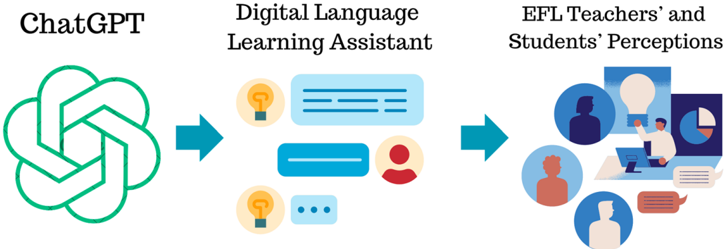
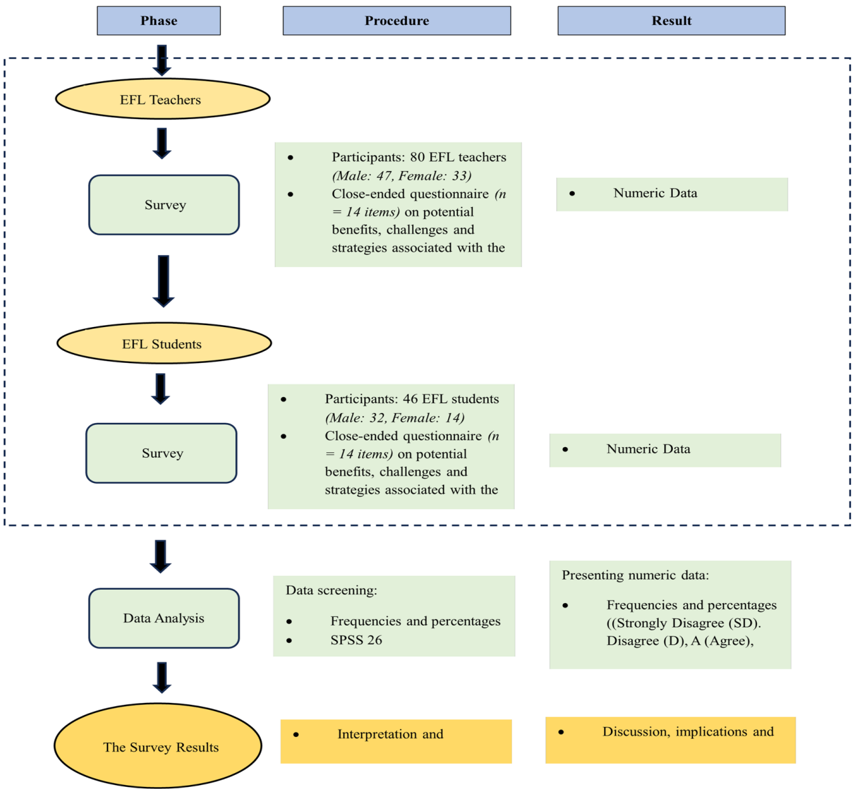
ChatGPT is one example of an artificial intelligence (AI) tool that is gaining attention in the field of language education due to its potential as a digital language learning assistant. ChatGPT allows for customized interactions and real-time feedback to improve language learning. Yet, there is a study void on English as a Foreign Language (EFL) teachers and students’ use of ChatGPT in language learning. To fill this void, this a cross-sectional survey study investigates the perceptions and preferences of the 80 EFL teachers and the 46 EFL students in East Java, Indonesia. The study’s primary objective is to gain insight into how they perceive about using ChatGPT to improve their language learning. The results revealed possible benefits, such as better language competency and individualized learning experiences, as well as problems, such as language accuracy and technological dependence. The study also highlights the importance of pedagogical support, curricular alignment, user-friendly interfaces, and compelling interactive activities for successful integration. In light of these results, this study suggests ways in which teachers might better include ChatGPT as a digital language learning assistant. This study contributes to the body of knowledge of ChatGPT’s function in EFL instruction and will guide the improvement of other digital tools for language learning. Graphical Abstract
Overview
The claims and statistics of this paper haven’t been checked yet.
Free: it reads the open-access text and checks the first 5 claims that cite a source we can check. Create a free account to check every claim.
Integrity signals
Registry
Cites
Statistics
Figures
Verification
Claims the paper makes
The claims and statistics of this paper haven’t been checked yet.
Free: it reads the open-access text and checks the first 5 claims that cite a source we can check. Create a free account to check every claim.
Claims other papers make about this one
Each is checked against this paper’s own text: does it say what the citing paper says it does?
The source backs part of the claim, not all of it — or backs it for a different population, condition or comparison.
In the citing paper
“Similarly, (Slamet 2024) reported that both instructors and students recognized pedagogical benefits but raised concerns about dependence and ethical ambiguity.”
From Perceptions vs. practices: academic integrity and actual ChatGPT use among EFL students (2026) · cites this paper as Slamet 2024
Experimental — accuracy not yet measuredThe check wasn’t confident either way, so it gives no verdict — never disputed.
In the citing paper
“These gaps mirror earlier studies documenting teacher-student mismatches in AI ethics (Slamet, 2024; Bin-Nashwan et al., 2023; Almanea, 2024).”
From Perceptions vs. practices: academic integrity and actual ChatGPT use among EFL students (2026) · cites this paper as Slamet, 2024
Experimental — accuracy not yet measured
Self-check
Percentages, sums and reported differences re-computed from the paper’s own numbers.
The self-check needs the paper’s full text.
Citations
Cites
ChatGPT for Good? On Opportunities and Challenges of Large Language Models for Education
Kasneci, E., Seßler, K., Küchemann, S., Bannert, M., Dementieva, D., Fischer, F., Gasser, U., Groh, G., Günnemann, S., Hüllermeier, E., et al. (2023) · doi:10.35542/osf.io/5er8f · Cited by 7,552
ChatGPT for good? On opportunities and challenges of large language models for education
Kasneci, E., Sessler, K., Küchemann, S., Bannert, M., Dementieva, D., Fischer, F., Gasser, U., Groh, G., Günnemann, S., Hüllermeier, E., et al. (2023) · Learning and Individual Differences · doi:10.1016/j.lindif.2023.102274 · Cited by 7,326 · cited 3×
“These findings are consistent with those found in recent research [12] that demonstrated the beneficial impact that AI technologies have on language learning.”
Students' voices on generative ai: perceptions, benefits, and challenges in higher education
Chan, C. K. Y., & Hu, W. (2023) · arXiv · doi:10.48550/arxiv.2305.00290 · Cited by 2,504
Students’ voices on generative AI: perceptions, benefits, and challenges in higher education
Chan, C. K. Y., & Hu, W. (2023) · International Journal of Educational Technology in Higher Education · doi:10.1186/s41239-023-00411-8 · Cited by 2,301
ChatGPT: Bullshit spewer or the end of traditional assessments in higher education?
(2023) · Journal of Applied Learning & Teaching · doi:10.37074/jalt.2023.6.1.9 · Cited by 1,806 · cited 4×
“ChatGPT’s capacity to give rapid feedback and engage students in engaging dialogues was well received by the students [18].”
InfluentialChatting about ChatGPT: how may AI and GPT impact academia and libraries?
Lund, B. D., & Wang, T. (2023) · Library Hi Tech News · doi:10.1108/lhtn-01-2023-0009 · Cited by 1,355
ChatGPT and other large language models are double-edged swords
Shen, Y., Heacock, L., Elias, J., Hentel, K. D., Reig, B., Shih, G., & Moy, L. (2023) · Radiology · doi:10.1148/radiol.230163 · Cited by 1,008 · cited 3×
“These obstacles may include the requirement for additional help and direction in addition to technical difficulties [1, 21, 25].”
Teacher support and student motivation to learn with Artificial Intelligence (AI) based chatbot
Chiu, T. K. F., Moorhouse, B. L., Chai, C. S., & Ismailov, M. (2024) · Interactive Learning Environments · doi:10.1080/10494820.2023.2172044 · Cited by 707
Role of Chat GPT in public health
Biswas, S. S. (2023) · Annals of Biomedical Engineering · doi:10.1007/s10439-023-03172-7 · Cited by 673 · cited 4×
“By allowing users to tailor their language lessons and receive immediate feedback, ChatGPT improves the quality of EFL teaching and fosters more interesting and productive language learning [3, 14].”
InfluentialUnlocking the Power of ChatGPT: A Framework for Applying Generative AI in Education
Su (苏嘉红), J., & Yang (杨伟鹏), W. (2023) · ECNU Review of Education · doi:10.1177/20965311231168423 · Cited by 625
Research works printed but not linked: 1
- Shaikh S, Yayilgan SY, Klimova B, Pikhart M. Assessing the usability of ChatGPT for formal English language learning. Eur J Investig Health Psychol Educ. 2023;13(9):1937-60.
Cited by
Items 101–168 of 168
The use of artificial intelligence in Chinese language teaching
Kalibekuly, T., Jeldybayeva, R., Khungshan, A., Nurzhaubek, A., & Sabirova, M. (2025) · Global Chinese · doi:10.1515/glochi-2025-0006
Exploring Vietnamese Students’ Perceptions of Wordtune as an AI-Based Writing Assistant
Chanh, N. H. (2025) · Information systems engineering and management · doi:10.1007/978-3-032-05306-0_10
Pre-Service EFL Teachers’ Perspectives on AI Integration in Indonesian Urban Schools
Kartika, S. (2025) · IJLHE International Journal of Language Humanities and Education · doi:10.52217/r4tkmv84
Shah, S. W. A., & Zahra, S. K. (2025) · The study of religion and history · doi:10.63163/srh137
College EFL students’ perception toward AI assistance in academic writing assignments
Agustin, N. Z., Cahyono, B. Y., & Agustina, F. R. (2025) · ELT Forum Journal of English Language Teaching · doi:10.15294/elt.v14i3.23636
Artificial Intelligence in Foreign Language Teaching
Deng, Y. (2025) · IGI Global eBooks · doi:10.4018/979-8-3373-3967-2.ch007
zerouali, A., Boukare, M., Bakhtaoui, I., & Mimounelkhir, A. (2025) · Innovation, Technologies, Education et Communication · doi:10.60590/prsm.itec-iss10.171
From apps to AI: How digital tools are reshaping language instruction in primary schools
Abdul Halim, R., & Sahrir, M. S. (2025) · Journal of Islamic Social Economics and Development
Using ChatGPT to Learn Vocabulary in Context – The Case of In-Service Teachers Learning Vietnamese
(18039106), A. K., & (20810978), T. A. D. (2024) · ASEAN Journal of Applied Languages
Nageen, S., Khawaja, H. U. H., Sarwar, M., Akmal, F., Hassan, D. M. U., & Jabeen, S. (2025) · Research Square · doi:10.21203/rs.3.rs-8331993/v1
Corrección automatizada de textos en español en MS Word mediante una macro de limpieza textual
Falque, J. R. G. (2025) · Tavira: Revista de ciencias de la educación · doi:10.25267/tavira.2025.i30.1106
Students’ attitudes towards online language learning applications on smartphones
Gkountara, D. N., Prasad, R., Poulkov, V. K., Manolova, A. H., Tsankova, Y., Yaneva, T., Rizou, S., & Lazaridis, P. I. (2025) · International Symposium on Wireless Personal Multimedia Communications (WPMC) · doi:10.1109/wpmc67460.2025.11351146
Metacognitive Strategies for Overcoming Paraphrasing Challenges in EFL Students’ Thesis Writing
Safitri, O. I., Syamsiah, N., & Misbah, H. (2026) · IJLHE International Journal of Language Humanities and Education · doi:10.52217/yqx9w970
AI-Supported Positive Psychology-Informed Pedagogy: A Mixed- Methods Study in Iranian EFL ContextsPreprint
Isaee, H., Curlie, S., Barjesteh, H., & Manoochehrzadeh, M. (2026) · Research Square · doi:10.21203/rs.3.rs-8888428/v1
Altınkaya, Z. Ö. (2026) · Sınırsız Eğitim ve Araştırma Dergisi · doi:10.29250/sead.1850635
Exploring the integration of artificial intelligence in enhancingPreprint
Nageen, S., Khawaja, H. U. H., Sarwar, M., Akmal, F., Hassan, M. U., & Jabeen, S. (2026) · Research Square · doi:10.21203/rs.3.rs-8370577/v1
言語学習アシスタントとしてのChatGPTの効果に関する調査
Yuri, I. (2024) · Institutional Repositories DataBase (IRDB)
Widiatmoko, P. (2025) · Indonesia Technology-Enhanced Language Learning Journal · doi:10.66611/700080
Reyna, J. T. (2025) · LA Referencia (Red Federada de Repositorios Institucionales de Publicaciones Científicas)
Introduction of ChatGPT in Project-Based Learning in Language Education
Deng, Y. (2026) · Springer briefs in education · doi:10.1007/978-981-95-8259-4_1
Epimaque, M. N., Dushimimana, D., & Iyamuremye, A. (2026) · Educational Point · doi:10.71176/edup/18545
ГЕНЕРАТИВНИЙ ШІ ЯК ІНСТРУМЕНТ РОЗВИТКУ МЕДИЧНОЇ АНГЛОМОВНОЇ КОМУНІКАЦІЇ
Isayeva, O., & Shumylo, M. (2026) · The Scientific Issues of Ternopil Volodymyr Hnatiuk National Pedagogical University Series pedagogy · doi:10.32782/2415-3605.26.1.13
Risk and Trust: The Lonely Journey of EFL Remote Teachers’ Integration of AI
Dinata, R. P., Basthomi, Y., Suryati, N., Hasymi, M., & Rovikasari, M. (2026) · Journal of Teaching and Learning · doi:10.22329/jtl.v20i2.9320
The Use of AI-Generated Feedback in an Indonesian EFL Writing Class: Student PerceptionsPreprint
Arifin, M. A., & Salsbury, T. (2026) · SSRN Electronic Journal · doi:10.2139/ssrn.6950560
Future-Ready Pedagogy in English Language Teaching: Toward an Ethical and AI-Responsive Framework
Isaee, H., Barjesteh, H., Komşu, U. C., & Manoochehrzadeh, M. (2026) · International Journal of Language and Artificial Intelligence · doi:10.67394/ijlai.2026.1.2
Sun, S. Y., & Shen, X. (2026) · SSRN Electronic Journal · doi:10.2139/ssrn.7002138
Teachers’ Attitudes and Challenges in Implementing Computer-Assisted Language Learning
Arif, M. R. (2026) · International Journal of Research and Innovation in Social Science · doi:10.47772/ijriss.2026.1026edu0387
ChatGPT as a Language Learning Tool: Perceptions of Turkish EFL Teachers and Students
Özdal, H., & Uzun, L. (2026) · Journal of Language Teaching and Learning · doi:10.66887/jltl.v16i3.910
Calibrating Trust in ChatGPT for L2 Writers
유혜빈, Pecsok, M., & Pals, C. (2026) · Lecture notes in computer science · doi:10.1007/978-3-032-30784-2_10
Digital tools in foreign language teaching: opportunities and challenges
Marіeіev, D., Terletska, L., Boiko, A., HVOZDYAK, O., & Aizikova, L. (2026) · EDUWEB · doi:10.46502/issn.1856-7576/2026.20.02.6
Braha, M., & Ramadani, R. (2026) · Open Research Europe · doi:10.12688/openreseurope.23500.1
Sheng, N. Y., & Yaccob, N. S. (2026) · International Journal of Research and Innovation in Social Science · doi:10.47772/ijriss.2026.100601289
Integrating AI into media analysis projects: Students’ insights on using ChatGPT
Yalçınalp, S., & Türkoğlu, H. (2026) · Journal of Media Literacy Education · doi:10.23860/jmle-2026-18-2-7
Nalina, A. K. (2026) · Iconic Research and Engineering Journals · doi:10.64388/irev10i1-1720033
Emergence and growth of the use of assistants in remote education: A scientometric study (2015–2025)
Vasquez, H. D., Hernández, W., & Ruiz-Muñoz, J. F. (2026) · Social Sciences in Brief · doi:10.47909/10.47909/ssb.26
Chatbots de inteligencia artificial para desarrollar la competencia comunicativa en inglés
Moreira, J. B. P., Vargas, G., Andrade, A. V. T., Andrade, S. M. D., & Chuncha, P. M. C. (2026) · Sage Sphere of Technology Sciences Discoveries And Society · doi:10.63688/k4s8wz32
Maharani, K. P., Pratolo, B. W., & Wijayati, R. D. (2026) · Research and Innovation in Applied Linguistics-Electronic Journal · doi:10.31963/rial.v4i2.6474
Percepciones de estudiantes EFL sobre ChatGPT para el desarrollo de la destreza oral
Valencia, J. C. S., & Calvopiña, A. E. S. (2026) · Journal of Multidisciplinary Novel Journeys & Explorations · doi:10.63688/e5evkc46
ChatGPT vs. Gemini: Which model generates more comprehensible texts and more solvable tasks?
Paun, L. (2026) · Global Journal of Foreign Language Teaching · doi:10.18844/gjflt.v16i3.9808
Nguyen, T. T. (2026) · European Journal of English Language Teaching · doi:10.46827/ejel.v11i4.7002
Öksüz, H. İ., Afyoncu, T., Gök, S., Yıldırım, T., & Yıldırım, K. (2026) · Interactive Learning Environments · doi:10.1080/10494820.2026.2734314
Linguistic Justice through GenAI: A Collaborative Autoethnography
Perales, W. F. (2026) · International Journal of TESOL Studies · doi:10.58304/ijts.260920
Suner, G. (2026) · Bilkent University Institutional Repository (Bilkent University)
YouGlish in English language education: A systematic review of relevant publications
Topal, İ. H., EKİNCİ, E., & EKİNCİ, M. (2026) · Journal of Educational Technology and Online Learning · doi:10.31681/jetol.1919287
Zhao, L., Yaccob, N. S., & Yunus, M. M. (2026) · International Journal of Learning Teaching and Educational Research · doi:10.26803/ijlter.25.9.3
Jundum, S., Inkaew, C., Napapongs, W., & Tansakul, J. (2026) · Journal of Graduate Research
Phonlabutra, K. (2025) · Journal of Rajanagarindra
Students’ Perceptions of Artificial Intelligence in English Language Learning
Anggawirya, A. M., & Afri, E. (2026) · International Journal of English and Applied Linguistics (IJEAL) · doi:10.47709/ijeal.v6i2.9582
Rasyki, A., Saputri, N. E., & Nisa, U. K. (2026) · Pendas Jurnal Ilmiah Pendidikan Dasar · doi:10.23969/jp.v11i03.66579
Hidayah, M., Faruq, U., Mustofa, A. Y., Ashari, H., Mulyadi, A., & Rian (2026) · Pendas Jurnal Ilmiah Pendidikan Dasar · doi:10.23969/jp.v11i02.52208
ВЛИЯНИЯ ИСКУССТВЕННОГО ИНТЕЛЛЕКТА НА ПРАКТИКУ САМОСТОЯТЕЛЬНОЙ РАБОТЫ МАГИСТРАНТОВ
Зарубаевна, Т. Г., Kurmanayeva, D., Д.Е., С., & K.E., И. (2025) · Журнал серии «Педагогические науки»
Zhao, Y., & Zhou, X. (2026) · System · doi:10.1016/j.system.2026.104173
EFL learners' views on the Importance of English Language Learning Labs in Enhancing Speaking Skills
ALghahwash, A., & Elmahdi, O. (2026) · مجلة الاصالة
Exploring EFL Learners' Attitudes Toward ChatGPT for English Writing: The Role of Contextual Factors
Alobaidi, S. S., & Khadawardi, H. A. (2026) · International Journal of English Language Education · doi:10.5296/ijele.v14i2.24070
Nurlisa (2026) · Samawa (Sakinah, Mawaddah Warahmah)
Nageen, S., Khawaja, H. U. H., Sarwar, M., Moin, M., Imran, Z., & Jabeen, S. (2026) · Discover Education · doi:10.1007/s44217-026-02278-z
Students’ Perceptions of ChatGPT as an AI Based Learning Tool in EFL
Utami, T., Fanisa, N., & Nasution, J. (2026) · IDEAS Journal on English Language Teaching and Learning Linguistics and Literature
Halim, S., & Hairuddin, N. H. (2026) · IDEAS Journal on English Language Teaching and Learning Linguistics and Literature
ChatGPT and Large Language Models in Language Teaching: SLR Pedagogical Uses, Risks, and Frameworks
Datu, Y. A. (2026) · Social Science and Humanities Journal · doi:10.18535/sshj.v10i09.2531
Fajari, A., Hastuti, D. P., & Imani, A. (2026) · Journal of Research on English and Language Learning (J-REaLL) · doi:10.33474/j-reall.v7i2.25571
Hamid, S. M., Syahira, Z., & Putri, A. (2026) · Journal of English Language Teaching and Learning · doi:10.33365/jeltl.v7i1.2091
Integrating ChatGPT into EFL Critical Reading: Effects on Students’ Analytical Thinking
Sahabuddin, I., Rasyid, A., & Sianna (2026) · FOSTER Journal of English Language Teaching · doi:10.24256/foster-jelt.v7i3.456
Yafie, E., Haqqi, Y. A., Slamet, T. I., Astuti, W., Karmina, S., Pristiani, R., & Samah, N. A. (2026) · Education Sciences · doi:10.3390/educsci16101766
AI Chatbots, Learner Perception, and Linguistic Reliability in Arabic Language Learning
Rini, R., Aflisia, N., Yasmar, R., Rahman, A. A., & Larasati, M. S. (2026) · Alsina Journal of Arabic Studies · doi:10.21580/alsina.8.2.32844
Students’ perspectives on ChatGPT in learning Russian cases: opportunities and AI risks
Abbas, Z. M., & Samosenkova, T. V. (2026) · CyberLeninK (CyberLeninka)
Ulla, M. B. (2026) · International Journal of TESOL Studies · doi:10.58304/ijts.261122
Role of AI Tools for English Language Learning (ELL): A Systemic Review
Tandan, R. (2025) · NELTA Bagmati Journal · doi:10.3126/nbj.v5i1.101999
Metadata
- Authors
- Slamet, J.
- Affiliations
- State University of Malang (ID)
- Corresponding author
- Slamet, Joko
- ORCID
- Slamet, Joko
- Venue
- Discover Artificial Intelligence
- Published
- 2024-07-02
- Volume
- 4
- Issue
- 1
- ISSN
- 2731-0809 (ISSN-L)
- OpenAlex
- W4400239851
- Cited by
- 57
- References
- 25
- Citations by year
- 2026: 25 · 2025: 28 · 2024: 4
- FWCI
- 21.50
- Type
- journal article
- Language
- en
- Open access
- gold
- doi.org
- Licence
- cc-by
- creativecommons.org/licenses/by/4.0 (tdm)
- creativecommons.org/licenses/by/4.0 (vor)
- Locations
- Discover Artificial Intelligence (publishedVersion, cc-by)
- DOAJ (DOAJ: Directory of Open Access Journals) (submittedVersion)
- Funders
- This research did not receive any specific grant or financial support from external sources. However, I have obtained support through the APC Discount and Waiver Service from Springer Nature. (NDIYNJMYMJK5)
- Topics
- Social Sciences › Education › Artificial Intelligence in Education
- Social Sciences › Education › English Language Learning and Teaching
- Social Sciences › Arts and Humanities › Language and Linguistics › EFL/ESL Teaching and Learning
- Keywords
- ChatGPT, large language models, teacher perceptions, student perceptions, personalized learning, linguistic accuracy, technology dependence, artificial intelligence in language teaching, pedagogical support
About these checks
Registry, retraction, Cites and statistics results are computed, not judged, with one exception: a printed reference that no index lists is read once by a model before it counts as a citation error. Claims are extracted by a model and kept only when their quote appears verbatim in the text; each cited source is then checked, with a model’s help, for whether it says what the claim relies on. Those verdicts can be wrong — read the claim’s quote and the cited source before relying on one.
Statistics and arithmetic are recomputed, not judged.
Confidence bands are shown only for fields calibrated on our annotated test set. None is calibrated yet, so no band is shown.
What counts as a claim ›How we measure confidence ›How we check this ›
Are you an author, or do you see a problem with this page? Request a review
Data sources
Bibliographic data: Semantic Scholar, OpenAlex, Crossref.
Contains information from the Semantic Scholar Academic Graph Datasets, made available under the ODC Attribution License (ODC-BY 1.0).
Semantic Scholar’s data is described in: Kinney, R., et al. (2023). The Semantic Scholar Open Data Platform. arXiv:2301.10140.
