

Ketamine treatment for depression: a review
Open accessThe DOI matches its Crossref record; 86 of the 87 references it cites were found in a registry or an index.
Abstract
This manuscript reviews the clinical evidence regarding single-dose intravenous (IV) administration of the novel glutamatergic modulator racemic ( R,S )-ketamine (hereafter referred to as ketamine) as well as its S -enantiomer, intranasal esketamine, for the treatment of major depressive disorder (MDD). Initial studies found that a single subanesthetic-dose IV ketamine infusion rapidly (within one day) improved depressive symptoms in individuals with MDD and bipolar depression, with antidepressant effects lasting three to seven days. In 2019, esketamine received FDA approval as an adjunctive treatment for treatment-resistant depression (TRD) in adults. Esketamine was approved under a risk evaluation and mitigation strategy (REMS) that requires administration under medical supervision. Both ketamine and esketamine are currently viable treatment options for TRD that offer the possibility of rapid symptom improvement. The manuscript also reviews ketamine’s use in other psychiatric diagnoses—including suicidality, obsessive–compulsive disorder, post-traumatic stress disorder, substance abuse, and social anxiety disorder—and its potential adverse effects. Despite limited data, side effects for antidepressant-dose ketamine—including dissociative symptoms, hypertension, and confusion/agitation—appear to be tolerable and limited to around the time of treatment. Relatively little is known about ketamine’s longer-term effects, including increased risks of abuse and/or dependence. Attempts to prolong ketamine’s effects with combined therapy or a repeat-dose strategy are also reviewed, as are current guidelines for its clinical use. In addition to presenting a novel and valuable treatment option, studying ketamine also has the potential to transform our understanding of the mechanisms underlying mood disorders and the development of novel therapeutics.
Overview
The claims and statistics of this paper haven’t been checked yet.
Free: it reads the open-access text and checks the first 5 claims that cite a source we can check. Create a free account to check every claim.
Integrity signals
Registry
Cites
Statistics
Figures
Verification
Claims the paper makes
The claims and statistics of this paper haven’t been checked yet.
Free: it reads the open-access text and checks the first 5 claims that cite a source we can check. Create a free account to check every claim.
Claims other papers make about this one
Each is checked against this paper’s own text: does it say what the citing paper says it does?
The source backs part of the claim, not all of it — or backs it for a different population, condition or comparison.
In the citing paper
“A key mechanism of ketamine and esketamine may be the upregulation of BDNF levels [18,19], which plays a critical role in synaptic resilience and neuroplasticity [20].”
From Variations in BDNF and Their Role in the Neurotrophic Antidepressant Mechanisms of Ketamine and Esketamine: A Review (2024) · cites this paper as [18]
Experimental — accuracy not yet measuredThe source backs part of the claim, not all of it — or backs it for a different population, condition or comparison.
In the citing paper
“Thus, ketamine impacts neuroplasticity, including through BDNF, in both a rapid and sustained manner [18,19,77]”
From Variations in BDNF and Their Role in the Neurotrophic Antidepressant Mechanisms of Ketamine and Esketamine: A Review (2024) · cites this paper as [18]
Experimental — accuracy not yet measuredThe source backs part of the claim, not all of it — or backs it for a different population, condition or comparison.
In the citing paper
“Ketamine and its S-enantiomer, esketamine, exert both rapid and sustained antidepressant effects through activation of glutamate-related pathways, with neurotrophic effects involving BDNF, as demonstrated in experimental studies.”
From Variations in BDNF and Their Role in the Neurotrophic Antidepressant Mechanisms of Ketamine and Esketamine: A Review (2024) · cites this paper as [18]
Experimental — accuracy not yet measuredThe source backs part of the claim, not all of it — or backs it for a different population, condition or comparison.
In the citing paper
“Ketamine, a non-competitive antagonist of the NMDA receptor, has attracted considerable interest for its ability to produce rapid and sustained antidepressant effects, particularly in individuals with treatment-resistant depression [18].”
From Variations in BDNF and Their Role in the Neurotrophic Antidepressant Mechanisms of Ketamine and Esketamine: A Review (2024) · cites this paper as [18]
Experimental — accuracy not yet measuredThe source backs part of the claim, not all of it — or backs it for a different population, condition or comparison.
In the citing paper
“The rapid onset of these effects, often evident within hours, and their persistence for weeks after a single dose suggest that ketamine’s action involves more complex processes than simple NMDA receptor blockade, particularly those related to synaptic plasticity and neurotrophic signaling, including BDNF pathways [18,19].”
From Variations in BDNF and Their Role in the Neurotrophic Antidepressant Mechanisms of Ketamine and Esketamine: A Review (2024) · cites this paper as [18]
Experimental — accuracy not yet measured
3 more claims about this paper
Create a free account to see every claim other papers make about this one.
Self-check
Percentages, sums and reported differences re-computed from the paper’s own numbers.
The self-check needs the paper’s full text.
Citations
Cites
Molecular Mechanisms of Depression: Perspectives on New Treatment Strategies
Lang, U. E., & Borgwardt, S. (2013) · Cellular Physiology and Biochemistry · doi:10.1159/000350094 · Cited by 8,475
The National Center for Biotechnology Information
Benson, D., Boguski, M., Lipman, D. J., & Ostell, J. (1990) · Genomics · doi:10.1016/0888-7543(90)90583-g · Cited by 5,126
Antidepressant effects of ketamine in depressed patients
Berman, R. M., Cappiello, A., Anand, A., Oren, D. A., Heninger, G. R., Charney, D. S., & Krystal, J. H. (2000) · Biological Psychiatry · doi:10.1016/s0006-3223(99)00230-9 · Cited by 3,856 · cited 1×
“Compared to saline infusion, ketamine significantly improved depressive symptoms within 72 h [22].”
BackgroundA randomized trial of an N-methyl-D-aspartate antagonist in treatment-resistant major depression.
Zarate, C. A., Singh, J. B., Carlson, P. J., Brutsche, N. E., Ameli, R., Luckenbaugh, D. A., Charney, D. S., & Manji, H. K. (2006) · Archives of General Psychiatry · doi:10.1001/archpsyc.63.8.856 · Cited by 3,766
Self-citationNMDAR inhibition-independent antidepressant actions of ketamine metabolites
Zanos, P., Moaddel, R., Morris, P. J., Georgiou, P., Fischell, J., Elmer, G. I., Alkondon, M., Yuan, P., Pribut, H. J., Singh, N. S., et al. (2016) · Nature · doi:10.1038/nature17998 · Cited by 1,609 · cited 3×
“Notably, animal studies found that arketamine has more potent, longer-lasting antidepressant effects than either ketamine or esketamine with fewer behavioral side effects and lower abuse potential [11].”
BackgroundKetamine and Ketamine Metabolite Pharmacology: Insights into Therapeutic Mechanisms
Zanos, P., Moaddel, R., Morris, P. J., Riggs, L. M., Highland, J. N., Georgiou, P., Pereira, E. F. R., Albuquerque, E. X., Thomas, C. J., Zarate, C. A., et al. (2018) · Pharmacological Reviews · doi:10.1124/pr.117.015198 · Cited by 1,260 · cited 1×
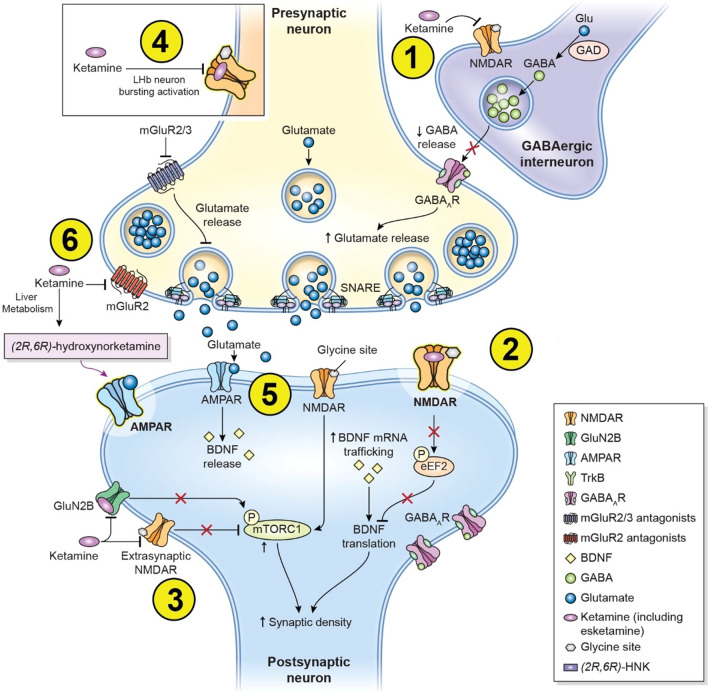
“Early work by Skolnick and colleagues implicated the glutamatergic system in depression [7], and research over the past three decades further implicated the NMDA receptor in modulating the molecular and cellular processes important for synaptogenesis and neuroplasticity [8].”
BackgroundSelf-citationMechanisms of ketamine action as an antidepressant
Zanos, P., & Gould, T. D. (2018) · Molecular Psychiatry · doi:10.1038/mp.2017.255 · Cited by 1,127 · cited 1×
“AMPA receptor activation in particular has been shown to modulate downstream factors, such as enhancing brain-derived neurotrophic factor (BDNF) release, which activates the tropomyosin receptor kinase B (TrkB) receptor and, subsequently, mammalian target of rapamycin complex 1 (mTORC1) [16].”
BackgroundKetamine blocks bursting in the lateral habenula to rapidly relieve depression
Yang, Y., Cui, Y., Sang, K., Dong, Y., Ni, Z., Ma, S., & Hu, H. (2018) · Nature · doi:10.1038/nature25509 · Cited by 1,036 · cited 1×
“A recent study demonstrated that blockade of NMDA-dependent burst activity in the lateral habenula (LHb) mediated antidepressantlike effects in animals [9], and neurochemical and functional imaging studies have also corroborated that ketamine treatment partly reverses the glutamatergic and gamma aminobutyric acid (GAB…”
BackgroundDiazgranados, N., Ibrahim, L., Brutsche, N. E., Newberg, A., Kronstein, P., Khalife, S., Kammerer, W. A., Quezado, Z., Luckenbaugh, D. A., Salvadore, G., et al. (2010) · Archives of General Psychiatry · doi:10.1001/archgenpsychiatry.2010.90 · Cited by 963 · cited 1×
“In two randomized, placebo-controlled, crossover studies (n = 15 and n = 18), ketamine significantly improved depressive symptoms compared to placebo; effects were observed within 40 min and lasted through three days post-infusion [30, 31].”
BackgroundSelf-citationPopova, V., Daly, E. J., Trivedi, M., Cooper, K., Lane, R., Lim, P., Mazzucco, C., Hough, D., Thase, M. E., Shelton, R. C., et al. (2019) · American Journal of Psychiatry · doi:10.1176/appi.ajp.2019.19020172 · Cited by 904 · cited 1×
“The TRANSFORM-2 study was a four-week, randomized, placebo-controlled, double-blind Phase 3 clinical trial (n = 223) that included an antidepressant medication taper and randomization to either twice-weekly intranasal esketamine, flexibly dosed at 56 or 84 mg, or a placebo nasal spray, both administered in conjunction…”
Method
Research works printed but not linked: 2
- 74. Orhurhu VJ, Vashisht R, Claus LE, Cohen SP. Ketamine toxicity [Updated 2021 Jul 25]. StatPearls [Internet]. Treasure Island (FL): StatPearls Publishing; 2021. https://ncbi.nlm.nih.gov/books/NBK541087/. Accessed 25 Jul 2021.
- 76. Rosenbaum SB, Gupta V, Palacios JL. Ketamine. StatPearls [Internet]. Treasure Island (FL): StatPearls Publishing; 2021. https://www.ncbi.nlm.nih.gov/books/NBK470357. Accessed 19 Feb 2021.
Cited by
Items 101–161 of 161
Liu, X., Hua, Z., Shu, Y., Li, L., Xia, S., Li, J., Li, H., Wan, A., Peng, D., & Wu, G. (2025) · Brain Research Bulletin · doi:10.1016/j.brainresbull.2025.111637 · Cited by 2
Greene, B. D., Fijtman, A., Yalın, N., Kvarta, M. D., Wang, P. R., Yavi, M., Greenstein, D. K., & Zarate, C. A. (2025) · Journal of Affective Disorders · doi:10.1016/j.jad.2025.120780 · Cited by 1
Self-citationAzadbakht, A. A., Mashayekhi‐Sardoo, H., & Baghcheghi, Y. (2025) · Neurochemical Research · doi:10.1007/s11064-025-04619-0 · Cited by 6
Antidepressants as modulators of P2X7 receptor activity
Vidal, V. N., Teixeira, G. P., Faria, J. V., Oliveira, J. A. D. S., Bello, M. L., Rocha, L., & Faria, R. X. (2025) · Neuroscience · doi:10.1016/j.neuroscience.2025.12.042 · Cited by 1
De Novo Generation-Based Design of Potential Computational Hits Targeting the GluN1-GluN2A Receptor
Liu, Y., Yang, Z., Guo, Y., Huang, T., Pan, L., Ding, J., & Dong, W. (2026) · Molecules · doi:10.3390/molecules31030522 · Cited by 1
“This process is closely related to central nervous system diseases such as depression, epilepsy and post-traumatic stress disorder [16,17].”
Ketamine Use in Self-Described Therapeutic Contexts: A Thematic Analysis of Reddit Posts
Kendrick, J., Ahmad, G., Wood, A., Stumo, S., Sehgal, A., Matthews, D. B., & Sharma, P. (2026) · Behavioral Sciences · doi:10.3390/bs16040480 · Cited by 1
“In contrast, ketamine for mood disorders in clinical research and practice is typically administered at substantially lower, weight-based doses (e.g., ~0.5 mg/kg IV, or approximately 30–50 mg per session in adults) (Yavi et al., 2022).”
InfluentialPsychedelics as a potential treatment for borderline personality disorder: A narrative review
Artna, E., Sandhu, G., Chisamore, N., Lipsitz, O., Kaczmarek, E. S., Johnson, D. E., Rosenblat, J. D., & Sediqzadah, S. (2026) · Psychiatry Research · doi:10.1016/j.psychres.2026.117152 · Cited by 1
Kim, J., Lochhead, L., & Weissman, C. R. (2026) · Pharmacology Research & Perspectives · doi:10.1002/prp2.70262 · Cited by 1
Hentig, L., Hentig, J., & Gill, J. (2025) · Reports — Medical Cases Images and Videos · doi:10.3390/reports8010013 · Cited by 1
“As traditional pharmacological treatments have struggled, recent efforts have begun to explore the potential psychedelics such as psilocybin, 3,4-Methylenedioxymethamphetamine (MDMA), and off-label use of ketamine [11–13].”
Cao, Q., Zhang, N., Leng, C., Wang, S., & Ma, J. (2025) · Reviews in Medical Virology · doi:10.1002/rmv.70036 · Cited by 2
“…contrast to conventional antidepressant agents, such as serotonin‐norepinephrine reuptake inhibitors (SNRIs) and selective serotonin reuptake inhibitors (SSRIs), which commonly take weeks to exert their therapeutic effects, these agents can induce rapid antidepressant activities within hours [14].”
Ketamine potentiates a central glutamatergic presynapsePreprint
Eshra, A., Lipstein, N., & Hallermann, S. (2023) · bioRxiv (Cold Spring Harbor Laboratory) · doi:10.1101/2023.12.17.571741 · Cited by 2
Ketamine for Late-Life Depression: Where Do We Stand?
Oughli, H. A., Gebara, M. A., & Flint, A. J. (2025) · American Journal of Geriatric Psychiatry · doi:10.1016/j.jagp.2025.09.008 · Cited by 1
Synaptic Plasticity—Intrinsic Excitability and Antidepressant Discovery
Tanaka, M. (2026) · Biomedicines · doi:10.3390/biomedicines14061265
Hein, L., & Seifert, R. (2022) · Springer eBooks · doi:10.1007/978-3-662-66303-5_2
Hernandorena, C. V., Gilmar, G., Casimiro, C. A., & Vázquez, G. H. (2023) · Journal of Affective Disorders Reports · doi:10.1016/j.jadr.2023.100620
Efficacy of Ketamine Therapy in the Treatment of Refractory Major Depressive Disorder
van Oers, H. (2023) · Journal of Exploratory Research in Pharmacology · doi:10.14218/jerp.2023.00023
Juneja, K., Afroze, S., Goti, Z., Sahu, S., Asawa, S., Priya, B. H., Natarajan, B., & Pandey, S. (2023) · Research Square · doi:10.21203/rs.3.rs-3374935/v1
DEPRESIJOS GYDYMAS KETAMINU: VEIKIMO MECHANIZMAS, NEPAGEIDAUJAMAS POVEIKIS
Ragauskas, L. (2023) · Health Sciences · doi:10.35988/sm-hs.2023.245
Ketamine overdose: A case series from a referral poison center in Iran
Bhia, I., Rahimi, M., Poursalehian, M., Mostafazadeh, B., Evini, P. E. T., & Shadnia, S. (2023) · Psychiatry Research Case Reports · doi:10.1016/j.psycr.2023.100191
Janski, A. M., Hristidis, V. C., Zorumski, C. F., & Conway, C. R. (2023) · Elsevier eBooks · doi:10.1016/b978-0-323-95702-1.00064-6
Ahuja, J., & Leontieva, L. (2024) · Case Reports in Psychiatry · doi:10.1155/2024/2143372 · Cited by 1
“There is reasonably strong evidence that supports the antisuicidal effects of ketamine infusion for treatment-resistant depression and suicidality, although these effects have been described as rapid but temporary [2].”
BackgroundLi, Q., Hoffman, S. L., Nguyen, H., Carney, A., Duan, Y., Ma, Z., Zhang, N., Yang, Y., & Lu, H. (2024) · bioRxiv (Cold Spring Harbor Laboratory) · doi:10.1101/2024.09.16.612091
“For instance, Ketamine, a commonly used anesthetic, is recognized for its potent antidepressant effects and is FDA-approved for treating major depression[44].”
BackgroundTrauma and Mental Health: Individual and Collective Traumas
Carmassi, C., Fantasia, S., Pedrinelli, V., Mammarella, S., Giusti, L., & Roncone, R. (2024) · Sustainable development goals series · doi:10.1007/978-3-031-70165-8_17 · Cited by 1
Ketamine - mechanisms of action as an antidepressant
Gębik, B., Bliźniewska-Kowalska, K. M., & Gałecki, P. (2026) · Psychiatria Polska · doi:10.12740/pp/onlinefirst/202128
“Both ketamine and esketamine are currently viable treatment options for TRD that offer the possibility of rapid symptom improvement [7].”
Borderline personality disorder: identification, comorbidity, and emerging treatment opportunities
Zobin, М. L. (2025) · Neurology Bulletin · doi:10.17816/nb677346
Movahed, P., & Takamiya, A. (2025) · Neuromethods · doi:10.1007/978-1-0716-4599-4_16
Hughes, B., Mirza, S., Ponamala, M., Sagaser, J., Paredes, R., Hematillake, N., Tailor, C., Khan, R., & Pemminati, S. (2025) · Cureus · doi:10.7759/cureus.90425 · Cited by 2
Djorovic, D. J., Ivanović, J., Jezdić, K., Sharmin, D., Aranđelović, J., Cook, J. M., & Savić, M. M. (2025) · Medicinska istrazivanja · doi:10.5937/medi0-57913
Ralphs, R., Day, J., & Dewhurst, J. (2025) · Addiction · doi:10.1111/add.70181
Evaluating oral ketamine’s adverse side effects in chronic pain patients
Hom, B. M., McIntee, D., Zhang, Y.-P., Hershenhouse, J. S., Nash, A., & Richeimer, S. H. (2025) · Saudi Journal of Anaesthesia · doi:10.4103/sja.sja_87_25
Addiction to Dissociative Substances
Louka, C. (2025) · Springer eBooks · doi:10.1007/978-3-031-57159-6_6-1
Pharmacotherapy for Addiction to Dissociative Substances
Louka, C. (2025) · Springer eBooks · doi:10.1007/978-3-031-57159-6_16-1
Hack, L. M., Zhang, X., & Williams, L. M. (2025) · Neuromethods · doi:10.1007/978-1-0716-4603-8_12
Psychiatry at the turn of the century and a vision for future developments
Oquendo, M. A., Barrigón, M. L., & Baca‐García, E. (2025) · International Review of Psychiatry · doi:10.1080/09540261.2025.2591200 · Cited by 2
“Esketamine nasal spray received FDA approval (2019), representing the first mechanistically novel antidepressant in decades and opening glutamatergic modulation as a therapeutic ave-nue for depression (Yavi et al., 2022).”
MODERN STRATEGIES FOR THE TREATMENT OF TREATMENT-RESISTANT DEPRESSION – A LITERATURE REVIEW
Rożek, I., Gąska, W., Lekan, I., Mazurek, J., Brzezińska, A., Tuszyńska, W., Sodolska, A., Lenart, M., Madoń, B., & Teresińska, B. (2025) · International Journal of Innovative Technologies in Social Science · doi:10.31435/ijitss.3(47).2025.3822
Yu, Z.-Y., Liu, Y., Huang, Z.-C., & Pan, D.-G. (2025) · American Journal of Clinical and Experimental Medicine · doi:10.11648/j.ajcem.20251306.14
Ketamine in Diabetes Care: Metabolic Insights and Clinical Applications
Sukhram, S. D., Sanchez, M., Anidugbe, A., Kupa, B., Edwards, V. P., Zia, M., & Yilmaz, G. (2026) · Pharmaceutics · doi:10.3390/pharmaceutics18010081
“Ketamine’s rapid antidepressant effects (hours to days) may provide stabilization in TRD and re-engage patients in diabetes care [9,50–52].”
Gut microbiome signatures associated with depression and obesity
Mora‐Martínez, C., Molina-Mendoza, G. V., Cénit, M. C., Medina-Rodriguez, E. M., Larroya-García, A., Sánchez‐Carro, Y., González-Blanco, L., Bobes, J., López-García, P., Zorrilla, M. Z., et al. (2026) · mSystems · doi:10.1128/msystems.01263-25 · Cited by 3
Rhabdomyolysis and Acute Kidney Injury after Use of 3-Methyl-PCP: A Case Report
Deutsch, A. B., Ebeling-Koning, N. E., Krotulski, A. J., Walton, S. E., & Katz, K. D. (2026) · Journal of Medical Toxicology · doi:10.1007/s13181-026-01122-y
Li, Y., Chan, V. K. Y., Jit, M., Cheng, F. W. T., Yiu, H. H. E., Bishai, D. M., Craig, D., Chan, E. W., Chan, S. S. M., & Li, X. (2026) · PLoS Medicine · doi:10.1371/journal.pmed.1005047 · Cited by 1
“Distinct from conventional oral ADs, esketamine is an N-methyl-D-aspartate receptor antagonist that mainly upregulates the release of brain-derived neurotrophic factor, a crucial substance restoring synaptic remodeling which takes weeks to produce with oral ADs [9,10].”
Neuroscientific Basis of Ketamine as an Analgesic and Emerging Role in the Management of Depression
Coggins, N., Chokr, H. A., Meyer, T. A., Patel, M., Shekoohi, S., & Kaye, A. D. (2026) · Current Pain and Headache Reports · doi:10.1007/s11916-026-01475-7
Ketamine and Esketamine in Neurology and Psychiatry: An Overview
Honnekeri, A. S. (2026) · Cureus · doi:10.7759/cureus.108571
“In 2019, the Food and Drug Administration (FDA) approved intranasally administered esketamine (the S-enantiomer of ketamine) for TRD in adults [11].”
AlAyyaf, A. E., Alharran, A. M., Al-Mutairi, M. F., Alazemi, W. B., Behbehani, M. A., Alajmi, M. M., Altamimi, K., Alqallaf, A., & Almohammad, A. Y. (2026) · Cureus · doi:10.7759/cureus.109496
“The reduction in post-operative anxiety on post-operative day 7 is also of interest and may relate to esketamine’s known antidepressant and anxiolytic properties mediated through glutamatergic modulation and downstream neurotrophic signaling [33,34].”
Yang, S., Wang, L. J., Sun, Y., Ma, X. Y., Rong, Y., Fong, T. H., Li, T., Deng, D., Li, X.-X., Zhang, Z., et al. (2026) · bioRxiv (Cold Spring Harbor Laboratory) · doi:10.64898/2026.05.31.727553
Approaches to ketamine-assisted couple therapy
Avruch, D. O. (2026) · Frontiers in Psychology · doi:10.3389/fpsyg.2026.1843151
Buchanan, J., Reynante, B. M., Dinh, M. T., & Zamaria, J. A. (2026) · Journal of Psychoactive Drugs · doi:10.1080/02791072.2026.2685515
Treating addiction with an addictive drug: the ketamine paradox revisited
Hakami, A. Y. (2026) · Frontiers in Psychiatry · doi:10.3389/fpsyt.2026.1866092
Massetti, S., Smith-Apeldoorn, S. Y., Veraart, J. K. E., Kamphuis, J., Muller, K. A., Tzavara, E. T., Meerlo, P., Schoevers, R. A., & van Dalfsen, J. H. (2026) · Journal of Affective Disorders · doi:10.1016/j.jad.2026.122265
KETAMINE IN THE TREATMENT OF DEPRESSION - A REVIEW ARTICLE
Szeidl, O., Mikołajczyk, J., Hawajski, A., Mielnicka, W., Nowak, J., Mieruszyńska, S., Sławińska, J., Kołodziejska, M., Lewandowski, M., & Cupiał, A. (2026) · International Journal of Innovative Technologies in Social Science · doi:10.31435/ijitss.2(50).2026.5066
Anti-Akathisia Effect of Ketamine: Exploring an Unexpected Association in a Case Report
Vijayan, S., Ramanathan, B., Mohan, M., & Selvaraj, A. (2026) · Journal of Mental Health and Human Behaviour · doi:10.4103/jmhhb.jmhhb_83_26
Lee, J. G., & Park, Y.-M. (2026) · Springer eBooks · doi:10.1007/978-981-92-1331-3_11
Kallarackal, J., Dyer, B. J., & Huang, J. (2026) · Springer eBooks · doi:10.1007/978-3-032-25214-2_36
Kvarta, M. D., Watanabe, M., Ozaki, S., Greenstein, D. K., Fijtman, A., Jones, G. H., Hu, H., Azimipour, S., Yuan, P., Johnston, J. N., et al. (2026) · Journal of Clinical Psychopharmacology · doi:10.1097/jcp.0000000000002246 · Cited by 1
“…N -methyl-D-aspartate receptor antagonist ketamine produces rapid antidepressant effects and reduces suicidal ideation (SI) in individuals with TRD. 4 Although ketamine’s rapid-acting efficacy has ushered in a paradigm shift in psychiatry, its psychotomimetic effects and abuse liability have…”
InfluentialSelf-citationKetamine-Assisted Intensive Short-Term Dynamic Psychotherapy
Kalpin, A. (2026) · Psychoanalytic Inquiry · doi:10.1080/07351690.2026.2721956
Lipke, K., & Piwowar, A. (2026) · Cells · doi:10.3390/cells15181689
“…receptor (NMDAR) antagonists, such as ketamine and its derivatives, has revolutionized the conceptual framework of antidepressant therapy by demonstrating rapid and sustained antidepressant effects through modulation of glutamatergic neurotransmission and synaptic plasticity [10,11].”
Liyanage, W., Vyas, P., Kale, N. R., Labastida, J. A., Keuthan, C. J., Mehta, K., Berlinicke, C. A., Pokala, S., Kathuria, A., Zack, D. J., et al. (2026) · Nano Today · doi:10.1016/j.nantod.2026.103193
Syed, O. A., Petranker, R., Nestor, S. M., Husain, M. I., Lipsman, N., Alam, F., Giacobbe, P., Lake, S., & Lucas, P. (2026) · Journal of Psychoactive Drugs · doi:10.1080/02791072.2026.2730550
French psychiatric caregivers’ perceptions of psychedelics: A national survey
Buot, A., Burdairon, J.-D., Mallet, L., Gaillard, R., Rolland, B., & Berkovitch, L. (2026) · L Encéphale · doi:10.1016/j.encep.2026.06.015
AbouEich, H. K., Izadi, A., Lifshitz, J., Olson, D. E., & Gurkoff, G. G. (2026) · Journal of Neurotrauma · doi:10.1177/08977151261495030
Sulej, Z., & Zielińska, M. (2026) · Frontiers in Molecular Neuroscience · doi:10.3389/fnmol.2026.1950244
Metadata
- Authors
- Yavi, M., Lee, H., Henter, I. D., Park, L. T., & Zarate, C. A.
- Affiliations
- National Institutes of Health (US)
- Corresponding author
- Yavi, Mani
- Venue
- Discover Mental Health
- Published
- 2022-04-15
- Volume
- 2
- Issue
- 1
- Pages
- 9-9
- ISSN
- 2731-4383 (ISSN-L)
- PMC
- PMC9010394
- OpenAlex
- W4224044203
- Cited by
- 161
- References
- 87
- Citations by year
- 2026: 30 · 2025: 54 · 2024: 38 · 2023: 31 · 2022: 8
- FWCI
- 4.69
- Type
- journal article
- Language
- en
- Open access
- gold
- doi.org
- Licence
- cc-by
- creativecommons.org/licenses/by/4.0 (tdm)
- creativecommons.org/licenses/by/4.0 (vor)
- Locations
- Discover Mental Health (publishedVersion, cc-by)
- PubMed Central (publishedVersion, cc-by)
- PubMed (publishedVersion)
- Funders
- National Institute of Mental Health (ZIAMH002857)
- National Institutes of Health
- Topics
- Health Sciences › Medicine › Pharmacology (medical) › Treatment of Major Depression
- Health Sciences › Medicine › Psychiatry and Mental health › Electroconvulsive Therapy Studies
- Life Sciences › Neuroscience › Biological Psychiatry › Tryptophan and brain disorders
- Keywords
- ketamine, esketamine, major depressive disorder, treatment-resistant depression, bipolar depression, adjunctive antidepressant therapy, risk evaluation and mitigation strategy, suicidality, obsessive-compulsive disorder, post-traumatic stress disorder, substance abuse, social anxiety disorder, hypertension, mood disorders
About these checks
Registry, retraction, Cites and statistics results are computed, not judged, with one exception: a printed reference that no index lists is read once by a model before it counts as a citation error. Claims are extracted by a model and kept only when their quote appears verbatim in the text; each cited source is then checked, with a model’s help, for whether it says what the claim relies on. Those verdicts can be wrong — read the claim’s quote and the cited source before relying on one.
Statistics and arithmetic are recomputed, not judged.
Confidence bands are shown only for fields calibrated on our annotated test set. None is calibrated yet, so no band is shown.
What counts as a claim ›How we measure confidence ›How we check this ›
Are you an author, or do you see a problem with this page? Request a review
Data sources
Bibliographic data: Semantic Scholar, OpenAlex, Crossref.
Contains information from the Semantic Scholar Academic Graph Datasets, made available under the ODC Attribution License (ODC-BY 1.0).
Semantic Scholar’s data is described in: Kinney, R., et al. (2023). The Semantic Scholar Open Data Platform. arXiv:2301.10140.
