

Ketamine treatment for depression: a review
Open accessThe DOI matches its Crossref record; 86 of the 87 references it cites were found in a registry or an index.
Abstract
This manuscript reviews the clinical evidence regarding single-dose intravenous (IV) administration of the novel glutamatergic modulator racemic ( R,S )-ketamine (hereafter referred to as ketamine) as well as its S -enantiomer, intranasal esketamine, for the treatment of major depressive disorder (MDD). Initial studies found that a single subanesthetic-dose IV ketamine infusion rapidly (within one day) improved depressive symptoms in individuals with MDD and bipolar depression, with antidepressant effects lasting three to seven days. In 2019, esketamine received FDA approval as an adjunctive treatment for treatment-resistant depression (TRD) in adults. Esketamine was approved under a risk evaluation and mitigation strategy (REMS) that requires administration under medical supervision. Both ketamine and esketamine are currently viable treatment options for TRD that offer the possibility of rapid symptom improvement. The manuscript also reviews ketamine’s use in other psychiatric diagnoses—including suicidality, obsessive–compulsive disorder, post-traumatic stress disorder, substance abuse, and social anxiety disorder—and its potential adverse effects. Despite limited data, side effects for antidepressant-dose ketamine—including dissociative symptoms, hypertension, and confusion/agitation—appear to be tolerable and limited to around the time of treatment. Relatively little is known about ketamine’s longer-term effects, including increased risks of abuse and/or dependence. Attempts to prolong ketamine’s effects with combined therapy or a repeat-dose strategy are also reviewed, as are current guidelines for its clinical use. In addition to presenting a novel and valuable treatment option, studying ketamine also has the potential to transform our understanding of the mechanisms underlying mood disorders and the development of novel therapeutics.
Overview
The claims and statistics of this paper haven’t been checked yet.
Free: it reads the open-access text and checks the first 5 claims that cite a source we can check. Create a free account to check every claim.
Integrity signals
Registry
Cites
Statistics
Figures
Verification
Claims the paper makes
The claims and statistics of this paper haven’t been checked yet.
Free: it reads the open-access text and checks the first 5 claims that cite a source we can check. Create a free account to check every claim.
Claims other papers make about this one
Each is checked against this paper’s own text: does it say what the citing paper says it does?
The source backs part of the claim, not all of it — or backs it for a different population, condition or comparison.
In the citing paper
“A key mechanism of ketamine and esketamine may be the upregulation of BDNF levels [18,19], which plays a critical role in synaptic resilience and neuroplasticity [20].”
From Variations in BDNF and Their Role in the Neurotrophic Antidepressant Mechanisms of Ketamine and Esketamine: A Review (2024) · cites this paper as [18]
Experimental — accuracy not yet measuredThe source backs part of the claim, not all of it — or backs it for a different population, condition or comparison.
In the citing paper
“Thus, ketamine impacts neuroplasticity, including through BDNF, in both a rapid and sustained manner [18,19,77]”
From Variations in BDNF and Their Role in the Neurotrophic Antidepressant Mechanisms of Ketamine and Esketamine: A Review (2024) · cites this paper as [18]
Experimental — accuracy not yet measuredThe source backs part of the claim, not all of it — or backs it for a different population, condition or comparison.
In the citing paper
“Ketamine and its S-enantiomer, esketamine, exert both rapid and sustained antidepressant effects through activation of glutamate-related pathways, with neurotrophic effects involving BDNF, as demonstrated in experimental studies.”
From Variations in BDNF and Their Role in the Neurotrophic Antidepressant Mechanisms of Ketamine and Esketamine: A Review (2024) · cites this paper as [18]
Experimental — accuracy not yet measuredThe source backs part of the claim, not all of it — or backs it for a different population, condition or comparison.
In the citing paper
“Ketamine, a non-competitive antagonist of the NMDA receptor, has attracted considerable interest for its ability to produce rapid and sustained antidepressant effects, particularly in individuals with treatment-resistant depression [18].”
From Variations in BDNF and Their Role in the Neurotrophic Antidepressant Mechanisms of Ketamine and Esketamine: A Review (2024) · cites this paper as [18]
Experimental — accuracy not yet measuredThe source backs part of the claim, not all of it — or backs it for a different population, condition or comparison.
In the citing paper
“The rapid onset of these effects, often evident within hours, and their persistence for weeks after a single dose suggest that ketamine’s action involves more complex processes than simple NMDA receptor blockade, particularly those related to synaptic plasticity and neurotrophic signaling, including BDNF pathways [18,19].”
From Variations in BDNF and Their Role in the Neurotrophic Antidepressant Mechanisms of Ketamine and Esketamine: A Review (2024) · cites this paper as [18]
Experimental — accuracy not yet measured
3 more claims about this paper
Create a free account to see every claim other papers make about this one.
Self-check
Percentages, sums and reported differences re-computed from the paper’s own numbers.
The self-check needs the paper’s full text.
Citations
Cites
Molecular Mechanisms of Depression: Perspectives on New Treatment Strategies
Lang, U. E., & Borgwardt, S. (2013) · Cellular Physiology and Biochemistry · doi:10.1159/000350094 · Cited by 8,475
The National Center for Biotechnology Information
Benson, D., Boguski, M., Lipman, D. J., & Ostell, J. (1990) · Genomics · doi:10.1016/0888-7543(90)90583-g · Cited by 5,126
Antidepressant effects of ketamine in depressed patients
Berman, R. M., Cappiello, A., Anand, A., Oren, D. A., Heninger, G. R., Charney, D. S., & Krystal, J. H. (2000) · Biological Psychiatry · doi:10.1016/s0006-3223(99)00230-9 · Cited by 3,856 · cited 1×
“Compared to saline infusion, ketamine significantly improved depressive symptoms within 72 h [22].”
BackgroundA randomized trial of an N-methyl-D-aspartate antagonist in treatment-resistant major depression.
Zarate, C. A., Singh, J. B., Carlson, P. J., Brutsche, N. E., Ameli, R., Luckenbaugh, D. A., Charney, D. S., & Manji, H. K. (2006) · Archives of General Psychiatry · doi:10.1001/archpsyc.63.8.856 · Cited by 3,766
Self-citationNMDAR inhibition-independent antidepressant actions of ketamine metabolites
Zanos, P., Moaddel, R., Morris, P. J., Georgiou, P., Fischell, J., Elmer, G. I., Alkondon, M., Yuan, P., Pribut, H. J., Singh, N. S., et al. (2016) · Nature · doi:10.1038/nature17998 · Cited by 1,609 · cited 3×
“Notably, animal studies found that arketamine has more potent, longer-lasting antidepressant effects than either ketamine or esketamine with fewer behavioral side effects and lower abuse potential [11].”
BackgroundKetamine and Ketamine Metabolite Pharmacology: Insights into Therapeutic Mechanisms
Zanos, P., Moaddel, R., Morris, P. J., Riggs, L. M., Highland, J. N., Georgiou, P., Pereira, E. F. R., Albuquerque, E. X., Thomas, C. J., Zarate, C. A., et al. (2018) · Pharmacological Reviews · doi:10.1124/pr.117.015198 · Cited by 1,260 · cited 1×
“Early work by Skolnick and colleagues implicated the glutamatergic system in depression [7], and research over the past three decades further implicated the NMDA receptor in modulating the molecular and cellular processes important for synaptogenesis and neuroplasticity [8].”
BackgroundSelf-citationMechanisms of ketamine action as an antidepressant
Zanos, P., & Gould, T. D. (2018) · Molecular Psychiatry · doi:10.1038/mp.2017.255 · Cited by 1,127 · cited 1×
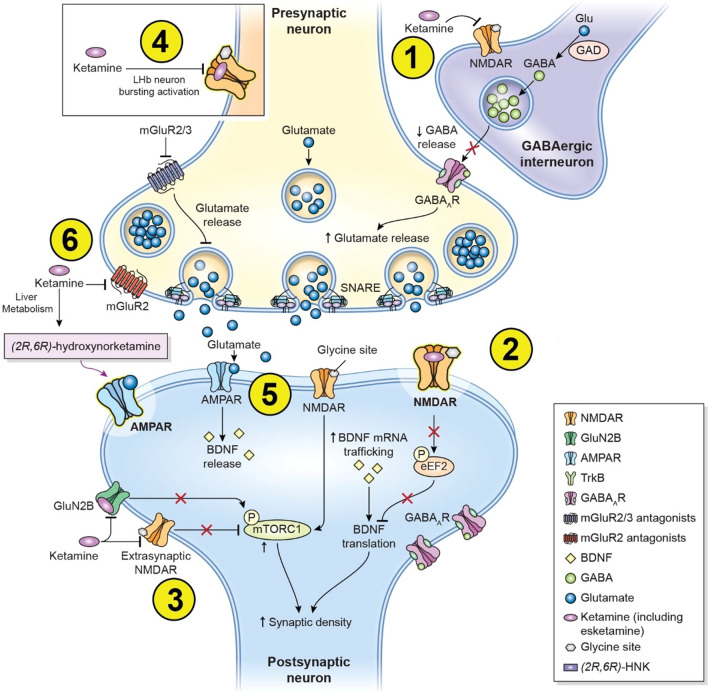
“AMPA receptor activation in particular has been shown to modulate downstream factors, such as enhancing brain-derived neurotrophic factor (BDNF) release, which activates the tropomyosin receptor kinase B (TrkB) receptor and, subsequently, mammalian target of rapamycin complex 1 (mTORC1) [16].”
BackgroundKetamine blocks bursting in the lateral habenula to rapidly relieve depression
Yang, Y., Cui, Y., Sang, K., Dong, Y., Ni, Z., Ma, S., & Hu, H. (2018) · Nature · doi:10.1038/nature25509 · Cited by 1,036 · cited 1×
“A recent study demonstrated that blockade of NMDA-dependent burst activity in the lateral habenula (LHb) mediated antidepressantlike effects in animals [9], and neurochemical and functional imaging studies have also corroborated that ketamine treatment partly reverses the glutamatergic and gamma aminobutyric acid (GAB…”
BackgroundDiazgranados, N., Ibrahim, L., Brutsche, N. E., Newberg, A., Kronstein, P., Khalife, S., Kammerer, W. A., Quezado, Z., Luckenbaugh, D. A., Salvadore, G., et al. (2010) · Archives of General Psychiatry · doi:10.1001/archgenpsychiatry.2010.90 · Cited by 963 · cited 1×
“In two randomized, placebo-controlled, crossover studies (n = 15 and n = 18), ketamine significantly improved depressive symptoms compared to placebo; effects were observed within 40 min and lasted through three days post-infusion [30, 31].”
BackgroundSelf-citationPopova, V., Daly, E. J., Trivedi, M., Cooper, K., Lane, R., Lim, P., Mazzucco, C., Hough, D., Thase, M. E., Shelton, R. C., et al. (2019) · American Journal of Psychiatry · doi:10.1176/appi.ajp.2019.19020172 · Cited by 904 · cited 1×
“The TRANSFORM-2 study was a four-week, randomized, placebo-controlled, double-blind Phase 3 clinical trial (n = 223) that included an antidepressant medication taper and randomization to either twice-weekly intranasal esketamine, flexibly dosed at 56 or 84 mg, or a placebo nasal spray, both administered in conjunction…”
Method
Research works printed but not linked: 2
- 74. Orhurhu VJ, Vashisht R, Claus LE, Cohen SP. Ketamine toxicity [Updated 2021 Jul 25]. StatPearls [Internet]. Treasure Island (FL): StatPearls Publishing; 2021. https://ncbi.nlm.nih.gov/books/NBK541087/. Accessed 25 Jul 2021.
- 76. Rosenbaum SB, Gupta V, Palacios JL. Ketamine. StatPearls [Internet]. Treasure Island (FL): StatPearls Publishing; 2021. https://www.ncbi.nlm.nih.gov/books/NBK470357. Accessed 19 Feb 2021.
Cited by
Ketamine: Mechanisms and Relevance to Treatment of Depression
Kim, J., Suzuki, K., Kavalali, E. T., & Monteggia, L. M. (2023) · Annual Review of Medicine · doi:10.1146/annurev-med-051322-120608 · Cited by 148
Leal, G. C., Souza-Marques, B., Mello, R. P., Bandeira, I. D., Caliman-Fontes, A. T., Carneiro, B. A., Faria-Guimarães, D., Guerreiro-Costa, L. N. F., Jesus-Nunes, A. P., Silva, S. S., et al. (2023) · Journal of Affective Disorders · doi:10.1016/j.jad.2023.02.151 · Cited by 62
Simmatis, L. E. R., Russo, E. E., Geraci, J., Harmsen, I. E., & Samuel, N. (2023) · npj Mental Health Research · doi:10.1038/s44184-023-00038-7 · Cited by 69
“Newer therapies, including psilocybin and ketamine or intranasal esketamine, are among several compounds being evaluated for their ability to treat MDD, particularly in treatment-resistant depression 3 – 5 .”
BackgroundPardossi, S., Fagiolini, A., & Cuomo, A. (2024) · International Journal of Molecular Sciences · doi:10.3390/ijms252313098 · Cited by 51
“Thus, ketamine impacts neuroplasticity, including through BDNF, in both a rapid and sustained manner [18,19,77] (Figure 3).”
InfluentialApplication of Intranasal Administration in the Delivery of Antidepressant Active Ingredients
Jin, Z., Han, Y., Zhang, D., Li, Z., Jing, Y., Hu, B., & Sun, S. (2022) · Pharmaceutics · doi:10.3390/pharmaceutics14102070 · Cited by 48
Ketamine, an Old–New Drug: Uses and Abuses
Vujović, K. S., Jotic, A. D., Medić, B., Srebro, D., Vujović, A., Žujović, J. T., Opanković, A., & Vučković, S. (2023) · Pharmaceuticals · doi:10.3390/ph17010016 · Cited by 55
“This effect is mainly due to ketamine’s inhibitory action on the NMDA receptor that leads to significant increases in glutamate levels in the cortex [92].”
BackgroundAkbar, D., Rhee, T. G., Ceban, F., Ho, R., Teopiz, K. M., Cao, B., Subramaniapillai, M., Kwan, A. T. H., Rosenblat, J. D., & McIntyre, R. S. (2023) · CNS Drugs · doi:10.1007/s40263-023-01032-5 · Cited by 38
“Unlike ketamine and esketamine, AXS-05 does not need to be delivered intravenously or intranasally nor does it need to be monitored with the Risk Evaluation and Mitigation Strategy as with esketamine (Spravato®) [19, 33].”
BackgroundInfluentialRaja, S. M., Guptill, J. T., Mack, M., Peterson, M., Byard, S. J., Twieg, R. J., Jordan, L., Rich, N., Castledine, R. A., Bourne, S. L., et al. (2024) · Clinical Pharmacology & Therapeutics · doi:10.1002/cpt.3391 · Cited by 40
“6,10 In hopes of establishing a reasonably comparable study to standard ketamine therapy, we established a solution-based drug product of RR-HNK and a preclinical toxicity assessment that enabled safety evaluations at doses up to 4 mg/kg with a frequency of four doses given over 2 weeks.”
Self-citationFunctional crosstalk of the glycine transporter GlyT1 and NMDA receptors
Piniella, D., & Zafra, F. (2023) · Neuropharmacology · doi:10.1016/j.neuropharm.2023.109514 · Cited by 38
Established and emerging treatments for eating disorders
Bryson, C., Douglas, D., & Schmidt, U. H. (2024) · Trends in Molecular Medicine · doi:10.1016/j.molmed.2024.02.009 · Cited by 48
Murphy, J., Pak, S., Shteynman, L., Winkeler, I. T., Jin, Z., Kaczocha, M., & Bergese, S. D. (2024) · International Journal of Molecular Sciences · doi:10.3390/ijms25094722 · Cited by 45
“Ketamine is an NMDA-receptor antagonist that is frequently employed as a dissociative anesthetic and has been more recently utilized for treatment-resistant depression and other psychiatric conditions [89,90].”
BackgroundWang, H., Wang, L., Gao, J., & Zhou, F. (2025) · BMC Geriatrics · doi:10.1186/s12877-025-05787-y · Cited by 41
“The reduction in anxiety and depression scores following esketamine administration is particularly noteworthy given the implications of psychological well-being on postoperative recovery, functional outcomes, and overall quality of life [36, 37].”
Efficacy and Safety of Psychedelics in Treating Anxiety Disorders
Feulner, L., Sermchaiwong, T., Rodland, N., & Galarneau, D. W. (2023) · Ochsner Journal · doi:10.31486/toj.23.0076 · Cited by 34
Parikh, S. V., Aaronson, S. T., Mathew, S. J., Alva, G., DeBattista, C., Kanes, S., Lasser, R. A., Bullock, A. E., Kotecha, M., Jung, J., et al. (2023) · Neuropsychopharmacology · doi:10.1038/s41386-023-01751-9 · Cited by 38
“Several approved and investigational ADTs exhibit their effects on GABAergic/ glutamatergic signaling, which are thought to contribute to the restoration of excitatory-inhibitory balance in the brain [21, 23, 24].”
Larrea, A., Sánchez-Sánchez, L., Díez-Martín, E., Elexpe, A., Torrecilla, M., Astigarraga, E., & Barreda‐Gómez, G. (2024) · Journal of Clinical Medicine · doi:10.3390/jcm13061727 · Cited by 35
The separation distress hypothesis of depression – an update and systematic review
Watt, D. F. (2023) · Neuropsychoanalysis · doi:10.1080/15294145.2023.2240340 · Cited by 26
Madsen, C. A., Navarro, M. L., Elfving, B., Kessing, L. V., Ċastrén, E., Mikkelsen, J. D., & Knudsen, G. M. (2024) · European Neuropsychopharmacology · doi:10.1016/j.euroneuro.2024.06.008 · Cited by 28
The effect of older age on outcomes of rTMS treatment for treatment-resistant depression
Leuchter, M. K., Citrenbaum, C., Wilson, A. C., Tibbe, T. D., JACKSON, N. J., Krantz, D. E., Wilke, S. A., Corlier, J., Strouse, T. B., Hoftman, G. D., et al. (2024) · International Psychogeriatrics · doi:10.1017/s1041610224000462 · Cited by 28
“Ketamine has more recently shown promise, though it is associated with signi fi cant side effects including dissociation, cravings, and cardiovascular effects such as hypertension in addition to its unclear durability of bene fi t (Anand et al ., 2023; Subramanian et al ., 2023; Yavi et al ., 2022).”
BackgroundKolevzon, A., Levy, T., Barkley, S. B., Bedrosian‐Sermone, S., Davis, M. M., Foss‐Feig, J. H., Halpern, D. B., Keller, K., Kostić, A., Layton, C., et al. (2022) · Human Genetics and Genomics Advances · doi:10.1016/j.xhgg.2022.100138 · Cited by 27
“The informed consent procedure included extensive discussion of potential risks of ketamine, including sedation, headache, nausea, elevated blood pressure and heart rate, and perceptual disturbances.(27) While this study involved only a single dose, caregivers were also informed that repeated ketamine use has been ass…”
Bruton, A. M., Wesemann, D. G., Machingo, T. A., Majak, G., Johnstone, J. M., & Marshall, R. D. (2024) · European Child & Adolescent Psychiatry · doi:10.1007/s00787-024-02458-y · Cited by 26
“An important research and clinical question [61] that warrants further rigorous study and clinical guidelines is how to sustain the clinical effects of ketamine.”
Antos, Z., Żukow, X., Bursztynowicz, L., & Jakubów, P. (2024) · International Journal of Molecular Sciences · doi:10.3390/ijms252413658 · Cited by 21
Postsynaptic Proteins at Excitatory Synapses in the Brain—Relationship with Depressive Disorders
Samojedny, S., Czechowska, E., Pańczyszyn-Trzewik, P., & Sowa-Kućma, M. (2022) · International Journal of Molecular Sciences · doi:10.3390/ijms231911423 · Cited by 23
“Zarate et al. used the same protocol of ketamine treatment (dose, route of administration) in TRD patients.”
BackgroundInfluentialHack, L. M., Zhang, X., Heifets, B. D., Suppes, T. M., van Roessel, P., Yesavage, J. A., Gray, N. J., Hilton, R. A., Bertrand, C., Rodríguez, C. I., et al. (2023) · Nature Communications · doi:10.1038/s41467-023-42141-5 · Cited by 24
Namiot, E. D., Smirnovová, D., Sokolov, A. V., Chubarev, V. N., Tarasov, V. V., & Schiöth, H. B. (2024) · Translational Psychiatry · doi:10.1038/s41398-024-03031-6 · Cited by 27
Depression in Adolescence and Brain-Derived Neurotrophic Factor
Lee, B., Shin, E., Song, I., & Chang, B. (2022) · Frontiers in Molecular Neuroscience · doi:10.3389/fnmol.2022.947192 · Cited by 25
Testosterone Replacement Therapy in the Treatment of Depression
Anderson, D. J., Vazirnia, P., Loehr, C. A., Sternfels, W., Hasoon, J. J., Viswanath, O., Kaye, A. D., & Urits, I. (2022) · Health Psychology Research · doi:10.52965/001c.38956 · Cited by 21
Clinical pharmacological innovation in the treatment of depression
Witkin, J. M., Golani, L. K., & Smith, J. L. (2023) · Expert Review of Clinical Pharmacology · doi:10.1080/17512433.2023.2198703 · Cited by 17
Salvetti, G., Saccenti, D., Moro, A. S., Lamanna, J., & Ferro, M. (2024) · Brain Sciences · doi:10.3390/brainsci14080829 · Cited by 18
“…rates among MDD patients [31], its therapeutic effects are closely associated with the development of tolerance, dependence, and the potential risk of abuse, as well as the sporadic occurrence of severe adverse events (e.g., dissociation and sedation) and withdrawal-related symptoms [32,33].”
BackgroundO'Connor, S. M., Sleebs, B. E., Street, I. P., Flynn, B. L., Baell, J. B., Coles, C., Quazi, N., Paul, D., Poiraud, E., Huyard, B., et al. (2024) · Neuropharmacology · doi:10.1016/j.neuropharm.2024.109836 · Cited by 15
Driver, C., Jackson, T., Lagopoulos, J., & Hermens, D. F. (2022) · Progress in Neuro-Psychopharmacology and Biological Psychiatry · doi:10.1016/j.pnpbp.2022.110609 · Cited by 18
Entactogen Effects of Ketamine: A Reverse-Translational Study
Hess, E. M., Greenstein, D. K., Hutchinson, O. L., Zarate, C. A., & Gould, T. D. (2024) · American Journal of Psychiatry · doi:10.1176/appi.ajp.20230980 · Cited by 17
Self-citationKetamine in treating opioid use disorder and opioid withdrawal: a scoping review
Shen, M. R., Campbell, D. E., Kopczynski, A., Maddams, S., Rosenblum, N., Nigam, K. B., & Suzuki, J. (2025) · Frontiers in Psychiatry · doi:10.3389/fpsyt.2025.1552084 · Cited by 19
“In recent years, there has been increased interest in expanding the use of ketamine and its various forms, with FDA approval garnered for the enantiomer, esketamine, in treatment-resistant depression in 2019 (5).”
Imperio, C. G., LEVIN, F. R., & Martínez, D. (2024) · American Journal of Psychiatry · doi:10.1176/appi.ajp.20231023 · Cited by 18
The Melanocortin System: A Promising Target for the Development of New Antidepressant Drugs
Markov, D. D., Dolotov, O. V., & Grivennikov, I. A. (2023) · International Journal of Molecular Sciences · doi:10.3390/ijms24076664 · Cited by 14
“In the case of ketamine, it has been shown that its administration leads to an improvement in symptoms within a few hours [31–33].”
BackgroundKántor, S., Lanigan, M., Giggins, L., Lione, L. A., Magomedova, L., de Lannoy, I., Upton, N., & Duxon, M. S. (2023) · Behavioural Brain Research · doi:10.1016/j.bbr.2023.114473 · Cited by 13
“A growing body of evidence suggests that the sustained antidepressant effects of ketamine are achieved by reversing the glutamatergic and GABAergic dysfunction found in patients with depression [10,12 – 14].”
A review of diffusion MRI in mood disorders: mechanisms and predictors of treatment response
Al‐Sharif, N., Zavaliangos‐Petropulu, A., & Narr, K. L. (2024) · Neuropsychopharmacology · doi:10.1038/s41386-024-01894-3 · Cited by 15
Major challenges in youth psychopathology: treatment-resistant depression. A narrative review
Menculini, G., Cinesi, G., Scopetta, F., Cardelli, M., Caramanico, G., Balducci, P. M., Giorgi, F. D., Moretti, P., & Tortorella, A. A. V. (2024) · Frontiers in Psychiatry · doi:10.3389/fpsyt.2024.1417977 · Cited by 20
“Is should also be noticed that the long-term impact of these drugs on young people ’ s physical, cognitive, and emotional development has not been fully studied yet (193).”
BackgroundComparing the adverse effects of ketamine and esketamine between genders using FAERS data
Yang, X., & Chen, D. (2024) · Frontiers in Pharmacology · doi:10.3389/fphar.2024.1329436 · Cited by 16
Gαs, adenylyl cyclase, and their relationship to the diagnosis and treatment of depression
Schappi, J. M., & Rasenick, M. M. (2022) · Frontiers in Pharmacology · doi:10.3389/fphar.2022.1012778 · Cited by 11
“Nasal esketamine (S-ketamine) has recently been approved for depression and, in contrast to traditional antidepressants which take weeks to manifest clinical effects, esketamine (as well as racemic ketamine given intravenously or sub-lingually) has almost immediate effects lasting up to a week (Yavi et al., 2022).”
BackgroundBrandão, A. A. C., de Deus, D. L. S., Filho, L. A. M. D. S. D., Menezes, P. M. N., Massaranduba, A. B. R., Silva, F. S., & Ribeiro, L. A. D. A. (2023) · Pharmacology Biochemistry and Behavior · doi:10.1016/j.pbb.2023.173674 · Cited by 12
Brakatselos, C., Polissidis, A., Ntoulas, G., Asprogerakas, M.-Z., Tsarna, O., Vamvaka-Iakovou, A., Nakas, G., Delis, A. D., Tzimas, P., Skaltsounis, A., et al. (2024) · Neuropsychopharmacology · doi:10.1038/s41386-024-01977-1 · Cited by 11
Deng, Q., Parker, E., Wu, C., Zhu, L., Liu, T. C., Duan, R., & Yang, L. (2024) · Aging and Disease · doi:10.14336/ad.2024.0239 · Cited by 12
“Based on these favorable results, the FDA approved (S)- ketamine as an adjunctive treatment for depressive disorder [24].”
Stelmaszczyk, P., Białkowska, K., Sekuła, K., Stanaszek, R., & Wietecha‐Posłuszny, R. (2024) · Monatshefte für Chemie - Chemical Monthly · doi:10.1007/s00706-024-03237-w · Cited by 9
Ji, X., Huang, Z., Zhou, C., Wang, Y., Geng, D., Zhang, G.-L., Kang, Y., Cui, R., Wang, J., & Zhang, T. (2025) · Cell Biology and Toxicology · doi:10.1007/s10565-024-09975-1 · Cited by 13
“By delving deeper into the mechanisms of esketamine action, identification of fresh routes and goals aiming at mitigating neuropathic discomfort and correlated feelings of melancholy is viable (Yavi et al. 2022).”
Ketamine in Clinical Practice: Transitioning from Anesthetic Agent to Psychiatric Therapeutic
Quintero, J.-M., Bustos, R., Lechtig, S., Beltran, S., & Zarate, C. A. (2025) · Cambridge University Press eBooks · doi:10.1017/9781009585330.007 · Cited by 13
Self-citationHaikazian, S., McIntyre, R. S., Meshkat, S., Kratiuk, K., Llach, C.-D., Orsini, D. K., Luch, S. D. D., & Rosenblat, J. D. (2025) · Psychiatry Research · doi:10.1016/j.psychres.2025.116691 · Cited by 10
“10 15 Moreover, the clinical improvement in depression reported with IV racemic ketamine is highly clinically meaningful.”
Five-year outcomes of psilocybin-assisted therapy for Major Depressive Disorder
Davis, A. K., DellaCrosse, M. A., Sepeda, N. D., Levin, A. W., Cosimano, M. P., Shaub, H., Washington, T., Gooch, P. M., Gilead, S., Gaughan, S. J., et al. (2025) · Journal of Psychedelic Studies · doi:10.1556/2054.2025.00461 · Cited by 11
Gałuszko‐Węgielnik, M., Jakuszkowiak‐Wojten, K., Wilkowska, A., & Cubała, W. J. (2023) · The World Journal of Biological Psychiatry · doi:10.1080/15622975.2023.2227901 · Cited by 11
“These psychomimetic effects, can increase suicidal ideation in some individuals (Yavi et al. 2022).”
BackgroundImpact of the gut microbiota-Th17 cell axis on inflammatory depression
Jia, X., Wang, J., Ren, D., Zhang, K., Zhang, H., Jin, T., & Wu, S. (2024) · Frontiers in Psychiatry · doi:10.3389/fpsyt.2024.1509191 · Cited by 10
Klučková, T., Nikolič, M., Tylš, F., Viktorin, V., Vejmola, Č., Viktorinová, M., Bravermanová, A., Androvičová, R., Andrashko, V., Korčák, J., et al. (2025) · Pharmacological Reports · doi:10.1007/s43440-025-00742-5 · Cited by 10
Zhang, Y., Cai, Q., Wang, L., & Zhang, B. (2025) · Neuropsychiatric Disease and Treatment · doi:10.2147/ndt.s502090 · Cited by 9
“23 Compared to other new antidepressants, esketamine stands out for its ability to enhance neuroplasticity and reduce neuronal death, offering a unique therapeutic approach.”
Antidepressants and the endogenous opioid system
Fricker, L. D., Osman, A., Gupta, A., Gomes, I., & Devi, L. A. (2025) · Biochemical Pharmacology · doi:10.1016/j.bcp.2025.117392 · Cited by 12
Palhas, M. L. C., Corne, R., & Mongeau, R. (2025) · Progress in Neuro-Psychopharmacology and Biological Psychiatry · doi:10.1016/j.pnpbp.2025.111533 · Cited by 12
Azari, L., Hemati, H., Tavasolian, R., Shahdab, S., Tomlinson, S. M., Babilonia, M. B., Huang, J. J., Tometich, D. B., Turner, K. L., Anaraki, K. S., et al. (2024) · Healthcare · doi:10.3390/healthcare12161560 · Cited by 16
“Ketamine was well tolerated across all studies that examined the side effects associated with ketamine administration.”
Jaber, M. H., Kahwaji, H., Nasr, S., Baz, R., Kim, Y., & Fakhoury, M. (2024) · Advances in experimental medicine and biology · doi:10.1007/978-981-97-4402-2_18 · Cited by 9
Spravato for Treatment-Resistant Depression: Efficacy and Sexual Side Effect Profile
Raza, A. A., Ahmed, G., Zafar, H., Akhtar, S. O., Mobin, M. B., & Samadi, A. (2025) · Neuropsychiatric Disease and Treatment · doi:10.2147/ndt.s548944 · Cited by 6
“40 Consequently, esketamine administration requires rigorous monitoring.”
Hippocampal subfield volumes in treatment resistant depression and serial ketamine treatment
Zavaliangos‐Petropulu, A., McClintock, S. M., Joshi, S. H., Taraku, B., Al‐Sharif, N., Espinoza, R. T., & Narr, K. L. (2023) · Frontiers in Psychiatry · doi:10.3389/fpsyt.2023.1227879 · Cited by 9
A scientometric analysis of research on the role of NMDA receptor in the treatment of depression
Chen, X., Wang, X., Li, C., Zhang, Y., Feng, S., & Xu, S. (2024) · Frontiers in Pharmacology · doi:10.3389/fphar.2024.1394730 · Cited by 9
“In addition, activation of AMPAR may modulate signaling pathways involved in synaptic plasticity, including promoting the release of BDNF and triggering the activation of tropomyosin receptor kinase B (TrkB) and mTORC1 (Yavi et al., 2022).”
BackgroundElersič, K., Banjac, A., Živin, M., & Zorović, M. (2024) · PLoS ONE · doi:10.1371/journal.pone.0299379 · Cited by 7
“Ketamine, a fast-acting antidepressant, has shown its value as a treatment option for patients suffering from treatment-resistant depression and suicidality [1].”
BackgroundJuneja, K., Afroze, S., Goti, Z., Sahu, S., Asawa, S., Bhuchakra, H. P., Natarajan, B., & Pandey, S. (2024) · Discover Mental Health · doi:10.1007/s44192-024-00077-2 · Cited by 7
“The illegal use of ketamine has increased, especially among young adults and those looking to treat their depressive symptoms [7].”
BackgroundGold, N. D., Mallard, A. J., Hermann, J. C., Zeifman, R. J., Pagni, B. A., Bogenschutz, M. P., & Ross, S. (2023) · Journal of Palliative Medicine · doi:10.1089/jpm.2022.0604 · Cited by 6
“42,43 Due to these similarities, as well its theorized neuroprotective properties, ketamine is included in our review alongside serotonergic psychedelics.”
No time to lose: the current state of research in rapid-acting psychotherapeutics
Gordon, J. A., Volkow, N. D., & Koob, G. F. (2023) · Neuropsychopharmacology · doi:10.1038/s41386-023-01627-y · Cited by 7
“And ketamine, esketamine and brexanolone have each demonstrated the potential to resolve depressive symptoms and suicidality in hours [5, 6].”
BackgroundPugh, D., Saunders, R., Jones, A., Dunn, B. D., & Buckman, J. E. J. (2025) · Journal of Affective Disorders · doi:10.1016/j.jad.2025.120165 · Cited by 10
Bodnar, M. S., Barber, S., Jim, H., & Huang, J. (2024) · Journal of Anesthesia and Translational Medicine · doi:10.1016/j.jatmed.2024.10.005 · Cited by 7
“2 While the antidepressant effects of ketamine are well reported, 12 the efficacy of different formulations, including intravenous, intranasal, and oral administrations, and their effect on differing populations, including oncologic patients, remains unclear.”
Neuroplasticity: Pathophysiology and Role in Major Depressive Disorder
Kadiyala, S., Bhamidipati, P., & Malla, R. R. (2024) · Critical Reviews™ in Oncogenesis · doi:10.1615/critrevoncog.2024051197 · Cited by 9
A Review of Treatment Modalities for Comorbid Neuropathic Pain and Depression
Chen, Z., Cheng, T., Yang, H., Gao, Y., & Ma, X. (2025) · Journal of Integrative Neuroscience · doi:10.31083/jin26523 · Cited by 6
Whinkin, E., Eparwa, T. R. J., Julseth, M. C., Schneider, A., & Aggarwal, S. K. (2023) · Frontiers in Psychiatry · doi:10.3389/fpsyt.2023.1160442 · Cited by 6
Research trends and hotspots of ketamine from 2014 to 2023: a bibliometric analysis
Wang, Y., Chang, S., & Chen, D. (2024) · Frontiers in Neuroscience · doi:10.3389/fnins.2024.1407301 · Cited by 9
“Additionally, a recent meta-analysis revealed that ketamine administration did not result in a significant improvement in symptoms of PTSD (Borgogna et al., 2024).”
BackgroundInfluentialLee, M. T., Peng, W., Hsu, T., Chu, T., Teng, Y., Wu, C., Lee, Y., Lan, Y.-Y., & Ho, Y. (2025) · Journal of Psychopharmacology · doi:10.1177/02698811251351611 · Cited by 4
“Notably, in contrast to interventions based on monoamines, ketamine, an agent associated with the glutamatergic system, has been shown to rapidly alleviate mood symptoms (Alexander et al., 2023; Medeiros et al., 2023; Yavi et al., 2022).”
Ginsenoside compound K ameliorates depressive-like behaviors by targeting kynurenine 3-monooxygenase
Li, W., Kong, Z., Yang, L., Chen, F., Chen, Y., Han, J., Sheng, C., Li, Z., Hu, Y., Zhao, Y., et al. (2025) · Phytomedicine · doi:10.1016/j.phymed.2025.157335 · Cited by 6
Therapeutic potential of cannabidiol in depression
Guldager, M. B., Filho, A. M. C., Biojone, C., & Joca, S. R. L. (2024) · International review of neurobiology · doi:10.1016/bs.irn.2024.06.001 · Cited by 7
Elersič, K., Banjac, A., Živin, M., & Zorović, M. (2025) · Journal of Psychiatric Research · doi:10.1016/j.jpsychires.2025.02.061 · Cited by 5
Barbara, A. M., Xie, W., Mahood, Q., & Hamson, A. (2024) · Canadian Journal of Health Technologies · doi:10.51731/cjht.2024.817 · Cited by 5
Ketamine Integration Chaplaincy: A Novel Spiritual Care Approach to Psychedelic Integration
Breau, J. A., Gillis‐Smith, P., & Deonauth, T. (2025) · Anthropology of Consciousness · doi:10.1111/anoc.70012 · Cited by 3
Taraku, B., Nomi, J. S., Zavaliangos‐Petropulu, A., Al‐Sharif, N., Pfeiffer, P., Norris, V., Joshi, S. H., Espinoza, R. T., Uddin, L. Q., & Narr, K. L. (2025) · Imaging Neuroscience · doi:10.1162/imag.a.936 · Cited by 3
“Ketamine, a noncompetitive N- methyl- D-aspartate receptor (NMDAR) antagonist, produces robust and fast-acting antidepressant and anti-suicidal effects in TRD patients at sub-anesthetic doses ( Yavi et al., 2022).”
Raymond, B. L., Allen, B. F. S., Freundlich, R. E., Parrish, C. G., Jayaram, J., Wanderer, J. P., Rice, T. W., Lindsell, C. J., Scharfman, K. H., Dear, M. L., et al. (2023) · BMC Anesthesiology · doi:10.1186/s12871-023-02177-y · Cited by 6
“Furthermore, NMDA agonism may play a role in neuronal modification, as ketamine therapy has shown promising improvement in the severity of psychiatric conditions such as refractory depression, post-traumatic stress disorder, and substance use disorders [11].”
BackgroundToo big to fail? Comparing effect sizes of MDMA assisted therapy to unmasking bias
Szigeti, B., Bradley, E., & Woolley, J. D. (2025) · Psychopharmacology · doi:10.1007/s00213-025-06886-9 · Cited by 6
“Ketamine, an NMDA-antagonist dissociative anesthetic, has demonstrated rapid antidepressant effects when given at sub-anesthetic dosages (Yavi et al. 2022 ).”
Understanding the variability in ketamine’s efficacy in managing treatment-resistant depression
Bryan, J. (2024) · Discover Psychology · doi:10.1007/s44202-024-00277-5 · Cited by 3
“…available anaesthetics in rural and developing countries, ketamine has been shown to elicit a significant and sustained improvement in depressive symptoms after administration of a 0.5 mg/kg intravenous infusion (over 40 min) compared to no improvement with a saline-solution placebo [4, 5, 85].”
InfluentialExamining memory reconsolidation as a mechanism of nitrous oxide’s antidepressant action
Williams, E., Taujanskaitė, U., Kamboj, S. K., Murphy, S. E., & Harmer, C. J. (2025) · Neuropsychopharmacology · doi:10.1038/s41386-024-02049-0 · Cited by 45
“At present, the most notable NMDAR antagonist for depression treatment is ketamine [10].”
Fijtman, A., Yavi, M., Vogeley, A., Greenstein, D. K., Gilbert, J. R., & Tovilla‐Zárate, C. A. (2025) · Bipolar Disorders · doi:10.1111/bdi.70027 · Cited by 3
Self-citationCao, Q., Xu, X., Wang, X., He, F., Lin, Y., Guo, D., Bai, W., Guo, B., Zheng, X., & Liu, T. (2025) · Translational Psychiatry · doi:10.1038/s41398-025-03375-7 · Cited by 6
Case Report: Successful management of psychogenic non-epileptic seizures with intranasal esketamine
Hashmi, M., Mugunthan, P., Jain, P., Nimmakayala, T., & Alnaher, S. (2025) · Frontiers in Psychiatry · doi:10.3389/fpsyt.2025.1527166 · Cited by 5
Zhang, S., Afshar, H. T., Colvonen, P. J., Nokes, B. T., Compton, J. N., Mishra, J., Bismark, A. W., Ramanathan, D., & Koloski, M. F. (2025) · CNS Drugs · doi:10.1007/s40263-025-01180-w · Cited by 6
de Sousa-Silva, A. N., Moura, C. D. A., Torres, C. I. D. O., Marques, V. B., Silva, J. M. D. N., Soares, B. L., Silva, S. R. B., Coelho, N. L. G., Palhano-Fontes, F., de Araújo, D. B., et al. (2026) · Neuropharmacology · doi:10.1016/j.neuropharm.2026.110947 · Cited by 2
The role of ketamine as an antidepressant agent
Senapathi, T. G. A., Widnyana, M. G., Aryani, L. N. A., & Ryalino, C. (2023) · Bali Journal of Anesthesiology · doi:10.4103/bjoa.bjoa_81_23 · Cited by 3
The Role of Ketamine in Treatment-resistant Depression: A Narrative Review
Reddy, A., Patel, S. G., Barik, A. K., Thappa, P., Jangra, K., Kaur, K., Chauhan, R., & Luthra, A. (2024) · Journal of Exploratory Research in Pharmacology · doi:10.14218/jerp.2024.00003 · Cited by 4
Banzato, M., Furlan, A., Locatelli, P., Sgrignani, J., Ongaro, A., Dolmella, A., Martin, S. D., Comai, S., Cavalli, A., Inturrisi, C. E., et al. (2025) · Journal of Medicinal Chemistry · doi:10.1021/acs.jmedchem.4c02605 · Cited by 2
Ladha, K. S., Lee, J., Mattina, G. F., Pazmino‐Canizares, J., Wijeysundera, D. N., Nezhad, F. G., Tassone, V. K., Adamsahib, F., Lou, W. Y. W., Kennedy, S. H., et al. (2025) · BJPsych Open · doi:10.1192/bjo.2025.10823 · Cited by 3
“31,32 Participants continued to receive routine psychiatric care and treatment throughout the study, as determined by the participant ’ s psychiatrist.”
Clinical anesthetic effect of esketamine on children undergoing tonsillectomy
Xiang, S., Zeng, P., Wang, Z., Wu, S., & Li, C. (2023) · Molecular & Cellular Toxicology · doi:10.1007/s13273-023-00366-x · Cited by 2
“Compared with ketamine, esketamine can achieve the same anesthetic effect with only 1/2 of the dose of ketamine, and it has a rapid effect, less respiratory depression and fewer adverse reactions (Chu et al. 2022; Yavi et al. 2022).”
Corvo, C., Goutal, S., Mendez-David, I., Leterrier, S., Caille, F., Saba, W., Colle, R., Corruble, E., Lebon, V., Bottlaender, M., et al. (2026) · Molecular Psychiatry · doi:10.1038/s41380-025-03369-3 · Cited by 1
Uso de la ketamina endovenosa en anestesiología: revisión de la evidencia y mejores prácticas
Riquene, H. M. M., & Martínez, M. G. (2023) · Revista Chilena de Anestesia · doi:10.25237/revchilanestv52n6-03 · Cited by 1
Gil, T., & Bonetti, T. C. (2024) · Journal of Affective Disorders Reports · doi:10.1016/j.jadr.2024.100809 · Cited by 3
Navigating the Intersection of Technology and Depression Precision Medicine
Irmak-Yazicioglu, M. B., & Arslan, A. (2024) · Advances in experimental medicine and biology · doi:10.1007/978-981-97-4402-2_20 · Cited by 1
Winkler, G. A., & Grahame, N. J. (2025) · Alcoholism Clinical and Experimental Research · doi:10.1111/acer.70015 · Cited by 2
“Psychedelic compounds like psilocybin and the dissociative ketamine may be used in human MDD treatment (Dawood Hristova & Pérez-Jover, 2023; Yavi et al., 2022), and the administration of psilocybin (Bogenschutz et al., 2022) or ketamine (Dakwar et al., 2020) in combination with psychotherapy has…”
Beyond surgery: Repurposing anesthetics for treatment of central nervous system disorders
Mielko, J., Pakulska, J., Oszczyk, A., Lustyk, K., Pytka, K., & Sałaciak, K. (2025) · Progress in Neuro-Psychopharmacology and Biological Psychiatry · doi:10.1016/j.pnpbp.2025.111386 · Cited by 1
Almog, S., Garcia‐Romeu, A., Walker, K. A., Weiner, M. D., & Berry, M. S. (2025) · European Journal of Trauma & Dissociation · doi:10.1016/j.ejtd.2025.100572 · Cited by 2
Shi, Z.-M., Huang, X., Zhou, Y., Ning, Y., Ungvari, G. S., Xiang, Y., & Zheng, W. (2025) · Frontiers in Psychiatry · doi:10.3389/fpsyt.2025.1582312 · Cited by 1
“In 2019, the FDA approved esketamine nasal spray in combination with oral antidepressants for treating adults with TRD (46) and in 2020, for treating adults with MDD and acute suicidal ideation or behavior (47).”
Myerson, J., Rufino, K. A., Mathew, S. J., Fletcher, M., Puri, N., & Oh, H. (2025) · Journal of Affective Disorders · doi:10.1016/j.jad.2025.119727 · Cited by 2
Li, C. Q., Hoffman, S. L., Nguyen, H., Vrana, A., Carney, A., Duan, Y., Ma, Z., Zhang, N., Yang, Y., & Lu, H. (2025) · Imaging Neuroscience · doi:10.1162/imag.a.92 · Cited by 1
Smith, G., Piatkowski, T. M., Ferris, J., Bonenti, B., Davies, E., Barratt, M. J., Morgan, C. J. A., WINSTOCK, A. R., & Puljević, C. (2025) · Journal of Psychopharmacology · doi:10.1177/02698811251378509 · Cited by 1
“…antidepressant treatment that has robust evidence showing its short-term efficacy in reducing symptoms of depression (Katalinic et al., 2013; Serafini et al., 2014; Singh et al., 2017; Smith-Apeldoorn et al., 2022; Yavi et al., 2022) and suicidal ideation (Abbar et al., 2022; Witt et al., 2020).”
Metadata
- Authors
- Yavi, M., Lee, H., Henter, I. D., Park, L. T., & Zarate, C. A.
- Affiliations
- National Institutes of Health (US)
- Corresponding author
- Yavi, Mani
- Venue
- Discover Mental Health
- Published
- 2022-04-15
- Volume
- 2
- Issue
- 1
- Pages
- 9-9
- ISSN
- 2731-4383 (ISSN-L)
- PMC
- PMC9010394
- OpenAlex
- W4224044203
- Cited by
- 161
- References
- 87
- Citations by year
- 2026: 30 · 2025: 54 · 2024: 38 · 2023: 31 · 2022: 8
- FWCI
- 4.69
- Type
- journal article
- Language
- en
- Open access
- gold
- doi.org
- Licence
- cc-by
- creativecommons.org/licenses/by/4.0 (tdm)
- creativecommons.org/licenses/by/4.0 (vor)
- Locations
- Discover Mental Health (publishedVersion, cc-by)
- PubMed Central (publishedVersion, cc-by)
- PubMed (publishedVersion)
- Funders
- National Institute of Mental Health (ZIAMH002857)
- National Institutes of Health
- Topics
- Health Sciences › Medicine › Pharmacology (medical) › Treatment of Major Depression
- Health Sciences › Medicine › Psychiatry and Mental health › Electroconvulsive Therapy Studies
- Life Sciences › Neuroscience › Biological Psychiatry › Tryptophan and brain disorders
- Keywords
- ketamine, esketamine, major depressive disorder, treatment-resistant depression, bipolar depression, adjunctive antidepressant therapy, risk evaluation and mitigation strategy, suicidality, obsessive-compulsive disorder, post-traumatic stress disorder, substance abuse, social anxiety disorder, hypertension, mood disorders
About these checks
Registry, retraction, Cites and statistics results are computed, not judged, with one exception: a printed reference that no index lists is read once by a model before it counts as a citation error. Claims are extracted by a model and kept only when their quote appears verbatim in the text; each cited source is then checked, with a model’s help, for whether it says what the claim relies on. Those verdicts can be wrong — read the claim’s quote and the cited source before relying on one.
Statistics and arithmetic are recomputed, not judged.
Confidence bands are shown only for fields calibrated on our annotated test set. None is calibrated yet, so no band is shown.
What counts as a claim ›How we measure confidence ›How we check this ›
Are you an author, or do you see a problem with this page? Request a review
Data sources
Bibliographic data: Semantic Scholar, OpenAlex, Crossref.
Contains information from the Semantic Scholar Academic Graph Datasets, made available under the ODC Attribution License (ODC-BY 1.0).
Semantic Scholar’s data is described in: Kinney, R., et al. (2023). The Semantic Scholar Open Data Platform. arXiv:2301.10140.
