

γ-Aminobutyric acidA receptor regulation: heterologous uncoupling of modulatory site interactions induced by chronic steroid, barbiturate, benzodiazepine, or GABA treatment in culture
Open accessThe DOI matches its Crossref record; 61 of the 62 references it cites were found in a registry or an index.
Abstract
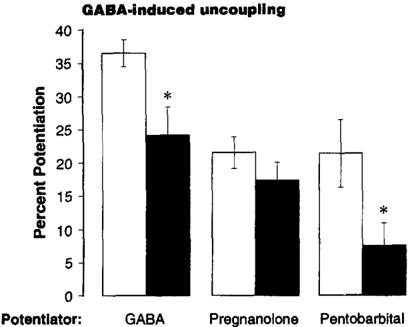
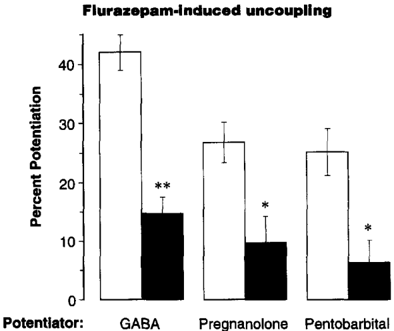
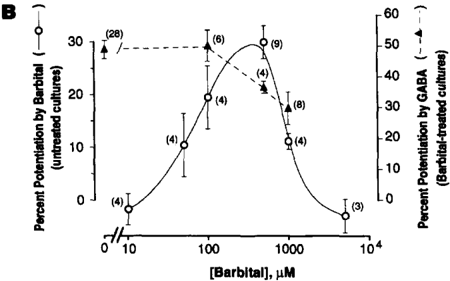
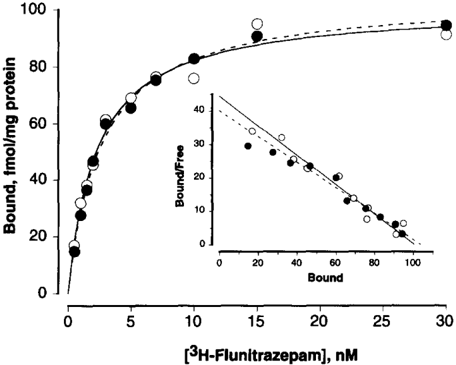
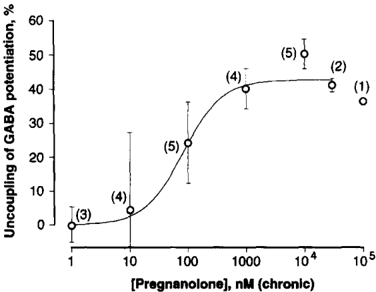
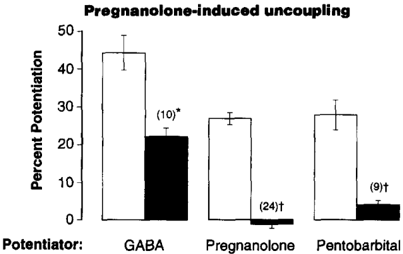
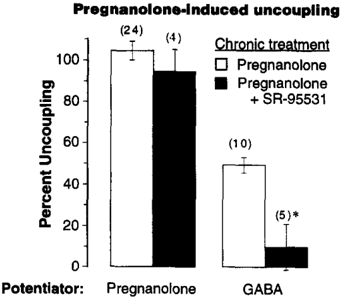
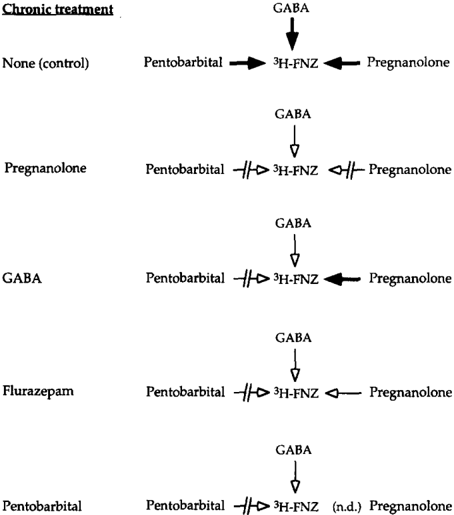
Prolonged administration of anxiolytic, sedative, and anticonvulsant drugs that act through the GABAA receptor (GABAAR) can evoke tolerance and dependence, suggesting the existence of an endogenous mechanism(s) for altering the ability of such agents to interact with the GABAAR. Uncoupling appears to be one such mechanism. This is a decrease in the allosteric interactions between the benzodiazepine (BZD) recognition site and other agonist or modulator sites on the GABAAR, as measured by potentiation of [3H]flunitrazepam ([3H]FNZ) binding. To investigate the mechanism(s) of uncoupling, neuronal cultures were treated chronically with 3 alpha-hydroxy-5 beta-pregnan-20-one (pregnanolone), pentobarbital, flurazepam, or GABA, then tested for enhancement of [3H]FNZ binding by these substances. The results indicate that BZDs, barbiturates, and steroids, as well as GABA itself, are capable of inducing both heterologous and homologous uncoupling. Surprisingly, different chronic drug treatments produce different patterns of homologous and heterologous uncoupling. Chronic exposure to pregnanolone, GABA, flurazepam or pentobarbital induces complete uncoupling of barbiturate-BZD site interactions, partial uncoupling of GABA-BZD site interactions, but different amounts of uncoupling of steroid-BZD site interactions. In addition, the EC50 for pregnanolone-induced homologous uncoupling (1.7 microM) is over an order of magnitude greater than that for heterologous uncoupling of GABA and BZD sites (82 nM). Moreover, heterologous uncoupling by pregnanolone is inhibited by the GABA site antagonist SR-95531, whereas homologous uncoupling by pregnanolone is resistant to SR-95531. Therefore, there are at least two distinct ways in which GABAAR modulatory site interactions can be regulated by chronic drug treatment.
Overview
The claims and statistics of this paper haven’t been checked yet.
Free: it reads the open-access text and checks the first 5 claims that cite a source we can check. Create a free account to check every claim.
Integrity signals
Registry
Cites
Statistics
Figures
Verification
Claims the paper makes
The claims and statistics of this paper haven’t been checked yet.
Free: it reads the open-access text and checks the first 5 claims that cite a source we can check. Create a free account to check every claim.
Claims other papers make about this one
Each is checked against this paper’s own text: does it say what the citing paper says it does?
The cited source doesn’t support the claim as written.
In the citing paper
“However, the uncoupling process is an aspecific process as it can be induced by exposure to different classes of GABAA receptor modulators acting at different modulatory sites, such as neurosteroids and barbiturates [82].”
From Mechanisms Underlying Tolerance after Long-Term Benzodiazepine Use: A Future for Subtype-Selective Receptor Modulators? (2012) · cites this paper as [82]
Checked by a reasoning model — may be wrong.
Experimental — accuracy not yet measured
Self-check
Percentages, sums and reported differences re-computed from the paper’s own numbers.
The self-check needs the paper’s full text.
Citations
Cites
PROTEIN MEASUREMENT WITH THE FOLIN PHENOL REAGENT
Lowry, O., Rosebrough, N., Farr, A. L., & Randall, R. (1951) · Journal of Biological Chemistry · doi:10.1016/s0021-9258(19)52451-6 · Cited by 317,331
Goodman and Gilman's the Pharmacological Basis of Therapeutics
Stigelman, W. H., & Pharm, D. (1986) · Military Medicine · doi:10.1093/milmed/151.1.386 · Cited by 6,782
Paul, S. M., & Purdy, R. H. (1992) · The FASEB Journal · doi:10.1096/fasebj.6.6.1347506 · Cited by 1,319
Importance of a novel GABAA receptor subunit for benzodiazepine pharmacology
Pritchett, D. B., Sontheimer, H., Shivers, B. D., Ymer, S., Kettenmann, H., Schofield, P. R., & Seeburg, P. H. (1989) · Nature · doi:10.1038/338582a0 · Cited by 1,293
Selective antagonists of benzodiazepines
Hunkeler, W., Möhler, H., Pieri, L., Polc, P., Bonetti, E. P., Cumin, R., Schaffner, R., & Haefely, W. (1981) · Nature · doi:10.1038/290514a0 · Cited by 1,232
Goodman and Gilman's The Pharmacological Basis of Therapeutics
Hastings, R. C., & Long, G. W. (1991) · JAMA · doi:10.1001/jama.1991.03460200114048 · Cited by 1,060
Non-genomic and genomic effects of steroids on neural activity
McEwen, B. S. (1991) · Trends in Pharmacological Sciences · doi:10.1016/0165-6147(91)90531-v · Cited by 722
Jerram, T. C. (1981) · Side Effects of Drugs Annual · doi:10.1016/s0378-6080(81)80009-8 · Cited by 690
Drugs effective in the therapy of the epilepsies
Tw, R. (1985) · Medical Entomology and Zoology · Cited by 522
Amin, J., & Weiss, D. S. (1993) · Nature · doi:10.1038/366565a0 · Cited by 426
Research works printed but not linked: 3
- Browning, M.D., Bureau, M., Dudek, E.M. and Olsen, R.W., Pro- tein kinase C and cAMP-dependent protein kinase phosphorylate the fl-subunit of the purified y-aminobutyric acid A receptor, Proc. Natl. Acad. Sci. USA, 97 (1990) 1315-1318.
- Friedman, L.K., Gibbs, %% and Farb, D.H., Homologous and heterologous uncoupling of the GABA A receptor complex by GABA, 3ot-OH-DHP, flurazepam, and pentobarbital in culture, Soc. Neu- rosci. Abstr., 16 (1990) 1038.
- Roca, D.J., Rozenberg, I. and Farb, D.H., Homologous and heterolo- gous regulation of the GABA/benzodiazepine receptor complex, Soc. Neurosci. Abstr., 14 (1988) 345.
Cited by
Ethanol and neurotransmitter interactions—from molecular to integrative effects
Faingold, C. L., N'Gouemo, P., & Riaz, A. (1998) · Progress in Neurobiology · doi:10.1016/s0301-0082(98)00027-6 · Cited by 265
Neurosteroid regulation of GABAA receptors: Focus on the α4 and δ subunits
Smith, S. S., Shen, H., Gong, Q. H., & Zhou, X. (2007) · Pharmacology & Therapeutics · doi:10.1016/j.pharmthera.2007.03.008 · Cited by 244
Löscher, W., & Schmidt, D. (2006) · Epilepsia · doi:10.1111/j.1528-1167.2006.00607.x · Cited by 239
Vinkers, C. H., & Olivier, B. (2012) · Advances in Pharmacological Sciences · doi:10.1155/2012/416864 · Cited by 195
Reddy, D. S., & Rogawski, M. A. (2000) · The Journal of Pharmacology and Experimental Therapeutics · doi:10.1016/s0022-3565(24)39026-3 · Cited by 152
Follesa, P., Serra, M., Cagetti, E., Pisu, M. G., Porta, S., Floris, S., Massa, F., Sanna, E., & Biggio, G. (2000) · Molecular Pharmacology · doi:10.1016/s0026-895x(24)23238-7 · Cited by 128
Smith, S. S. (2002) · Steroids · doi:10.1016/s0039-128x(01)00170-2 · Cited by 98
Allopregnanolone Levels and Symptom Improvement in Severe Premenstrual Syndrome
Freeman, E. W., Frye, C. A., Rickels, K., Martin, P. A. G., & Smith, S. S. (2002) · Journal of Clinical Psychopharmacology · doi:10.1097/00004714-200210000-00013 · Cited by 96
Gravielle, M. C. (2015) · Pharmacological Research · doi:10.1016/j.phrs.2015.12.030 · Cited by 91
Boileau, A. J., Kucken, A. M., Evers, A. R., & Czajkowski, C. (1998) · Molecular Pharmacology · doi:10.1124/mol.53.2.295 · Cited by 84
Heldt, S. A., Mou, L., & Ressler, K. J. (2012) · Translational Psychiatry · doi:10.1038/tp.2012.101 · Cited by 76
The impact of diazepam’s discovery on the treatment and understanding of status epilepticus
Goodkin, H. P., & Kapur, J. (2009) · Epilepsia · doi:10.1111/j.1528-1167.2009.02257.x · Cited by 80
Anker, J. J., & Carroll, M. E. (2010) · Neuroscience & Biobehavioral Reviews · doi:10.1016/j.neubiorev.2010.04.003 · Cited by 79
Bowen, C. A., Purdy, R. H., & Grant, K. A. (1999) · Journal of Pharmacology and Experimental Therapeutics · doi:10.1016/s0022-3565(24)38150-9 · Cited by 67
Türkmen, Ş., Lundgren, P., Birzniece, V., Zingmark, E., Bäckström, T. C., & Johansson, I. (2004) · European Journal of Neuroscience · doi:10.1111/j.1460-9568.2004.03610.x · Cited by 62
Neurosteroid and neurotransmitter alterations in Parkinson’s disease
di Michele, F., Luchetti, S., Bernardi, G., Romeo, E., & Longone, P. (2013) · Frontiers in Neuroendocrinology · doi:10.1016/j.yfrne.2013.03.001 · Cited by 60
Modulation of GABAA receptor gene expression by allopregnanolone and ethanol
Follesa, P., Biggio, F., Caria, S., Gorini, G., & Biggio, G. (2004) · European Journal of Pharmacology · doi:10.1016/j.ejphar.2004.07.041 · Cited by 57
First‐in‐man allopregnanolone use in super‐refractory status epilepticus
Vaitkevicius, H., Husain, A. M., Rosenthal, E. S., Rosand, J. M., Bobb, W., Reddy, K., Rogawski, M. A., & Cole, A. J. (2017) · Annals of Clinical and Translational Neurology · doi:10.1002/acn3.408 · Cited by 54
Regulation of GABAA receptors by prolonged exposure to endogenous and exogenous ligands
Gravielle, M. C. (2018) · Neurochemistry International · doi:10.1016/j.neuint.2018.05.015 · Cited by 53
Lyons, H. R., Land, M. B., Gibbs, T. T., & Farb, D. H. (2001) · Journal of Neurochemistry · doi:10.1046/j.1471-4159.2001.00501.x · Cited by 48
Self-citationRaol, Y. H., Zhang, G., Budreck, E. C., & Brooks‐Kayal, A. R. (2005) · Neuroscience · doi:10.1016/j.neuroscience.2005.01.005 · Cited by 48
Benzodiazepine Dependence: From Neural Circuits to Gene Expression
Pratt, J. A., Brett, R. R., & Laurie, D. J. (1998) · Pharmacology Biochemistry and Behavior · doi:10.1016/s0091-3057(97)00539-x · Cited by 47
Field, M., Dorovykh, V., Thomas, P., & Smart, T. G. (2021) · Nature Communications · doi:10.1038/s41467-021-22420-9 · Cited by 47
GABAA-receptor plasticity during long-term exposure to and withdrawal from progesterone
Biggio, G., Follesa, P., Sanna, E., Purdy, R. H., & Concas, A. (2001) · International review of neurobiology · doi:10.1016/s0074-7742(01)46064-8 · Cited by 47
Molecular mechanisms of tolerance to and withdrawal of GABAA receptor modulators
Biggio, G., Dazzi, L., Biggio, F., Mancuso, L., Talani, G., Busonero, F., Mostallino, M. C., Sanna, E., & Follesa, P. (2003) · European Neuropsychopharmacology · doi:10.1016/j.euroneuro.2003.08.002 · Cited by 43
New perspectives in the functional role of GABAa channel heterogeneity
Vicini, S. (1999) · Molecular Neurobiology · doi:10.1007/bf02743656 · Cited by 41
Gravielle, M. C., Faris, R., Russek, S. J., & Farb, D. H. (2005) · Journal of Biological Chemistry · doi:10.1074/jbc.m500131200 · Cited by 37
Self-citationBazyan, A. S., Vv, Z., Karpova, M. N., Klishina, N. Y., & Glebov, R. N. (2001) · Brain Research · doi:10.1016/s0006-8993(00)03045-6 · Cited by 34
McMahon, L. R., & France, C. P. (2004) · Psychopharmacology · doi:10.1007/s00213-004-2022-4 · Cited by 34
Vlainić, J., & Peričić, D. (2009) · Neuropharmacology · doi:10.1016/j.neuropharm.2009.03.010 · Cited by 34
Decreased GABA Enhancement of Benzodiazepine Binding After a Single Dose of Diazepam
Holt, R. A., Bateson, A. N., & Martin, I. L. (1999) · Journal of Neurochemistry · doi:10.1046/j.1471-4159.1999.0722219.x · Cited by 31
Clathrin-coated vesicles from bovine brain contain uncoupled GABAA receptors
Tehrani, M. H. J., Baumgartner, B. J., & Barnes, E. M. (1997) · Brain Research · doi:10.1016/s0006-8993(97)01037-8 · Cited by 33
Biggio, F., Gorini, G., Caria, S., Murru, L., Mostallino, M. C., Sanna, E., & Follesa, P. (2006) · Pharmacology Biochemistry and Behavior · doi:10.1016/j.pbb.2006.07.002 · Cited by 30
Gutiérrez, M. L., Ferreri, M. C., & Gravielle, M. C. (2013) · Neuroscience · doi:10.1016/j.neuroscience.2013.10.077 · Cited by 27
Assembly and intracellular trafficking of GABAA receptors
Barnes, E. M. (2001) · International review of neurobiology · doi:10.1016/s0074-7742(01)48012-3 · Cited by 30
The Influence of Ethanol on the Functional Status of GABAA Receptors
Головко, А. И., Golovko, S., Leontieva, L., & Zefirov, S. I. (2002) · Biochemistry (Moscow) · doi:10.1023/a:1016354420673 · Cited by 24
Borghese, C. M., Córdoba, N. E., Laino, C. H., Orsingher, O. A., Rubio‐Terres, C., & Niselman, A. V. (1998) · Brain Research Bulletin · doi:10.1016/s0361-9230(98)00010-0 · Cited by 24
Miller, S. M., Sullivan, S. M., Ireland, Z., Chand, K. K., Colditz, P. B., & Bjorkman, S. T. (2016) · Journal of Neurochemistry · doi:10.1111/jnc.13746 · Cited by 22
Smith, S. S. (2001) · Cellular and Molecular Life Sciences · doi:10.1007/pl00000938 · Cited by 21
McMahon, L. R., & France, C. P. (2002) · Journal of Pharmacology and Experimental Therapeutics · doi:10.1124/jpet.300.3.1017 · Cited by 20
Peričić, D., Štrac, D. Š., Jembrek, M. J., & Vlainić, J. (2007) · Naunyn-Schmiedeberg's Archives of Pharmacology · doi:10.1007/s00210-007-0152-z · Cited by 19
Chagraoui, A., Skiba, M., Thuillez, C., & Thibaut, F. (2016) · Progress in Neuro-Psychopharmacology and Biological Psychiatry · doi:10.1016/j.pnpbp.2016.08.001 · Cited by 19
Peričić, D., Štrac, D. Š., Jembrek, M. J., & Špoljarić, I. R. (2003) · European Journal of Pharmacology · doi:10.1016/j.ejphar.2003.10.023 · Cited by 19
Modulation of Recombinant GABAA Receptors by Neurosteroid Dehydroepiandrosterone Sulfate
Štrac, D. Š., Jembrek, M. J., Erhardt, J., Kos, K. M., & Peričić, D. (2012) · Pharmacology · doi:10.1159/000336058 · Cited by 18
Gutiérrez, M. L., Ferreri, M. C., Farb, D. H., & Gravielle, M. C. (2014) · Journal of Neuroscience Research · doi:10.1002/jnr.23387 · Cited by 18
Self-citationCosta, E., Auta, J., & Guidotti, A. (2001) · Handbook of experimental pharmacology · doi:10.1007/978-3-642-56833-6_8 · Cited by 16
Enhancement of benzodiazepine binding sites following chronic treatment with flumazenil
Peričić, D., Jembrek, M. J., Štrac, D. Š., Lazić, J., & Špoljarić, I. R. (2004) · European Journal of Pharmacology · doi:10.1016/j.ejphar.2004.10.057 · Cited by 15
Gerak, L. R. (2009) · Psychopharmacology · doi:10.1007/s00213-009-1497-4 · Cited by 14
Vlainić, J., Jembrek, M. J., Vlainić, T., Štrac, D. Š., & Peričić, D. (2012) · Acta Pharmacologica Sinica · doi:10.1038/aps.2012.89 · Cited by 11
Vlainić, J., Jembrek, M. J., Štrac, D. Š., & Peričić, D. (2010) · Naunyn-Schmiedeberg s Archives of Pharmacology · doi:10.1007/s00210-010-0539-0 · Cited by 11
Zhou, X., & Smith, S. S. (2009) · Neuropharmacology · doi:10.1016/j.neuropharm.2009.02.009 · Cited by 11
Gerak, L. R., McMahon, L. R., & France, C. P. (2008) · Behavioural Pharmacology · doi:10.1097/fbp.0b013e32831c3b40 · Cited by 11
Withdrawal Effects of a Neuroactive Steroid as a Model of PMS: Synaptic Physiology to Behavior
Smith, S. S. (2003) · Frontiers in neuroscience · doi:10.1201/9780203508169.ch7 · Cited by 11
Vlainić, J., Štrac, D. Š., Jembrek, M. J., Vlainić, T., & Peričić, D. (2012) · Life Sciences · doi:10.1016/j.lfs.2012.04.021 · Cited by 10
Armenta-Reséndiz, M., Carter, J. S., Hunter, Z., Taniguchi, M., Reichel, C. M., & Lavín, A. (2024) · Psychopharmacology · doi:10.1007/s00213-024-06638-1 · Cited by 9
Peričić, D., Lazić, J., Jembrek, M. J., Štrac, D. Š., & Špoljarić, I. R. (2004) · Life Sciences · doi:10.1016/j.lfs.2004.07.013 · Cited by 9
Gerak, L. R., & France, C. P. (2010) · Behavioural Pharmacology · doi:10.1097/fbp.0b013e3283425aa0 · Cited by 6
Smith, S. S., & Gong, Q. H. (2004) · Neuropharmacology · doi:10.1016/j.neuropharm.2004.03.010 · Cited by 6
Peričić, D., Lazić, J., & Štrac, D. Š. (2005) · Biomedicine & Pharmacotherapy · doi:10.1016/j.biopha.2005.02.003 · Cited by 5
Altered GABAA receptor function in women with endometriosis: a possible pain‐related mechanism
Sandström, A., Bixo, M., Bäckström, T. C., Möller, A., & Türkmen, Ş. (2023) · Acta Obstetricia Et Gynecologica Scandinavica · doi:10.1111/aogs.14559 · Cited by 4
Mechanisms of GABAA and GABAB Receptor Gene Regulation and Cell Surface Expression
Farb, D. H., Steiger, J. L., Martin, S. C., Gravielle, M. C., Gibbs, T. T., & Russek, S. J. (2007) · Humana Press eBooks · doi:10.1007/978-1-59745-465-0_8 · Cited by 4
Self-citationNovel Effects of Neuroactive Steroids in the Central Nervous System
Smith, S. S. (2002) · Elsevier eBooks · doi:10.1016/b978-012532104-4/50058-5 · Cited by 3
Farb, D. H., & Gibbs, T. T. (2003) · Frontiers in neuroscience · doi:10.1201/9780203508169.ch16 · Cited by 2
Self-citationPignataro, L., & de Plazas, S. F. (2001) · Brain Research · doi:10.1016/s0006-8993(01)02353-8 · Cited by 2
Wright, B. T. (2016) · doi:10.21007/etd.cghs.2016.0408 · Cited by 2
Neuroactive Steroids and the GABAA Receptor
Smith, S. S., & Shen, H. (2016) · Elsevier eBooks · doi:10.1016/b978-0-12-803592-4.00055-9 · Cited by 1
Earl, D. E. (2011) · OhioLink ETD Center (Ohio Library and Information Network) · Cited by 1
Neuroactive Steroids and the GABAA Receptor
Smith, S. S., & Shen, H. (2009) · Elsevier eBooks · doi:10.1016/b978-008088783-8.00047-4
Regulación del receptor GABA A inducida por su activación en corteza cerebral de rata
Gutiérrez, M. L. (2013) · Repositorio Digital Institucional de la Universidad de Buenos Aires (Universidad de Buenos Aires)
Synaptic Membrane Freezing Affects Modulatory Sites in Avian Central Nervous System GABAA Receptor
Viapiano, M. S., Gil, D. J. R., de Novara, A. M., & de Plazas, S. F. (1999) · Neurochemical Research · doi:10.1023/a:1022520320556
Metadata
- Authors
- Friedman, L. K., Gibbs, T. T., & Farb, D. H.
- Affiliations
- Boston University (US)
- Corresponding author
- Gibbs, Terrell T.
- Venue
- Brain Research
- Publisher
- Elsevier BV
- Published
- 1996-01
- Volume
- 707
- Issue
- 1
- Pages
- 100-109
- ISSN
- 0006-8993 (ISSN-L)
- OpenAlex
- W1988045452
- Cited by
- 69
- References
- 62
- Citations by year
- 2024: 1 · 2023: 1 · 2021: 1 · 2018: 1 · 2017: 1 · 2016: 4 · 2015: 1 · 2014: 1 · 2013: 3 · 2012: 5
- FWCI
- 1.21
- Type
- journal article
- Language
- en
- Open access
- hybrid
- doi.org
- Licence
- cc-by-nc-nd
- www.elsevier.com/tdm/userlicense/1.0/ (tdm)
- www.elsevier.com/legal/tdmrep-license (tdm)
- creativecommons.org/licenses/by-nc-nd/4.0/ (vor, 1155 d)
- Locations
- Brain Research (publishedVersion, cc-by-nc-nd)
- PubMed (publishedVersion)
- Topics
- Life Sciences › Neuroscience › Cellular and Molecular Neuroscience › Neuroscience and Neuropharmacology Research
- Life Sciences › Biochemistry, Genetics and Molecular Biology › Molecular Biology › Receptor Mechanisms and Signaling
- Life Sciences › Biochemistry, Genetics and Molecular Biology › Molecular Biology › Nicotinic Acetylcholine Receptors Study
- Keywords
- GABAA receptor, benzodiazepine binding site, uncoupling, allosteric interactions, chronic drug administration, pregnanolone, pentobarbital, flurazepam, GABA, flunitrazepam binding, SR95531, tolerance and dependence, neuronal culture
- MeSH terms
- Animals, Barbiturates, Benzodiazepines, Binding, Competitive, Cells, Cultured, Chick Embryo, Dose-Response Relationship, Drug, Flunitrazepam, gamma-Aminobutyric Acid, Radioligand Assay, Receptors, GABA-A, Steroids
About these checks
Registry, retraction, Cites and statistics results are computed, not judged, with one exception: a printed reference that no index lists is read once by a model before it counts as a citation error. Claims are extracted by a model and kept only when their quote appears verbatim in the text; each cited source is then checked, with a model’s help, for whether it says what the claim relies on. Those verdicts can be wrong — read the claim’s quote and the cited source before relying on one.
Statistics and arithmetic are recomputed, not judged.
Confidence bands are shown only for fields calibrated on our annotated test set. None is calibrated yet, so no band is shown.
What counts as a claim ›How we measure confidence ›How we check this ›
Are you an author, or do you see a problem with this page? Request a review
Data sources
Bibliographic data: Semantic Scholar, OpenAlex, Crossref.
Contains information from the Semantic Scholar Academic Graph Datasets, made available under the ODC Attribution License (ODC-BY 1.0).
Semantic Scholar’s data is described in: Kinney, R., et al. (2023). The Semantic Scholar Open Data Platform. arXiv:2301.10140.
