

Neuropathology in controls and demented subjects from the Baltimore longitudinal study of aging
Open accessThe DOI matches its Crossref record; 47 of the 47 references it cites were found in a registry or an index.
Abstract
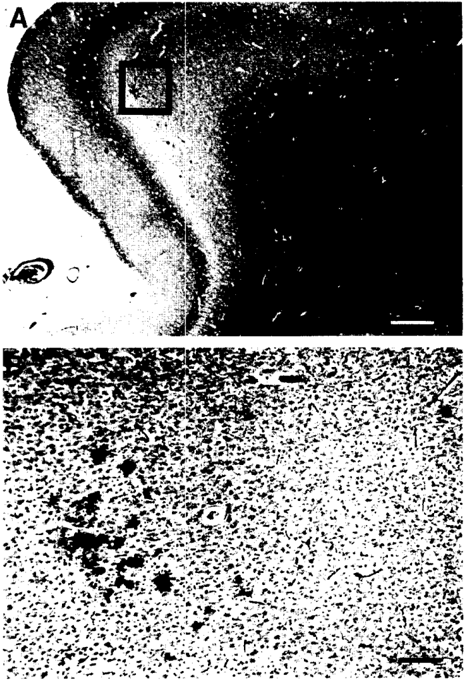
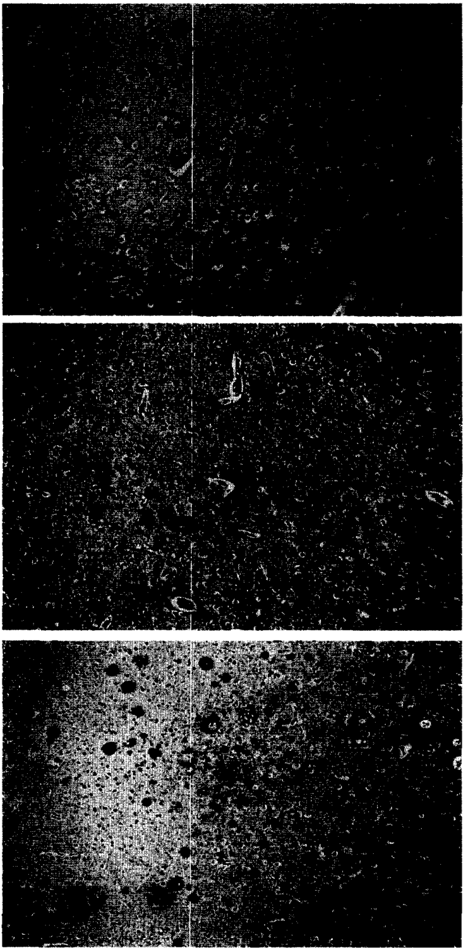
To establish correlations among cognitive states and neuropathology, we have examined 22 subjects (69-97 years of age) from the Baltimore Longitudinal Study of Aging (BLSA), of whom 15 had normal and stable cognitive performances and seven had dementia of variable severity. In the majority of normal subjects, few or no beta-amyloid (A beta) deposits or senile plaques (SP) were present in the neocortex, but neurofibrillary tangles (NFT) were consistently found in CA1 of hippocampus and layer II of entorhinal cortex. In two (15%) normal individuals, the densities of SP were consistent with the diagnosis of possible Alzheimer's disease (AD). We speculate that these cases with normal cognitive states and abundant neocortical SP may represent preclinical AD. We conclude that the neocortex of a majority of cognitively intact individuals can remain free of A beta deposits or SP, even into the tenth decade of life.
Overview
The claims and statistics of this paper haven’t been checked yet.
Free: it reads the open-access text and checks the first 5 claims that cite a source we can check. Create a free account to check every claim.
Integrity signals
Registry
Cites
Statistics
Figures
Verification
Claims the paper makes
The claims and statistics of this paper haven’t been checked yet.
Free: it reads the open-access text and checks the first 5 claims that cite a source we can check. Create a free account to check every claim.
Claims other papers make about this one
Each is checked against this paper’s own text: does it say what the citing paper says it does?
The cited source says what the claim attributes to it.
In the citing paper
“The validity of the concept of a preclinical stage in AD is supported by longitudinal clinical studies of mild memory changes followed by an accelerated decline [6,15,19,33] and by clinical-pathological studies that report the presence of the characteristic lesions of AD in cognitively normal individuals [1,23,35,36].”
From Hippocampal neurons in pre-clinical Alzheimer's disease. (2004) · cites this paper as [35]
Self-check
Percentages, sums and reported differences re-computed from the paper’s own numbers.
The self-check needs the paper’s full text.
Citations
Cites
Folstein, M. F., Folstein, S. E., & McHugh, P. R. (1975) · Journal of Psychiatric Research · doi:10.1016/0022-3956(75)90026-6 · Cited by 88,282 · cited 1×
“This battery included the BIMC (8), Mini-Mental State Examination (MMSE) (15), Immediate and Delayed Cued Recall (16), Boston Naming Test (19), Controlled Verbal Fluency (Fruits, Animals, Vegetables, F.”
MethodThe CES-D Scale: A Self-Report Depression Scale for Research in the General Population
Radloff, L. S. (1977) · Applied Psychological Measurement · doi:10.1177/014662167700100306 · Cited by 53,267
McKhann, G., Drachman, D., Folstein, M., Katzman, R., Price, D., & Stadlan, E. M. (1984) · Neurology · doi:10.1212/wnl.34.7.939 · Cited by 27,915
Neuropathological stageing of Alzheimer-related changes.
Braak, H., & Braak, E. (1991) · Acta Neuropathologica · doi:10.1007/bf00308809 · Cited by 16,123
A New Clinical Scale for the Staging of Dementia
Hughes, C. P., Berg, L., Danziger, W., Coben, L. A., & Martin, R. L. (1982) · British Journal of Psychiatry · doi:10.1192/bjp.140.6.566 · Cited by 7,056 · cited 2×
“5); or mild, moderate, or severe dementia (CDR = 1, 2, or 3, respectively) (7,18).”
MethodMirra, S. S., Heyman, A., McKeel, D., Sumi, S. M., Crain, B. J., Brownlee, L. M., Vogel, F. S., Hughes, J. P., Belle, G. V., Berg, L., et al. (1991) · Neurology · doi:10.1212/wnl.41.4.479 · Cited by 4,961
Kaplan, E., Goodglass, H., Weıntraub, S., & Segal, O. (2001) · Medical Entomology and Zoology · Cited by 4,378
Moms, J. C., Heyman, A., Mohs, R. C., Hughes, J. P., van Belle, G., Fillenbaum, G., Mellits, E. D., & Clark, C. (1989) · Neurology · doi:10.1212/wnl.39.9.1159 · Cited by 4,130
Blessed, G., Tomlinson, B. E., & Roth, M. (1968) · British Journal of Psychiatry · doi:10.1192/bjp.114.512.797 · Cited by 4,117 · cited 1×
“This battery included the BIMC (8), Mini-Mental State Examination (MMSE) (15), Immediate and Delayed Cued Recall (16), Boston Naming Test (19), Controlled Verbal Fluency (Fruits, Animals, Vegetables, F.”
MethodMeasurement of Functional Activities in Older Adults in the Community
Pfeffer, R. I., Kurosaki, T. T., Harrah, C. H., Chance, J. M., & Filos, S. (1982) · Journal of Gerontology · doi:10.1093/geronj/37.3.323 · Cited by 2,972 · cited 1×
“demiologic Studies-D Depression Inventory (36), Pfeffer Functional Activities Questionnaire (31), the Consortium to Establish a Registry for Alzheimer's Disease (CERAD) construction (28), the National Adult Reading Test (30), and the Clinical Dementia Rating questionnaire (CDR) for both the subject and an informant (7…”
Method
Research works printed but not linked: 1
- 1. Alzheimer, A. lJber eine eigenartige Erkrankung der Himrinde. Allg. Z. Psychiatr. Psychisch-Gerichlich Med. 64:146-148; 1907.
Cited by
Items 101–138 of 138
Leichte kognitive Störung: Fragen zu Definition, Diagnose, Prognose und Therapie
Kurz, A., Diehl‐Schmid, J., Riemenschneider, M. J., Perneczky, R., & Lautenschlager, N. T. (2004) · Der Nervenarzt · doi:10.1007/s00115-003-1568-4 · Cited by 30
Iacono, D., Zandi, P. P., Gross, M. D., Markesbery, W. R., Pletniková, O., Rudow, G. L., & Troncoso, J. C. (2015) · Oncotarget · doi:10.18632/oncotarget.4118 · Cited by 18
“It is significant to recall here that a clinicopathologic dissociation between AD pathology and cognition was already recognized a few decades ago [25-31] without receiving, unfortunately, any major scientific attention.”
Self-citationKageyama, Y., Saito, A., Pletniková, O., Rudow, G. L., Irie, Y., An, Y., Murakami, K., Irie, K., Resnick, S. M., Fowler, D. R., et al. (2018) · Scientific Reports · doi:10.1038/s41598-018-35004-3 · Cited by 19
Self-citationTemporal and Sex-Linked Protein Expression Dynamics in a Familial Model of Alzheimer’s Disease
Lopes, F. B. T. P., Schlatzer, D., Wang, R., Li, X., Feng, E., Koyutürk, M., Qi, X., & Chance, M. R. (2022) · Molecular & Cellular Proteomics · doi:10.1016/j.mcpro.2022.100280 · Cited by 17
“Further challenges to the field include that AD is traditionally diagnosed by histopathological amyloidbeta (Aβ) examination postmortem, but abnormal Aβ deposition precedes neurodegeneration and cognitive decline (5, 6).”
BackgroundDifferential FDDNP PET Patterns in Nondemented Middle-Aged and Older Adults
Ercoli, L. M., Siddarth, P., Kepe, V., Miller, K. J., Huang, S. C., Cole, G. M., Lavretsky, H., Bookheimer, S. Y., Kim, J., Phelps, M. E., et al. (2009) · American Journal of Geriatric Psychiatry · doi:10.1097/jgp.0b013e318198750b · Cited by 19
Longitudinal brain activity changes in asymptomatic Alzheimer disease
Codispoti, K.-E., Beason‐Held, L. L., Kraut, M. A., O’Brien, R., Rudow, G. L., Pletniková, O., Crain, B. J., Troncoso, J. C., & Resnick, S. M. (2012) · Brain and Behavior · doi:10.1002/brb3.47 · Cited by 14
“…of AD (CERAD, Braak), yet both have been demonstrated in cognitively normal (CN) elderly adults (Tomlinson et al. 1968; Crystal et al. 1988; Katzman et al. 1988; Braak and Braak 1991; Mirra et al. 1991; Mochizuki et al. 1996; Troncoso et al. 1996; Price and Morris 1999; Knopman et al. 2003).”
BackgroundSelf-citationAntemortem Prediction of Braak Stage
Carlson, J. O. E., Gatz, M., Pedersen, N. L., Graff, C., Nennesmo, I., Lindström, A.-K., & Gerritsen, L. (2015) · Journal of Neuropathology & Experimental Neurology · doi:10.1097/nen.0000000000000251 · Cited by 16
Is mild cognitive impairment bridging the gap between normal aging and Alzheimer’s disease?
Smith, G. E. (2002) · Journal of neural transmission. Supplementum · doi:10.1007/978-3-7091-6139-5_10 · Cited by 16
Sheng, J. G., Mrak, R. E., Jones, R. A., Brewer, M. M., Zhou, X. Q., McGinness, J., Woodward, S., Bales, K., Paul, S. M., Cordell, B., et al. (2001) · Neurobiology of Aging · doi:10.1016/s0197-4580(01)00298-6 · Cited by 16
Jellinger, K. A. (1997) · Neurobiology of Aging · doi:10.1016/s0197-4580(97)00048-1 · Cited by 11
Ceyhan, E., Beg, M. F., Ceritoglu, C., Wang, L., Morris, J. C., Csernansky, J. G., Miller, M. I., & Ratnanather, J. T. (2011) · Computerized Medical Imaging and Graphics · doi:10.1016/j.compmedimag.2011.01.005 · Cited by 9
“Numerous post-mortem studies have shown that hippocampus is implicated with dementia of the Alzheimer type (DAT) [11-17].”
Kang, K., Zhang, P., Dumitrescu, L. C., Mukherjee, S., Lee, M. L., Choi, S., Trittschuh, E. H., Mez, J., Saykin, A. J., Gifford, K. A., et al. (2025) · Alzheimer s & Dementia · doi:10.1002/alz.70335 · Cited by 11
The Role of the Immune System in Alzheimer's Disease
Cohen, R. M. (2009) · FOCUS The Journal of Lifelong Learning in Psychiatry · doi:10.1176/foc.7.1.foc28 · Cited by 10
Iacono, D., Geraci-Erck, M., Peng, H., & Bouffard, J. (2016) · Journal of Visualized Experiments · doi:10.3791/54602 · Cited by 8
Assessment of dementia risk in aging adults using both FDG‐PET and FDDNP‐PET imaging
Ercoli, L. M., Small, G. W., Siddarth, P., Kepe, V., Huang, S. ‐., Miller, K. J., Lavretsky, H., Bookheimer, S. Y., Barrio, J. R., & Silverman, D. H. S. (2012) · International Journal of Geriatric Psychiatry · doi:10.1002/gps.2816 · Cited by 8
Ceyhan, E., Ceritoglu, C., Beg, M. F., Wang, L., Morris, J. C., Csernansky, J. G., Miller, M. I., & Ratnanather, J. T. (2008) · arXiv (Cornell University) · doi:10.48550/arxiv.0806.1473 · Cited by 7
“Numerous post-mortem studies have shown that neurofibrillary tangles and amyloid plaques characteristic of Alzheimer’s Disease (AD) are prominent within the hippocampus of individuals with mild dementia of the Alzheimer’s type (DAT) and that the distribution of these neuropathological markers becomes more widespread t…”
BackgroundAmnestic mild cognitive impairment
Butler, C., & Ahmed, S. (2016) · Cambridge University Press eBooks · doi:10.1017/9781139924771.016 · Cited by 6
Horovitz, D. J., Askins, L. A., Regnier, G. M., & McQuail, J. A. (2025) · Neurobiology of Aging · doi:10.1016/j.neurobiolaging.2025.01.010 · Cited by 5
“…aging, and age is the primary risk factor for late onset/sporadic AD, thorough examinations of the aging human brain consistently uncover significant levels of AD neuropathological markers even among cognitively normal older adults (Mufson et al., 2016; Price et al., 2009; Troncoso et al., 1996).”
The Pathogenesis of Alzheimer’s Disease: General Overview
Apostolova, L. G., & Cummings, J. L. (2007) · Springer eBooks · doi:10.1007/978-0-387-36534-3_1 · Cited by 6
Ceyhan, E., Beg, M. F., Ceritoglu, C., Wang, L., Morris, J. C., Csernansky, J. G., Miller, M. I., & Ratnanather, J. T. (2012) · Current Alzheimer Research · doi:10.2174/156720512803251138 · Cited by 4
Pathology, Neurobiology, and Animal Models of Alzheimer's Disease
Sisodia, S. S., Price, D. D., Crain, B. J., & Troncoso, J. C. (1996) · Informa Healthcare eBooks · doi:10.1201/9781420048407.ch12 · Cited by 3
Self-citationAlzheimer's Disease: Approaches to Pathogenesis in the Genomic Age
Sutherland, G. T., & Jillian, J. (2012) · InTech eBooks · doi:10.5772/36505 · Cited by 3
“A similar percentage of cognitively normal individuals have tau-positive neuritic pathology (Knopman et al., 2003) although tau pathology confined to the hippocampal formation appears to be seen in most, if not all, aged brains (Troncoso et al., 1996).”
BackgroundExploring temporal and sex-linked dysregulation in Alzheimer disease phosphoproteome
Yılmaz, S., Lopes, F. B. T. P., Schlatzer, D., Wang, R., Qi, X., Koyutürk, M., & Chance, M. R. (2024) · iScience · doi:10.1016/j.isci.2024.110941 · Cited by 2
“5,6 Despite these limitations, most proteome-wide investigations in the literature have focused on postmortem brain samples, which cannot capture the dynamic molecular changes occurring during the progression of AD.”
β-Amyloid Imaging In Vivo and Its Possible Implications for Alzheimer’s Disease
Verhoeff, N. P. L. G., Wilson, A. A., Kung, H. F., Hussey, D., Trop, L., & Houle, S. (2004) · Springer eBooks · doi:10.1007/978-3-642-18773-5_13 · Cited by 2
Synaptic and Neuroglial Pathobiology in Acute and Chronic Neurological Disorders
Martin, L. J. (2002) · Humana Press eBooks · doi:10.1007/978-1-59259-105-3_25 · Cited by 1
Self-citationDoucette, L., Turnbill, V., Carlin, K., Cavanagh, A. S., Sollinger, B. I., Kuter, N., Flock, D. L., Robinson, S., Chavez‐Valdez, R., Jantzie, L. L., et al. (2024) · Neurobiology of Disease · doi:10.1016/j.nbd.2024.106629 · Cited by 2
“Special attention to the EC was given because the EC has a prominent and early role in AD (Troncoso et al., 1996; Braak and Braak, 1991).”
Self-citationMild Cognitive Impairment Neuroimaging Markers for Early Diagnosis of Dementia
Huang, C. C. (2003) · Figshare · Cited by 1
Andere organische psychische Störungen
Kurz, A. (2008) · Springer eBooks · doi:10.1007/978-3-540-33129-2_47 · Cited by 1
Chapter 3 Structural Changes in the Aged Brain
Dickson, D. W. (1997) · Advances in cell aging and gerontology · doi:10.1016/s1566-3124(08)60053-x · Cited by 3
What does it take to stay healthy past 100?
Price, J. L. (2008) · Neurobiology of Aging · doi:10.1016/j.neurobiolaging.2008.04.011
“The widespread deposition of β-amyloid in plaques also appears provides the best neuropathological distinction of aging from AD (20,22,30,21,17).”
BackgroundPre‐clinical Dementia: Does it Exist?
Waite, L. M. (2001) · Australian Journal on Ageing · doi:10.1111/j.1741-6612.2001.tb00342.x
Early lesions in Alzheimer’s diseases
Troncoso, J. C., Kawas, C. H., Pardo, C. A., & Rebolledo, F. A. (2006) · Plasticidad y Restauración Neurológica · Cited by 1
Self-citationAarsland, D., Cummings, J. L., Weintraub, D. A., & Chaudhuri, К. R. (2013) · Cambridge University Press eBooks · doi:10.1017/cbo9781139856669.006
Imaging and behavior in Parkinson’s disease: structural imaging
Beyer, M. K., Dalaker, T. O., & Apostolova, L. G. (2013) · Cambridge University Press eBooks · doi:10.1017/cbo9781139856669.008
Meier-Ruge, W. A., Bertoni–Freddari, C., & Fattoretti, P. (2004) · Springer eBooks · doi:10.1007/978-3-642-18741-4_5
Andere organische psychische Störungen
Kurz, A. (2003) · Springer eBooks · doi:10.1007/3-540-27386-7_44
Price (1999) · doi:10.1002/1531-8249(199903)45:3
Metadata
- Authors
- Troncoso, J. C., Martin, L. J., Dal Forno, G., & Kawas, C. H.
- Affiliations
- Johns Hopkins University (US)
- Corresponding author
- Troncoso, Juan C.
- Venue
- Neurobiology of Aging
- Publisher
- Elsevier BV
- Published
- 1996-05
- Volume
- 17
- Issue
- 3
- Pages
- 365-371
- ISSN
- 0197-4580 (ISSN-L)
- OpenAlex
- W2084700554
- Cited by
- 138
- References
- 47
- Citations by year
- 2026: 1 · 2025: 2 · 2024: 2 · 2022: 2 · 2020: 2 · 2019: 1 · 2018: 4 · 2017: 1 · 2016: 6 · 2015: 4 · 2014: 3 · 2013: 5 · 2012: 5
- FWCI
- 3.71
- Type
- journal article
- Language
- en
- Open access
- hybrid
- doi.org
- Licence
- cc-by-nc-nd
- www.elsevier.com/tdm/userlicense/1.0/ (tdm)
- www.elsevier.com/legal/tdmrep-license (tdm)
- creativecommons.org/licenses/by-nc-nd/4.0/ (vor, 1041 d)
- Locations
- Neurobiology of Aging (publishedVersion, cc-by-nc-nd)
- PubMed (publishedVersion)
- eScholarship (California Digital Library) (submittedVersion, cc-by)
- Funders
- Alzheimer's Association
- Dana Foundation
- National Institutes of Health (5r35ag007914-03)
- U.S. Public Health Service (AG05146)
- National Institute on Aging (R01AG008325, AG07914, AG08325, NIA AG-07914, P50AG005146, AG 05146)
- Topics
- Health Sciences › Medicine › Psychiatry and Mental health › Dementia and Cognitive Impairment Research
- Life Sciences › Neuroscience › Cellular and Molecular Neuroscience › Alzheimer's disease research and treatments
- Life Sciences › Neuroscience › Neurology › Neuroinflammation and Neurodegeneration Mechanisms
- Keywords
- neuropathology, dementia, Alzheimer's disease, preclinical Alzheimer's disease, beta-amyloid deposits, amyloid plaques, neurofibrillary tangles, hippocampal CA1, entorhinal cortex, neocortex, cognitive aging, normal cognition, Baltimore Longitudinal Study of Aging
- MeSH terms
- Aged, Aged, 80 and over, Aging, Alzheimer Disease, Dementia, Female, Humans, Longitudinal Studies, Male, Occipital Lobe, Psychiatric Status Rating Scales, Baltimore
About these checks
Registry, retraction, Cites and statistics results are computed, not judged, with one exception: a printed reference that no index lists is read once by a model before it counts as a citation error. Claims are extracted by a model and kept only when their quote appears verbatim in the text; each cited source is then checked, with a model’s help, for whether it says what the claim relies on. Those verdicts can be wrong — read the claim’s quote and the cited source before relying on one.
Statistics and arithmetic are recomputed, not judged.
Confidence bands are shown only for fields calibrated on our annotated test set. None is calibrated yet, so no band is shown.
What counts as a claim ›How we measure confidence ›How we check this ›
Are you an author, or do you see a problem with this page? Request a review
Data sources
Bibliographic data: Semantic Scholar, OpenAlex, Crossref.
Contains information from the Semantic Scholar Academic Graph Datasets, made available under the ODC Attribution License (ODC-BY 1.0).
Semantic Scholar’s data is described in: Kinney, R., et al. (2023). The Semantic Scholar Open Data Platform. arXiv:2301.10140.
