

Microglial SIRT2 deficiency aggravates cognitive decline and amyloid pathology in Alzheimer’s disease
Open accessPublished version of a preprint
The DOI matches its Crossref record; 95 of the 96 references it cites were found in a registry or an index; 4 of the 84 sources its claims cite were checked for support.
Abstract
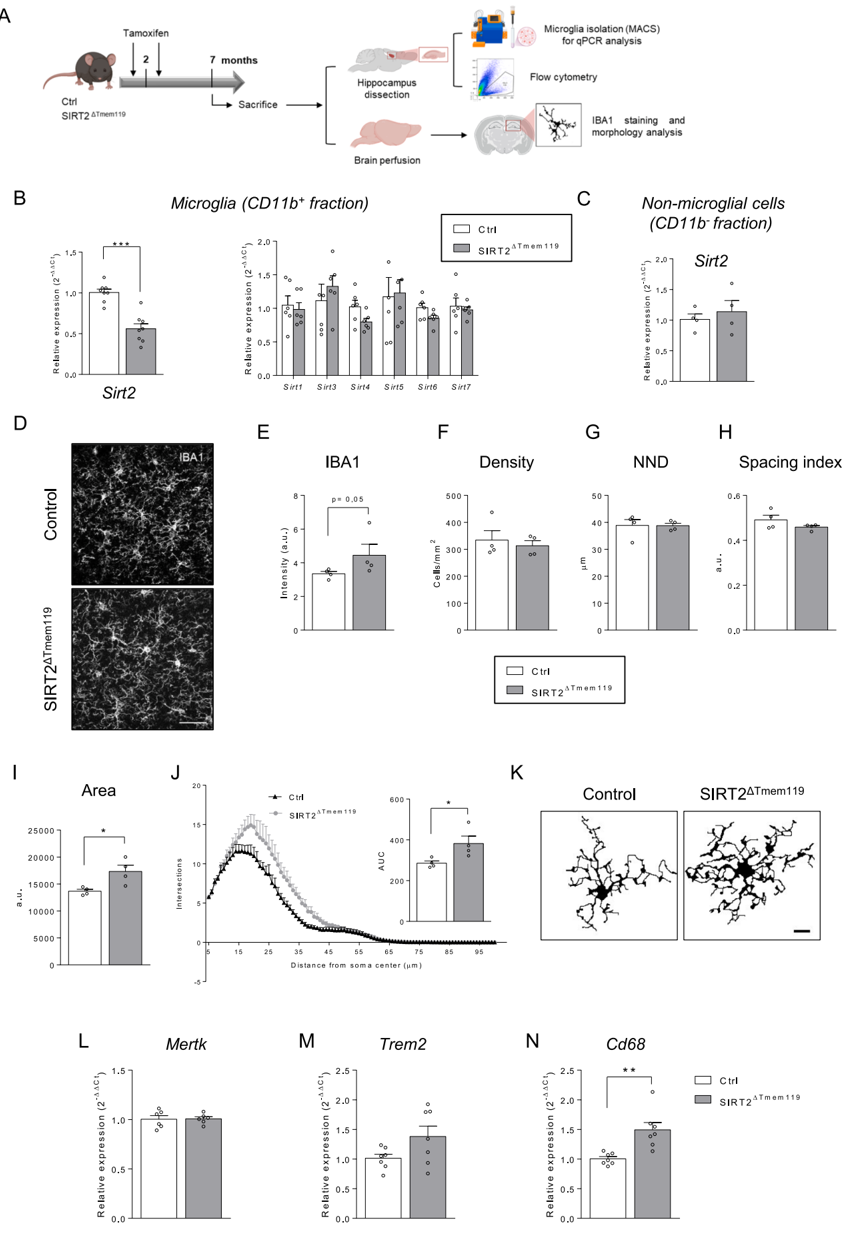
Sirtuin 2 (SIRT2), a NAD+-dependent deacetylase, has been implicated in aging and neurodegenerative diseases such as Alzheimer's disease (AD). While global SIRT2 inhibition has shown promise in reducing amyloid-beta pathology and cognitive deficits in different mouse models of AD, peripheral SIRT2 inhibition has been associated with adverse effects, such as increased inflammation. This suggests that targeted inhibition of specific cellular populations within the brain may represent a more precise and effective approach for the treatment of AD. To explore this hypothesis, we generated a conditional microglial SIRT2 knockout mouse model in the context of AD. Our results reveal that microglial SIRT2 reduction does not confer protective effects in the APP/PS1 model; rather, it aggravates cognitive decline, accelerates amyloid plaque deposition, and increases levels of pro-inflammatory cytokines at early stages of AD pathology. Transcriptomic analysis further indicates that SIRT2-deficient microglia exhibit altered expression of genes associated with aging and synaptic dysfunction. This phenotype was accompanied by increased phagocytosis of PSD95 and impaired long-term potentiation. These findings suggest that while SIRT2 inhibition in some contexts may be beneficial, targeted inhibition within microglia could accelerate AD progression, underscoring the need for cell-specific approaches when considering SIRT2 as a therapeutic target.
Overview
CoChat Summary
TL;DR
Microglial SIRT2 deletion did not protect against Alzheimer’s disease in APP/PS1 mice; instead, it worsened early pathology, reducing survival, accelerating amyloid deposition and cognitive decline, and impairing synaptic plasticity. These findings argue that SIRT2 inhibition may need cell-specific targeting, because microglial SIRT2 loss can be detrimental.
Key findings
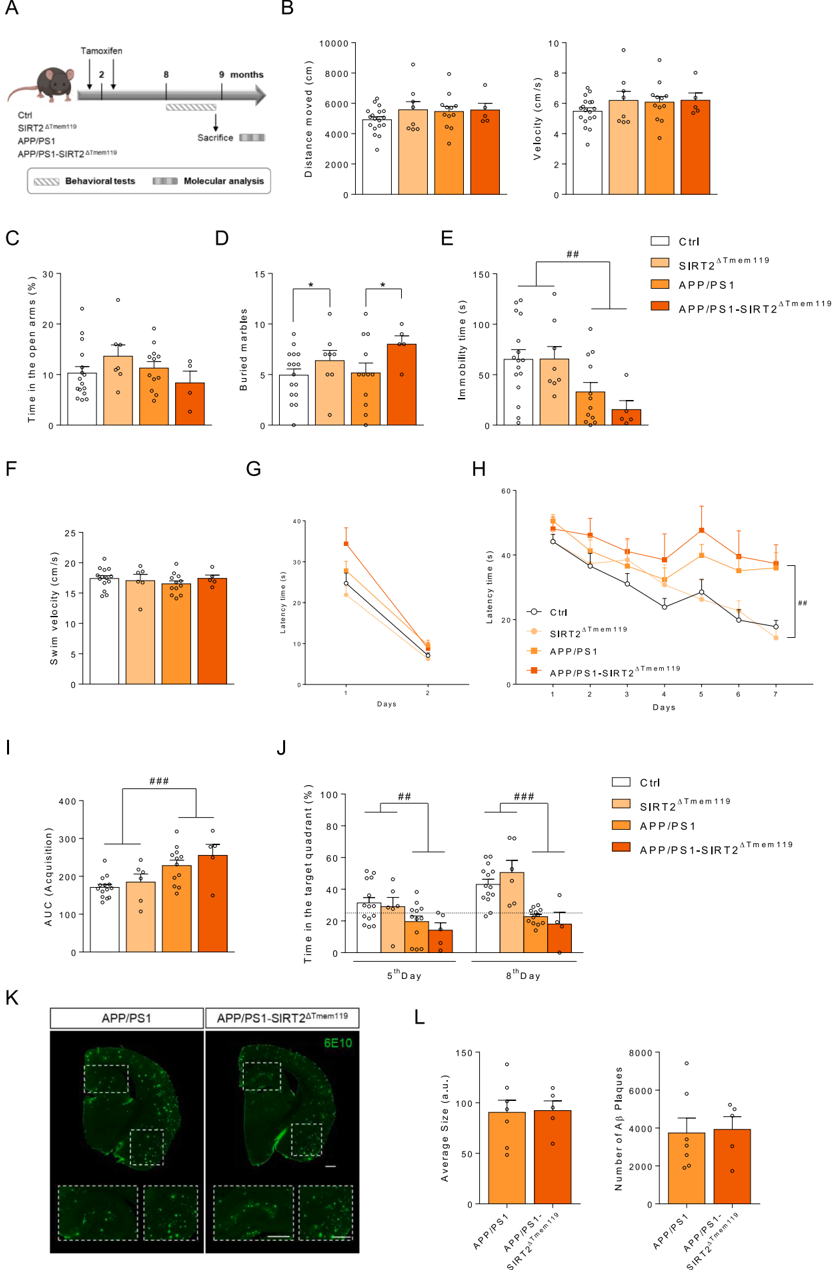
- In 8-month-old APP/PS1 mice, microglial SIRT2 deficiency did not improve cognition or amyloid pathology: no significant differences were found in Aβ plaque burden, average plaque size, or plaque number between APP/PS1 and APP/PS1-SIRT2ΔTmem119 mice.
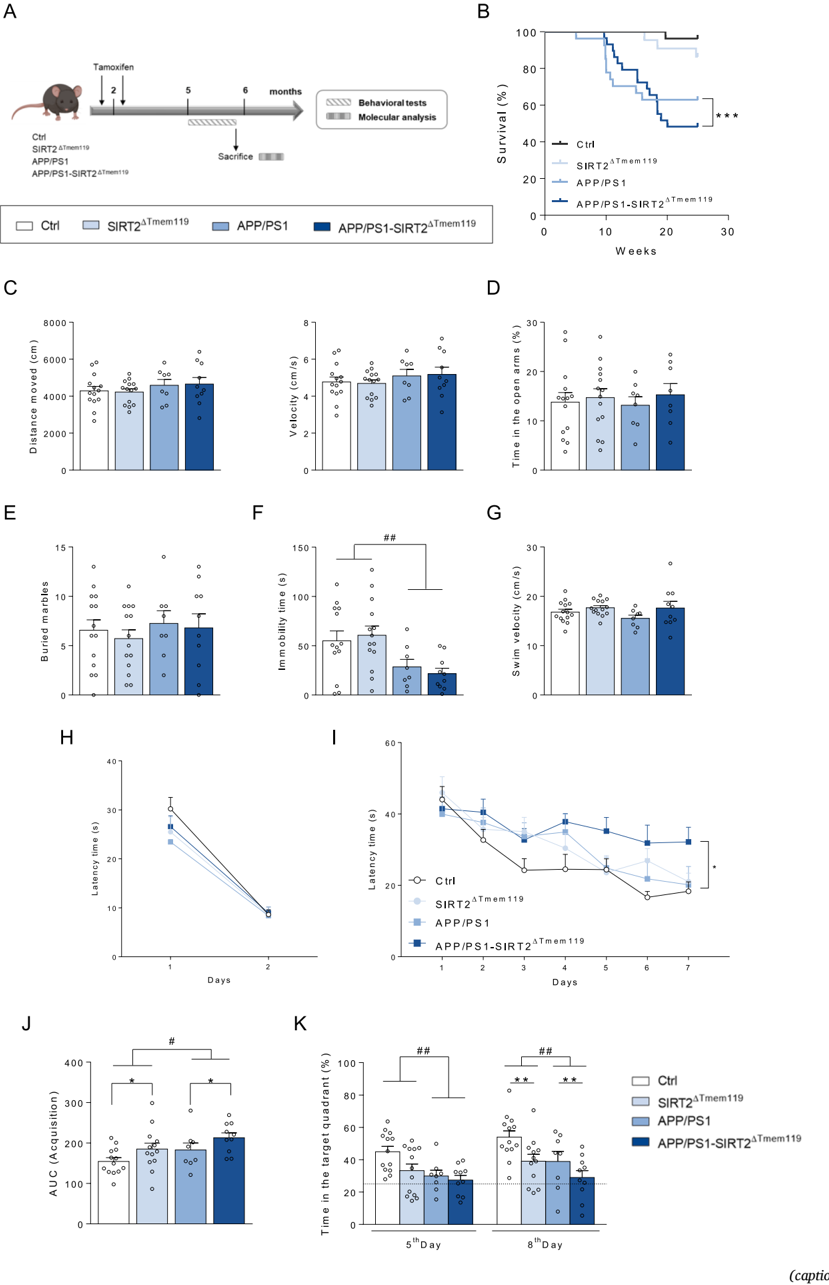
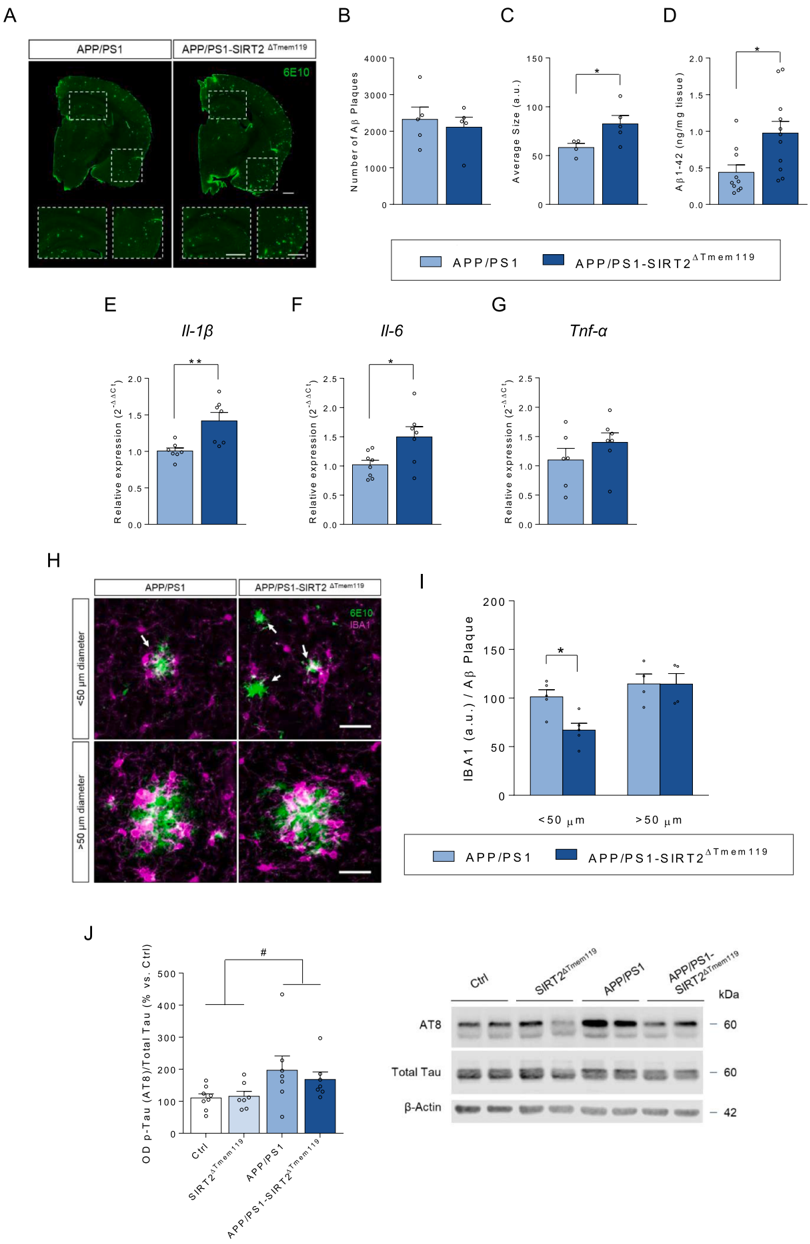
- In 5-month-old APP/PS1 mice, microglial SIRT2 deficiency reduced survival (48.3% vs 63% survival at 25 weeks), worsened learning/memory in the Morris water maze, and accelerated amyloid pathology (increased 6E10 staining, larger average plaque size, elevated Aβ1-42, and increased Il-1β and Il-6). Microglial coverage of plaques smaller than 50 μm was decreased.
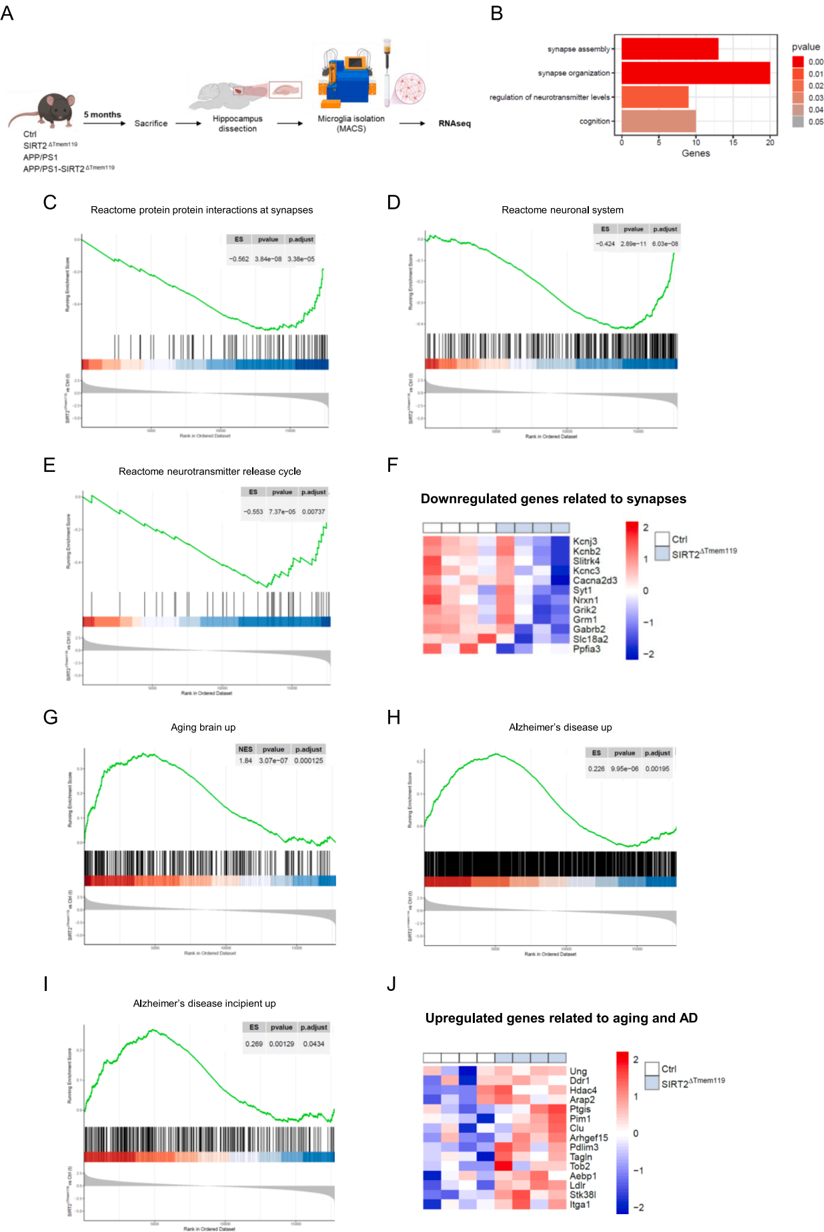
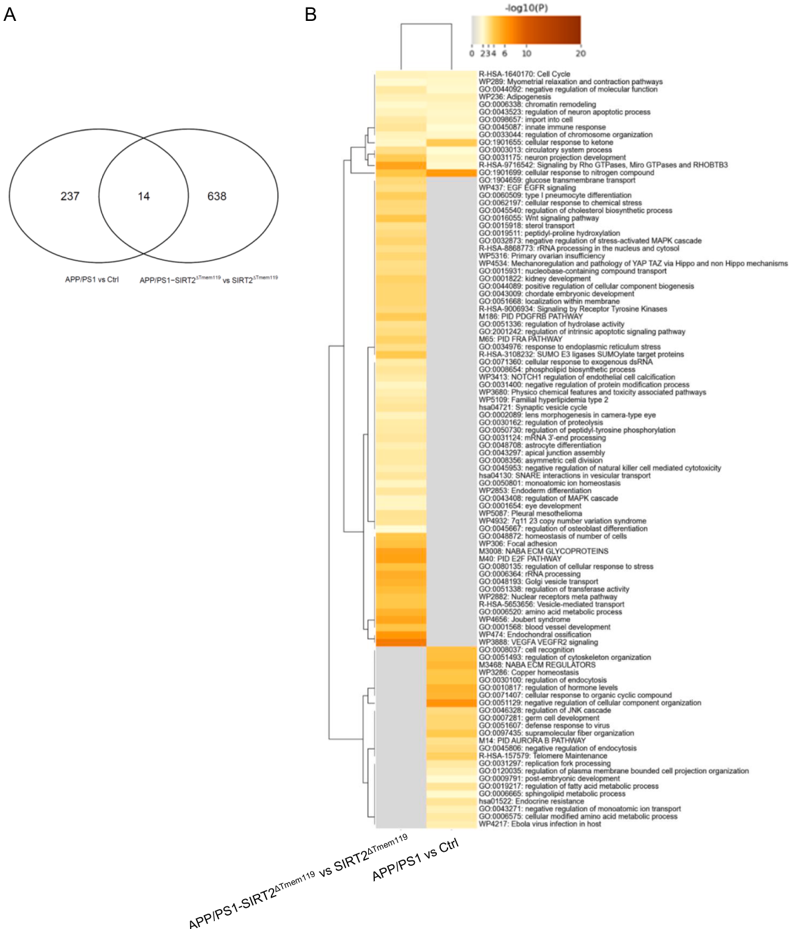
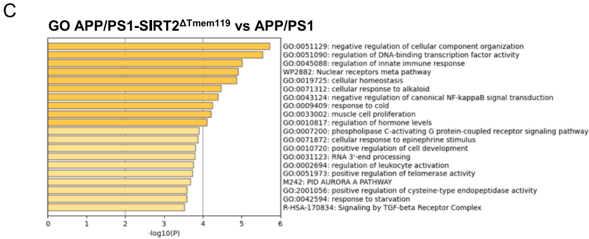
- Bulk RNA sequencing of hippocampal microglia showed 526 differentially expressed genes in SIRT2ΔTmem119 vs control (200 up-regulated, 326 down-regulated); 652 genes changed between APP/PS1-SIRT2ΔTmem119 and SIRT2ΔTmem119 vs 251 between control and APP/PS1. Aging- and AD-associated gene sets were enriched, with no consistent overlap with the disease-associated microglia signature.
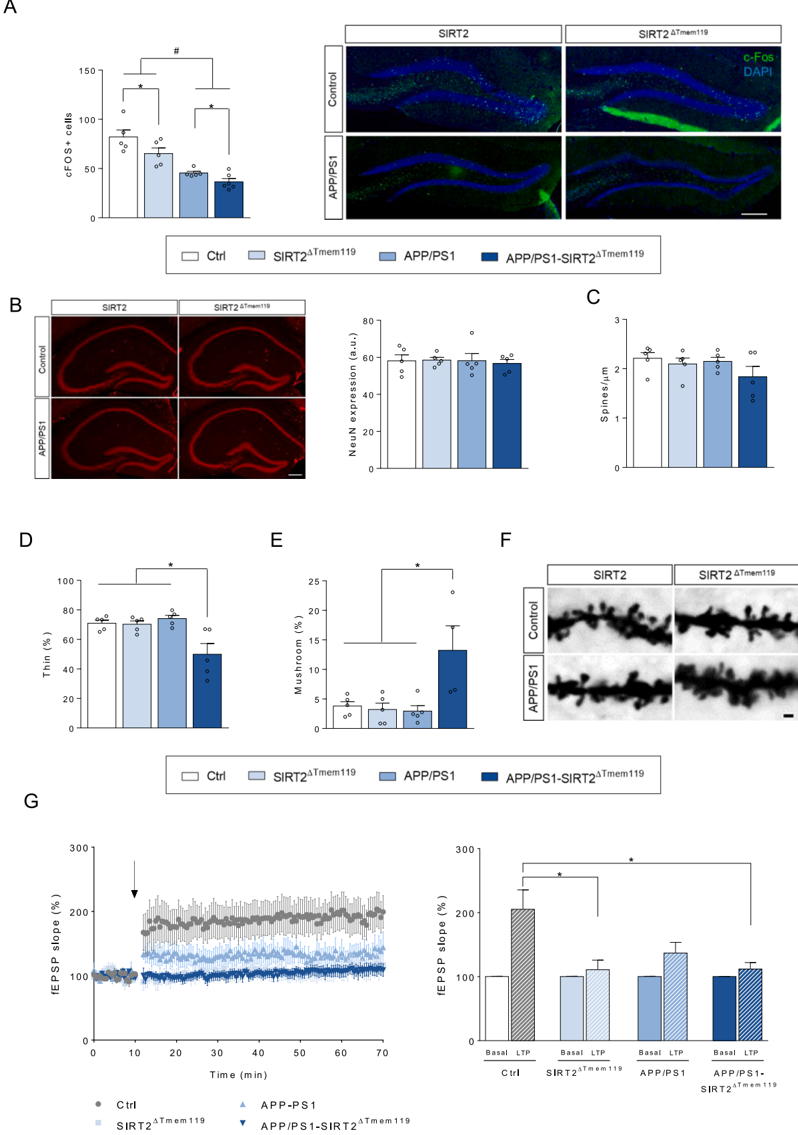
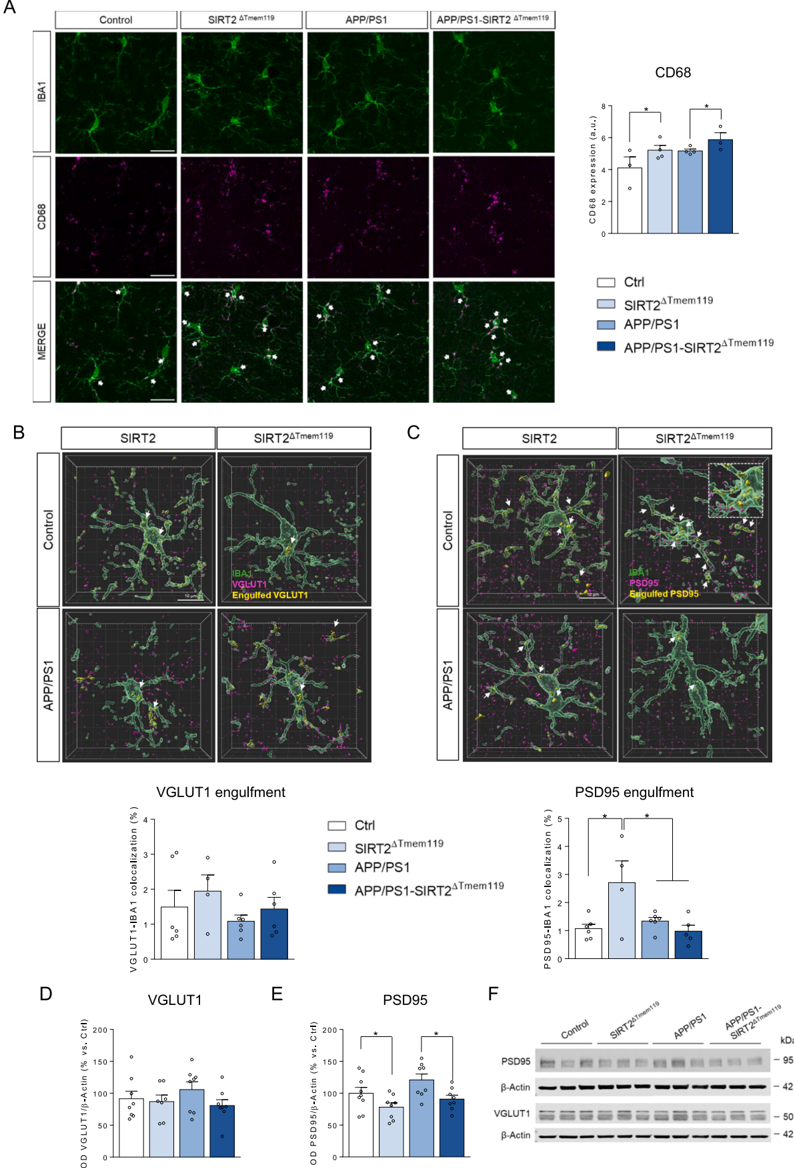
- SIRT2ΔTmem119 and APP/PS1-SIRT2ΔTmem119 mice showed reduced c-Fos+ cells in the dentate gyrus and substantially reduced hippocampal LTP. SIRT2ΔTmem119 microglia had increased PSD95 engulfment and reduced total PSD95, while VGLUT1 was unchanged.
Methods
- Conditional microglial SIRT2 knockout mice (Sirt2 flx/flx-Tmem119 cre/ERT2) were crossed with APP/PS1 mice; tamoxifen (100 mg/kg i.p. every 24 h for 5 days) was administered at 6 and 10 weeks of age, and both sexes were pooled after preliminary evaluations showed no sex-specific trends.
- Behavioral tests (open field, elevated plus maze, marble burying, forced swim, Morris water maze), electrophysiology (LTP), microglia isolation/MACS, flow cytometry, bulk RNA sequencing, qPCR, Western blot, Golgi staining, immunofluorescence, and Aβ1-42 ELISA were performed at 5 and 8 months.
- Differential expression was analyzed with edgeR/voom/LIMMA, followed by GO, GSEA, and Metascape; RNA-seq data are in GEO (GSE280235). Statistics used two-way ANOVA with Tukey’s post hoc, repeated-measures two-way ANOVA, t tests/Mann-Whitney U, and Log-rank tests as appropriate.
Limitations
- The paper states that further studies using animal models with more pronounced tau pathology are needed to confirm the lack of detectable tau phosphorylation impact, and that mechanisms underlying LTP impairment remain unclear and warrant further investigation; the exosome hypothesis also requires further characterization.
- Evident from the text: conclusions rely on a single APP/PS1 mouse model and bulk microglial RNA sequencing, with no human data or single-cell resolution; both sexes were pooled after preliminary evaluations showed no sex-specific trends.
Model-written summary. Check it against the paper before relying on it.
Integrity signals
Registry
Cites
Statistics
Figures

Verification
Claims the paper makes
2 Valid · 0 Not valid · 44 Not checked · 154 Own results and interpretations
Every source the paper cites for this claim was checked and supports it.
In the paper
“In fact, in recent years, microglia have been increasingly recognized as key modulators of AD pathogenesis (D'Errico et al., 2022;Pascoal et al., 2021;Gray et al., 2020).”
§ Microglial SIRT2 deficiency aggravates cognitive decline and amyloid pathology in Alzheimer's disease > 1. Introduction
What the sources say
- Supportedcites D'Errico et al., 2022 matched to “Microglia contribute to the propagation of Aβ into unaffected brain tissue” (2022) source
The Abstract (p. 1) states that Aβ entering WT grafts was accompanied by microglia infiltration and that 'manipulation of microglia function reduced Aβ deposition within grafts', with microglia identified in vivo as carriers of Aβ pathology. The Main (concluding paragraph) states 'these findings highlight the importance of microglia for the propagation of Aβ pathology' and that 'targeting microglia function might provide an opportunity to interfere with the propagation of Aβ'. This broad background attribution (microglia as key modulators of AD pathogenesis, one of three citations) is consistent with how our copy treats the topic, though the paper's own evidence is confined to 5xFAD mouse graft models and to Aβ propagation specifically. (LLM, conf=0.85)
- Supportedcites Pascoal et al., 2021 matched to “Microglial activation and tau propagate jointly across Braak stages” (2021) source
The Introduction (p.1) states microglial activation 'is a key element associated with the development of Alzheimer's disease' and that 'rather than merely being an inflammatory epiphenomenon, recent studies demonstrate that microglial activation drives tau pathology'. The Discussion closes by concluding 'our results support that microglial activation is a key element linking the effects of Aβ to tau spread and ultimately dementia', and elsewhere frames microglial activation as 'a key element associated with AD pathophysiology'. This broad background attribution is clearly carried by our copy. (LLM, conf=0.88)
- Supportedcites Gray et al., 2020 matched to “Shifting equilibriums in Alzheimer’s disease: the complex roles of microglia in neuroinflammation, neuronal survival and neurogenesis” (2020) source
The Introduction of the Gray et al. (2020) review states that microglia are 'the predominant modulators of neuroinflammation, a hallmark of AD pathology' and that genetic correlation studies and in vivo modelling 'have implicated microglia as cellular modulators of AD pathogenicity,' with emerging clinical evidence suggesting a central role for microglia in AD. The Microglia and Neuroinflammation sections elaborate this (Aβ clearance, immunoresolution, DAM phenotype), so the broad background claim that microglia are key modulators of AD pathogenesis is squarely stated in our copy. The citation is one of three supporting a general framing statement, which this review delivers. (LLM, conf=0.90)
plainstates a cause- Asserted: passes — The authors put it forward as true.
- Checkable: passes — It can be checked against evidence.
- Load-bearing: passes — The paper’s conclusions depend on it.
- Based: passes — The paper gives a reason why it holds.
- Supported
The sources with a verdict support this claim; the rest weren’t checked yet, have no full text we could read, or their verdicts aren’t rated yet.
In the paper
“These findings support the notion that neuroinflammation plays a key role on both pathogenesis and progression of AD (Heneka et al., 2015;Ravichandran and Heneka, 2024;Heppner et al., 2015;Zhang et al., 2024) challenging previous assumptions that it solely manifests as a downstream effect or consequence of primary pathological lesions.”
§ Microglial SIRT2 deficiency aggravates cognitive decline and amyloid pathology in Alzheimer's disease > 1. Introduction
What the sources say
- Supportedcites Heneka et al., 2015 matched to “Neuroinflammation in Alzheimer's disease” (2015) source
The Introduction states that in AD neuroinflammation, 'instead of being a mere bystander activated by emerging senile plaques and neurofibrillar tangles, contributes as much or more to the pathogenesis as do the plaques and tangles themselves' — directly supporting both the key-role claim and the citing sentence's contrast with a purely downstream/consequential view. Progression is covered in 'Factors facilitating neuroinflammation' (inflammation 'subsequently contributes to cognitive decline and development of AD') and the systemic-inflammation subsection (increased cognitive decline following acute and chronic systemic inflammation, citing Holmes et al. on disease progression in AD). The 'Characterization and monitoring neuroinflammation in AD' section reiterates that emerging evidence points to a causal role in AD pathogenesis. (LLM, conf=0.90)
- Not checked yetcites Ravichandran and Heneka, 2024 matched to “Inflammasomes in neurological disorders — mechanisms and therapeutic potential” (2024) source
- Not checked yetcites Heppner et al., 2015 matched to “Immune attack: the role of inflammation in Alzheimer disease” (2015) source
hedgedstates a cause- Asserted: passes — The authors put it forward as true.
- Checkable: passes — It can be checked against evidence.
- Load-bearing: passes — The paper’s conclusions depend on it.
- Based: passes — The paper gives a reason why it holds.
- Supported
A result the paper reports from its own data — it cites no other source for it, so there is none to check. The quote shows it is in the paper.
In the paper
“Interestingly, gene ontology (GO) analysis revealed that the GO Biological Processes with the highest significant fold enrichment were related to synapse assembly, regulation and organization (Fig. 5B).”
§ Microglial SIRT2 deficiency aggravates cognitive decline and amyloid pathology in Alzheimer's disease > 3.5. Transcriptomic analysis of SIRT2 deficient microglia revealed changes in aging and neuronal activity related genes
plainstates an association- Asserted: passes — The authors put it forward as true.
- Checkable: passes — It can be checked against evidence.
- Load-bearing: unclear — It is unclear whether the paper’s conclusions depend on it.
- Based: passes — The paper gives a reason why it holds.
A result the paper reports from its own data — it cites no other source for it, so there is none to check. The quote shows it is in the paper.
In the paper
“Furthermore, Gene Set Enrichment Analysis (GSEA) indicated a repression of genes related to synaptic interaction, neuronal system and neurotransmitter release (Fig. 5C-E).”
§ Microglial SIRT2 deficiency aggravates cognitive decline and amyloid pathology in Alzheimer's disease > 3.5. Transcriptomic analysis of SIRT2 deficient microglia revealed changes in aging and neuronal activity related genes
hedgedstates a cause- Asserted: passes — The authors put it forward as true.
- Checkable: passes — It can be checked against evidence.
- Load-bearing: unclear — It is unclear whether the paper’s conclusions depend on it.
- Based: passes — The paper gives a reason why it holds.
A result the paper reports from its own data — it cites no other source for it, so there is none to check. The quote shows it is in the paper.
In the paper
“Noteworthy, no significant differences were observed between APP/PS1 and APP/PS1-SIRT2 ΔTmem119 groups”
§ Microglial SIRT2 deficiency aggravates cognitive decline and amyloid pathology in Alzheimer's disease > 3.4. Microglial SIRT2 deficiency accelerates Aβ deposits in 5-month-old APP/PS1 mice
plain- Asserted: passes — The authors put it forward as true.
- Checkable: passes — It can be checked against evidence.
- Load-bearing: unclear — It is unclear whether the paper’s conclusions depend on it.
- Based: passes — The paper gives a reason why it holds.
126 more claims
Create a free account to see all 200 claims and to verify the 66 references still open.
- It may state two separate claims as one. 37
- Probably not a substantial claim. 39
- The quote only partly states this claim. 4
Self-check
Percentages, sums and reported differences re-computed from the paper’s own numbers.
Each contradiction between two passages listed here was confirmed by an independent check.
Rated minor: it would not touch a result — a value no result rests on, a p-value that stays on the same side of the significance level, or a conflict that is clerical, resolved elsewhere in the paper, or outside its own findings.
In the paper
§ Microglial SIRT2 deficiency aggravates cognitive decline and amyloid pathology in Alzheimer's disease > 4. Discussion
“(B) Heatmap of the Gene Ontology (GO) functional analysis of differentially expressed genes in the comparisons APP/PS1 versus Control microglia and APP/PS1 versus APP/PS1-SIRT2 ΔTmem119 microglia.”
§ Microglial SIRT2 deficiency aggravates cognitive decline and amyloid pathology in Alzheimer's disease > 3.5. Transcriptomic analysis of SIRT2 deficient microglia revealed changes in aging and neuronal activity related genes
“we found some functions like chromatin remodeling, innate immune response or cellular response to ketone or nitrogen changed in both conditions with AD (APP/PS1-SIRT2 ΔTmem119 and APP/PS1) when compared with their corresponding non-AD control groups (SIRT2 ΔTmem119 and Ctrl respectively) (Fig. 6B).”
Rated minor: it would not touch a result — a value no result rests on, a p-value that stays on the same side of the significance level, or a conflict that is clerical, resolved elsewhere in the paper, or outside its own findings.
In the paper
§ Microglial SIRT2 deficiency aggravates cognitive decline and amyloid pathology in Alzheimer's disease > 4. Discussion
“Quantification (bottom) revealed a significant increase in PSD95 engulfment by microglia in SIRT2 ΔTmem119 mice (F = 9.295, *p < 0.05, one-way ANOVA followed by Tukey's test) (n = 4-6 animals/group).”
§ Microglial SIRT2 deficiency aggravates cognitive decline and amyloid pathology in Alzheimer's disease > 2.13. Statistical analysis
“In the case of LTP experiments, one-way ANOVA followed by multiple comparisons with Tukey's test was performed.The rest of the behavioral tests and biochemical results were analyzed using two-way ANOVA followed by multiple comparisons with Tukey's test.”
Citations
Cites
R: A Language and Environment for Statistical Computing
R Core Team (2025) · doi:10.32614/r.manuals · Cited by 352,181
Trimmomatic: a flexible trimmer for Illumina sequence data
Bolger, A. M., Lohse, M., & Usadel, B. (2014) · Bioinformatics · doi:10.1093/bioinformatics/btu170 · Cited by 65,548
STAR: ultrafast universal RNA-seq aligner
Dobin, A., Davis, C. A., Schlesinger, F., Drenkow, J., Zaleski, C., Jha, S., Batut, P., Chaisson, M., & Gingeras, T. R. (2013) · Bioinformatics · doi:10.1093/bioinformatics/bts635 · Cited by 51,709
Robinson, M. D., McCarthy, D. J., & Smyth, G. K. (2010) · Bioinformatics · doi:10.1093/bioinformatics/btp616 · Cited by 41,364
limma powers differential expression analyses for RNA-sequencing and microarray studies
Ritchie, M. E., Phipson, B., Wu, D., Hu, Y., Law, C. W., Shi, W., & Smyth, G. K. (2015) · Nucleic Acids Research · doi:10.1093/nar/gkv007 · Cited by 40,458
featureCounts: an efficient general purpose program for assigning sequence reads to genomic features
Liao, Y., Smyth, G. K., & Shi, W. (2014) · Bioinformatics · doi:10.1093/bioinformatics/btt656 · Cited by 27,219
Metascape provides a biologist-oriented resource for the analysis of systems-level datasets
Zhou, Y., Zhou, B., Pache, L., Chang, M., Khodabakhshi, A. H., Tanaseichuk, O., Benner, C., & Chanda, S. K. (2019) · Nature Communications · doi:10.1038/s41467-019-09234-6 · Cited by 14,611
Ultrastructural Characterization of the Lower Motor System in a Mouse Model of Krabbe Disease
Cappello, V., Marchetti, L., Parlanti, P., Landi, S., Tonazzini, I., Cecchini, M., Piazza, V., & Gemmi, M. (2016) · Scientific Reports · doi:10.1038/s41598-016-0001-8 · Cited by 13,097
clusterProfiler 4.0: A universal enrichment tool for interpreting omics data
(2021) · doi:10.1016/j.xinn.2021.100141 · Cited by 12,455
Neuroinflammation in Alzheimer's disease
Heneka, M. T., Carson, M. J., Khoury, J. E., Landreth, G. E., Brosseron, F., Feinstein, D. L., Jacobs, A. H., Wyss-Coray, T., Vitorica, J., Ransohoff, R. M., et al. (2015) · The Lancet Neurology · doi:10.1016/s1474-4422(15)70016-5 · Cited by 6,226
Cited by
Sirtuins in Alzheimer’s disease: mechanistic insights and therapeutic opportunities
Bai, N., Liu, S., Wei, J., Zheng, B., Wang, W., Li, X., Yang, J., Song, X., Wang, L., Yi, F., et al. (2025) · Trends in Pharmacological Sciences · doi:10.1016/j.tips.2025.10.016 · Cited by 6
Sheng, B., Chen, X., tao, T., Sun, J.-Q., Li, W., Wu, L., Peng, Z., Li, X., Zhou, Z., Yu, Q., et al. (2025) · Journal of Neuroinflammation · doi:10.1186/s12974-025-03623-z · Cited by 6
Zhu, J., Wen, T., Gao, N., Wu, B., Ma, M., Sun, X., Liu, F., Lin, P., & Liu, S. (2026) · Muscle & Nerve · doi:10.1002/mus.70162 · Cited by 1
Proteomic Signatures of Noise‐Induced Hearing Loss in the Mouse Cochlea
Batissoco, A. C., Coutinho, D., Ferreira‐Scatone, A. C., Cavassana, S. D., Oiticica, J., Lezirovitz, K., & Bento, R. F. (2026) · Cell Biology International · doi:10.1002/cbin.70218
Yao, L., Cheng, L., Yi, J., Zeng, H., & Wang, X. (2026) · Journal of Stroke and Cerebrovascular Diseases · doi:10.1016/j.jstrokecerebrovasdis.2026.108781
Metadata
- Authors
- Sola-Sevilla, N., Garmendia-Berges, M., Aleixo, M., Mera-Delgado, M., Solas, M., Tordera, R. M., García-Carracedo, L., Expósito, S., Anaya-Cubero, E., Fernández-Irigoyen, J., Guruceaga, E., Santamaria, E., Martin, E. D., & Puerta, E.
- Affiliations
- Navarre Institute of Health Research (ES)
- Consejo Superior de Investigaciones Científicas (ES)
- Corresponding author
- Puerta, Elena
- ORCID
- Venue
- Brain, Behavior, and Immunity
- Publisher
- Elsevier BV
- Published
- 2025-10
- Volume
- 129
- Pages
- 223-243
- ISSN
- 0889-1591 (ISSN-L)
- OpenAlex
- W4411147880
- Cited by
- 5
- References
- 96
- Citations by year
- 2026: 3 · 2025: 2
- FWCI
- 1.35
- Type
- journal article
- Language
- en
- Open access
- hybrid
- doi.org
- Licence
- cc-by
- www.elsevier.com/tdm/userlicense/1.0/ (tdm)
- www.elsevier.com/legal/tdmrep-license (tdm)
- creativecommons.org/licenses/by/4.0/ (vor)
- Locations
- Brain Behavior and Immunity (publishedVersion, cc-by)
- bioRxiv (Cold Spring Harbor Laboratory) (submittedVersion)
- Academica-e (Universidad Pública de Navarra) (publishedVersion, cc-by)
- PubMed (publishedVersion)
- DIGITAL.CSIC (Spanish National Research Council (CSIC)) (publishedVersion, other-oa)
- Funders
- Ministerio de Ciencia, Innovación y Universidades (PID2020, .13039/501100011033, 501100011033)
- Universidad de Navarra
- Agencia Estatal de Investigación (501100011033, 13039, .13039/501100011033)
- Topics
- Life Sciences › Neuroscience › Cellular and Molecular Neuroscience › Alzheimer's disease research and treatments
- Life Sciences › Neuroscience › Neurology › Neuroinflammation and Neurodegeneration Mechanisms
- Health Sciences › Medicine › Geriatrics and Gerontology › Sirtuins and Resveratrol in Medicine
- Keywords
- SIRT2, microglia, Alzheimer's disease, cognitive decline, amyloid plaques, conditional knockout mice, APP/PS1 mice, inflammatory cytokines, synaptic dysfunction, long-term potentiation, aging
- MeSH terms
- Alzheimer Disease, Animals, Brain, Disease Models, Animal, Male, Amyloid beta-Peptides, Microglia, Mice, Knockout, Mice, Sirtuin 2, Plaque, Amyloid, Cognitive Dysfunction
About these checks
Registry, retraction, Cites and statistics results are computed, not judged, with one exception: a printed reference that no index lists is read once by a model before it counts as a citation error. Claims are extracted by a model and kept only when their quote appears verbatim in the text; each cited source is then checked, with a model’s help, for whether it says what the claim relies on. Those verdicts can be wrong — read the claim’s quote and the cited source before relying on one.
A language model drew the claims from the paper on 2026-11-19, under version 3 of the claim definition (model deepseek-v4.1-flash, prompt extract-v3).
A second model labelled each claim on 2026-11-19 (model jev-1.13-20260917, definition revision gold-guideline-v0.2).
Cited sources are checked with a language model’s help (qwen3.8-omni-flash).
Statistics and arithmetic are recomputed, not judged.
Confidence bands are shown only for fields calibrated on our annotated test set. None is calibrated yet, so no band is shown.
What counts as a claim ›How we measure confidence ›How we check this ›
Are you an author, or do you see a problem with this page? Request a review
Data sources
Bibliographic data: Semantic Scholar, OpenAlex, Crossref.
Contains information from the Semantic Scholar Academic Graph Datasets, made available under the ODC Attribution License (ODC-BY 1.0).
Semantic Scholar’s data is described in: Kinney, R., et al. (2023). The Semantic Scholar Open Data Platform. arXiv:2301.10140.
