

The DOI matches its Crossref record; 45 of the 48 references it cites were found in a registry or an index.
Peripheral Inflammation is Associated with Altered Substantia Nigra Activity and Psychomotor Slowing in Humans
Open accessAbstract
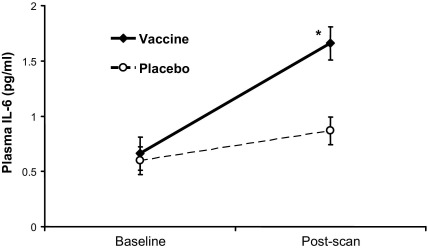
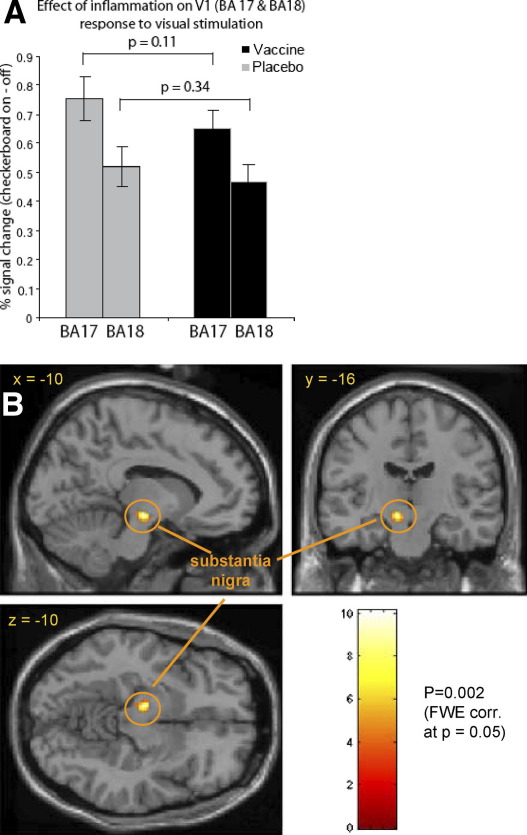
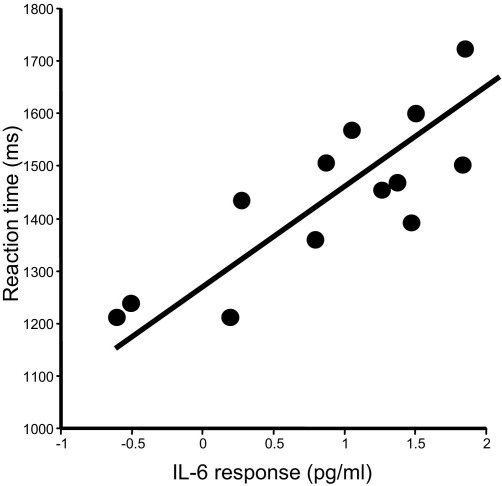
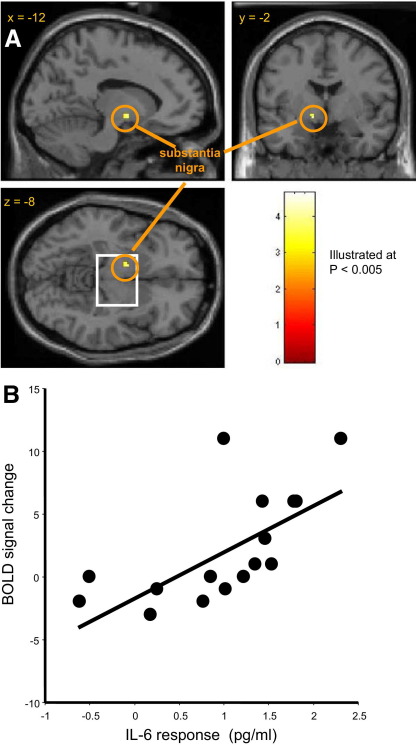
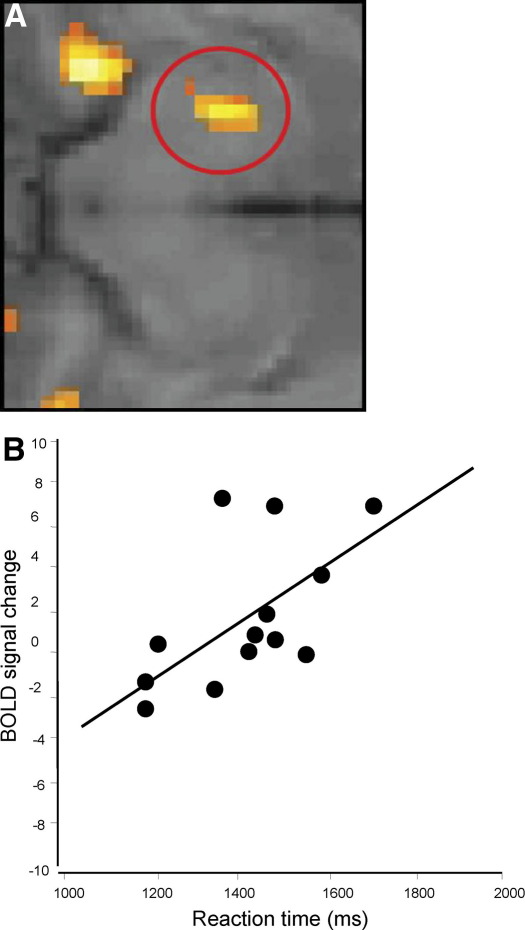
BackgroundSystemic infections commonly cause sickness symptoms including psychomotor retardation. Inflammatory cytokines released during the innate immune response are implicated in the communication of peripheral inflammatory signals to the brain.MethodsWe used functional magnetic resonance brain imaging (fMRI) to investigate neural effects of peripheral inflammation following typhoid vaccination in 16 healthy men, using a double-blind, randomized, crossover-controlled design.ResultsVaccination had no global effect on neurovascular coupling but markedly perturbed neural reactivity within substantia nigra during low-level visual stimulation. During a cognitive task, individuals in whom typhoid vaccination engendered higher levels of circulating interleukin-6 had significantly slower reaction time responses. Prolonged reaction times and larger interleukin-6 responses were associated with evoked neural activity within substantia nigra.ConclusionsOur findings provide mechanistic insights into the interaction between inflammation and neurocognitive performance, specifically implicating circulating cytokines and midbrain dopaminergic nuclei in mediating the psychomotor consequences of systemic infection. Systemic infections commonly cause sickness symptoms including psychomotor retardation. Inflammatory cytokines released during the innate immune response are implicated in the communication of peripheral inflammatory signals to the brain. We used functional magnetic resonance brain imaging (fMRI) to investigate neural effects of peripheral inflammation following typhoid vaccination in 16 healthy men, using a double-blind, randomized, crossover-controlled design. Vaccination had no global effect on neurovascular coupling but markedly perturbed neural reactivity within substantia nigra during low-level visual stimulation. During a cognitive task, individuals in whom typhoid vaccination engendered higher levels of circulating interleukin-6 had significantly slower reaction time responses. Prolonged reaction times and larger interleukin-6 responses were associated with evoked neural activity within substantia nigra. Our findings provide mechanistic insights into the interaction between inflammation and neurocognitive performance, specifically implicating circulating cytokines and midbrain dopaminergic nuclei in mediating the psychomotor consequences of systemic infection.
Overview
The claims and statistics of this paper haven’t been checked yet.
Run the check — free, no account needed. It reads the open-access text and checks the sources it cites.
Integrity signals
Registry
Cites
Statistics
Figures

Verification
Claims the paper makes
The claims and statistics of this paper haven’t been checked yet.
Run the check — free, no account needed. It reads the open-access text and checks the sources it cites.
Claims other papers make about this one
Each is checked against this paper’s own text: does it say what the citing paper says it does?
The cited source says what the claim attributes to it.
In the citing paper
“typhoid vaccination has been associated with altered neural activity in the substantia nigra, a part of the basal ganglia that is involved in motor planning and reward seeking”
From From stress to inflammation and major depressive disorder: A social signal transduction theory of depression. (2014) · cites this paper as Brydon, Harrison, Walker, Steptoe, & Critchley, 2008
In the citing paper
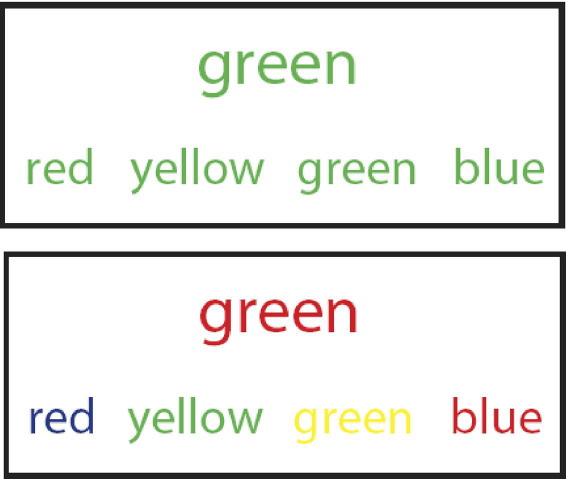
“Brydon et al. (2008) examined Stroop performance after typhoid vaccination, and found that individuals with higher vaccine-induced IL-6 levels had significantly slower reaction times across both incongruent and congruent trials.”
From The role of inflammation in core features of depression: Insights from paradigms using exogenously-induced inflammation. (2018) · cites this paper as Brydon et al., 2008
In the citing paper
“Thus, inflammation did not impair inhibitory control, but rather led to an overall psychomotor slowing and/or decrease in motivation (Brydon et al., 2008).”
From The role of inflammation in core features of depression: Insights from paradigms using exogenously-induced inflammation. (2018) · cites this paper as Brydon et al., 2008
In the citing paper
“Studies across the endotoxin, typhoid vaccination, and IFN-α paradigms have consistently shown that exogenous stimulation of proinflammatory cytokines leads to reports of increased fatigue (Brydon et al., 2008; Capuron et al., 2002; Dowell et al., 2016; Eisenberger et al., 2010a; Grigoleit et al., 2011; Harrison et al., 2009; Moieni et al., 2015) and decreases in ratings of vigor (Dowell et al., 2”
From The role of inflammation in core features of depression: Insights from paradigms using exogenously-induced inflammation. (2018) · cites this paper as Brydon et al., 2008
In the citing paper
“Further, greater IL-6 following typhoid vaccination was associated with slower response times on all trials of a color-word Stroop task (both congruent and incongruent trials) (Brydon et al., 2008).”
From The role of inflammation in core features of depression: Insights from paradigms using exogenously-induced inflammation. (2018) · cites this paper as Brydon et al., 2008
In the citing paper
“Notably, increases in IL-6 and decreases in motor speed were both associated with altered activation patterns (enhanced activation) in the substantia nigra (Brydon et al., 2008).”
From The role of inflammation in core features of depression: Insights from paradigms using exogenously-induced inflammation. (2018) · cites this paper as Brydon et al., 2008
In the citing paper
“This is exemplified by typhoid vaccine studies which can lead to increases in fatigue within 2–3 hours despite eliciting only mild, acute increases in inflammation (Brydon et al., 2008).”
From The role of inflammation in core features of depression: Insights from paradigms using exogenously-induced inflammation. (2018) · cites this paper as Brydon et al., 2008
In the citing paper
“Mild, short-term increases in inflammation are sufficient to cause somatic symptoms, particularly fatigue.”
From The role of inflammation in core features of depression: Insights from paradigms using exogenously-induced inflammation. (2018) · cites this paper as Brydon et al., 2008
In the citing paper
“depression and fatigue are the main side effects of treatment with IFN-α (111, 112).”
From Cytokine Research in Depression: Principles, Challenges, and Open Questions (2019) · cites this paper as [111]
Self-check
Percentages, sums and reported differences re-computed from the paper’s own numbers.
The self-check needs the paper’s full text.
Citations
Cites
Dopamine, learning and motivation.
Wise, R. A. (2004) · Nature Reviews Neuroscience · doi:10.1038/nrn1406 · Cited by 3,379 · cited 2×
“gonists that potentiate dopaminergic neurotransmission imrove the speed of motor responses in animals, whereas striatal opamine depletion and selective blockade of dopamine D1 or 2 receptors significantly impair performance on reaction time asks (13,16,17).”
Biological basis of the behavior of sick animals
Hart, B. L. (1988) · Neuroscience & Biobehavioral Reviews · doi:10.1016/s0149-7634(88)80004-6 · Cited by 2,223
Cytokine-Associated Emotional and Cognitive Disturbances in Humans
Reichenberg, A., Yirmiya, R., Schuld, A., Kraus, T., Haack, M., Morag, A., & Pollmächer, T. (2001) · Archives of General Psychiatry · doi:10.1001/archpsyc.58.5.445 · Cited by 1,365
Systemic infections and inflammation affect chronic neurodegeneration
Perry, V. H., Cunningham, C., & Holmes, C. (2007) · Nature Reviews Immunology · doi:10.1038/nri2015 · Cited by 1,027
Kim, W., Mohney, R. P., Wilson, B. C., Jeohn, G., Liu, B., & Hong, J. (2000) · Journal of Neuroscience · doi:10.1523/jneurosci.20-16-06309.2000 · Cited by 881
Optimized EPI for fMRI studies of the orbitofrontal cortex
Deichmann, R., Gottfried, J. A., Hutton, C., & Turner, R. (2003) · NeuroImage · doi:10.1016/s1053-8119(03)00073-9 · Cited by 821
Maes, M., Bosmans, E., De Jongh, R., Kenis, G., Vandoolaeghe, E., & Neels, H. (1997) · Cytokine · doi:10.1006/cyto.1997.0238 · Cited by 728
Gao, H., Jiang, J., Wilson, B. C., Zhang, W., Hong, J., & Liu, B. (2002) · Journal of Neurochemistry · doi:10.1046/j.1471-4159.2002.00928.x · Cited by 690
Kim, Y. S., & Joh, T. H. (2006) · Experimental & Molecular Medicine · doi:10.1038/emm.2006.40 · Cited by 655
Acute Systemic Inflammation Impairs Endothelium-Dependent Dilatation in Humans
Hingorani, A. D., Cross, J. M., Kharbanda, R. K., Mullen, M. J., Bhagat, K., Taylor, M., Donald, A. E., Palacios‐Callender, M., Griffin, G. E., Deanfield, J. E., et al. (2000) · Circulation · doi:10.1161/01.cir.102.9.994 · Cited by 605
Cited by
Sorted by citations
Inflammation and Its Discontents: The Role of Cytokines in the Pathophysiology of Major Depression
Miller, A. H., Maletic, V., & Raison, C. L. (2009) · Biological Psychiatry · doi:10.1016/j.biopsych.2008.11.029 · Cited by 3,848
“Both IFN-alpha and typhoid vaccination have been associated with psychomotor slowing and/or fatigue in association with changes in neuronal activity in the substantia nigra, putamen, and nucleus accumbens, as measured by functional magnetic resonance imaging (fMRI) and positron emission tomography (16,100).”
Slavich, G. M., & Irwin, M. R. (2014) · Psychological Bulletin · doi:10.1037/a0035302 · Cited by 2,206
Raison, C. L., Rutherford, R. E., Woolwine, B. J., Shuo, C., Schettler, P., Drake, D. F., Haroon, E., & Miller, A. H. (2013) · JAMA Psychiatry · doi:10.1001/2013.jamapsychiatry.4 · Cited by 1,617
Visceral influences on brain and behavior
Critchley, H. D., & Harrison, N. A. (2013) · Neuron · doi:10.1016/j.neuron.2013.02.008 · Cited by 1,177
“Animal studies indicate that sympathetic activation blunts cerebral blood flow responses to hypoxia, hypercapnia, and hypertension (López de Pablo et al., 1982; Busija, 1984).”
Self-citationImmune system to brain signaling: Neuropsychopharmacological implications
Capuron, L., & Miller, A. H. (2011) · Pharmacology & Therapeutics · doi:10.1016/j.pharmthera.2011.01.014 · Cited by 1,195
“…induce altered metabolic activity (as revealed by positron emission tomography) and blood flow (as measured by functional magnetic resonance imaging) in relevant basal ganglia nuclei including the nucleus accumbens, putamen, and substantia nigra (Capuron et al., 2007b; Brydon et al., 2008).”
BackgroundInfluential
Metadata
- Authors
- Brydon, L., Harrison, N. A., Walker, C., Steptoe, A., & Critchley, H. D.
- Affiliations
- UCL Queen Square Institute of Neurology (GB)
- Wellcome Centre for Human Neuroimaging (GB)
- Brighton and Sussex Medical School (GB)
- Corresponding author
- Brydon, Lena
- Venue
- Biological Psychiatry
- Publisher
- Elsevier BV
- Published
- 2008-06
- Volume
- 63
- Issue
- 11
- Pages
- 1022-1029
- ISSN
- 0006-3223 (ISSN-L)
- PMC
- PMC2885493
- OpenAlex
- W2059416963
- Cited by
- 381
- References
- 48
- Citations by year
- 2026: 5 · 2025: 20 · 2024: 23 · 2023: 22 · 2022: 16 · 2021: 41 · 2020: 25 · 2019: 20 · 2018: 26 · 2017: 15 · 2016: 35 · 2015: 26 · 2014: 17 · 2013: 19 · 2012: 25
- FWCI
- 5.12
- Type
- journal article
- Language
- en
- Open access
- hybrid
- doi.org
- Licence
- Locations
- Biological Psychiatry (publishedVersion, cc-by)
- PubMed Central (publishedVersion, cc-by)
- PubMed (publishedVersion)
- Sussex Research Online (University of Sussex) (submittedVersion)
- UCL Discovery (University College London) (submittedVersion)
- Figshare (submittedVersion, cc-by)
- ORCA Online Research @Cardiff (Cardiff University) (submittedVersion)
- Funders
- Wellcome Trust
- British Heart Foundation
- Topics
- Life Sciences › Neuroscience › Biological Psychiatry › Tryptophan and brain disorders
- Life Sciences › Neuroscience › Neurology › Neuroinflammation and Neurodegeneration Mechanisms
- Life Sciences › Neuroscience › Behavioral Neuroscience › Stress Responses and Cortisol
- Keywords
- peripheral inflammation, substantia nigra, psychomotor retardation, typhoid vaccination, interleukin-6, sickness behavior, neuroinflammation, dopaminergic midbrain, reaction time, neurovascular coupling, systemic infection, cytokines
- MeSH terms
- Adolescent, Adult, Brain Mapping, Double-Blind Method, Humans, Image Processing, Computer-Assisted, Inflammation, Magnetic Resonance Imaging, Male, Neuropsychological Tests, Oxygen, Photic Stimulation, Psychomotor Performance, Reaction Time, Substantia Nigra, Typhoid Fever, Vaccination, Interleukin-6, Cross-Over Studies, Motor Skills Disorders
About these checks
Registry, retraction, Cites and statistics results are computed, not judged, with one exception: a printed reference that no index lists is read once by a model before it counts as a citation error. Claims are extracted by a model and kept only when their quote appears verbatim in the text; each cited source is then checked, with a model’s help, for whether it says what the claim relies on. Those verdicts can be wrong — read the claim’s quote and the cited source before relying on one.
Statistics and arithmetic are recomputed, not judged.
Confidence bands are shown only for fields calibrated on our annotated test set. None is calibrated yet, so no band is shown.
What counts as a claim ›How we measure confidence ›How we check this ›
Are you an author, or do you see a problem with this page? Request a review
