

The DOI matches its Crossref record; 38 of the 39 references it cites were found in a registry or an index.
The Life History of 21 Breast Cancers
Open accessAbstract
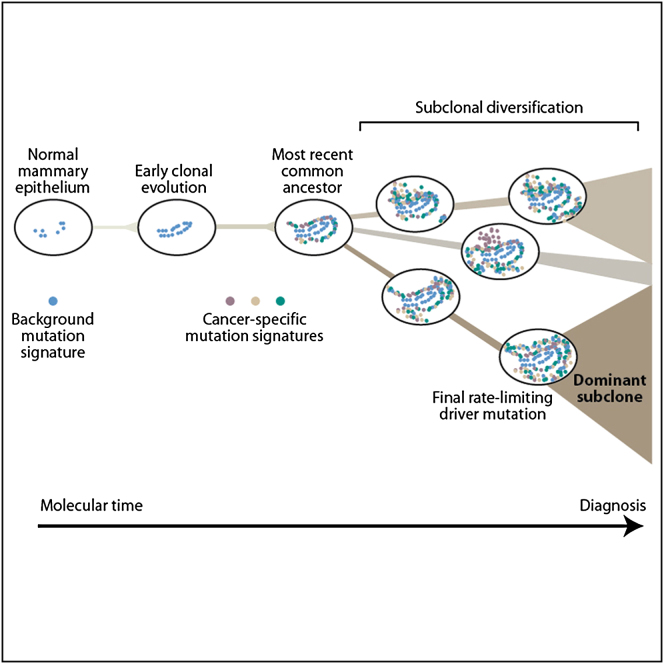
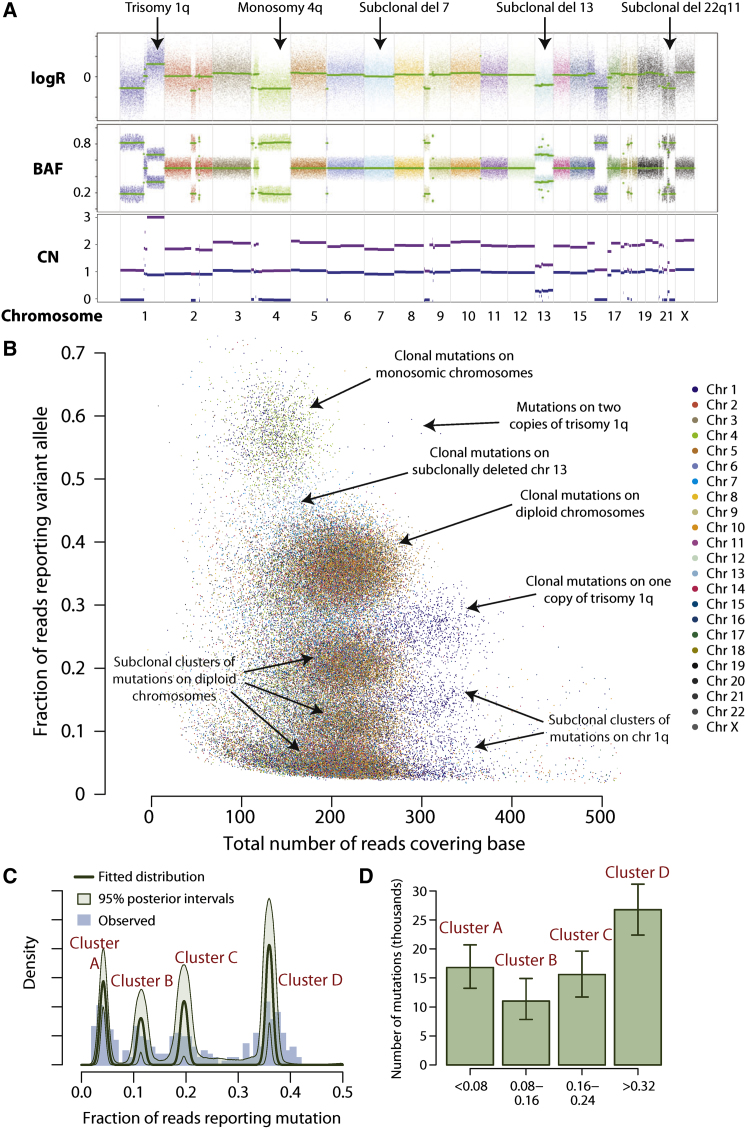
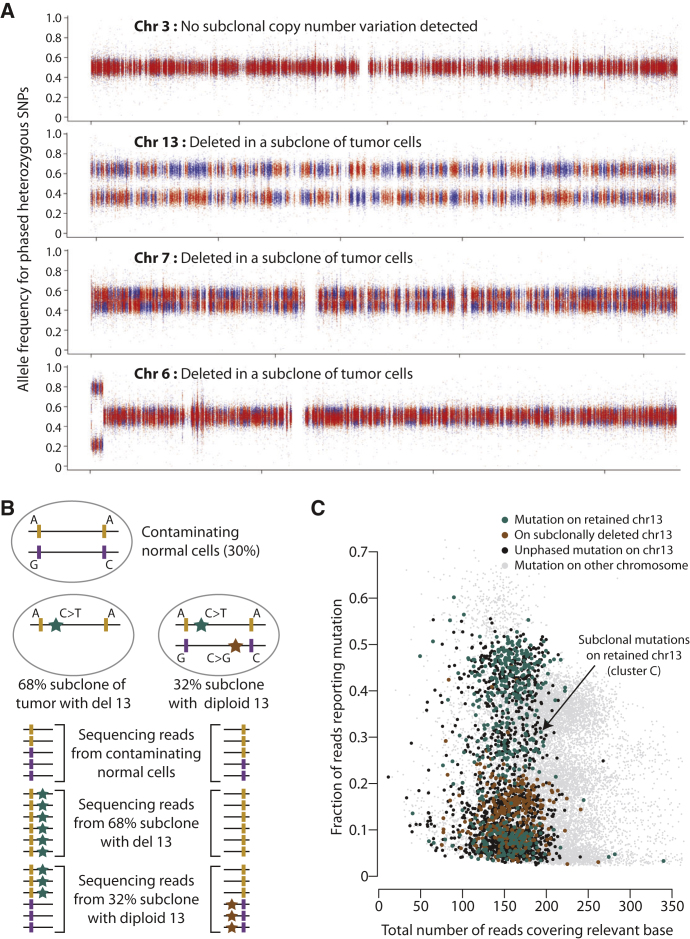
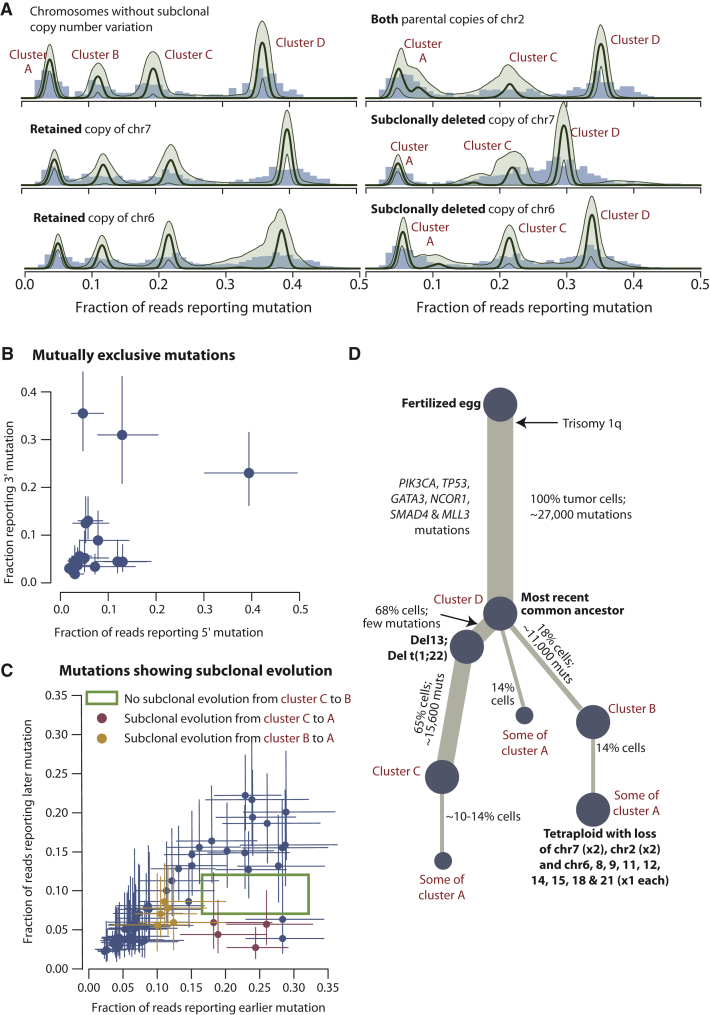
Cancer evolves dynamically as clonal expansions supersede one another driven by shifting selective pressures, mutational processes, and disrupted cancer genes. These processes mark the genome, such that a cancer's life history is encrypted in the somatic mutations present. We developed algorithms to decipher this narrative and applied them to 21 breast cancers. Mutational processes evolve across a cancer's lifespan, with many emerging late but contributing extensive genetic variation. Subclonal diversification is prominent, and most mutations are found in just a fraction of tumor cells. Every tumor has a dominant subclonal lineage, representing more than 50% of tumor cells. Minimal expansion of these subclones occurs until many hundreds to thousands of mutations have accumulated, implying the existence of long-lived, quiescent cell lineages capable of substantial proliferation upon acquisition of enabling genomic changes. Expansion of the dominant subclone to an appreciable mass may therefore represent the final rate-limiting step in a breast cancer's development, triggering diagnosis.
Overview
The claims and statistics of this paper haven’t been checked yet.
Run the check — free, no account needed. It reads the open-access text and checks the sources it cites.
Integrity signals
Registry
Cites
Statistics
Figures
Verification
Claims the paper makes
The claims and statistics of this paper haven’t been checked yet.
Run the check — free, no account needed. It reads the open-access text and checks the sources it cites.
Claims other papers make about this one
Each is checked against this paper’s own text: does it say what the citing paper says it does?
The source backs part of the claim, not all of it — or backs it for a different population, condition or comparison.
In the citing paper
“Cancer whole genome sequencing (WGS) is now feasible, with thousands of matched tumor-normal pairs successfully sequenced to date, revealing novel biological insights2–4.”
From Whole-genome sequencing of triple-negative breast cancers in a population-based clinical study (2019) · cites this paper as [3]
Experimental — accuracy not yet measured
Self-check
Percentages, sums and reported differences re-computed from the paper’s own numbers.
The self-check needs the paper’s full text.
Citations
Cites
Hallmarks of Cancer: The Next Generation
Hanahan, D., & Weinberg, R. A. (2011) · Cell · doi:10.1016/j.cell.2011.02.013 · Cited by 66,590
A map of human genome variation from population-scale sequencing.
The 1000 Genomes Project Consortium (2010) · Nature · doi:10.1038/nature09534 · Cited by 7,877
The landscape of somatic copy-number alteration across human cancers
Beroukhim, R., Mermel, C. H., Porter, D., Wei, G., Raychaudhuri, S., Donovan, J., Barretina, J., Boehm, J. S., Dobson, J., Urashima, M., et al. (2010) · Nature · doi:10.1038/nature08822 · Cited by 4,017
Core Signaling Pathways in Human Pancreatic Cancers Revealed by Global Genomic Analyses
Jones, S., Zhang, X., Parsons, D. W., Lin, J. C.-H., Leary, R. J., Angenendt, P., Mankoo, P., Carter, H., Kamiyama, H., Jimeno, A., et al. (2008) · Science · doi:10.1126/science.1164368 · Cited by 3,969
Howie, B. N., Donnelly, P., & Marchini, J. (2009) · PLoS Genetics · doi:10.1371/journal.pgen.1000529 · Cited by 3,928
Stratton, M. R., Campbell, P. J., & Futreal, P. A. (2009) · Nature · doi:10.1038/nature07943 · Cited by 3,625
Self-citationCancer stem cells in solid tumours: accumulating evidence and unresolved questions
Visvader, J. E., & Lindeman, G. J. (2008) · Nature reviews. Cancer · doi:10.1038/nrc2499 · Cited by 3,501
Patterns of somatic mutation in human cancer genomes
Greenman, C. D., Stephens, P., Smith, R., Dalgliesh, G. L., Hunter, C., Bignell, G. R., Davies, H. R., Teague, J. W., Butler, A. P., Stevens, C., et al. (2007) · Nature · doi:10.1038/nature05610 · Cited by 3,143
Self-citationTumour evolution inferred by single-cell sequencing
Navin, N., Kendall, J., Troge, J., Andrews, P., Rodgers, L., McIndoo, J., Cook, K., Stepansky, A., Levy, D., Esposito, D., et al. (2011) · Nature · doi:10.1038/nature09807 · Cited by 2,598
Distant metastasis occurs late during the genetic evolution of pancreatic cancer
Yachida, S., Jones, S., Bozic, I., Antal, T., Leary, R., Fu, B., Kamiyama, M., Hruban, R. H., Eshleman, J. R., Nowak, M. A., et al. (2010) · Nature · doi:10.1038/nature09515 · Cited by 2,502
Research works printed but not linked: 3
- 1000 Genomes Project Consortium. (2010). A map of human genome variation from population-scale sequencing. Nature 467, 1061–1073. · DOI · Paper page
- Greenman, C.D., Pleasance, E.D., Newman, S., Yang, F., Fu, B., Nik-Zainal, S., Jones, D., Lau, K.W., Carter, N., Edwards, P.A., et al. (2012). Estimation of rearrangement phylogeny for cancer genomes. Genome Res. 22, 346–361. · DOI
- Van Loo, P., Nordgard, S.H., Lingjærde, O.C., Russnes, H.G., Rye, I.H., Sun, W., Weigman, V.J., Marynen, P., Zetterberg, A., Naume, B., et al. (2010). Allele-specific copy number analysis of tumors. Proc. Natl. Acad. Sci. USA 107, 16910–16915. · DOI
Cited by
Sorted by citations
Inferring tumour purity and stromal and immune cell admixture from expression data
Yoshihara, K., Shahmoradgoli, M., Martínez, E., Vegesna, R., Kim, H., Torres-Garcia, W., Treviño, V., Shen, H., Laird, P. W., Levine, D. A., et al. (2013) · Nature Communications · doi:10.1038/ncomms3612 · Cited by 9,778
Signatures of mutational processes in human cancer
Initiative, A. P. C. G., Alexandrov, L. B., ICGC Breast Cancer Consortium, ICGC MMML-Seq Consortium, PedBrain, I., Nik-Zainal, S., Wedge, D. C., Aparicio, S. A. J. R., Behjati, S., Biankin, A. V., et al. (2013) · Nature · doi:10.1038/nature12477 · Cited by 9,660
Self-citationVogelstein, B., Papadopoulos, N., Velculescu, V. E., Zhou, S., Diaz, L. A., & Kinzler, K. W. (2013) · Science · doi:10.1126/science.1235122 · Cited by 7,863
Sensitive detection of somatic point mutations in impure and heterogeneous cancer samples
Cibulskis, K., Lawrence, M. S., Carter, S. L., Sivachenko, A., Jaffe, D. B., Sougnez, C. L., Gabriel, S., Meyerson, M. M., Lander, E. S., & Getz, G. A. (2013) · Nature Biotechnology · doi:10.1038/nbt.2514 · Cited by 4,965
Tumour heterogeneity and resistance to cancer therapies
Dagogo-Jack, I., & Shaw, A. T. (2018) · Nature Reviews Clinical Oncology · doi:10.1038/nrclinonc.2017.166 · Cited by 3,846
Metadata
- Authors
- Nik-Zainal, S., Van Loo, P., Wedge, D. C., Alexandrov, L. B., Greenman, C. D., Lau, K. W., Raine, K., Jones, D., Marshall, J., Ramakrishna, M., Shlien, A., Cooke, S. L., Hinton, J., Menzies, A., Stebbings, L. A., Leroy, C., Jia, M., Rance, R., Mudie, L. J., Gamble, S. J., Stephens, P. J., McLaren, S., Tarpey, P. S., Papaemmanuil, E., Davies, H. R., Varela, I., McBride, D. J., Bignell, G. R., Leung, K., Butler, A. P., Teague, J. W., Martin, S., Jönsson, G., Mariani, O., Boyault, S., Miron, P., Fatima, A., Langerød, A., Aparicio, S. A. J. R., Tutt, A., Sieuwerts, A. M., Borg, Å., Thomas, G., Salomon, A. V., Richardson, A. L., Børresen-Dale, A.-L., Futreal, P. A., Stratton, M. R., & Campbell, P. J.
- Affiliations
- Wellcome Sanger Institute (GB)
- University of East Anglia (GB)
- King's College London (GB)
- Institut Curie (FR)
- Lyon 1 Université (FR)
- Dana-Farber Cancer Institute (US)
- Oslo University Hospital (NO)
- University of British Columbia (CA)
- Erasmus MC (NL)
- Lund University (SE)
- Brigham and Women's Hospital (US)
- University of Cambridge (GB)
- Corresponding author
- Campbell, Peter J.
- ORCID
- Wedge, David C.
- Alexandrov, Ludmil B.
- Lau, King Wai
- Raine, Keiran
- Jones, David
- Marshall, John
- Ramakrishna, Manasa
- Shlien, Adam
- Hinton, Jonathan
- Menzies, Andrew
- Jia, Mingming
- Tarpey, Patrick S.
- Papaemmanuil, Elli
- Davies, Helen R.
- Varela, Ignacio
- McBride, David J.
- Teague, Jon W.
- Martin, Sancha
- Jönsson, Goran
- Mariani, Odette
- Boyault, Sandrine
- Miron, Penelope
- Aparicio, Samuel A.J.R.
- Tutt, Andrew
- Sieuwerts, Anieta M.
- Borg, Åke
- Thomas, Gilles
- Richardson, Andrea L.
- Futreal, P. Andrew
- Stratton, Michael R.
- Campbell, Peter J.
- Venue
- Cell
- Publisher
- Elsevier BV
- Published
- 2012-05
- Volume
- 149
- Issue
- 5
- Pages
- 994-1007
- ISSN
- 0092-8674 (ISSN-L)
- PMC
- PMC3428864
- OpenAlex
- W2109991075
- Cited by
- 1,443
- References
- 39
- Citations by year
- 2026: 51 · 2025: 77 · 2024: 83 · 2023: 84 · 2022: 71 · 2021: 112 · 2020: 105 · 2019: 93 · 2018: 114 · 2017: 103 · 2016: 100 · 2015: 126 · 2014: 139 · 2013: 140 · 2012: 44
- FWCI
- 47.68
- Type
- journal article
- Language
- en
- Update notices
- erratum (2015-08-13)
- Open access
- hybrid
- doi.org
- Licence
- Locations
- Cell (publishedVersion, cc-by)
- Europe PMC (PubMed Central) (publishedVersion, cc-by)
- PubMed Central (publishedVersion, cc-by)
- PubMed (publishedVersion)
- ENLIGHTEN (Jurnal Bimbingan dan Konseling Islam) (acceptedVersion)
- UEA Digital Repository (University of East Anglia) (acceptedVersion)
- Research Portal (King's College London) (submittedVersion, other-oa)
- Lirias (KU Leuven) (submittedVersion)
- Lund University Publications (Lund University) (submittedVersion)
- Research Explorer (The University of Manchester) (submittedVersion)
- Apollo (University of Cambridge) (submittedVersion, cc-by)
- Apollo (cc-by)
- Funders
- Wellcome Trust (088340, 093867, WT088340MA, 098051)
- National Institute for Health and Care Research
- European Commission (242006)
- National Cancer Institute (CA 089393, P50CA089393)
- Topics
- Life Sciences › Biochemistry, Genetics and Molecular Biology › Cancer Research › Cancer Genomics and Diagnostics
- Health Sciences › Medicine › Oncology › Cancer Cells and Metastasis
- Life Sciences › Biochemistry, Genetics and Molecular Biology › Molecular Biology › Single-cell and spatial transcriptomics
- Keywords
- breast cancer, tumor evolution, clonal evolution, somatic mutations, mutational processes, clonal expansion, cancer genomics
- MeSH terms
- Algorithms, Breast Neoplasms, Cell Transformation, Neoplastic, Chromosome Aberrations, Female, Humans, Mutation, Point Mutation, Clonal Evolution
About these checks
Registry, retraction, Cites and statistics results are computed, not judged, with one exception: a printed reference that no index lists is read once by a model before it counts as a citation error. Claims are extracted by a model and kept only when their quote appears verbatim in the text; each cited source is then checked, with a model’s help, for whether it says what the claim relies on. Those verdicts can be wrong — read the claim’s quote and the cited source before relying on one.
Statistics and arithmetic are recomputed, not judged.
Confidence bands are shown only for fields calibrated on our annotated test set. None is calibrated yet, so no band is shown.
What counts as a claim ›How we measure confidence ›How we check this ›
Are you an author, or do you see a problem with this page? Request a review
