

The DOI matches its Crossref record; 96 of the 100 references it cites were found in a registry or an index.
SARS-CoV-2 Disrupts Splicing, Translation, and Protein Trafficking to Suppress Host Defenses
Open accessAbstract
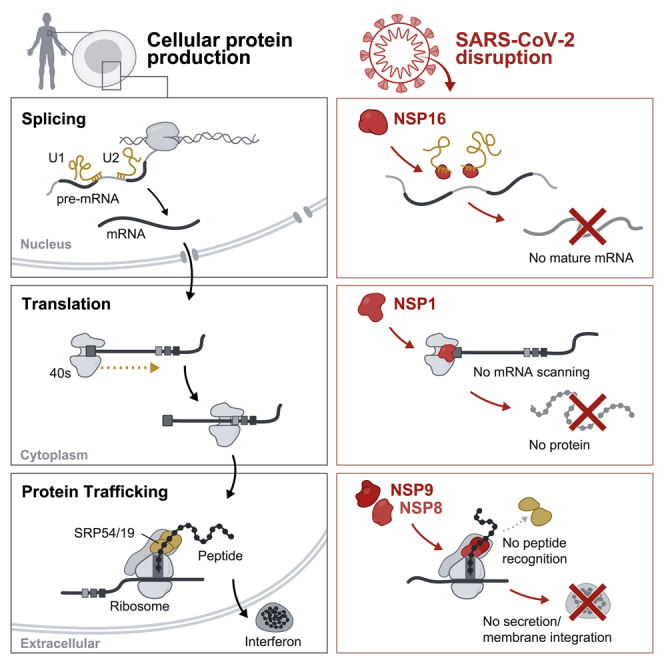
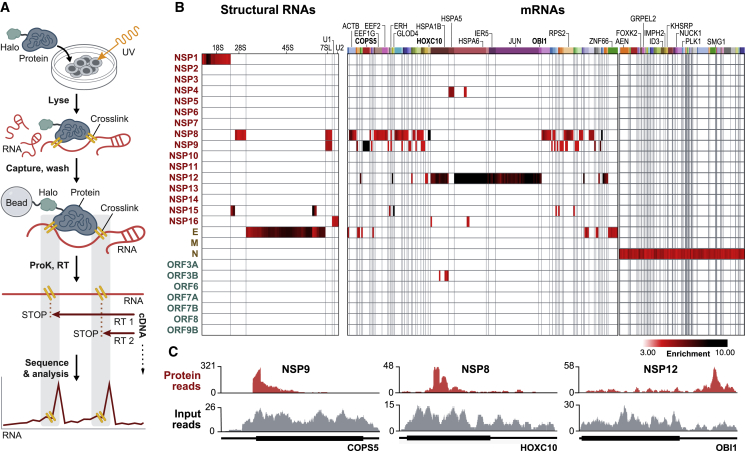
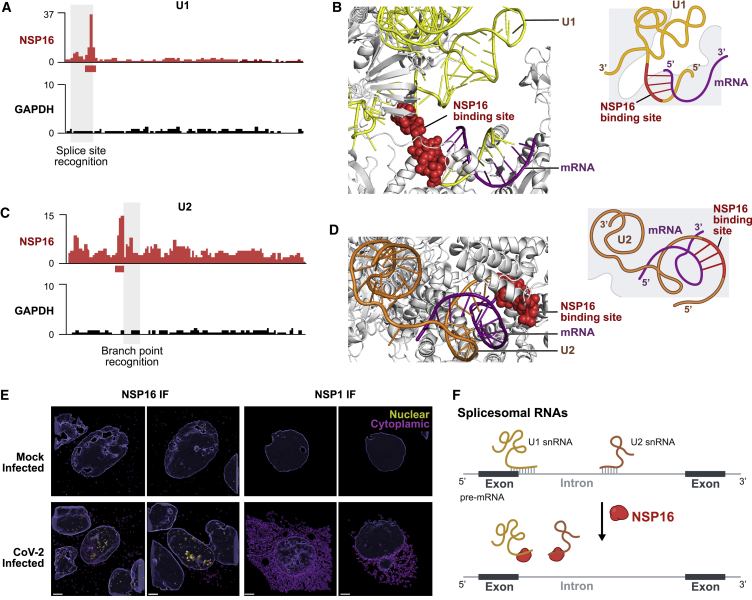
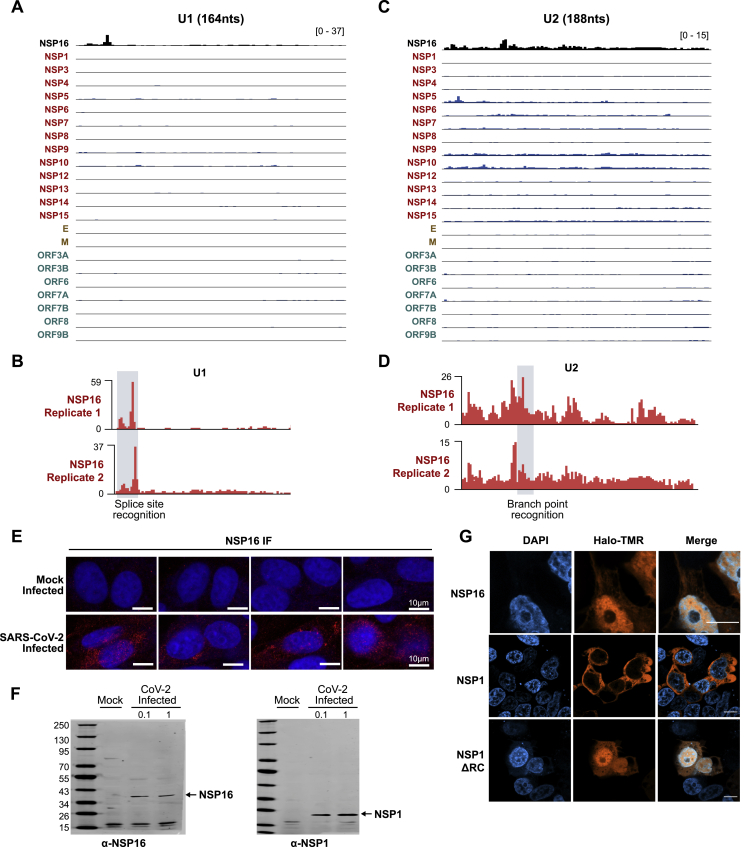
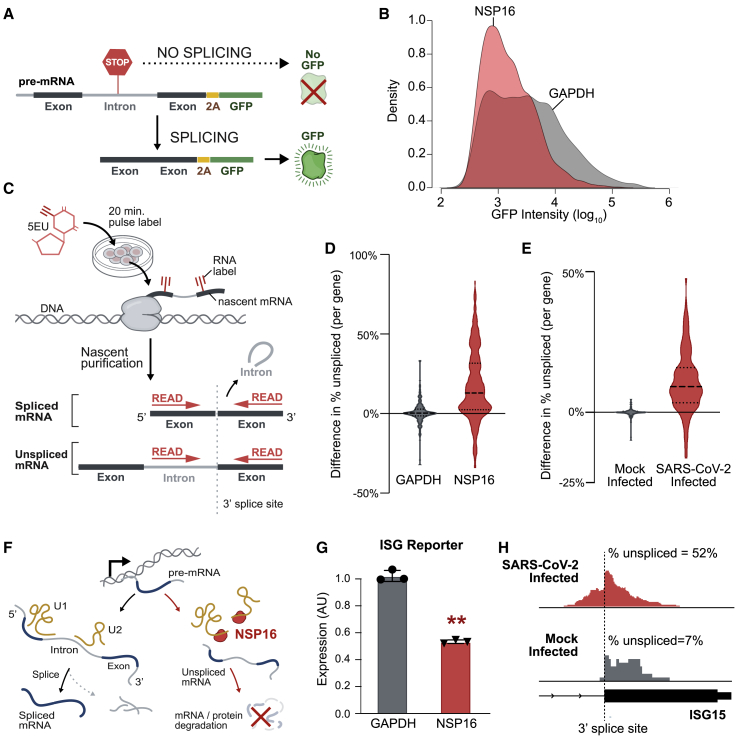
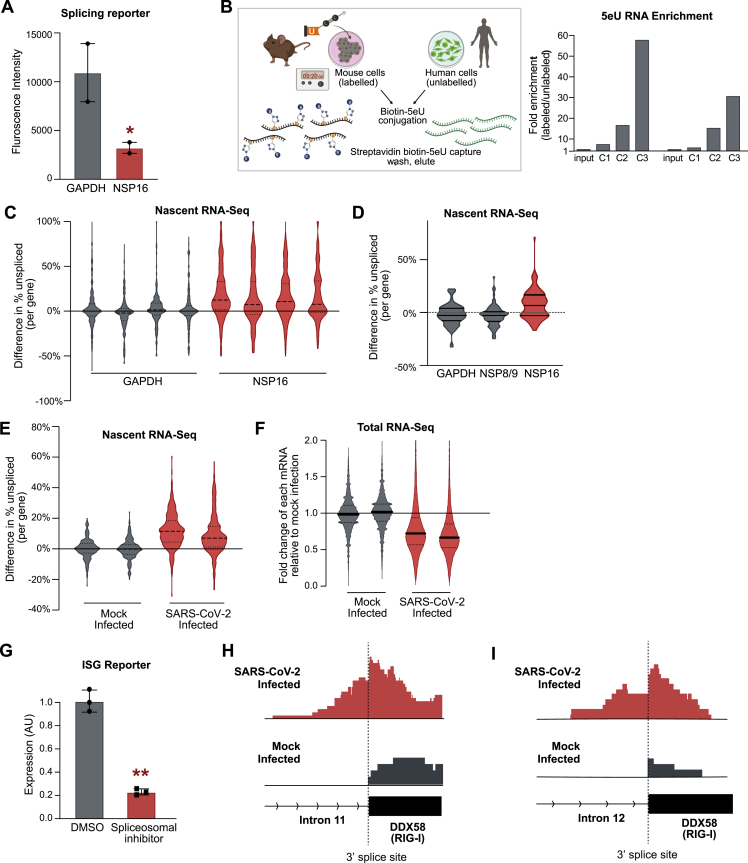
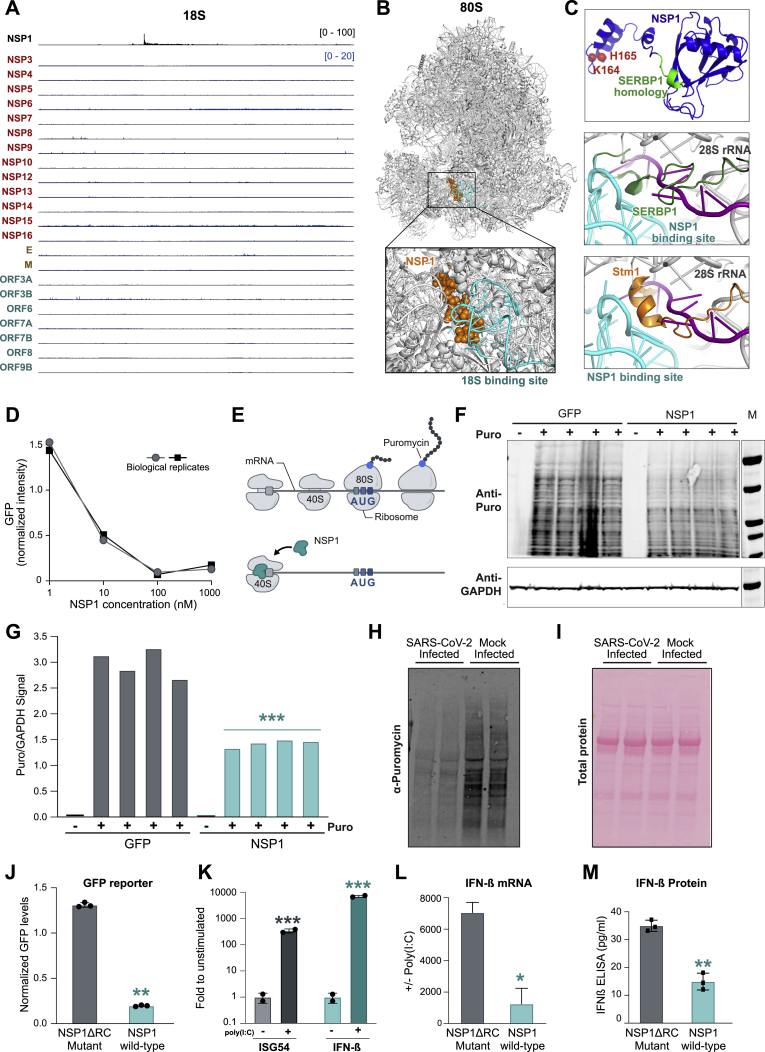
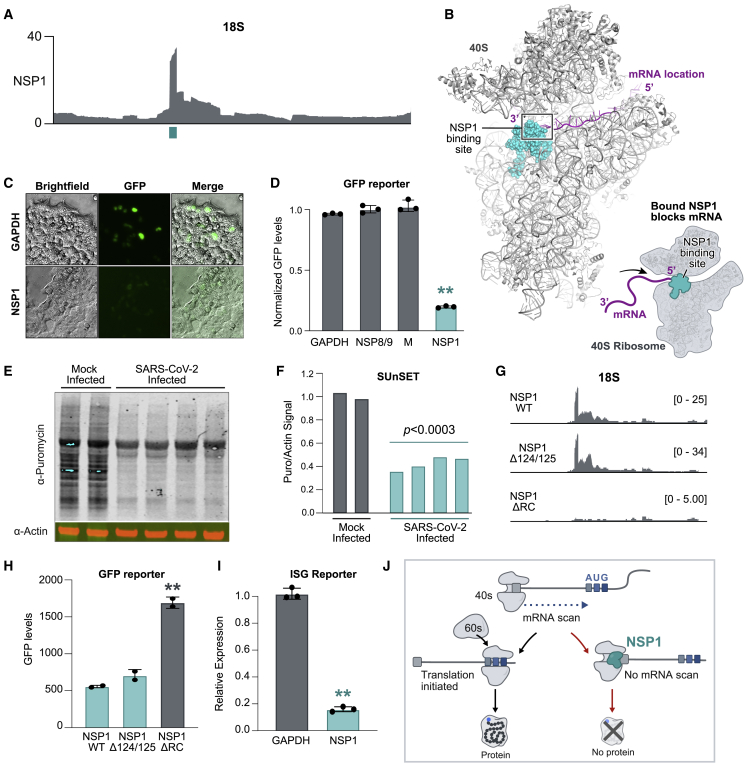
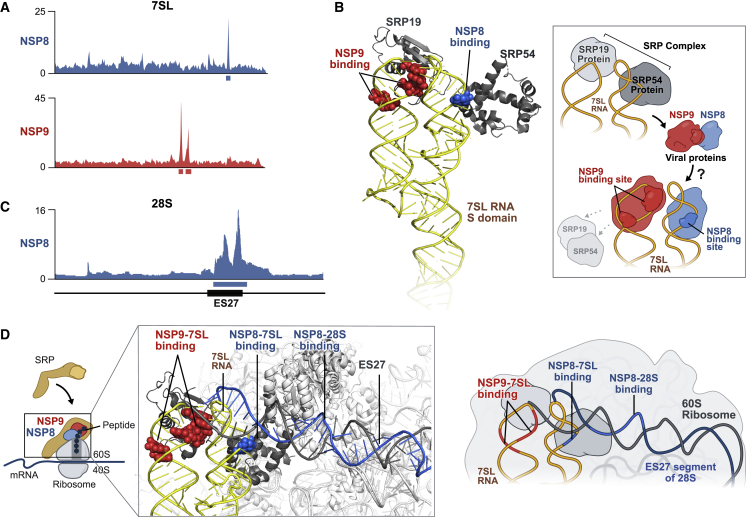
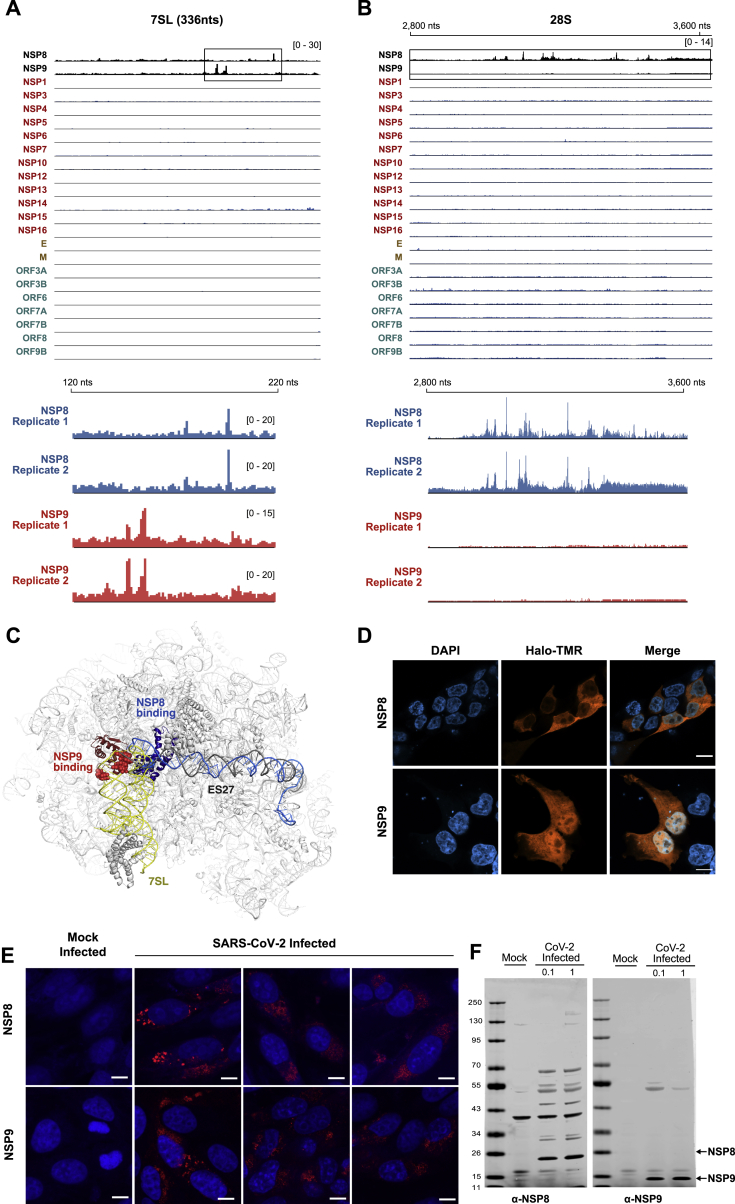
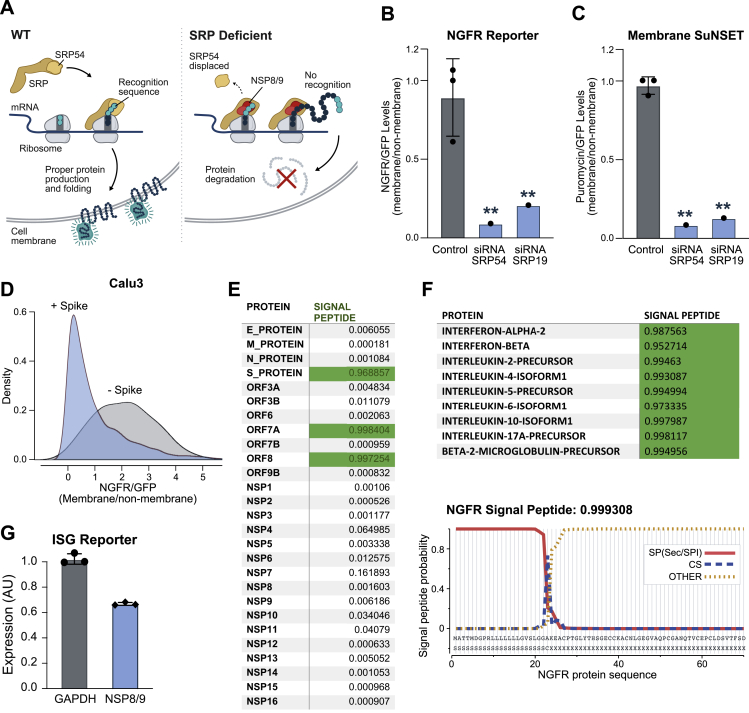
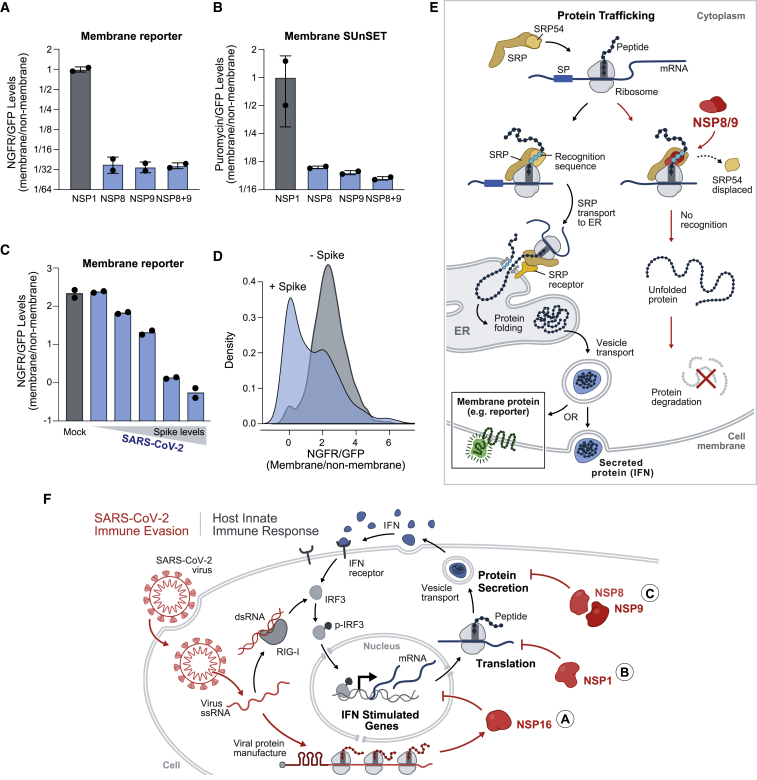
Severe acute respiratory syndrome coronavirus 2 (SARS-CoV-2) is a recently identified coronavirus that causes the respiratory disease known as coronavirus disease 2019 (COVID-19). Despite the urgent need, we still do not fully understand the molecular basis of SARS-CoV-2 pathogenesis. Here, we comprehensively define the interactions between SARS-CoV-2 proteins and human RNAs. NSP16 binds to the mRNA recognition domains of the U1 and U2 splicing RNAs and acts to suppress global mRNA splicing upon SARS-CoV-2 infection. NSP1 binds to 18S ribosomal RNA in the mRNA entry channel of the ribosome and leads to global inhibition of mRNA translation upon infection. Finally, NSP8 and NSP9 bind to the 7SL RNA in the signal recognition particle and interfere with protein trafficking to the cell membrane upon infection. Disruption of each of these essential cellular functions acts to suppress the interferon response to viral infection. Our results uncover a multipronged strategy utilized by SARS-CoV-2 to antagonize essential cellular processes to suppress host defenses.
Overview
The claims and statistics of this paper haven’t been checked yet.
Run the check — free, no account needed. It reads the open-access text and checks the sources it cites.
Integrity signals
Registry
Cites
Statistics
Figures
Verification
Claims the paper makes
The claims and statistics of this paper haven’t been checked yet.
Run the check — free, no account needed. It reads the open-access text and checks the sources it cites.
Claims other papers make about this one
Each is checked against this paper’s own text: does it say what the citing paper says it does?
In the citing paper
“A predominant strategy appears to be the inhibition of the type I interferon response58–60 at multiple points, including impaired recognition of viral RNA61,62, decreased nuclear translocation of pro-inflammatory transcription factors (such as IRF3, IRF7 and STAT1)61,63 and suppression of STAT1 and STAT2 phosphorylation64,65.”
From Immunological mechanisms of vaccine-induced protection against COVID-19 in humans (2021) · cites this paper as [61]
In the citing paper
“SARS-CoV-2-derived non-structural protein 16 (NSP16) suppresses global mRNA splicing and diminishes recognition of viral RNA by intracellular helicase receptors, NSP1 leads to global inhibition of mRNA translation by binding to the 18S ribosomal RNA in the mRNA entry channel, and NSP8 and NSP9 interfere with protein trafficking to the cell membrane; all three mechanisms independently leading to”
From COVID-19 and the human innate immune system (2021) · cites this paper as Banerjee et al., 2020
Self-check
Percentages, sums and reported differences re-computed from the paper’s own numbers.
The self-check needs the paper’s full text.
Citations
Cites
Trimmomatic: a flexible trimmer for Illumina sequence data
Bolger, A. M., Lohse, M., & Usadel, B. (2014) · Bioinformatics · doi:10.1093/bioinformatics/btu170 · Cited by 65,548
Fast gapped-read alignment with Bowtie 2
Langmead, B., & Salzberg, S. L. (2012) · Nature Methods · doi:10.1038/nmeth.1923 · Cited by 56,400
STAR: ultrafast universal RNA-seq aligner
Dobin, A., Davis, C. A., Schlesinger, F., Drenkow, J., Zaleski, C., Jha, S., Batut, P., Chaisson, M., & Gingeras, T. R. (2013) · Bioinformatics · doi:10.1093/bioinformatics/bts635 · Cited by 51,709
Berman, H. M. (2000) · Nucleic Acids Research · doi:10.1093/nar/28.1.235 · Cited by 40,196
The PyMOL Molecular Graphics System
DeLano, W. L. (2002) · Medical Entomology and Zoology · Cited by 18,147
Robinson, J. T., Thorvaldsdóttir, H., Winckler, W., Guttman, M., Lander, E. S., Getz, G., & Mesirov, J. P. (2011) · Nature Biotechnology · doi:10.1038/nbt.1754 · Cited by 15,390
Self-citationThe Molecular Signatures Database Hallmark Gene Set Collection
Liberzon, A., Birger, C., Thorvaldsdóttir, H., Ghandi, M., Mesirov, J. P., & Tamayo, P. (2015) · Cell Systems · doi:10.1016/j.cels.2015.12.004 · Cited by 13,807
Recognition of double-stranded RNA and activation of NF-κB by Toll-like receptor 3
Alexopoulou, L., Holt, A. C., Medzhitov, R., & Flavell, R. A. (2001) · Nature · doi:10.1038/35099560 · Cited by 6,129
The proximal origin of SARS-CoV-2
Andersen, K. G., Rambaut, A., Lipkin, W. I., Holmes, E. C., & Garry, R. F. (2020) · Nature Medicine · doi:10.1038/s41591-020-0820-9 · Cited by 5,081
Comparative Protein Structure Modeling Using Modeller
Eswar, N., Webb, B., Martı́-Renom, M. A., Madhusudhan, M. S., Eramian, D., Shen, M., Pieper, U., & Šali, A. (2006) · Current Protocols in Bioinformatics · doi:10.1002/0471250953.bi0506s15 · Cited by 4,618
Cited by
Sorted by citations
SARS-CoV-2: Structure, Biology, and Structure-Based Therapeutics Development
Wang, M.-Y., Zhao, R., Gao, L.-J., Gao, X.-F., Wang, D.-P., & Cao, J.-M. (2020) · Frontiers in Cellular and Infection Microbiology · doi:10.3389/fcimb.2020.587269 · Cited by 874
The trRosetta server for fast and accurate protein structure prediction
Du, Z., Su, H. L., Wang, W., Ye, L., Wei, H., Peng, Z., Anishchenko, I. V., Baker, D. A., & Yang, J. (2021) · Nature Protocols · doi:10.1038/s41596-021-00628-9 · Cited by 737
COVID-19 and the human innate immune system
Schultze, J. L., & Aschenbrenner, A. C. (2021) · Cell · doi:10.1016/j.cell.2021.02.029 · Cited by 714
“…translation by binding to the 18S ribosomal RNA in themRNA entry channel, and NSP8 and NSP9 interfere with protein trafficking to the cell membrane; all three mechanisms independently leading to reduction of type I IFN production by the affected cell (Banerjee et al., 2020; Gordon et al., 2020).”
BackgroundImmunological mechanisms of vaccine-induced protection against COVID-19 in humans
Sadarangani, M., Marchant, A., & Kollmann, T. R. (2021) · Nature Reviews Immunology · doi:10.1038/s41577-021-00578-z · Cited by 560
Malone, B. F., Urakova, N., Snijder, E. J., & Campbell, E. A. (2021) · Nature Reviews Molecular Cell Biology · doi:10.1038/s41580-021-00432-z · Cited by 583
Metadata
- Authors
- Banerjee, A. K., Blanco, M. R., Bruce, E. A., Honson, D. D., Chen, L. M., Chow, A., Bhat, P., Ollikainen, N., Quinodoz, S. A., Loney, C., Thai, J., Miller, Z. D., Lin, A. E., Schmidt, M. M., Stewart, D. G., Goldfarb, D., De Lorenzo, G., Rihn, S. J., Voorhees, R. M., Botten, J. W., Majumdar, D., & Guttman, M.
- Affiliations
- University of Southern California (US)
- California Institute of Technology (US)
- University of Vermont (US)
- MRC University of Glasgow Centre for Virus Research (GB)
- Broad Institute (US)
- Corresponding author
- Majumdar, Devdoot
- Guttman, Mitchell
- ORCID
- Banerjee, Abhik K.
- Blanco, Mario R.
- Bruce, Emily A.
- Honson, Drew D.
- Chen, Linlin M.
- Chow, Amy
- Bhat, Prashant
- Ollikainen, Noah
- Quinodoz, Sofia A.
- Loney, Colin
- Miller, Zachary D.
- Lin, Aaron E.
- Schmidt, Madaline M.
- Stewart, Douglas G.
- Goldfarb, Daniel
- De Lorenzo, Giuditta
- Rihn, Suzannah J.
- Voorhees, Rebecca M.
- Botten, Jason W.
- Majumdar, Devdoot
- Guttman, Mitchell
- Venue
- Cell
- Publisher
- Elsevier BV
- Published
- 2020-11
- Volume
- 183
- Issue
- 5
- Pages
- 1325-1339.e21
- ISSN
- 0092-8674 (ISSN-L)
- PMC
- PMC7543886
- OpenAlex
- W3092296275
- Cited by
- 583
- References
- 100
- Citations by year
- 2026: 40 · 2025: 64 · 2024: 80 · 2023: 106 · 2022: 149 · 2021: 129 · 2020: 15
- FWCI
- 13.29
- Type
- journal article
- Language
- en
- Open access
- hybrid
- doi.org
- Licence
- Locations
- Cell (publishedVersion, cc-by)
- PubMed Central (publishedVersion, cc-by)
- PubMed (publishedVersion)
- ENLIGHTEN (Jurnal Bimbingan dan Konseling Islam) (acceptedVersion, cc-by-sa)
- CaltechAUTHORS (California Institute of Technology) (submittedVersion, cc-by)
- Funders
- Wellcome Trust
- University of Vermont
- Heritage Medical Research Institute
- American Cancer Society
- Foundation for the National Institutes of Health
- Chan Zuckerberg Initiative
- California Institute of Technology
- New York Stem Cell Foundation
- Topics
- Health Sciences › Medicine › Infectious Diseases › SARS-CoV-2 and COVID-19 Research
- Life Sciences › Biochemistry, Genetics and Molecular Biology › Molecular Biology › RNA Research and Splicing
- Life Sciences › Immunology and Microbiology › Immunology › interferon and immune responses
- Keywords
- SARS-CoV-2, COVID-19 pandemic, host-virus interaction, nsp16, Nsp1, 18S rRNA, mRNA translation inhibition, nsp8, nsp9, 7SL RNA, signal recognition particle, protein trafficking, viral pathogenesis
- MeSH terms
- A549 Cells, COVID-19, SARS-CoV-2, Animals, Chlorocebus aethiops, Humans, Interferons, RNA Splicing, RNA, Messenger, RNA, Ribosomal, 18S, Protein Biosynthesis, Vero Cells, Viral Nonstructural Proteins, Signal Recognition Particle, RNA, Small Cytoplasmic, Protein Transport, Host-Pathogen Interactions, HEK293 Cells
About these checks
Registry, retraction, Cites and statistics results are computed, not judged, with one exception: a printed reference that no index lists is read once by a model before it counts as a citation error. Claims are extracted by a model and kept only when their quote appears verbatim in the text; each cited source is then checked, with a model’s help, for whether it says what the claim relies on. Those verdicts can be wrong — read the claim’s quote and the cited source before relying on one.
Statistics and arithmetic are recomputed, not judged.
Confidence bands are shown only for fields calibrated on our annotated test set. None is calibrated yet, so no band is shown.
What counts as a claim ›How we measure confidence ›How we check this ›
Are you an author, or do you see a problem with this page? Request a review
