

Microglial Rac1 is essential for experience-dependent brain plasticity and cognitive performance
Open accessThe DOI matches its Crossref record; 106 of the 106 references it cites were found in a registry or an index; none of the 40 sources its claims cite is checked for support yet.
Abstract
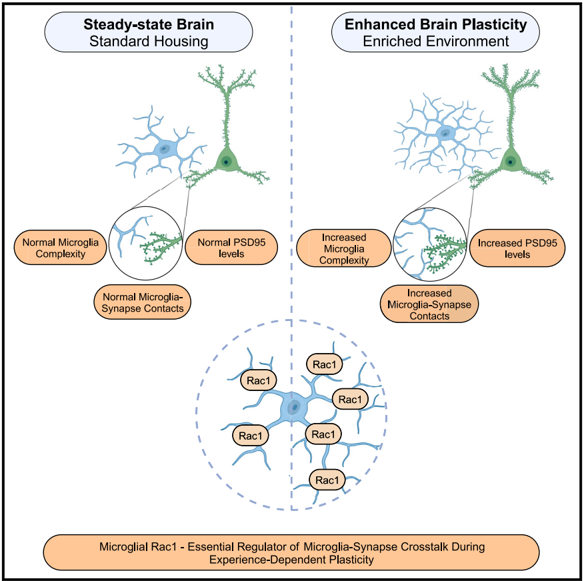
Microglia, the largest population of brain immune cells, continuously interact with synapses to maintain brain homeostasis. In this study, we use conditional cell-specific gene targeting in mice with multi-omics approaches and demonstrate that the RhoGTPase Rac1 is an essential requirement for microglia to sense and interpret the brain microenvironment. This is crucial for microglia-synapse crosstalk that drives experience-dependent plasticity, a fundamental brain property impaired in several neuropsychiatric disorders. Phosphoproteomics profiling detects a large modulation of RhoGTPase signaling, predominantly of Rac1, in microglia of mice exposed to an environmental enrichment protocol known to induce experience-dependent brain plasticity and cognitive performance. Ablation of microglial Rac1 affects pathways involved in microglia-synapse communication, disrupts experience-dependent synaptic remodeling, and blocks the gains in learning, memory, and sociability induced by environmental enrichment. Our results reveal microglial Rac1 as a central regulator of pathways involved in the microglia-synapse crosstalk required for experience-dependent synaptic plasticity and cognitive performance.
Overview
CoChat Summary
TL;DR
In mice, inducible ablation of Rac1 in adult microglia impairs microglial environmental sensing and microglia-synapse crosstalk, blocking experience-dependent synaptic phosphoproteome remodeling and cognitive enhancement by environmental enrichment. The authors conclude microglial Rac1 is essential for experience-dependent brain plasticity and cognitive performance.
Key findings
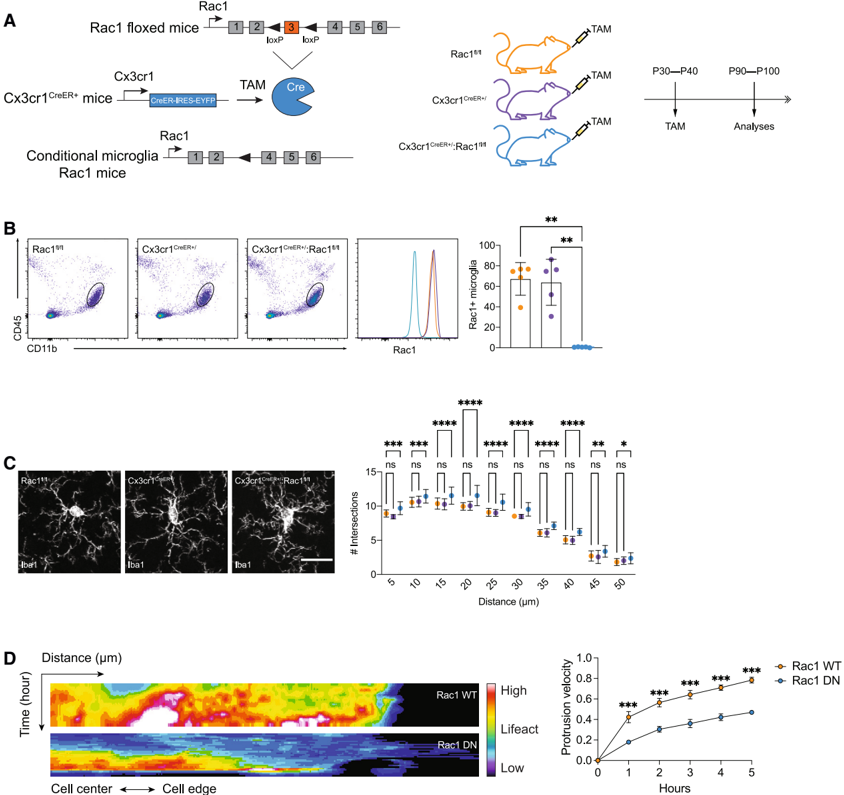
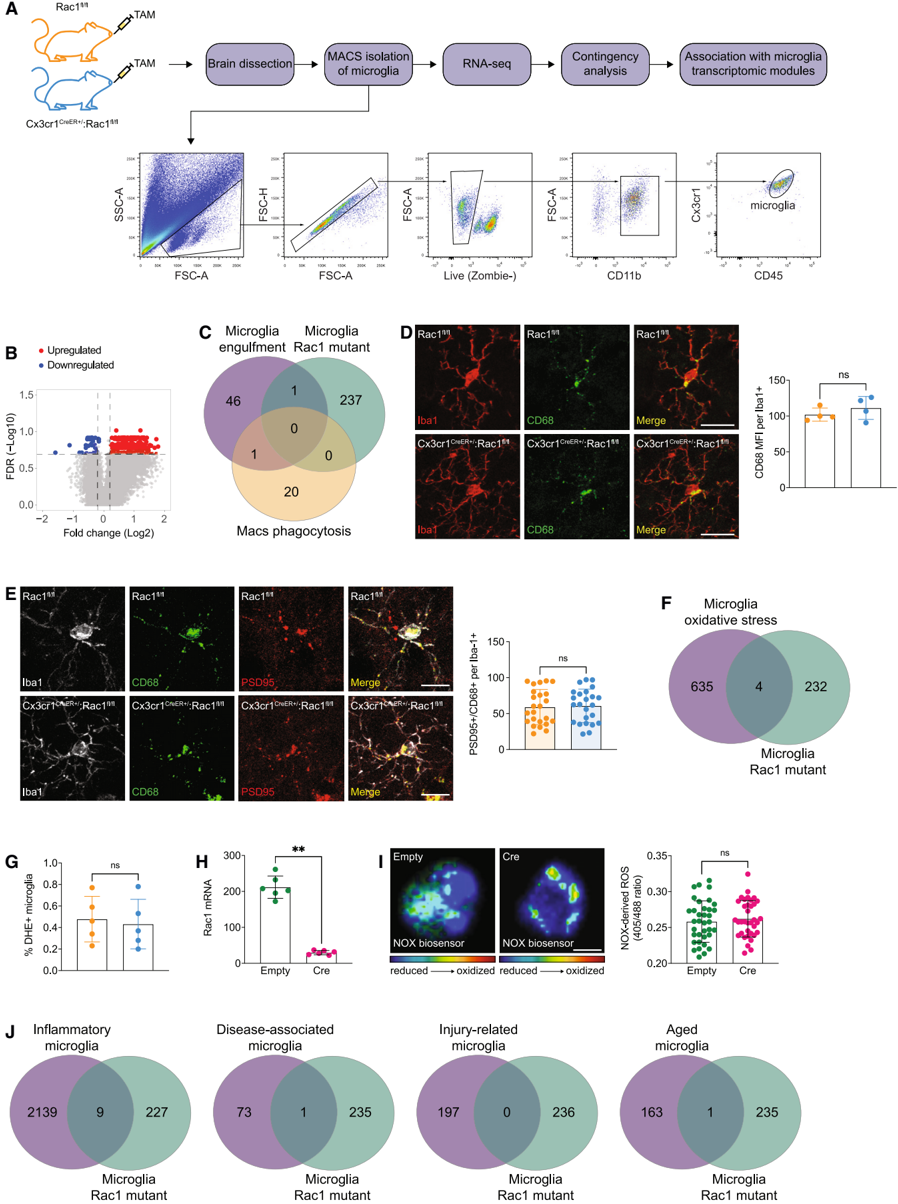
- Adult microglial Rac1 loss reduced Rac1 mRNA/protein and caused hyper-ramified microglia and reduced protrusion velocity in HCM3 cells overexpressing Rac1-DN versus WT Rac1, but did not alter microglial numbers, death, proliferation, CD11b/CD45, MHC-II, steady-state phagocytosis/engulfment, or ROS. Contingency analyses showed no significant association between Rac1-regulated DEGs and microglial engulfment (odds ratio = 2.12, p = 0.38), phagocytic macrophage (odds ratio = 2.31, p > 0.99), or oxidative stress (odds ratio = 0.62, p = 0.53) modules; DHE-positive microglia and NOX-derived ROS were comparable between genotypes.
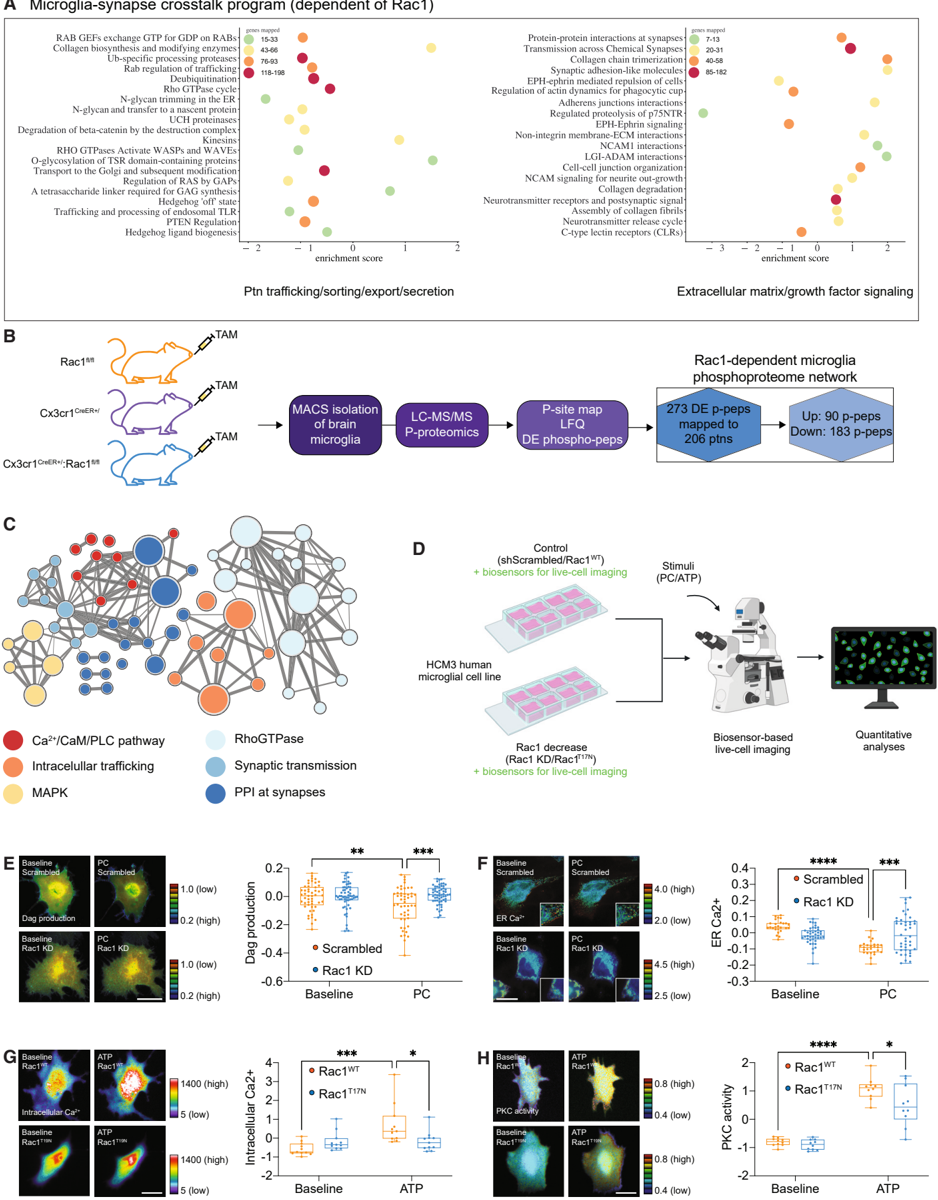
- Rac1-dependent microglial transcriptome/phosphoproteome analyses identified 57 upregulated and 198 downregulated biological pathways by GSEA/SRE, and 273 phosphopeptides corresponding to 206 phosphoproteins (90 upregulated, 183 downregulated) in modules including RhoGTPase/MAPK signaling, intracellular trafficking, Ca²⁺/CaM/PLC pathway, synaptic protein-protein interactions, and synaptic transmission. Live-cell imaging showed PC-induced Dag production and ER Ca²⁺ release were blocked in Rac1 KD microglia, and ATP-induced Ca²⁺ mobilization and PKC activation were attenuated in Rac1 T17N microglia.
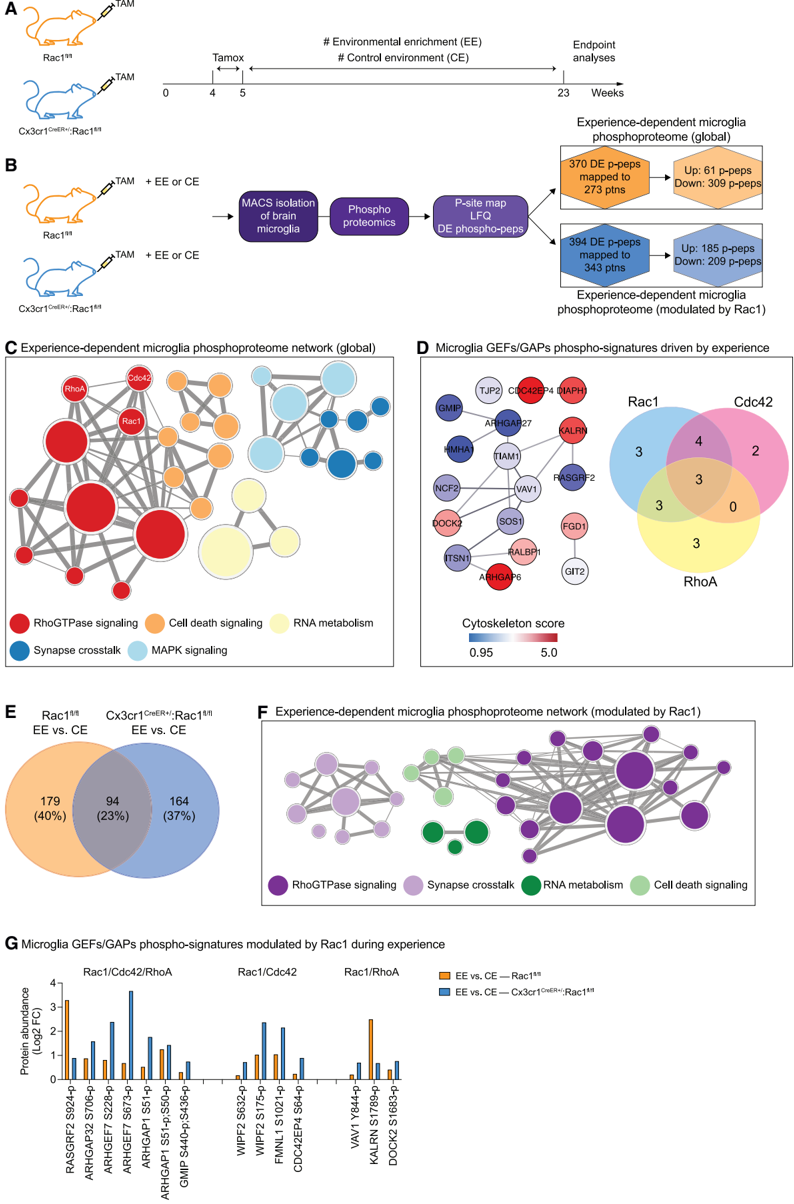
- Experience-dependent microglial phosphoproteome remodeling required Rac1: EE in control mice altered 370 phosphopeptides corresponding to 273 phosphoproteins (61 upregulated, 309 downregulated); RhoGTPase signaling was the most affected module, with Rac1 activity cycle modulated more prominently than Cdc42 or RhoA. Of 437 phosphoproteins affected by experience in the Rac1 context, 343 (77%) were modulated by Rac1; RhoGTPase and microglia-synapse crosstalk modules showed significant Rac1 dependence, whereas MAPK signaling did not. EE-driven microglial morphological changes were prevented in Rac1 mutants.
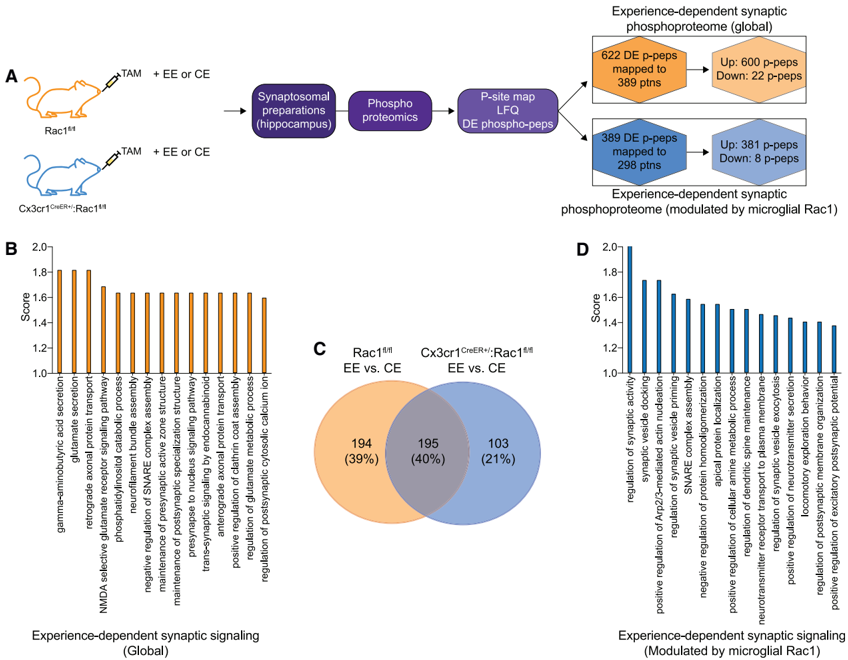
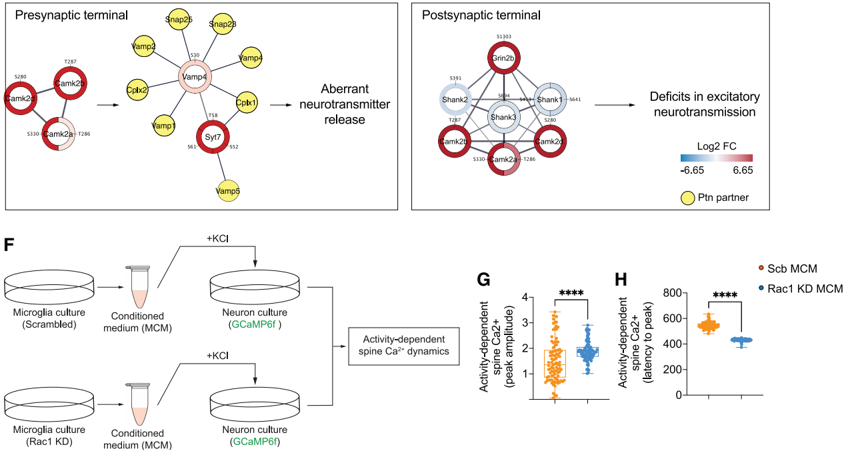
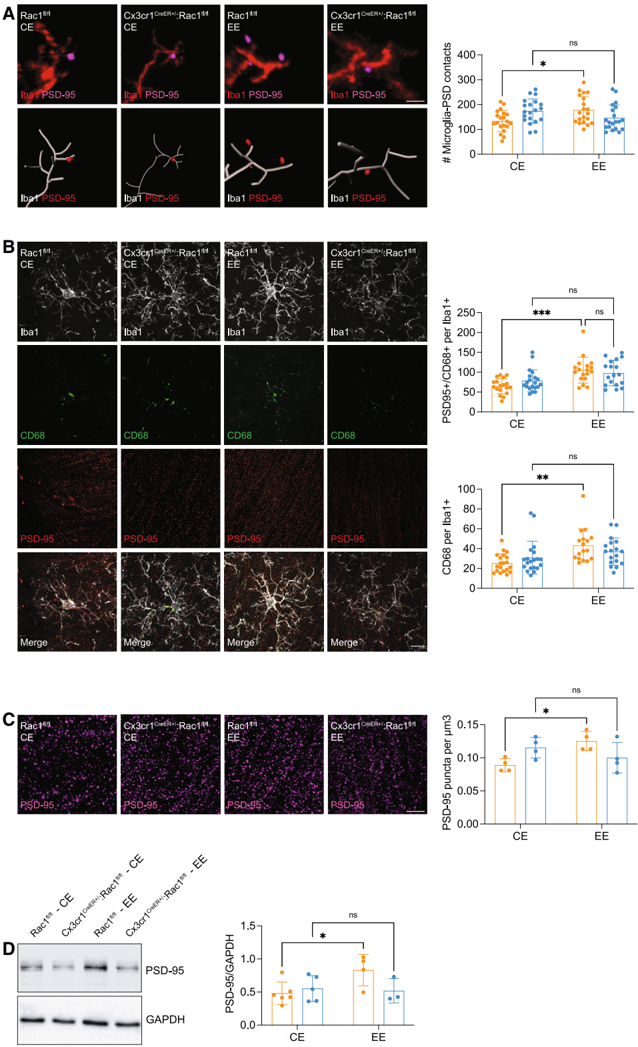
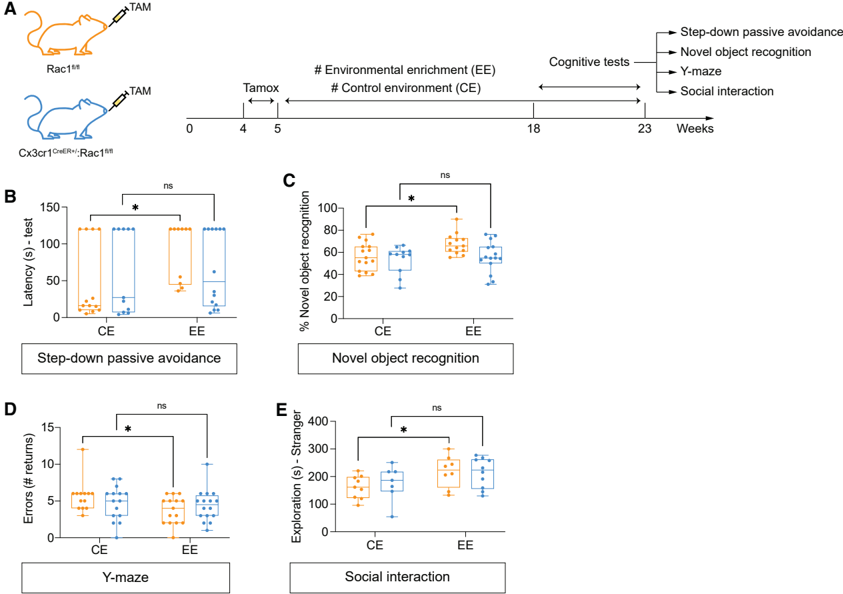
- Synaptic and behavioral plasticity required microglial Rac1: EE altered 622 phosphopeptides representing 389 phosphoproteins in hippocampal synaptosomes, with over 600 biological processes, 152 molecular functions, and 206 cellular components modified; Camk2a T286, Camk2b T287, and S330 were modulated by microglial Rac1. Single-spine Ca²⁺ kinetics differed between scrambled MCM (1/slope = 595 au.s⁻¹) and Rac1 KD MCM (1/slope = 2099 au.s⁻¹). EE improved memory retention, novel object recognition, Y-maze performance, and social preference in Rac1 fl/fl mice but not in Cx3cr1 CreER+:Rac1 fl/fl mice; EE-induced increases in microglia-synapse contacts, PSD-95 density/levels, and post-synaptic engulfment were absent in mutants.
Methods
- Conditional Rac1 ablation used Cx3cr1 CreER-IRES-EYFP mice crossed with Rac1 fl/fl mice; tamoxifen was given at 4/5 weeks of age (5 mg per animal by oral gavage; 1 mg daily for five days), and brains were analyzed eight weeks later. Controls were Rac1 fl/fl or Cx3cr1 CreER+; mutants were Cx3cr1 CreER+:Rac1 fl/fl. Experiments used female and male mice on a C57BL/6 background; environmental enrichment (EE) versus control environment (CE) housing lasted 18 weeks.
- Multi-omics and imaging included RNA-seq on MACS CD11b-selected microglia; label-free phosphoproteomics on MACS-isolated microglia (CD11b or P2RY12 selection) and hippocampal synaptosomes; LC-MS/MS; bioinformatics with GSEA/SRE, over-representation analysis, PPI clustering, and pathway enrichment. Functional assays used biosensor-based live-cell imaging in HMC3 and primary microglia, single-spine Ca²⁺ imaging in cortical neurons exposed to microglia-conditioned media, immunofluorescence/confocal microscopy with Imaris analysis, and flow cytometry.
- Behavioral tests were performed blind to genotype and housing condition in the order: three-chamber sociability, novel object recognition, Y-maze, and step-down passive avoidance. Statistical analysis used D’Agostino-Pearson normality testing and tests including two-way ANOVA, Mann-Whitney, and Fisher’s exact test, with significance set at p < 0.05.
Limitations
- Stated by the paper: mice were the main model organism, so extrapolation to human physiology requires caution; some live-cell imaging data relied on cultured cells and may not fully capture endogenous systems; the focus on Rac1 may obscure other molecules/pathways; the EE paradigm may have effects tied to its specific conditions; and mouse behavioral tests may not accurately reflect human cognitive processes and inherently have variability.
- Evident from the text: the three-chamber sociability test used only male mice because female control mice did not significantly enhance sociability parameters, limiting sex-inclusive interpretation of that behavioral outcome.
- Evident from the text: live-cell imaging used the human HMC3 microglial cell line and primary rat microglial/neuronal cultures, introducing in vitro and cross-species components alongside the in vivo mouse data.
Model-written summary. Check it against the paper before relying on it.
Integrity signals
Registry
Cites
Statistics
Figures
Verification
Claims the paper makes
0 Valid · 1 Not valid · 22 Not checked · 150 Own results and interpretations
A result the paper reports from its own data — it cites no other source for it, so there is none to check. The quote shows it is in the paper.
In the paper
“we used over-representation analysis (ORA) with the 389 matched phosphoproteins and found that EE significantly modified over 600 biological processes, 152 molecular functions, and 206 cellular components in the synapses (Figure 5B and Table S9).”
§ Microglial Rac1 is essential for experiencedependent brain plasticity and cognitive performance > Experience-dependent synaptic phosphoproteome plasticity requires Rac1 signaling in microglia
plainstates a cause- Asserted: passes — The authors put it forward as true.
- Checkable: passes — It can be checked against evidence.
- Load-bearing: unclear — It is unclear whether the paper’s conclusions depend on it.
- Based: passes — The paper gives a reason why it holds.
A result the paper reports from its own data — it cites no other source for it, so there is none to check. The quote shows it is in the paper.
In the paper
“or the phagocytic macrophage module (odds ratio = 2.31, p > 0.99) (Figure 2C).”
§ Microglial Rac1 is essential for experiencedependent brain plasticity and cognitive performance > Conditional ablation of Rac1 in adult microglia
hedged- Asserted: passes — The authors put it forward as true.
- Checkable: passes — It can be checked against evidence.
- Load-bearing: passes — The paper’s conclusions depend on it.
- Based: passes — The paper gives a reason why it holds.
A result the paper reports from its own data — it cites no other source for it, so there is none to check. The quote shows it is in the paper.
In the paper
“Furthermore, the anticipated increase in post-synaptic element engulfment, PSD-95 density and expression levels did not occur (Figures 6B-6D).”
§ Microglial Rac1 is essential for experiencedependent brain plasticity and cognitive performance > Experience-dependent synaptic phosphoproteome plasticity requires Rac1 signaling in microglia
plain- Asserted: passes — The authors put it forward as true.
- Checkable: passes — It can be checked against evidence.
- Load-bearing: passes — The paper’s conclusions depend on it.
- Based: passes — The paper gives a reason why it holds.
A result the paper reports from its own data — it cites no other source for it, so there is none to check. The quote shows it is in the paper.
In the paper
“we confirmed by PCR in flow cytometry sorted microglia from Cx3cr1 CreER+ :Rac1 fl/fl , Rac1 fl/fl , and Cx3cr1 CreER+ mice the lack of alteration in the amounts of selected mRNA transcripts from the microglia engulfment module (Figure S2A).”
§ Microglial Rac1 is essential for experiencedependent brain plasticity and cognitive performance > Conditional ablation of Rac1 in adult microglia
plain- Asserted: passes — The authors put it forward as true.
- Checkable: passes — It can be checked against evidence.
- Load-bearing: passes — The paper’s conclusions depend on it.
- Based: passes — The paper gives a reason why it holds.
A result the paper reports from its own data — it cites no other source for it, so there is none to check. The quote shows it is in the paper.
In the paper
“GSEA and SRE revealed significant upregulation of 57 and downregulation of 198 biological pathways in microglia, respectively, upon Rac1 ablation (Table S2).”
§ Microglial Rac1 is essential for experiencedependent brain plasticity and cognitive performance > Rac1 coordinates a signaling program required for microglia-synapse crosstalk
plainstates a cause- Asserted: passes — The authors put it forward as true.
- Checkable: passes — It can be checked against evidence.
- Load-bearing: passes — The paper’s conclusions depend on it.
- Based: passes — The paper gives a reason why it holds.
95 more claims
Create a free account to see all 173 claims and every source verdict.
- It may state two separate claims as one. 38
- Probably not a substantial claim. 40
- The quote only partly states this claim. 8
Self-check
Percentages, sums and reported differences re-computed from the paper’s own numbers.
Each contradiction between two passages listed here was confirmed by an independent check.
Rated major: it would touch a result — a value a result rests on, reported and recomputed p-values on opposite sides of the significance level, two passages that conflict with no sign which is right, or a cited work retracted before this paper was published.
In the paper
§ Microglial Rac1 is essential for experiencedependent brain plasticity and cognitive performance > Single-spine calcium imaging
“Experiments were carried out by recording neuronal cultures with microglia-conditioned media (MCM) for 10 min (baseline) and then in the presence of MCM + KCl 20 mM (neuronal stimulation) for additional 10 min.”
§ Microglial Rac1 is essential for experiencedependent brain plasticity and cognitive performance > QUANTIFICATION AND STATISTICAL ANALYSIS
“Primary cortical neuronal cultures co-expressing GCamp6f were recorded in saline for 10 min and then recorded for 10 min upon stimulation with conditioned media from primary microglial cultures (MCM) carrying scrambled sequence or Rac1 short hairpin RNA.”
Rated minor: it would not touch a result — a value no result rests on, a p-value that stays on the same side of the significance level, or a conflict that is clerical, resolved elsewhere in the paper, or outside its own findings.
In the paper
“Of 437 phosphoproteins affected by experience in this context, 343 (77%) were modulated by Rac1”
§ Microglial Rac1 is essential for experiencedependent brain plasticity and cognitive performance > Rac1 coordinates a signaling program required for microglia-synapse crosstalk
Reported 77 · recomputed 78.489703
Rated minor: it would not touch a result — a value no result rests on, a p-value that stays on the same side of the significance level, or a conflict that is clerical, resolved elsewhere in the paper, or outside its own findings.
In the paper
§ Microglial Rac1 is essential for experiencedependent brain plasticity and cognitive performance > Rac1 coordinates a signaling program required for microglia-synapse crosstalk
“Baseline Rac1 T19N ATP Rac1 T19N”
§ Microglial Rac1 is essential for experiencedependent brain plasticity and cognitive performance > QUANTIFICATION AND STATISTICAL ANALYSIS
“Rac1 dominant-negative (Rac1 T17N ) HMC3 microglia”
Citations
Cites
Fiji: an open-source platform for biological-image analysis
Schindelin, J., Arganda-Carreras, I., Frise, E., Kaynig, V., Longair, M., Pietzsch, T., Preibisch, S., Rueden, C., Saalfeld, S., Schmid, B., et al. (2012) · Nature Methods · doi:10.1038/nmeth.2019 · Cited by 66,890
Szklarczyk, D., Gable, A. L., Lyon, D., Junge, A., Wyder, S., Huerta-Cepas, J., Simonovic, M., Doncheva, N. T., Morris, J. H., Bork, P., et al. (2019) · Nucleic Acids Research · doi:10.1093/nar/gky1131 · Cited by 17,749
Bioconductor: open software development for computational biology and bioinformatics
Gentleman, R. C., Carey, V. J., Bates, D. M., Bolstad, B., Dettling, M., Dudoit, S., Ellis, B., Gautier, L., Ge, Y., Gentry, J., et al. (2004) · Genome Biology · doi:10.1186/gb-2004-5-10-r80 · Cited by 12,172
Ultrasensitive fluorescent proteins for imaging neuronal activity
Chen, T.-W., Wardill, T. J., Sun, Y., Pulver, S. R., Renninger, S. L., Baohan, A., Schreiter, E. R., Kerr, R. A., Orger, M. B., Jayaraman, V., et al. (2013) · Nature · doi:10.1038/nature12354 · Cited by 6,474
Resting microglial cells are highly dynamic surveillants of brain parenchyma in vivo
Nimmerjahn, A., Kirchhoff, F., & Helmchen, F. (2005) · Science · doi:10.1126/science.1110647 · Cited by 5,827
A Unique Microglia Type Associated with Restricting Development of Alzheimer’s Disease
Keren-Shaul, H., Spinrad, A., Weiner, A., Matcovitch-Natan, O., Dvir-Szternfeld, R., Ulland, T. K., David, E., Baruch, K., Lara-Astaiso, D., Toth, B., et al. (2017) · Cell · doi:10.1016/j.cell.2017.05.018 · Cited by 5,493
Zhang, Y., Chen, K., Sloan, S. A., Bennett, M. L., Scholze, A. R., O'Keeffe, S., Phatnani, H. P., Guarnieri, P., Caneda, C., Ruderisch, N., et al. (2014) · The Journal of Neuroscience · doi:10.1523/jneurosci.1860-14.2014 · Cited by 4,875
ATP mediates rapid microglial response to local brain injury in vivo
Davalos, D., Grutzendler, J., Yang, G., Kim, J. V., Zuo, Y., Jung, S., Littman, D. R., Dustin, M. L., & Gan, W.-B. (2005) · Nature Neuroscience · doi:10.1038/nn1472 · Cited by 3,913
Friard, O., & Gamba, M. (2016) · Methods in Ecology and Evolution · doi:10.1111/2041-210x.12584 · Cited by 3,437
PhosphoSitePlus, 2014: mutations, PTMs and recalibrations
Hornbeck, P. V., Zhang, B., Murray, B., Kornhauser, J. M., Latham, V., & Skrzypek, E. (2015) · Nucleic Acids Research · doi:10.1093/nar/gku1267 · Cited by 3,411
Cited by
A cytoskeleton symphony: Actin and microtubules in microglia dynamics and aging
Socodato, R., & Relvas, J. B. (2024) · Progress in Neurobiology · doi:10.1016/j.pneurobio.2024.102586 · Cited by 32
Self-citationNonneuronal contributions to synaptic function
Hodebourg, R., Scofield, M. D., Kalivas, P. W., & Kuhn, B. N. (2025) · Neuron · doi:10.1016/j.neuron.2025.04.004 · Cited by 21
In vivo multimodal neurochemical interfaces for real-time decoding of brain circuit
Kim, Y., & Park, S. (2025) · Nature reviews. Neuroscience · doi:10.1038/s41583-025-01003-3 · Cited by 13
Interaction between neurons and microglia in healthy and disease states
Nakamura, A., & Shichita, T. (2025) · International Immunology · doi:10.1093/intimm/dxaf057 · Cited by 10
Portugal, C. C., Almeida, T. O., Tedim-Moreira, J., Silva, C., Canedo, T., Galvão, J., Magalhães, A., Summavielle, T., Bai, X., Kirchhoff, F., et al. (2025) · Journal of Neuroinflammation · doi:10.1186/s12974-025-03588-z · Cited by 7
Self-citation
Metadata
- Authors
- Socodato, R., Almeida, T. O., Portugal, C. C., Santos, E. C. S., Tedim-Moreira, J., Galvão-Ferreira, J., Canedo, T., Baptista, F. I., Magalhães, A., Ambrósio, A. F., Brakebusch, C., Rubinstein, B., Moreira, I. S., Summavielle, T., Pinto, I. M., & Relvas, J. B.
- Affiliations
- Universidade do Porto (PT)
- Centro de Inovação em Biomedicina e Biotecnologia (PT)
- University of Copenhagen (DK)
- Stowers Institute for Medical Research (US)
- Centro de Neurociências e Biologia Celular (PT)
- Corresponding author
- Socodato, Renato
- Relvas, João B.
- ORCID
- Venue
- Cell Reports
- Publisher
- Elsevier BV
- Published
- 2023-12
- Volume
- 42
- Issue
- 12
- Pages
- 113447
- ISSN
- 2211-1247 (ISSN-L)
- OpenAlex
- W4388789578
- Cited by
- 27
- References
- 106
- Citations by year
- 2026: 6 · 2025: 15 · 2024: 5 · 2023: 1
- FWCI
- 2.51
- Type
- journal article
- Language
- en
- Open access
- gold
- doi.org
- Licence
- cc-by
- www.elsevier.com/tdm/userlicense/1.0/ (tdm)
- www.elsevier.com/legal/tdmrep-license (tdm)
- creativecommons.org/licenses/by/4.0/ (vor)
- Locations
- Cell Reports (publishedVersion, cc-by)
- SSRN Electronic Journal (submittedVersion)
- bioRxiv (Cold Spring Harbor Laboratory) (submittedVersion)
- PubMed (publishedVersion)
- Research at the University of Copenhagen (University of Copenhagen) (publishedVersion, cc-by)
- Portuguese National Funding Agency for Science, Research and Technology (RCAAP Project by FCT) (submittedVersion, cc-by)
- DOAJ (DOAJ: Directory of Open Access Journals) (submittedVersion)
- Funders
- European Social Fund Plus
- FP7 People: Marie-Curie Actions (57/2016, 57/2017, 600375)
- Faculty of Science and Engineering, University of Manchester
- Fundação para a Ciência e a Tecnologia (PTDC/MED-NEU/1677/2021, PTDC/SAU-TOX/0067/2021)
- Topics
- Life Sciences › Neuroscience › Neurology › Neuroinflammation and Neurodegeneration Mechanisms
- Life Sciences › Neuroscience › Cellular and Molecular Neuroscience › Neuroscience and Neuropharmacology Research
- Life Sciences › Neuroscience › Developmental Neuroscience › Neurogenesis and neuroplasticity mechanisms
- Keywords
- microglia, Rac1, experience-dependent plasticity, synaptic plasticity, environmental enrichment, cognitive performance, learning and memory, sociability, phosphoproteomics, microglial ablation, neuropsychiatric disorders
- MeSH terms
- Animals, Brain, Cognition, Female, Male, Mice, Mutant Strains, Neuronal Plasticity, Neuropeptides, Synapses, Microglia, rac1 GTP-Binding Protein, Mice, Gene Knockdown Techniques
About these checks
Registry, retraction, Cites and statistics results are computed, not judged, with one exception: a printed reference that no index lists is read once by a model before it counts as a citation error. Claims are extracted by a model and kept only when their quote appears verbatim in the text; each cited source is then checked, with a model’s help, for whether it says what the claim relies on. Those verdicts can be wrong — read the claim’s quote and the cited source before relying on one.
A language model drew the claims from the paper on 2026-11-27, under version 3 of the claim definition (model deepseek-v4.1-flash, prompt extract-v3).
A second model labelled each claim on 2026-11-27 (model jev-1.13-20260917, definition revision gold-guideline-v0.2).
Statistics and arithmetic are recomputed, not judged.
Confidence bands are shown only for fields calibrated on our annotated test set. None is calibrated yet, so no band is shown.
What counts as a claim ›How we measure confidence ›How we check this ›
Are you an author, or do you see a problem with this page? Request a review
How to cite
Cite CoChat for the checks on this page, and the paper for its own findings.
- This page
- CoChat. (2026). Citation check: Microglial Rac1 is essential for experience-dependent brain plasticity and cognitive performance. https://app.cochat.ai/papers/10.1016/j.celrep.2023.113447
- The paper
- Socodato, R., Almeida, T. O., Portugal, C. C., Santos, E. C. S., Tedim-Moreira, J., Galvão-Ferreira, J., Canedo, T., Baptista, F. I., Magalhães, A., Ambrósio, A. F., Brakebusch, C., Rubinstein, B., Moreira, I. S., Summavielle, T., Pinto, I. M., & Relvas, J. B. (2023). Microglial Rac1 is essential for experience-dependent brain plasticity and cognitive performance. Cell Reports. https://doi.org/10.1016/j.celrep.2023.113447
Data sources
Bibliographic data: Semantic Scholar, OpenAlex, Crossref.
Contains information from the Semantic Scholar Academic Graph Datasets, made available under the ODC Attribution License (ODC-BY 1.0).
Semantic Scholar’s data is described in: Kinney, R., et al. (2023). The Semantic Scholar Open Data Platform. arXiv:2301.10140.
