

The DOI matches its Crossref record; 437 of the 439 references it cites were found in a registry or an index.
Transcranial magnetic stimulation of the brain: What is stimulated? - A consensus and critical position paper
Open accessAbstract
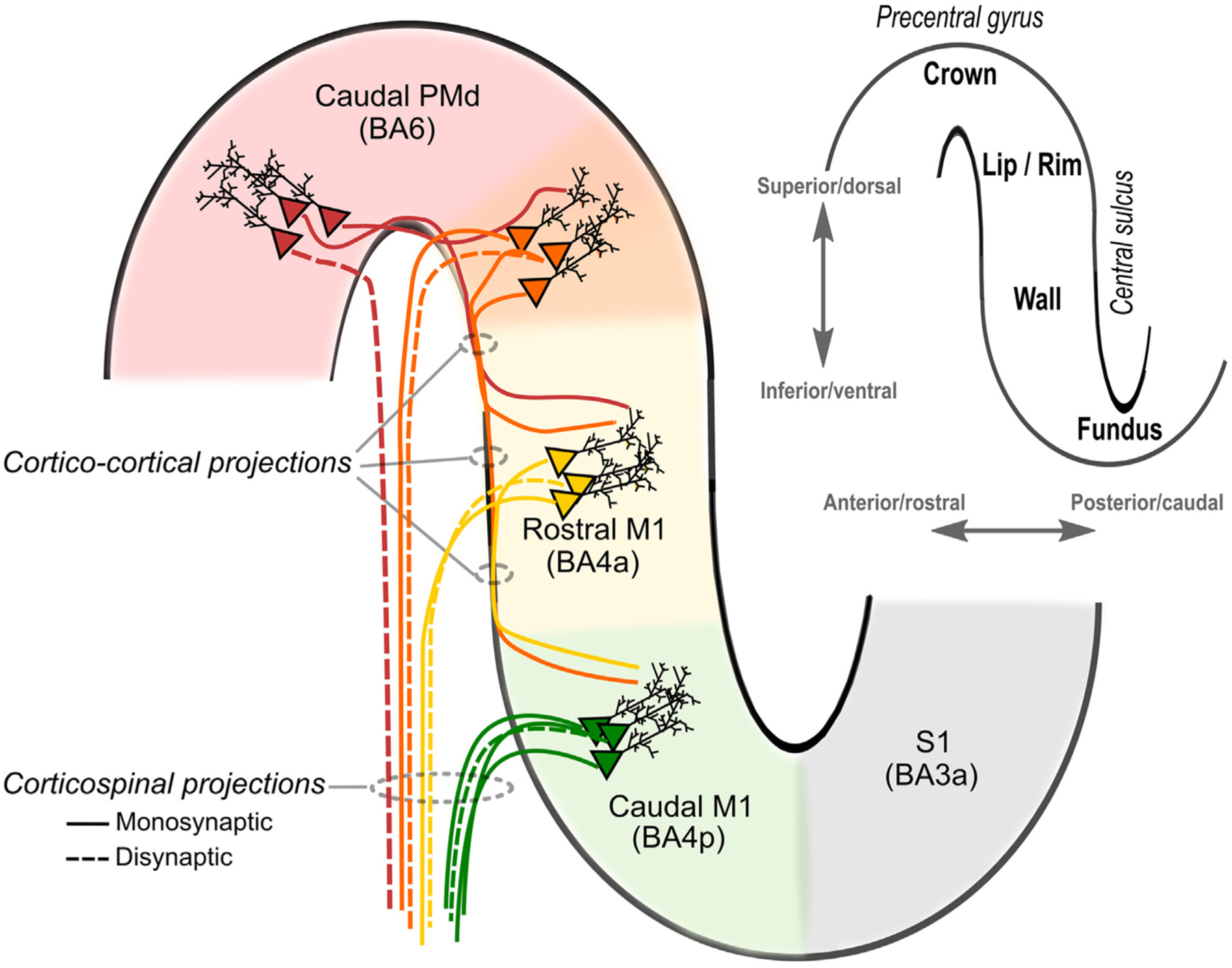
Transcranial (electro)magnetic stimulation (TMS) is currently the method of choice to non-invasively induce neural activity in the human brain. A single transcranial stimulus induces a time-varying electric field in the brain that may evoke action potentials in cortical neurons. The spatial relationship between the locally induced electric field and the stimulated neurons determines axonal depolarization. The induced electric field is influenced by the conductive properties of the tissue compartments and is strongest in the superficial parts of the targeted cortical gyri and underlying white matter. TMS likely targets axons of both excitatory and inhibitory neurons. The propensity of individual axons to fire an action potential in response to TMS depends on their geometry, myelination and spatial relation to the imposed electric field and the physiological state of the neuron. The latter is determined by its transsynaptic dendritic and somatic inputs, intrinsic membrane potential and firing rate. Modeling work suggests that the primary target of TMS is axonal terminals in the crown top and lip regions of cortical gyri. The induced electric field may additionally excite bends of myelinated axons in the juxtacortical white matter below the gyral crown. Neuronal excitation spreads ortho- and antidromically along the stimulated axons and causes secondary excitation of connected neuronal populations within local intracortical microcircuits in the target area. Axonal and transsynaptic spread of excitation also occurs along cortico-cortical and cortico-subcortical connections, impacting on neuronal activity in the targeted network. Both local and remote neural excitation depend critically on the functional state of the stimulated target area and network. TMS also causes substantial direct co-stimulation of the peripheral nervous system. Peripheral co-excitation propagates centrally in auditory and somatosensory networks, but also produces brain responses in other networks subserving multisensory integration, orienting or arousal. The complexity of the response to TMS warrants cautious interpretation of its physiological and behavioural consequences, and a deeper understanding of the mechanistic underpinnings of TMS will be critical for advancing it as a scientific and therapeutic tool.
Overview
The claims and statistics of this paper haven’t been checked yet.
Run the check — free, no account needed. It reads the open-access text and checks the sources it cites.
Integrity signals
Registry
Cites
Statistics
Figures
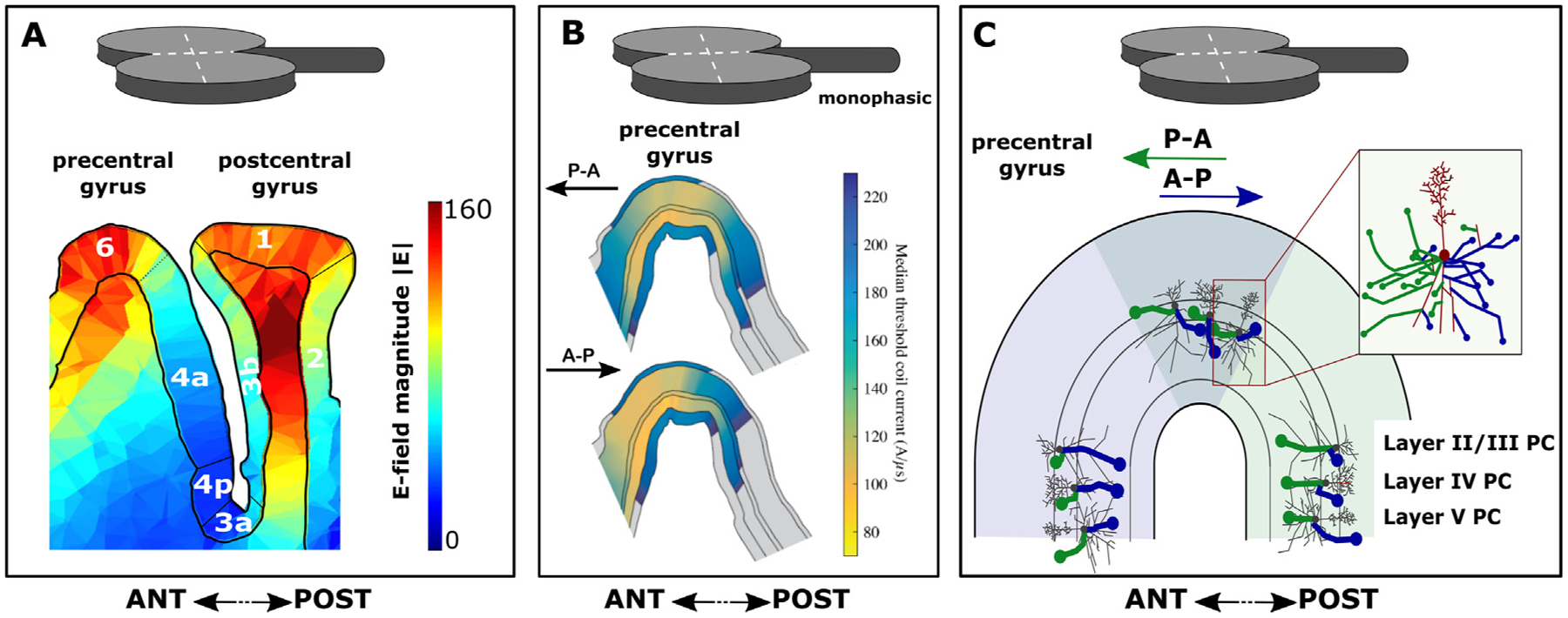
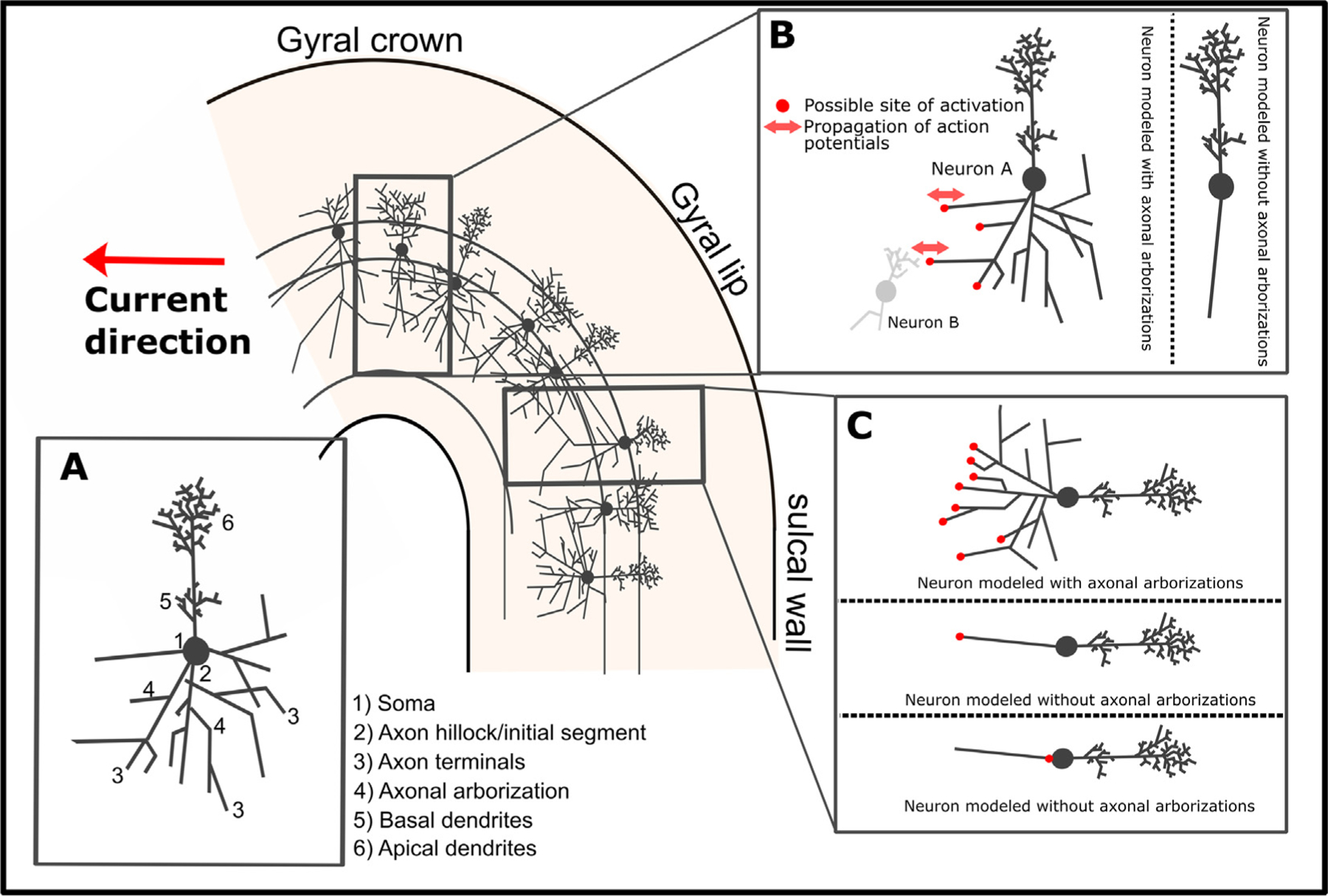
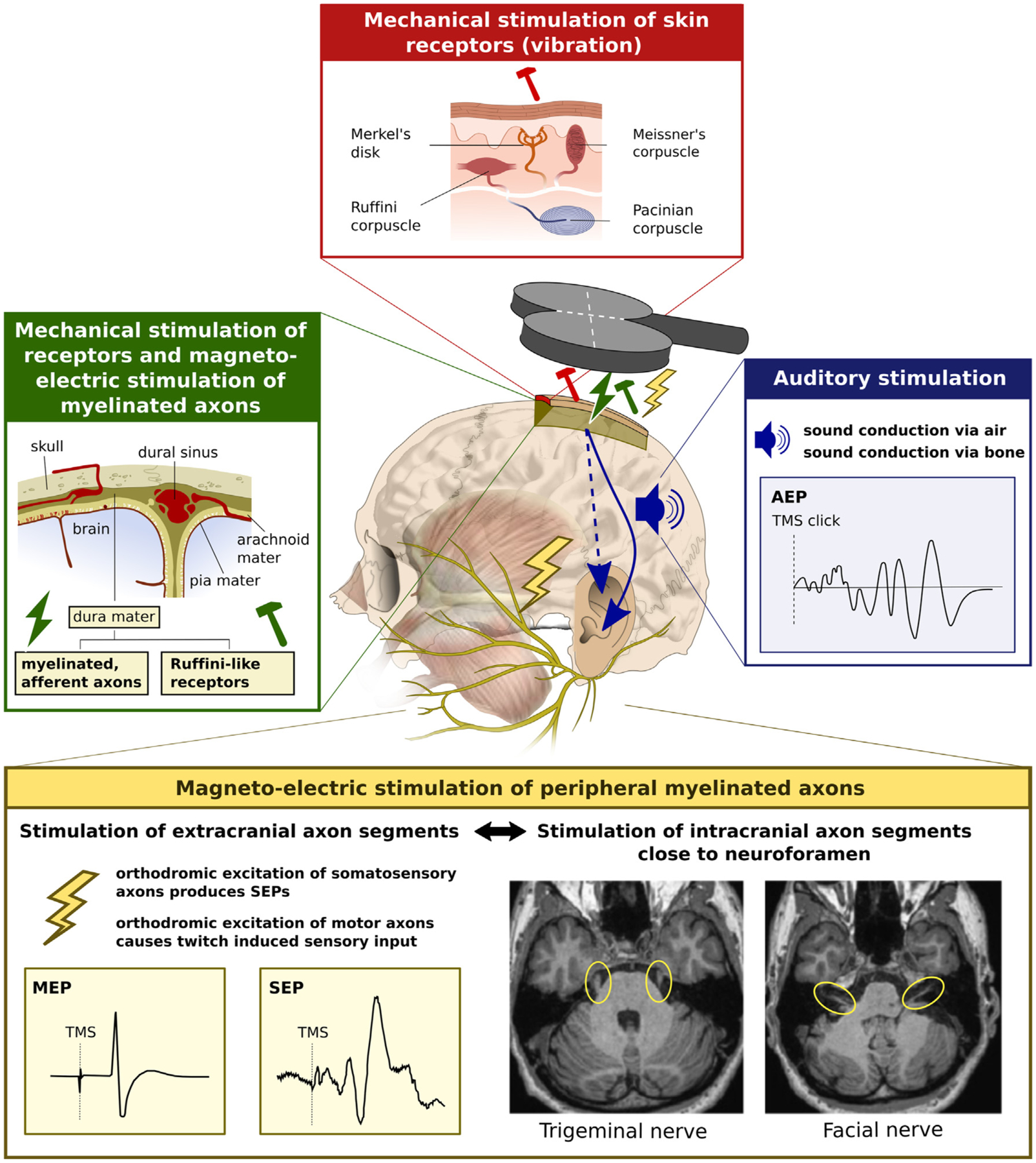
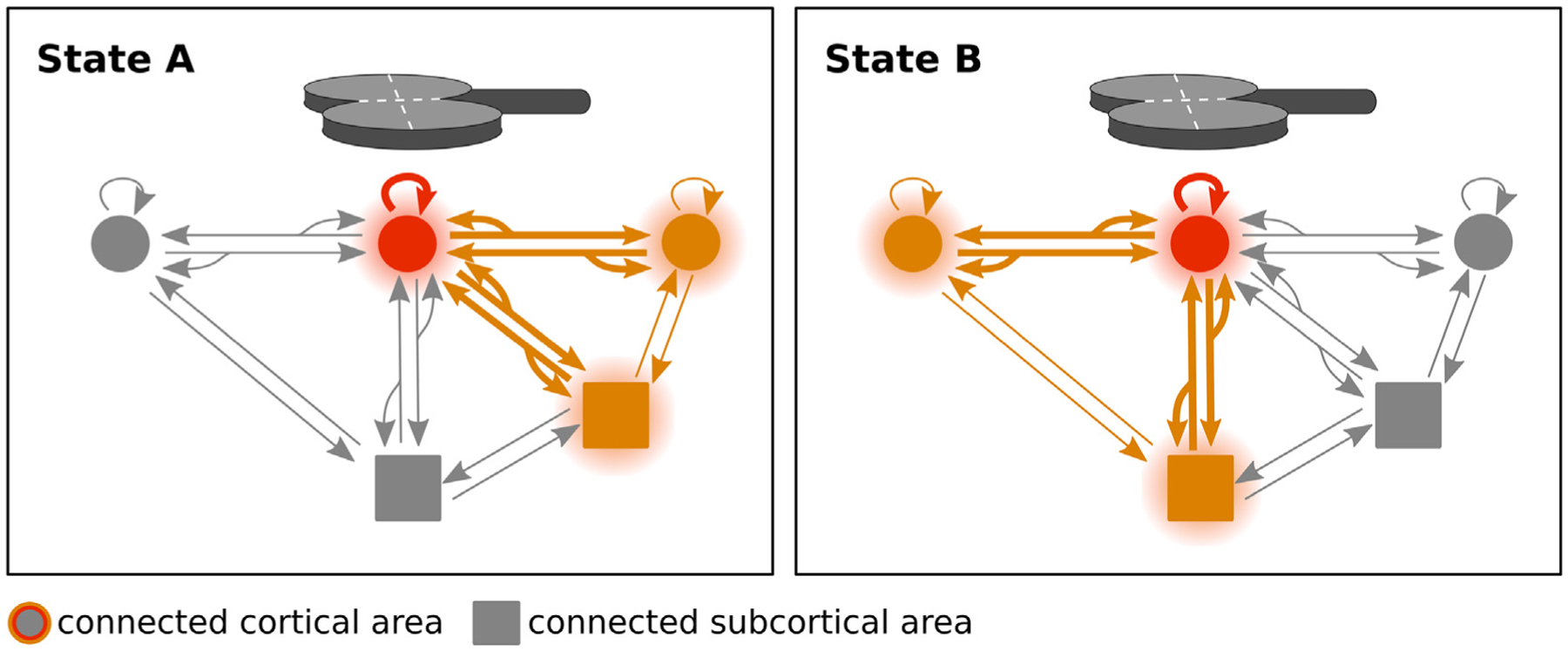
Verification
Claims the paper makes
The claims and statistics of this paper haven’t been checked yet.
Run the check — free, no account needed. It reads the open-access text and checks the sources it cites.
Claims other papers make about this one
Each is checked against this paper’s own text: does it say what the citing paper says it does?
The cited source says what the claim attributes to it.
In the citing paper
“studies suggest that cerebellar modulation is possible with TMS (Hardwick et al., 2014; Siebner et al., 2022)”
From A double-blind, randomized, sham-controlled clinical trial of cerebellar intermittent theta burst stimulation for bipolar disorder: Safety, tolerability, mood and cognitive effects (2025) · cites this paper as Siebner et al., 2022
Self-check
Percentages, sums and reported differences re-computed from the paper’s own numbers.
The self-check needs the paper’s full text.
Citations
Cites
NON-INVASIVE MAGNETIC STIMULATION OF HUMAN MOTOR CORTEX
Barker, A. T., Jalinous, R., & Freeston, I. L. (1985) · The Lancet · doi:10.1016/s0140-6736(85)92413-4 · Cited by 4,466
Theta Burst Stimulation of the Human Motor Cortex
Huang, Y.-Z., Edwards, M. J., Rounis, E., Bhatia, K. P., & Rothwell, J. C. (2005) · Neuron · doi:10.1016/j.neuron.2004.12.033 · Cited by 4,158
Self-citationIsolated Hand Paresis: A Case Series
Alstadhaug, K. B., & Sjulstad, A. S. (2013) · Cerebrovascular Diseases Extra · doi:10.1159/000350708 · Cited by 4,090
Corticocortical inhibition in human motor cortex.
Kujirai, T., Caramia, M. D., Rothwell, J. C., Day, B. L., Thompson, P. D., Ferbert, A., Wroe, S. J., Asselman, P., & MARSDEN, C. D. (1993) · The Journal of Physiology · doi:10.1113/jphysiol.1993.sp019912 · Cited by 3,132
Self-citationLocalization of the motor hand area to a knob on the precentral gyrus. A new landmark
Yousry, T. A. (1997) · Brain · doi:10.1093/brain/120.1.141 · Cited by 1,840
Dynamics of Sparsely Connected Networks of Excitatory and Inhibitory Spiking Neurons
Brunel, N. (2000) · Journal of Computational Neuroscience · doi:10.1023/a:1008925309027 · Cited by 1,737
Breakdown of cortical effective connectivity during sleep
Massimini, M., Ferrarelli, F., Huber, R., Esser, S. K., Singh, H., & Tononi, G. (2005) · Science · doi:10.1126/science.1117256 · Cited by 1,534
Interhemispheric inhibition of the human motor cortex.
Ferbert, A., Priori, A., Rothwell, J. C., Day, B. L., Colebatch, J. G., & MARSDEN, C. D. (1992) · The Journal of Physiology · doi:10.1113/jphysiol.1992.sp019243 · Cited by 1,490
Self-citationGABAergic cell subtypes and their synaptic connections in rat frontal cortex
Kawaguchi, Y. (1997) · Cerebral Cortex · doi:10.1093/cercor/7.6.476 · Cited by 1,416
Rizzolatti, G., & Luppino, G. (2001) · Neuron · doi:10.1016/s0896-6273(01)00423-8 · Cited by 1,356
Research works printed but not linked: 3
- Draganski, 2008, Evidence for segregated and integrative connectivity patterns in the human Basal Ganglia, J Neurosci, 28, 7143, 10.1523/JNEUROSCI.1486-08.2008 · DOI
- Edgley SA, Eyre JA, RN, L, Miller S. Direct and indirect activation of corticospinal neurons by electrical and magnetic stimulation in the anesthetized macaque monkey. J Physiol (Lond). 1992; 446, 224.
- Ziemann, 1996, Interaction between intracortical inhibition and facilitation in human motor cortex, J Physiol, 496, 873, 10.1113/jphysiol.1996.sp021734 · DOI
Cited by
Sorted by citations
TMS combined with EEG: Recommendations and open issues for data collection and analysis
Hernandez-Pavon, J. C., Veniero, D., Bergmann, T. O., Belardinelli, P., Bortoletto, M., Casarotto, S., Casula, E. P., Farzan, F., Fecchio, M., Julkunen, P., et al. (2023) · Brain Stimulation · doi:10.1016/j.brs.2023.02.009 · Cited by 238
Self-citationNon-invasive brain stimulation and neuroenhancement
Antal, A., Luber, B. M., Brem, A., Bikson, M., Brunoni, A. R., Kadosh, R. C., Dubljević, V., Fecteau, S., Ferreri, F., Flöel, A., et al. (2022) · Clinical Neurophysiology Practice · doi:10.1016/j.cnp.2022.05.002 · Cited by 245
Self-citationVucic, S., Chen, K.-H. S., Kiernan, M. C., Hallett, M., Benninger, D. H., Lazzaro, V. D., Rossini, P. M., Benussi, A., Berardelli, A., Currà, A., et al. (2023) · Clinical Neurophysiology · doi:10.1016/j.clinph.2023.03.010 · Cited by 238
Self-citationRepetitive transcranial magnetic stimulation in primary sleep disorders
Lanza, G., Fisicaro, F., Cantone, M., Pennisi, M., Cosentino, F., Lanuzza, B., Tripodi, M., Bella, R., Paulus, W., & Ferri, R. (2022) · Sleep Medicine Reviews · doi:10.1016/j.smrv.2022.101735 · Cited by 133
Self-citationSpampinato, D. A., Ibáñez, J., Rocchi, L., & Rothwell, J. C. (2023) · The Journal of Physiology · doi:10.1113/jp281885 · Cited by 147
Self-citation
Metadata
- Authors
- Siebner, H. R., Funke, K., Aberra, A. S., Antal, A., Bestmann, S., Chen, R., Classen, J., Davare, M., Di Lazzaro, V., Fox, P. T., Hallett, M., Karabanov, A. N., Kesselheim, J., Beck, M. M., Koch, G., Liebetanz, D., Meunier, S., Miniussi, C., Paulus, W., Peterchev, A. V., Popa, T., Ridding, M. C., Thielscher, A., Ziemann, U., Rothwell, J. C., & Ugawa, Y.
- Affiliations
- University of Copenhagen (DK)
- Ruhr University Bochum (DE)
- Duke University (US)
- Universitätsmedizin Göttingen (DE)
- Wellcome Centre for Human Neuroimaging (GB)
- University Health Network (CA)
- Leipzig University (DE)
- King's College London (GB)
- The University of Texas at San Antonio Health Science Center (US)
- National Institutes of Health (US)
- Hvidovre Hospital (DK)
- University of Ferrara (IT)
- Centre National de la Recherche Scientifique (FR)
- University of Trento (IT)
- Fukushima Medical University (JP)
- University of South Australia (AU)
- Hertie Institute for Clinical Brain Research (DE)
- UCL Queen Square Institute of Neurology (GB)
- Corresponding author
- Siebner, Hartwig R.
- ORCID
- Siebner, Hartwig R.
- Funke, Klaus
- Aberra, Aman S.
- Antal, Andrea
- Bestmann, Sven
- Chen, Robert
- Classen, Joseph
- Davare, Marco
- Fox, Peter T.
- Hallett, Mark
- Karabanov, Anke N.
- Kesselheim, Janine
- Beck, Mikkel M.
- Koch, Giacomo
- Liebetanz, David
- Meunier, Sabine
- Miniussi, Carlo
- Paulus, Walter
- Peterchev, Angel V.
- Popa, Traian
- Ridding, Michael C.
- Thielscher, Axel
- Ziemann, Ulf
- Rothwell, John C.
- Ugawa, Yoshikazu
- Venue
- Clinical Neurophysiology
- Publisher
- Elsevier BV
- Published
- 2022-08
- Volume
- 140
- Pages
- 59-97
- ISSN
- 1388-2457 (ISSN-L)
- PMC
- PMC9753778
- OpenAlex
- W4280629063
- Cited by
- 566
- References
- 439
- Citations by year
- 2026: 138 · 2025: 179 · 2024: 138 · 2023: 90 · 2022: 20
- FWCI
- 37.47
- Type
- journal article
- Language
- en
- Open access
- hybrid
- doi.org
- Licence
- Locations
- Clinical Neurophysiology (publishedVersion, cc-by)
- PubMed (publishedVersion)
- Research at the University of Copenhagen (University of Copenhagen) (publishedVersion, cc-by)
- PubMed Central (acceptedVersion, cc-by)
- UniSA Research Outputs Repository (University of South Australia) (submittedVersion, other-oa)
- Brunel University Research Archive (BURA) (Brunel University London) (submittedVersion, cc-by)
- UCL Discovery (University College London) (submittedVersion)
- Infoscience (Ecole Polytechnique Fédérale de Lausanne) (submittedVersion, cc-by-nc-nd)
- Institutional Research Information System University of Ferrara (University of Ferrara) (submittedVersion)
- Institutional Research Information System (Università degli Studi di Trento) (submittedVersion, cc-by-nc-nd)
- Research Portal (King's College London) (submittedVersion, cc-by)
- Technical University of Denmark, DTU Orbit (Technical University of Denmark, DTU) (submittedVersion, cc-by)
- Institutional Research Information System University of Ferrara (University of Ferrara) (submittedVersion, cc-by)
- Funders
- National Science Foundation (1106401)
- Niedersächsische Ministerium für Wissenschaft und Kultur
- Deutsche Forschungsgemeinschaft (FU256/3-2, SFB 874, 122679504)
- Institut National de la Santé et de la Recherche Médicale
- Ministry of Education, Culture, Sports, Science and Technology (16H05322, 20K07866, 19H01091, 15H05881)
- Schweizerischer Nationalfonds zur Förderung der Wissenschaftlichen Forschung
- Bundesministerium für Bildung und Forschung (01EE1403B, 01GP2124B)
- Lundbeckfonden (R118‐A11308, R186-2015-2138, R244‐2017‐196, R313–2019–622, R186-2015)
- Novo Nordisk
- Fondazione Cassa Di Risparmio Di Trento E Rovereto
- Novo Nordisk Fonden (NNF14OC001)
- H. Lundbeck A/S (R244-2017-196, R186-2015-2138)
- Fondation Defitech
- National Institutes of Health (1106401, H2020)
- Horizon 2020 Framework Programme (101017716)
- Biotechnology and Biological Sciences Research Council
- National Institute of Mental Health (R01MH111865, RF1MH114268, R01MH127104)
- National Institute of Neurological Disorders and Stroke (R01NS117405, R01NS088674)
- Topics
- Life Sciences › Neuroscience › Neurology › Transcranial Magnetic Stimulation Studies
- Physical Sciences › Engineering › Biomedical Engineering › Ultrasound and Hyperthermia Applications
- Life Sciences › Neuroscience › Cellular and Molecular Neuroscience › Neuroscience and Neuropharmacology Research
- Keywords
- transcranial magnetic stimulation, induced electric field, axonal depolarization, cortical gyri, myelinated axons, multisensory integration
- MeSH terms
- Action Potentials, Brain, Humans, Neurons, Evoked Potentials, Motor, Consensus, Transcranial Magnetic Stimulation
About these checks
Registry, retraction, Cites and statistics results are computed, not judged, with one exception: a printed reference that no index lists is read once by a model before it counts as a citation error. Claims are extracted by a model and kept only when their quote appears verbatim in the text; each cited source is then checked, with a model’s help, for whether it says what the claim relies on. Those verdicts can be wrong — read the claim’s quote and the cited source before relying on one.
Statistics and arithmetic are recomputed, not judged.
Confidence bands are shown only for fields calibrated on our annotated test set. None is calibrated yet, so no band is shown.
What counts as a claim ›How we measure confidence ›How we check this ›
Are you an author, or do you see a problem with this page? Request a review
