

The DOI matches its Crossref record; 25 of the 25 references it cites were found in a registry or an index.
Biofilm formation is a risk factor for mortality in patients with Candida albicans bloodstream infection—Scotland, 2012–2013
Open accessAbstract
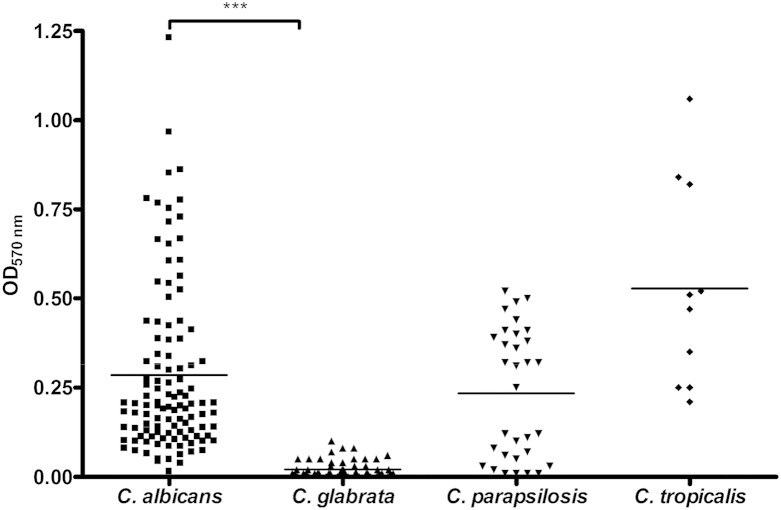
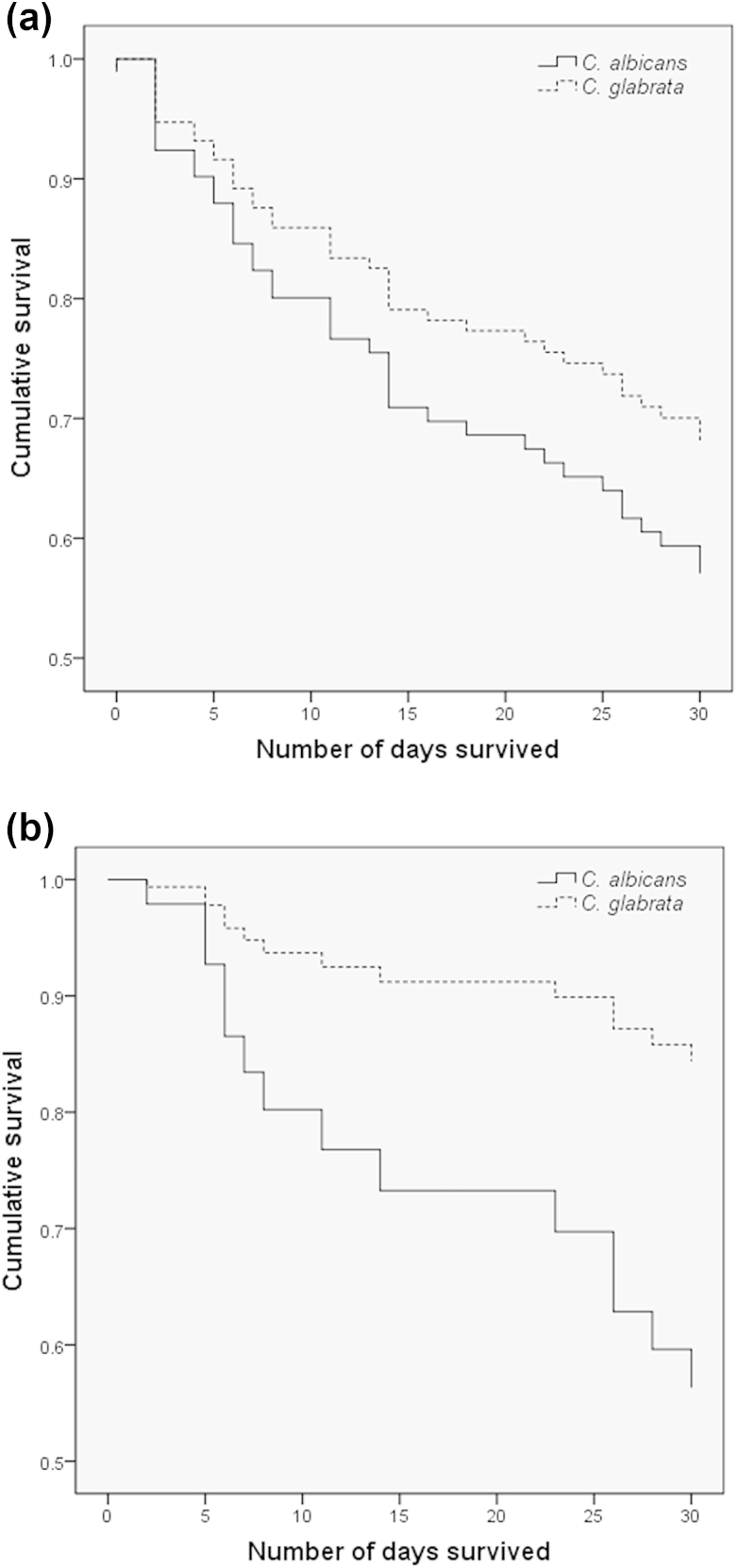
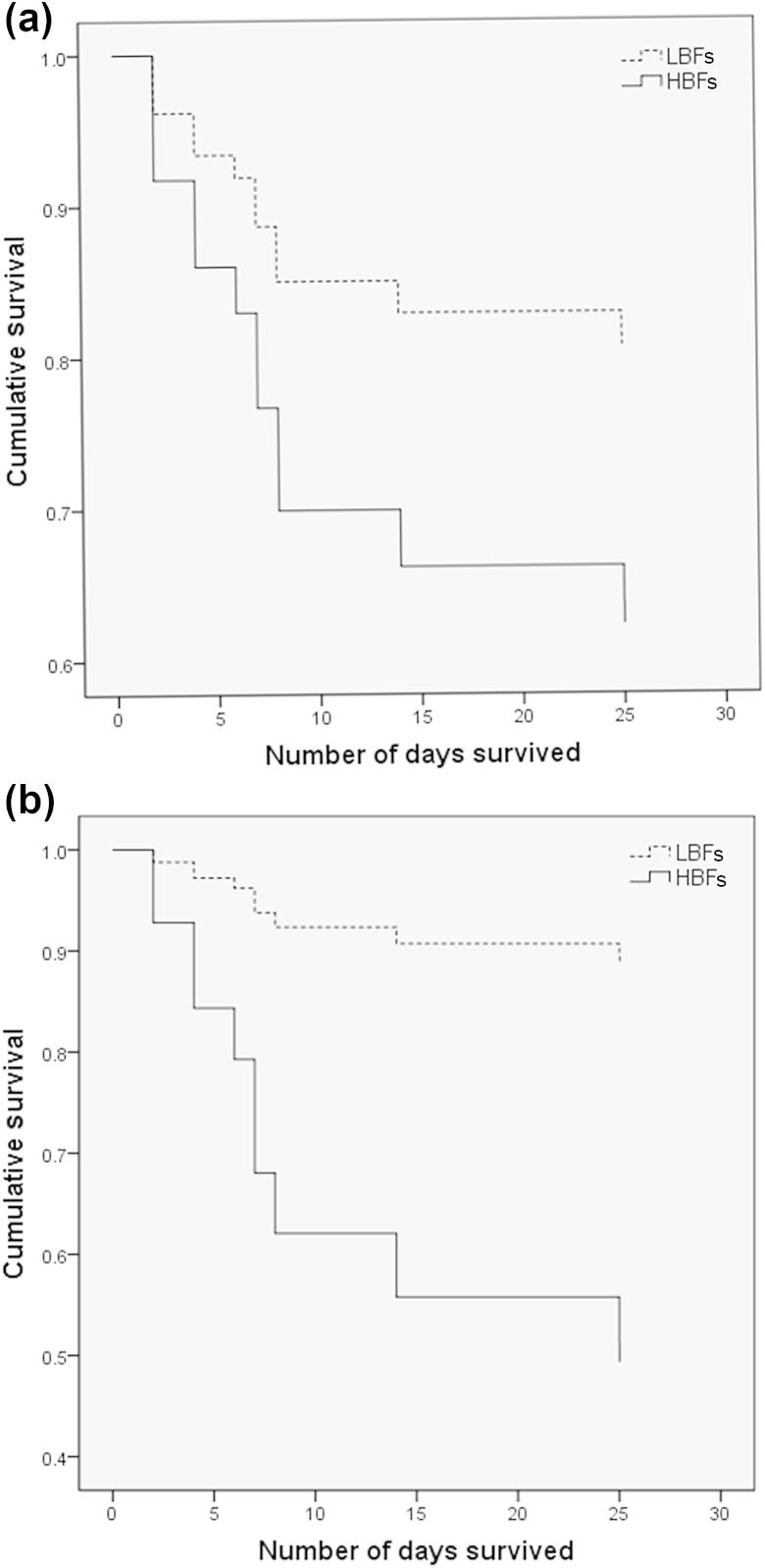
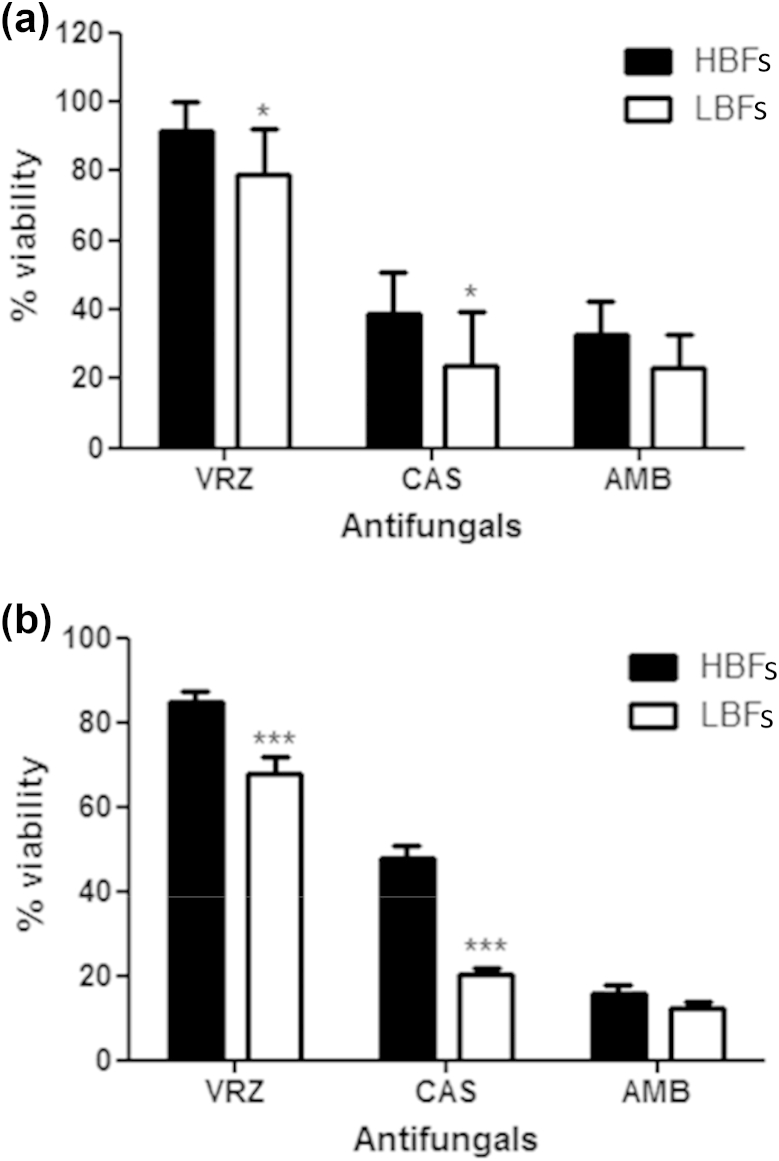
Bloodstream infections caused by Candida species remain a significant cause of morbidity and mortality in hospitalized patients. Biofilm formation by Candida species is an important virulence factor for disease pathogenesis. A prospective analysis of patients with Candida bloodstream infection (n = 217) in Scotland (2012-2013) was performed to assess the risk factors associated with patient mortality, in particular the impact of biofilm formation. Candida bloodstream isolates (n = 280) and clinical records for 157 patients were collected through 11 different health boards across Scotland. Biofilm formation by clinical isolates was assessed in vitro with standard biomass assays. The role of biofilm phenotype on treatment efficacy was also evaluated in vitro by treating preformed biofilms with fixed concentrations of different classes of antifungal. Available mortality data for 134 patients showed that the 30-day candidaemia case mortality rate was 41%, with predisposing factors including patient age and catheter removal. Multivariate Cox regression survival analysis for 42 patients showed a significantly higher mortality rate for Candida albicans infection than for Candida glabrata infection. Biofilm-forming ability was significantly associated with C. albicans mortality (34 patients). Finally, in vitro antifungal sensitivity testing showed that low biofilm formers and high biofilm formers were differentially affected by azoles and echinocandins, but not by polyenes. This study provides further evidence that the biofilm phenotype represents a significant clinical entity, and that isolates with this phenotype differentially respond to antifungal therapy in vitro. Collectively, these findings show that greater clinical understanding is required with respect to Candida biofilm infections, and the implications of isolate heterogeneity.
Overview
The claims and statistics of this paper haven’t been checked yet.
Run the check — free, no account needed. It reads the open-access text and checks the sources it cites.
Integrity signals
Registry
Cites
Statistics
Figures
Verification
Claims the paper makes
The claims and statistics of this paper haven’t been checked yet.
Run the check — free, no account needed. It reads the open-access text and checks the sources it cites.
Claims other papers make about this one
Each is checked against this paper’s own text: does it say what the citing paper says it does?
The source backs part of the claim, not all of it — or backs it for a different population, condition or comparison.
In the citing paper
“Once established, these biofilms exhibit a high tolerance to antifungal drugs, posing a substantial challenge in clinical treatment [54,55,56,57].”
From Disruption of the UPC2 Gene Enhances Fluconazole Antifungal Activity by Inhibiting HAC1 mRNA Splicing in Candida albicans (2026) · cites this paper as [54]
Experimental — accuracy not yet measured
Self-check
Percentages, sums and reported differences re-computed from the paper’s own numbers.
The self-check needs the paper’s full text.
Citations
Cites
Wisplinghoff, H., Bischoff, T., Tallent, S. M., Seifert, H., Wenzel, R. P., & Edmond, M. B. (2004) · Clinical Infectious Diseases · doi:10.1086/421946 · Cited by 4,496
Mermel, L. A., Allon, M., Bouza, E., Craven, D. E., Flynn, P., O'Grady, N. P., Raad, I. I., Rijnders, B. J. A., Sherertz, R. J., & Warren, D. K. (2009) · Clinical Infectious Diseases · doi:10.1086/599376 · Cited by 3,638
Cornely, O. A., Bassetti, M., Calandra, T., Garbino, J., Kullberg, B. J., Lortholary, O., Meersseman, W., Akova, M., Arendrup, M. C., Arikan-Akdagli, S., et al. (2012) · Clinical Microbiology and Infection · doi:10.1111/1469-0691.12039 · Cited by 1,217
Sardi, J. C. O., Scorzoni, L., Bernardi, T., Fusco-Almeida, A. M., & Mendes Giannini, M. J. S. (2013) · Journal of Medical Microbiology · doi:10.1099/jmm.0.045054-0 · Cited by 1,184
Candida Infections of Medical Devices
Kojic, E. M., & Darouiche, R. O. (2004) · Clinical Microbiology Reviews · doi:10.1128/cmr.17.2.255-267.2004 · Cited by 1,055
Pierce, C. G., Uppuluri, P., Tristan, A. R., Wormley, F. L., Mowat, E., Ramage, G., & Lopez-Ribot, J. L. (2008) · Nature Protocols · doi:10.1038/nprot.2008.141 · Cited by 1,041
Self-citationAndes, D. R., Safdar, N., Baddley, J. W., Playford, G., Reboli, A. C., Rex, J. H., Sobel, J. D., Pappas, P. G., Kullberg, B. J., & for the Mycoses Study Group (2012) · Clinical Infectious Diseases · doi:10.1093/cid/cis021 · Cited by 793
Standardized Method for In Vitro Antifungal Susceptibility Testing of Candida albicans Biofilms
Ramage, G., Vande Walle, K., Wickes, B. L., & López-Ribot, J. L. (2001) · Antimicrobial Agents and Chemotherapy · doi:10.1128/aac.45.9.2475-2479.2001 · Cited by 753
Self-citationBacterial and Fungal Biofilm Infections
Lynch, A. S., & Robertson, G. T. (2007) · Annual Review of Medicine · doi:10.1146/annurev.med.59.110106.132000 · Cited by 464
Tumbarello, M., Posteraro, B., Trecarichi, E. M., Fiori, B., Rossi, M., Porta, R., de Gaetano Donati, K., La Sorda, M., Spanu, T., Fadda, G., et al. (2007) · Journal of Clinical Microbiology · doi:10.1128/jcm.00131-07 · Cited by 343
Cited by
Sorted by citations
Biofilm-Forming Capability of Highly Virulent, Multidrug-Resistant Candida auris
Sherry, L., Ramage, G., Kean, R., Borman, A., Johnson, E. M., Richardson, M. D., & Rautemaa-Richardson, R. (2017) · Emerging Infectious Diseases · doi:10.3201/eid2302.161320 · Cited by 420
Self-citationBiofilm of Candida albicans : formation, regulation and resistance
Pereira, R., Fontenelle, R. O. D. S., de Brito, É. H. S., & de Morais, S. M. (2020) · Journal of Applied Microbiology · doi:10.1111/jam.14949 · Cited by 417
d’Enfert, C., Kaune, A.-K., Alaban, L. R., Chakraborty, S., Cole, N. L., Delavy, M., Kosmala, D., Marsaux, B., Fróis-Martins, R., Morelli, M., et al. (2020) · FEMS Microbiology Reviews · doi:10.1093/femsre/fuaa060 · Cited by 377
Self-citationCandida albicans biofilms and polymicrobial interactions
Ponde, N. O., Lortal, L., Ramage, G., Naglik, J. R., & Richardson, J. P. (2021) · Critical Reviews in Microbiology · doi:10.1080/1040841x.2020.1843400 · Cited by 281
Self-citationVirulence Factors in Candida species
Staniszewska, M. (2019) · Current Protein and Peptide Science · doi:10.2174/1389203720666190722152415 · Cited by 285
Metadata
- Authors
- Rajendran, R., Sherry, L., Nile, C. J., Sherriff, A., Johnson, E. M., Hanson, M. F., Williams, C., Munro, C. A., Jones, B. J., & Ramage, G.
- Affiliations
- University of Glasgow (GB)
- Public Health England (GB)
- NHS Lothian (GB)
- University of the West of Scotland (GB)
- University of Aberdeen (GB)
- Glasgow Royal Infirmary (GB)
- Corresponding author
- Ramage, G.
- Venue
- Clinical Microbiology and Infection
- Publisher
- Elsevier BV
- Published
- 2016-01
- Volume
- 22
- Issue
- 1
- Pages
- 87-93
- ISSN
- 1198-743X (ISSN-L)
- PMC
- PMC4721535
- OpenAlex
- W1960109612
- Cited by
- 228
- References
- 25
- Citations by year
- 2026: 14 · 2025: 16 · 2024: 18 · 2023: 22 · 2022: 25 · 2021: 17 · 2020: 25 · 2019: 22 · 2018: 24 · 2017: 29 · 2016: 16
- FWCI
- 17.91
- Type
- journal article
- Language
- en
- Open access
- hybrid
- doi.org
- Locations
- Clinical Microbiology and Infection (publishedVersion, cc-by)
- PubMed Central (publishedVersion, cc-by)
- PubMed (publishedVersion)
- ENLIGHTEN (Jurnal Bimbingan dan Konseling Islam) (acceptedVersion)
- The UWS Academic Portal (University of the West of Scotland) (submittedVersion, cc-by)
- Aberdeen University Research Archive (Aberdeen University) (submittedVersion)
- Newcastle University ePrints (Newcastle Univesity) (cc-by)
- Funders
- Wellcome Trust (097377/Z/11/Z)
- Pfizer
- Gilead Sciences
- Topics
- Health Sciences › Medicine › Infectious Diseases › Antifungal resistance and susceptibility
- Health Sciences › Medicine › Infectious Diseases › Fungal Infections and Studies
- Life Sciences › Biochemistry, Genetics and Molecular Biology › Molecular Biology › Fungal and yeast genetics research
- Keywords
- Candida albicans, Candida glabrata, biofilm formation, candidemia, bloodstream infection, mortality risk factors, antifungal susceptibility, echinocandins, azoles, polyenes, virulence factors, catheter removal
- MeSH terms
- Adult, Aged, Aged, 80 and over, Antifungal Agents, Candida albicans, Female, Humans, Male, Middle Aged, Mortality, Retrospective Studies, Scotland, Incidence, Biofilms, Risk Assessment, Candida glabrata, Candidemia
About these checks
Registry, retraction, Cites and statistics results are computed, not judged, with one exception: a printed reference that no index lists is read once by a model before it counts as a citation error. Claims are extracted by a model and kept only when their quote appears verbatim in the text; each cited source is then checked, with a model’s help, for whether it says what the claim relies on. Those verdicts can be wrong — read the claim’s quote and the cited source before relying on one.
Statistics and arithmetic are recomputed, not judged.
Confidence bands are shown only for fields calibrated on our annotated test set. None is calibrated yet, so no band is shown.
What counts as a claim ›How we measure confidence ›How we check this ›
Are you an author, or do you see a problem with this page? Request a review
