

Nesting at extreme polar latitudes by non-avian dinosaurs
Open accessThe DOI matches its Crossref record; 76 of the 77 references it cites were found in a registry or an index, and 1 are not checked yet; none of the 84 sources its claims cite is checked for support yet.
Abstract
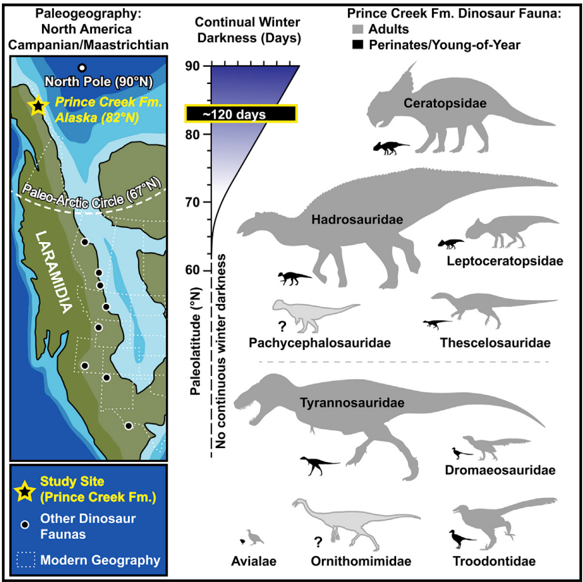
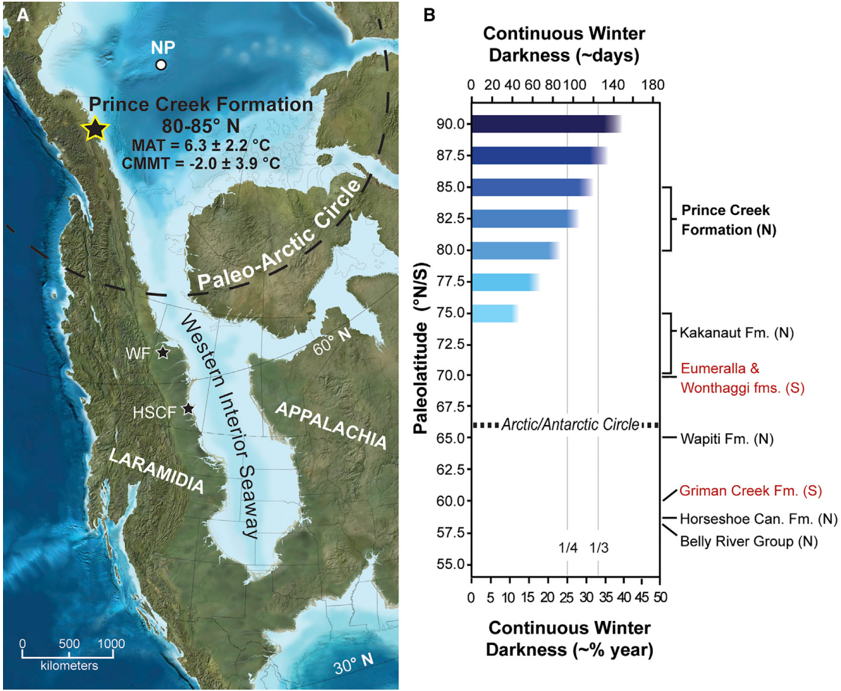
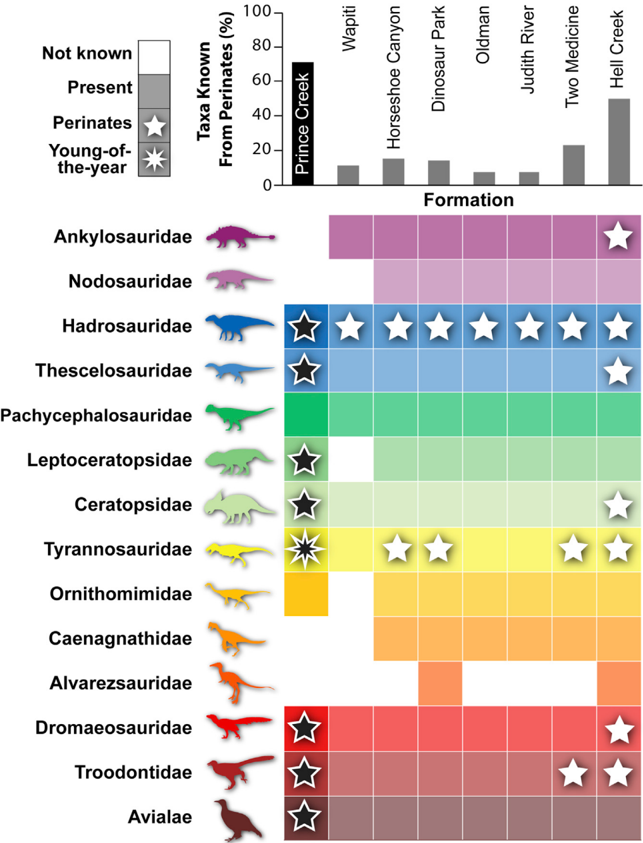
The unexpected discovery of non-avian dinosaurs from Arctic and Antarctic settings has generated considerable debate about whether they had the capacity to reproduce at high latitudes-especially the larger-bodied, hypothetically migratory taxa. Evidence for dinosaurian polar reproduction remains very rare, particularly for species that lived at the highest paleolatitudes (>75°). Here we report the discovery of perinatal and very young dinosaurs from the highest known paleolatitude for the clade-the Cretaceous Prince Creek Formation (PCF) of northern Alaska. These data demonstrate Arctic reproduction in a diverse assemblage of large- and small-bodied ornithischian and theropod species. In terms of overall diversity, 70% of the known dinosaurian families, as well as avialans (birds), in the PCF are represented by perinatal individuals, the highest percentage for any North American Cretaceous formation. These findings, coupled with prolonged incubation periods, small neonate sizes, and short reproductive windows suggest most, if not all, PCF dinosaurs were nonmigratory year-round Arctic residents. Notably, we reconstruct an annual chronology of reproductive events for the ornithischian dinosaurs using refined paleoenvironmental/plant phenology data and new insights into dinosaur incubation periods. Seasonal resource limitations due to extended periods of winter darkness and freezing temperatures placed severe constraints on dinosaurian reproduction, development, and maintenance, suggesting these taxa showed polar-specific life history strategies, including endothermy.
Checked 2026-11-23 · 1 reference not checked yet
Overview
CoChat Summary
TL;DR
Perinatal and very young dinosaur remains from the Prince Creek Formation of northern Alaska demonstrate that a diverse assemblage of large- and small-bodied dinosaurs, plus avialans, reproduced at the highest known paleolatitude for non-avian dinosaurs (>75°N). The authors argue these dinosaurs were year-round Arctic residents rather than long-distance migrants, with polar-specific life-history strategies including endothermy.
Key findings
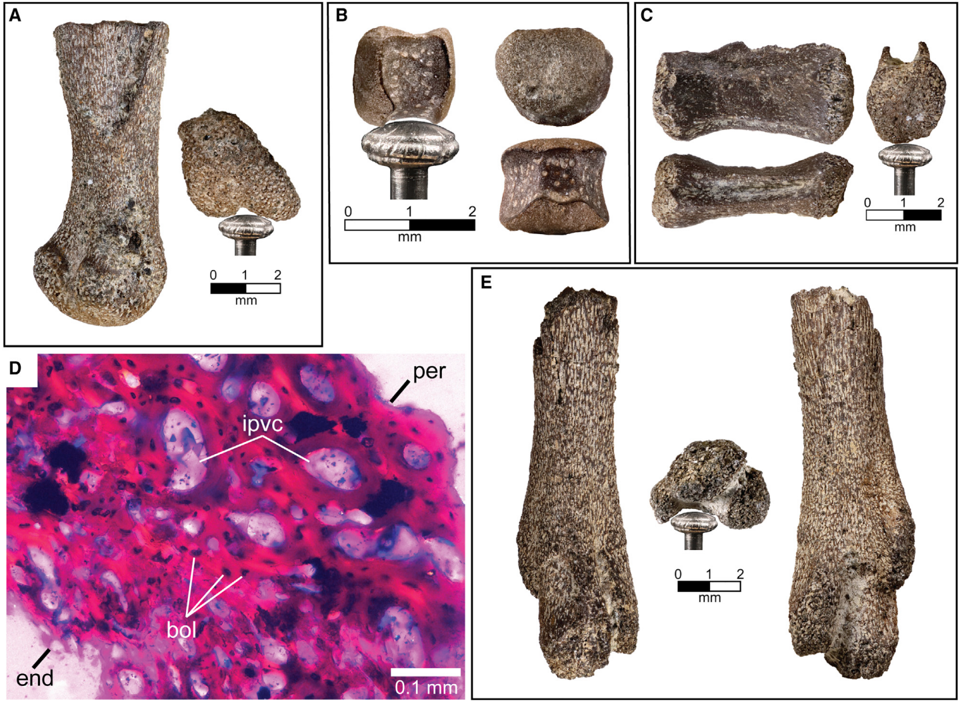
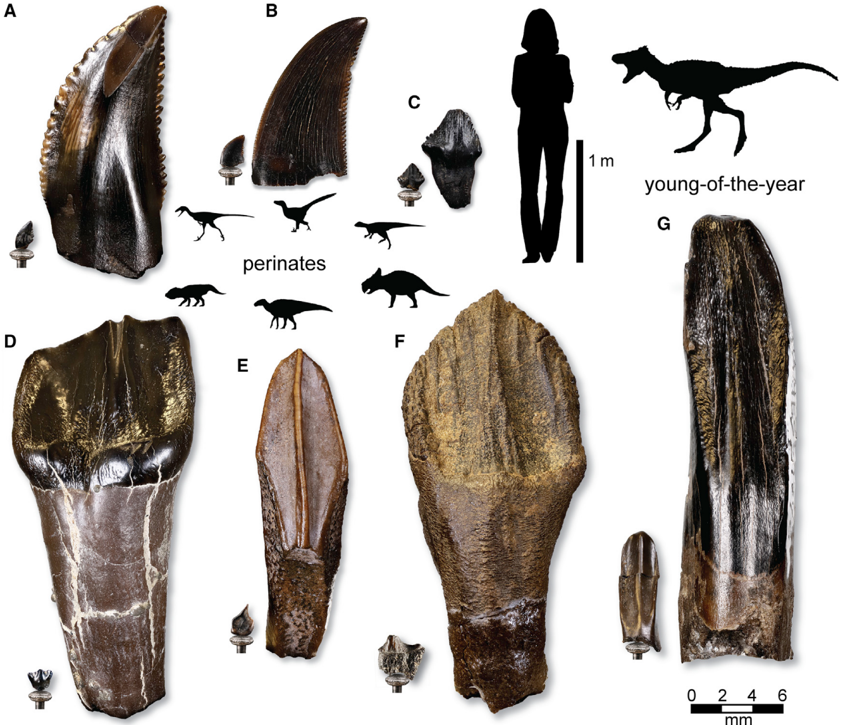
- Minute fossil bones and teeth (n > 100) from the PCF include perinatal or young-of-the-year remains referable to Ornithopoda indet., Thescelosauridae, Theropoda indet., Deinonychosauria, and Avialae; teeth further indicate Hadrosauridae, Ceratopsidae, Leptoceratopsidae, Troodontidae, Dromaeosauridae, and Tyrannosauridae.
- Perinatal material was recovered from seven dinosaur families plus birds, representing 70% of the dinosaurian families known from the PCF—the highest percentage for any North American Cretaceous formation; at least 13 dinosaurian species are known from the formation, and minimally seven taxa reproduced in the Arctic. The study also reports the first direct evidence for polar reproduction by Mesozoic avialans, the oldest unambiguous record of polar bird nesting, preceding other evidence by ~25 million years.
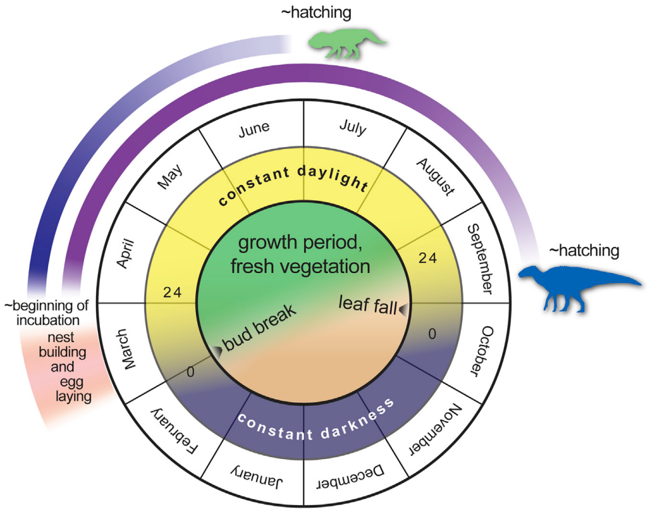
- The data support the “year-round” hypothesis: prolonged incubation (~2.5–6 months), small neonate sizes, and short reproductive windows left negligible post-hatching time for long migrations; temperatures conducive to incubation maximally spanned just 7 months, and at ~82°N complete winter darkness lasted 4 months (mid-October to mid-February), with cold-month mean temperatures of −2.0°C ± 3.9°C and short periods as low as −10°C.
- Reconstructed reproductive chronology for PCF ornithischians suggests a single viable brood per year: a leptoceratopsid with ~83-day incubation (similar to *Protoceratops*) could hatch near summer solstice, while hadrosaurids with ~171-day incubation (similar to *Hypacrosaurus*) could hatch as late as mid-to-late September, about a month before the last sunrise.
Methods
- Three-decade field program and microfossil analyses in the PCF; fossiliferous sediment was bulk-sampled, washed, sieved through 2.0 mm and 0.5 mm screens, and visually inspected under a dissecting microscope; specimens are housed in the University of Alaska Museum Earth Sciences Collection (UAMES).
- Taxonomic diagnosis used informative anatomical features; ontogenetic status was assessed from surficial morphology, histological indices, and inter- and/or intraspecific scaling comparisons with adults and known embryos/perinates.
- Histology: four indeterminate long bone elements (Theropoda n = 2, Ornithopoda n = 1) were embedded in epoxy, sectioned transversely (and one longitudinally), thin-sectioned to ~100 µm, and imaged with incident and polarized petrographic microscopy; paleolatitude/light-regime calculations used Cretaceous day length, obliquity, and paleolatitude estimates.
Limitations
- Paper states: whether all PCF dinosaurs nested in the Arctic is currently unknown; most of the at least 13 species are rare; only minimally seven taxa are shown to have reproduced there; no eggshell preservation has been found, possibly due to acidic pore waters.
- Paper states: most materials come from time-averaged fossil assemblages with varying weathering and transport, and PCF dinosaur-bearing outcrops are limited to a narrow ~20 km band; comparative inland Arctic sites are currently unknown.
- Evident from text: pachycephalosaurid neonates are unknown globally and ornithomimids lack teeth, so those PCF families are not represented by perinatal material; the reproductive chronology is hypothetical and based on incubation periods from non-PCF taxa (*Protoceratops*, *Hypacrosaurus*).
Model-written summary. Check it against the paper before relying on it.
Integrity signals
Registry
Cites
Statistics
Figures
Verification
Claims the paper makes
0 Valid · 1 Not valid · 53 Not checked · 61 Own results and interpretations
A result the paper reports from its own data — it cites no other source for it, so there is none to check. The quote shows it is in the paper.
In the paper
“Here we report the discovery of perinatal and very young dinosaurs from the highest known paleolatitude for the clade-the Cretaceous Prince Creek Formation (PCF) of northern Alaska.”
§ Nesting at extreme polar latitudes by non-avian dinosaurs > Abstract
plain- Asserted: passes — The authors put it forward as true.
- Checkable: passes — It can be checked against evidence.
- Load-bearing: passes — The paper’s conclusions depend on it.
- Based: passes — The paper gives a reason why it holds.
A result the paper reports from its own data — it cites no other source for it, so there is none to check. The quote shows it is in the paper.
In the paper
“Our data also reveal the first direct evidence for polar reproduction by Mesozoic avialans.”
§ Nesting at extreme polar latitudes by non-avian dinosaurs > RESULTS
boosted- Asserted: passes — The authors put it forward as true.
- Checkable: passes — It can be checked against evidence.
- Load-bearing: passes — The paper’s conclusions depend on it.
- Based: passes — The paper gives a reason why it holds.
None of the sources cited for this claim have been checked yet.
In the paper
“At least four ornithischian taxa are represented including Hadrosauridae (likely the large [6+ m total length] edmontosaurine Ugrunaaluk kuukpikensis/''Edmontosaurus regalis,'' the most common PCF hadrosaurid) 20 (Figures 3E and S4), Ceratopsidae (likely the large [5+ m total length] neoceratopsian Pachyrhinosaurus perotorum, the only known PCF ceratopsid) 28 (Figures 3F and S3), Leptoceratopsidae”
§ Nesting at extreme polar latitudes by non-avian dinosaurs > RESULTS
What the sources say
- Not checked yetcites [20] Mori, H., Druckenmiller, P.S., and Erickson, G.M. (2016). A new Arctic ha- drosaurid from the Prince Creek Formation (Lower Maastrichtian) of north- ern Alaska. Acta Palaeontol. Pol. 61, 15-32. source
- Not checked yetcites [28] Fiorillo, A.R., and Tykoski, R.S. (2012). A new Maastrichtian species of the centrosaurine ceratopsid Pachyrhinosaurus from the North Slope of Alaska. Acta Palaeontol. Pol. 57, 561-573. source
- Not checked yetcites [29] Erickson, G.M., Sidebottom, M.A., Kay, D.I., Turner, K.T., Ip, N., Norell, M.A., Sawyer, W.G., and Krick, B.A. (2015). Wear biomechanics in the slicing dentition of the giant horned dinosaur Triceratops. Sci. Adv. 1, e1500055. source
plain- Asserted: passes — The authors put it forward as true.
- Checkable: passes — It can be checked against evidence.
- Load-bearing: unclear — It is unclear whether the paper’s conclusions depend on it.
- Based: passes — The paper gives a reason why it holds.
A result the paper reports from its own data — it cites no other source for it, so there is none to check. The quote shows it is in the paper.
In the paper
“A three-decade-long field program and extensive microfossil analyses in the PCF led to recovery of numerous minute dinosaurian skeletal elements and teeth (Figures 2, 3, and S1-S5).”
§ Nesting at extreme polar latitudes by non-avian dinosaurs > INTRODUCTION
plainstates a cause- Asserted: passes — The authors put it forward as true.
- Checkable: passes — It can be checked against evidence.
- Load-bearing: passes — The paper’s conclusions depend on it.
- Based: passes — The paper gives a reason why it holds.
A result the paper reports from its own data — it cites no other source for it, so there is none to check. The quote shows it is in the paper.
In the paper
“Collectively, the osteological and dental data demonstrate the occurrence of perinatal and young-of-the-year from both largeand small-bodied dinosaurs in the PCF.”
§ Nesting at extreme polar latitudes by non-avian dinosaurs > RESULTS
boostedn = 7- Asserted: passes — The authors put it forward as true.
- Checkable: passes — It can be checked against evidence.
- Load-bearing: passes — The paper’s conclusions depend on it.
- Based: passes — The paper gives a reason why it holds.
51 more claims
Create a free account to see all 115 claims and to verify the 84 references still open.
- It may state two separate claims as one. 47
- Probably not a substantial claim. 19
Claims other papers make about this one
Each is checked against this paper’s own text: does it say what the citing paper says it does?
In the citing paper
“Empirical evidence 26 and modelling approaches 29,46 , including the results reported in this study, underscore the high evolutionary adaptability of dinosaurs to long-term, climatically-driven, macroecological changes, which was probably only eroded by a geologically instantaneous episode, such as that caused by the end-Cretaceous Chicxulub impact event 23,129,130 .”
From Climatic constraints on the biogeographic history of Mesozoic dinosaurs (2022) · cites this paper as [26]
In the citing paper
“By contrast, ornithischians and theropods exhibited high diversity at approximately 40°−50° palaeolatitudes, particularly in the Northern Hemisphere, with some taxa apparently living at 70° or higher [44,149,207,212–214] (N.B. no sauropod has been found at palaeolatitudes higher than 66°, and high latitude instances are very rare [111,215,216].)”
From A brief review of non-avian dinosaur biogeography: state-of-the-art and prospectus (2024) · cites this paper as [214]
In the citing paper
“Biomechanical, isotopic and osteohistological evidence, combined with findings of nesting and perinate material, suggests that northern high-latitude theropods and ornithischians were adapted to Arctic winters and were resident there year-round (i.e. they did not undertake seasonal southward migrations) [213,214,219].”
From A brief review of non-avian dinosaur biogeography: state-of-the-art and prospectus (2024) · cites this paper as [214]
In the citing paper
“Recent discoveries of eggshell fragments in Northeastern Russia [11], as well as perinatal and very young individuals from Alaska [14,15], demonstrates that some dinosaurs, including large-sized species, were able to successfully reproduce at high latitudes and were most likely permanent residents of high latitudes.”
From High-Latitude Dinosaur Nesting Strategies during the Latest Cretaceous in North-Eastern Russia (2023) · cites this paper as [14]
In the citing paper
“It would allow them to reach a body size large enough to tolerate the harsh next winter period, either by migrating to lower latitudes for large species that were biomechanically and energetically capable of doing so or by overwintering under near-freezing to freezing conditions, with limited food availability and prolonged darkness [14,67].”
From High-Latitude Dinosaur Nesting Strategies during the Latest Cretaceous in North-Eastern Russia (2023) · cites this paper as [14]
Self-check
Percentages, sums and reported differences re-computed from the paper’s own numbers.
Each contradiction between two passages listed here was confirmed by an independent check.
Rated minor: it would not touch a result — a value no result rests on, a p-value that stays on the same side of the significance level, or a conflict that is clerical, resolved elsewhere in the paper, or outside its own findings.
In the paper
“Crowns from rooted embryonic maxillary teeth of MOR 246-11 are up to 1.0 mm in height and have a FABL of 0.7 mm (59% and 58% of UAMES 52268, respectively).”
§ Nesting at extreme polar latitudes by non-avian dinosaurs > Estimation of ontogenetic status and scaling comparisons
Reported 59 · recomputed 52.631579
Rated minor: it would not touch a result — a value no result rests on, a p-value that stays on the same side of the significance level, or a conflict that is clerical, resolved elsewhere in the paper, or outside its own findings.
In the paper
“Four indeterminate long bone elements representing Theropoda (n = 2) and Ornithopoda (n = 1) showing rugose periosteal surfaces were selected for histological microstructural characterization.”
§ Nesting at extreme polar latitudes by non-avian dinosaurs > Histological analysis
Reported 4 · recomputed 3
Rated minor: it would not touch a result — a value no result rests on, a p-value that stays on the same side of the significance level, or a conflict that is clerical, resolved elsewhere in the paper, or outside its own findings.
In the paper
§ Nesting at extreme polar latitudes by non-avian dinosaurs > RESULTS
“In total, perinatal material was recovered from seven dinosaur families, as well as birds, representing 70% of those known to occur in the PCF (Figure 4).”
§ Nesting at extreme polar latitudes by non-avian dinosaurs > RESULTS
“The only PCF families not currently recognized by perinates are Pachycephalosauridae, the neonates of which are unknown globally, and Ornithomimidae”
Rated minor: it would not touch a result — a value no result rests on, a p-value that stays on the same side of the significance level, or a conflict that is clerical, resolved elsewhere in the paper, or outside its own findings.
In the paper
§ Nesting at extreme polar latitudes by non-avian dinosaurs > DISCUSSION
“At $82 N, complete winter darkness lasted 4 months (approximately mid-October until approximately mid-February)”
§ Nesting at extreme polar latitudes by non-avian dinosaurs > DISCUSSION
“Approximately 4 months would have remained before the onset of full-day winter darkness in approximately early October.”
Citations
Cites
Alternative global Cretaceous paleogeography
Hay, W. W., DeConto, R. M., Wold, C. N., Wilson, K. M., Voigt, S., Schulz, M., Wold, A. R., Dullo, W.-C., Ronov, A. B., Balukhovsky, A. N., et al. (1999) · Evolution of the Cretaceous Ocean-Climate System · doi:10.1130/0-8137-2332-9.1 · Cited by 592
Microstructure and Mineralization of Vertebrate Skeletal Tissues
Francillon-Vieillot, H., de Buffrénil, V., Castanet, J., Géraudie, J., Meunier, F. J., Sire, J. Y., Zylberberg, L., & de Ricqlès, A. (2013) · Short Courses in Geology · doi:10.1029/sc005p0175 · Cited by 587
Four-winged dinosaurs from China
Xu, X., Zhou, Z., Wang, X., Kuang, X., Zhang, F., & Du, X. (2003) · Nature · doi:10.1038/nature01342 · Cited by 485
Individual-based models in ecology after four decades
DeAngelis, D. L., & Grimm, V. (2014) · F1000Prime Reports · doi:10.12703/p6-39 · Cited by 360
Horner, J. R., De Ricqlès, A., & Padian, K. (2000) · Journal of Vertebrate Paleontology · doi:10.1671/0272-4634(2000)020[0115:lbhoth]2.0.co;2 · Cited by 340
Gigantism and comparative life-history parameters of tyrannosaurid dinosaurs
Erickson, G. M., Makovicky, P. J., Currie, P. J., Norell, M. A., Yerby, S. A., & Brochu, C. A. (2004) · Nature · doi:10.1038/nature02699 · Cited by 324
Self-citationThe phylogeny of the ornithischian dinosaurs
Butler, R. J., Upchurch, P., & Norman, D. B. (2008) · Journal of Systematic Palaeontology · doi:10.1017/s1477201907002271 · Cited by 323
Theropod teeth from the Judith River Formation of southern Alberta, Canada
Currie, P. J., Rigby, J. K., & Sloan, R. E. (1990) · Dinosaur Systematics · doi:10.1017/cbo9780511608377.011 · Cited by 322
Evolution of the Cretaceous Ocean-Climate System
Barrera, E., & Johnson, C. C. (1999) · Geological Society of America eBooks · doi:10.1130/spe332 · Cited by 273
Microstructure and Mineralization of Vertebrate Skeletal Tissues
Francillon-Vieillot, H., de Buffrénil, V., Castanet, J., Géraudie, J., Meunier, F. J., Sire, J. Y., Zylberberg, L., & de Ricqlès, A. (1991) · Skeletal Biomineralization: Patterns, Processes and Evolutionary Trends · doi:10.1007/978-1-4899-5740-5_20 · Cited by 259
Research works printed but not linked: 9
- Ostrom, J.H. (1980). The evidence for endothermy in dinosaurs. In A Cold Look at the Warm-Blooded Dinosaurs, R. Thomas, and E. Olsen, eds. (Westview Press), pp. 5-54.
- Gangloff, R.A. (1994). The record of Cretaceous dinosaurs in Alaska: an overview. In 1992 Proc. Int. Conf. Arct. Margins, pp. 399-404.
- Russell, D.A. (1973). The environments of Canadian dinosaurs. Can. Geogr. J. 87, 4-11.
- Carpenter, K., and Alf, K. (1994). Global distribution of dinosaur eggs, nests, and babies. In Dinosaur Eggs and Babies, K. Carpenter, K.F. Hirsch, and J.R. Horner, eds. (Cambridge University Press), pp. 15-30.
- Makovicky, P.J. (2001). A Montanaceratops cerorynchus (Dinosauria: Ceratopsia) braincase from the Horseshoe Canyon Formation of Alberta. In Mesozoic Vertebrate Life: New Research Inspired by the Paleontology of Philip J. Currie, D.H. Tanke, and K. Carpenter, eds. (Indiana University Press), pp. 343-362.
- Baszio, S. (1997). Systematic palaeontology of isolated dinosaur teeth from the latest Cretaceous of South Alberta, Canada. Cour. Forschungsinstitut Senckenb. 196, 33-77.
- Brown, B. (1914). Leptoceratops, a new genus of Ceratopsia from the Edmonton Cretaceous of Alberta. Bull. Am. Mus. Nat. Hist. 33, 567-580.
- Erickson, G.M., and Zelenitsky, D.K. (2014). Osteohistology of Hypacrosaurus stebengeri teeth throughout ontogeny with comments on wear induced form and function. In Hadrosaurs, D. Eberth, and D.C. Evans, eds. (University of Indiana Press), pp. 422-432.
- Sullivan, R.M. (2006). A taxonomic review of the Pachycephalosauridae (Dinosauria: Ornithischia). New Mex. Museum Nat. Hist. Sci. Bull. 35, 347-365.
Cited by
Climatic constraints on the biogeographic history of Mesozoic dinosaurs
Chiarenza, A. A., Mannion, P. D., Farnsworth, A., Carrano, M. T., & Varela, S. (2022) · Current Biology · doi:10.1016/j.cub.2021.11.061 · Cited by 65
A brief review of non-avian dinosaur biogeography: state-of-the-art and prospectus
Upchurch, P., & Chiarenza, A. A. (2024) · Biology Letters · doi:10.1098/rsbl.2024.0429 · Cited by 30
Early Jurassic origin of avian endothermy and thermophysiological diversity in dinosaurs
Chiarenza, A. A., Cantalapiedra, J. L., Jones, L. A., Gamboa, S., Galván, S., Farnsworth, A. J., Valdes, P. J., Sotelo, G., & Varela, S. (2024) · Current Biology · doi:10.1016/j.cub.2024.04.051 · Cited by 23
Tagliavento, M., Davies, A., Bernecker, M., Staudigel, P. T., Dawson, R. R., Dietzel, M., Goetschl, K. E., Guo, W., Schulp, A. S., Therrien, F., et al. (2023) · Proceedings of the National Academy of Sciences · doi:10.1073/pnas.2213987120 · Cited by 22
Caspar, K. R., Gutiérrez‐Ibáñez, C., Bertrand, O., Carr, T. D., Colbourne, J. A. D., Erb, A., George, H., Holtz, T. R., Naish, D., WYLIE, D. R. W., et al. (2024) · The Anatomical Record · doi:10.1002/ar.25459 · Cited by 21
Olsen, P. E., Sha, J., Fang, Y., Chang, C. Y., Kent, D. V., Vajda, V., Whiteside, J. H., Kinney, S., Lampert, A., & MacLennan, S. A. (2023) · Geological Society London Special Publications · doi:10.1144/sp538-2023-89 · Cited by 16
The spatiotemporal distribution of Mesozoic dinosaur diversity
Mannion, P. D. (2024) · Biology Letters · doi:10.1098/rsbl.2024.0443 · Cited by 16
Sidor, C. A., McIntosh, J. A., Gee, B. M., Hammer, W. R., Makovicky, P. J., Smith, N. D., Smith, R. M. H., Tabor, N. J., Whitney, M. R., & Woolley, C. H. (2023) · Earth-Science Reviews · doi:10.1016/j.earscirev.2023.104587 · Cited by 14
Global latitudinal gradients and the evolution of body size in dinosaurs and mammals
Wilson, L. N., Gardner, J. D., Wilson, J. P., Farnsworth, A., Perry, Z. R., Druckenmiller, P. S., Erickson, G. M., & Organ, C. L. (2024) · Nature Communications · doi:10.1038/s41467-024-46843-2 · Cited by 13
Self-citationArctic bird nesting traces back to the Cretaceous
Wilson, L. N., Ksepka, D. T., Wilson, J. P., Gardner, J. D., Erickson, G. M., Brinkman, D. B., Brown, C. M., Eberle, J. J., Organ, C. L., & Druckenmiller, P. S. (2025) · Science · doi:10.1126/science.adt5189 · Cited by 12
Self-citationThe first deep-snouted tyrannosaur from Upper Cretaceous Ganzhou City of southeastern China
Zheng, W., Jin, X., Xie, J., & Du, T. (2024) · Scientific Reports · doi:10.1038/s41598-024-66278-5 · Cited by 12
Brinkman, D. B., Lopez, J. A., Erickson, G. M., Eberle, J. J., Muñoz, X., Wilson, L. N., Perry, Z. R., Murray, A. M., Loon, L. L. V., Banerjee, N. R., et al. (2025) · Papers in Palaeontology · doi:10.1002/spp2.70014 · Cited by 10
Self-citationOlsen, P. E., Sha, J., Fang, Y., Chang, C. Y., Sues, H., Slibeck, B. B., Qiang, F., & Yu, C. (2023) · Geological Society London Special Publications · doi:10.1144/sp538-2022-323 · Cited by 9
Hudgins, M., Currie, P. J., & Sullivan, C. (2021) · Cretaceous Research · doi:10.1016/j.cretres.2021.105058 · Cited by 8
Xing, L., Klein, H., Lockley, M. G., Li, H., Tong, B., Ye, Y., Dai, H., Chou, C., Wang, D., Romilio, A., et al. (2023) · Historical Biology · doi:10.1080/08912963.2023.2209784 · Cited by 8
New Lizard Specimens from the Campanian Wapiti Formation of Alberta, Canada
Hamilton, S. M., Paparella, I., Bell, P. R., Campione, N. E., Fanti, F., Larson, D. W., Sissons, R. L., Vavrek, M. J., Balsai, M. J., & Sullivan, C. (2023) · Geosciences · doi:10.3390/geosciences13110337 · Cited by 7
Yun, C. (2021) · Acta Palaeontologica Romaniae · doi:10.35463/j.apr.2022.01.06 · Cited by 5
An unusual microsite from the Upper Cretaceous Horseshoe Canyon Formation of Alberta, Canada
Whitebone, S. A., Funston, G. F., & Currie, P. J. (2023) · Journal of Vertebrate Paleontology · doi:10.1080/02724634.2024.2316668 · Cited by 5
Martin, A. J. M., Lowery, M., Hall, M., Rich, T. H., Seegets-Villiers, D. E., Swinkels, P., Broomfield, J., & Vickers-Rich, P. (2024) · Alcheringa An Australasian Journal of Palaeontology · doi:10.1080/03115518.2024.2392498 · Cited by 5
Bapinaev, R. A., Golovneva, L. B., Zolina, А. А., Averianov, A. O., & Skutschas, P. P. (2023) · Cretaceous Research · doi:10.1016/j.cretres.2023.105552 · Cited by 5
Biasi, J. A., & Strauss, J. V. (2025) · Canadian Journal of Earth Sciences · doi:10.1139/cjes-2024-0125 · Cited by 5
A new tiny eutherian from the Late Cretaceous of Alaska
Eberle, J. J., Clemens, W. A., Erickson, G. M., & Druckenmiller, P. S. (2023) · Journal of Systematic Palaeontology · doi:10.1080/14772019.2023.2232359 · Cited by 4
Self-citationHigh-Latitude Dinosaur Nesting Strategies during the Latest Cretaceous in North-Eastern Russia
Amiot, R., Golovneva, L. B., Godefroit, P., Goedert, J., Garcia, G., Lécuyer, C., Fourel, F., Herman, A. B., & Spicer, R. A. (2023) · Diversity · doi:10.3390/d15040565 · Cited by 4
Stewart, D. G., Druckenmiller, P. S., Erickson, G. M., Benowitz, J. A., Capps, D. M., Knight, C. L., May, K. C., & McCarthy, P. J. (2023) · Historical Biology · doi:10.1080/08912963.2023.2221267 · Cited by 4
Self-citationVariation of climate factors and their influence on the productivity indicators of sunflower hybrids
Odinets, S. I. (2025) · Scientific and Technical Bulletin of the Institute of Oilseed Crops NAAS · doi:10.36710/ioc-2025-38-05 · Cited by 3
Choi, S., Paik, I., Kim, H., Kim, Y., Zhang, S., Park, Y., & Lee, S. K. (2026) · Papers in Palaeontology · doi:10.1002/spp2.70084 · Cited by 2
Diet of bird‐like troodontid dinosaurs: synthesis of a contentious clade
Fan, Y. C., Miller, C. V., & Pittman, M. (2026) · Biological reviews/Biological reviews of the Cambridge Philosophical Society · doi:10.1002/brv.70145 · Cited by 2
Temperature-dependent predation predicts a more reptilian futurePreprint
Grady, J. M., Amme, J. L., Bhaskaran-Nair, K., Sinha, V., Brunwasser, S. J., Read, Q. D., Record, S., Dell, A. I., & Hengen, K. B. (2024) · bioRxiv (Cold Spring Harbor Laboratory) · doi:10.1101/2024.09.19.613816 · Cited by 2
Perry, Z. R. (2023) · ScholarWorks - UA (University of Alaska System) · Cited by 2
Zheng, W., Zhao, Q., Barrett, P. M., & Xu, X. (2025) · Journal of Vertebrate Paleontology · doi:10.1080/02724634.2025.2566325 · Cited by 1
The dentition of tyrannosauroid theropods: a review
Hernández-Luna, C. A., Hendrickx, C., Marín-Leyva, A. H., & Carr, T. D. (2026) · Discover Geoscience · doi:10.1007/s44288-026-00454-0 · Cited by 1
Shelley, S. L., Eberle, J. J., Erickson, G. M., & Druckenmiller, P. S. (2026) · Proceedings of the National Academy of Sciences · doi:10.1073/pnas.2601794123 · Cited by 1
Self-citationThe body temperature of Tyrannosaurus rex
Flores, R. J., Eagle, R. A., Trayler, R. B., Conte, G. L., Kim, S. L., Chiarenza, A. A., Farnsworth, A., Valdes, P. J., Chiappe, L. M., & Tripati, A. (2026) · Science Advances · doi:10.1126/sciadv.aeb7653
Progress and future directions in dinosaur palaeontology
Xu, X., Upchurch, P., Zanno, L. E., McNamara, M. E., Qin, Z., & Benton, M. (2026) · Nature Reviews Biodiversity · doi:10.1038/s44358-026-00191-9
Wilson, L. N., Wilson, J. P., Ksepka, D. T., Brown, C. M., Erickson, G. M., Brinkman, D. B., Eberle, J. J., & Druckenmiller, P. S. (2026) · Royal Society Open Science · doi:10.1098/rsos.261403
Self-citationBody size evolution through shifting climatic conditions in Mesozoic dinosaurs
Wilson, L. N., Gardner, J. D., Wilson, J. P., Farnsworth, A., Valdes, P. J., Perry, Z. R., Druckenmiller, P. S., Erickson, G. M., & Organ, C. L. (2026) · Palaeontology · doi:10.1111/pala.70068
Self-citationSampling the past to understand evolution
Gardner, J. D. (2025) · CentAUR (University of Reading) · doi:10.48683/1926.00112644
Paleontology: Snow falling on dinosaurs
Maderspacher, F. (2021) · Current Biology · doi:10.1016/j.cub.2021.07.023
Coppock, C. C., Larsson, H. C. E., & Currie, P. J. (2026) · Palaeogeography Palaeoclimatology Palaeoecology · doi:10.1016/j.palaeo.2026.114007
Tanaka, K., Novas, F. E., Manabe, M., Sakata, C., Marsà, J. A. G., & Zelenitsky, D. K. (2026) · Royal Society Open Science · doi:10.1098/rsos.260333
Metadata
- Authors
- Druckenmiller, P. S., Erickson, G. M., Brinkman, D., Brown, C. M., & Eberle, J. J.
- Affiliations
- University of Alaska Fairbanks (US)
- Florida State University (US)
- Royal Tyrrell Museum (CA)
- University of Colorado Boulder (US)
- Corresponding author
- Druckenmiller, Patrick S.
- Venue
- Current Biology
- Publisher
- Elsevier BV
- Published
- 2021-08
- Volume
- 31
- Issue
- 16
- Pages
- 3469-3478.e5
- ISSN
- 0960-9822 (ISSN-L)
- OpenAlex
- W3174184361
- Cited by
- 40
- References
- 77
- Citations by year
- 2026: 10 · 2025: 6 · 2024: 8 · 2023: 12 · 2021: 4
- FWCI
- 3.37
- Type
- journal article
- Language
- en
- Open access
- hybrid
- doi.org
- Licence
- cc-by-sa
- www.elsevier.com/tdm/userlicense/1.0/ (tdm)
- www.elsevier.com/legal/tdmrep-license (tdm)
- www.elsevier.com/open-access/userlicense/1.0/ (vor, 387 d)
- doi.org/10.15223/policy-017 (stm-asf)
- doi.org/10.15223/policy-037 (stm-asf)
- doi.org/10.15223/policy-012 (stm-asf)
- doi.org/10.15223/policy-029 (stm-asf)
- doi.org/10.15223/policy-004 (stm-asf)
- Locations
- Current Biology (publishedVersion, cc-by-sa)
- PubMed (publishedVersion)
- Funders
- National Science Foundation
- National Science Foundation Directorate for Geosciences (EAR 1226730, EAR 1736515)
- Topics
- Physical Sciences › Earth and Planetary Sciences › Paleontology › Paleontology and Evolutionary Biology
- Physical Sciences › Earth and Planetary Sciences › Paleontology › Evolution and Paleontology Studies
- Physical Sciences › Environmental Science › Ecology › Avian ecology and behavior
- Keywords
- non-avian dinosaurs, nesting, Prince Creek Formation, Cretaceous, paleolatitude, ornithischians, theropod dinosaurs, incubation period, plant phenology, endothermy, life history strategies, paleoenvironment
- MeSH terms
- Animals, Arctic Regions, Fossils, Nesting Behavior, Phylogeny, Reproduction, Dinosaurs
About these checks
Registry, retraction, Cites and statistics results are computed, not judged, with one exception: a printed reference that no index lists is read once by a model before it counts as a citation error. Claims are extracted by a model and kept only when their quote appears verbatim in the text; each cited source is then checked, with a model’s help, for whether it says what the claim relies on. Those verdicts can be wrong — read the claim’s quote and the cited source before relying on one.
A language model drew the claims from the paper on 2026-11-23, under version 3 of the claim definition (model deepseek-v4.1-flash, prompt extract-v3).
A second model labelled each claim on 2026-11-23 (model jev-1.13-20260917, definition revision gold-guideline-v0.2).
Statistics and arithmetic are recomputed, not judged.
Confidence bands are shown only for fields calibrated on our annotated test set. None is calibrated yet, so no band is shown.
What counts as a claim ›How we measure confidence ›How we check this ›
Are you an author, or do you see a problem with this page? Request a review
Data sources
Bibliographic data: Semantic Scholar, OpenAlex, Crossref.
Contains information from the Semantic Scholar Academic Graph Datasets, made available under the ODC Attribution License (ODC-BY 1.0).
Semantic Scholar’s data is described in: Kinney, R., et al. (2023). The Semantic Scholar Open Data Platform. arXiv:2301.10140.
