

The DOI matches its Crossref record; 31 of the 31 references it cites were found in a registry or an index.
Apolipoprotein E (APOE) genotype-associated disease risks: a phenome-wide, registry-based, case-control study utilising the UK Biobank
Open accessAbstract
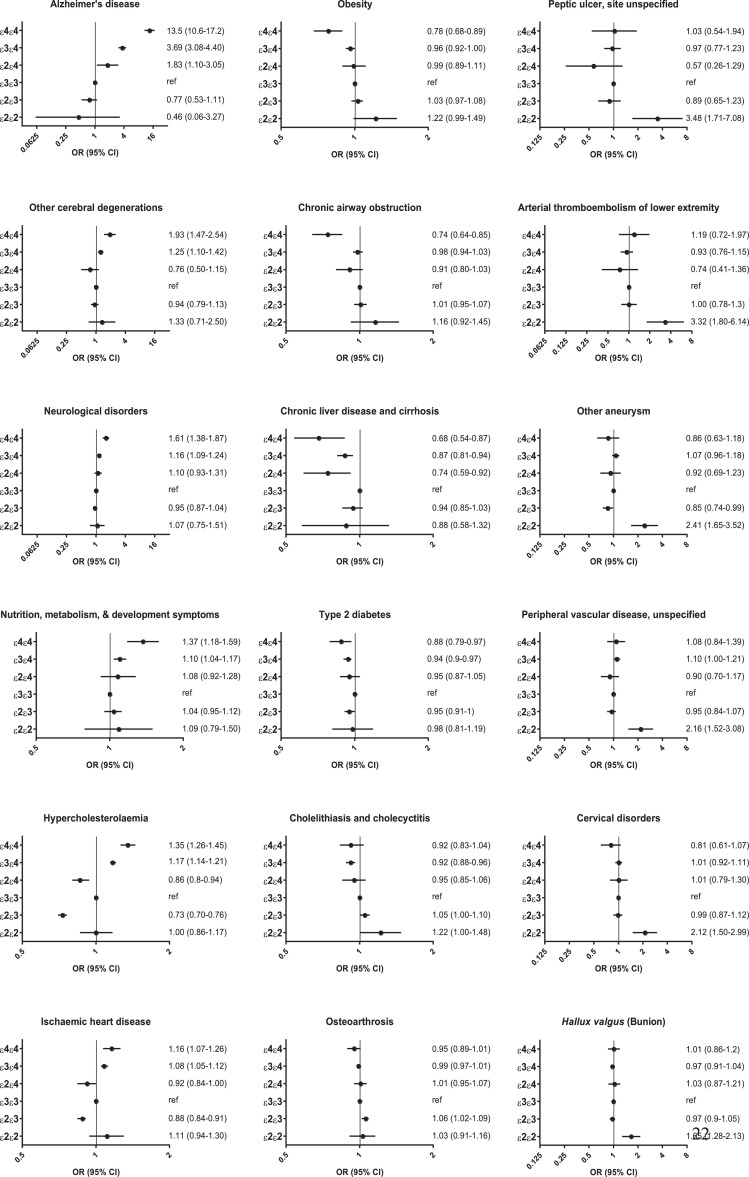
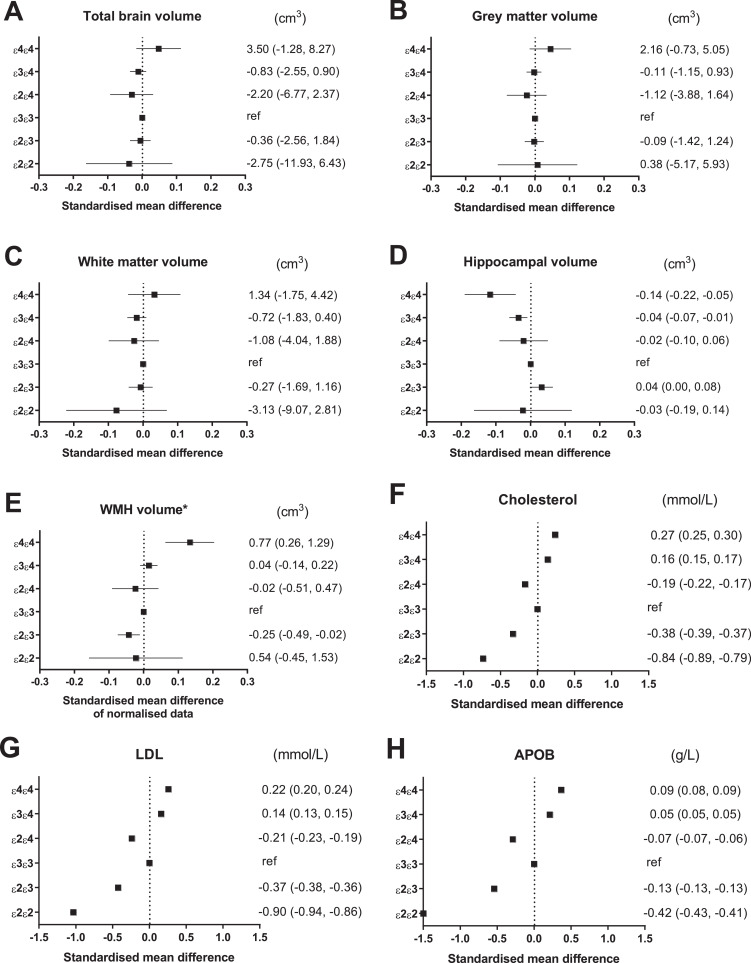
Background The three main alleles of the APOE gene (ε4, ε3 and ε2) carry differential risks for conditions including Alzheimer's disease (AD) and cardiovascular disease. Due to their clinical significance, we explored disease associations of the APOE genotypes using a hypothesis-free, data-driven, phenome-wide association study (PheWAS) approach. Methods We used data from the UK Biobank to screen for associations between APOE genotypes and over 950 disease outcomes using genotype ε3ε3 as a reference. Data was restricted to 337,484 white British participants (aged 37–73 years). Findings After correction for multiple testing, PheWAS analyses identified associations with 37 outcomes, representing 18 distinct diseases. As expected, ε3ε4 and ε4ε4 genotypes associated with increased odds of AD (p ≤ 7.6 × 10 −46 ), hypercholesterolaemia (p ≤ 7.1 × 10 −17 ) and ischaemic heart disease (p ≤ 2.3 × 10 −4 ), while ε2ε3 provided protection for the latter two conditions (p ≤ 3.7 × 10 −10 ) compared to ε3ε3. In contrast, ε4-associated disease protection was seen against obesity, chronic airway obstruction, type 2 diabetes, gallbladder disease, and liver disease (all p ≤ 5.2 × 10 −4 ) while ε2ε2 homozygosity increased risks of peripheral vascular disease, thromboembolism, arterial aneurysm, peptic ulcer, cervical disorders, and hallux valgus (all p ≤ 6.1 × 10 −4 ). Sensitivity analyses using brain neuroimaging, blood biochemistry, anthropometric, and spirometric biomarkers supported the PheWAS findings on APOE associations with respective disease outcomes. Interpretation PheWAS confirms strong associations between APOE and AD, hypercholesterolaemia, and ischaemic heart disease, and suggests potential ε4-associated disease protection and harmful effects of the ε2ε2 genotype, for several conditions. Funding National Health and Medical Research Council of Australia.
Overview
The claims and statistics of this paper haven’t been checked yet.
Run the check — free, no account needed. It reads the open-access text and checks the sources it cites.
Integrity signals
Registry
Cites
Statistics
Figures
Verification
Claims the paper makes
The claims and statistics of this paper haven’t been checked yet.
Run the check — free, no account needed. It reads the open-access text and checks the sources it cites.
Claims other papers make about this one
Each is checked against this paper’s own text: does it say what the citing paper says it does?
The source backs part of the claim, not all of it — or backs it for a different population, condition or comparison.
In the citing paper
“By contrast, in the same registries, APOEε2 has been associated with lower LDL cholesterol levels, increased triglyceride levels and increased risk of peripheral vascular disease87,88.”
From Multifaceted roles of APOE in Alzheimer disease (2024) · cites this paper as [88]
Experimental — accuracy not yet measuredThe source backs part of the claim, not all of it — or backs it for a different population, condition or comparison.
In the citing paper
“Besides AD43, APOE has been associated with at least eighteen other diseases, including heart disease and high cholesterol44.”
From Proteogenomic analysis of human cerebrospinal fluid identifies neurologically relevant regulation and implicates causal proteins for Alzheimer’s disease (2024) · cites this paper as [44]
Experimental — accuracy not yet measuredThe cited source says what the claim attributes to it.
In the citing paper
“APOE genotype was determined using SNP data at rs429358 and rs7412, which define the three major APOE isoforms (ε2, ε3, and ε4) based on established haplotypes. Genotypes were assigned according to allele combinations, consistent with prior UK Biobank studies,79”
From TET2-mutant myeloid cells mitigate Alzheimer’s disease progression via CNS infiltration and enhanced phagocytosis in mice (2025) · cites this paper as [79]
The cited source says what the claim attributes to it.
In the citing paper
“a risk increase also recently reported cross-sectionally in the UK Biobank [42]”
From APOE and vascular disease: Sequencing and genotyping in general population cohorts (2023) · cites this paper as [42]
The cited source says what the claim attributes to it.
In the citing paper
“In large health registries such as the UK BioBank, the APOEε4 allele has been associated with higher LDL cholesterol and triglycerides levels, lower HDL cholesterol levels and an increased risk of coronary artery disease.”
From Multifaceted roles of APOE in Alzheimer disease (2024) · cites this paper as [88]
Self-check
Percentages, sums and reported differences re-computed from the paper’s own numbers.
The self-check needs the paper’s full text.
Citations
Cites
Controlling the False Discovery Rate: A Practical and Powerful Approach to Multiple Testing
Benjamini, Y., & Hochberg, Y. (1995) · Journal of the Royal Statistical Society Series B: Statistical Methodology · doi:10.1111/j.2517-6161.1995.tb02031.x · Cited by 109,482 · cited 1×
“1 £ 10 4 to control for multiple testing [10], accounting for all comparisons across the five PheWASs.”
BackgroundSudlow, C., Gallacher, J., Allen, N., Beral, V., Burton, P., Danesh, J., Downey, P., Elliott, P., Green, J., Landray, M., et al. (2015) · PLOS Medicine · doi:10.1371/journal.pmed.1001779 · Cited by 12,728 · cited 2×
“Participants provided electronic consent to use their anonymised data and samples for healthrelated research, to be re-contacted for further sub-studies, and for the UK Biobank to access their health-related records [5].”
BackgroundMethodThe UK Biobank resource with deep phenotyping and genomic data
Bycroft, C., Freeman, C., Petkova, D., Band, G., Elliott, L. T., Sharp, K., Motyer, A., Vukcevic, D., Delaneau, O., O’Connell, J., et al. (2018) · Nature · doi:10.1038/s41586-018-0579-z · Cited by 8,876 · cited 3×
“Our analyses were restricted to 337,484 unrelated white British individuals (established by self-report and genetic data) [6] who had consistent information between self-reported and genetic sex (appendix p 35 figure S2).”
MethodInfluentialDenny, J. C., Bastarache, L. A., Ritchie, M. D., Carroll, R. J., Zink, R., Mosley, J. D., Field, J. R., Pulley, J. M., Ramirez, A. H., Bowton, E., et al. (2013) · Nature Biotechnology · doi:10.1038/nbt.2749 · Cited by 987 · cited 1×
“For each phecode, we coded individuals with the phecode-ofinterest as cases, whilst participants without a phecode within the same category were considered the control group [8].”
MethodWeisgraber, K. H., Innerarity, T. L., & Mahley, R. W. (1982) · Journal of Biological Chemistry · doi:10.1016/s0021-9258(18)34954-8 · Cited by 673 · cited 1×
“The homozygous e2e2 genotype increased the odds for a distinct set of disease outcomes not associated with other genotypes, suggesting that these conditions stem from a homozygous loss of APOE function specific to the e2 variant, such as its inability to bind the LDL receptor [22].”
BackgroundR PheWAS: data analysis and plotting tools for phenome-wide association studies in the R environment
Carroll, R. J., Bastarache, L. A., & Denny, J. C. (2014) · Bioinformatics · doi:10.1093/bioinformatics/btu197 · Cited by 435
Wei, W., Bastarache, L. A., Carroll, R. J., Marlo, J. E., Osterman, T. J., Gamazon, E. R., Cox, N. J., Roden, D. M., & Denny, J. C. (2017) · PLoS ONE · doi:10.1371/journal.pone.0175508 · Cited by 364
Huebbe, P., & Rimbach, G. H. (2017) · Ageing Research Reviews · doi:10.1016/j.arr.2017.06.002 · Cited by 202 · cited 1×
“Chronologically, e4 is believed to be the ancestral allele from which the e3 and e2 variants sequentially evolved over 200,000 years ago [1].”
BackgroundOxidized LDL triggers changes in oxidative stress and inflammatory biomarkers in human macrophages
Lara-Guzmán, O. J., Gil-Izquierdo, Á., Medina, S., Osorio, E., Álvarez-Quintero, R., Zuluaga, N., Oger, C., Galano, J.-M., Durand, T., & Muñoz-Durango, K. (2018) · Redox Biology · doi:10.1016/j.redox.2017.11.017 · Cited by 194 · cited 7×
“As is typically reported, e2e3 and e2e4 were protective for hypercholesterolaemia compared to e3e3 (with lower levels of “bad” cholesterol indicators; total cholesterol, LDL and APOB). e2e3 also had increased levels of “good” cholesterol indicators (HDL-cholesterol and APOA) and was associated with reduced risk of IHD…”
BackgroundInfluentialTudorache, I. F., Trusca, V. G., & Gafencu, A. V. (2017) · Computational and Structural Biotechnology Journal · doi:10.1016/j.csbj.2017.05.003 · Cited by 186 · cited 1×
“The polymorphisms affect the binding affinities of APOE for lipid and the LDLR (appendix p 34 figure S1), resulting in various effects on biomarkers of lipid and cholesterol health, and differential risks of a variety of health outcomes [2].”
Background
Cited by
Sorted by citations
Items 201–300 of 316
Lai, K.-P., Huang, Q.-Y., Lin, K.-H., Kou, H., & Wang, C. (2025) · Talanta · doi:10.1016/j.talanta.2025.128734 · Cited by 1
Mewborn, E., Cho, M.-G., Erickson, K. I., Bender, C. M., & Conley, Y. P. (2025) · Biological Research For Nursing · doi:10.1177/10998004251385243 · Cited by 1
Dementia risk across distinct metabolic profiles in the UK Biobank
Lumsden, A. L., Mulugeta, A., & Hyppönen, E. (2025) · GeroScience · doi:10.1007/s11357-025-01970-6 · Cited by 1
“…is associated with many metabolic biomarker traits in the UKB population (e.g., lower CRP and BMI, unfavourable lipid profile, lower glycated haemoglobin (HbA1c)) [17] in sensitivity analyses we additionally included in the fully adjusted model, adjustment for the number of APOE-ε4 alleles carried.”
InfluentialSelf-citationRasmussen, K. L., Luo, J., Nielsen, S. P., Nordestgaard, B. G., Tybjærg‐Hansen, A., & Frikke‐Schmidt, R. (2026) · ACR Open Rheumatology · doi:10.1002/acr2.70124 · Cited by 1
“22 The importance of investigating systemic mechanisms of in fl ammation is underlined by studies showing that psoriasis is associated with an increased risk for cardiovascular disease 23 – 25 and that conventional risk factors do not fully explain the excess burden of cardiovascular disease in…”
InfluentialAPOE and plasma AD biomarkers: The role of genetic ancestry in Hispanics/Latinos
Cheung, C., Anita, N. Z., Filigrana, P. A., Fornage, M., Gonzalez, K. A., Gallo, L. C., Isasi, C. R., Kaplan, R. C., Li, X., Márquez, F., et al. (2026) · Alzheimer s & Dementia · doi:10.1002/alz.71213 · Cited by 1
“16 However, these associations can vary significantly across populations, 17–19 particularly among understudied groups.”
Kim, A. R., Yoo, Y., & Bak, E. (2026) · European Journal Of Oral Sciences · doi:10.1111/eos.70091 · Cited by 1
“ApoE plays approximately 78% of the global population, whereas APOE ε 4 is present in about 14%, and the least common allele, APOE ε 2 , is present in around 8% of the population [12].”
Stinson, S. E., Shadrin, A. A., Rahman, Z., Rødevand, L. N., Broce, I., Persson, K., Selbæk, G., Stefánsson, H., Haavik, J., Parker, N., et al. (2026) · EBioMedicine · doi:10.1016/j.ebiom.2026.106254 · Cited by 7
“Notably, shared loci be-tween proglucagon and AD included rs7412, which defines the neuroprotective APOE ε 2 isoform, 54 high-lighting a convergence between lipid metabolism, pro-glucagon signalling, and AD susceptibility.”
Remes, T. M., Ritari, N., Arikoski, P., Koskenkorva, P., Lähteenmäki, P. M., Ojaniemi, M., Puosi, R., Sirkiä, K., Suo-Palosaari, M. H., Sutela, A., et al. (2026) · Neuro-Oncology Practice · doi:10.1093/nop/npag036 · Cited by 1
APOE, Human Ancestry, and Evolution
Smith, C. J., Ashford, J. W., & Perfetti, T. A. (2026) · Springer eBooks · doi:10.1007/978-3-031-96089-5_4 · Cited by 1
Zhang, Y., Li, S. Q., Xu, S., Zhao, R., zheng, F., & Wu, J. (2026) · Bioscience Reports · doi:10.1042/bsr20260258 · Cited by 1
“APOE phenotyping is known to play an important role in CHD risk assessment [26]; however, traditional genotyping methods are primarily qualitative and do not distinguish between the expression levels of different APOE isoforms.”
Fu, R., Wang, S., Wu, Y., Qin, X. Y., Huang, T., Li, Y., & Xu, M. (2026) · Aging Cell · doi:10.1111/acel.70581 · Cited by 1
“Genetic variations in the APOA1 gene can influence high-density lipoprotein (HDL) levels, and different genotypes lead to individual differences in response to long-chain omega-3 fatty acid intake (Xu et al. 2016; Wilson et al. 1996; Lumsden et al. 2020).”
Toyli, A., Chen, Z., Su, K., Shen, H., Deng, H., Chen, Q.-H., Sha, Q., & Zhou, W. (2026) · Journal of the American Heart Association · doi:10.1161/jaha.125.046172 · Cited by 1
Revolutionizing Nutrition Care: The Role of Artificial Intelligence in Personalized Nutrition
Joshi, S., Dwivedi, A., Kumar, A., Aayush, K., Bisht, B., Kumar, S., & Kumar, V. (2026) · Journal of Food Science · doi:10.1111/1750-3841.71281 · Cited by 1
Wu, B., Zhang, Y.-R., Liu, Y., Zhang, W., Deng, Y., Chen, S.-D., Feng, J., Cheng, W., & Yu, J. (2022) · Journal of Alzheimer s Disease · doi:10.3233/jad-220740 · Cited by 1
“As for cholecystitis without cholelithiasis, previous study has reported the protective effect of APOE4 on cholecystitis and cholelithiasis [36] and the observed AD PRS-associated decreased pancreas risk may be explained by the reduce in cholecystitis risk.”
InfluentialApolipoprotein E Polymorphism And It’s Lifestyle Impact
Thahira, A., Kumar, D. T., Dhanya, M. S., Rasitha, C. H., Rajan, A., Pinchulatha, K., Harisree, P. H., Deepthi, S., Aiganesh, I., Jeyapal, V., et al. (2024) · Journal Of Advanced Zoology · doi:10.17762/jaz.v45i1.2925 · Cited by 1
Sex Differences in Alzheimer’s Disease Pathogenesis
Jung, E. S., & Mook‐Jung, I. (2024) · Springer eBooks · doi:10.1007/978-981-97-0130-8_24 · Cited by 1
Mosini, A. C., Sanabria, V., Nakamura, T. K. E., Calió, M. L., Pompeu, C., Silva, C. S., Nicolicht, P., Naffah‐Mazzacoratti, M. D. G., Porcionatto, M. A., Mello, L. E., et al. (2024) · Epilepsy Research · doi:10.1016/j.eplepsyres.2024.107402 · Cited by 1
SNP rs6543176 is associated with extreme human longevity but increased risk for cancer
Gurinovich, A., Song, Z., Bae, H. T., Leshchyk, A., Li, M., Lords, H. J., Andersen, S. L., Nygaard, M., Christensen, K., Daw, E. W., et al. (2025) · GeroScience · doi:10.1007/s11357-024-01478-5 · Cited by 1
“For example, data from the UKBB have shown that APOE e2e2 carriers are protected from Alzheimer’s disease [27] and have a longer life expectancy, but are at increased risk for peripheral vascular disease, thromboembolism, and arterial aneurysm [28].”
Ricci, C., Bufano, A., Sareri, G. I., Batzibal, M. S., Marzocchi, C., Simoncelli, G., Righi, D., Salvemini, A., Ciuoli, C., Stefano, L. D., et al. (2025) · International Journal of Molecular Sciences · doi:10.3390/ijms26020651 · Cited by 1
Carvalho-Rassbach, M., Ventura, L. H. D. A., Assis, L. O., Fabrini, S. P., Natividade, M. M. P., Silva, J. L., Gomes, K. B., Faria, A. M. C., & Alvarez-Leite, J. I. (2025) · Journal of Medical Microbiology · doi:10.1099/jmm.0.001951 · Cited by 2
Clonal hematopoiesis as the intersection between genetics and resilience in Alzheimer’s disease
López-de-Mesa-Aragón, J., Silva‐Buriticá, C., & Salazar‐Londoño, S. (2025) · npj Dementia · doi:10.1038/s44400-025-00014-2 · Cited by 1
Perspectives of Stem Cell Therapy: A Promising Therapeutic for Cancer Model and Alzheimer’s Disease
Jeyachandran, S., Ganesan, G., Sangeetha, R., Paramasivan, V., Subbaraj, G. K., & Kulanthaivel, L. (2023) · Handbook of Animal Models and its Uses in Cancer Research · doi:10.1007/978-981-19-3824-5_32 · Cited by 1
CoPheScan: phenome-wide association studies accounting for linkage disequilibriumPreprint
Manipur, I., Reales, G., Sul, J. H., Shin, M. K., Longerich, S., Cortés, A., & Wallace, C. (2023) · bioRxiv (Cold Spring Harbor Laboratory) · doi:10.1101/2023.06.29.546856 · Cited by 1
A microglia clonal inflammatory disorder in Alzheimer’s DiseasePreprint
Vicario, R., Fragkogianni, S., Weber, L., Lazarov, T., Hu, Y., Hayashi, S. Y., Craddock, B. P., Socci, N. D., Alberdi, A., Baako, A., et al. (2024) · eLife · doi:10.7554/elife.96519.1 · Cited by 1
He, J., Cabrera‐Mendoza, B., Friligkou, E., Mecca, A. P., van Dyck, C. H., Pathak, G. A., & Polimanti, R. A. (2024) · medRxiv · doi:10.1101/2024.06.12.24308850 · Cited by 1
Murphy, K. B., Hu, D., Wolfs, L., Mancuso, R., Strooper, B. D., & Marzi, S. J. (2024) · bioRxiv (Cold Spring Harbor Laboratory) · doi:10.1101/2024.07.03.601874 · Cited by 1
“As the most commonly expressed allele 20 , we used APOE3 as the baseline for pairwise comparisons in the differential expression and chromatin accessibility analyses performed using DESeq2 31 .”
BackgroundMethodOne pot PCR genotyping of ApoE for diagnosing Alzheimer’s diseasePreprint
Kim, H. M., Bae, J. H., Yang, M., Yang, Y., Cha, W., kwak, T., Jeon, S., Bae, S., Son, S., Lee, E. Y., et al. (2025) · Research Square · doi:10.21203/rs.3.rs-6415246/v1 · Cited by 1
Mutz, J., Gilchrist, L., Pain, O., Proitsi, P., & Lewis, C. M. (2025) · medRxiv · doi:10.1101/2025.05.09.25327305 · Cited by 1
Utility of Polygenic Risk Scores in Families with Exceptional LongevityPreprint
Xicota, L., Cheng, R., Barral, S., Honig, L. S., Schupf, N., Gu, Y., Andersen, S. L., Cosentino, S., Zmuda, J. M., Perls, T. T., et al. (2025) · medRxiv · doi:10.1101/2025.07.21.25331660 · Cited by 1
Grzyb, A. N., Overall, R. W., Šilhavý, J., Mlejnek, P., Malínská, H., Hüttl, M., Marková, I., Fabel, K. S., Lu, L., Stuchlı́k, A., et al. (2021) · bioRxiv (Cold Spring Harbor Laboratory) · doi:10.1101/2021.06.04.447058
APOE ε 4 carriage associates with improved myocardial performance in older agePreprint
Topriceanu, C., Shah, M., Webber, M. R., Chan, F., Moon, J., Richards, M., Chaturvedi, N., Hughes, A. D., Schott, J. M., O’Regan, D. P., et al. (2022) · medRxiv · doi:10.1101/2022.07.20.22277846
Perspectives of Stem Cell Therapy: A Promising Therapeutic for Cancer Model and Alzheimer’s Disease
Jeyachandran, S., Ganesan, G., Sangeetha, R., Paramasivan, V., Subbaraj, G. K., & Kulanthaivel, L. (2022) · Handbook of Animal Models and its Uses in Cancer Research · doi:10.1007/978-981-19-1282-5_32-1
Association of APOE polymorphisms with serological lipid and inflammatory markersPreprint
Krishnamurthy, H. K., Rajavelu, I., Reddy, S., Pereira, M., Jayaraman, V., Krishna, K., Song, Q., Wang, T., Bei, K., & Rajasekaran, J. J. (2023) · Research Square · doi:10.21203/rs.3.rs-3159674/v1
Apolipoprotein E Polymorphism And It’s Lifestyle Impact
Thahira, A., Kumar, D. T., Dhanya, M. S., Rasitha, C. H., Rajan, A., Pinchulatha, K., Harisree, H., Deepthi, S., Inbanathan, J., Jeyapal, V., et al. (2024) · Journal Of Advanced Zoology · doi:10.53555/jaz.v45i1.2941
Feng, Y., Jia, N., Gu, X., Xiao, C., & Shen, J. (2024) · Research Square · doi:10.21203/rs.3.rs-4193051/v1
Wolf, E. J., Miller, M. W., Zhang, R., Sherva, R., Harrington, K. M., Fonda, J. R., Daskalakis, N. P., Gaziano, J. M., & Logue, M. W. (2024) · Nature Mental Health · doi:10.1038/s44220-024-00225-1 · Cited by 1
“Homozygosity for ε2 occurs rarely in the population and is associated with substantially reduced AD risk 20 , but increased risk for type III hyperlipoproteinemia (characterized by high total cholesterol and triglycerides) 21 and peripheral vascular disease 22 .”
Systematic Review and Phenome‐Wide Scans of Genetic Associations with Vascular Cognitive Impairment
Diany, R., & Taliun, S. A. G. (2024) · Advanced Biology · doi:10.1002/adbi.202300692
Štiglic, A. F., Stajnko, A., Briški, A. S., Tratnik, J. S., Mazej, D., Jerin, A., Skitek, M., Horvat, M., Marc, J., & Falnoga, I. (2024) · Environment International · doi:10.1016/j.envint.2024.109034
Heikkilä, A., Sliz, E., Väyrynen, S. A., Reis, K., Elnahas, A. G., Reigo, A., Esko, T., FinnGen, Kettunen, J., & Hautala, T. (2024) · medRxiv · doi:10.1101/2024.12.09.24318706
Unraveling Alzheimer's disease heterogeneity:
Vromen, E. M. (2024) · doi:10.5463/thesis.937
An atypical phenotype is a risk factor for higher mortality in Alzheimer’s diseasePreprint
Bader, I., Groot, C., van der Flier, W. M., Pijnenburg, Y. A. L., & Ossenkoppele, R. (2024) · medRxiv · doi:10.1101/2024.12.16.24319084
The role of APOE gene polymorphisms in lung adenocarcinoma susceptibility and lipid profile
Bi, H., Ren, D., Wang, Y., Wang, H., & Zhang, C. (2024) · Frontiers in Immunology · doi:10.3389/fimmu.2024.1522761 · Cited by 1
Ruíz-Vanoye, J. A., Díaz-Parra, O., Márquez-Vera, M. A., Barrera-Cámara, R. A., Fuentes-Penna, A., Simancas-Acevedo, E., Ruiz-Jaimes, M. Á., Xicotencatl-Perez, J. M., & Ramos-Fernandez, J. C. (2025) · Symmetry · doi:10.3390/sym17020172
Phenome-wide association studies as a research tool for identifying new pathogenetic links
Mashkina, N. A., Ershova, A. I., Kopylova, O. V., & Drapkina, O. M. (2025) · CARDIOVASCULAR THERAPY AND PREVENTION · doi:10.15829/1728-8800-2024-4275
Genetic geroscience and Alzheimer's disease: The pleiotropy is the point!
Shardell, M. D., & Chen, C. (2025) · Journal of Alzheimer s Disease · doi:10.1177/13872877251321182
“Since ADRD, coronary heart disease, and hyperlipidemia are complex and heterogeneous diseases, the dual outcome approach may have identi fi ed a genetic basis of shared (possibly age-related) biological mechanisms of ADRD with these health conditions that would have otherwise been obscured.”
Influential“Risk of Dementia in Non‐Overtly Functional Adrenal Tumour (NOFAT)”
Notarianni, E. L. (2025) · Clinical Endocrinology · doi:10.1111/cen.15244
Risk of Dementia in Non‐Overtly Functional Adrenal Tumours (NOFAT)—Reply
Mirzaei, H., Patrova, J., Mannheimer, B., Lindh, J. D., & Falhammar, H. (2025) · Clinical Endocrinology · doi:10.1111/cen.15243
“The APOE ε 4 allele is a well ‐ established risk factor for dementia, particularly AD and VD. APOE ε 4 has also been associated with an atherogenic lipid profile, which increases the risk of cerebrovascular disease, a key contributor to vascular dementia [2].”
The effect of C-reactive protein and interleukin-3 on mild cognitive impairment with APOE ɛ4
Yang, X., Chi, L., Qiao, M., Huang, A. C., Wu, H., Chen, S., Fan, J., Lin, X., Chen, J., & Initiative, A. D. N. (2025) · Journal of Alzheimer s Disease · doi:10.1177/13872877251333149
“Besides, an analysis of APOE polymorphisms 31 showed that APOE ɛ 4 carriers had lower CRP levels, but APOE ɛ 2 carriers had higher CRP levels.”
Emotional stress and cardiovascular health: Impacts on neurodegenerative disease progression
El‐Aziz, M. K. A., Wadan, A. S., Albahttiti, A. T. I., & Moradikor, N. (2025) · Progress in brain research · doi:10.1016/bs.pbr.2025.04.004 · Cited by 1
ApoE, Atherosclerosis, and Hypercholesterolemia
Shi, W. (2025) · Springer eBooks · doi:10.1007/978-3-031-52641-1_26-1
Genomics and Transcriptomics of Alzheimer Disease
Vilor‐Tejedor, N., Rodríguez‐Fernández, B., Genius, P., Luckett, E. S., Anastasi, F., Lorenzini, L., Murray, H., Bull, C. J., Clement, M. H. S., Morris, A., et al. (2025) · Springer eBooks · doi:10.1007/978-3-031-80849-4_13
ApoE Polymorphism Analysis in Health and Disease of South Asian PopulationsPreprint
Paudel, P., Sah, A., & Paudel, P. (2025) · Research Square · doi:10.21203/rs.3.rs-5554316/v1
Phenotypic and Genetic Associations Between Cardiovascular Disease Subtypes and Alzheimer’s DiseasePreprint
Toyli, A., Zhao, C., Su, K.-J., Shen, H., Deng, H., Chen, Q., Sha, Q., & Zhou, W. (2025) · medRxiv · doi:10.1101/2025.08.29.25334750
“32) remains the most prominent shared locus, given its well-established roles in lipid metabolism 27,29 , blood-brain barrier integrity 6,28 , and both cardiovascular and neurodegenerative diseases 27,28,30 .”
An APOE ε4–Uric Acid Axis Underpins Mesoamerican NephropathyPreprint
Landires, I., Courville, K., Cumbrera, R., Bustamante, N., Pimentel-Peralta, G., Velez, J. I., Johnson, R. J., Arcos‐Burgos, M., & Núñez-Samudio, V. (2025) · Research Square · doi:10.21203/rs.3.rs-7880187/v1
Liu, Y., Abdolkarimi, D., Gilchrist, L., Calhas, S., Wretlind, A., Velayudhan, L., Ashton, N. J., Zetterberg, H., Waters, S., Legido‐Quigley, C., et al. (2025) · medRxiv · doi:10.1101/2025.10.31.25339240
Quantifying the versatility of routinely measured prognostic factors
Innes, H. A., & Johnson, P. J. (2025) · Diagnostic and Prognostic Research · doi:10.1186/s41512-025-00206-7
“An example of a versatile genetic variant is the APOE genotype, which simultaneously associates with the risk of Alzheimer’s disease, liver cancer, cirrhosis, obesity, ischaemic heart disease, type 2 diabetes, gall-bladder disease and other outcomes [9].”
Nemr, R., Zidi, S., Echtay, A. S., Racoubian, E., Beydoun, N., & Almawi, W. Y. (2025) · Frontiers in Endocrinology · doi:10.3389/fendo.2025.1738873
Luo, R., Zeraatkar, D., Glymour, M. M., Ellis, R. J., Estiri, H., & Patel, C. J. (2024) · Figshare · doi:10.6084/m9.figshare.25918962
Williams, T., Bathe, T., Vo, Q., Sacilotto, P., McFarland, K., Ruiz, A. J., Hery, G. P., Sullivan, P. M., Borchelt, D. R., Prokop, S., et al. (2023) · Figshare · doi:10.6084/m9.figshare.23543276
Williams, T., Bathe, T., Vo, Q., Sacilotto, P., McFarland, K., Ruiz, A. J., Hery, G. P., Sullivan, P. M., Borchelt, D. R., Prokop, S., et al. (2023) · Figshare · doi:10.6084/m9.figshare.23543279
Baichan, P., Naicker, P., Augustine, T. N., Smith, M., Candy, G. P., Devar, J. W., & Nweke, E. E. (2024) · Figshare · doi:10.6084/m9.figshare.26572009
Baichan, P., Naicker, P., Augustine, T. N., Smith, M., Candy, G. P., Devar, J. W., & Nweke, E. E. (2024) · Figshare · doi:10.6084/m9.figshare.26572012
Topriceanu, C., Shah, M., Webber, M. R., Chan, F., Shiwani, H., Richards, M., Schott, J. M., Chaturvedi, N., Moon, J., Hughes, A. D., et al. (2024) · Figshare · doi:10.6084/m9.figshare.26696055
Luo, R., Zeraatkar, D., Glymour, M. M., Ellis, R. J., Estiri, H., & Patel, C. J. (2024) · Figshare · doi:10.6084/m9.figshare.25919134
Williams, T., Bathe, T., Vo, Q., Sacilotto, P., McFarland, K., Ruiz, A. J., Hery, G. P., Sullivan, P. M., Borchelt, D. R., Prokop, S., et al. (2023) · Figshare · doi:10.6084/m9.figshare.23543273
Baichan, P., Naicker, P., Augustine, T. N., Smith, M., Candy, G. P., Devar, J. W., & Nweke, E. E. (2024) · Figshare · doi:10.6084/m9.figshare.26572030
Williams, T., Bathe, T., Vo, Q., Sacilotto, P., McFarland, K., Ruiz, A. J., Hery, G. P., Sullivan, P. M., Borchelt, D. R., Prokop, S., et al. (2023) · Figshare · doi:10.6084/m9.figshare.23543264
Baichan, P., Naicker, P., Augustine, T. N., Smith, M., Candy, G. P., Devar, J. W., & Nweke, E. E. (2024) · Figshare · doi:10.6084/m9.figshare.26572018
Baichan, P., Naicker, P., Augustine, T. N., Smith, M., Candy, G. P., Devar, J. W., & Nweke, E. E. (2024) · Figshare · doi:10.6084/m9.figshare.26572015
Baichan, P., Naicker, P., Augustine, T. N., Smith, M., Candy, G. P., Devar, J. W., & Nweke, E. E. (2024) · Figshare · doi:10.6084/m9.figshare.26572024
Williams, T., Bathe, T., Vo, Q., Sacilotto, P., McFarland, K., Ruiz, A. J., Hery, G. P., Sullivan, P. M., Borchelt, D. R., Prokop, S., et al. (2023) · Figshare · doi:10.6084/m9.figshare.23543267
Dong, C., Zhou, C., Fu, C., Hao, W., Ozaki, A., Shrestha, N., Virani, S. S., Mishra, S. R., & Zhu, D. (2022) · Figshare · doi:10.6084/m9.figshare.19728635
Baichan, P., Naicker, P., Augustine, T. N., Smith, M., Candy, G. P., Devar, J. W., & Nweke, E. E. (2024) · Figshare · doi:10.6084/m9.figshare.26572021
Williams, T., Bathe, T., Vo, Q., Sacilotto, P., McFarland, K. N., Ruiz, A. J., Hery, G. P., Sullivan, P. M., Borchelt, D. R., Prokop, S., et al. (2023) · Figshare · doi:10.6084/m9.figshare.23543261
Baichan, P., Naicker, P., Augustine, T. N., Smith, M., Candy, G. P., Devar, J. W., & Nweke, E. E. (2024) · Figshare · doi:10.6084/m9.figshare.26572027
Koshiol, J. E., Argirion, I., & Piñeros, M. (2025) · Elsevier eBooks · doi:10.1016/b978-0-443-29287-3.00006-4
APOE, Human Ancestry, and Evolution
Smith, C. J., Ashford, J. W., & Perfetti, T. A. (2025) · Springer eBooks · doi:10.1007/978-3-031-52641-1_4-1
Relationship between amyloid burden, cholinergic integrity, and cognitive function
Lee, L., Chou, C., Shih, Y., Fang, Y.-M., Chiu, Y.-L., Chuang, Y., & Liu, Y.-C. (2025) · Journal of Alzheimer s Disease · doi:10.1177/13872877251406620
“71,72 In our study, we observed a signi fi cant association between amyloid burden and global cognition, as measured using MMSE scores, in the early Alzheimer ’ s disease group but not in the control group .”
Cardiometabolic indicators of cognitive impairment in the Cameron County Hispanic Cohort
Musfee, F. I., Agarwal, S., Maroufy, V., Liu, C., McCormick, J. B., FISHER-HOCH, S. P., & Savitz, S. I. (2025) · Journal of Alzheimer s Disease · doi:10.1177/13872877251408098
“22 For the APOE haplotype analyses, we used two imputed SNPs (rs429358 and rs7412) in the APOE region (imputation R 2 > 0.95) to estimate the APOE haplotype in our cohort using PLINK and R. 23”
InfluentialFeng, Y., Li, Y., Zhang, H., Xia, H., Lü, Y., Zhou, H., & Huang, P. (2026) · BMC Psychiatry · doi:10.1186/s12888-026-07816-5
“…that the rs429358 mutation augments MDD prevalence by 2.17 times, correlating with elevated hypercholesterolemia and coronary heart disease risks [90–92], potentially due to this locus’s impact on APOE protein structure and function, thus affecting its receptor binding affinity, lipid…”
InfluentialProteomic biomarkers of cognitive function, APOE ε4 status, and dementia in Generation ScotlandPreprint
Smith, H. M., Moodie, J. E., Davies, G., Richmond, A., Robertson, J. A., Chybowska, A. D., Drake, C., Adkin, P., Vernardis, S. I., Grauslys, A., et al. (2026) · medRxiv · doi:10.64898/2026.01.27.26344912
Yu, C., Sheu, G., Li, C., Lu, W., Yang, H., Hung, H., & Lee, Y. (2026) · Health Science Reports · doi:10.1002/hsr2.71875
Watowich, M. M., Petersen, R. M., Brassington, L., Arner, A. M., Rodenberg, G., Huat, T. B. T. A. P. T. B., Tam, K. L., Schellenberg, E., Sayed, I. B. M., John, E., et al. (2026) · PLoS Genetics · doi:10.1371/journal.pgen.1012285
“Previous work has shown that APOE ε 2 is protective against Alzheimer’s and cardiovascular disease (relative to APOE ε 3) in industrialized settings; however it also increases risk for several vascular and musculoskeletal diseases, suggesting complex costs and benefits [31].”
InfluentialApolipoprotein E as a Susceptibility Gene Beyond Brain Degenerative Diseases: A Systematic Review
Wilson, V. V., Coschignano, J. I., Massicotte, E. M., Fehlings, M. G., & Furlan, J. C. (2026) · Canadian Journal of Neurological Sciences / Journal Canadien des Sciences Neurologiques · doi:10.1017/cjn.2026.10581
Amyloid Beta Revisited: A Versatile Immune PolypeptidePreprint
Slama, P. S. (2026) · Qeios · doi:10.32388/2esvyp
Nguyen, T. H. H., Tran, Q. B., Bùi, T. N., Duong, T. A. D., & Le, T. T. (2026) · Journal of Pediatric Endocrinology and Metabolism · doi:10.1515/jpem-2025-0729
“One study involving 337,484 white British participants found the ε 3 ε 4 and ε 4 ε 4 genotypes signi fi cantly associated with increased odds of hypercholesterolemia (p ≤ 7.1 × 10 − 17 ), while the ε 4 allele was protective against obesity and type 2 diabetes (all p ≤ 5.2 × 10 − 4 ) [27].”
InfluentialSystemic dysregulation of apolipoproteins in amyotrophic lateral sclerosis serum
Isik, F. I., Pickford, R., Timmins, H. C., Piguet, O., Halliday, G. M., Kiernan, M. C., & Kim, W. S. (2026) · FEBS Open Bio · doi:10.1002/2211-5463.70232
“While it influences cognitive phenotype or overlaps with frontotemporal dementia features in some ALS patients, it is not a clear ALS risk allele like it is for AD [31].”
Plasma proteomics of APOE genotype: age-specific analyses in UK population-based cohortsPreprint
Packer, A. E., Khatun, T., Groves, J. W., Wyss‐Coray, T., Schott, J. M., Proitsi, P., Anderson, E. L., & Williams, D. M. (2026) · medRxiv · doi:10.64898/2026.04.16.26351010
Amyloid Beta Revisited: A Versatile Immune PolypeptidePreprint
Slama, P. S. (2026) · Qeios · doi:10.32388/2esvyp.2
Rousset, R. Z., den Braber, A., Bongers, B., Boonkamp, L., Wilson, D., Ligthart, L., Pool, R., Visser, P. J., van der Landen, S. M., de Geus, E. J. C., et al. (2026) · Research Square · doi:10.21203/rs.3.rs-8426026/v1
Zouine, C., Ikhanjal, M. A., Errafii, K., Charoute, H., Es-Saadi, M., Benhnini, F., Messoudi, N., Ghazi, B., & Hamdi, S. (2026) · Pan African Medical Journal · doi:10.11604/pamj.2026.53.48.45564
“Apolipoprotein E plays a major role in cholesterol homeostasis [11].”
Germline APOE ε2 homozygosity and reduced risk of breast cancer: a population-based cohort study
Woo, H., Han, S., Heo, J., Cho, J., Kim, D.-G., Kim, C., & Kang, D. (2026) · Breast Cancer Research · doi:10.1186/s13058-026-02308-6
“Previous research has demonstrated that ε2 homozygosity is associated with a decreased susceptibility for a number of disorders including thromboembolism, aneurysm, and peptic ulcer among others [7, 8].”
InfluentialLiu, G., Hong, C., Huang, Y., Liu, Y., Guan, B., Jin, X., Dai, W., & Luo, Y. (2026) · Aging & Mental Health · doi:10.1080/13607863.2026.2679698
APOE 4 genotype, blood-brain barrier leakage, ischaemic stroke subtype and locationPreprint
Laing, K. K., Hernández, M. D. C. V., Thrippleton, M. J., Thrippleton, M. J., Makin, S., Chappell, F. M., Dando, O., Vasoya, D., Armitage, P. A., & Wardlaw, J. M. (2026) · bioRxiv (Cold Spring Harbor Laboratory) · doi:10.64898/2026.06.05.730537
Antonio, D. N. M., Annani-Akollor, M. E., Fondjo, L. A., Anang-Quartey, Y., Owusu, H., Arko‐Boham, B., Santa, S. A., Quaye, O., & Tagoe, E. A. (2026) · BMC Cancer · doi:10.1186/s12885-026-16354-y
Apolipoprotein E and precision medicine: Individualized disease management approaches
Singh, V., Shirbhate, E., Kore, R., Veerasamy, R., Koch, B., Tiwari, A. K., & Rajak, H. (2026) · Elsevier eBooks · doi:10.1016/b978-0-443-40563-1.00012-0
Apolipoprotein E (ApoE): Structural insights, functionality, and genetic variability
Viswalingam, V., Kumar, D., Tewari, S., & Ganeshpurkar, A. (2026) · Elsevier eBooks · doi:10.1016/b978-0-443-40563-1.00001-6
Apolipoprotein E and liver health: Implications in lipid metabolism and diseases
Alam, Q., Ganeshpurkar, A., & El‐Zahaby, S. A. (2026) · Elsevier eBooks · doi:10.1016/b978-0-443-40563-1.00016-8
Ravindran, S., & Gopalakrishnan, V. (2026) · Research Square · doi:10.21203/rs.3.rs-10045788/v1
Metadata
- Authors
- Lumsden, A. L., Mulugeta, A., Zhou, A., & Hyppönen, E.
- Affiliations
- University of South Australia (AU)
- Corresponding author
- Hyppönen, Elina
- Venue
- eBioMedicine
- Publisher
- Elsevier BV
- Published
- 2020-09
- Volume
- 59
- Pages
- 102954
- ISSN
- 2352-3964 (ISSN-L)
- PMC
- PMC7452404
- OpenAlex
- W3069395596
- Cited by
- 317
- References
- 31
- Citations by year
- 2026: 54 · 2025: 72 · 2024: 82 · 2023: 59 · 2022: 33 · 2021: 17
- FWCI
- 3.88
- Type
- journal article
- Language
- en
- Open access
- gold
- doi.org
- Licence
- Locations
- EBioMedicine (publishedVersion, cc-by-nc-nd)
- PubMed Central (publishedVersion, cc-by-nc-nd)
- PubMed (publishedVersion)
- UniSA Research Outputs Repository (University of South Australia) (submittedVersion, other-oa)
- Adelaide Research & Scholarship (AR&S) (University of Adelaide) (submittedVersion, cc-by-nc-nd)
- DOAJ (DOAJ: Directory of Open Access Journals) (submittedVersion, cc-by-sa)
- Funders
- UK Biobank (GNT1123603)
- National Health and Medical Research Council (GNT1157281)
- Topics
- Life Sciences › Biochemistry, Genetics and Molecular Biology › Genetics › Genetic Associations and Epidemiology
- Health Sciences › Medicine › Cardiology and Cardiovascular Medicine › Lipoproteins and Cardiovascular Health
- Life Sciences › Neuroscience › Cellular and Molecular Neuroscience › Alzheimer's disease research and treatments
- Keywords
- apolipoprotein E, APOE genotype, APOE ε4, APOE ε2, Alzheimer's disease, hypercholesterolemia, ischemic heart disease, phenome-wide association study, disease risk, obesity, type 2 diabetes, peripheral vascular disease, thromboembolism, arterial aneurysm, peptic ulcer, hallux valgus, cardiovascular disease, genetic risk factors
- MeSH terms
- Adult, Aged, Alleles, Apolipoproteins E, Female, Genotype, United Kingdom, Humans, Male, Middle Aged, Phenotype, Population Surveillance, Registries, Risk Factors, Case-Control Studies, Biological Specimen Banks, Risk Assessment, Genetic Predisposition to Disease, Genetic Association Studies
About these checks
Registry, retraction, Cites and statistics results are computed, not judged, with one exception: a printed reference that no index lists is read once by a model before it counts as a citation error. Claims are extracted by a model and kept only when their quote appears verbatim in the text; each cited source is then checked, with a model’s help, for whether it says what the claim relies on. Those verdicts can be wrong — read the claim’s quote and the cited source before relying on one.
Statistics and arithmetic are recomputed, not judged.
Confidence bands are shown only for fields calibrated on our annotated test set. None is calibrated yet, so no band is shown.
What counts as a claim ›How we measure confidence ›How we check this ›
Are you an author, or do you see a problem with this page? Request a review
