

The DOI matches its Crossref record; 45 of the 45 references it cites were found in a registry or an index.
Akaike information criterion should not be a “test” of geographical prediction accuracy in ecological niche modelling
Abstract
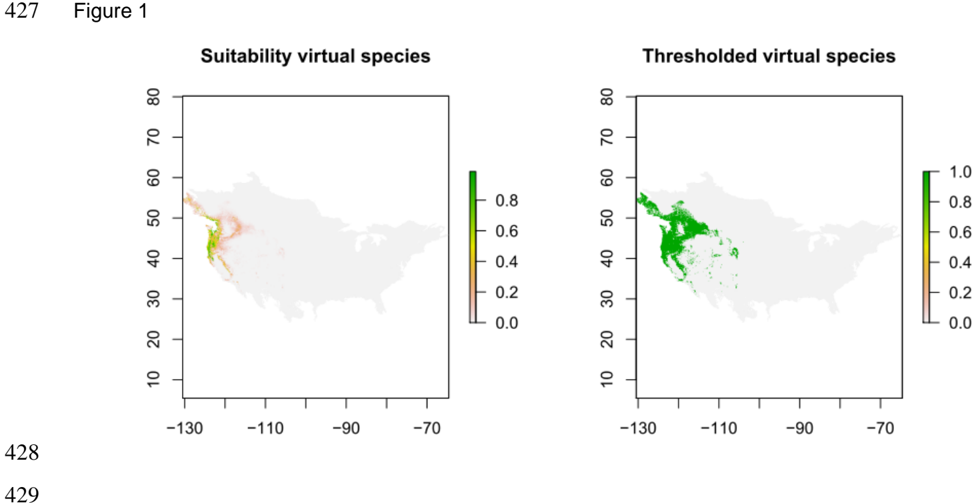
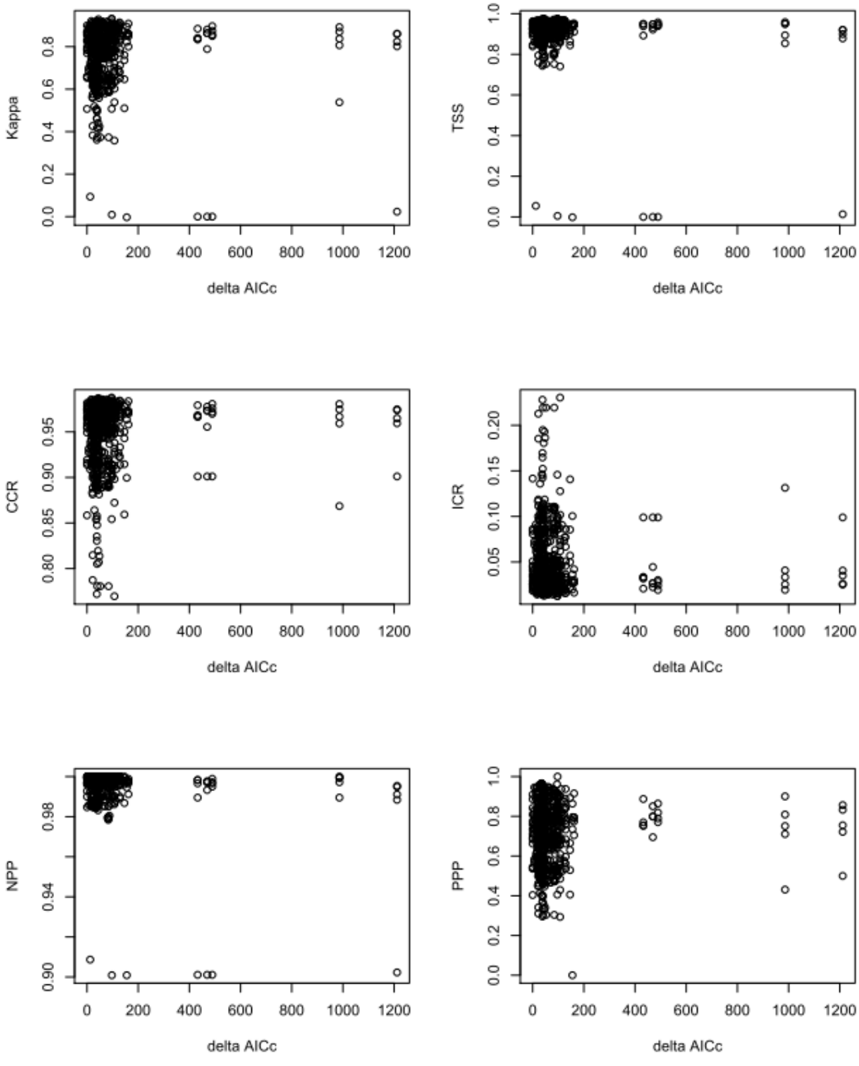
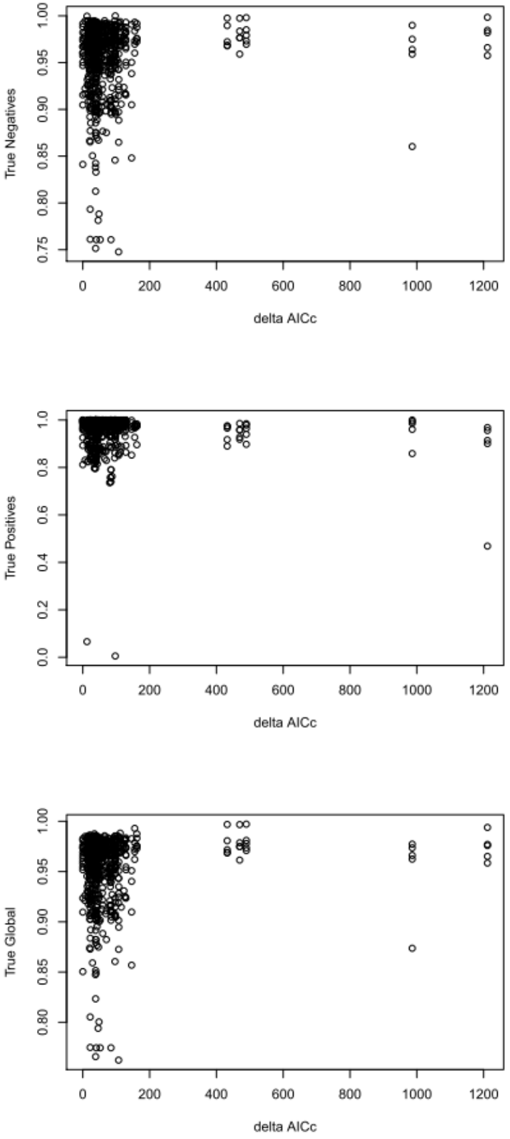
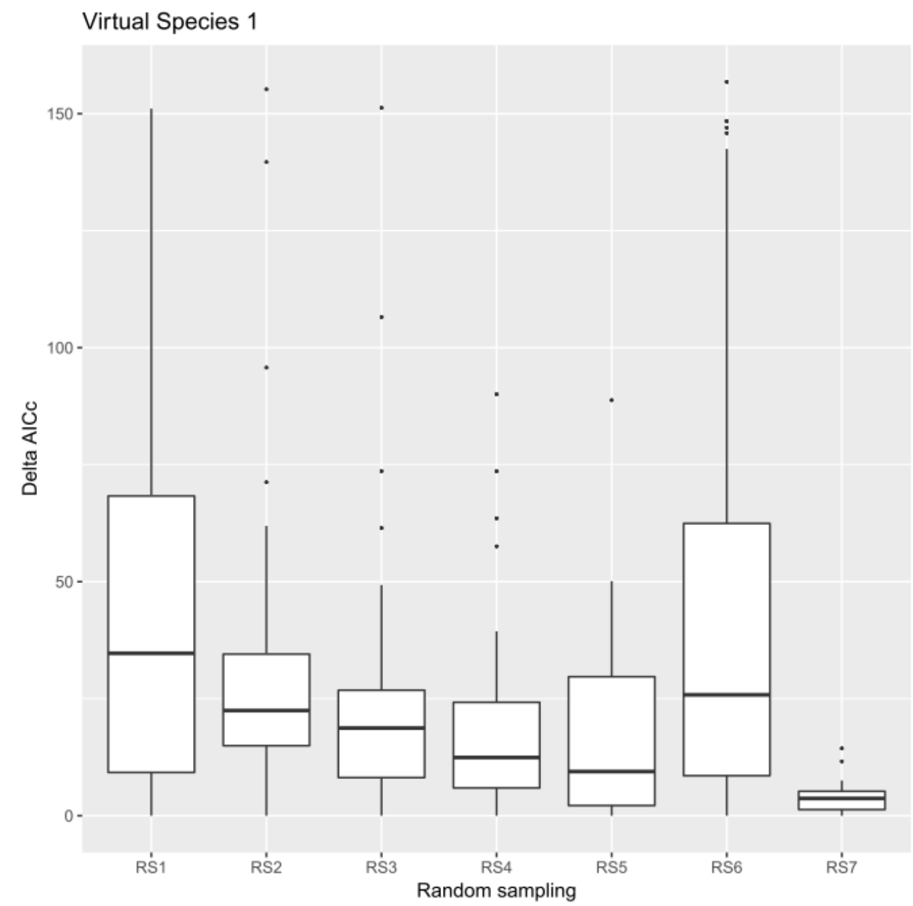
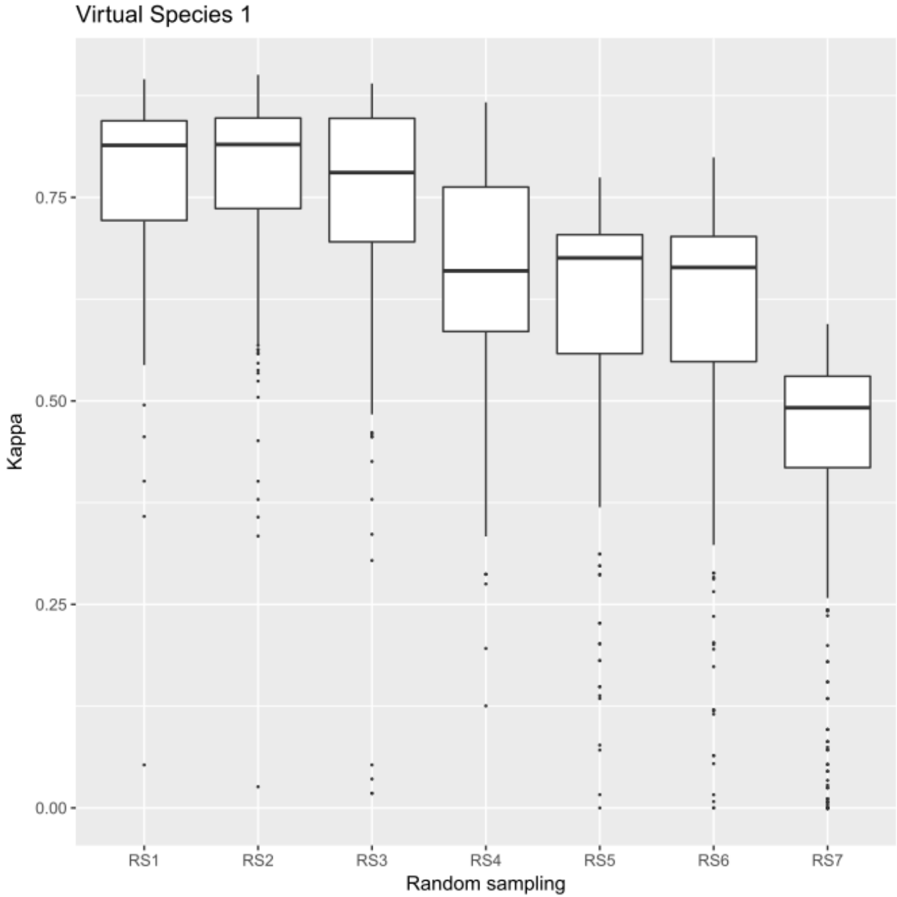
Abstract Model complexity in ecological niche modelling has been recently considered as an important issue that might affect model performance. New methodological developments have implemented the Akaike information criterion (AIC) to capture model complexity in the Maxent algorithm model. AIC is calculated based on the number of parameters and likelihoods of continuous raw outputs. ENMeval R package allows users to perform a species-specific tuning of Maxent settings running models with different combinations of regularization multiplier and feature classes and finally, all these models are compared using AIC corrected for small sample size. This approach is focused to find the “best” model parametrization and it is thought to maximize the model complexity and therefore, its predictability. We found that most niche modelling studies examined by us (68%) tend to consider AIC as a criterion of predictive accuracy in geographical distribution. In other words, AIC is used as a criterion to choose those models with the highest capacity to discriminate between presences and absences. However, the link between AIC and geographical predictive accuracy has not been tested so far. Here, we evaluated this relationship using a set of simulated (virtual) species. We created a set of nine virtual species with different ecological and geographical traits (e.g., niche position, niche breadth, range size) and generated different sets of true presences and absences data across geography. We built a set of models using Maxent algorithm with different regularization values and features schemes and calculated AIC values for each model. For each model, we obtained binary predictions using different threshold criteria and validated using independent presence and absences data. We correlated AIC values against standard validation metrics (e.g., Kappa, TSS) and the number of pixels correctly predicted as presences and absences. We did not find a correlation between AIC values and predictive accuracy from validation metrics. In general, those models with the lowest AIC values tend to generate geographical predictions with high commission and omission errors. The results were consistent across all species simulated. Finally, we suggest that AIC should not be used if users are interested in prediction more than explanation in ecological niche modelling.
Overview
The claims and statistics of this paper haven’t been checked yet.
Run the check — free, no account needed. It reads the open-access text and checks the sources it cites.
Integrity signals
Registry
Cites
Statistics
Figures
Verification
Claims the paper makes
The claims and statistics of this paper haven’t been checked yet.
Run the check — free, no account needed. It reads the open-access text and checks the sources it cites.
Claims other papers make about this one
Each is checked against this paper’s own text: does it say what the citing paper says it does?
The cited source says what the claim attributes to it.
In the citing paper
“The AICc value makes a useful criterion to objectively choose appropriate settings for Maxent, and it has also been shown to help reduce overfitting issues and complexity (Li et al. 2020); however, it is not fully related with the predictive accuracy of the SDM (see discussion in Velasco & González-Salazar 2019).”
From A maxent predictive model for hunter-gatherer sites in the southern pampas, argentina (2021) · cites this paper as Velasco & González-Salazar 2019
In the citing paper
“however, it is not fully related with the predictive accuracy of the SDM (see discussion in Velasco & González-Salazar 2019).”
From A maxent predictive model for hunter-gatherer sites in the southern pampas, argentina (2021) · cites this paper as Velasco & González-Salazar 2019
Self-check
Percentages, sums and reported differences re-computed from the paper’s own numbers.
The self-check needs the paper’s full text.
Citations
Cites
Model selection and multimodel inference: a practical information-theoretic approach.
Guthery, F. S., Burnham, K. P., & Anderson, D. R. (2003) · The Journal of Wildlife Management · doi:10.2307/3802723 · Cited by 41,495
Very high resolution interpolated climate surfaces for global land areas
Hijmans, R. J., Cameron, S. E., Parra, J. L., Jones, P. G., & Jarvis, A. (2005) · International Journal of Climatology · doi:10.1002/joc.1276 · Cited by 19,860
Maximum entropy modeling of species geographic distributions
Phillips, S. J., Anderson, R. P., & Schapire, R. E. (2006) · Ecological Modelling · doi:10.1016/j.ecolmodel.2005.03.026 · Cited by 15,396
A review of methods for the assessment of prediction errors in conservation presence/absence models
FIELDING, A. H., & BELL, J. F. (1997) · Environmental Conservation · doi:10.1017/s0376892997000088 · Cited by 6,956
A statistical explanation of MaxEnt for ecologists
Elith, J., Phillips, S. J., Hastie, T., Dudík, M., Chee, Y. E., & Yates, C. J. (2011) · Diversity and Distributions · doi:10.1111/j.1472-4642.2010.00725.x · Cited by 6,699
Modeling of species distributions with Maxent: new extensions and a comprehensive evaluation
Phillips, S. J., & Dudík, M. (2008) · Ecography · doi:10.1111/j.0906-7590.2008.5203.x · Cited by 5,890
ALLOUCHE, O., TSOAR, A., & KADMON, R. (2006) · Journal of Applied Ecology · doi:10.1111/j.1365-2664.2006.01214.x · Cited by 5,172
AUC: A misleading measure of the performance of predictive distribution models
Lobo, J. M., Jiménez‐Valverde, A., & Real, R. (2008) · Global Ecology and Biogeography · doi:10.1111/j.1466-8238.2007.00358.x · Cited by 3,499
Merow, C., Smith, M. J., & Silander, J. A. (2013) · Ecography · doi:10.1111/j.1600-0587.2013.07872.x · Cited by 3,392
Selecting thresholds of occurrence in the prediction of species distributions
Liu, C., Berry, P. M., Dawson, T. P., & Pearson, R. G. (2005) · Ecography · doi:10.1111/j.0906-7590.2005.03957.x · Cited by 2,701
Warren, D. L., & Seifert, S. N. (2011) · Ecological Applications · doi:10.1890/10-1171.1 · Cited by 2,312
Muscarella, R., Galante, P. J., Soley‐Guardia, M., Boria, R. A., Kass, J. M., Uriarte, M., & Anderson, R. P. (2014) · Methods in Ecology and Evolution · doi:10.1111/2041-210x.12261 · Cited by 1,962
(2010) · Cited by 1,762
Making better M axent models of species distributions: complexity, overfitting and evaluation
Radosavljevic, A., & Anderson, R. P. (2014) · Journal of Biogeography · doi:10.1111/jbi.12227 · Cited by 1,723
On the relationship between niche and distribution
Pulliam, H. R. (2000) · Ecology Letters · doi:10.1046/j.1461-0248.2000.00143.x · Cited by 1,637
ECOLOGICAL-NICHE FACTOR ANALYSIS: HOW TO COMPUTE HABITAT-SUITABILITY MAPS WITHOUT ABSENCE DATA?
Hirzel, A. H., Hausser, J., Chessel, D., & Perrin, N. (2002) · Ecology · doi:10.1890/0012-9658(2002)083[2027:enfaht]2.0.co;2 · Cited by 1,566
The GARP modelling system: problems and solutions to automated spatial prediction
Stockwell, D. R. B. (1999) · International Journal of Geographical Information Systems · doi:10.1080/136588199241391 · Cited by 1,417
Ecological niches and geographic distributions
Araújo, M. B. (2012) · Choice Reviews Online · doi:10.5860/choice.49-6266 · Cited by 1,364
Niches and distributional areas: Concepts, methods, and assumptions
Soberón, J. M., & Nakamura, M. (2009) · Proceedings of the National Academy of Sciences · doi:10.1073/pnas.0901637106 · Cited by 1,348
Uses and misuses of bioclimatic envelope modeling
Araújo, M. B., & Peterson, A. T. (2012) · Ecology · doi:10.1890/11-1930.1 · Cited by 1,112
Bringing the Hutchinsonian niche into the 21st century: Ecological and evolutionary perspectives
Holt, R. D. (2009) · Proceedings of the National Academy of Sciences · doi:10.1073/pnas.0905137106 · Cited by 943
An evaluation of methods for modelling species distributions
Segurado, P., & Araújo, M. B. (2004) · Journal of Biogeography · doi:10.1111/j.1365-2699.2004.01076.x · Cited by 875
Species Distribution Modeling and Ecological Niche Modeling: Getting the Concepts Right
Peterson, A. T., & Soberón, J. (2012) · Natureza & Conservação · doi:10.4322/natcon.2012.019 · Cited by 702
Shcheglovitova, M., & Anderson, R. P. (2013) · Ecological Modelling · doi:10.1016/j.ecolmodel.2013.08.011 · Cited by 661
Qiao, H., Soberón, J., & Peterson, A. T. (2015) · Methods in Ecology and Evolution · doi:10.1111/2041-210x.12397 · Cited by 448
Niche and area of distribution modeling: a population ecology perspective
Soberón, J. M. (2010) · Ecography · doi:10.1111/j.1600-0587.2009.06074.x · Cited by 378
Warren, D. L., Wright, A. N., Seifert, S. N., & Shaffer, H. B. (2014) · Diversity and Distributions · doi:10.1111/ddi.12160 · Cited by 284
Niche Response Structure and the Analytical Potentials of Its Relationship to the Habitat
Maguire, B. (1973) · The American Naturalist · doi:10.1086/282827 · Cited by 264
Amat, E. M., Mateo, R. G., Nieto‐Lugilde, D., Morueta‐Holme, N., Svenning, J., & García‐Amorena, I. (2015) · Ecological Modelling · doi:10.1016/j.ecolmodel.2015.05.035 · Cited by 203
Galante, P. J., Alade, B., Muscarella, R., Jansa, S. A., Goodman, S. M., & Anderson, R. P. (2017) · Ecography · doi:10.1111/ecog.02909 · Cited by 179
Guevara, L., Gerstner, B. E., Kass, J. M., & Anderson, R. P. (2017) · Global Change Biology · doi:10.1111/gcb.13992 · Cited by 179
Aryal, A., Shrestha, U. B., Ji, W., Ale, S. B., Shrestha, S., Ingty, T., Maraseni, T., Cockfield, G., & Raubenheimer, D. (2016) · Ecology and Evolution · doi:10.1002/ece3.2196 · Cited by 153
Bayesian Measures of Model Complexity and Fit
Spiegelhalter, D. J., Best, N. G., Carlin, B. P., & Van Der Linde, A. (2002) · Journal of the Royal Statistical Society Series B: Statistical Methodology · doi:10.1111/1467-9868.00353 · Cited by 151
Ecological relevance of performance criteria for species distribution models
Mouton, A., Bernard De Baets, C., & Goethals, P. L. M. (2010) · Ecological Modelling · doi:10.1016/j.ecolmodel.2010.04.017 · Cited by 144
Halvorsen, R., Mazzoni, S., Dirksen, J. W., Næsset, E., Gobakken, T., & Ohlson, M. (2016) · Ecological Modelling · doi:10.1016/j.ecolmodel.2016.02.021 · Cited by 102
The effects of model and data complexity on predictions from species distributions models
García‐Callejas, D., & Araújo, M. B. (2015) · Ecological Modelling · doi:10.1016/j.ecolmodel.2015.06.002 · Cited by 89
González‐Salazar, C., Stephens, C. R., & Marquet, P. A. (2012) · Ecological Modelling · doi:10.1016/j.ecolmodel.2012.10.007 · Cited by 86
Self-citationGenetic and ecological insights into glacial refugia of walnut (Juglans regia L.)
Aradhya, M. K., Velasco, D., Ibrahimov, Z. A., et al. (2017) · PLoS ONE · doi:10.1371/journal.pone.0185974 · Cited by 63
Virtual species distribution models
Miller, J. A. (2014) · Progress in Physical Geography Earth and Environment · doi:10.1177/0309133314521448 · Cited by 60
Gutiérrez, E. E., Maldonado, J. E., Radosavljević, A., Molinari, J., Patterson, B. D., Martínez-Cerón, J. M., Rutter, A. R., Hawkins, M. T. R., García, F. J., & Helgen, K. M. (2015) · PLoS ONE · doi:10.1371/journal.pone.0129113 · Cited by 43
Romero-Álvarez, D., Escobar, L. E., Varela, S., Larkin, D. J., & Phelps, N. B. D. (2017) · PLoS ONE · doi:10.1371/journal.pone.0180930 · Cited by 43
Osorio‐Olvera, L., Falconi, M., & Soberón, J. M. (2016) · Revista Mexicana de Biodiversidad · doi:10.1016/j.rmb.2016.07.001 · Cited by 42
Kubiak, B. B., Gutiérrez, E., Galiano, D., Maestri, R., & de Freitas, T. R. D. (2017) · Scientific Reports · doi:10.1038/s41598-017-16243-2 · Cited by 23
Lazarus ecology: Recovering the distribution and migratory patterns of the extinct Carolina parakeet
Burgio, K. R., Carlson, C. J., & Tingley, M. W. (2017) · Ecology and Evolution · doi:10.1002/ece3.3135 · Cited by 20
de Lima, R. F., Sampaio, H. L., Dunn, J. C., Cabinda, G., FONSECA, R., Oquiongo, G., OQUIONGO, J., Samba, S., Santana, A., Soares, E., et al. (2016) · Bird Conservation International · doi:10.1017/s0959270916000241 · Cited by 17
Cited by
A maxent predictive model for hunter-gatherer sites in the southern pampas, argentina
Rafuse, D. J. (2021) · Open Quaternary · doi:10.5334/oq.97 · Cited by 17
Metadata
- Authors
- Velasco, J. A., & González-Salazar, C.
- Venue
- Ecological Informatics
- Publisher
- Elsevier BV
- Published
- 2019-05
- Volume
- 51
- Pages
- 25-32
- ISSN
- 1574-9541
- Cited by
- 109
- References
- 45
- Language
- en
About these checks
Registry, retraction, Cites and statistics results are computed, not judged, with one exception: a printed reference that no index lists is read once by a model before it counts as a citation error. Claims are extracted by a model and kept only when their quote appears verbatim in the text; each cited source is then checked, with a model’s help, for whether it says what the claim relies on. Those verdicts can be wrong — read the claim’s quote and the cited source before relying on one.
Statistics and arithmetic are recomputed, not judged.
Confidence bands are shown only for fields calibrated on our annotated test set. None is calibrated yet, so no band is shown.
What counts as a claim ›How we measure confidence ›How we check this ›
Are you an author, or do you see a problem with this page? Request a review
Data sources
Bibliographic data: Semantic Scholar, OpenAlex, Crossref.
Contains information from the Semantic Scholar Academic Graph Datasets, made available under the ODC Attribution License (ODC-BY 1.0).
Semantic Scholar’s data is described in: Kinney, R., et al. (2023). The Semantic Scholar Open Data Platform. arXiv:2301.10140.
