

The DOI matches its Crossref record; 26 of the 26 references it cites were found in a registry or an index.
Characterization of 2S albumin allergenic proteins for anaphylaxis in common buckwheat
Abstract
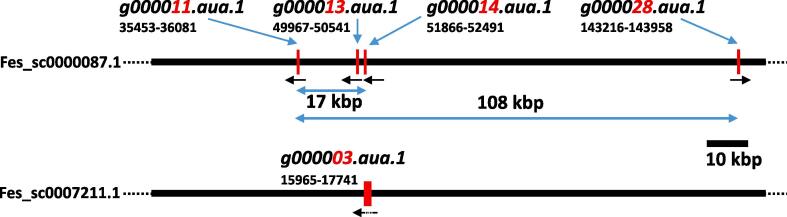
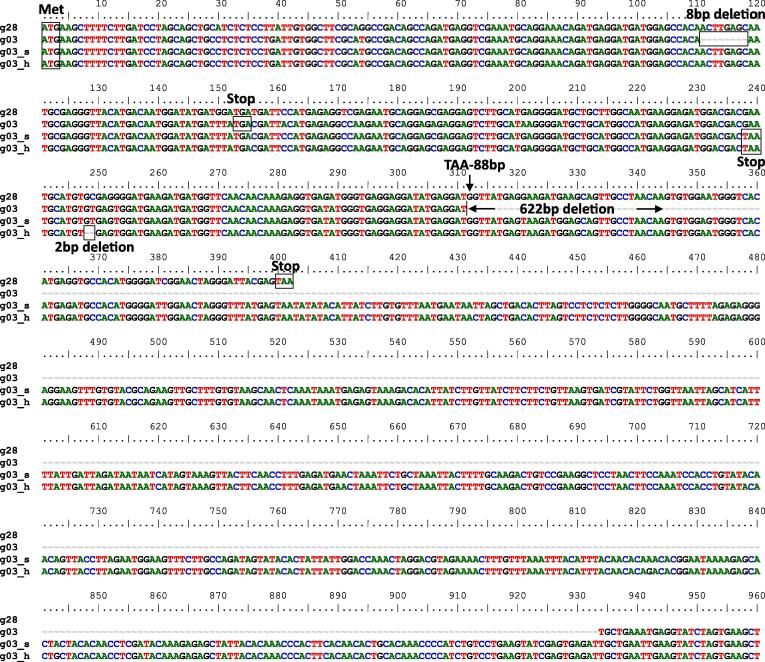
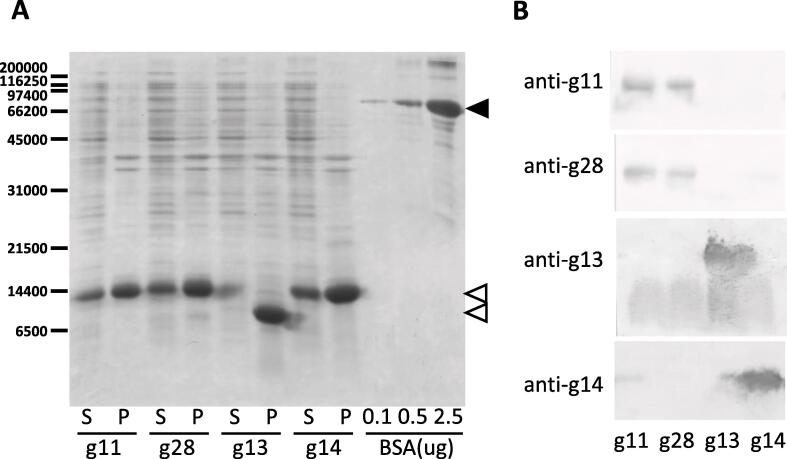
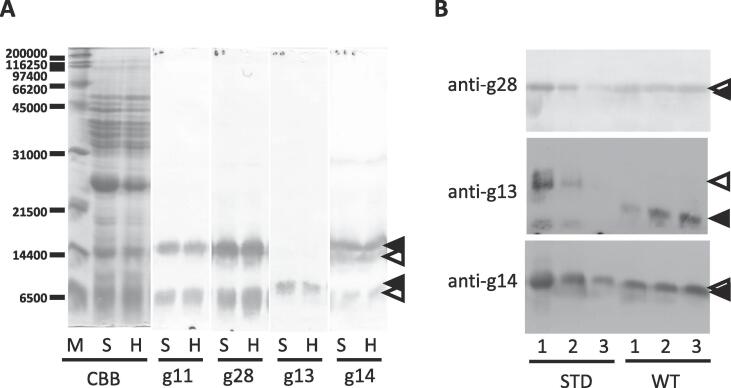
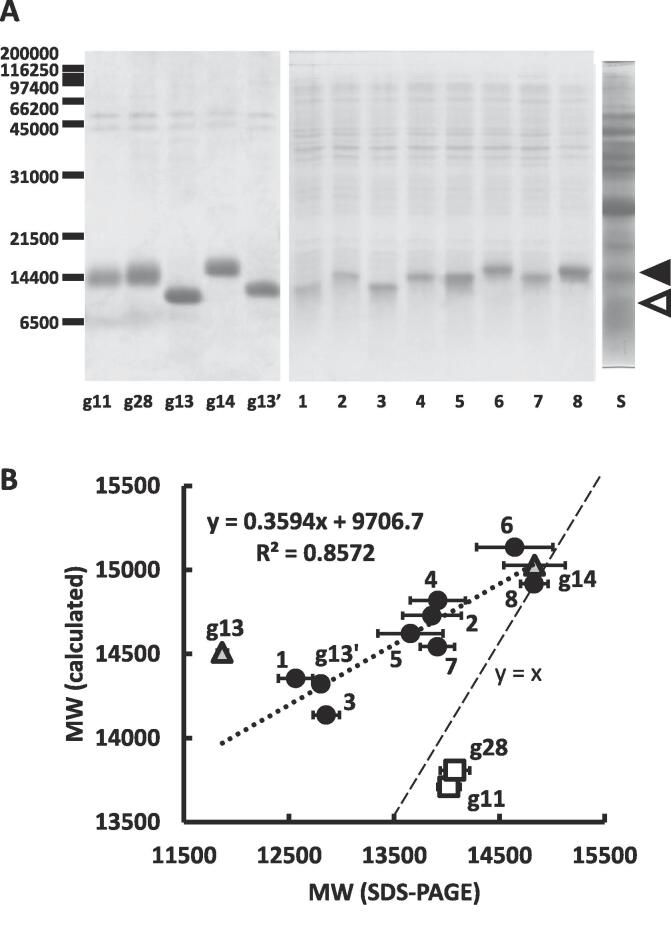
2S albumin (2SA) is responsible for anaphylaxis following consumption of buckwheat in allergic individuals. To reduce allergen incidents, characterization of 2SA polypeptides is prerequisite, thus was analyzed in this study. Of the five 2S albumin genes (g03, g11, g13, g14, and g28), g03 was seemingly non-functional. The g14 content was 3- and 40-fold higher than that of g11/g28 and g13, respectively. The g11/g28 were more processed to a ∼8 kDa band from a 16 kDa band than g14 in seeds, agreeing with that g11/g28 have high similarity with Fag e 8kD. Meanwhile, anti-g13 produced only a single ∼10 kDa band. Modification of g13 and domain exchange between g13 and g14 suggested that the hydrophobicity of the first domain and the nature of some amino acids in g13 contributed, at least in part, to the lower apparent molecular weight of g13 than expected. Thus, g13 might be an unexplored and noteworthy allergen.
Overview
The claims and statistics of this paper haven’t been checked yet.
Run the check — free, no account needed. It reads the open-access text and checks the sources it cites.
Integrity signals
Registry
Cites
Statistics
Figures
Verification
Claims the paper makes
The claims and statistics of this paper haven’t been checked yet.
Run the check — free, no account needed. It reads the open-access text and checks the sources it cites.
Claims other papers make about this one
Each is checked against this paper’s own text: does it say what the citing paper says it does?
In the citing paper
“Common buckwheat 2S albumins contain established allergenic proteins, including Fag e 1 and Fag e 2.”
From Structure-function design of amaranth, buckwheat and quinoa proteins as hydrocolloids for emulsion and gel structuring (2027) · cites this paper as Katsube-Tanaka & Monshi, 2022
In the citing paper
“genotypic effect also affects safety and func tionality constraints, exemplified by the focus on 2S albumin allergenic proteins in common buckwheat, which is often absent in Tartary func tional work (Katsube-Tanaka & Monshi, 2022).”
From Structure-function design of amaranth, buckwheat and quinoa proteins as hydrocolloids for emulsion and gel structuring (2027) · cites this paper as Katsube-Tanaka & Monshi, 2022
Self-check
Percentages, sums and reported differences re-computed from the paper’s own numbers.
The self-check needs the paper’s full text.
Citations
Cites
Cleavage of Structural Proteins during the Assembly of the Head of Bacteriophage T4
LAEMMLI, U. K. (1970) · Nature · doi:10.1038/227680a0 · Cited by 249,961
Raza, H., John, A., & Nemmar, A. (2013) · Cellular Physiology and Biochemistry · doi:10.1159/000350087 · Cited by 47,221
Seed storage proteins: structures and biosynthesis.
Shewry, P. R., Napier, J. A., & Tatham, A. S. (1995) · The Plant Cell · doi:10.1105/tpc.7.7.945 · Cited by 1,058
Molecular properties of food allergens
Breiteneder, H., & Mills, E. N. C. (2005) · Journal of Allergy and Clinical Immunology · doi:10.1016/j.jaci.2004.10.022 · Cited by 359 · cited 1×
“T. Katsube-Tanaka and F.I. Monshi Food Chemistry: Molecular Sciences 5 (2022) 100127 and proteolytic denaturation (Breiteneder and Mills, 2005).”
Evolutionary biology of plant food allergens
Radauer, C., & Breiteneder, H. (2007) · Journal of Allergy and Clinical Immunology · doi:10.1016/j.jaci.2007.07.024 · Cited by 256
Sen, M. M., Kopper, R. A., Pons, L., Abraham, E. C., Burks, A. W., & Bannon, G. A. (2002) · The Journal of Immunology · doi:10.4049/jimmunol.169.2.882 · Cited by 230
2S Albumin Storage Proteins: What Makes them Food Allergens?
Moreno, F. J., & Clemente, A. (2008) · The Open Biochemistry Journal · doi:10.2174/1874091x00802010016 · Cited by 228
The eight-cysteine motif, a versatile structure in plant proteins
Josè-Estanyol, M., Gomis‐Rüth, F. X., & Puigdomènech, P. (2004) · Plant Physiology and Biochemistry · doi:10.1016/j.plaphy.2004.03.009 · Cited by 185
Teuber, S. S., Dandekar, A. M., Peterson, W., & Sellers, C. L. (1998) · Journal of Allergy and Clinical Immunology · doi:10.1016/s0091-6749(98)70308-2 · Cited by 170
Yasui, Y., Hirakawa, H., Ueno, M., Matsui, K., Katsube‐Tanaka, T., Yang, S. J., Aii, J., Sato, S., & Mori, M. (2016) · DNA Research · doi:10.1093/dnares/dsw012 · Cited by 159
Self-citation
Cited by
Manzanilla-Valdez, M. L., Boesch, C., Martinez-Villaluenga, C., Montaño, S., & Hernández-Álvarez, A. J. (2024) · Food Hydrocolloids for Health · doi:10.1016/j.fhfh.2024.100191 · Cited by 10
Yan, X., & Zhu, F. (2027) · Food Hydrocolloids · doi:10.1016/j.foodhyd.2026.113137
Metadata
- Authors
- Katsube-Tanaka, T., & Monshi, F. I.
- Venue
- Food Chemistry: Molecular Sciences
- Publisher
- Elsevier BV
- Published
- 2022-12
- Volume
- 5
- Pages
- 100127
- ISSN
- 2666-5662
- PMC
- PMC9363963
- Cited by
- 4
- References
- 26
- Language
- en
- Licence
- www.elsevier.com/tdm/userlicense/1.0/ (tdm)
- www.elsevier.com/legal/tdmrep-license (tdm)
- creativecommons.org/licenses/by-nc-nd/4.0/ (vor)
- Funders
- Japan Society for the Promotion of Science (20H02967)
- Tojuro Iijima Foundation for Food Science and Technology
About these checks
Registry, retraction, Cites and statistics results are computed, not judged, with one exception: a printed reference that no index lists is read once by a model before it counts as a citation error. Claims are extracted by a model and kept only when their quote appears verbatim in the text; each cited source is then checked, with a model’s help, for whether it says what the claim relies on. Those verdicts can be wrong — read the claim’s quote and the cited source before relying on one.
Statistics and arithmetic are recomputed, not judged.
Confidence bands are shown only for fields calibrated on our annotated test set. None is calibrated yet, so no band is shown.
What counts as a claim ›How we measure confidence ›How we check this ›
Are you an author, or do you see a problem with this page? Request a review
How to cite
Cite CoChat for the checks on this page, and the paper for its own findings.
- This page
- CoChat. (2026). Citation check: Characterization of 2S albumin allergenic proteins for anaphylaxis in common buckwheat. https://app.cochat.ai/papers/10.1016/j.fochms.2022.100127
- The paper
- Katsube-Tanaka, T., & Monshi, F. I. (2022). Characterization of 2S albumin allergenic proteins for anaphylaxis in common buckwheat. Food Chemistry: Molecular Sciences. https://doi.org/10.1016/j.fochms.2022.100127
Data sources
Bibliographic data: Semantic Scholar, OpenAlex, Crossref.
Contains information from the Semantic Scholar Academic Graph Datasets, made available under the ODC Attribution License (ODC-BY 1.0).
Semantic Scholar’s data is described in: Kinney, R., et al. (2023). The Semantic Scholar Open Data Platform. arXiv:2301.10140.
