

The DOI matches its Crossref record; 1 of the 1 references it cites were found in a registry or an index.
Recent advances of fermented fruits: A review on strains, fermentation strategies, and functional activities
Open accessAbstract
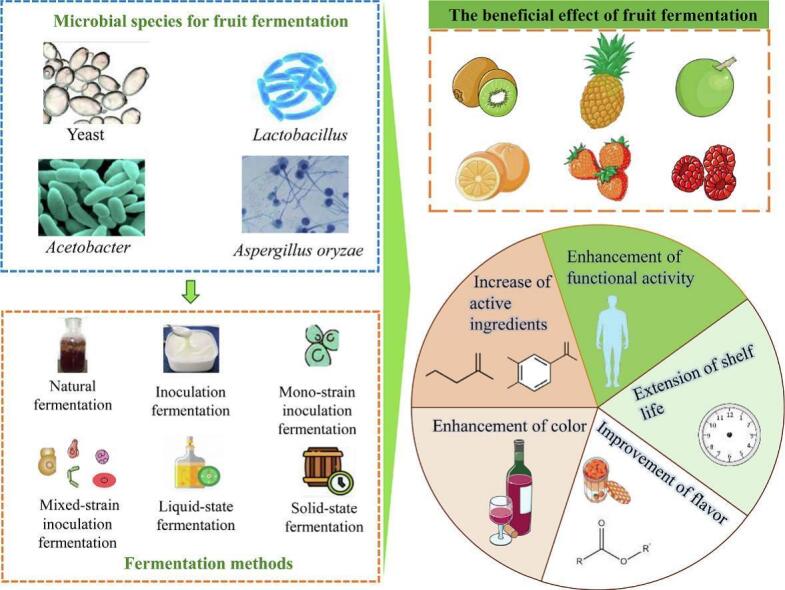
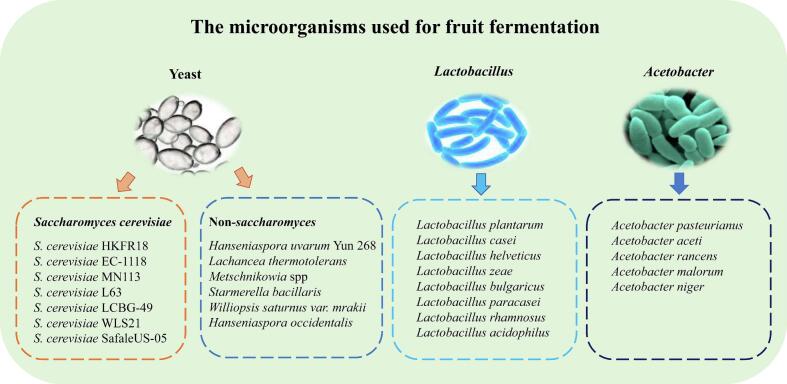
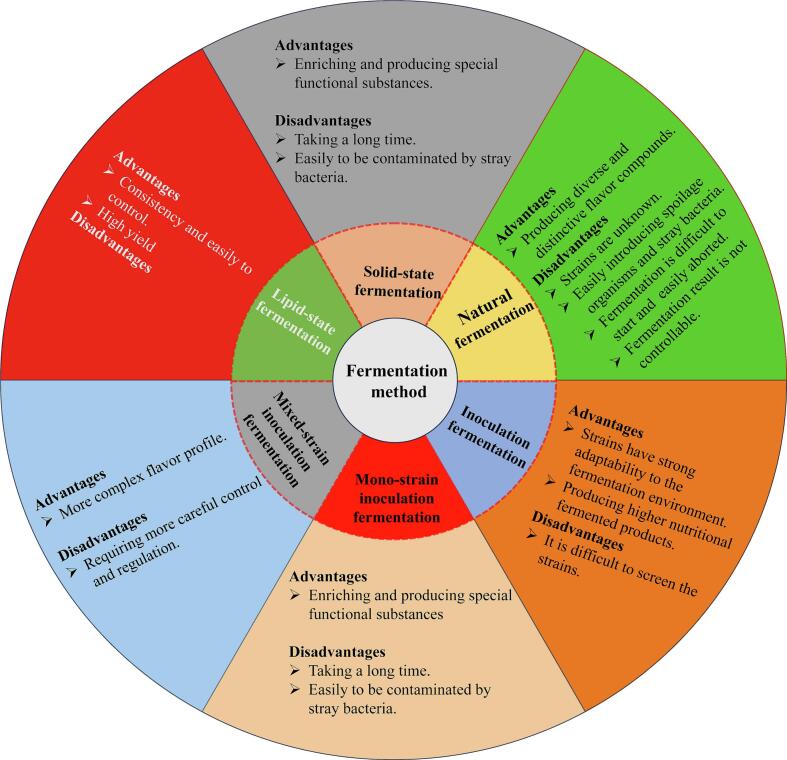
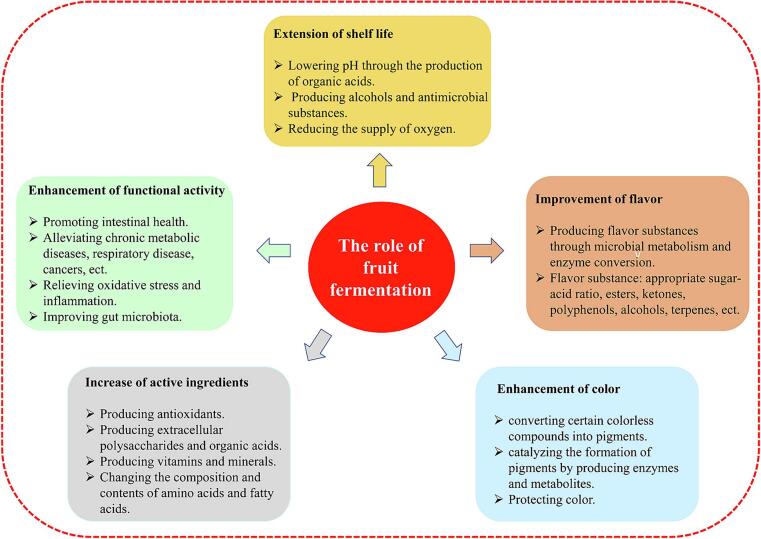
Fruits are recognized as healthy foods with abundant nutritional content. However, due to their high content of sugar and water, they are easily contaminated by microorganisms leading to spoilage. Probiotic fermentation is an effective method to prevent fruit spoilage. In addition, during fermentation, the probiotics can react with the nutrients in fruits to produce new derived compounds, giving the fruit specific flavor, enhanced color, active ingredients, and nutritional values. Noteworthy, the choice of fermentation strains and strategies has a significant impact on the quality of fermented fruits. Thus, this review provides comprehensive information on the fermentation strains (especially yeast, lactic acid bacteria, and acetic acid bacteria), fermentation strategies (natural or inoculation fermentation, mono- or mixed-strain inoculation fermentation, and liquid- or solid-state fermentation), and the effect of fermentation on the shelf life, flavor, color, functional components, and physiological activities of fruits. This review will provide a theoretical guidance for the production of fermented fruits.
Overview
The claims and statistics of this paper haven’t been checked yet.
Run the check — free, no account needed. It reads the open-access text and checks the sources it cites.
Integrity signals
Registry
Cites
Statistics
Figures
Verification
Claims the paper makes
The claims and statistics of this paper haven’t been checked yet.
Run the check — free, no account needed. It reads the open-access text and checks the sources it cites.
Claims other papers make about this one
Each is checked against this paper’s own text: does it say what the citing paper says it does?
The source backs part of the claim, not all of it — or backs it for a different population, condition or comparison.
In the citing paper
“During the fermentation process, yeast converts sugars, amino acids, and esters into ethanol, serving as the primary organism responsible for alcohol compound synthesis [53].”
From The Metabolic Pathways of Yeast and Acetic Acid Bacteria During Fruit Vinegar Fermentation and Their Influence on Flavor Development (2025) · cites this paper as [53]
Experimental — accuracy not yet measured
Self-check
Percentages, sums and reported differences re-computed from the paper’s own numbers.
The self-check needs the paper’s full text.
Citations
Cites
Characterization of the flavor and nutritional value of coconut water vinegar based on metabolomics
Xu, S., Ma, Z., Chen, Y., Li, J., Jiang, H., Qu, T., Zhang, W., Li, C., & Liu, S. (2022) · Food Chemistry · doi:10.1016/j.foodchem.2021.130872 · Cited by 90
Research works printed but not linked: 116
- Akarca, 2023, Effects of fermentation on the quality characteristics and biological activities of citrus juices, Process Biochemistry, 130, 634, 10.1016/j.procbio.2023.05.005 · DOI
- Andrade Koelher, 2022, Applicability of Saccharomyces cerevisiae strains for the production of fruit wines using cocoa honey complemented with cocoa pulp, Food Technology and Biotechnology, 60, 192, 10.17113/ftb.60.02.22.7285 · DOI
- Arslan, 2018, Effects of pure and mixed autochthonous Torulaspora delbrueckii and Saccharomyces cerevisiae on fermentation and volatile compounds of narince wines, Foods, 7, 147, 10.3390/foods7090147 · DOI
- Aslam, 2020, Production of commercially important enzymes from Bacillus licheniformis KIBGE-IB3 using date fruit wastes as substrate, Journal, Genetic Engineering & Biotechnology, 18, 46, 10.1186/s43141-020-00060-8 · DOI
- Baek, 2021, Brewing characteristics of Saccharomyces cerevisiae HKFR18 isolated from kiwi fruits (actinidia chinensis), Food Engineering Progress, 25, 197, 10.13050/foodengprog.2021.25.3.197 · DOI
- Bai, 2021, Effects of four individual lactic acid bacteria on the physical and chemical and antioxidant properties of Kuqa apple juice during fermentation, Journal of Food Processing and Preservation, 45, 10.1111/jfpp.15385 · DOI
- Bancalari, 2020, Wild Lactobacillus casei group strains: Potentiality to ferment plant derived juices, Foods, 9, 314, 10.3390/foods9030314 · DOI
- Ben Hammouda, 2023, Vinegar production via spontaneous fermentation of different prickly pear fruit matrices: Changes in chemical composition and biological activities, Journal of the Science of Food and Agriculture, 103, 5221, 10.1002/jsfa.12605 · DOI
- Binati, 2020, Contribution of non-Saccharomyces yeasts to wine volatile and sensory diversity: A study on Lachancea thermotolerans, Metschnikowia spp. and Starmerella bacillaris strains isolated in Italy, International Journal of Food Microbiology, 318, 10.1016/j.ijfoodmicro.2019.108470 · DOI
- Brizuela, 2021, Influence of patagonian Lactiplantibacillus plantarum and Oenococcus oeni strains on sensory perception of Pinot Noir wine after malolactic fermentation, Australian Journal of Grape and Wine Research, 27, 118, 10.1111/ajgw.12460 · DOI
- Cai, 2022, Changes of bioactive substances in lactic acid bacteria and yeasts fermented kiwifruit extract during the fermentation, LWT- Food Science and Technology, 164, 10.1016/j.lwt.2022.113629 · DOI
- Cai, 2021, Diversity of microbiota, microbial functions, and flavor in different types of low-temperature Daqu, Food Research International, 150, 10.1016/j.foodres.2021.110734 · DOI
- Capece, 2018, Use of Saccharomyces cerevisiae var. boulardii in co-fermentations with S. cerevisiae for the production of craft beers with potential healthy value-added, International Journal of Food Microbiology, 284, 22, 10.1016/j.ijfoodmicro.2018.06.028 · DOI
- Chen, 2019, Effect of mixed fermentation (Jiuqu and Saccharomyces cerevisiae EC1118) on the quality improvement of kiwi wine, Cyta-Journal of Food, 17, 967, 10.1080/19476337.2019.1682678 · DOI
- Chen, 2019, Influence of 4 lactic acid bacteria on the flavor profile of fermented apple juice influence of 4 lactic acid bacteria, Food Bioscience, 27, 30, 10.1016/j.fbio.2018.11.006 · DOI
- Chen, 2022, Effects of fermentation conditions on physicochemical properties and flavor quality of fermented bayberry juice, Food Quality and Safety, 6, 10.1093/fqsafe/fyac023 · DOI
- Cheng, 2021, Correlation analysis reveals the intensified fermentation via Lactobacillus plantarum improved the flavor of fermented noni juice, Food Bioscience, 43, 10.1016/j.fbio.2021.101234 · DOI
- Cioch-Skoneczny, 2023, Characteristics of beer brewed with unconventional yeasts and addition of grape must, pulp and marc, European Food Research and Technology, 249, 699, 10.1007/s00217-022-04166-w · DOI
- Di Cagno, 2017, Lactic acid fermentation drives the optimal volatile flavor-aroma profile of pomegranate juice, International Journal of Food Microbiology, 248, 56, 10.1016/j.ijfoodmicro.2017.02.014 · DOI
- Di Cagno, 2016, Exploitation of Leuconostoc mesenteroides strains to improve shelf life, rheological, sensory and functional features of prickly pear (Opuntia ficus-indica L.) fruit puree, Food Microbiology, 59, 176, 10.1016/j.fm.2016.06.009 · DOI
- Di Cagno, 2008, Selection and use of autochthonous mixed starter for lactic acid fermentation of carrots, French beans or marrows, International Journal of Food Microbiology, 127, 220, 10.1016/j.ijfoodmicro.2008.07.010 · DOI
- Doriya, 2022, A systematic review on fruit-based fermented foods as an approach to improve dietary diversity, Journal of Food Processing and Preservation, 46, 10.1111/jfpp.16994 · DOI
- Edward-Rajanayagam, 2023, Yeast mixtures for postharvest biocontrol of diverse fungal rots on citrus Limon var eureka, Horticulturae, 9, 573, 10.3390/horticulturae9050573 · DOI
- El-Sohaimy, 2022, Nutritional evaluation of sea buckthorn “Hippophae rhamnoides” berries and the pharmaceutical potential of the fermented juice, Fermentation-Basel, 8, 391, 10.3390/fermentation8080391 · DOI
- Feng, 2022, Characterization of metabolites of elderberry juice fermented by Lactobacillus bulgaricus BNCC336436 and Streptococcus thermophilus ABT-T using LC-MS/MS, Journal of Food Measurement and Characterization, 16, 4486, 10.1007/s11694-022-01546-4 · DOI
- Flores-Garcia, 2019, Physicochemical and sensory characteristics of a chagalapoli fruit (Ardisia compressa) beverage fermented using Saccharomyces cerevisiae, International Journal of Food Science, 2019, 10.1155/2019/9687281 · DOI
- Fonseca, 2022, Sensory and flavor-aroma profiles of passion fruit juice fermented by potentially probiotic Lactiplantibacillus plantarum CCMA 0743 strain, Food Research International, 152, 10.1016/j.foodres.2021.110710 · DOI
- Francesca, 2023, A novel microbiological approach to impact the aromatic composition of sour loquat beer, Food Bioscience, 55, 10.1016/j.fbio.2023.103011 · DOI
- Frey-Klett, 2011, Bacterial-fungal interactions: Hyphens between agricultural, clinical, environmental, and food microbiologists, Microbiology and Molecular Biology Reviews, 75, 10.1128/MMBR.00020-11 · DOI
- Garcia, 2018, The performance of five fruit-derived and freeze-dried potentially probiotic Lactobacillus strains in apple, orange, and grape juices, Journal of the Science of Food and Agriculture, 98, 5000, 10.1002/jsfa.9034 · DOI
- Guo, 2022, Effects of apple juice fermented with Lactobacillus plantarum CICC21809 on antibiotic-associated diarrhea of mice, Journal of Functional Foods, 99, 10.1016/j.jff.2022.105334 · DOI
- Hasegawa, 2023, Activities to expand fruit consumption by "fruits and health" researchers, Journal of the Japanese Society for Food Science and Technology-Nippon Shokuhin Kagaku Kogaku Kaishi, 70, 301, 10.3136/nskkk.NSKKK-D-23-00026 · DOI
- Hashemi, 2017, Fermented sweet lemon juice (Citrus limetta) using Lactobacillus plantarum LS5: Chemical composition, antioxidant and antibacterial activities, Journal of Functional Foods, 38, 409, 10.1016/j.jff.2017.09.040 · DOI
- Hou, 2022, Patulin induces acute kidney injury in mice through autophagy-ferroptosis pathway, Journal of Agricultural and Food Chemistry, 70, 6213, 10.1021/acs.jafc.1c08349 · DOI
- Hu, 2018, Wine aroma response to different participation of selected Hanseniaspora uvarum in mixed fermentation with Saccharomyces cerevisiae, Food Research International, 108, 119, 10.1016/j.foodres.2018.03.037 · DOI
- Huang, 2022, Effect of Hanseniaspora uvarum-Saccharomyces cerevisiae mixed fermentation on aroma characteristics of Rosa roxburghii Tratt, blueberry, and plum wines, Molecules, 27, 8097, 10.3390/molecules27228097 · DOI
- Inayah, 2022, Characterization of Lactobacillus zeae as probiotic and starter culture for tamarillo fermented product, Food Science and Technology, 42, 10.1590/fst.54021 · DOI
- Isas, 2023, Fermentation of pomegranate juice by lactic acid bacteria and its biological effect on mice fed a high-fat diet, Food Bioscience, 53, 10.1016/j.fbio.2023.102516 · DOI
- Jiang, 2020, Effects of different yeasts on physicochemical and oenological properties of red dragon fruit wine fermented with Saccharomyces cerevisiae, Torulaspora delbrueckii and Lachancea thermotolerans, Microorganisms, 8, 315, 10.3390/microorganisms8030315 · DOI
- Kanklai, 2021, Screening of GABA-producing lactic acid bacteria from thai fermented foods and probiotic potential of Levilactobacillus brevis F064A for GABA-fermented mulberry juice production, Microorganisms, 9, 33, 10.3390/microorganisms9010033 · DOI
- Kanwar, 2016, Fermentation of apple juice with a selected yeast strain isolated from the fermented foods of himalayan regions and its organoleptic properties, Frontiers in Microbiology, 7, 1012, 10.3389/fmicb.2016.01012 · DOI
- Kaprasob, 2018, B vitamins and prebiotic fructooligosaccharides of cashew apple fermented with probiotic strains Lactobacillus spp., Leuconostoc mesenteroides and Bifidobacterium longum, Process Biochemistry, 70, 9, 10.1016/j.procbio.2018.04.009 · DOI
- Khandelwal, 2023, Recent advances in the production of malic acid by native fungi and engineered microbes, World Journal of Microbiology and Biotechnology, 39, 217, 10.1007/s11274-023-03666-5 · DOI
- Kim, 2021, Protective effect of Prunus mume fermented with mixed lactic acid bacteria in dextran sodium sulfate-induced colitis, Foods, 10, 58, 10.3390/foods10010058 · DOI
- Lambert, 2015, A high-throughput UHPLC-QqQ-MS method for polyphenol profiling in rose wines, Molecules, 20, 7890, 10.3390/molecules20057890 · DOI
- Laosee, 2022, Effects of probiotic fermented fruit juice- based biotransformation by lactic acid bacteria and Saccharomyces boulardii CNCM I-745 on anti-salmonella and antioxidative properties, Journal of Microbiology and Biotechnology, 32, 1315, 10.4014/jmb.2206.06012 · DOI
- Lee, 2013, Evaluation of physicochemical properties and fermenting qualities of apple wines added with medicinal herbs, Food Science and Biotechnology, 22, 1039, 10.1007/s10068-013-0181-y · DOI
- Lee, 2016, Enhancement of antioxidative and antimicrobial activities of immature pear (Pyrus pyrifolia cv. Niitaka) fruits by fermentation with Leuconostoc mesenteroides, Food Science and Biotechnology, 25, 1719, 10.1007/s10068-016-0263-8 · DOI
- Leitao, 2022, Benefits of fermented papaya in human health, Foods, 11, 10.3390/foods11040563 · DOI
- Li, 2022, Characterization of different non-Saccharomyces yeasts via mono-fermentation to produce polyphenol-enriched and fragrant kiwi wine, Food Microbiology, 103, 10.1016/j.fm.2021.103867 · DOI
- Li, 2017, Optimization of fermentation of apple juice by probiotics and organic acids evolution during fermentation, Food Science, 38, 80
- Li, 2014, Influence of Saccharomyces cerevisiae and Williopsis saturnus var. Mrakii on mango wine characteristics, Acta Alimentaria, 43, 473, 10.1556/AAlim.43.2014.3.15 · DOI
- Liu, 2021, Changes in organic acids, phenolic compounds, and antioxidant activities of lemon juice fermented by Issatchenkia terricola, Molecules, 26, 6712, 10.3390/molecules26216712 · DOI
- Liu, 2021, Evaluation of bioactive compounds and bioactivities in plum (Prunus salicina lindl.) wine, Frontiers in Nutrition, 8, 10.3389/fnut.2021.766415 · DOI
- Liu, 2023, Split batch and coculture fermentation to regulate the organic acids and flavor profile of fruit wine-A case study of Prunus mume Sieb. et Zucc (greengage) wine, Food Science and Technology, 43, 10.1590/fst.107622 · DOI
- Lu, 2018, Potential of three probiotic lactobacilli in transforming star fruit juice into functional beverages, Food Science & Nutrition, 6, 2141, 10.1002/fsn3.775 · DOI
- Lu, 2009, Effect on aroma components in persimmon vinegar of various fermentation ways. Transactions of the Chinese Society of Agricultural, Machinery, 40
- Ma, 2021, Effects of co-fermented collagen peptide-jackfruit juice on the immune response and gut microbiota in immunosuppressed mice, Food Chemistry, 365, 10.1016/j.foodchem.2021.130487 · DOI
- de Menezes, 2022, Kefir fermented fruit by-products: Anti-Alicyclobacillus spp. activity, and antioxidant activity, Food Science and Technology, 42, 10.1590/fst.117621 · DOI
- Meng, 2022, Effect of Lactobacillus plantarum and Lactobacillus acidophilus fermentation on antioxidant activity and metabolomic profiles of loquat juice, LWT- Food Science and Technology, 171, 10.1016/j.lwt.2022.114104 · DOI
- Miyamoto, 2020, Sirtuin SirD is involved in α-amylase activity and citric acid production in aspergillus luchuensis Mut. Kawachii during a solid-state fermentation process, Journal of Bioscience and Bioengineering, 129, 454, 10.1016/j.jbiosc.2019.11.004 · DOI
- Muhialdin, 2021, Metabolomics profiling of fermented cantaloupe juice and the potential application to extend the shelf life of fresh cantaloupe juice for six months at 8°C, Food Control, 120, 10.1016/j.foodcont.2020.107555 · DOI
- Muhialdin, 2020, Effects of metabolite changes during lacto-fermentation on the biological activity and consumer acceptability for dragon fruit juice, LWT- Food Science and Technology, 121, 10.1016/j.lwt.2019.108992 · DOI
- Muhialdin, 2021, Metabolomics profiling and antimicrobial activity of fermented date fruit (Khastawi) used as functional ingredients for making Asian confectionary (Dodol), Biotechnology & Biotechnological Equipment, 35, 478, 10.1080/13102818.2021.1892526 · DOI
- Oberg, 2022, Invited review: Review of taxonomic changes in dairy-related lactobacilli, Journal of Dairy Science, 105, 2750, 10.3168/jds.2021-21138 · DOI
- Oh, 2017, Probiotic-mediated blueberry (Vaccinium corymbosum L.) fruit fermentation to yield functionalized products for augmented antibacterial and antioxidant activity, Journal of Bioscience and Bioengineering, 124, 542, 10.1016/j.jbiosc.2017.05.011 · DOI
- de Oliveira, 2020, Improvement in physicochemical characteristics, bioactive compounds and antioxidant activity of acerola (Malpighia emarginata DC) and guava (Psidium guajava L.) fruit by-products fermented with potentially probiotic lactobacilli, LWT- Food Science and Technology, 134, 10.1016/j.lwt.2020.110200 · DOI
- Park, 2023, Antioxidant activity and blood alcohol concentration lowering effect of fermented Hovenia dulcis fruit vinegar, Food Science and Biotechnology, 32, 299, 10.1007/s10068-022-01190-0 · DOI
- Patel, 2003, Flavor compounds in wines produced from chardonnay grapes fermented with fruit juices, Food Science and Technology Research, 9, 84, 10.3136/fstr.9.84 · DOI
- Patel, 2021, Screening of physicochemical and functional attributes of fermented beverage (wine) produced from local mango (Mangifera indica) varieties of Uttar Pradesh using novel saccharomyces strain, Journal of Food Science and Technology-Mysore, 58, 2206, 10.1007/s13197-020-04731-9 · DOI
- Paz-Arteaga, 2023, Dual emerging applications of solid-state fermentation (SSF) with Aspergillus niger and ultrasonic-assisted extraction (UAE) for the obtention of antimicrobial polyphenols from pineapple waste, Fermentation-Basel, 9, 706, 10.3390/fermentation9080706 · DOI
- Qiu, 2022, Non-saccharomyces yeasts highly contribute to characterisation of flavour profiles in greengage fermentation, Food Research International, 157, 10.1016/j.foodres.2022.111391 · DOI
- Quan, 2022, Effect of six lactic acid bacteria strains on physicochemical characteristics, antioxidant activities and sensory properties of fermented orange juices, Foods, 11, 1920, 10.3390/foods11131920 · DOI
- Renault, 2015, Increase of fruity aroma during mixed T-delbrueckii/S-cerevisiae wine fermentation is linked to specific esters enhancement, International Journal of Food Microbiology, 207, 40, 10.1016/j.ijfoodmicro.2015.04.037 · DOI
- Ricci, 2018, Volatile profile of elderberry juice: Effect of lactic acid fermentation using L-plantarum, L-rhamnosus and L-casei strains, Food Research International, 105, 412, 10.1016/j.foodres.2017.11.042 · DOI
- Roy, 2013, Novel xylanases from Simplicillium obclavatum MTCC 9604: Comparative analysis of production, purification and characterization of enzyme from submerged and solid state fermentation, Springerplus, 2, 382, 10.1186/2193-1801-2-382 · DOI
- Rudra, 2022, Anthocyanin-rich fruit vinegar from Grewia and cantaloupe fruit blends, International Journal of Food Science and Technology, 57, 4566, 10.1111/ijfs.15794 · DOI
- Saad, 2023, Optimization of tannase production by aspergillus glaucus in solid-state fermentation of black tea waste, Bioresources and Bioprocessing, 10, 73, 10.1186/s40643-023-00686-9 · DOI
- Saeed, 2023, Bioconversion of fruit peels to Levan by solid state fermentation and statistical optimization by response surface methodology, Biomass Conversion and Biorefinry.
- Sainz, 2017, Effect of ammonium and amino acids on the growth of selected strains of Gluconobacter and Acetobacter, International Journal of Food Microbiology, 242, 45, 10.1016/j.ijfoodmicro.2016.11.006 · DOI
- Sevindik, 2022, Impacts of selected lactic acid bacteria strains on the aroma and bioactive compositions of fermented gilaburu (Viburnum opulus) juices, Food Chemistry, 378, 10.1016/j.foodchem.2022.132079 · DOI
- Sheng, 2022, Comparative evaluation of the quality of red globe grape juice fermented by Lactobacillus acidophilus and Lactobacillus plantarum, International Journal of Food Science and Technology, 57, 2235, 10.1111/ijfs.15568 · DOI
- Sheng, 2021, The anti-obesity effect of fermented tremella/blueberry and its potential mechanisms in metabolically healthy obese rats, Journal of Functional Foods, 86, 10.1016/j.jff.2021.104670 · DOI
- da Silva, 2021, Viability of microencapsulated Lactobacillus acidophilus by complex coacervation associated with enzymatic crosslinking under application in different fruit juices, Food Research International, 141
- Sombolestani, 2020, Novel acetic acid bacteria from cider fermentations: Acetobacter conturbans sp. nov. and Acetobacter fallax sp. nov, International Journal of Systematic and Evolutionary Microbiology, 70, 6163, 10.1099/ijsem.0.004511 · DOI
- Song, 2019, Analysis of microbial diversity in apple vinegar fermentation process through 16S rDNA sequencing, Food Science & Nutrition, 7, 1230, 10.1002/fsn3.944 · DOI
- Sossou, 2009, Study of pineapple peelings processing into vinegar by biotechnology, Pakistan Journal of Biological Sciences: PJBS, 12, 859, 10.3923/pjbs.2009.859.865 · DOI
- Sun, 2022, The use of γ-aminobutyric acid-producing Saccharomyces cerevisiae SC125 for functional fermented beverage production from apple juice, Foods, 11, 1202, 10.3390/foods11091202 · DOI
- Sy, 2020, Oral administration with a traditional fermented multi-fruit beverage modulates non-specific and antigen-specific immune responses in BALB/c mice, PLoS One, 15, 10.1371/journal.pone.0233047 · DOI
- Thi-Thanh-Tam, 2012, Formation of aroma compounds during longan juice fermentation by Williopsis saturnus var. saturnus with the addition of selected amino acids, Journal of Food Processing and Preservation, 36, 198, 10.1111/j.1745-4549.2011.00578.x · DOI
- Tzeng, 2010, Investigation of chemical quality of sugarcane (Saccharum officinarum L.) wine during fermentation by Saccharomyces cerevisiae, Journal of Food Quality, 33, 248, 10.1111/j.1745-4557.2010.00305.x · DOI
- Ueda, 2016, Development of a fermented persimmon syrup beverage using lactic acid bacteria isolated from persimmon fruit, Journal of the Japanese Society for Food Science and Technology-Nippon Shokuhin Kagaku Kogaku Kaishi, 63, 78, 10.3136/nskkk.63.78 · DOI
- Valero-Cases, 2020, Non-dairy fermented beverages as potential carriers to ensure probiotics, prebiotics, and bioactive compounds arrival to the gut and their health benefits, Nutrients, 12, 1666, 10.3390/nu12061666 · DOI
- del Valle, 2022, Utilization of Oenococcus oeni strains to ferment grape juice: Metabolic activities and beneficial health potential, Food Microbiology, 101
- Varela, 2017, Sensory profile and volatile aroma composition of reduced alcohol Merlot wines fermented with Metschnikowia pulcherrima and Saccharomyces uvarum, International Journal of Food Microbiology, 252, 1, 10.1016/j.ijfoodmicro.2017.04.002 · DOI
- Velenosi, 2021, Color stabilization of apulian red wines through the sequential inoculation of Starmerella bacillaris and Saccharomyces cerevisiae, Molecules, 26, 907, 10.3390/molecules26040907 · DOI
- Wang, 2018, Acetaldehyde released by Lactobacillus plantarum enhances accumulation of pyranoanthocyanins in wine during malolactic fermentation, Food Research International, 108, 254, 10.1016/j.foodres.2018.03.032 · DOI
- Wang, 2023, Fermented Cerasus humilis fruits protect against high-fat diet induced hyperlipidemia which is associated with alteration of gut microbiota, Journal of the Science of Food and Agriculture, 103, 2554, 10.1002/jsfa.12377 · DOI
- Wang, 2022, Fermentation of kiwifruit juice from two cultivars by probiotic bacteria: Bioactive phenolics, antioxidant activities and flavor volatiles, Food Chemistry, 373, 10.1016/j.foodchem.2021.131455 · DOI
- Wu, 2022, Changes of volatile flavor compounds in sea buckthorn juice during fermentation based on gas chromatography-ion mobility spectrometry, Foods, 11, 3471, 10.3390/foods11213471 · DOI
- Wu, 2018, Producing acetic acid of Acetobacter pasteurianus by fermentation characteristics and metabolic flux analysis, Applied Biochemistry and Biotechnology, 186, 217, 10.1007/s12010-018-2732-4 · DOI
- Xia, 2023, Effects of mixed fermentation on the aroma compounds of “Italian Riesling” dry white wine in Eastern foothill of Helan mountain, Fermentation-Basel, 9, 303, 10.3390/fermentation9030303 · DOI
- Xia, 2022, Changes in the phytochemical and bioactive compounds and the antioxidant properties of wolfberry during vinegar fermentation processes, International Journal of Molecular Sciences, 23, 15839, 10.3390/ijms232415839 · DOI
- Yan, 2020, The effect of fermented Huyou juice on intestinal microbiota in a high-fat diet-induced obesity mouse model, Journal of Food Biochemistry, 44, 10.1111/jfbc.13480 · DOI
- Yang, 2022, Fermentation and storage characteristics of “Fuji” apple juice using Lactobacillus acidophilus, Lactobacillus casei, and Lactobacillus plantarum: Microbial growth, metabolism of bioactives and in vitro bioactivities, Frontiers in Nutrition, 9
- Yilmaztekin, 2015, Changes in volatile compounds and some physicochemical properties of European cranberrybush (Viburnum opulus L.) during ripening through traditional fermentation, Journal of Food Science, 80, C687, 10.1111/1750-3841.12836 · DOI
- Yim, 2015, Fermentation characteristics of mulberry (Cudrania tricuspidata) fruit vinegar produced by acetic acid bacteria isolated from traditional fermented foods, Korean Journal of Food Preservation, 22, 108, 10.11002/kjfp.2015.22.1.108 · DOI
- Zhang, 2022, Involvement of caspase in patulin-induced hepatotoxicity in vitro and in vivo, Toxicon, 206, 64, 10.1016/j.toxicon.2021.12.017 · DOI
- Zhang, 2023, A novel strategy for improving the antioxidant, iridoid, and flavor properties of noni (Morinda citrifolia L.) fruit juice by lactic acid bacteria fermentation, LWT- Food Science and Technology, 184, 10.1016/j.lwt.2023.115075 · DOI
- Zhang, 2023, Acetobacter sp. improves the undesirable odors of fermented noni (Morinda citrifolia L.) juice, Food Chemistry, 401, 10.1016/j.foodchem.2022.134126 · DOI
- Zhang, 2023, Effects of S. Cerevisiae strains on the sensory characteristics and flavor profile of kiwi wine based on E-tongue, GC-IMS and 1H-NMR. Lwt-food, Science and Technology, 185
- Zhang, 2021, Enhancement of functional characteristics of blueberry juice fermented by Lactobacillus plantarum, LWT- Food Science and Technology, 139, 10.1016/j.lwt.2020.110590 · DOI
- Zhao, 2022, Microbial spoilage of fruits: A review on causes and prevention methods, Food Reviews International, 38, 225, 10.1080/87559129.2020.1858859 · DOI
- Zhao, 2021, Research progress on the effect of Lactobacillus plantarum fermentation on juice quality, Food and Fermentation Industries, 47, 300
- Zheng, 2014, Comparing product stability of probiotic beverages using litchi juice treated by high hydrostatic pressure and heat as substrates, Innovative Food Science & Emerging Technologies, 23, 61, 10.1016/j.ifset.2014.01.013 · DOI
- Zhong, 2021, Probiotics-fermented blueberry juices as potential antidiabetic product: Antioxidant, antimicrobial and antidiabetic potentials, Journal of the Science of Food and Agriculture, 101, 4420, 10.1002/jsfa.11083 · DOI
Cited by
Sorted by citations
Ge, Y., Wu, Y., Aihaiti, A., Wang, L., Wang, Y., Xing, J., Zhu, M., & Hong, J. (2025) · Microorganisms · doi:10.3390/microorganisms13030477 · Cited by 49
Metadata
- Authors
- Yuan, X., Wang, T., Sun, L., Qiao, Z., Pan, H., Zhong, Y., & Zhuang, Y.
- Affiliations
- Kunming University of Science and Technology (CN)
- Huanghuai University (CN)
- Corresponding author
- Zhong, Yujie
- Zhuang, Yongliang
- Venue
- Food Chemistry: X
- Publisher
- Elsevier BV
- Published
- 2024-06
- Volume
- 22
- Pages
- 101482
- ISSN
- 2590-1575 (ISSN-L)
- PMC
- PMC11137363
- OpenAlex
- W4396919638
- Cited by
- 63
- References
- 1
- Citations by year
- 2026: 24 · 2025: 37 · 2024: 2
- FWCI
- 2.34
- Type
- journal article
- Language
- en
- Open access
- gold
- doi.org
- Licence
- Locations
- Food Chemistry X (publishedVersion, cc-by-nc-nd)
- PubMed Central (publishedVersion, cc-by-nc-nd)
- PubMed (publishedVersion)
- DOAJ (DOAJ: Directory of Open Access Journals) (submittedVersion, cc-by-sa)
- Funders
- Natural Science Foundation of Yunnan Province (202101AT070084)
- National Natural Science Foundation of China (32260589)
- Key Scientific Research Project of Colleges and Universities in Henan Province (23A550018)
- Topics
- Life Sciences › Agricultural and Biological Sciences › Food Science › Probiotics and Fermented Foods
- Life Sciences › Agricultural and Biological Sciences › Food Science › Fermentation and Sensory Analysis
- Life Sciences › Agricultural and Biological Sciences › Food Science › Food Quality and Safety Studies
- Keywords
- fermented fruits, probiotic fermentation, fruit spoilage, lactic acid bacteria, acetic acid bacteria, yeast, solid-state fermentation, liquid fermentation, shelf life, flavor, color, functional components, physiological function
About these checks
Registry, retraction, Cites and statistics results are computed, not judged, with one exception: a printed reference that no index lists is read once by a model before it counts as a citation error. Claims are extracted by a model and kept only when their quote appears verbatim in the text; each cited source is then checked, with a model’s help, for whether it says what the claim relies on. Those verdicts can be wrong — read the claim’s quote and the cited source before relying on one.
Statistics and arithmetic are recomputed, not judged.
Confidence bands are shown only for fields calibrated on our annotated test set. None is calibrated yet, so no band is shown.
What counts as a claim ›How we measure confidence ›How we check this ›
Are you an author, or do you see a problem with this page? Request a review
How to cite
Cite CoChat for the checks on this page, and the paper for its own findings.
- This page
- CoChat. (2026). Citation check: Recent advances of fermented fruits: A review on strains, fermentation strategies, and functional activities. https://app.cochat.ai/papers/10.1016/j.fochx.2024.101482
- The paper
- Yuan, X., Wang, T., Sun, L., Qiao, Z., Pan, H., Zhong, Y., & Zhuang, Y. (2024). Recent advances of fermented fruits: A review on strains, fermentation strategies, and functional activities. Food Chemistry: X. https://doi.org/10.1016/j.fochx.2024.101482
