

The DOI matches its Crossref record; 86 of the 87 references it cites were found in a registry or an index.
Ten striking facts about agricultural input use in Sub-Saharan Africa
Open accessAbstract
Conventional wisdom holds that Sub-Saharan African farmers use few modern inputs despite the fact that most poverty-reducing agricultural growth in the region is expected to come largely from expanded use of inputs that embody improved technologies, particularly improved seed, fertilizers and other agro-chemicals, machinery, and irrigation. Yet following several years of high food prices, concerted policy efforts to intensify fertilizer and hybrid seed use, and increased public and private investment in agriculture, how low is modern input use in Africa really? This article revisits Africa's agricultural input landscape, exploiting the unique, recently collected, nationally representative, agriculturally intensive, and cross-country comparable Living Standard Measurement Study-Integrated Surveys on Agriculture (LSMS-ISA) covering six countries in the region (Ethiopia, Malawi, Niger, Nigeria, Tanzania, and Uganda). Using data from over 22,000 households and 62,000 agricultural plots, we offer ten potentially surprising facts about modern input use in Africa today.
Overview
The claims and statistics of this paper haven’t been checked yet.
Run the check — free, no account needed. It reads the open-access text and checks the sources it cites.
Integrity signals
Registry
Cites
Statistics
Figures
Verification
Claims the paper makes
The claims and statistics of this paper haven’t been checked yet.
Run the check — free, no account needed. It reads the open-access text and checks the sources it cites.
Self-check
Percentages, sums and reported differences re-computed from the paper’s own numbers.
The self-check needs the paper’s full text.
Citations
Cites
Assessing the Impact of the Green Revolution, 1960 to 2000
Evenson, R. E., & Gollin, D. (2003) · Science · doi:10.1126/science.1078710 · Cited by 2,228 · cited 1×
“The gains from diffusion of these inputs were enjoyed broadly, including to consumers (Evenson and Gollin, 2003), helping to stimulate historically unprecedented economic growth and poverty reduction in east and southeast Asia (David and Otsuka, 1994).”
BackgroundTransforming Traditional Agriculture.
Balogh, T., & Schultz, T. W. (1964) · The Economic Journal · doi:10.2307/2228861 · Cited by 1,994
Safeguarding production—losses in major crops and the role of crop protection
Oerke, E.-C., & Dehne, H. W. (2003) · Crop Protection · doi:10.1016/j.cropro.2003.10.001 · Cited by 1,425 · cited 1×
“30% of attainable yields as collected from sources around the world (Oerke and Dehne, 2004).”
BackgroundThe role of agriculture in economic development
Johnston, B. F., & Mellor, J. W. (1961) · American Economic Review · Cited by 948
Agrifood Industry Transformation and Small Farmers in Developing Countries
Reardon, T., Barrett, C. B., Berdegué, J. A., & Swinnen, J. (2009) · World Development · doi:10.1016/j.worlddev.2008.08.023 · Cited by 945 · cited 2×
“…a middle class, increased access to market and other information through cell phones, and transformation of some food marketing channels—may have changed on-farm incentives and resulted in updates to farm management practices, including modern input use (e.g., Reardon et al., 2009; Tiffen, 2003).”
BackgroundInfluentialSelf-citationIntegrated Soil Fertility Management
Vanlauwe, B., Bationo, A., Chianu, J. N., Giller, K. E., Merckx, R., Mokwunye, U., Ohiokpehai, O., Pypers, P., Tabo, R., Shepherd, K. D., et al. (2010) · Outlook on Agriculture · doi:10.5367/000000010791169998 · Cited by 764
Fertilizer Use in African Agriculture
Morris, M., Kelly, V. A., Kopicki, R. J., & Byerlee, D. (2007) · World Bank, Washington, DC eBooks · doi:10.1596/978-0-8213-6880-0 · Cited by 661
The relation between farm size and farm productivity
Feder, G. (1985) · Journal of Development Economics · doi:10.1016/0304-3878(85)90059-8 · Cited by 622 · cited 1×
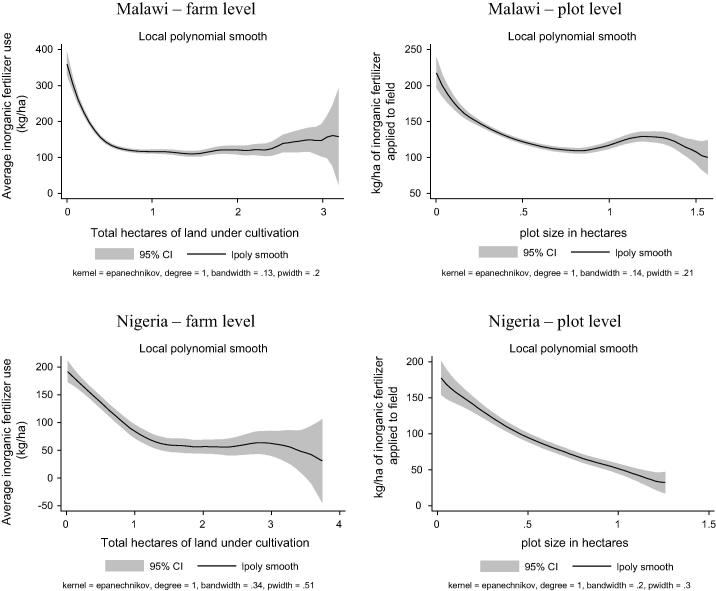
“The inverse (negative) relationship between farm size and productivity is a well-studied and fairly entrenched phenomenon in the agricultural development literature (e.g., Carter, 1984; Feder, 1985; Barrett et al., 2010).”
BackgroundGlobal pesticide consumption and pollution: with China as a focus
Zhang, W., Jiang, F., & Ou, J. (2011) · Cited by 590
Food Security, Farming, and Climate Change to 2050: Scenarios, Results, Policy Options
Nelson, G. C., Rosegrant, M. W., Palazzo, A., Gray, I. D., Ingersoll, C., Robertson, R., Tokgöz, S., Zhu, T., Sulser, T. B., Ringler, C., et al. (2010) · International Food Policy Research Institute eBooks · doi:10.2499/9780896291867 · Cited by 578
Technology Adoption in the Presence of Constraints: the Case of Fertilizer Demand in Ethiopia
Croppenstedt, A., Demeke, M., & Meschi, M. M. (2003) · Review of Development Economics · doi:10.1111/1467-9361.00175 · Cited by 498 · cited 2×
“What is less well-documented with data from farmers’ fields is the relationship between input use intensity and farm size (important exceptions include Croppenstedt et al., 2003; Doss, 2003).”
BackgroundPoor numbers: how we are misled by African development statistics and what to do about it
Jerven, M. (2013) · Choice Reviews Online · doi:10.5860/choice.50-6877 · Cited by 484
Input subsidy programs in sub‐Saharan Africa: a synthesis of recent evidence
Jayne, T. S., & Rashid, S. (2013) · Agricultural Economics · doi:10.1111/agec.12073 · Cited by 422 · cited 1×
“Most obviously, several governments have recently reinstated or revitalized agricultural input subsidy schemes aimed at promoting access to chemical fertilizers and improved seeds (Minot and Benson, 2009), with variable success (Jayne and Rashid, 2013).”
BackgroundVanlauwe, B., Kihara, J., Chivenge, P. P., Pypers, P., Coe, R., & Six, J. (2010) · Plant and Soil · doi:10.1007/s11104-010-0462-7 · Cited by 421 · cited 1×
“The entire integrated soil fertility management (ISFM) paradigm is built around the belief that inorganic and organic fertilizer should be used together to improve both the nutrient availability and absorption capacity of the soil (Place et al., 2003; Vanlauwe et al., 2010, 2011).”
BackgroundCarter, M. R. (1984) · Oxford Economic Papers · doi:10.1093/oxfordjournals.oep.a041621 · Cited by 418 · cited 1×
“The inverse (negative) relationship between farm size and productivity is a well-studied and fairly entrenched phenomenon in the agricultural development literature (e.g., Carter, 1984; Feder, 1985; Barrett et al., 2010).”
BackgroundReconsidering Conventional Explanations of the Inverse Productivity–Size Relationship
Barrett, C. B., Bellemare, M. F., & Hou, J. (2009) · World Development · doi:10.1016/j.worlddev.2009.06.002 · Cited by 404 · cited 2×
“Consistent with the findings of Barrett et al. (2010), the striking withinhousehold inverse relationship raises novel puzzles about farmers’ behaviors and the input productivity implications that have yet to draw much research attention.”
BackgroundSelf-citationModern Rice Technology and Income Distribution in Asia
David, C. C., & Otsuka, K. (1994) · Lynne Rienner Publishers eBooks · doi:10.1515/9781685854768 · Cited by 395
Fact or artifact: The impact of measurement errors on the farm size–productivity relationship
Carletto, C., Savastano, S., & Zezza, A. (2013) · Journal of Development Economics · doi:10.1016/j.jdeveco.2013.03.004 · Cited by 376
Exploring diversity in soil fertility management of smallholder farms in western Kenya
Tittonell, P. A., Vanlauwe, B., Leffelaar, P. A., Rowe, E. C., & Giller, K. E. (2005) · Agriculture Ecosystems & Environment · doi:10.1016/j.agee.2005.04.001 · Cited by 360 · cited 1×
“Even within a given farm, evidence suggests that productivity can differ immensely between plots (Tittonell et al., 2005), so too, then we would expect soil fertility status also to vary.”
BackgroundTrends in pesticide use and drivers for safer pest management in four African countries
Williamson, S., Ball, A. S., & Pretty, J. (2008) · Crop Protection · doi:10.1016/j.cropro.2008.04.006 · Cited by 342 · cited 4×
“This finding mirrors Williamson et al. (2008), who observed a very high rate of pesticide use not just on cash crops and vegetables, but also on staple crops.”
BackgroundResultInfluentialPlace, F., Barrett, C. B., Freeman, H., Ramisch, J. J., & Vanlauwe, B. (2003) · Food Policy · doi:10.1016/j.foodpol.2003.08.009 · Cited by 318 · cited 1×
“The entire integrated soil fertility management (ISFM) paradigm is built around the belief that inorganic and organic fertilizer should be used together to improve both the nutrient availability and absorption capacity of the soil (Place et al., 2003; Vanlauwe et al., 2010, 2011).”
BackgroundSelf-citationPesticides, Productivity, and Farmer Health: A Philippine Case Study
Antle, J. M., & Pingali, P. (1994) · American Journal of Agricultural Economics · doi:10.2307/1243654 · Cited by 312 · cited 2×
“Prior research in Asia established prospective environmental and human health effects of agrochemicals use (e.g., Antle and Pingali, 1994), which must be weighed against the potential productivity benefits of non-trivial agro-chemicals use in African agriculture.”
BackgroundAgricultural mechanization and the evolution of farming systems in sub-Saharan Africa
Pingali, P., Bigot, Y., & Rosenzweig, M. R. (1988) · Cited by 304
How much of the labor in African agriculture is provided by women?
Palacios-López, A., Christiaensen, L., & Kilic, T. (2016) · Food Policy · doi:10.1016/j.foodpol.2016.09.017 · Cited by 296
Smallholder technical efficiency controlling for environmental production conditions
Sherlund, S. M., Barrett, C. B., & Adesina, A. A. (2002) · Journal of Development Economics · doi:10.1016/s0304-3878(02)00054-8 · Cited by 291
Self-citationAgricultural Mechanization and the Evolution of Farming Systems in Sub-Saharan Africa
Weiner, D., Pingali, P., Bigot, Y., et al. (1988) · Economic Geography · doi:10.2307/144242 · Cited by 267 · cited 1×
“Because mechanization is a process and may express itself through the utilization of different technologies across different cultivating environments (Pingali et al., 1987), the LSMS-ISA surveys can only provide a picture of current use or ownership of inputs associated with mechanization.”
BackgroundLabor productivity and employment gaps in Sub-Saharan Africa
McCullough, E. (2016) · Food Policy · doi:10.1016/j.foodpol.2016.09.013 · Cited by 249 · cited 2×
“…alongside related work on the correlates with intensification patterns in the region (Binswanger-Mkhize and Savastano, 2014), labor productivity differentials (McCullough, 2015) as potentially driven by input use, and the existence of multiple market failures (Dillon and Barrett, 2014).”
BackgroundChapter 54 Agricultural Mechanization: Adoption Patterns and Economic Impact
Pingali, P. (2007) · Handbook of agricultural economics · doi:10.1016/s1574-0072(06)03054-4 · Cited by 244 · cited 1×
“This echoes other findings of decreasing tractor use over time by Pingali (2007).”
BackgroundHenao, J., & Baanante, C. A. (2006) · VTechWorks (Virginia Tech) · Cited by 220
Post-harvest loss in sub-Saharan Africa—what do farmers say?
Kaminski, J., & Christiaensen, L. (2014) · Global Food Security · doi:10.1016/j.gfs.2014.10.002 · Cited by 215 · cited 1×
“Using the same LSMS-ISA data, Kaminski and Christiaensen (2014) find that 63% of maize growing households in Uganda, 49% in Tanzania, and 11% in Malawi used some form of spraying or smoking of their crops while in storage, suggesting that on-field usage does not exhaust the full set of possible…”
MethodAgricultural policies in developing countries
(1992) · Choice Reviews Online · doi:10.5860/choice.30-0279 · Cited by 213 · cited 2×
“For example, some modern seed varieties are bred to respond better when paired with inorganic fertilizer (Ellis, 1992; Nyangena and Juma, 2014).”
BackgroundAxiomatic arguments for decomposing goodness of fit according to Shapley and Owen values
Huettner, F., & Sunder, M. (2012) · Electronic Journal of Statistics · doi:10.1214/12-ejs710 · Cited by 206 · cited 2×
“We then calculate Shapley values, which decompose the explained variance (measured by R(2)) of those regressions into contributions over particular groups of regressors (Huettner and Sunder, 2012), in other words the mean marginal contribution of each variable or group of variables to the overall regression model R(2).”
MethodSoil quality and fertilizer use rates among smallholder farmers in western Kenya
Marenya, P., & Barrett, C. B. (2009) · Agricultural Economics · doi:10.1111/j.1574-0862.2009.00398.x · Cited by 198 · cited 2×
“Moreover, household perceptions of soil quality may influence fertilizer application rates (Marenya and Barrett, 2009) and be influenced, in turn, by previously observed crop yields (Marenya et al., 2008).”
BackgroundSelf-citationTransition in Sub-Saharan Africa: Agriculture, Urbanization and Income Growth
Tiffen, M. (2003) · World Development · doi:10.1016/s0305-750x(03)00088-3 · Cited by 198 · cited 2×
“Meanwhile, factors external to agricultural policy—such as record high international food prices, urbanization, rapid growth of a middle class, increased access to market and other information through cell phones, and transformation of some food marketing channels—may have changed on-farm incentives and resulted in up…”
BackgroundPoor numbers. How we are misled by African development statistics and what to do about it
Guyer, J. I. (2014) · Canadian Journal of Development Studies/Revue canadienne d études du développement · doi:10.1080/02255189.2014.877382 · Cited by 183
Agricultural intensification: The status in six African countries
Binswanger-Mkhize, H. P., & Savastano, S. (2016) · Food Policy · doi:10.1016/j.foodpol.2016.09.021 · Cited by 179 · cited 2×
“Our findings may be best conceptualized alongside related work on the correlates with intensification patterns in the region (Binswanger-Mkhize and Savastano, 2014), labor productivity differentials (McCullough, 2015) as potentially driven by input use, and the existence of multiple market failures…”
BackgroundSheahan, M., & Barrett, C. B. (2014) · doi:10.1596/1813-9450-7014 · Cited by 174 · cited 4×
“In Sheahan and Barrett (2014) we utilized one cross section of LSMS-ISA data collected between 2010 and 2012 in each of six countries (Niger, Nigeria, Ethiopia, Malawi, Tanzania, Uganda), including over 22,000 cultivating households and 62,000 agricultural plots, to produce a large number of…”
BackgroundMethodInfluentialSelf-citationDillon, B., & Barrett, C. B. (2016) · Food Policy · doi:10.1016/j.foodpol.2016.09.015 · Cited by 169 · cited 2×
“…alongside related work on the correlates with intensification patterns in the region (Binswanger-Mkhize and Savastano, 2014), labor productivity differentials (McCullough, 2015) as potentially driven by input use, and the existence of multiple market failures (Dillon and Barrett, 2014).”
BackgroundSelf-citationTransforming agrarian economies: opportunities seized, opportunities missed
(1995) · Choice Reviews Online · doi:10.5860/choice.33-2246 · Cited by 169
Resources, Policies, and Agricultural Productivity in Sub-Saharan AfricaPreprint
Fuglie, K. O., & Rada, N. E. (2013) · SSRN Electronic Journal · doi:10.2139/ssrn.2266459 · Cited by 157 · cited 1×
“In SSA specifically, Fuglie and Rada (2013) report that average yields on irrigated fields are 90% higher than on nearby rainfed fields.”
BackgroundIrrigation in Africa in figures. AQUASTAT survey, 2005
Frenken, K. (1995) · Cited by 154
Fertilizer Use in African Agriculture : Lessons Learned and Good Practice Guidelines
Morris, M., Kelly, V. A., Kopicki, R. J., et al. (2007) · Cited by 144
Sheahan, M., Black, R., & Jayne, T. S. (2013) · Food Policy · doi:10.1016/j.foodpol.2013.04.008 · Cited by 141 · cited 1×
“Analysis of the marginal costs and benefits of using modern inputs (e.g., Sheahan et al., 2013 on Kenya and Liverpool-Tasie et al., 2015 on Nigeria) – infeasible in the descriptive, cross-sectional work undertaken here – would help determine whether this variation corresponds with efficient…”
BackgroundSelf-citationLevelling the field : improving opportunities for women farmers in Africa
O’Sullivan, M., Rao, A., Banerjee, R., et al. (2014) · Cited by 137
Is a slowdown in agricultural productivity growth contributing to the rise in commodity prices?
Fuglie, K. O. (2008) · Agricultural Economics · doi:10.1111/j.1574-0862.2008.00349.x · Cited by 135 · cited 1×
“Using global data to study total factor productivity, Fuglie (2008) finds that irrigated land is twice as productive as rainfed land after controlling for other factors.”
BackgroundDoss, C. R., & Doss, C. R. (2003) · RePEc: Research Papers in Economics · doi:10.22004/ag.econ.46552 · Cited by 110 · cited 1×
“What is less well-documented with data from farmers’ fields is the relationship between input use intensity and farm size (important exceptions include Croppenstedt et al., 2003; Doss, 2003).”
BackgroundAgricultural policies in developing countries
Peters, G. (1993) · Food Policy · doi:10.1016/0306-9192(93)90088-s · Cited by 106
Takeshima, H., Nin‐Pratt, A., & Diao, X. (2013) · American Journal of Agricultural Economics · doi:10.1093/ajae/aat045 · Cited by 101 · cited 2×
“…2010/ 11, Tanzania 2010/11, Uganda 2010/11. and mechanized equipment, this suggests that the rental market for both is fairly substantial in Nigeria, where the government has dedicated significant resources to the promotion of agricultural mechanization in recent years (Takeshima et al., 2013).”
BackgroundAgricultural research and productivity growth in India
Evenson, R. E., Pray, C. E., Rosegrant, M. W., et al. (1999) · doi:10.22004/ag.econ.37901 · Cited by 97
Fertilizer subsidies in Africa, are vouchers the answer?
Minot, N., Benson, T., Minot, N., et al. (2009) · AgEcon Search (University of Minnesota, USA) · doi:10.22004/ag.econ.55510 · Cited by 93
Zingore, S., Tittonell, P. A., Corbeels, M., et al. (2010) · Nutrient Cycling in Agroecosystems · doi:10.1007/s10705-010-9414-0 · Cited by 88 · cited 1×
“…important characteristic of the operating environment that should affect input use decisions is soil quality since, for example, it is well known that the responsiveness of crops to fertilizer application depends on the quality and fertility of the soil (e.g., Zingore et al., 2010; Zingore, 2011).”
BackgroundThe Role of Intermediate Factor Markets in Asia's Green Revolution: Lessons for Africa?
Johnson, M., Hazell, P., & Gulati, A. (2003) · American Journal of Agricultural Economics · doi:10.1111/j.0092-5853.2003.00532.x · Cited by 84 · cited 1×
“Asia and Latin America enjoyed tremendous increases in agricultural productivity in a relatively short period of time through rapid and widespread uptake of yield-enhancing modern agricultural inputs (Johnson et al., 2003).”
BackgroundAgricultural mechanization in sub-Saharan Africa: time for a new look
Mrema, G. C., Baker, D. C., Kahan, D., et al. (2007) · Cited by 77
Water reform in Sub-Saharan Africa: what is the difference?
van Koppen, B. (2003) · Physics and Chemistry of the Earth Parts A/B/C · doi:10.1016/j.pce.2003.08.022 · Cited by 75 · cited 2×
“Irrigation and mechanization technologies have received far less policy attention, potentially translating into stagnation or even the reversal of prior progress in expanding their use (Mrema et al., 2008; Van Koppen, 2003).”
BackgroundAddressing the “Wicked Problem” of Input Subsidy Programs in Africa
Ricker-Gilbert, J. E., Jayne, T. S., & Shively, G. E. (2013) · Applied Economic Perspectives and Policy · doi:10.1093/aepp/ppt001 · Cited by 75 · cited 1×
“…of these schemes and these outcomes, particularly given mixed evidence on the performance of input subsidy programs across the region (e.g., Ricker-Gilbert et al., 2013). nearly 10%, and household socio-economic variables less than 4%.16 It is perhaps surprising, given other findings on…”
BackgroundGender and agriculture in sub-Saharan Africa: introduction to the special issue
Kilic, T., Winters, P., & Carletto, C. (2015) · Agricultural Economics · doi:10.1111/agec.12165 · Cited by 71 · cited 1×
“…to lower access to improved inputs (e.g., Djurfeldt et al., 2013; FAO, 2011), although a range of country and within-country specific factors remain similarly instrumental in perpetuating this gap (Kilic et al., 2015, as well as the entire special issue of Agricultural Economics in May 2015).”
BackgroundHoussou, N., Diao, X., Cossar, F., et al. (2013) · American Journal of Agricultural Economics · doi:10.1093/ajae/aat026 · Cited by 69 · cited 1×
“Relative to the awareness resulting from these subsidy programs, irrigation and mechanization have received far less attention, with a few notable exceptions (Houssou et al. 2013; Takeshima, Nin-Pratt, Diao 2013).”
BackgroundMeasuring irrigation performance in Africa.Preprint
Svendsen, M., Ewing, M., & Msangi, S. (2009) · RePEc: Research Papers in Economics · Cited by 69
Emerging Development of Agriculture in East Africa
Yamano, T., Otsuka, K., & Place, F. (2011) · Springer eBooks · doi:10.1007/978-94-007-1201-0 · Cited by 67
Can modern input use be promoted without subsidies? An analysis of fertilizer in Ethiopia
Rashid, S., Tefera, N., Minot, N., & Ayele, G. (2013) · Agricultural Economics · doi:10.1111/agec.12076 · Cited by 66 · cited 2×
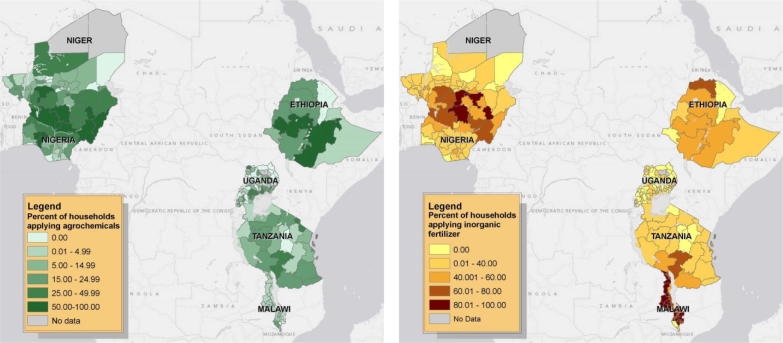
“Application rates are highest in Malawi and Nigeria, both with government input subsidy programs, and Ethiopia, where the government sets (and subsidizes) fertilizer prices but does not consider it a formal subsidy programme (Rashid et al., 2013).”
BackgroundDjurfeldt, A. A., Djurfeldt, G., & Lodin, J. B. (2013) · World Development · doi:10.1016/j.worlddev.2013.03.011 · Cited by 61 · cited 1×
“…that lower levels of productivity and income among female-headed households can be partially attributed to lower access to improved inputs (e.g., Djurfeldt et al., 2013; FAO, 2011), although a range of country and within-country specific factors remain similarly instrumental in perpetuating…”
BackgroundConstraints to Fertilizer Use in Uganda: Insights from Uganda Census of Agriculture 2008/9
Okoboi, G., & Barungi, M. (2012) · Journal of Sustainable Development · doi:10.5539/jsd.v5n10p99 · Cited by 59
Ethiopia’s value chains on the move: The case of teff
Minten, B., Tamru, S., Engida, E., & Kuma, T. (2013) · IFPRI E-brary (International Food Policy Research Institute) · Cited by 54
Incomplete Markets And Fertilizer Use : Evidence From Ethiopia
Zerfu, D., & Larson, D. F. (2010) · doi:10.1596/1813-9450-5235 · Cited by 50
(2006) · Cited by 45
Overlooking the Obvious: The Opportunity for Herbicides in Africa
Gianessi, L., & Williams, A. H. (2011) · Outlooks on Pest Management · doi:10.1564/22oct04 · Cited by 40 · cited 2×
“Gianessi and Williams (2011) contend that herbicide use, in particular, remains a major unexploited means of increasing yields and saving labor on SSA farms.”
BackgroundMethodInfluentialHow Much of the Labor in African Agriculture is Provided by Women?
Palacios-López, A., Christiaensen, L., & Kilic, T. (2015) · World Bank, Washington, DC eBooks · doi:10.1596/1813-9450-7282 · Cited by 33
The Impacts of Fertilizer Credit on Crop Production and Income in Ethiopia
Matsumoto, T., & Yamano, T. (2011) · Springer eBooks · doi:10.1007/978-94-007-1201-0_4 · Cited by 32 · cited 2×
“For example, Matsumoto and Yamano (2011) find that having access to fertilizer credit increases teff yields by 37% in Ethiopia.”
BackgroundZingore, S. (2011) · Better crops with plant food · Cited by 30
Labor Productivity and Employment Gaps in Sub-Saharan Africa
McCullough, E. (2015) · World Bank, Washington, DC eBooks · doi:10.1596/1813-9450-7234 · Cited by 30
Decentralization, agricultural services and determinants of input use in Nigeria.Preprint
Akramov, K. T. (2009) · RePEc: Research Papers in Economics · Cited by 28
Development, Structure, and Transformation: Some Evidence on Comparative Economic Growth
McCord, G. C., & Sachs, J. D. (2013) · National Bureau of Economic Research · doi:10.3386/w19512 · Cited by 26
Dillon, B., & Barrett, C. B. (2014) · doi:10.1596/1813-9450-7117 · Cited by 26
Self-citationAgricultural Intensification: The Status in Six African Countries
Binswanger-Mkhize, H. P., & Savastano, S. (2014) · doi:10.1596/1813-9450-7116 · Cited by 24
Rural Household Access to Assets and Agrarian Institutions: A Cross Country ComparisonPreprint
Zezza, A., Winters, P., Davis, B., et al. (2007) · RePEc: Research Papers in Economics · doi:10.22004/ag.econ.7925 · Cited by 23
Farm Power/Present and Future Availability in Developing Countries
Clarke, L., & Bishop, C. (2002) · eCommons (Cornell University) · Cited by 20
Liverpool‐Tasie, L. S. O., Omonona, B. T., Sanou, A., & Ogunleye, W. (2015) · doi:10.1596/1813-9450-7201 · Cited by 18 · cited 1×
“Analysis of the marginal costs and benefits of using modern inputs (e.g., Sheahan et al., 2013 on Kenya and Liverpool-Tasie et al., 2015 on Nigeria) – infeasible in the descriptive, cross-sectional work undertaken here – would help determine whether this variation corresponds with efficient…”
Ogada, M. J., & Nyangena, W. (2015) · RePEc: Research Papers in Economics · doi:10.22004/ag.econ.212590 · Cited by 17
Farmers’ Perceptions of Soil Fertility and Fertilizer Yield Response in KenyaPreprint
Marenya, P., Barrett, C. B., & Gulick, T. (2011) · SSRN Electronic Journal · doi:10.2139/ssrn.1845546 · Cited by 16 · cited 1×
“Moreover, household perceptions of soil quality may influence fertilizer application rates (Marenya and Barrett, 2009) and be influenced, in turn, by previously observed crop yields (Marenya et al., 2008).”
BackgroundSelf-citationRural Household Access to Assets and Agrarian Institutions: A Cross Country ComparisonPreprint
Zezza, A., Winters, P., Davis, B., et al. (2019) · SSRN Electronic Journal · doi:10.2139/ssrn.3307435 · Cited by 14
Nyangena, W., & Juma, O. M. (n.d.) · RePEc: Research Papers in Economics · Cited by 14
Minten, B., Tamru, S., Engida, E., et al. (2013) · Cited by 12
Levelling the Field : Improving Opportunities for Women Farmers in Africa
Campaign, O. (2014) · Cited by 11
Of What Merit is Improved Inputs use in Uganda's Maize Productivity?Preprint
Okoboi, G., & Okoboi, G. (2010) · RePEc: Research Papers in Economics · doi:10.22004/ag.econ.96649 · Cited by 6
Ashburner, J., & Kienzle, J. (2011) · Cited by 4
Yilma, T., Berger, T., Yilma, T., et al. (2006) · RePEc: Research Papers in Economics · doi:10.22004/ag.econ.25701 · Cited by 4 · cited 1×
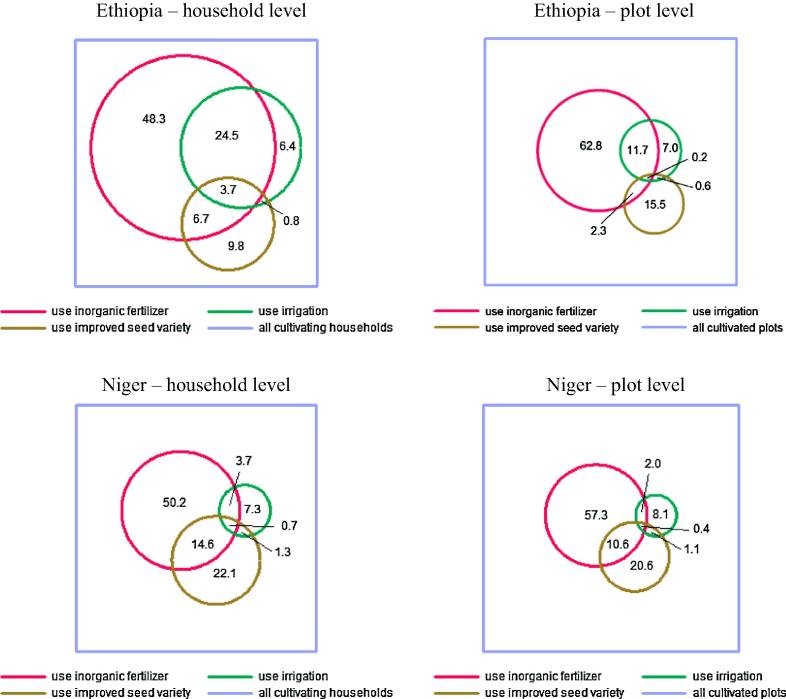
“Irrigation systems help to secure necessary soil moisture for efficient inorganic fertilizer use and improved seed varietal growth (Yilma and Berger, 2006).”
Background
Cited by
Sorted by citations
Takahashi, K., Muraoka, R., & Otsuka, K. (2019) · Agricultural Economics · doi:10.1111/agec.12539 · Cited by 508
Smallholder maize area and yield mapping at national scales with Google Earth Engine
Jin, Z., Azzari, G., You, C., Tommaso, S. D., Aston, S., Burke, M., & Lobell, D. B. (2019) · Remote Sensing of Environment · doi:10.1016/j.rse.2019.04.016 · Cited by 397
Review: Food loss and waste in Sub-Saharan Africa
Sheahan, M., & Barrett, C. B. (2017) · Food Policy · doi:10.1016/j.foodpol.2017.03.012 · Cited by 323
“Particularly given evidence of low levels of paired inputs with known complementarity gains in SSA farming (Sheahan and Barrett, 2017), reallocation of resources already on-farm could lead to productivity gains without the use of additional inputs.”
BackgroundSelf-citationJEPSON, P. C., Murray, K., Bach, O., Bonilla, M. A., & Neumeister, L. (2020) · The Lancet Planetary Health · doi:10.1016/s2542-5196(19)30266-9 · Cited by 213
Campenhout, B. V., Spielman, D. J., & Lecoutere, E. (2020) · American Journal of Agricultural Economics · doi:10.1002/ajae.12089 · Cited by 196
Metadata
- Authors
- Sheahan, M., & Barrett, C. B.
- Affiliations
- Cornell University (US)
- Corresponding author
- Sheahan, Megan
- Venue
- Food Policy
- Publisher
- Elsevier BV
- Published
- 2017-02
- Volume
- 67
- Pages
- 12-25
- ISSN
- 0306-9192 (ISSN-L)
- PMC
- PMC5384438
- OpenAlex
- W2534397573
- Semantic Scholar
- 0119de42f830ef1f9a0fb240310e89ecd368143f
- Cited by
- 594
- References
- 87
- Citations by year
- 2026: 74 · 2025: 69 · 2024: 60 · 2023: 76 · 2022: 61 · 2021: 70 · 2020: 75 · 2019: 47 · 2018: 40 · 2017: 19
- FWCI
- 120.77
- Type
- journal article
- Language
- en
- Open access
- hybrid
- doi.org
- Locations
- Food Policy (publishedVersion, cc-by)
- PubMed Central (publishedVersion, cc-by)
- PubMed (publishedVersion)
- RePEc: Research Papers in Economics (submittedVersion)
- Funders
- International Fine Particle Research Institute
- Topics
- Life Sciences › Agricultural and Biological Sciences › General Agricultural and Biological Sciences › Agricultural Innovations and Practices
- Life Sciences › Agricultural and Biological Sciences › General Agricultural and Biological Sciences › Agricultural Economics and Practices
- Social Sciences › Economics, Econometrics and Finance › Economics and Econometrics › Agricultural economics and policies
- Keywords
- agricultural input use, modern agricultural inputs, fertilizer use, improved varieties, hybrid seeds, agrochemicals, agricultural machinery, irrigation, agricultural intensification, smallholder farmers, sub-Saharan Africa, food prices, agricultural growth
About these checks
Registry, retraction, Cites and statistics results are computed, not judged, with one exception: a printed reference that no index lists is read once by a model before it counts as a citation error. Claims are extracted by a model and kept only when their quote appears verbatim in the text; each cited source is then checked, with a model’s help, for whether it says what the claim relies on. Those verdicts can be wrong — read the claim’s quote and the cited source before relying on one.
Statistics and arithmetic are recomputed, not judged.
Confidence bands are shown only for fields calibrated on our annotated test set. None is calibrated yet, so no band is shown.
What counts as a claim ›How we measure confidence ›How we check this ›
Are you an author, or do you see a problem with this page? Request a review
