

The DOI matches its Crossref record; 1 of the 1 references it cites were found in a registry or an index.
Deciphering meanings embedded in the cultural ornaments of Guji Oromo women of Southern Ethiopia
Open accessAbstract
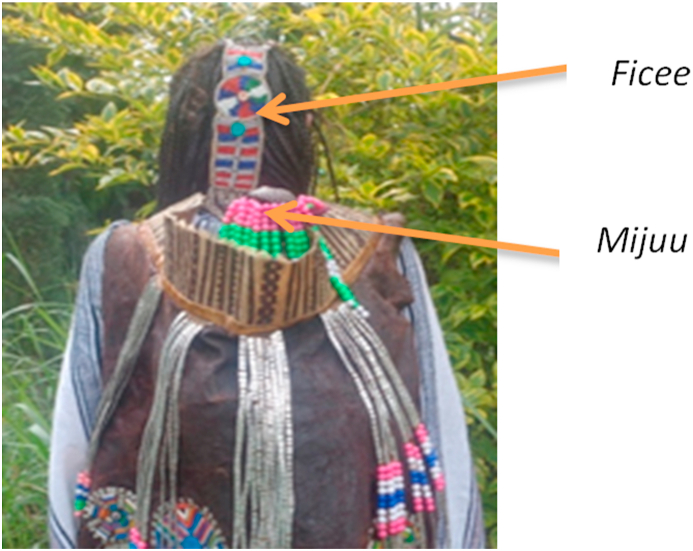
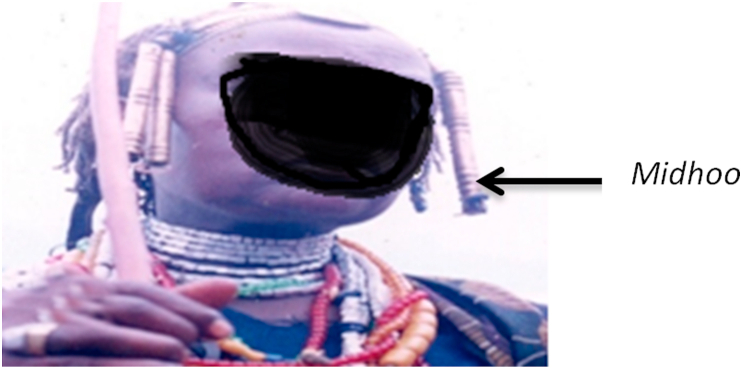
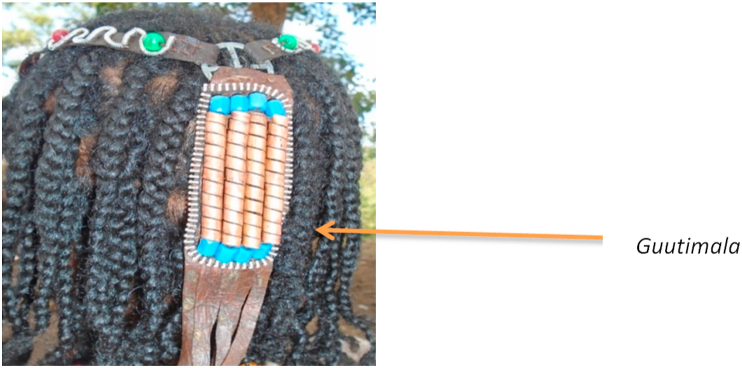
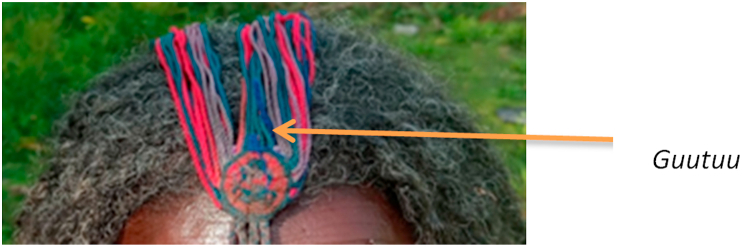
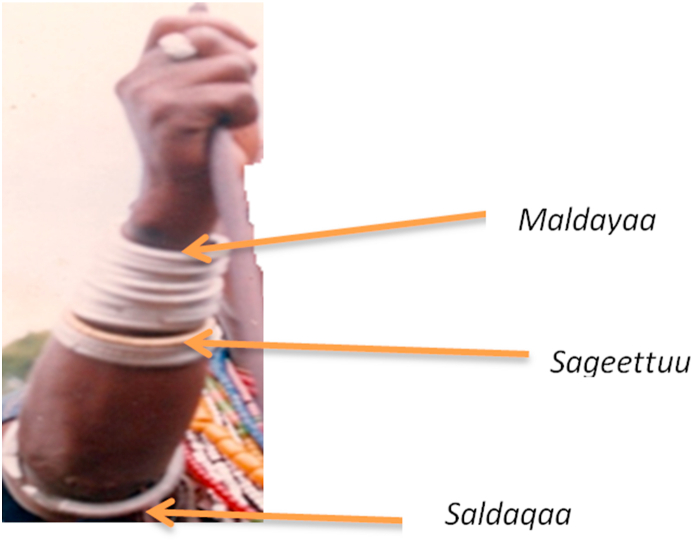
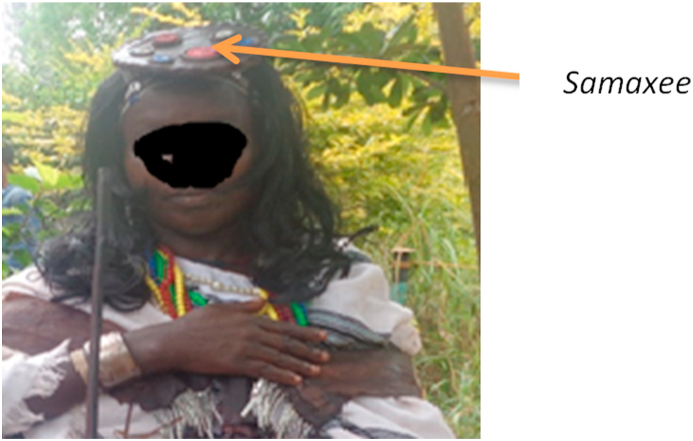
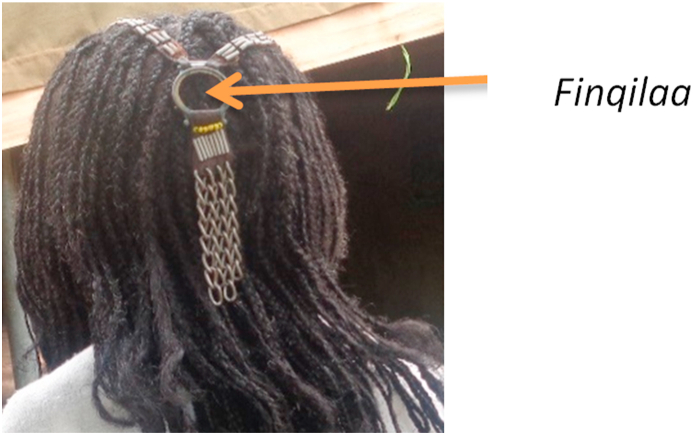
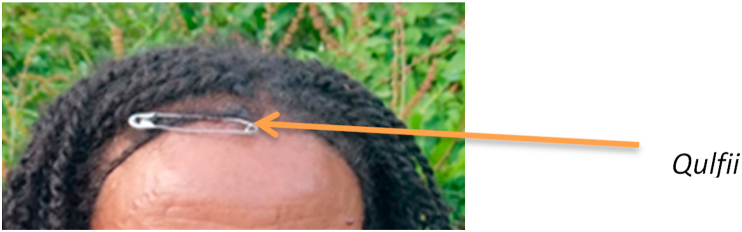
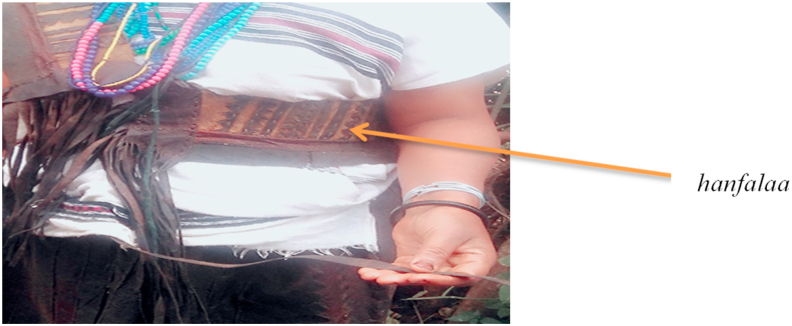
This study is aimed at deciphering meanings embedded in the cultural ornaments of Guji Oromo women of Southern Ethiopia. Relevant data were collected through observation, interview, and focus group discussion which involved 30 participants. The data were analyzed thematically following the analytical framework of material culture theory. Results of the study reveal that, in addition to their beautification purpose, cultural ornaments of Guji Oromo women communicate meanings related to personal status, social identities, and the rights and privileges of the wearer. Cultural norms and restrictions govern the ornamentation practice of Guji women. Such practice of ornamentation shows the deep-rooted indigenous wisdom of the Guji society in promoting important cultural values such as virginity, marriage bond, and personal success while discouraging unacceptable practices such as sex before marriage and gender-based violence.
Overview
The claims and statistics of this paper haven’t been checked yet.
Run the check — free, no account needed. It reads the open-access text and checks the sources it cites.
Integrity signals
Registry
Cites
Statistics
Figures
Verification
Claims the paper makes
The claims and statistics of this paper haven’t been checked yet.
Run the check — free, no account needed. It reads the open-access text and checks the sources it cites.
Claims other papers make about this one
Each is checked against this paper’s own text: does it say what the citing paper says it does?
The source backs part of the claim, not all of it — or backs it for a different population, condition or comparison.
In the citing paper
“In the study area, arranged marriages are more common than love marriages, further increasing the likelihood of early marriage 25 .”
From Predictors of age at first marriage among rural women in the West Guji Zone, Southern Ethiopia, 2024: a community-based cross-sectional study (2025) · cites this paper as [26]
Experimental — accuracy not yet measured
Self-check
Percentages, sums and reported differences re-computed from the paper’s own numbers.
The self-check needs the paper’s full text.
Citations
Cites
Understanding Material Culture
Woodward, I. (2007) · doi:10.4135/9781446278987 · Cited by 367
Research works printed but not linked: 21
- Abadía, 2015, Palaeolithic personal ornaments: historical development and epistemological challenges, Springer J Archaeol Method Theor., 22, 952, 10.1007/s10816-014-9213-z · DOI
- Beriso, 2004, The pride of the Guji-Oromo: an essay on cultural contact and self-esteem, J. Oromo Stud., 11, 13
- Boru, 2017, An analysis of Guji Oromo folktales: function in focus, Int. J. Humanit. Soc. Sci. Stud. (IJHSSS), 3, 224
- Dejene Negassa, 2009, Gender and culture in southern Ethiopia: an ethnographic analysis of Guji-Oromo women’s customary rights, Afr. Stud. Monogr., 30, 15
- Glaveanu, 2013, The function of ornaments: a cultural psychological exploration, Cult. Psychol., 20, 82, 10.1177/1354067X13515937 · DOI
- Hinew, 2012, History of Oromo social organization: gadaa grades-based roles and responsibilities, Sci. Technol. Arts Res. J., 1, 88, 10.4314/star.v1i3.98802 · DOI
- Iliopoulos, 2020, Early body ornamentation as Ego-culture: tracing the co-evolution of aesthetic ideals and cultural identity, Semiotica, 187, 10.1515/sem-2019-0073 · DOI
- Jemjem Udessa, 2020, Gadaa system: a model form of democracy, J. Indig. Knowl. Dev. Stud., 1, 1
- Jeylan Woliyi, 2004, A cultural representation of women in the Oromo society, Afr. Stud. Monogr., 25, 103
- Jeylan Woliyi, 2005, The function of African oral arts: the Arsi Oromo oral arts in focus, Afr. Stud. Monogr., 26, 15
- Joyce, 2005, Archaeology of the body, Annu. Rev. Anthropol., 34, 139, 10.1146/annurev.anthro.33.070203.143729 · DOI
- Kecskes, 2015, Intracultural communication and intercultural communication: are they different?, Int. Rev. Pragmat., 7, 171, 10.1163/18773109-00702002 · DOI
- Klemm, 2009, Oromo fashion three contemporary body art practices among Afran Qallo women, African Arts Spring, 54, 10.1162/afar.2009.42.1.54 · DOI
- Kuhn, 2007, Paleolithic ornaments: implications for cognition, demography, and identity, Diogènes, 54, 40
- Nikolenko, 2013, Ornament as a symbol of intercultural communication, Middle East J. Sci. Res., 17, 444
- Prown, 1982, Mind in matter: an introduction to material culture theory and method, Winterthur Portf., 17, 1, 10.1086/496065 · DOI
- Roth, 2001, Material culture and intercultural communication, Int. J. Intercult. Relat., 25, 563, 10.1016/S0147-1767(01)00023-2 · DOI
- Seeger, 1975, The meaning of body ornaments: a Suya example, Ethnology, 14, 211, 10.2307/3773253 · DOI
- Smith, 2017, Return and repetition: methods for material culture studies, J. Interdiscip. Hist., 48, 43, 10.1162/JINH_a_01088 · DOI
- Thayer, 2004, Material culture analysis and technical communication: the artifact approach to evaluating documentation interface, IEEE Trans. Prof. Commun., 47, 144, 10.1109/TPC.2004.828209 · DOI
- Wadley, 2001, What is cultural modernity? A general view and a South African perspective from Rose Cottage Cave, Camb. Archaeol. J., 11, 201, 10.1017/S0959774301000117 · DOI
Cited by
Sorted by citations
Gelchu, S., & Wirtu, D. (2025) · Ethiopian Journal of Reproductive Health · doi:10.69614/ejrh.v17i01.846
Metadata
- Authors
- Mulleta, A. D., & Muda, K.
- Affiliations
- Arsi University (ET)
- Venue
- Heliyon
- Publisher
- Elsevier BV
- Published
- 2021-04
- Volume
- 7
- Issue
- 4
- Pages
- e06774
- ISSN
- 2405-8440 (ISSN-L)
- PMC
- PMC8066376
- OpenAlex
- W3152776577
- Cited by
- 4
- References
- 1
- Citations by year
- 2024: 3 · 2023: 1
- FWCI
- 8.06
- Type
- journal article
- Language
- en
- Open access
- gold
- doi.org
- Licence
- Locations
- Heliyon (publishedVersion, cc-by-nc-nd)
- PubMed Central (publishedVersion, cc-by-nc-nd)
- PubMed (publishedVersion)
- DOAJ (DOAJ: Directory of Open Access Journals) (submittedVersion, cc-by-sa)
- Funders
- Asia University
- Topics
- Social Sciences › Arts and Humanities › Visual Arts and Performing Arts › Fashion and Cultural Textiles
- Social Sciences › Political Science and International Relations › African history and culture analysis
- Social Sciences › Anthropology › Cultural and Sociopolitical Studies
- Keywords
- material culture, personal status, social identity, virginity, marriage, gender norms, gender-based violence, indigenous wisdom, southern Ethiopia
About these checks
Registry, retraction, Cites and statistics results are computed, not judged, with one exception: a printed reference that no index lists is read once by a model before it counts as a citation error. Claims are extracted by a model and kept only when their quote appears verbatim in the text; each cited source is then checked, with a model’s help, for whether it says what the claim relies on. Those verdicts can be wrong — read the claim’s quote and the cited source before relying on one.
Statistics and arithmetic are recomputed, not judged.
Confidence bands are shown only for fields calibrated on our annotated test set. None is calibrated yet, so no band is shown.
What counts as a claim ›How we measure confidence ›How we check this ›
Are you an author, or do you see a problem with this page? Request a review
How to cite
Cite CoChat for the checks on this page, and the paper for its own findings.
- This page
- CoChat. (2026). Citation check: Deciphering meanings embedded in the cultural ornaments of Guji Oromo women of Southern Ethiopia. https://app.cochat.ai/papers/10.1016/j.heliyon.2021.e06774
- The paper
- Mulleta, A. D., & Muda, K. (2021). Deciphering meanings embedded in the cultural ornaments of Guji Oromo women of Southern Ethiopia. Heliyon. https://doi.org/10.1016/j.heliyon.2021.e06774
