

The DOI matches its Crossref record; 227 of the 234 references it cites were found in a registry or an index.
RETRACTED: Nanoscale bioconjugates: A review of the structural attributes of drug-loaded nanocarrier conjugates for selective cancer therapy
Open accessAbstract
Nanobioconjugates are nanoscale drug delivery vehicles that have been conjugated to or decorated with biologically active targeting ligands. These targeting ligands can be antibodies, peptides, aptamers, or small molecules such as vitamins or hormones. Most research studies in this field have been devoted to targeting cancer. Moreover, the nanostructures can be designed with an additional level of targeting by being designed to be stimulus-responsive or "smart" by a judicious choice of materials to be incorporated into the hybrid nanostructures. This stimulus could be an acidic pH, raised temperature, enzyme, ultrasound, redox potential, an externally applied magnetic field, or laser irradiation. In this case, the smart capability can increase the accumulation at the tumor site or the on-demand drug release, while the ligand ensures selective binding to the tumor cells. The present review highlights some interesting studies classified according to the nanostructure material. These materials include natural substances (polysaccharides), multi-walled carbon nanotubes (and halloysite nanotubes), metal-organic frameworks and covalent-organic frameworks, metal nanoparticles (gold and silver), and polymeric micelles.
Overview
The claims and statistics of this paper haven’t been checked yet.
Run the check — free, no account needed. It reads the open-access text and checks the sources it cites.
Integrity signals
Registry
Cites
Statistics
Figures
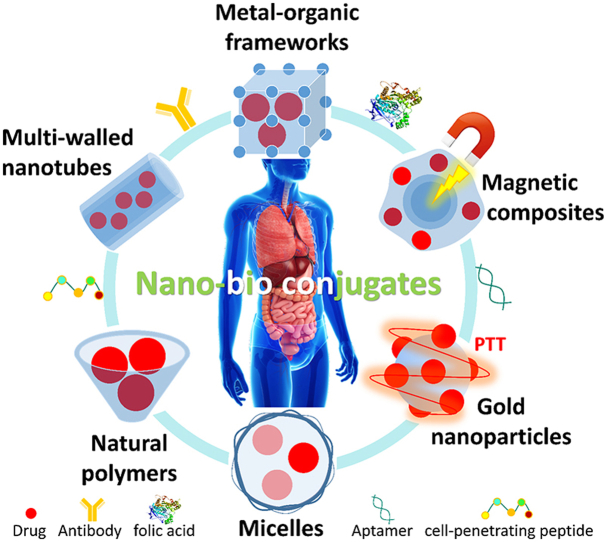
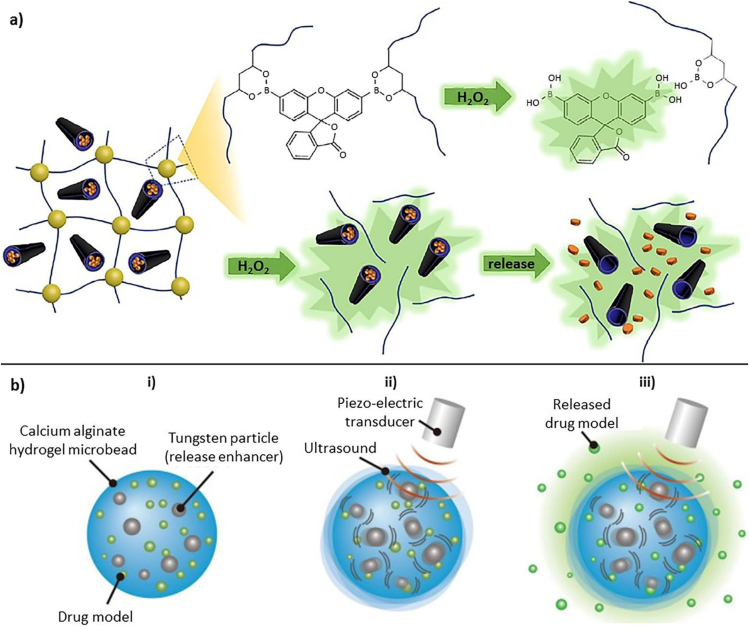
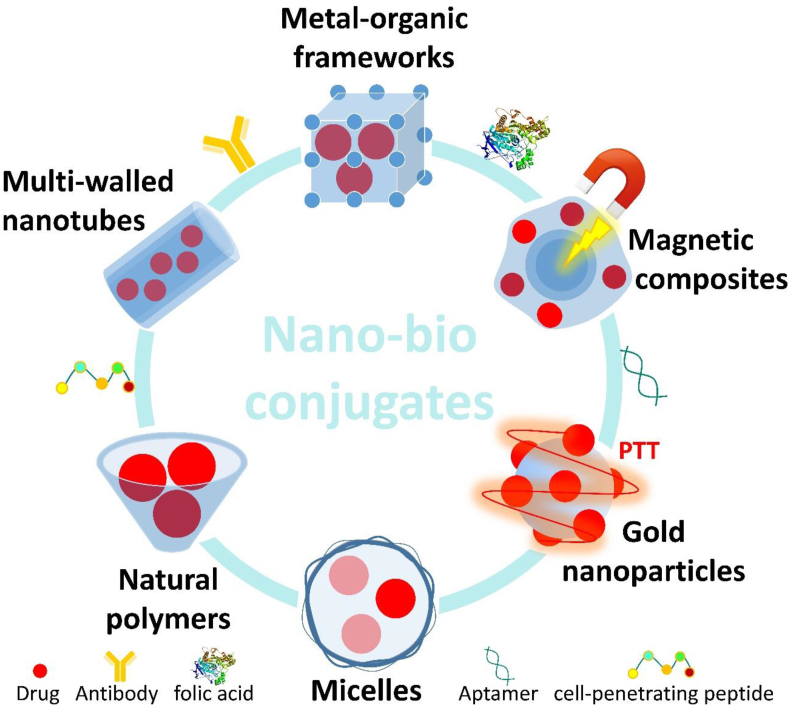
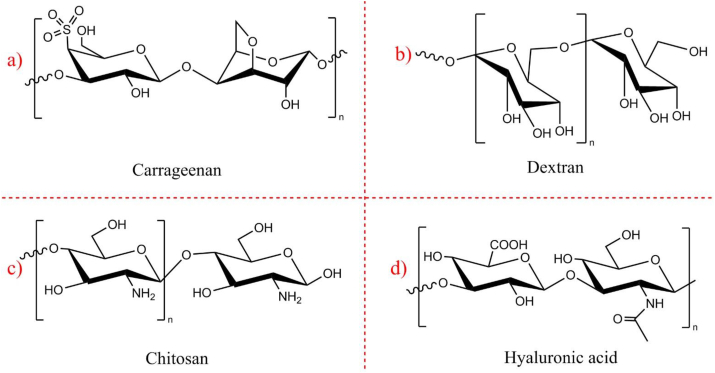
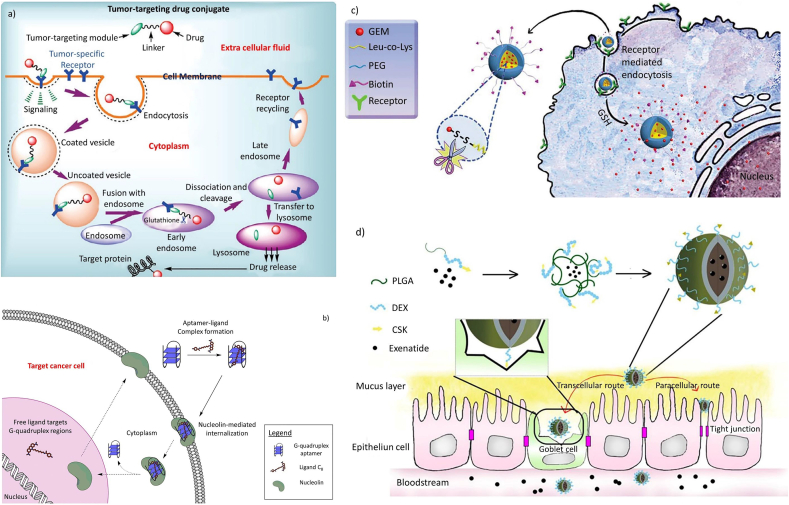
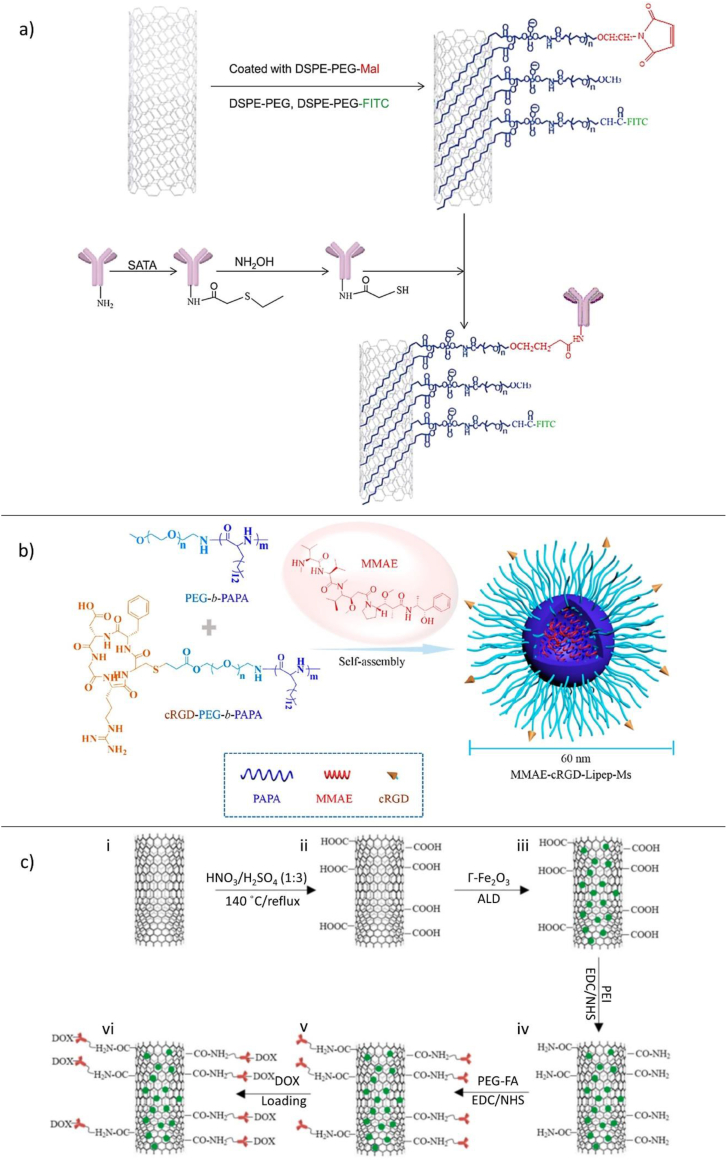
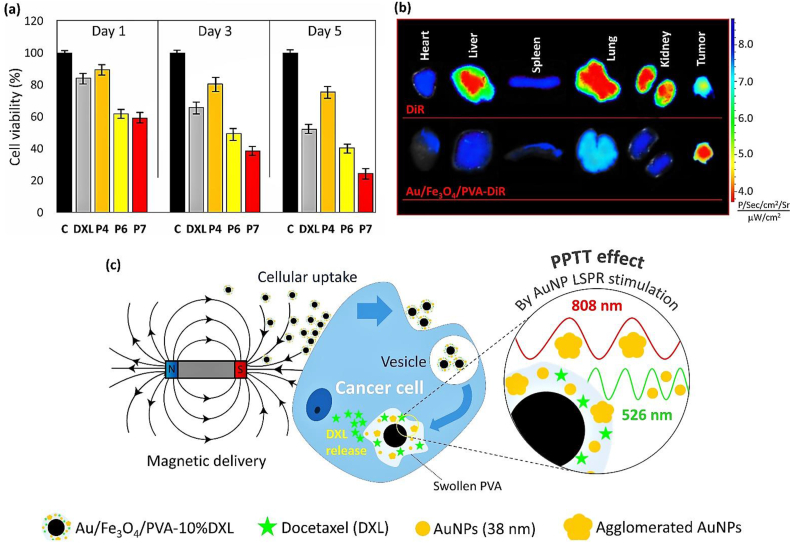
Verification
Claims the paper makes
The claims and statistics of this paper haven’t been checked yet.
Run the check — free, no account needed. It reads the open-access text and checks the sources it cites.
Claims other papers make about this one
Each is checked against this paper’s own text: does it say what the citing paper says it does?
The cited source says what the claim attributes to it.
In the citing paper
“Owing to their biocompatibility and Food and Drug Administration (FDA) approval, AuNPs have become a leading candidate for multiple medical applications.”
From Targeted Nanoparticles for Drug Delivery Across the Blood–Brain Barrier in Early and Late Stages of Alzheimer's Disease: A Review (2026) · cites this paper as [86]
Self-check
Percentages, sums and reported differences re-computed from the paper’s own numbers.
The self-check needs the paper’s full text.
Citations
Cites
6 retracted
Zhang, W., Taheri‐Ledari, R., Hajizadeh, Z., Zolfaghari, E., Ahghari, M. R., Maleki, A. R., Hamblin, M. R., & Tian, Y. (2020) · Nanoscale · doi:10.1039/c9nr09687f · Cited by 112
Self-citationRetractedTaheri‐Ledari, R., Zhang, W., Radmanesh, M., Mirmohammadi, S. S., Maleki, A. R., Cathcart, N., & Kitaev, V. (2020) · Small · doi:10.1002/smll.202002733 · Cited by 107
Self-citationRetractedTaheri‐Ledari, R., Hashemi, S. M., & Maleki, A. R. (2019) · RSC Advances · doi:10.1039/c9ra08062g · Cited by 64
Self-citationRetractedSoltani, S. S., Taheri‐Ledari, R., Farnia, S. M. F., Maleki, A. R., & Foroumadi, A. (2020) · RSC Advances · doi:10.1039/d0ra04521g · Cited by 53
Self-citationRetractedGe, X., Fu, M., Niu, X., & Kong, X. (2020) · Ceramics International · doi:10.1016/j.ceramint.2020.07.123 · Cited by 19
Retracted- Retracted
Nanomaterials: a review of synthesis methods, properties, recent progress, and challenges
Baig, N., Kammakakam, I., & Falath, W. S. (2021) · Materials Advances · doi:10.1039/d0ma00807a · Cited by 3,482
Maeda, H., Nakamura, H., & Fang, J. (2013) · Advanced Drug Delivery Reviews · doi:10.1016/j.addr.2012.10.002 · Cited by 2,376
Kam, N. W. S., O’Connell, M. J., Wisdom, J. A., & Dai, H. (2005) · Proceedings of the National Academy of Sciences · doi:10.1073/pnas.0502680102 · Cited by 2,300
Albumin as a drug carrier: Design of prodrugs, drug conjugates and nanoparticles
Kratz, F. (2008) · Journal of Controlled Release · doi:10.1016/j.jconrel.2008.05.010 · Cited by 2,151
Cited by
Sorted by citations
Zhang, W., Taheri‐Ledari, R., Ganjali, F., Mirmohammadi, S. S., Qazi, F. S., Saeidirad, M., Kashtiaray, A., Zarei-Shokat, S., Tian, Y., & Maleki, A. R. (2022) · RSC Advances · doi:10.1039/d2ra06888e · Cited by 220
Self-citationGrewal, A. K., & Salar, R. K. (2024) · Nano TransMed · doi:10.1016/j.ntm.2024.100040 · Cited by 164
Zhang, W., Taheri‐Ledari, R., Saeidirad, M., Qazi, F. S., Kashtiaray, A., Ganjali, F., Tian, Y., & Maleki, A. R. (2022) · Journal of environmental chemical engineering · doi:10.1016/j.jece.2022.108836 · Cited by 132
Self-citationGhareeb, A., Fouda, A., Kishk, R. M., & El-Kazzaz, W. M. (2024) · Microbial Cell Factories · doi:10.1186/s12934-024-02609-5 · Cited by 125
Beigi, P., Ganjali, F., Hassanzadeh‐Afruzi, F., Salehi, M. M., & Maleki, A. R. (2023) · Scientific Reports · doi:10.1038/s41598-023-38005-z · Cited by 75
Self-citationMicelle-based nanoparticles with stimuli-responsive properties for drug delivery
Maboudi, A. H., Lotfipour, M. H., Rasouli, M., Azhdari, M. H., MacLoughlin, R. J., Bekeschus, S., & Doroudian, M. (2024) · Nanotechnology Reviews · doi:10.1515/ntrev-2023-0218 · Cited by 72
UiO-66 nanoparticles as a drug delivery system: A comprehensive review
Pourmadadi, M., Omrani, Z., Forootan, Z., Ebadi, M. S., & Yazdian, F. A. (2023) · Journal of Drug Delivery Science and Technology · doi:10.1016/j.jddst.2023.104690 · Cited by 61
Kochman, U., Sitka, H., Kuźniar, J., Czaja, M., Kozubek, P., Beszłej, J. A., & Leszek, J. (2026) · Molecular Neurobiology · doi:10.1007/s12035-025-05417-z · Cited by 60
Eivazzadeh‐Keihan, R., Pajoum, Z., Aliabadi, H. A. M., Ganjali, F., Kashtiaray, A., Bani, M. S., Lalebeigi, F., Ziabari, E. Z., Maleki, A. R., Heravi, M. M., et al. (2022) · Carbohydrate Polymers · doi:10.1016/j.carbpol.2022.120246 · Cited by 50
Self-citationAdvancements in the Application of Nanomedicine in Alzheimer’s Disease: A Therapeutic Perspective
Puranik, N., Yadav, D., & Song, M. (2023) · International Journal of Molecular Sciences · doi:10.3390/ijms241814044 · Cited by 45
Esmailzadeh, F., Taheri‐Ledari, R., Salehi, M. M., Zarei-Shokat, S., Ganjali, F., Mohammadi, A., Zare, I., Kashtiaray, A., Jalali, F., & Maleki, A. R. (2024) · Physical Chemistry Chemical Physics · doi:10.1039/d3cp04131j · Cited by 43
Self-citationDing, L., Liang, X., Ma, J., Liu, X., Zhang, Y., Long, Q., Wen, Z., Teng, Z., Jiang, L., & Liu, G. (2024) · Advanced Materials · doi:10.1002/adma.202403612 · Cited by 43
Forouzandeh-Malati, M., Ganjali, F., Zamiri, E., Zarei-Shokat, S., Jalali, F., Padervand, M., Taheri‐Ledari, R., & Maleki, A. R. (2022) · Langmuir · doi:10.1021/acs.langmuir.2c01822 · Cited by 38
Self-citationReview: Perovskite nanostructures materials versatile platform for advance biosensor applications
Korde, V. B., Khot, S., Kamble, D. B., & Amalraj, S. (2024) · Sensors and Actuators Reports · doi:10.1016/j.snr.2024.100201 · Cited by 37
Taheri‐Ledari, R., Zolfaghari, E., Zarei-Shokat, S., Kashtiaray, A., & Maleki, A. R. (2022) · Communications Biology · doi:10.1038/s42003-022-03966-w · Cited by 36
Self-citationBeygi, M., Oroojalian, F., Hosseini, S. S., Mokhtarzadeh, A., Kesharwani, P., & Sahebkar, A. (2023) · Progress in Materials Science · doi:10.1016/j.pmatsci.2023.101209 · Cited by 32
RetractedPresent and Future of ZrO2 Nanostructure as Reservoir for Drug Loading and Release
Radu, R.-D., & Drăgănescu, D. (2023) · Coatings · doi:10.3390/coatings13071273 · Cited by 32
Taheri‐Ledari, R., Tarinsun, N., Qazi, F. S., Heidari, L., Saeidirad, M., Ganjali, F., Ansari, F., Hassanzadeh‐Afruzi, F., & Maleki, A. R. (2023) · Inorganic Chemistry · doi:10.1021/acs.inorgchem.2c02634 · Cited by 32
Self-citationUti, D. E., Omang, W. A., Alum, E. U., Ugwu, O. P.-C., Wokoma, M. A., Oplekwu, I. R., Atangwho, I. J., & Egbung, G. E. (2025) · International Journal of Nanomedicine · doi:10.2147/ijn.s529250 · Cited by 30
Ditta, S. A., Yaqub, A., Tanvir, F., Rashid, M. A. R., Ullah, R., Zubair, M., Ali, S., & Anjum, K. M. (2023) · Journal of Materials Science · doi:10.1007/s10853-023-08209-9 · Cited by 28
A review of mechanistic principles of microwave absorption by pure and composite nanomaterials
Rouhi, M., Hajizadeh, Z., Taheri‐Ledari, R., Maleki, A. R., & Babamoradi, M. (2022) · Materials Science and Engineering B · doi:10.1016/j.mseb.2022.116021 · Cited by 27
Self-citationJanik, M., Hanula, M., Khachatryan, K., & Khachatryan, G. (2023) · Applied Sciences · doi:10.3390/app132111610 · Cited by 27
Eivazzadeh‐Keihan, R., Farrokhi-Hajiabad, F., Aliabadi, H. A. M., Ziabari, E. Z., Geshani, S., Kashtiaray, A., Bani, M. S., Pishva, B., Cohan, R. A., Maleki, A. R., et al. (2022) · International Journal of Biological Macromolecules · doi:10.1016/j.ijbiomac.2022.10.236 · Cited by 26
Self-citationTaheri‐Ledari, R., Ganjali, F., Zarei-Shokat, S., Dinmohammadi, R., Asl, F. R., Emami, A., Mojtabapour, Z. S., Rashvandi, Z., Kashtiaray, A., Jalali, F., et al. (2023) · Nanoscale Advances · doi:10.1039/d3na00763d · Cited by 23
Self-citationDutta, D., Liu, J., Wen, K., Kurata, K., Fulciniti, M., Gullà, A., Hideshima, T., & Anderson, K. C. (2023) · Blood Cancer Journal · doi:10.1038/s41408-023-00955-y · Cited by 22
Taheri‐Ledari, R., Ahghari, M. R., Ansari, F., Forouzandeh-Malati, M., Mirmohammadi, S. S., Zarei-Shokat, S., Ramezanpour, S., Zhang, W., Tian, Y., & Maleki, A. R. (2022) · Nanoscale Advances · doi:10.1039/d2na00431c · Cited by 20
Self-citationAptamer-functionalized MOFs and AI-driven strategies for early cancer diagnosis and therapeutics
Futane, A., Jadhav, P., Mustafa, A. H., Srinivasan, A., & Narayanamurthy, V. (2023) · Biotechnology Letters · doi:10.1007/s10529-023-03454-z · Cited by 20
Tariq, T., Bibi, S., Shah, S. S. A., Wattoo, M. A., Salem, M. A., El-Haroun, H., El-Bahy, Z. M., Rehman, A. U., & Bao, S. (2024) · Journal of Drug Delivery Science and Technology · doi:10.1016/j.jddst.2024.106532 · Cited by 20
Aptamers: Design, Theory, and Applications to Diagnosis and Therapy for Diseases
Hassibian, S., Amin, M., Taghdisi, S. M., Sameiyan, E., Ghaffari, R., Alibolandi, M., Ramezani, M., Abnous, K., & Dehnavi, S. M. (2025) · MedComm · doi:10.1002/mco2.70180 · Cited by 18
Iron oxide nanoparticles: a versatile nanoplatform for the treatment and diagnosis of ovarian cancer
Poonia, N., Kumar, V., Subudhi, R. N., Dalabehera, M., Setia, A., Bora, K. S., & Arora, V. (2024) · Therapeutic Delivery · doi:10.1080/20415990.2024.2442301 · Cited by 14
A Review of Gold Nanoparticles: Synthesis Methods and Biomedical Applications
Mehdi, J., Ansari, V. A., & Singh, A. (2025) · Biomedical Materials & Devices · doi:10.1007/s44174-025-00421-2 · Cited by 16
Magnetic Cell Targeting for Cardiovascular Tissue Engineering
Shradhanjali, A., Wolfe, J. T., & Tefft, B. J. (2024) · Tissue Engineering Part B Reviews · doi:10.1089/ten.teb.2024.0103 · Cited by 13
Dube, E. (2025) · Applied Biosciences · doi:10.3390/applbiosci4040046 · Cited by 12
Taheri‐Ledari, R., Qazi, F. S., Saeidirad, M., & Maleki, A. R. (2022) · Scientific Reports · doi:10.1038/s41598-022-19030-w · Cited by 12
Self-citationA review on halloysite nanotube-biopolymer nanocomposites and their biomedical applications
Soleimanpour, A., Saber‐Samandari, S., Abdouss, M., Akbarzadeh, M., & Khonakdar, H. A. (2024) · European Polymer Journal · doi:10.1016/j.eurpolymj.2024.113224 · Cited by 12
de Souza, F. G., Pal, K., Maranhão, F. D. S., Zanoni, C., Brandão, D. S., PEREIRA, M. C. D. P., Silva, D. S. B. E., Ampah, J. D., & Velasco, K. (2023) · Current Nanoscience · doi:10.2174/0115734137274085231214100609 · Cited by 11
“Innovative Polymers in Pharmaceutical Chemistry: Revolutionizing Drug Delivery Systems”
Dachani, S. R., Vashi, A., Mundada, A. B., Mundada, P. A., Rudrangi, S. R. S., Rudrangi, S., & Tıwarı, R. (2024) · Polymer-Plastics Technology and Materials · doi:10.1080/25740881.2024.2440531 · Cited by 13
Nasirinezhad, M., Mohamadi, M., Sedaghat, S. A., Etminanrezaeieh, S., & Takleh, K. B. (2025) · Biomacromolecules · doi:10.1021/acs.biomac.5c00190 · Cited by 9
Sun, Q., Chen, X., Luo, H. L., Meng, C., & Zhu, D. (2023) · PubMed Central · Cited by 9
Taheri‐Ledari, R., Jalali, F., Heidari, L., Ganjali, F., Asl, F. R., Zarei-Shokat, S., Forouzandeh-Malati, M., Mohammadi, A., & Maleki, A. R. (2022) · RSC Advances · doi:10.1039/d2ra05822g · Cited by 9
Self-citationHasannia, M., Abounoori, M., Mahmoudian, F., Rahdar, A., Fathi-Karkan, S., Shirzad, M., & Pandey, S. (2026) · Journal of Drug Delivery Science and Technology · doi:10.1016/j.jddst.2026.108220 · Cited by 8
Rana, A., Matiyani, M., Negi, P. B., Tiwari, H., Garwal, K., Basak, S., & Sahoo, N. G. (2024) · Journal of Vinyl and Additive Technology · doi:10.1002/vnl.22115 · Cited by 7
Szupryczyński, K., Czeleń, P., Jeliński, T., & Szefler, B. (2024) · International Journal of Nanomedicine · doi:10.2147/ijn.s469217 · Cited by 8
Liu, T., Gu, Y., Zhao, Y., & Li, Y. (2025) · Medical Oncology · doi:10.1007/s12032-025-02650-3 · Cited by 6
Kumbhar, S., Bobade, C. D., Velapure, P. D., Pawade, D., Bothiraja, C., Shinde, V. M., & Mali, A. (2025) · Biomedical Materials & Devices · doi:10.1007/s44174-025-00358-6 · Cited by 6
Evolution in MOF Porosity, Modularity, and Topology
Ganjali, F., Ghorbani, P., Khaleghi, N., & Mehrabad, M. S. (2023) · Engineering materials · doi:10.1007/978-3-031-18675-2_7 · Cited by 6
Self-citationNew Methods of Preparing Calcium Nanomaterials as a Keystone in Biotechnology
Asadi, A., Khaksar, E., Valanik, S., & Ghahramani, Y. (2025) · Advances in Applied NanoBio-Technologies · doi:10.18502/aanbt.v6i2.18617 · Cited by 5
Multifunctional bioconjugates and their utilities
Arora, K., Sherilraj, P. M., & Mudavath, S. L. (2023) · Comprehensive analytical chemistry · doi:10.1016/bs.coac.2023.02.004 · Cited by 5
Diagnostic application of aptamers against leukemia, multiple myeloma and lymphoma: A review
Yousefnia, S., & Negahdary, M. (2024) · Journal of Drug Delivery Science and Technology · doi:10.1016/j.jddst.2024.106103 · Cited by 5
Shu, Q., Lv, Q., Dong, Z., Wang, W., Lin, Z., & Huang, P. (2024) · Molecular & cellular biomechanics · doi:10.62617/mcb.v21.111 · Cited by 4
Frontiers of nanozymes: Enhancing cancer diagnosis and therapeutic strategies
Ali, M. S., Jha, S. K., Gupta, G., Sahebkar, A., & Kesharwani, P. (2024) · Microchemical Journal · doi:10.1016/j.microc.2024.112043 · Cited by 4
Advancements in Nanosuspension Technology for Drug Delivery
Hanwate, R. M., Babu, R. H., Wadhave, P. A. W. P. A., & Mishra, V. (2025) · Biomedical Materials & Devices · doi:10.1007/s44174-025-00368-4 · Cited by 6
Riela, L., Cucci, L. M., Hansson, Ö., Marzo, T., Mendola, D. L., & Satriano, C. (2022) · Inorganics · doi:10.3390/inorganics10110188 · Cited by 4
Plant-based and microbes-mediated synthesis of nanobioconjugates and their applications
(2023) · Comprehensive analytical chemistry · doi:10.1016/bs.coac.2023.02.003 · Cited by 4
Moulahoum, H., Ghorbanizamani, F., Guler, E., Zihnioğlu, F., & Tımur, S. (2023) · Comprehensive analytical chemistry · doi:10.1016/bs.coac.2023.02.002 · Cited by 4
Fardoun, A., Ezzeddine, N., Atamian, H. S., Sobh, H., Shaib, H. A., & Abou-Jawdah, Y. (2025) · Egyptian Journal of Biological Pest Control · doi:10.1186/s41938-025-00876-x · Cited by 3
Nanomedicine in Alzheimer’s Therapy: Enhancing Drug Delivery Strategies
Singh, A., Mazumder, A., Das, S., Mishra, R., & Chaitanya, M. (2024) · Current Nanomedicine · doi:10.2174/0124681873312057240622175745 · Cited by 3
MIL-101 magnetic nanocarrier for solid-phase delivery of doxorubicin to breast and lung cancer cells
Taheri‐Ledari, R., Gorab, M. G., Ramezanpour, S., Mahdavi, M. R., Safavi, M., Akbarzadeh, A. R., & Maleki, A. R. (2024) · International Journal of Biological Macromolecules · doi:10.1016/j.ijbiomac.2024.137615 · Cited by 3
Self-citationGenamo, M., Geremew, A., Peace, E., & Carson, L. (2025) · Molecules · doi:10.3390/molecules30214248 · Cited by 2
Lipid Tail Length Determines Nano‐Bio Interactions of Peptide Amphiphile Nanostructures
Bonic, K., Stewart, M. R., Li, X., Mooney, K., Armstrong, R. J., Esener, S. C., Fischer, J. M., & Yıldırım, A. (2026) · Small · doi:10.1002/smll.202512073 · Cited by 2
Nanotherapeutics for Colorectal Cancers Using Nanobiomaterials
Jalise, S. Z., Kheirkhah, A. H., Poondla, N., Sardarabadi, H., & Sheykhhasan, M. (2026) · Nanotechnology in the life sciences · doi:10.1007/978-3-032-08576-4_1 · Cited by 2
Abid, A. S., Al‐Garawi, Z. S., & Öztürkkan, F. E. (2026) · Scientific Reports · doi:10.1038/s41598-026-43070-1 · Cited by 2
Nazeer, A. A., Venkateshwaran, K., Kandasamy, R., Saravanan, M., & Deepa, V. S. (2024) · Advances in Natural Sciences Nanoscience and Nanotechnology · doi:10.1088/2043-6262/ad6cbf · Cited by 2
Recent advances in immunotherapy-involved combination cancer therapy based on ZIF-8
Wang, G., Li, L., Wang, J., Liu, C., Li, C., & Zheng, X. (2024) · AIP Advances · doi:10.1063/5.0232660 · Cited by 2
Cutaneous Lymphoma and Antibody-Directed Therapies
Sernicola, A., Ciolfi, C., Miceli, P., & Alaibac, M. (2023) · Antibodies · doi:10.3390/antib12010021 · Cited by 2
Physical and Chemical Characterization of Microbes and Nanoconjugates
Maiya, D., & Patel, T. A. (2025) · Wiley eBooks · doi:10.1002/9781394271641.ch3 · Cited by 2
Balejčíková, L., Zolochevska, K., Tomašovičová, N., Nagornyi, A. V., Tomchuk, O. V., Petrenko, V. I., Garamus, V. M., Almásy, L., Timko, M., & Kopčanský, P. (2023) · Crystals · doi:10.3390/cryst13101493 · Cited by 1
Sharma, N., Kumari, R. M., Loveleen, L., Gupta, N., & Nimesh, S. (2025) · Journal of Applied Polymer Science · doi:10.1002/app.58122 · Cited by 1
Rahdar, A., Shirzad, M., Fathi‐karkan, S., & Aboudzadeh, M. A. (2026) · Materials Genome Engineering Advances · doi:10.1002/mgea.70061 · Cited by 1
25714 Sustainable approaches for the surface functionalization of nanomaterials
Ashraf, M. H., Hussain, N., & Nawaz, S. (2025) · De Gruyter eBooks · doi:10.1515/9783111381800-014 · Cited by 1
New Research Areas in Clinical Microbiology
Gürtler, V. (2023) · Journal of Health and Allied Sciences NU · doi:10.1055/s-0043-1772845
Nanonutraceuticals: Exploring the Nanoencapsulation Route for Bioactive Delivery
Das, L. (2024) · Comprehensive analytical chemistry · doi:10.1016/bs.coac.2024.06.002
Biological Smart Materials: Materials for Cancer Treatment
Panda, D., Agarwal, M., Kumari, B., Hota, P., & Agarwal, A. (2024) · Springer eBooks · doi:10.1007/978-3-031-58327-8_4
Anomalous tumor microenvironment: exploitable features for drug delivery
Raikwar, S., Vishwakarma, N., Rathee, S., Patil, U. K., & Jain, S. (2025) · Elsevier eBooks · doi:10.1016/b978-0-443-29125-8.00001-6
Ditta, S. A., Yaqub, A., & Bukhari, S. Z. Z. (2025) · Biochemical and Biophysical Research Communications · doi:10.1016/j.bbrc.2025.152597
Nanotech Science for Drug Delivery Platforms
Galande, A. A., Budhe, A. N., Gurav, G. A., & Didwagh, S. S. (2025) · International Journal of Advanced Research in Science Communication and Technology · doi:10.48175/ijarsct-28961
Mass Spectrometry for the Structural Elucidation of Peptide-Based Therapeutics
Mahdi, E. S., Bader, A. T., & Al-qasii, N. A. R. (2026) · Journal of University of Babylon for Pure and Applied Sciences · doi:10.29196/jubpas.v33i4.6166
Kamal, R., Chauhan, A., Singh, T. G., Dhiman, S., & Awasthi, A. (2026) · Expert Opinion on Drug Delivery · doi:10.1080/17425247.2026.2648023
Lipidation and Stapled Peptides: Enhancing Stability and Pharmacokinetics
Rajesh, R., Selvam, M. M., Palaniselvam, S., & Ramachandran, S. (2026) · Current Protein and Peptide Science · doi:10.2174/0113892037428456260128183846
Ijaz, K. M., Fazal, R., Khurshid, R., Anjum, M., Muhammad, S., Ur, R. U., Ihsan, U., Ayaz, A., & Adnan, K. (2026) · Annals of Advances in Chemistry · doi:10.29328/journal.aac.1001061
Nanotubes, Nanorods, Nanofibers, and Fullerenes for Nanoscale Drug Delivery
Kumar, A., Mannem, K., Praween, S. N. P. S. N., Leo, A., Harish, V., & Singh, S. K. (2026) · Reference series in phytochemistry · doi:10.1007/978-3-031-69044-0_6-1
Metadata
- Authors
- Zhang, W., Taheri-Ledari, R., Ganjali, F., Afruzi, F. H., Hajizadeh, Z., Saeidirad, M., Qazi, F. S., Kashtiaray, A., Sehat, S. S., Hamblin, M. R., & Maleki, A.
- Affiliations
- Sichuan University (CN)
- Iran University of Science and Technology (IR)
- University of Johannesburg (ZA)
- Corresponding author
- Maleki, Ali
- ORCID
- Venue
- Heliyon
- Publisher
- Elsevier BV
- Published
- 2022-06
- Volume
- 8
- Issue
- 6
- Pages
- e09577
- ISSN
- 2405-8440 (ISSN-L)
- PMC
- PMC9189039
- OpenAlex
- W4281625127
- Cited by
- 79
- References
- 234
- Citations by year
- 2026: 8 · 2025: 17 · 2024: 22 · 2023: 21 · 2022: 11
- FWCI
- 1.22
- Type
- journal article
- Language
- en
- Status
- Retracted
- Update notices
- Open access
- gold
- doi.org
- Licence
- Locations
- Heliyon (publishedVersion, cc-by-nc-nd)
- PubMed Central (publishedVersion, cc-by-nc-nd)
- PubMed (publishedVersion)
- DOAJ (DOAJ: Directory of Open Access Journals) (submittedVersion)
- Funders
- Sichuan Province Science and Technology Support Program (2022YFH0047)
- Topics
- Physical Sciences › Materials Science › Biomaterials › Nanoparticle-Based Drug Delivery
- Physical Sciences › Engineering › Biomedical Engineering › Nanoplatforms for cancer theranostics
- Physical Sciences › Materials Science › Polymers and Plastics › Dendrimers and Hyperbranched Polymers
- Keywords
- nanobioconjugates, targeted drug delivery, cancer therapy, targeting ligands, tumor accumulation, on-demand drug release, polysaccharide nanoparticles, multi-walled carbon nanotubes, halloysite nanotubes, metal-organic frameworks, covalent organic frameworks, gold nanoparticles, silver nanoparticles, polymeric micelles, retracted article
About these checks
Registry, retraction, Cites and statistics results are computed, not judged, with one exception: a printed reference that no index lists is read once by a model before it counts as a citation error. Claims are extracted by a model and kept only when their quote appears verbatim in the text; each cited source is then checked, with a model’s help, for whether it says what the claim relies on. Those verdicts can be wrong — read the claim’s quote and the cited source before relying on one.
Statistics and arithmetic are recomputed, not judged.
Confidence bands are shown only for fields calibrated on our annotated test set. None is calibrated yet, so no band is shown.
What counts as a claim ›How we measure confidence ›How we check this ›
Are you an author, or do you see a problem with this page? Request a review
