

The DOI matches its Crossref record; 46 of the 49 references it cites were found in a registry or an index, and 3 are not checked yet.
The impact of chatbots based on large language models on second language vocabulary acquisition
Open accessAbstract
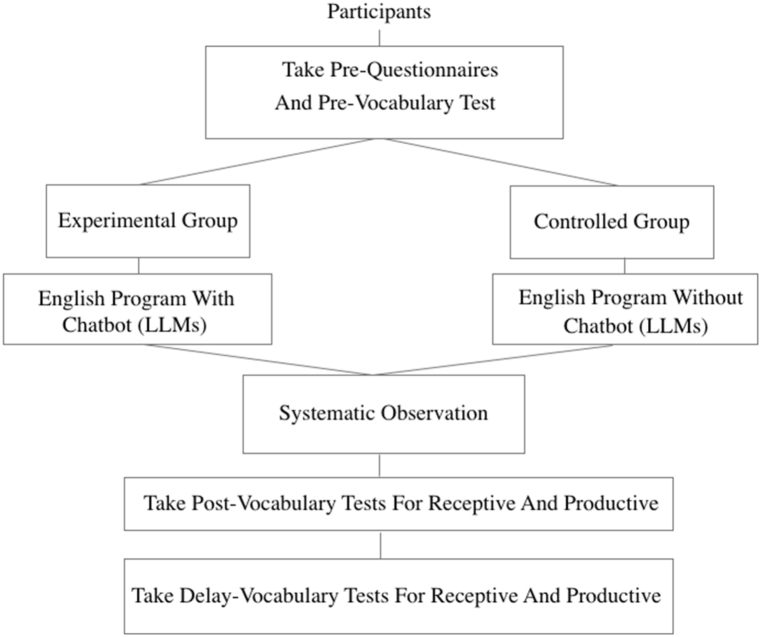
In recent years, the integration of artificial intelligence (AI) and machine learning (ML) into education, particularly for Personalized Language Learning (PLL), has garnered significant attention. This approach tailors interventions to address the unique challenges faced by individual learners. Large Language Models (LLMs), including Chatbots, have demonstrated a substantial potential in automating and enhancing educational tasks, effectively capturing the complexity and diversity of human language. In this study, 52 foreign language students were randomly divided into two groups: one with the assistance of a Chatbot based on LLMs and one without. Both groups learned the same series of target words over eight weeks. Post-treatment assessments, including systematic observation and quantitative tests assessing both receptive and productive vocabulary knowledge, were conducted immediately after the study and again two weeks later. The findings demonstrate that employing an AI Chatbot based on LLMs significantly aids students in acquiring both receptive and productive vocabulary knowledge during their second language learning journey. Notably, Chatbots contribute to the long-term retention of productive vocabulary and facilitate incidental vocabulary learning. This study offers valuable insights into the practical benefits of LLM-based tools in language learning, with a specific emphasis on vocabulary development. Chatbots utilizing LLMs emerge as effective language learning aids. It emphasizes the importance of educators understanding the potential of these technologies in L2 vocabulary instruction and encourages the adoption of strategic teaching methods incorporating such tools.
Overview
The claims and statistics of this paper haven’t been checked yet.
Run the check — free, no account needed. It reads the open-access text and checks the sources it cites.
Integrity signals
Registry
Cites
Statistics
Figures
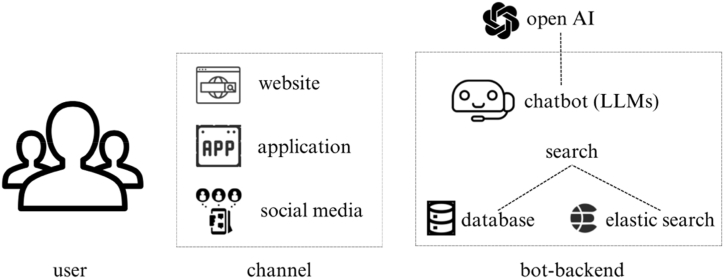
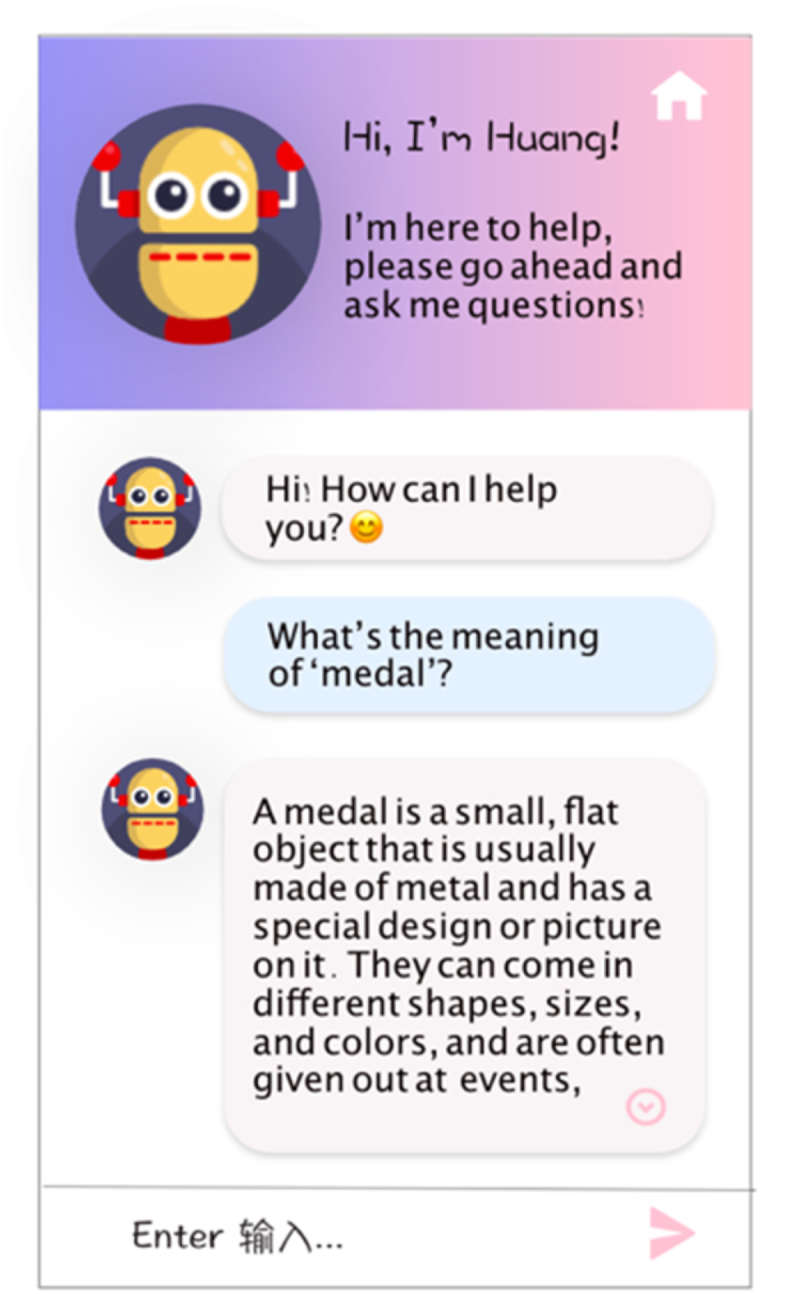
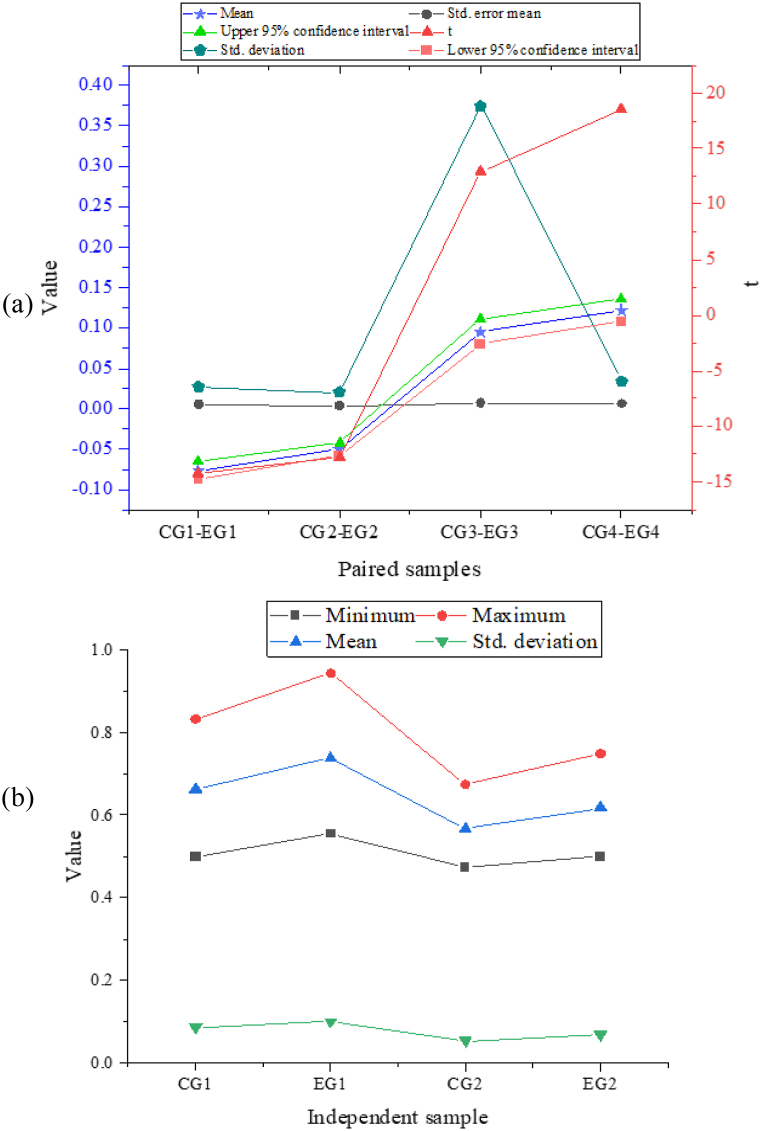
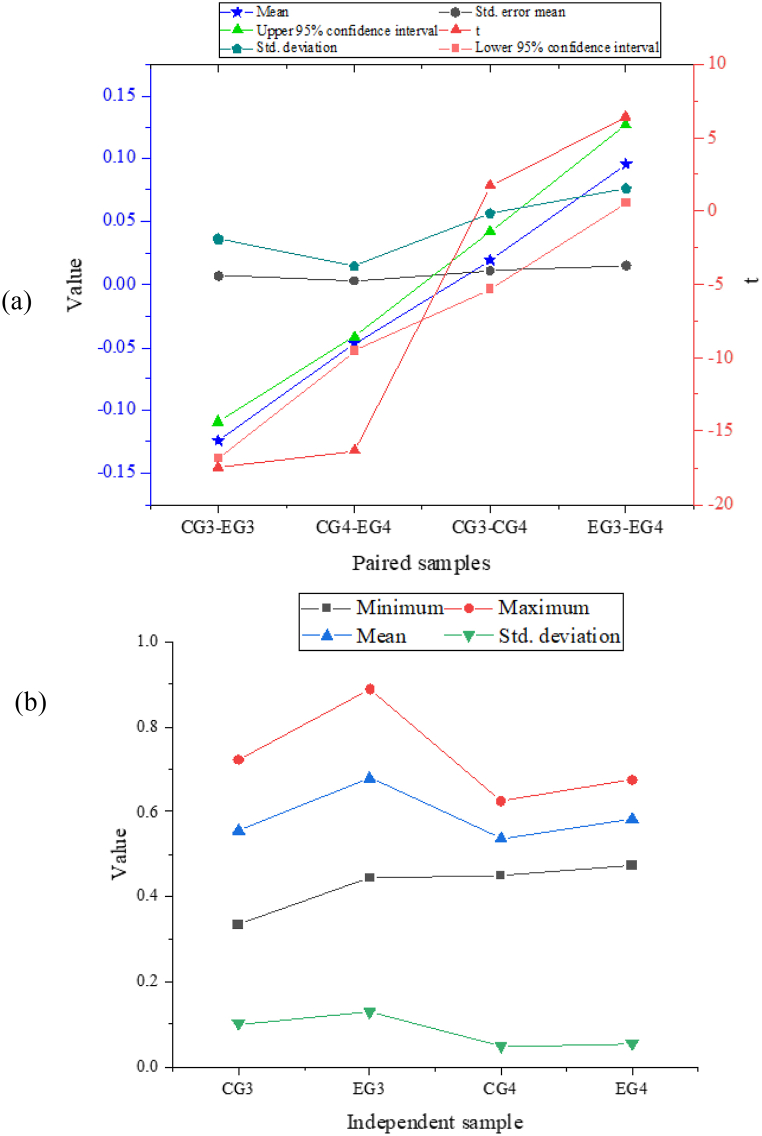
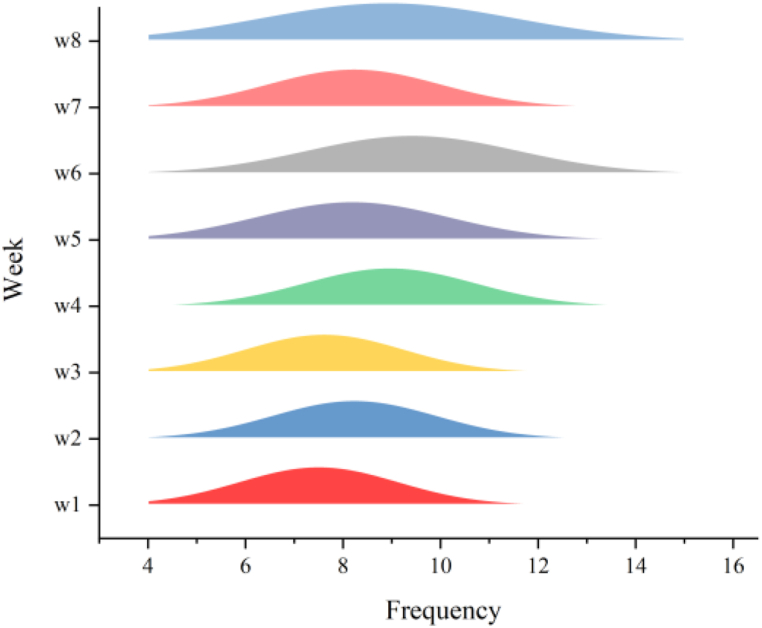
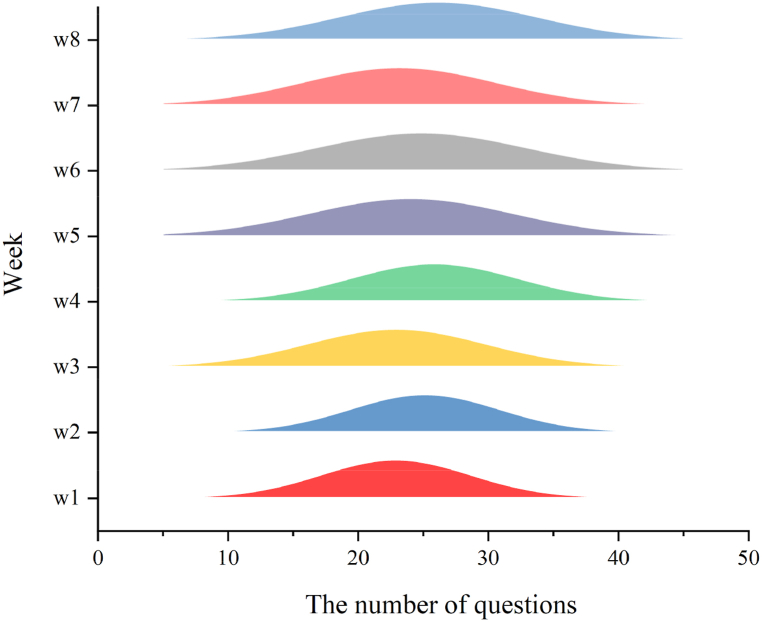
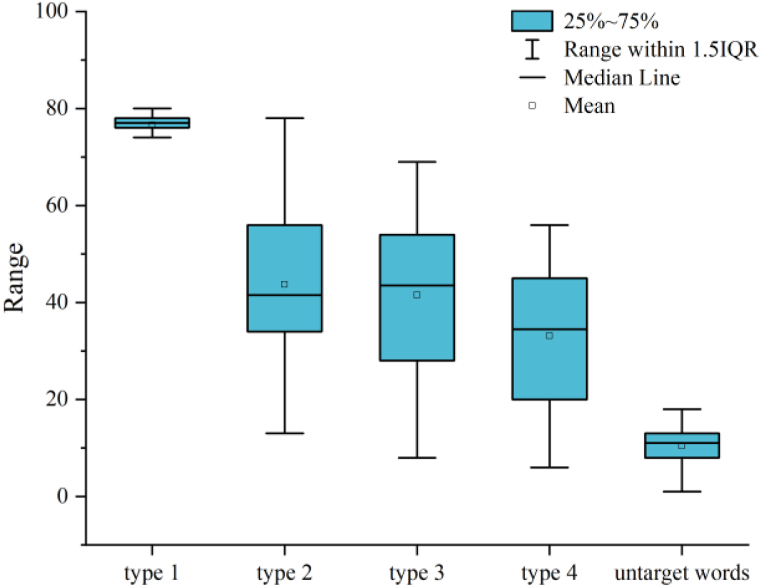
Verification
Claims the paper makes
The claims and statistics of this paper haven’t been checked yet.
Run the check — free, no account needed. It reads the open-access text and checks the sources it cites.
Claims other papers make about this one
Each is checked against this paper’s own text: does it say what the citing paper says it does?
The source backs part of the claim, not all of it — or backs it for a different population, condition or comparison.
In the citing paper
“Among these tools, ChatGPT has garnered significant attention due to its open accessibility, extensive linguistic capabilities, and ability to simulate human-like dialogue across a wide range of topics, thereby providing immersive learning experiences that foster deeper cognitive processing (Mugableh, 2024;Zhang & Huang, 2024).”
From Integrating ChatGPT for vocabulary learning and retention: A classroom-based study of Saudi EFL learners (2025) · cites this paper as Zhang & Huang, 2024
Experimental — accuracy not yet measuredThe source backs part of the claim, not all of it — or backs it for a different population, condition or comparison.
In the citing paper
“Similarly, studies on ChatGPT in language learning (e.g., Karataş et al., 2024;Zhang & Huang, 2024) found that AI-powered chatbots facilitate contextualized vocabulary acquisition, exposing learners to authentic, real-world language use.”
From Integrating ChatGPT for vocabulary learning and retention: A classroom-based study of Saudi EFL learners (2025) · cites this paper as Zhang & Huang, 2024
Experimental — accuracy not yet measuredThe cited source says what the claim attributes to it.
In the citing paper
“These results align with prior research advocating GenAI chatbots in language learning, particularly for promoting interactive, adaptive engagement (Kohnke et al., 2023;Yigci et al., 2024;Zhang & Huang, 2024).”
From Integrating ChatGPT for vocabulary learning and retention: A classroom-based study of Saudi EFL learners (2025) · cites this paper as Zhang & Huang, 2024
The cited source says what the claim attributes to it.
In the citing paper
“Zhang and Huang (2024) investigated an LLM-powered chatbot's role in vocabulary learning among Chinese high school students, reporting gains in both receptive and productive vocabulary.”
From Integrating ChatGPT for vocabulary learning and retention: A classroom-based study of Saudi EFL learners (2025) · cites this paper as Zhang and Huang (2024)
Self-check
Percentages, sums and reported differences re-computed from the paper’s own numbers.
The self-check needs the paper’s full text.
Citations
Cites
Journal of Physics: Conference Series
Jui, J. J., Mohd Helmi, S., Mohd Riduwan, G., Mohd Ashraf, A., & Mohd Zaidi, M. T. (2013) · Journal of Physics Conference Series · doi:10.1088/issn.1742-6596 · Cited by 15,799
Proximal Policy Optimization Algorithms
Schulman, J., Wolski, F., Dhariwal, P., Radford, A., & Klimov, O. (2017) · arXiv · doi:10.48550/arxiv.1707.06347 · Cited by 10,625
ChatGPT for Good? On Opportunities and Challenges of Large Language Models for Education
Kasneci, E., Seßler, K., Küchemann, S., Bannert, M., Dementieva, D., Fischer, F., Gasser, U., Groh, G., Günnemann, S., Hüllermeier, E., et al. (2023) · doi:10.35542/osf.io/5er8f · Cited by 7,552
ChatGPT for good? On opportunities and challenges of large language models for education
Kasneci, E., Sessler, K., Küchemann, S., Bannert, M., Dementieva, D., Fischer, F., Gasser, U., Groh, G., Günnemann, S., Hüllermeier, E., et al. (2023) · Learning and Individual Differences · doi:10.1016/j.lindif.2023.102274 · Cited by 7,326 · cited 3×
“Researchers have expressed optimism about LLMs in education [24,37], highlighting their potential to enhance learning and teaching experiences, reduce anxiety, increase interest, and provide psychological satisfaction through interactions with AI chatbots.”
BackgroundGilson, A., Safranek, C. W., Huang, T., Socrates, V., Chi, L., Taylor, R. A., & Chartash, D. (2023) · JMIR Medical Education · doi:10.2196/45312 · Cited by 2,078
An Overview of Chatbot Technology
Adamopoulou, E., & Moussiades, L. (2020) · IFIP advances in information and communication technology · doi:10.1007/978-3-030-49186-4_31 · Cited by 1,300
Learning Vocabulary in Another Language
Nation, P. (2022) · Cambridge University Press eBooks · doi:10.1017/9781009093873 · Cited by 1,096
ChatGPT for Education and Research: Opportunities, Threats, and Strategies
Rahman, M. M., & Watanobe, Y. (2023) · Applied Sciences · doi:10.3390/app13095783 · Cited by 1,080 · cited 1×
“Researchers have expressed optimism about LLMs in education [24,37], highlighting their potential to enhance learning and teaching experiences, reduce anxiety, increase interest, and provide psychological satisfaction through interactions with AI chatbots.”
BackgroundDeep reinforcement learning from human preferences
Christiano, P., Leike, J., Brown, T. B., Martic, M., Legg, S., & Amodei, D. (2017) · arXiv · doi:10.48550/arxiv.1706.03741 · Cited by 1,058
A vocabulary-size test of controlled productive ability
Laufer, B., & Nation, P. (1999) · Language Testing · doi:10.1177/026553229901600103 · Cited by 881
Research works printed but not linked: 1
- Nation, 2001, vol. 10
Cited by
Sorted by citations
Items 101–145 of 145
A Systematic Literature Review of ChatGPT for Vocabulary Mastery
Diantari, N. K. F., Utami, I. L. P., & Artini, N. N. (2026) · Edu Society Jurnal Pendidikan Ilmu Sosial Dan Pengabdian Kepada Masyarakat · doi:10.56832/edu.v5i3.2698
Penumatcha, V. (2025) · International Conference on Emerging Research in Electronics, Computer Science and Technology (ICERECT) · doi:10.1109/icerect65215.2025.11376034
Sitepu, S., & Ashadi, A. (2026) · Studies in English Language and Education · doi:10.24815/siele.v13i1.127
Optimising AI-Based Dialogue Systems for Language Learning in Kazakhstan
Zhauynshiyeva, Z. B., Agabekova, B., Mirkenova, G., Ismailova, D. T., & Oralkanova, Z. A. (2026) · Cuadernos de Investigación Filológica · doi:10.18172/cif.6714
CAD: AI-Agent Framework for Learning Word Game
Vu, D.-H., Minh, D. V., The, V. T., & Anh, M. H. (2026) · Communications in computer and information science · doi:10.1007/978-3-032-21625-0_14
Орынбай, Д. Д., Калдарова, М. Ж., Abdildayeva, A. A., & Кашкинбаев, С. Б. (2026) · КазУТБ · doi:10.58805/kazutb.v.1.30-1336
The Overdependence on Grok as an AI Tool in English Language Learning
Ali, M. M., Ali, Y. A., Saeed, M. A., & Alotaibi, A. M. (2026) · Advances in computational intelligence and robotics book series · doi:10.4018/979-8-3373-7097-2.ch001
Hussein, S. M., & Kurt, M. (2026) · Systems · doi:10.3390/systems14050474
Wu, J. (2026) · Journal of Education Humanities and Social Sciences · doi:10.54097/b2mb8b80
Personalized Language Learning Through Technology: Challenges and Strategies
KWOKU, S. S. (2026) · Journal of African Resilience and Advancement Research · doi:10.70382/hujarar.v12i2.052
Exploring Students’ Use of AI Translation and Paraphrasing Tools during Academic Reading
Nurkholidah, E. S., & Rehman, S. U. (2026) · MATCHA Journal of Modern Approaches to Communication Humanities and Academia · doi:10.70152/matcha.v2i1.336
Mariñoz, E. H. C. (2026) · e-Revista Multidisciplinaria del Saber · doi:10.61286/e-rms.v4i.423
Enhancing multilingual science education through AI chatbots: Challenges and opportunities
Albantani, A. M., Umbar, K., Rozak, A., & Nisa, P. K. (2026) · AIP conference proceedings · doi:10.1063/5.0337898
Sen, K. P. (2026) · International Journal of Advanced Research · doi:10.21474/ijar01/23534
Indonesian EFL university students’ ChatGPT acceptance: a cross-sectional study
Rinekso, A. B., Rodliyah, R. S., Purnawarman, P., & Lengkanawati, N. S. (2026) · Journal of Education and Learning (EduLearn) · doi:10.11591/edulearn.v20i3.24855
Razman, F., Fakhruddin, S. S., Idris, S. L., Satthiananthan, H., Hasan, R. A., & Abidin, H. (2026) · International Journal of Research and Innovation in Social Science · doi:10.47772/ijriss.2026.100600614
Роль информационных технологий в здоровьесбережении студентов
Попов, М. В. (2026) · Бюллетень Национального научно-исследовательского института общественного здоровья имени Н. А. Семашко · doi:10.69541/nriph.2026.02.016
Investigating the impact of chatbot design features on affective variables: A mixed-methods study
Lee, J. H., Lee, H., & Kim, K. (2026) · Language learning & technology · doi:10.64152/10125/73697
Same, Same But Different? A Cross-Domain Analysis of Chatbot User Interfaces
Rockstroh, J., Spillner, L., Wenig, N., Mildner, T., Zargham, N., & Malaka, R. (2026) · ACM Conference on Conversational User Interfaces (CUI) · doi:10.1145/3816046.3816229
Efficiency and Effectiveness of AI Applications in Human Resource Management
Stone, D. L., Lukaszewski, K. M., & Murray, B. (2026) · Oxford University Press eBooks · doi:10.1093/9780197851388.003.0580
AI-Assisted vocabulary learning in EFL contexts: A systematic review
Mela, A. J. L. (2026) · Revista Dialogus · doi:10.37594/dialogus.v1i17.2218
Evans, N. D. (2026) · Elsevier eBooks · doi:10.1016/b978-0-443-36775-5.00023-0
Bilingual semantic correspondence through knowledge distillation and encoder combination
Khlifi, M., Bouazizi, S., & Ltifi, H. (2026) · International Conference on Control, Decision and Information Technologies (CoDIT) · doi:10.1109/codit70676.2026.11631188
Hạnh, V. T. (2026) · Multidisciplinary Reviews · doi:10.31893/multirev.2027032
Xu, G., Wu, M., & Yu, A. (2026) · Acta Psychologica · doi:10.1016/j.actpsy.2026.107642
Javadinejad, A., & Davari, M. (2026) · Frontiers in Education · doi:10.3389/feduc.2026.1859248
TEACHER-CURATED AI FOR COMMUNICATIVE CHINESE ACQUISITION IN UNIVERSITIES OF KAZAKHSTAN
Kereibayeva, A. (2026) · Scientific Journal of Astana IT University · doi:10.37943/lhfx3759
Visuri, I., & Svensson, J. (2026) · Religion & Education · doi:10.1080/15507394.2026.2716456
Khosravi, M., Zahrayi, F., Beiky, F., Miri, A., Nakhaei, M., Ghoddoosi-Nejad, D., & Saadatjoo, S. A. (2026) · Digital Health · doi:10.1177/20552076261485226
Abraham-Barna, C. G. (2026) · SSRN Electronic Journal · doi:10.2139/ssrn.7388021
Erdemir, N., Tekeli, H., & SAYIN, İ. (2026) · Journal of Computer and Education Research · doi:10.18009/jcer.1847945
Alribdi, N. I. (2026) · AL-Lisan International Journal for Linguistic & Literary Studies · doi:10.63226/aijlls.v10i22.6146
https://jrsr.com.pk/index.php/jrsr/article/view/201
Ali, L. F., Hashmi, R., Ilyas, M., Sharif, H., & Fayaz, L. (2026) · Journal of Regional Studies Review · doi:10.62843/jrsr/2026.5a201
The Effectiveness of a Self-Established AI Platform on Classical Chinese Learning
Huang, J. (2026) · International Conference on Educational Digitalization and Computer Science in the Guangdong-Hong Kong-Macao Greater Bay Area · doi:10.1145/3828183.3828463
Öksüz, H. İ., Afyoncu, T., Gök, S., Yıldırım, T., & Yıldırım, K. (2026) · Interactive Learning Environments · doi:10.1080/10494820.2026.2734314
Rendón, D. F. F., & Pachay, J. F. Z. (2026) · Research Club Scientia · doi:10.65415/j6dg0439
Generative AI–Enabled Web-Based Personalized Learning Pathways in University English Education
Cheng, L., Jiao, L., & Hu, S. (2026) · International Journal of Web-Based Learning and Teaching Technologies · doi:10.4018/ijwltt.423165
Optimizing pre-listening activities with AI-assisted priming for L2 listening comprehension
Vu, D. C., & Vu, B. C. (2026) · Discover Education · doi:10.1007/s44217-026-02256-5
Aldabou, A. N. I., & Mohammadzadeh, B. (2026) · SAGE Open · doi:10.1177/21582440261498103
Aldosari, M. S. (2026) · International Journal of Developmental Disabilities · doi:10.1080/20473869.2026.2748273
Oraz, A. (2026) · Bangladesh Journal of Multidisciplinary Scientific Research · doi:10.46281/bjmsr.v12i1.2990
Villalobos-Buehner, M. (2026) · Foreign Language Annals · doi:10.1111/flan.70081
Hamamci, Z. (2026) · Bidge Yayınları eBooks · doi:10.70269/10.70269/7279472918
Wang, Y.-F., Hsu, M., Wang, M. Y.-F., Yang, Y.-C., & Yu-you, G. (2026) · Language Teaching Research · doi:10.1177/13621688261498024
Metadata
- Authors
- Zhang, Z., & Huang, X.
- Affiliations
- University of Southern California (US)
- Alibaba Group (China) (CN)
- Corresponding author
- Zhang, Zhihui
- Venue
- Heliyon
- Publisher
- Elsevier BV
- Published
- 2024-02
- Volume
- 10
- Issue
- 3
- Pages
- e25370
- ISSN
- 2405-8440 (ISSN-L)
- PMC
- PMC10850600
- OpenAlex
- W4391429431
- Cited by
- 107
- References
- 46
- Citations by year
- 2026: 44 · 2025: 49 · 2024: 14
- FWCI
- 83.49
- Type
- journal article
- Language
- en
- Open access
- gold
- doi.org
- Licence
- Locations
- Heliyon (publishedVersion, cc-by)
- PubMed Central (publishedVersion, cc-by)
- PubMed (publishedVersion)
- DOAJ (DOAJ: Directory of Open Access Journals) (submittedVersion)
- Topics
- Social Sciences › Psychology › Developmental and Educational Psychology › Second Language Acquisition and Learning
- Social Sciences › Education › Artificial Intelligence in Education
- Social Sciences › Arts and Humanities › Language and Linguistics › EFL/ESL Teaching and Learning
- Keywords
- chatbots, large language models, second language vocabulary acquisition, personalized language learning, receptive vocabulary knowledge, productive vocabulary knowledge, incidental vocabulary learning, vocabulary retention, foreign language learners, AI-assisted language learning
About these checks
Registry, retraction, Cites and statistics results are computed, not judged, with one exception: a printed reference that no index lists is read once by a model before it counts as a citation error. Claims are extracted by a model and kept only when their quote appears verbatim in the text; each cited source is then checked, with a model’s help, for whether it says what the claim relies on. Those verdicts can be wrong — read the claim’s quote and the cited source before relying on one.
Statistics and arithmetic are recomputed, not judged.
Confidence bands are shown only for fields calibrated on our annotated test set. None is calibrated yet, so no band is shown.
What counts as a claim ›How we measure confidence ›How we check this ›
Are you an author, or do you see a problem with this page? Request a review
