

The DOI matches its Crossref record; 46 of the 49 references it cites were found in a registry or an index, and 3 are not checked yet.
The impact of chatbots based on large language models on second language vocabulary acquisition
Open accessAbstract
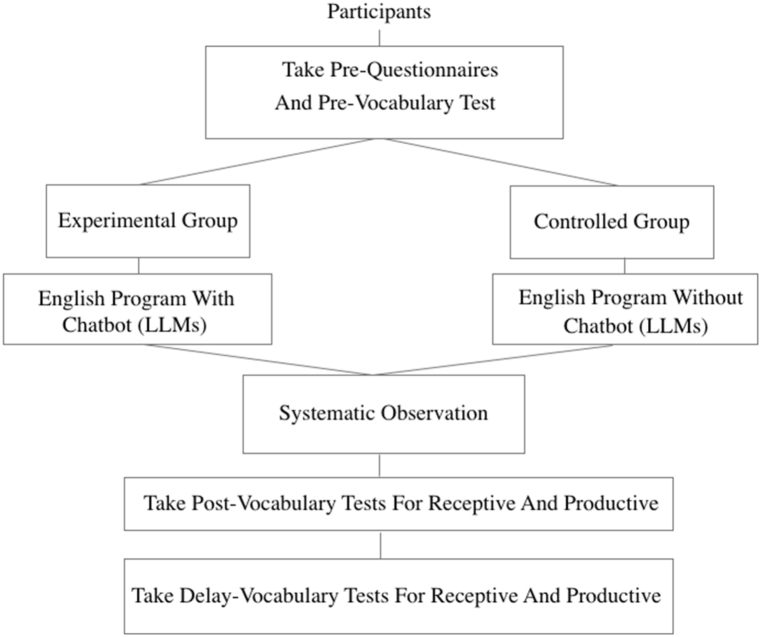
In recent years, the integration of artificial intelligence (AI) and machine learning (ML) into education, particularly for Personalized Language Learning (PLL), has garnered significant attention. This approach tailors interventions to address the unique challenges faced by individual learners. Large Language Models (LLMs), including Chatbots, have demonstrated a substantial potential in automating and enhancing educational tasks, effectively capturing the complexity and diversity of human language. In this study, 52 foreign language students were randomly divided into two groups: one with the assistance of a Chatbot based on LLMs and one without. Both groups learned the same series of target words over eight weeks. Post-treatment assessments, including systematic observation and quantitative tests assessing both receptive and productive vocabulary knowledge, were conducted immediately after the study and again two weeks later. The findings demonstrate that employing an AI Chatbot based on LLMs significantly aids students in acquiring both receptive and productive vocabulary knowledge during their second language learning journey. Notably, Chatbots contribute to the long-term retention of productive vocabulary and facilitate incidental vocabulary learning. This study offers valuable insights into the practical benefits of LLM-based tools in language learning, with a specific emphasis on vocabulary development. Chatbots utilizing LLMs emerge as effective language learning aids. It emphasizes the importance of educators understanding the potential of these technologies in L2 vocabulary instruction and encourages the adoption of strategic teaching methods incorporating such tools.
Overview
The claims and statistics of this paper haven’t been checked yet.
Run the check — free, no account needed. It reads the open-access text and checks the sources it cites.
Integrity signals
Registry
Cites
Statistics
Figures
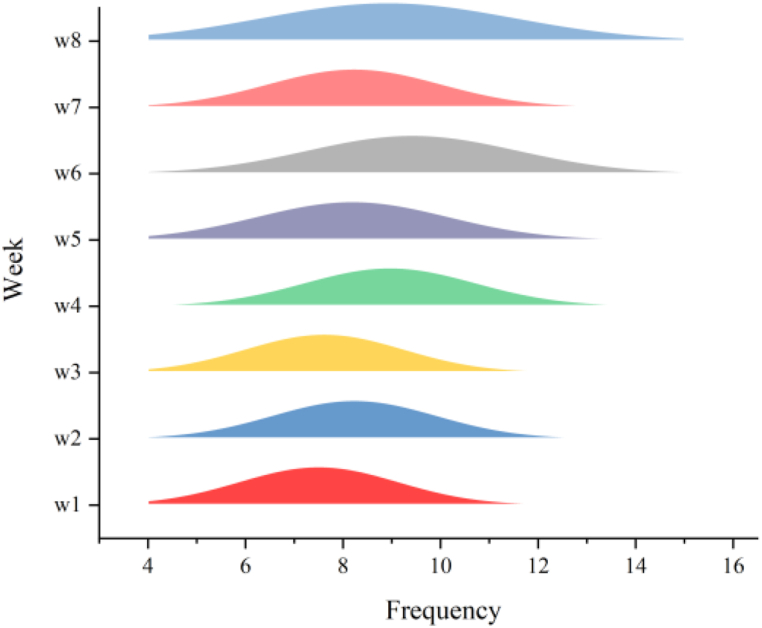
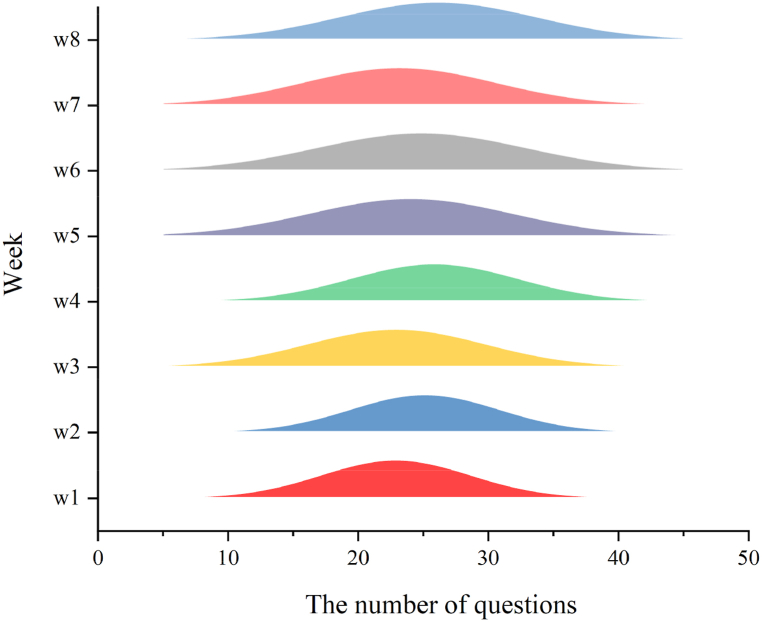
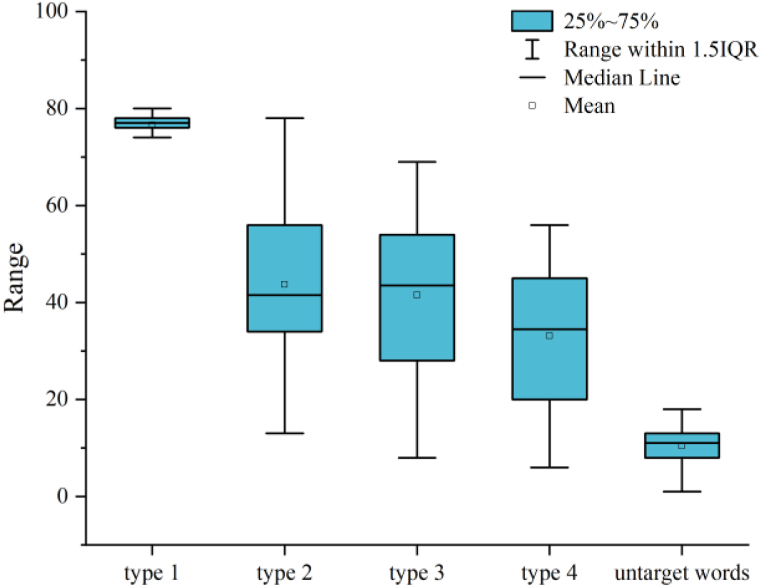
Verification
Claims the paper makes
The claims and statistics of this paper haven’t been checked yet.
Run the check — free, no account needed. It reads the open-access text and checks the sources it cites.
Claims other papers make about this one
Each is checked against this paper’s own text: does it say what the citing paper says it does?
The source backs part of the claim, not all of it — or backs it for a different population, condition or comparison.
In the citing paper
“Among these tools, ChatGPT has garnered significant attention due to its open accessibility, extensive linguistic capabilities, and ability to simulate human-like dialogue across a wide range of topics, thereby providing immersive learning experiences that foster deeper cognitive processing (Mugableh, 2024;Zhang & Huang, 2024).”
From Integrating ChatGPT for vocabulary learning and retention: A classroom-based study of Saudi EFL learners (2025) · cites this paper as Zhang & Huang, 2024
Experimental — accuracy not yet measuredThe source backs part of the claim, not all of it — or backs it for a different population, condition or comparison.
In the citing paper
“Similarly, studies on ChatGPT in language learning (e.g., Karataş et al., 2024;Zhang & Huang, 2024) found that AI-powered chatbots facilitate contextualized vocabulary acquisition, exposing learners to authentic, real-world language use.”
From Integrating ChatGPT for vocabulary learning and retention: A classroom-based study of Saudi EFL learners (2025) · cites this paper as Zhang & Huang, 2024
Experimental — accuracy not yet measuredThe cited source says what the claim attributes to it.
In the citing paper
“These results align with prior research advocating GenAI chatbots in language learning, particularly for promoting interactive, adaptive engagement (Kohnke et al., 2023;Yigci et al., 2024;Zhang & Huang, 2024).”
From Integrating ChatGPT for vocabulary learning and retention: A classroom-based study of Saudi EFL learners (2025) · cites this paper as Zhang & Huang, 2024
The cited source says what the claim attributes to it.
In the citing paper
“Zhang and Huang (2024) investigated an LLM-powered chatbot's role in vocabulary learning among Chinese high school students, reporting gains in both receptive and productive vocabulary.”
From Integrating ChatGPT for vocabulary learning and retention: A classroom-based study of Saudi EFL learners (2025) · cites this paper as Zhang and Huang (2024)
Self-check
Percentages, sums and reported differences re-computed from the paper’s own numbers.
The self-check needs the paper’s full text.
Citations
Cites
Journal of Physics: Conference Series
Jui, J. J., Mohd Helmi, S., Mohd Riduwan, G., Mohd Ashraf, A., & Mohd Zaidi, M. T. (2013) · Journal of Physics Conference Series · doi:10.1088/issn.1742-6596 · Cited by 15,799
Proximal Policy Optimization Algorithms
Schulman, J., Wolski, F., Dhariwal, P., Radford, A., & Klimov, O. (2017) · arXiv · doi:10.48550/arxiv.1707.06347 · Cited by 10,625
ChatGPT for Good? On Opportunities and Challenges of Large Language Models for Education
Kasneci, E., Seßler, K., Küchemann, S., Bannert, M., Dementieva, D., Fischer, F., Gasser, U., Groh, G., Günnemann, S., Hüllermeier, E., et al. (2023) · doi:10.35542/osf.io/5er8f · Cited by 7,552
ChatGPT for good? On opportunities and challenges of large language models for education
Kasneci, E., Sessler, K., Küchemann, S., Bannert, M., Dementieva, D., Fischer, F., Gasser, U., Groh, G., Günnemann, S., Hüllermeier, E., et al. (2023) · Learning and Individual Differences · doi:10.1016/j.lindif.2023.102274 · Cited by 7,326 · cited 3×
“Researchers have expressed optimism about LLMs in education [24,37], highlighting their potential to enhance learning and teaching experiences, reduce anxiety, increase interest, and provide psychological satisfaction through interactions with AI chatbots.”
BackgroundGilson, A., Safranek, C. W., Huang, T., Socrates, V., Chi, L., Taylor, R. A., & Chartash, D. (2023) · JMIR Medical Education · doi:10.2196/45312 · Cited by 2,078
An Overview of Chatbot Technology
Adamopoulou, E., & Moussiades, L. (2020) · IFIP advances in information and communication technology · doi:10.1007/978-3-030-49186-4_31 · Cited by 1,300
Learning Vocabulary in Another Language
Nation, P. (2022) · Cambridge University Press eBooks · doi:10.1017/9781009093873 · Cited by 1,096
ChatGPT for Education and Research: Opportunities, Threats, and Strategies
Rahman, M. M., & Watanobe, Y. (2023) · Applied Sciences · doi:10.3390/app13095783 · Cited by 1,080 · cited 1×
“Researchers have expressed optimism about LLMs in education [24,37], highlighting their potential to enhance learning and teaching experiences, reduce anxiety, increase interest, and provide psychological satisfaction through interactions with AI chatbots.”
BackgroundDeep reinforcement learning from human preferences
Christiano, P., Leike, J., Brown, T. B., Martic, M., Legg, S., & Amodei, D. (2017) · arXiv · doi:10.48550/arxiv.1706.03741 · Cited by 1,058
A vocabulary-size test of controlled productive ability
Laufer, B., & Nation, P. (1999) · Language Testing · doi:10.1177/026553229901600103 · Cited by 881
Research works printed but not linked: 1
- Nation, 2001, vol. 10
Cited by
Sorted by citations
Wiboolyasarin, W., Wiboolyasarin, K., Tiranant, P., Jinowat, N., & Boonyakitanont, P. (2025) · Ampersand · doi:10.1016/j.amper.2025.100224 · Cited by 169
Wu, D., Zhang, S., Ma, Z., Yue, G. X.-G., & Dong, R. K. (2024) · Systems · doi:10.3390/systems12090332 · Cited by 127
Ma, N., Khynevych, R. V., Hao, Y., & Wang, Y. (2025) · Frontiers in Computer Science · doi:10.3389/fcomp.2025.1531976 · Cited by 105
Rezai, A., Namaziandost, E., & Hwang, G. (2024) · Computers in Human Behavior Reports · doi:10.1016/j.chbr.2024.100510 · Cited by 98
Zhang, X., Zhang, P., Shen, Y., Liu, M., Wang, Q., Gašević, D., & Fan, Y. (2024) · Frontiers of Digital Education · doi:10.1007/s44366-024-0028-5 · Cited by 83
Transforming EFL Teaching with AI: A Systematic Review of Empirical Studies
Kundu, A., & Bej, T. (2025) · International Journal of Artificial Intelligence in Education · doi:10.1007/s40593-025-00470-0 · Cited by 79
Transforming education with generative AI (GAI): key insights and future prospects
Lang, Q., Wang, M., Yin, M., Liang, S., & Song, W. (2025) · IEEE Transactions on Learning Technologies · doi:10.1109/tlt.2025.3537618 · Cited by 76
Interacting with ChatGPT in essay writing: A study of L2 learners’ task motivation
Zare, J., Al‐Issa, A., & Ranjbaran, F. (2025) · ReCALL · doi:10.1017/s0958344025000035 · Cited by 70
Li, Y., & Chiu, T. K. F. (2025) · Education and Information Technologies · doi:10.1007/s10639-025-13574-w · Cited by 87
Heilala, V., Araya, R., & Hämäläinen, R. (2025) · ACM Symposium on Applied Computing · doi:10.1145/3672608.3707764 · Cited by 60
AI-supported L2 vocabulary acquisition–a systematic review from 2015 to 2023
Yang, Y. (2025) · Education and Information Technologies · doi:10.1007/s10639-025-13417-8 · Cited by 42
Alalwan, A. A., Algharabat, R., Samen, A. A. E., Albanna, H., & Al‐Okaily, M. (2025) · Journal of Consumer Marketing · doi:10.1108/jcm-06-2024-6929 · Cited by 39
The cognitive mirror: a framework for AI-powered metacognition and self-regulated learning
Tomisu, H., Ueda, J., & Yamanaka, T. (2025) · Frontiers in Education · doi:10.3389/feduc.2025.1697554 · Cited by 43
A Systematic Review of the Recent Research on the Usefulness of Chatbots for Language Education
Kızıl, A. Ş., Klímová, B., Pikhart, M., & Parmaxi, A. (2025) · Journal of Computer Assisted Learning · doi:10.1111/jcal.70001 · Cited by 32
Zhou, C., & Wang, Y. (2026) · European Journal of Education · doi:10.1111/ejed.70478 · Cited by 29
ChatGPT in language learning: A systematic review of applications and challenges
Aljohani, N. J. (2025) · Social Sciences & Humanities Open · doi:10.1016/j.ssaho.2025.102357 · Cited by 29
Educaplay as a tool to potentiate English vocabulary retention and learning
Vargas-Saritama, A., & Espinoza-Celi, V. (2024) · European Public & Social Innovation Review · doi:10.31637/epsir-2024-614 · Cited by 27
Du, Y., & Reynolds, B. L. (2025) · Acta Psychologica · doi:10.1016/j.actpsy.2025.105307 · Cited by 22
Hao, C., Xu, W., Halim, H. A., & Hao, M. (2025) · Language Teaching Research · doi:10.1177/13621688251352595 · Cited by 16
Ανδρέου, Γ., & Christani, P. (2025) · Applied Sciences · doi:10.3390/app152111476 · Cited by 21
Abdelhalim, S. M., & Alsehibany, R. (2025) · Language Learning & Technology · doi:10.64152/10125/73635 · Cited by 17
“While Zhang and Huang (2024) examined an LLM-powered chatbot for vocabulary learning, their study involved Chinese high school students in online settings and focused on basic interpersonal communication skills.”
InfluentialJalambo, M. O., Çakmak, F., & Akhter, S. (2025) · Discover Education · doi:10.1007/s44217-025-00977-7 · Cited by 17
La IA en la enseñanza de idiomas: chatbots y formación del profesorado
Manzanedo, M. S. (2024) · European Public & Social Innovation Review · doi:10.31637/epsir-2025-513 · Cited by 16
Empowering Students' Autonomy in EFL Learning: AI Innovations in Schools of the Global South
Kundu, A., & Bej, T. (2025) · The Electronic Journal of Information Systems in Developing Countries · doi:10.1002/isd2.70041 · Cited by 18
Bendarkawi, J., Ponce, A., Mata, S. C., Aliu, A., Liu, Y., Zhang, L., Liaqat, A., Rao, V. N., & Monroy‐Hernández, A. (2025) · CHI Conference Extended Abstracts on Human Factors in Computing Systems (CHI EA) · doi:10.1145/3706599.3720162 · Cited by 16
Qin, Z., & Chuaychoowong, M. (2025) · Language Teaching Research Quarterly · doi:10.32038/ltrq.2025.49.04 · Cited by 16
Tang, W. K.-W., & Zhang, X.-Y. (2026) · Computers and Education Artificial Intelligence · doi:10.1016/j.caeai.2026.100595 · Cited by 20
Zhang, Y., Wang, H., & Bao, C. (2025) · Computer Assisted Language Learning · doi:10.1080/09588221.2025.2573003 · Cited by 14
Just-in-Time News: An AI Chatbot for the Modern Information Age
Sufi, F. K. (2025) · AI · doi:10.3390/ai6020022 · Cited by 11
Woollaston, S., Flanagan, B., Ocheja, P., Toyokawa, Y., & Ogata, H. (2025) · Proceedings of the 15th International Learning Analytics and Knowledge Conference · doi:10.1145/3706468.3706556 · Cited by 10
Xiao, F., Li, Z., Lin, J., Zou, X., Yang, D., Zou, W., & Xiong, J. (2025) · Computers and Education Artificial Intelligence · doi:10.1016/j.caeai.2025.100484 · Cited by 12
Juanda, J., Azis, A., Mantasiah, R., Effendri, Y., Putradi, A. W. A., Purba, B., & Afandi, I. (2024) · Language Teaching Research Quarterly · doi:10.32038/ltrq.2024.42.10 · Cited by 10
Shan, Z., Song, Z., Xu, J., Chen, W., & Chen, L. (2025) · Behavioral Sciences · doi:10.3390/bs15040540 · Cited by 10
Du, Y., & Reynolds, B. L. (2025) · Computer Assisted Language Learning · doi:10.1080/09588221.2025.2552116 · Cited by 9
Use of Artificial Intelligence in Foreign Language Education in Higher Education Settings
Klímová, B., & Pikhart, M. (2025) · Digital education and learning · doi:10.1007/978-3-032-03977-4_13 · Cited by 10
AI Chatbot as an Effective English Teaching Partner for University Students
Satiti, L. H., Fauziati, E., & Seytaningsih, E. (2024) · International Journal of Educational Research & Social Sciences · doi:10.51601/ijersc.v5i3.820 · Cited by 12
Nykyporets, S., Прадівлянний, М. Г., Boiko, Y., Chopliak, V., & Kukharchuk, H. (2024) · Суспільство та національні інтереси. · doi:10.52058/3041-1572-2024-5(5)-113-127 · Cited by 8
Artificial Intelligence in Language Acquisition: A Balancing Act of Potential and Challenges
Alaqlobi, O., Alduais, A. M. S., Alasmari, M., & Qasem, F. A. A. (2024) · Forum for Linguistic Studies · doi:10.30564/fls.v6i6.7524 · Cited by 11
Alghamdi, N. (2025) · Forum for Linguistic Studies · doi:10.30564/fls.v7i9.10870 · Cited by 8
Fageeh, A. I. (2025) · Social Sciences & Humanities Open · doi:10.1016/j.ssaho.2025.101996 · Cited by 8
Utilising Generative AI in the Classics classroom
Peddar, D. (2025) · The journal of classics teaching · doi:10.1017/s2058631024001363 · Cited by 7
Garcia, P. G., Zúñiga, M. S. V., & Jiménez, M. O. (2025) · EDMETIC · doi:10.21071/edmetic.v14i2.17263 · Cited by 7
Rahman, G., Mudhsh, B. A., Almutairi, M., & Kouki, M. (2025) · Theory and Practice in Language Studies · doi:10.17507/tpls.1510.05 · Cited by 7
Feng, Q., & Guo, Z. (2024) · Forum for Linguistic Studies · doi:10.30564/fls.v7i1.7631 · Cited by 7
suo, X., Yin, B., Wang, W., & Guo, L. (2026) · Journal of Educational Computing Research · doi:10.1177/07356331261433396 · Cited by 7
Smart Drug Delivery Systems Using Large Language Models for Real-Time Treatment Personalization
Balakrishna, C., Yadav, A. K., Singh, J., Saba, M., Shashikant, & Shrivastava, V. (2024) · World Conference on Communication & Computing (WCONF) · doi:10.1109/wconf61366.2024.10692060 · Cited by 6
Exploring the Role of AI Chatbot in English Language Teaching and Learning
Nasution, M. O., & Arianto, A. (2024) · Journal of English Language and Education · doi:10.31004/jele.v9i5.513 · Cited by 5
Dermatology “AI Babylon”: Cross-Language Evaluation of AI-Crafted Dermatology Descriptions
Karampinis, E., Zoumpourli, C.-M., Kontogianni, C., Arkoumanis, P. T., Koumaki, D., Mantzaris, D. H., Filippakis, K., Papadopoulou, M.-M., Theofili, M., Enechukwu, N. A., et al. (2026) · Medicina · doi:10.3390/medicina62010227 · Cited by 5
Hosni, J. A. (2024) · Journal of English Language Teaching and Applied Linguistics · doi:10.32996/jeltal.2024.6.3.5 · Cited by 6
Liu, R., Chen, X., & Xu, Y. (2025) · International Journal of Lexicography · doi:10.1093/ijl/ecaf017 · Cited by 5
CEFR updates (2020)-based next-gen immersive learning in 5 steps
Demirdöven, G. H. (2025) · Frontiers in Education · doi:10.3389/feduc.2025.1567249 · Cited by 4
Jinowat, N., Wiboolyasarin, K., Chomchuen, F., & Wiboolyasarin, W. (2025) · Foreign Language Annals · doi:10.1111/flan.70042 · Cited by 4
Beyond the hype: a psychological perspective on AI chatbots
Zhou, X., & Li, C. (2026) · Frontiers in Psychology · doi:10.3389/fpsyg.2026.1766427 · Cited by 4
Understanding the Digital Epistemologies of Chat GPT: Towards a Decolonial Language Pedagogy
Asmawi, A., & Alam, M. S. (2024) · International Conference on Digital Technology in Education (ICDTE) · doi:10.1145/3696230.3696248 · Cited by 4
Generative Artificial Intelligence Chatbot Integration for Virtual Reality Language Learning
Cheng, L., Gisler, J., Lao, K., & Kunz, A. M. (2025) · IEEE Conference on Virtual Reality and 3D User Interfaces Abstracts and Workshops (VRW) · doi:10.1109/vrw66409.2025.00035 · Cited by 3
Dinh, T. C., Trinh, V. K. V., Duong, L. T., Vo, H. B. T., & Thành, N. C. (2025) · Acta Psychologica · doi:10.1016/j.actpsy.2025.105911 · Cited by 3
Punkhoom, W., Sutthisan, S., Suksawas, W., Raksasat, N., & Jehma, H. (2025) · rEFLections · doi:10.61508/refl.v32i3.285882 · Cited by 3
Colina, R., Jose, D. B. S. S., & Ratunil, M. L. G. (2025) · Journal of International Education and Practice · doi:10.30564/jiep.v8i2.12789 · Cited by 3
Lexical Profile of ChatGPT-generated Reading Materials Targeting EFL Learners Across the CEFR Levels
Nguyen, N. H. (2026) · International Journal of TESOL Studies · doi:10.58304/ijts.260211 · Cited by 4
Al-khresheh, M. H., Almayez, M., & Alruwaili, S. F. (2026) · Journal of Intelligence · doi:10.3390/jintelligence14040062 · Cited by 3
From Brainstorming to Boundaries: Writing Center Tutors’ Use of Generative AI
Eleftheriou, M., & Ahmer, M. (2026) · Journal of Language Teaching and Research · doi:10.17507/jltr.1703.35 · Cited by 3
Valentine Joseph Owan, P. D. (2026) · Journal of Education, Innovation, and Communication. · doi:10.34097/jeicom-8-2-5 · Cited by 5
A Meta-Analysis of the Efficacy of Conversational AI Use in EFL Learning Contexts
Gu, W. (2025) · Studies in computational intelligence · doi:10.1007/978-3-031-82915-4_14 · Cited by 3
Chen, T., & Ma, Y. (2025) · Journal of Computational Methods in Sciences and Engineering · doi:10.1177/14727978251346030 · Cited by 3
Enhancing English Oral Communication Skills Through the Use of Artificial Intelligence
Shofi, A. T., & Ainiyah, M. (2024) · Linguists Journal of Linguistics and Language Teaching · doi:10.29300/ling.v10i2.5270 · Cited by 3
DogChat: A Pet-centered Smart Collar Prototype based on Large Language Models and Wechat
Xue, C., Zuo, Z., Jiang, X., & Fu, X. (2024) · ACM International Joint Conference on Pervasive and Ubiquitous Computing (UbiComp) · doi:10.1145/3675094.3677606 · Cited by 3
In search of the good practices of personalized learning with ChatGPT for English test preparation
Fitria, T. N. (2025) · Erudita Journal of English Language Teaching · doi:10.28918/erudita.v5i1.10212 · Cited by 3
A Chatbot for Frequently Asked Questions using TF-IDF and Query Expansion Techniques
Ibrahim, M. S., Hadi, A. A., Sallibi, A. D., & Nafea, A. A. (2025) · doi:10.24271/psr.2025.487515.1805 · Cited by 2
Zhao, Y. (2025) · Lecture Notes in Education Psychology and Public Media · doi:10.54254/2753-7048/2025.cb25093 · Cited by 2
Vocabulary Learning Research in ESL/EFL: A Bibliometric Review of Trends, Innovations, and Gaps
Radzuan, F. A. A., & Arif, M. M. (2025) · AJELP The Asian Journal of English Language and Pedagogy · doi:10.37134/ajelp.vol13.2.4.2025 · Cited by 3
Çakmak, F. (2025) · Behaviour and Information Technology · doi:10.1080/0144929x.2025.2587731 · Cited by 2
Cinganotto, L., & Montanucci, G. (2025) · Italiano LinguaDue · doi:10.54103/2037-3597/30437 · Cited by 2
Yang, J., Liang, T., Liang, Z., Duan, Y., Yang, P., Zheng, B., Chen, D., Jia, Y., & Wang, L. (2026) · Journal of Computer Assisted Learning · doi:10.1002/jcal.70260 · Cited by 2
Shan, Z., Shan, M., Ding, L., & Su, Y. (2026) · BMC Psychology · doi:10.1186/s40359-026-04812-y · Cited by 2
Martin, C. (2026) · European Journal of Education & Language Review · doi:10.20897/ejelr/18945 · Cited by 1
Student–AI interaction: unveiling the impact of AI agents on vocabulary learning – A meta-analysis
Gao, K.-W., Shi, X., & Zhang, J. (2026) · IRAL - International Review of Applied Linguistics in Language Teaching · doi:10.1515/iral-2025-0382 · Cited by 2
Integrating Chatbots into E-Learning Platforms: A Systematic Review
Sevillano-Vega, V., Chavez-Perez, J., Torres-Ceclén, C., & Iparraguirre-Villanueva, O. (2025) · International Journal of Advanced Computer Science and Applications · doi:10.14569/ijacsa.2025.0160826 · Cited by 2
Embracing AI Assistants in Education
Mwetulundila, R. (2025) · Advances in computational intelligence and robotics book series · doi:10.4018/979-8-3693-7332-3.ch014 · Cited by 2
Gavriilidou, Z., Chadjipapa, E., Konstantinidou, E., & Dosi, I. (2026) · Education Sciences · doi:10.3390/educsci16071143 · Cited by 1
Evaluating 11 Large Language Models In Answering Key Questions On Ovarian Cancer
Quaranta, M., Jong, D. D., Tan, Y. S., Karamanou, A., Broadhead, T., Thangavelu, A., Kaufmann, A., Nugent, D., Kalampokis, E., Theophilou, G., et al. (2025) · International Journal of Gynecological Cancer · doi:10.1016/j.ijgc.2024.100323 · Cited by 1
L’IA générative dans l’enseignement des langues étrangères
Christopher, S., Buechel, L. L., & Abchi, V. S. (2025) · Babylonia Journal of Language Education · doi:10.55393/babylonia.v1i.626 · Cited by 1
Alhumsi, M. H., Alharbi, A., Sendi, K., & Alsaedi, N. (2025) · International Journal of Innovative Research and Scientific Studies · doi:10.53894/ijirss.v8i4.8220 · Cited by 1
Next-Gen Vocabulary Tools: How Chatbots Elevate Technical English for Computer Science Students
Alfian, H., Putra, E., Bohang, M. B. A., Mustari, S. H., & Pratiwi, A. (2025) · Briliant Jurnal Riset dan Konseptual · doi:10.28926/briliant.v10i4.2367 · Cited by 1
Jelica, S., Milenković, I., Minović, M., & Maričić, M. (2025) · Computer Applications in Engineering Education · doi:10.1002/cae.70105 · Cited by 1
Aruta, M. G. H., & Madeja, J. B. (2026) · International Research Journal of Multidisciplinary Scope · doi:10.47857/irjms.2026.v07i02.09629 · Cited by 1
Poláková, P., & Ivenz, P. (2026) · International Journal of Instruction · doi:10.29333/iji.2026.19315a · Cited by 1
Widhiatama, D. A., Hartati, E., & Maknun, L. (2026) · International Journal on Education Insight · doi:10.12928/ijei.v7i2.16021 · Cited by 1
Evaluations of Large Language Models a Bibliometric analysis
Sekwatlakwatla, S. P., & Malele, V. (2024) · Indonesian Journal of Computer Science · doi:10.33022/ijcs.v13i1.3767 · Cited by 1
Paris, A. S., Rafli, Z., Murtadho, F., & Wang, H. (2025) · Journal of Language and Literature Studies · doi:10.36312/jolls.v5i1.2498 · Cited by 1
Chen, S., & Chen, Z. (2025) · International Conference on Computer Science and Technologies in Education (CSTE) · doi:10.1109/cste64638.2025.11092175 · Cited by 1
Structure and process: A theoretical model of intelligent elementary Chinese vocabulary teaching
Zhang, D., & Yi, T. (2024) · Heliyon · doi:10.1016/j.heliyon.2024.e38358
Cervantes, L., Arballo, N. C., Mejía, D. A., Fernanda Ugalde, G., & Sarraipa, J. (2024) · International Conference in Software Engineering Research and Innovation (CONISOFT) · doi:10.1109/conisoft63288.2024.00035
Dwiniasih, D., Aisyah, A., & Arfiyanti, R. (2025) · European Journal of English Language Studies · doi:10.12973/ejels.5.2.97
Suparto, W. P., Amirullah, A., Basri, M., Salim, M. A. M., & Supriadin, S. (2025) · ISLAMIKA · doi:10.36088/islamika.v7i3.5685
Der Einsatz generativer KI zur Förderung des Textverstehens im schulischen Fachunterricht
Schulz, L., & Gunkel, G. (2025) · doi:10.57088/978-3-7329-8749-8_13
Einstellungen von DaF-Lehramtsstudierenden zur Künstlichen Intelligenz: Einflussfaktoren und Analyse
Doğan, M., & Yerkazan, Y. (2025) · Diyalog Interkulturelle Zeitschrift Für Germanistik · doi:10.37583/diyalog.1828037
AIDI, a CEFR-based chatbot for Italian as a second language: Pilot survey on learners' perceptions
Filippetti, S., Cinganotto, L., & Montanucci, G. (2025) · European Association for Computer Assisted Language Learning Conference (EUROCALL) · doi:10.4995/eurocall2025.2025.21283
SpeakSmart: An NLP-based Conversational Tutor for Language Learners
Kasilingam, N., Moolya, S. S., Manappanavar, S. U., M, V. J., & S, K. Y. (2025) · International Conference on IoT Based Control Networks and Intelligent Systems (ICICNIS) · doi:10.1109/icicnis66685.2025.11315611
Applications and future directions in multimodal large language model: opportunities and challenges
Chandra, J., Malviya, M., Sabu, S., Rajendran, R. K., & Joseph, A. (2026) · Elsevier eBooks · doi:10.1016/b978-0-443-33592-1.00006-1
Trang, T., Tran, P., Le, T. M., Le, L., Maheshwari, G., Do, N., & Dao, S. V. T. (2025) · RIVF International Conference on Computing and Communication Technologies (RIVF) · doi:10.1109/rivf68649.2025.11365126
Metadata
- Authors
- Zhang, Z., & Huang, X.
- Affiliations
- University of Southern California (US)
- Alibaba Group (China) (CN)
- Corresponding author
- Zhang, Zhihui
- Venue
- Heliyon
- Publisher
- Elsevier BV
- Published
- 2024-02
- Volume
- 10
- Issue
- 3
- Pages
- e25370
- ISSN
- 2405-8440 (ISSN-L)
- PMC
- PMC10850600
- OpenAlex
- W4391429431
- Cited by
- 107
- References
- 46
- Citations by year
- 2026: 44 · 2025: 49 · 2024: 14
- FWCI
- 83.49
- Type
- journal article
- Language
- en
- Open access
- gold
- doi.org
- Licence
- Locations
- Heliyon (publishedVersion, cc-by)
- PubMed Central (publishedVersion, cc-by)
- PubMed (publishedVersion)
- DOAJ (DOAJ: Directory of Open Access Journals) (submittedVersion)
- Topics
- Social Sciences › Psychology › Developmental and Educational Psychology › Second Language Acquisition and Learning
- Social Sciences › Education › Artificial Intelligence in Education
- Social Sciences › Arts and Humanities › Language and Linguistics › EFL/ESL Teaching and Learning
- Keywords
- chatbots, large language models, second language vocabulary acquisition, personalized language learning, receptive vocabulary knowledge, productive vocabulary knowledge, incidental vocabulary learning, vocabulary retention, foreign language learners, AI-assisted language learning
About these checks
Registry, retraction, Cites and statistics results are computed, not judged, with one exception: a printed reference that no index lists is read once by a model before it counts as a citation error. Claims are extracted by a model and kept only when their quote appears verbatim in the text; each cited source is then checked, with a model’s help, for whether it says what the claim relies on. Those verdicts can be wrong — read the claim’s quote and the cited source before relying on one.
Statistics and arithmetic are recomputed, not judged.
Confidence bands are shown only for fields calibrated on our annotated test set. None is calibrated yet, so no band is shown.
What counts as a claim ›How we measure confidence ›How we check this ›
Are you an author, or do you see a problem with this page? Request a review
