

The DOI matches its Crossref record; 146 of the 148 references it cites were found in a registry or an index, and 2 are not checked yet.
Innovations and challenges in adsorption-based wastewater remediation: A comprehensive review
Open accessAbstract
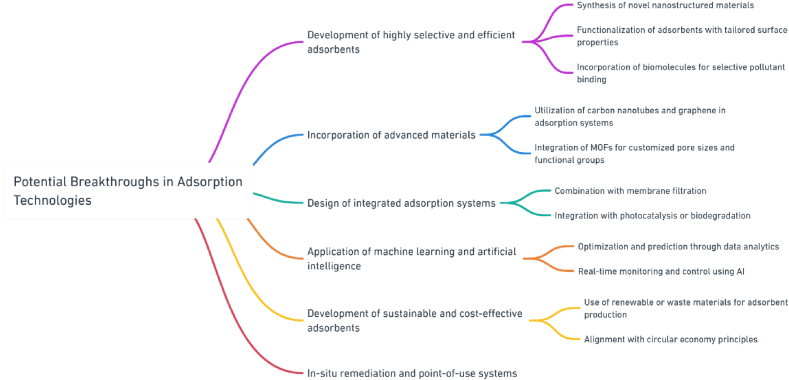
Water contamination is an escalating emergency confronting communities worldwide. While traditional adsorbents have laid the groundwork for effective water purification, their selectivity, capacity, and sustainability limitations have driven the search for more advanced solutions. Despite many technological advancements, economic, environmental, and regulatory hurdles challenge the practical application of advanced adsorption techniques in large-scale water treatment. Integrating nanotechnology, advanced material fabrication techniques, and data-driven design enabled by artificial intelligence (AI) and machine learning (ML) have led to a new generation of optimized, high-performance adsorbents. These advanced materials leverage properties like high surface area, tailored pore structures, and functionalized surfaces to capture diverse water contaminants efficiently. With a focus on sustainability and effectiveness, this review highlights the transformative potential of these advanced materials in setting new benchmarks for water purification technologies. This article delivers an in-depth exploration of the current landscape and future directions of adsorbent technology for water remediation, advocating for a multidisciplinary approach to overcome existing barriers in large-scale water treatment applications.
Overview
The claims and statistics of this paper haven’t been checked yet.
Run the check — free, no account needed. It reads the open-access text and checks the sources it cites.
Integrity signals
Registry
Cites
Statistics
Figures
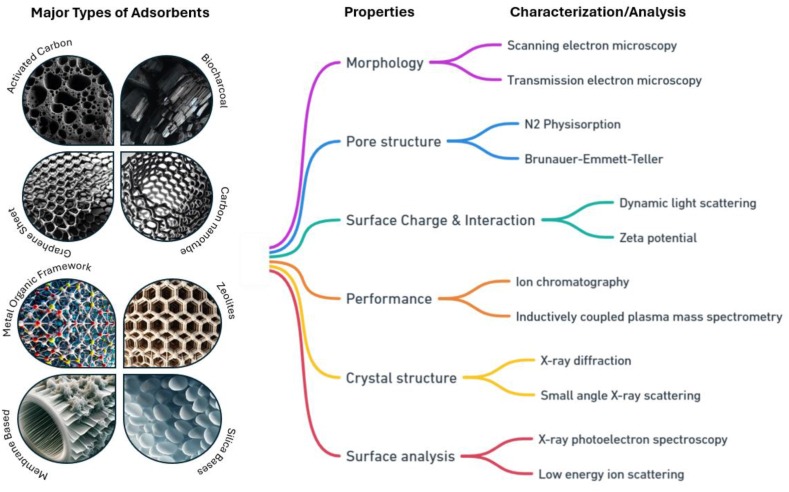
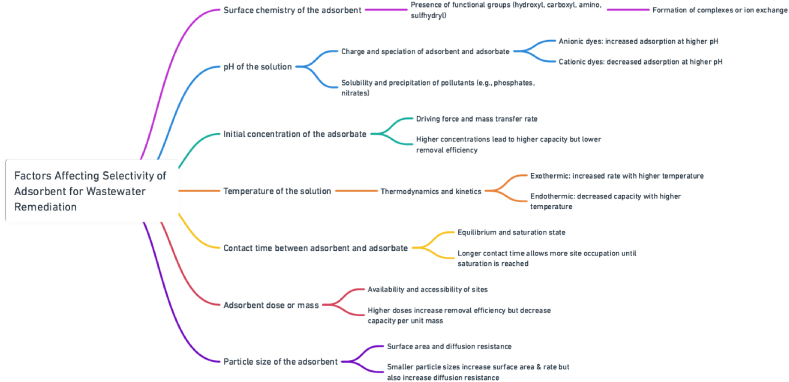
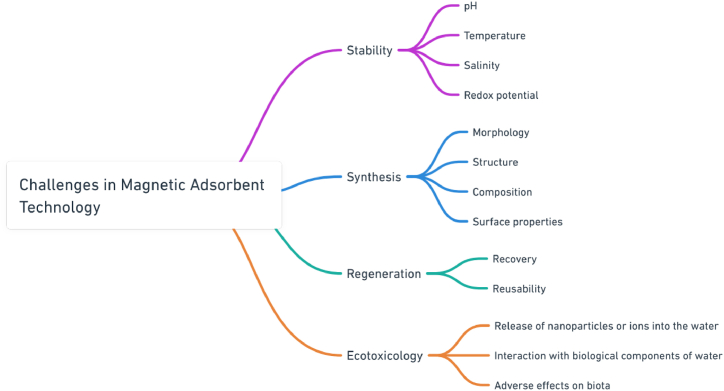
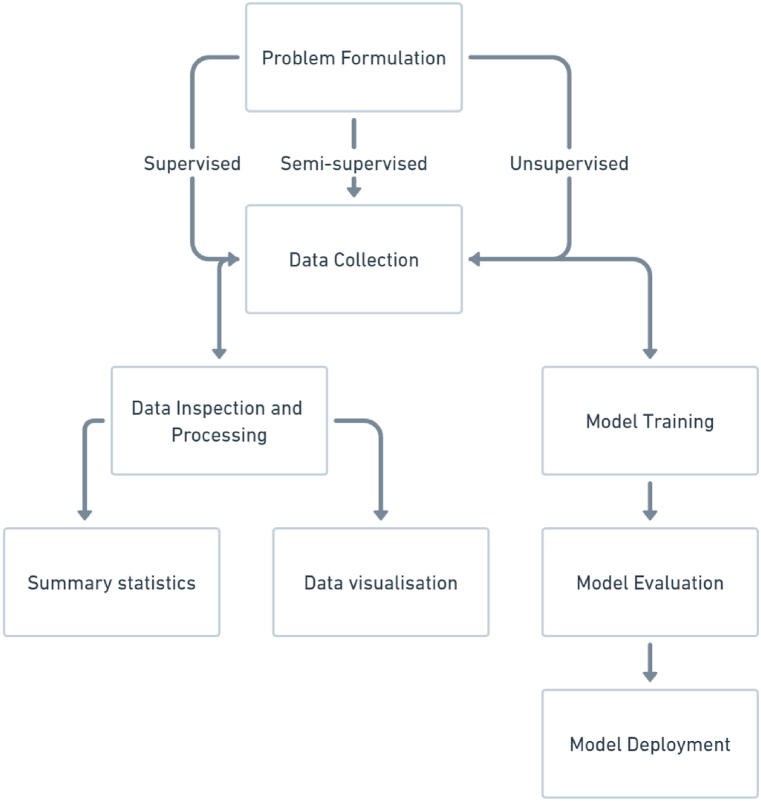
Verification
Claims the paper makes
The claims and statistics of this paper haven’t been checked yet.
Run the check — free, no account needed. It reads the open-access text and checks the sources it cites.
Claims other papers make about this one
Each is checked against this paper’s own text: does it say what the citing paper says it does?
The source backs part of the claim, not all of it — or backs it for a different population, condition or comparison.
In the citing paper
“Another critical issue in the regeneration of nanoadsorbents is the progressive decline in adsorption capacity with successive reuse cycles.”
From Emerging nanotechnology approaches for sustainable water treatment and heavy metals removal: a comprehensive review (2025) · cites this paper as [249]
Experimental — accuracy not yet measuredThe source backs part of the claim, not all of it — or backs it for a different population, condition or comparison.
In the citing paper
“Magnetic nanoadsorbents have emerged as a promising strategy to overcome these limitations, enabling rapid and energy-efficient recovery under an external magnetic field.245,249”
From Emerging nanotechnology approaches for sustainable water treatment and heavy metals removal: a comprehensive review (2025) · cites this paper as [249]
Experimental — accuracy not yet measuredThe source backs part of the claim, not all of it — or backs it for a different population, condition or comparison.
In the citing paper
“This reduction is primarily attributed to irreversible surface fouling, pore blockage by organic or inorganic matter, and loss of active sites or functional groups during regeneration.246,249”
From Emerging nanotechnology approaches for sustainable water treatment and heavy metals removal: a comprehensive review (2025) · cites this paper as [249]
Experimental — accuracy not yet measuredThe source backs part of the claim, not all of it — or backs it for a different population, condition or comparison.
In the citing paper
“The economic feasibility and environmental sustainability of nanoadsorbent-based water treatment technologies are fundamentally determined by their ability to be regenerated and reused effectively.”
From Emerging nanotechnology approaches for sustainable water treatment and heavy metals removal: a comprehensive review (2025) · cites this paper as [249]
Experimental — accuracy not yet measuredThe source backs part of the claim, not all of it — or backs it for a different population, condition or comparison.
In the citing paper
“From a regulatory and practical perspective, the standardization of nanoadsorbent recycling practices remains insufficient, with inconsistent safety and performance guidelines across jurisdictions.249,251”
From Emerging nanotechnology approaches for sustainable water treatment and heavy metals removal: a comprehensive review (2025) · cites this paper as [249]
Experimental — accuracy not yet measured
The cited source says what the claim attributes to it.
In the citing paper
“Despite the promising adsorption capabilities and surface functionalities exhibited by various nanoadsorbents, their large-scale application remains hindered by challenges associated with recyclability, structural deterioration, and declining performance upon repeated use.”
From Emerging nanotechnology approaches for sustainable water treatment and heavy metals removal: a comprehensive review (2025) · cites this paper as [249]
The cited source says what the claim attributes to it.
In the citing paper
“However, their long-term stability under varying pH, salinity, and redox conditions remains a key concern, as environmental fluctuations can alter magnetic and surface properties, leading to performance degradation.246,249”
From Emerging nanotechnology approaches for sustainable water treatment and heavy metals removal: a comprehensive review (2025) · cites this paper as [249]
The cited source says what the claim attributes to it.
In the citing paper
“Overall, while the regeneration and reuse of nanoadsorbents hold significant promise for enhancing the sustainability and cost-effectiveness of water purification technologies, numerous technical, environmental, and regulatory challenges must be addressed before large-scale implementation.”
From Emerging nanotechnology approaches for sustainable water treatment and heavy metals removal: a comprehensive review (2025) · cites this paper as [249]
Self-check
Percentages, sums and reported differences re-computed from the paper’s own numbers.
The self-check needs the paper’s full text.
Citations
Cites
Vanommeslaeghe, K., Hatcher, E., Acharya, C., Kundu, S. C., Zhong, S., Shim, J. Y., Darian, E., Guvench, O., Lopes, P. E. M., Vorobyov, I. V., et al. (2009) · Journal of Computational Chemistry · doi:10.1002/jcc.21367 · Cited by 7,637
Advantages and disadvantages of techniques used for wastewater treatment
Crini, G., & Lichtfouse, E. (2019) · Environmental Chemistry Letters · doi:10.1007/s10311-018-0785-9 · Cited by 2,971
Adsorption kinetic models: Physical meanings, applications, and solving methods
Wang, J., & Guo, X. (2020) · Journal of Hazardous Materials · doi:10.1016/j.jhazmat.2020.122156 · Cited by 2,937
Molecular imprinting: perspectives and applications
Chen, L., Wang, X., Lü, W., Wu, X., & Li, J. (2016) · Chemical Society Reviews · doi:10.1039/c6cs00061d · Cited by 2,505
Refinement of the AMBER Force Field for Nucleic Acids: Improving the Description of α/γ Conformers
Pérez, A., Marchán, I., Svozil, D., Šponer, J., Cheatham, T. E., Laughton, C. A., & Orozco, M. (2007) · Biophysical Journal · doi:10.1529/biophysj.106.097782 · Cited by 2,171
Pérez‐Ramírez, J., Christensen, C. H., Egeblad, K., Christensen, C. H., & Groen, J. C. (2008) · Chemical Society Reviews · doi:10.1039/b809030k · Cited by 1,840
Wang, B., Lv, X., Feng, D., Xie, L., Zhang, J., Li, M., Xie, Y.-B., Li, J., & Zhou, H.-C. “. (2016) · Journal of the American Chemical Society · doi:10.1021/jacs.6b01663 · Cited by 1,573
Yang, X., Wan, Y., Zheng, Y., He, F., Yu, Z., Huang, J., Wang, H., Ok, Y. S., Jiang, Y., & Gao, B. (2019) · Chemical Engineering Journal · doi:10.1016/j.cej.2019.02.119 · Cited by 1,527
Advances in water treatment by adsorption technology
Ali, I., & Gupta, V. K. (2006) · Nature Protocols · doi:10.1038/nprot.2006.370 · Cited by 1,525
Low cost adsorbents for the removal of organic pollutants from wastewater
Ali, I., Asim, M., & Khan, T. A. (2012) · Journal of Environmental Management · doi:10.1016/j.jenvman.2012.08.028 · Cited by 1,501
Research works printed but not linked: 1
- Alam, 2022, Applications of artificial intelligence in water treatment for optimization and automation of adsorption processes: recent advances and prospects, Chem. Eng. J., 427, 10.1016/j.cej.2021.130011 · DOI
Cited by
Sorted by citations
Alkhaldi, H., Alharthi, S., Alharthi, S. N., AlGhamdi, H. A., AlZahrani, Y. M., Mahmoud, S. A., Amin, L. G., Al‐Shaalan, N. H., Boraie, W. E., Attia, M. S., et al. (2024) · RSC Advances · doi:10.1039/d4ra05269b · Cited by 238
Fouda-Mbanga, B. G., Onotu, O. P., & Tywabi-Ngeva, Z. (2024) · Green Analytical Chemistry · doi:10.1016/j.greeac.2024.100156 · Cited by 175
Aziz, K. H. H., Mustafa, F. S., HamaRawf, R. F., & Omer, K. M. (2025) · Journal of Water Process Engineering · doi:10.1016/j.jwpe.2024.106867 · Cited by 154
Gkika, D. A., Tolkou, A. K., Katsoyiannis, I. A., & Kyzas, G. Z. (2025) · Separation and Purification Technology · doi:10.1016/j.seppur.2025.132996 · Cited by 149
Kumari, S., Chowdhry, J., Kumar, M., & Garg, M. C. (2024) · Environmental Research · doi:10.1016/j.envres.2024.119782 · Cited by 156
Metadata
- Authors
- Satyam, S., & Patra, S.
- Affiliations
- Indian Institute of Technology Guwahati (IN)
- Corresponding author
- Satyam, Satyam
- Patra, Sanjukta
- Venue
- Heliyon
- Publisher
- Elsevier BV
- Published
- 2024-05
- Volume
- 10
- Issue
- 9
- Pages
- e29573
- ISSN
- 2405-8440 (ISSN-L)
- PMC
- PMC11064087
- OpenAlex
- W4394980199
- Cited by
- 788
- References
- 144
- Citations by year
- 2026: 425 · 2025: 322 · 2024: 41
- FWCI
- 90.60
- Type
- journal article
- Language
- en
- Open access
- gold
- doi.org
- Licence
- Locations
- Heliyon (publishedVersion, cc-by-nc-nd)
- PubMed Central (publishedVersion, cc-by-nc-nd)
- PubMed (publishedVersion)
- DOAJ (DOAJ: Directory of Open Access Journals) (submittedVersion, cc-by-sa)
- Funders
- Indian Institute of Technology Guwahati
- Department of Biotechnology, Ministry of Science and Technology, India
- Topics
- Physical Sciences › Environmental Science › Water Science and Technology › Adsorption and biosorption for pollutant removal
- Physical Sciences › Environmental Science › Environmental Engineering › Environmental remediation with nanomaterials
- Physical Sciences › Environmental Science › Water Science and Technology › Environmental and Analytical Chemistry Studies
- Keywords
- adsorption, wastewater remediation, adsorbents, water purification, nanomaterials, advanced materials, artificial intelligence, water pollution, functionalized surfaces, pore structure
About these checks
Registry, retraction, Cites and statistics results are computed, not judged, with one exception: a printed reference that no index lists is read once by a model before it counts as a citation error. Claims are extracted by a model and kept only when their quote appears verbatim in the text; each cited source is then checked, with a model’s help, for whether it says what the claim relies on. Those verdicts can be wrong — read the claim’s quote and the cited source before relying on one.
Statistics and arithmetic are recomputed, not judged.
Confidence bands are shown only for fields calibrated on our annotated test set. None is calibrated yet, so no band is shown.
What counts as a claim ›How we measure confidence ›How we check this ›
Are you an author, or do you see a problem with this page? Request a review
